My co-author and frequent collaborator, Cameron Hewitt, is well-traveled, smart, and insightful. And, while he and I are in perfect sync in our travel styles and priorities, he gives voice to the next generation of "Rick Steves travelers." Join me in enjoying his reports right here. —Rick

40 Hours in Amsterdam: A Travel Writer’s Layover

What does a travel writer do on his day off? He just putters around Amsterdam, without an agenda, enjoying travel in its purest form. (And then, surprise surprise, he writes a blog post about it.)

That’s just what I’m doing on the way home from my guidebook research trip. After two busy weeks in Spain, and three even busier weeks in Sicily, I’m ready for a break. So, I figured, why not take a two-night, one-day layover in Amsterdam on my way home? That gives me exactly 40 hours to reacquaint myself with a great city.

There’s something liberating about returning to a city where you’ve already seen all the big sights. This isn’t a post about how to squeeze the Rijksmuseum, the Van Gogh Museum, the Anne Frank House, and a canal cruise into a hectic day of sightseeing. Instead, this is a post about how you can have a wonderful visit to Amsterdam, simply exploring neighborhoods that are missed by most visitors — entirely avoiding the tourist core, and never stepping through a turnstile. When a travel writer finally gets to turn off his data-collection feature, he finds himself simply going on a photo safari, strolling, browsing, and grazing. (Side-note: When I tell certain people I’m spending a couple of nights in Amsterdam to unwind after a busy research trip, I get a lot of knowing winks and rib jabs. “Yeah, I’ll bet!” But, in all honesty, I have zero interest in the illicit activities that are uniquely legal here. I just love Amsterdam. My friends back home will  back me up on this: I am a total square.)

Thursday Night

Arriving at my lovely splurge of a canalside hotel, Hotel Ambassade, around 9 p.m., I’m ready for dinner. I want something close, and something different — a change of pace after my steady three-week diet of pasta, seafood, granite, and Sicilian spleen sandwiches. Fortunately, right around the corner is one of Amsterdam’s top upmarket Indonesian restaurants, serving flavorful cuisine from the former Dutch colony. Kantjil & De Tijger, along the busy Spui corridor, is a once-trendy restaurant that has settled into its status as a reliable standard. Sitting outside as the sky gradually darkens at 10 p.m., I dig into the nasi rames — a one-plate sampler of flavorful Indonesian dishes, including sambal goreng kentang (shrimp and potatoes with spicy sambal paste), rendang (beef simmered in a sauce of coconut and spices), and saté babi (pork kebab). After dinner, I go hunting for bridges strewn with twinkle lights, reflected in a glassy canal. And, sure enough, I find some.

Friday Morning

While Amsterdam has a booming brunch scene, I stick with the excellent breakfast at my hotel —  reasonably priced when prebooked as part of the room rate. There’s no better start to a drizzly day than relaxing over made-to-order eggs and crêpes while gazing out over the picturesque Herengracht canal.

Leaving my hotel, I dodge wayward bicycles through a gentle rain, going nowhere in particular. I wind up following the exclamatory steeple of the Westerkerk, where I duck inside to avoid a sudden squall. The tranquil interior is filled with simple pews and soaked, poncho-clad tourists rubbing raindrops off their eyeglasses. The austere space is the polar opposite of the dazzlingly ornate Baroque churches in Sicily and Spain, where I’ve spent the last several weeks. Of course, as this was one of the flagship churches of the Dutch Reformation, that was exactly the point. Even the fancy organ has “modesty covers” that can swing shut to conceal its naughty pipes. Hiding out from the rain in this church, whose bells Anne Frank heard from her hiding place in the building next door, I’m reminded again why Amsterdam is such a delight.

I head back outside and circle around the church, following the gaze of a sweet little statue of Anne Frank to the Wil Graanstra Friteshuis, a handy spot for Vlaamse frites — Flemish fries, double-fried and served with a variety of sauces. I’m tempted to order a greasy cone of fries, but the rain picks up again, so I dash across the street and duck into one of the city’s ubiquitous Albert Heijn mini-supermarkets. Browsing with no intention of buying, I come across a display of make-it-yourself meal kits for mexicaanse burritos, italiaanse lasagne, and indiase curry madras…a clever Dutch spin on America’s current obsession with Blue Apron-type mail-order meal kits. I love stumbling on little slices of local life, even when I’m just trying to stay dry.

From Westerkerk, I delve into my favorite part of Amsterdam: the Jordaan. While this might seem like shameless product placement, I really do enjoy touring the Jordaan using the excellent audio tour on the Rick Steves Audio Europe app — taking me through this sleepy, photogenic, formerly working-class neighborhood where Amsterdammers still outnumber tourists. Rick and my colleague (and favorite writer) Gene Openshaw wrote the tour years ago, and it still holds up — offering an intimate look at a corner of Amsterdam most tourists miss entirely.

Friday Lunch

The rain begins to let up, and I head back toward the core of the city. A sudden sun break reminds me it’s actually summer, and I’m in the mood for an al fresco lunch…raindrops be damned. I make my way to Café t’Smalle, a classic wood-paneled “brown café” — a characteristic old Dutch pub whose walls are stained by decades (or centuries) of tobacco smoke. While the seating inside is traditional and cozy, I’m lured to the tipsy tables on a barge in the canal out front. It’s an ideal spot to canal-watch and munch a simple sandwich of aged Dutch cheese, shielded from the occasional fat raindrop by a generous canopy of leaves.

Heading south after lunch, I follow the Prinsengracht canal to dessert at IJscuypje, a local chain of ice cream shops. Flavors include the usual suspects, plus Dutch variations like stroopwafels (syrup waffles), boerenjongens (brandy-soaked raisins), and speculaas (gingerbread cookies). Biting into my speculaas cone, I remember one of the most mind-blowing discoveries in my many years of travels: that morning at my Amsterdam B&B breakfast table when I learned that they smash ginger cookies into an insanely decadent and delicious paste…and that I can buy it anytime I want, back home, where Trader Joe’s sells it under the name “Cookie Butter.” Soon after I got home, I learned a hard lesson: If you ever really want to put on some weight — and fast! — develop a taste for Cookie Butter. In this city notorious for its addictive vices, the one that really did me in involves gingerbread cookies.

Friday Afternoon

From the Prinsengracht, I go on a little aimless safari through another of the city’s most characteristically Amsterdam areas, the “Nine Little Streets” — a checkerboard of shop-lined, perfectly Dutch lanes connecting the Prinsengracht, Keizsergracht, and Herrengracht canals just west of downtown. While it’s billed as a “shopping area,” I’ve never spent a dime here — but there’s no place in Amsterdam I’d rather wander to reacquaint myself with the city’s unique cocktail of tranquil canals, skinny townhouses with fancy gables, manicured flower boxes, perfectly inviting cafés, and constant, fluid swirl of bicyclists rattling over cobbles with no helmets. Even the garbage bags lining the streets — awaiting collection — are arranged just so.

Heading east, I cut through the busy transit hubs of Spui and Rokin, traversing the touristy core of Amsterdam for the first (and only) time on my trip — providing a jarring contrast to the rest of my day. I realize that the Amsterdam I’m so enjoying gets entirely missed by many visitors.

But just a few steps from the tourist blight, I find myself in the sleepy zone around the University of Amsterdam. I detour a few steps through a fancy archway next to Oudezijds Achterburgwal 229, down the corridor housing the Oudemanhuispoort book market. The rustic tables lining the passage are piled high with secondhand books and art prints. Halfway along the corridor, I duck into a sunny courtyard where university students linger and chat — as if, like me, they’re regrouping from the stag-party chaos a couple of blocks away.

From here, I head east along Staalstraat, a lovely, narrow lane of classic Amsterdam townhouses and some of the city’s best window-shopping (including, at #7b, a wonderful design store confusingly named Droog, and at #17, the top-end local praline shop, Puccini Bomboni). In three short blocks, Staalsraat manages to cross over two entirely different — but equally distinctive — Amsterdam drawbridges.

Popping out at the far end of Staalstraat on Waterlooplein — facing the starkly modern opera house — I realize I’m starving…and I’m just a couple of blocks from one of my favorite scenic Amsterdam cafés: De Sluyswacht, “The Lock-Keeper’s House.” True to its name, it fills a standalone black-brick house from 1659 overlooking a busy intersection of canals in the heart of Amsterdam. I pull up a bench at a shared table and look out over the hubbub of boats big and small plying the brown waters, crisscrossing their way through the city.

For a snack, it’s a plate of the classic Amsterdam bar food, bitterballen — croquettes that have been double-fried to create a crunchy, almost prickly outer skin. The sun has finally decided to come out for good, and the whole city is out, enjoying the early inklings of summer. Dipping my butterballen into spicy Dijon mustard and watching boats scurry to and fro, I wonder why so many people think they need marijuana to enjoy Amsterdam. Sure, come for the marijuana…but stay for the bitterballen and canal views.

Feeling those bitterballen weighing heavy in my stomach, I head back to the hotel for a brief rest. Why am I so tired? I realize it’s because simply walking down the street in Amsterdam is exhausting. You have to keep your head on a swivel, as cars and silent bikes whiz past you constantly, forcing you to jump at a moment’s notice onto the little brick median teetering between the road and the canal. In my 40 hours in Amsterdam, I’ll see at least three or four near-miss accidents — mostly involving tourists (on foot or on bike) who didn’t realize that they don’t always have the right of way, simply by virtue of being from out of town. Dutch cyclists are kind but firm, and will set you straight quickly if you wander in front of their oncoming bike. (You should hear the friendly jingle-jangle of a handlebar bell as if it were a foghorn.) Just as I’m pondering this, I see a Dutch cyclist pull to a stop and — again, kindly yet firmly — point out to a jetlagged tourist family that their toddler is toddling straight toward a canal.

Friday Night

After resting up, I head out in the early evening for a 20-minute walk west — beyond the Jordaan — to one of Amsterdam’s newest foodie hotspots: Foodhallen, Amsterdam’s foray into the European trend of jamming a world of eclectic eateries under one roof. Filling a red-brick former tram depot with shared tables, Foodhallen is ringed by two dozen different food stands, representing a rainbow of cuisines: Basque pintxos, dim sum, Hawaiian poke, tacos, sushi, bitterballen, Mediterranean mezes, Indian wraps, wood-fired pizza, steaming ramen, gourmet burgers, high-end hot dogs, and much, much more. After doing a couple of laps to survey my options, I settle on a plate of chicken-and-corn gyoza and a steaming shumai dumpling with pork and mushrooms. Squeezing into a free seat at one of the hall’s countless shared tables — all of them jammed full on a busy Friday night — I realize that I could have a dozen different meals here, and probably enjoy each one equally.

After dinner, I walk back toward the center, detouring along bustling Rozengracht to catch the 8:30 comedy show at Boom Chicago, Amsterdam’s answer to Second City.  Since 1993, comics including Jordan Peele, Seth Meyers, and Jason Sudeikis have cut their teeth on Boom Chicago’s stage, in English-language sketch and improv shows skewering current events on both sides of the Atlantic. For this show’s audience, savvy, worldly Amsterdam natives seem to slightly outnumber American tourists — all of them laughing in unison at the easy pickings generously provided by the Trump Administration.

Stepping out of the theater to find it’s still light out, I go looking for a canalside nightcap. Drawn once again — like a mosquito to a zapper — to the Westerkerk spire, I find myself back in the Jordaan. At another characteristic brown café, Café de Prins, I nurse a drink at an outdoor table, with a view of the Westerkerk and of a steady parade of well-dressed Amsterdammers rolling by on their bikes as they text on their phones and smoke cigarettes.

Saturday Morning

Determined to make the most of my fleeting few hours in Europe, I follow canals about 30 minutes south to the neighborhood delightfully named De Pijp (“deh peep”), where I stroll the thriving Albert Cuyp Market — several blocks of open-air vendors selling foods, flowers, clothing, housewares, antiques, and more.

The Albert Cuyp Market an easy and enjoyable place to assemble a progressive breakfast. There are pickled herring stands, if that’s your poison — choose between “Amsterdam-style” (chopped up on a bun, with raw onions) or the more adventurous “Rotterdam-style” (pick up the intact filet, dredge it in onions, and lower it delicately into your open mouth).

In the mood for something a little less…aggressively flavorful…I follow my nose to a stand selling poffertjes — tiny, puffy Dutch pancakes cooked on a special griddle. Each one is about the size of a semi-deflated squash ball, sprinkled with powdered sugar. Delicious.

As I wander, I check out many other tempting foods: roasted chicken sandwiches, a hummus bar, an array of Dutch cheeses, roasted nuts, and more.  But the one thing I can’t resist is a hot stroopwafel. Neighboring Belgium is famous for its big, fluffy waffles, but here in the Netherlands, they prefer a thin, crispy wafer…or, actually, two of them, sandwiching a layer of caramel syrup. You can buy stacks of stroopwafels in any shop, but they’re best when warmed up — hot and gooey. I don’t really feel like I’ve been to Amsterdam until I’ve had a stroopwafel. I’m getting this one in just under the wire.

Back at my hotel, I pack my bag in a hurry — determined to squeeze in one last culinary adventure before my flight. Around the corner from my hotel, I’ve spotted a hole-in-the-wall shop called The Lebanese Sajeria, specializing in the Middle Eastern wrap sandwich called a manoushe. I line up and place my order, then wait patiently on the sidewalk as the busy chef delicately lays each flatbread on the dome-shaped griddle in the window until it’s cooked just right. Finally, my name is called, and I find a canalside bench to bite into my wrap. The flatbread is warm and crispy, wrapped around a generous layer of the spice and sesame seed mix called za’atar, along with a layer of spiced ground beef.  It’s hot, delicious, explosively flavorful, and the perfect end to my mini-break in Amsterdam.

Hopping into my Uber, I know that I’ll be back to Amsterdam soon. This city exerts a strange magnetism on any traveler who simply enjoys exploring. Best of all, in two nights and one full day in one of Europe’s most touristy cities, I’ve managed to almost entirely avoid the tacky parallel world that most tourists never leave. If you’re going to Amsterdam just once in your life, of course you should check out the Rijksmuseum, the Anne Frank Museum, and the Van Gogh Museum. But also carve out a little time to putter around the city’s concentric canals. find a cozy café in the Jordaan, snap a twilight photo of a canal at 11 p.m., and munch a manoushe or a poffertje.


Most of the places I visited are my favorite discoveries from past trips — and are included in our Rick Steves Amsterdam & The Netherlands guidebook… although, because this was such a short trip, I brought along the more compact Rick Steves Pocket Amsterdam.

Amsterdam is particularly well-suited for audio tours. Through our Rick Steves Audio Europe app, you can download Rick and Gene’s tours of three different neighborhoods: the Jordaan, the city center, and the Red Light District…all entirely free.

Top 10 Sicily Travel Tips

In the spring of 2018, I spent three busy weeks in Sicily, circling the island to put the finishing touches on our brand-new Rick Steves Sicily guidebook — which is available now. Throughout that trip, I collected 10 favorite practical tips for traveling in Sicily. Special thanks to the book’s co-author, Sarah Murdoch, and contributing author Alfio di Mauro for their hard work and abundant insights. Amuni!

Visit a mix of big cities, smaller towns, and countryside sights.

For a good sampling of Sicily, plan to visit a mix of big cities (Palermo, Siracusa); smaller towns (Ragusa, Trapani, Taormina, Cefalù); and striking sights in the countryside (Mount Etna, ancient temples and theaters, the glittering mosaics at Monreale Cathedral). On a quick visit of just a few days, home-base in Taormina or Catania and make strategic side-trips to Siracusa and Mount Etna, then spend a day or two in Palermo. With more time, consider adding your choice of other towns: Agrigento (with its remarkable ancient temples), additional time in Siracusa (for its ancient sites and delightful urban bustle), Ragusa (for its low-key hill town ambience), Trapani (a pleasant west coast town with an array of tempting side-trips, from salt flats to hill towns to offshore islets), and the beach town of Cefalù. For most travelers, the best plan is to rent a car — but be prepared for the often challenging Sicilian roads, especially in cities. (And spring for the full insurance.)

Pig out on street food.

The island’s cuisine — which is distinctly different from mainland Italy’s — is, like Sicily, a unique mix of cultural influences. Choosing between eggplant pasta and fish couscous on the same menu, it’s clear that you’re at a crossroads of Europe and Africa. And some of the best food is also the cheapest. Sicily is renowned for its street food. Try an arancina (deep-fried saffron rice ball), panelle (chickpea fritters), sfincione (rustic, Sicilian-style “pizza”), polpo bollito (a boiled mini-octopus), and — if you dare — pani ca’ meusa…the famed spleen sandwich. To sample several items in one go, just wander through one of the characteristic street markets in Palermo or Catania…or join a street food tour.

Party with the Sicilians.

On this island of very tight-knit communities and fierce local pride, there’s always some big festival going on. Most towns celebrate their patron saint’s day by processing through the streets with an elaborate float (or several). Other celebrations fill a more specific niche. I happened to be in the pristine town of Noto during their biggest party of the year, the Infiorata di Noto. An entire street — several blocks long — was filled with gigantic murals, delicately constructed of flower petals.  And when I was in nearby Ragusa, the townspeople were celebrating the native Ragusano cheese. The town square hosted cooking demonstrations, and every restaurant in town was highlighting a special cheese-forward dish. While I enjoy the serendipity of just stumbling onto Sicilian celebrations, it’s smart to do some homework, find out what local festivities might be going on nearby, and make a point to drop by.

Bone up on ancient history.

In antiquity, Sicily was called Magna Graecia — “Greater Greece” — for the many Hellenic city-states that colonized the island. Ancient Syracuse (today’s Siracusa) was one of the most powerful city-states on the Mediterranean. Sicily was also an outpost of the mysterious Carthaginians, who were almost entirely wiped out by the Romans. And all of these civilizations left behind world-class artifacts. Scattered across Sicily are some of the best ancient Greek temples and theaters anywhere outside of Greece: the Valley of the Temples at Agrigento; Europe’s largest archaeological area at Selinunte; and the theaters in Taormina, Siracusa, and Segesta. The cathedral in Ortigia (Siracusa’s old town) is actually built upon the still-visible columns of a fifth-century B.C. temple. And deep in the remote interior of Sicily is the Villa Romana del Casale, with some of the world’s best-preserved floor mosaics. If you love ancient sites, Sicily will blow your mind. If you don’t…there’s no better place to start.

Visit Mount Etna for its amazing volcanic sights — and its wine.

Mount Etna, which (literally) gave rise to Sicily, is one of Europe’s most accessible active volcanoes. A cable car whisks you halfway up the mountain, and from there, you can hop on a monster-truck bus nearly all the way to the smoldering summit. (It tends to be clear first thing in the morning, then clouds over just as it gets crowded a few hours later — it’s smart to be on the first cable car, at 9:00.) But Mount Etna is also home to one of Italy’s most pleasant wine-growing regions. My favorite stretch — picturesque and still relatively off the beaten path — is on the north side of Etna, between the towns of Linguaglossa and Randazzo. The Etna wine scene has exploded in recent years, garnering more and more international attention. And even if you’re not into wines, the scenery is magnificent: vineyards stretching up sun-baked slopes toward the steaming, snow-capped cone of Etna. Several picturesque wineries offer tours and tastings; it’s customary to call a day or so ahead to let them know you’re coming. (Some favorite finds for the upcoming guidebook include the swanky Tenuta di Fessina, the cheerful Fattoria Romeo del Castello, and the family-run, nicely low-key Filippo Grasso.) If you’re serious about wine, Etna Wine School  — operated by an American vintner expat who literally wrote the book on Etna wines — offers private tours.

Be prepared for heat and hills.

At the same latitude as Spain’s Adalucía and Greece’s Cycladic Islands, Sicily can be very hot for much of the year. (Most of Sicily sits on the African tectonic plate — and the geology and climate really do feel closer to Africa than to Europe.) Many of Sicily’s best sights are dusty ancient landmarks, requiring a hike to reach, with little shade. And virtually nothing in Sicily sits on flat ground — you’ll encounter hills, hills, and more hills. Come prepared with broken-in shoes, sunscreen, and a hat for shade — and take plenty of breaks. Or consider coming off-season, when it’s cooler and less exhausting. Sicily is one of Europe’s most appealing winter destinations. It may not be balmy enough to swim in the ocean, but even in winter, you can often enjoy warm, sunny days and cool, refreshing nights….and zero crowds.

Unwind in the hill towns of the southeast.

Sicily can be intense. But one of my favorite little corners of the island is in the southeast, around the dramatic hill town of Ragusa. With green, rolling hills and neatly stacked stone fences, this area feels almost Celtic. And it’s one part of Sicily where most tourists aren’t Americans, or even northern Europeans — but Italians. In a short drive from Ragusa, you can link up some lovely towns: Modica, famous for its chocolate industry and its dual cathedrals (one on a hilltop, the other in a valley); Scicli, where troglodyte caves carved into the cliffs overlook a fun-to-explore town filling a valley; and beautifully Baroque Noto, rebuilt in a short period after a 1693 earthquake, giving it an unusual architectural harmony (not to mention its world-famous gelato shop, Caffé Sicilia). About halfway through my three-week journey around Sicily, I found Ragusa and the surrounding countryside to be the perfect place to settle in and just relax.

Peel back the layers of history.

Strategically located in the middle of the Mediterranean — practically forming a bridge from Italy to North Africa — Sicily’s culture has been shaped by a staggering variety of overlords and occupiers. There’s so much history on this little island that it’s tempting to just let it wash over you. But this is a place where it’s really worth studying up and grappling with the epic story. From the ancient foundations of the Greeks, Carthaginians, and Romans, to the Arabs who controlled Sicily for more than two centuries (and, during that time, richly developed the island), to the Normans from France who “reclaimed” Sicily for the Christian world and slathered its churches with Byzantine-style mosaics, to the Spanish Bourbon kings who draped the island in a stately Baroque elegance, and even to the mafia who dominated much of Sicily’s 20th century (and whose influence is finally on the wane)…Sicily is a pastiche of history. Get to know and recognize the hallmarks of each period, and before you know it, you’ll be able to step into a church and say, “Wow, those Normans really did a number on this one.”

Go before it’s too late.

In just a few short years, Sicily has quickly become “ready for prime time.” Cities (like Siracusa or Palermo) that were rough, rugged, and a little dangerous have been prettied up and pedestrianized. I noticed lots of European travelers…but relatively few American ones. I was also struck by the relative lack of crowds — even in late May, when the weather’s perfect and mainland Italian cities like Venice and Florence are overrun. All of that is bound to change in the next few years, as more people find out what a great spot Sicily is. Go now, before the cat’s out of the bag.

Accept Sicily on Sicily’s terms.

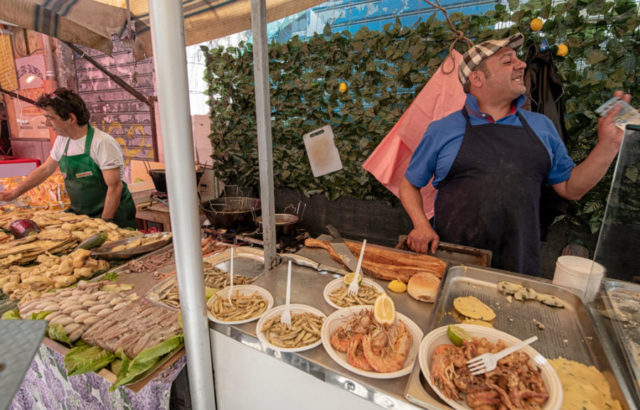
Street food stand

Sicily is an ideal “deep cut” for Italy connoisseurs who’ve already seen Venice, Florence, and Rome, and want to experience a facet of Italy that’s more intense and challenging. But first-timers might find it a bit wild: buzzing motor scooters, potholed infrastructure, arm-waving people, and, yes, more graffiti and roadside garbage than you’re probably used to seeing. Sicily feels more like Mexico than like Milan. But that’s what I like about it. It’s rustic, rugged, close to the ground, and off the radar of most mainstream tourists. It takes a few days to adjust to the island’s unique rhythms, but once you do, it’s easy to get swept away by Sicily. Best of all, in all of Europe, Sicilians are some of the most enjoyable people to simply interact with. Walk through a bustling street market, strike up some conversations, and let a vendor talk you into buying a three-foot-long zucchini you don’t really need.


Our new Sicily guidebook — with all of the details about everything mentioned here — is available now.

In other blog posts, I wrote about Palermo’s amazing street food scene, the challenge of driving in Sicily, and a stop-by-stop rundown of the ultimate Sicilian road trip.

We also have a wealth of free Sicily content on our website, including a recommended itinerary, links to two new episodes of Rick’s public television series about Sicily, several interviews from Rick’s public radio show about Sicily, more gorgeous photographs, recommended books and movies about Sicily, and much more.

And if you’d like to visit Sicily — but would love it if someone else did all the driving, took care of the hotels and half of the meals, and explained it all to you — well, then, we have a great 11-day tour for you.

Go Ahead — Leave an Honest Hotel Review

Earlier this week, the New York Times published an article warning consumers not to put too much weight into overly negative reviews. But when it comes to crowdsourced hotel review sites, like TripAdvisor and Booking.com, I’m concerned about a different (and equally vexing) problem: overly positive reviews.

In our review-driven culture, we’re constantly asked to rate our experiences. And sometimes — especially when the ratings go both ways — there’s a big incentive to just be nice. (I have a relative who always gives Uber rides five stars…even the bad ones.)

I’m all for niceness — but not when it comes to reviews. After all, if everyone is giving well-meaning (but meaningless) top marks to everything, then what’s the point of reviews at all?

I’m particularly aware of this because of my work researching and writing guidebooks. For three months each year, I spend hours every day scouting accommodations — ringing doorbells, climbing up dreary stairwells, and interrogating hoteliers in my search for great sleeps.

What do I look for when evaluating hotels? Location is key, as are factors such as cleanliness, thoughtful amenities, local character, soundproofing, and conscientious management. I’ll admit that this list can be self-contradictory, and I rarely find a place that ticks every single box. But with these factors in mind, coupled with expertise and intuition, at the end of a busy day surveying options, a few gems usually rise to the top.

Another big factor, of course, is the friendliness of the hotelier. But increasingly, I’m realizing that this one is tricky. A gregarious, welcoming host can be a big plus — but risks overshadowing even bigger minuses. And these days, I have a hunch that the “niceness factor” is throwing off the curve for crowdsourced reviews.

Crowdsourced review sites like TripAdvisor and Booking.com have transformed the way travelers choose and book their accommodations. As a writer of old-fashioned paper guidebooks — admittedly, I’m a dinosaur — I have mixed feelings about this trend. But in the end, I really like crowdsourced sites. I use them often, both in my personal travels and to scout leads and verify hunches in my guidebook research.

I don’t see crowdsourced sites as “competition” to what I do, because they occupy a different niche: Guidebooks provide expert advice, while a crowdsourced site seeks a consensus from an army of amateurs. They’re complementary. Our hunch is that people skim our guidebooks’ hotel listings, then further research their top choices online.

But the crowdsourcing model has inherent problems. When working on a book, I personally visit and evaluate dozens of accommodations in a given destination. But the traveler who leaves a review based on their one-time stay has no basis for comparison. As an experiment, a few years ago I systematically inspected the “Top 10” accommodations from a popular review site in a Croatian town I know very well. A slim majority of them were spot-on. But quite a few were unfortunate outliers. I remember one in particular that was significantly less appealing than its next-door neighbor, but cost far more, for no discernible reason.

After years of admittedly non-scientific testing, I’ve found Booking.com to be the most reliable of the big crowdsourced sites. Until recently, I could pretty well trust that anything above a 9.0 rating was probably a winner. But these days, I’m finding more and more exceptions.

There are probably multiple reasons for this. Some unscrupulous hotels have been known to leave fake positive reviews on some of these sites. (That’s one reason I like Booking.com: You can only review a hotel after you’ve stayed there.) And I know for a fact — because hoteliers have approached me about it — that some hotels try to “game the system” by offering a free breakfast or a discounted rate if you show them a positive review you’ve left.

But I don’t think those factors entirely explain the reliability crisis in crowdsourced sites. Let’s not overlook what I think of as the “friendly host problem”:  I believe that “friendliness” is the X factor that can seriously throw off crowdsourced reviews.

When I’m checking out accommodations, I definitely take the friendliness (or unfriendliness) of the hotelier into consideration. I love it when a host who runs a great place is also a great person — as is usually the case. That’s the cherry on top of an enthusiastic hotel recommendation.

But at the end of the day, I have to call it like I see it. So if I love the hosts but find the rooms subpar, I’ll say so. Rick always instructs our researchers, “You have to be incorruptible. Our readers are counting on you.” I think that’s what our customers appreciate about Rick Steves’ Europe: We always put the traveler first.

On review sites, however, I’ve observed significant “grade inflation” for lackluster properties run by wonderful people. On a recent six-week trip throughout southeastern Europe, I had my worst overnight experience at a place with a sterling 9.5 rating on Booking.com. The rooms were grubby and not entirely clean. The carpets were frayed and worn. A drawer handle came off in my hand. In one corner, the paint was literally peeling off the walls. There were water-pressure problems. And the whole place just smelled musty. Simply put, they were not putting money back into their hotel. And they charge higher rates than more solidly run (if not quite as friendly) places just a few steps away.

Re-checking those rave reviews in retrospect, conspicuously little was said about the rooms. Instead, people raved about the “super-friendly staff…they’d do anything for us!” and the “huge breakfast — more than we could ever eat, and they kept bringing us more!” In other words, they were rating the people who run the hotel (who, unquestionably, deserve a “niceness rating” of at least 9.5)…but, crucially, not the complete experience of staying at the hotel (which I’d put below 8.0).

At another place I stayed — in this case, a wonderful property in every way — the conscientious owner told me, “Fortunately, the people next door with the noisy dogs moved out.” Probing for more information, I was told, “Their dogs would start barking early in the morning, every morning, and there was nothing we could do. Strangely, nobody complained. Maybe it’s because they liked us and didn’t blame us. But we knew it was a problem.”

I get it that the neighbor dogs are not the fault of the host. But if I’m reading reviews of that property, and I know I’m a very light sleeper, am I wrong to hope that somebody — anybody — would tip me off?

Look, I’m not a robot, and I know this may sound harsh. And I don’t want to diminish the importance of hospitality — which is huge. But it’s not the only thing that matters, and my “consumer-protection” streak needs to speak up.

At the end of the day, your experience staying at a hotel is shaped by any number of factors. If a hotel has sweet, earnest, chatty owners, but the paint is peeling off the walls and the nightclub downstairs just extended its closing time until 5 a.m., don’t potential future guests deserve to know that? Giving nice people inflated ratings feels altruistic…but you’re hurting other travelers.

That’s why, the next time you’re reviewing a hotel online, I urge you to be honest. Crowdsourced sites don’t have to be purely about promoting hotels — they can, and should, be about looking out for your community of fellow travelers. It’s OK…go ahead and say what you really think. (We do.)


Have you had an unfortunate experience at a hotel that didn’t live up to its ratings?  Please share your stories in the comments — and let’s see if we can start a trend toward more honest and helpful reviews.

How to Drive in Sicily: Just Go Numb

I recently spent three weeks driving 800 miles around Sicily (working on our new Rick Steves Sicily guidebook, available now). And let me tell you, that’s no easy task. While touring Sicily by car is a smart, efficient approach for travelers, the timid and the uninitiated may find it challenging. Hold on, is “challenging” the right word? Hmmm. No, wait. I’ve got it: “Terrifying.”

The trick to driving in Sicily is keeping in mind that you are driving in Sicily. It took me a few days to dispense with my preconceptions about things like obeying traffic signs, or why it’s a bad idea to triple-park in the middle of the street, or the importance of cars staying in their lanes (or, really, the very concept of “lanes”). Drivers who refuse to accept Sicily on Sicily’s terms will need to end each journey by popping a Xanax and prying their raw, white-knuckled, death-grip claws from the steering wheel. But, like with other things in Sicily, if you just sort of go numb and roll with it…you’ll be just fine. (Oh, and while you’re at it, spring for the zero-deductible insurance. Not joking.)

Entering a big city like Palermo or Catania, forget about right of way and obeying signs — just go with the flow of local traffic. I was taught to drive defensively, which works in Sicily…to a point. But don’t be too stubborn about it. Assuming you actually want to get where you’re going, occasionally you need to drive like a Sicilian. Just today, in the very heart of Palermo, I obediently pulled to a stop at a red light, instantly generating a chorus of furious honks from the column of cars behind me. I shrugged, checked both ways three times, and ran the red light…followed, without a moment’s hesitation, by everyone else.

Meanwhile, there are the motor scooters — the true love of most Sicilians. Knock-off Vespas weave between cars stalled in traffic, brushing past your side-view mirrors, bushwhacking their own path through an urban jungle. Pausing at a red light, my car was instantly enveloped by motor scooters squeezing around me on both sides. They gathered in front of me, cramming into the tiny no-man’s-land between my hood and the intersecting traffic, forming a scrum of eager beavers at my front bumper. When the light turned green, a half-dozen little engines buzzed to life, like a swarm of bees taking flight, and off they zipped…leaving me in a cloud of dust and exhaust.

While urban driving is challenging, driving in the Sicilian countryside is, for the most part, a delight. The roads are empty — it’s easy to make great time. But be prepared for the dramatic variation in Sicilian cruising speeds. On a road with a limit of, say, 100 kilometers per hour, virtually nobody actually goes 100 kilometers per hour…except me. Approximately half of all Sicilian drivers go far, far below the speed limit. The co-author of our upcoming Rick Steves Sicily guidebook, Sarah Murdoch, quite rightly pointed out that Sicilian roads are clogged with dinky, boxy Fiat Pandas from the early 1980s, which appear to have a maximum speed of about 70 kmh. Sure enough, I spent enough long journeys stuck behind Pandas to become something of an aficionado. (The lines on the 1982 Panda 45 Super were nothing short of breathtaking.)

Meanwhile, the other half of Sicilian drivers go far, far above the speed limit. And if you’re going even a smidge below their preferred speed — even for a fleeting moment, even if there’s a stop sign a hundred yards in front of you — they’ll ride your bumper so close, it feels like you’re giving them a tow. Passing on blind curves is a high-risk national pastime in Sicily (like bullfighting in Spain), and drivers take insane chances. On a busy parkway into the city of Siracusa, a motorcycle screamed past me at around 120 kilometers per hour. As he faded into the horizon, I caught a fleeting glimpse of the daredevil driver riding sidesaddle, his bike leaning at a precipitous angle.

Navigation is tricky. Sicily’s roads are potholed and inconsistently signed. And when there are signs, they can be more confusing than no signs at all. Highways can be unexpectedly closed — or exist only on maps despite never having been completed (I spotted quite a few on-ramps to nowhere).

I am a fanatical devotee of using Google Maps on my phone for navigation, and — with only a few memorable missteps — it has been my reliable copilot through dozens of European road trips. But it was patchy at best in Sicily.  Late one night, returning to my agriturismo in the hills near Agrigento, I was counting on Google Maps to get me home. It treated me to a fun little detour, 10 minutes high above the seashore, before dead-ending me at a three-way intersection with two rutted, overgrown trails suitable only for tractors and herds of goats. (About 20 minutes of backtracking later, I finally found my way home.) I can get away with blindly trusting my GPS in most of Europe and the USA…but not in Sicily.

A word about roundabouts: I deeply believe that they are humankind’s greatest invention, a notch above penicillin and smartphones. We should have roundabouts at every intersection in the United States. I’ve driven miles and miles through the British countryside, zipping around the outskirts of major cities and through the historic cores of quaint villages, without ever coming to a full stop. When properly utilized, roundabouts make traffic flow like poetry.

But Sicily is a long way from Britain. And it’s the only place I’ve been where a roundabout is treated like a lawless intersection: Everybody just aggressively plows through, willfully defiant of silly concepts like “right of way.” Yield to vehicles already in the roundabout, and those entering from the left?! Per favore! What a ridiculous concept. You just go, and let God sort it out.

All of this sounds like madness…chaos. But if you manage to approach Sicilian driving with the right attitude, it becomes clear that it’s a controlled chaos. The thing is, it works. It works not because it’s “every driver for himself,” as it might seem at first glance…but because there’s an unspoken understanding that we’re all in this together. Other drivers are watching you. They see how fast you’re going, how big your car is, and where you’re headed next. They probably know more about your driving skills than you do. And they adapt — constantly, intuitively, and effectively. If you get stubborn and use roundabouts the way they were intended to be used, dammit! — you’ll get everyone angry (at best) or cause a fender-bender (at worst). Put another way: If you’re the only one using the roundabout “the right way,” then you’re the one using it the wrong way.

A cadre of road engineers in Britain and the Netherlands are pioneering a new way of handling complicated intersections: You simply remove all of the signage. There are idyllic little English and Dutch towns where, upon reaching the village green, suddenly there are no traffic lights, no roundabouts, no bike lanes, no crosswalks, no signs of any sort. You just have to pay attention. You have to. And so, everyone does: Drivers, cyclists, and pedestrians all make eye contact with each other, ensuring that everyone’s on the same page regarding what’s about to happen. It sounds counter-intuitive, but removing all signage from intersections not only drastically reduces accidents — it actually makes traffic flow more smoothly, reducing congestion. (This is just fascinating. Check it out.)

On about my third day driving in Sicily, I was cursing my fellow drivers who refused to abide by the universally accepted rules of using a roundabout, when it suddenly dawned on me: Sicilians long ago intuitively figured out what all those Northern European eggheads have spent their careers researching. The road is a shared venture — a communal enterprise. And as long as we all look out for each other, we’ll get through it in one piece. And if you can do that, and just dive in…well, then, you might just come to enjoy it.

Bruised and battle-hardened, but wiser, I leave Sicily thinking it’s a fine place to drive. A car gives you maximum flexibility for linking up the remote and rural highlights of Sicily, even on a short trip. And distances are short, making fuel prices reasonable — I circled the entire island on just three tanks of gas. So don’t be afraid to tackle the Sicilian roads. Remember: Just go numb. Go with the flow. And keep in mind that, like all things Sicilian, everyone’s in this together.


If you’re ready to tackle the Sicilian roads, our Sicily guidebook is available now.

In other blog posts, I wrote about my top 10 tips for visiting Sicily, Palermo’s amazing street food scene, and the challenge of driving in Sicily.

This post is part of my“Jams Are Fun” series — designed for those who savor the Schadenfreude of hearing about good trips gone bad. How about that time I ran out of gas on Scotland’s remote north coast? Or that time I was stuck on a cruise ship during a massive storm in the North Sea? Or the time I became embroiled in a gelato feud in a small Italian village?

If you’d like to visit Sicily — but would love it if someone else did all the driving, took care of the hotels and half of the meals, and explained it all to you — well, then, we have a great 11-day tour for you.

We also have a wealth of free Sicily content on our website, including a recommended itinerary, links to two new episodes of Rick’s public television series about Sicily, several interviews from Rick’s public radio show about Sicily, more gorgeous photographs, recommended books and movies about Sicily, and much more.

Palermo, Sicily: Italy’s Street Food Mecca

In the midst of a chaotic market bustle, on a gritty back street of Palermo, Marco is an anchor of calm. “Now let’s begin,” he says, with a twinkle in his eye. “Do we have any volunteers?”

Marco, who runs Streaty food tours, has spotted an opportunity to get his group precipitously high on the Sicilian-street-food learning curve. Following his gaze, I spot it, too. It’s a little, wheeled cart — about two centuries old, from the looks of it — topped by a big wok, filled with mystery meat.

Being a “volunteer” on a street food tour is high-risk, high-reward. But I’m in Sicily to experience Sicily. (And to work on our new Rick Steves Sicily guidebook, helping out Rick and co-author Sarah Murdoch.) And today, it’s all about weird foods. So I raise my hand.

The vendor grabs my upraised hand, flips it over, and lays a little square of tissue paper in my palm. He proceeds to pile it with hot, gelatinous…something. It’s from an animal — presumably deep, deep inside the animal — but beyond that, I’d hate to guess. My stomach sends a few trembles down my arm to my hand, jiggling the mystery meat as the vendor spritzes it with fresh lemon juice.

And then I taste it. And…it’s not bad! It’s nice and salty, generously seasoned with pepper and bay leaf, and goosed with the zip of lemon juice. The seasoning makes it. The texture…not so much. It’s like chewing on sauteed gristle.

“This is frittula,” Marco says. “It’s basically the leftover parts of veal — cartilage, intestines, little bits of bone — all chopped up and fried together. What do you think?” The members of our group bold enough to sample it nod in agreement. The others look a little green.

A gregarious Palermitano, Marco has a knack for making this challenging city appetizing for visitors. And now that he’s lined our guts with a baby cow’s, we’re about to plunge into the street market.

“This is one of three big outdoor markets in central Palermo,” Marco explains. “It’s been here for one thousand two hundred years. And it has not really changed in all that time.”

We walk past tables piled high with the sea’s bounty: big fish, small fish, tiny fish, shellfish. Occasionally, guys circle around and fling handfuls of water from cheap plastic buckets onto the styrofoam containers.

But it’s the soundtrack that really marks this experience as Palermo. The fishmongers shout about the freshness of their wares with a singsong cadence that’s a holdover from the Arabs who turned Palermo from a  humble village into a thriving metropolis. Walking down the narrow aisles, being nudged aside by vintage Vespas, it’s a cacophony of sales pitches: “Tutta fresca! Tutta fresca! Tutta freeeeeeeesssss-caaaaa!” one of them shouts in my ear as I walk past. “Prego-prego-prego-prego-prego-prego-preeeeeeeGO!”

Marco explains that there are three ways to buy your fish: You can buy it whole, and process it yourself. You can ask the fishmonger to prep it for you, to suit the recipe you’re planning. Or, if you’re short on time, some fishmongers will shop around for you, buying all of the ingredients you need for your recipe. Just call ahead, then drop by later to pick it up. It’s sort of a low-tech, Sicilian Blue Apron.

For this reason, people prize their relationship with their fishmonger. They become extremely loyal — close friends. And if you get sick, your longtime fishmonger may even deliver to your home. Marco says, “My mamma has told me she’s going to leave me two things when she passes on: Her house. And her list of market vendors.”

We walk past a marble slab with a gigantic half-fish, lying on its side, exposing a tree-stump-sized cross-section of vivid-red flesh. “Aha! Tuna season has just begun.”

Little bunches of mint lie next to the fish. Marco explains that the mint — a fresh, young, tender spring herb — indicates that it’s the very beginning of tuna season. Later in the season, when the tuna is almost finished, they’ll put out chrysanthemums — a sign to shoppers that their time for fresh tuna is running out.

Fresh tuna is a huge deal in Sicily. “Freshness is important, because we like to eat it almost raw. You know bistecca alla fiorentina?” Marco asks, referring to the famously super-rare Tuscan T-bone. “This is like tonno alla fiorentina — sear it just 30 seconds on one side, 30 seconds on the other, and finito!”

“But it’s not just the steaks. We think of tuna as the ‘pork of the sea,’ because we use every part…except the fins. The heads are used to make fish soup. We even dry out the roe, and then sprinkle it on pasta — that’s called alla botarga.”

Next to the tuna is strung up a swordfish — its head suspended from the canopy, to make it clear what a fearsome beast the fishermen have managed to pull from the deep. Standing over the tuna and swordfish cadavers, the fishmongers sharpen their comically oversized knives with the ear-piercing sound of metal on metal…and a glimmer in their eye as if daring me to take their picture.

Greengrocers have their own top-of-their-lungs sales pitches to brag about how their produce is both incredibly fresh and, somehow, also incredibly cheap. Tectonically speaking, Sicily has one foot in Africa — and it grows tropical fruits that thrive in few other corners of Europe. Sicilians love to brag about their domestic mangoes.

And even for more conventional produce, Sicily is the garden patch of Italy. The market bursts with bright-purple eggplants, plump tomatoes, and distinctly Sicilian zucchinis, three feet long. I watch a prospective zucchini buyer pick up the vegetable and swing it around a bit, demonstrating how floppy it is. “Eh, terrible quality. I’ll pay half!”

Someone asks Marco whether vendors here are honest. His answer threads the needle delicately. “Sicilians have a…special way of interacting with each other. First of all, we don’t just speak Italian — we speak Sicilian. We learn Sicilian not in school, but in the streets. So if you talk to someone in Sicilian, they’ll give you the local price. If you talk to them in Italian, or in English, you get a special price. Maybe a euro more.” When he explains it so matter-of-factly, somehow it just makes sense.

“And there’s a kind of…what I would call ‘gamesmanship’ at the market. Not just with tourists or outsiders, but among Sicilians. Sure, sometimes maybe a vendor will try to cheat you in some way. It’s almost expected. But if you figure it out and come back to confront him, then he respects you for it. He’ll give you something free to make up for it. Even some Sicilians really don’t like this way of operating. I have relatives who won’t come to the market — it’s exhausting for them. For others, it’s fun. Kind of a game, a challenge.”

Marco points out a sign, where the 9’s have tiny little tails. “From a distance, those look like zeroes — oh, just €1.00 for a kilo! Not bad. Only when you get close do you see it’s double — €1.99.”

We reach our next snacking stop: giant deep-fried rice balls. “What do you call this?” Marco asks. I’m one of the know-it-alls who blurt out the answer: arancino, of course! Marco clucks his tongue and jerks his chin up sharply — a definitive, Sicilian no. “In Catania,” he says, practically spitting on the ground as he mentions Palermo’s rival city on the east coast, “they call it arancino. Here in Palermo, we call it arancina — feminine.”

The Catania-style arancino— similar to what you’ll find in most of mainland Italy — is rice, tomato, veal ragú (meat sauce), mozzarella, and peas. But here in Palermo, they do it differently: Instead of tomato, an arancina is flavored with bright-yellow saffron…yet another artifact of the Arabs who built Palermo.

Slicing into a steaming arancina, the bright color pops. This is one of those foods — like croissants piping hot out of the oven — that’s infinitely better when fresh. I’ve had a lot of forgettable arancini that were cold or microwaved. But there’s nothing in Italy more delicious than a hot arancino (ahem, arancina): burn-your-fingertips, crispy outer shell; soft, warm, and gooey rice inside.

Next up: Another classic Palermo street food, two deep-fried treats that are usually served together: panelle e cazzilli. We stop at a characteristic stand, where the two vendors — colorful as cartoon characters — are engaged in a neverending banter with their clients and passing tourists.

Marco gets his plate of panelle e cazzilli and gathers us around for a lesson. Panelle are flat chickpea fritters. With some imagination, a panella is shaped roughly like a fish fillet — to stoke the fantasies of the poor Palermitani who ate these to fill their bellies when they couldn’t afford actual fish. Biting into a panella, I can really imagine pretending this is fish-and-chips.

“Well, the one thing that poor people could afford,” he clarifies, “was sardines. And not fresh ones — the poorer you were, the longer you had to wait to buy the sardines…as the price dropped. So by the time you got them, they were already nearly spoiled. That’s why a very traditional Sicilian dish is pasta con le sarde — pasta topped with sardines, pine nuts, fennel, and raisins…to aid digestion.”

“And of course, pasta con le sarde is sprinkled with breadcrumbs. Anything in Sicily that’s prepared alla Palermitana comes with breadcrumbs. This also comes from poverty: Poor people could never afford to grate fancy cheeses over their pasta. But they could sprinkle on salty breadcrumbs from yesterday’s leftover bread.” One century’s hardship food is the next century’s defining culinary style.

Back to the other half of the deep-fried dish: cazzilli, which is a slang term for the male anatomy. These little elongated croquettes are filled with mashed potato, mint, and parsley. Because of their respective shapes, and because they’re often eaten together, panelle e cazzilli are sometimes called “husbands and wives.”

Leaving the market and wandering through town, we come upon a pretty square in front of a Baroque church, with another nondescript food cart out front. Inside the glass case are stacked sickly-looking hunks of french bread with a pinkish topping.

“These are sfincioni — sometimes called ‘Sicilian pizza.’ It comes from an Arabic word for ‘sponge.’ The traditional one does not have cheese or other toppings — just tomato, and one onion. Then they sprinkle it with black pepper and oregano. That’s all. Simple.”

Noticing our skeptical looks, Marco says, “I know, I know. These do not look appetizing. But what you don’t realize is that he has a little oven inside the cart, where he can grill up the sfincioni before serving them. And that makes all the difference.”

We watch the vendor stick his sfincioni into the cart, wait a couple of minutes, then pull out a deliciously toasted snack. It’s flavorful, with a nice oregano zip, a little char on the bottom, and just the right amount of oily. Who knew? (Marco knew.)

Continuing down the tight lane into another market area, called Vucciria, we pop out at an impossibly ramshackle piazza, ringed with food carts. This part of town, close to the port, was decimated in World War II bombings, and some buildings were never rebuilt. Still, the area hosted a thriving street market…until recently.

As more Sicilians are doing their shopping at modern supermarkets, some traditional markets — like this one — are struggling. However, this area is enjoying a new life as a hotspot for food stalls and after-hours cocktail bars. Little “for sale” signs hang from apartment balconies — like flags of surrender flown by homeowners ready to vacate their newly rowdy neighborhood.

One little stand serves octopus. That’s it — just octopus. A small octopus (not much larger than your hand) is boiled in salty water, blackened by ink. When ready to eat, the critter is fished out with a hook, roughly chopped into little chunks of tentacles, and spritzed with a wedge of lemon. And that’s polpo bollito…boiled octopus. The name says it all. If you like the taste of octopus, and savor the flavor of the sea, it’s heavenly. If not…skip it.

At another vendor, a glass display case shows off all manner of meat strung out on skewers. Nearby, a hissing grill kicks up a rich and flavorful smoke. The vendor is chopping up juicy wands of spring onion, then wrapping them in thick strips of bacon. It’s called mangia e bevi: “eat and drink.” Tossed on the grill, the smell is heavenly. I suddenly realize that summer barbecue season is just kicking off back home, and I’ve got a new recipe to try… (However, I’ll pass on the other variation, stigghiola, which is intestines wrapped around spring onion.)

But the star of the show is the stall that sells Palermo’s ultimate “gross street food”: pani ca’ meusa — spleen sandwich. Marco introduces us to the vendor, who has served this grease bomb to an illustrious array of celebrity chefs and travel TV personalities from around the world. He fires up his big wok, drops in a hunk of lard, and then stirs in chunks of organ meat.

“They call it ‘spleen,'” Marco explains. “But actually, it’s mostly lung.” Marco, you’re not helping.

“Not everybody likes the taste. It does taste like organ meat. If you don’t like liver, you may not like it. However, it’s not as strong as liver. But for many Palermitani — including me — this is the most delicious street food we will try today.”

The vendor lays strips of sizzling organ meat onto the pillowy bun, spritzes it with lemon, and hands the sandwiches around. Now, I have a rule that I am willing to try any food…once. And so, swallowing hard, I take a bite. And…

It’s just as Marco described: A milder version of liver. It’s deliciously salty and pleasingly greasy — which helps it slide down. Some bites feel like thinly-sliced, gristly meat. Others are more chewy and sinewy. And, after about half a sandwich, I’m equal parts pleased with myself for giving it a go…and ready to call it quits.

Looking around the busy Vucciria market, it strikes me that this is one of those rare spots where grizzled locals and adventurous tourists coexist harmoniously. Here stands a little scrum of curious street foodies. And across the square are a pack of Palermitani just hanging out, like they do every day. A big guy pulls up on a little moped and idles while he chats, spewing exhaust onto the tourists nursing drinks at their plastic tables. He greets the grillmaster with a long handshake and a tender kiss on the cheek. They wave their arms in conversation, before he buzzes off down a grimy street, and his friend returns to his grill full of guts.

Only one thing’s left on this food tour: dessert. And there are few more enticing places for dessert than Sicily.

On my trip to Sicily, I’ve quickly become a connoisseur of granita — a sweet, refreshing, icy slush that suits this hot climate perfectly. In mainland Italy, gelaterie sometimes have one or two flavors of granita on the side. But here in Sicily, things get more creative. They have limone, of course, but also maondorla (almond), pistacchio, gelsi (mulberry), fragola (strawberry), and many, many others.

My favorite is caffè. A robust, dark-brown granita di caffè, with a few little bits of coffee beans mixed in, is my go-to alternative to an afternoon cup of coffee. Insanely refreshing. Pay an extra €0.50, and you can get it con panna — with whipped cream — turning it into something resembling a frozen latte. (For the record, my favorite granita di caffè in Palermo is at Lucchese, a venerable old-time café and pasticceria facing the square of San Domenico.)

Sicilians enjoy granita for breakfast, often stuffed into a brioche bun. But I like mine straight. If a place has constantly spinning granita machines, skip it. The best granite is kept in metal bins with lids, so the vendor has to stir it around and scoop it out. If you get real granita — which has a thicker consistency — you can even combine flavors. If you order pistacchio and caffè, a savvy clerk will layer the powerful coffee flavor on the bottom, to avoid overwhelming the more delicate pistacchio.

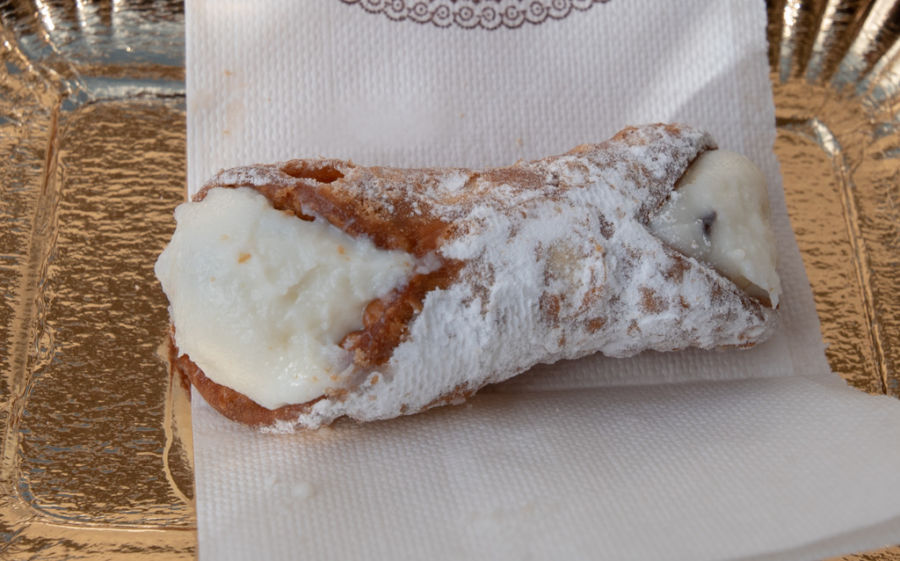
On Marco’s tour, however, he’s chosen to give the people what they want: cannoli. To reward us for all the offal we’ve been consuming, he takes us to a spot that has his favorite cannoli in town.

There are two secrets to a good cannolo: First, you don’t fill the deep-fried pastry tube until you’re ready to serve it. If you fill it earlier in the day, then stick it in a display case, the pastry casing gets soggy and loses the textural contrast that makes this treat special.

Second, the cannolo has to be filled with quality ricotta cheese. You’ll see them made with all sorts of tourist-pleasing variations (pistachio creme, chocolate creme, vanilla custard, Nutella, and so on). But a pure cannolo has a sweet yet tangy filling of fresh ricotta. The cannolo is dusted with powdered sugar, and sometimes they throw in some candied fruit, nuts, or chocolate chips.

Eating this cannolo in the shadow of Palermo’s cathedral is like eating cannolo for the very first time. It’s just one of many delicious memories I’ll pack home from this journey through Sicily…and my trip is just getting started.


Our new Sicily guidebook — with all of the details about Palermo street food, and much, much more — is available now.

In other blog posts, I wrote about my top 10 tips for traveling in Sicily, the challenge of driving in Sicily, and a stop-by-stop rundown of the ultimate Sicilian road trip.

We also have a wealth of free Sicily content on our website, including a recommended itinerary, links to two new episodes of Rick’s public television series about Sicily, several interviews from Rick’s public radio show about Sicily, more gorgeous photographs, recommended books and movies about Sicily, and much more.

And if you’d like to visit Sicily — but would love it if someone else did all the driving, took care of the hotels and half of the meals, and explained it all to you — well, then, we have a great 11-day tour for you.