My co-author and frequent collaborator, Cameron Hewitt, is well-traveled, smart, and insightful. And, while he and I are in perfect sync in our travel styles and priorities, he gives voice to the next generation of "Rick Steves travelers." Join me in enjoying his reports right here. —Rick

Europe for Foodies: How (and Why) to Incorporate Food into Your Travels

The term “foodie” is trendy these days. It sounds pretentious, and a little silly. But I’ve decided to take that word back, for food-lovers everywhere. There’s nothing wrong with being a “foodie.” It simply means that you prioritize food in your life — and in your travels.

Some travelers eat to live. I live to eat. And the more I make food a central focus of my travels, the clearer it becomes that to really appreciate a culture, you need to understand its food. Because in a sense, food is culture.

Finish this phrase: Swiss ___. For all its claims to fame, and the end of the day, Switzerland is synonymous with cheese. It’s part of their international brand and their national identity. And the government invests generous subsidies in keeping this part of Swiss culture alive. To this day, Swiss farmers — now federally funded — still make cheese the old-fashioned way. Each spring, they take their herd of cows up to high-mountain huts, on pastures called “alps,” and hang their decorative cowbells from the eaves. There they stay with their livestock for 100 days, all summer long — milking them at dawn and at dusk, and spending their days making cheese. And then one day in September, when cool weather announces the onset of autumn, the cowhands sling those giant bells around their cows’ necks and walk them back down into the village in the valley below — creating an impromptu parade of flower-bedecked cows, enjoying a victory lap after a productive summer, to a soundtrack of clanging bells and satisfied moos.

What type of food do you associate with Spain? Tapas, of course — small plates. But a deeper understanding of Spanish cuisine tells you volumes about the Spanish culture, climate, and landscape. In arid, blistering Iberia, people take a mid-day siesta to head home, eat a big lunch, and hide out from the heat for a couple of hours. They return to work for a few more hours, and then, just as the sun goes down and temperatures grow tolerable, they go for a paseo — a languid stroll through the city streets, promenading with friends and family, greeting neighbors, and dropping into a variety of cozy bars and cafés. After a day cooped up inside, avoiding the heat, the last thing you want is to settle in for a long, sit-down dinner. So instead, you nibble on little plates of food at the bar — sharing a variety of dishes with friends old and new, sipping drinks, cracking jokes, socializing. Then you head to the next bar, for some new dishes (and some new friends). “Tapas-style” dining isn’t a trend — it’s a social ritual and a way of life, shaped over eons by Spain itself.

What are the two most beloved European cuisines? If you’re like most people, you’re thinking of Italian and French. (If you’re an odd duck like me, Hungarian might have crept into the mix.) Italian and French cuisine are equally enticing, and yet, so fundamentally different.
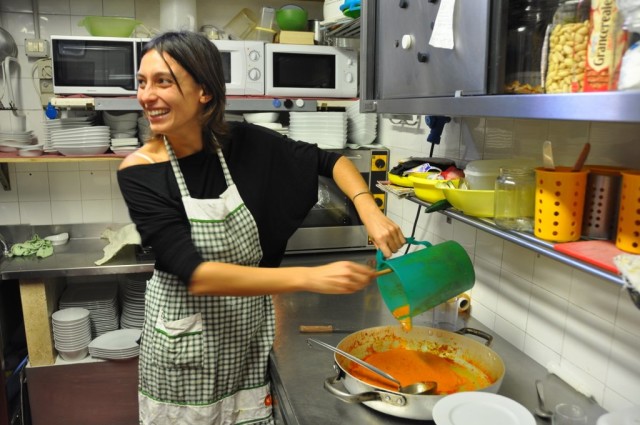
In sun-drenched Italy — the garden patch of Europe — cuisine is all about highlighting quality ingredients. The fewer ingredients, and the less they’re manipulated, the better. I once took a cooking class in Tuscany where Marta taught me how to make the most delicious sauce ever to cross my palate. It has just five ingredients: tomatoes, olive oil, garlic, red pepper flakes, and salt. And it makes everything it touches explosively flavorful. This emphasis on fresh ingredients also makes Italian cuisine highly localized. Why are there so many types of pasta? Because each one is engineered to highlight a particular sauce or topping, usually rooted in a highly specific place and season. (Those pasta places where you “pick your noodles, then pick your sauce” make Italians furious.) Specialties aren’t just regional — they can be specific to a town, or even to a neighborhood. And Italian law forbids restaurants from using frozen ingredients unless they’re noted on the menu.

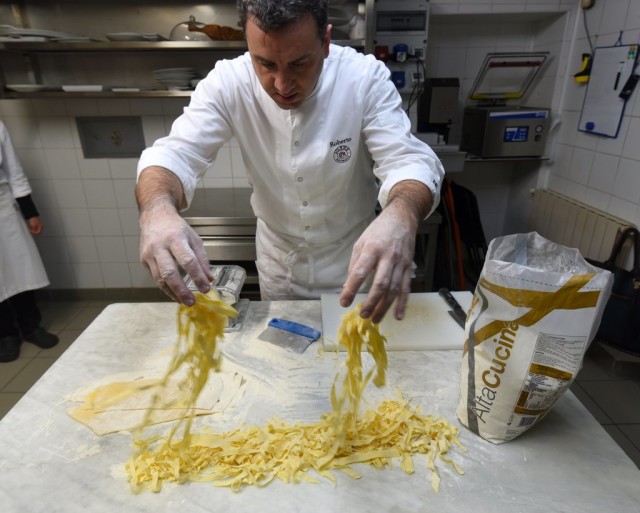
In French cuisine, the ingredients are less important than what you do with them. I once took a cooking class in Burgundy, where every dish had at least a dozen ingredients — and each recipe involved mastering a precise, delicate technique. French chefs are technicians, who endlessly play and tinker and experiment to create something delicious. Who, but the French, would look at snails crawling across a rain-dampened path and think, “I’ll bet if I cooked those in garlic butter, they’d be delicious”? Beyond escargot, think of the other most famous French dishes: Coq au vin takes the toughest, least palatable type of poultry — rooster — and slow-simmers it in red wine and spices until it’s tender and flavorful. Bœuf bourguignon does the same with tough cuts of beef. And confit de canard is a duck that’s been rendered, preserved in a sealed can of its own congealed fat, then opened up months later and cooked in that same fat. That’s not a recipe — that’s a science experiment. So much of French cooking feels like it was created on a dare. And yet, it’s delicious. And it’s beautiful. French chefs are also elegant artists, who employ their technique to create stunning masterpieces, as pleasing to the eye as to the palate. French salads aren’t just jumbled together — they’re composée…composed.

These are just a few examples of how food can play a much larger role in your travels than simply filling the tank. And that’s the topic of my “Europe for Foodies” class, which we filmed earlier this year and is now available to view on Ricksteves.com and YouTube (and below).

Of all the travel talks I do at Rick Steves’ Europe, “Europe for Foodies” is my favorite. It’s the one that my audiences seem to enjoy the most. And, strangely, it’s also the least-attended.

Maybe people already take it for granted that food is important in travel — or are confident that it isn’t. But the purpose of this talk is to deepen your appreciation for the many vivid travel experiences where food and culture intersect. Like a French chef who makes snails delicious, I’ve engineered this talk to fine-tune your culinary sensibilities, with ample suggestions for incorporating food in your travels. If you’ve enjoyed my many blog posts about food in Europe…this talk is for you.

In the talk, I introduce age-old European culinary concepts that are newly trendy these days, including terroir, zero-kilometer, nose-to-tail, and the importance of eating with the seasons. I also suggest practical tips for finding the best restaurants, and explain some subtleties of dining in Europe that can be confusing. Sometimes this requires psychoanalyzing the way Europeans conceptualize food: You’ll learn why Italians can’t understand how anyone could drink a caffé latte after lunchtime, why they serve your salad after the pasta, and why that stubborn server won’t bring your bill to the table until you’ve asked for it.

I run through some of my favorite cheap eats in Europe (from German Currywurst to Greek souvlaki to Sicilian arancine to Polish zapiekanka) and the best food halls and street markets. And there are sections on drinking (wine, beer, spirits, and café culture) and sweets — from Belgian chocolates to Italian gelato. Finally, I suggest some experiences that allow you to incorporate food into your travels: cooking classes, food tours, visits to local farms, chasing a truffle-sniffing dog through an oak forest, getting to know a Slovenian beekeeper, and so on.
I hope you enjoy my “Europe for Foodies” talk as much as I enjoyed putting it together. And remember: Every meal you have in Europe is an opportunity to have a cultural experience.


If you enjoy reading my blog posts that focus on food, you can find a roundup here.

Check out my full 1.25-hour “Europe for Foodies” talk on Ricksteves.com and YouTube. (You can find the handout for the class here.)

If you’re tight on time, you can also check out shorter chapters separately:


What Travel Has Taught Me About Migrants

Right now, a caravan of Central American migrants is making its way through Mexico toward our southern border — thousands of men, women, and children in search of a better life. Like many Americans, I’m watching this tragic spectacle with sadness. But for me, it’s tinged with a particular poignancy.

Three years ago, I had a life-changing travel experience that humanized migrants like the ones in our headlines today. Then, as now, a group of desperate people from the poor south were struggling to make their way to the affluent north. But this was in Europe, not North America — and it wasn’t a caravan. It was a tidal wave.

In 2015, Syria was war-torn and falling apart, leaving a quarter-million people dead. And through the summer and early fall of that year, an estimated one million refugees — about half from Syria, the rest from other failed states in the region — made their way to Europe. The steady flow of new arrivals made landfall in Greece and worked their way up the Balkan Peninsula, toward prosperous northern European nations willing to offer them amnesty.

That summer I was, for the most part, blissfully unaware of the details. Watching news clips of migrants stranded at train stations and border checkpoints, I felt pangs of sympathy. But mainly I was worried that my guidebook-research trip might be inconvenienced.

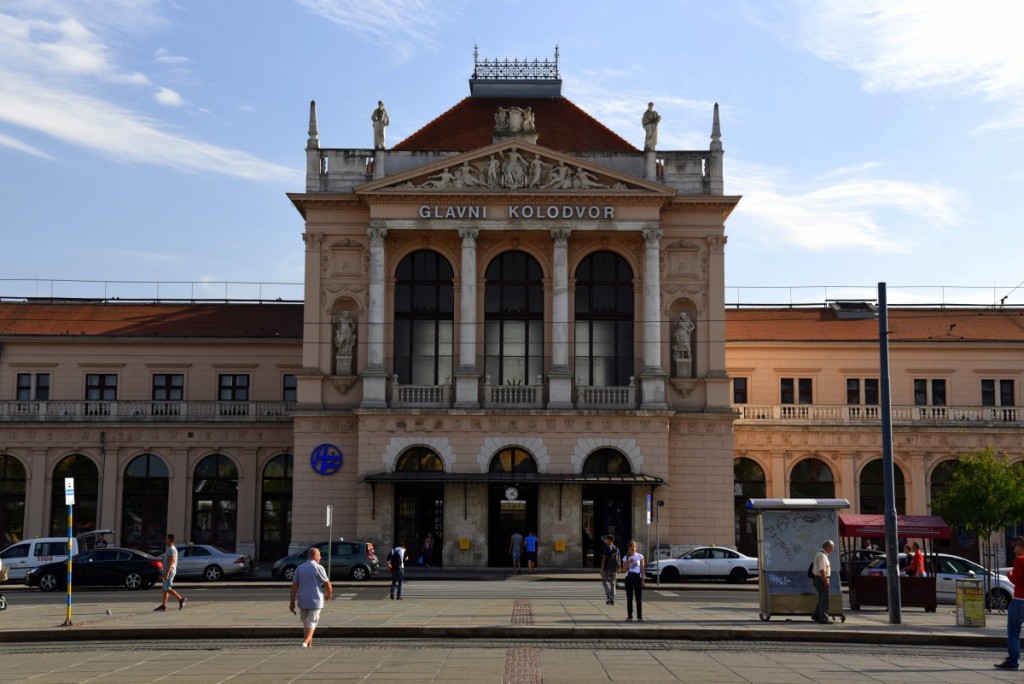
By early September, I was in Zagreb, Croatia’s capital. Enjoying a sunny late-summer weekend, I was completely engrossed in my work. Stepping into the main train station, I noticed that all of the international departures on the big timetable flashed otkazan — “cancelled.” A few days earlier, they had stopped running trains to Hungary or Slovenia, to prevent the flow of refugees from crossing more borders.

Cameron Zagreb Train Station Refugees

And that’s when I saw them: refugees. About eight or nine people, including two young children. At this moment, they weren’t howling in despair, running through wheat fields, or stuffing themselves into the windows of train cars, like I’d been seeing on TV. They were just standing there. Waiting. Bored.

They were dressed neatly, wearing fanny packs, and glancing at their smartphones. The little boy was entertaining himself by tossing his stuffed animal into the air. They reminded me of someone who just learned that the last flight out was grounded — and now they had to figure out another way to get where they were going. Maybe after all they’d been through, just hanging out at a train station on a sunny Saturday was a relief.

In the middle of the group was a pair of young Croatians. One was a very smiley, mild-mannered guy who projected an air of peace and normalcy. The other was a force-of-nature activist with a blonde ponytail. She was simultaneously talking with the ringleader of the group and making calls on her phone.

Passersby, and the many police officers on duty, were keeping their distance — shooting glances of sympathy and suspicion from across the platform. Occasionally someone would come up and offer them food or water. But they already had overflowing shopping bags, as much as they could carry. One woman tried to hand them a shrink-wrapped flat of eight water bottles. “Thank you,” the young man said politely. “We only need two.”

I approached the smiley Croatian and asked what I could do to help. Did they need groceries? Water? Money? Cigarettes? Anything? Like the others who’d offered, I was told it wasn’t necessary. “We’re just trying to organize a ride to Slovenia for them,” he explained. “The taxi drivers keep trying to rip them off.”

Just the day before, I had toured a wrenching museum in Sarajevo about the 1993 massacre at Srebrenica. I was haunted by the final words of the exhibit, a quote from Edmund Burke: “All that is necessary for the triumph of evil is that good men do nothing.”

I can’t express how helpless I felt in that train station. I like to think I’m a good man. But there I stood, doing nothing. In that moment, I could no longer view these people as some abstract problem that smart, caring people shake their heads about and mutter, “Oh, that’s too bad.” I didn’t care about politics, or some obscure fear of terrorism. All of that melted away, replaced by a keen awareness of what distracting nonsense it all was.

All I knew was that I was standing face-to-face with human beings in a terrible situation. And every instinct inside of me was screaming that they had to get to where they were going. They couldn’t stay there. They couldn’t go back. Quite simply, they had no choice but to complete their quest for a better life. How could any person with a conscience, in that moment, not arrive at the same conclusion?

After a few minutes, the refugees’ Croatian Samaritans led them over to the taxi stand, and waved goodbye as they embarked on the next leg of their journey.

A couple of days later, I followed their trail north, toward the Slovenian capital of Ljubljana. Because the trains still weren’t running — and because I happened to be born as a US citizen — I effortlessly booked a transfer with a shared van service. We hopped on the expressway, and a half-hour later, we were approaching Slovenia.

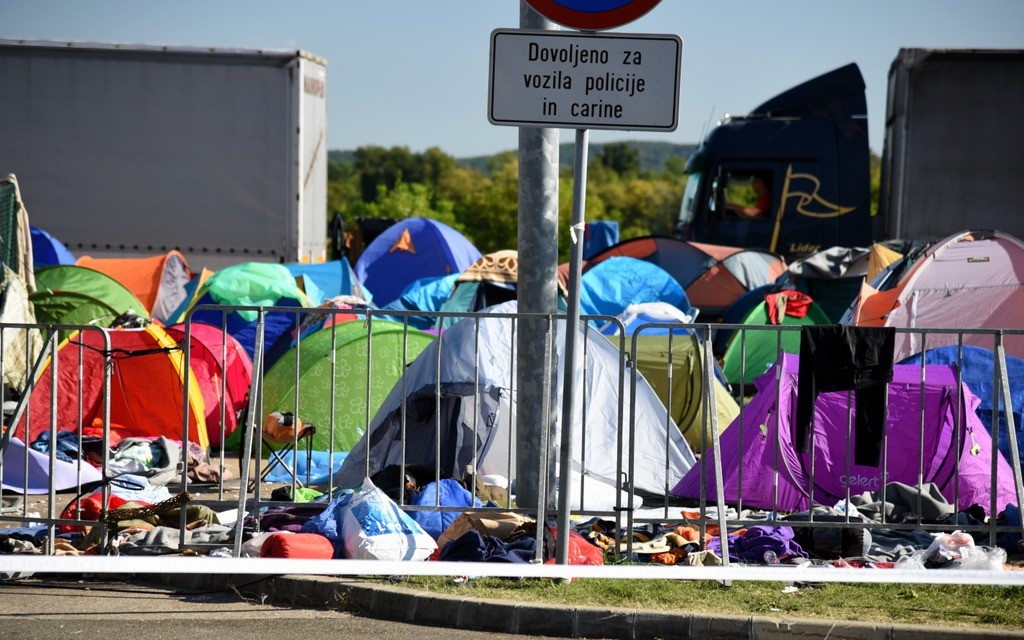
Cameron Croatia Refugees Tents

Just a few feet in front of the border checkpoint, in the grassy median strip, were dozens upon dozens of multicolored tents — left behind by refugees who had camped out for days, then finally crossed over the night before. Discarded clothes and blankets littered the grass. Sleeping bags were hanging over fences. A staging area was piled with cardboard boxes of food, bandages, and other supplies. Reporters were loitering under their switched-off lighting rigs, strategizing where to go next. A couple of workers wearing reflective vests were cleaning up — and preparing, I imagine, for the potential of many more refugees to come.

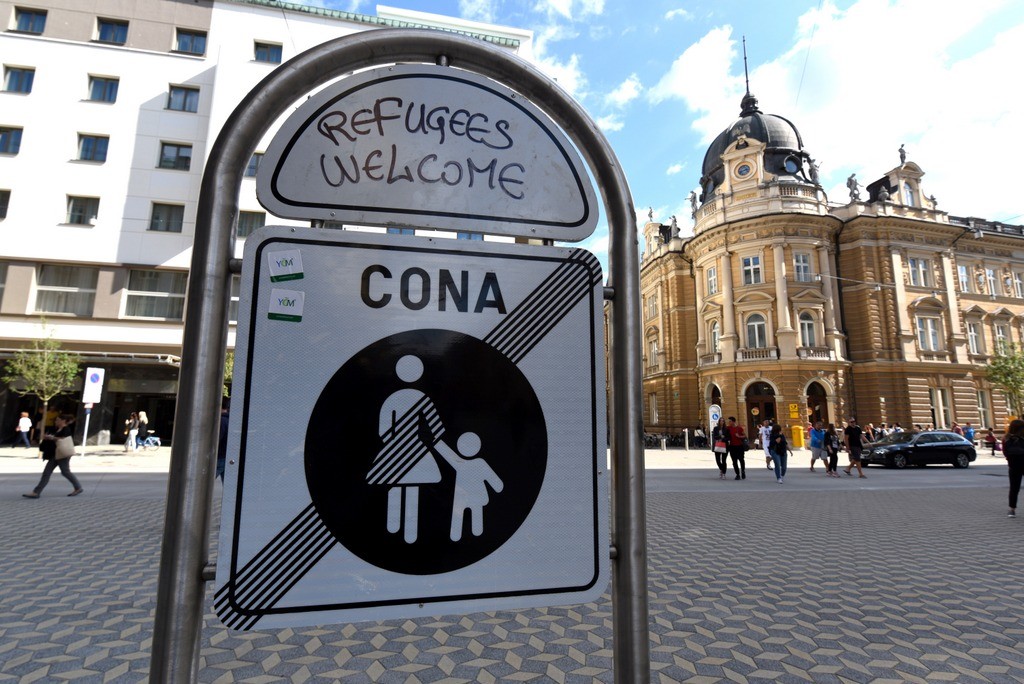
For those of us in that van, the border crossing was a non-event: a flash of a passport, and in minutes, we were rolling along at 120 kilometers per hour to Ljubljana. I must admit, I was heartened when I arrived there and found this message spray-painted onto a sign in the city center:

Cameron Slovenia Refugees Welcome

Of course, I never saw those refugees again. But I still think about them. Especially today, watching “The Caravan” persistently plod its way through Mexico.

It’s so easy to become complacent, jaded, even irritated about migrants and refugees. We see them either as some distant, sad spectacle, or as a vaguely sinister threat. Just like today in the United States, the ruling right wing in Hungary exploited the fear of refugees in the fall of 2015 to shore up their political base. It seems universal: Politicians excel at yelling, red-faced, about how some poor person from a faraway corner of the globe is to blame for society’s problems.

But when I met those refugees in person, at their darkest moment, the only thing I could see was their stark humanity. It was painfully obvious: These are not stealth terrorists, or George Soros-funded activists. They are people just like you and me. And they are in need of compassion.

I realize the caravan of people walking through Mexico today is not the same as those refugees I met in the Zagreb train station. Except, fundamentally, they are the same. All refugees and migrants — going back to my own Norwegian and Polish and Irish ancestors who left all they knew to come to the New World — share the same motivation: an entirely understandable need to find a safe place to live their lives and raise their families. Their only crime is being born in the wrong country at the wrong time, and taking action to improve their lot in life. And their sentence is to be treated as scapegoats and political props. They are transformed into grotesque, inhuman caricatures for the purposes of a cynical pre-election push.

A year and a half after my encounter in Zagreb, I found an epilogue in Berlin — the capital of the country where many of those refugees ended up. There, they were welcomed with open arms, as Chancellor Angela Merkel took in more than one million migrants. The Berliners I talked to acknowledged there had been some growing pains. But every single one told me they could already see signs of how well the new arrivals were integrating with and contributing to their society. They were making Germany stronger, not weaker. And besides all of that…it was simply the right thing to do. How novel. (A few months later, Merkel was decisively re-elected to her fourth term.)

The power of travel is that it exposes you to raw realities in unexpected ways. It assaults your assumptions, forces you to develop empathy in spite of yourself, and reminds you that the more of the world you experience, the less frightening it becomes. It subverts fear by giving you context for the news. And it reminds you that, at the end of the day, we’re all just human.


Since my experience with those refugees, I have become a regular, generous donor to the American Refugee Committee and to the United Nation’s Refugee Agency, UNHCR. I just made another donation today, on behalf of that caravan of migrants in Mexico — and so many others, whose stories will never appear in your news feed. If your life has been touched and your world made richer by travel, I challenge you to do the same.

Crowds Got You Down? Go Someplace You’ve Never Heard Of

Europe is more crowded than ever. And yet, on a recent trip to Europe, I found that very often, I was the only traveler around. Why? Because I was off the beaten path, in lesser-known corners of Poland and Hungary.

It’s clear that popular places like Salzburg, Amsterdam, Prague, and basically all of mainland Italy are reaching a saturation point. Famous landmarks and piazzas are a 24-7 human traffic jam. Major sights are impossible to visit without reserving well ahead and, once inside, are so congested you wish you’d skipped them. Increasingly, traveling to Europe’s too-famous-for-their-own-good biggies is becoming more trying than fun.

Of course, you can still go to he popular places, equipped with smart crowd-beating strategies. But here’s a different, elegantly simple solution: Break out of that tourist rut and travel somewhere new. Go to a city you’ve never heard of…or, at least, couldn’t place on a map. The destinations I’m talking about are far less crowded and, typically, far less expensive. Even better, they feel more like real travel…a welcome throwback to a time when travel was about the pure joy of discovery, rather than a sheep-in-a-turnstile bucket list.

While you can find these unheralded gems all over Europe, my favorites are in Central and Eastern Europe. A decade or two ago, you could have made a case that these countries still had rough edges to keep travelers away. But these days, places like Poland and Hungary are definitively ready for prime time…yet still refreshingly untrampled.

Kraków is, deservedly, Poland’s most popular destination. With a spectacular square and an excellent food scene, it’s well worth visiting. But on this trip, I found that even Kraków is becoming noticeably more crowded. Don’t miss Kraków — but after you see it, continue deeper into Poland, to explore its equally appealing, completely undiscovered destinations farther north. Go to a city with a name you can’t pronounce.

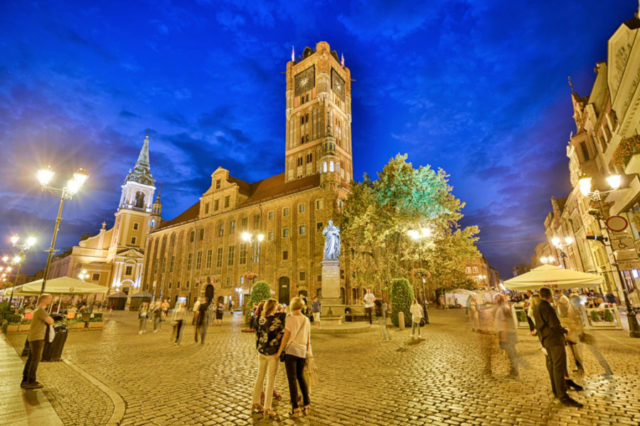
Toruń is a historic, red-brick town deep in the heart of Poland. The hometown of Copernicus (ahem, Mikołaj Kopernik) and famous for its gingerbread (which scents its streets with a heavenly aroma), it’s an utter delight.

On a balmy Friday night, in the heart of prime tourist season, I was hanging out on Toruń’s main square…and spotted zero American tourists. The floodlit, generously pedestrian-friendly streets had just the right number of people, and most of them were Polish (with a smattering of German travelers, visiting a place that used to be in Germany). Buying a big bag of gingerbread cookies (intended to last me a week…but gone by the end of the night), I strolled between Gothic brick towers, nursed a drink at an al fresco café on a cobbled square, and simply enjoyed the sensation of being the only Yankee in town.

A short train ride took me to majestic Malbork Castle — the former headquarters of the Teutonic Knights, and the largest brick castle on earth. It’s the most important, most impressive European castle that you’ve never heard of. When I asked the ticket-seller if he had any crowd-beating tips for my book, he stared at me blankly for a few seconds, then said, “Well, I guess on summer weekends you might have to wait, like, 10 minutes. Maybe.”

Once inside, I enjoyed going from room to room, squeezing through tiny brick doorways, ogling delicate fan vaulting — in a haze of medieval castle fantasies — and never once got stuck behind a tour guide with a numbered paddle and 50 pooped tourists in tow. The gigantic castle is a bit exhausting to tour…but not because of crowds.

Just 30 minutes farther north is perhaps the best example anywhere of an underrated city that simply blows away anyone willing to give it a chance. You may know it by its old German name, Danzig — but to locals, it’s Gdańsk.

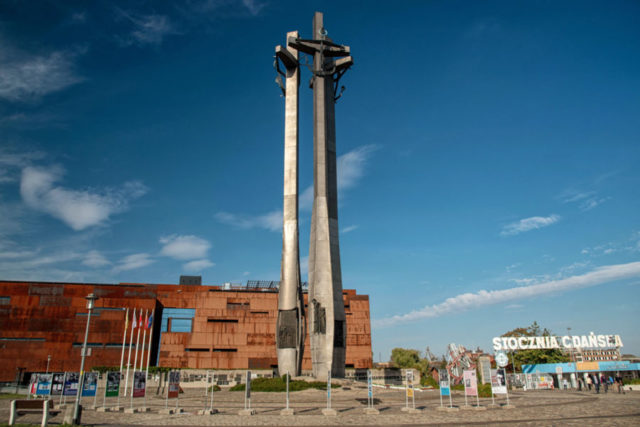
Gdańsk is intrinsically fascinating. Located on Poland’s Baltic coast, at the mouth of its main river, Gdańsk has been the primary crossroads of Polish history. There’s a spot in Gdańsk where you can look in one direction, and see Westerplatte — the exact location where World War II began (when Hitler invaded in 1939). And then, with a swivel of the head, from that same place you can see the shipyards where Lech Wałęsa staged his Solidarity protests in 1980 — sparking the beginning of the end of Soviet domination and the Cold War. The city is literally bookended by 20th-century history.

If history’s not your thing, then what about gorgeous old towns? If there’s a more stunning main drag in any city in Europe, I can’t think of it. I find myself fabricating excuses just to walk up and down Gdańsk’s “Wide Street” as frequently as possible. And behind those skinny, pastel, ornately gabled facades are endearing, unexpectedly fascinating little museums that bring to life the golden age of this maritime burg.

For sightseers, the Gdańsk area also has several new, cutting-edge museums that are among the very best I’ve seen in Europe. There’s one commemorating Lech Wałęsa and those Solidarity strikes (in the actual shipyards where the strikes took place); one telling the story of Polish emigration to the New World (in the neighboring port city of Gdynia); and the state-of-the-art Museum of the Second World War, with an exceptional exhibit that, unfortunately, has been compromised by political meddling.

Exploring Gdańsk for the first time in a few years, I was floored by how drastically the place is upgrading. I’ve loved Gdańsk since my first visit in 2004 — when it was, I’ll admit, something of a diamond in the rough. But today it’s simply breathtaking…without qualifications or reservations.

Granary Island, in the middle of the river that cuts through the middle of Gdańsk, was historically filled with handsome red-brick granaries. Bombed flat in World War II, it was left in ruins for generations. Like an ugly scar ripped through the heart of the city, the island was an off-limits eyesore. With each visit to Gdańsk, I was assured that the island would soon be renovated and re-integrated into the fabric of the city. I never quite believed it.

But on this visit, I literally did a double-take when I spotted the sea of construction cranes, turning this prime real estate into a futuristic new housing, dining, and entertainment district. Glassy, modern buildings — with rooflines echoing those historic granaries — will soon face the city’s classic old riverfront strip. Suddenly, humble Gdańsk looks like Oslo.

And the best thing about Gdańsk may be how undiscovered it feels. There are just the right numbers of tourists…but most of them are Polish, German, or Scandinavian. Norwegians and Danes flock here on cheap flights for cheap food and drink, ensconced in a dazzling historic city. Waiting for my flight at the brand-new Lech Wałęsa Airport, I noticed the names flicking across the departure boards: Trondheim. Oslo. Copenhagen. Stavanger. Helsinki. Stockholm. When Scandinavians are on board, you know you’re on to something good.

There is one big risk with going to Gdańsk, and it is this: You’ll come home evangelizing about the place with such fervor, your friends might start to think you’re a little unbalanced. (But then, one day, they’ll finally go there…and you’ll get a text that says, “OK, I GET IT NOW.”)

Poland alone has at least a half-dozen other cities where being able to pronounce the name is not a prerequisite for enjoyment: Poznań, Wrocław, Zamość — and even the capital. My recent visit to Warsaw was a revelation. It was amazing to see how fully realized a destination that city has become. It’s an absolute delight that goes toe-to-toe with more “known” capitals like Prague or Berlin.

But Poland is just one example of a country that’s easy and rewarding to travel in, but gets overlooked by whistle-stop tourists. My latest trip also took me to Hungary, where I reacquainted myself with Pécs (pronounced “paych”) — a small city at the southern edge of the country, close to nothing, but packed with more than its share of top-notch museums.

Pécs’ strollable core is congested not with tourists, but with local students. And the whole thing is slathered in bright, colorful Zsolnay porcelain — decorative tilework (invented right here) that’s a defining feature of Hungarian architecture.

I happened to be in Pécs on the evening of their wine harvest festival. A grandstand was set up on the main square, which was filled with locals grazing at a dozen different food stalls and sipping wine from another dozen little kiosks showing off local vintners’ products. Since it’s close to Croatia, Pécs menus come with Balkan accents. Settling into a bench with my paper plate of grilled meat and spicy ajvar sauce, listening to Britney Spears and Katy Perry hits thundering out of the loudspeakers, watching local kids play while their parents chatted and sipped new wine, I felt not like a gawking tourist — but like an invited guest at the banquet.

Up in the north of Hungary, I settled in for a couple of nights in my sentimental-favorite Hungarian small town, Eger. I got to know Eger over many years of tour guiding, bringing our Rick Steves Best of Eastern Europe groups here.  And every time I step into its tranquil main square, under the spires of a gorgeous Baroque church, I savor the small-town authenticity of the place.

Eger has sumptuous architecture, fine wine, a historic castle, and some endearing little museums just right for enjoyably killing a few hours. It had been years since I’d been to Eger’s thermal bath complex, a 10-minute riverside stroll from the main square, so I went for a soak an hour before closing time. A few days before, I had visited Széchenyi Baths — my favorite thermal spa in Budapest — and found it, for the first time ever, uncomfortably crowded. Until very recently, Széchenyi was mostly locals, with a few curious tourists. But on this visit, it was packed with little clumps of borderline-obnoxious international travelers, with a few irritated Hungarians mixed in.

However, Eger’s thermal bath complex was all mine. It was enjoyably bustling, with small-town Hungarians. Floating in the hundred-degree water, I heard not one word of English. And it was a delight to explore the freshly renovated complex, from its tranquil, old-fashioned Turkish bath under a stately dome, to its giddy indoor-outdoor whirlpool. On a trip where I took a dip in no fewer than five different thermal baths (I am an aficionado)…Eger’s small-town spa was the surprise favorite. And that was mostly because I had it all to myself.

Serendipity is more poignant off the beaten path, and when I returned to Eger one evening after a side-trip to some different thermal baths in the countryside, I found that a hot-air balloon had just set down right in the middle of the square. Watching the wranglers pull on sturdy ropes to expertly maneuver the bulging bag of hot gas as they slowly drained it of air, then gently tipped it over, I felt like a giddy backpacker on my first trip.

Hiking up to Eger’s stout castle, gazing out over its sweet square and skyline prickly with fanciful church towers, I thought for the umpteenth time on this trip how satisfying it is to travel to places like this one.

Eger, Pécs, Gdańsk, Toruń, and so many other gems are just now hitting that perfect “sweet spot” for travelers: Easy and accessible for anyone, but still largely undiscovered and crowd-free.

I love our Rick Steves Best of Eastern Europe in 15 Days Tour itinerary, which efficiently visits the “greatest hits” of this region: Prague, Kraków, Budapest, Rovinj, Lake Bled, and more. Returning from this trip, I was inspired to brainstorm a (totally hypothetical) “sequel tour” to that itinerary. What if you could link up the lesser-known gems of Central and Eastern Europe? Warsaw, Bratislava, Pécs, Zagreb, Slovenia’s coast and Karst, Sarajevo, Montenegro. You’d wind up with a tour every bit as rewarding as the original…but with a tiny fraction of the crowds.

When planning your next trip, consider skipping the predictable biggies. Instead, take a leap of faith and go to places like these…and let yourself be enchanted.

What’s your favorite uncrowded, undiscovered gem in Europe?


I was traveling in these places to update our Rick Steves Eastern Europe and Rick Steves Budapest guidebooks — which are available now. In these books, you’ll find all of the practical details for everything mentioned here. (In fact, these are probably the most lovingly updated but least used chapters in any Rick Steves guidebook.)

Europe’s off-the-beaten-path gems are a theme on my blog. For example, while mainland Italy is spectacular, Sicily has a few more rough edges…and far fewer crowds.

Slovenia is Europe’s ultimate undiscovered destination. I could write a book about the charms of Slovenia. (Oh, wait…I did.) Whether you’re exploring high-mountain pastures, sampling the local budget foodie scene, or browsing through wonderful Ljubljana, Slovenia earns a place in any itinerary seeking something new and uncrowded.

That said, even in super-popular places, you can (with a little effort) find your way to untrampled corners. For example, in Iceland, bust out of the “Reykjavik and Day Trips” rut and drive the entire Ring Road around the island. Linger at Lake Mývatn, a geothermal wonderland that still feels yours alone.

Columbus, Ohio: Unexpected Foodie Mecca

I recently made a trip back home to Central Ohio, where I grew up before moving to Seattle in 2000. Normally, my blog focuses on European travel. But you can also “travel” back home — approaching it through the eyes of a visitor. And when I do that, I’m doubly impressed by the remarkable foodie scene that’s percolating in my formerly meat-and-potatoes hometown. If you’re headed to Columbus, be ready for some great food — from Himalayan dumplings and explosively flavorful fried chicken, to high-end molecular gastronomy feasts, to artisanal microbrews and spirits, to the best damn ice cream in the land. And if you aren’t going to Columbus anytime soon…well, maybe you should.

Aaah, Columbus, Ohio. Flyover country. The heartland. The Heart of It All. The crossroads of the good ol’ U-S-of-A. And, for me, home. But these days, tucked amid the cornfields and strip malls of Central Ohio is also one of the most exciting culinary scenes in the United States. Who knew?

I spent my 20 most formative years (from age 5 to age 25) in Central Ohio — in the small town of Delaware, a half-hour’s drive north of Columbus. Back then, Central Ohio was the farthest thing from a culinary mecca. But it had all of the ingredients of one — in a literal sense. Ohio’s sultry summers give rise to a cornucopia of lush produce. No more perfect food exists than a juicy cob of Ohio sweet corn, right off the stalk. And Ohio (where one of the leading cities is called Cleave-land) has always had a top-tier meat industry. My next-door neighbor raised prizewinning hogs, which sold for some of the highest prices in the country.

And yet, when I was living there, local restauranteurs hadn’t quite caught up with local producers. Consider the Ohio State Fair butter cow. Now, get this: Dairy sculptors take a full ton of rich, creamery butter and fashion it into a full-sized statue of a cow. The butter cow is kept in a refrigerated glass case that a half-million fairgoers shuffle past with a hushed reverence, like visitors to the tomb of Lenin. (I am not making this up. Did I mention the butter cow is life-sized?) The year I graduated from high school, in a beautiful synergy of Central Ohio food theming, the butter cow was joined by a full-sized butter statue of Dave Thomas, founder of Columbus-based fast food chain Wendy’s.

Looking back, using mountains of butter to sculpt statues seems an almost too on-the-nose symbol for a city that had more great food than it really knew what to do with. They had the ingredients, and the industriousness. It just hadn’t yet coalesced.

When I moved away from Central Ohio in 2000, the food scene there was just getting rolling. Chains were beginning to be nudged aside by quality local restaurants. (In the 1990s, Cameron Mitchell built the foundations of a culinary empire that’s still expanding. Today he’s preparing to open a trendy food hall in the former Budd Dairy building.)  I believe things really turned a corner just a decade and a half ago, when Jeni Britton Bauer, from her humble ice-cream stand in Columbus’ North Market, figured out a way to harness Central Ohio’s natural bounty and turn it to the best ice cream on the planet. (More on Jeni’s ice cream later.) Jeni led the vanguard of a new foodie awareness, and a new foodie pride, in Central Ohio. And today, Columbus is blossoming into one of the best food cities in the USA.

With each return visit, my in-laws — in an endearing if fruitless quest to convince us to move back home — take my wife and me on a culinary tour around the city. Those first few years, these food tours felt a little forced. But then something strange started to happen: The places they took us were actually good. Really good. And after our last visit, it’s official: Columbus has arrived. It’s a city I’d seriously consider traveling to just for the food.

The best embodiment of Columbus’ foodie renaissance is the city’s Short North,  a trendy corridor stretching along High Street from the main campus of Ohio State University to downtown. Longtime favorites here include Tasi, a delightful breakfast, brunch, and lunch café with delicious comfort food and a neighborhood bustle; Bakersfield,  an upmarket bar-taqueria; and Northstar Caféan organic stay-a-while cafeteria with great salads and sandwiches.

But the epicenter of the foodie scene in the Short North — and Columbus generally — is the North Market, which hides between brick warehouses on the northern edge of downtown. Now, I moved from Columbus to the city with perhaps the most famous market in America. You know…the one where they throw fish. But the problem with Seattle’s Pike Place Market is exactly that: its fame. Years before I moved to town, the Pike Place Market had already been transformed into an almost entirely touristy venture. I rarely visit Pike Place Market, unless I’m entertaining out-of-towners. And if I do wind up at the market at mealtime, I panic a little bit, because I have no confidence I’ll find a good meal. Most eateries are squarely pitched at the palates of people piling off one of the world’s largest cruise ships, moored out front every Saturday. (Apologies to the exceptions.)

But Columbus’ North Market?  Now, that’s a place I could have lunch every single day and never get bored. Unpretentious and packed with temptations, the North Market has been the incubator for Columbus’ burgeoning foodie scene. Its main floor is a warren of producers and food vendors, offering everything from toothsome Polish pierogi to flavorful Vietnamese vermicelli bowls to crisp French macarons. Each stand is more tempting than the last, but two are particularly worth trying.

First is Momo Ghar, serving a short-and-simple menu of savory handmade Nepalese-style dumplings called momos. Food snobs shouldn’t be put off by the Guy Fieri endorsement — this place is straight-up fantastic, and a perfect example of how curious foodies and Columbus’ growing immigrant populations mix and mingle at the North Market.

But if you have only one meal at the North Market, head upstairs. There you’ll find Hot Chicken Takeover, filling a long, industrial-mod hall. Not only does this place have the best Nashville-style fried chicken I’ve ever eaten — juicy, tender, and perfectly seasoned — but it’s socially conscious, priding itself on being a “fair chance employer” (the majority of their staff are formerly incarcerated or formerly affected by homelessness).

As you get in line, a chalkboard on the wall counts down how many pieces of today’s fresh chicken are still available. The line moves fast, and soon you’re ordering your preferred spiciness level, from “cold” to “fire” (casual palates max out at “warm”). While waiting for your name to be called, grab a free cup of iced tea — super-sweet or unsweetened — and fill a little tub of ranch sauce. (No barbecue sauce here. The chicken is so juicy and flavorful, you won’t miss it.)  Find a seat at a shared table, with strategically placed rolls of rough brown paper towels, and wait for your name to be called. They have only a few sides — macaroni and cheese, coleslaw — but they’re also perfectly executed.

If you just want a snack at the market, Brezel has an enticing array of German-style pretzels (and smaller pretzel twists), ranging from sweet to savory. On my latest visit, they had one encrusted with Crunch Berries, and another with melted slivers of smoked gouda. Nearby is Cajohns Flavor and Fire,  with a dizzying array of salsas and hot sauces to suit every palate, from mild and sweet to unadulterated heat. I already have my personal favorites here (the salsa verde and the chipotle salsa are tops), but I can never resist the long tasting bar.

And now…dessert. And for dessert, there’s no better choice — in the North Market, in Columbus, and quite possibly in the United States of America — than Jeni’s Splendid Ice Creams. As I mentioned earlier, Jeni Britton Bauer started her ice cream stand right here in 2002. She befriended her fellow market vendors and suppliers, and engineered ways to infuse her ice creams with the essence of their produce. For example, her Backyard Mint is an off-white ice cream that tastes like actual mint — the kind that grows like a weed in your garden — rather than synthetic peppermint essence and neon-green coloring. Another summertime North Market inspiration is her Sweet Corn and Black Raspberries, which speaks for itself.

Jeni’s ice cream is the perfect expression of the form. It’s the In-N-Out Burger of frozen dairy products. The texture is smooth and creamy — rich, but not too rich. It melts on your tongue exactly the way you want it to. And the flavors… well, the flavors are magnificent. Jeni has the nerve to christen her ice cream with superlative names that can’t possibly be true (“The Milkiest Chocolate In The World”)…but somehow live up to the fuss.

Jeni’s flavors are simple, yet complex. Like a perfectly composed dish by a master chef, every ingredient has its place — each one hits its note, perfectly on-pitch, without overshadowing the others. Take the Bangkok Peanut. It’s a rich, creamy peanut butter flavor. Not fakey Jiff peanut butter — the real stuff, nutty and rich, from the health food aisle. To that, she adds coconut that’s been toasted to the point of perfect caramelization. And finally, she tosses in a pinch of cayenne pepper, which tickles the back of your throat just so — adding an exquisite, exotic twist the moment after you’ve already swallowed and think you’ve experienced every nuance of the flavor. An ice cream that finishes hot sounds like a gimmick, but in Jeni’s hands, it’s a masterpiece.

In addition to a long list of perennial flavors (don’t get me started on the Gooey Butter Cake), there are always a few changing seasonal flavors. I’ll never forget her Pumpernickel ice cream from a few Christmases ago. On my latest visit, she had another one of my favorites — Savannah Buttermint. It tastes like a dish of chewy after-dinner mints suspended in a creamy broth. The Pickled Mango is a fascinating mix of sweet and sour. And the Watermelon Buttermilk Frozen Yogurt tastes like the best tangy watermelon you’ve ever eaten…only better.

I could go on and on about Jeni’s flavors (apparently so). But recently she topped herself by coming up with the ultimate delivery system for her ice cream: the Buttercrisp Waffle Cone. Imagine taking a traditional cone, hot and fresh off the griddle, and dipping it into a vat of melted salty butter. The cone is a perfect synthesis of soft, crisp, sweet, and salty. It’s so good, it threatens to upstage the ice cream.

A few years ago, Jeni published a cookbook that teaches the home chef to make ice cream that’s nearly as good as what she does in her shops — and quite rightly won a James Beard Award. (Having made a couple dozen batches of Jeni’s at home, I can attest that if you follow her instructions carefully, it turns out great.) Jeni has a serious mail-order business, and has opened several additional scoop shops around Columbus, and in other US cities. But visiting the mothership in person, at the Columbus North Market, is a pilgrimage.

OK, enough with the ice cream. (Though, let’s be honest: Can there ever be enough ice cream?) Apologies for getting carried away. My in-laws have gently teased me that I come to Columbus as much for Jeni’s as for them. I have, to date, not disabused them of this notion.

The Short North and North Market may be ground zero for Columbus’ foodie explosion, but other destination eateries are scattered around the metro area, too.

Just a few blocks east of High Street, in the Italian Village neighborhood, runs Fourth North, which has recently flourished as an arterial for artisanal breweries: Wolf’s Ridge (with a particularly well-regarded attached restaurant, and more affordable taproom), Seventh Son, and Hoof Hearted.

Just west of downtown, in an industrial corner of the posh Grandview neighborhood, those who look will find Watershed Distillery. In addition to offering tours of the facility where they distill a wide variety of spirits from Central Ohio ingredients (such as apple brandy), they operate a fun cocktail bar and restaurant. They publish the most entertaining cocktail menu I’ve seen, with choices like “Teenage Dirtbag” and “Big Papi.” The cuisine is bold and experimental, melding local favorite dishes with flourishes that challenge the palate — such as big slabs of ribs with Asian accents.

My favorite high-end restaurant in Central Ohio used to be incongruously located in the humble downtown shopping zone of my hometown, Delaware, Ohio — literally across the street from the three-screen movie theater where I worked my way through college. Foodies from all over Ohio would flock to Veritas for Chef Josh Dalton’s high-end, confident cookery — harnessing the state of the culinary art with a typically Central Ohio lack of pretense. A few years ago, I had a dinner at Veritas that was the best-value meal, dollar for dollar, that I’ve had anywhere — creativity and execution on the caliber of a European Michelin-starred restaurant, but at Delaware, Ohio, prices.

Chef Dalton’s ambition and command of molecular gastronomy — savory bacon risotto with perfectly delicate sous vide egg; scallop with pungent kimchi and crispy rice; Wagyu beef short rib with palate-blasting chimichurri — has cultivated many foodie converts amid the cornfields of Central Ohio. Recently Veritas moved to a location more befitting its world-class cuisine — in downtown Columbus, between the North Market and the statehouse — and raised its prices accordingly ($90 for the eight-course tasting menu). But it’s still an unmissable opportunity to blow up any preconceptions you might have that Columbus is a Podunk culinary wasteland.

There are many other excellent choices scattered within and around the I-270 outerbelt, but this representative sampling of why I get excited anytime I head back to Ohio…beyond the chance to reconnect with family and friends. I realize I am biased. But, believe me, nobody was more suspicious of Central Ohio’s lackluster culinary scene than someone who fled to the wilds of Washington State. Take it from this prodigal son: Columbus, Ohio, is the most underrated foodie destination in the USA.

Rick Steves’ Europe Behind the Scenes: How to Make a Travel TV Show

This fall, we’re excited to be premiering Season 10 of Rick Steves’ Europe on public television stations across the USA. The new season includes episodes on Scotland, Portugal, Sicily, Greece, England, and more.

I just love it when a new season of shows comes out. It’s like Christmas morning. Like a lot of travelers, I first got to know the Rick Steves’ Europe travel philosophy in the late 1990s, through his TV show (on WOSU-34 in Columbus, Ohio — what was your station?). And that same spirit still inspires and informs so many traveling Americans today.

Previewing some of these new episodes has got me nostalgic, and a little jealous…because making travel TV is a lot of fun (and, yes, a lot of hard work). Not long ago, I scouted, wrote, and field-produced two episodes (Bulgaria and Romania) of Rick Steves’ Europe Season 9. It’s fascinating to be a fly on the wall of TV production. Here’s a behind-the-scenes peek into the process — from that first idea to your TV screen — with links to my in-depth blog series, which features lots more detail about each step.

Step 1: Pre-Production

Every show starts with a destination. But it’s not as simple as saying, “Let’s do a show on Romania!” You have to collect enough vivid experiences to fill 30 minutes of television. And then you have to whittle down that inspiration to fit just right into a 3,200-word script.

Over three decades of TV production, Rick has developed a keen sixth sense for what makes great TV. Anytime he says he’s “researching his guidebooks,” that’s also code for his process of sorting out whether and how a destination can best be captured on TV: Which local guides, experiences, and nuggets of history and culture will make the cut? He comes home from every trip with lots of ideas lashed to his budding script.

Occasionally we decide to film a show where we don’t have guidebook coverage — such as Romania and Bulgaria. That’s why, a couple of years ago, I headed to each of those countries on a whirlwind scouting trip, scouring the countryside and kissing lots of frogs to figure out what would make great TV.

Once the first-draft “shooting script” is finalized, it’s time to schedule the shoot. Our producer, Simon Griffith, arranges guides, hotels, transportation, and — most important — permission to film what we need to film. This usually involves working with the national tourist board, which might need to pull some strings to make sure we’re legal once we show up at a museum, church, or other landmark with our camera. All of this happens before a single frame of film is shot.

Step 2: On Location

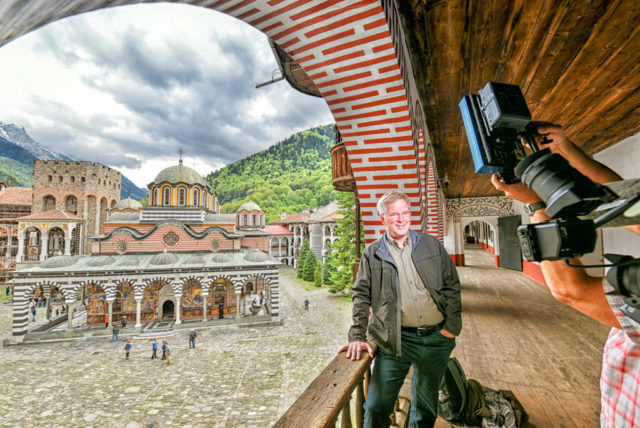
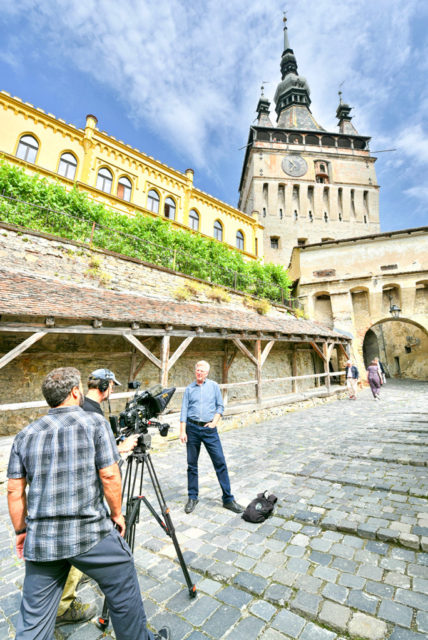
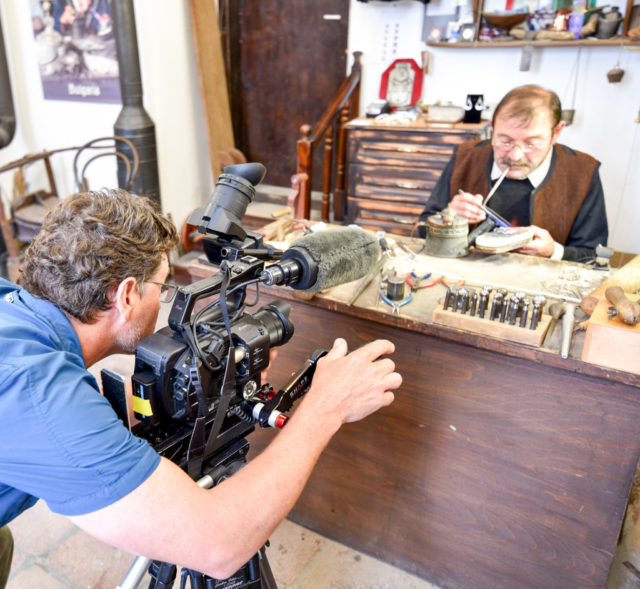
A TV shoot is a whirlwind of “covering the script” (making sure everything that’s mentioned is supported by footage). That includes three main components: “on-cameras” (where Rick explains difficult-to-cover topics by talking straight into the camera), “walk-and-talks” (where a local guide gives Rick an on-screen tour of a sight), and — most of all — “b-roll,” which is all that beautiful footage that can be artfully stitched together to convey a sense of place, and to illustrate points that are mentioned in the script.

Of course, everything is complicated by the need to constantly chase down good weather. Color-correction — the last step in the process — can do wonders to compensate for a cloudy day…but sunny is still better.

It takes about six days of intense travel to shoot a 30-minute episode. While that one-day-per-five-minutes ratio seems like it should be easy, people who work in TV field production are astonished that Rick Steves’ Europe can produce broadcast-quality shows at such a breakneck pace.

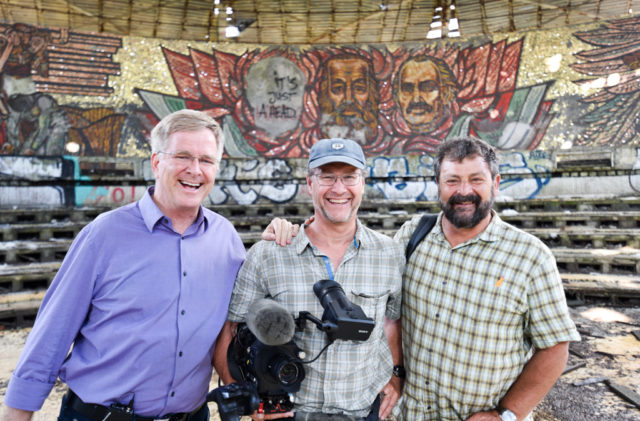
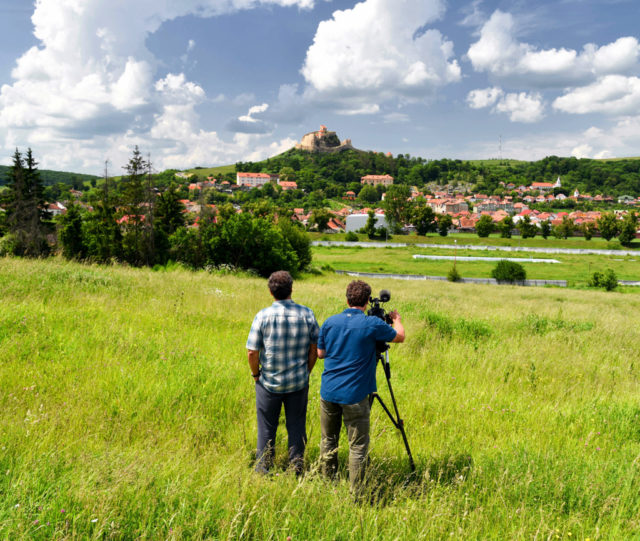
That’s thanks largely to Rick’s supremely talented “crew of two”: producer/director/fixer/gaffer Simon Griffith (the jovial, bearded Kiwi you see Rick dining with all over Europe); and a talented camera operator, who’s equal parts athlete and artist. I’ve worked with Karel Bauer, but other “shooters” have also worked with Rick and Simon.

That’s right: Except for rare occasions when an associate producer is dragging them down (ahem, ahem), most of the episodes of Rick Steves’ Europe you see were filmed with just that skeleton crew, occasionally assisted by a local guide…another detail that befuddles most TV production crews.

With more than 10 seasons of TV under their belt and an astonishing work ethic, Rick, Simon, and Karel are able to be unimaginably efficient. Simon usually hauls the tripod and other heavy gear, Karel also wears the hat of sound engineer (listening to the audio as he shoots the footage, to make sure it’s clean), and Rick…well, Rick’s an Energizer Bunny who — between writing, re-writing, and filming on-cameras, and polishing his guidebooks, blogging, and running his business on the side — still manages to leave everyone else in his dust.

Step 3: Deal with Serendipities, Good and Bad

While the “shooting script” provides a blueprint for filming, the crew has to be ready to flex with whatever comes up. Rick is constantly rewriting to accommodate changing conditions, bursts of inspiration, happy accidents, unhappy accidents, and whatever might find its way into Karel’s viewfinder. The rewriting process — called “scrubbing the script” — is also collaborative, as Rick debates each and every word with his weary crew…often late into the evening, after the gear is stowed, or on long road trips.

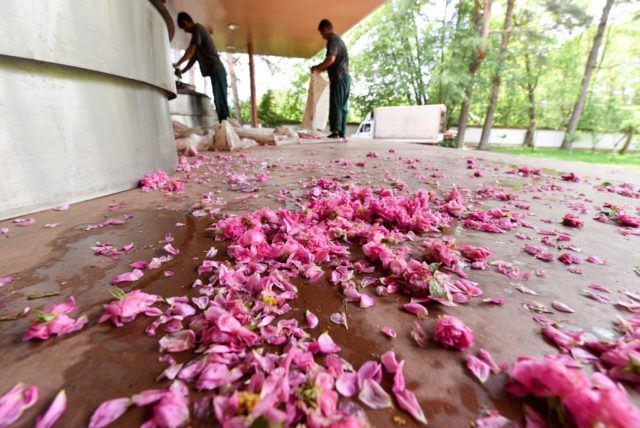
On the Bulgaria and Romania shoot, we enjoyed lots of serendipities — both good and bad. Bulgaria, a wonderful and underrated little country, provided us with vivid and surprising moments. For example, one morning we woke up in a remote town to find it was the day of their annual parade celebrating Slavic culture. And our visit coincided perfectly with the early-summer rose harvest, on the outskirts of that same town.

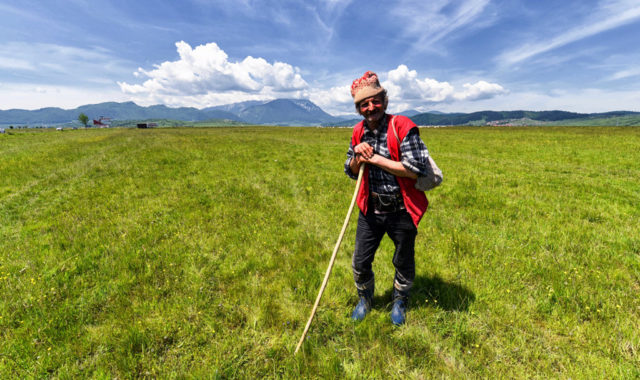
Romania — while a stunning and fascinating land — treated us to more bad serendipities than good ones. Even so, we found Romania so dense with great travel that we wound up having to cut it to the bone to reach our 30-minute runtime — losing one of my favorite (and most challenging-to-film) segments, at a remote shepherd’s settlement high in the Carpathian Mountains.

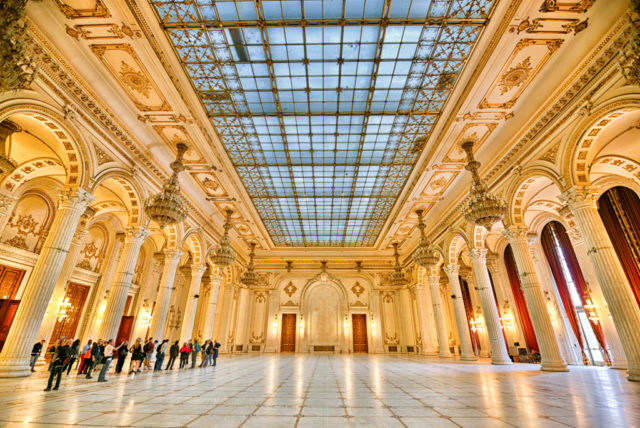
Romania also presented us with one of the most bizarre experiences the crew had ever had, when — after months upon months of assurances we’d have access to film the interior of the over-the-top Palace of Parliament — at the last minute, Karel was forced to sneak in his camera with a pack of tourists…only to be unceremoniously kicked out. Then, a couple of hours later, we got a phone call that permission had come through after all. Returning to the parliament, we were greeted with a literal red carpet and complete VIP access. (I was told this insane experience was far from typical…which, come to think of it, would be an appropriate tourism slogan for Romania.)

Step 4: Post-Production

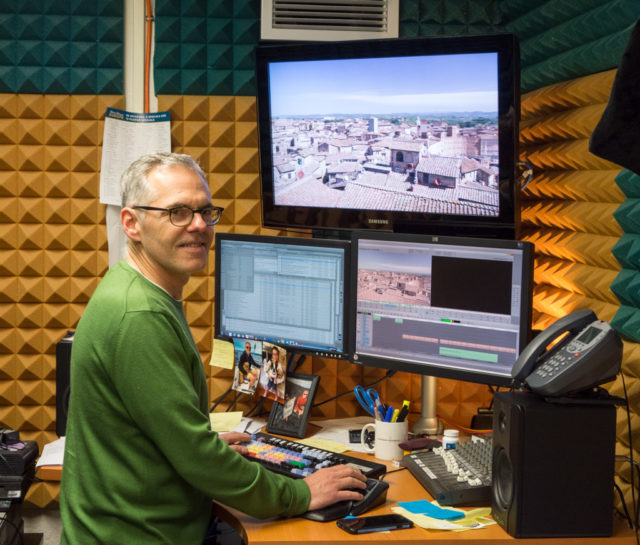
After all that work in the field, we still don’t come home with a TV show — just with a polished script and a bunch of raw footage. That’s when our master editor, Steve Cammarano, takes over. Steve has edited every single one of the more than 100 episodes of Rick Steves’ Europe (plus all of our specials). And he has the process down to a science.

First, once Rick is satisfied with the final script, he records a rough “scratch track” that Steve can cut to. Then, Rick and Simon watch Steve’s rough cut to make final changes, with the help of script consultant (and RSE Special Projects Manager) Risa Laib. (They often come up with some clutch last-minute fixes.)

The final soundtrack is recorded, and the show is color- and sound-corrected to even out inconsistencies between cameras and filming environments. Our graphics team comes up with the maps used on-screen to orient the viewers. And finally, the show is complete and delivered to public television.

Step 5: You Sit Back and Watch

That’s where you come in. Whether you’re tuning in on your local public television station, streaming, or watching on DVD, it’s a privilege for us to bring Europe into your living room.

In case you didn’t realize it, every single episode of our TV series is available to stream, completely free and ad-free, in its entirety, on our website, YouTubeFacebook, and Hulu — including those shows on Bulgaria and Romania. The twelve brand-new episodes of Season 10 will air nationwide on public television beginning in early October, and soon after each episode is on TV, you’ll be able to find it on our website. And, if you’re still into Blu-ray or DVDs, you can get them in that format, too. (We’re preparing a new Blu-ray/DVD anthology that will include all 10 seasons, plus all of our specials, which will be available in time for the holidays.)

Phew! That’s a whirlwind account of the tedious but immensely rewarding process of travel TV production. At the end of the day, it’s all more than worth it — for the joy of sharing Europe with our American viewers. Thanks for watching.

What are your favorite episodes of Rick Steves’ Europe? Any places you wish we’d film?


For more on Rick Steves’ Europe Season 10, check out our TV page.

For all of my full-length “Behind the Scenes” posts, with lots more photos and anecdotes, you can find the complete lineup here.

If you’d like to watch a video version of this post, check out the wonderful “Making Of” episode of Rick Steves’ Europe from a few years ago — so you can see Rick, Simon, and Karel in action.