My co-author and frequent collaborator, Cameron Hewitt, is well-traveled, smart, and insightful. And, while he and I are in perfect sync in our travel styles and priorities, he gives voice to the next generation of "Rick Steves travelers." Join me in enjoying his reports right here. —Rick

Iceland’s Wild Westfjords: Happy Icelanders and Filthy Cars at the End of the World

Iceland’s Westfjords dangle like a giant bunch of grapes from the northwest fringe of this rugged island. The region’s unpopulated northern reaches nearly kiss the Arctic Circle. Relatively few tourists make it up here — some say about one in ten, others say more like one in twenty. It’s remote, rustic, and as off the grid as you can get without a monster truck. And that’s why I’m going. The Westfjords are home to the world’s most impressive bird cliffs (Látrabjarg), rusted old boats and airplanes discarded along the side of the road, endless chains of jagged fjords and mountain passes, and one of Iceland’s most stunning waterfalls (Dynjandi).

As I’ll discover, it takes a special breed of traveler to visit the Westfjords…and a special breed of Icelander to live at the edge of the world. For being so sparsely populated — just over seven thousand people in an area about the size of Connecticut — the Westfjords have an unusually high concentration of happy people ready to chat your ear off. (Or maybe they’re just lonely.) For all its natural wonders, Iceland’s most underrated feature may just be the Icelanders themselves. A bit introverted, but warm, smart, and funny, the Icelandic people have a can-do spirit and an easygoing charm.

Ferry to the End of the World

I’m catching my ferry to the Westfjords from the main town of Snæfellsnes, Stykkishólmur. (I know, I know. But the more you travel through Iceland, the more you grow immune to its silly names.) Stykkishólmur is a tiny town, with about 1,200 people, but compared to where I’m headed, it feels like my last dose of “civilization” for a few days. I gas up my car and stock up on discount groceries at Bónus, then head to the harbor. It’s the first week of September — still prime time in most of Europe — but I’m getting the impression that here in Iceland, the busy summer season will be finished in a matter of hours, not weeks. I feel like I’m boarding the last chopper out of Saigon.

Stykkishólmur’s little harbor huddles behind a basalt islet, which protects the town from the surf of the wide Breiðafjörður. Colorful boats, tethered neatly to no-nonsense piers, bob upon the gentle swells. Of the row of food trucks lining the harbor, only one is open. There I’m warmly greeted by Martin, tall and lanky, with black curly hair. He seems lonesome and chatty — as if he’s been waiting all day for a customer. Perusing the menu, I settle on the lamb burger. “Sorry,” he shrugs, “We’re out of lamb. Actually, we’re out of almost everything. We’ll close for the season as soon as we use up our supplies. We do have some beef burgers left!”

A rousing endorsement. But I decide to help Martin use up his meat. “One, please.”

While he griddles up my burger, Martin tells me he’s from the Czech Republic — a small town in Moravia. He and his girlfriend came to Iceland, bought this truck, and have been slinging burgers here at Stykkishólmur’s harbor all summer. But the customers dried up a week or two ago. “When we signed the lease, it was for five and a half months. So we were optimistic. They didn’t tell us that the actual season is only about two months.”

Still, business has been brisk, and they’re satisfied. In a few days, he says, they’ll close up the truck and drive it 400 miles to the opposite end of Iceland — the tiny village of Seyðisfjörður — where they’ll catch the two-day ferry to Denmark, then drive the rest of the way back home. All in all, it’s about a week’s commute to end the season.

The burger’s ready. And it’s delicious — quality, locally sourced beef, pickles with a sweet Slavic punch, and perfectly seasoned. “Do you have Diet Coke?” He looks in the fridge. “Yep, last one!” I’m all too happy to help Martin zero out his inventory.

Wishing Martin luck, I head for the ferry. It’s a hulking beast of a ship, fittingly named Baldur — the Tom Brady of the Old Norse pantheon. The Baldur, which looks like it could be an Arctic icebreaker, feels too big for what is essentially a tourist vessel. But in the torrid Atlantic waters of northern Iceland, it’s not overkill.

The end-of-season closure extends to the on-board café, which is shuttered tight. The Baldur appears to be at about one-tenth capacity. Once the small number of cars have loaded up, beefy Baldur charges out into the Breiðafjörður. At first it’s calm. But after a half-hour, we hit some serious surf and the ship begins teetering up and down. Thank goodness for my cast-iron stomach.

An hour and half into the crossing, we pull up to a tiny, flat island — aptly named Flatey — in the middle of the fjord. It’s a famously remote place, with just a few colorful shiplap houses, a historic church, and year-round residents numbering in the single digits. As our gigantic ferry sidles up to the dock, an antique deckhand — who looks like Santa Claus, if he were a very skinny whaler — hobbles out and loops our anaconda-sized line around a cleat as big as a garbage can. They winch up a rusted gangplank on spindly wheels and attach it to the side of our ship, allowing two intrepid backpackers to walk off for their night on a desolate rock in the turgid bay. Fisherman Santa helps us untie our line and waves us a grizzled goodbye as we head back out to sea.

Two and a half hours into our journey, we approach a giant boat dock on an uninhabited fjord. A garbled announcement instructs us to return to our cars, so the few passengers on board head down into the bowels of the ship. We run into a closed door with a big sign telling us not to enter the car deck while the ferry is in motion. So we wait for someone to come give us the go-ahead. And we wait. And we wait. Until well beyond the point when it feels like we’ve stopped moving. Finally I grab the giant wheel on the door, give it a spin (as if retracting the periscope), and step through into the car deck…where the crew has been impatiently waiting for all of us to get our cars out of the way.

“I Think He’s Going to Pull Through!”

Driving off the ferry, I split off from the main flow of traffic. After two and a half hours of intense rocking, I’m in need of a little R&R, and I’ve scouted a thermal swimming pool hiding in a tiny settlement a few minutes’ drive away. Spotting the little “head poking above water” sign that promises a hot-water dip anywhere in Iceland, I pull up a gravel road to a little gathering of cute wooden bungalows. Sure enough, a fine swimming pool complex perches on the ridge overlooking the fjord, with not a soul around.

I park and walk up the path to reconnoiter the pool. Someone in the nearby house spots me and emerges tentatively, with a mix of surprise and suspicion. He’s the caretaker of this little holiday camp — a gentlemanly Icelander with a twinkle in his eye. “Swimming pool?” I say. “Yes! Naturally heated, no chemicals. We’re closing next week.”

Now, the thing you have to understand about Icelandic swimming pools is that they aren’t just swimming pools. They’re basically gigantic hot tubs. What looks like a standard backyard pool is bathwater-warm. Nearby simmer “hot pots” that steam at around 100 degrees. When people visiting Iceland — chilled to their bones even in the blustery midsummer months — rhetorically ask, “How do people live here in the winter?”, they don’t realize there’s a very good answer: Icelanders survive their frigid climate by soaking in hot water with their friends and neighbors every evening. This volcanic island has hot water in abundance. And the Icelanders know exactly what to do with it.

It’s sunny but brisk, and I have the pool (and, really, the entire fjord) to myself. The pool is so small I can almost do a full lap without taking a breath. Windows wrap entirely around, offering views over the fjord as I paddle. It’s Icelandic bliss. Welcome to the Westfjords.

As I splash around, I notice the caretaker lurking outside one window. He motions me over, so I swim to him. He shows me a little brown sparrow in his hands. “Poor little bird!” he says. “He flew into the window. He’s very, you know, confused. I hope he will be OK!”

I wish him luck and go back to my laps. A few minutes later, the caretaker brings me a cup of water to stay hydrated. “That little bird — it’s so sad. I don’t think he’s going to make it.”

I voice my sympathy and get back to swimming. A few laps later, the caretaker appears again with another update: “I think he’s going to pull through!”

Finishing my swim, I get changed and thank my host for his hospitality. He points toward the bird, who’s convalescing on the nearby lawn. “I think he’ll be OK. Unless the arctic foxes eat him.” I wave a cheerful goodbye and wish both of them the best of luck.

Back in my car, I drive 45 minutes to the town of Patreksfjörður. Maybe it’s the hot-water coma talking, but it’s one of the most stunning drives of my life — with breathtaking fjordside scenery, then a mountain pass that twists up over a jagged volcanic terrain that looks positively Martian. Way up at the summit, on a little plateau next to a gurgling waterfall, stands a statue made of stacked stones — an Icelandic tradition upon completing a challenging construction project.

Cresting the pass and twisting back down to the fjord, I follow the shoreline to my hotel. Patreksfjörður is a functional settlement perched on a flat spit poking into a gigantic fjord of the same name. (Incidentally, this describes essentially every town and village in Iceland.) There’s no “sightseeing” in Patreksfjörður. But — with gas pumps, a few hotels and guesthouses, a smattering of eateries, and two grocery stores — it’s a handy hub for visitors to the southern Westfjords. With just 675 souls, it still qualifies as a metropolis by Westfjords standards.

Here at the fringe of the season, very few restaurants remain open. I can either have a burger at the gas station, or head to what is essentially the only real restaurant in town, Stúkuhúsið. Fortunately, it’s a wonderful spot, with a cramped and convivial interior and three different “fish of the day” meals — all of them fresh and flavorful. I try to resist my server’s suggestion to check out the glass tower showing off a variety of homemade cakes. I fail miserably.

It’s a bit early for the Northern Lights, but it’s possible I’ll spy some. Settling into my fjordside hotel, I keep peeking between the shades, like an excited kid on Christmas Eve hoping for a reindeer sighting. Finally, around midnight, I end my search and get some sleep.

Disassembled DC-3s and Free Sweaters in the Middle of Nowhere

From Patreksfjörður, it’s a long but satisfying day trip south to one of the world’s most famous bird cliffs, Látrabjarg. Along the way, more Icelandic encounters await.

Bright and early, I hit the road and begin winding around the Patreksfjörður. After touch-and-go-weather for the last few days, it’s gloriously sunny. Curling around the shoreline, I spot the rusted hull of a ship beached along the shore — the Norwegian-built Garðar, still wedged where it ran ashore in 1981. While a roadside shipwreck would turn heads in most places, it seems fitting here in the Westfjords.

Continuing around the fjord, the pavement runs out. I’ll be on unpaved roads for the next several hours. My first stop is Rauðasandur — meaning “Red Sands.” To get there, I turn off from the main road and make my way over the pass. Cresting the summit, a breathtaking panorama of rugged rock and epic waterfalls opens up before me. Making my way down to the shoreline, I arrive at the broadest sandy beach I have ever laid eyes on. It’s so big, it barely seems to qualify as a “beach.” I turn left and head for a campground called Melanes. A few battered trailers perch on a grassy lawn, and I’m pleasantly surprised to find toilets and showers with running water.

Leaving my car behind, I walk through shimmying sea grasses — hopscotching over steppingstones to ford churning little streams — to an attractive ensemble of basalt cliffs and sea stacks. I scamper down to the beach, where the saturated sand jiggles under my feet. Gigantic black stones are weathered to a high shine, like the polished marbles of a giant. Above them tower jagged Jenga towers of black basalt. I have rarely felt so far from civilization.

Back in my car, I retrace my path over the rocky pass, then carry on along the fjordside road, passing above an abandoned airstrip. (This area is so remote, even its tenuous aerial tether to the rest of Iceland has been severed.) The road curls around several dramatic headlands — at the base of great, towering cliffs — alternating with little pockets of farmland.

Arriving at one of these, Hnjótur, I pull over at a humble red house (one of about five or six in the settlement). I’m hoping to scope out this guesthouse for our guidebook, but I’m skeptical that anyone’s home. Much to my surprise, my doorbell is answered by Kristinn, the innkeeper. He’s shutting down for the year, he explains, but he’s happy to show me around. Would I like a cup of coffee?

Like many people who choose to live at the end of the world, Kristinn is friendly…almost suspiciously friendly. The kind of friendly that suggests he’s either a chatty small-town type, or a serial killer.

As we talk, I’m pleased (and relieved) to determine that Kristinn is the former. When I ask about the folk museum I’ve heard about — just a few hundred yards up the road, and next on my list — he proudly tells me it’s named for his father, who started the collection decades ago. Pointing out the window, Kristinn explains that the big hangar used to be part of the folk museum, but now it’s his own private exhibition of historic airplanes. A DC-3 sits disassembled in big pieces on the lawn — like a Lego set abandoned by a bored toddler.

“That was built in 1944,” he said, “and later became part of US forces in Iceland, based at Keflavík, now the main international airport. In 1973, it took part in the evacuation of the Westman Islands, when the volcano erupted there. It was retired in 1977 — after some 20,000 flight hours, from the Arctic Circle to the Antarctic Circle. My dad had it brought here for the museum. There’s another plane inside the hangar. Would you like to see it?”

Kristinn fishes a loose key out of a junk drawer and hands it to me. “Go check it out. It’s a Russian plane. But I have just one condition: I want you to tell people that the DC-3 isn’t just an old plane. It’s a memorial to all US Navy and Marine Corps troops who served in Iceland. This is very important!”

I head over for a closer look at the DC-3, and let myself inside the hangar. There — tucked unceremoniously between paint cans, old fishing equipment, and all the assorted bric-a-brac you’d expect to find in some remote Icelander’s garage — is a Russian Antonov AN-2 from 1967, covered in Cyrillic lettering. The plane made an emergency landing in Iceland in 1993…and was deemed not worth fixing. So here it sits.

I head back to return the key to Kristinn, who now feels like an old friend. I can tell he’s flattered by my interest in his collection, and I’m enjoying an unexpectedly lively conversation at the edge of the world. Before leaving, I admire the hand-knitted Icelandic sweaters for sale in one corner of the breakfast room. It’s my third time in Iceland, and I still don’t own one — I’m not much for souvenirs, but one of these sweaters is on my list.

Noticing my interest, Kristinn says, “Do you want one?” I’m startled by the question, and politely decline. But I can tell he’s serious. “My wife spends the entire winter knitting those by the fire. We haven’t sold as many as we expected, and our season is over. She likes to stay busy — you’d be doing us a favor to take one!”

Incredibly flattered, I agree. He pulls the $250 price tag off the sweater and hands it to me — and insists that I take a matching beanie, too. Loading the precious cargo into my backseat, I wave goodbye and continue on my way.

The World’s Finest Bird Cliffs

The main reason people come to this godforsaken, pavement-forsaken corner of Iceland is to see one of the most stunning bird cliffs on the planet: Látrabjarg. From Kristinn’s place, it’s another hour, hour-and-a-half on borderline-passable roads. I go over a couple more mountain passes, where the hard-packed surface makes things workable. But the final stretch is harrowing. Coming down over the last pass, I enter a tiny settlement of just a few houses, whose residents really, really, really want you to drive just 30 kilometers per hour — they’ve erected a half-dozen handmade signs to that effect all along the road.

Here the road flattens out, yet it becomes far harder to drive than the many rocky passes I’ve already conquered today. My teeth and my tires rattle as my car plays xylophone along the washboard surface. I straddle red rivulets of iron-rich soil that stream down the middle of what some might choose to call a “road.” At one point I mount the grassy berm to prevent a gigantic puddle from swallowing my little car whole. And then, in the absolute middle of nowhere, I come across a freestanding little toilet. A pungent smell fills my car, suggesting that one of Iceland’s countless sulfur springs is nearby.

Finally I arrive at a big parking lot next to a little lighthouse. I’ve made it: Látrabjarg! But my heart sinks just a bit. After such a long journey, it’s…underwhelming. At least, from the parking lot.

The weather has closed in, and I’ve spent the last hour dodging raindrops. Here at the westernmost point in Europe, there’s nothing to stop storms from rolling in across the Atlantic. Or, more to the point, this cliff is what stops storms that roll in across the Atlantic.

Getting out of my car, I notice a little squall swirling about a mile offshore. I have a feeling that I’m about to get rained on. But I’ve come this far. I bundle up and head up the well-marked path, climbing up some uneven stairs, then following a narrow, rutted path through the middle of a wide meadow. On my right, that meadow abruptly ends at a dramatic drop-off to the swirling seas below.

Hiking about 10 minutes up the path, I turn to look back, and my breath catches in my throat. Finally I understand why this place is so special. From this point, I can see the pockmarked cliff face plunging from the grassy lawn straight down to the churning Atlantic. And embedded in that cliff face are thousands upon thousands of sea bird nests. From here, Látrabjarg stretches for more than seven miles, reaching a height of about 1,400 feet — taller than the Empire State building (or, for Icelanders, six Hallgrímskirkjas stacked on end).

In the summer, this cliff is home to one million sea birds, who drift in with warm currents, nest and breed here, and then head back out to sea when things cool off. (When I asked one local why the tourist season is so short, he gave me a perfectly succinct answer: “Once the birds leave…so do the tourists.”)

Now in early September, most of the birds have left — but several remain. The cliffs are streaked with white, and the stench of bird shit is overpowering. Delicate little feathers are scattered across the grass, like flower petals after a wedding. The turf is spongy and embedded with hidden rocks and other tripping hazards. And getting closer than several feet from the cliff edge produces intense vertigo. Gingerly, oh so gingerly, I tiptoe up to the edge and peer down.

The cliff stretches infinitely in both directions. I squint to see colorful little dots bobbing along the top of the cliff in the distance — intrepid visitors, bundled like me in their parkas, going for an incredibly scenic hike. Looking down into the tumultuous sea, I think back on a story I heard earlier today — one of those tales you hear when traveling that seem almost too perfect to be true:

In December of 1947, a British fishing trawler crashed against these rocks. A volunteer rescue squad leapt into action and came to the cliffs with ropes and pulleys, ultimately saving 12 of the crew members. A year later, a filmmaker making a documentary enlisted the villagers to re-enact the event. And just as they were all rigged up in their pulleys…a different British trawler ran aground nearby. And so, naturally, the “actors” rescued those sailors, as well.

It’s hard to top an experience like Látrabjarg. So I don’t try. On an intense traveler’s high, I float back down to the parking lot, and only once back in the car do I notice that that squall is still swirling offshore — it never made its way to me.

I drive the two and a half hours back to Patreksfjörður, numb to the bumps and rumbles. Back in town, I pull into my hotel’s parking lot, taking my place in a long row of the filthiest tailgates I have ever seen. Each car’s rear end is coated with a thick layer of multicolored grime. I have a theory that Icelandic car rental companies heavily favor white vehicles, so they can assess in an instant just how much abuse you’ve put your car through.

Not quite ready for this day to be over, I decide to check out Patreksfjörður’s swimming pool — reputed to be something special. The raves are earned. The glassed-in complex clings between the upper road and the hillside, with simmering pools perfectly positioned to look out over the fjord, the town’s rooftops, and the setting sun. Toggling between the different pools — warm, hot, very hot — I realize I’ve enjoyed one of my best travel days ever.

Sea Monsters, Grand Waterfalls, and 50 Unpaved Miles

The next day, I hop into my car and head north. My drive today connects Patreksfjörður (hub of the southern Westfjords) to Ísafjörður (capital of the northern Westfjords). In between are 110 miles of rugged roads — about half of them unpaved. The sun has come out again, and I’m in for a stunning road trip.

Leaving Patreksfjörður in my rearview mirror, I make my way north, connecting a charm bracelet of humble fjordside settlements, linked to each other by scenic mountain passes. At one point, I pull over at a random little complex of open-to-the-public thermal pools, perched high on a cliff…another reminder of how the Icelanders love their hot water.

The tiny town of Bíldudalur — 200 people living on a precarious shelf at the base of a cliff — is the “last chance gas” point on the drive. At the entrance to town, Vegamót Bíldudal has a tiny grocery store up front, and in back is a cozy restaurant that does a brisk business selling travelers fish-and-chips to fortify them for the long drive ahead. When I stop by, it’s too early for lunch, and the dining room is occupied by a little scrum of what look to be retired fishermen, pouring coffee into their white beards.

Leaving town, I head along the shoreline of the Arnarfjörður, grooving in and out of its many arms. The Arnarfjörður, shaped like a giant squid, is famous for its “sea monster” lore. Maybe it’s the latitude, maybe it’s the cold, or maybe it’s the boredom — but locals seem to constantly see mysterious creatures out in the fjord. Back in Bíldudalur, one entrepreneur has even opened a “Sea Monster Museum.” It feels like a wannabe-Loch Ness tourist-baiting strategy, but, given the dearth of other tourist attractions in this area, I have to admire the effort.

Rattling through epic scenery on rutted gravel roads, I lose count of the fjords. On one, I pass an evocative, remote farmhouse with a distinctly triangular roofline. On another, I pull over at a picnic table perched just so, overlooking a rushing waterfall. On another, I drive past a tidy, well-kept, open-air swimming pool — just sitting there alongside the road, with changing cabins nearby — fed by natural thermal springs.

And then I start heading up. And up. And up. As scenic as this drive has been, nothing could have prepared me for the mountain pass I traverse next. The road crests in a rocky landscape that feels like the very rooftop of Iceland, if not all of Europe. Off on the left, I can take in the entire Arnarfjörður, and all its convoluted inlets, with one sweep of the head. From here, it’s easy to understand how this remarkable landscape came to be: It’s a high, flat plateau, out of which have been carved great divots…the Westfjords.

Twisting back down to sea level on the far side of the pass, I steal a distant view of one of Iceland’s most spectacular waterfalls: Dynjandi. I can see it miles before I reach it. It tumbles like a bridal veil over the edge of the high, flat plateau that I’ve just crossed. Following signs to the parking lot, I cross a bridge over a churning river. Visually tracing its course uphill, I see how Dynjandi isn’t just one waterfall: It’s about one dozen, stairstepping into each other on their way down from the top of the cliff to the fjord’s shoreline.

I hike up the rocky trail that leads alongside the waterfall’s many stages. Each sub-fall has its own little viewpoint, where a sign identifies its name. There are no real “crowds” in the Westfjords, but the Dynjandi trail concentrates more human beings than I’ve seen in one place in several days. Still, those ranks thin out considerably as I make my way up the steep trail.

Finally I arrive at the main fall at the top, tumbling over the sharp cliff into a giant, chilly pool. This upper section alone is as big as an American football field laid on end — about 100 yards long, 50 yards wide. The thundering flow pulverizes a heavy mist into the air, spraying my glasses and camera lens with frigid souvenirs of Iceland’s fast-melting glaciers. Iceland fills any traveler with awe in the face of nature. And Dynjandi is one of the best places for exactly that.

Back on the road, I curl around yet another fjord on chunky roads. At one point I pass a busy construction zone. They’re boring a tunnel through the middle of the mountain to connect to the next fjord over. In a couple of years, my journey to Ísafjörður will be at least a half-hour shorter; a few years later, you’ll be able to subtract an hour. But if I’m being honest, I’m happy for the hardship. Driving on paved roads just doesn’t come with the same sense of adventure.

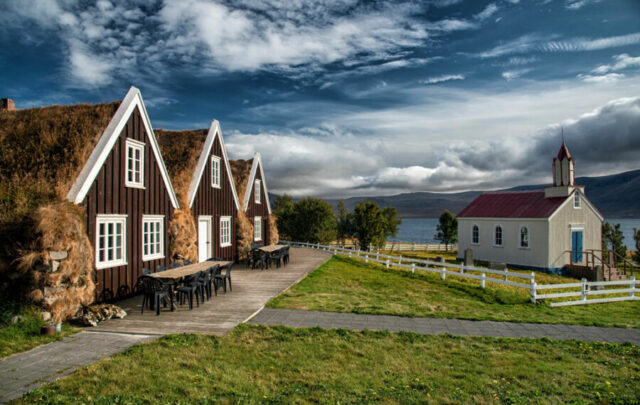
Before heading over yet another mountain pass, I pull over at Hrafnseyri, a tiny, middle-of-nowhere settlement that was the birthplace of Icelandic founding father Jón Sigurðsson, who lobbied the Danish government on behalf of Icelandic independence during the 19th century. Today his statue faces the Icelandic parliament building in Reykjavík. But here on a remote fjord, his birthplace is marked by a picturesque church and a trio of turf-roofed houses…an idyllic Icelandic tableau.
I twist my way up and over yet another epic, unpaved mountain pass. The last few days have made me numb to spectacular scenery — but even in that state, this road takes my breath away.

Returning to sea level on the other side, I also return to civilization for the first time in hours: At the village of Þingeyri, my tires grip pavement and my car seems to breathe a sigh of relief.

It’s midafternoon and I’m famished. So I drive into the lonely waterfront hamlet of Þingeyri and step into Simbahöllin — a hipster café filling an old general store. Despite being in what should feel very much off the grid, they have fast Wi-Fi, crispy waffles, and oat-milk lattes. I pay 20 bucks for a big, delicious bowl of soup and some bread, plus a coffee. Chatting with the clerk, I’m told that this café, too, is a few days away from closing for the winter. Will the last tourist leaving the Westfjords please turn out the lights?

Continuing on, I wind around the fjord and conquer my umpteenth mountain pass, made much easier thanks to the smooth road. Soon I reach the modern tunnel that takes me under yet another mountain pass to the capital of the Westfjords — and the end of my long journey.

Ísafjörður, Capital of the Westfjords

The town of Ísafjörður (literally “Ice Fjord”) occupies a big, flat spit in the center of 360 degrees of fjordland cliffs. From here, the Arctic Circle is just over the horizon. Despite being a regional “capital,” Ísafjörður is a humble burg. Driving into town, I pass Ísafjörður’s main landmark: an eyesore modern church, built in 1995 in an idiosyncratic architecture style that doesn’t quite come together. (I think of it as “beige pebble-clad Cubist-meets-Sydney Opera House.”)

Out at the tip of the peninsula is Ísafjörður’s historic wharf area — a tiny cluster of historic shiplap buildings. One of them is the local historical museum, and two others are, unbelievably, still residences — housing the only people who might be excited about living in a 200-year-old log cabin on a frozen fjord: museum curators.

It’s dinnertime, and I’m ready for a good meal. I step into the log-cabin-like tar factory from 1781, now a restaurant called Tjöruhúsið. While reservations are usually required, the waning season makes it easier to improvise — they’re able to squeeze me in, last-minute. I’m ushered to a big shared table with twentysomething American couple and a thirtysomething French couple. While waiting for our meal, we trade testimonials about how Iceland has stolen our hearts.

Tjöruhúsið is a bit of a tourist trap. But it’s the kind that you’re very happy to be trapped in. The meal begins with delicious fish soup that would, in itself, make a plenty satisfying dinner. But then comes the main course: A buffet line of oversized, sizzling skillets of different fish dishes, each with a different flavor profile, both traditional Icelandic and international. It’s one of the best meals I’ve had, capping another lifetime-best day of travel.

The next day, my guidebook-scouting tasks in Ísafjörður keep me very busy. But before leaving the Westfjords, I drive 15 minutes to Súðavík, on the next fjord over. There, filling an old house, is the Arctic Fox Centre, offering an education in Iceland’s only native land mammal — which ekes out a challenging existence in some of the harshest conditions on earth (their mortality rate is about 80 percent).

I’m warmly greeted by the manager, Sæmundur. He clearly adores the foxes and has dedicated himself to advocating for them. “Icelandic farmers complain about the foxes killing their sheep,” Sæmundur tells me, with a tone suggesting that he takes these allegations personally. “But the foxes only do what comes naturally, and they only attack the weakest sheep — the ones very unlikely to survive anyway.”

I head out back to the pen where two rescued foxes live. I just barely spot them, huddled sleepily under a little enclosure. Just as I resign myself to not getting a closer look, Sæmundur comes out, and the foxes spring to life, running over to greet him. He pulls some treats out of his pocket and begins feeding the two foxes, who eagerly climb up the walls of the cage to get a snack and a scratch from Sæmundur. They are beautiful animals — intelligent, bright-eyed, and clearly wild, without the affable domesticity of a dog or housecat. I can see exactly why Sæmundur has fallen in love with these creatures.

I wish I could hang out with Sæmundur and his friends longer. But I have a flight to catch. I zip back around the fjord to Ísafjörður’s tiny airport for my trip back to Reykjavik. (When I find the rental-car office unattended, I call the phone number on the contract. “No problem. Just slide the keys under the door.”) Arrive 30 minutes before takeoff, free coffee, no security checkpoint, friendly gate agents: Domestic flights in Iceland are my kind of travel.

As we leave the ground, the wheels retract back up into the belly of our little plane, and we fly higher and higher up a grand fjord, I realize I’ll be in downtown Reykjavik in just a half-hour. But I can’t express how happy I am that I took the very long way to get up here.


I was in the Westfjords writing a brand-new chapter for our Rick Steves Iceland guidebook; the second edition (with the Westfjords) is available in April 2020.

Want to Avoid the Crowds? Europe’s “Third-Rate” Towns Are Truly First-Rate

Europe is crowded — especially its big, famous sights. As you plan your 2020 travels, you may be looking to escape your fellow travelers. Here’s an idea: Consider going easy on Europe’s top-tier destinations, and instead check out some lesser-known places. Last year, I made a swing through what I think of as The Big Three: London, Paris, and Rome. But I also mixed in some smaller towns, including ones few travelers have heard of: Arezzo. Canterbury. Sarlat. And you know something? The experiences I had in Europe’s “third-rate” towns were truly first-rate.

Virtually everyone visiting Italy wants to go to the “first-rate” cities: Rome, Florence, and Venice. With more time, they add some “second-rate” destinations: Pisa, Assisi, Siena, Milan, and so on. But even once you get beyond those top tiers, Italy is rich with rewarding destinations.

I had this revelation when I spent a sleepy, rainy Saturday in the Tuscan town of Arezzo. It’s a midsize town that’s not included in our Rick Steves’ Italy guidebook — even with 1,250 pages of coverage, Arezzo doesn’t make the cut. I was here on the recommendation of an Italian friend, specifically to take a day off from the busy tourist towns I was visiting elsewhere in Italy: Assisi, Rome, and so on.  And I got exactly what I was looking for.

I love the endearing way that smaller cities have their own idiosyncratic claims to fame, which swell their residents’ pride. Arezzo has two: It’s home to a thriving weekend antiques market; and its Basilica of San Francesco is slathered with colorful frescoes by Piero della Francesca. I enjoyed those aspects of Arezzo. But mostly, I savored simply being alone in Italy…wandering all by myself through colorful and cobbled back lanes; having a memorable lunch at the town’s foodie splurge restaurant, just dropping in without a reservation; discovering a world-class neighborhood gelato shop; and browsing antiques alongside Tuscans furnishing their homes rather than tourists seeking souvenirs. I left Arezzo re-energized — and ready to plunge into Rome.

In England, everyone wants to go to “first-rate” London. With more time, they add some “second-rate” destinations — Bath, York, the Cotswolds, and so on. But there’s a steep drop-off in traffic when it comes to a town like Canterbury, where I retreated after two exhausting weeks of guidebook research in London. And, much as I love London, this trip reminded me that Canterbury is one of my favorite places in the UK.

Canterbury is best known for two things: First, its cathedral is the seat of the Archbishop of Canterbury, who leads the Church of England. And second, English majors know the town for its role in Geoffrey Chaucer’s 14th-century Canterbury Tales, in which a ragtag assortment of pilgrims swap tall tales and parables on their journey to that famous church.

Of course, Canterbury is not entirely “undiscovered.” The knot of half-timbered streets ringing its cathedral and its bustling High Street are packed with visitors. But many of them are day trippers, and most never leave that compact core of town. I loved simply wandering Canterbury’s back streets, following its idyllic river, discovering lush parks, ogling its tidy brick row houses mixed in with tipsy Tudor black-and-white half-timbered homes. Even just a few steps off High Street took me to areas that have never seen a tourist.

Near Canterbury, I also spent time hiking along Beachy Head and the Seven Sisters (a less famous but drastically more pleasurable stretch of white cliffs than Dover’s); explored the characteristic Sissinghurst Gardens; took a day off in the English beach resort of Brighton; and toured the sprawling and fascinating Hampton Court Palace, infused with vivid memories of Henry VIII. I also visited far-better-known Cambridge, Oxford, and Windsor, where the oppressive crowds left me exasperated. But thinking back on my little swing through southeast England fills me with a happy glow…even though it was socked-in and drizzling the entire time.

In France, Paris is the first-rate, world-class “must.” Second-rate destinations include Provence, Nice and the French Riviera, Mont-St-Michel, and Normandy. But my personal favorite slice of France is third-rate: the Dordogne, huddled deep in the southwest, and its lovely market town of Sarlat.

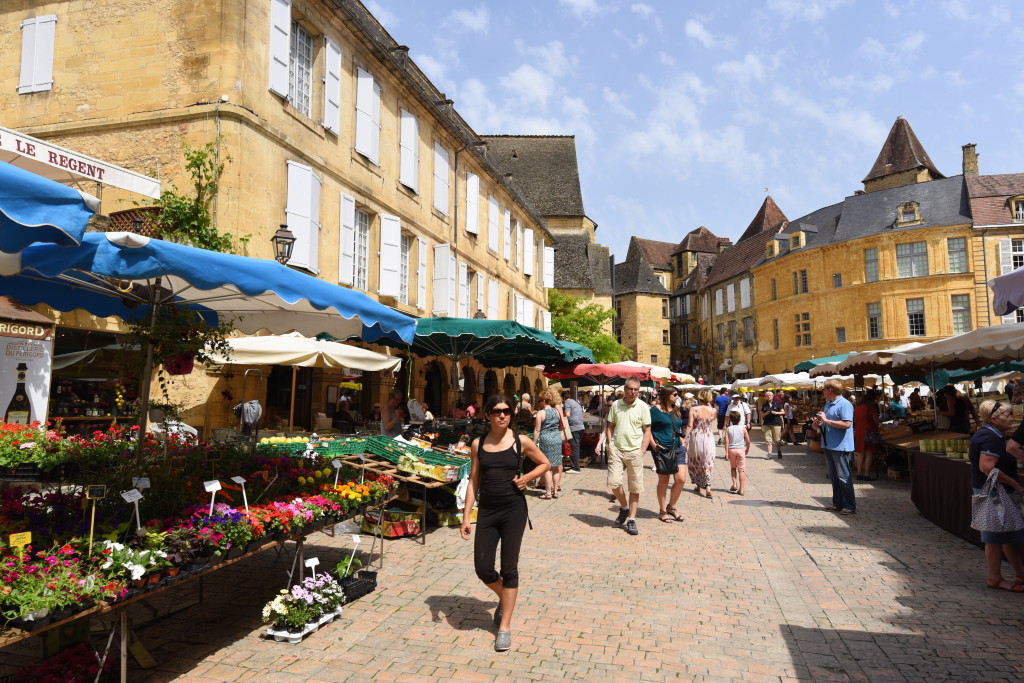
Built of a lemony sandstone that seems to suck in the warmth and glow of the sun, Sarlat looks like a film set. It’s a town that celebrates geese: A bronze statue of two proud waterfowl honors the importance of foie gras in the local cuisine (and commerce). Twice a week, one of France’s best street markets (and that’s saying something) curls through Sarlat’s interlocking squares. On market day, Sarlat is one of the most engaging places in all of France…a feast for all the senses. On other days, it’s still an utter delight, exuding a “let’s-retire-here” serenity that has tourists checking their 401(k) balances.

Italy is richer with life-alteringly-wonderful “third-rate” towns than perhaps any country in Europe. In addition to Arezzo, many of my favorites are in Tuscany, Umbria, and other parts of Central Italy: LuccaVolterraMontepulciano,  Orvieto… the list goes on.

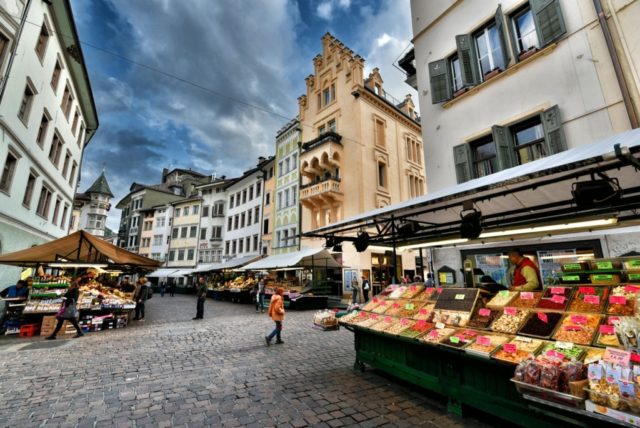
And then there’s Sorrento, perched over a serene bay just south of Naples, offering a genteel springboard for exploring the Amalfi Coast. And up north, a short train ride from Venice leads to the thriving university town of Padua, Romeo and Juliet’s hometown of Verona, and alpine Bolzano — so close to Austria you can practically hear the yodeling.

This is a fun game to play. In Germany, I love Berlin, Munich, Rothenburg, and the Rhine Valley — but Dresden, Erfurt, and Freiburg caught me off guard and captured my heart.

In Poland, Kraków is an all-star, but Gdańsk is an overlooked gem.

In Belgium, Brussels and Bruges are at the top of every traveler’s list, but Ghent and Antwerp are delightful discoveries that feel more authentic.

In Portugal, Lisbon is the undisputed champ, and Porto is the up-and-coming second city, but the sleepy university town of Coimbra is an unheralded joy.

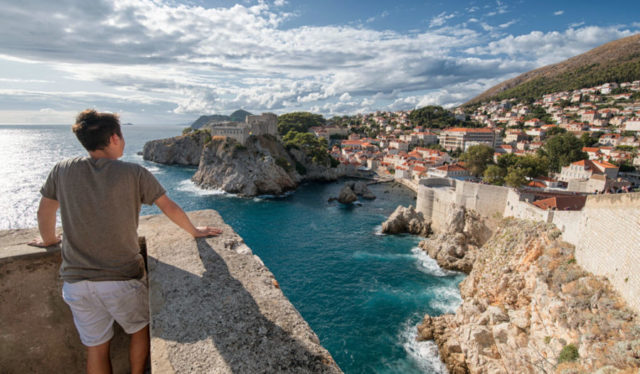
In Croatia, everyone flocks to Dubrovnik and Split. Why not check out Slovenia’s Piran, just up the coast?

In Iceland, Reykjavík, the Golden Circle, and the Blue Lagoon get all of the attention. But my favorite corners of Iceland are the Westfjords, Lake Mývatn, and Seyðisfjörður on the Eastfjords.

In Hungary, Budapest is top dog, but Eger and Pécs are woefully underrated.

In Spain, it’s hard to resist the pull of Madrid, Barcelona, Sevilla, Granada, and Toledo. But my favorite Spanish memories take place in Salamanca, Bilbao, Arcos de la Frontera, and Santiago de Compostela.

I’m not (necessarily) saying to skip those world-class destinations entirely. If you’ve never been to Paris…then go to Paris. But consider changing it up by also visiting a smaller city or town that isn’t a household name back home. If nothing else, see Europe’s “third-rate” towns as an antidote to the crowds.

By the way, reviewing these photos, I notice two things: Gorgeous places…with virtually no people. I mean, just look at all of those empty cobbles. If you want Europe to yourself, go third-rate.

What are some of your favorite “third-rate” towns in Europe, and why?


For more ideas of lesser-known places to visit, check out my recent list of 10 European Discoveries for 2020…and my Discoveries for 2019 and 2018, too.

For more details on all of the destinations mentioned here, check out our Rick Steves guidebook series, which includes coverage of the biggies along with the “third-rate” alternatives.

10 European Discoveries for 2020

In 2020, Europe will be more crowded than ever. Fortunately, there are still plenty of undiscovered alternatives: A sweet little beach town in Portugal. The quieter sides of London and Tuscany. The thriving tapas scene in an underrated Basque city. Street markets in Ljubljana and Provence. Switzerland’s capital and Bulgaria’s cultural capital. The wilds of northwest Iceland. The Tuscan island where Napoleon rallied for his final stand. And even a pilgrimage to a newly trendy nuclear meltdown site. These are my 10 European discoveries for 2020.

In 2019, my travels took me to London, Paris, and Rome; to Tuscany, Provence, and the Swiss Alps; and to the fjords of Iceland, the Julian Alps of Slovenia, and the white cliffs of England’s South Coast. And yet, reflecting on a  very busy year, I’m struck by how many of my fondest memories were forged not in the big-name destinations, but in out-of-the-way places. Continuing my annual tradition (check out my discoveries for 2018 and 2019), I’ve collected this list of Europe’s lesser-known highlights. You’ll notice a theme: Most of these are close to extremely famous — and extremely overrun — European biggies. It’s striking how, with a little effort, you can discover a little corner of Europe all to yourself.


The Westfjords, Iceland

About nine in ten visitors to Iceland hew close to the capital, Reykjavík, making speedy day trips to the Golden Circle, South Coast, and Blue Lagoon. That’s efficient and satisfying, if time is short. But to strike out on your own, head north — way north — to the Westfjords. Up here, just shy of the Arctic Circle, you’ll find boundless fjordland vistas, thundering bridal-veil waterfalls (including one of Iceland’s best, Dynjandi), plucky and kind locals, and one of the world’s top bird cliffs, a magical place called Látrabjarg. If you’ve made brief “layover” forays into Iceland and are ready to invest a few days in getting way off the beaten path…the Westfjords are for you. My trip to the Westfjords in September of 2019 — to write a brand-new chapter for the second edition of our Rick Steves Iceland guidebook (coming soon) — ranks as one of my all-time favorite road trips.


Untouristy London

London is a world in itself — endlessly, relentlessly, exhaustingly engaging. For some, it can be too much. When visiting London, hit the big sights, sure. (Ideally equipped with some smart crowd-beating tips.) But make a point to also break out of the tourist rut and become a temporary Londoner. During my two weeks in London in 2019, I cycled through “Little Venice” along the Regent’s Canal, explored hipster street markets (my favorite is Maltby Street Rope Walk Market), hiked across the urban wilderness of Hampstead Heath, explored the Shoreditch street-art-and-foodie neighborhood, checked out the food halls of Brixton, and rode a commuter train to the lovely suburban neighborhood of Dullwich. London is one of Europe’s most satisfying cities to explore. So…explore.

By the way, this approach also works like a charm in other overcrowded cities. For example, in Rome, consider skipping the Sistine Chapel and the Colosseum and heading to some exponentially less overrun alternatives. (I love Rome’s Monti neighborhood, across the street from the Ancient Forum.)


Bern, Switzerland

Switzerland’s seat of government is also its most appealing urban playground. Livable Bern is tucked quietly between some of Switzerland’s most heavily trafficked destinations — namely, the Berner Oberland and Lake Luzern. And yet, it’s one of the only European capitals where locals complain about how few tourists visit, rather than how many. Updating our Rick Steves Switzerland guidebook in Bern this fall, I enjoyed the city’s pristine arcaded streets, playful fountains, engaging museums, super-scenic bridges, warm sandstone townhouses, low-key students-and-politicians pace of life, and convivial park huddled under its towering church steeple. One Friday evening at sunset, I hiked up to a tranquil rose garden where everyone was just hanging out, peering out over the handsome cityscape, and waiting for the sun to go down. It was — in a most unexpected place — one of my favorite travel memories of 2019. (Our Best of Switzerland Tour ends with a night in this fine little city.)


Ljubljana’s “Open Kitchen,” Slovenia

Speaking of underrated capitals, Ljubljana has long been my favorite little city in Europe. And it just keeps getting better. While Ljubljana is inviting anytime, do your best to visit on a Friday (from mid-March through mid-October, weather permitting). That’s when the market square plays host to the wonderful Open Kitchen, one of my favorite food events in Europe. Each of the several dozen stalls is operated by a brick-and-mortar restaurant, from internationally recognized chefs to hole-in-the-wall dives. And the variety is bewildering: During my visit in early October, I saw vegan burgers, huge simmering pans of paella, Argentinian steaks, ribs and pulled pork, Indian dosas, Belgian waffles, poke bowls, Slovenian microbrews, Chinese noodles, hearty sausages and čevapčići, delicate macarons, and an entire roast pig on a spit. People settle into big shared tables or grab a seat on the cathedral steps to graze and socialize. It’s a melting pot of culinary Slovenia — home to one of Europe’s most underappreciated food scenes.


Salema, Portugal

Of the many things that Rick and I agree on, this tops the list: Salema — a tiny town on Portugal’s Algarve Coast — may be the best beach town in Europe. It’s just down the coast from big, glitzy resorts (like Lagos, Abufeira, and Portimão). But Salema feels like an idyllic, Old World hideaway. Visiting recently to update the Algarve chapter for our Rick Steves Portugal guidebook, I was utterly charmed by Salema. It doesn’t have enough hotels, and the ones it has are past their prime (or humble-by-design). Sunbathers share the beach with fishing boats, pulled just beyond the reach of the tide. Grizzled fisherfolk grab the shade at a beachfront café near the communal tractor they use to hoist those boats up onto the sand. The cobbled main drag climbs up through a whitewashed world of simple homes. And Salema’s beach — with powdery yellow sand, just the right amount of surf, vivid-yellow cliffs, and beach bars happy to rent you a thatched umbrella and a lounger — is made to order for a day of sunbathing and splashing.


Chernobyl, Ukraine

Yes, really. Chernobyl — a two-hour drive north of the Ukrainian capital, Kyiv — is a compelling, moving, and (if science is to be believed) safe place to visit. I went to Chernobyl in late 2018 (before it was “cool”) and found the experience captivating. With the smash success of HBO’s award-winning Chernobyl miniseries in 2019, the site of humankind’s worst nuclear accident is becoming known as a travel destination. Why visit? Touring Chernobyl offers an unforgettable lesson in radiation, and its capacity for both technological achievement and destruction. It lets you walk through a trapped-in-time, Cold War-era Soviet workers’ town, and witness the power of nature to reclaim abandoned civilization. And, most importantly, it shares the poignant stories of the brave men and women who sacrificed their lives to contain the meltdown, saving Ukraine — and, likely, much of Europe — from a horrifying fate. It’s hard to imagine a more memorable day out, anywhere in Europe, than Chernobyl.


Lesser-Known Markets of Provence, France

In the fall of 2019, my wife and I spent a week in Provence, making a point to visit a different market each day. We enjoyed the biggies (like the ones in l’Isle-sur-la-Sorgue, Aix-en-Provence, and Uzès). But our favorites were the lesser-known alternatives. On Tuesday in Vaison-la-Romaine, we browsed the floral soaps and lavender sachets that were piled on rickety tables between Roman ruins. On Friday in Lourmarin, we strolled into town along a plane tree-shaded boulevard, lined on both sides with stacks of colorful, plump produce and mounds of glistening olives. And on Sunday in Coustellet, at a lowbrow market filling the crossroad village’s dusty parking lot, we picked up a droopy bouquet of sunflowers, plus some smoked meats and mountain cheese for a picnic. The fact is, every day of the week,  a variety of markets enliven no-name towns all over Provence. Figure out which one’s nearest to you (listed in our Rick Steves Provence & the French Riviera guidebook)… and check it out.


Plovdiv, Bulgaria

Bulgaria remains one of Europe’s most underrated destinations. And if I had to pick one place to visit in Bulgaria, it’d be Plovdiv. This small city of 340,000 has a modern bustle, with a pedestrian-friendly shopping boulevard slathered in vivid street art. It has a funky hipster zone — nicknamed “The Mousetrap” — where communist-kitsch posters laugh down over diners feasting on upmarket Bulgarian fare. And draped over a hillside above the modern city, the atmospheric old town has a remarkably well-preserved Roman amphitheater, colorful traditional homes in the Bulgarian National Revival style, and one of Europe’s very best “hidden gem” art museums, featuring the works of Zlatyu Boyadzhiev —  the “Bulgarian Van Gogh,” who taught himself to paint left-handed after a stroke. If more people knew about Plovdiv, it’d be a tourist mecca. But they don’t…so for now, it’s all yours.

Plovdiv is one of the highlights on our Best of Bulgaria Tour; for a sneak preview, check out this segment from our Bulgaria TV show.


Bilbao Tapas Scene, Spain

The Basque Country is one of Spain’s culinary hotspots, and the genteel beach town of San Sebastián hogs much of the attention. But don’t overlook the bigger urban center of Bilbao, just an hour’s drive to the west. On a recent visit to Bilbao, I arrived late on a Friday evening. From my little B&B in the heart of the old town, I stepped out into a commotion of thriving bars and restaurants, each one with a creative array of tapas proudly lined up on the counter. Facing the Atlantic, Bilbao’s tapas bars come with more than their share of mysterious seafood — mounted on a crunchy little disc of baguette or skewered with a toothpick. As a bonus, you can go for an after-dinner stroll along the serene embankment, culminating in a floodlit view of Frank Gehry’s iconic Guggenheim Bilbao. (Our Basque Country Tour ends with two nights in Bilbao.)

If you’re headed out on a tapas crawl, and want to increase your odds of getting ostras (oysters) instead of orejas (pig’s ears), consider these tapas tips.


The Isle of Elba, Tuscany, Italy

This island is best known as the place where Napoleon was sent into exile. Turns out, it’s also ideal for a beach break from a busy Tuscan itinerary. Connected to mainland Tuscany by an easy one-hour ferry ride, Elba comes with a textbook “salty Mediterranean harbor,” a couple of evocatively faded Napoleonic palaces, scenic drives to secluded beaches, and an unforgettable gondola ride to the island’s rocky summit in an open-air cage that had me feeling like a parakeet going for the ride of its life. The designers of our brand-new Best of Tuscany Tour deserve the credit for this one: After they included Elba on the tour route, I went there to add it to the newly released 19th edition of our Rick Steves Florence & Tuscany guidebook… and I was hooked. (Check out my full report on Elba.)  In fact, I’ll be returning to Elba in 2020 as a tour member on that new Tuscany tour. And I can’t wait.


How about you? What are your favorite European discoveries? Where are you most excited to visit in 2020?


Need more inspiration? My “discoveries” lists for both 2018 and 2019 are still great choices in 2020.

I’ll be posting more about several of these discoveries — including Iceland’s Westfjords, the markets of Provence, and Switzerland’s underrated cities — in the next few weeks. To make sure you don’t miss anything, “like” me on Facebook.

Wherever you’re going in 2020…happy travels!

10 Movies and TV Shows that Capture the Essence of Europe

Movies and TV play a powerful role in shaping and enhancing our European travels. A Harry Potter franchise can dramatically boost tourism to the UK. Game of Thrones helped put entire chunks of Europe (Dubrovnik, Northern Ireland) on the “must-see” map.  A random little church in Scotland became flooded with tourists after appearing in a Tom Hanks blockbuster. And a recent surge in visitors to Norway is largely credited to a massively successful film — Frozen — that is not even explicitly set in Norway. Movies and TV show us the world…and inspire us to go experience it.

In a previous life, I had a two-year stint writing movie reviews for my hometown Gazette (which locals affectionately called the “Guess-At”). While my love of movies never went away, it was soon eclipsed by my love of travel. And to this day, before I go on any trip, I load up my iPad with movies and TV shows that are related to the places I’m visiting.

So, combining my two loves, here’s a list of the 10 movies and TV shows that most effectively stoke my wanderlust for Europe. A few caveats: This is a highly idiosyncratic list, weighted heavily toward Eastern Europe and 20th-century history (two of my travel passions). I’ve intentionally limited esoteric, foreign-language, art house films; instead, I’ve focused on mainstream entertainment that’s easy to find and easy to digest. And I also want to stress that these are, by no means, the 10 best movies about Europe. Rather, these are the movies that best capture the spirit of Europe, most successfully convey a sense of place…and get me excited for my next trip.

No Man’s Land (2001), Bosnia-Herzegovina

I’ve spent much of my career grappling with the breakup of Yugoslavia in the mid-1990s. And this egregiously underwatched film (which won an Oscar for Best Foreign Language Film) is the best I’ve seen when it comes to providing real insight into the conflict. No Man’s Land doesn’t attempt to explain the geopolitical or historical reasons for ethnic cleansing. Rather, it captures the experience of normal, everyday people on the front lines — swirling inside a whirlpool of agendas bigger than them. It’s about people who never really cared that much about sectarian strife until someone put a gun in their hands and dropped them into a trench. Surprisingly funny, it’s also darkly comic in showing the callous self-interest of international participants with no personal stake in the outcome. According to many of my friends in the former Yugoslavia, this film’s absurdist tone rings painfully true.


Before Sunset (2004), Paris

A pair of star-crossed lovers (played by Ethan Hawke and Julie Delpy) reunite in the City of Light nine years after spending a night wandering around Vienna together nine years earlier. We catch up on what they’ve been doing since Before Sunrise and watch them fall in love all over again, in real time. While Paris is only a backdrop, the film captures a real sense of place: bohemian cafés, cobbled back lanes, sun-dappled parks, and the sumptuous Seine riverbank. It’s well worth watching Before Sunrise first — just to get to know the younger versions of Jesse and Céline — but this middle chapter of Richard Linklater’s Before trilogy is, for me, the most compelling.


Saving Private Ryan (1998), Normandy

As a World War II buff and a proud American, I’ve never traveled anyplace that filled me with a more humbled appreciation for my forebears than the D-Day beaches of Normandy. The only thing that can make a visit to the rusted tank barriers, evocative cemeteries, and abandoned gun emplacements on France’s sandy northern coastline more poignant? Heading back to your hotel and watching Saving Private Ryan, which captures both the epic scale of Operation Overlord and its human cost. (If you’re left wanting more, the HBO miniseries Band of Brothers — produced around the same time by many of the same filmmakers — offers a deeper dive into the Allied invasion of Europe.)


The Secret Life of Walter Mitty (2013), Iceland

https://www.youtube.com/watch?v=HddkucqSzSM

I feel conflicted about this one. While I admire its gee-whiz optimism, and I’m charmed by the lead performances by Ben Stiller (who also directed) and Kristen Wiig, ultimately it doesn’t quite stick the landing. Even so, when I’m planning a trip to Iceland, I find myself getting an itch to rewatch it, if only for the marvelous use it makes of Icelandic filming locations. In one scene, the title character — epically, if nonsensically — skateboards his way down a long, curving mountain road to a fjordside village, before escaping from an erupting volcano. Iceland also stands in for Greenland and for the cut-glass peaks of the Himalayas. And, to its credit, Walter Mitty captures the pure joy of venturing out, for the first time, into a big, exciting, fascinating world.


Schindler’s List (1993) and The Pianist (2002), the Holocaust in Poland


This one-two cinematic gut punch brings to excruciating life the reality of the Holocaust in Poland. Steven Spielberg’s masterpiece (and Best Picture Oscar winner), Schindler’s List, tells the story of the Jewish people who lived in the Kraków neighborhood of Kazimierz. (It was also filmed there, which revitalized interest in a rich Jewish heritage that had been largely swept under the rug during communism.) And The Pianist features Adrian Brody (in a role that won him the Best Actor Oscar) as Władysław Szpilman, the acclaimed Warsaw concert pianist who became a refugee hiding out in his own city. While both films do a remarkable job of dramatizing a dark chapter in Polish history, the scenes in The Pianist that show a broken Szpilman stumbling through the rubble of Warsaw are particularly poignant in conveying the full impact of war and genocide.


Outlander Season 1 (2014), Scottish Highlands

A love letter to the Scottish Highlands, Outlander paints a vivid portrait of rural Scotland at its zenith in the mid-18th century, immediately before the Battle of Culloden sparked the decline of the clan system. Unapologetically racy (in a Fifty Shades of Plaid kind of way), it’s also a compelling love story — thanks to a magnetic lead performance by Catriona Balfe as a WWII-era English nurse magically transported back two centuries. While working on our Rick Steves Scotland guidebook, I found Outlander the perfect way to wind down at the end of each day of driving along moody lochs, bonny glens, and stony villages. (And my Scottish friends gave it high marks for historical accuracy — particularly compared to the many liberties taken by Braveheart.) Later seasons spend more time away from Scotland — leaving much of that Highlands magic behind — but Season 1 is a Scottish treat.


Good Bye Lenin! (2003), Cold War East Berlin

This funny, touching, surprisingly lighthearted movie offers glimpses into what it was like to live behind the Iron Curtain — before, during, and after the transition from communism to capitalism. Daniel Brühl plays a young man who looks after his fragile mother, an ardent communist who goes into a coma just before the Berlin Wall falls. When she awakens several months later, Brühl and his sister are determined to hide the potentially devastating truth from her. If you’re headed to Berlin and want a taste of “Ost-algie” (nostalgia for Cold War East Germany), Good Bye Lenin! is a must. (This narrowly beat out 2006’s The Lives of Others — a much darker, but equally insightful, take on life in communist East Germany.)


The Crown (2016-Present), Britain’s Tumultuous 20th Century

It’s staggering to think of all the history that Queen Elizabeth II has witnessed during her nearly seven decades on the throne of the United Kingdom. Peter Morgan’s series The Crown, grand in both its narrative ambition and its geographical scope, captures that history powerfully — from world-changing events to intimate family relationships. During the first two seasons, Claire Foy and Matt Smith created the definitive screen versions of the Queen and Prince Phillip (not to mention John Lithgow in a career-capping role as Winston Churchill). Then season three kicked off with a time jump and an entirely new cast, with Olivia Coleman and Tobias Menzies taking over the lead roles. Since seeing The Crown, there’s no other TV show or movie that comes to mind more often as I travel around Britain.


The Death of Yugoslavia (1995)

https://www.youtube.com/watch?v=vDADy9b2IBM&list=PLJvRFxihL4d03IzmoxyhU1C-kn27lxVvB

Documentaries could be an entire “top 10” list of their own, but I’ve included just this one, because it’s a marvel: a five-part BBC series (hosted by Christiane Amanpour) that traces the descent of Yugoslavia into war in the 1990s. It’s expertly illustrated by copious news footage and actual interviews with every single one of the major players, from Slobodan Milošević to Bill Clinton. Best of all, you can watch it in its entirety on YouTube (start here, with episode one). It’s an astonishing achievement in capturing the “history as it happens” aspect of the most recent war to take place on European soil, and required viewing for anyone going to Croatia, Slovenia, Bosnia-Herzegovina, or any other former-Yugoslav lands.


Rick Steves Europe (2000-Present)

While this may seem like blatant product placement, the fact is that when I’m heading to Europe, there’s no better way to get ready than by watching Rick’s travelogues. They help me visualize what I’m traveling so far to see, make informed decisions about how to prioritize my time, and gain historical context for my sightseeing. Yes, I’m completely biased. But after more than 120 episodes, there’s still nobody who teaches travel on TV better than Rick Steves.


Honorable Mention

This was a tough list to narrow down! Here are some more favorites that didn’t quite make the cut.

The Third Man (1949), Post-WWII Vienna: Starring Orson Welles, this classic film captures a unique moment in time, when Vienna was in rubble — and, thanks to its position straddling East and West, was a den of spies.

Sherlock (2010-Present), London: Aside from being a rollicking, riveting update of a classic of English literature, the BBC/PBS Sherlock series (starring Benedict Cumberbatch and Martin Freeman) captures the spirit of contemporary London: grand landmarks, dreary Tube stations, sweeping Thames panoramas, thumbing out text messages in the back of a black cab, and so on.

Inglourious Basterds (2009), WWII Europe: Quentin Tarantino’s films are, understandably, not everyone’s cup of tea. But I’m a fan, and this is my favorite. Not only does it present — spoiler warning! — an intensely satisfying, over-the-top-gruesome death scene for Hitler and the entire Nazi leadership. But the film’s most pivotal, most riveting scene hangs on the subtle cultural difference that Brits (like Americans) count with their index finger as “one,” while Germans (like other Continental Europeans) use their thumb.

Master of None Season 2 (2017), Tuscany: The first two episodes of this Aziz Ansari Netflix series’ second season were filmed in Tuscany. The first — a takeoff of Bicycle Thieves — captures the joy of being an American in a small Italian town. The second episode basks in the sumptuous scenery of my all-time favorite corner of Italy, the Val d’Orcia, near Pienza. In one memorable scene, a little car gets stuck in a narrow lane…a hilarious nightmare-come-true for any American driver who’s tried to navigate Old World villages.

Bridge of Spies (2015), Cold War Berlin: Along with a vintage Tom Hanks performance and Steven Spielberg’s reliably engaging direction, this film offers a glimpse of Berlin just as the Cold War was heating up. In one captivating scene, a masterful continuous shot twists in and out of the Berlin Wall at the very moment that it’s being built.

Notting Hill (1999), London: Both for its intimate portrait of a colorful, gritty, trendy London neighborhood (which, thanks partly to this movie, has become touristy and quite posh) and for its sharp British wit, this one’s a sentimental favorite.

Chernobyl (2019): HBO’s acclaimed miniseries is painstakingly researched, grippingly dramatized, and required viewing if you’re planning to visit the site of the world’s worst nuclear accident. Don’t miss the official companion podcast with the show’s creator, Craig Mazin, which greatly enhances the experience of watching the show.

James Bond Movies: Some of the most beautiful European scenery ever filmed has been set dressing for big 007 set pieces. Recent favorites include the motorcycle chase through Istanbul’s Grand Bazaar (in 2012’s Skyfall), the shootout in a sinking Venetian palazzo (in 2006’s Casino Royale), a footrace across the terra cotta rooftops of Siena during the Palio horse race (in 2008’s Quantum of Solace), and the Bond family estate in a moody Scottish Highlands glen (also in Skyfall) — and that’s just the Daniel Craig Bond.

Jason Bourne Movies: The European scenery in Bond films feels just like that: scenery. The Bourne movies, on the other hand, don’t serve up Europe on a prettified platter — they live in its grittiest corners. I love the way they’re largely set in real public spaces of unromantic cities like Berlin, Zürich, and Moscow — hulking train stations, rush hour-clogged boulevards, grubby concrete squares — rather than prettied-up piazzas or alpine vistas. When I travel, I spend a lot of time in gloomy train stations…and I’ve never seen those captured so true-to-life as in the Bourne movies.

Pretty Much Every Movie, Budapest: I am a Budapest aficionado (heck, I literally wrote the book on the place). And I love spotting my favorite city standing in for other European locales in a long string of Hollywood hits. The city’s patina of faded European elegance is enticing to filmmakers: Steven Spielberg’s Munich (2005), in which Budapest stood in for everywhere from Paris to Rome; Evita (1996), in which Budapest became Buenos Aires; I Spy (2002), an atrocious Eddie Murphy/Owen Wilson action comedy that made glorious use of its Budapest location; and the opening scenes of Mission Impossible — Ghost Protocol (2011). I even saw a movie being filmed once in Budapest: Riding on a bus in the streets near the parliament, I glanced out the window to see what looked like a shootout raging on a random side-street. About a year later, I recognized the scene in Melissa McCarthy’s Spy (2015).

This is just scratching the surface. Everyone has their sentimental favorite Europe movies. What are some of yours, and why?


If you like these ideas, there are many more things to watch (and read). Here’s a country-by-country rundown of our favorite books and movies for every place in Europe.

“You Have My Dream Job!”  —  How I Became a Travel Writer

I just got home from one of the most memorable and meaningful trips I’ve had in years: My alma mater, Ohio Wesleyan University, invited me back to campus to talk about how my college experience prepared me for my job as a travel writer. I get a lot of strangers telling me, “You have my dream job!” But now I had to sit down and really think hard about how I got to where I am, and what it means to create a meaningful career doing something you love.

How do you distill 20 years of travel into a one-hour talk? Come to that, how do you get to be a travel writer? Beats me. But I can tell you how I became one, and throw in a few tips for anyone who’s just starting out. Since I’m in a nostalgic mood, first I’ll tell the story of how I got to where I am. Then I’ll zoom out to offer some advice that worked for me…and might just work for you, too.

My Travel Writer Origin Story

Travel runs deep in my family. Before I was born, my parents lived abroad — in North England and in Switzerland — for four years. This was at a time when long-distance calls were so expensive that they could only afford to talk to their parents twice a year: on Christmas and on Mother’s Day. Other than that, it was letters — written on crinkly, blue-and-red-striped “aerogram” stationery. Back then, “living abroad” meant being entirely cut off from your home culture. It required a deep cultural immersion that sent you home with a funny accent. (Returning to small-town USA, my parents were informed by friends — much to their surprise — that they had started talking like Brits.)

When I was in high school, my father — a professor at a theological school — set up a language-study program for his graduate students in Oaxaca, Mexico. He invited me to tag along and work on my rudimentary Spanish. Sensing that this was an alternative to getting a menial summer job, I said, “Sure.” I wound up spending one month each of the next three summers living with a wonderful host family, becoming fluent in Spanish, having my hometown blinders pried open, and — most important — discovering a deep affinity for the everyday adventure of travel. My sepia-toned world had suddenly been colorized.

When it was time for college, I attended Ohio Wesleyan University, in my hometown of Delaware, Ohio. (A generous scholarship trumped the fact that it was just 15 minutes from my parents’ house.) I majored in English, and I decided to take a break from Spanish and tackle German. Eight semesters later, I had a second foreign language — and a second degree — under my belt.

For a semester abroad, I took a “sabbatical” from my German classes to join Ohio Wesleyan’s esteemed program in Salamanca, Spain. The first time I set foot in Europe, I stepped off a plane in Madrid, boarded a bus, and rode across the sun-baked Castilian Plain to be introduced to my host family. I took classes at the Universidad de Salamanca, got acquainted with one of Spain’s finest small cities, stomped grapes to make wine at the family farm, and traveled to places like Galícia, Toledo, and Barcelona.

Returning home, I completed my studies and graduated valedictorian, Phi Beta Kappa, summa cum laude. Clearly, I had the world by the tail!

Except…I truly did not. In fact, I had no earthly idea what to do next. I had spent too much time striving to get straight A’s, and not nearly enough time considering what I’d do with that flawless transcript.

Thus began what I think of as “The Wilderness Years.” As if to scream to the world just how rudderless I felt, I grew a deeply unfortunate scraggy beard.

For the next couple of years, I floated through life like a cork in a river. Feeling drawn to the Pacific Northwest — where I had many relatives —  I drove cross-country to the Oregon Coast. Upon arriving, I realized I had no clue what to do out there, either. After a couple of months, I drove home, moved in with my parents, and got a job at the local movie theater…just to hang out with my friends who also worked there. Thinking I might want to become a teacher, I did some substitute teaching — but that wasn’t for me, either. A lone bright spot was when I got a gig writing weekly movie reviews for my hometown newspaper, at $25 a pop. I considered going to film school, because clearly another $100,000 in debt and another marginally useful degree would be the answer to my prayers.

Obviously, I was waiting for something — anything — to inspire me. And what do you do when you can’t figure out anything else to do? You go to Europe! My high school sweetheart, Shawna, suggested we take a trip to Great Britain. And then, I decided, I’d stick around and do some solo backpacking around the Continent.

We had no idea where to begin planning our trip. Around this time, the local public TV affiliate was airing a show called Travels in Europe with Rick Steves every evening around dinnertime. It became my family’s tradition to watch this goofy American, in his leather jacket and aviator glasses, work his way around Europe. We had a stack of Rick’s free travel newsletters on our coffee table, too. One night, my mom said, “I think Rick also writes guidebooks.” I suggested to Shawna that she check it out. A couple of days later, she called me and said, “I got that Rick Steves book out of the library. Now I know exactly what to do on our trip.” (Clearly, Shawna was very astute. But I must have been even more astute…because I wound up marrying her.)

We had a wonderful time in Britain…guided each step of the way by our Rick Steves guidebook. We still speak fondly of the “chirpy attic room” in Keswick, and the many other just-right places Rick directed us to.

Shawna went home (for, you see, she actually had a job) and I was left alone in England…again rudderless. So I got in touch with my friend Trevor, who had graduated with me and immediately entered the Peace Corps, stationed in Slovakia. His sister Abby was coming to travel around Eastern Europe with him…would I like to come join them?

I was staying with family friends on the moors of South England, and Trevor wanted to meet up in Poland — which felt very, very far away. But, in possession of a Eurail pass and lacking other options, I decided to make the two-day trek: boat to France, train to Paris, night train to Munich, train to Berlin, another night train to Kraków. Walking bleary-eyed from Kraków’s train station to the main square, I marveled that this crazy plan might have actually worked. And a few minutes later, when Trevor popped into view at the far end of the square, I was hooked. (You can read my full account of the journey at the bottom of this post.)

Trevor, Abby, and I spent a week traveling around Eastern Europe: Kraków, Prague, Dresden, Budapest, and back home to Slovakia. And I was flabbergasted by this corner of the Continent. Something about Eastern Europe got under my skin. I continued on the rest of my trip with a renewed energy, hitting my groove as I traveled through several more countries, eventually running out of money in Ireland and flying home.

Back in Ohio, I returned to the throes of The Wilderness Years. But something was different. I was more at peace, while also more excited. I had seen a glimpse of a world that felt like it would become important to me in some way. I just had to figure out how.

But first, I decided I should write a thank-you letter to Rick Steves. The letter ballooned to several pages, as I waxed poetic about the glories of Eastern Europe that were inexplicably not included in his guidebooks. C’mon, Rick, I chided — why no Budapest? No Kraków?!

At the end of the letter, I figured I might as well throw in my resume and mention that I was looking for work. I dropped the letter in the mail and got right back to the important business of not having a job. Somewhere in there, my mom said, “Cameron, you’ve got to take some initiative and figure out what you want to do. It’s not like Rick Steves is just going to call you up and offer you a job!”

A couple of days later, the phone rang. A familiar voice said: “Hi, is this Cameron? This is Rick Steves.”

After an embarrassing exchange in which Rick repeatedly assured me that he was actually Rick Steves, and not my mischievous friend Andy, we had a great conversation. He liked my letter. He agreed that he could do better in Eastern Europe. And, by the way, was I serious about coming to work for him?

It was November — the slowest time of year in the travel business — and Rick wasn’t hiring just then. But, he said, if I was ever in the Seattle area, I should drop in to meet him. I hung up the phone and called my Grandma in Portland, Oregon. “Grandma — I’m coming for a visit!”

I flew out to the Pacific Northwest and made the rounds with my relatives, working my way north toward Seattle. A couple of days before I was to be in town, I called Rick to be sure he knew I was coming. He answered, and I told him that I was on my way to see him.

There was a long, awkward pause. “Um, who is this again?”

You know — Cameron Hewitt. That guy from Ohio. The one who wrote you a letter. You said I should come out to meet you.

Rick ended the call with a very noncommittal, “Well, I still have no idea who you are. But if you want to come to my office, I guess I’ll talk to you.”

I could have — probably should have — hung my head and flown home to Ohio. But I’d come this far…and, frankly, I didn’t have a lot of other prospects. So I made the lonely drive north on I-5 to Seattle, and showed up on Rick’s doorstep.

At first, Rick eyed me suspiciously. But, relentlessly, I recapped our previous conversation — and finally he remembered. We had a lively conversation and hit it off. It was clear that our travel styles were perfectly in sync. He said they may be hiring in a few months and took me to meet the HR manager. She was just arriving at her desk for the day — still wearing her jacket and holding her car keys — and she looked at us like a deer in headlights.

A few months later, they were indeed hiring — and I got the job. In March of 2000, I moved to Seattle and started working at Rick’s Travel Center, where customers can come to buy our luggage and guidebooks and get advice on their trips. I worked hard there for two years, and when an editorial position came open in our guidebook department — which was my target all along — I became a guidebook editor and researcher. I continued to work hard. And I never stopped. Over the last two decades, I’ve been spending three months each year in Europe, contributing to guidebooks in more than 40 countries, from Iceland to Sicily. (Here’s a partial summary.)

(tl;dr: Overachiever-turned-loser goes to Europe, writes Rick Steves a letter, and winds up with his dream job.)

While my story is extremely specific (and, upon reflection, nothing short of bizarre), I find that many people’s stories have their own twists and turns. It’s hard to give universal advice to someone just setting out, but here are what I consider the takeaways from my journey. While these tips may not be relevant to everyone, they’re what I wish someone had told me on graduation day.

Someone has to do your dream job…so why not you?

OK, try this: Picture your dream job. Close your eyes and imagine what you would consider the coolest thing you could get paid to do. Got it?

Here’s the thing: Somebody does that job. Somebody has to. So why shouldn’t you be that somebody?

This isn’t to say that you deserve that job just because you want it. You’ll have to earn it. But why not be the one who earns it?  If it’s something you have a passion and an aptitude for, why not dedicate yourself to working tirelessly, proving yourself indispensable, and being the person who gets to do what you dream of doing?

The big caveat here is that your dream job is probably much harder (and much less glamorous) than you imagine. I realize that I will never get one ounce of sympathy from any of my friends, but…my job is very hard work —  with long, tedious days, exhausting assignments, and unforgiving deadlines. And I would imagine any career considered a “dream job” would be commensurately more challenging.

But if you don’t shy away from hard work, give it a shot. It might take a long time. You’ll be precipitously steep on the learning curve as you pay your dues. And it will require patience and persistence. But why not you?

A career is like a trip: have a plan, but remain flexible.

I help a lot of friends and acquaintances plan their trips to Europe. (Occupational hazard.) And I find that the people who have the best approach are those who know what they want to do, without being too rigid about it.

Some travelers have every single hour plotted out. I have seen itineraries that read like they were designed by aeronautical engineers (because, well, they were): “Day 10, at 10:00: Visit the Accademia to see Michelangelo’s David. 10:35: Ponder humanity’s place in the universe and relationship with God; if time, also see Michelangelo’s Slaves. 10:45: Coffee break in museum cafeteria. 11:00: Walk 15 minutes to the Uffizi for our reservation there…”

These people invariably have troubled trips. They can’t possibly live up to their own rigid standards, small setbacks derail their precision plans, and spontaneity suffers.

I have also seen “itineraries” that barely qualify: A sketched-out list of places that might be in the cards, and a reluctance to book even a single night in a hotel. These entirely spontaneous trips may work for some people, but my sense is that they miss out on things they may have loved, simply because they didn’t do any homework. They waste a lot of time improvising — for example, calling around to find a room when they stumble into a town that’s unexpectedly jammed with a big convention — and less time experiencing Europe.

For me, a good trip has a general plan: I book overnights and a few can’t-miss experiences (like a museum that requires reservations, or a world-class restaurant), but leave the specifics of each day wide open to flex with the weather, surprise opportunities, and unplanned setbacks. Sometimes everything works out perfectly — as if I’d plotted it out, hour by hour, months before. But other times, I’m glad I built in wiggle room to deal with changing circumstances.

Nobody setting out on a career path can know exactly what lies ahead. Saying to yourself, “I have to get my first job by August, become a senior manager in three years, and make partner within ten” is a recipe for disillusionment. Beware the bullying “Bucket List,” especially one with deadlines baked in. On the other hand, having no direction is a great plan for winding up nowhere at all. But if you have a general sense of roughly what you’re aiming for, that will keep you on track.

To that end…

Figure out what you’re passionate about.

During my Wilderness Years, I had skills and motivation, but no direction. All of that changed with a trip to Europe that lit a fuse in me. I knew that travel — and specifically Eastern Europe — had to be a big part of my future, even if I didn’t know yet exactly how. My aimless and halfhearted job search narrowed considerably, setting me — eventually — on the course that brought me to here.

Your passion is your compass — it’s what keeps you on track. Even when you don’t know exactly where you are or what’s around the next bend, it reassures you that you are, at a minimum, heading in the right direction. (In this analogy, your “career plan” is like a map. But if a bridge is washed out or a new path has been laid out, your compass makes it easier to improvise.)

I love the famous quote by Howard Thurman: “Don’t ask yourself what the world needs. Ask yourself what makes you come alive and then go do that. Because what the world needs is people who have come alive.”

A few years ago, when I started my blog, I sought advice from a trusted colleague: Is there a structure that works best? What’s my target word count? How long is too long? How many pictures should go in each post? What kinds of topics will interest people?

She said essentially the same thing as Howard Thurman: People want to read things written by someone who’s passionate about what they have to say. What they don’t want to read is a rigid template that’s been half-heartedly filled in. There’s so much soulless clickbait masquerading as “content” out there. You may have to do some of that to pay the bills, but make sure you’re also making time to create something that’s fresh, personal, and bursting with enthusiasm. Write what you’re excited about, period. And people will enjoy reading it.

Find an organization that matches your values.

When I first started working at Rick Steves’ Europe 20 years ago, I noticed a funny thing: Although it’s a for-profit business, the organization had a distinctly non-profit philosophy. My co-workers would talk about “our mission” and “our travelers” and the importance of helping people have great trips to Europe…but nobody seemed the slightest bit preoccupied with the bottom line.

It turns out that Rick Steves’ Europe was way ahead of its time. Today, every jobless (or underemployed) millennial dreams of finding work at a “values-driven company.” They don’t just want to be paid well to work hard — they want it to mean something. They want their work to draw an income, but also to make the world a better place.

I see now that we were “values-driven” long before it was trendy. And we’re just as obsessed with it today as we ever were. We take every opportunity to remind each other that we are travel teachers first. At a recent leadership retreat, Rick reiterated his longstanding philosophy that what matters most isn’t gross revenue, but what he calls “gross travel happiness created.” We succeed when we make one more person’s trip better. (This works like a charm. Turns out, when you channel all of your energy into creating top-quality content and getting it into the hands of people who need it, the money will follow. Who knew?)

Back in 1999, this scraggly-bearded backpacker recognized that I was dealing with a company that did a great job at accomplishing its mission (i.e., helping me have a better trip). I took a gamble to come work here, because I had a sixth sense that I was more likely to find a meaningful career here than I would somewhere else.

When I loaded up my Honda Civic and drove from Ohio 2,400 miles to Edmonds, Washington — ahem, to sell backpacks — my friends must have thought I was nuts. But it was worth the gamble. My hunch paid off.

If you find an organization that feels like a good fit, take a chance on it. It might not pan out. But, then again, it might.

Once you get your foot in the door, work hard to prove yourself.

I realize “paying your dues” seems hopelessly old-fashioned these days…but I’m living proof that it works.

Here’s a deep, dark secret that nobody wants to tell you: An organization’s top priority is not ensuring that you feel challenged or fulfilled. A good organization does care about this…somewhat. But they care even more about whether you’re making an impact and earning your keep. Are you contributing to the mission and/or the bottom line enough to justify what they’re paying you?

When I started at Rick Steves’ Europe, I desperately wanted to work on guidebooks — but I was perfectly happy, instead, to work in the Travel Center for what turned out to be two years. I could have spent that time complaining that I was being underutilized or asking about when my dream job posting would come available. But I didn’t. I put my nose to the grindstone and worked hard every day to get to know our content and our customers, while making sure that the company was getting more out of me than I was getting out of it. I volunteered for every task and did it with pride. If someone needed to dress up like a Viking for the Travel Festival, I was their guy.

Here’s another secret: “Paying your dues” isn’t just about proving yourself to someone else. It’s an essential boot camp for understanding what the organization is all about. In retrospect, those two years I spent in the Travel Center were far from wasted; they were an invaluable opportunity to understand every corner of our business and to really get to know the people who do business with us. To this day — 18 years after I left the Travel Center — I still think back with gratitude on that opportunity. And I believe that I still “get” our customers better than many of my colleagues do, because it was my job to interact with them all day, every day. I know what makes them tick. It’s the foundation the rest of my career is built upon.

If you’re an aspiring writer, “paying your dues” means actually writing. It’s great that you have an English degree. Now show the world what you can do with it. When young people ask me how to break into the travel writing field, my answer is simple: Travel. Then write about it — a lot. Start your own blog. Build a real portfolio. This helps you develop your skills. And it demonstrates not just that you want to be a travel writer, but that you are a travel writer.  When I first met Rick, I showed him the stack of yellowed movie reviews that I’d written for my newspaper. It wasn’t “travel writing,” but at least he could see that I knew how to produce content on a deadline.

Patience, grasshopper. Later on, you’ll be very glad you did this. Have you ever heard a successful person say, “Boy, I sure wish I hadn’t paid my dues”?

Tackle big challenges like eating an elephant: One bite at a time.

Part of paying your dues is stepping up when someone needs to tackle a big, imposing job. And that can be intimidating. But you just have to begin with that first step.

The first guidebook chapter I ever updated was Lausanne, Switzerland, in May of 2001. And I was terrified. By this time, I knew that working on  guidebooks was my ultimate goal — and I desperately wanted to do it well. But I’m naturally shy, and a perfectionist, so I spent the weeks leading up to the trip tying myself in knots about whether I’d be able to pull it off.

I rode the train into Lausanne, my heart thumping in my ears, my mind racing. And then, around the time that train pulled into the station, an unexpected calm washed over me. It was go time, and the only thing left to do was what they had taught me to do: Go to the first hotel on my list and ask the first question. And then the next question. And then the next question. And when I was done at that hotel, I’d go to the next hotel. And the next one.

So that’s what I did. And by the end of the day, almost without noticing it, I had updated the entire chapter. And I did the same the next day, in Murten. And the next day, in Bern. And a couple of weeks later, I flew home with an updated guidebook.

A few years later, Rick accepted my pitch to co-author a brand-new guidebook to Eastern Europe. It was, in retrospect, a foolishly ambitious task (at the time, Rick likened it to the Louisiana Purchase). But I flew to Warsaw, went to that first hotel and that first museum and that first restaurant, and gradually worked my way south, all the way to Dubrovnik. I came home with a new guidebook, which is now a bestseller in its 10th edition.

Sometimes corny cliches contain deep wisdom. When faced with a daunting task, my father-in-law says, “How do you eat an elephant? One bite at a time.” Writing a book about Eastern Europe wasn’t easy. But each individual task, out of the ten thousand tasks it took to complete the project, was doable. And so…I did them, one at a time.

Play to your strengths, and collaborate with smart people who play to theirs.

You’re not good at everything. But you are good at something. The secret is figuring out what that “something” is — and then working with people whose somethings are complementary.

If I had to pick my single favorite thing about working at Rick Steves’ Europe, much to my surprise, it would not be all of the travel. Nope, it’s the wonderful people I get to work with. Everyone does their job well and proudly, we are all passionate about our mission, and we all understand that the strange and beautiful alchemy we create works because we do it together.

A lot of people never get to meet their idols. I am incredibly lucky, because I get to work with two of mine. Rick Steves…and Gene Openshaw, whose prose about Europe’s art and history sparkles with razor-sharp clarity, profound understanding, and wipe-a-tear beauty. (Gratuitous plug: Check out Gene and Rick’s stunning, brand-new book, Europe’s Top 100 Masterpieces.)

Gene and I have collaborated on several guidebooks, including our titles on Greece, Barcelona, and Berlin. Gene writes eloquent self-guided tours of great archaeological sites, museums, and neighborhoods. If you’ve taken these, you know Gene’s unmatched gift for taking the traveler by the hand and introducing them to exactly what they came so far to understand. (The best part of my job is when I have privilege of being the first person on earth to follow one of Gene’s new tours. I feel like I’m a friend of the Beatles, and they’re playing me a demo just before laying down the final track.)

When Gene’s done his part, he hands the book off so I can do what I consider “the fun part”: Filling in the edges of what he’s built, fleshing out the restaurants and nightlife, writing up the minor sights and quirky sidebars and side-trips. In the Greece book, for example, Gene wrote the tours of the Acropolis, Agora, Oracle of Delphi, Ancient Olympus, and so on, while I did the street food and street art tour in Psyrri, plus Mykonos and Santorini.

Next, when Gene and I are both done with our work, we hand our contributions over to a crack team of editors and mapmakers. And then…we never have to worry about them again, knowing they are in excellent hands.

If there’s one thing I wish for anyone starting out on their career path, it’s that they find a collaborative environment that hums like a happy machine.

Relax! Celebrate serendipities. Because jams are fun.

Standing on stage in front of students at my alma mater — who sat in the same chairs where I sat 22 years ago — I could remember exactly what it felt like to be in their shoes: Enjoying “the college experience,” excited about my studies, but deep down terrified about what would come next. From the moment you get to college, an imaginary stopwatch begins ticking over your head — relentlessly counting down to the moment when you have to enter The Real World.

It’s easy for me to say, “Relax! It’ll work out!” But if I could talk to myself 22 years ago, I would say exactly that. Not that it would always be perfect. Not that there wouldn’t be Wilderness Years, or that I’d get exactly what I wanted, when I wanted it. But that all those twists and turns do wind up taking you somewhere. And while you’re worried about that “somewhere,” don’t forget to enjoy the twists and turns. Memorable problems and delightful serendipities may feel like road bumps and distractions — but they’re the good part.

Have you ever noticed that when someone gets home from a trip, and you ask them how it went, almost invariably they begin telling you about something that went wrong?

My wife’s Great-Great-Aunt Mildred is my travel role model. A single woman to the end of her days, she traveled the world far and wide — long before such a thing was common. Near the end of her life, Aunt Mildred wrote a memoir of her travels. The title: Jams Are Fun.

After seeing so much of the world, it wasn’t the cathedrals and the museums and the grand views that Aunt Mildred remembered most fondly. It was those moments when everything went sideways, obstacles had to be overcome, and the trip was more memorable for it. (Like, say, when you call up Rick Steves for your big job interview…and he has no clue who you are.) Aunt Mildred understood that jams make wonderful memories…and dealing with them makes you a better traveler.

If you’re embarking on a career — and I know this is very easy for me to say — try to relax, lean into it, and enjoy. You’ll wind up in some interesting places, but I certainly hope that your journey isn’t without challenges and “problems.” Because, after all…jams are fun.