10 Things You Need to Know for Traveling to Europe in 2026

Traveling to Europe in 2026? It’s harder than ever to distinguish between what you really need to know… and what’s just empty hype. I’ve spent the winter sifting through information and collecting insights from my well-travelled colleagues at Rick Steves’ Europe. And now I’ve come up with this roundup of 10 things that will help make your travels smoother in 2026.
Don’t believe sensationalized headlines; understand the whole story.

Every day, I come across travel “news” items that seem designed to spike my blood pressure by exaggerating a kernel of truth. When faced with flashy clickbait, do a little background research to understand the whole story.

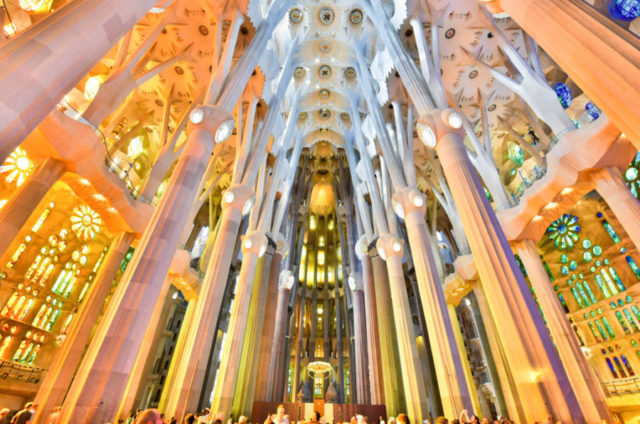
For example, multiple media outlets are reporting that in Barcelona, Gaudí’s Sagrada Família cathedral will be “completed” in 2026. Yes, they recently put the final cap on the tallest church tower in the world… but other parts of the gigantic building will remain a construction site for decades. Remarkable progress — yes! “Finished”? Nope.
Here’s another one: “Americans Will Have to Pay More to Visit the Louvre in 2026.” It’s not just “Americans” — this price hike applies to citizens of ALL non-European Union countries. We’re not being singled out; Canadians, Djiboutians, Kiwis, Chileans, and Brits will all pay that same higher price.

You’ll also see threatening-sounding posts about how “It’s about to get much harder to visit Europe — and you may not get in!” Here again, this is based on a nugget of truth about a change that’s important to know about… eventually. Read on.

Europe has some new red tape.

“Visa waiver programs” — which have long been in place for Americans going to Australia and New Zealand, and for Europeans coming to the USA — are a new development across Europe. The program in the UK (called an ETA) already went into effect in 2025; Europe’s program (called ETIAS) will likely begin in late 2026 or early 2027.

While breathless headlines make this sound daunting, in reality this minor bureaucratic headache is simple and easy: Log onto a website, punch in some personal information, and pay a small fee.
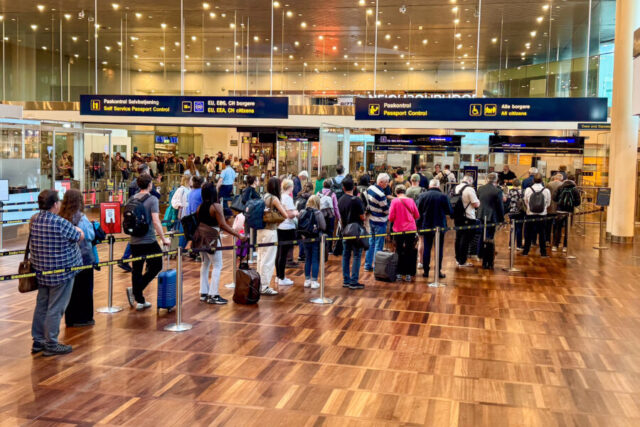
Will you need to deal with this for your 2026 trip? It depends on where you’re going:

If you’re heading to the United Kingdom, then yes: The Electronic Travel Authorisation (ETA) is already required.

If you’re heading to most of the rest of Europe (the Schengen Area — that’s most of the Continent, the Republic of Ireland, and Iceland), you have nothing to worry about for the first three-quarters of the year. However, keep an eye on the news for fall and winter travels: No earlier than October of 2026 (and possibly well into 2027), we’ll see the advent of the European Travel Information and Authorization System (ETIAS).

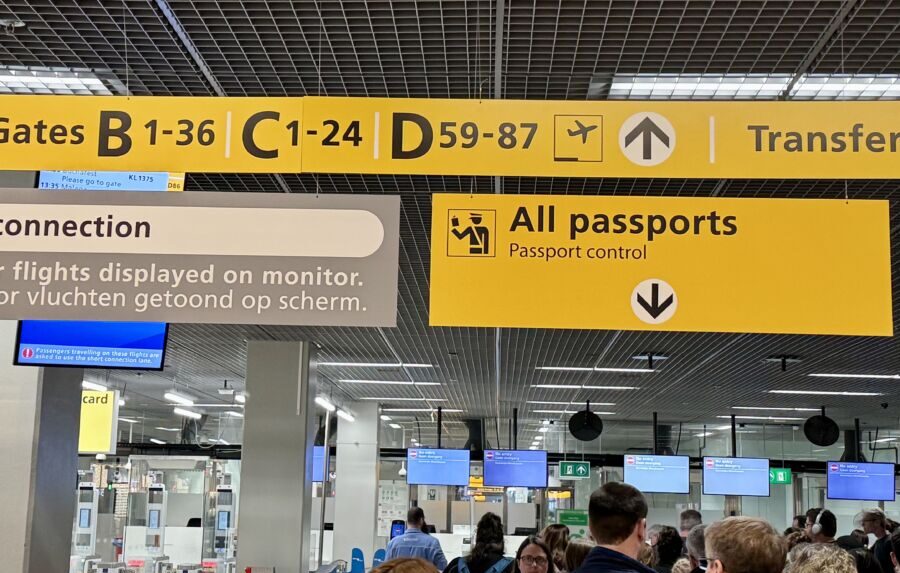
In anticipation of the ETIAS protocol, the Schengen Area is rolling out their new, mostly automated entry/exit procedure (EES). For the traveler, you’ll barely notice the difference… except that manual passport stamps are being phased out in lieu of facial-recognition “e-gates.”

Europe has gotten more expensive.

Like the rest of the world, Europe’s prices have gone way, way up. Our team of guidebook researchers have noted steep increases across Europe, driven largely by the same post-pandemic inflation we’ve experienced on our side of the Atlantic.

At the same time, the US dollar is also dropping against European currencies, thanks to the policies of a president who brags how much he likes a weak dollar. Since Inauguration Day 2025, Americans are paying about a 10-12 percent “surcharge” on everything we buy in Europe.

Yes, Europe is expensive. But it remains a wonderful value for the rich cultural experience it provides. If you’re on a tight (or even moderate) budget, it’s more important than ever to take money-saving tips into careful consideration. (Fortunately, this is a major feature of our Rick Steves guidebooks.)

Heat waves and other extreme weather are here to stay.

Recently, in a small town on Germany’s Mosel River, I was starting my day in the hotel breakfast cellar. Refilling my coffee, my host pointed to a faint line on the wall: “One week ago, if you sat right here, you’d be underwater.” Later that day, on the flooded embankments of Cochem, a riverboat ticket clerk told me they were just about to resume their sightseeing cruises — having just missed a very lucrative holiday weekend due to flooding.
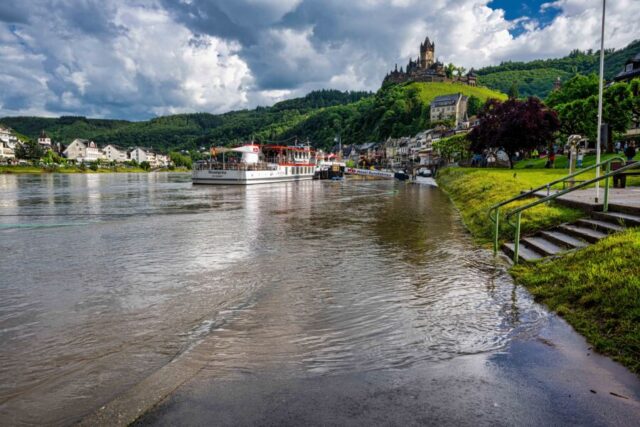
Our planet is getting hotter, which is causing extreme weather in all forms. Most travelers experience this as heat waves. Each summer, records get shattered in one corner of Europe or another, and formerly cool, now sweltering, corners of the continent are scrambling to retrofit their hotels with AC.
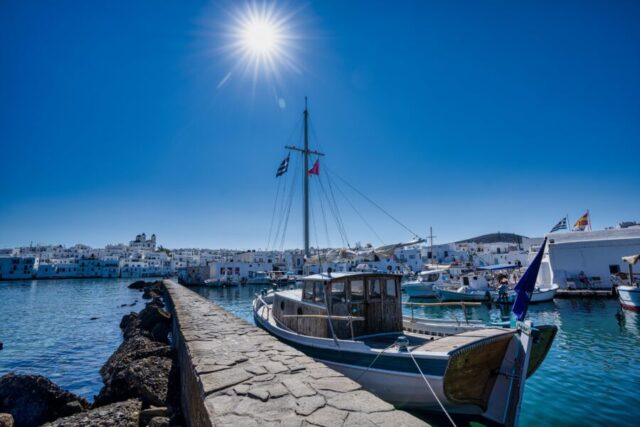
But our warming oceans also cause windstorms, deluges, hurricanes, and floods of biblical magnitudes. It seems like every week, a new corner of Europe is suffering some unprecedented weather disaster or another.

Addressing the root causes of this global crisis is a huge and complex challenge — one that Europe is rising to, inspiring visitors with their conscientious and pragmatic solutions. But in the short term, the best advice for travelers is simply to remain flexible: Assume that, at some point in your travels, you will encounter extreme weather… and be mentally prepared to change plans on a dime.

“Overtourism” remains a big concern in popular destinations.

In 2024 and 2025, you may have heard about “anti-tourism” protests. We’ll likely see more of these in 2026 — perhaps making you feel unwelcome in Europe.

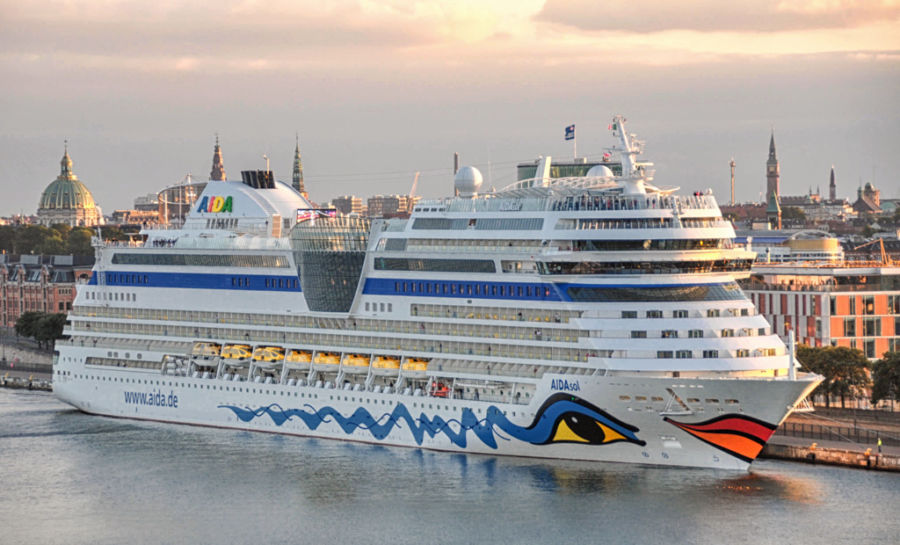
The reality is more complex. These protests aren’t “anti-tourist” — they are anti-overtourism. Their focus is not you and me, but their own governments: demanding that local authorities do more to proactively cultivate a sustainable form of tourism. Protesters’ goals include doing a better job of regulating cruise ships (which dump thousands of visitors to clog up their town’s streets for several hours…then leave without spending a penny) and short-term rentals like Airbnb (which are transforming formerly local, affordable neighborhoods into overpriced, touristy hotspots).
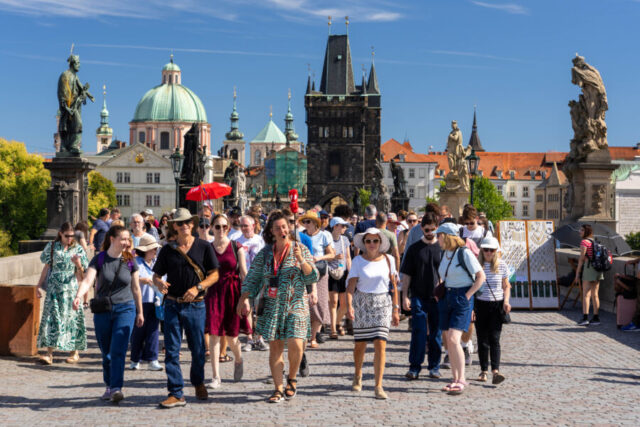
I regularly ask locals in the most notoriously “overtouristed” destinations (such as Venice, Barcelona, Amsterdam, and Italy’s Cinque Terre): Do you want us to stop recommending your town in our guidebooks? The answer is always the same: “No! We love Rick Steves travelers.”

Savvy locals recognize that tourism supports their local economy. And they distinguish between the “right kind” of travelers and the “wrong kind” of travelers. If you’re respectful, considerate, and conscientious not to contribute to the worst elements of overtourism, you’re still very welcome.

So, how can you avoid those “worst elements of overtourism”? Glad you asked…

“Balanced” tourism is a smart strategy to avoid crowds, high prices, and soaring temperatures.

OK, so we’ve just covered three big challenges facing 2026 travelers: high prices, high temperatures, and crowds. Fortunately, there’s a simple strategy that can help you grapple with all three in one fell swoop: Think carefully about where you go and/or when you go.

Some tourist industry insiders, uncomfortable with the term “overtourism,” prefer to talk about “unbalanced tourism”: too many visitors who insist on going to the same places at the same time and engaging in the same activities. (And then they come home… and complain about the crowds.) Of course, this spike in demand also drives up prices. And those “peak times” often coincide with the hottest weather. It’s a vicious cycle.

To break out of that rut, try a two-pronged approach to “rebalance” tourism: Go to less popular places… at less popular times.

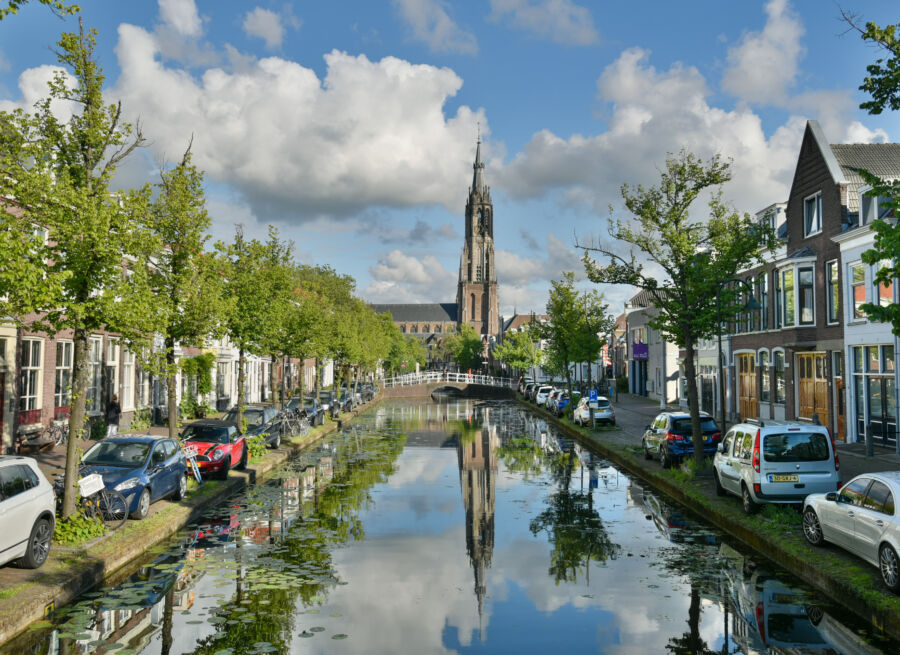
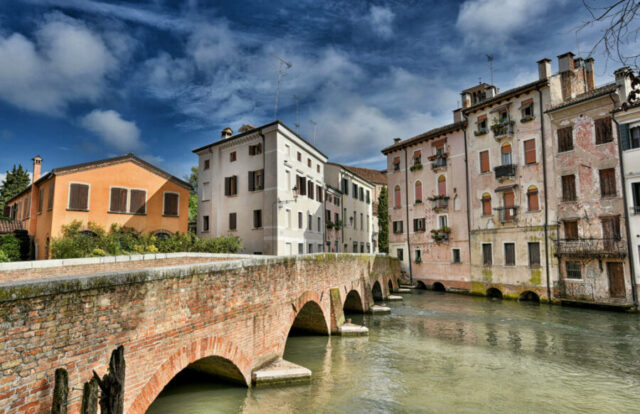
For every marquee European destination, there’s a charming, untrampled alternative just down the road. Venice is a delight… but you’ll find fewer crowds and lower prices in Padua or Treviso. From Amsterdam, a train zips you in 20 minutes to Haarlem, 30 minutes to Leiden, or 45 minutes to Delft.
Among the Greek islands, Santorini and Mykonos are stunning… and stunningly crowded and expensive. That’s why we recently added the quieter alternatives of Naxos and Folegandros to our Greece guidebook.

On a recent trip to the Czech Republic, I ventured beyond Prague to fantastically charming towns that rarely see an American tourist: Mikulov, Olomouc, Třeboň… the list goes on.

And there’s a whole slew of “second cities” offering a fraction the crowds and prices of the capitals: Porto (instead of Lisbon); Glasgow (instead of Edinburgh); Antwerp (instead of Brussels or Bruges); and so on.

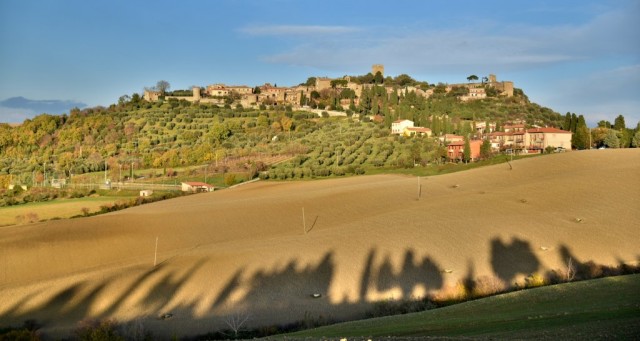
For similar reasons, shoulder-season and off-season travel are becoming more popular. Tuscany in November or March is an entirely different story than Tuscany in June or September. Both have their pros and cons — and, yes, going off-season requires a few sacrifices (cooler weather, shorter hours of daylight, seasonal closures). But it also helps you sidestep the peak crowds, prices, and temperatures of peak season. And it helps you contribute to a more “balanced” approach to travel.
AI can be useful for travel planning… but proceed with caution.

Across our society, we’re being told how AI is a game-changer — a miracle tool that can improve any process you can think of (and many you can’t). Curious but skeptical, I’ve made a point to use various AI models (Google’s Gemini, Open AI’s ChatGPT, Anthropic’s Claude, and so on) for a variety of trip-planning tasks.

My assessment: AI is, indeed, impressive at many things — at least, superficially. And yet, at this stage in its development, AI remains deeply flawed. The key to using it smartly is understanding what it’s good at… and what it isn’t. The problem is that AI itself doesn’t distinguish this well, and consequently tends to overpromise while underdelivering. This is compounded by its tendency to misunderstand the information it gathers online, and its propensity to hallucinate false “facts.”

The list of AI misses — both examples from my own use, and culled from reporting about AI misfires — goes on and on. These can be a simple mistake, such as giving the correct Metro stop for your destination, but on the wrong Metro line; or recommending that you catch a train from a station that does not exist. Or they can be more serious, such as the time AI created an itinerary for watching the sunset from a mountaintop… only to miss the fact that the cable car stopped running after dark, requiring a dangerous and exhausting hike back down.

Our full report on using AI for trip planning, which I worked on with Travis Parker, can be found in our Updates & Insights blog. Our bottom line: Sure, play around with using AI for low-stakes tasks that can enhance your trip — but be wary of using it for tasks that could potentially ruin it. And when it comes to critical information, always double-check with a primary source, such as an authoritative website or a human-produced guidebook.

Accept that travel is a political act.

Whatever your personal allegiances, it’s clear that we’re living in a time of extreme political division — both within our country, and between countries. Understandably, there are people who — when going on vacation — would prefer to leave all that behind and just enjoy themselves. There have been times of relative harmony when that was a realistic goal (and if you’re heading to a theme park or a weekend in Vegas, it still is). But now more than ever, when you cross borders — like it or not — travel becomes a political act. While the “Stick to travel!” crowd wants to convince themselves that we can still travel fancy-free these days, they’re deluding themselves.

This doesn’t mean that the Europeans you meet will be aggressive, angry, or unwelcoming. (In fact, quite the contrary — see the next point.) But they may well have questions to ask… and opinions to share. You can generally sidestep these conversations gracefully. But if you really want to travel as a political act, it’s so much more interesting and educational to lean into them.
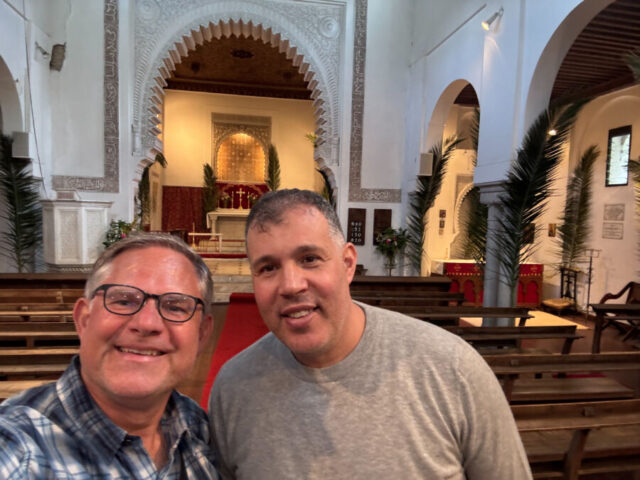
On every trip, I look forward to “talking politics” with the people I meet on the far side of the globe. Sometimes these conversations affirm my existing beliefs, maybe offering a fresh perspective on a tired old topic. But just as often, they challenge some of my most deeply held assumptions — even changing my mind 180 degrees about something I’d always taken for granted. And I always come home a smarter, more nuanced thinker and a better citizen of our world.

There may be a few truly “apolitical” pastimes still out there. (Knitting, maybe? Oops… never mind. OK, then — hockey? Um, nope.) International travel… not so much.

And that’s because…

Europeans are deeply concerned about the American president — but American travelers remain very welcome.

A year ago, many travelers began to ask: Are Americans still welcome in Europe, in the age of Trump?

The short answer: Absolutely! In about a hundred days of international travel in 2025, all across Europe and beyond, I never once felt that I was treated poorly (or even differently) because of the policies and rhetoric of the US president.

This may seem counter-intuitive. Trump’s “America First” approach unmistakably positions the world not as a collaborative endeavor but as a zero-sum game… with Europe as the loser. And Trump’s policies have had real impacts on Europe: Soaring tariffs make life difficult for small European producers of olive oil, wine, handicrafts, and other products (many of whom we know personally and recommend in our guidebooks). Flagging US support for the war effort in Ukraine — a conflict that’s geographically, politically, and emotionally close to many Europeans — is dispiriting and frightening. And repeated threats to take Greenland from Danish control “whether they like it or not” hasn’t won Trump many European friends. In fact, while Trump’s approval ratings at home are at a record low, among Europeans they are even lower… in some countries, in the single digits.

(Who cares? Well, if you’re planning to be a guest in another country… my goodness, shouldn’t you care?)

Two things can be true at the same time: Even if the American president is deeply unpopular in Europe, individual Europeans still respect and accept individual American visitors as just that — individuals.
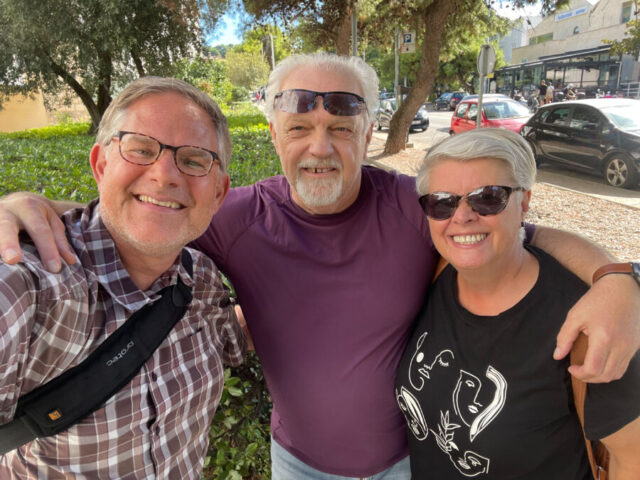
I find it humbling, and quite touching, to observe how Europeans instinctively distinguish people from the actions of their leaders. Maybe it’s because the various European lands have had (or currently have) their own leaders who behave in questionable ways… or worse. Travel is all about people-to-people connections, and Europeans don’t let knee-jerk politics get in the way of forging those connections.

Just a couple of weeks ago, I stood on a stage before 150 European tour guides, whom we’d flown into Edmonds, Washington, for a week of meetings. I asked them, point-blank, the question that’s on many American minds: “Are Americans sill welcome in Europe?”

The unhesitating, unanimous answer — from people representing virtually every corner of Europe — was a roaring and resounding: “YES!”

Travel builds bridges, not walls.

As we move through these troubled times, my mission (and the mission of Rick Steves’ Europe) has never been more clear: International travel allows us to build bridges, not walls.

Think about this in terms of your European sightseeing: In Europe, most walls you see are historic — a vestige of a long-fallen empire, and a souvenir of a more dangerous time for humanity. Walls from our modern age universally ugly — whether it’s the electrified fences of concentration camp memorials; fragments of the now-toppled Berlin Wall; or the “Peace Wall” separating sectarian communities in East Belfast. These walls embody division, misunderstanding, anger, hate. In short, a wall represents a diplomatic failure.
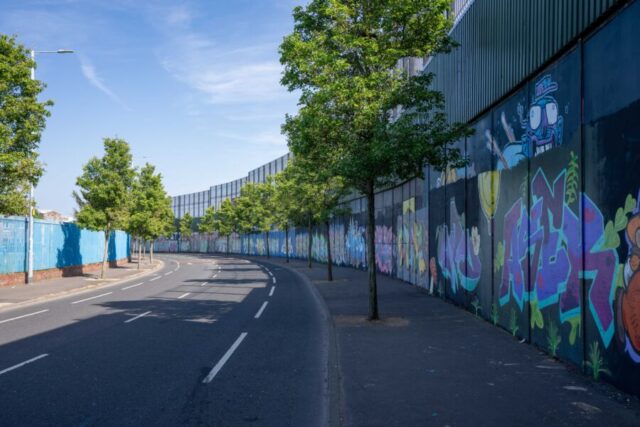
Contrast the archaic ugliness of walls to the beauty of bridges.

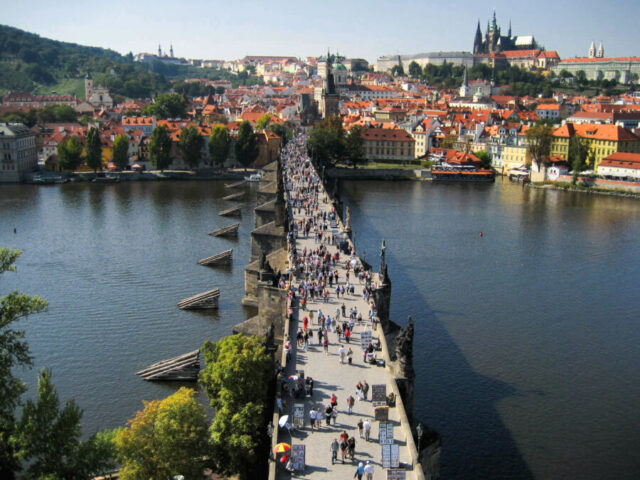
As a practical matter, a bridge connects people and places; it allows the flow of both goods and ideas; it strengthens a city, a country, even an empire. So many great cities are represented by an iconic bridge.
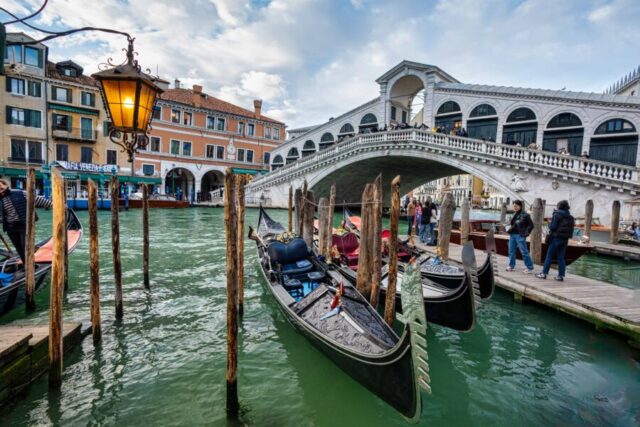
The symbolism of bridges is so powerful that it’s integral to the design of Europe’s common currency. Europe chose the bridge — not the church, not the city hall, and certainly not the wall — as its dominant symbol. That’s why every single euro banknote features an image of a bridge, each representing a different architectural era.

And what’s on the other side of each banknote? A doorway — that’s right… a passage through a wall.

At Rick Steves’ Europe, we are encouraging Americans to travel boldly into an increasingly uncertain world in 2026. Travel is, in part, a practical matter: How to avoid crowds, high prices and heat waves; getting comfortable with new red tape and AI trip planners. But if you’re doing it right, travel can be much more. It can be transformative — both for the traveler, and for the planet they inhabit and explore.

When we travel, we have an opportunity to forge people-to-people connections that cross borders and span oceans. Going to Europe provides us with a priceless opportunity to build bridges.

Now more than ever, travel is not just a privilege — it’s a responsibility. When you hit the road in 2026, enjoy yourself! But also strive to be a good ambassador for the USA. Because our country needs good ambassadors now like never before.

This post is based on my recent “State of Travel 2026” talk for our Travel Festival — which you can watch, for free, in its entirety.

I’m heading out in a few weeks for the first of three European trips. On my list for 2026: Berlin, Munich, and Vienna; Greece’s Crete and the Peloponnese; an alpine road trip, from Germany’s Bavaria to Austria’s Tirol to Italy’s Dolomites to Slovenia’s Julian Alps; and a return to some of my old favorites: Croatia, Slovenia, and Bosnia-Herzegovina. If you’d like to hop in my rucksack and join in my travels, be sure to follow me on Facebook and Instagram.

Most of those trips are in service of updating our series Rick Steves guidebooks — the best possible all-around tool for planning your trip.

My well-traveled colleague Travis Parker keeps up to date on topics just like these on our Updates and Insights blog — an essential resource for tracking what’s new in Europe right now.

Wherever you’re headed, happy travels in 2026!

One Dozen Europe Travel Hacks

Things change fast — especially for travelers. As someone who’s fortunate enough to spend about 100 days each year on the road in Europe — mainly updating and writing our Rick Steves guidebooks — I’ve collected some favorite nuggets of travel wisdom. You can call these “travel skills” or “travel tips” — but in keeping with recent trends, I’ll call them “travel hacks.”

Most of my top tips wind up in our guidebooks, or on my social media posts (on Facebook and Instagram). But I haven’t done a comprehensive roundup since pre-COVID (when I posted travel hacks for 2018, and more for 2019 — most of these are still relevant). So, I swept through all of my little hand-scrawled black notebooks, social media posts, and never-published random writings on my hard drive, and came up with this fresh list for today’s travelers. In no particular order, here are a dozen of the travel skills, tips, and — yes — hacks that have become part of my everyday travel routine.

Book major sights in advance — and always on the official site.

The first half of this tip should be, I hope, common knowledge: So many of Europe’s top sights — the Uffizi and Vatican Museums, the Alhambra and the Prado, the Louvre and the reopened Notre-Dame — book up days or even weeks in advance. Prebooking tickets online is critical. (Our Rick Steves guidebooks provide clear guidance on which sights require reservations; which ones strongly recommend them; and which ones you can usually just show up for.) However, when prebooking tickets, be very careful which website you use. Every museum has an official ticketing site. But there’s an entire industry of third-party resellers who masquerade as the real deal — making it all too easy to accidentally purchase your tickets through a middleman who marks up the price. Because Google leads with “Sponsored” results, simply searching for the sight name and “tickets” may push you first toward these resellers, while the official outlet hides farther down the list. This has become a pet peeve for many of our favorite local guides, who always tell me, “Please warn your readers about this!” Our guidebooks always list the one-and-only official site; otherwise, you’ll have to check your options carefully to determine which is the correct one. (Often, it’s less flashy and less user-friendly than the big resellers. If it seems too slick… it may not be right.)

Know the cruise-ship schedule.

If you’re visiting a major cruise port, the number of ships in town can drastically impact your experience. So, get in the habit of checking each day’s arrival schedule. Various websites (including Cruisemapper.com and Cruisetimetables.com) offer a day-by-day list — not only how many ships are arriving, but which ships, what time they come and go, and how many passengers they carry. Especially in a smaller town like Mykonos, Flåm, or Dubrovnik, there’s a massive difference between a “light” day (with no ships at all) and a “heavy” day (with multiple ships and thousands, or even tens of thousands, of additional visitors). Knowing the schedule can help you plan more strategically: Which days to sightsee in town versus prime times to side-trip or hit the beach. And if, for example, you know that multiple cruise ships are staying in port late into the evening, it may be worth booking a dinner reservation… which may not be so important on a night when all the cruisers have set sail by late afternoon.

Don’t trust very long lines.

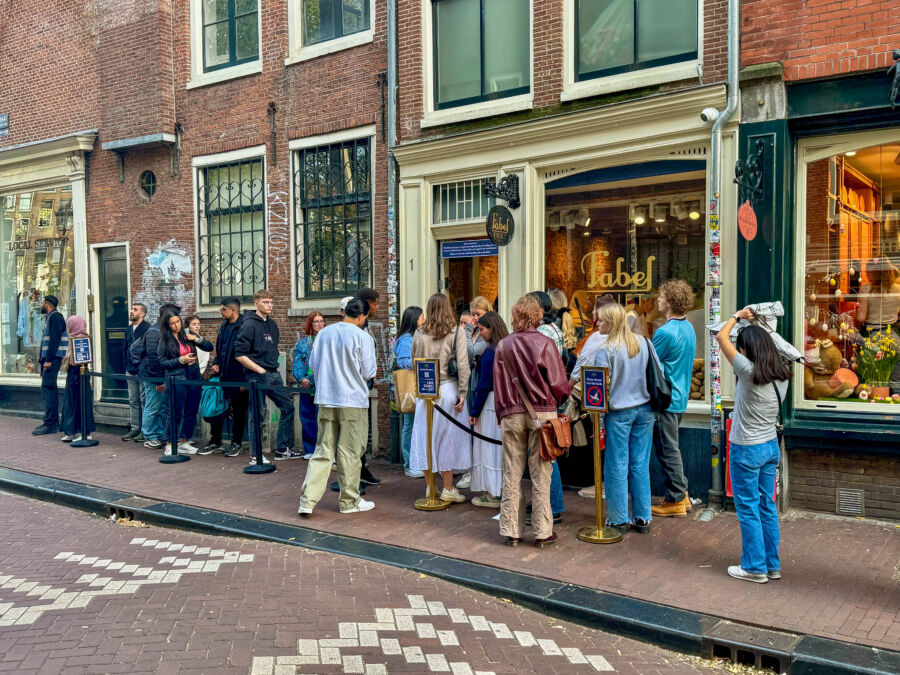
One of my well-traveled colleagues explained that, when traveling in communist Poland in the 1980s, the conventional wisdom was: “If you see a line, get in it.” They were probably selling something you needed (or, at least, something you could barter to get what you needed). These days, travelers still encounter some very long lines — for a very different reason — and precisely the opposite advice holds true. Social media influencers have a huge impact on trendy destinations, and being featured by a TikToker, YouTuber, or someone who’s Insta-famous can create a vortex of overpromotion… and an incredibly long line. I’ve seen these stretching down the block in front of a hole-in-the-wall sandwich shop in Florence, a fry stand in Amsterdam, and a gelateria in Split. I’ve tried a few of these (often returning later in the day, when the line has died down a bit)… and found them good, sure, but rarely a-MAH-zing — certainly not worth of an incredibly long wait. Very often, if you ask around (or do a little online sleuthing, avoiding the famous influencers), you’ll find that locals have a favorite alternative that’s never crowded. For example, in Amsterdam, I saw people lined up all the way across an adjacent canal for a chocolate-chip cookie. Literally steps away was a café selling amazing, handmade, delicate-yet-gooey stroopwafels — so much more authentically Dutch… and with zero line.

Get comfortable with WhatsApp.

These days, absolutely everyone in Europe uses the WhatsApp messaging app (owned by Meta) to keep in touch. Europeans like that it allows for encrypted messages and calls over any Internet connection, rather than paying a per-message or per-minute fee. Time and again, I’ve noticed that small businesses — local guides and drivers, restaurants, even B&Bs and hotels — have done away with traditional phone connections and can be most easily reached via WhatsApp. It’s free to download and easy to set up; you can use your existing mobile phone number. While I rarely use WhatsApp at home, in Europe it’s indispensable.

Stay in less-crowded, less-expensive, more charming towns and “commute” to the major destination.

Even in our age of overcrowding and soaring prices, many travelers still insist on going to the big, famous, marquee cities, where everyone else also wants to go… and then they complain about the crowds and prices. If you just can’t resist the biggies, consider this compromise: Stay at a smaller town nearby and side-trip to your sightseeing. If you’re interested in Amsterdam, consider sleeping in Haarlem (20 minutes away by train), Leiden (30 minutes away), or Delft (45 minutes away) — each a charming and oh-so-Dutch town in its own right, with far fewer crowds and lower prices. If you’re dying to see Venice, consider sleeping in Padua or Treviso — from either, a high-speed train zips you in about 30 minutes right to the Grand Canal. And if visiting the Greek Islands, how about sleeping on workaday, foodie Naxos (30 minutes by express boat from Mykonos) or easygoing Folegandros (less than an hour from Santorini)?

If the locals are geeking out about something… join them.

In Slovenia, everyone’s wild about beekeeping. The art and science of beekeeping was pioneered by a Slovenian scientist, and to this day, colorful beehives perch proudly in every alpine meadow. Honey in every form — from bee pollen to beeswax candles to sweet honey mead — is ever-present in Slovenian life.  Even Slovenia’s most prized folk art is tied to bees: wooden panels painted with elaborate scenes. Maybe you have zero interest in bees back home. But it’d be a mistake to overlook this beautiful, intimate slice of Slovenian life on your visit there. In Europe, where traditions run very deep, every community and country seems to have their own version of this: In the Welsh mountains, slate is huge. On Germany’s Mosel River, white wine is an essential feature of the local economy and culture. Hungarians go nuts for water polo and paprika; Spaniards love to sip dry white sherry; this year, England is excited about Jane Austen’s 250th birthday, while the folks in both Liverpool and Wrexham are soaring after their recent soccer victories; and Norwegians have a burgeoning artisanal hard apple cider scene. Wherever you go, make a point to figure out what everyone’s excited about… and jump on that bandwagon, whether or not you think you find it interesting. (I might pretend this is a “new hack,” but for decades Rick has been talking about this being a “cultural chameleon.” Same thing!)

Ask to borrow a fan.

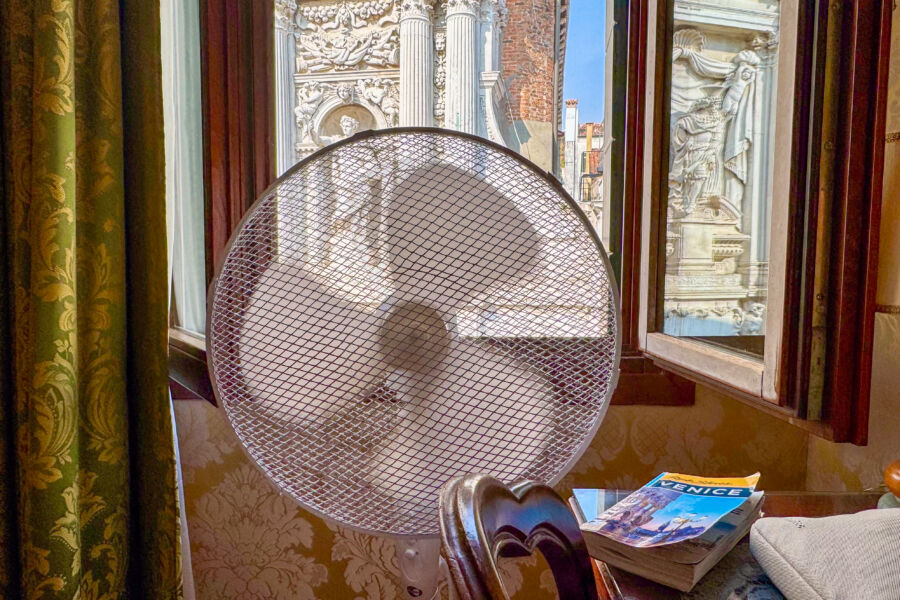
As our world’s climate changes, Europe often faces record-breaking summer temperatures, as well as unseasonal heat waves year-round. Europeans are more mindful about energy consumption than us Americans, so even if your hotel has air-conditioning, it may not blow as cold as you’re used to back home. And some places, running the AC in spring and fall is restricted. (During a hot snap in April, a Venetian hotelier explained that he’s required to turn off the heat on April 15, and can’t turn on the AC until May 15, unless the mayor declares an emergency.) If the weather’s hot, upon checking into my hotel, I quickly assess the AC situation. If it seems stuffy, I go straight back to the front desk to ask politely if I can borrow a fan. Most hotels have only a few, and they’re first-come, first-served… so if you wait until you’re going to bed, you might have to just sweat. Come to think of it, that’s another hack: Rather than get upset about how Europeans refuse to over-cool, develop an affinity both for their approach to energy conservation… and for tolerating the heat.

Where possible, tap-to-pay for transit — and understand the local system.

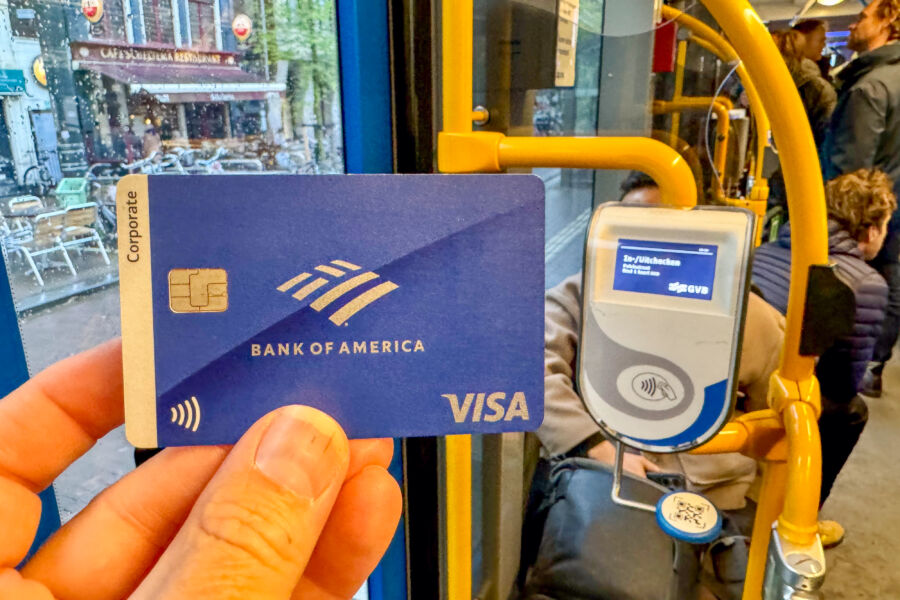
It’s old news that in many places, you can pay for local transit (buses, trams, the Metro) simply by tapping your credit card as you board. But this can vary dramatically from place to place. Before you arrive, take a moment to figure out whether that’s the case in the place you’re visiting — and how, exactly, it works. For example, the Netherlands is a global trendsetter: You can pay for any ride throughout its entire nationwide transit system (from in-city trams and the Metro, to long-distance intercity trains, to buses that travel deep into the countryside) simply by tapping your credit card. However, there are always caveats: First, you also have to “tap out” when you’re getting off. And each individual user needs their own payment method — so a family of four can’t “share” a single card, so they need to be prepared with other ways to pay.  By all means, take full advantage of tap-to-pay where it exists — to save lots of stress and time (trying to find and buy paper tickets) as well as money (giving you access to the best possible prices) — but understand the system.

Follow the local news.

As Rick always says, “The more you know about a place, the more you’ll like it.” And that goes for current events, too. Leading up to your trip, start reading local news sources, for insights into everything from town gossip and hot-button political issues, to strikes or festivals that might throw a wrench in your plans, to severe weather that’s about to hit (and might require some changes to your apparel, if not your itinerary). I also enjoy keeping up with the headlines after I’ve left a place — now that I’m up to speed on the local scuttlebutt, it’s delightful to find out how things turned out, and it helps me feel a continued connection to the place. This is also a great illustration of how the experience of travel doesn’t have to just be when you’re “on the road”: It can be something that you anticipate… and something that changes you.

When using cards: Always pay in the local currency. And always use a bank-affiliated ATM.

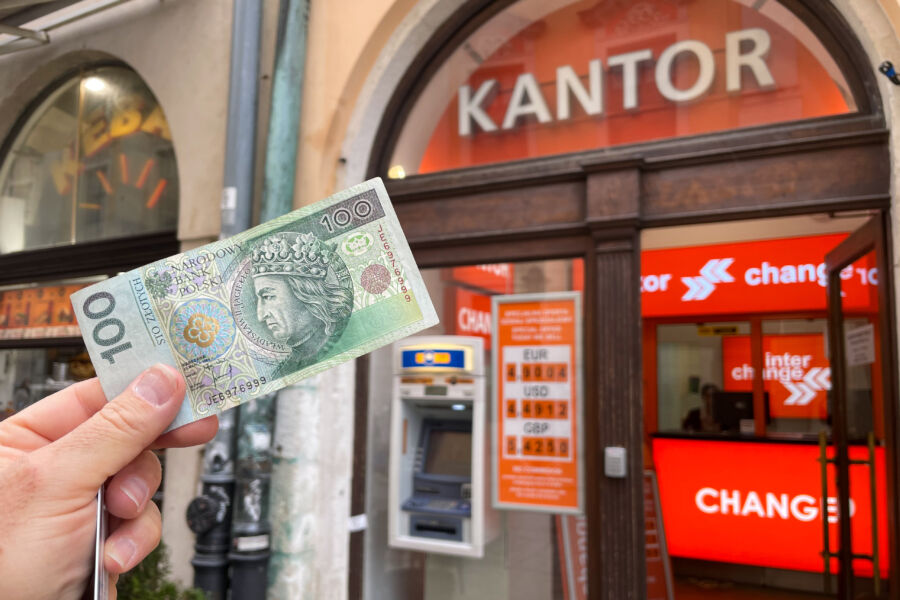
I have two unalienable rules of thumb for money matters in Europe: First, when you pay by card (or use an ATM), you’ll very often be asked whether you want to pay in US dollars, or the local currency. While paying in dollars seems convenient, you’re actually giving the vendor’s bank permission to choose an exchange rate that costs you more. If you always select the local currency, your credit-card company will set the rate, which is more favorable to you. Second, if taking out cash, be sure you’re using an ATM affiliated with (and ideally attached to) a real bank. Increasingly, Europe abounds with ATMs operated by exchange bureaus, with worse rates and higher fees. Avoid these. (Major chains to watch out for include Euronet, Travelex, Your Cash, or Cashzone.) Frustratingly, many airports and train stations don’t even have a bank-operated ATM anymore. For that reason, I usually head into town first (paying my way by card)… then go looking for a real brick-and-mortar bank, with an ATM out front, on my first evening’s stroll.

Know your rights as an air passenger.

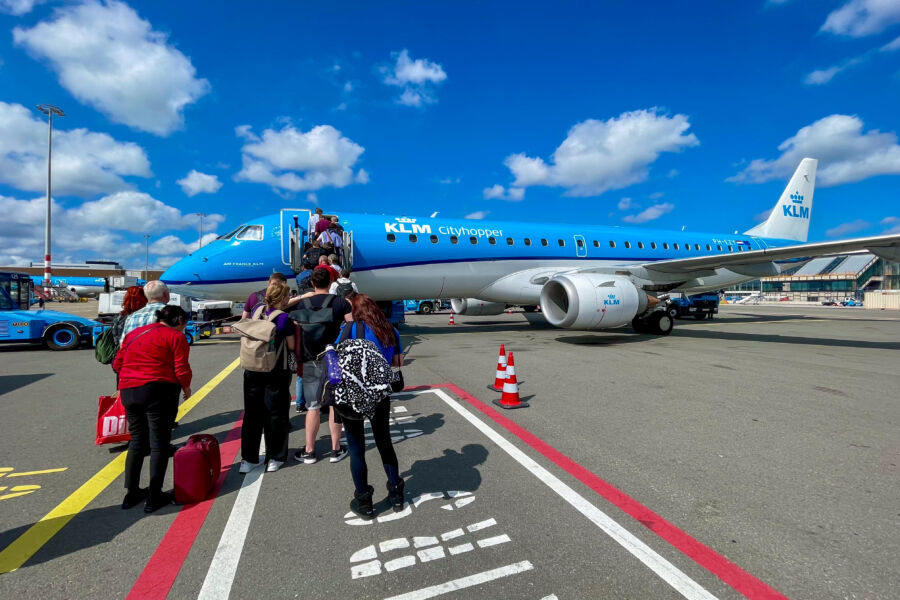
Recently, at the Amsterdam airport, my connecting flight to Norway was cancelled. While I was starting to panic, a European at the gate near me was calm and confident: “No worries. They’ll find us a new plane soon,” she said. “If they don’t, they have to pay each of us €250.” Sure enough, within minutes, they’d reassigned another plane — and we wound up arriving in Norway just 45 minutes late. Why? The European Union (EU) has generous consumer protections for air passengers. We’re entitled to compensation for flights that are delayed more than three hours, or cancelled outright. Knowing about this serves two purposes: First, the airline might not volunteer this information — so you may have to ask for it. And second, it provides strong incentive for airlines to find a quick solution… and reassures passengers that it’ll work out (and if it doesn’t, you’ll make a tidy profit).

Are you dreaming of a “trip of a lifetime”? Make it happen!

We all have those “dream trips” that we’ve always fantasized about. Often, it’s something very specific… even “weird” to anyone else. Rick recently published a book, On the Hippie Trail, about his early backpacking trip overland from the heart of Europe to India. Last fall, I finally put together a road trip I’d always dreamed of: traveling through the Balkans, from Slovenia to Greece, by way of eight different countries. And along the way, I ticked off another bucket list item when I got to step on board the famous “Blue Train” of the Yugoslav dictator Tito. Now, I’m not saying that you should go on the Hippie Trail, or travel through the Balkans, or become obsessed with Tito’s train. But I’m sure there’s something you’ve always dreamed of, just the same. You’ve been waiting all this time to make it happen. So… make it happen. There’s no time like the present. The only thing standing between you, and your dream destination, is making the decision to do it. So, here’s the hack: Do it!

These are just a dozen of my favorite “travel hacks.” What are yours?

So, Are Americans Still Welcome in Europe? — A Trip Report

Before heading off on my spring trip to Europe, I had one big question: Would the provocative “America First” words and deeds of our new president affect how I’d be received by Europeans? In short, as an American, was I still “welcome” in Europe?

After more than two weeks in Spain — with a very small sample size of one traveler and one country — my main takeaway is that I’m surprised how little American politics came up, over dozens upon dozens of interactions with Spaniards. In fact, I detected no difference whatsoever — not one iota — in how I was treated here, compared to previous trips.

There is no resentful, angry edge; no sudden cold shoulder upon learning that I’m American; no nasty comments or hostile, pointed questions. Whether they’re indifferent or concerned, supportive of my president or terrified of him, Spaniards — and, I imagine, most Europeans — still afford each of us individual American travelers the same respect and warmth they always have.

When I polled travelers on my Facebook page about this question,  everyone reported a similar experience — that politics rarely came up, and never resentfully. Some did say that they were asked more often than before about what’s happening in the US. However, these questions are posed in a spirit of genuine curiosity, part of a natural tendency to talk about — and to try to better understand — what’s in the news.

On my first day in Spain, I was chatting with a local guide I’ve known for years — someone who’s highly intelligent and well-informed. I started talking about Elon Musk. She said: “Elon who?”

As I stammered through an explanation, I was grateful for this reality check. Like most of us, I’m deeply embedded in a media bubble, one where the name “Elon Musk” triggers an avalanche of high emotion. Outside of my bubble, those connotations are different. And outside of my borders, all bets are off — in a way that struck me as refreshing.

In the end, while Trump (if not Musk) dominates Spanish headlines just like back home, being in Spain reminded me that most people on this planet are, fundamentally, pretty apolitical.

This might seem contradictory, but two things can be true at the same time: First, Europeans are aware of the broad strokes of what’s happening Stateside, and many are worried that Trump’s actions on a wide range of issues — from his brewing trade war to potentially ending military support in the critical fight for Ukraine — could have a significant impact on their lives. For example, if you produce olive oil or wine, and you depend upon selling your goods to an American market, you’d have cause to lose sleep over Trump’s on-again, off-again tariffs.

And yet, simultaneously, for most people these potential outcomes feel both distant and (so far) mostly hypothetical… enough to keep those worries on the back burner, and not to bubble over into resentment toward American visitors.

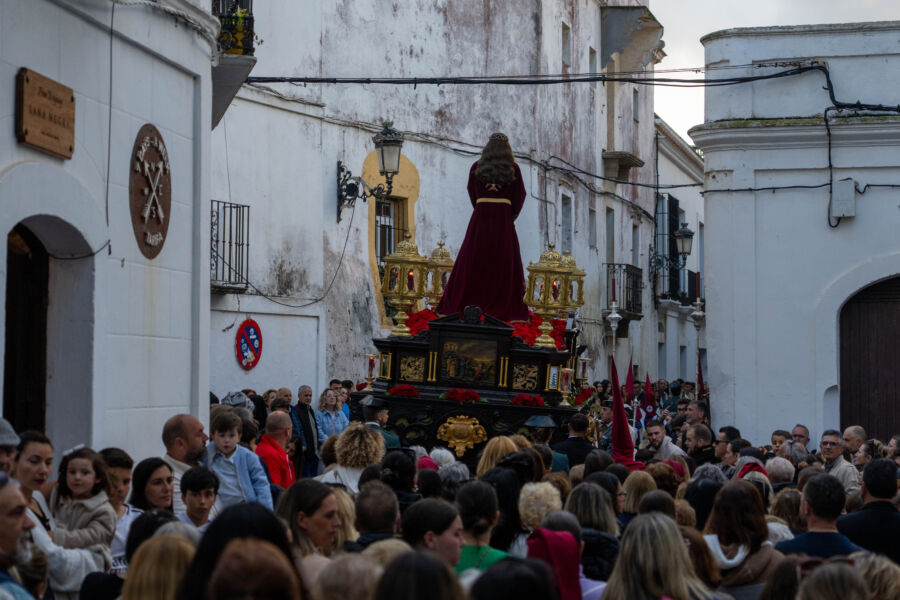
Front-of-mind worry is more focused on things that have an immediate impact on their day-to-day lives — such as the likelihood of rain ruining the Holy Week processions that everyone spent the last year preparing for. Until Semana Santa was behind them, the people of Andalucía had bigger fish to fry.

If Spaniards had a general response to my American-ness, it was to commiserate about what we’re facing. They feel for us, because they get it. Any Spaniard over the age of about 55 still has memories of their fascist dictator, Francisco Franco, who took control of Spain during its brutal Civil War and kept it until his death in 1975. Franco had groomed the king-in-waiting, Juan Carlos, to be his successor and carry on his strongman legacy. Instead, Juan Carlos shocked everyone by pivoting in the opposite direction, transforming Spain into a true democracy and a modern, open society, and rejoining the family of nations.

Viewing the grand scope of history, sometimes things break one way… and sometimes, the other. If Spain’s king had stuck to the course Franco charted, this corner of Europe may still be a backwards autocracy. And back home, if votes had gone just a little differently in a few key parts of our country last November, then we’d all be on a very different course today. Europeans, who have a knack for taking the long view of history, understand how these dice-rolls can alter the course of events, and they sympathize.

Of course, my experience on this trip is based exclusively on the places I’m visiting, and the people I’m talking to. I imagine there are other countries where people are already feeling a more “front-burner” worry… places where the conversations might be a little more, shall we say, animated. My Polish friends, living on the border with Ukraine, text me regularly about their concerns. And later this summer, I’ll be in Denmark — where, I expect, some Danes may be eager to talk about my president’s repeated threats to annex one of their territories, Greenland,  “one way or the other.”

But after two weeks in Spain, I have a renewed confidence that nobody’s going to run me out of town on a rail… unless that’s how I choose to travel to my next destination.

§ § §

On my way to Spain, upon changing planes at Paris’ Charles de Gaulle Airport, I found myself in a long passport line — in fact, one of three passport lines. Bleary-eyed after the nine-hour flight, shuffling toward the uniformed guards, I glanced around and got to thinking about the role of the USA in the world. (I love it when travel triggers these little epiphanies.)

Upon entering the Schengen (European Union) passport check area, you’re immediately sorted into three groups: Europeans, who hold Schengen passports, enjoy VIP treatment and speedy processing. Then come those of us from the wealthy, non-Schengen world: Americans, Canadians, Brits, and so on. We get our own line, which is still relatively efficient, if not as slick as the EU line.

Standing in this second line, I saw a third line — one that I had never noticed before. This very long, very slow-moving line consisted almost entirely of people of color from what we might call the Second and Third Worlds: the nations of Africa, the Middle East, Asia… in short, lands that our president has referred to as “shithole countries.”

Two thoughts occurred to me. First, what should be obvious: While those three “tiers of travelers” might imply otherwise, all of us are human beings just the same, and all deserving of respect. Just like those of us in the first and second lines, the folks in the third line have places to go that are every bit as important as where we’re going; they get just as impatient waiting in a long line; they’re dealing with the very same sore backs, swollen feet, twisted intestines, and backed-up flatulence after a long flight.

And second, while the above “should be” obvious, our society is preoccupied with reassuring us of exactly the opposite: There are “good” places, there are “great” places, and there are “bad” places.

In America — a land that, to many, is synonymous with exceptionalism — we suffer from a persistent and feisty narcissism. I grew up being constantly reminded that I was born into the “greatest country on earth,” that we were the “leader of the free world,” and so on.

Now, as our new president has put us on the outs with the rest of the family of nations, we Americans worry about how we’ll be received overseas. Will we be welcome abroad?

Sure… we’ve always been “welcome,” in the sense that most locals fall somewhere between agnostic and pleased that we’re there. That’s not changing, far as I can tell. But sometimes I think that when we fret about being “welcome,” what we really want is to be treated as “special.”

When we visit Europe, we’re already in the second-tier passport line…. glancing at that third line, terrified that that’s where we’re headed. Will we soon reach a point where our country of origin is cause for embarrassment rather than pride? 

This would be far from unprecedented. Countries slide between these tiers constantly. I remember another layover, when I changed planes in Amsterdam, maybe six months or a year after Brexit went into effect. That passport checkpoint was a chaotic scrum, with many of us cutting it uncomfortably close for our connections. The security guard, surveying that “second tier” line, asked if anyone had EU passports. A few people, who’d gotten in the wrong line, waved their French, Portuguese, or Polish passports — and were whisked into the fast lane. Then a couple more hands shot up, and an English accent asked, hopefully, “What about the UK?”

The guard — a vicious smirk spreading across his face, as he completely failed to disguise his glee — explained: “Ah, but you are not in the EU anymore. Remember? Brexit?” As the two would-be-fast-laners hid away their passports and turned scarlet, the rest of us in line enjoyed a cathartic chuckle at their expense. Welcome to the second tier!

I suspect that deep down — perhaps even subconsciously — that’s what many of us Americans are worried about: Are we still “special”? Or might we be heading for that third passport line?

If we do make that slide… well, would that be such a horrible thing? Perhaps joining that line would inject our American narcissism with a dose of much-needed global empathy.

Many observers outside our borders have seen the election — and the re-election — of Donald Trump as a loss of innocence for America. When I talk to Europeans about our current state of affairs, rather than anger or resentment, mostly I sense a resigned disappointment. They love the USA. They’re pulling for us. And they were hoping that we’d be immune to this global trend of extremist, isolationist populism. They expect this from “other countries” —  but not from us, the noble Americans who helped save them from the Nazis and the USSR. Seeing our current circumstances through their eyes is a wake-up call that complacency erodes democracy back home, and respect around the globe.

And so, if at some point you wind up spending an extra 30 minutes waiting to enter a foreign land, use that time to consider the role America plays on the world stage, and the responsibility each American voter has for the consequences of our elections — and in shaping the culture that influences those elections.

§ § §

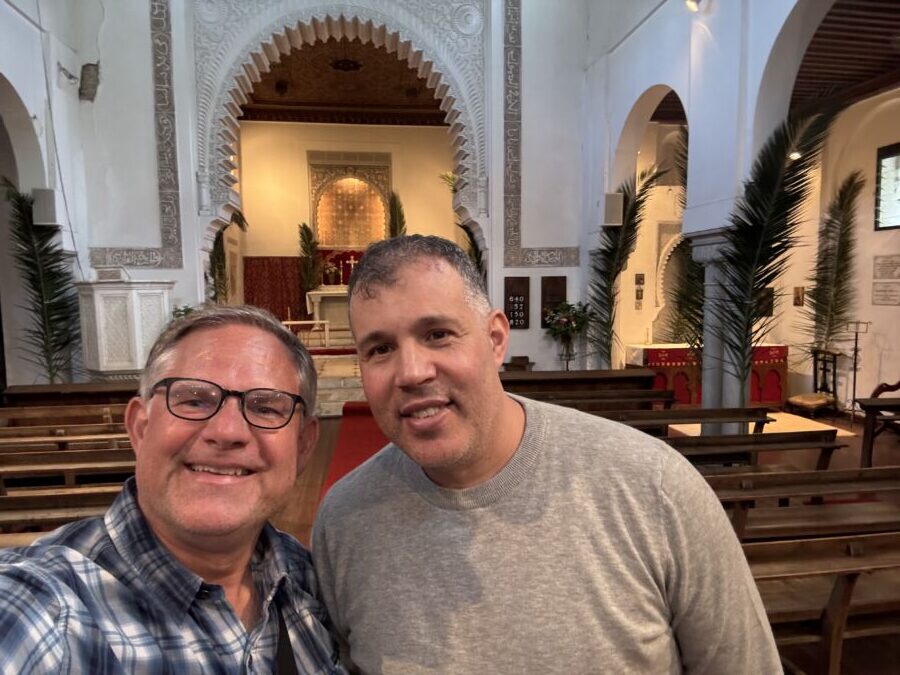
I wrapped up my spring trip in Morocco. Here, as in Spain, I found the welcome very warm. And, as in Spain, people had their own personal concerns that trumped world events. In Tangier, Yassin was much more interested in showing me all the amazing details of St. Andrew’s Church — where the Lord’s Prayer is etched into the wall in Arabic — than in “talking politics.”

Later, on a road trip through the Moroccan countryside, my guide and I were pulled over for a routine traffic stop. Reviewing our papers and noticing my American passport, the policeman playfully asked, “Who did you vote for?” A little too eagerly, I answered: “Harris! Harris!”

Both the policeman and the guide gave me a funny look. After the policeman shrugged and waved us a cheerful goodbye, my guide explained, “Actually, that wasn’t the answer he was hoping for.”

I was perplexed. Here I am — in one of those countries my president would dismiss as a “shithole,” where Islam is deeply interwoven into everyday life — and yet this police officer… likes Trump?

My guide explained: During his first term, for complicated diplomatic reasons, Trump recognized the disputed territory of Western Sahara as part of Morocco. Therefore, Trump has a surprisingly strong thread of support in this country — one that, on paper, should find him abhorrent.

I guess this all goes to prove the old saying: All politics is local. For many of us Americans, the political landscape is frightening, and the future feels bleak. And yet, even if others are looking worriedly at what’s happening here, ultimately they have their own pet issues that complicate a simplistic, one-size-fits-all understanding of a place.

This trip has provided so many reminders of how, at the end of the day, people are just people. Each of us is a quirky, idiosyncratic, often internally inconsistent constellation of thoughts, feelings, and beliefs. The greatest joy of travel remains having those people-to-people interactions that confront your assumptions and tease out new colors, textures, and threads in your understanding of the tapestry of humanity.

Whether it’s the well-informed Spaniard who needs a lesson in “Elon Musk 101,” the too-easily-dismissed person in the next passport line, or the Moroccan cop who loves Trump, travel puts us, for a fleeting moment, in improbable proximity — to teach and learn from each other, and to be reminded of the wonderful weirdness of humanity.

If you’ve had a chance to travel to Europe in 2025, what has your experience been? Have you been to places where people are more eager to talk politics, or are you finding that it remains — for now — mainly a back-burner worry?

In the Age of Trump, Are Americans Still Welcome in Europe?

If you’re an American traveling to Europe soon, you may be wondering: As Donald Trump reshapes the USA’s role in the world, are we still welcome abroad?

I’ve been asked this question many times in recent weeks. My short answer: Yes, I really think so. But be prepared for some interesting conversations.

If ever a topic deserved more than a “short answer,” this is the one. So let’s unpack it:

No matter who you voted for, there’s no question that the second Trump Administration is already having a huge impact abroad. And Europeans are, quite reasonably, concerned about how the global geopolitical landscape is shifting. In just the past couple of weeks, the American president had a very public argument with the leader of a country that was, until that moment, considered a close American ally; questioned the USA’s role in NATO; threatened to impose 25% tariffs on European countries, as he already has for Canada and Mexico; and stated that the European Union “was formed in order to screw the United States.” (It wasn’t. The EU was born as a peacekeeping project, in the ashes of World War II.)

All of this is leading many Europeans to wonder — for the first time in generations — whether the United States is a trustworthy partner. While some Europeans might admire Trump, many are frustrated… even angry.

So, then, what does this mean for American travelers in Europe?

Nobody has a crystal ball as we navigate the coming months. Europeans, like Americans, are not monolithic. And I may be telling a different story when I get home from this year’s travels. (I head to Europe in about a month.)

However, based on past travels and recent conversations with European friends, I’m optimistic that I’ll feel as welcome overseas as before — even if the people I meet have a few more follow-up questions.

My confidence is rooted partly in a series of conversations I recently enjoyed. On Inauguration Day, I hosted a special installment of our 2025 Travel Festival about this very topic. Along with my co-host, Ben Curtis — a political scientist and American expat living in Prague — we discussed our new political reality and spoke to our colleagues in France, Hungary, England, and Italy.

The conversation produced a wide range of perspectives and opinions. But one consistent idea resounded clearly. When I asked each of our guests whether Americans would still be welcome in their country, they all said the same thing: Yes, of course! Why on earth wouldn’t Americans be welcome here? Some of them seemed perplexed, even offended, by the premise of the question.

I think that’s because, broadly speaking, Europeans have the wisdom to treat each individual traveler as just that — an individual — rather than an accomplice to their leader’s actions.

While the Trump phenomenon feels unprecedented to many Americans, much of the world has seen figures like him before. Many Europeans have had firsthand experience — whether recent or generational — of chafing under a leader whose politics they find outrageous. In recent years alone, we’ve seen the rise of right-wing politicians across Europe who can broadly be described as “Trump-like,” from Hungary’s Viktor Orbán to Italy’s Silvio Berlusconi and Giorgia Meloni, and from France’s Marine Le Pen to the Netherlands’ Geert Wilders. Trump is merely our local manifestation of a global trend.

While Americans tend to be idealistic, many Europeans are steely-eyed realists. A hard history has taught them that you can’t always judge a person by their current leader. And they recognize that more Americans voted against Trump than voted for him; even if they’re alarmed at the actions of America, they don’t paint all Americans with the same, broad brush.

Of course, Americans fretting about “how we’ll be treated abroad” is nothing new. To be honest, this persistent worry is a pet peeve of mine, mostly because it stands in such stark contrast to the reality I’ve always experienced in Europe. So what’s behind it? For some of us, maybe it’s that we’re terribly conscientious to avoid being “Ugly Americans” — which puts us on a hair-trigger for disapproval. Others may travel with a chip on their shoulder, having been assured our whole lives that we hail from the greatest country on earth — so naturally, people abroad must be jealous or resentful.

I recall this being a concern even on my earliest travels to Europe, back in the late 1990s, when I was a grubby backpacker bunking in hostels. In those budget dorms and shared kitchens, rumors and urban legends flew fast and furious: Don’t go to Poland on a night train, or you’ll get “gassed” and robbed! You can use an erasable pen to fill out your rail pass, and extend it as long as you want! And, of course: If an American wants to be treated better in Europe, we should sew a Canadian flag on our luggage!

All those nuggets of “travel wisdom,” of course, were specious and probably apocryphal. While everyone claimed to “know someone” who’d cosplayed as a Canadian, I never met anyone who actually did it. But it does reveal the deep insecurity we Yankees have always felt abroad. (And it begs the question: If we want to be treated like Canadians by the rest of the world… well, then, perhaps we should behave more like Canada?)

Since those earliest travels, I’ve spent more than a hundred days every year in Europe, through both highs and lows: the aftermath of 9/11; American wars in Afghanistan and Iraq; the economic crisis of 2008/2009; the giddy hope of the Obama years; Trump’s surprising, sobering first term; and the final stages of the COVID-19 pandemic. And looking back now, I can’t recall ever noticing that I was treated differently in Europe because of current events. In fact, quite the opposite: My experience as an American abroad has remained strikingly consistent.

Over that span, the time that felt most like our current situation came in 2002 and early 2003, when President George W. Bush began to pressure European allies to join the I-can’t-believe-we-actually-called-it-that “Coalition of the Willing” to invade Iraq, based on what turned out to be false claims. When France was reluctant to join our fight, the response of the American public was as immediate and intense as it was nonsensical. Many Americans, who insulted the French as “surrender monkeys,” pledged to rebrand French fries as “Freedom fries” and boycott French’s mustard… which is based in Rochester, New York. Sales of our tours and guidebooks in France took a significant hit.

At the time, I was appalled by how quickly Americans could turn on an entire country, just because of the policy of their elected leader — ironically, exactly the thing we’re so terrified they’ll do to us. And yet, traveling in France during that time, I never felt that I was treated badly because I was an American. The French refused to reciprocate our one-sided, snarky, reductive view; rather, they continued to welcome me as a visitor who happened to be from the USA, rather than sneer at me as a symptom of the USA’s disorder.

Soon after, in 2003, I was in Europe just as the horrifying news broke of torture at Iraq’s Abu Ghraib prison by American forces. I remember coming home from a busy day hiking in the Swiss Alps, turning on my hotel TV, seeing images of prisoners humiliated under my flag, and feeling mortified to be an American. But even at that low point — when, if I’m being honest, I would have felt that a less-than-warm welcome would be completely justifiable — I never sensed that I was mistreated because I’m an American.

“Because I’m an American” is a very important caveat. All around the world, most people are kind and generous… but some people are gruff, rude, or dismissive. I’ve noticed a tendency in my fellow American travelers to attribute any impoliteness to “because I’m an American.” But then, moments later, I might observe the same European interacting rudely with someone from another country, or even from their own country. There’s a certain narcissism in expecting to be received warmly by everyone, everywhere you go… isn’t there? Accept it: Sometimes, people are just jerks.

So, if you’re an American heading to Europe in 2025, what can you expect? Here are a few pointers.

First, it’s important to be mindful of how our homeland is perceived abroad. Keep up with the news — especially the European perspective. Get beyond your media bubble; try consuming European news coverage to get in the right mindset.

Then, be prepared to have some serious conversations about what’s going on back home. This varies by culture and by individual. But many Europeans tend to be more straightforward in talking politics, which can be jarring for an American traveler who might prefer to leave all of that at home. (On our Inauguration Special, Virginie Moré explained that French students are encouraged to ask probing, challenging questions. This is not rude; in fact, it’s expected.)

And so, when people realize you’re an American, they may have some thoughts to share. Perhaps you’ll get some raised eyebrows and a semi-good-natured “Trump, eh!” with some colorful gestures. You may even be on the receiving end of pointed questions about who, exactly, are the 49% of Americans who voted for Trump — even if you, personally, did not.

These conversations don’t have to be judgmental or antagonistic. But be patient; they are important. They are important because when we travel — in good times or bad, no matter who’s the president — we travel as ambassadors for our homeland.

Let me be clear: An “ambassador” does not have to be an apologist, who must defend or rationalize things we don’t agree with. Rather, we can be ambassadors for our own American values — even (and, arguably, especially) if our values are in opposition to our president’s.

Why is being a good ambassador for the USA so important? Because, in the end, it’s those people-to-people connections that shape the world’s understanding of us.

Imagine that there are two layers to a person’s impressions of a foreign land: The outer, more superficial layer is based on the public view of that country — its status in the world, its popular culture, its symbols and slogans, and, yes, its head of state. But the inner, more impactful layer is a constellation of people-to-people interactions: The people you’ve met from that country, and how they carried themselves, and how they talked about the world, and how they made you feel. Those individual interactions really matter, much more than fleeting, superficial impressions.

I see each interaction I have in Europe as an opportunity to show that person what an American can be. Even if I’m jet-lagged, cranky, or overworked, this thought inspires me to put my best foot forward. I am representing the USA, and now more than ever, the USA needs representatives who bring out our nation’s best qualities.

You may be a fundamentally “apolitical” person — eager to just go on vacation and leave this baggage home. But international travelers have a responsibility to have these honest conversations. It’s just good global citizenship — an acknowledgment that, like it or not, in good times and in bad, we are members of the family of nations.

And what if you’re a Trump supporter? I believe that, yes, even Trump voters can have a good experience in Europe — provided that they travel with a spirit of empathy, curiosity, and open-mindedness. Your conversations may be a bit more, shall we say, spirited. You may, in a way, provide a real service to curious Europeans who are genuinely trying to understand Trump’s electoral appeal. And if you keep an open mind, you might benefit from hearing some different perspectives. (Some of my all-time-favorite conversations with Europeans — the ones that have taught me the most — challenged my most deeply held assumptions. After all, that’s why I travel.)

If, on the other hand, you travel to Europe with a chip on your shoulder — expecting to convince everyone of your righteousness as you do a victory lap around a humbled continent — then, frankly, you’re gonna have a bad time. Maybe leave the red MAGA cap at home; wearing one around the streets of Europe would be like strutting into a spit-and-sawdust sports pub wearing a rival soccer jersey. You’ll forfeit your credibility to come home and say, “Wow, Europeans are so rude! They just hate Americans.”

Based on a lifetime of travel, I can promise you: Europeans don’t hate Americans. In fact, they are very much inclined to like us. They find us a bit odd (as we do them), and are a little intimidated by the far-reaching influence of our country. At times, they may be perplexed and concerned by our leaders’ actions. But fundamentally, they want to connect with us as individuals, and to understand us better.

Of course, these are good guidelines for international in travel, regardless of the current politics. But it bears repeating, now more than ever: Travel with empathy, curiosity, and open-mindedness. Be an ambassador of your American values. Focus on those priceless person-to-person interactions. Be prepared for tricky questions and challenging conversations, which can be constructive and mutually enlightening. Realize that some people are simply jerks, to everyone (not just Americans). Don’t be defensive. Keep an open mind — try to see things from the perspectives of the people you meet. If you feel your assumptions being challenged, lean into it and learn from it. And prepare to return home with what Rick has always called “the best souvenir”: a broader perspective.

One thing’s for sure: As an American, traveling in Europe just got a whole lot more interesting.


Let’s continue this conversation in the Comments.

Have any of you traveled to Europe since our new president took office? Share your experiences.

And if you’re a European, do you think I’ve fairly characterized what an American visitor might find upon visiting your country? Any other advice or insights to share? Anything I got wrong?

Travel like an Impressionist. Leave Wanting More.

“Slow travel” has more than its share of advocates. And often, I do love to linger. But in my recent travels, I’m surprised to find myself cultivating a new appreciation for “fast travel.” When you get a quick look at a place, then move on, you travel like an Impressionist…and leave wanting more.

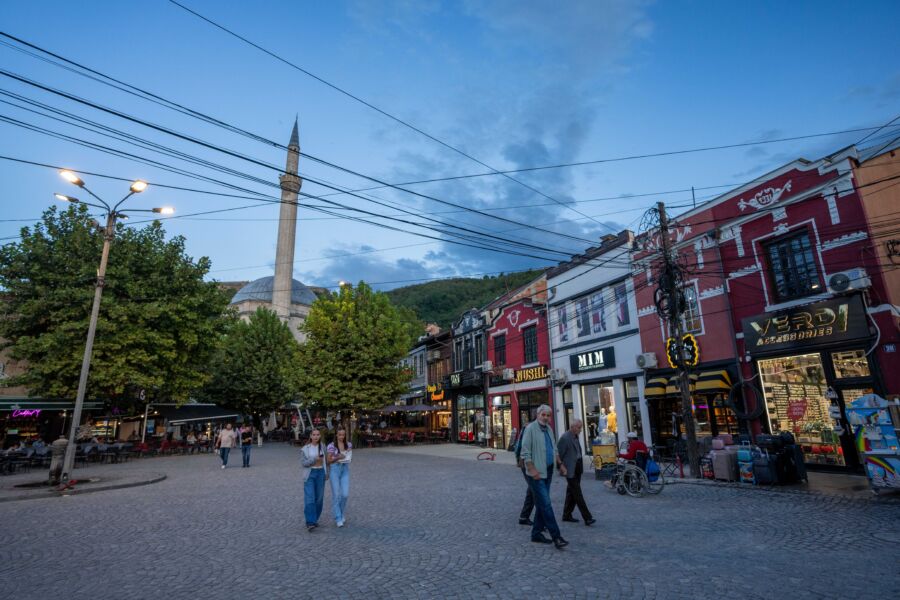
One sunny September evening, I eased my way through sloppy, ungovernable roundabouts as I drove into Prizren, Kosovo — the Ottoman-style historic capital of Europe’s youngest country. I’d had an exhilarating day of travel, starting out in the intense capital city, Prishtinë; joyriding a quick loop through the rugged landscapes of the Accursed Mountains; and visiting a pair of Serbian Orthodox monasteries of such cultural importance that wars have been fought over them.

Even as I was gliding on a traveler’s high, I was pretty beat. The hour was nearing 6:30 p.m., and the hazy orange sun was preparing to abruptly tuck itself behind the peaks that hemmed in the horizon. Navigating my way into Prizren’s town center, I negotiated an unmarked maze of torn-up roads, lucked upon a parking lot where I could ditch my car, ran to my B&B to drop off my bag…then hit the town before dark.

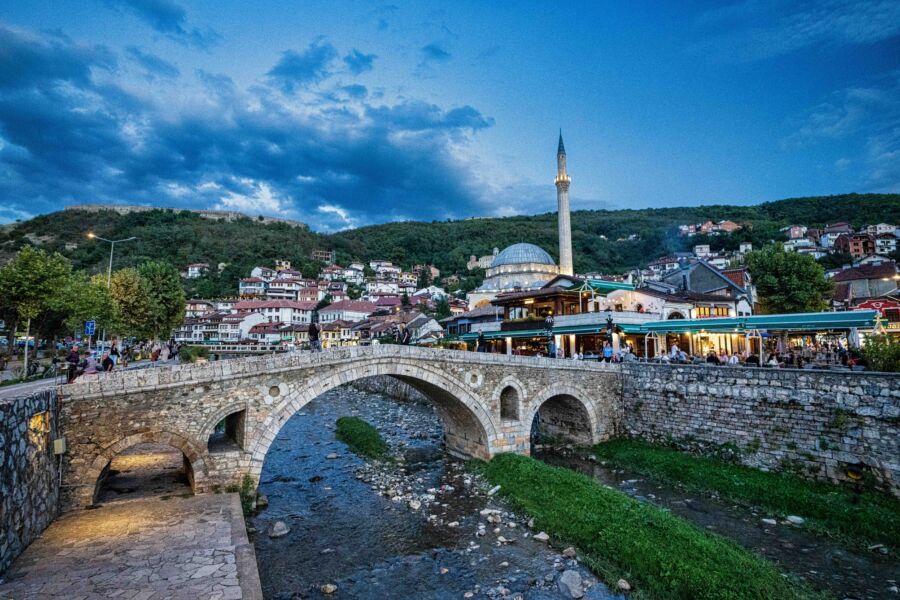
As I rushed double-time down to the main square, past outdoor cafés and the bored guards standing at the gate of the town’s Orthodox church, the call to prayer crackled forth from the soaring minaret of the Sinan Pasha Mosque.

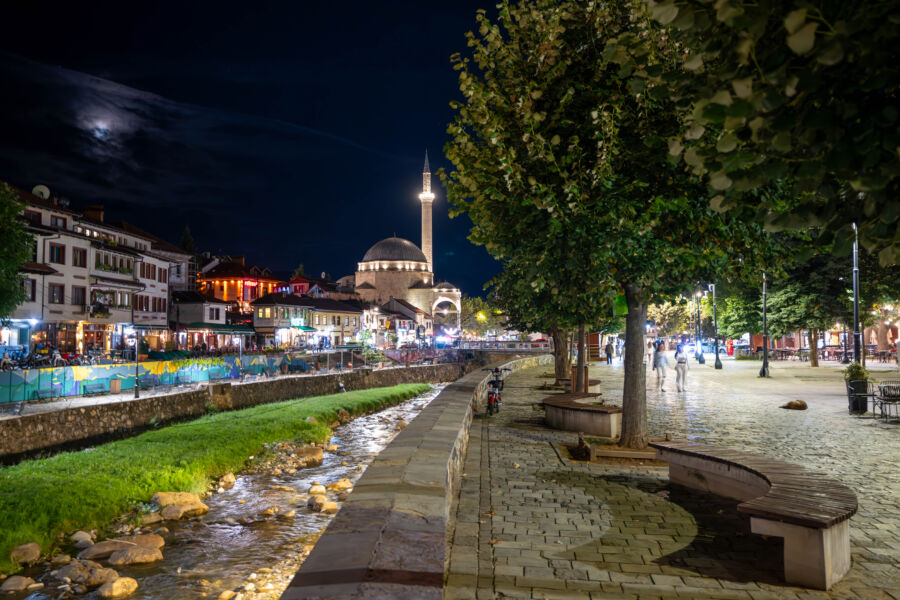
In a matter of minutes, I was stepping out onto Prizren’s Stone Bridge, gracefully spanning the Lumbardh River as it has since the 16th century. While there was still just a hint of light in the sky, I savored a photo safari — wandering up and down the embankments in search of my favorite views of that classic bridge, the exclamatory mosque, the dour citadel slumping over the hilltop, and the distant mountain backdrop.


After dark, I stowed my camera and enjoyed a memorable dinner: a scorch-your-fingers crock of elbasan (or tavë kosi), a traditional dish resembling a cheesy, oven-baked fondue interwoven with delectable bits of tender veal, sopped up with fresh, crispy, rustic bread. Then I enjoyed more strolling and people-watching, picked up a few groceries for breakfast, and got a good night’s sleep.

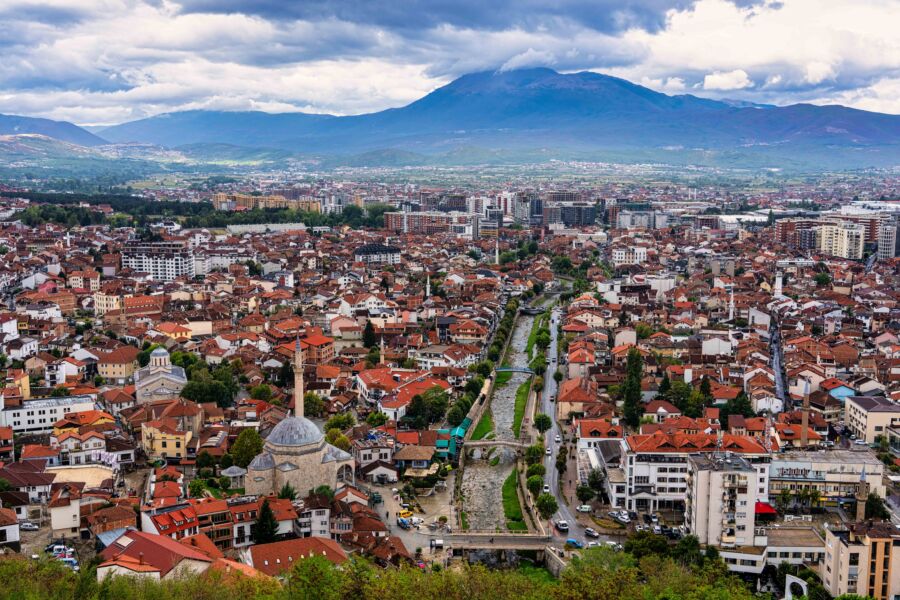
In the morning, I expected rain but awoke to only clouds. Counting myself lucky, I hiked up to the fortress and enjoyed the panoramas over this historic settlement that so perfectly fills its niche in the mountains. By the time I descended to the main square and nursed a coffee at a tipsy sidewalk table — watching locals stop by the humble landmark fountain for a sip or scrub — the sun made a surprise appearance. After another photo safari, I grabbed my bag, found in my car, and hopped on the highway to North Macedonia.

To be honest, it was hard to pull myself away from this unexpectedly delightful town, after just a few waking hours. Prizren got under my skin, and part of me wished I’d planned more time, maybe even a second night. I’d had only an enticing taste, and it left me wanting more.

But then, I remembered something I’ve learned over a lifetime of travel: Sometimes, it’s not a bad thing to leave wanting more. It’s certainly better than getting tired of a place. And often, a fleeting visit creates the most vivid memories.

I had a lot of those “leave wanting more” experiences on this trip, lacing together an ambitious itinerary through the Balkans — revisiting a few old favorites and finally making it to places I’ve always dreamed about. I had about two weeks for the trip, and when I drew up my preliminary “wish list,” it was clear that I faced a tough choice: Skip half of my list. Or go very, very fast.

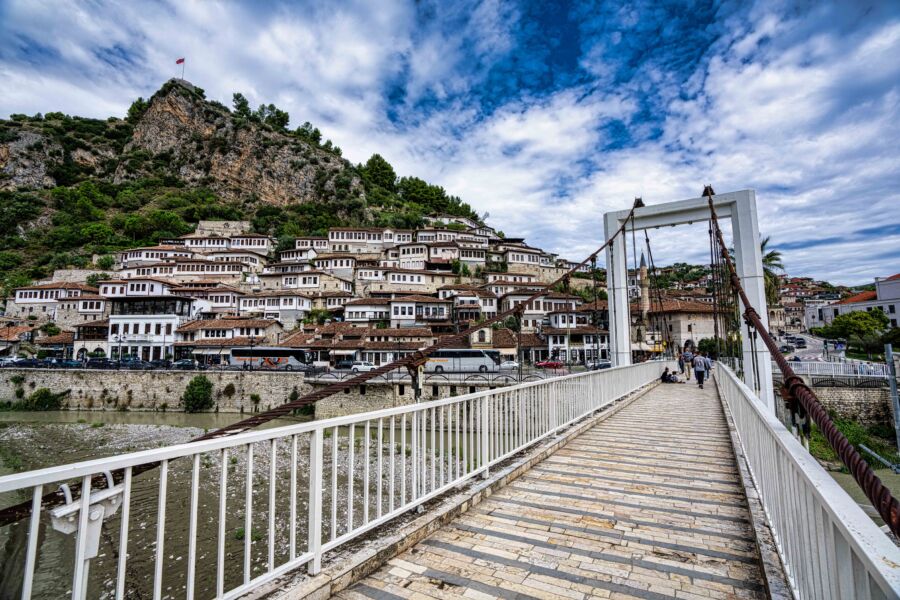
I opted for the whirlwind trip. And Prizren was just one of the many stops that left me wanting more. In Belgrade, I had time for just one twilight stroll around Kamerlengen Fortress, overlooking the point where the Danube meets the Sava. During my few hours in Prishtinë, I counted at least a half-dozen cafés and restaurants where I’d like to have nursed a drink or meal. At Lake Ohrid, I never quite captured the perfect sunset rays on the Church of St. Jovan. And in Albania, I scarcely saw Berat — just a quick glimpse on my way to Gjirokastër.

In each case, of course I’d prefer to have lingered — if only I had unlimited time. But here’s the thing: We really don’t have unlimited time, do we? And as I look back, those “too-quick” visits left some indelible impressions that will stick with me forever.

I was in each place just long enough to tease an air of mystery, stoking my imagination to run wild about the potential that hid up each unexplored lane and behind each unentered facade…while sparing me the disappointment of discovering that some of those places would fall short of expectations.

§ § §

I’m not suggesting that “fast travel” is always the best approach. There are many places I can barely pry myself away from: Budapest, London, Ljubljana, Sarajevo, Barcelona… even after a week in these cities, I’d happily double it. And sometimes it’s those tiny, remote places that tempt you to really settle in. That alpine village, perched proudly on its ledge, overlooking a green valley and a panorama of cut-glass peaks. That Tuscan hill town, with its labyrinth of stony lanes, enoteche, trattorie, and gelaterie. That quaint thatched-roof village, at some misty fringe of the British Isles, that tempts you to pull the ripcord on the rat race and permanently join the cast of characters at the local pub. That Norwegian fjordside hamlet, with its red-and-white boat sheds on skinny stilts watching over a vast, still, contemplative fjord.

Digging into a special place for a long stay, you have the deeply rewarding experience of getting to know every last intimate detail. You begin to recognize locals, and they begin to recognize you. You memorize each scenic bend in the footpath. You detect subtle differences in the taste of coffee or pastries from one place to the next… and settle on your favorite. You notice the nuances in the weather from one day to the next, becoming adept at armchair meteorology.

But the reality is, we don’t always have that kind of time, or money  — especially Americans, who (as Rick Steves likes to say) have the shortest paid vacations in the rich world.

There’s a clear contrast among travelers: Americans go fast. Our journey to Europe is long, tiring, time-consuming, and expensive; our time off is limited; we want to make the absolute most of it. In fact, we find it’s tricky to sell tour itineraries that are more than two weeks long.

Two weeks? For Europeans, that’s a quickie beach break. European travelers, who prefer to go slow, are aghast — even offended — at how quickly I’m moving from place to place. Later on this fall’s trip, I spent just one night on the alluring Cycladic islet of Folegandros. Europeans — from the Greek man who ran my B&B, to the British tourists on the catamaran next to me — literally did a double-take upon hearing of my one-nighter. It left them stumped and stammering. And yet… I still had a blast, with what little time I had there.

Europeans figure, if a place is worth a day, then surely, it’s worth five or ten. But the fact is, most Americans don’t have the luxury of lingering. And if our choice is between seeing a place quickly, or not seeing it at all, many of us opt for the former.

There’s a certain traveler’s snobbery when it comes to those of us who move quickly. We’re looked down upon, as if somehow we’re “doing it wrong.” But rather than be embarrassed about going fast, embrace it. Cultivate the art — and the mindset — of having a satisfying visit on the go.

Try this thought experiment: Slow travel — lingering in a favorite place — is Realism or Romanticism, with its closely observed details and its precisely articulated details. Meanwhile, fast travel is Impressionism: Sloppy, quick brushstrokes that capture a unique, unrepeatable moment in time… a vivid impression that sticks with you. When you travel fast, you travel as an Impressionist. And sometimes, those dashed-off impressions carry the most emotional weight. After all, there’s a reason everyone loves Van Gogh and Monet.

This “leave wanting more” philosophy also allows us to practice several traits of a good traveler. It forces us to adopt a mindset of abundance, treasuring the fleeting moments we have with a place, rather than a mindset of scarcity, being pointlessly annoyed at the many “things we didn’t get around to.” The Impressionist traveler is constantly reminded of the value of spontaneity: You can’t get to everything anyway, so you become flexible…follow your instincts…go where the spirit moves you. And then, as you move on to the next place, you find yourself savoring those dashed-off-yet-indelible impressions.

§ § §

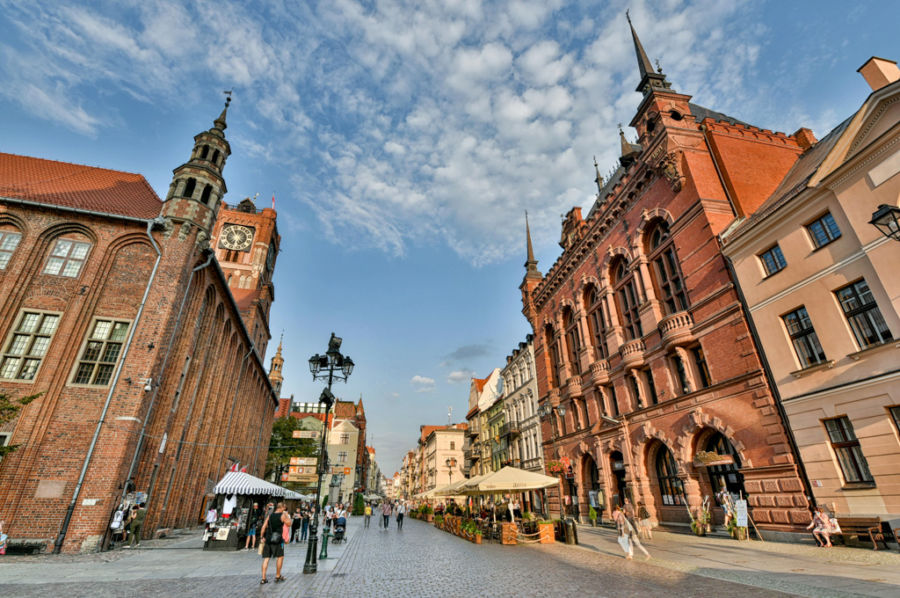
Driving out of Prizren, I suddenly recalled another time I left wanting more. A couple of years ago, I was part of the guide team who led the first-ever outing of our Best of Poland tour. We had painstakingly constructed that itinerary to balance time in the three great cities of Poland: Gdańsk, Warsaw, and Kraków. And, to offer tour members a chance to catch their breath in a smaller town, we included one night in delightful, red-brick Toruń, famous as the hometown of Copernicus and of Poland’s favorite gingerbread.

Toruń is insistently lovable. And, sure enough, our tour members fell for it…hard. We arrived in the mid-afternoon, checked into the hotel, gave them an hour or so to freshen up and/or explore, then did a brief walking tour on our way to a gingerbread-making demonstration. Everyone was on their own to find dinner and prowl the floodlit cobbles to their hearts’ content. The next morning, early risers had another shot at the town. And by 10:00, we were on the bus and underway to Warsaw.

As we pulled out of town, consensus (bordering on mutiny) quickly coalesced around the opinion that one night was nowhere near enough for Toruń. They wanted more, more!

I tried to articulate the same thought that struck me as I departed Prizren: Maybe they liked it so much, in part, because it was such a quick visit. It gave them just enough time to get an enticing taste of the town…a sense of place…to put it on their mental map. Part of it comes down to tour logistics, sure. But it’s also intangible: Some places simply work better as a one-nighter.

I have not dug deeper in Prizren; maybe if I did, I would find it merits another night, or more. But I have spent a good bit of time in Toruń. And from that experience, I know that what our tour group did there represents about 90% of what’s really worth doing. In other words, if we’d spent another night — or even just a few more hours — I’m sure the tour members would have enjoyed it. But maybe, just maybe, they might be surprised how quickly they’d reach a point of boredom… or even begin to wonder if this was really the very best use of their precious, limited time.

It reminds me of that old joke: Houseguests, like fish, begin to stink after three days. There’s an exceedingly fine line between “just enough time” and “too much time.” And based on experience, I’m confident about which side of that line I’d rather fall on.

I’ve often found this to be the case on a second visit to a place that intrigued me the first time: Yes, I enjoy having more time there. But in the end, the longer visit is often less impactful than the shorter one. In my traveler’s imagination, my mental painting of the place is more detailed…but I’ve sacrificed that sloppy, beautiful Impressionistic flourish.

Of course, this also requires a mindful approach to travel: Letting things be as they are. Embracing and fully appreciating whatever winds up on your itinerary, whether it’s a long stay or a short one. And accepting that sometimes, it really is OK — maybe even better — to leave wanting more.


Are there places where you’re glad that you “left wanting more”? Or do you think that fast travel is always bad travel? Share your thoughts in the Comments.

If you appreciate my approach to travel, consider picking up a copy of my memoir, The Temporary European: Lessons and Confessions of a Professional Traveler. This ideal stocking stuffer for the traveler in your life is currently on sale, for 20% off, as part of our Rick Steves’ Europe Holiday Sale. Thanks to all of you who’ve already read and enjoyed my book! I love hearing about your travel tales, too.