Things change fast — especially for travelers. As someone who’s fortunate enough to spend about 100 days each year on the road in Europe — mainly updating and writing our Rick Steves guidebooks — I’ve collected some favorite nuggets of travel wisdom. You can call these “travel skills” or “travel tips” — but in keeping with recent trends, I’ll call them “travel hacks.”

Most of my top tips wind up in our guidebooks, or on my social media posts (on Facebook and Instagram). But I haven’t done a comprehensive roundup since pre-COVID (when I posted travel hacks for 2018, and more for 2019 — most of these are still relevant). So, I swept through all of my little hand-scrawled black notebooks, social media posts, and never-published random writings on my hard drive, and came up with this fresh list for today’s travelers. In no particular order, here are a dozen of the travel skills, tips, and — yes — hacks that have become part of my everyday travel routine.
Book major sights in advance — and always on the official site.

The first half of this tip should be, I hope, common knowledge: So many of Europe’s top sights — the Uffizi and Vatican Museums, the Alhambra and the Prado, the Louvre and the reopened Notre-Dame — book up days or even weeks in advance. Prebooking tickets online is critical. (Our Rick Steves guidebooks provide clear guidance on which sights require reservations; which ones strongly recommend them; and which ones you can usually just show up for.) However, when prebooking tickets, be very careful which website you use. Every museum has an official ticketing site. But there’s an entire industry of third-party resellers who masquerade as the real deal — making it all too easy to accidentally purchase your tickets through a middleman who marks up the price. Because Google leads with “Sponsored” results, simply searching for the sight name and “tickets” may push you first toward these resellers, while the official outlet hides farther down the list. This has become a pet peeve for many of our favorite local guides, who always tell me, “Please warn your readers about this!” Our guidebooks always list the one-and-only official site; otherwise, you’ll have to check your options carefully to determine which is the correct one. (Often, it’s less flashy and less user-friendly than the big resellers. If it seems too slick… it may not be right.)
Know the cruise-ship schedule.
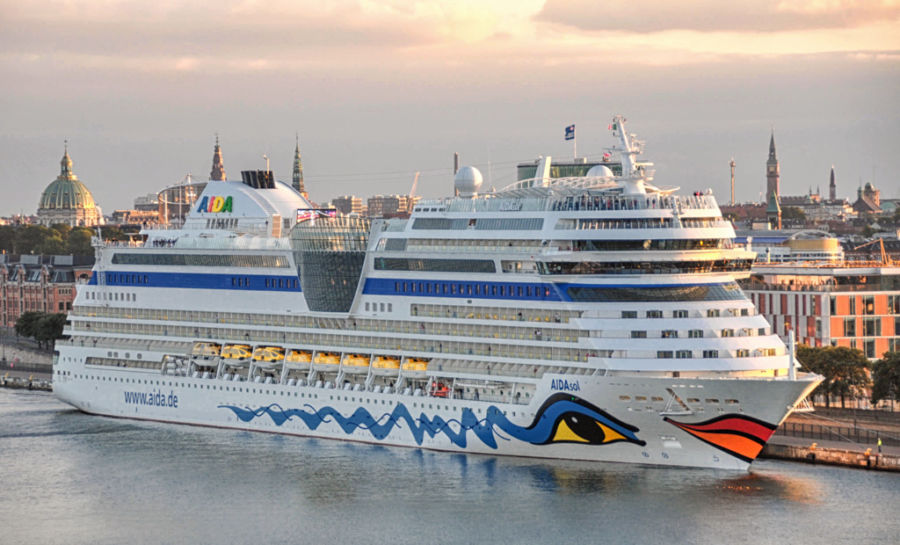
If you’re visiting a major cruise port, the number of ships in town can drastically impact your experience. So, get in the habit of checking each day’s arrival schedule. Various websites (including Cruisemapper.com and Cruisetimetables.com) offer a day-by-day list — not only how many ships are arriving, but which ships, what time they come and go, and how many passengers they carry. Especially in a smaller town like Mykonos, Flåm, or Dubrovnik, there’s a massive difference between a “light” day (with no ships at all) and a “heavy” day (with multiple ships and thousands, or even tens of thousands, of additional visitors). Knowing the schedule can help you plan more strategically: Which days to sightsee in town versus prime times to side-trip or hit the beach. And if, for example, you know that multiple cruise ships are staying in port late into the evening, it may be worth booking a dinner reservation… which may not be so important on a night when all the cruisers have set sail by late afternoon.
Don’t trust very long lines.
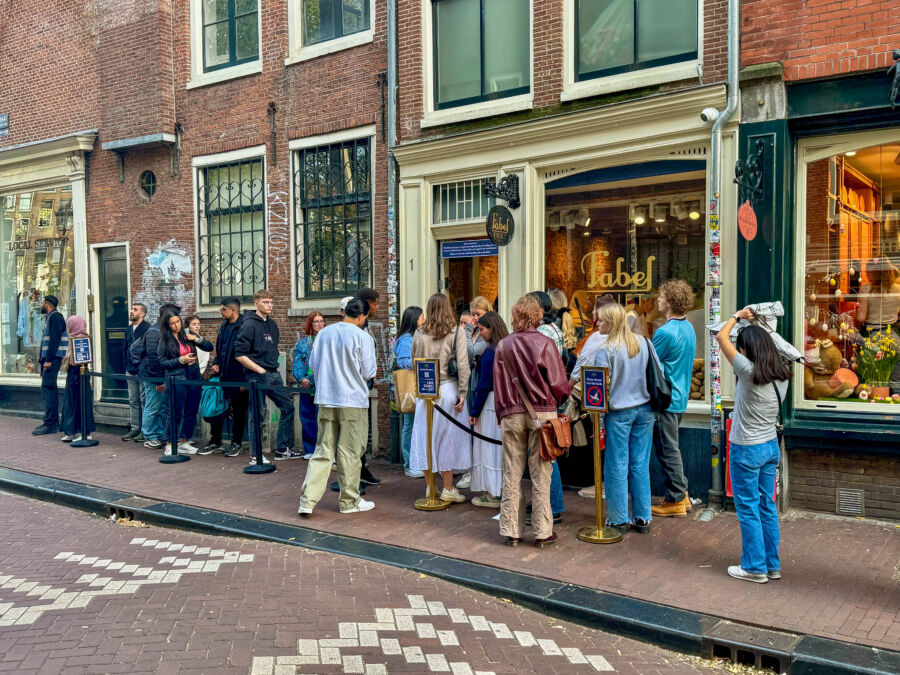
One of my well-traveled colleagues explained that, when traveling in communist Poland in the 1980s, the conventional wisdom was: “If you see a line, get in it.” They were probably selling something you needed (or, at least, something you could barter to get what you needed). These days, travelers still encounter some very long lines — for a very different reason — and precisely the opposite advice holds true. Social media influencers have a huge impact on trendy destinations, and being featured by a TikToker, YouTuber, or someone who’s Insta-famous can create a vortex of overpromotion… and an incredibly long line. I’ve seen these stretching down the block in front of a hole-in-the-wall sandwich shop in Florence, a fry stand in Amsterdam, and a gelateria in Split. I’ve tried a few of these (often returning later in the day, when the line has died down a bit)… and found them good, sure, but rarely a-MAH-zing — certainly not worth of an incredibly long wait. Very often, if you ask around (or do a little online sleuthing, avoiding the famous influencers), you’ll find that locals have a favorite alternative that’s never crowded. For example, in Amsterdam, I saw people lined up all the way across an adjacent canal for a chocolate-chip cookie. Literally steps away was a café selling amazing, handmade, delicate-yet-gooey stroopwafels — so much more authentically Dutch… and with zero line.
Get comfortable with WhatsApp.
These days, absolutely everyone in Europe uses the WhatsApp messaging app (owned by Meta) to keep in touch. Europeans like that it allows for encrypted messages and calls over any Internet connection, rather than paying a per-message or per-minute fee. Time and again, I’ve noticed that small businesses — local guides and drivers, restaurants, even B&Bs and hotels — have done away with traditional phone connections and can be most easily reached via WhatsApp. It’s free to download and easy to set up; you can use your existing mobile phone number. While I rarely use WhatsApp at home, in Europe it’s indispensable.
Stay in less-crowded, less-expensive, more charming towns and “commute” to the major destination.
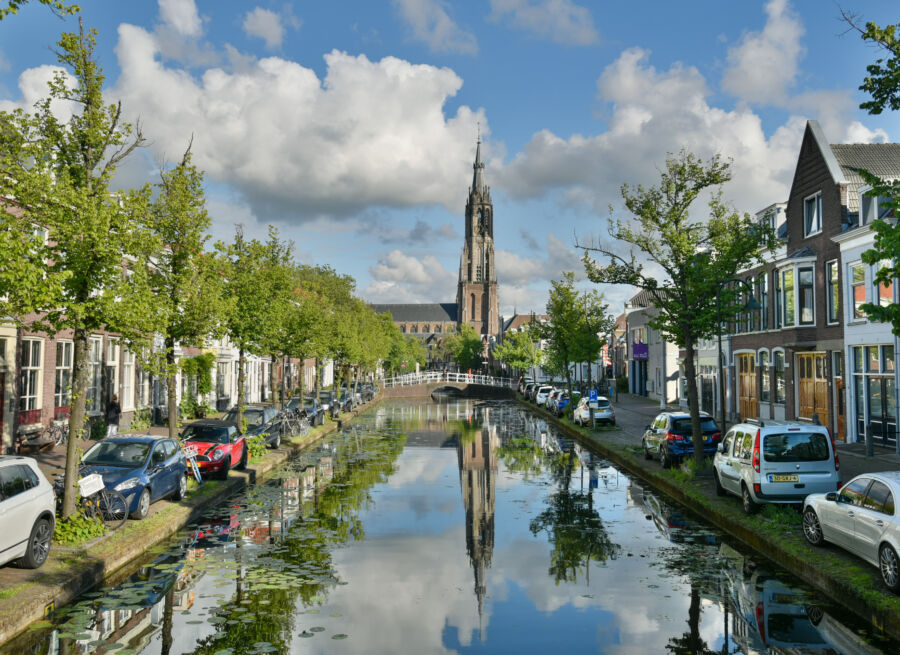
Even in our age of overcrowding and soaring prices, many travelers still insist on going to the big, famous, marquee cities, where everyone else also wants to go… and then they complain about the crowds and prices. If you just can’t resist the biggies, consider this compromise: Stay at a smaller town nearby and side-trip to your sightseeing. If you’re interested in Amsterdam, consider sleeping in Haarlem (20 minutes away by train), Leiden (30 minutes away), or Delft (45 minutes away) — each a charming and oh-so-Dutch town in its own right, with far fewer crowds and lower prices. If you’re dying to see Venice, consider sleeping in Padua or Treviso — from either, a high-speed train zips you in about 30 minutes right to the Grand Canal. And if visiting the Greek Islands, how about sleeping on workaday, foodie Naxos (30 minutes by express boat from Mykonos) or easygoing Folegandros (less than an hour from Santorini)?
If the locals are geeking out about something… join them.

In Slovenia, everyone’s wild about beekeeping. The art and science of beekeeping was pioneered by a Slovenian scientist, and to this day, colorful beehives perch proudly in every alpine meadow. Honey in every form — from bee pollen to beeswax candles to sweet honey mead — is ever-present in Slovenian life. Even Slovenia’s most prized folk art is tied to bees: wooden panels painted with elaborate scenes. Maybe you have zero interest in bees back home. But it’d be a mistake to overlook this beautiful, intimate slice of Slovenian life on your visit there. In Europe, where traditions run very deep, every community and country seems to have their own version of this: In the Welsh mountains, slate is huge. On Germany’s Mosel River, white wine is an essential feature of the local economy and culture. Hungarians go nuts for water polo and paprika; Spaniards love to sip dry white sherry; this year, England is excited about Jane Austen’s 250th birthday, while the folks in both Liverpool and Wrexham are soaring after their recent soccer victories; and Norwegians have a burgeoning artisanal hard apple cider scene. Wherever you go, make a point to figure out what everyone’s excited about… and jump on that bandwagon, whether or not you think you find it interesting. (I might pretend this is a “new hack,” but for decades Rick has been talking about this being a “cultural chameleon.” Same thing!)
Ask to borrow a fan.
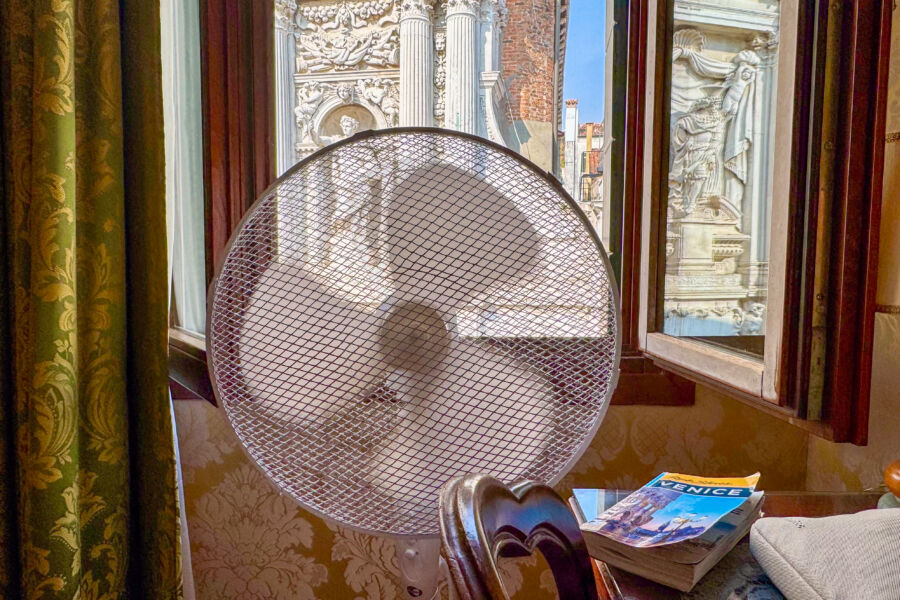
As our world’s climate changes, Europe often faces record-breaking summer temperatures, as well as unseasonal heat waves year-round. Europeans are more mindful about energy consumption than us Americans, so even if your hotel has air-conditioning, it may not blow as cold as you’re used to back home. And some places, running the AC in spring and fall is restricted. (During a hot snap in April, a Venetian hotelier explained that he’s required to turn off the heat on April 15, and can’t turn on the AC until May 15, unless the mayor declares an emergency.) If the weather’s hot, upon checking into my hotel, I quickly assess the AC situation. If it seems stuffy, I go straight back to the front desk to ask politely if I can borrow a fan. Most hotels have only a few, and they’re first-come, first-served… so if you wait until you’re going to bed, you might have to just sweat. Come to think of it, that’s another hack: Rather than get upset about how Europeans refuse to over-cool, develop an affinity both for their approach to energy conservation… and for tolerating the heat.
Where possible, tap-to-pay for transit — and understand the local system.
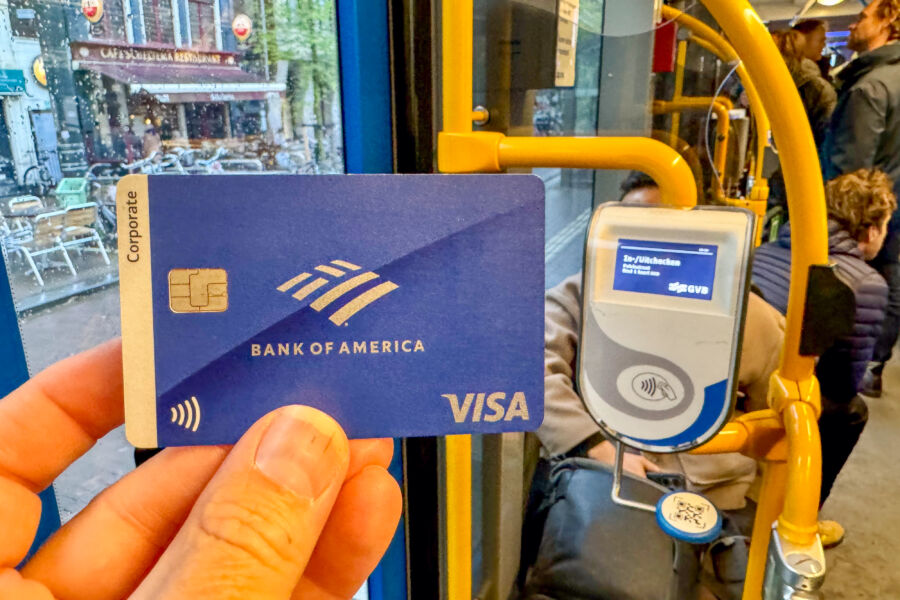
It’s old news that in many places, you can pay for local transit (buses, trams, the Metro) simply by tapping your credit card as you board. But this can vary dramatically from place to place. Before you arrive, take a moment to figure out whether that’s the case in the place you’re visiting — and how, exactly, it works. For example, the Netherlands is a global trendsetter: You can pay for any ride throughout its entire nationwide transit system (from in-city trams and the Metro, to long-distance intercity trains, to buses that travel deep into the countryside) simply by tapping your credit card. However, there are always caveats: First, you also have to “tap out” when you’re getting off. And each individual user needs their own payment method — so a family of four can’t “share” a single card, so they need to be prepared with other ways to pay. By all means, take full advantage of tap-to-pay where it exists — to save lots of stress and time (trying to find and buy paper tickets) as well as money (giving you access to the best possible prices) — but understand the system.
Follow the local news.
As Rick always says, “The more you know about a place, the more you’ll like it.” And that goes for current events, too. Leading up to your trip, start reading local news sources, for insights into everything from town gossip and hot-button political issues, to strikes or festivals that might throw a wrench in your plans, to severe weather that’s about to hit (and might require some changes to your apparel, if not your itinerary). I also enjoy keeping up with the headlines after I’ve left a place — now that I’m up to speed on the local scuttlebutt, it’s delightful to find out how things turned out, and it helps me feel a continued connection to the place. This is also a great illustration of how the experience of travel doesn’t have to just be when you’re “on the road”: It can be something that you anticipate… and something that changes you.
When using cards: Always pay in the local currency. And always use a bank-affiliated ATM.
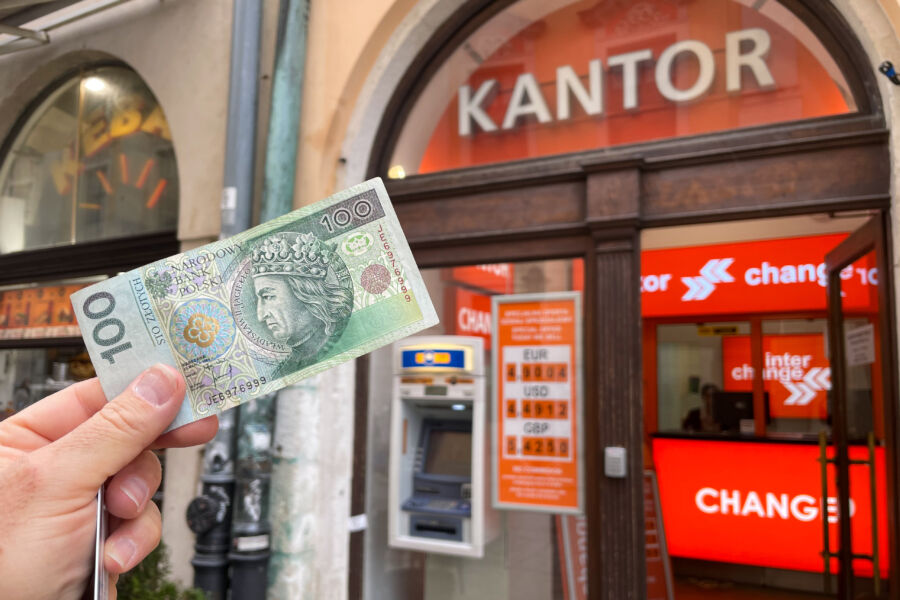
I have two unalienable rules of thumb for money matters in Europe: First, when you pay by card (or use an ATM), you’ll very often be asked whether you want to pay in US dollars, or the local currency. While paying in dollars seems convenient, you’re actually giving the vendor’s bank permission to choose an exchange rate that costs you more. If you always select the local currency, your credit-card company will set the rate, which is more favorable to you. Second, if taking out cash, be sure you’re using an ATM affiliated with (and ideally attached to) a real bank. Increasingly, Europe abounds with ATMs operated by exchange bureaus, with worse rates and higher fees. Avoid these. (Major chains to watch out for include Euronet, Travelex, Your Cash, or Cashzone.) Frustratingly, many airports and train stations don’t even have a bank-operated ATM anymore. For that reason, I usually head into town first (paying my way by card)… then go looking for a real brick-and-mortar bank, with an ATM out front, on my first evening’s stroll.
Know your rights as an air passenger.
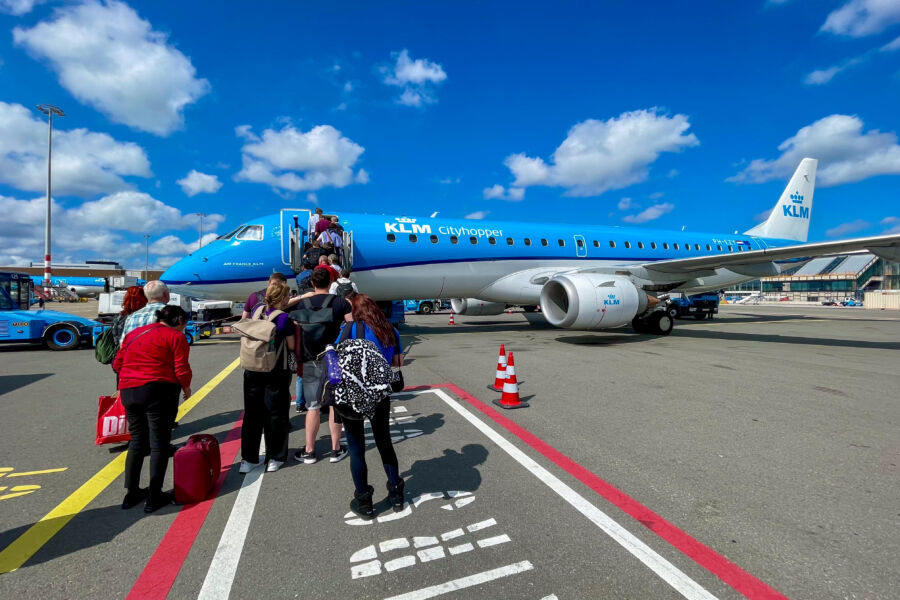
Recently, at the Amsterdam airport, my connecting flight to Norway was cancelled. While I was starting to panic, a European at the gate near me was calm and confident: “No worries. They’ll find us a new plane soon,” she said. “If they don’t, they have to pay each of us €250.” Sure enough, within minutes, they’d reassigned another plane — and we wound up arriving in Norway just 45 minutes late. Why? The European Union (EU) has generous consumer protections for air passengers. We’re entitled to compensation for flights that are delayed more than three hours, or cancelled outright. Knowing about this serves two purposes: First, the airline might not volunteer this information — so you may have to ask for it. And second, it provides strong incentive for airlines to find a quick solution… and reassures passengers that it’ll work out (and if it doesn’t, you’ll make a tidy profit).
Are you dreaming of a “trip of a lifetime”? Make it happen!

We all have those “dream trips” that we’ve always fantasized about. Often, it’s something very specific… even “weird” to anyone else. Rick recently published a book, On the Hippie Trail, about his early backpacking trip overland from the heart of Europe to India. Last fall, I finally put together a road trip I’d always dreamed of: traveling through the Balkans, from Slovenia to Greece, by way of eight different countries. And along the way, I ticked off another bucket list item when I got to step on board the famous “Blue Train” of the Yugoslav dictator Tito. Now, I’m not saying that you should go on the Hippie Trail, or travel through the Balkans, or become obsessed with Tito’s train. But I’m sure there’s something you’ve always dreamed of, just the same. You’ve been waiting all this time to make it happen. So… make it happen. There’s no time like the present. The only thing standing between you, and your dream destination, is making the decision to do it. So, here’s the hack: Do it!
These are just a dozen of my favorite “travel hacks.” What are yours?
Prebooking has definitely become non-negotiable, especially with places like the Alhambra or the Vatican. I’ve also found that double-checking for official ticket sites helps avoid third-party markups and unnecessary stress.
All good advice. I would add “rent a car”. I feel like once I started driving on my European trips, that significantly upped my game.
There are many obvious ways how it can enhance your trip, but I just find cruising around Europe to be an enjoyable experience. There is some drop-dead gorgeous scenery in between all the must-see cities and villages on the map. I was just in the La Rioja region of Spain and couldn’t believe how green and picturesque the landscape was. Unfortunately that experience only lives in your memory and is hard to capture in photos.
Also, driving exposes you to all different sides of Europe and gives you a more honest impression of where you are traveling.
Absolutely agree about your assessment of La Rioja. My husband and I drove it today, and the beauty amazed us. My husband, who was driving, kept saying, “I can’t believe you’re not taking pictures!” But I knew the beauty couldn’t be captured in a photo from a moving car, and I focused on enjoying it.
Figured out the Wyze is more accurate than google maps for navigation in Spain. Also know that in a roundabout an opening to a business is counted as an exit (no actual road).
I drove in Scotland and England and will never do it again. All I saw was asphalt while my passengers saw the gorgeous scenery I wasn’t able to see because I was afraid to take my eyes off the road for fear of sheep darting out in front of me, blind corners on single track roads, etc. Next time, I’ll just take public transportation to get close to the places I want to see and then hire cars and drivers as needed to see the harder to reach places. I know others who also feel the same way I do. Perhaps it would have been different on the continent, driving on the “right” side of the road that I’m used to as an American, but I regret renting the car (oh–and also lost a day of travel because Hertz gave my automatic away to someone else and so only had manual cars that I could not drive; had to travel 30 minutes by bus to get to a car rental place with an auto transmission at double the price. Never again!)
So true about England/Scotland. Our memories of the Lake District are of me white knuckling while my wife muttered helpful commands…”wall”….or ” car” meanwhile angry drivers coming the other way pointed urging us to get back to our side of the road.
Driving in Spain, France, Portugal and Italy on the other hand has been amazing…and has allowed us countless adventures and encounters with the locals
Last year we did England–Bath, Oxford, Stratford, Cotswolds, Lake District, Durham, Yorkshire Dales, York, London (and Edinburgh) entirely by train. In the Cotswolds, Lake District, and Dales we engaged minibus tours. There were a few minor train glitches but for the most part it all went smoothly and comfortably. On the minibuses, dashing from amazing site to amazing site with an expert driver, I watched all the other cars driving on the wrong side of the road and was glad I wasn’t one of them.
I agree completely. I would never want to drive in the UK nor in Europe. For Scotland, I just took the Rick Steves 13 day Best of Scotland tour. It was reasonably prices, took me to fantastic out of the way places, a local expert did all the driving and navigating, I met fun people on the tour, and obviously, I didn’t have to figure out what hotels to book, what trains to catch, etc. etc. Plus, you can opt out of anything that doesn’t suit your fancy on the tour. It was a pleasure and the trip of a lifetime!
I took the Scotland tour in 2018, and I also loved it and thought it was great value for the money. I take the view that just because an activity is part of the itinerary doesn’t mean that I have to participate. Maybe I just need some time to myself or prefer to do something different.
AnnieM, that is precisely the reason my husband and I have a policy of NOT driving when we travel. I can’t disagree with the proponents of having your own wheels but all my husband will hear from me is “ooOOoo” and sadly will not be able to enjoy the scenery as much as I would.
Have to disagree. Some trips you have no choice but to rent a car because train service isn’t great. And sure, sometimes it’s just fun to drive somewhere. But in many places in Europe you can get anywhere on a train, quickly, and it’s easier to travel with bikes. (Very difficult to rent a car with a bike rack.) In addition we find it more relaxing not to have to drive.
I appreciate the virtues of car travel however have come to love the freedom of local transport (no fears about damage, such as breaking off the rear view mirror, as I did in England…gulp) and I even more enjoy the immersion into local life when you take a city bus or hop on the train. I particularly enjoy buses in Mexico: sounds, smells, dangling rosaries, driver’s music playing while you bounce along.
parking in major areas? or do you turn the car in and ride public transportation?
All great advice. A couple of minor additions:
* if you must use an ATM, see if your bank will refund the ATM fees (Schwab and Fidelity do this). On my most recent trip of a month, I only took out case twice.
* if you must use an airport (or other, no bank, ATM) always do a quick check for those fake card skimmer attachments that thieves add-on. (Check Youtube for info)
* RE the EU261 payments: note that any American airline that flies *to* Europe is not held liable under EU261 delays (but, confusingly, on the way back they are). European carriers (like Air France) must adhere in both directions.
And even though the UK is no longer part of the EU, they still adhere to a variant of the EU261 rule.
* Phone charging: Even though Europe is standarding on a phone/charger (USB-C), it may help to still bring a bigger/older USB-“A”-compatible plug. And if you lose or forget your wall charger, know that most TVs will have a USB port (on the side) that you can use to charge the phone at night.
* Tipping is getting frustrating in the UK, where the server may present you with the familiar iPad with the “Do you want to add a 10% or 12% or 15% tip?” just like here. A local there tells me “it’s the American tax”, that is prompted by our accents.
Cameron, do you know if this “America tax” is real, and what do you suggest? (My UK contact says to me “0% is the norm”)
Andrew, as a Brit who swears by Rick & Cameron’s advice in other lands, I hope I can offer some here. I’d say that whoever suggests that there is an ‘American tax’ is at best joking, at worst trying exploit the goodwill of travellers. I – and I think all other Brits – see a tip as an acknowledgment of good service, a gift, not part of the bill. It’s an optional extra. That it has become something to be accepted or refused when presented with the bill is maybe seen here as something that’s come from American practice, where tipping is more common – and maybe that’s the source of the ‘American tax’ comment? Staff in restaurants in Britain get a guaranteed minimum wage, which might not be much but shouldn’t be linked to the tips they received. I always ask whether they get the tips themselves. Your UK contact is correct – 0% is the norm, something more is at your discretion.
Thank you, Steve. It would be interesting to compare the experiences of two tables at the same establishment: one purely made up of Brits, and the other, with American accents. Would they be presented with identical bills?
The “American tax” comment was just a reference to the fact that it *seems* to be added to more and more bills that Americans see… But this is so difficult to prove conclusively. When I travel with my local Brit friends and they see me (a Yank) being asked to choose a tip amount, they always mutter something about it. In a strange way, I would rather hear that tipping is becoming the norm for *everyone* in the UK, rather than just us Yankees.
But, really, I wish it would just go away.
I am in London now. My bills seem to have a service fee. If they do, I don’t even consider tipping. The fee is usually 10%. Is this considered normal, or am I getting American taxed?
Hi Mark,
A service charge is now fairly common in England. Check your biill. If it’s not included then definitely tip according to the setvice provided.
Bruce, the Parisian “tap and pay” is not the same as you may find in other cities in Europe. The “true” tap and pay–and this is just my own definition–should not require you to download and install an app onto your phone. The Parisian one does: you then purchase your tickets within that app ahead of time. As you go through the “turnstile”, your payment is deducted from the app.
This is not as nice as a true tap and pay, in that it is more cumberous to use…and there is also a chance that you by too many tickets for your stay.
Ugh. This ^^ got posted in the wrong place. (Wish I could edit/delete my own comments)
Steve’s comment reminds me of the time I was at the Eagle & Child pub in Oxford. After a pint or two, I got up to leave and the guy next to me said, “You didn’t leave a tip.” I said, “No, I didn’t.” He said, “But you’re a Yank. Yanks always leave tips.” I said, “Well, this one doesn’t. Not in England, anyway.” He said, “Come back here… sit down. Give ‘im another pint…this man’s Working Class!” And by the time I left that night I could barely find my way home, I’d had so many. When I was in Northern Ireland, after ordering my 2nd Guinness, I told the bartender, “and one for you as well.” That was it… I didn’t pay for another for the rest of the evening… and we all drank til closing. So that’s my hack: Make friends by NOT leaving a tip.
This is one of the best stories I’ve heard! What a way to make some friends!
Whether Stateside or overseas, I never include a tip with my card payment. The card companies take a percent of the total payment. So the server gets less than you tipped. Instead, I carry cash and tip the server directly.
Rick, as a former server, I should explain that it’s the restaurant that absorbs credit-card fees, not the servers (at least, never in my experience). They may share part of what they get with bartenders, back waiters or bussing staff, but servers get 100% of what you leave them. That said, servers (and other people receiving tips) always do appreciate cash, because of the tax benefits.
Especially at 2.13 an hour for most servers in the US!
Whether Stateside or overseas, I never include a tip with my card payment. The card companies take a percent of the total payment. So the server gets less than you tipped. Instead, I carry cash and tip the server directly.
Also when using a bank atm it’s best to do it when the bank is open. We had a bank atm take our card on a Saturday when the bank was closed. We were leaving that day and couldn’t retrieve it on Monday.
In the UK service (or tip) is usually included and indicated on the bill. So at the bottom of the bill you will see a line reading something like ‘service 12.5% (optional). This the majority of the times. And the amount may vary based on the poshness of the restaurant. If you presented with a machine that requests a tip be sure to check if you bill already has service (tip) included. BTW the norm is 10% for tipping – restaurants, taxis, etc. The tip rate of the USA does not apply here.
PS I am an ex-NYer living in London for over 30 years. I hope this helps
Please see my reply to the tipping issue below (I didn’t reply correctly the first time)
Yes. Just back from a week in London (after Rick’s Scotland tour). There were tips added to the bill in London (and Edinburgh) and just about everywhere. Our upscale hotel added a 5% “discretionary charge” to each night of our stay on the check out bill (which I had prepaid without this charge). If I hadn’t carefully gone over the final bill at check out, I would have paid CAD $220 more for our accommodation that I had not agree to up front. I was told the optional fee that they tried to sneak in was for staff tips and hotel maintenance. In my opinion, it was a bait and switch. I declined the optional charge and it was removed. I’ve stayed at this hotel before and it’s the first time I’ve seen this, in addition to all the 12.5% tips added at restaurants.
We were recently in London, staying at St James Court, a Taj hotel and also had a discretionary daily fee added on tot the bill. New to me! The hotel is quite expensive and I couldn’t believe an additional fee was added. I asked to have it removed and they did so. Really rubbed me the wrong way. So glad I reviewed the bill.
My daughter bought me a small travel fan that plugs into a USB port and it has been indispensable the past two years. We use it on river cruise cabins, hotel rooms, even when visiting family.
I bought two travel fans like this for our Italy trip last May…they are lightweight, easy to pack and wonderful to have for each traveler in a stuffy hotel room. Also provide often welcomed “white noise”.
do you have a brand you recommend for a travel fan?
Rented cars can get you into areas you’d never find via public transport, but also consider renting a bike, especially in cities where driving can be nerve wracking and parking difficult and expensive. My husband and I rented bikes in Seville and had the most amazing time. We were able to cover greater distances than we could on foot, but we were also able to see more by bike than by car, because we could stop anywhere along the way that we found something we wanted to explore.
Bingo! Bike rentals are an excellent strategy.
I recently stayed in Leiden and loved it. Will definitely go back.
Regarding ATMs, I suggest checking whether your bank has a convenient location where you’re going. My bank, after several acquisitions, is now headquartered in Spain, with convenient branches in Mexico and Portugal as well as my home in Pennsylvania.
A warning: when I used an ATM in Mexico (yes, at my bank), it asked whether the ATM should do the conversion and showed the dollar amount. I opted no, and when I received the automated text from the bank about a foreign transaction, it was quite a bit less than the rate offered by the ATM. So the same rule Cameron mentions above applies: if a machine offers to convert your transaction to dollars, just say no.
Great Hacks.
Use a bank ATM. Absolutely. Follow this rule at home too.
On the tap and pay for public transport – yes. We did have a case where a US debit card didn’t work in Amsterdam. Thank goodness for the backup card.
On staying outside of the city center – we stayed near Disneyland Paris since a park visit was part of our trip. We purchased the €30 week pass for Ile de France public transportation. The pass, on your mobile, worked great and we felt like locals commuting on local buses, suburban rail and Metro . I enjoyed riding with the well behaved school kids in the mornings.
When I heard that Paris was going to update its transit fares and payment methods at the start of 2025, I was really hoping it would be a true tap-and-pay system like London. Is there a spreadsheet or similar resource that lists all the tap-and-pay systems in Europe?
Bruce, the Parisian “tap and pay” is not the same as you may find in other cities in Europe. The “true” tap and pay–and this is just my own definition–should not require you to download and install an app onto your phone. The Parisian one does: you then purchase your tickets within that app ahead of time. As you go through the “turnstile”, your payment is deducted from the app.
This is not as nice as a true tap and pay, in that it is more cumberous to use…and there is also a chance that you by too many tickets for your stay.
I always try to leave the US with the currency of all countries I plan to visit. It’s never steered me wrong.
Our tip – book a rental car the furthest outside of town within good transit access. Saves a lot of stress driving in the big city.
We loved learning about bees in Slovenia. Our kids were in Covid lockdown, so my husband and I went to the bee museum and began looking for the beehives.
We’re making the second attempt at the Adriatic tour in a couple of weeks so hoping for luck and no covid this go around.
Just a quick idea – while at a great Banff restaurant, we signaled for the check, and the waitress made a comment that made us realize she knew we were American – we try not to broadcast that in our travels, so I asked her how she knew. She tapped my credit card on the table, “You had it waiting for me”. Since then in our travels in Europe, we’ve noticed that people “dine”, not eat, and are never rushed from their table.
Will keep that in mind among our future travels.
I loaded my credit card on each of the kids’ phones so they could tap and pay easily from their Apple Wallet. One card for the whole family. They also liked being able to make other purchases independently. I only used the physical card one time in 18 days. In case you’re wondering, tapping is the most secure method for using your credit card.
We travel to Munich frequently. You can purchase any of their tickets on your phone ahead of time, even the group/family passes.
What I meant to say was you can purchase their transportation system tickets on your phone. And, you can also use their trip planner so you know exactly which bus/tram/train to get on/off.
My husband and I have made two trips to Scotland, covering approximately 2,000 miles by rental car. Our best “travel hack” was the purchase of an inexpensive dashcam that we set to come on every time we start the car, so we capture our entire driving experience – from the everyday commotion of the TESCO parking lot to the jaw-dropping scenery of Skye to the prehistoric monuments of Orkney to the highland coos blocking the road to Huisinis to the supercars passing us on the stunning road to Glencoe and every other amazing, interesting, and commonplace site along the way that made our trips so memorable. We then have wonderful “movies” to watch at home, and the driver gets to see all the things he missed along the way.
This is the most brilliant idea I’ve seen in a long time! Will definitely be doing the dashcam next trip.
I like staying in “suburbs” of large cities – still on the regular public transportation lines but outside of the crowded/expensive center.
Last summer we stayed in Neuilly-sur-Seine, right outside of Paris. There was a little bakery around the corner from our apartment and when we stopped in for breakfast our first morning the other customers were all municipal workers, sanitation and EMTs, having their morning coffee before going on shift. The pastries were delicious, very affordable, and we were the only tourists there. It was the type of local place where you can go back up for refills or another pastry and you just pay for everything when you’re finished. We stopped in almost every day of our stay and by the 2nd or 3rd time the woman behind the counter was politely correcting my French pronunciation.
The big drawback with using your credit card to tap-on, tap-off trains/buses/subways is that you always need to keep your card handy. It makes theft or loss more of an issue to me. I much prefer to buy a one day or multi day pass. It’s one trip to the ticket machine and costs less worry if lost.
I’m thinking about how much I would need to be ‘saving’ in order to make commuting to a major item on my must-do or must-see list worth my while.
If a room in Amsterdam in the middle of the action is €250 and in Haarlem is €50 plus an hour of commute time, then it’s probably worth it — but is that a probable scenario, or is it more like €195 plus an hour? Would I want to stay in a €50 room in Haarlem? I don’t know the two cities well enough.
So let me think about Paris instead — €200 for a two-to-three star postage stamp in the Marais vs. €100 in a characterless high-rise box near the border of the metro zone? Honestly, sitting here right now I can’t decide.
Jersey City vs. Manhattan? Probably Jersey City (assuming good weather)
Longbeach vs. Hermosa Beach, LA?
Woodland vs. Napa?
Northern Kentucky vs. downtown Cincinnati? You couldn’t pay me to stay in Kentucky.
I am a UC architect alum, I return to Cincy for reunions. I stay cheap in Northern Ky, rent a car to drive across the river. The view each day of the city coming down the hill and crossing the river is priceless!
Public transport in Europe is excellent. It is well worth considering an Interrail Global Pass. You choose the class of travel, country or countries and number of days for a fixed price. They usually have a sale in the spring and autumn and you can sign up for email alerts. It includes Eurostar between the UK and mainland Europe, as well as high speed and local trains. For some trains there is an additional (very small) booking fee though you don’t need bookings for UK trains. I traveled from Birmingham, England to France and all over the Loire Valley this spring taking in royal towns and chateau for under $400, all by train, bus and tram (the latter payable locally). It was quite the adventure.
In the UK there are also a variety of Railcards on offer. For example the Two Together Railcard (for two named individuals travelling together) is £35. This gives you 1/3 off *all* off peak train fares for a year and more than pays for itself on one or two long distance routes.
Whether or not you have a railcard, booking direct with Chiltern railways mean you pay no booking fees for reservations (unlike many other platforms). And once you have a seat booked if you fancy an upgrade you can bid online for one on Seatfrog. I’ve won a fair few auctions for £10 which includes better seats, quieter carriages and free food and drink.
PREACH. This is the sign you’ve been waiting for! ✨ Whether it’s the Hippie Trail, a Balkan odyssey, or finally booking that ticket you’ve been eyeing for years—*the magic begins when you decide to move*. No more ‘someday.’ The present is yours. So—what’s *your* dream?
I got separated from my partner due to irreconcilable differences and my husband had custody of my 2 kids. Life took a downturn from that point, I felt an unbearable emotional pain that got me hooked up to drugs to help with the pain, my life took a different dimension when I had an encounter with Dr Sam love spell home he was able to bring a level ground between me and my estranged husband and I have reunited with my kids. My home is back to what it used to be, thank you Dr Sam I really appreciate you sir, his what’s app (+234) 9153510730
Some nice travel tips/hacks in here, thanks to Cameron and all who commented. Here’s my suggestion: when arriving in a city/town that I’ve never been in before, take a taxi from arrival point to your hotel (or train/bus station, if you’re just landing there and headed elsewhere).
When jet-lagged (I usually am on an overnight flight and I do not sleep well on airplanes) and with luggage, I don’t trust my bad sense of direction to walk it (I know I will go the wrong way). If I have to walk it, or take the subway near to the hotel, I will email the hotel and ask for specific directions (what subway stop, which exit from the stop, which way I turn).
Many hotels offer a car service which we now take from the airport after that long, awful nighttime flight. It is so worth the cost and we have found the drivers to be like mini-tour guides. Being greeted in the airport and driven quickly and safely to our hotel is a wonderful way to begin our European adventure.
Here’s a tip that we’ve been following more and more: Take a Cooking Class!
So many destinations have their own characteristic foods, and learning about what goes into a particular recipe, how it’s made, and what variations are possible is more interesting and enriching than just ordering it at a restaurant. Then afterward, you’ve got the recipe(s) to make at home. You learn more about a place, its culture and traditions, meet locals, and have a delicious meal.
Whether pasta, pizza, or gelato in Italy (and it’s different in Tuscany or Sardinia), ratatouille or galette or pastries in France (Lyon and Nice are so different), salads or hummus in Morocco, pierogi or borscht in Poland, the classes are entertaining and informative. If it starts with a trip to the market, that’s even better.
Nice work on the blog Cameron; first time I’ve read it. Just got back from two months in Portugal and Spain and there wasn’t anything I didn’t agree with.
On a recent trip to Holland, we rented an AirBNB in Leiden for 8 days. Quick trip to the airport, Amsterdam, den Haag, Rotterdam. Essentially most of the Netherlands. Each day we walked 15 minutes to the train station, no crowds, past scenic rowhouses, canals and a traditional windmill. Much more restful, scenic and economical than staying in Amsterdam.