10 European Discoveries for 2026

Looking for something a little different in your 2026 travels?

As Europe continues to struggle with “overtourism,” the best advice for avoiding crowds… is to visit places that don’t have them. That’s the spirit behind my European Discoveries (which I’ve been sharing each January, dating back to 2018). You could also call them “Alternatives” to some of Europe’s biggest-name destinations: towns, cities, and neighborhoods to help you discover a more authentic slice of Europe.

To be clear: These are not “trendy” or “hot” destinations for 2026. Quite the contrary! These are wonderful places that are (for now, at least) flying under most travelers’ radar. As more and more visitors are heading to the same predictable places, these 10 Discoveries (and so many more) are a reminder that there’s always more to experience in Europe.


Kinsale, Ireland
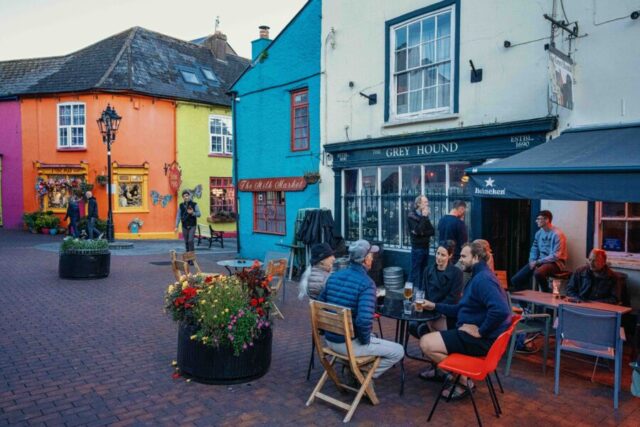
Ireland specializes in tidy towns. (In fact, they have a contest!) And perhaps the tidiest is colorful Kinsale, tucked on the southern coast, overshadowed by big, busy Cork.

Overlooking its charming harbor, Kinsale remains mellow and sweet. It’s just the right size: manageable and village-like, but with enough great restaurants, trendy boutiques, and Guinness-and-trad-music-fueled pubs to keep you plenty busy. Scattered around Kinsale are benches situated just so, perfectly positioned to savor the small-town charm.

Kinsale is so low-key and unassuming, it’s easy to miss its epic history: The Lusitania was famously torpedoed just offshore in 1915; the Titanic set sail from Cobh, just around the headland; and the town is still protected by a vast and imposing 17th-century fortress with ramparts and turrets you’re welcome to prowl. With so much history, thank goodness Kinsale also comes with a wonderful daily town walk (offered by tour guide Barry Moloney) to pull it all together.

Visitors often zip right past on their way to trendy (and touristy) Dingle. But that’s a shame; for small-town Irish charm, Kinsale is hard to beat.

Cádiz, Spain
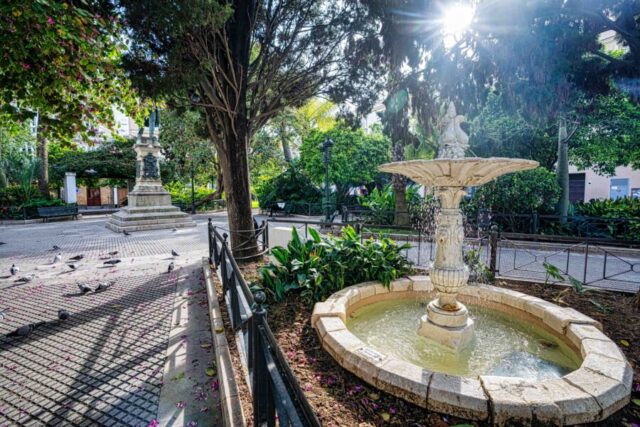
Deeply lost in Cádiz’s claustrophobic lanes of towering townhouses, where neighbors stand on doorsteps to chat and joke, I kept having deja vu for Naples — with its similarly convivial warren of lived-in lanes.

Among Spaniards, Cádiz is known for having its own strong personality; for its impenetrable local accent; and for producing more than its share of comedians. Among travelers, it’s mostly known as a cruise port — a place to leave on excursions into Andalucía. The city is overshadowed by its historic rivals — Sevilla, Granada, Córdoba — and by the beaches of the Costa del Sol.

All of this makes Cádiz a particularly wonderful discovery: This city plays “second fiddle” to nobody; it’s simply its own wonderful place.

Originally founded by the Phoenicians, Cádiz is often billed as the oldest continuously inhabited city in Western Europe. Its historic quarters are layered with artifacts, from a recently uncovered Roman amphitheater, to its crumbling cathedral (built at a time when Cádiz was Spain’s primary trade port and tether to the New World), to Napoleonic cannons seized after a failed siege and used as curb protectors. Cádiz gives historians goosebumps.

It’s also purely enjoyable. Endless paseo-and-shopping streets — lined by genteel captains’ mansions — burrow through the historic center. Flamenco clubs and sherry pubs invite you in for a spell, as do lush parks and colorful seafront promenades. Long, languid beaches stretch for miles along the causeway that tethers Cádiz to the rest of Spain.
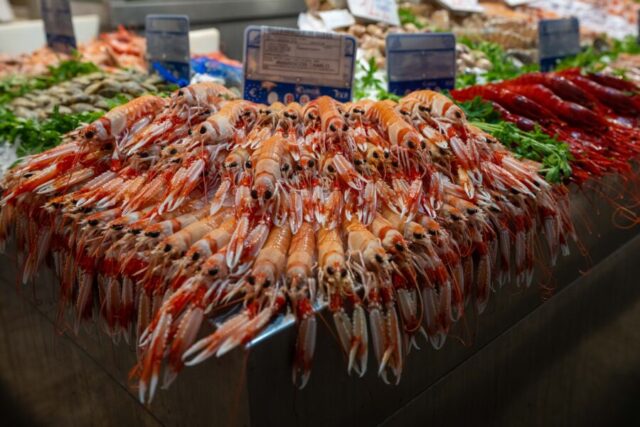
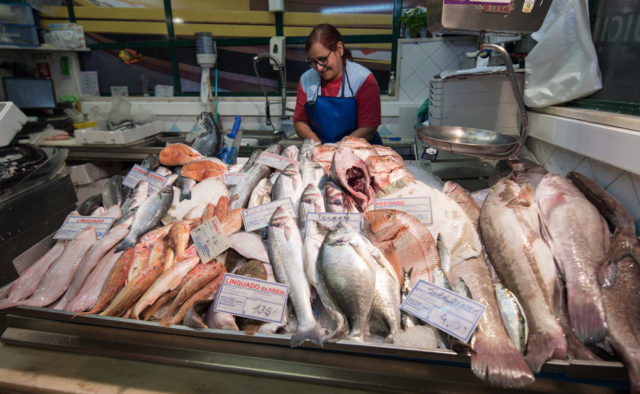
But where you really feel the heart and soul of Cádiz is its central fish market. Ringed by a variety of enticing food stalls, the main hall — like a temple to the sea — is filled with the day’s catch. On one table are the little shells that the Phoenicians used to create a distinctive red-purple dye, still associated with royalty. On another are oysters, just like the ones whose compressed shells created an “oyster stone” that much of the city is built of. And all around you bustle the Gaditanos — doing their shopping, socializing in their distinctive dialect, and enjoying their special city.

Ålesund, Norway
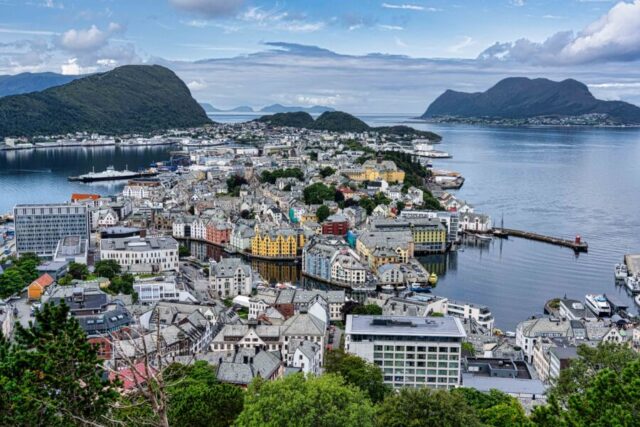
Imagine a Technicolor townscape, draped over countless islands, islets, and rocks, hemmed in by towering mountains, with the North Sea on the horizon. As you summit a stony hill that rockets up from the main shopping street, this city opens up like something out of a fantasy novel… a mirage of serene Norwegian beauty.

Ålesund (OH-leh-soont) is no mirage. The brick-and-stone city perches on the rugged west coast of Norway, just north of most tourists’ itineraries. Burned to the ground in 1904, Ålesund was rebuilt in eye-pleasing Art Nouveau — giving it a wonderful architectural cohesiveness, fitting for its idyllic setting.

A stroll around the harbor passes both grand turn-of-the-century warehouses (now fancy hotels and restaurants) and hardworking shiplap sheds, and around each bend, that eye-popping setting takes your breath away.

Beyond its own charms, Ålesund is the natural jumping-off-point for world-class scenic wonders. Within a couple of hours’ drive, you can conquer the famously twisty Trollstigen road or make your way to a rustic cabin on the tranquil shores of the grand and unspoiled Geirangerfjord.
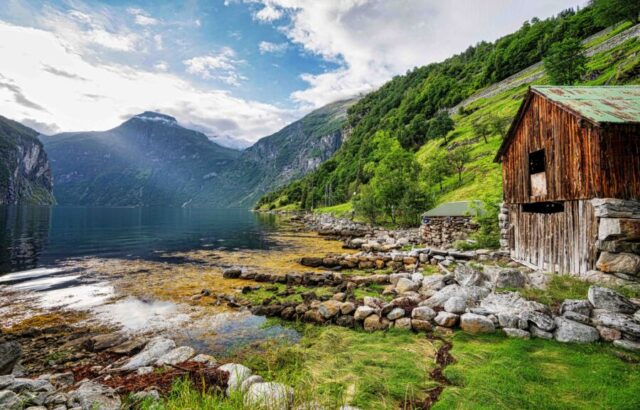
Sitting in my Ålesund hotel room, overlooking the fjord, I kept hearing the Splash! [giggle] … Splash! [giggle]… Splash! [giggle] of people running from the sauna to leap direct into those icy-cold-in-August waters. Few places have a more harmonious melding of nature and urbanity.

Palace District, Budapest, Hungary
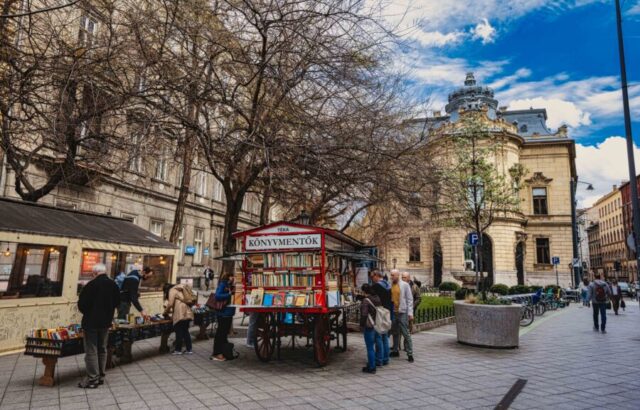
When you have the joy of visiting the same city again and again, over a long period of time, it’s rewarding to watch a neighborhood gradually blossom and come into its own. And before returning to Budapest in 2025, several of my Hungarian friends reminded me to check out the up-and-coming Palace District.

The streets surrounding the Hungarian National Museum are home to many aristocratic palaces — and, increasingly, creative restaurants, bars, and shops (including Tasting Table, a well-curated wine shop).

Going for a stroll, I found my way to the atmospheric, ivy-covered courtyard of the Chamber of Hungarian Architects, enlivened by an open-air tapas bar. A half-block father, I popped out into Szabó Ervin Square — with an oh-so-European bookseller kiosk, lively café tables, and a distinctly Parisian ambience.

Facing that square is the Palace District’s (and, perhaps, Budapest’s) most delightful discovery: The flatiron-style Ervin Szabó Library bustles with students and other locals; you’d never know that, for a modest entry fee, you can ride the elevator to the fourth floor to discover a stunning series of opulent Neo-Baroque rooms where students huddle over their laptops. (Shhhh!) Once the lavish apartments of a wealthy family, today the former ballroom, dining room, boudoir, and smoking lounge are retrofitted with long study tables. Massive chandeliers, gilded curlicues, and frilly old stoves retain a golden age elegance. Highlights are the glittering hall-of-mirrors ballroom, which could host parties for up to 500 guests; and the homey smoking lounge, with its wood paneling and double spiral staircases.
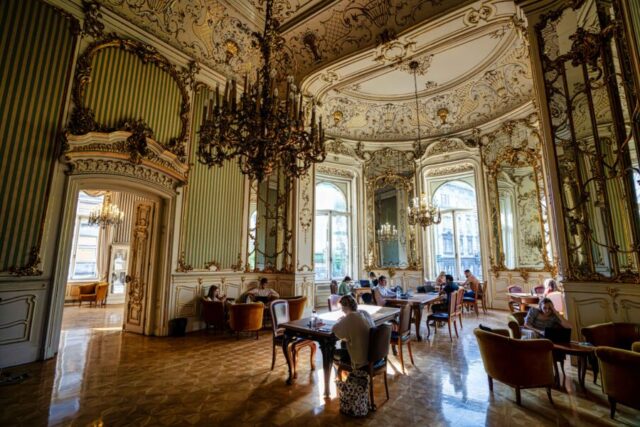
Hidden gems like this library abound in Budapest — a magnificent city that’s uniquely adept at melding the past and the present. And the Palace District is a prime example of an untouristy corner of a great city that rewards exploration.

Padua, Italy
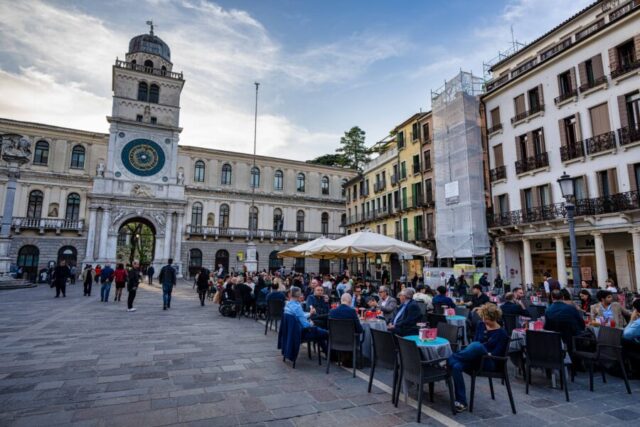
Yes, Italy is crowded. But it also has a remarkably deep bench; it’s easy to find rewarding, relatively untrampled alternatives just as good as the biggies. And Padua (or Padova, as locals call it) is exhibit A.

Just a 15-minute express train ride from the throngs of Venice, Padua is famous for its historic university; for its rebellious spirit (as a crucible of what became the Risorgimento); for its artistic treasures (the lavishly Giotto-illustrated Scrovegni Chapel); for its religious importance (as the adopted hometown of St. Anthony, now honored by a massive basilica); and for its thriving food scene, including perhaps the grandest market hall in Italy.

While there’s plenty of rewarding sightseeing, perhaps Padua’s greatest draw is simply its take-your-time ambience: just-right piazzas packed with chattering students, whiling away their evenings at al fresco cafés, nursing budget drinks. In a town full of young locals eager to practice their English, it’s exceptionally easy to connect.

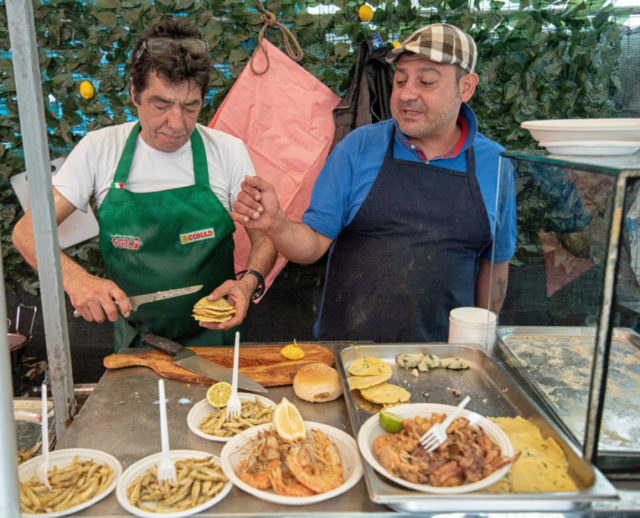
One evening, just as the sky was turning pink, I came to the main square — facing that grand market hall — and lined up at La Folperia, a ramshackle stand selling plates of chopped-up squid, octopus, and other sea creatures, all smothered in a delicious garlic-and-olive-oil sauce… plus some rustic bread for sopping up the juices. That, along with an aperitivo from the neighboring Bar dei Osei, bought me an unforgettable meal in a magnificent setting for budget prices.

Freiburg, Germany
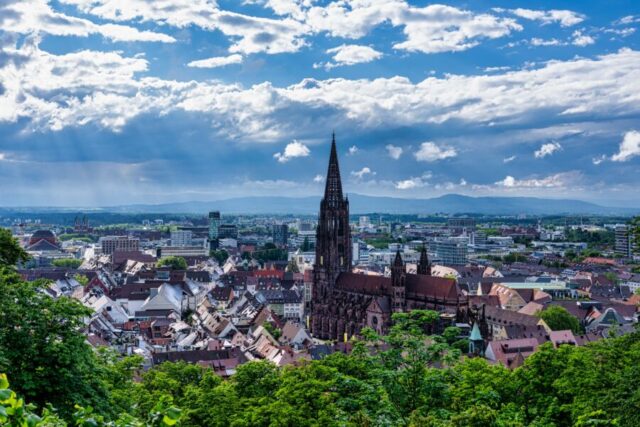
Germany abounds with beautiful, interesting small cities, each with its own personality and claims to fame. My sentimental favorite is Freiburg, tucked in the Black Forest at the country’s southwest corner. I have a soft spot for Freiburg: One of the professors who taught me German came from here (so I probably have a slight Freiburger accent), and it was also the first place I ever set foot in Germany (on a side-trip from nearby Basel, Switzerland).

Returning recently after many years, I found Freiburg even more delightful than I’d remembered — and not just because of sentimentality. This pristine mid-sized university city abounds with half-timbered charm and an outstanding food and nightlife scene (including far more than its share of Michelin stars). It’s cuddled up cozily against forested hills, easily conquered on a gentle hike (or quick ride on an elevator or lift) to an outrageously scenic beer garden. The city spins around the massive, pointy, soaring tower of its centerpiece red-sandstone Münster (cathedral).
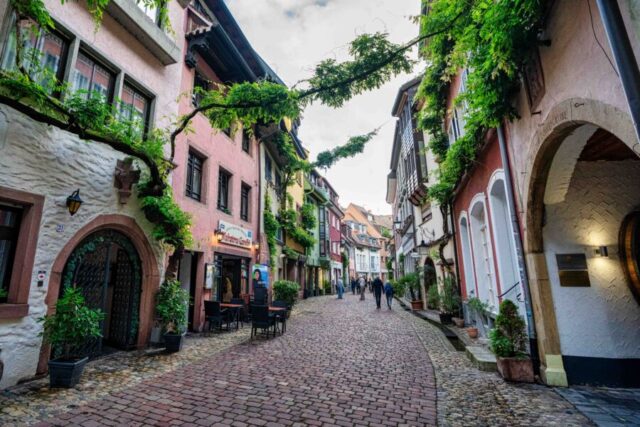
My favorite Freiburg feature? It has to be those little gurgling canals called Bächle, which flank every street through the pedestrian-friendly town center. These open-air drainage ditches once carried unthinkable muck; now, like Freiburg, they’re simply pristine, tidy, and flowing with clarity, character, and charm.

Folegandros, Greece

When I set out to “discover” some new islands for our Rick Steves Greece guidebook, I had something very specific in mind: a small, out-of-the-way island, just “mainstream” enough to be easy and comfortable for visitors without being overrun by crowds, that might offer our readers an untrampled and idyllic Cycladic experience. This mythical place, I figured, probably did not exist.

In fact, it does exist. And it’s called Folegandros.
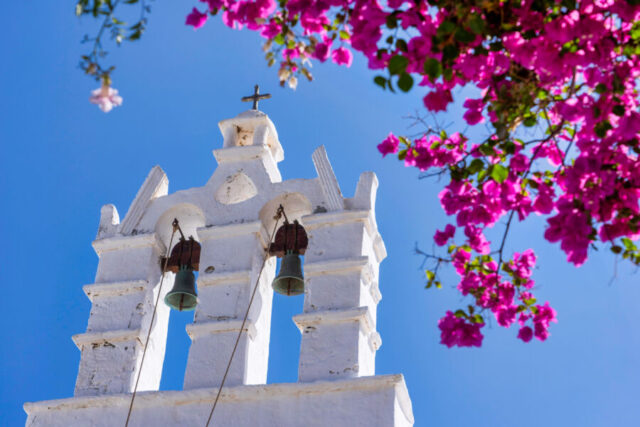
Although it’s right on the boat line between Santorini and Milos, teensy Folegandros gets overlooked. While truly “untouristy” Greek Islands are elusive, Folegandros hits the sweet spot: It’s popular not with cruise ships or fashion-forward partiers, but with British and Northern European visitors who want to settle in for a week or four, slow down, eat well, enjoy village ambience, and melt into the stony islandscape. In short, Folegandros attracts the “right kind” of visitors.

On my first stroll, I was instantly smitten with the main town’s stage-set historic core. Each little square had more character (and enticing restaurant tables) than the next: melting-marshmallow churches; bright-pink pops of bougainvillea; tidy blue trim around each window to match the striking clarity of the giant Greek sky; snoozing cats on rickety wicker chairs; and a “slow down and savor the ouzo” ambience.

There’s not much to “do” in Folegandros. In fact, that’s the point. Buses fan out to humble beaches; the rocky, desolate interior attracts a few hardy hikers; and most vacationers arrange their day entirely around their next breakfast, lunch, and/or dinner.

To burn some of those calories, a serpentine stone staircase twists up, up, up to the summit above town, where a giant white church hogs the best views. Hiking up late in the day (with, it seems, everyone else on Folegandros) rewards you with views over the entire tiny island… and a spectacular sunset.
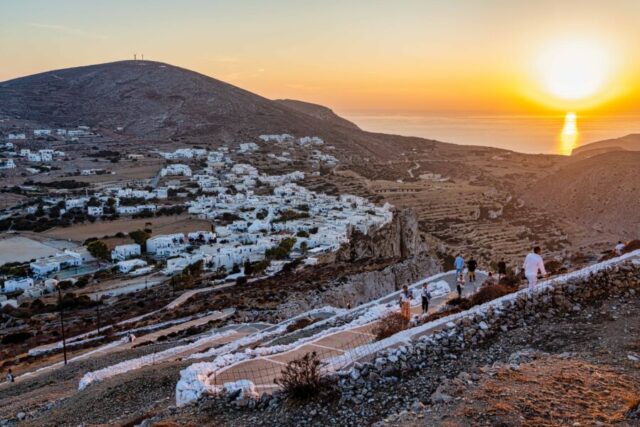
Taking a moment to give my eyes a break from the deep-red sun — and to scribble a few notes in my little black book — I just couldn’t wait to share this discovery with our guidebook readers… and now, with you.

Liverpool, England
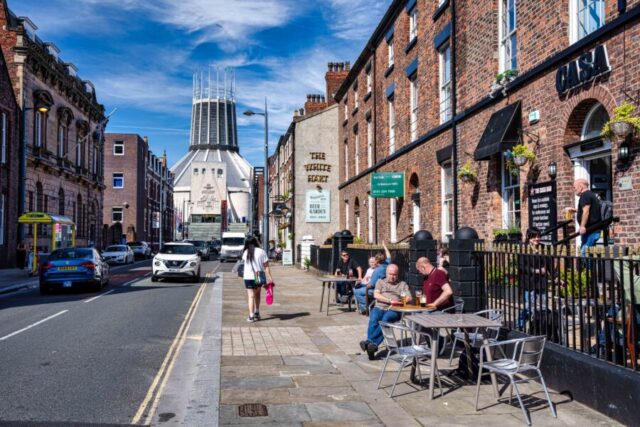
Liverpool, as a tourist destination, used to be all about the Beatles. And even if all you wanted from Liverpool was Fab Four lore… that would be enough.

However, over the 15 or so years since my last visit, Liverpool has really come into its own; returning recently, I saw how it’s been transformed from a diamond in the rough to a polished gem.

Once Britain’s main industrial port, Liverpool was walloped by the Blitz in World War II (when it was the base of British naval operations). John, Paul, George, and Ringo grew up in a hollowed-out shell of a city; only in the last generation or so has Liverpool been rejuvenated with a skyline that’s half industrial-red-brick, half sleek glass-and-steel.

For the sightseer, Liverpool has a wonderful art collection (locals brag, second only to London’s National Gallery); excellent history museums; and not one, but two gigantic cathedrals: one Anglican, the other Catholic, both architecturally arresting… and connected by a street called Hope.

Home to three different universities, Liverpool is noticeably youthful, with one of the UK’s most appealing food scenes and music clubs pumping tunes from live bands out into the street. Chatting with the witty, endearing Liverpudlians — even if it’s about nothing at all — is the undisputed highlight of any visit.

For Beatles fans like me, Liverpool is simply thrilling — with multiple museums, bus tours, music bars, and the opportunity to tour the childhood homes of John Lennon and Paul McCartney. But even if you don’t know Ringo Starr from Pete Best, Liverpool is a delight… arguably the UK’s best big-city destination outside of London.

Mikulov Wine Region, Czech Republic

So many travelers insist on going to the most touristy places in Europe, at the most touristy times, and then come home complaining about all the tourists. When I hear this, one word jumps to mind: Mikulov.
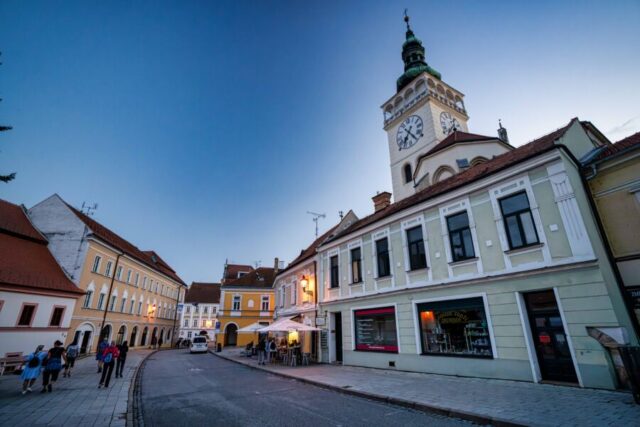
This small Moravian town — and the surrounding landscape of castles and vineyards — is the antidote to overtourism. If I had to come up with just one “poster child” for a wonderful European destination that’s shockingly undiscovered by American visitors, it might have to be Mikulov.

The town is huddled around the base of a mighty château; the panoramas late in the day are enchanting… almost Tuscan. In the cobbled streets, cozy enotecas and high-end yet affordable restaurants abound. While onion-domed churches predominate, the town also features a gorgeously restored 16th-century synagogue.

The landscape surrounding Mikulov is ruffled with limestone hills and striped with vineyards. A short drive — no more than 15 or 20 minutes on pleasant rural roads — takes you to a variety of fine towns and memorable sights.

Two châteaux vie for your attention: Valtice Castle, guarded by two giants, houses the Czech national wine salon — a seemingly infinite cellar where you can sample your choice of well over 100 vintages (handpicked and lovingly described by wine experts).

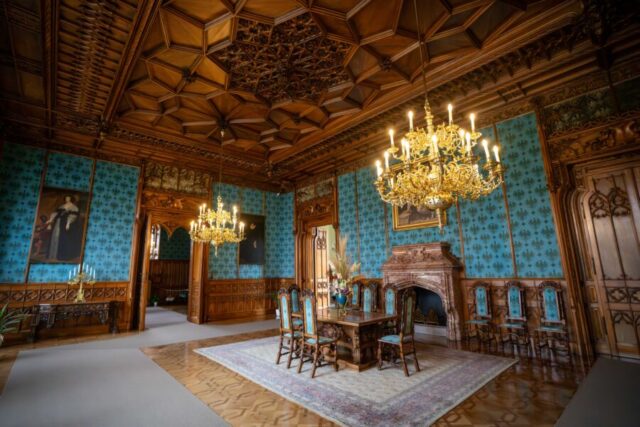
And Lednice Castle is simply a stunner, rebuilt in meticulous English Neo-Gothic style. Its jaw-dropping interior includes a lacy-delicate spiral staircase made out of a single oak tree with no nails. And beyond the château are sprawling gardens with a giant greenhouse, a minaret, and endless trails for walking and biking.
Beautiful… tasty… affordable… uncrowded… accessible… largely undiscovered. That’s Mikulov. The problem: Its existence robs you of the ability to go to yet another crowded “bucket list” town only to complain about the crowds.

Jutland, Denmark

What was the most purely enjoyable 36-hour stretch in my 100 days of travel last year? I never would have guessed it — but I think it was Denmark’s Jutland.

Jutland, three hours’ journey west of Copenhagen, is anchored by Denmark’s second city, Aarhus — a center of students, business, and industry with a cutting-edge food scene and outstanding sightseeing, including the remarkable ARoS Museum (where the architecture upstages the art) and one of the best open-air folk museums anywhere.

Heading out of town, I stopped off at the Moesgård Museum, which combines astonishing artifacts — including the Grauballe Man (found perfectly preserved in a bog 2,000 years after his death) — with beautiful storytelling and high-tech exhibits to create a powerful experience.

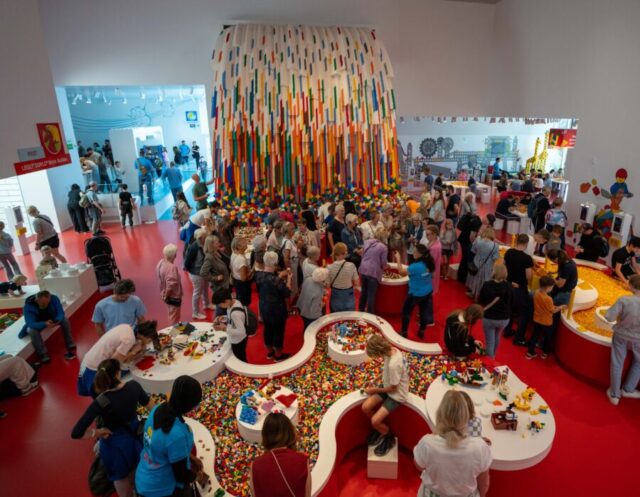
An hour down the road took me to Jelling, where I ogled Harald Bluetooth’s thousand-year-old rune stones (often called “Denmark’s birth certificate”). Then to Billund, the birthplace of Lego. While my afternoon enjoying thrill rides at the original Legoland amusement park was a hoot, even better was my visit the next morning to the Lego House: a state-of-the-art space with hands-on displays, endless Lego creations to scrutinize, and literally millions of bricks to build with.
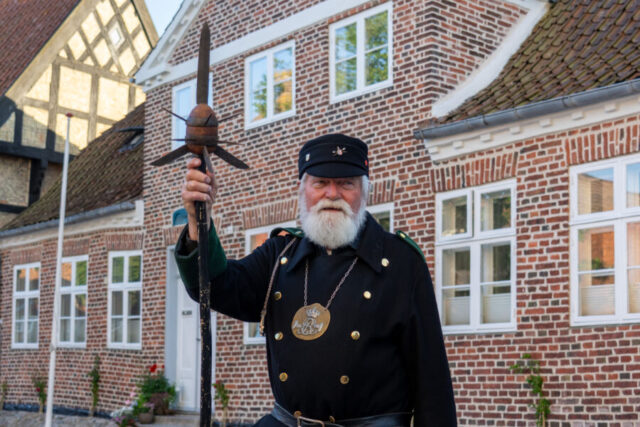
But my day wasn’t over. From Billund, I hopped in my car for a glimpse of the sand dunes (and haunting Nazi-era bunkers) of Denmark’s west coast, winding up in the quaint medieval town of Ribe — oozing with medieval half-timbered charm. Ribe’s towering Romanesque cathedral happened to be hosting a community choir concert; slipping out a few minutes early, I joined the free, entertaining, and informative night watchman’s tour.
Heading back to my car (with the sun still low in the sky at 10 pm), I thought to myself: Was it really just yesterday morning that I left Aarhus?

How many of these Discoveries have you visited? (Or plan to visit in 2026?) And what Discoveries am I missing? Add your favorites in the Comments.


All 10 of these Discoveries are covered in the applicable Rick Steves guidebooks. And several of these stops — including Kinsale, Cádiz, Budapest, and Padua — appear on various Rick Steves tour itineraries.

You can also look back at my Discoveries from 2025, 2024, 2023,  2021, 2020, 2019, and 2018… all still great choices.

For more inspiration — and practical tips — for your 2026 travels, join me on Wednesday, January 14 for a free session of our virtual 2026 Travel Festival. In this “State of European Travel 2026” talk, I’ll be covering updates, insights, trends, and tips for this year’s travels. Designed to be the most useful hour possible for anyone heading to Europe this year, it’s free to attend — just sign up in advance.

If you’d like to travel along with me in 2026, be sure to follow me on Facebook and Instagram.

Finally, consider checking out my travel memoir, The Temporary European: Lessons and Confessions from a Professional Traveler.
The Charm-to-Tourists Ratio (CTR)

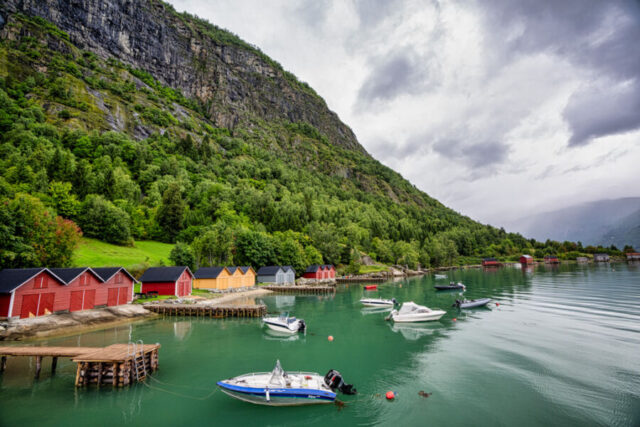
Recently, I made it back to my favorite spot in Norway: the tiny, fjordside, huggable village of Solvorn, perched between burly gray cliffs and the shore of the Lustrafjord.

One evening, I sat on a bench out at the little pier — where a pint-sized ferry chugs across the fjord once and hour to the oldest stave church in Norway — and found myself simply basking in fjordland splendor. When I’m working on guidebooks, I normally don’t have much time for “basking.” (And even in this moment, I had my laptop on my knees, furiously typing up a new “visual spin-tour” of this town for the next edition.) But a place like Solvorn stops even the busiest traveler in their tracks.

Looking left, I visually traced the shoreline past a diving tower at the public beach, then out along a rocky promontory, where a series of yellow and red boat sheds huddled at the base of the cliff.

Looking right, I panned over the rooftops of the tiny, shiplap town center — which boomed here in 1860, when a road tethered it to the fertile farming uplands just behind me, and regular steamboat service commenced to Bergen. More boat sheds sat out along — and, in many cases, over — the shoreline, and behind that, a gravel path led between yet more sheds and pristine white wooden homes, each one pretty as a postcard.

And immediately behind me sat Norway’s oldest continuously operated hotel, the Walaker Hotel (now in the hands of the ninth generation). With its yellow and red wooden buildings, giant fjordside garden, and generous porches with comfy chairs, the Walaker may be the best place in Norway to simply relax.

On the distant horizon, a very small cruise ship slowly trundled past. And I realized with a start it was the first one I’d seen in a couple of days. I had just driven in from the Geirangerfjord, whose main town is about the same size as Solvorn — roughly 250 people. But Geiranger, unlike Solvorn, plays host to one or two gigantic cruise ships nearly every day through the summer — each one injecting more than ten times that many tourists into what was, until that moment, a sleepy little community.

When I quizzed the hotel’s receptionist about lunch options, she was almost apologetic about Solvorn’s near-complete lack of choices: For lunch, I’d have to drive 20 minutes to a bigger town. But she needn’t worry — Solvorn’s sleepiness is exactly what causes travelers like me to fall in love with it.

Yes, cruise ships haven’t discovered Solvorn; and in the 1950s, when the automobile became the dominant mode of transportation, the main highway 55 also bypassed this little burg. (It runs just inland from here, up a very twisty mini-mountain pass.) As is often the case, becoming a forgotten “backwater” from a transportation point of view isn’t ideal for a fledgling local economy…but in the long run, it’s ideal for creating a wonderful travel destination.

Panning around and marveling yet again at the miracle of modern sightseeing that is Solvorn, I got to thinking about other special places that give me this same feeling. Lucca, Italy. Salema, Portugal. Toruń, Poland. Sarlat, France. Gimmelwald, Switzerland. Folegandros, Greece. Delft, the Netherlands. Ljubljana, Slovenia. Modena, Italy. Collioure, France. Erfurt, Germany. Salamanca, Spain.

Some of these are little places, like Solvorn; other are big cities. And yet, they all have an intangible specialness. They’re the places I find myself dreaming about, all winter long, after the hustle and bustle of a year’s travel fades into memory.

So I started to wonder: Why? What’s so special about these places? And that’s when I came up with a very arbitrary, but telling, metric: the Charm-to-Tourists Ratio (CTR).

In essence, these special places are far less crowded than their ample charms merit. There’s lots of ways of talking about this: For decades, Rick called them “Back Doors.” Each December, I brainstorm my list of “Discoveries” — suggestions for underappreciated gems to explore in the coming year. (You can see my 2026 list here.) You could call these places “untouristy” — but no, that’s not quite right, because they do have some tourism…just not too much.

The Charm-to-Tourists Ratio is, admittedly, a subjective, intuitive, and completely arbitrary metric — and I’m as far as it gets from a data scientist. But just for grins, let’s unpack CTR and see what it might tell us:

First, the “charm.” This concept, so vague as to be a lazy cliche, actually does mean something specific, I think. To me, “charm” means an intangibly authentic European quality. It’s unique and not easy to come by, and it can’t be manufactured or faked (much as Epcot tries). Red-and-white Norwegian boat sheds on long piers over dreamy fjords: charm. Picturesque Italian hill towns, perched at the top of a chunk of rock, with a labyrinth of homes clustered around a grand piazza: charm. Higgledy-piggledy half-timbered houses: charm.

Next up: the “tourists.” Here again, this gets tricky to define, because of course all of these places have some measure of tourism. Some of the high-CTR places are actually quite crowded with tourists — but they’re domestic tourists…Norwegians or Italians or Poles who’ve discovered this wonderful little time capsule of their own past.

So perhaps it’s helpful to lean on another cliché: that old distinction between “travelers” and “tourists.” Basically, a “tourist” is casual and quick — less curious, less thoughtful, less considerate. More interested in collecting selfies and souvenirs than in learning and connecting.

Mass tourism — especially, say, cruise ships — tend to attract fewer travelers and more tourists; consequently, places with lots of cruise ships and/or big-bus tours tend to have a lower CTR.

A traveler, meanwhile, lingers and learns. (If I could sum up the ethos of our Rick Steves Tours in a nutshell, it might be simply that we are using a mode favored by “tourists” — bus tours — but approaching the experience as travelers.)

So, then: The Charm-to-Tourists Ratio takes the overall charm of a place, then divides it by the number of tourists. And here’s where you get into some interesting case studies.

A high-CTR place is one like Solvorn or Lucca or Toruń: It hits the sweet spot of being extremely charming, and relatively untouristy. On paper, Solvorn should be the most overrun town in Norway. Instead, thanks to the limited accommodations options (one expensive hotel, one guesthouse with shared bathrooms, and one youth hostel) — and the fact that, by fluke of fate, it somehow hasn’t broken through into the “bucket list” of the 21st-century traveler. It’s still sleepy…almost mysteriously so.

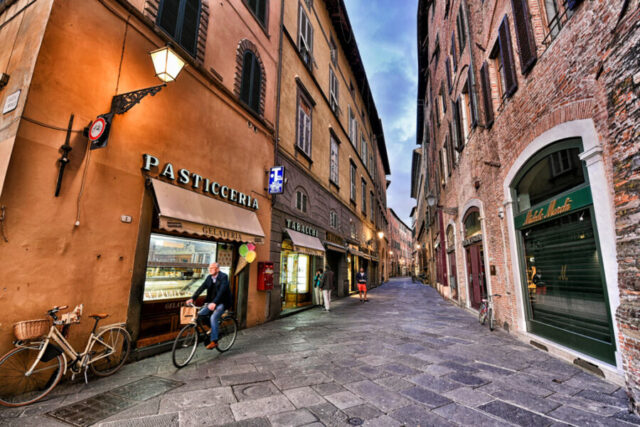
Lucca, which is off-the-charts-high on CTR, is perhaps Tuscany’s most delightful small city. Astonishingly, it’s just a half-hour away from the famous Leaning Tower of Pisa, and the mobbed beaches and trails of the Cinque Terre. On a recent visit, it occurred to me that those super-popular destinations so close by act as a distraction…pulling away tourists who might otherwise discover Lucca. It’s like putting out a little dab of honey at your picnic to attract the ants, so you can focus on the good stuff.

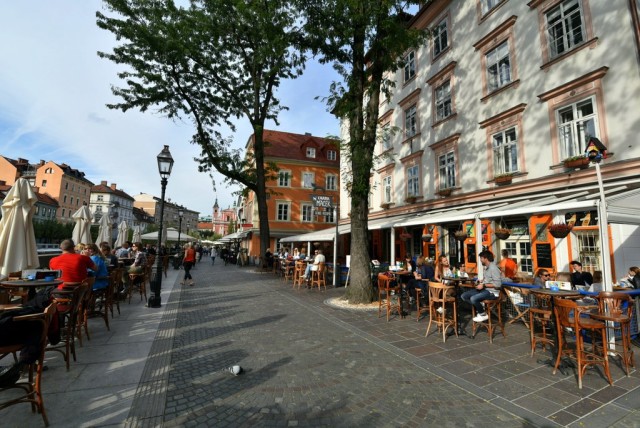
High-CTR places aren’t always small towns; even big cities can score admirably on this measure. Ljubljana, one of my favorite places in earth, is a national capital of about a quarter-million people. It’s extraordinarily charming, especially for a city. But, on a per-capita basis, it has relatively little tourism. Here again, most whistle-stop tourists in Slovenia head for Lake Bled, which is beautiful…but, increasingly, very crowded, with a CTR that drops lower with each passing year. I suspect Lake Bled is distracting lots of tourists away from Ljubljana…leaving it to us travelers.

In northern Poland, I love both the red-brick town of Toruń and the bustling Hanseatic port city of Gdańsk. Both are extremely charming. But Toruń is even just a bit more charming, and even less touristy…which, per the CTR metric, ranks it high on my list of favorite places in Europe.

A low-CTR place is one whose touristic reputation is exaggerated relative to what it has to offer. Geiranger and Flåm — the two most popular small-town cruise ports in Norway — are fine little places, with gorgeous fjordside scenery. But they are inundated by so much tourism (cruise passengers and, in the case of Flåm, “Norway in a Nutshell” day-trippers) that they can’t possibly compete on CTR. They have both lower charm and astronomically higher tourism than sweet little Solvorn.

In Greece, Santorini and Mykonos — while quite different — both perform extremely high on charm. One is perched on the lip of a crumbling volcano caldera; the other is the quintessence of a whitewashed Greek island village. Even so, both are absolutely heaving with crowds — not just from cruise ships, but also luxury jet-setters from around the globe.

Much as I’ve enjoyed my time on these two islands, they are way too small to effectively handle so many visitors…and consequently, they’re some of the most unpleasantly crowded and grotesquely expensive places on the Mediterranean. So they flop when it comes to CTR. (For the opposite — an island that ranks perhaps slightly lower on charm, but drastically lower on tourists — consider the high-CTR isle of Hydra, an often-overlooked chunk of land off the Peloponnesian Peninsula. Also high on CTR: Folegandros, a short express boat trip from Santorini; or Naxos, which you can actually see from Mykonos. Heck, on a calm day, you could probably swim it.)

Here’s another example of a low-CTR destination: Scotland’s Loch Ness. Last summer, I got into quite a bit of trouble when I proposed that Loch Ness is nowhere near as worthwhile as the vast crowds who flock there seem to think it is. Driving along Loch Ness, my heart broke as I saw the vast numbers of tourists who’d gone to considerable effort and expense to come here, only to gaze out over a not-terribly-scenic loch in search of an imaginary beast. The lakeshore of Loch Ness is a glut of tacky tourist shops and gimmicky come-ons…and it works! The place is packed. Now I realize that what bothered me so much at Loch Ness is that it has an exceedingly low CTR. I said back then, and I’ll say again: There are far, far better (high-CTR) options within an hour’s drive of Loch Ness.

And then there are those interesting case studies: Amsterdam, Venice, Prague, Barcelona, Dubrovnik. These places are incredibly, off-the charts charming. They are also extraordinarily crowded. However, the charm is so high that even the high level of tourism causes them to perform respectably on CTR…winding up comfortably in the black. In other words, some places are still well worth a visit, even if they’re touristy.

Meanwhile, there are some very big cities where the CTR is essentially meaningless. London, Paris, Rome, Istanbul, Berlin — it’s difficult to classify any of these on “charm” per se, and they’re so gigantic that tourism is diluted, having less of an impact than on, say, Flåm or Loch Ness. This is, admittedly, where CTR becomes less helpful.

You may disagree with my implementation here. But try the Charm-to-Tourists Ratio out on your own favorite places, and see how they stack up. In the Comments, I’d love to hear about your favorite places that hit it out of the park on the CTR statistic — and why?

Why Americans Don’t Trust Each Other (and Northern Europeans Do)

With the big news that vaccinated Americans can go maskless in most situations, I’ve noticed a trend: deep societal distrust. People in my social circles (who are mostly vaccinated, or will be soon) are wringing their hands and raising alarms that some Americans will remove their masks even if they’re not vaccinated. The new CDC policy is predicated on trusting both the efficacy of the vaccines (which is well-founded) and the “honor system” approach to unmasking only when vaccinated. The challenge is that the Venn diagram overlap of “anti-vaxxers” and “anti-maskers” is, one imagines, very nearly a solid circle. But there’s a bigger, underlying problem: We Americans don’t trust each other.

“Social trust” is a complicated sociological construct, with many ramifications. But it boils down to a simple question: Do you believe that most people can be trusted?

It’s staggering to reflect upon what a huge blow American social trust has taken over the last year. Of course, there’s the pandemic: When called upon to change our behavior to protect ourselves and our most vulnerable neighbors, many Americans simply refused — throwing temper tantrums in supermarkets and politicizing public health guidance as a matter of “personal freedom.” And even some people who’ve been saying “Trust the science!” for all this time are now, suddenly…not trusting the science.

But there have been many other reminders, too, of how little Americans trust each other. The murder of George Floyd, and so many others, demonstrated why Black Americans have very good reason not to trust the police (or, really, society at large). And on January 6, a mob of furious insurrectionists who didn’t trust the results of a legitimate election stormed the US Capitol building.

All of this is not just to recap a grisly year in American history, but to illustrate how little trust Americans have for each other. (Not to mention, how little the rest of the world trusts the US.) And that’s very much at odds with the way much of Europe operates. In fact, Northern European countries have the highest social trust of anyone.

I’m not pretending to be a social scientist. But I am an avid traveler. And especially in Northern Europe, I see signs of social trust permeating everyday life, in a way that makes me jealous…if not tempted to move abroad.
Strolling the canals of Amsterdam, you find yourself peeking in big, open windows that face out to the street. It’s as if people have chosen to live their personal lives in public. That’s because they have: Dutch people sacrifice some degree of privacy for the peace of mind that comes with knowing that your neighbors are looking out for you. They want to be seen, because if their neighbor walks by one day and notices they’re not sitting at the table drinking their morning coffee, the neighbor will investigate and, if necessary, send for help. For the Dutch, spying on each other doesn’t breed paranoia. It provides comfort.

I have changed planes dozens of times at Amsterdam’s Schiphol Airport. When you’re lying there on a hard bench in a jeg-lag stupor, you hear the same announcement again and again: “Immediate boarding, please. Delta flight 143 to Seattle. Please report to the gate. You are delaying the flight.” It’s telling how the Dutch try to motivate wayward passengers: Not with the consequences to yourself (that would be “You will miss your flight”) — but with the inconvenience you are causing others. Letting someone else down, to the Dutch, is the ultimate embarrassment. (To many Americans, it’s a point of pride.)

Walking through small-town Denmark, you may come across a strange sight: a baby stroller — with the baby inside! — just sitting there on the sidewalk. This seems shocking, until you realize that the stroller is parked at the window of a café, where Mom is catching up with friends while keeping an eye on her kiddo. This would never fly in most parts of the US; we’d call Child Protective Services without hesitation. But the Danes trust each other: Mom knows that nobody will snatch her dozing baby, and passersby know that she’s just a few steps away if needed. (And even if she weren’t, they’d step in to help.)

On a visit to Oslo, a Norwegian friend told me he’s very aware — and appreciative — of the trust he feels within his society. He is comforted that everyone looks out for each other, and that individual achievement doesn’t supersede a more widespread prosperity. Norwegians believe there’s always enough to go around.

He said that you also find this ethic in Scandinavian emigre communities in North America. A prime example is the “Minnesota slice” phenomenon at an Upper Midwest potluck: Nobody wants to take the last slice of pie, so instead, they keep cutting it in half, then in half again, carving off infinitesimally smaller slivers. At some point, once a wedge can’t be divided any further, what’s left sits on a plate until the table is cleared. The Minnesota slice is a tangible symbol of “just in case you need it, my friend…”

Anecdotally, it seems to me that many Americans are pretty depressed right now, even in spite of our euphoria that the pandemic appears to be in its final stages. We’re wiped out from the false starts and the hurry-up/wait that has characterized life for the last 14 months. We’re exhausted from a year-plus of quarantine, we’ve grown accustomed to isolation, and we’re anxious about changing our entire lifestyle yet again. I believe this transition is made harder because we’ve lost any faith we once had in our fellow Americans. Scary times are scarier when you don’t feel like the person next to you has your back.

In fact, scientists have found that social trust is correlated with happiness (repeatedly, including in the United States). It’s also correlated with economic development (again, repeatedly). In the USA, we prize individuality. We tell ourselves that the only way to be happy is to be a free agent, to follow our own compass. This has only increased over the last year. But the research tells a different story; it suggests that “maximum personal freedom” is a recipe for existential misery.

I don’t know how we begin to re-establish social trust in the United States. Maybe it’s a lost cause. (Though I imagine a first step would be to embrace objective reality in the form of, let’s say, election results, police body-cam footage, and scientific inquiry — even when these don’t support our deeply held beliefs.) But it’s clear that trusting each other is the only viable path forward, if we hope to emerge from COVID stronger and happier than before.

I am aware this is naively optimistic, but I like to dream that somehow, this will change with the post-pandemic “new normal” in America. Perhaps we’ll realize that we’ve hit rock bottom and will now turn toward a more Northern European model of trusting our neighbors, earning their trust in return, and remembering that we’re all in this together. After all, it’s right there in our national motto: “Out of many, one.” Somewhere along the way we clung to only the first part and jettisoned the last.

Either way…I’ll save a slice of pie for you. Just in case.

10 European Discoveries for 2021

On the horizon, there is light. The sun hasn’t risen yet, but it’s coming. Although it has never been more important (or harder) to continue staying home, limiting contact with others, wearing masks, and so on, it’s beginning to feel like 2021 may bring the “return to normal” — and the return to travel — that we all crave. It’s too early to begin planning trips, but it’s never too early to dream. So…where to?

The last several years, my New Year tradition has been to assemble a list of 10 European Discoveries. As we reach the end of a year of hardship, and face a new year of further uncertainty, I almost bailed on this idea. But we will return to Europe. It’s just a question of when. So I’ll keep with tradition — but with a new spin.

I believe that in the post-pandemic world, travelers will look for something different. Before COVID-19, we had gotten so busy, and so stressed by the crowds, that we forgot to slow down and hear the church bells — to savor those beautiful everyday moments of European life. (If I have a post-pandemic resolution, it’s to not make this mistake again.) Having renewed our appreciation for the incredible privilege of being able to go anywhere we want, we’ll seek opportunities to settle in, slow down, and be fully present in Europe. We’ll choose places just outside the mainstream, ones that reward patience and contemplation.

And that’s the theme of my 2021 European Discoveries: 10 places where you might want to settle in for a week, or a few, and really get to know a fascinating corner of our planet. I haven’t set foot in Europe in well over a year — with, I assume, several more months yet to go. It has afforded me ample opportunity to reflect on my 20-plus years of exploring Europe. And looking back on all of it, these are the places the burn brightest in my mind.

Where are you hoping to slow down and savor our world in 2021?


Soča Valley, Slovenia

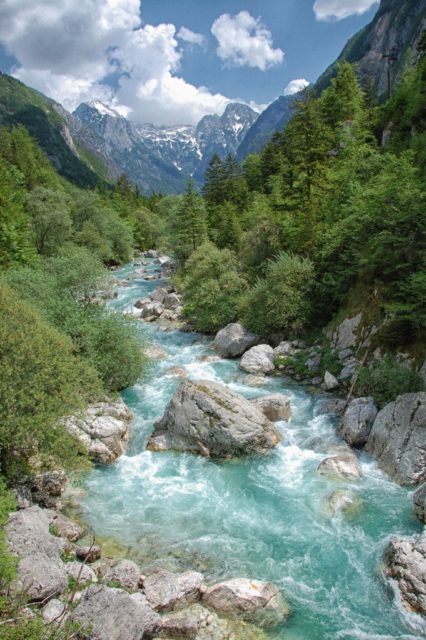
I can think of few places I’ve missed more in 2020 than Slovenia. And for me, the most beautiful place in this incredibly beautiful country is the Soča Valley, where a turquoise river cuts a gorge deep into soaring alpine cliffs, just a few miles from the borders with Austria and Italy. Historians know the Soča Valley for its fierce mountaintop battles during World War I (this is where Ernest Hemingway was wounded while driving an ambulance). And contemporary travelers know it as an adventure-sports capital (whitewater rafting, canyoning, paragliding) and home to the restaurant of Ana Roš, the world’s best female chef. You can get a taste of the Soča Valley on a very busy one-day side-trip from Lake Bled or Ljubljana. But why not settle in for several days? Sleep at a tourist farm on a high-mountain pasture, wake up each day to the sun peeking over snowcapped mountains, and spend your breakfast (of farm-fresh eggs) deciding which breathtaking hike or scenic drive to do today.


The Markets of Provence

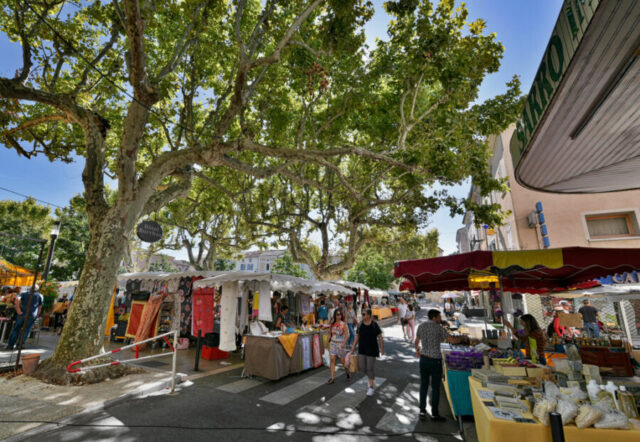
In September of 2019, my wife and I had a full week to unwind anywhere in Europe. Already exhausted from a packed and fast-paced year of travel, we opted for a quiet weeklong break in the South of France. Why? We wanted to savor the delightful market days (jours de marché) that hop from place to place around the bucolic Provençal countryside. In one week, we sampled seven different markets, each with its own personality. Yes, Provence is packed with other attractions: great sights and wine-tastings and gourmet meals and scenic hikes and hot-air balloon rides. But the markets are precisely the type of sensory super-experience we’re all desperate for after a 2020 spent very close to home. After living through a time when going to the corner grocery store feels like high adventure, imagine the thrill of strolling a lively town square, generously shaded by plane trees, as you choose a little wheel of cheese for your picnic from a mound of fragrant options, browse for just the right produce for a home-cooked Provençal feast, and bite into a strawberry that truly, intensely tastes like strawberry.


Budapest

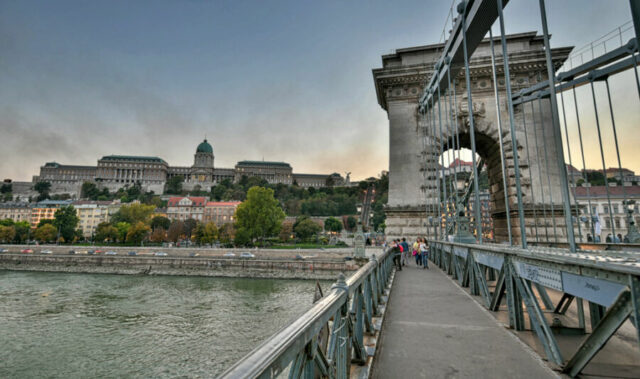
I wrote the book on Budapest…literally. And yet, even after 20-some visits, I still can’t get enough of this grand city on the Danube. With each weeklong visit to update my guidebook, the list of things I’d still like to see and do gets longer, not shorter. The melting pot and de facto capital of Central Europe, Budapest’s unique urban culture mixes a respect for tradition with a cosmopolitan openness to creativity and innovation. It wins my vote for the hands-down best restaurant and nightlife scene in Europe. And yet it also has a stately elegance, with ornate turn-of-the-century buildings, inviting tree-lined plazas, and wooded hills ideal for nature hikes. (And don’t get me started on the thermal baths.) Last March, I had already booked my tickets for yet another visit to Budapest, and I couldn’t wait. That trip, of course, never happened. And by the time I finally get back there, the anticipation will be unbearable. I never know precisely what I’ll see, do, and learn in Budapest. But I know it’ll create lasting memories.
 

Iceland’s Ring Road

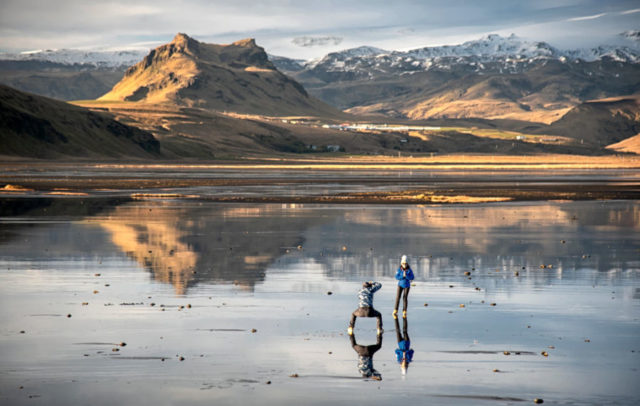
When we produced our Rick Steves Iceland guidebook, we included a “how to” chapter on Europe’s ultimate road trip: driving 800 miles on Highway 1 around the perimeter of Iceland, connecting astonishing scenery, geothermal hotspots, glaciers and icebergs, charming fjordside settlements, and warm and wonderful Icelanders. We covered the Ring Road generously in our book, even though we figured very few people would devote the full week required to do this trip justice. But maybe we were wrong. The pandemic has made National Lampoon’s Vacation-style road trips all the rage again. There’s never been a better time to rack up some serious miles through cinematic landscapes and have an honest-to-goodness adventure. And Iceland is made to order for “social distancing” as we tiptoe into the post-pandemic future. My Ring Road post covers the basics; if the photos and places intrigue you, forget about that “48-hour Icelandic layover” you’ve been contemplating…go all-in on the full Ring Road.


North Wales

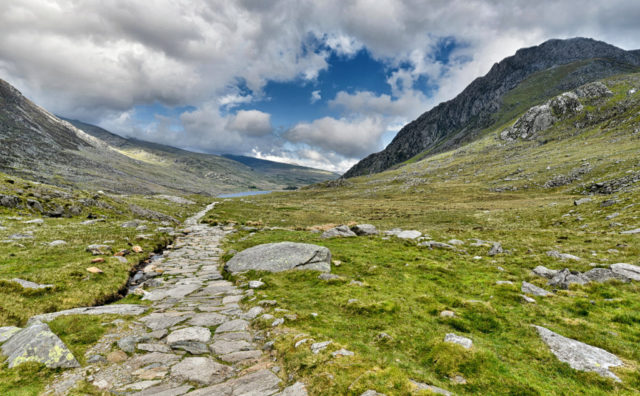
Recently I had the joyful experience of driving around North Wales (roughly the triangle formed by Conwy, Caernarfon, and Ruthin) for several days to update our Rick Steves Great Britain guidebook. I adore Europe’s plucky, off-the-beaten-path cultural eddies, and North Wales tops the list. Along with offering a fascinating crash course in Welsh culture and language, this region is studded with towering stone castles that make you feel like a kid again, a rugged landscape of craggy mountains and slate rooftops, and cheery red dragons laughing down from every flagpole. And it’s compact, making it easy to see a lot from any one of a number of charming home bases. While less known than the Scottish Highlands or Ireland’s Dingle Peninsula, North Wales is every bit as fun, scenic, and culturally rich.


Maramureș, Romania

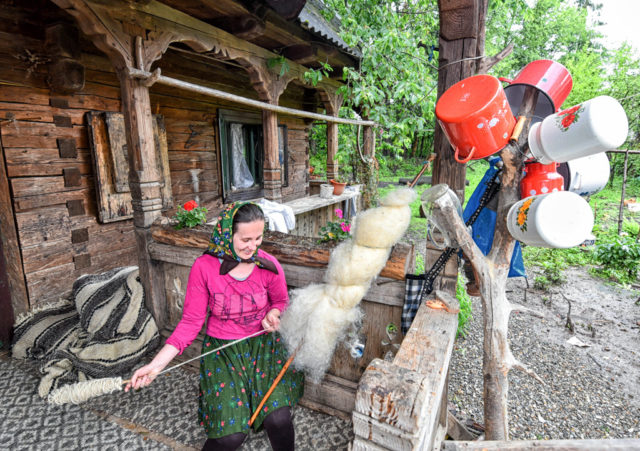
Years ago, my Dad and I went on a road trip through Romania, seeking traditional culture. When we came to Maramureș — ten long, potholed hours of driving north of Bucharest — we felt like anthropologists stumbling upon a place that time forgot. The rolling green hillsides are dotted with giant, tipsy haystacks. Rustic villages with mud roads — and more horse carts than cars — are lined with elaborate wooden churches and ceremonial gateways. Shepherds living in split-wood shacks make cheese like medieval peasants. And riverside settlements bustle with industry dating back to biblical times, from carpet-washers to fulling mills to to weaving looms to moonshine stills. This is not an “open-air folk museum” — it’s the real deal, Europe’s Amish Country. As our world changes at a dizzying pace — which only accelerated in 2020 — there’s no guarantee that Maramureș traditions will survive for much longer. (Teo Ivanciuc, an excellent local guide who helped us film our TV segment in Maramures, would love to show you around.)


Camino de Santiago, Spain

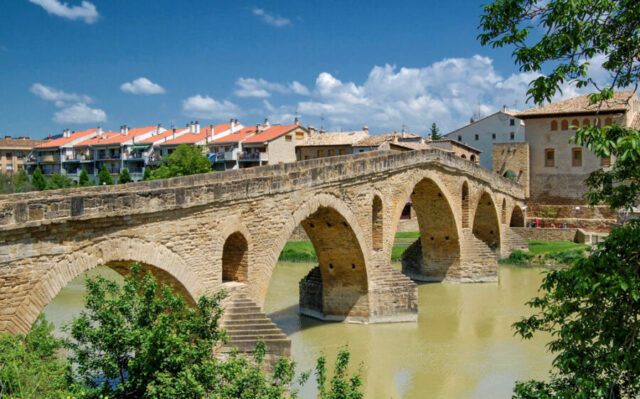
In the Middle Ages, pilgrims walked from all over Europe to venerate the bones of St. James in Santiago de Compostela, at the northwest corner of Iberia. This route — the Camino de Santiago — was largely forgotten over the centuries, only to be rediscovered in our own lifetime by travelers seeking an escape from modern life. After a year of deep soul-searching, there’s nothing like a four-week hike to clear the mind, synthesize all we’ve learned, and contemplate where to go from here. Begin in the green Pyrenees foothills of Basque Country, then walk across the arid plains of northern Spain, through villages and cities and across stone bridges from Roman times, before finally passing trough the wilds of lush, green, and rocky Galícia — all along the way, sleeping in rustic pilgrims’ hostels and following scallop shells through the wilderness. I’ve hiked bits of the Camino here and there (and I drove the entire route, end to end, to write a “how to” chapter in our Rick Steves Spain guidebook). But I’ve never been so tempted to do the full Camino the old-fashioned way.


Lofoten Islands, Norway

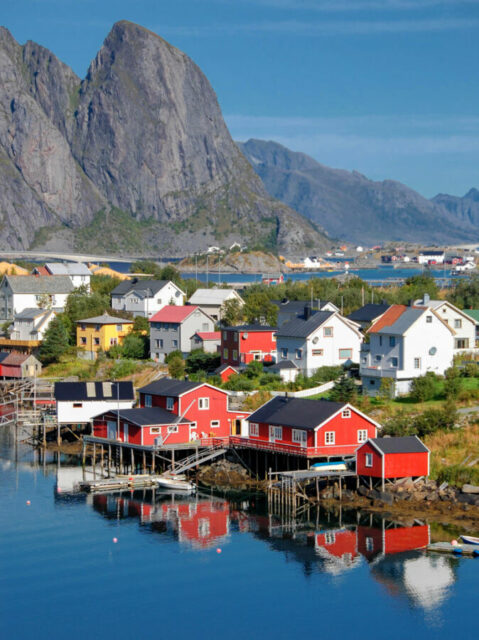
All my life, I’d seen this magical place in postcards and coffee-table books: soulful fjords with cut-glass mountains rising high above serene, deep waters, speckled with red cottages and almost no people. My wife and I decided we simply had to see this scene for ourselves. And when we finally made it to the Lofoten Islands — above the Arctic Circle and chilly even in August — we found it even more stunning than the photos. Getting to the Lofoten requires some effort (from Oslo, fly due north for an hour and a half), so you might as well settle in. The rugged Norwegians who’ve carved out a hardy life up here, hanging cod to dry on rickety wooden frames, are adept at introducing visitors to traditional lifestyles. Rent a rorbu (cheery cottage perched on stilts over the fjord) and spend a few days just tooling around, from the “capital city” village of Svolvær to the end-of-the-road cod-fishing settlement called Å. We home-based in Reine, perched on a flat rock in the middle of a fjord with the most stunning views in all of the Lofoten, and from there we ventured out to see everything the archipelago has to offer.


New Zealand

Sure, it’s not “European” in geographical terms. But for anyone who loves Europe, New Zealand feels strikingly familiar…yet excitingly different. (One afternoon, you’re punting the River Avon in Christchurch, as if you were in an English country garden; the next day, you’re swimming with dolphins at Kaikoura.) After years of hearing from our well-traveled friends about this seemingly too-good-to-be-true land, my wife and I finally spent a few weeks here in early 2019. And we fell instantly, hopelessly in love. Yes, the scenery is gobsmacking, and Lord of the Rings fans are in heaven. But New Zealand is so much more: a melding of Europe and Polynesia set amidst an entertaining landscape, where majestic glaciers rise high above steamy groves of ferns and palm trees. We loved sampling the local wine, craft beer, and third-wave coffee culture; learning about the indigenous Māori culture; and getting to know the wonderful Kiwis, who somehow manage to be well-organized and ceaselessly competent while remaining low-key and easygoing. Even before we came home, we’d already started Googling “How do I emigrate to New Zealand?” Now that the Kiwis (under the steady and compassionate leadership of Jacinda Ardern) have managed the pandemic better than anyone, this little island nation is sure to be flooded soon with more than its share of tourists…and transplants. Why not finally get down there soon,  ahead of the crowds? As soon as they open up to outsiders, New Zealand is at the top of our list of post-pandemic dreams.


Agriturismo Cretaiole, Tuscany

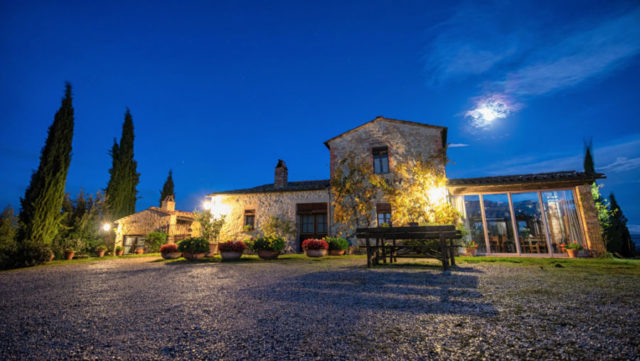
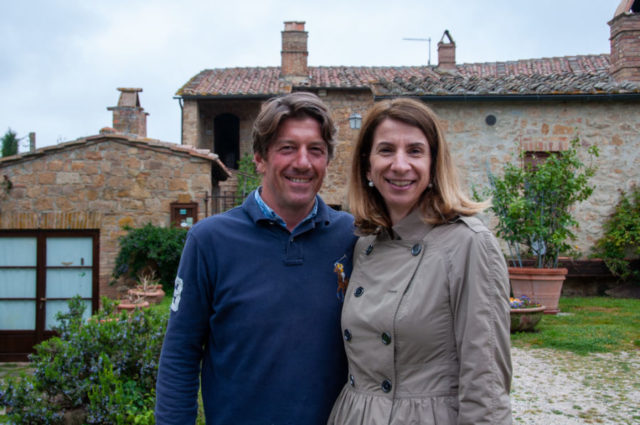
For years I’ve been singing the praises of a very special place to stay in the most beautiful corner of Tuscany. On a wooded ridge just outside Pienza, city mouse Isabella married country mouse Carlo and, together, they converted a traditional Tuscan farm into the best possible expression of an agriturismo — where visitors experience rural Italian culture and cuisine with modern comforts. With each visit, this place impresses me even more — and especially the vivid, perfectly orchestrated Tuscan experiences that Isabella creates for her guests: truffle hunts, pasta-rolling parties, olive oil appreciation classes, wine tastings, deeply meaningful nature hikes, and on and on. When I close my eyes and picture the one place I’d love to get back to as soon as I can, it’s spending a week — or more — at Cretaiole.

On my most recent visit to Tuscany, a few months before COVID-19 hit, Isabella showed me around her gorgeous new boutique hotel (La Moscadella), offering a similar Tuscan cultural experience with more luxury. But now that fine hotel, and the original farmhouse, sit mostly empty — one more tragedy in this year full of them. Whether it’s Cretaiole or some other perfect place you’ve discovered in your travels, small businesses are hurting right now. If you have the means to travel, as soon as it’s safe, consider booking a return visit. Helping to jump-start these businesses is the least we can do, considering all of the joy people like Isabella and Carlo have brought to our lives over the years.

I’m hoping that 2021 brings good fortune and a return to what we love, both for us travelers and for the people we meet on the road. Like all things, this too shall pass. And a year from now, if all goes well, we’ll be comparing notes about a whole new slew of discoveries for a new age of travel.

Europe’s 10 Best Markets

What traveler doesn’t love a great European market? There are few better windows into local life than rubbing shoulders with shoppers, browsing stands piled high with colorful produce, nibbling on street munchies, and being fully immersed in the sights, sounds, and smells of the local community.

Over half a lifetime of traveling around Europe, I’ve been collecting my favorite market experiences for travelers — where you can glean some insights into local culture and cuisine, and browse for a good, local, quality meal. This is a mix of old-school covered markets, trendier food halls, and sprawling, open-air markets that take over an entire neighborhood or town. I’ve heavily skewed my suggestions to foodie options, where you’ll find dishes that are creative and interesting (rather than just fill-the-tank), while still being affordable. Happy browsing!

10. Mercado de San Miguel, Madrid, Spain

Madrid's Mercado de San Miguel

Just steps from the grand Plaza Mayor, in the heart of Spain’s capital, sits this 1915 erector-set market hall. Fully remodeled in 2009, today it’s a bustling showcase of edible Spain. Squeezing between the crowds, you’ll find only the best jamón ibérico (air-cured ham), Manchego and other artisanal Spanish cheeses, powerfully piquant skewered pickles and olives (banderillas), delectable pastries, little skillets of paella, tinned fish and seafood, brochetas (meat or seafood skewers) grilled to order, smoked salmon, sweet vermouths from around Spain, croquetas with various fillings, Mexican dishes from a Michelin-star chef, and robust Rioja wines. It’s a culinary tour of Spain, under one roof.

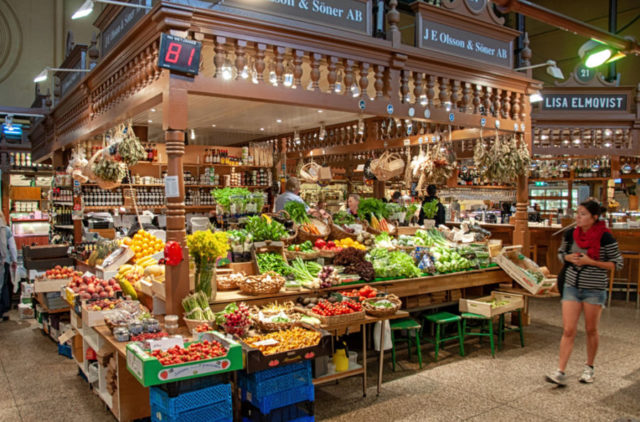
9. Östermalms Saluhall, Stockholm, Sweden

A classic. Anchoring Stockholm’s posh Östermalm neighborhood, this market hall is simply elegant. Handsome, hand-carved wooden stalls display just-so piles of produce, stacked as if posing for a still-life. The wares here feel…curated. Composed. With Scandinavian precision. There aren’t many bargains in this pricey city, but the Östermalms Saluhall is fun to browse for a high-end picnic, or to settle into a market eatery for a quality deli plate, a delicately composed salad, a sticky Scandinavian sweet roll, a splurgy seafood dish, a gourmet smørrebrød (open-face sandwich), a delectable handmade praline, or a selection of Lebanese small plates. Note: The food hall is undergoing a makeover through 2020; in the meantime, the vendors have set up temporary digs nearby.

8. Markthalle Neun, Berlin, Germany

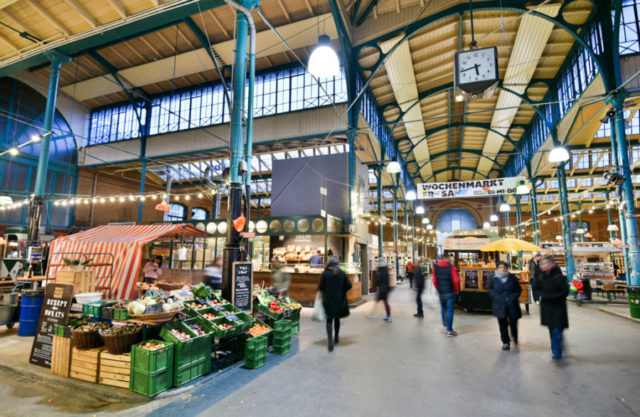
Berlin’s Kreuzberg district is home to its most cutting-edge, engaging culinary scene — and Markhalle Neun is its flagship. Tucked in a workaday neighborhood away from the tourist sights, it fills a beautifully restored 19th-century hall with greengrocers, cheesemongers, butchers, fishmongers, florists, and bakers, all with an appropriately Berlin-hipster vibe. Meanwhile, food stands sell Berlin classics like Buletten (meatballs), Stolle (open-faced sandwiches), Brezel (big doughy pretzels), and Currywurst — but also Italian pastas, French crêpes, Turkish deli meats, Spanish tapas, and even BBQ from the USA. Markhalle Neun scores bonus points for its many special events (listed at www.markthalleneun.de), including its Saturday farmers market and its “Street Food Thursday” — a beloved institution for Berliners seeking a trendy yet affordable dinner.

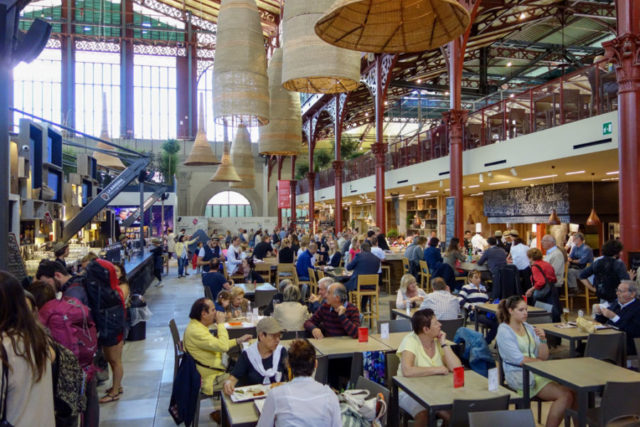
7. Mercato Centrale, Florence, Italy

For years, I’d peek tentatively inside this cavernous market hall in the center of Florence, which felt dark and foreboding. With tattered stalls and piles of garbage out front, it felt like it hadn’t changed since the days of Vittorio Emanuele II. Then, in 2014, they converted the top floor into a high-end food circus. Just walk past the still-grubby produce stalls on the main floor, and hike up the stairs to a world of Italian taste treats: hand-rolled pastas, prizewinning prosciutto, massive steaks cooked so rare they still moo, melt-in-your-mouth panini, gourmet burgers made from Tuscany’s prized Chianina beef, rotisserie chicken, big juicy wads of mozzarella di bufala, handheld flatbread sandwiches called trapizzini, big slabs of rustic pizza, tender stewed beef cheeks, truffle-infused oils and pâtés, the rustic Tuscan bread soup called ribollita, deep-fried tasties,  cannoli and other Sicilian sugar bombs, and high-end tripe sandwiches (a Florentine classic!). Travelers smart enough to escape the tourist-gouging restaurants on the main drag retreat to this upper level — like pigeons in the rafters — to take a break from intense Renaissance sightseeing with pretty much any Italian taste treat they can imagine. Tuscany is home to many foodie finds — but this is one of the best.

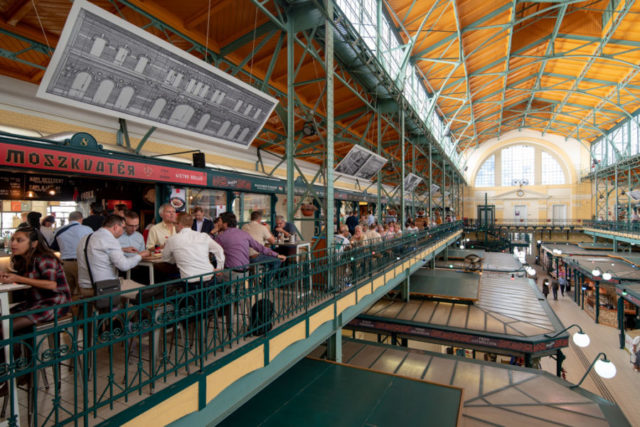
6. Belvarosi Piac, Budapest, Hungary

In Budapest, tourists flock to the Great Market Hall, an elegant palace of produce built around the turn of the 20th century. And you really do have to see the Great Market Hall. But don’t eat there — the “local”-seeming food counters upstairs specialize in ripping off naive tourists. Instead, head to a different, smaller, and far more authentic neighborhood market hall, also right in the city center (a couple of minutes’ walk from the Parliament): the Belvarosi Piac on Hold Street. In an atmospheric Industrial Age space that feels like the Great Market Hall’s little sibling, producers occupy the ground floor, while the upstairs is ringed by tempting high end-yet-affordable food stands: massive schnitzels at Buja Diszno(k), gourmet sausage at Lakatos Műhely, Russian grub at Moszkvatér (named for the since-rechristened “Moscow Square”), gourmet burgers at Kandalló, Thai-style khao man gai (poached chicken in garlicky sauce), and updated Hungarian classics at A Séf Utcaja. Anchoring the space, down on the main floor, is Stand 25 Bisztró. Here, celebrity chefs Szabina Szulló and Tamás Széll artfully fuse Hungarian classics with international influences (or is it the other way around?). While not cheap by market hall standards, Stand 25 a bargain for a Michelin-caliber lunch in a memorable setting (lunch only, plus dinner Friday and Saturday, book ahead).

5. Ballarò Market, Palermo

The Sicilian capital has some of the best, most vivid street markets in all of Europe. And the granddaddy of them all is Ballarò — seedy, chaotic, bewildering, and invigorating. Come here to jostle with Sicilians who verbally arm-wrestle for the best deals on the best ingredients. The vendors — continuing a tradition that supposedly dates back to Arab rule — warble their sales pitches with an otherworldly cadence, demanding the attention of passersby. Giant slabs of pink tuna perch on marble counters, like cadavers ready to be dissected. Produce stands overflow with vivid-purple eggplants, long, skinny Sicilian zucchini, and tomatoes that actually taste like tomatoes. Best of all, scattered throughout this multi-block span of barely controlled chaos are a wide variety of tempting street food stands, selling greasy napkins topped with dirt-cheap taste treats for every level of adventurous eaters — from arancine (deep-fried rice balls) and sfincioni (“Sicilian pizza”) to pani ca’ meusa (spleen sandwich) and polpo bollito (tiny boiled octopus, eaten whole). (For a complete rundown, check out my post on Palermo’s street food.) Go ahead, dive in — this is what real travelers live for.

4. Mathallen, Oslo, Norway

I love Oslo. But I’ve rarely found a memorable meal tucked among the dreary, blocky downtown core along Karl Johans Gate. However, just north of downtown runs the Akers River Valley, where the city has redeveloped a former wasteland of red-brick factories and warehouses into a lively people zone. Its centerpiece is Mathallen (“Food Hall”), filling the scavenged brick skeleton of a 19th-century factory. Norwegians recognize the limitations of their cuisine. And so, in addition to stands selling fresh, whole-grain bread (at Smelt Ostesmørbrød) sweet and savory pies (at Mildrids Kjøkken), and farm-fresh geitost cheese (at Ost & Sånt), you can nibble tapas, pastas, sushi, tacos and tequila, pizza, Asian street food,  gourmet ice cream, and much more. Ringing the outside of the market are a variety of industrial-mod, higher-end eateries. I skipped the fried chicken and “global tapas,” and went a bit more traditional at Vulkanfisk, serving up affordable-for-Oslo, elegantly presented, fresh seafood (the garlic-sautéed scampi were a flavor bomb). Anytime I’m in Oslo at mealtime, I come up with an excuse to head up the Akers River to Mathallen.

3. Maltby Street Market Rope Walk, London

One summer, my wife and I rented an apartment in London for a week and checked out a different market each day. And at the end of the trip, the Maltby Street Rope Walk emerged as our favorite (every Saturday and Sunday). Tucked along a vintage brick railroad trestle, far from any tourist attractions (roughly across the Thames from the Tower of London), it’s an explosion of foodie energy. Beyond the hole-in-the-wall eateries, wine bars, taprooms, and Mozambique-style burger bars squeezed into the arches under the train tracks, the weekend market adds a world of pop-up food stands: grilled sandwiches oozing with tangy English cheese; little slices of rye bread mounted with melt-in-your-mouth Scottish salmon; slabs of grass-fed, dry-aged, rare-grilled hanger steaks; wild variations on Scotch eggs; Middle Eastern flatbreads with savory toppings; German-style sausages; gyoza steamed in wicker baskets; and a mouthwatering array of gooey brownies. For a more traditional “market hall,” it’s hard to beat London’s famous Borough Market. The funky Camden Market sprawls through a yellow-brick wonderland of old industrial buildings. The Portobello Road Market charms Notting Hill fans. And the Broadway Market feels like ground zero for East London’s hipster baby boom. But if I had to pick just one market that incapsulates cutting-edge London…it’s Rope Walk.

2. Mercado da Ribeira/Time Out Market, Lisbon, Portugal

My favorite European market hall has a split personality. One-half of the market is as classic as they come: traditional, rough-and-tumble vendors selling fragrant herbs, plump produce, and an aquarium’s worth of fish. It’s ragtag, ramshackle, and trapped in the 1950s, with rickety wooden stalls, puddles pooling on cracked tile floors, petticoat-clad grannies selling rough bunches of herbs, and Old World scales with dials that spin imprecisely as if digital were never invented. On its own, this market hall is endearing enough to earn an “honorable mention” on this list. But from there, you can step through a door into La Ribera’s other half: a sleek, futuristic, top-of-the-line, Time Out-themed culinary wonderland (opened in 2014). The two dozen eateries here include stands operated by five marquee, Michelin-rated Portuguese celebrity chefs selling affordably price tastes of their favorite dishes. You’ll also find smaller stands bursting with a variety of local and international meals: the beloved Portuguese steak sandwich called prego, croquetes with fillings both traditional and creative, bacalhau (rehydrated salt-dried cod), fresh-baked pasteis de nata and other pastries, Japanese-fusion dishes highlighting the long-forgotten influence of early Portuguese traders, traditional cheeses and charcuterie, catch-of-the-day, quality steaks, gourmet burgers, artful sushi, and crispy pizzas. Rounding out the scene are a well-stocked wine shop, a place to stock up on conserves (tinned fish with colorful wrappers), and a branch of A Vida Portugesa (a classy vendor of Portuguese-themed products, gifts, and keepsakes that tempt even non-shoppers).  Whether for a meal or a one-stop-shop to stock up on all things Portuguese, Mercado da Ribeira is a winner.

1.  Market Day, Sarlat, France

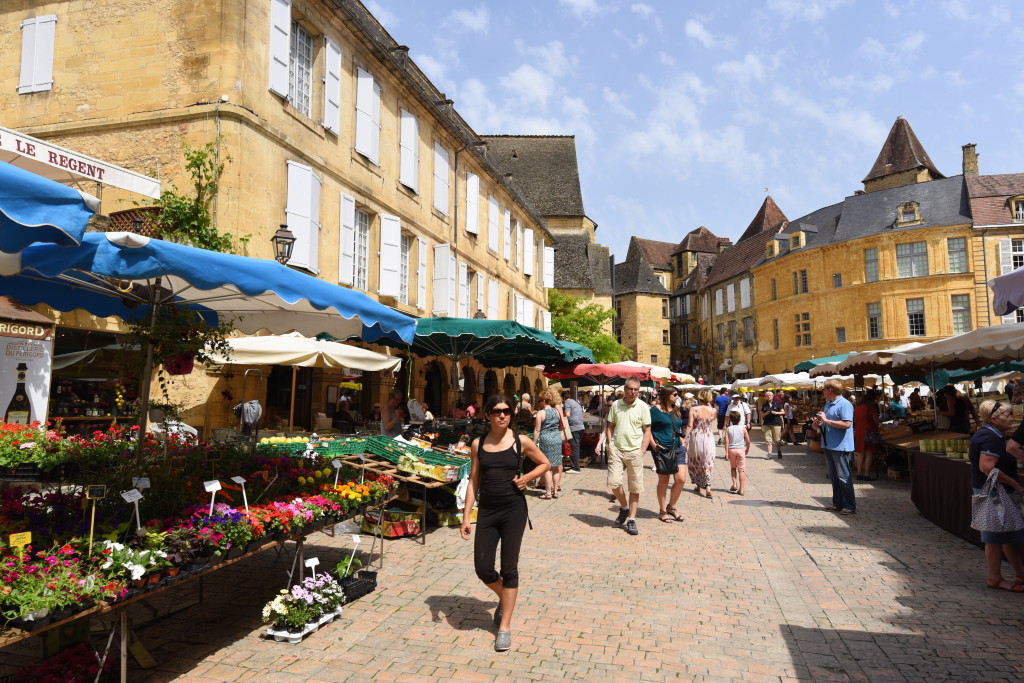
Sarlat’s street market is hard to top. It’s the refined yin to Palermo’s gritty yang. Twice weekly — on Wednesday mornings, and all day Saturdays — the pristine, lemony-sandstone streets of one of France’s finest towns become a big outdoor shopping mall. Locals pour in from the countryside to browse the stalls, reconnect with their favorite vendors, and bump into old friends. You’ll find baked goods, fresh meat, duck-in-a-can (confit de canard), giant wheels of rustic mountain cheese, tiny pyramids of fine gourmet cheese, nuts and dried fruits, explosively flavorful olives, mammoth chunks of nougat, snail shells prefilled for escargot, fruitcake sold by weight, a rainbow of preserves, salamis and sausages of every shape and size, and whatever produce is in season. When the noon bell tolls, the vendors begin packing up, and the shoppers scramble for café tables that catch just the right mélange of sun and shade. This is where the second phase of the Market Day ritual kicks in: taking some time to nurse a cup of coffee with someone you haven’t seen in a while. It’s all so simple…so sophisticated…so smart. If you won’t be in Sarlat, you can enjoy similar market days all over France; every community has its own, but popular ones include Uzès (in Provence), Beaune (in Burgundy), and several in Parisian neighborhoods. But Sarlat is the one that has left me with the warmest memories of an ideal market experience.

What’s your favorite market in Europe?