24 Fascinating Factoids About Europe

One of the joys of researching Rick Steves guidebooks is how, every day, I stumble upon fascinating little insights that tell me a lot about the place I’m visiting — and sometimes, about human nature. As I spend my summer wrapping up the work I did on this spring’s research trips, I keep rediscovering delightful nuggets scrawled into my little black notebooks. Here are a couple dozen of my favorites, ranging from historical tidbits to everyday cultural insights (like where the Swiss buy their groceries, what the Spaniards fight bulls on, and why Germans — but not Italians — like to open the window)… to things that just made me chuckle. As a kid, I loved paging through yellowed paperbacks of Ripley’s Believe It or Not! Reviewing this list, I’m realizing this is my very own European version.

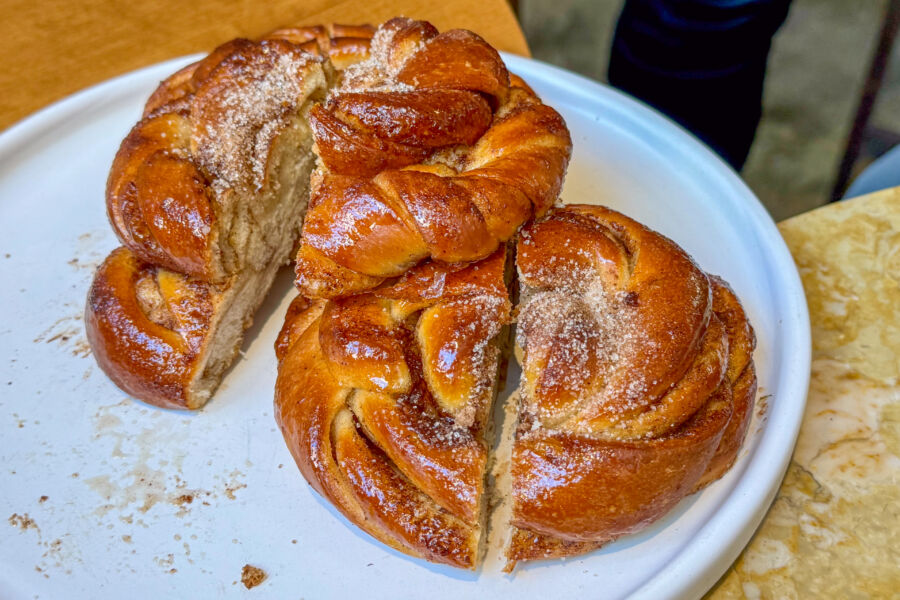
While we use the word “danish” to describe a sweet pastry, in Denmark it’s wienerbrød (“Vienna bread,” from the French viennoiserie) — named for the Viennese bakers who brought the art of pastry-making to Denmark, where the Danes perfected it. Ironically, in Vienna, they call the same thing “Copenhagen” or “Danish” bread.
For centuries, each community kept its own local time, based on the sunrise and sunset in that precise location — which often differed by a few minutes from town to town. But by the late 19th century, faster and faster trains made standardized timekeeping essential. Imagine: You’d show up for your 10:00 train to London, only to discover that, in London, it was already 10:10 — and, therefore, you’d just missed your train. In 1884, the prime meridian (through Greenwich) was established as a starting point for calculating world time zones; over the next few decades, Greenwich Mean Time was gradually adopted across Europe and around the world, ensuring that everyone shares the same clock.

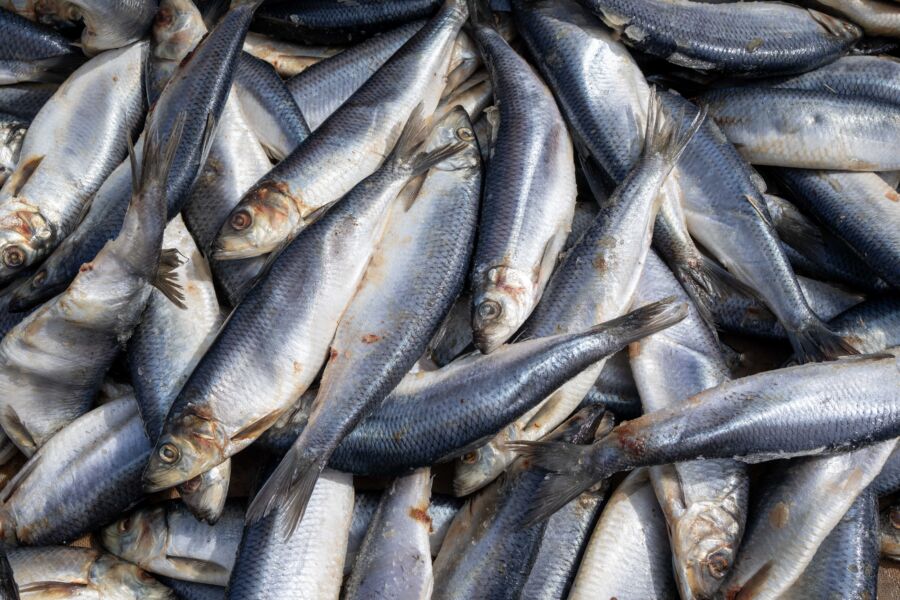
Siglufjörður, a remote fishing village at the northern tip of Iceland, was once a herring boom town, nicknamed the “Atlantic Klondike.” From 1903 to the 1960s, salted herring (which was highly nutritious and traveled well, making it particularly valuable during the world wars) represented fully one-half of Iceland’s total export income. The hard work of cutting and salting the fish was done by “herring girls,” who lived in dorms through the season — hanging out and listening to records while waiting for the boats to come in, when they’d rush down to the docks and work 20- or even 30-hour shifts. These “herring girls” were the muscle behind Iceland’s economy during a critical time, arguably empowering it to become fully independent from Denmark.
Italians think very deeply about digestion. It’s why their food is so delicious. And it also explains several cultural quirks that travelers scratch their heads about: a reluctance to serve cappuccino (or anything with lots of milk) after lunchtime; a taboo against mixing seafood and cheese; their insistence on serving your salad after the pasta, not before; and their bad attitude about tap water. (They’re not trying to upsell you. They’re just worried about your digestion — and there’s a water for that.)

The albero sand used for Spanish bullfights is special: The vivid-yellow color is the perfect complement to the flamboyant matador outfits and deep red blood, and the sand is just coarse enough to provide traction, minimize dust, and allow drainage. The premium sand favored in Andalucía, quarried at Los Alcores near Sevilla, is so precious that bullrings rent it for use only during bullfights; after the spectacle, it’s shoveled into trucks and taken to the next town.

One of Europe’s many north/south divides has to do with the circulation of fresh air indoors. Many Germans adhere religiously to the practice of Lüften (“ventilation”): At least twice each day, especially in the winter, they throw open all the windows to blast out stale air — as a matter of hygiene and good health. (Some people in the Low Countries and Scandinavia have a similar custom.) In Italy, quite to the contrary, many people have a deep fear of catching a draft; they believe a colpo d’aria (“hit of air”) can cause all manner of health problems, from headaches to diarrhea. A similar belief is persistent in many parts of the Balkans, especially Serbia (where it’s called promaja).

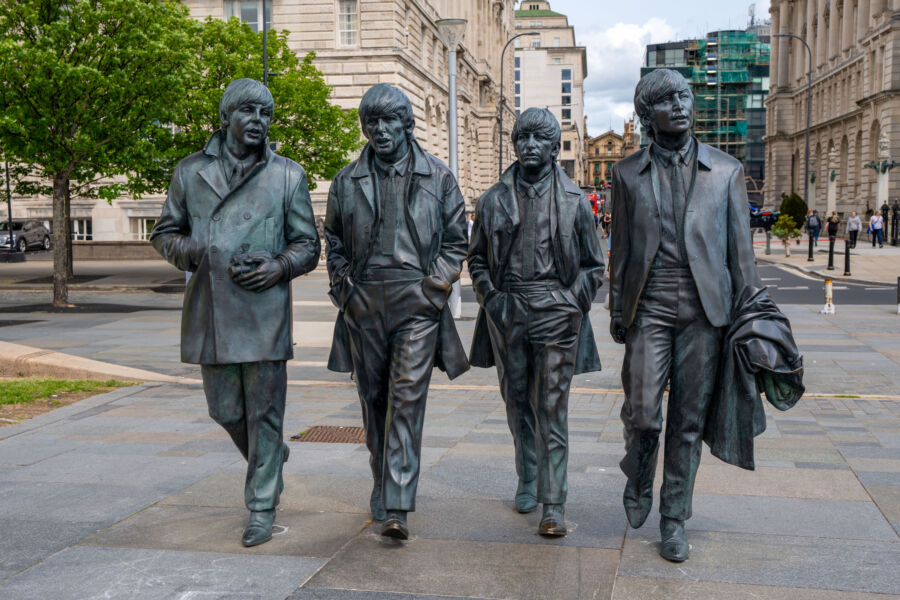
John Lennon and Paul McCartney had something very specific in common — aside from growing up near each other in Liverpool and becoming two of the greatest songwriters of all time. Both of them lost their mothers at a young age, perhaps forging an unspoken bond that facilitated their historic collaboration.
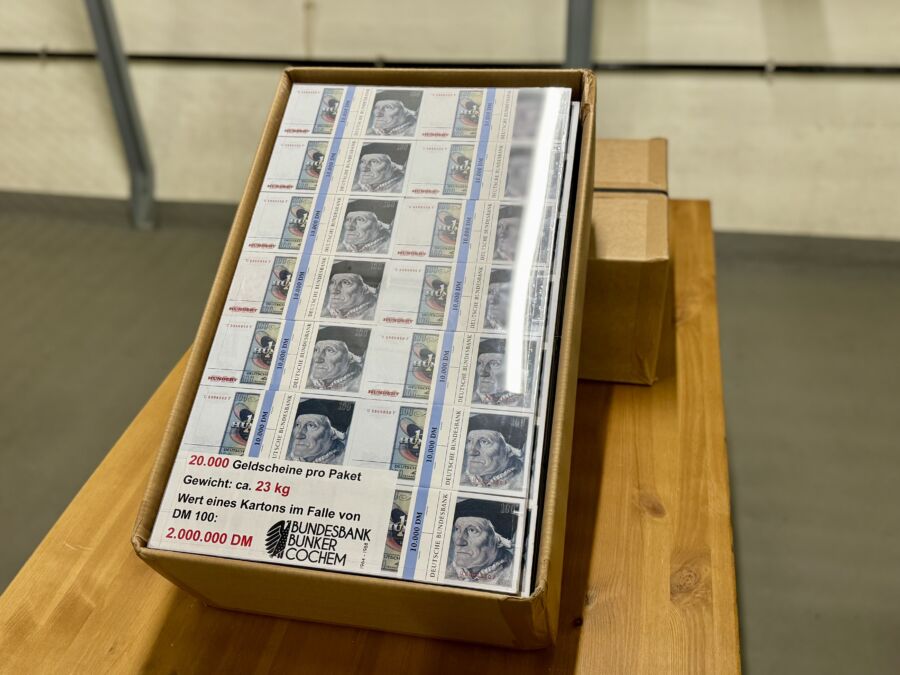
During the Cold War, West German authorities secretly stored 15 billion Deutschmarks (roughly €7.5 billion) in a hidden bunker, tucked in an unassuming neighborhood in Cochem on the Mosel River — neatly stacked floor-to-ceiling in cardboard boxes (now open to visitors). The currency was held in reserve in case of nuclear war, and to protect it from being devalued through nefarious means; the Bundesbank even created alternate designs for their banknotes — and printed billions — in the event that the Deutschmark needed to be replaced wholesale in a hurry.
In many European cities, you’ll find the same sculpture: an anonymous unhoused person, sleeping under a blanket on a bench. Only upon closer inspection do you notice the wounds in the feet that identify this person as Jesus. Homeless Jesus, by Canadian sculptor Timothy Schmalz, challenges the viewer to see the divine worthiness of each fellow human being — no matter their social stature. Since the original version was erected in 2013 at a Toronto theological school, more than 50 copies have appeared all around the world (I’ve seen them in Dublin, Glasgow, and Amsterdam).

Switzerland has two dominant grocery store chains: Coop and Migros — and either you’re a Coop family, or you’re a Migros family. Migros focuses on in-store brands and prides itself on having a conscience: They don’t sell alcohol or cigarettes, they were the first Swiss supermarket to stop giving out free plastic bags, and they donate one percent of their sales to charity. Meanwhile, Coop has a wider variety of brands and higher prices, focusing on organic and sustainable products; it’s considered a bit more posh. Very broadly speaking, Migros is like Trader Joe’s, while Coop is more like Whole Foods.

Bluetooth technology — which wirelessly connect devices — was named for Harald Bluetooth, a tenth-century Scandinavian king who “connected” the Danish and Norwegian peoples. Even the symbol for Bluetooth comes from Viking runes: It’s the letters H and B, combined.

In Sicily — and in many other cultures — it’s considered very important for children to know about their deceased ancestors. On special occasions, they may even receive a present from a departed great-aunt or grandpa. (When you think about it, this is no less “creepy” — and certainly more touching — than gifts from the Easter Bunny or Tooth Fairy.)

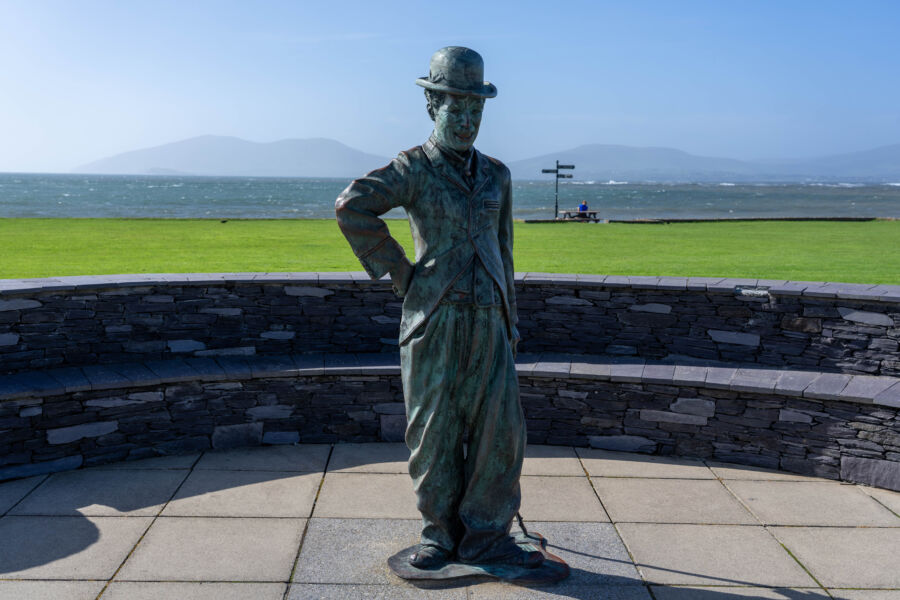
All over Europe, you stumble upon seemingly random statues… and they always come with a story. In Waterville, a castaway beach town on Ireland’s Ring of Kerry, stands a statue of Charlie Chaplin — who enjoyed the time he spent living the good life here. In central Budapest, you’ll find Peter Falk (the Columbo actor had Hungarian roots) as well as Ronald Reagan and George H. W. Bush (whose Cold War policies helped topple Hungary’s communist regime). You’ll find statues of the great Irish writer James Joyce in both Pula, Croatia, and Trieste, Italy — he lived in each city while writing his masterpiece Ulysses. And a park in Ronda, Spain, features busts of Orson Welles and Ernest Hemingway — two early-20th-century American greats who both fell in love with Spanish culture.
At Spain’s prestigious University of Salamanca, Fray Luis de León (1527-1591) challenged the Church’s control over the word of God by translating part of the Bible into Castilian. The Inquisition arrested, jailed, and tortured him for five years. Upon being released, he returned to the university and began his first lecture with, “As we were saying…” Today, he remains a symbol of the intellectual independence of academia in the face of changing political mores.

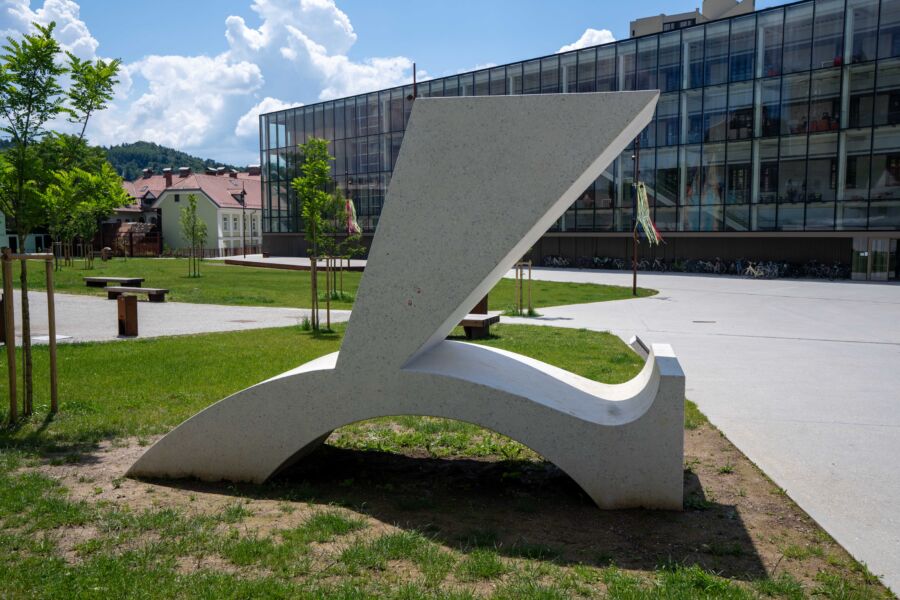
In the Slovenian capital of Ljubljana, you’ll find a strange monument, shaped like the top half of a letter Ć buried in the ground. When Slovenia declared independence in 1991, its population included tens of thousands of people from other parts of Yugoslavia. While most Yugoslav languages have two versions of this letter — Ć and Č — Slovene uses only Č. And so, eager to distance itself from Yugoslavia, Slovenia standardized spellings by replacing Ć with Č. Think of the many names ending in -ić — which now had to be spelled, instead, with -ič. Slovenia had 25,671 “Ć people” (including more than 5,000 children) who were “erased” by the breakup of Yugoslavia — stateless, stripped of governmental services, unable to travel, living in fear of expulsion… not because they moved, but because the borders did. Over time, as Slovenia matured as a nation and the Yugoslav Wars found resolution, the vast majority of these people gained their citizenship — and reclaimed their rightful Ć.
It’s remarkable when a particular place, at a particular moment, becomes a magnet for hugely influential people. If you walked into a coffee house in Vienna in early 1913, there’s a possibility you’d run into Sigmund Freud, Marshal Tito, Adolf Hitler, Josef Stalin, and Leon Trotsky.  Also notable: the Golden Age of ancient Athens; Florence circa 1500; Philadelphia in the 1770s; Victorian Age London; Paris and Harlem in the 1920s; and Silicon Valley at the turn of the 21st century.

Many German parking garages have specially designated parking spots for women, called Frauenparkplätze — generally in well-lit areas close to the entrance. While intended to make women feel safer in a big, dark garage, they are often criticized by German feminists, who consider them condescending (especially because they’re often wider than standard parking places, perhaps based on a stereotype that women are inferior drivers; and because they are typically located next to disabled spaces).
It’s often said that the uprisings that ended communism in Eastern Europe — which culminated in the autumn of 1989 — moved at starkly different paces: In Poland, it took 10 years; in Hungary, 10 moths; in East Germany, 10 weeks; and in Czechoslovakia, 10 days. Whie this requires a bit of fudging, it’s mostly accurate: The 1980 Solidarity protests in Gdańsk, led by Lech Wałesa, kicked off nearly a decade of slow reforms; throughout the summer of 1989, Hungary opened its borders little by little; by early that fall, protests began to sweep across East German cities; and the Velvet Revolution of Czechoslovakia played out over about a week and half, with increasingly large peaceful protests.

To this list, you could add “10 hours” for East Berlin. When the Berlin Wall came down, it happened overnight, as the result of a miscommunication. On November 9, 1989 — in response to those “10 weeks” of protests — the East German politburo issued a statement about their intention to gradually ease border controls, then left town for the weekend. Upon reading the ambiguously worded new policy in front of TV cameras, a flustered spokesman gave the impression that these changes were to happen “immediately.” East Berliners began to show up at border checkpoints in droves. At about 11:30 p.m., an overwhelmed guard threw open the gates. And once open, the Berlin Wall never closed again.

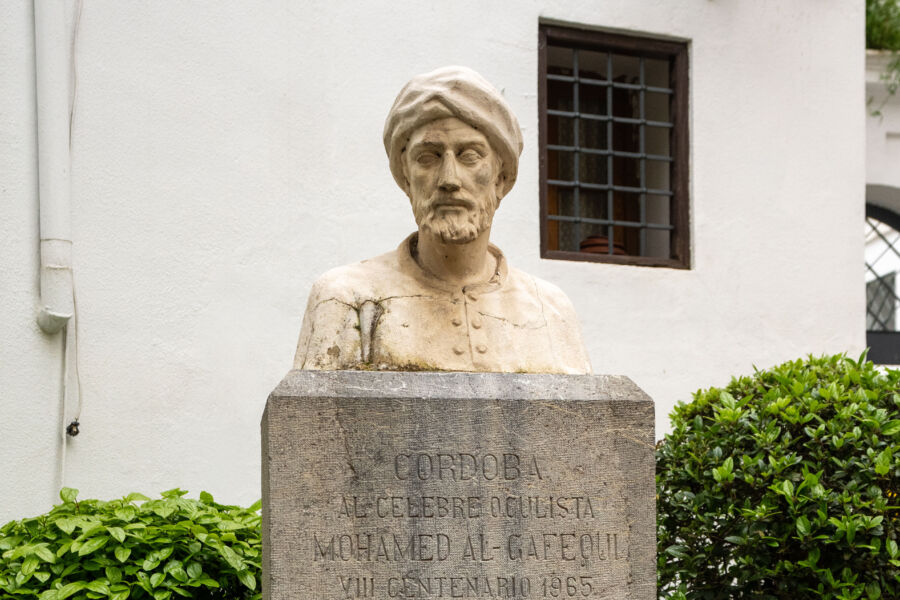
Around the year 1000, Moorish scientist Abu al-Zahrawi wrote a surgical encyclopedia, called Al-Tasrif, that was used throughout Europe for 700 years. He was one of many Muslim doctors and surgeons who advanced the practice of medicine in Al-Andalus (today Andalucía) — at a time when so much of Europe was suffering through its “Dark Ages.” Another example: Muhammad al-Gafeghi, today honored by a statue in Córdoba, was an ophthalmologist who performed successful cataract surgeries in the first half of the 12th century.
Europeans have many stereotypes about Americans: We wear tennis shoes, logo T-shirts, and baseball caps. We talk too loud. And… we drink too much water? Yes, among our many other foibles, Europeans perceive Americans as being bizarrely obsessed with (over-) hydrating. This may be based partly on American visitors requesting — and expecting — big glasses of tap water in restaurants. But it appears to be rooted in reality: Polling suggests that American adults drink, on average, 70 percent more than their European and British counterparts (1.7 liters per day vs. about 1 liter per day). And authorities in the USA and the EU have very different “recommended daily amounts” of water consumption: In the US, it’s 3.7 liters for men and 2.7 liters for women; in Europe, it’s about one-third less: 2.5 liters for men and 2 liters for women.

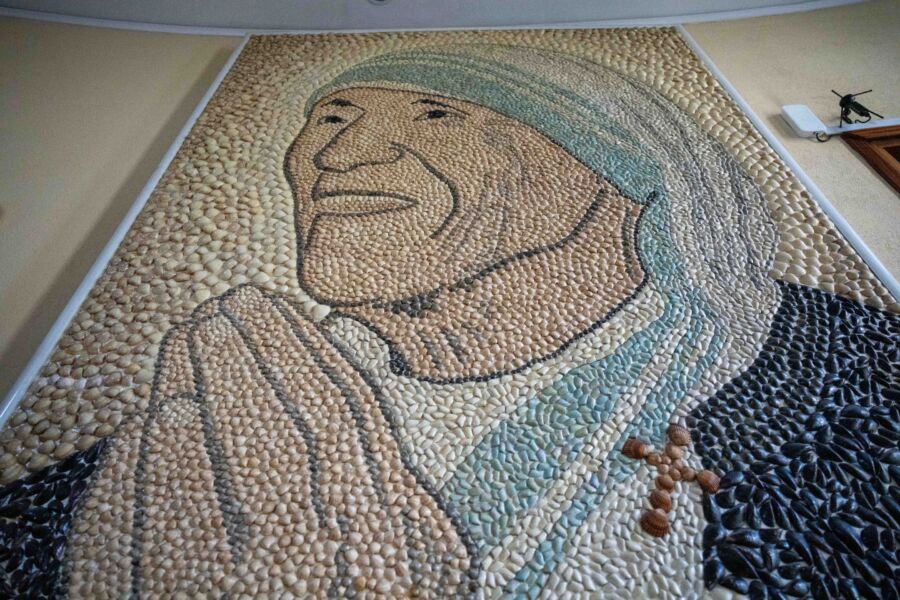
Two starkly different women are celebrated throughout the Albanian world ­— from Tirana to Prishtinë ­— honored by murals, statues, and street names: Mother Theresa, who was born Anjezë Gonxhe Bojaxhiu in Skopje (today’s Macedonia)… and pop star Dua Lipa, a Londoner with Kosovo Albanian heritage.
The early people of Denmark were entranced by bogs. At the dawn of the Iron Age, bogs were the source of ore that could be used to create all manner of tools and weapons. This mysterious and sacred liminal space, existing somewhere between land and water, was believed to be where the gods resided. Precious items (including vast collections of weapons plundered from defeated enemies), animals (up to and including horses), and even human beings were sacrificed to the thick peat of the bogs. Fortunately for present-day archaeologists, this preserved these artifacts perfectly.

Believe it… or not!

Do you have any favorite European factoids to share?


If you enjoy these sorts of insights, you should know that most of these appear, in some form or another, in our Rick Steves guidebooks. Any source can list names and dates; we always strive to provide real insight to help you get your arms around the place you’re visiting, in a more intimate way.

Europe’s 10 Best Markets

What traveler doesn’t love a great European market? There are few better windows into local life than rubbing shoulders with shoppers, browsing stands piled high with colorful produce, nibbling on street munchies, and being fully immersed in the sights, sounds, and smells of the local community.

Over half a lifetime of traveling around Europe, I’ve been collecting my favorite market experiences for travelers — where you can glean some insights into local culture and cuisine, and browse for a good, local, quality meal. This is a mix of old-school covered markets, trendier food halls, and sprawling, open-air markets that take over an entire neighborhood or town. I’ve heavily skewed my suggestions to foodie options, where you’ll find dishes that are creative and interesting (rather than just fill-the-tank), while still being affordable. Happy browsing!

10. Mercado de San Miguel, Madrid, Spain

Madrid's Mercado de San Miguel

Just steps from the grand Plaza Mayor, in the heart of Spain’s capital, sits this 1915 erector-set market hall. Fully remodeled in 2009, today it’s a bustling showcase of edible Spain. Squeezing between the crowds, you’ll find only the best jamón ibérico (air-cured ham), Manchego and other artisanal Spanish cheeses, powerfully piquant skewered pickles and olives (banderillas), delectable pastries, little skillets of paella, tinned fish and seafood, brochetas (meat or seafood skewers) grilled to order, smoked salmon, sweet vermouths from around Spain, croquetas with various fillings, Mexican dishes from a Michelin-star chef, and robust Rioja wines. It’s a culinary tour of Spain, under one roof.

9. Östermalms Saluhall, Stockholm, Sweden

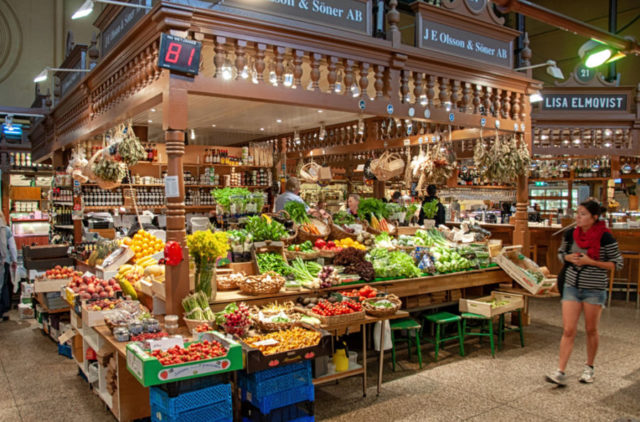
A classic. Anchoring Stockholm’s posh Östermalm neighborhood, this market hall is simply elegant. Handsome, hand-carved wooden stalls display just-so piles of produce, stacked as if posing for a still-life. The wares here feel…curated. Composed. With Scandinavian precision. There aren’t many bargains in this pricey city, but the Östermalms Saluhall is fun to browse for a high-end picnic, or to settle into a market eatery for a quality deli plate, a delicately composed salad, a sticky Scandinavian sweet roll, a splurgy seafood dish, a gourmet smørrebrød (open-face sandwich), a delectable handmade praline, or a selection of Lebanese small plates. Note: The food hall is undergoing a makeover through 2020; in the meantime, the vendors have set up temporary digs nearby.

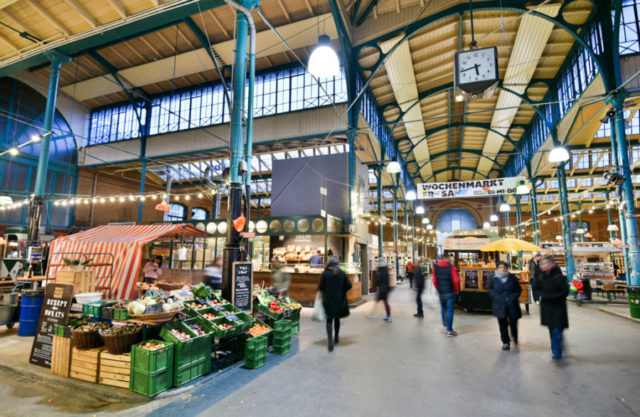
8. Markthalle Neun, Berlin, Germany

Berlin’s Kreuzberg district is home to its most cutting-edge, engaging culinary scene — and Markhalle Neun is its flagship. Tucked in a workaday neighborhood away from the tourist sights, it fills a beautifully restored 19th-century hall with greengrocers, cheesemongers, butchers, fishmongers, florists, and bakers, all with an appropriately Berlin-hipster vibe. Meanwhile, food stands sell Berlin classics like Buletten (meatballs), Stolle (open-faced sandwiches), Brezel (big doughy pretzels), and Currywurst — but also Italian pastas, French crêpes, Turkish deli meats, Spanish tapas, and even BBQ from the USA. Markhalle Neun scores bonus points for its many special events (listed at www.markthalleneun.de), including its Saturday farmers market and its “Street Food Thursday” — a beloved institution for Berliners seeking a trendy yet affordable dinner.

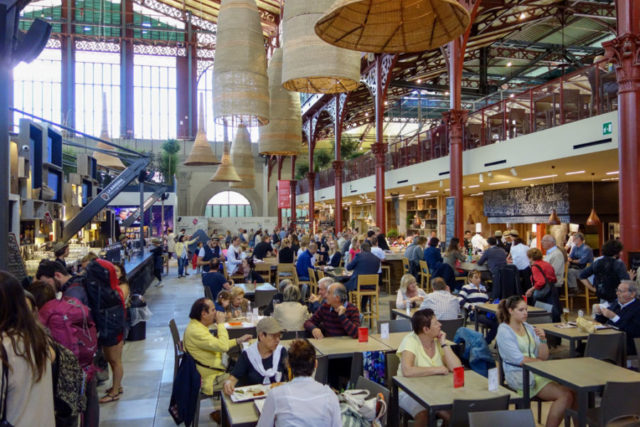
7. Mercato Centrale, Florence, Italy

For years, I’d peek tentatively inside this cavernous market hall in the center of Florence, which felt dark and foreboding. With tattered stalls and piles of garbage out front, it felt like it hadn’t changed since the days of Vittorio Emanuele II. Then, in 2014, they converted the top floor into a high-end food circus. Just walk past the still-grubby produce stalls on the main floor, and hike up the stairs to a world of Italian taste treats: hand-rolled pastas, prizewinning prosciutto, massive steaks cooked so rare they still moo, melt-in-your-mouth panini, gourmet burgers made from Tuscany’s prized Chianina beef, rotisserie chicken, big juicy wads of mozzarella di bufala, handheld flatbread sandwiches called trapizzini, big slabs of rustic pizza, tender stewed beef cheeks, truffle-infused oils and pâtés, the rustic Tuscan bread soup called ribollita, deep-fried tasties,  cannoli and other Sicilian sugar bombs, and high-end tripe sandwiches (a Florentine classic!). Travelers smart enough to escape the tourist-gouging restaurants on the main drag retreat to this upper level — like pigeons in the rafters — to take a break from intense Renaissance sightseeing with pretty much any Italian taste treat they can imagine. Tuscany is home to many foodie finds — but this is one of the best.

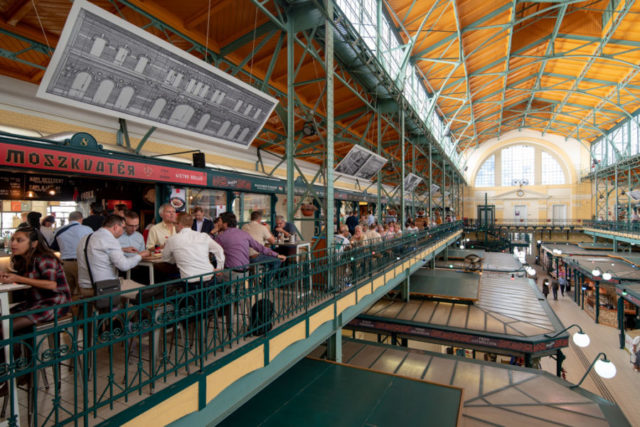
6. Belvarosi Piac, Budapest, Hungary

In Budapest, tourists flock to the Great Market Hall, an elegant palace of produce built around the turn of the 20th century. And you really do have to see the Great Market Hall. But don’t eat there — the “local”-seeming food counters upstairs specialize in ripping off naive tourists. Instead, head to a different, smaller, and far more authentic neighborhood market hall, also right in the city center (a couple of minutes’ walk from the Parliament): the Belvarosi Piac on Hold Street. In an atmospheric Industrial Age space that feels like the Great Market Hall’s little sibling, producers occupy the ground floor, while the upstairs is ringed by tempting high end-yet-affordable food stands: massive schnitzels at Buja Diszno(k), gourmet sausage at Lakatos Műhely, Russian grub at Moszkvatér (named for the since-rechristened “Moscow Square”), gourmet burgers at Kandalló, Thai-style khao man gai (poached chicken in garlicky sauce), and updated Hungarian classics at A Séf Utcaja. Anchoring the space, down on the main floor, is Stand 25 Bisztró. Here, celebrity chefs Szabina Szulló and Tamás Széll artfully fuse Hungarian classics with international influences (or is it the other way around?). While not cheap by market hall standards, Stand 25 a bargain for a Michelin-caliber lunch in a memorable setting (lunch only, plus dinner Friday and Saturday, book ahead).

5. Ballarò Market, Palermo

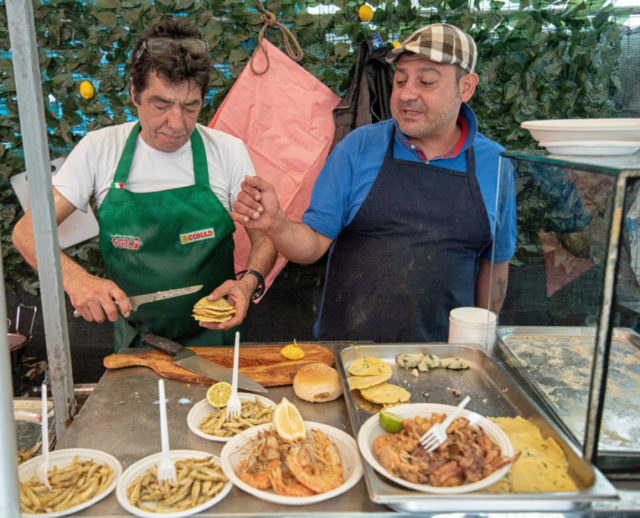
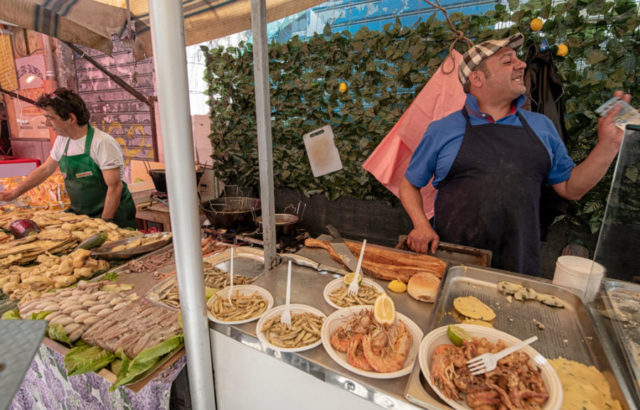
The Sicilian capital has some of the best, most vivid street markets in all of Europe. And the granddaddy of them all is Ballarò — seedy, chaotic, bewildering, and invigorating. Come here to jostle with Sicilians who verbally arm-wrestle for the best deals on the best ingredients. The vendors — continuing a tradition that supposedly dates back to Arab rule — warble their sales pitches with an otherworldly cadence, demanding the attention of passersby. Giant slabs of pink tuna perch on marble counters, like cadavers ready to be dissected. Produce stands overflow with vivid-purple eggplants, long, skinny Sicilian zucchini, and tomatoes that actually taste like tomatoes. Best of all, scattered throughout this multi-block span of barely controlled chaos are a wide variety of tempting street food stands, selling greasy napkins topped with dirt-cheap taste treats for every level of adventurous eaters — from arancine (deep-fried rice balls) and sfincioni (“Sicilian pizza”) to pani ca’ meusa (spleen sandwich) and polpo bollito (tiny boiled octopus, eaten whole). (For a complete rundown, check out my post on Palermo’s street food.) Go ahead, dive in — this is what real travelers live for.

4. Mathallen, Oslo, Norway

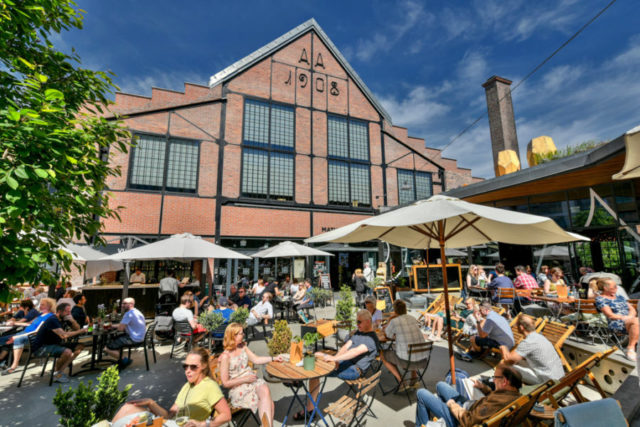
I love Oslo. But I’ve rarely found a memorable meal tucked among the dreary, blocky downtown core along Karl Johans Gate. However, just north of downtown runs the Akers River Valley, where the city has redeveloped a former wasteland of red-brick factories and warehouses into a lively people zone. Its centerpiece is Mathallen (“Food Hall”), filling the scavenged brick skeleton of a 19th-century factory. Norwegians recognize the limitations of their cuisine. And so, in addition to stands selling fresh, whole-grain bread (at Smelt Ostesmørbrød) sweet and savory pies (at Mildrids Kjøkken), and farm-fresh geitost cheese (at Ost & Sånt), you can nibble tapas, pastas, sushi, tacos and tequila, pizza, Asian street food,  gourmet ice cream, and much more. Ringing the outside of the market are a variety of industrial-mod, higher-end eateries. I skipped the fried chicken and “global tapas,” and went a bit more traditional at Vulkanfisk, serving up affordable-for-Oslo, elegantly presented, fresh seafood (the garlic-sautéed scampi were a flavor bomb). Anytime I’m in Oslo at mealtime, I come up with an excuse to head up the Akers River to Mathallen.

3. Maltby Street Market Rope Walk, London

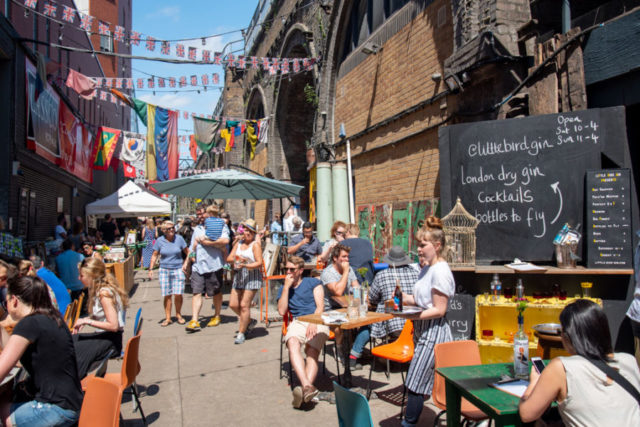
One summer, my wife and I rented an apartment in London for a week and checked out a different market each day. And at the end of the trip, the Maltby Street Rope Walk emerged as our favorite (every Saturday and Sunday). Tucked along a vintage brick railroad trestle, far from any tourist attractions (roughly across the Thames from the Tower of London), it’s an explosion of foodie energy. Beyond the hole-in-the-wall eateries, wine bars, taprooms, and Mozambique-style burger bars squeezed into the arches under the train tracks, the weekend market adds a world of pop-up food stands: grilled sandwiches oozing with tangy English cheese; little slices of rye bread mounted with melt-in-your-mouth Scottish salmon; slabs of grass-fed, dry-aged, rare-grilled hanger steaks; wild variations on Scotch eggs; Middle Eastern flatbreads with savory toppings; German-style sausages; gyoza steamed in wicker baskets; and a mouthwatering array of gooey brownies. For a more traditional “market hall,” it’s hard to beat London’s famous Borough Market. The funky Camden Market sprawls through a yellow-brick wonderland of old industrial buildings. The Portobello Road Market charms Notting Hill fans. And the Broadway Market feels like ground zero for East London’s hipster baby boom. But if I had to pick just one market that incapsulates cutting-edge London…it’s Rope Walk.

2. Mercado da Ribeira/Time Out Market, Lisbon, Portugal

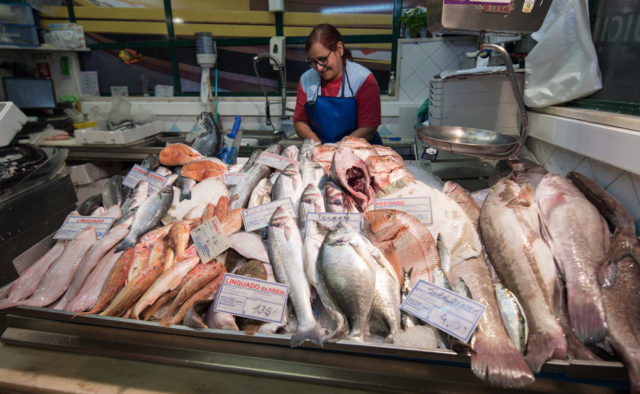
My favorite European market hall has a split personality. One-half of the market is as classic as they come: traditional, rough-and-tumble vendors selling fragrant herbs, plump produce, and an aquarium’s worth of fish. It’s ragtag, ramshackle, and trapped in the 1950s, with rickety wooden stalls, puddles pooling on cracked tile floors, petticoat-clad grannies selling rough bunches of herbs, and Old World scales with dials that spin imprecisely as if digital were never invented. On its own, this market hall is endearing enough to earn an “honorable mention” on this list. But from there, you can step through a door into La Ribera’s other half: a sleek, futuristic, top-of-the-line, Time Out-themed culinary wonderland (opened in 2014). The two dozen eateries here include stands operated by five marquee, Michelin-rated Portuguese celebrity chefs selling affordably price tastes of their favorite dishes. You’ll also find smaller stands bursting with a variety of local and international meals: the beloved Portuguese steak sandwich called prego, croquetes with fillings both traditional and creative, bacalhau (rehydrated salt-dried cod), fresh-baked pasteis de nata and other pastries, Japanese-fusion dishes highlighting the long-forgotten influence of early Portuguese traders, traditional cheeses and charcuterie, catch-of-the-day, quality steaks, gourmet burgers, artful sushi, and crispy pizzas. Rounding out the scene are a well-stocked wine shop, a place to stock up on conserves (tinned fish with colorful wrappers), and a branch of A Vida Portugesa (a classy vendor of Portuguese-themed products, gifts, and keepsakes that tempt even non-shoppers).  Whether for a meal or a one-stop-shop to stock up on all things Portuguese, Mercado da Ribeira is a winner.

1.  Market Day, Sarlat, France

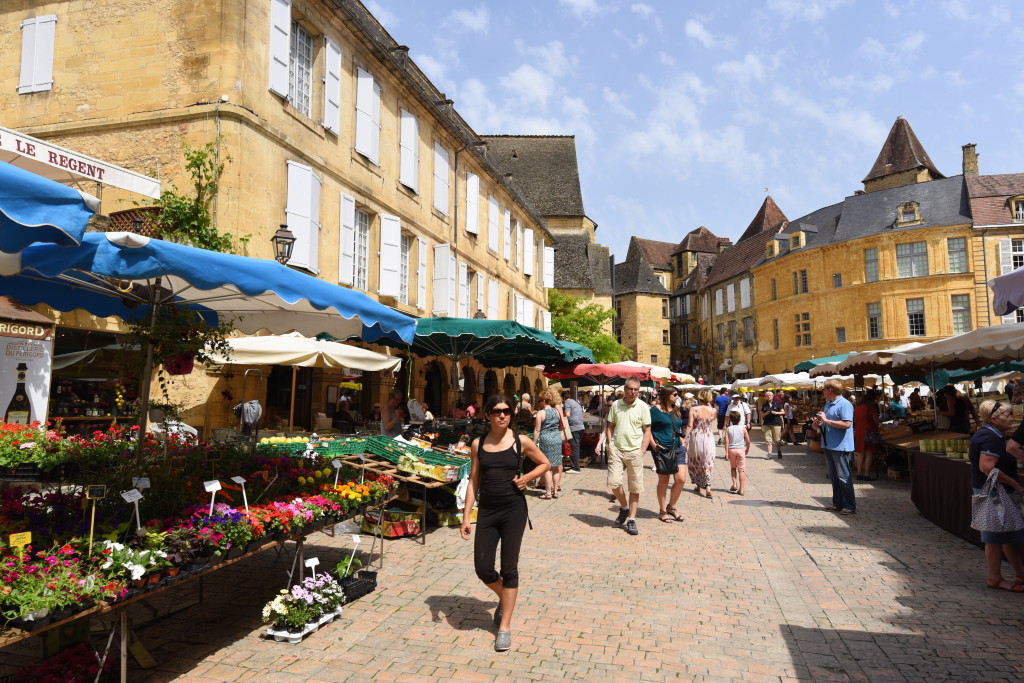
Sarlat’s street market is hard to top. It’s the refined yin to Palermo’s gritty yang. Twice weekly — on Wednesday mornings, and all day Saturdays — the pristine, lemony-sandstone streets of one of France’s finest towns become a big outdoor shopping mall. Locals pour in from the countryside to browse the stalls, reconnect with their favorite vendors, and bump into old friends. You’ll find baked goods, fresh meat, duck-in-a-can (confit de canard), giant wheels of rustic mountain cheese, tiny pyramids of fine gourmet cheese, nuts and dried fruits, explosively flavorful olives, mammoth chunks of nougat, snail shells prefilled for escargot, fruitcake sold by weight, a rainbow of preserves, salamis and sausages of every shape and size, and whatever produce is in season. When the noon bell tolls, the vendors begin packing up, and the shoppers scramble for café tables that catch just the right mélange of sun and shade. This is where the second phase of the Market Day ritual kicks in: taking some time to nurse a cup of coffee with someone you haven’t seen in a while. It’s all so simple…so sophisticated…so smart. If you won’t be in Sarlat, you can enjoy similar market days all over France; every community has its own, but popular ones include Uzès (in Provence), Beaune (in Burgundy), and several in Parisian neighborhoods. But Sarlat is the one that has left me with the warmest memories of an ideal market experience.

What’s your favorite market in Europe?

2019 Discovery: Palermo Street Markets, Sicily

Crowds got you down? This post is part of a series of 10 European Discoveries for 2019 — off-the-beaten-path gems where you can escape the tourist rut and find a corner of Europe all your own.

Among Italians (and other foodies), Palermo is synonymous with street food. And its three sprawling street markets — Ballarò, Capo, and Vucciria — let you delve into gritty Sicilian culture in a way that engages all the senses.

Go ahead — taste something you’d never otherwise consider putting in your mouth. Like frittula — basically the leftover parts of veal (cartilage, intestines, little bits of bone) all chopped up, griddled, and seasoned with generous salt and lemon juice. Or pani ca’ meusa — a pillowy bun stuffed with spleen, lung, and other organ meat. Or polpo bollito — a small octopus, boiled whole and spritzed with lemon.

Too adventurous? Then stick to the oldies-but-goodies: arancina, a deep-fried ball of saffron rice and meat sauce; sfincioni, French-bread-style “Sicilian pizza,” grilled up to order; and panelle e cazzilli, chickpea fritters and herbed croquettes.

Best of all, the whole time you’re browsing these gut-bombs, you’re fully immersed in the energetic hubbub of Sicilian urban life — watching the Palermitani greet old friends, listening to the urgent musicality of the vendors’ sales pitches, and smelling all that sizzling and frying goodness (plus a full spectrum of other odors). Palermo’s street markets are quintessential Sicily.

Ready to dive in? If you’re exploring Sicily on a Rick Steves tour, you’re good-to-go: The Best of Sicily in 11 Days Tour includes a guided walk through the Ballarò street market. If you’re traveling independently, consider joining a food tour. You can read about my experience on a Palermo street food tour here — and you’ll find lots of other recommendations in our brand-new Rick Steves Sicily guidebook, co-authored by Sarah Murdoch. Look for that in stores this April.

Sicily’s Ultimate Road Trip

Sicily is one of Europe’s most enticing “fringe” destinations — still largely undiscovered, but well worth the journey. For Italy aficionados, Sicily is a fascinating “continuing education” in a place that’s somehow even more intense than the mainland (with all the highs and lows that entails). For first-timers, it’s a collection of delightful surprises and an exhilarating introduction to Italy. And for people who find mainland Italy a bit too much…could I perhaps interest you in Germany?

Our brand-new Rick Steves Sicily guidebook, published in April 2019, has been a real team effort: co-author Sarah Murdoch, contributing author Alfio di Mauro, contributions from Rick and from me, and the usual talented work by our editors, mapmakers, and graphics people. We’re thrilled with how the book turned out. Its publication has inspired me to share a few more of my favorite Sicilian photos and memories that haven’t seen the light of day yet.

These photos loosely follow the route I drove around Sicily to research the new book, starting and ending in Palermo and circling the island counterclockwise. It’s also the route of our recommended two-week itinerary by car from our Sicily book. Enjoy!

Stop #1: Palermo

Palermo’s main intersection — called the Quattro Canti (“Four Corners”) — features four fancy facades facing each other. Trying to capture this lovely space on film, I made full use of my fisheye lens. In addition to being a fascinating study in the theatricality of Baroque architecture — as the day goes on, the sun moves across female statues embodying spring (young maiden), summer, fall, and winter (elderly woman) — this intersection is the navigational center of town. I found myself passing through here again and again…and was always glad I did.

Stop #2: Segesta

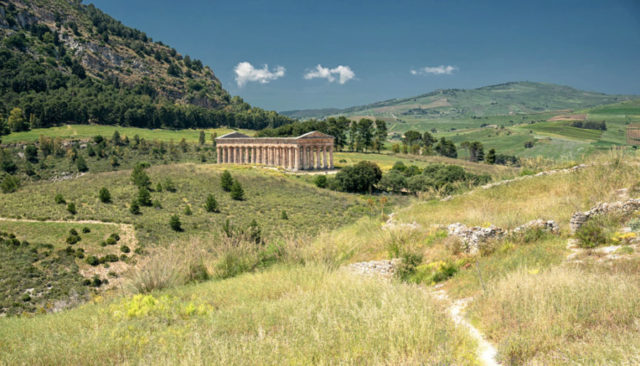
Sicily — which was known as Magna Graecia (“Greater Greece”) back when the ancient Greeks outgrew their little islands and followed their own westward expansion — is the best place outside of Greece to see ancient ruins: Segesta (pictured here), Selinunte, and Agrigento (described later) are the “big three,” but seemingly every town has an old temple ruin or a theater carved into the hillside.

Stop #3: Trapani and the West Coast

Sicily’s often-overlooked west coast is a fine spot to settle in for a day or two of side-tripping. From the workaday but endearing port town of Trapani, you can head up to the hill town of Erice (this photo is taken from its castle), take a thirsty stroll through medieval salt pans, ride a boat to the isle of Mozia to see scant remains of the ancient Carthaginian civilization, sample some wines in a Marsala cantina, and set sail for the Egadi Islands. (Favignana has a surprisingly fascinating museum dedicated to the tuna fishing and canning industry that put this area on the map.) While not the most spectacular corner of Sicily, Trapani and the west coast are a fine kick-off for an island loop.

Stop #4: Agrigento

Sicily’s top sight from antiquity is the Valley of the Temples, in Agrigento. Slightly misnamed, it’s a half-mile-long ridge lined with temples (in various states of repair) from Greek times. Like the Roman Forum or Ephesus in Turkey, it’s one of those places that stokes your imagination for ancient times…you can’t help but mentally don a toga and picture when this was a thriving community.

While Agrigento is famous for its Valley of the Temples, its overlooked town center — which also lines up along a promontory —  is worth exploring. I stayed in an agriturismo in the nearby countryside, but I was glad I ventured into Agrigento one evening for a stroll up its main drag and a good dinner. Forking off Agrigento’s spine is the colorful “stairs of the winds” — a popular canvas for local street artists.

Stop #5: Villa Romana del Casale

While many of the great ancient sites in Sicily are from Greek times, it also has some of the best-preserved ancient Roman mosaics anywhere. Villa Romana del Casale, strategically located in the middle of nowhere, has elaborate floors decorated with painstakingly crafted murals that depict exotic animal hunts, cherubs on a fishing trip, and mighty female athletes who have acquired the unfortunate, persistent nickname “the bikini girls.”

Stop #6: Ragusa and Southeastern Sicily

Looking back on my Sicily trip, my favorite stop may have been mellow Ragusa, burrowed deep into the island’s southeastern hills. With houses blanketing two adjacent hills, Ragusa hits that perfect travel sweet spot: It’s big and bustling enough to be interesting and to serve its visitors well, but small and out-of-the-way enough not to be overrun by tourists. I saw quite a few out-of-towners here, but it seemed that almost all of them were Italians…a good sign.

I happened to be in Ragusa during an endearing little festival honoring the local Ragusano cheese. I expected the place to be mobbed. Instead, I strolled through a floodlit town where local people, and a handful of Italian tourists, were out enjoying their beautiful piazzas. The streets and squares of Ragusa are designed with a Baroque sense of theatricality and drama…church domes seem to be positioned just so.

Another reason to like Ragusa is that it’s an ideal home base for side-tripping to a delightful variety of low-impact, lovely towns dotting southeastern Sicily. Chocolate-crazy Modica (pictured here), valley-filling Scicli, and the Baroque beauty Noto are all within a short drive. This area was severely rattled by an earthquake in 1693 — and the reconstruction coincided perfectly with the high point of Sicilian Baroque. The entire region was rebuilt in this same style, using the luscious local sandstone, giving it an unusual harmony — especially in Noto. I found this to be the prettiest part of Sicily.

Stop #7: Siracusa

Siracusa may be Sicily’s most all-around entertaining destination. The mainland is dreary sprawl, but the historic center — filling a little island called Ortigia, surrounded by a nearly 360-degree bay — is magic: ancient Greek and Roman ruins, quality restaurants, characteristic back lanes, creative artisan boutiques, colorful puppet shows, hipster cafés, pebbly beaches, and my favorite square in Sicily — facing the town cathedral, which, like Siracusa and Sicily itself, is built upon layers of history. Ancient Doric columns still line the nave.

Stop #8: In the Shadow of Mount Etna

Catania — Sicily’s second city — gets a bum rap. It’s big, gritty, intimidating, and hard to navigate. While I wouldn’t put it at the top of my “must-visit” list, I was glad to spend the night here. Its old center is made of black lava rock from Mount Etna, which smolders on the horizon. Its center has been slowly rejuvenated — leaving the old core far more elegant than Palermo’s (which wears its charm with a patina of scruffiness).

Sicily’s glamorous poster child is Taormina, dramatically clinging to the edge of a cliff, with grand views to smoldering Mount Etna. Capping things off are the well-preserved ruins of a Greek and Roman Theater — built by the ancient Greeks, but later “upgraded” by the Romans. It’s hard to imagine a more scenic backdrop for a theatrical production. While I love the theater and the setting, I have to admit I was left pretty cold by Taormina. It’s a posh resort that — like most posh resorts — feels soulless, its authentic character plastered over in favor of amenities to please deep-pocketed tourists. (To be fair, I was primed not to like Taormina by many Sicilians and Sicily aficionados who had gravely warned me it was not “the real Sicily”…one of them used a perfect Italian phrase to describe it: “All smoke and no meat.”) Yes, you’ve gotta see Taormina. But you may find that other places stick with you longer.

We’re spoiled in the USA — with our long, broad, sandy beaches in California, Florida, and Hawaii. In Europe, a “beach” is rarely sandy — and more often, rocky and pebbly. Sicily is a great beach destination, but only for those who understand this crucial difference. The most memorable beach I saw here was Isola Bella, tucked just below the cliff-clinging center of Taormina (and accessible by a quick and scenic gondola). In the 19th century, an English noblewoman bought this island — tethered to the mainland only by a slushy pebble causeway just a few feet wide — and built a villa here. I went down to check out the villa…but the beach was the real star. It was packed with holiday-makers, basking in the hot Sicilian sun, splashing in the stunningly clear water (a fair trade-off for the lack of sand), and struggling to get comfortable on the rocks.

Mount Etna — the still-active volcano that gave rise to Sicily — is famous for its steaming profile. But what really blew me away was its stunning, fun-to-explore wine region. My favorite stretch was along its northern slope, between the villages of Linguaglossa and Randazzo. Regardless of whether you enjoy the wine, the scenery and dreamy countryside culture are divine.

Stop #9: Cefalù

My favorite beach town in Sicily is Cefalù…not for its fine beaches (though it does have those), but because it has the soul of an old fishing village — you still see fishermen pulling their boats up onto the beach, between the sunbathers. Its centerpiece is an insistently likeable Norman fortress-church, decorated inside with glittering golden mosaics. Cefalù is simply a fun place to be on vacation — it reminded me of my favorite island getaways on Croatia’s Dalmatian Coast.

The most satisfying hike in Cefalù is up to the top of “La Rocca” — the Gibraltar-like giant rock that rockets up above town. It’s a steep and rugged climb, but at the top you’re rewarded with stunning views over the town’s rooftops and hulking church.

On the day I summited La Rocca, with a sense of achievement and curiosity, I checked my Health app: 21,000 steps and the equivalent of 105 floors (plus another 105 on the way down). That’s like taking the stairs to the observation deck of Chicago’s Willis Tower. Yeah, I think I earned my gelato.

Stop #10: Back to Palermo

You know a city has gotten under your skin when you’re conspiring to get back there before you’ve even left the country. I started my trip in Palermo, then circled Sicily. As the end of my loop neared, I realized I really wanted one more crack at the island’s main city — partly for my guidebook work, but also just because I enjoyed it. I gave up a day off I’d planned in Taormina and added one more day in Palermo. I loved having another shot at the city, with the benefit of all I’d learned in the rest of the country. This strategy worked well for me in Iceland, too — where I had a few days in Reykjavík both at the start and the end of my trip. I like this approach so much, I’m going to start doing it on purpose.


Our new Sicily guidebook — with all of the details about everything mentioned here — is available now.

This itinerary works great by car. Sicily is a little crazy to drive in — but once you get used to it, it’s not so bad.

For my best advice on traveling in Sicily, check out my Top 10 Sicily Travel Tips.

And if you’re a foodie like I am, you’ll definitely want to sample Palermo’s street food.

We also have a wealth of free Sicily content on our website, including a recommended itinerary, links to two new episodes of Rick’s public television series about Sicily, several interviews from Rick’s public radio show about Sicily, more gorgeous photographs, recommended books and movies about Sicily, and much more.

And if you’d like to visit Sicily — but would love it if someone else did all the driving, took care of the hotels and half of the meals, and explained it all to you — well, then, we have a great 11-day tour for you.


Top 10 Sicily Travel Tips

In the spring of 2018, I spent three busy weeks in Sicily, circling the island to put the finishing touches on our brand-new Rick Steves Sicily guidebook — which is available now. Throughout that trip, I collected 10 favorite practical tips for traveling in Sicily. Special thanks to the book’s co-author, Sarah Murdoch, and contributing author Alfio di Mauro for their hard work and abundant insights. Amuni!

Visit a mix of big cities, smaller towns, and countryside sights.

For a good sampling of Sicily, plan to visit a mix of big cities (Palermo, Siracusa); smaller towns (Ragusa, Trapani, Taormina, Cefalù); and striking sights in the countryside (Mount Etna, ancient temples and theaters, the glittering mosaics at Monreale Cathedral). On a quick visit of just a few days, home-base in Taormina or Catania and make strategic side-trips to Siracusa and Mount Etna, then spend a day or two in Palermo. With more time, consider adding your choice of other towns: Agrigento (with its remarkable ancient temples), additional time in Siracusa (for its ancient sites and delightful urban bustle), Ragusa (for its low-key hill town ambience), Trapani (a pleasant west coast town with an array of tempting side-trips, from salt flats to hill towns to offshore islets), and the beach town of Cefalù. For most travelers, the best plan is to rent a car — but be prepared for the often challenging Sicilian roads, especially in cities. (And spring for the full insurance.)

Pig out on street food.

The island’s cuisine — which is distinctly different from mainland Italy’s — is, like Sicily, a unique mix of cultural influences. Choosing between eggplant pasta and fish couscous on the same menu, it’s clear that you’re at a crossroads of Europe and Africa. And some of the best food is also the cheapest. Sicily is renowned for its street food. Try an arancina (deep-fried saffron rice ball), panelle (chickpea fritters), sfincione (rustic, Sicilian-style “pizza”), polpo bollito (a boiled mini-octopus), and — if you dare — pani ca’ meusa…the famed spleen sandwich. To sample several items in one go, just wander through one of the characteristic street markets in Palermo or Catania…or join a street food tour.

Party with the Sicilians.

On this island of very tight-knit communities and fierce local pride, there’s always some big festival going on. Most towns celebrate their patron saint’s day by processing through the streets with an elaborate float (or several). Other celebrations fill a more specific niche. I happened to be in the pristine town of Noto during their biggest party of the year, the Infiorata di Noto. An entire street — several blocks long — was filled with gigantic murals, delicately constructed of flower petals.  And when I was in nearby Ragusa, the townspeople were celebrating the native Ragusano cheese. The town square hosted cooking demonstrations, and every restaurant in town was highlighting a special cheese-forward dish. While I enjoy the serendipity of just stumbling onto Sicilian celebrations, it’s smart to do some homework, find out what local festivities might be going on nearby, and make a point to drop by.

Bone up on ancient history.

In antiquity, Sicily was called Magna Graecia — “Greater Greece” — for the many Hellenic city-states that colonized the island. Ancient Syracuse (today’s Siracusa) was one of the most powerful city-states on the Mediterranean. Sicily was also an outpost of the mysterious Carthaginians, who were almost entirely wiped out by the Romans. And all of these civilizations left behind world-class artifacts. Scattered across Sicily are some of the best ancient Greek temples and theaters anywhere outside of Greece: the Valley of the Temples at Agrigento; Europe’s largest archaeological area at Selinunte; and the theaters in Taormina, Siracusa, and Segesta. The cathedral in Ortigia (Siracusa’s old town) is actually built upon the still-visible columns of a fifth-century B.C. temple. And deep in the remote interior of Sicily is the Villa Romana del Casale, with some of the world’s best-preserved floor mosaics. If you love ancient sites, Sicily will blow your mind. If you don’t…there’s no better place to start.

Visit Mount Etna for its amazing volcanic sights — and its wine.

Mount Etna, which (literally) gave rise to Sicily, is one of Europe’s most accessible active volcanoes. A cable car whisks you halfway up the mountain, and from there, you can hop on a monster-truck bus nearly all the way to the smoldering summit. (It tends to be clear first thing in the morning, then clouds over just as it gets crowded a few hours later — it’s smart to be on the first cable car, at 9:00.) But Mount Etna is also home to one of Italy’s most pleasant wine-growing regions. My favorite stretch — picturesque and still relatively off the beaten path — is on the north side of Etna, between the towns of Linguaglossa and Randazzo. The Etna wine scene has exploded in recent years, garnering more and more international attention. And even if you’re not into wines, the scenery is magnificent: vineyards stretching up sun-baked slopes toward the steaming, snow-capped cone of Etna. Several picturesque wineries offer tours and tastings; it’s customary to call a day or so ahead to let them know you’re coming. (Some favorite finds for the upcoming guidebook include the swanky Tenuta di Fessina, the cheerful Fattoria Romeo del Castello, and the family-run, nicely low-key Filippo Grasso.) If you’re serious about wine, Etna Wine School  — operated by an American vintner expat who literally wrote the book on Etna wines — offers private tours.

Be prepared for heat and hills.

At the same latitude as Spain’s Adalucía and Greece’s Cycladic Islands, Sicily can be very hot for much of the year. (Most of Sicily sits on the African tectonic plate — and the geology and climate really do feel closer to Africa than to Europe.) Many of Sicily’s best sights are dusty ancient landmarks, requiring a hike to reach, with little shade. And virtually nothing in Sicily sits on flat ground — you’ll encounter hills, hills, and more hills. Come prepared with broken-in shoes, sunscreen, and a hat for shade — and take plenty of breaks. Or consider coming off-season, when it’s cooler and less exhausting. Sicily is one of Europe’s most appealing winter destinations. It may not be balmy enough to swim in the ocean, but even in winter, you can often enjoy warm, sunny days and cool, refreshing nights….and zero crowds.

Unwind in the hill towns of the southeast.

Sicily can be intense. But one of my favorite little corners of the island is in the southeast, around the dramatic hill town of Ragusa. With green, rolling hills and neatly stacked stone fences, this area feels almost Celtic. And it’s one part of Sicily where most tourists aren’t Americans, or even northern Europeans — but Italians. In a short drive from Ragusa, you can link up some lovely towns: Modica, famous for its chocolate industry and its dual cathedrals (one on a hilltop, the other in a valley); Scicli, where troglodyte caves carved into the cliffs overlook a fun-to-explore town filling a valley; and beautifully Baroque Noto, rebuilt in a short period after a 1693 earthquake, giving it an unusual architectural harmony (not to mention its world-famous gelato shop, Caffé Sicilia). About halfway through my three-week journey around Sicily, I found Ragusa and the surrounding countryside to be the perfect place to settle in and just relax.

Peel back the layers of history.

Strategically located in the middle of the Mediterranean — practically forming a bridge from Italy to North Africa — Sicily’s culture has been shaped by a staggering variety of overlords and occupiers. There’s so much history on this little island that it’s tempting to just let it wash over you. But this is a place where it’s really worth studying up and grappling with the epic story. From the ancient foundations of the Greeks, Carthaginians, and Romans, to the Arabs who controlled Sicily for more than two centuries (and, during that time, richly developed the island), to the Normans from France who “reclaimed” Sicily for the Christian world and slathered its churches with Byzantine-style mosaics, to the Spanish Bourbon kings who draped the island in a stately Baroque elegance, and even to the mafia who dominated much of Sicily’s 20th century (and whose influence is finally on the wane)…Sicily is a pastiche of history. Get to know and recognize the hallmarks of each period, and before you know it, you’ll be able to step into a church and say, “Wow, those Normans really did a number on this one.”

Go before it’s too late.

In just a few short years, Sicily has quickly become “ready for prime time.” Cities (like Siracusa or Palermo) that were rough, rugged, and a little dangerous have been prettied up and pedestrianized. I noticed lots of European travelers…but relatively few American ones. I was also struck by the relative lack of crowds — even in late May, when the weather’s perfect and mainland Italian cities like Venice and Florence are overrun. All of that is bound to change in the next few years, as more people find out what a great spot Sicily is. Go now, before the cat’s out of the bag.

Accept Sicily on Sicily’s terms.

Street food stand

Sicily is an ideal “deep cut” for Italy connoisseurs who’ve already seen Venice, Florence, and Rome, and want to experience a facet of Italy that’s more intense and challenging. But first-timers might find it a bit wild: buzzing motor scooters, potholed infrastructure, arm-waving people, and, yes, more graffiti and roadside garbage than you’re probably used to seeing. Sicily feels more like Mexico than like Milan. But that’s what I like about it. It’s rustic, rugged, close to the ground, and off the radar of most mainstream tourists. It takes a few days to adjust to the island’s unique rhythms, but once you do, it’s easy to get swept away by Sicily. Best of all, in all of Europe, Sicilians are some of the most enjoyable people to simply interact with. Walk through a bustling street market, strike up some conversations, and let a vendor talk you into buying a three-foot-long zucchini you don’t really need.


Our new Sicily guidebook — with all of the details about everything mentioned here — is available now.

In other blog posts, I wrote about Palermo’s amazing street food scene, the challenge of driving in Sicily, and a stop-by-stop rundown of the ultimate Sicilian road trip.

We also have a wealth of free Sicily content on our website, including a recommended itinerary, links to two new episodes of Rick’s public television series about Sicily, several interviews from Rick’s public radio show about Sicily, more gorgeous photographs, recommended books and movies about Sicily, and much more.

And if you’d like to visit Sicily — but would love it if someone else did all the driving, took care of the hotels and half of the meals, and explained it all to you — well, then, we have a great 11-day tour for you.