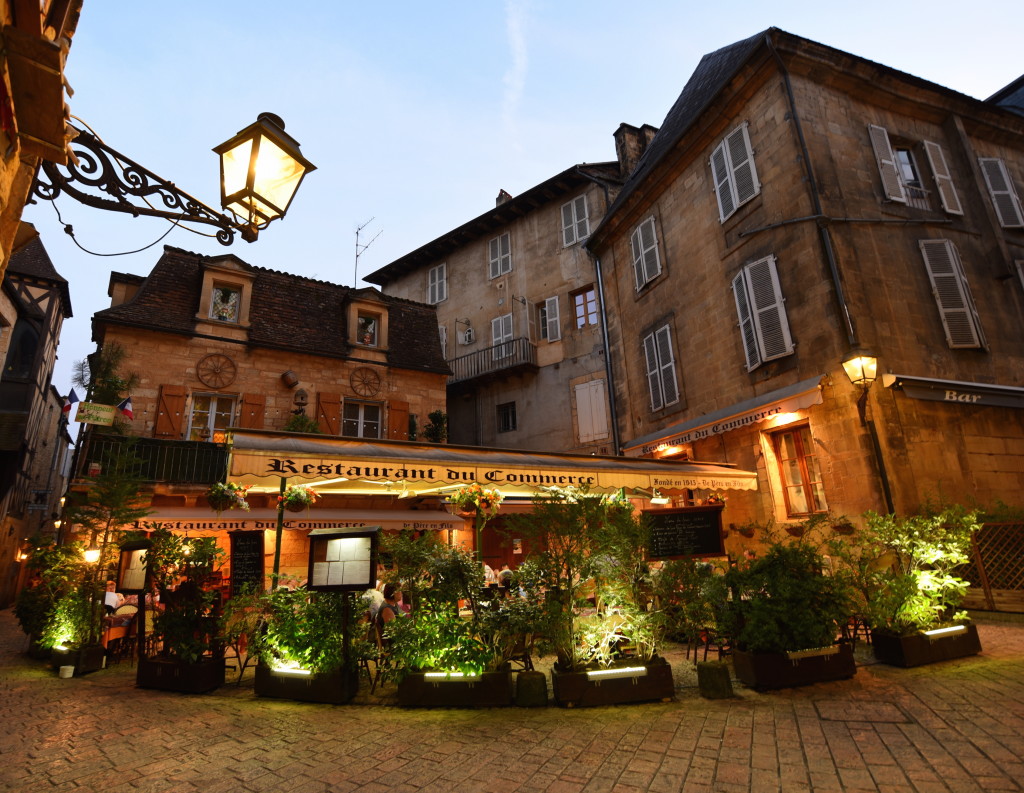
Europe is crowded — especially its big, famous sights. As you plan your 2020 travels, you may be looking to escape your fellow travelers. Here’s an idea: Consider going easy on Europe’s top-tier destinations, and instead check out some lesser-known places. Last year, I made a swing through what I think of as The Big Three: London, Paris, and Rome. But I also mixed in some smaller towns, including ones few travelers have heard of: Arezzo. Canterbury. Sarlat. And you know something? The experiences I had in Europe’s “third-rate” towns were truly first-rate.
Virtually everyone visiting Italy wants to go to the “first-rate” cities: Rome, Florence, and Venice. With more time, they add some “second-rate” destinations: Pisa, Assisi, Siena, Milan, and so on. But even once you get beyond those top tiers, Italy is rich with rewarding destinations.

I had this revelation when I spent a sleepy, rainy Saturday in the Tuscan town of Arezzo. It’s a midsize town that’s not included in our Rick Steves’ Italy guidebook — even with 1,250 pages of coverage, Arezzo doesn’t make the cut. I was here on the recommendation of an Italian friend, specifically to take a day off from the busy tourist towns I was visiting elsewhere in Italy: Assisi, Rome, and so on. And I got exactly what I was looking for.

I love the endearing way that smaller cities have their own idiosyncratic claims to fame, which swell their residents’ pride. Arezzo has two: It’s home to a thriving weekend antiques market; and its Basilica of San Francesco is slathered with colorful frescoes by Piero della Francesca. I enjoyed those aspects of Arezzo. But mostly, I savored simply being alone in Italy…wandering all by myself through colorful and cobbled back lanes; having a memorable lunch at the town’s foodie splurge restaurant, just dropping in without a reservation; discovering a world-class neighborhood gelato shop; and browsing antiques alongside Tuscans furnishing their homes rather than tourists seeking souvenirs. I left Arezzo re-energized — and ready to plunge into Rome.

In England, everyone wants to go to “first-rate” London. With more time, they add some “second-rate” destinations — Bath, York, the Cotswolds, and so on. But there’s a steep drop-off in traffic when it comes to a town like Canterbury, where I retreated after two exhausting weeks of guidebook research in London. And, much as I love London, this trip reminded me that Canterbury is one of my favorite places in the UK.

Canterbury is best known for two things: First, its cathedral is the seat of the Archbishop of Canterbury, who leads the Church of England. And second, English majors know the town for its role in Geoffrey Chaucer’s 14th-century Canterbury Tales, in which a ragtag assortment of pilgrims swap tall tales and parables on their journey to that famous church.
Of course, Canterbury is not entirely “undiscovered.” The knot of half-timbered streets ringing its cathedral and its bustling High Street are packed with visitors. But many of them are day trippers, and most never leave that compact core of town. I loved simply wandering Canterbury’s back streets, following its idyllic river, discovering lush parks, ogling its tidy brick row houses mixed in with tipsy Tudor black-and-white half-timbered homes. Even just a few steps off High Street took me to areas that have never seen a tourist.

Near Canterbury, I also spent time hiking along Beachy Head and the Seven Sisters (a less famous but drastically more pleasurable stretch of white cliffs than Dover’s); explored the characteristic Sissinghurst Gardens; took a day off in the English beach resort of Brighton; and toured the sprawling and fascinating Hampton Court Palace, infused with vivid memories of Henry VIII. I also visited far-better-known Cambridge, Oxford, and Windsor, where the oppressive crowds left me exasperated. But thinking back on my little swing through southeast England fills me with a happy glow…even though it was socked-in and drizzling the entire time.

In France, Paris is the first-rate, world-class “must.” Second-rate destinations include Provence, Nice and the French Riviera, Mont-St-Michel, and Normandy. But my personal favorite slice of France is third-rate: the Dordogne, huddled deep in the southwest, and its lovely market town of Sarlat.
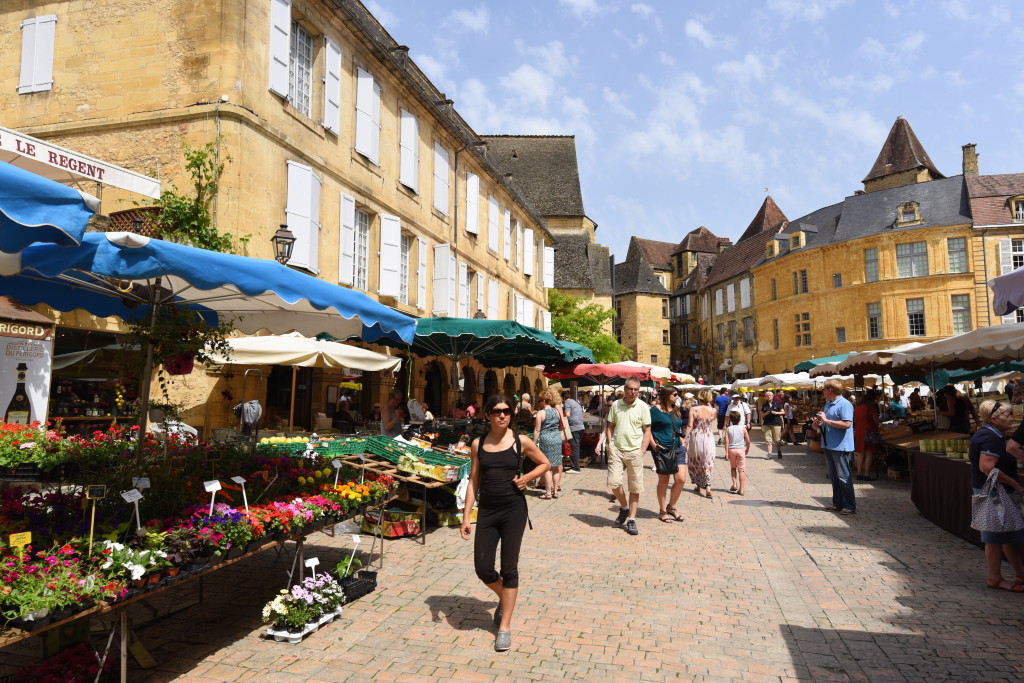
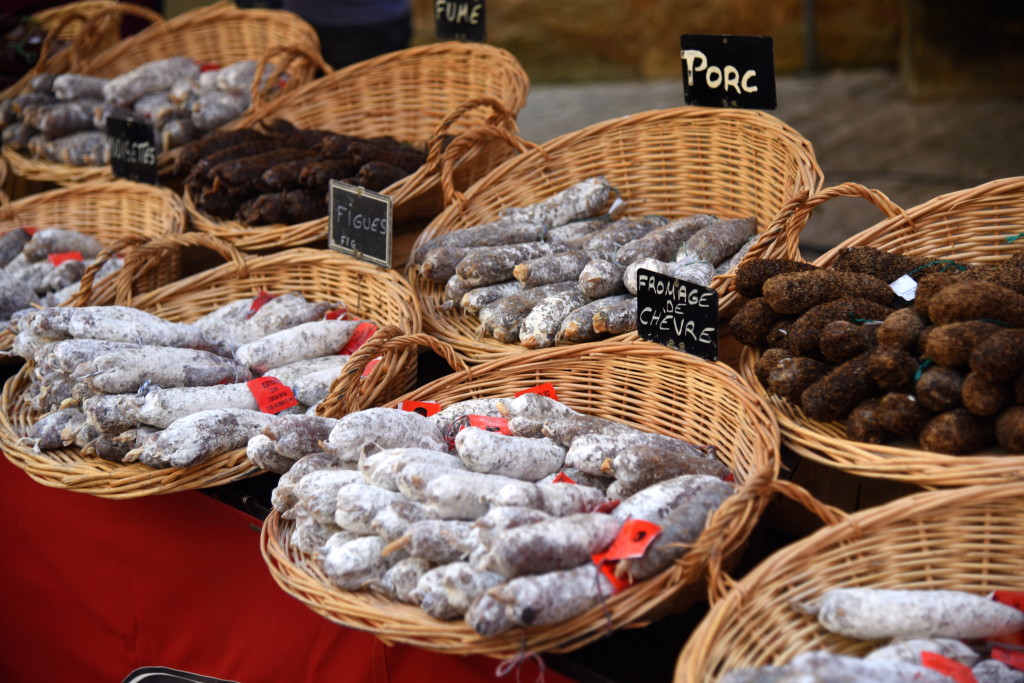
Built of a lemony sandstone that seems to suck in the warmth and glow of the sun, Sarlat looks like a film set. It’s a town that celebrates geese: A bronze statue of two proud waterfowl honors the importance of foie gras in the local cuisine (and commerce). Twice a week, one of France’s best street markets (and that’s saying something) curls through Sarlat’s interlocking squares. On market day, Sarlat is one of the most engaging places in all of France…a feast for all the senses. On other days, it’s still an utter delight, exuding a “let’s-retire-here” serenity that has tourists checking their 401(k) balances.

Italy is richer with life-alteringly-wonderful “third-rate” towns than perhaps any country in Europe. In addition to Arezzo, many of my favorites are in Tuscany, Umbria, and other parts of Central Italy: Lucca, Volterra, Montepulciano, Orvieto… the list goes on.

And then there’s Sorrento, perched over a serene bay just south of Naples, offering a genteel springboard for exploring the Amalfi Coast. And up north, a short train ride from Venice leads to the thriving university town of Padua, Romeo and Juliet’s hometown of Verona, and alpine Bolzano — so close to Austria you can practically hear the yodeling.
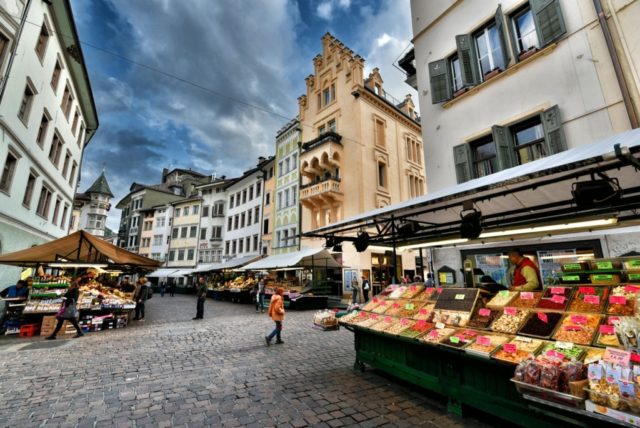
This is a fun game to play. In Germany, I love Berlin, Munich, Rothenburg, and the Rhine Valley — but Dresden, Erfurt, and Freiburg caught me off guard and captured my heart.

In Poland, Kraków is an all-star, but Gdańsk is an overlooked gem.

In Belgium, Brussels and Bruges are at the top of every traveler’s list, but Ghent and Antwerp are delightful discoveries that feel more authentic.

In Portugal, Lisbon is the undisputed champ, and Porto is the up-and-coming second city, but the sleepy university town of Coimbra is an unheralded joy.

In Croatia, everyone flocks to Dubrovnik and Split. Why not check out Slovenia’s Piran, just up the coast?

In Iceland, Reykjavík, the Golden Circle, and the Blue Lagoon get all of the attention. But my favorite corners of Iceland are the Westfjords, Lake Mývatn, and Seyðisfjörður on the Eastfjords.

In Hungary, Budapest is top dog, but Eger and Pécs are woefully underrated.

In Spain, it’s hard to resist the pull of Madrid, Barcelona, Sevilla, Granada, and Toledo. But my favorite Spanish memories take place in Salamanca, Bilbao, Arcos de la Frontera, and Santiago de Compostela.

I’m not (necessarily) saying to skip those world-class destinations entirely. If you’ve never been to Paris…then go to Paris. But consider changing it up by also visiting a smaller city or town that isn’t a household name back home. If nothing else, see Europe’s “third-rate” towns as an antidote to the crowds.
By the way, reviewing these photos, I notice two things: Gorgeous places…with virtually no people. I mean, just look at all of those empty cobbles. If you want Europe to yourself, go third-rate.
What are some of your favorite “third-rate” towns in Europe, and why?
For more ideas of lesser-known places to visit, check out my recent list of 10 European Discoveries for 2020…and my Discoveries for 2019 and 2018, too.
For more details on all of the destinations mentioned here, check out our Rick Steves guidebook series, which includes coverage of the biggies along with the “third-rate” alternatives.





 Driving around the perimeter of Iceland on the 800-mile Ring Road this summer (working on our
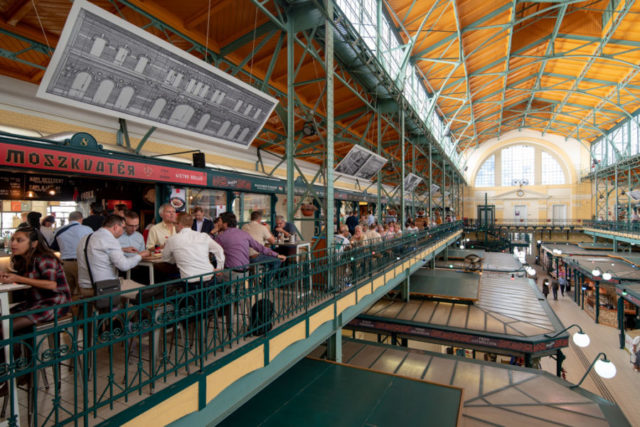
 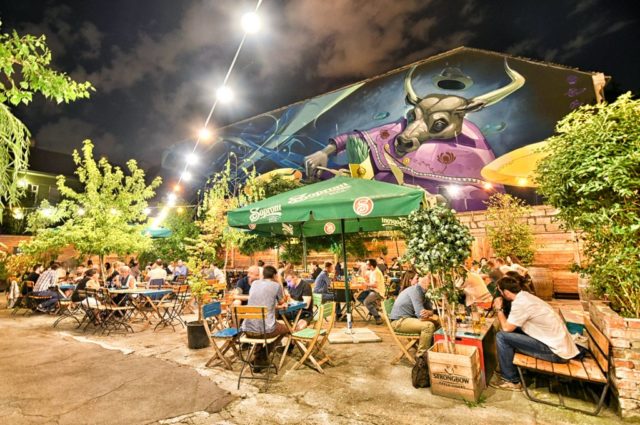 I must admit, I’m not really a “nightlife guy.” But when I’m in Budapest, I budget extra time to simply
  This gorgeous corner of my favorite country has always been high on my personal “must list.” It’s a little slice of heaven: Cut-glass alpine peaks tower over fine little Baroque-steepled towns, all laced together by an eerily turquoise river. While this place should be overrun with crowds, on my latest visit — in late September — I had the place nearly to myself. A few A+ travelers have begun to find their way to the “sunny side of the Alps”: Rafters, kayakers, and adventure sports fanatics are drawn to the sparkling waters of the Soča River. Historians peruse the well-curated array of outdoor museums and cemeteries from World War I’s Isonzo Front, where Ernest Hemingway famously drove an ambulance. Skiers gape up at the 660-foot-tall jump at Planica, home to the world championships of ski flying (for daredevils who consider ski jumping for wimps). And foodies make a pilgrimage to
  My favorite piece of art in Europe isn’t a painting, and it isn’t in a museum. It’s a park — a grassy canvas where a single artist, the early-20th-century sculptor Gustav Vigeland, was given carte blanche to design and decorate as he saw fit. The city of Oslo gave Vigeland a big studio, and turned him loose in the adjoining park for 20 years. He filled that space with a sprawling yet harmonious ensemble of 600 bronze and granite figures, representing every emotion and rite of passage in the human experience, all frozen in silent conversation with each other — and with the steady stream of Oslo urbanites and tourists who flow through Vigeland’s masterpiece. The naked figures (which might provoke giggles among prudish Americans) reinforce the sense of timelessness and universality: They belong not to any one time or place, but to every time and every place — from Adam and Eve to contemporary Norway. Over the last decade and a half, I’ve been to Vigeland Park three times. Each time, I was in a totally different state of mind. And each time, the statues spoke to me like old friends — sometimes with the same old message, and sometimes with new insights. With all due respect to da Vinci, Van Gogh, and Picasso, no single artistic experience in Europe is more meaningful or impactful to me than Vigeland Park.
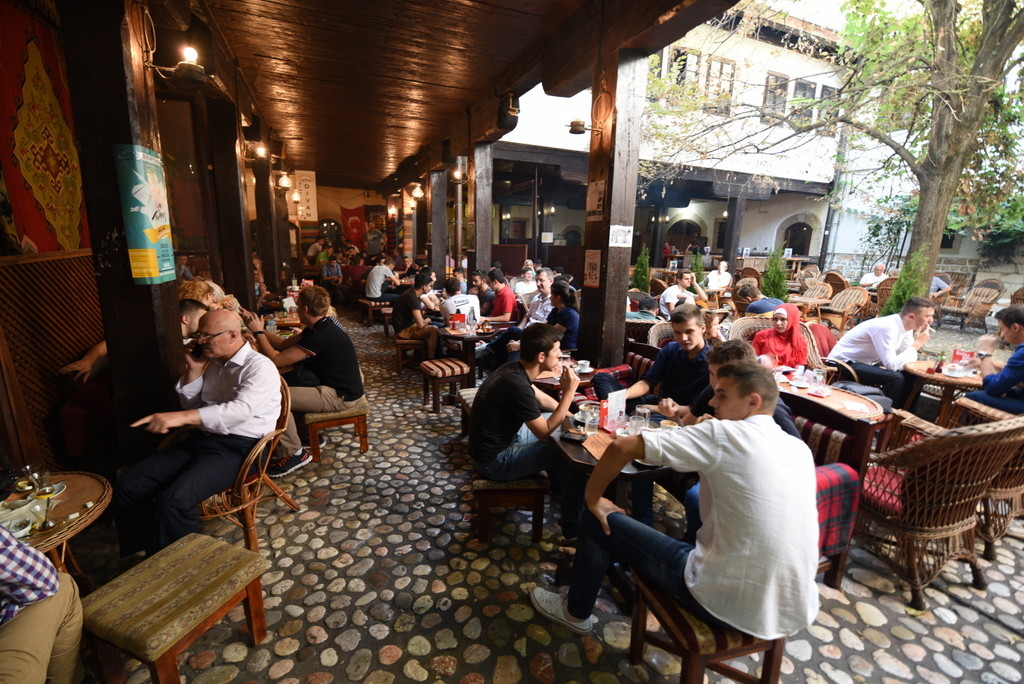 Sarači #16 is the most interesting address in downtown Sarajevo. Facing east — toward the Ottoman-era old town, Baščaršija — you’re transported to medieval Turkey: a bustling bazaar with slate-roofed houses, chunky river-stone cobbles, the tap-tap-tap of coppersmiths’ hammers, and a pungent haze of hookah smoke and grilled meats. Then, turning to the west, you’re peering down Ferhadija, the main thoroughfare of Habsburg Sarajevo. This could be a Vienna suburb, where stern, genteel Baroque facades look down over cafés teeming with urbanites. Within a few short blocks of this spot stand the city’s historic synagogue, its oldest Serbian Orthodox church, its Catholic cathedral, and its showcase mosque. Few places on earth are so layered with history. And then there’s the latest chapter: the poignant story of the Siege of Sarajevo in the mid-1990s, when the town was surrounded by snipers for more than 1,400 days — connected to the outside world only by a muck-filled tunnel and a steep mountain ascent. Proud Sarajevans you’ll meet are often willing, or even eager, to share their stories of living a horrific reality that we experienced only through the Nightly News. And if you’re lucky, they’ll invite you for
  Of all of Tuscany’s appealing corners, the Val d’Orcia (“val dor-chah”) is — for me — the most enchanting. While just a short drive from the tourist throngs in Florence, San Gimignano, Siena, or the Chianti region, the Val d’Orcia — bookended by the charming towns of Montepulciano and Montalcino (both synonymous with fine Tuscan wine) — feels like a peaceful, overlooked eddy of rural life. This strip of land is where most of the iconic “Tuscany scenery” photographs are taken: Winding, cypress-lined driveways; vibrant-green, rolling farm fields that look like a circa-2000 screensaver; and lonely chapels perched on verdant ridges. And it’s the backdrop for famous scenes in everything from The English Patient to Gladiator to Master of None. And yet, the area has no “major sights” — no sculptures by Michelangelo, no paintings by da Vinci, no leaning towers — which, mercifully, keeps it just beyond the itineraries of whistle-stop, bucket-list tourists. I have savored several visits — including
  A few years removed from the depths of its economic crisis, Athens has re-emerged as a red-hot destination. Revisiting the city a few months ago, I was struck by how many tourists I saw — and by how many of them refused to venture beyond the cutesy, crowded Plaka zone that rings the base of the Acropolis. And that’s a shame, because literally across the street from the Plaka’s central square, Monastiraki, is one of Athens’ most colorful and fun-to-explore neighborhoods: Psyrri (“psee-ree”). Not long ago, this was a deserted and dangerous slum. But recently, Psyrri has emerged as a trendy dining and nightlife zone. Its graffiti-slathered apartment blocks now blossom with freshly remodeled Airbnb rentals. This still-gritty area may feel a little foreboding at first, but if you can get past the street art, grime, and motorbikes parked on potholed sidewalks, it’s easy to enjoy the hipster soul of the neighborhood that’s leading many to dub Athens “The New Berlin.” For the upcoming fifth edition of our
  On my last visit to Moscow, in the summer of 2014, Russia was in the news: military action in Crimea and eastern Ukraine, Putin’s brutal crackdown on homosexuality and punk-rock protesters Pussy Riot, and the recently completed Sochi Olympics. Of course, since then, the headlines have changed, but Russia is in the news more than ever. That’s why I consider Moscow to be Europe’s most fascinating — and challenging — destination. People back home shake their heads and wonder: How can these people support Putin, who (to us) is so clearly a demagogue? I take that not as a rhetorical question, but as a genuine one that deserves a real answer. And a thoughtful visit to Moscow — even “just” as a casual tourist — can offer some insights. Designed-to-intimidate Red Square and the Kremlin fill onlookers with awe and respect. The still-standing headstone of Josef Stalin — tucked along the Kremlin Wall, just behind Lenin’s Tomb and its waxy occupant — seems to suggest that the Russian appetite for absolute rulers is nothing new. But mostly, I’m struck by the improvements I see in Moscow with each return visit. On my first trip, in the early 2000s, the famous Gorky Park was a ramshackle, potholed mess, and the Cathedral of Christ the Savior — which had been demolished by communist authorities — was still being rebuilt. But today, Gorky Park is a lush, pristine, manicured people zone, and the sunshine glitters off the cathedral’s rebuilt golden dome. Just up the river, a Shanghai-style forest of futuristic skyscrapers rises up from a onetime industrial wasteland. In short, the Russian capital — which has always been interesting — is now actually a pleasant place to travel. Finding myself really enjoying Moscow, for the first time, makes it easier to imagine how many Russians might be convinced that Putin is Making Russia Great Again.
 I
I