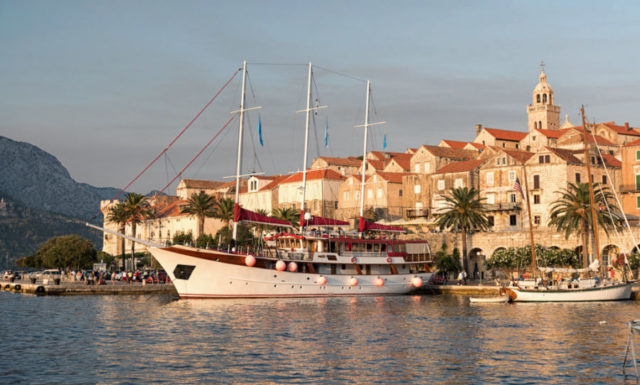
I’m just back from my latest guidebook research trip in Croatia, Slovenia, Bosnia, and Greece. Along the way, I enjoyed island-hopping down Croatia’s Dalmatian Coast, from Split to Dubrovnik — hopscotching across the islands of Hvar, Korčula, and Mljet, updating my guidebook, reconnecting with old friends, and collecting new insights. This post kicks off a series of posts with my latest impressions from one of my favorite corners of Europe. My first stop: the big, coastal city of Split.
The eastern part of Europe has plenty of contenders for “most improved player.” And here in Croatia, Split easily takes the title. In the few years since my previous visit, Split — which I’ve long lamented as the most underappreciated destination in Croatia — has finally started getting the attention it deserves.

I first came to Split, Croatia’s gritty second city, in 2003, while writing the first edition of Rick Steves Eastern Europe guidebook. I had been primed to fall in love with Split’s glitzier little sister, Dubrovnik (and indeed I did). But back then, most travelers viewed Split as a necessary evil — a gritty transfer point you had to endure in order to catch a boat to the Dalmatian Islands. Imagine my surprise when I found Split utterly enchanting. I liked Split immediately for many of the same reasons that some visitors don’t: It’s a real, hardworking harbor city, with more industry and urban bustle than tourism. Split has substance. To me, it’s a much-needed antidote to the pithy effervescence of Croatia’s many backwater island towns. And as a bonus, Split also owns a gorgeous setting, a fascinating historic core, and a relaxed Mediterranean ambience.
During my first visit, the Croatian Tourist Board put me up in the tallest building downtown: a high-rise hotel that rose abruptly from the harborfront a short walk from the Old Town. It was, and remains, a big black box marring the otherwise idyllic tableau of wooded hillsides, bobbing fishing boats, and terra-cotta roofs. Back then, the Hotel Marjan had tumbled precipitously from its reputation as the city’s top business-class hotel. During the Yugoslav Wars of the mid-1990s, it had housed refugees from Croatia’s war-torn interior; in the intervening decade, only a couple of its many floors had been lightly refurbished and reopened as a hotel. The Marjan had become a white elephant, barely remaining open for business, if only because that was easier than closing it.
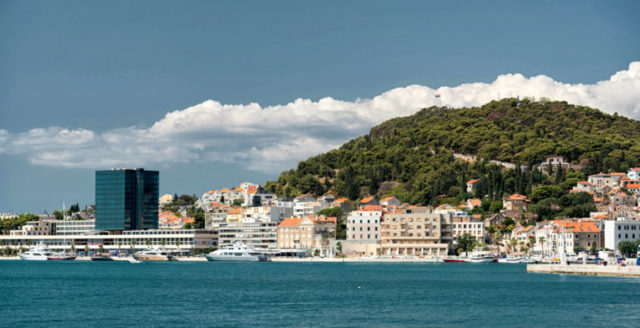
One day I returned to my hotel room to find water dripping down through the bathroom light fixture, running down the wall, and tricking toward the drain in the middle of the floor. I reported it to the front desk, who briefly feigned surprise. “You don’t say?” the receptionist said. “Hm. Sounds like someone should look into that.” She then idly doodled on a notepad until I retreated to my soggy room. I always secretly believed that I may well have been the hotel’s final guest. (The building is still there…and it’s still closed.)
But then, very gradually, the city began to transform itself. A decade or so ago, they tore out and completely resurfaced the Riva — the glorious pedestrian strip that runs between the Old Town and the harbor. It had always been an inviting place to promenade, but now it’s also elegant. Each return visit to update my guidebook unearthed a few more appealing discoveries: boutique hotels, interesting restaurants, and formerly dilapidated areas that had been spiffed up. And every time I was able to delete a mediocre hotel or restaurant from my book (what I think of as the “well, we gotta list something” listings), and replace it with a better alternative, I breathed a sigh of relief.

After this visit, in my mind, it’s official: Split has decisively turned the page. These days, it has some of the nicest, and most expensive, hotels on the Dalmatian Coast. It has an exciting new variety of restaurants that dare to go beyond Dalmatian classics. And it has the cosmopolitan energy of a destination that has fully arrived.
What changed? For one thing, cruise ships started showing up. Several years ago, Dubrovnik began to burst at the seams, so cruise lines went looking for a nearby alternative…and there was Split, a big city with a big harbor right downtown. Spilt has also enjoyed the coattails of a general uptick in Croatian tourism…this country is red-hot, and sales are brisk. On this trip, I found myself eavesdropping on local guides lecturing not about the Emperor Diocletian, but about Daenerys Targaryen and her dragons (who briefly resided in the Roman-built cellars below town). Yes, Game of Thrones tourism — already well entrenched in Dubrovnik — is becoming big business in Split now, too.

On this trip, I did some scouting for the upcoming seventh edition of my Rick Steves Croatia & Slovenia guidebook, and I came up with some gems.
This city, which for years had only one decent hotel (Vila Ana, still a trustworthy budget standby with five rooms a short walk outside the Old Town), is now shot through with luxurious hotels charging some of the highest prices in Croatia. Palača Judita is a high-end B&B with an ideal location — right on the city’s charming, bustling People’s Square — and an attentive staff. Just across the square is Palace Suites, which is a bit simpler, but much less expensive and equally welcoming. And Marmont Hotel — named not the for chivalrous Ser Jorah from Game of Thrones, but for the nearby pedestrian promenade — is a plush oasis with 21 top-end rooms in a quiet corner of the Old Town.
For dining, my big find this trip was the trendy Bokeria (in the Old Town at Domaldova 8). Its decor, like its name, finds inspiration in the bustling Barcelona covered market: a big, bright, boisterous interior with soaring ceilings, legs of prosciutto dangling over the bar, and a wall of Aperol bottles arranged like an art installation. While I found the service so-so, the setting offers Split’s cuisine scene the refreshing jolt it has desperately needed. The beautifully presented cuisine is a smart melding of Croatian classics with modern Mediterranean dishes, and the wine list is substantial and smartly curated. I dug into a decadent dish of handmade pasta with truffles and prosciutto, which had perfectly balanced flavors and sophisticated presentation.
For more traditional Dalmatian cooking, without the pretense, the latest hotspot is Villa Spiza — serving local dishes from a handwritten menu (hiding deep in the Old Towns’s back streets at Petra Kružića 3). It feels fresh, youthful, and energetic, crammed with foodies who’ve done their homework and don’t mind sharing counter seats under claustrophobic beams. They also have a couple of delightful sidewalk tables, out front on the tight lane. Because they don’t take reservations, everything fills up quickly — arrive early, or be ready to line up .
After a decade and a half of sipping good-enough cups of bijela kava (caffé latte-like “white coffee”), I finally discovered a burgeoning third-wave coffee scene in Split, with artfully crafted drinks up to snuff with coffee houses back home in Seattle. Two competing places, both in the Old Town, are worth seeking out for those who care about good coffee: D16 Specialty Coffee (Dominisova 16) and 4Coffee Soul Food (Hrvojeva 9). (Croatia-bound aficionados note: Dubrovnik and Zagreb both have branches of Cogito Coffee, with the best coffee I’ve had in Croatia.)
Another favorite discovery was the lively (and very local) little hangout zone tucked just a short walk beyond the tourist core, in an area nicknamed “Behind the Theater” (Iza Kazališta). From the waterfront, simply head up the broad promenade called Marmontova, then keep going — jogging left up the little covered lane between the yellow National Theater and the blocky modern church. Stepping through the passage, you leave all but the most savvy tourists behind. Locals swarm at the pastry and ice-cream shop Luka, scooping up cones of homemade gelato with some interesting local flavors, such as lavender or rosemary (Svačićeva 2). Delving deeper — into a scene that feels like one big lowbrow party, with the natives decompressing from a busy day of dealing with tourists — you’ll pass cafés, bars, “pizza cut” windows, and more. To satisfy your sweet tooth, look for Stari Plac (with dessert crêpes); just beyond is Sexy Cow, with a hip white-subway-tile interior and a tempting menu of decadent, top-end burgers (Zrinsko Frankopanska 6).
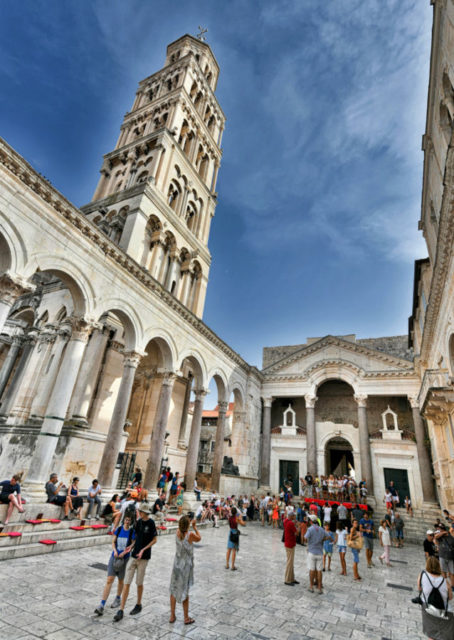
With all that’s new in Split, the city’s big draw card has remained the same for nearly 2,000 years: Its Old Town fills the former retirement palace of the Roman emperor Diocletian. After the fall of Rome, locals scavenged useful bits of stone and metal, and gradually began to graft their rickety homes onto the stout palace walls. And so the hallways of Diocletian’s Palace became the narrow lanes of Split, its main entryway became the town’s main square (the Peristyle), and Diocletian’s mausoleum was transformed into a church — complete with a Venetian-style bell tower. Even after all my travels, I still haven’t found anywhere that plops you in the lap of history as impressively as Split.
After hours, the entire Old Town of Split becomes one big cocktail party. Lose yourself in the skinny black lanes, follow the convivial hubbub and the thumping bass, and find a bar or café that suits your mood. While specific places come and go, the scene as a whole is always thriving. If you can’t have fun after hours in Split, it’s time to retire your passport. Another thing that hasn’t changed is the best nightlife advice in town: Simply show up at the main square (the Peristyle) and plop down on any of the red cushions scattered along the marble stairs, which belong to Luxor Café. Eventually a waiter will show up to take your drink order. Lie back on the steps once trod by Diocletian, luxuriate in the balmy sea air, and listen to crooners belt crowd-pleasing greatest hits under the stars. Enjoy. You’re just the latest in a long line of vagabonds loitering in the halls of this glorious Roman palace.