Why Dubrovnik Makes Me Happy

Yesterday I got cranky. But today, I want to share some of my favorite aspects of Dubrovnik, in the form of some particularly pretty pictures.

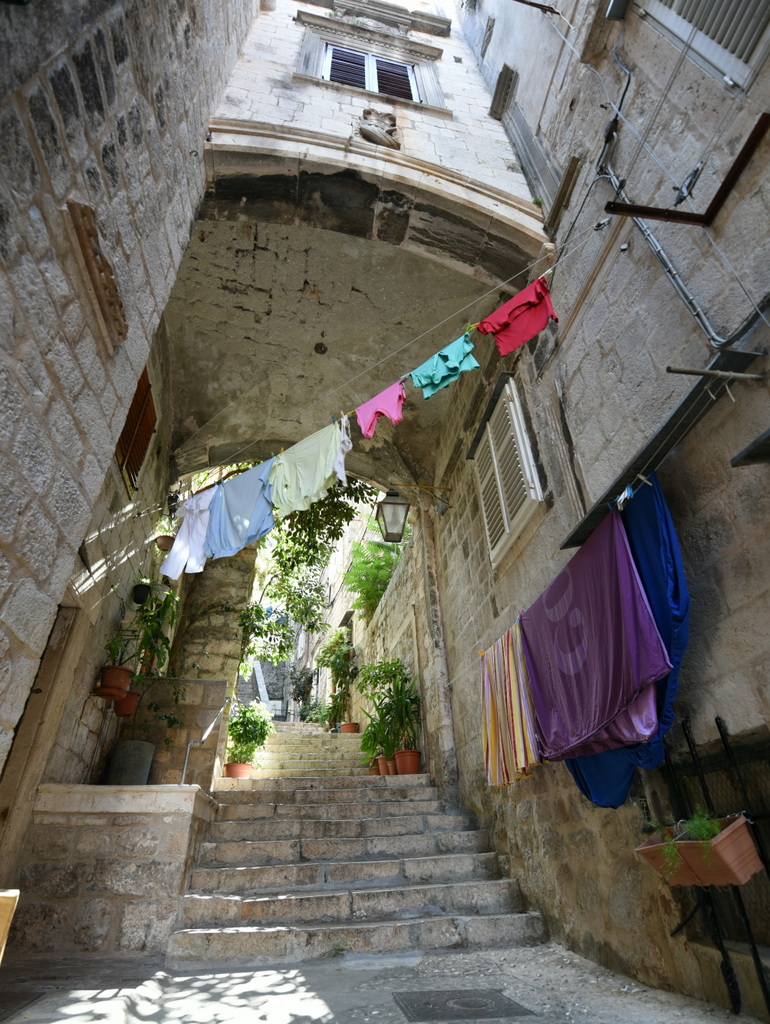
Cameron-Croatia-Dubrovnik-Happy Laundry

Cameron-Croatia-Dubrovnik-Happy Laundry 2

I see laundry drying in the streets as the fluttering flag of the local community — as if to say, “We still live here!”


Cameron-Croatia-Dubrovnik-Happy Lane1

CH15SepDubrovnik_142

In my guidebook’s introduction to the town, I called it a “fun jumble of quiet, cobbled back lanes.” A friend of mine visited and said that Dubrovnik seemed more crowded than that. So on this trip, I made a point to check out whether you really could escape the crowds. Sure enough, yep — quiet back lanes still there. So for the new edition, I’m adding this line: “If you haven’t discovered your own secluded, laundry-draped back lanes all to yourself…then you haven’t looked hard enough.”


Cameron-Croatia-Dubrovnik-Happy Restaurant

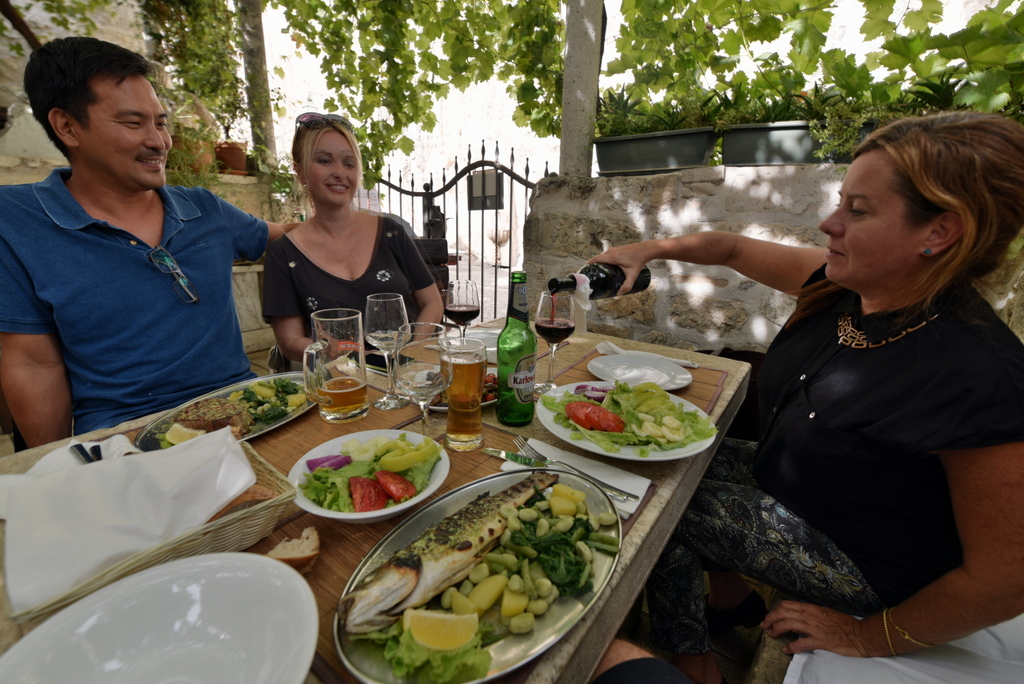
Dubrovnik is simply a joy to explore. Around each corner, little surprise lanes hide inviting restaurant tables.

Why Dubrovnik Makes Me Cranky

In my last few posts, I’ve been laying it on a little thick singing the glories of Dubrovnik. Yes, it’s a wonderful place. But even wonderful places have their dark side. And I’ve been doing this work long enough that I get cranky sometimes. Here are a few things on this visit that stuck in my craw.


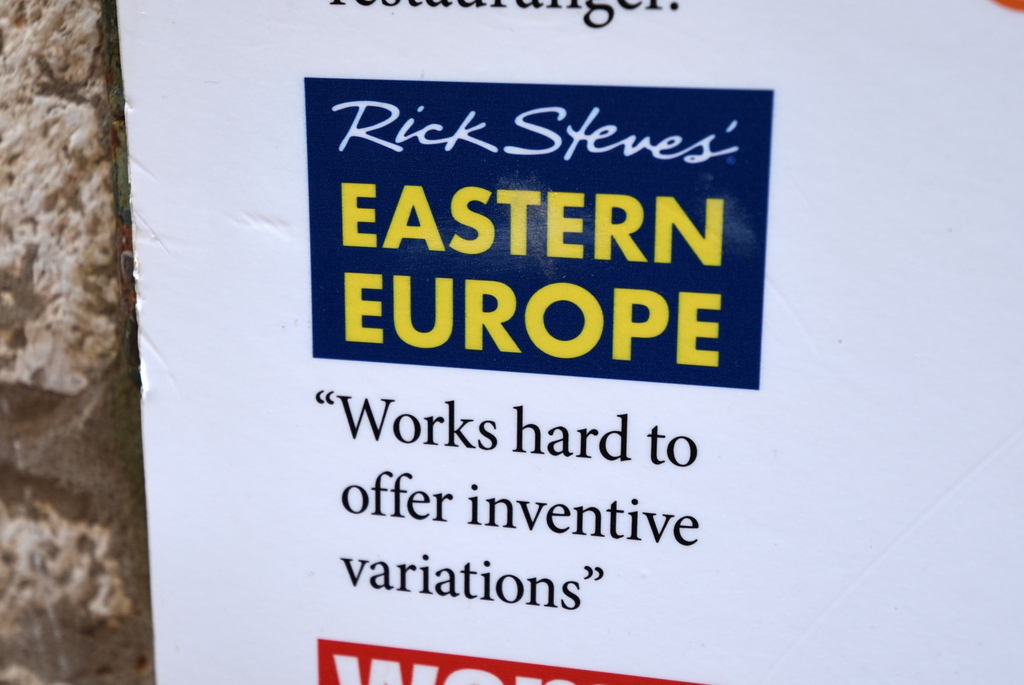
Cameron-Croatia-Dubrovnik-Cranky Recommendation

Many years ago, there was a hot new restaurant in Dubrovnik. Everyone loved it — including me. So I recommended it in our Rick Steves Eastern Europe guidebook. Less than one year later, I heard that it had gone steeply downhill, a victim of its own success (a sadly common tale in Dubrovnik). And, after having a bad meal there myself, I took it right back out of the book for the next edition. Today, more than seven years since it appeared in the book, the restauranteur still has the gall to post this blurb from my original write-up on their poster. I have fantasies of scrawling “NO LONGER RECOMMENDED!” across the Rick Steves logo. Do you think I’d be within my rights to attack it with a Sharpie?


Cameron-Croatia-Dubrovnik-Cranky Foundry

Poor Đivo. He’s an ambitious young archaeology scholar who got a plum job: showing visitors around a slick new museum about the old medieval foundry tucked at the foot of Dubrovnik’s walls. But…nobody comes. It’s tucked way up at the top of town, impossible to find, literally underneath Dubrovnik’s basketball court. And the city doesn’t promote it at all. In fact, due to a mistranslation, the only English leaflet about the site identifies it not as a “Foundry” but as a “Forgery.” (I wish I were kidding.) Đivo — who sits on the corner out front hoping to snag passersby to tour the museum — has been keeping track of visitors. And, with about 1.5 million people coming to Dubrovnik this year, so far he’s sold a grand total of…812 tickets. (He’s hoping to hit a thousand.) For every person who shows up wanting to tour the museum, there are ten who stumble in here looking for bathrooms or the access to the walls. If you’re in town and want to make Đivo’s life a little bit better — and learn some genuinely interesting facts about medieval metallurgy — just hike up to the very top corner of town, directly below the tallest Minčeta Tower. Then walk across the sports court to the poorly marked door. When you get there, tell him Cameron sent you.


Cameron-Croatia-Dubrovnik-Cranky Selfie

This photography shop — I imagine no longer making much money selling disposable cameras — has come up with a clever new spin on their business, which plays perfectly into our increasingly narcissistic age. While I hear a lot of grumbling about the “selfie stick” fad from other travelers, I haven’t had any negative run-ins with them myself…yet.


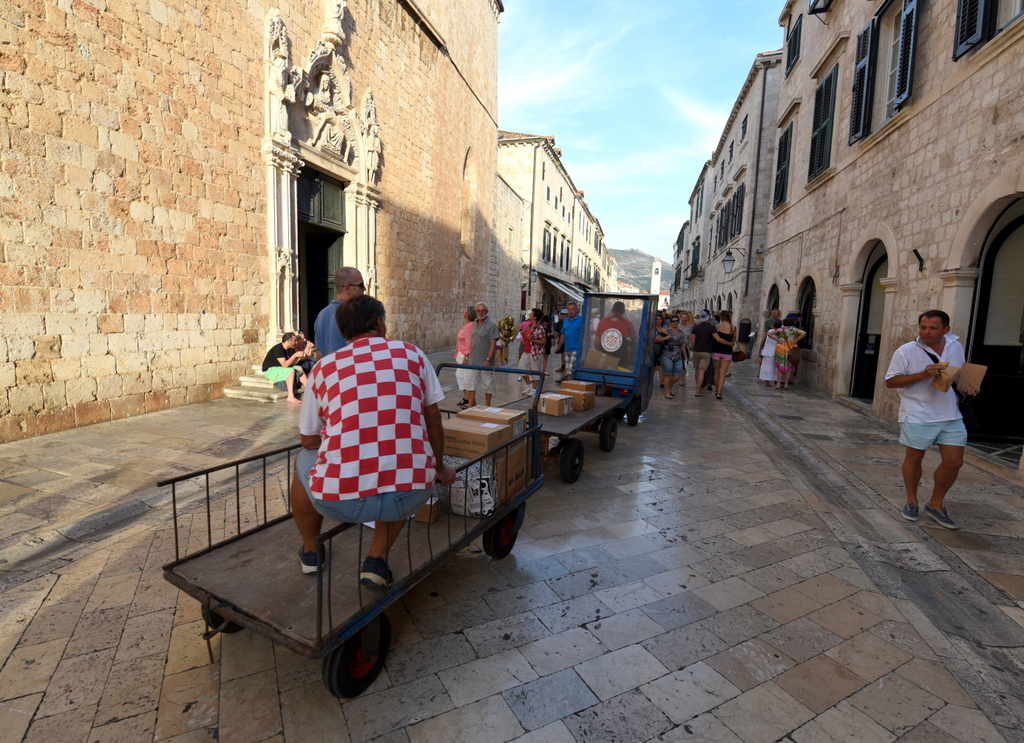
Cameron-Croatia-Dubrovnik-Cranky Cart

The reality of living in a traffic-free city is that routine deliveries are a pain. Every so often, you see little carts like this one parting the sea of tourists as it makes its way slowly up the main drag. Sturdy young men load up hand trucks with deliveries and huff them up several flights of steep stairs. Apparently this was particularly challenging for the Game of Thrones crew, who had to physically carry up each and every lighting rig, piece of camera equipment, costume, prop, and bowl of green M&Ms for Peter Dinklage. (OK, that last one was a joke.)


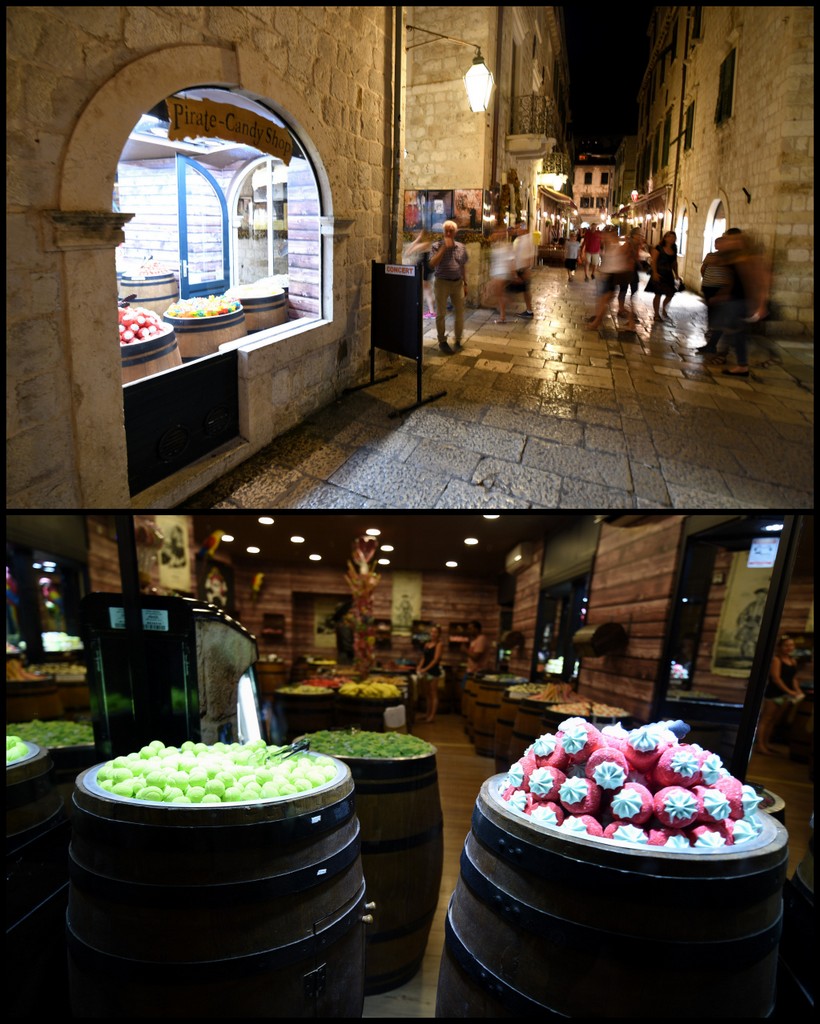
Cameron-Croatia-Dubrovnik-Cranky Candy

Dubrovnik is selling out. There are now five — count ’em five! — “Pirate Candy” shops in the historic Old Town. Big barrels overflowing with overpriced bulk candy are strategically located through town — like Hansel and Gretel breadcrumbs — designed to wear down the parents of sugar-starved children. The scuttlebutt is that it’s a chain based in Prague (of course it is) that has now spread like a virus to another one of Europe’s most beautiful (and most overrun) cities. Many locals mentioned this specific development as a bridge too far in the commercialization of their hometown. Boycott Pirate Candy!

Am I being overly negative? You bet. But don’t worry. Tomorrow I’ll look on the sunny side of Dubrovnik.

Connecting with the People of Dubrovnik

Dubrovnik is just about the only place in my guidebook research work where I have to budget extra time simply to socialize. From B&B owners, to local tour guides, to the guy who runs the town’s best wine bar, everyone loves to catch up. Despite the city’s fame and glitz, deep in its soul, it’s still a tight-knit community… and I’m honored to be one of the gang.

But you don’t have to come here frequently to be a part of Dubrovnik. One thing that  distinguishes the “Rick Steves travel philosophy” is people-to-people connections. And I recommend plenty of wonderful people in the Dubrovnik chapter of my Rick Steves Croatia & Slovenia guidebook. They’d love to meet you — and I’m happy to introduce you.

For example, there’s Jadranka Benussi, who rents apartments at her home on the hillside just outside of Dubrovnik’s Old Town. Climbing a steep stepped lane from the congested main street, you emerge into a chirpy garden terrace with views over red rooftops, medieval forts, and the shimmering Adriatic. Anytime I’m in town, I have to block off an hour or so to come visit Jadranka and update her details for the guidebook — and, of course, to relax in her garden and enjoy her company.

Today Jadranka asked me how old Rick was. Turns out he’s the same age as her husband, Milan. “That explains it,” she said. She reminded me that when Rick (then age 50) first listed her place in our guidebook, he described Jadranka and Milan as “a young professional couple.” The next year, I (then age 30) came to update Jadranka’s listing, and when the new edition came out, she noticed that the description changed to “a middle-aged professional couple.” “I’m just hoping you don’t decide to send somebody in their 20s,” she joked. “I’m not ready to be ‘an old professional couple’ yet.”
Cameron-Croatia-Dubronvik-Sasha

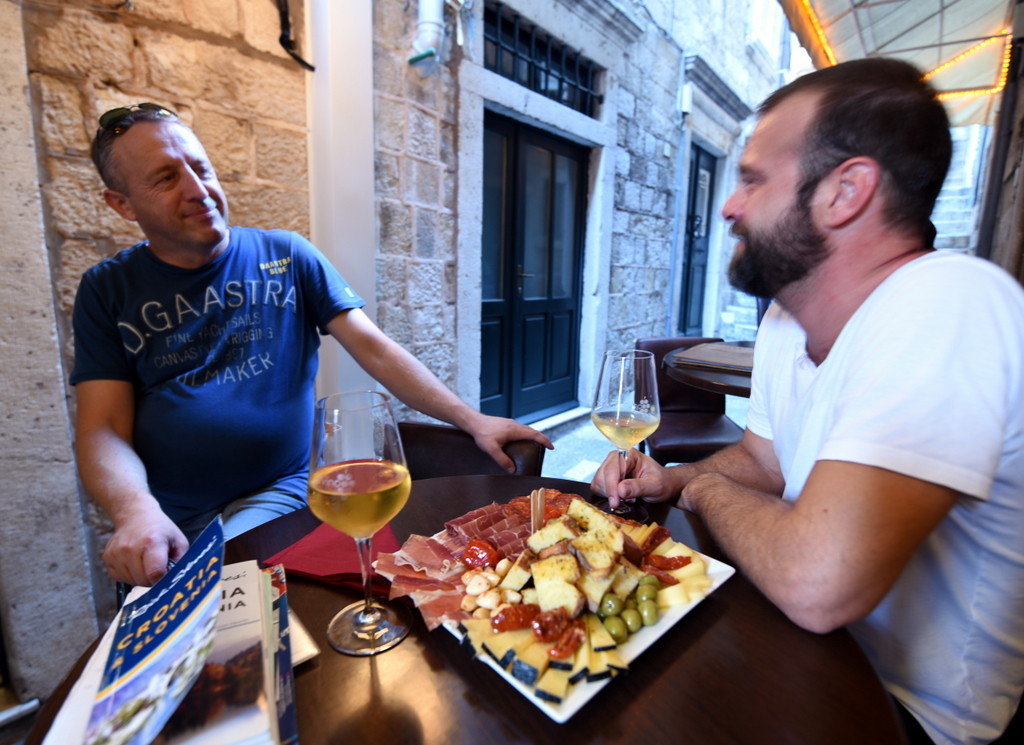
Sasha, a gregarious Aussie with Croatian roots, runs DiVino Wine Bar, tucked a half-block off Dubrovnik’s main drag. Sasha has an infectious passion for Croatian wines. On this trip, I enjoyed catching up with him at one of his sidewalk tables. We dug into a huge platter of Dalmatian antipasti — little wedges of pungent, hard cheese; salami, prosciutto (called pršut here), and air-cured beef tenderloin; and marinated sun-dried tomatoes and olives. He showed me his latest creation: a small, sweet, and tangy red pepper, stuffed with anchovy paste and marinated. To avoid dripping oil everywhere, you eat it in one explosive gulp. Delicious. As we were chatting, the guy who provides some of his produce happened to walk by and admired his own handiwork.

Marc Van Bloemen, who runs one of Dubrovnik’s longest-standing little guest houses, is of Canadian and English descent. But he’s lived here most of his life, speaks fluent Croatian, and strikes me as more local than many locals. I see Marc as Dubrovnik’s conscience — he’s the guy you can count on to organize when something smells corrupt. I think he should run for mayor… but he’s probably already burned too many bridges for that.
Cameron Croatia Dubrovnik Connecting

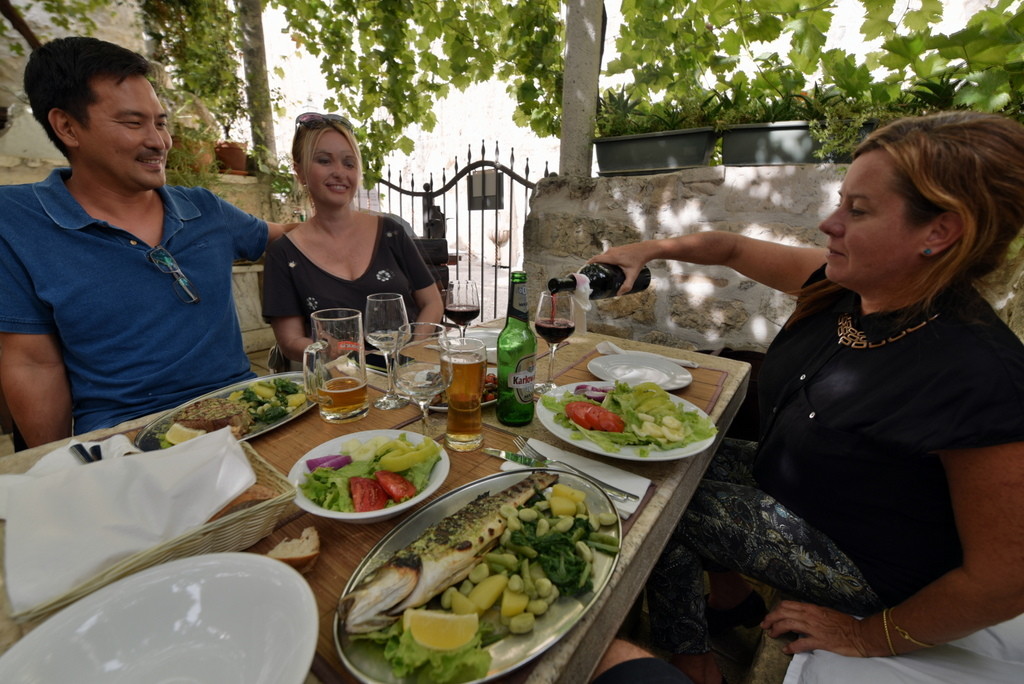
Jon and Sanja are a Canadian-Croatian couple who opened Dubrovnik’s first and best independent hostel many years ago, about the time I first came here. Back then, their hostel’s little food counter was the only place in town  (and probably in all of Croatia) where you could get a decent burrito. I’ve enjoyed watching their evolution as ambitious young business owners in a country where ambition and vision aren’t always welcome. Their party hostel, with all of its noise complaints, was replaced first with a tamer hostel high on the hill, and now by a plush B&B in the heart of town — effectively catering to the same clientele who crashed here as backpackers, but now want a more refined experience. We had a great lunch of grilled fish, and I got to meet a new arrival, Alex, who’s also trying to find her niche in Dubrovnik. Her new business — making custom, high-quality picnics for beachgoers, hikers, and side-trippers — seems like it’ll be a hit.

When it’s time to leave town, I ask Pepo, a private driver, if he’ll take me to my next destination. I met Pepo purely by chance many years ago, liked him, and recommended him in our book. Since then, he’s taken hundreds of Rick Steves readers on day-trips.

Trying to reconcile the many different viewpoints that have sat in his passenger seat, Pepo quizzes me about the presidential race. (“So what’s your take on that Bernie Sanders?”) Turns out Pepo listens to NPR at breakfast and reads the New York Times. He may be better informed about American politics than some of his American clients. And yet, he explains that he enjoys just listening to the opinions of his clients, without sharing his own, or passing judgement. “You’re very wise,” I say. “I’m not wise!” he shoots back. “I’ve just talked to a million people.” (But isn’t that the same thing?)

Pepo took up arms to defend his hometown during the siege of Dubrovnik in the 1990s. Years ago, he drove me to the abandoned, half-destroyed fortress high on the hill above town. He showed me the Saturday Night Fever-style, light-up disco floor from the time when this was a popular nightspot. And then, as a grotesque contrast, he took me to the rooftop and told me about his experience during the war: trying to hold onto this fortress with just a few other local boys — knowing that the whole town was counting on them to weather the shells and bullets and preserve Dubrovnik’s freedom.

On this trip, when I update his details for the book, Pepo suggests that maybe it’s time to retire his description as “a veteran of the recent war.” He says that people just aren’t that focused on the war anymore, and — while he’s still happy to share his experiences with curious travelers — he wouldn’t mind moving on, too. (I see this as a very positive change.)

I ask Pepo why it is that, in Dubrovnik more than anywhere else in Croatia — and maybe in all of Europe — I find it so easy to build connections with people. He thinks it’s a product of their unique history. Like Venice, Dubrovnik was an independent city-state. Unlike Venice, it was almost completely surrounded by potentially hostile Ottomans. The community of Dubrovnik became adept at welcoming outsiders and building positive relationships. With this approach, trade increased and tributes decreased. Then, as their town was blown to bits during the war in the 1990s, people though they’d never have visitors here again. So, as throughout their history, they’ve worked hard to be good ambassadors for their city. And it has paid off.

“It’s too bad that so many people come to Dubrovnik in a hurry,” I say. “Cruise passengers in town for just a few hours will probably never see that intimate, community side of Dubrovnik that I get to enjoy so much.”

“Not necessarily,” Pepo says. “People in Dubrovnik want to connect. But they have to see that you want it, too. If you’re rushing through town, they’ll get out of your way. But if they notice you relaxing, lingering, and enjoying, they’ll want to join you. It is possible.”

Based on my experience, Pepo is right on. So this is our challenge to you: If you’re going to Dubrovnik, even for just a few hours, make a point to slow down. Linger. Nurse a coffee. Sit on the church steps. Be open to the people. And you might just make a new friend.

Cameron-Croatia-Dubrovnik-Church Steps

Game of Thrones Gossip in Dubrovnik

Warning: Potential spoilers, unsubstantiated gossip, and rampant speculation ahead!

The big scandal in Dubrovnik this fall is that Cersei Lannister and Daenerys Targaryen won’t be coming back. After several years of shooting in Croatia, Game of Thrones just dropped the bomb that they’re shooting elsewhere in 2015. According to HBO, the change is “based on story and location needs.” In other words, Croatia, it’s not you — it’s me. My Dubrovnik friends tell me that the mayor’s official statement had the tone of a regretful dumpee. (“If you ever decide to come back, we promise we’ll do whatever it take to make it work!”)

Whether or not it’s truly over, or they’re just on a break, Dubrovnik has really enjoyed its affair with Game of Thrones. For years, locals have been excitedly telling me about their brushes with GoT: Seeing Peter Dinklage, in full Tyrion Lannister regalia, strolling down the main street. Or sitting down for dinner at a neighborhood konoba and spotting Joffrey at the next table. One of my Dubrovnik friends was an extra — dressed as a blink-or-you’ll-miss-him nobleman at a royal wedding.

I’ve only recently caught up on the show. And while I enjoy disentangling the mythology (not to mention the dragons), I’ve gotten a particular kick out of seeing places I know well as the backdrops for mystical lands.

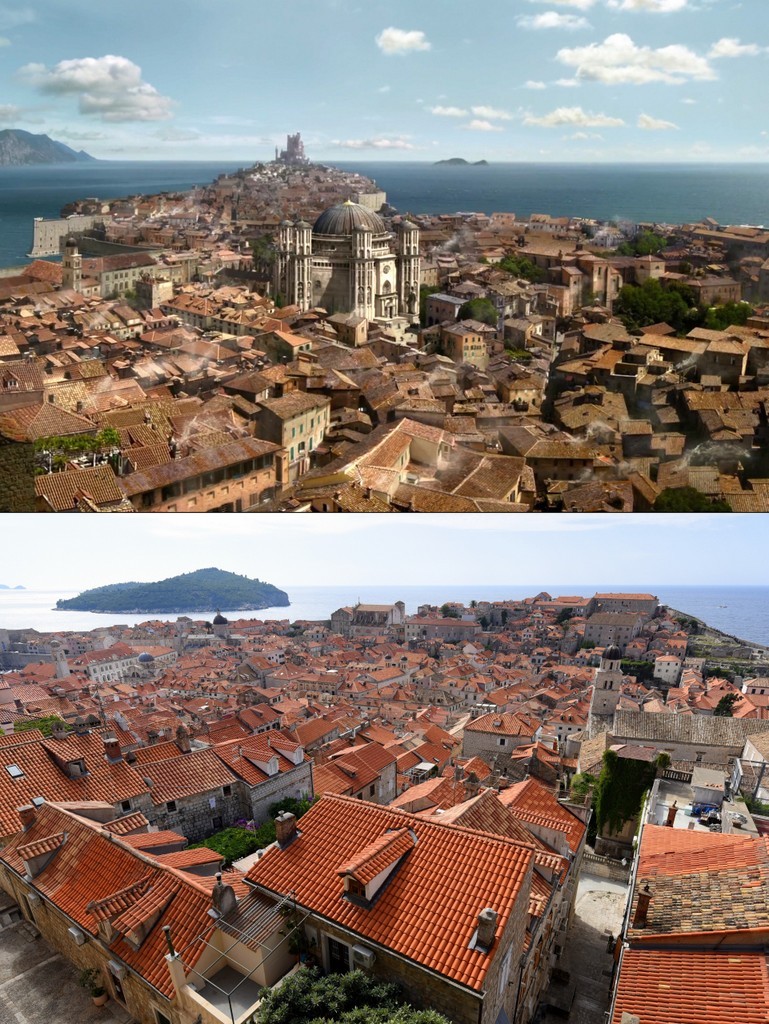
For example, most of “King’s Landing” has been filmed in and around Dubrovnik’s walled Old City.

Cameron-Croatia-Dubrovnik-Game of Thrones 2

The real-life Fort of St. Lawrence looks over a pleasant cove that becomes Blackwater Bay.

Cameron-Croatia-Dubrovnik-Game of Thrones 3

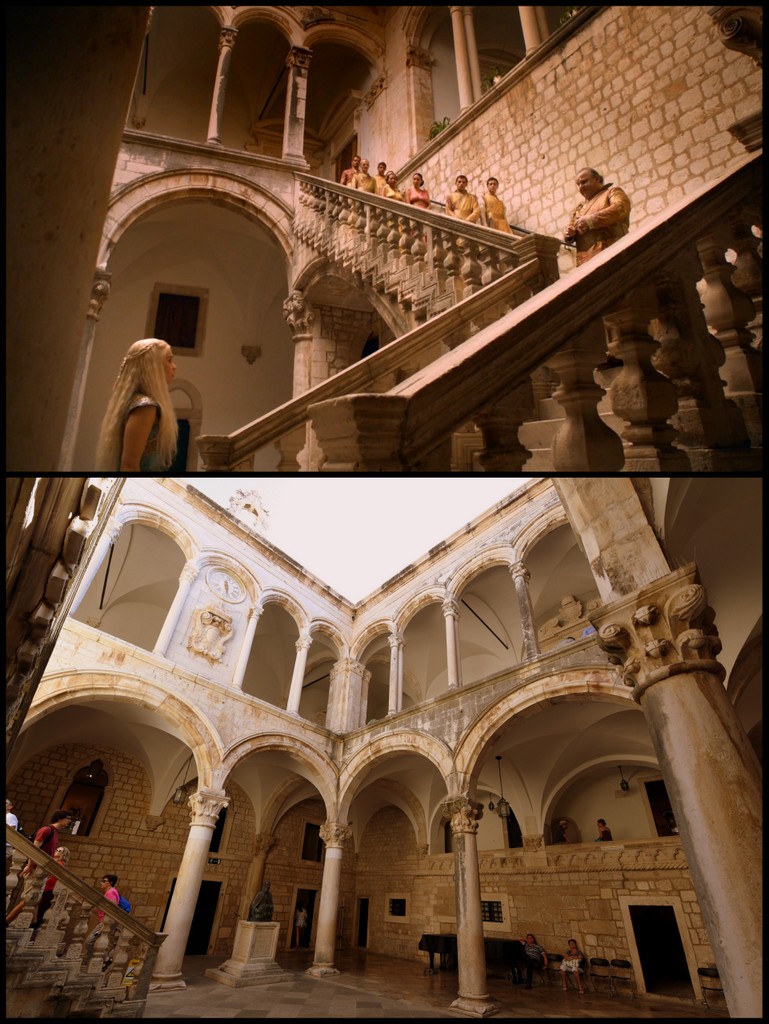
And parts of Dubrovnik, Split, and the countryside and islands in between have been the setting for Daenerys Targaryen’s gradual conquest of the continent of Essos, from idyllic Qarth to the cities of Slaver’s Bay. This is the Rector’s Palace, one of the main sights in Dubrovnik’s Old Town:
Cameron-Croatia-Dubrovnik-Game of Thrones 4

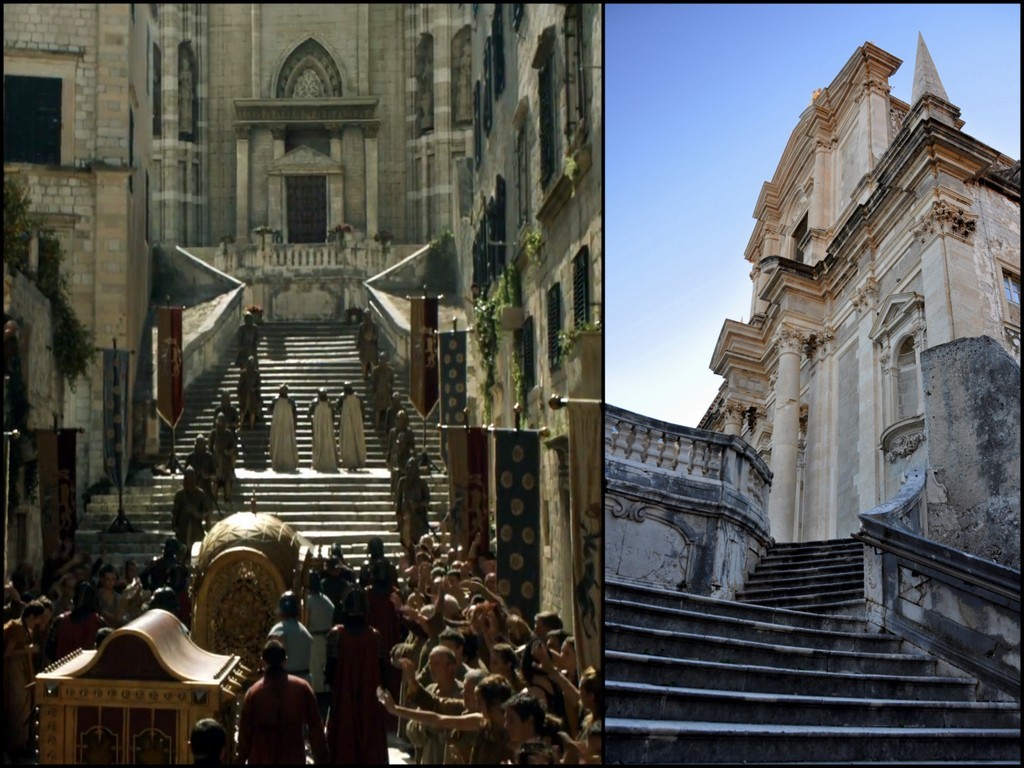
For die-hard GoT geeks, here are more specifics: Trsteno Arboretum is where Sansa Stark had many heart-to-hearts with Olenna and Margaery Tyrell. The eventful royal wedding of Joffrey and Margaery was filmed in Dubrovnik’s Gradac park. The epic duel between Oberyn Martell and The Mountain was filmed at the amphitheater below Hotel Belvedere, facing Dubrovnik’s Old Port. The Qarth garden party was shot on the island of Lokrum, and the tower where Daenerys’ dragons were held captive after that party was Minčeta Tower, the biggest in Dubrovnik’s City Walls. And one character was humiliated by being forced to walk naked through town, beginning at the top of the grand staircase below the Jesuit Church (which I now can’t stop thinking of as the “Steps of Shame! Shame! Shame!”).

Cameron Croatia Dubrovnik Game of Thrones

Speaking of that scene, locals told me that the entire route of that walk (which traversed basically the entire town center of Dubrovnik) was walled off with high privacy fences. And in this vertical town, that meant that locals who were caught unawares might have to circle up a steep stepped lane, then all the way around town, just to cross the street. But one elderly woman, a local fixture famous for her incredibly slow gait, reached the fence and asked very kindly if she might be able to take a shortcut. The crew took pity on her, halted production, opened the gate…and proceeded to hemorrhage money as they watched her take several excruciating minutes to hobble through the middle of their set.

Locals have mixed feelings about all Dubrovnik’s Game of Thrones connection (and resulting tourism bonanza). They worry that the Hollywood magic is overshadowing the real-life majesty of their town, and that it will draw people here for “the wrong reasons.” I guess my philosophy is that if dragons and duels are what it takes to lure people to a gorgeous town like Dubrovnik — which they’ll certainly enjoy in all its glory once they’re here — then where’s the harm in that?

Cameron-Croatia-Dubrovnik-Game of Thrones 5

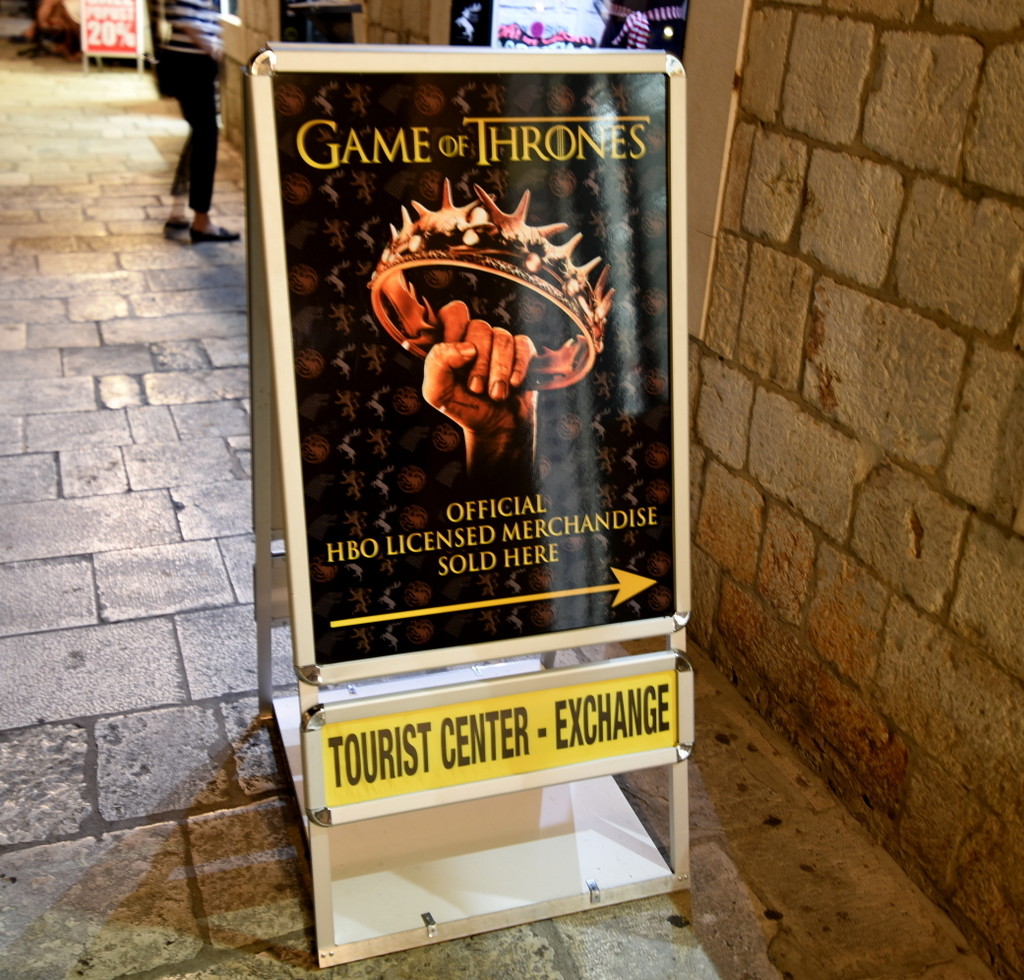
What’s even more painful about the Game of Thrones snub this year is that Dubrovnik has only just started to exploit its Hollywood connection. When I was here a couple of years ago, I wondered why nobody was doing GoT tours. Now there are at least three companies offering daily walking tours of movie locations, and even a GoT sunset cruise that provides you with costumes to dress up as characters on board. These days, every shop in Dubrovnik sells “officially licensed merchandise,” and one has even imported a replica of the Iron Throne. If you buy an overpriced souvenir, you can take a picture of yourself seated as the Lord of the Seven Kingdoms. (The cheapest trinket I saw was a $6 lighter or refrigerator magnet, making that one expensive photo op.)

As Game of Thrones’ fame continues to build, I’m sure, so will Dubrovnik’s GoT cottage industry…whether or not they ever film here again.

Checking in with “Facebook” on Dubrovnik’s Main Drag

I love being back in Dubrovnik. I’m lucky enough to come here regularly, to update my Rick Steves Croatia & Slovenia guidebook. And after twenty-some visits, even as I’ve watched the city has blossomed into a world-famous destination, it’s good to see that its essence has remained intact.

One of my favorite routines is getting a morning coffee at Dubrava Bistro. It sits at the bottom end of the Stradun, Dubrovnik’s main pedestrian drag, just in front of the town bell tower. If I’m in Dubrovnik, you’ll find me here each morning.

Today, jet-lagged and bleary-eyed from the long trip in from Seattle, I roll out of bed and show up a bit late — around 10:15. I’m warmly greeted by two guys named Pero and a couple of their friends, who invite me to pull up a chair and join them. The gang used to call this café — where they catch up each morning — “The Sitting Room.” But a few years back, they rechristened it with an even more fitting nickname: “Facebook.”

As I sip my bijela kava (“white coffee,” as a latte is poetically called here), we look out at the promenade. The daily onslaught of visitors has not yet fully begun. And when it’s empty, the Stradun’s surface is a mirror — polished to a high gloss by centuries of spice traders and cruise passengers. The yellow of the stone, the green of the window frames, the orange of the roof tiles, the blue of the sky, and the white of the puffy clouds are all reflected in the shiny street.

Cameron-Croatia-Dubrovnik-Facebook-Stradun View

It’s a minor miracle that this Croatian coffee klatsch tradition has survived. Sitting on what may be the best people-watching real estate in Europe, surveying a steady stream of tourists heading out for a day in the sun, here’s a table full of true-blue native-born locals. They grew up playing in Dubrovnik’s skinny streets before the town was famous. They lived through the 1991-1992 siege that devastated Dubrovnik (some of them huddled in the medieval walls for protection, others shooting back from the hillsides above). And in recent years, they’ve stoically weathered their hometown’s transformation into a tourism superstar.

Cameron-Croatia-Dubrovnik-Facebook-Peros

The two Peros both run B&Bs in the steep and narrow lanes that climb up the hill from Dubrovnik’s main drag. I met the first Pero about 10 years ago. I had just co-authored the first edition of the Rick Steves Eastern Europe guidebook. For the second edition, I was determined to sniff out some great family-run B&Bs as an alternative to the characterless communist resort hotels on the outskirts. Back then — in an age before TripAdvisor or Booking.com — these mom-and-pop places were hard to find. It was mostly word-of-mouth: I had to ask around…anybody and everybody. The tourist office isn’t allowed to recommend businesses. But when I described what I was looking for, the guy at the desk sensed my desperation and took pity on me. Glancing around surreptitiously — as if about to sell me pure heroin — he whispered, “I know a guy. I’ll call him.”

When I showed up at Pero’s place that first time, he didn’t know what to make of me. But he kindly showed me around his beautifully restored townhouse, which was exactly what I was looking for: comfortable, affordable, and perfectly located. I put it straight in the book. And by the time I came back the next year, Pero practically jumped through the phone when I called him. He’d gotten a huge boost in business…and I had a friend for life.

Over time, Pero simply couldn’t handle the demand. So one year, he introduced me to his neighbor across the lane: Pero. This new Pero had his own stable of great rooms. So he, too, went in the book. For simplicity, they’ve dubbed themselves “Pero #1” and “Pero #2,” after the order in which they were added to the book. (I call Pero #2 “The Deuce,” but I don’t think he gets it.) There are at least three other Peros in my book. Apparently if you want in the Rick Steves Croatia & Slovenia guidebook, it really helps to be named Pero.

Cameron Croatia Dubrovnik Facebook Stradun Main Drag

This morning at breakfast, the two Peros are recovering from a long, busy, and unusually hot summer. By mid-September, the end is in sight — things should quiet down in a month or so. Their friend Željko — one of the rare Dubrovnik residents who doesn’t work directly in tourism — tells me he just retired after more than 40 years as an air-traffic controller. Sipping his coffee, he jokes, “Now I work with the Peros: publicity and public relations.”

I love the Peros’ “Facebook” tradition. And it’s insightful. In a town so mobbed by tourists that locals become invisible, sitting with the Peros is a good way to feel the pulse of the real community that keeps Dubrovnik pumping. Every few passersby, the Peros nod or give a little wave, revealing a fellow native. Here are a few tips: Men carrying cameras are tourists. Men carrying purses are locals. Men wearing shorts are tourists. Men wearing long pants in the hot sun are locals. Men wearing capri pants are probably Germans.

The “Facebook” café is one of several eateries in Dubrovnik that offers a (semi-secret) 30% discount to local residents, who otherwise might steer clear of the tourist-clogged Old Town entirely. In recent years, I sense a nostalgia in the Peros, who tell me that fewer and fewer locals actually live in the Old Town — most people have converted their former houses into tourist apartments. In one of those petty scandals that rock small towns, parking rates near the Old Town have skyrocketed — even for residents, who now must pay $6 an hour to visit their own hometown. And increasingly, many Dubrovnik natives don’t even bother coming here at all. The “Facebook” crew has gradually shed members, and these days they’re lucky if a quorum shows up for morning coffee.

And yet, I try to see Dubrovnik’s recent popularity as one more fascinating chapter in the story of a small town that opens its doors to the world. Dubrovnik has always been a trading town — a global crossroads. Even if today’s travelers are seeking out Kings Landing landmarks or the hottest discotheque, rather than exotic spices from the Far East, they’re still part of the same tapestry.

Cameron-Croatia-Dubrovnik-Facebook-Stradun End

By the time breakfast is over, the Stradun is getting crowded. As the sun intensifies, the neighboring shop cranks open their awning. I gather my things, head out for a day’s work, and wave goodbye to the Peros. I’ll be back tomorrow. And so will they.