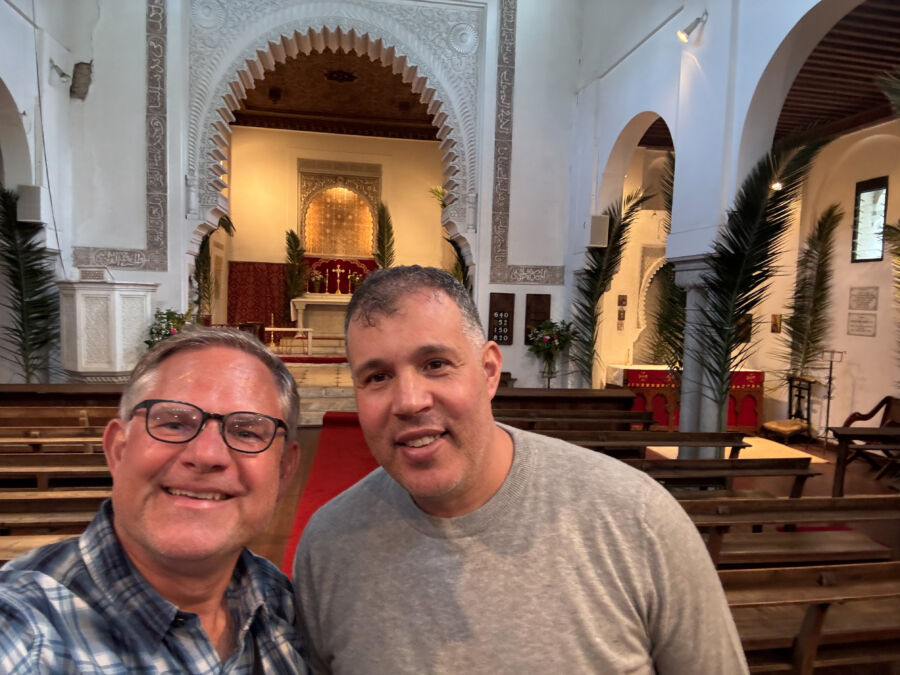
My co-author and frequent collaborator, Cameron Hewitt, is well-traveled, smart, and insightful. And, while he and I are in perfect sync in our travel styles and priorities, he gives voice to the next generation of "Rick Steves travelers." Join me in enjoying his reports right here. —Rick

In Praise (or, at Least, Defense) of Unlovable Cities

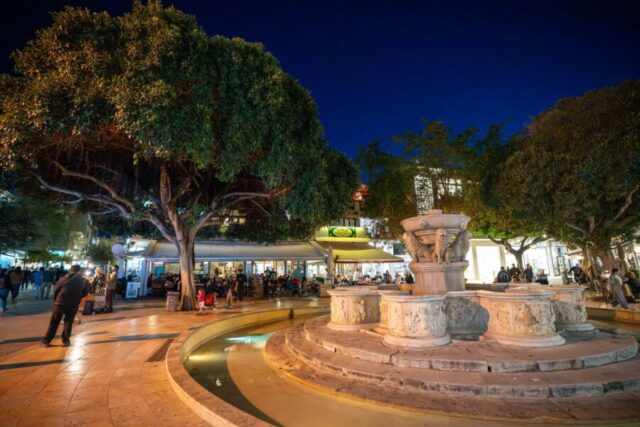
I was sitting on the lovely and lively Lions Square in Heraklion, the capital of Crete, with my new local friend Elpida. She had found us a prime seat at a pastry café (cleverly called PhylloSophies — a rare pun that works in two languages) and ordered us a bougatsa. This beloved pastry, with filling delicately sandwiched between paper-thin, crispy sheets of phyllo dough, comes in two types: sweet (with semolina cream) and tangy (with local mizithra cheese). Both are generously dusted with cinnamon and sugar. And Elpida had thoughtfully ordered both to sample.

Thoroughly enjoying this fine view, snack, and wonderful company, I found myself liking Heraklion for the first time.
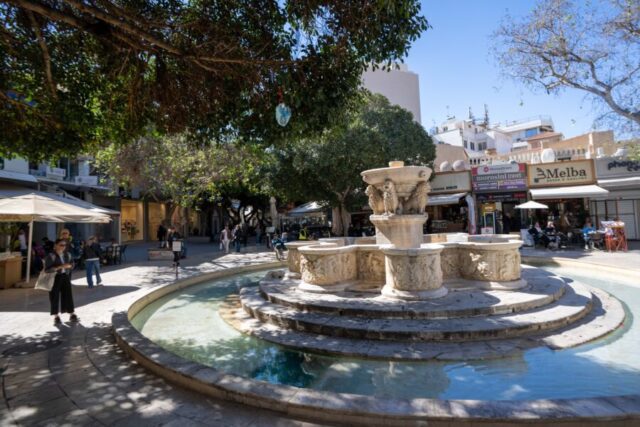
I was here very briefly about 15 years ago (on a cruise) and found the city center congested, chaotic, conventionally quite “ugly” — as unappealing as its archaeological museum is spectacular.

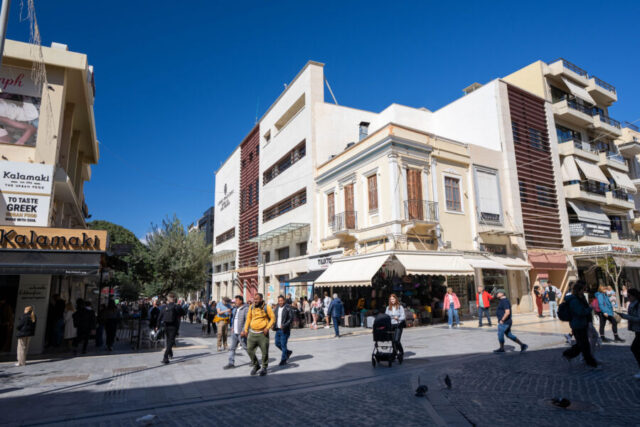
On my current visit, I had already been in Heraklion for 36 hours; in fact, this was my final evening before a morning flight to Athens. I arrived in the city with a chip on my shoulder, and Heraklion did little to dislodge it. While I was again wowed by the museum, and I’d discovered a wonderful spot for the previous night’s dinner, in most other regards I found Heraklion a case study in ramshackle six-story Greek urban blight… quite gritty and far from romantic.  (It didn’t help that I had just come from a few days in gorgeous Chania and charming Rethymno, both much smaller Cretan coastal towns with intact historic quarters evoking the Venetian gentility of this island’s complicated past.)
Elpida, with a disarming directness, leveled me with her gaze: “Heraklion does have its problems. Believe me, I know it has its problems. I see them too. But this city also has a fascinating history and some wonderful places and people. Let me show you.”

I was taken aback. I had, of course, been extremely careful not to say anything unkind about her shambolic home city. But I didn’t have to say a word. Elpida is smart. She knows what most visitors think when they come here: “Ugh. When’s the next boat/bus/flight out?”

In our age of effortless jetsetting, it’s easy to forget what a privilege it is to visit a place — any place. And the more you travel, the more you run the risk of growing jaded, cynical, picky, even offhandedly cruel when it comes to a destination that doesn’t pass your personal sniff test.

But Elpida’s protectiveness of Heraklion made me realize that even in the most seemingly “unpleasant” place is also a place that many people call home and have plenty of reasons to love, imperfect though it may be.

And it reminded me of a moment from earlier on this same trip, when I was comparing notes about favorite beyond-the-mainstream travels with an American expat friend of mine in Berlin. We began to one-up each other with more and more seemingly miserable places we’d each fallen for. (“If you thought Baku was a pit, you should see Prishtinë! But wait — have you been to Belgrade?”)  At one point, he said to me, laughing, “What can I say? I really like sh*tholes!”

That shocking word, so easy to toss around, in this case came with great affection. Seasoned travelers learn that the cities whose obscurity, quirks, and ruggedness keep away the hordes of casual tourists are, in their own way, deeply rewarding. In fact, those very features, when viewed from a different vantage point, become some of its best assets — especially with help from a local.

I thought of some other initially “unlovable” cities that I eventually came to see through new eyes:

On my early visits to the Slovak capital, Bratislava, in the early 2000s, I struggled to find much to like about the place. But Martin Sloboda had a vision for the city’s place in the past, present, and future of Central Europe — and over years of persistent visits, I’ve gained an affinity for it. (In this case, it helps that the city itself has improved dramatically.)

Bucharest used to leave me cold. But walking through the hulking Romanian capital with guide Ana Adamoae made it personal and human.

Montenegro is famed for its dramatic mountains and glittering coastline; it took until my tenth or twelfth visit to finally get to its often-derided capital, Podgorica. My local guide Rajan acknowledged that his hometown has a reputation as Europe’s ugliest capital. But then he achieved the improbable: With a short and insightful walk through town, he provided me with the context I needed to understand the city’s story on its own terms. By the end of the walk, Rajan and I were conspiring about how to get more travelers to give Podgorica a chance.
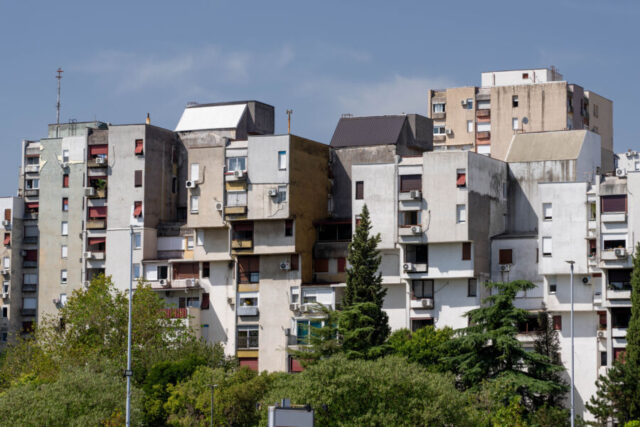
That said, I’ll admit that I’ve often been guilty of thoughtlessly dismissing unlovable places. Just like it’s fun to read a movie critic really tear into a film that they hated, hated, hated, there’s also a special schadenfreude as a travel writer in teeing off about that place that let you down. But the more I mature as a traveler, the more I realize that a place isn’t just a punchline — it’s someone’s home.

And sometimes I get a taste of my own medicine: Earlier on this trip, I was chatting with a fellow American (another expat Berliner)  who offhandedly insulted Ohio as a stand-in for bland, generic Middle America. (In fact, in Gen Z slang, “Ohio” means “weird and cringeworthy.”) While I didn’t take this personally, I did get a smidge defensive… because I’m very proud that I grew up in Ohio. The Buckeye State isn’t perfect. (What place is?) But there’s a lot to love about it, including a large percentage of the best human beings I’ve ever known.

Every place deserves a chance. You don’t have to personally like everywhere you go. Every traveler has their “favorites” and “least favorites,” and that’s OK. But you should try to respect any place. Even unlovable cities like Heraklion.

Still… Elpida had her work cut out for her.

§     §     §

Appreciating an “unlovable” city starts with understanding what makes it that way. Elpida explained that Heraklion has been utterly leveled at least three times in its long history: First, when the Ottomans laid siege to Venetian-held Crete, Heraklion was the final, lone holdout; after 21 bruising years, the Venetians finally gave up, took their archives and relics, and scrammed back up the Adriatic in 1669. Then, after the Ottomans had rebuilt the city, a devastating 1856 earthquake flattened it all again. (“Locals say only 18 buildings remained standing,” Elpida said, and in fact, two other locals had already told me this exact figure.) And finally, Heraklion again played hero in 1941 as it fended off a massive Nazi paratrooper attack in the Battle of Crete, which again obliterated the city.

If modern Heraklion seems a bit “meh,” this triple-whammy — siege, quake, Nazis — explains why. History punishes heroics, and fluke natural disasters cut many great civilizations short. On my first visit to Warsaw (another unlovable city), my Polish friend said to me — apologetically — “Warsaw is ugly because its history is so beautiful.” This sentiment could easily apply to Heraklion, too.
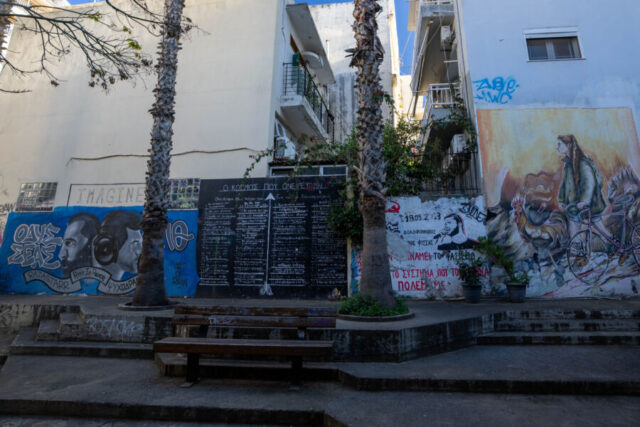
After we polished off our bougatsa, Elpida led me on a walk past the city’s scant few great monuments. Every single one dates from that 465 years of Venetian rule, though all of them have been further shaped by the many twists and turns of history. For example, St. Mark’s Basilica was turned into a mosque (you can still see the stubby base of its minaret), and now it’s the municipal art gallery.

The finest building in town, by a wide margin, is a pristine reconstruction of the (destroyed) Venetian assembly building — re-created using archives from Venice itself — now the city hall.
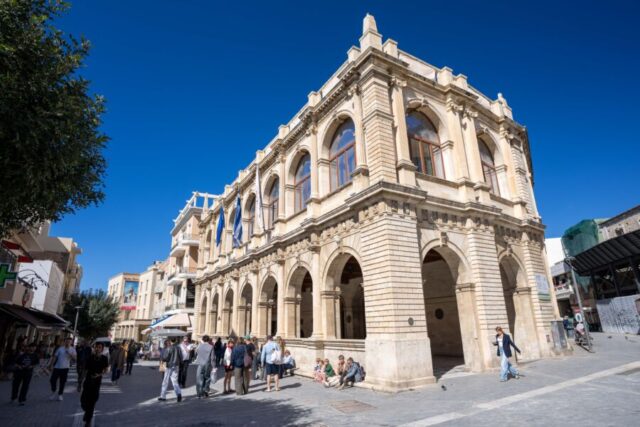
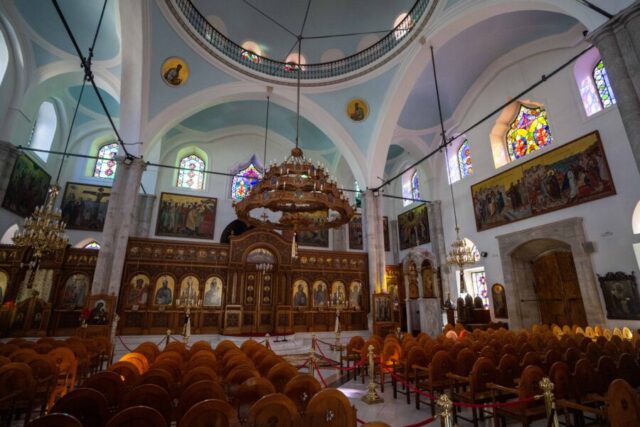
And just down the main drag, we came upon the oddly shaped Orthodox Church of St. Titus, which looks like a box with a very shallow silver dome. “Of course,” Elpida said, “you can see this was not built as a church; it has a classic mosque structure. It was destroyed in that terrible earthquake, and the pasha ordered it rebuilt from scratch.” Stepping into the incense-heavy interior, with its wood-carved iconostasis and chandelier, its present church-ness offers no hint at its previous mosque-ness.
Back out on the street, we saw the Gulf of Heraklion glittering at the end of the wide pedestrian street. While the port here is called the “Venetian Harbor,” that’s misleading; other than the faint brick outlines of a few arsenale buildings and a boxy fortress on the breakwater,  Heraklion’s harbor feels entirely modern.
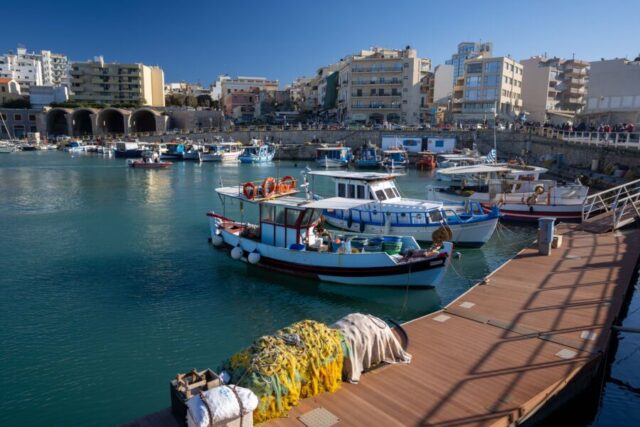
Stretching beyond that fortress is Heraklion’s very long breakwater, lined with a waterfront footpath. “Locals call this Bypass Lane,” Elpida explained.

“Ah,” I said. “Because it passes by the fortress?”

With a funny expression, Elpida said, “Hm, I never thought of that. No, it’s because cardiac doctors prescribe long walks here to their heart patients.”

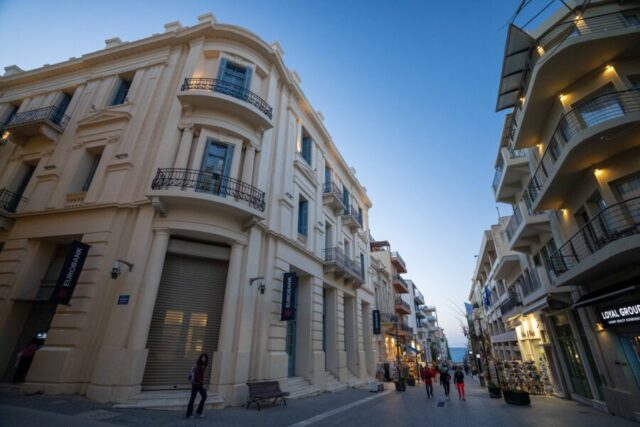
Heraklion’s main drag (“The Street of August 25th,” a nod to yet another horrifying incident from city lore) is a mishmash of fine old Neoclassical facades and some questionable modern architecture. Still, the overall impression is that it is (or, perhaps, was) the finest street in town.

This idea brought a twinkle to Elpida’s eye: “Ah, but you know what they used to call this? Planis — the Road of Illusion. It was designed to impress visitors arriving at the old port, on their way up to Lions Square. But it was all a sham, because the streets all around are a confusing maze.” Here in Heraklion, even locals — with a world-weary but realistic cynicism — understand that beauty is an illusion… a Potemkin village of lovability.
§     §     §

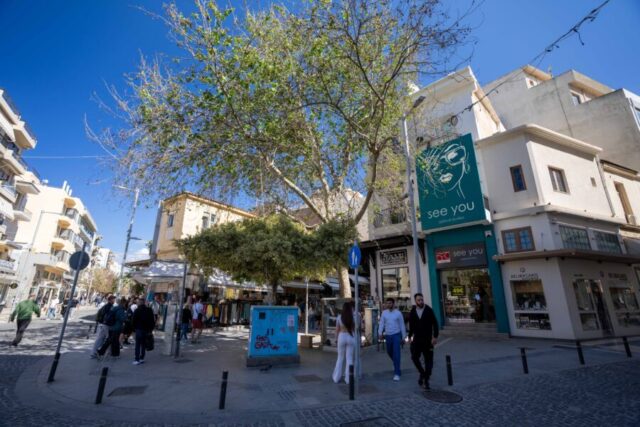
Of course, a city is more than its architecture, and next Elpida began “the main event”: a delightful cultural scavenger hunt through the market zone just above Lions Square. She was eager to introduce me to the people who make Heraklion lovable, where buildings and urban planning fail. And she wanted to illustrate how, even in the very heart of this metropolis of a quarter-million people, Crete’s distinctive culture finds vivid and authentic expression — rooted directly in the high-altitude villages of the remote mountain interior.
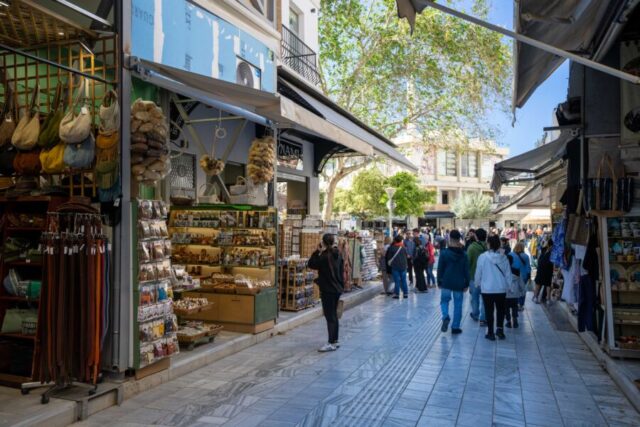
Walking to an olive-oil shop, she explained: “This island has more than 30 million olive trees, many of them centuries old. Virtually every family owns a small grove here and there. From November through about January, we harvest our olives and take them to a communal press. We get enough for our family’s own use for the whole year, and if there’s a surplus, we sell it back to the cooperative to bottle and sell.”

Inside the Grelia shop, we were warmly greeted by Renata, who began a well-practiced monologue extolling the virtues of Cretan olive oil — which, thanks to its high levels of polyphenols, many Cretans take as a supplement, like cod liver oil or a multivitamin. Renata explained that the different types of oils mostly come from the same koroneiki olives; the difference is how early or late they’re harvested.

“You have heard of the Blue Zone,” Renata said hopefully, more as a statement than a question.

“Ummm, I don’t think so.” Renata was momentarily, uncharacteristically speechless, and she and Elpida shot each other a look as if I just admitted I’d never heard of the Beatles.

“It’s a band of societies around the world where people live a very long time because of healthy diet,” Renata began, and I realized I had heard of this concept… just not the term. It was a reminder that things that are simply common sense in one place can be a piece of remote trivia in another.  It’s understandable that Renata was proud of Crete’s status as part of the Blue Zone, where people live well into their 80s, 90s, even 100s.

Elpida and I continued along the market to a sweet shop called Pediaditakis. From the tiny entrance, a sprawling Willy Wonka world opened up, with bin after bin of candies and other sweets available in bulk. Elpida began to explain the significance of each candy — for example, the white sugar-covered almonds called koufeta, handed out at weddings, baptisms, and other celebrations.

We paused at a large display of candied fruits in syrup. “These are spoon sweets. Very important. You know, we Greeks have a culture of hospitality. When someone comes for a visit, you must greet them with a sweet. We pick fruit in the fall and preserve it in sugar. That way, we always have something special for an unexpected guest.” She winked: “It goes very well with raki.” Sure enough, a few days later at the opposite end of Greece, I paid a visit to a farm… and was greeted with a simple spoonful of candied quince on a tray.

Passing a fragrant coffee roaster, Elpida explained: “You never serve coffee at a wedding.”

“Why not?”

“Because coffee is only for funerals. Same with fish. Only for funerals, not weddings.”

Probing the “why” of it all, I quickly understood the answer. As so with many traditions: just… because.
Next, we stopped a shop selling miniature deep-fried savory pies filled with Cretan greens and cheeses. She explained, “I remember my Grandma, on the farm, would prepare these and stick them in the pockets of her petticoat so she’d always have a snack while away from home. And these traditions, they continue until today: I often pack some of these very pies for my daughters when they go to school.”

Then Elpida explained the importance of herbs in Cretan cooking and culture. In this mountainous land, with its many microclimates and unique patches of terrain, locals have mastered the use of each and every plant that springs from the earth.

To prove her point, we stopped by Vassiliki’s herb shop (votanopoleio). He greeted us with a big smile and a pot of herbal tea, offering us a sample. Vassiliki showed us a black-and-white photograph of his grandmother, who taught him everything he knows and still forages herbs for his shop.

But Vassiliki has leveraged this centuries-old practice with modern entrepreneurship, stocking packets of teas, infusions, and tinctures that are neatly labeled in English with what they’re good for, from diabetes to constipation to insomnia. One herb was called malotira — literally “evil goes out.” Another, dictamus, is instinctively sought out by animals with an upset tummy. Another was a mix of forty different healthy herbs.

“Forty is a very symbolic number,” Elpida explained. “Lent has forty days. Forty days after a baby is born, it’s ready to interact with people outside the immediate family. And a memorial service takes place forty days after someone’s death.”

Next up: Maria’s honey shop, Melopolis. Like olive oil, honey is a Greek staple dating back to the ancients. And like olive oil, it comes in countless varieties. Beekeepers take their hives to different vegetation in order to infuse their honey with completely different flavor profiles. I sampled thyme (the gold standard for all-around-delicious honey), orange blossom, and even the bark of fir trees, each with its own distinct texture and flavor.

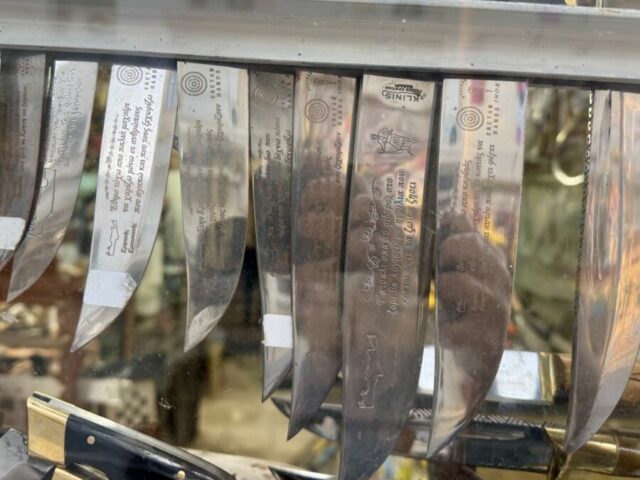
The evening went on like this. Each shop and each vendor, no matter how mundane, came with deep insights into Greek and Cretan culture. Jewelers abound, because jewelry is such a popular gift for special occasions — especially between new in-laws at a wedding. Produce stands featured wads of local greens called stamnagathi, an ever-present side dish on Cretan menus. Cretan knives are renowned; many have blades inscribed with a unique form of four-verse, fifteen-syllable poem (called mantinada, sort of the Cretan answer to a haiku) exploring themes of love, loss, and honor.
One thing Elpida never had to explain was the subtext of her tour: Yes, by outward appearances Heraklion is a rough place. But it’s populated by wonderful people — many of whom grew up all over the island, and for various reasons wound up here in this congested urban maze. And each one brings their own threads to the tapestry of the city.

And another thing happened: The sun had begun to set, the sky was light and soft, and the people of Heraklion were all out enjoying their hometown. Like Elpida, they know this place isn’t a conventional beauty. But its true majesty is that it’s a fine space, shaped by a hard history, that they all share together.

Circling back to Lions Square to say our goodbyes, we came across a street performer enacting an elaborate puppet show with Cretan folk characters. Everyone present — from toddlers to those Blue Zone octogenarians and nonagenarians — laughed and clapped and cheered and sang along.

I came away from this magical experience feeling something surprising about Heraklion: Suddenly, I was smitten with one of Greece’s most unlovable cities.
§     §     §

At the evening’s end, Elpida asked me point-blank for my candid impression of Heraklion. And, honestly, I was impressed. But I knew that was largely because I had her help. And it’s a fine needle to thread for a travel writer: Part of my job is sifting through options and giving frank guidance about the relative worthiness of a place.

I told her what I’d advise a Crete-bound traveler: If you’re limited on time, you’re better off focusing your trip on Chania or Rethymno, where you’ll find much more of the Old World charm and conventional beauty than in Heraklion. This city is ideal as a brief stopoff — for its museum, nearby Knossos Palace, and yes, for an eye-opening walk through the chaotic center — but not necessarily a place to linger.

That said, thanks to Elpida, Heraklion had jumped up several notches in both my personal estimation and my professional opinion. Travelers often say that they want an “authentic” look at local life. But then they choose to go somewhere that’s heavily skewed toward pleasing tourists. If you really want a look at “the real Crete,” and if you enjoy gritty and fascinating cities as I do, Heraklion deserves a chance. (And you should definitely hire Elpida for a personal tour: email her at elpida.syngelaki@gmail.com,  or WhatsApp her at +30 69727 20645.)

In the end, Elpida reminded me of one of the first rules of a seasoned traveler: The more you know about a place — any place — the more you like it. I used to dismiss places I didn’t like without guilt. But these days, while I still try to give clear-eyed advice for travelers, it has become harder to simply say: “Skip it.” While there’s a reality that people have limited time and money, the more I travel, the more I realize that no place is truly “skippable” (a favorite word in our guidebooks)… if you have the benefit of a local friend like Elpida to show you around.

Whether it’s Heraklion, Podgorica, or Ohio, every place has a proud local culture, its share of wonderful people, and a story that makes it special. As a traveler, you don’t have to like the results of that story. But shouldn’t you respect it — and try to understand it?


I was traveling in Crete to research an all-new chapter for the upcoming ninth edition of our Rick Steves Greece guidebook (coming in 2027). In the meantime, the current eighth edition covers the rest of Greece with this same degree of TLC, cultural insight, and hard opinions.

I’m heading out for my next trip soon, with stops in Austria, Italy, and Slovenia. If you’d like to follow along for more updates and insights like these, join me on Facebook and Instagram.

And for yet more thoughtful takes on European travel, check out my memoir, The Temporary European: Lessons and Confessions from a Professional Traveler.

Berlin’s Kieze: Europe’s Sesame Street

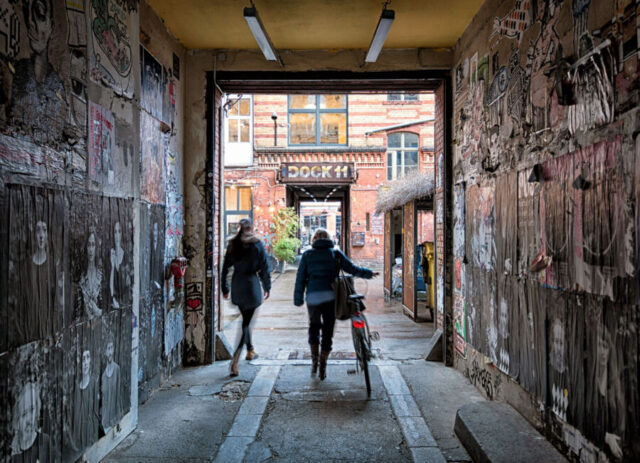
Walking through my temporary Berlin neighborhood — Prenzlauer Berg — I pass organic food stores, graffiti-slathered storefronts, scruffy parks lively with frolicking kids, and people representing every race and nationality on earth. And I think to myself, “This is basically Sesame Street, in real life.” The only thing missing is a giant yellow bird.

Tourists seeing Berlin in a hurry — doing a strategic strike on the Brandenburg Gate, Unter den Linden, Checkpoint Charlie, and Museum Island — see just the central slice of this sprawling city. While understandable, that’s a shame. Because the true joy of Berlin are its Kieze (“KEET-zeh”) — funky little urban neighborhoods, each with its own distinct personality.

Berlin’s Kieze truly are Europe’s Sesame Street — Williamsburg or Berkeley with a German accent (and, often, not even that). And the joy of Berlin’s Kieze is why I simply love being in this city. I manufacture excuses to head to the Graefekiez, the Bergmannkiez, the Kollwitzkiez, or the Helmholzkiez.

On a recent visit, I rented an apartment in a classic Kiez apartment house, with little balconies facing into a shared courtyard jammed with bicycles, strollers, and toys. My neighbors were a mix of aging hipsters and young families, all living together in apparent harmony. The biggest complaints cited in the reviews were that some guests have gotten shushed for talking too loud out on the balcony after hours.

A key facet of the Sesame Street comparison is Berlin’s Multikulti outlook. Even way back when I was a kid, the denizens of Sesame Street were strikingly diverse. And among European cities, Berlin has embraced multiculturalism since not long after Hitler’s bunker became a smoldering ruin. The Turkish Gastarbeiter (“Guest Workers”) who moved here soon after World War II to rebuild West Berlin have woven themselves into the city’s fabric for decades. Since the end of communism, Berlin has attracted young expats from around the world. And in more recent years, it’s been a hub for immigrants and war refugees — including, most famously, the 2015 arrival of many from Syria and Afghanistan.

These days, one in every four Germans has at least one parent who was born outside Germany, and I imagine the ratio in Berlin must be even more striking. Berlin is a magnet for anyone seeking an eclectic cultural mix, progressive outlook, and embrace of creativity. A walk through the central square or park of any Kiez in Berlin is enough to instantly dispel the myth of European homogeneity (or that homogeneity is inherently a “good thing”).

People skeptical of multiculturalism — generally those whose “experience” of Europe is shaped more by fear-mongering social media posts than through actual travel — cluck their tongues and express concern about how Europe is at risk of “losing its culture.” But traveling in Germany (and especially in Berlin), two things become unmistakably apparent: “Traditional German culture” has nothing to fear; lederhosen, oompah bands, and one-liter mugs of beer remain widely available. And at the same time, increased diversity is a catalyst for a whole wonderful rainbow of new, hybrid subcultures.

On a recent trip, I was excited to visit the Damaskus Kontditorei, a bakery in a nondescript, extremely untouristy Kiez of the Kreuzberg district. The bakery is run by Syrian migrants who were taken in by Angela Merkel during the refugee crisis of 2015.

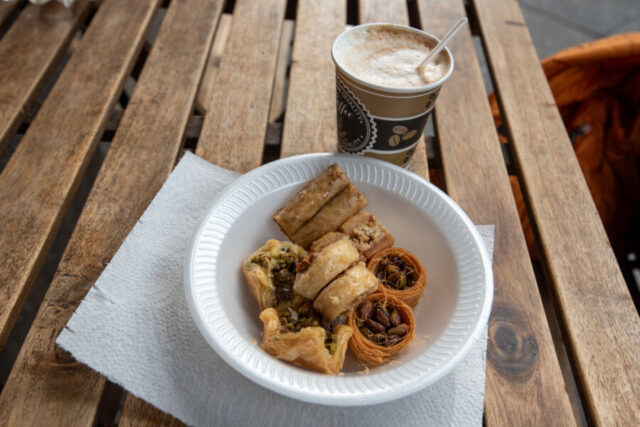
After a complicated 45-minute transit connection to the middle of nowhere, I went into Damaskus and ordered a latte with a little assortment of delectable Middle Eastern treats: various baklavas, plus lots of other little phyllo-dough goodies soaked in honey and encrusted in nuts. I sat out at a sidewalk table and had the best breakfast of my trip. And I thought about how multiculturalism, and looking out for the world’s most vulnerable in a time of crisis, contributes to a very happy and successful society indeed. Could there be anything more Sesame Street than that?

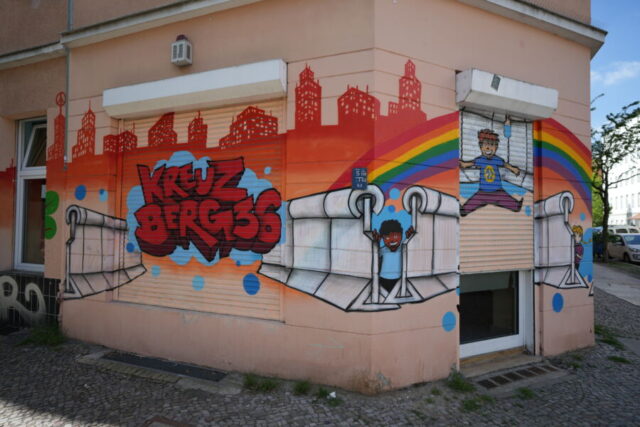
Another thing I notice about Berlin’s Kieze is that, like Sesame Street, they’re quite rough around the edges. Walls are tagged with graffiti; parks are overgrown and weedy and far from manicured. It’s not that the people who live here don’t have the will or the resources to tidy things up; I think it’s that they enjoy living in a place that feels wild, sketchy, and rugged, even though it’s a few U-Bahn stops from the sleek, austere, and stern government ministries of Europe’s mightiest nation.

Another Sesame Street connection: Many of Berlin’s Kieze are crawling with kids. Many of those young idealists who relocated here after the fall of the Berlin Wall have stuck around, and the ensuing baby boom has never really abated. The trendy Kieze I’m talking began as hardscrabble, inner-city neighborhoods. Squatters took over, then artsy hipsters, and now those hipsters are affluent yuppies raising families. Rather than moving out to the suburbs, they’re staying put. Between those wealthy families, and visitors paying a pretty penny for apartment rentals, poorer Berliners are being priced out. I wonder sometimes if the street art, crumbling pavement, and overgrown parks are a badge of honor for Berliners who want to prove they can be rich but still live like they’re poor twentysomethings.

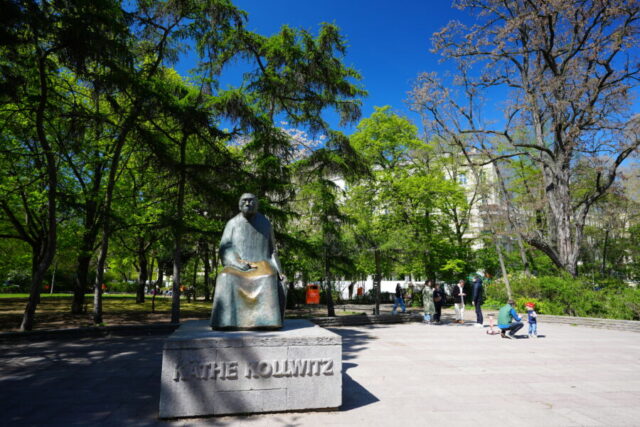
And so, if you sit in a park in Prenzlauer Berg — let’s say Käthe-Kollwitz-Platz or Helmholtzplatz — you’ll see loads of kids out playing in those grubby urban spaces: blowing giant bubbles, goofing around on elaborate playgrounds, tapping a fluttering badminton shuttlecock back and forth. Off in the corner, a bum dozes on a bench; occasionally a car drives by blasting too-loud, raunchy German hip-hop. It’s gritty. It feels real. You half-expect Oscar the Grouch to poke his head out of a trash can.

And there’s one more, very important way in which Berlin reminds me of Sesame Street: It simply can’t resist the urge to teach you a lesson. About anything and everything.

Berlin has more than its share of history. Most of that history is pretty dull — as the staid, workmanlike capital of Prussia, the deftly engineered city of Frederick the Great ran like a well-oiled machine. But in the 20th century, things got very complicated. First, the loss of a Great War brought humiliation and economic crisis. Then came Hitler; then a wall that completely encircled half of the city, sealing it off from the world. And finally, that giddy night in the fall of 1989 when we turned on our televisions to see people dancing on top of that wall.

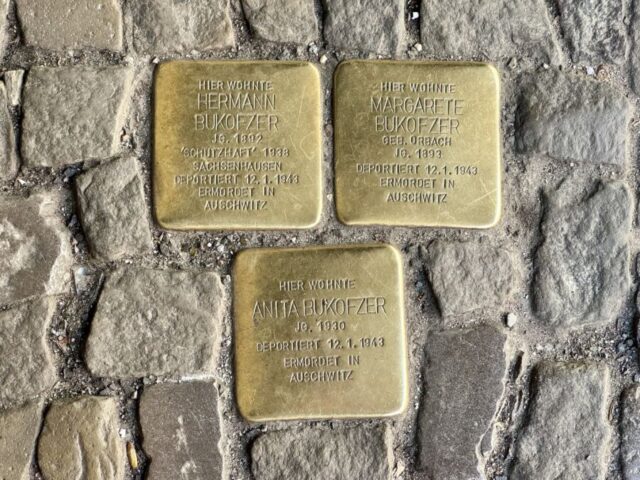
In the three and a half decades since, rejuvenated Berlin has worked overtime to document and tell those stories. You can’t avoid them; often you literally stumble over them. Throughout the city, you’ll find brass Stolpersteine — “stumbling stones” — embedded in the cobbles, listing the names of people who lived at that address until they were killed in the Holocaust. Two different Berliners proudly told me that they’d personally researched and funded Stolpersteine to place in front of the homes where they now live, honoring past residents.

The idea is that pain and tragedy and victory and heroism are directly connected to locations all over Berlin… if only people knew what had happened there. Germans call this Vergegenwärtigung — meaning “to bring something into the present,” to shine our current spotlight of consciousness on it.

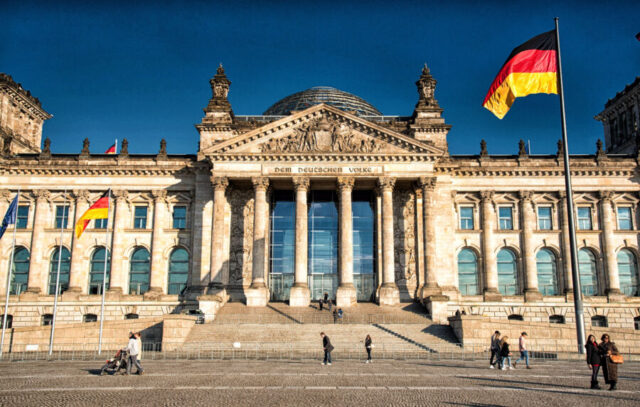
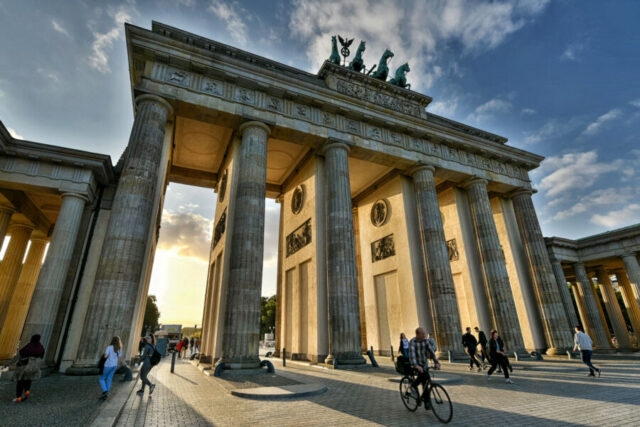
On my first evening in Berlin, I did a ritual walk from Prenzlauer Berg all the way down to Museum Island, then up Unter den Linden to Brandenburg Gate and the Reichstag, Germany’s parliament building.

Ready to head home, I reached the stop for delayed bus #100, right across the street from the Reichstag. The electronic board told me it was coming in eight minutes. In Berlin, that’s enough time for at least three lessons.

Eight minutes left. First I walked a few steps toward the Brandenburg Gate. There, along the opposite side of the road, runs a row of bricks embedded in the pavement — marking the path of the Berlin Wall between 1961 and 1989. Visually tracing its path, I could see how the Wall completely enveloped both of Berlin’s main landmarks — the Brandenburg Gate and the then-destroyed Reichstag — making this very area a dangerous no-man’s land for decades.

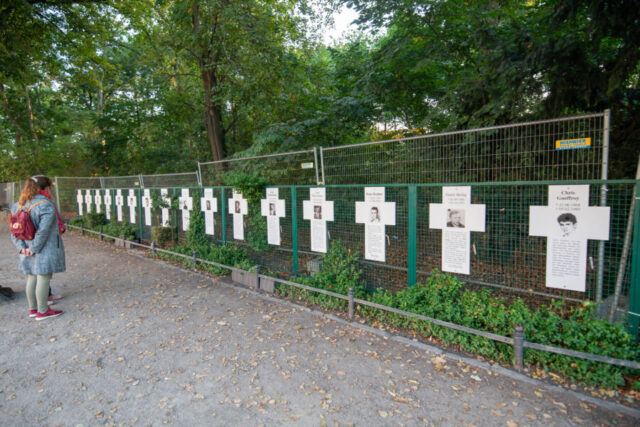
Six minutes left. At that same corner, I turned around and saw a row of 15 white crosses affixed to the fence, each with the face of someone who was killed while attempting to cross the Berlin Wall. The last one — Chris Geoffrey — died on February 5, 1989, just nine months before people climbed up to party on top of that wall.

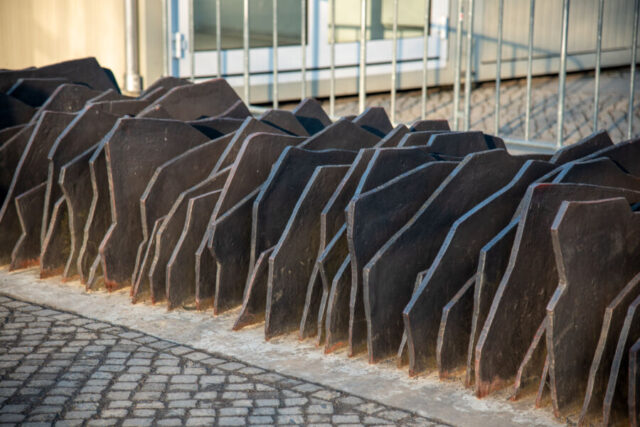
Four minutes left. Walking back toward the Reichstag, I spotted a row of mismatched slabs embedded vertically in the pavement. Each one listed the name of a politician (who worked in the halls of this very Reichstag) who found themselves imprisoned and eventually killed because they had the nerve to oppose Adolf Hitler. It’s poignant to think of lawmakers who sacrificed their lives simply trying to preserve democratic German government in the face of a rising tyrant.

I got back to the bus stop with one minute left, and before I knew it, I was zipping down Unter den Linden. With each block I passed, I knew I was also passing dozens of fascinating, agonizing, stirring stories of the people of Berlin.

Is it any wonder, with such a tumultuous history, that Berlin has settled into this Sesame Street existence? This is a country that has done and witnessed horrific things. It has seen the error of its ways, and it has repented. And now it’s determined to be a very good global neighbor indeed.

Sometimes I think that — like a person — the more hardship a country has endured (or caused), the more wisdom and maturity they amass. Especially when I’m traveling in Europe, I’m stuck by how American society is basically a rowdy teenager, who think we know everything even though we’re barely out of adolescence. Germany is the middle-aged, world-weary adult, who’s looking senior citizenship dead in the eyes, and is determined to make good for the mistakes of its past.

If only getting more societies to that point were as simple as A-B-C.

10 Things You Need to Know for Traveling to Europe in 2026

Traveling to Europe in 2026? It’s harder than ever to distinguish between what you really need to know… and what’s just empty hype. I’ve spent the winter sifting through information and collecting insights from my well-travelled colleagues at Rick Steves’ Europe. And now I’ve come up with this roundup of 10 things that will help make your travels smoother in 2026.

Don’t believe sensationalized headlines; understand the whole story.

Every day, I come across travel “news” items that seem designed to spike my blood pressure by exaggerating a kernel of truth. When faced with flashy clickbait, do a little background research to understand the whole story.

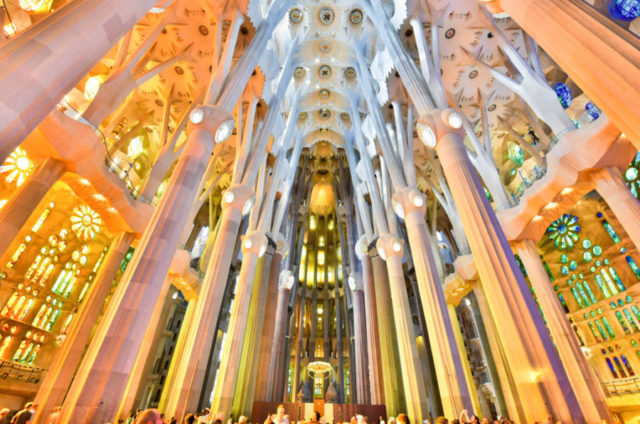
For example, multiple media outlets are reporting that in Barcelona, Gaudí’s Sagrada Família cathedral will be “completed” in 2026. Yes, they recently put the final cap on the tallest church tower in the world… but other parts of the gigantic building will remain a construction site for decades. Remarkable progress — yes! “Finished”? Nope.

Here’s another one: “Americans Will Have to Pay More to Visit the Louvre in 2026.” It’s not just “Americans” — this price hike applies to citizens of ALL non-European Union countries. We’re not being singled out; Canadians, Djiboutians, Kiwis, Chileans, and Brits will all pay that same higher price.

You’ll also see threatening-sounding posts about how “It’s about to get much harder to visit Europe — and you may not get in!” Here again, this is based on a nugget of truth about a change that’s important to know about… eventually. Read on.

Europe has some new red tape.

“Visa waiver programs” — which have long been in place for Americans going to Australia and New Zealand, and for Europeans coming to the USA — are a new development across Europe. The program in the UK (called an ETA) already went into effect in 2025; Europe’s program (called ETIAS) will likely begin in late 2026 or early 2027.

While breathless headlines make this sound daunting, in reality this minor bureaucratic headache is simple and easy: Log onto a website, punch in some personal information, and pay a small fee.

Will you need to deal with this for your 2026 trip? It depends on where you’re going:

If you’re heading to the United Kingdom, then yes: The Electronic Travel Authorisation (ETA) is already required.

If you’re heading to most of the rest of Europe (the Schengen Area — that’s most of the Continent, the Republic of Ireland, and Iceland), you have nothing to worry about for the first three-quarters of the year. However, keep an eye on the news for fall and winter travels: No earlier than October of 2026 (and possibly well into 2027), we’ll see the advent of the European Travel Information and Authorization System (ETIAS).

In anticipation of the ETIAS protocol, the Schengen Area is rolling out their new, mostly automated entry/exit procedure (EES). For the traveler, you’ll barely notice the difference… except that manual passport stamps are being phased out in lieu of facial-recognition “e-gates.”

Europe has gotten more expensive.

Like the rest of the world, Europe’s prices have gone way, way up. Our team of guidebook researchers have noted steep increases across Europe, driven largely by the same post-pandemic inflation we’ve experienced on our side of the Atlantic.

At the same time, the US dollar is also dropping against European currencies, thanks to the policies of a president who brags how much he likes a weak dollar. Since Inauguration Day 2025, Americans are paying about a 10-12 percent “surcharge” on everything we buy in Europe.

Yes, Europe is expensive. But it remains a wonderful value for the rich cultural experience it provides. If you’re on a tight (or even moderate) budget, it’s more important than ever to take money-saving tips into careful consideration. (Fortunately, this is a major feature of our Rick Steves guidebooks.)

Heat waves and other extreme weather are here to stay.

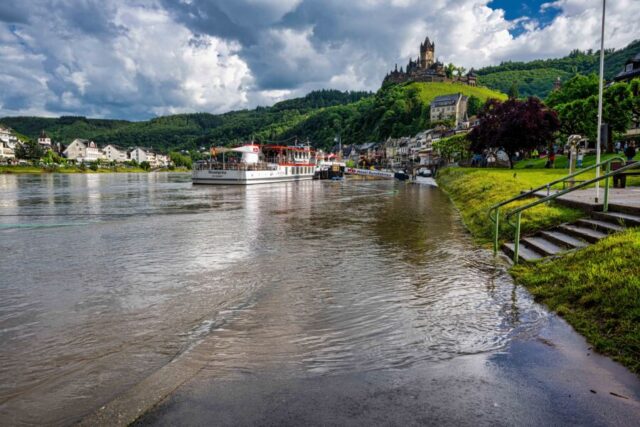
Recently, in a small town on Germany’s Mosel River, I was starting my day in the hotel breakfast cellar. Refilling my coffee, my host pointed to a faint line on the wall: “One week ago, if you sat right here, you’d be underwater.” Later that day, on the flooded embankments of Cochem, a riverboat ticket clerk told me they were just about to resume their sightseeing cruises — having just missed a very lucrative holiday weekend due to flooding.

Our planet is getting hotter, which is causing extreme weather in all forms. Most travelers experience this as heat waves. Each summer, records get shattered in one corner of Europe or another, and formerly cool, now sweltering, corners of the continent are scrambling to retrofit their hotels with AC.

But our warming oceans also cause windstorms, deluges, hurricanes, and floods of biblical magnitudes. It seems like every week, a new corner of Europe is suffering some unprecedented weather disaster or another.

Addressing the root causes of this global crisis is a huge and complex challenge — one that Europe is rising to, inspiring visitors with their conscientious and pragmatic solutions. But in the short term, the best advice for travelers is simply to remain flexible: Assume that, at some point in your travels, you will encounter extreme weather… and be mentally prepared to change plans on a dime.

“Overtourism” remains a big concern in popular destinations.

In 2024 and 2025, you may have heard about “anti-tourism” protests. We’ll likely see more of these in 2026 — perhaps making you feel unwelcome in Europe.

The reality is more complex. These protests aren’t “anti-tourist” — they are anti-overtourism. Their focus is not you and me, but their own governments: demanding that local authorities do more to proactively cultivate a sustainable form of tourism. Protesters’ goals include doing a better job of regulating cruise ships (which dump thousands of visitors to clog up their town’s streets for several hours…then leave without spending a penny) and short-term rentals like Airbnb (which are transforming formerly local, affordable neighborhoods into overpriced, touristy hotspots).

I regularly ask locals in the most notoriously “overtouristed” destinations (such as Venice, Barcelona, Amsterdam, and Italy’s Cinque Terre): Do you want us to stop recommending your town in our guidebooks? The answer is always the same: “No! We love Rick Steves travelers.”

Savvy locals recognize that tourism supports their local economy. And they distinguish between the “right kind” of travelers and the “wrong kind” of travelers. If you’re respectful, considerate, and conscientious not to contribute to the worst elements of overtourism, you’re still very welcome.

So, how can you avoid those “worst elements of overtourism”? Glad you asked…

“Balanced” tourism is a smart strategy to avoid crowds, high prices, and soaring temperatures.

OK, so we’ve just covered three big challenges facing 2026 travelers: high prices, high temperatures, and crowds. Fortunately, there’s a simple strategy that can help you grapple with all three in one fell swoop: Think carefully about where you go and/or when you go.

Some tourist industry insiders, uncomfortable with the term “overtourism,” prefer to talk about “unbalanced tourism”: too many visitors who insist on going to the same places at the same time and engaging in the same activities. (And then they come home… and complain about the crowds.) Of course, this spike in demand also drives up prices. And those “peak times” often coincide with the hottest weather. It’s a vicious cycle.

To break out of that rut, try a two-pronged approach to “rebalance” tourism: Go to less popular places… at less popular times.

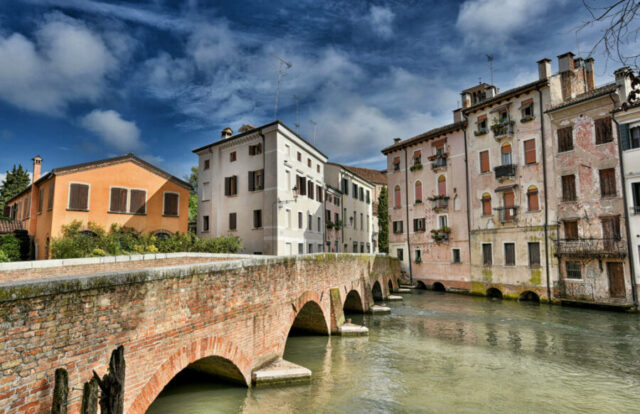
For every marquee European destination, there’s a charming, untrampled alternative just down the road. Venice is a delight… but you’ll find fewer crowds and lower prices in Padua or Treviso. From Amsterdam, a train zips you in 20 minutes to Haarlem, 30 minutes to Leiden, or 45 minutes to Delft.

Among the Greek islands, Santorini and Mykonos are stunning… and stunningly crowded and expensive. That’s why we recently added the quieter alternatives of Naxos and Folegandros to our Greece guidebook.

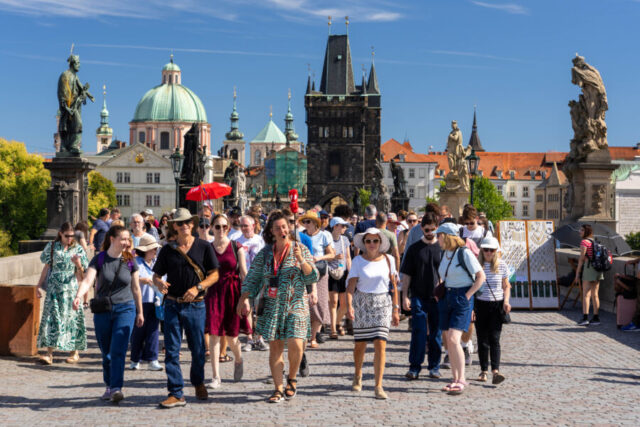
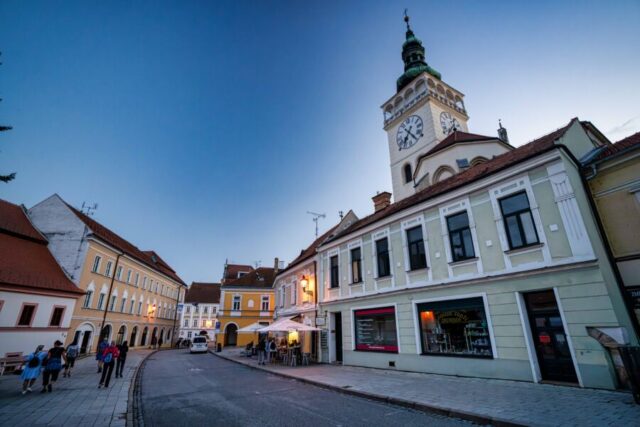
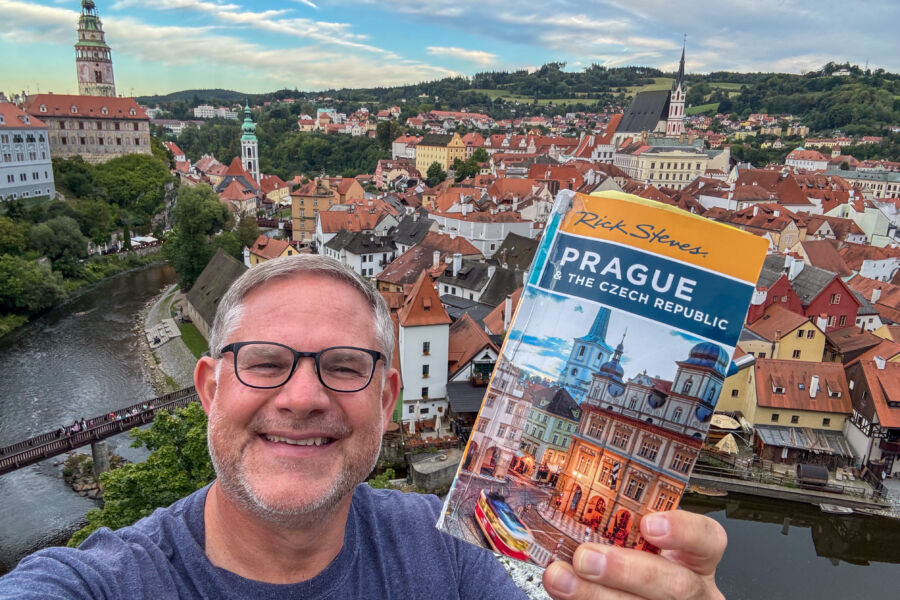
On a recent trip to the Czech Republic, I ventured beyond Prague to fantastically charming towns that rarely see an American tourist: Mikulov, Olomouc, Třeboň… the list goes on.

And there’s a whole slew of “second cities” offering a fraction the crowds and prices of the capitals: Porto (instead of Lisbon); Glasgow (instead of Edinburgh); Antwerp (instead of Brussels or Bruges); and so on.

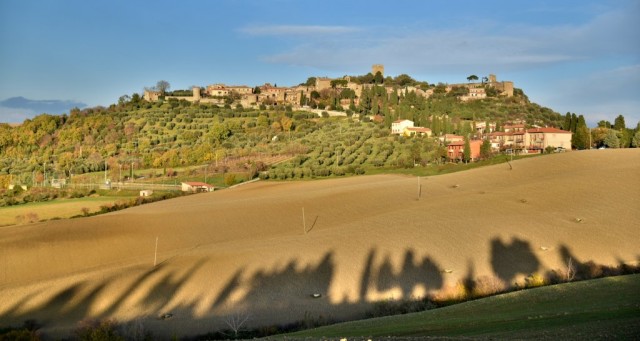
For similar reasons, shoulder-season and off-season travel are becoming more popular. Tuscany in November or March is an entirely different story than Tuscany in June or September. Both have their pros and cons — and, yes, going off-season requires a few sacrifices (cooler weather, shorter hours of daylight, seasonal closures). But it also helps you sidestep the peak crowds, prices, and temperatures of peak season. And it helps you contribute to a more “balanced” approach to travel.

AI can be useful for travel planning… but proceed with caution.

Across our society, we’re being told how AI is a game-changer — a miracle tool that can improve any process you can think of (and many you can’t). Curious but skeptical, I’ve made a point to use various AI models (Google’s Gemini, Open AI’s ChatGPT, Anthropic’s Claude, and so on) for a variety of trip-planning tasks.

My assessment: AI is, indeed, impressive at many things — at least, superficially. And yet, at this stage in its development, AI remains deeply flawed. The key to using it smartly is understanding what it’s good at… and what it isn’t. The problem is that AI itself doesn’t distinguish this well, and consequently tends to overpromise while underdelivering. This is compounded by its tendency to misunderstand the information it gathers online, and its propensity to hallucinate false “facts.”

The list of AI misses — both examples from my own use, and culled from reporting about AI misfires — goes on and on. These can be a simple mistake, such as giving the correct Metro stop for your destination, but on the wrong Metro line; or recommending that you catch a train from a station that does not exist. Or they can be more serious, such as the time AI created an itinerary for watching the sunset from a mountaintop… only to miss the fact that the cable car stopped running after dark, requiring a dangerous and exhausting hike back down.

Our full report on using AI for trip planning, which I worked on with Travis Parker, can be found in our Updates & Insights blog. Our bottom line: Sure, play around with using AI for low-stakes tasks that can enhance your trip — but be wary of using it for tasks that could potentially ruin it. And when it comes to critical information, always double-check with a primary source, such as an authoritative website or a human-produced guidebook.

Accept that travel is a political act.

Whatever your personal allegiances, it’s clear that we’re living in a time of extreme political division — both within our country, and between countries. Understandably, there are people who — when going on vacation — would prefer to leave all that behind and just enjoy themselves. There have been times of relative harmony when that was a realistic goal (and if you’re heading to a theme park or a weekend in Vegas, it still is). But now more than ever, when you cross borders — like it or not — travel becomes a political act. While the “Stick to travel!” crowd wants to convince themselves that we can still travel fancy-free these days, they’re deluding themselves.

This doesn’t mean that the Europeans you meet will be aggressive, angry, or unwelcoming. (In fact, quite the contrary — see the next point.) But they may well have questions to ask… and opinions to share. You can generally sidestep these conversations gracefully. But if you really want to travel as a political act, it’s so much more interesting and educational to lean into them.

On every trip, I look forward to “talking politics” with the people I meet on the far side of the globe. Sometimes these conversations affirm my existing beliefs, maybe offering a fresh perspective on a tired old topic. But just as often, they challenge some of my most deeply held assumptions — even changing my mind 180 degrees about something I’d always taken for granted. And I always come home a smarter, more nuanced thinker and a better citizen of our world.

There may be a few truly “apolitical” pastimes still out there. (Knitting, maybe? Oops… never mind. OK, then — hockey? Um, nope.) International travel… not so much.

And that’s because…

Europeans are deeply concerned about the American president — but American travelers remain very welcome.

A year ago, many travelers began to ask: Are Americans still welcome in Europe, in the age of Trump?

The short answer: Absolutely! In about a hundred days of international travel in 2025, all across Europe and beyond, I never once felt that I was treated poorly (or even differently) because of the policies and rhetoric of the US president.

This may seem counter-intuitive. Trump’s “America First” approach unmistakably positions the world not as a collaborative endeavor but as a zero-sum game… with Europe as the loser. And Trump’s policies have had real impacts on Europe: Soaring tariffs make life difficult for small European producers of olive oil, wine, handicrafts, and other products (many of whom we know personally and recommend in our guidebooks). Flagging US support for the war effort in Ukraine — a conflict that’s geographically, politically, and emotionally close to many Europeans — is dispiriting and frightening. And repeated threats to take Greenland from Danish control “whether they like it or not” hasn’t won Trump many European friends. In fact, while Trump’s approval ratings at home are at a record low, among Europeans they are even lower… in some countries, in the single digits.

(Who cares? Well, if you’re planning to be a guest in another country… my goodness, shouldn’t you care?)

Two things can be true at the same time: Even if the American president is deeply unpopular in Europe, individual Europeans still respect and accept individual American visitors as just that — individuals.

I find it humbling, and quite touching, to observe how Europeans instinctively distinguish people from the actions of their leaders. Maybe it’s because the various European lands have had (or currently have) their own leaders who behave in questionable ways… or worse. Travel is all about people-to-people connections, and Europeans don’t let knee-jerk politics get in the way of forging those connections.

Just a couple of weeks ago, I stood on a stage before 150 European tour guides, whom we’d flown into Edmonds, Washington, for a week of meetings. I asked them, point-blank, the question that’s on many American minds: “Are Americans sill welcome in Europe?”

The unhesitating, unanimous answer — from people representing virtually every corner of Europe — was a roaring and resounding: “YES!”

Travel builds bridges, not walls.

As we move through these troubled times, my mission (and the mission of Rick Steves’ Europe) has never been more clear: International travel allows us to build bridges, not walls.

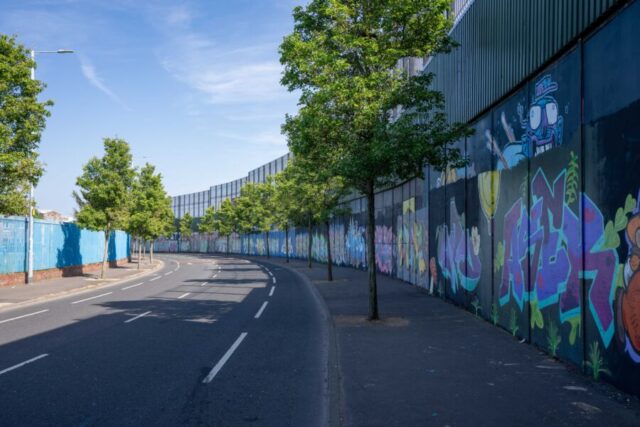
Think about this in terms of your European sightseeing: In Europe, most walls you see are historic — a vestige of a long-fallen empire, and a souvenir of a more dangerous time for humanity. Walls from our modern age universally ugly — whether it’s the electrified fences of concentration camp memorials; fragments of the now-toppled Berlin Wall; or the “Peace Wall” separating sectarian communities in East Belfast. These walls embody division, misunderstanding, anger, hate. In short, a wall represents a diplomatic failure.

Contrast the archaic ugliness of walls to the beauty of bridges.

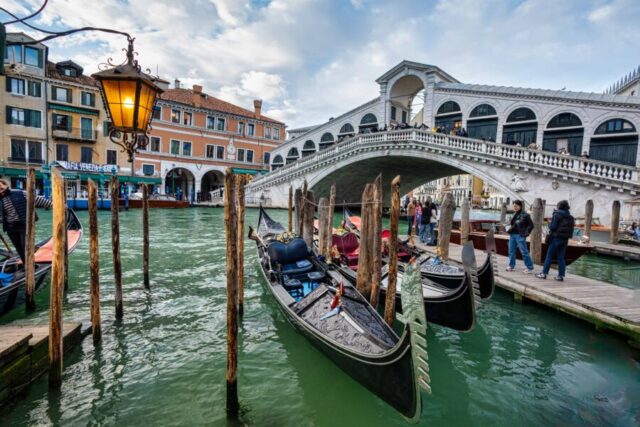
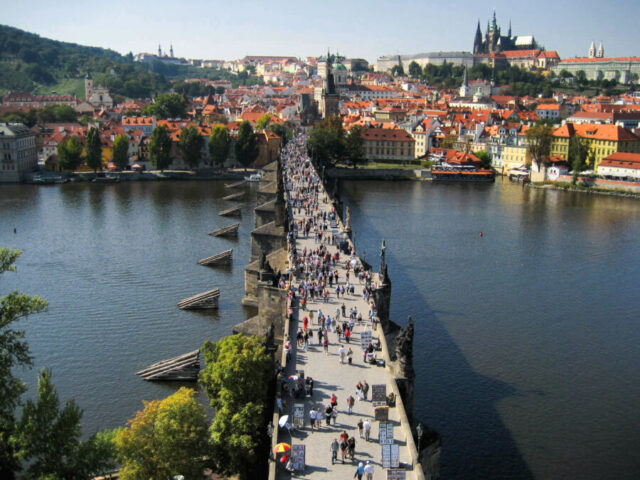
As a practical matter, a bridge connects people and places; it allows the flow of both goods and ideas; it strengthens a city, a country, even an empire. So many great cities are represented by an iconic bridge.

The symbolism of bridges is so powerful that it’s integral to the design of Europe’s common currency. Europe chose the bridge — not the church, not the city hall, and certainly not the wall — as its dominant symbol. That’s why every single euro banknote features an image of a bridge, each representing a different architectural era.

And what’s on the other side of each banknote? A doorway — that’s right… a passage through a wall.

At Rick Steves’ Europe, we are encouraging Americans to travel boldly into an increasingly uncertain world in 2026. Travel is, in part, a practical matter: How to avoid crowds, high prices and heat waves; getting comfortable with new red tape and AI trip planners. But if you’re doing it right, travel can be much more. It can be transformative — both for the traveler, and for the planet they inhabit and explore.

When we travel, we have an opportunity to forge people-to-people connections that cross borders and span oceans. Going to Europe provides us with a priceless opportunity to build bridges.

Now more than ever, travel is not just a privilege — it’s a responsibility. When you hit the road in 2026, enjoy yourself! But also strive to be a good ambassador for the USA. Because our country needs good ambassadors now like never before.


This post is based on my recent “State of Travel 2026” talk for our Travel Festival — which you can watch, for free, in its entirety.

I’m heading out in a few weeks for the first of three European trips. On my list for 2026: Berlin, Munich, and Vienna; Greece’s Crete and the Peloponnese; an alpine road trip, from Germany’s Bavaria to Austria’s Tirol to Italy’s Dolomites to Slovenia’s Julian Alps; and a return to some of my old favorites: Croatia, Slovenia, and Bosnia-Herzegovina. If you’d like to hop in my rucksack and join in my travels, be sure to follow me on Facebook and Instagram.

Most of those trips are in service of updating our series Rick Steves guidebooks — the best possible all-around tool for planning your trip.

My well-traveled colleague Travis Parker keeps up to date on topics just like these on our Updates and Insights blog — an essential resource for tracking what’s new in Europe right now.

Wherever you’re headed, happy travels in 2026!

10 European Discoveries for 2026

Looking for something a little different in your 2026 travels?

As Europe continues to struggle with “overtourism,” the best advice for avoiding crowds… is to visit places that don’t have them. That’s the spirit behind my European Discoveries (which I’ve been sharing each January, dating back to 2018). You could also call them “Alternatives” to some of Europe’s biggest-name destinations: towns, cities, and neighborhoods to help you discover a more authentic slice of Europe.

To be clear: These are not “trendy” or “hot” destinations for 2026. Quite the contrary! These are wonderful places that are (for now, at least) flying under most travelers’ radar. As more and more visitors are heading to the same predictable places, these 10 Discoveries (and so many more) are a reminder that there’s always more to experience in Europe.


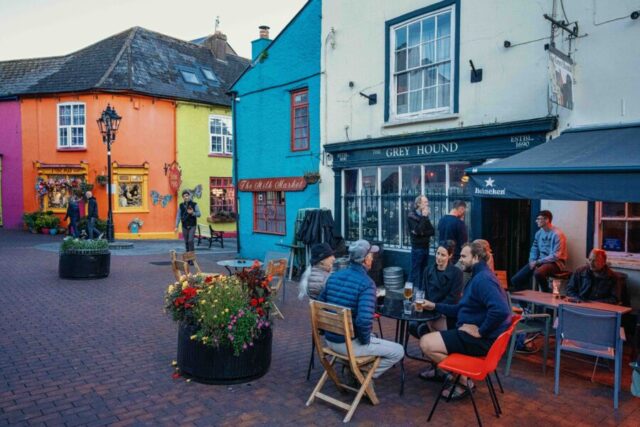
Kinsale, Ireland

Ireland specializes in tidy towns. (In fact, they have a contest!) And perhaps the tidiest is colorful Kinsale, tucked on the southern coast, overshadowed by big, busy Cork.

Overlooking its charming harbor, Kinsale remains mellow and sweet. It’s just the right size: manageable and village-like, but with enough great restaurants, trendy boutiques, and Guinness-and-trad-music-fueled pubs to keep you plenty busy. Scattered around Kinsale are benches situated just so, perfectly positioned to savor the small-town charm.

Kinsale is so low-key and unassuming, it’s easy to miss its epic history: The Lusitania was famously torpedoed just offshore in 1915; the Titanic set sail from Cobh, just around the headland; and the town is still protected by a vast and imposing 17th-century fortress with ramparts and turrets you’re welcome to prowl. With so much history, thank goodness Kinsale also comes with a wonderful daily town walk (offered by tour guide Barry Moloney) to pull it all together.

Visitors often zip right past on their way to trendy (and touristy) Dingle. But that’s a shame; for small-town Irish charm, Kinsale is hard to beat.

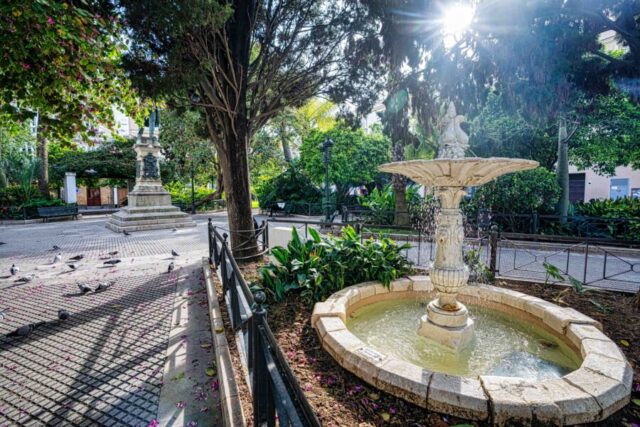
Cádiz, Spain

Deeply lost in Cádiz’s claustrophobic lanes of towering townhouses, where neighbors stand on doorsteps to chat and joke, I kept having deja vu for Naples — with its similarly convivial warren of lived-in lanes.

Among Spaniards, Cádiz is known for having its own strong personality; for its impenetrable local accent; and for producing more than its share of comedians. Among travelers, it’s mostly known as a cruise port — a place to leave on excursions into Andalucía. The city is overshadowed by its historic rivals — Sevilla, Granada, Córdoba — and by the beaches of the Costa del Sol.

All of this makes Cádiz a particularly wonderful discovery: This city plays “second fiddle” to nobody; it’s simply its own wonderful place.

Originally founded by the Phoenicians, Cádiz is often billed as the oldest continuously inhabited city in Western Europe. Its historic quarters are layered with artifacts, from a recently uncovered Roman amphitheater, to its crumbling cathedral (built at a time when Cádiz was Spain’s primary trade port and tether to the New World), to Napoleonic cannons seized after a failed siege and used as curb protectors. Cádiz gives historians goosebumps.

It’s also purely enjoyable. Endless paseo-and-shopping streets — lined by genteel captains’ mansions — burrow through the historic center. Flamenco clubs and sherry pubs invite you in for a spell, as do lush parks and colorful seafront promenades. Long, languid beaches stretch for miles along the causeway that tethers Cádiz to the rest of Spain.

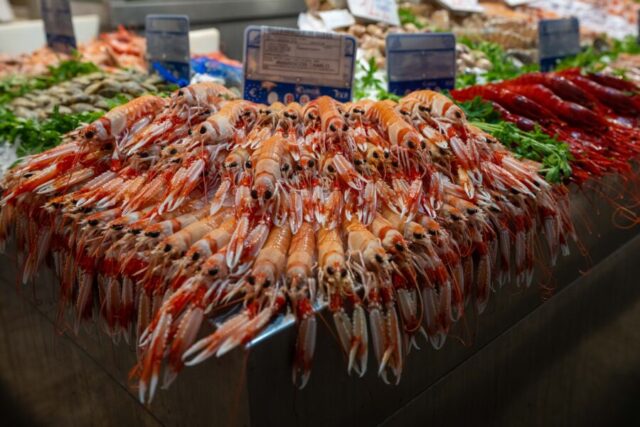
But where you really feel the heart and soul of Cádiz is its central fish market. Ringed by a variety of enticing food stalls, the main hall — like a temple to the sea — is filled with the day’s catch. On one table are the little shells that the Phoenicians used to create a distinctive red-purple dye, still associated with royalty. On another are oysters, just like the ones whose compressed shells created an “oyster stone” that much of the city is built of. And all around you bustle the Gaditanos — doing their shopping, socializing in their distinctive dialect, and enjoying their special city.

Ålesund, Norway

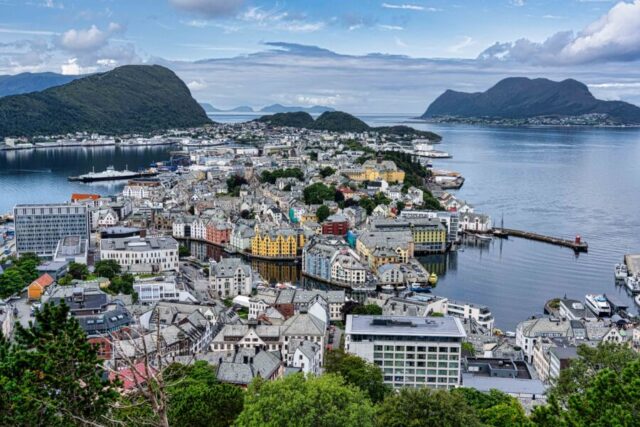
Imagine a Technicolor townscape, draped over countless islands, islets, and rocks, hemmed in by towering mountains, with the North Sea on the horizon. As you summit a stony hill that rockets up from the main shopping street, this city opens up like something out of a fantasy novel… a mirage of serene Norwegian beauty.

Ålesund (OH-leh-soont) is no mirage. The brick-and-stone city perches on the rugged west coast of Norway, just north of most tourists’ itineraries. Burned to the ground in 1904, Ålesund was rebuilt in eye-pleasing Art Nouveau — giving it a wonderful architectural cohesiveness, fitting for its idyllic setting.

A stroll around the harbor passes both grand turn-of-the-century warehouses (now fancy hotels and restaurants) and hardworking shiplap sheds, and around each bend, that eye-popping setting takes your breath away.

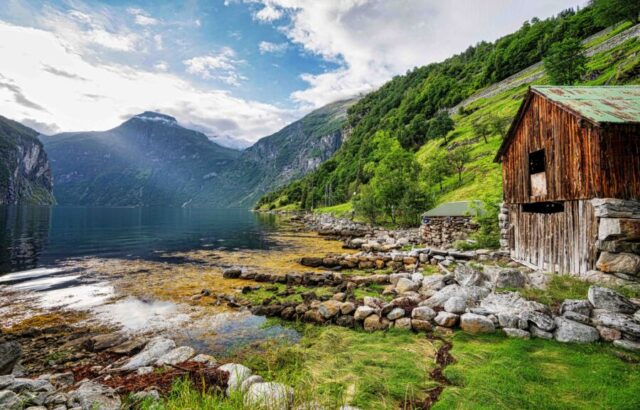
Beyond its own charms, Ålesund is the natural jumping-off-point for world-class scenic wonders. Within a couple of hours’ drive, you can conquer the famously twisty Trollstigen road or make your way to a rustic cabin on the tranquil shores of the grand and unspoiled Geirangerfjord.

Sitting in my Ålesund hotel room, overlooking the fjord, I kept hearing the Splash! [giggle] … Splash! [giggle]… Splash! [giggle] of people running from the sauna to leap direct into those icy-cold-in-August waters. Few places have a more harmonious melding of nature and urbanity.

Palace District, Budapest, Hungary

When you have the joy of visiting the same city again and again, over a long period of time, it’s rewarding to watch a neighborhood gradually blossom and come into its own. And before returning to Budapest in 2025, several of my Hungarian friends reminded me to check out the up-and-coming Palace District.

The streets surrounding the Hungarian National Museum are home to many aristocratic palaces — and, increasingly, creative restaurants, bars, and shops (including Tasting Table, a well-curated wine shop).

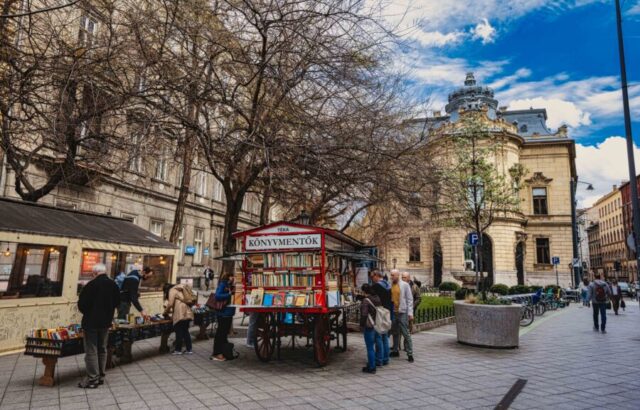
Going for a stroll, I found my way to the atmospheric, ivy-covered courtyard of the Chamber of Hungarian Architects, enlivened by an open-air tapas bar. A half-block father, I popped out into Szabó Ervin Square — with an oh-so-European bookseller kiosk, lively café tables, and a distinctly Parisian ambience.

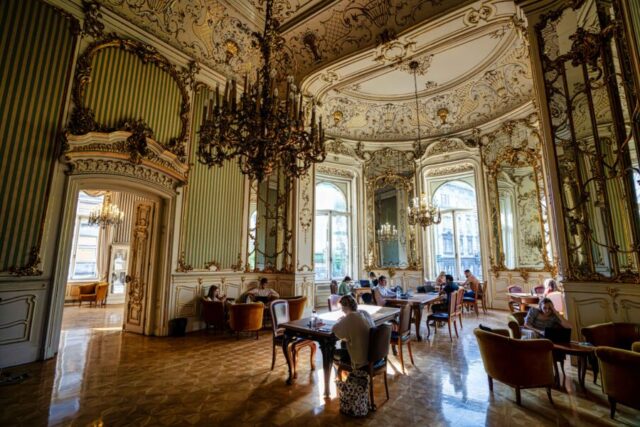
Facing that square is the Palace District’s (and, perhaps, Budapest’s) most delightful discovery: The flatiron-style Ervin Szabó Library bustles with students and other locals; you’d never know that, for a modest entry fee, you can ride the elevator to the fourth floor to discover a stunning series of opulent Neo-Baroque rooms where students huddle over their laptops. (Shhhh!) Once the lavish apartments of a wealthy family, today the former ballroom, dining room, boudoir, and smoking lounge are retrofitted with long study tables. Massive chandeliers, gilded curlicues, and frilly old stoves retain a golden age elegance. Highlights are the glittering hall-of-mirrors ballroom, which could host parties for up to 500 guests; and the homey smoking lounge, with its wood paneling and double spiral staircases.

Hidden gems like this library abound in Budapest — a magnificent city that’s uniquely adept at melding the past and the present. And the Palace District is a prime example of an untouristy corner of a great city that rewards exploration.

Padua, Italy

Yes, Italy is crowded. But it also has a remarkably deep bench; it’s easy to find rewarding, relatively untrampled alternatives just as good as the biggies. And Padua (or Padova, as locals call it) is exhibit A.

Just a 15-minute express train ride from the throngs of Venice, Padua is famous for its historic university; for its rebellious spirit (as a crucible of what became the Risorgimento); for its artistic treasures (the lavishly Giotto-illustrated Scrovegni Chapel); for its religious importance (as the adopted hometown of St. Anthony, now honored by a massive basilica); and for its thriving food scene, including perhaps the grandest market hall in Italy.

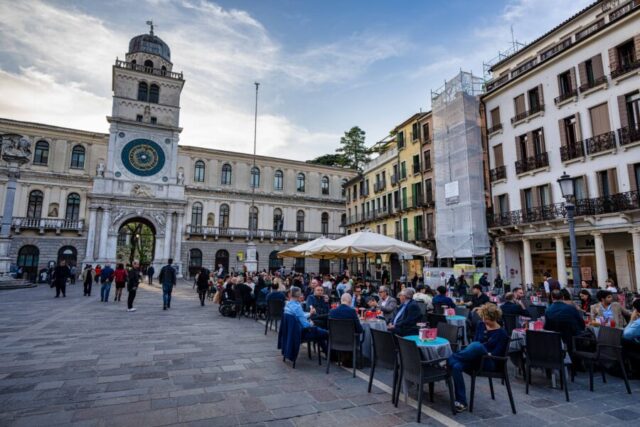
While there’s plenty of rewarding sightseeing, perhaps Padua’s greatest draw is simply its take-your-time ambience: just-right piazzas packed with chattering students, whiling away their evenings at al fresco cafés, nursing budget drinks. In a town full of young locals eager to practice their English, it’s exceptionally easy to connect.

One evening, just as the sky was turning pink, I came to the main square — facing that grand market hall — and lined up at La Folperia, a ramshackle stand selling plates of chopped-up squid, octopus, and other sea creatures, all smothered in a delicious garlic-and-olive-oil sauce… plus some rustic bread for sopping up the juices. That, along with an aperitivo from the neighboring Bar dei Osei, bought me an unforgettable meal in a magnificent setting for budget prices.

Freiburg, Germany

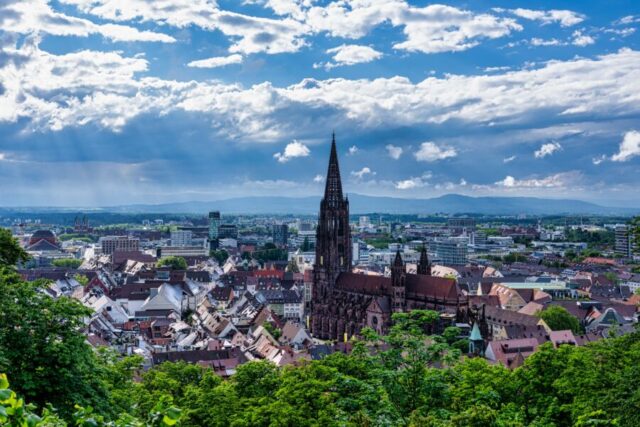
Germany abounds with beautiful, interesting small cities, each with its own personality and claims to fame. My sentimental favorite is Freiburg, tucked in the Black Forest at the country’s southwest corner. I have a soft spot for Freiburg: One of the professors who taught me German came from here (so I probably have a slight Freiburger accent), and it was also the first place I ever set foot in Germany (on a side-trip from nearby Basel, Switzerland).

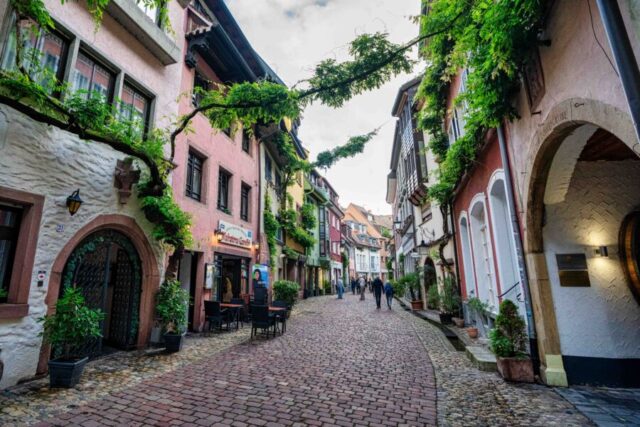
Returning recently after many years, I found Freiburg even more delightful than I’d remembered — and not just because of sentimentality. This pristine mid-sized university city abounds with half-timbered charm and an outstanding food and nightlife scene (including far more than its share of Michelin stars). It’s cuddled up cozily against forested hills, easily conquered on a gentle hike (or quick ride on an elevator or lift) to an outrageously scenic beer garden. The city spins around the massive, pointy, soaring tower of its centerpiece red-sandstone Münster (cathedral).

My favorite Freiburg feature? It has to be those little gurgling canals called Bächle, which flank every street through the pedestrian-friendly town center. These open-air drainage ditches once carried unthinkable muck; now, like Freiburg, they’re simply pristine, tidy, and flowing with clarity, character, and charm.

Folegandros, Greece

When I set out to “discover” some new islands for our Rick Steves Greece guidebook, I had something very specific in mind: a small, out-of-the-way island, just “mainstream” enough to be easy and comfortable for visitors without being overrun by crowds, that might offer our readers an untrampled and idyllic Cycladic experience. This mythical place, I figured, probably did not exist.

In fact, it does exist. And it’s called Folegandros.

Although it’s right on the boat line between Santorini and Milos, teensy Folegandros gets overlooked. While truly “untouristy” Greek Islands are elusive, Folegandros hits the sweet spot: It’s popular not with cruise ships or fashion-forward partiers, but with British and Northern European visitors who want to settle in for a week or four, slow down, eat well, enjoy village ambience, and melt into the stony islandscape. In short, Folegandros attracts the “right kind” of visitors.

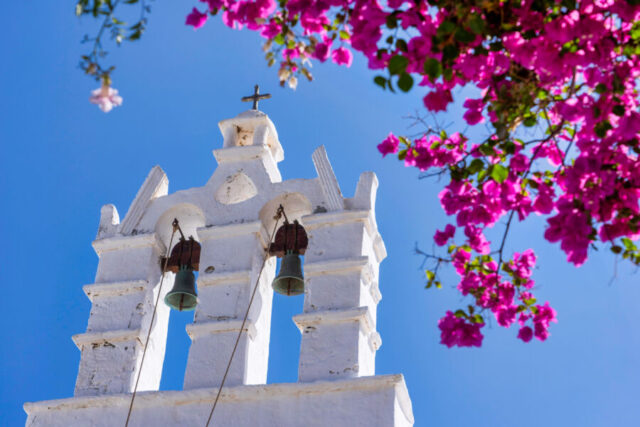
On my first stroll, I was instantly smitten with the main town’s stage-set historic core. Each little square had more character (and enticing restaurant tables) than the next: melting-marshmallow churches; bright-pink pops of bougainvillea; tidy blue trim around each window to match the striking clarity of the giant Greek sky; snoozing cats on rickety wicker chairs; and a “slow down and savor the ouzo” ambience.

There’s not much to “do” in Folegandros. In fact, that’s the point. Buses fan out to humble beaches; the rocky, desolate interior attracts a few hardy hikers; and most vacationers arrange their day entirely around their next breakfast, lunch, and/or dinner.

To burn some of those calories, a serpentine stone staircase twists up, up, up to the summit above town, where a giant white church hogs the best views. Hiking up late in the day (with, it seems, everyone else on Folegandros) rewards you with views over the entire tiny island… and a spectacular sunset.

Taking a moment to give my eyes a break from the deep-red sun — and to scribble a few notes in my little black book — I just couldn’t wait to share this discovery with our guidebook readers… and now, with you.

Liverpool, England

Liverpool, as a tourist destination, used to be all about the Beatles. And even if all you wanted from Liverpool was Fab Four lore… that would be enough.

However, over the 15 or so years since my last visit, Liverpool has really come into its own; returning recently, I saw how it’s been transformed from a diamond in the rough to a polished gem.

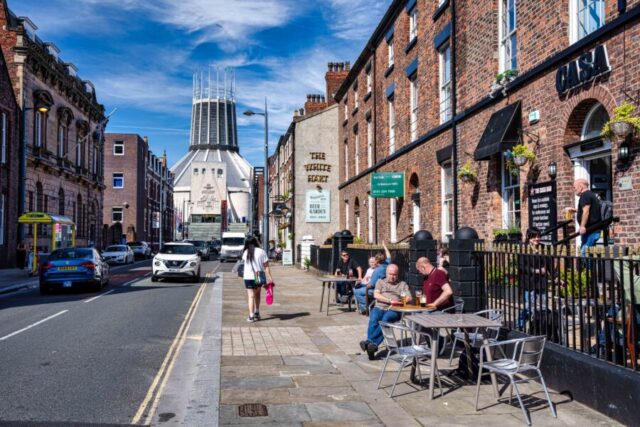
Once Britain’s main industrial port, Liverpool was walloped by the Blitz in World War II (when it was the base of British naval operations). John, Paul, George, and Ringo grew up in a hollowed-out shell of a city; only in the last generation or so has Liverpool been rejuvenated with a skyline that’s half industrial-red-brick, half sleek glass-and-steel.

For the sightseer, Liverpool has a wonderful art collection (locals brag, second only to London’s National Gallery); excellent history museums; and not one, but two gigantic cathedrals: one Anglican, the other Catholic, both architecturally arresting… and connected by a street called Hope.

Home to three different universities, Liverpool is noticeably youthful, with one of the UK’s most appealing food scenes and music clubs pumping tunes from live bands out into the street. Chatting with the witty, endearing Liverpudlians — even if it’s about nothing at all — is the undisputed highlight of any visit.

For Beatles fans like me, Liverpool is simply thrilling — with multiple museums, bus tours, music bars, and the opportunity to tour the childhood homes of John Lennon and Paul McCartney. But even if you don’t know Ringo Starr from Pete Best, Liverpool is a delight… arguably the UK’s best big-city destination outside of London.

Mikulov Wine Region, Czech Republic

So many travelers insist on going to the most touristy places in Europe, at the most touristy times, and then come home complaining about all the tourists. When I hear this, one word jumps to mind: Mikulov.

This small Moravian town — and the surrounding landscape of castles and vineyards — is the antidote to overtourism. If I had to come up with just one “poster child” for a wonderful European destination that’s shockingly undiscovered by American visitors, it might have to be Mikulov.

The town is huddled around the base of a mighty château; the panoramas late in the day are enchanting… almost Tuscan. In the cobbled streets, cozy enotecas and high-end yet affordable restaurants abound. While onion-domed churches predominate, the town also features a gorgeously restored 16th-century synagogue.

The landscape surrounding Mikulov is ruffled with limestone hills and striped with vineyards. A short drive — no more than 15 or 20 minutes on pleasant rural roads — takes you to a variety of fine towns and memorable sights.

Two châteaux vie for your attention: Valtice Castle, guarded by two giants, houses the Czech national wine salon — a seemingly infinite cellar where you can sample your choice of well over 100 vintages (handpicked and lovingly described by wine experts).

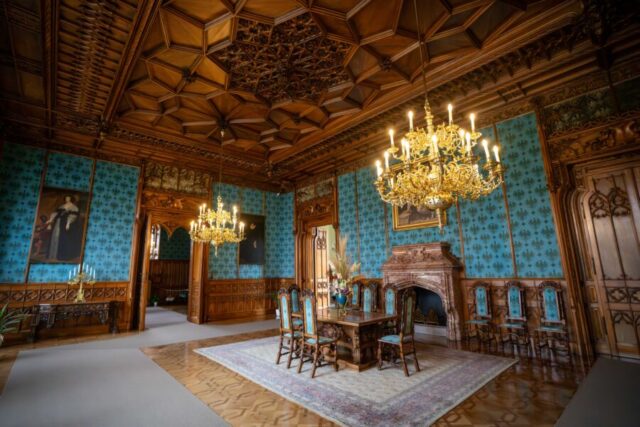
And Lednice Castle is simply a stunner, rebuilt in meticulous English Neo-Gothic style. Its jaw-dropping interior includes a lacy-delicate spiral staircase made out of a single oak tree with no nails. And beyond the château are sprawling gardens with a giant greenhouse, a minaret, and endless trails for walking and biking.

Beautiful… tasty… affordable… uncrowded… accessible… largely undiscovered. That’s Mikulov. The problem: Its existence robs you of the ability to go to yet another crowded “bucket list” town only to complain about the crowds.

Jutland, Denmark

What was the most purely enjoyable 36-hour stretch in my 100 days of travel last year? I never would have guessed it — but I think it was Denmark’s Jutland.

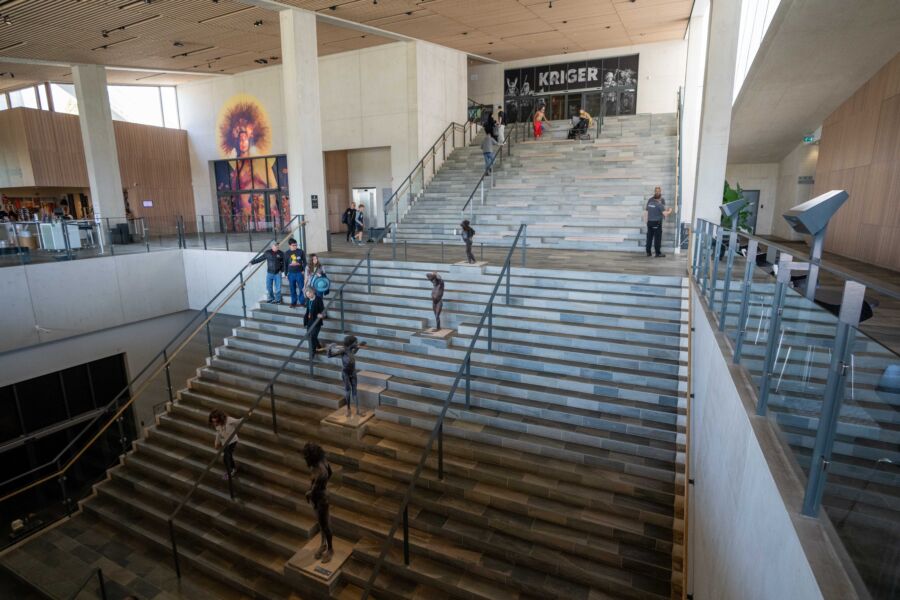
Jutland, three hours’ journey west of Copenhagen, is anchored by Denmark’s second city, Aarhus — a center of students, business, and industry with a cutting-edge food scene and outstanding sightseeing, including the remarkable ARoS Museum (where the architecture upstages the art) and one of the best open-air folk museums anywhere.

Heading out of town, I stopped off at the Moesgård Museum, which combines astonishing artifacts — including the Grauballe Man (found perfectly preserved in a bog 2,000 years after his death) — with beautiful storytelling and high-tech exhibits to create a powerful experience.

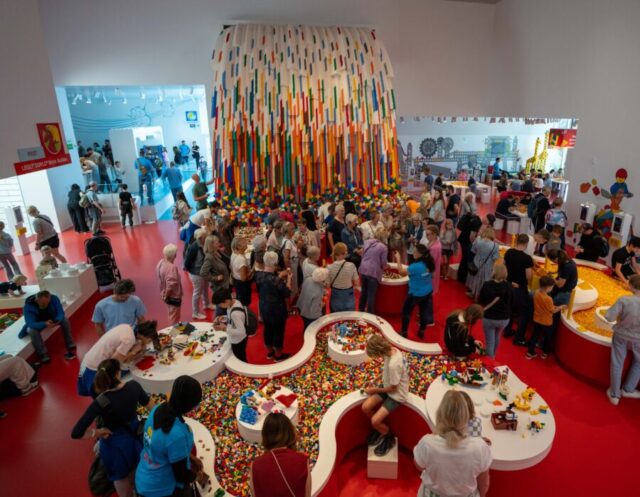
An hour down the road took me to Jelling, where I ogled Harald Bluetooth’s thousand-year-old rune stones (often called “Denmark’s birth certificate”). Then to Billund, the birthplace of Lego. While my afternoon enjoying thrill rides at the original Legoland amusement park was a hoot, even better was my visit the next morning to the Lego House: a state-of-the-art space with hands-on displays, endless Lego creations to scrutinize, and literally millions of bricks to build with.

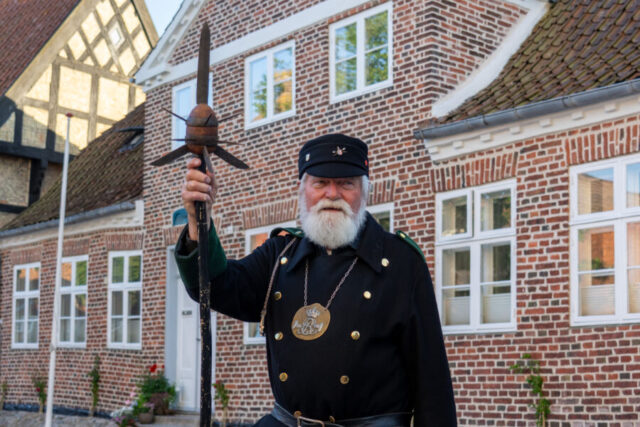
But my day wasn’t over. From Billund, I hopped in my car for a glimpse of the sand dunes (and haunting Nazi-era bunkers) of Denmark’s west coast, winding up in the quaint medieval town of Ribe — oozing with medieval half-timbered charm. Ribe’s towering Romanesque cathedral happened to be hosting a community choir concert; slipping out a few minutes early, I joined the free, entertaining, and informative night watchman’s tour.

Heading back to my car (with the sun still low in the sky at 10 pm), I thought to myself: Was it really just yesterday morning that I left Aarhus?

How many of these Discoveries have you visited? (Or plan to visit in 2026?) And what Discoveries am I missing? Add your favorites in the Comments.


All 10 of these Discoveries are covered in the applicable Rick Steves guidebooks. And several of these stops — including Kinsale, Cádiz, Budapest, and Padua — appear on various Rick Steves tour itineraries.

You can also look back at my Discoveries from 2025, 2024, 2023,  2021, 2020, 2019, and 2018… all still great choices.

For more inspiration — and practical tips — for your 2026 travels, join me on Wednesday, January 14 for a free session of our virtual 2026 Travel Festival. In this “State of European Travel 2026” talk, I’ll be covering updates, insights, trends, and tips for this year’s travels. Designed to be the most useful hour possible for anyone heading to Europe this year, it’s free to attend — just sign up in advance.

If you’d like to travel along with me in 2026, be sure to follow me on Facebook and Instagram.

Finally, consider checking out my travel memoir, The Temporary European: Lessons and Confessions from a Professional Traveler.
Europe’s Best Museums? They Have a Type.

What are the best museums and sights in Europe? Or, more specifically, what are the best types of sights?

I’m wrapping up guidebook research after spending 10 weeks on the road, split over three trips in Spain, Morocco, England, Denmark, the Czech Republic, Slovakia, and Hungary. Looking back, I realize that most of my favorite sightseeing experiences fall into a few categories that go beyond the predictable churches, castles, monuments, and big-name art museums. And so, I brainstormed this admittedly subjective list: not just a roundup of my personal favorite sightseeing in 2025, but also a broad-strokes look at five categories of sights that I find especially rewarding.

Whether you’re planning a trip to these destinations, or looking for inspiration for a trip anywhere, I hope these “types of sights” encourage you to consider some attractions that might, at first glance, be easy to overlook — but that merit some of your limited time.

1. The Endearing Local History Museum

In the sweet town of Keswick, deep in England’s bucolic Lake District, there are two options for a rainy day: Hike and get wet… or find something indoors. I opted for the latter and visited the Keswick Museum, which fills a historic Arts and Crafts-style hall in a lush park. I was unexpectedly charmed by how this place harnesses a chipper community spirit to make the story of this small town surprisingly engaging.

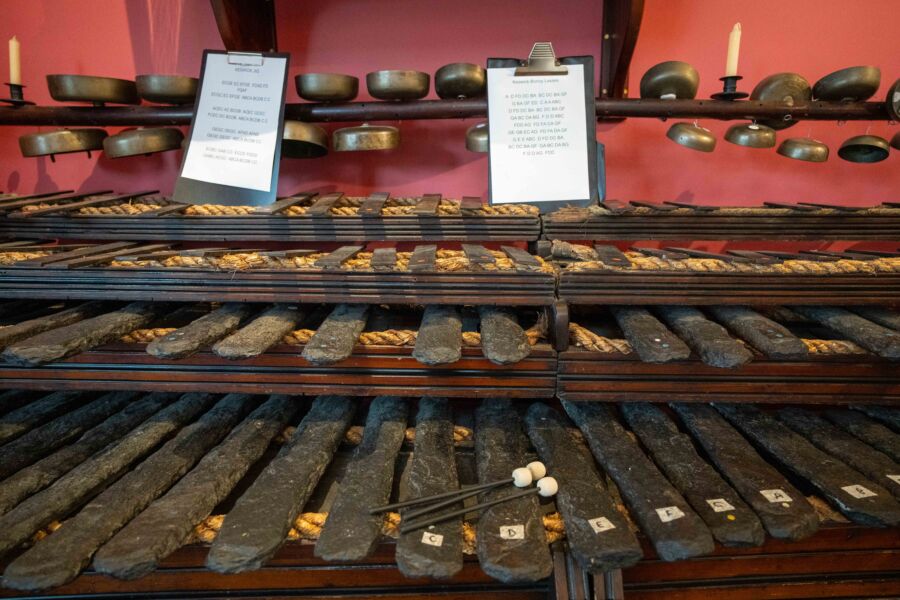
While modest, the Keswick Museum is more than the sum of its parts. It features a well-curated assortment of local artifacts, from a surveyor’s gigantic 1825 relief map of the Lake District (suspended on the wall) to a variety of items relating to the flourishing of Keswick as a tourist destination (including the earliest known guidebook to the town, from the early 1910s). The highlight? “Musical stones”: naturally resonant chunks of slate that someone has whittled down to the perfect tone, then set up as a xylophone for playing tunes. There’s also a gallery where museum volunteers take turns researching and installing their own temporary exhibits. How delightful!

Sure, they ain’t the Louvre or the Prado. But wonderful local history museums around Europe, when done well, can really bring a place vividly to life. Some, like Keswick, are in small towns or even villages. One of my favorites is the Herring Era Museum in Seyðisfjörður, Iceland, which explains how that little fish revolutionized not only the local economy, but made Iceland a financially viable independent nation. I’ve also enjoyed the one in Zermatt, Switzerland; the scrappy hilltop museum on the isle of Folegandros, Greece; and the Appenzell regional museums in the towns of Appenzell, Stein, and Urnäsch, Switzerland.

Others are in big cities, designed to help visitors get their heads around the local identity and the role that place played in the story of Europe. Excellent ones are in Zagreb, Croatia; Lausanne, Switzerland; Liverpool and Bristol, England; the Bryggen Museum in Bergen, Norway; the Musée Basque in Bayonne; and the Riverside Museum in Glasgow, Scotland.

2. The Single-Artist Museum

While wide-ranging art museums can be delightful, I find myself especially drawn to a museum devoted entirely to one artist, often displayed in the home in which they actually lived. In England’s Lake District, William Wordsworth’s Dove Cottage and Beatrix Potter’s Hill Top Farm both had me imagining the writer hunched over a desk, creating their masterpieces.

In Hungary’s Szentendre — just up the Danube from Budapest — I enjoyed getting to know the expressive, poignant sculptures of Margit Kovács.

In Córdoba and Ronda, Spain, I marveled at the works of two talented artists I’d never heard of before: Julio Romero de Torres and Joaquín Peinado, respectively.

On past trips to France, Albi’s Toulouse-Lautrec Museum deepened my appreciation of the works of an artist I only thought I was familiar with. And the former home of Claude Monet in Giverny, France, is a pilgrimage for lovers of his works, who stroll through the lily-padded gardens that inspired him.

The best example I visited in 2025 (and one of the best anywhere) is the National Trust’s tours of the childhood homes of John Lennon and Paul McCartney. After meeting at a suburban Liverpool train station, your small group hops on a minibus for the short drive to each house, where you’re welcomed by an impressively well-versed docent who does an insightful intro chat, then sets you free to roam the same halls, kitchens, bedrooms, and loos where two of history’s greatest songwriters spent their formative years. Not really a Beatles fan? The homes also provide wonderful social-historical insights into the everyday lives of working-class Liverpudlians in the 1950s. This remarkable experience combines being in proximity to tangible details — the pinups over John’s boyhood bed, the well-worn piano in Paul’s living room — with gaining a strikingly intimate understanding of two boys, becoming young men, who would change the world. For example, I learned that both Paul and John had lost their mothers at a very young age — perhaps providing them with an unspoken kinship that sustained their fruitful, fitful collaboration.

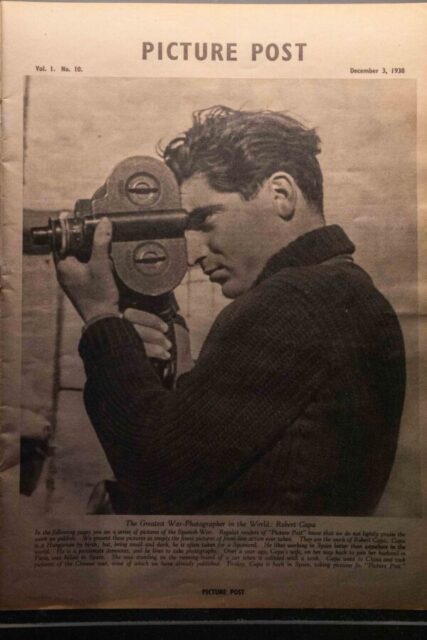
Another mind-blowing “one artist” museum I visited this year was the Robert Capa Center in Budapest, Hungary. I knew little about the Budapest-born photographer, but after spending an hour and a half here, I am a fan. Like a mid-20th-century Forrest Gump, Robert Capa traveled the world during one of its most tumultuous eras — documenting the Spanish Civil War, the First Sino-Japanese War, the Allied campaigns in North Africa and Sicily, the D-Day landings at Omaha Beach, the liberation of France, the creation of Israel, and the early days of postwar communism in Hungary and the USSR. He also snapped intimate slice-of-life portraits of Picasso, Matisse, Hemingway, Ingmar Bergman, and many others. The museum displays Capa’s most iconic images and tells the improbable life story of this eyewitness to history.

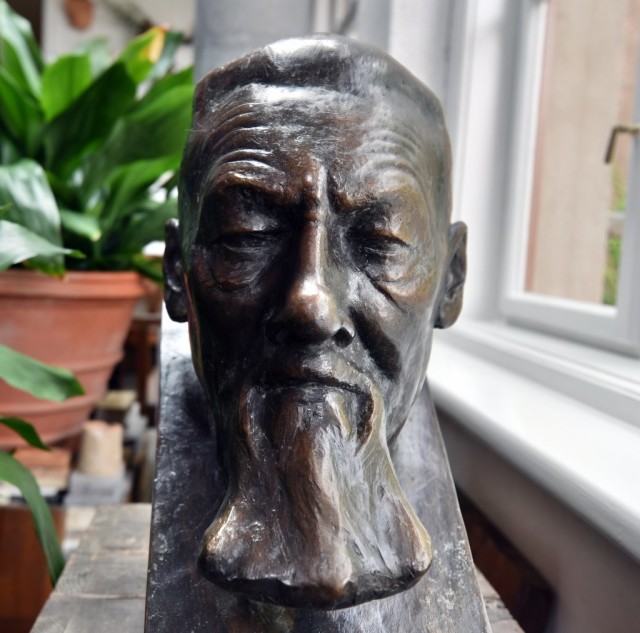
My all-time-favorite “one artist” home is devoted to an architect that many have never heard of: Jože Plečnik, who reshaped the Slovenian capital (and his hometown), Ljubljana, and also carried out major works in Prague, Vienna, and other cities. Still furnished with unique, Plečnik-designed furniture, one-of-a-kind inventions, and favorite souvenirs from his travels, the Jože Plečnik House paints an indelible and unusually intimate portrait of an artist.

Yet more “one artist” museums to consider around Europe: the Seidel Photo Studio Museum, in the Czech town of Český Krumlov; the Rodin Museum in Paris; the Salvador Dalí sights outside of Barcelona (Cadaqués and Figueres); the Ivan Meštrović Museum in Split, Croatia; the Charles Rennie Mackintosh House at Glasgow University in Scotland; the Rembrandt House Museums in both Amsterdam and Leiden, Netherlands; the Hans Christian Andersen House in Odense, Denmark; the Mozart sights in Salzburg, Austria; the Albrecht Dürer homes in Nürnberg and Wittenberg, Germany; Edvard Grieg’s Troldhaugen, just outside of Bergen, Norway; and The Secession in Vienna, with its Gustav Klimt paintings and distinctive “golden cabbage” dome.

3. The Single-Topic “Deep Dive” Museum

Some museums are a mile wide and an inch deep — trying to cover too much territory and doing none of it well. Many of my favorites take precisely the opposite approach: going all-in on a single, extremely narrow topic, probing the depths of all its fascinating details. (Of course, you could put most of the “single artist” museums, above, into this category as well.)

One of the best in this vein is the magnificent Vasa Museum in Stockholm, Sweden. The entire museum is literally and thematically built around a single item: the massive warship Vasa, which sunk to the bottom of Stockholm Harbor 40 minutes into her 1628 maiden voyage. More than three centuries later, the ship was rediscovered, raised from the deep, refurbished, and became the centerpiece of a state-of-the-art museum that tells the whole story and gets you prow-to-prow with the Vasa herself.

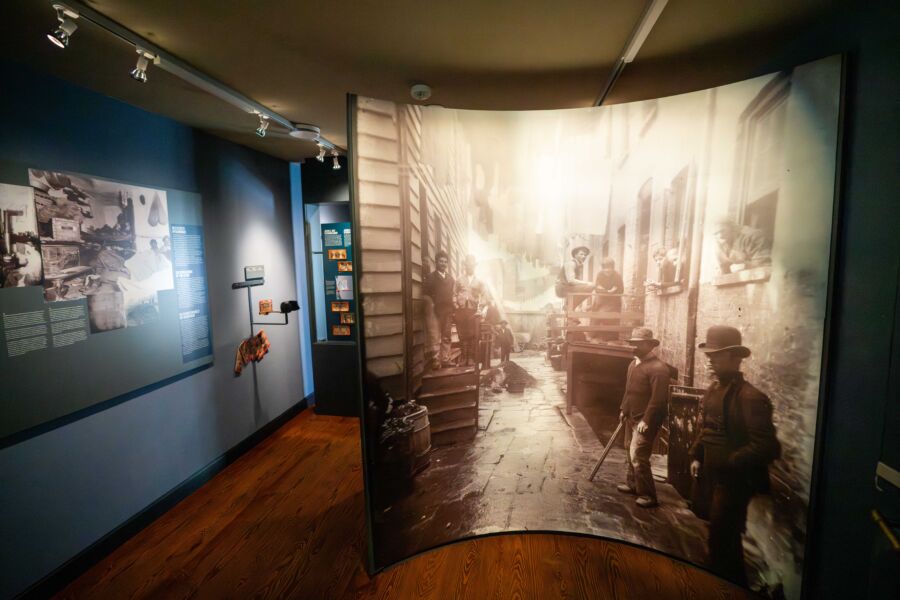
This summer, in charming Ribe, Denmark, I stumbled upon a museum devoted to hometown boy Jacob Riis (1849-1914). Despite the ticket-seller’s assertion that Riis was the most important Danish-American of all time, I was embarrassed to admit that I knew nothing about him. The exhibit set me straight, eloquently telling the tale of this Danish émigré who documented the plight of the desperately poor — mostly immigrants — who lived in the squalor of New York City’s tenements (and eventually published a seminal exposé, How the Other Half Lives). It was inspiring to learn how, by harnessing and pioneering the rapidly evolving medium of photojournalism, Riis brought about reforms that improved the wretched lives of the people he documented. Riis also became close friends with President Theodore Roosevelt, who called him both “the most useful citizen of New York” and “the ideal American.”

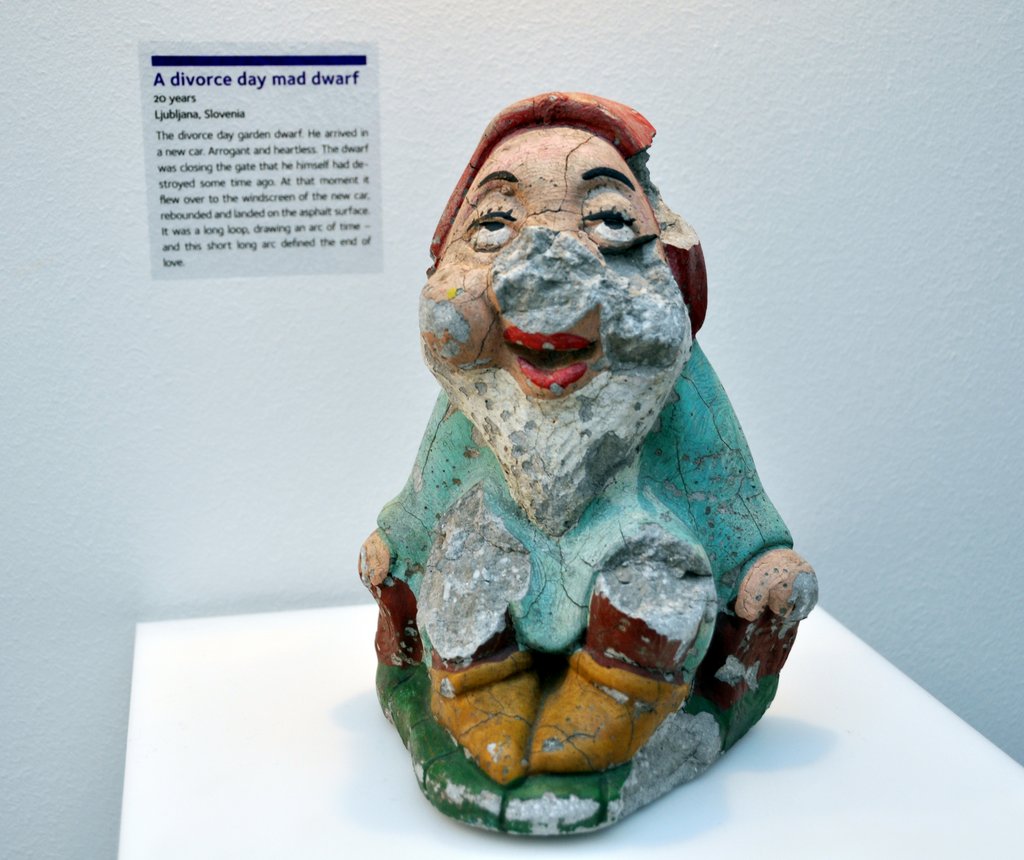
Sometimes that “single topic” is unexpected, even startling. The Museum of Broken Relationships, in the Croatian capital of Zagreb, displays a variety of items that each come with a complicated story of a now-defunct relationship — from a love-at-first-sight romance that burned out, to the loss of a dear friend or parent, to becoming disillusioned with a favorite politician. Touching, witty, and incredibly human, this museum is a good reminder to take a chance on sights that may seem quirky at first blush.

Thinking back on other examples of the “deep dive” style of museum, I realize the Netherlands is particularly adept at this approach: In Amsterdam, you have the famous Anne Frank House, of course, but also a Pipe Museum, a Houseboat Museum, and a Museum of Canals, while nearby Leiden has the Pilgrim Museum. Ireland also has a knack for these, from the Irish Wake Museum in Waterford to the Irish National Famine Museum in Strokestown to 14 Henrietta Street in Dublin; the Titanic Belfast Museum straddles this category and the next one. Others to watch for: the Paris Sewer Museum; the Viking ship museums in both Oslo, Norway, and Roskilde, Denmark (plus Oslo’s Kon-Tiki Museum); the Musical Instruments Museum in Brussels; the Olympics Museum in Lausanne, Switzerland; and some that are just plain bizarre, including the Phallological (Penis) Museum in Reykjavík and the Currywurst Museum in Berlin.

4. The High-Tech History Museum

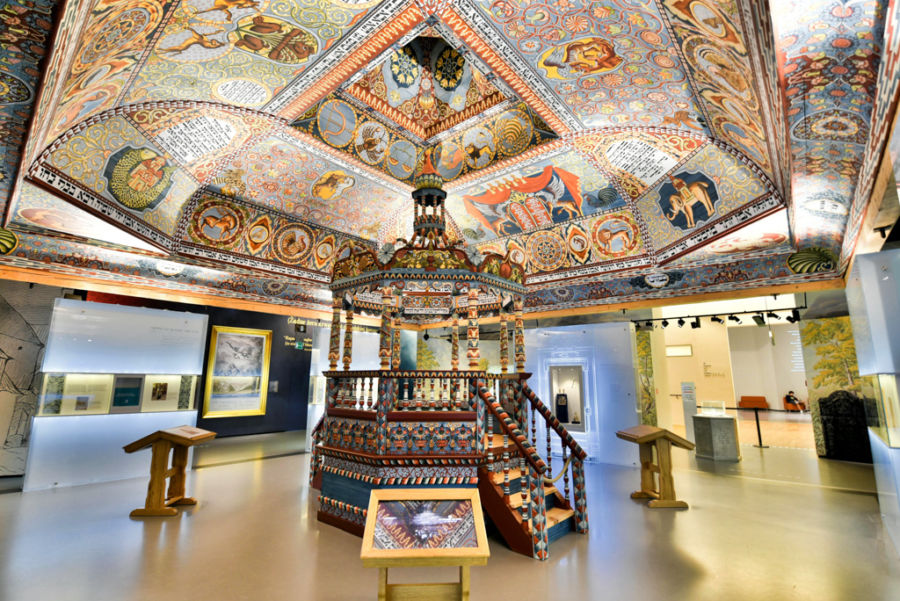
Increasingly, history museums employ clever, high-tech innovations — location-sensing audioguides, sound and lighting effects, wrap-around films, interactive features — to bring to life a complicated or murky bit of history. Frankly, I’m on the fence about this trend: All too often, the whiz-bang gizmos act as a crutch, distracting from the thinness of the actual information. But when combined with impressive artifacts, compelling storytelling, and a clear point of view, these high-tech history museums can be mind-blowing.

Case in point: This summer I toured the stunning Moesgård Museum, just outside of Aarhus, Denmark. The museum was long famous as the home of the Grauballe Man, a remarkably well-preserved Iron Age corpse that was discovered in a nearby peat bog. In 2014, the Moesgård opened a gigantic new purpose-built building with a mission as grandiose as its architecture: combining astonishing artifacts — from prehistoric stone tools and mysterious barrows, to the Grauballe Man, to a perfectly preserved Viking boat — with evocative storytelling and high-tech methodology to create a powerful experience that kindles an appreciation not only for the story of prehistoric peoples in Jutland, but for human evolution in broad strokes. There are also two sprawling galleries hosting temporary exhibits that are at least as good as the permanent one. It instantly became one of my favorite museums, anywhere.

Another favorite is the Museum of the History of Polish Jews (POLIN), in Warsaw, Poland. Built on the site of the onetime Jewish quarter, POLIN is architecturally striking in itself. Inside, it employs a combination of thoughtful storytelling and state-of-the-art presentation to make the absolute most of the scant few artifacts that survive from what was once a flourishing culture. While so many Jewish-themed sights around Europe focus narrowly on the Holocaust, POLIN takes an expansive and enlightening approach to the entire Jewish experience in Poland.

Many of these high-tech history museums focus on one historical era — often World War II, including the Caen Memorial Museum in Normandy, France; the Museum of the Second World War in Gdańsk, Poland; and the Uprising Museum in Warsaw. The museum at the Culloden Battlefield, just outside of Inverness, Scotland, is one of the best of this type. Others are broader in their focus, including the German History Museum in Berlin and the Landesmuseum (Swiss National Museum) in Zürich. And some of the museums described earlier (including the Vasa Museum) could slip into this category, as well.

Artifacts; storytelling; high-tech exhibits: A museum that does all three equally well is rare. But when they hit — they really hit.

5. The Cross-Cultural Structure

Europe’s epic history is the story of successive civilizations layering one upon the other. Often, while a few artifacts survive from centuries past, most of what you see today dates from one or two discrete historical periods. But a few sights manage to capture a broader swath of history in stone, by simultaneously embodying starkly different civilizations in one cohesive structure.
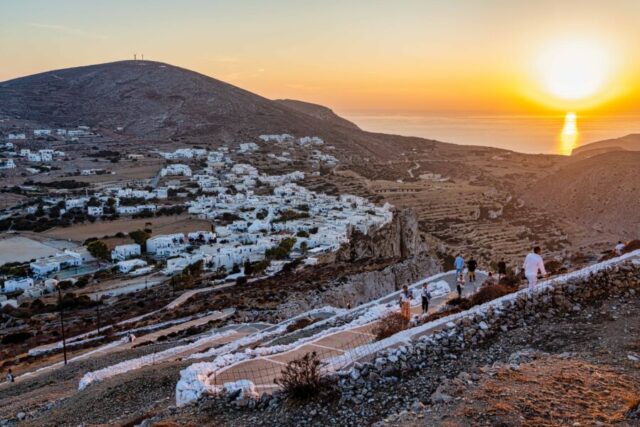

The prime example of this is one of my favorite sights in all of Europe: the Mezquita in Córdoba, Spain. This gigantic structure — a massive box, 400 feet by 600 feet — began as a low-lying Moorish-style mosque, built around 785. Strolling through seemingly endless rows of 800 columns (spanned by graceful double arches), you feel you’ve stepped back to the age of Al-Andalus, when Córdoba was the capital of a sprawling Muslim realm.

But then you turn a corner and — bam! — you’re transported into an entirely different time and place: a towering 16th-century Catholic Baroque cathedral, stretching 130 feet into the air, that was built within that original mosque.

In Split, Croatia, the entire town center (filling the former halls of a Roman palace) gives you this same sensation of “layers of history” — especially the cathedral that sits upon Peristyle Square. The hulking, octagonal hall that forms the core of this building was originally the mausoleum for the Roman Emperor Diocletian, who was born nearby, retired right here, and notoriously tortured many Christians. But the frilly Venetian-style bell tower — and the rich golden decor inside — make it clear that those pagan Romans were soon supplanted by the Catholic Venetians, and later Croatians, who retrofitted Split to their own specifications.

In Pécs, Hungary, the main square is topped by another such structure. The Gazi Kasim Pasha Mosque — originally built during a period of Ottoman control in the 1540s — was later turned into a Catholic parish church (the Church of the Blessed Virgin). Today, its classic mosque architecture is still evident, and upon stepping inside, you observe a hybrid of Muslim and Catholic symbols and styles: striped arches over windows; a large prayer niche (mihrab) with a crucifixion above it; colorful Islamic-style stalactite decorations; and dome paintings that combine Christian angels with the geometric designs of Islam. On the wall is a verse from the Quran, translated into Hungarian and used for Christian worship — a reminder that, as fellow “people of the book,” Muslims and Christians share many of the same foundational principles.

Tangier — Morocco’s closest point to Europe — is another prime spot for these “cultural hybrid” sights. Just off the main square, you escape from the bustle of rumbling delivery vans and buzzing motor scooters into the tranquil garden courtyard surrounding St. Andrew’s Anglican Church — built on land that the sultan offered as a gift to Queen Victoria. There you’re greeted by gregarious Yassin, who wishes “peace be upon you” as he explains how, while the church’s architecture is mostly Islamic, it’s Christian in spirit: The Lord’s Prayer rings the arch in Arabic, as verses of the Quran would in a mosque.

Sometimes it’s not a building but a location. In the heart of old Sarajevo, at the precise point where Sarači street becomes Ferhadija street, you can look in one direction and swear you were in Istanbul, with its cobbles and market stalls; looking the other way, you could easily be in Vienna, with broad pedestrian boulevards and grand Austrian-style architecture.

And speaking of Istanbul, the ultimate example of a “cross-cultural” sight surely must be the Hagia Sophia: an early Christian church, later turned into a mosque, so influential that it became a template for many other mosques across the Ottoman Empire (including the one in today’s Pécs).

All of these sights are a reminder of the full complexity of Europe’s story — and of how few of those layers we actually see in our everyday travels… until we go looking for them.


What are some of your favorite museums in these categories? Or do you have favorite “categories” of sightseeing that I’m overlooking? Share your thoughts in the Comments.

Of course, all of the sights mentioned here — and so many more — are described in detail in our Rick Steves guidebooks.

If you’d like to hear more about my 2025 travels, join me on Zoom Monday, November 10 at 6 p.m. Pacific Time (that’s 9 p.m. Eastern) when I’ll be doing a virtual “Trip Report” for Monday Night Travel. It’s free, as long as you sign up in advance.