Wonderfully Weird: Legos, Doorbells, and Anne Frank

Imagine getting your hands on 25 million Lego bricks — a virtually unlimited supply. What would you build?

I had high hopes for the Lego House in Billund, Denmark. Not only was I eager to write up the experience for the next edition of our Rick Steves Scandinavia guidebook; as someone who grew up playing with Legos, I figured I’d also enjoy it. What I did not expect was an epiphany about human nature. But then, travel is all about the joy of unexpected discovery.

The Lego House is a giant white structure in the middle of a small park in the center of Billund — just up the street from where Ole Kirk Christiansen started his wooden-toy business in 1932. The building looks like it was built from (you guessed it) Legos. Inside, the 50-foot-tall “Tree of Creativity” — made of 6.3 million bricks, its boughs supporting delightful creations — rockets up through the atrium.

Curling up the staircase, you arrive at the Masterpiece Gallery to learn about the AFOL (“Adult Fans of Lego”) community, who specialize in assembling MOCs (“My Own Creations”). These wildly inventive sculptures — which break free from the rigid architectural plans that come with any Lego set — are displayed throughout the Lego House, each one labeled with its creator, who come from all over the world.

From this central hub, the Lego House’s exhibits are organized into “experience zones” that are color-coded to emphasize different qualities that Lego play can bring out: green for socialization; blue for cognitive skills; red for creativity; and yellow for emotional intelligence.

When evaluating sights like this for our guidebooks, I tend to approach them with a healthy skepticism, verging on cynicism. (Are you familiar with my thoughts on Salzburg’s Sound of Music tours?) And it struck me as pretty bold for a plastic plaything to make such lofty claims… covering so many developmental bases in one fell swoop. Was this attraction merely a money-grubbing incarnation of crass corporate commercialization — a massive come-on to hoodwink kids and their parents into sinking even more cash into their Lego collections?

And yet, as I wandered from zone to zone, I found myself completely won over. It wasn’t just the hands-on activities in each section — for example, creating your own “animal with emotions” to upload and dance on a giant screen; or designing and testing a race car at the test track; or the remarkably detailed model of a gigantic city packed with fun-to-scrutinize details and fascinating Easter eggs. (Though I will admit, that was pretty cool.)

No, more than the “exhibits,” what got to me were the people. Huddled around the base of an 18-foot-tall waterfall of multicolored bricks — immersed in a sea of Legos — were people playing, people building, people laughing, people enjoying.

And those people — like the bricks they were stacking together — came in every conceivable type. They were young and old, they were rich and poor, they were Europeans and Americans and Indians and Chinese and Africans… a United Nations of humanity, all playing side-by-side, like a real-life Benetton ad or a Sesame Street teachable moment. Suddenly, I found myself touched to consider how many millions of people, around the world, grew up playing with the same toys I did.

Looking back on my own childhood, I remember how I adored my Legos. I could spend endless hours stacking and unstacking them, creating my own buildings and spaceships and dioramas. Today, I have friends who still build elaborate Lego sets (a COVID-era hobby that never went away); and I also have a pair of young nephews who count Legos among their favorite toys. Something about this “simple plaything” is far from simple, and seemingly universal.

But… why?

I think it’s because life is incredibly difficult, even for kids. (Especially for kids.) Every day, we’re told what we can’t do and say and feel. And we’re not always equipped with the tools we need to grapple with those hard realities of existence. Lego provides those tools, letting us use them in whatever way we find most helpful in that moment — whether that means engineering elaborate and detailed constructions, or going wild with rule-breaking creativity, or just scattering them around the room like a spring rainstorm… for an unassuming parent to step on in the middle of the night.

There’s a reason kids love Legos — and why people who want to better understand kids also love Legos. My mother, a retired clinical psychologist who often worked with children, could learn a lot from what a young patient built with their Legos, and how they built it, and what they had to say about their creation. Legos are the Rorschach Test of our time: You can make anything. So… what do you want to make?

Another thing I noticed, as I toured the exhibit, was that the Lego House was filled with misfits… oddballs… quirky characters. Some were merely socially awkward, shy, pushy, a little too excited; others appeared to have physical or developmental disabilities. I was suddenly very aware that everything here was designed to be accessible to all. And I watched many visitors taking full advantage of those adaptations, having the absolute time of their lives, with no regard for what a clueless observer like me might see as a “limitation.” They could simply be themselves and be in the moment, enjoying the vibrant mountains of Legos along with everyone else.

Of course, I’m an oddball too — someone who spends a hundred days each year far from home, wandering around Europe, obsessing over making guidebooks flawless. I get disproportionately excited by collecting and sharing arcane tidbits with my readers. (For example, did you know “Lego” stands for LEg GOdt, Danish for “play well”? And that it also means “I put together” in Latin — but that’s sheer coincidence?) When I’m in the middle of an intense research trip, I get jazzed about heading back to my hotel for a couple of productive hours writing on my laptop — which sounds so much more appetizing a fancy dinner. Weird!

But then, each of us is “weird’ in our own wonderful way, aren’t we? Think about it: Have you ever met someone who was actually “normal”? And if so, how long did it to take you to figure out that they, too, had their quirks: an unusual hobby, an inexplicable obsession, a hard-to-explain fetish, a problematic sense of humor, a hang-up that only they could fully understand? Sometimes, the more “normal” they try to seem, the weirder they are.

And so there I was, a weirdo surrounded by fellow weirdos — united, and comforted, in our collective weirdness — each of us drawn to those heaps of multicolored plastic bricks. And we were given access to 25 million of them to create whatever we could possibly imagine… each of us empowered to make an “MOC” (or several) all our own. Imagine: No two creations will ever be the same… and not a single one will ever be boring. How staggeringly human!

So then: What did I build? I must admit: nothing. I was too busy scurrying around, taking notes, thinking about how I’d describe this place in our guidebook, pondering my own childhood and the universal appeal of Legos, and watching the clock tick down until I had to leave… if I wanted to squeeze in the other sights on my itinerary.

Wait, what?! You went all the way to Lego House, had access to millions of Legos, and didn’t build a thing?

I know… weird, right?

§     §     §

My Lego House experience reminded me of a similar epiphany I enjoyed during a visit last spring to Amsterdam. I was walking along a residential street, several blocks from the touristy canals of the historical center, when a bank of doorbells stopped me in my tracks.

Instead of adhering to a standardized template for this building’s buzzers, each resident had provided their own nameplate, with their own idiosyncratic flair. And each one was as individual as the person it represented.

Scanning those nameplates, I could really imagine the face of a human being behind each one. It wasn’t just a list of names; the irregularity of the labels embodied how this building contained an eclectic mix of personalities, hopes, dreams, tastes, dislikes, desires, fears, and, yes, weirdnesses.

Later that week, in the former shipyard-turned-hipster-hotspot of NDSM, another sight grabbed my attention: A glorious, several-stories-high street art mural of Anne Frank.

What struck me wasn’t just the medium — spray paint on the side of a building, casting a patchwork of colorful rectangles on Anne’s smiling face, instead of a black-and-white photograph. It was also the message: “Let me be myself.”

Of course, that’s precisely the story of Anne Frank: She was a young girl with a big personality and an exuberantly complicated inner life, forced to hide away in a secret annex because she also happened to be Jewish — at time when her city was occupied by an antisemitic, fascistic regime.

In our cynical, overheated, politicized age, people roll their eyes at ideas like “tolerance” and “letting people be themselves.” But the cautionary tale of Anne Frank — and the 102,000 other Dutch Jews murdered in the Holocaust — reminds us of the stakes of intolerance. Everyone, regardless of their politics, loves Anne. We love Anne because she dreams so big, beyond the walls of her tiny annex; she deserved a bigger space in which to not only dream, but to live out those dreams. To be herself. What would Anne have made with all those Legos, if she’d lived long enough to see them?

The Dutch learned some hard lessons from World War II and the Holocaust, and from the centuries of Catholic-versus-Protestant carnage that preceded it. That’s why Amsterdammers, quite famously, go out of their way to let people be themselves. For example, in 2001, the Netherlands was the first nation in the world to recognize same-sex marriage. (They’re in good company: Denmark, the birthplace of Lego, became the very first nation to grant legal rights to same-sex partnerships in 1989.) It’s also why this city is synonymous with decriminalized marijuana and legal sex work. Amsterdam is built upon a live-and-let-live ethos, which is rooted in agonizing historical lessons that doing the opposite ends in tragedy.

Another thing that strikes visitors to today’s Amsterdam is its diversity. Strolling the canals, you see people from every imaginable background sharing a stunning 17th-century city that was built on profits from colonial exploitation and the transatlantic slave trade. This complicated heritage is another reason the Dutch are determined to do better.

Amsterdammers like each other, or don’t like each other, as individuals. I imagine the people represented by all those doorbell nameplates don’t always get along. But they always accept each other’s right to exist.

Consider another Amsterdam icon, the tulip: It begins life as a knotty, ugly, dirty bulb. It looks like a misshapen tumor… something you want to bury deep in the ground, if only so that you never have to see it again. But then, with proper care, it sends up a green shoot. And when it opens up, you never know quite what color and shape its petals will take — but it’s always beautiful.

That’s why, upon visiting Denmark’s Lego House — where toddlers and kids and teens and adults and seniors from around the world convene to play with millions upon millions of colorful bricks, each building their own creations that could only be built by them — I found myself thinking about Dutch doorbells, Anne Frank, and knotty tulip bulbs.

§     §     §

We live in an uncertain, often unnerving time, when the political pendulum swings to dizzying extremes, and it often feels the ground is shifting beneath our feet. Perhaps understandably, we’re turning on each other: reducing one another to a political talking point, a red baseball cap, a nationality, an immigration status, a long-ago misstep or misstatement. There are powerful forces in our society that stand to benefit from this divisive trend — in fact, they’re counting on it, because it distracts us from our shared humanity and overlapping values.

But travel is the antidote to all of that. Whether you lose yourself while building with endless Legos, or learn about the cautionary tale of Anne Frank, or pause to enjoy the tulips, or simply find yourself pondering a random row of doorbells, travel reminds us that — in the end — we’re all just people: beautifully different, wonderfully weird people.

On my last train ride in Denmark, I noticed a sign in the window — a piece of instruction for passengers. The message was not “No smoking” or “No feet on the seats” or “If you ride without a ticket, we’ll fine you.” It was simply this:

It’s a simple request — but there’s so much behind it. Consideration feels in short supply these days; it’s a privilege and an inspiration to spend some time in a society that still values it.

Consideration means treating one another with respect, even when we disagree, and extending one another the benefit of the doubt. Consideration means letting people be themselves. Consideration means making sure everyone gets a chance to play with the Legos — because you never know what wonderfully weird things they might create.

One Dozen Europe Travel Hacks

Things change fast — especially for travelers. As someone who’s fortunate enough to spend about 100 days each year on the road in Europe — mainly updating and writing our Rick Steves guidebooks — I’ve collected some favorite nuggets of travel wisdom. You can call these “travel skills” or “travel tips” — but in keeping with recent trends, I’ll call them “travel hacks.”

Most of my top tips wind up in our guidebooks, or on my social media posts (on Facebook and Instagram). But I haven’t done a comprehensive roundup since pre-COVID (when I posted travel hacks for 2018, and more for 2019 — most of these are still relevant). So, I swept through all of my little hand-scrawled black notebooks, social media posts, and never-published random writings on my hard drive, and came up with this fresh list for today’s travelers. In no particular order, here are a dozen of the travel skills, tips, and — yes — hacks that have become part of my everyday travel routine.

Book major sights in advance — and always on the official site.

The first half of this tip should be, I hope, common knowledge: So many of Europe’s top sights — the Uffizi and Vatican Museums, the Alhambra and the Prado, the Louvre and the reopened Notre-Dame — book up days or even weeks in advance. Prebooking tickets online is critical. (Our Rick Steves guidebooks provide clear guidance on which sights require reservations; which ones strongly recommend them; and which ones you can usually just show up for.) However, when prebooking tickets, be very careful which website you use. Every museum has an official ticketing site. But there’s an entire industry of third-party resellers who masquerade as the real deal — making it all too easy to accidentally purchase your tickets through a middleman who marks up the price. Because Google leads with “Sponsored” results, simply searching for the sight name and “tickets” may push you first toward these resellers, while the official outlet hides farther down the list. This has become a pet peeve for many of our favorite local guides, who always tell me, “Please warn your readers about this!” Our guidebooks always list the one-and-only official site; otherwise, you’ll have to check your options carefully to determine which is the correct one. (Often, it’s less flashy and less user-friendly than the big resellers. If it seems too slick… it may not be right.)

Know the cruise-ship schedule.

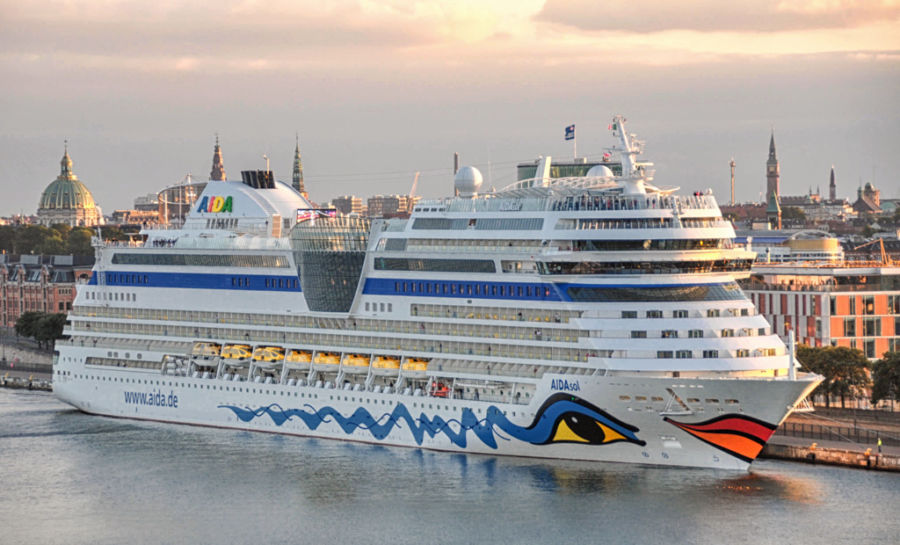
If you’re visiting a major cruise port, the number of ships in town can drastically impact your experience. So, get in the habit of checking each day’s arrival schedule. Various websites (including Cruisemapper.com and Cruisetimetables.com) offer a day-by-day list — not only how many ships are arriving, but which ships, what time they come and go, and how many passengers they carry. Especially in a smaller town like Mykonos, Flåm, or Dubrovnik, there’s a massive difference between a “light” day (with no ships at all) and a “heavy” day (with multiple ships and thousands, or even tens of thousands, of additional visitors). Knowing the schedule can help you plan more strategically: Which days to sightsee in town versus prime times to side-trip or hit the beach. And if, for example, you know that multiple cruise ships are staying in port late into the evening, it may be worth booking a dinner reservation… which may not be so important on a night when all the cruisers have set sail by late afternoon.

Don’t trust very long lines.

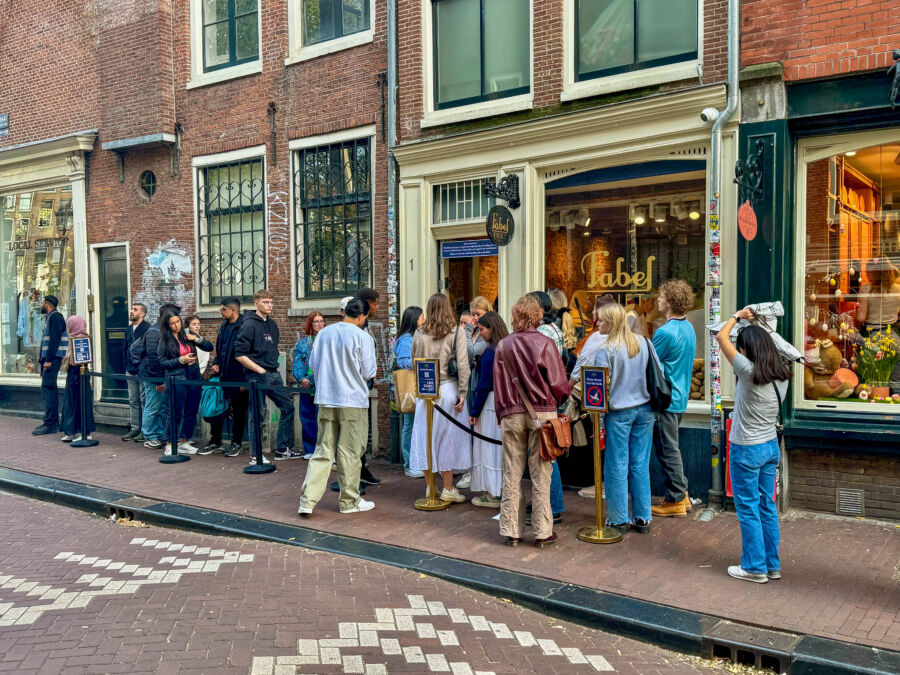
One of my well-traveled colleagues explained that, when traveling in communist Poland in the 1980s, the conventional wisdom was: “If you see a line, get in it.” They were probably selling something you needed (or, at least, something you could barter to get what you needed). These days, travelers still encounter some very long lines — for a very different reason — and precisely the opposite advice holds true. Social media influencers have a huge impact on trendy destinations, and being featured by a TikToker, YouTuber, or someone who’s Insta-famous can create a vortex of overpromotion… and an incredibly long line. I’ve seen these stretching down the block in front of a hole-in-the-wall sandwich shop in Florence, a fry stand in Amsterdam, and a gelateria in Split. I’ve tried a few of these (often returning later in the day, when the line has died down a bit)… and found them good, sure, but rarely a-MAH-zing — certainly not worth of an incredibly long wait. Very often, if you ask around (or do a little online sleuthing, avoiding the famous influencers), you’ll find that locals have a favorite alternative that’s never crowded. For example, in Amsterdam, I saw people lined up all the way across an adjacent canal for a chocolate-chip cookie. Literally steps away was a café selling amazing, handmade, delicate-yet-gooey stroopwafels — so much more authentically Dutch… and with zero line.

Get comfortable with WhatsApp.

These days, absolutely everyone in Europe uses the WhatsApp messaging app (owned by Meta) to keep in touch. Europeans like that it allows for encrypted messages and calls over any Internet connection, rather than paying a per-message or per-minute fee. Time and again, I’ve noticed that small businesses — local guides and drivers, restaurants, even B&Bs and hotels — have done away with traditional phone connections and can be most easily reached via WhatsApp. It’s free to download and easy to set up; you can use your existing mobile phone number. While I rarely use WhatsApp at home, in Europe it’s indispensable.

Stay in less-crowded, less-expensive, more charming towns and “commute” to the major destination.

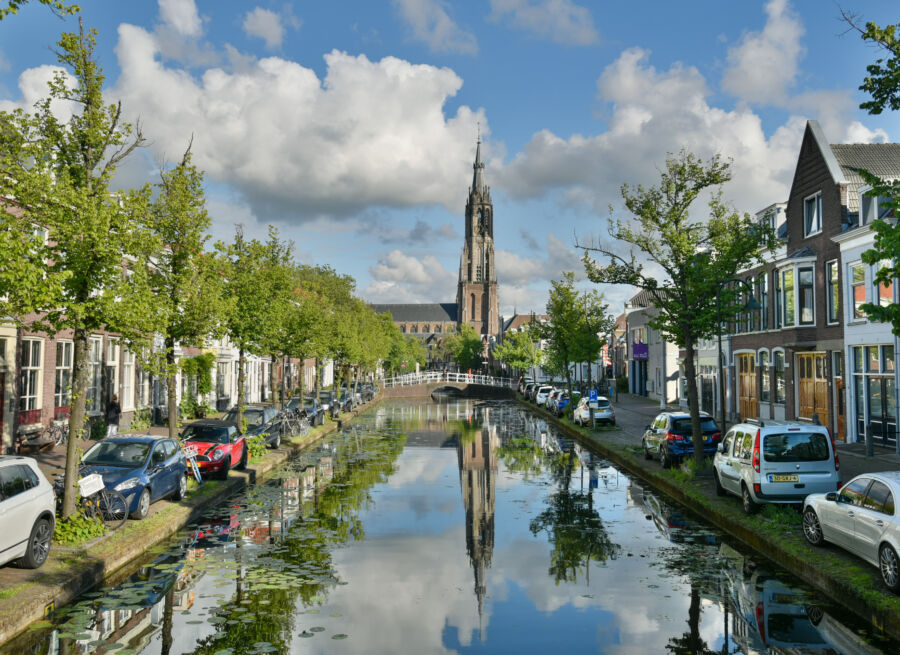
Even in our age of overcrowding and soaring prices, many travelers still insist on going to the big, famous, marquee cities, where everyone else also wants to go… and then they complain about the crowds and prices. If you just can’t resist the biggies, consider this compromise: Stay at a smaller town nearby and side-trip to your sightseeing. If you’re interested in Amsterdam, consider sleeping in Haarlem (20 minutes away by train), Leiden (30 minutes away), or Delft (45 minutes away) — each a charming and oh-so-Dutch town in its own right, with far fewer crowds and lower prices. If you’re dying to see Venice, consider sleeping in Padua or Treviso — from either, a high-speed train zips you in about 30 minutes right to the Grand Canal. And if visiting the Greek Islands, how about sleeping on workaday, foodie Naxos (30 minutes by express boat from Mykonos) or easygoing Folegandros (less than an hour from Santorini)?

If the locals are geeking out about something… join them.

In Slovenia, everyone’s wild about beekeeping. The art and science of beekeeping was pioneered by a Slovenian scientist, and to this day, colorful beehives perch proudly in every alpine meadow. Honey in every form — from bee pollen to beeswax candles to sweet honey mead — is ever-present in Slovenian life.  Even Slovenia’s most prized folk art is tied to bees: wooden panels painted with elaborate scenes. Maybe you have zero interest in bees back home. But it’d be a mistake to overlook this beautiful, intimate slice of Slovenian life on your visit there. In Europe, where traditions run very deep, every community and country seems to have their own version of this: In the Welsh mountains, slate is huge. On Germany’s Mosel River, white wine is an essential feature of the local economy and culture. Hungarians go nuts for water polo and paprika; Spaniards love to sip dry white sherry; this year, England is excited about Jane Austen’s 250th birthday, while the folks in both Liverpool and Wrexham are soaring after their recent soccer victories; and Norwegians have a burgeoning artisanal hard apple cider scene. Wherever you go, make a point to figure out what everyone’s excited about… and jump on that bandwagon, whether or not you think you find it interesting. (I might pretend this is a “new hack,” but for decades Rick has been talking about this being a “cultural chameleon.” Same thing!)

Ask to borrow a fan.

As our world’s climate changes, Europe often faces record-breaking summer temperatures, as well as unseasonal heat waves year-round. Europeans are more mindful about energy consumption than us Americans, so even if your hotel has air-conditioning, it may not blow as cold as you’re used to back home. And some places, running the AC in spring and fall is restricted. (During a hot snap in April, a Venetian hotelier explained that he’s required to turn off the heat on April 15, and can’t turn on the AC until May 15, unless the mayor declares an emergency.) If the weather’s hot, upon checking into my hotel, I quickly assess the AC situation. If it seems stuffy, I go straight back to the front desk to ask politely if I can borrow a fan. Most hotels have only a few, and they’re first-come, first-served… so if you wait until you’re going to bed, you might have to just sweat. Come to think of it, that’s another hack: Rather than get upset about how Europeans refuse to over-cool, develop an affinity both for their approach to energy conservation… and for tolerating the heat.

Where possible, tap-to-pay for transit — and understand the local system.

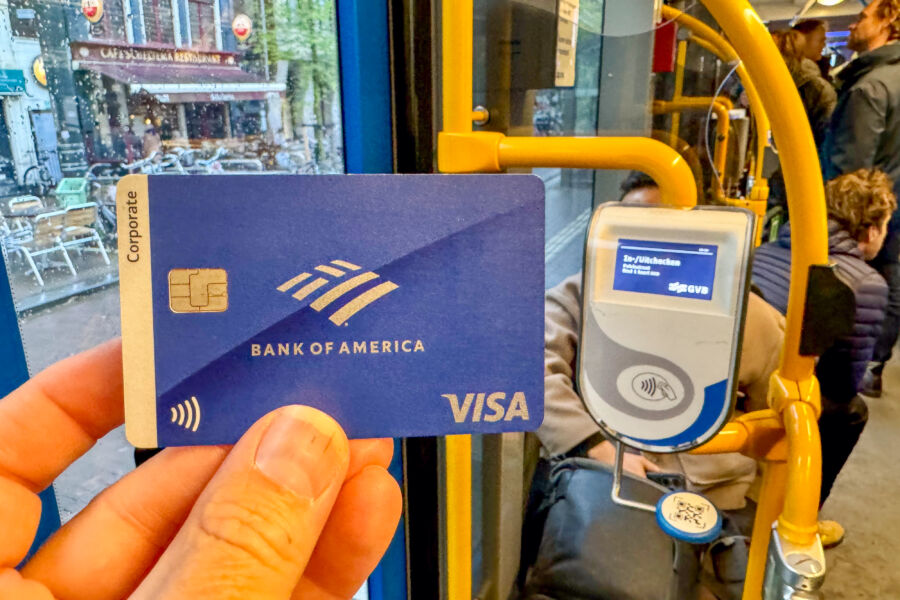
It’s old news that in many places, you can pay for local transit (buses, trams, the Metro) simply by tapping your credit card as you board. But this can vary dramatically from place to place. Before you arrive, take a moment to figure out whether that’s the case in the place you’re visiting — and how, exactly, it works. For example, the Netherlands is a global trendsetter: You can pay for any ride throughout its entire nationwide transit system (from in-city trams and the Metro, to long-distance intercity trains, to buses that travel deep into the countryside) simply by tapping your credit card. However, there are always caveats: First, you also have to “tap out” when you’re getting off. And each individual user needs their own payment method — so a family of four can’t “share” a single card, so they need to be prepared with other ways to pay.  By all means, take full advantage of tap-to-pay where it exists — to save lots of stress and time (trying to find and buy paper tickets) as well as money (giving you access to the best possible prices) — but understand the system.

Follow the local news.

As Rick always says, “The more you know about a place, the more you’ll like it.” And that goes for current events, too. Leading up to your trip, start reading local news sources, for insights into everything from town gossip and hot-button political issues, to strikes or festivals that might throw a wrench in your plans, to severe weather that’s about to hit (and might require some changes to your apparel, if not your itinerary). I also enjoy keeping up with the headlines after I’ve left a place — now that I’m up to speed on the local scuttlebutt, it’s delightful to find out how things turned out, and it helps me feel a continued connection to the place. This is also a great illustration of how the experience of travel doesn’t have to just be when you’re “on the road”: It can be something that you anticipate… and something that changes you.

When using cards: Always pay in the local currency. And always use a bank-affiliated ATM.

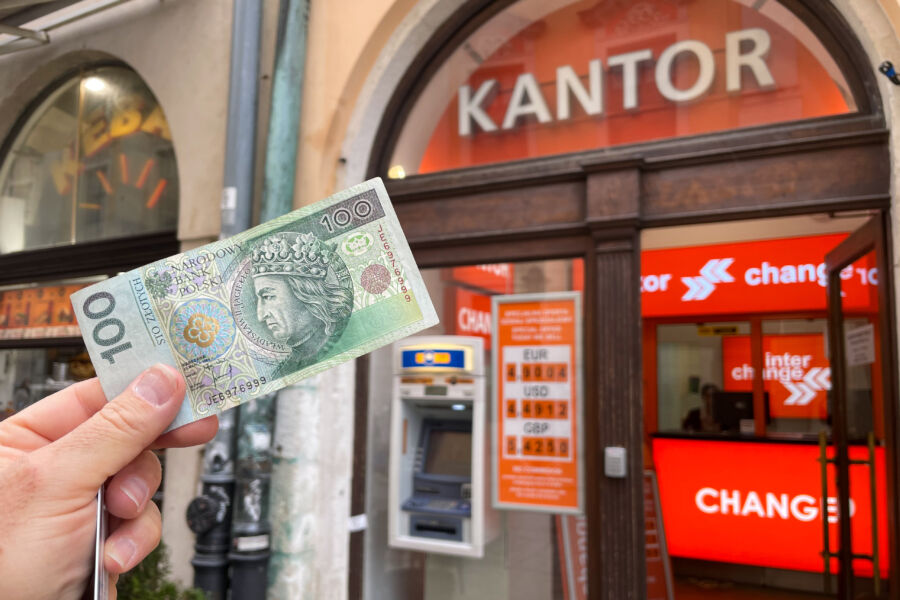
I have two unalienable rules of thumb for money matters in Europe: First, when you pay by card (or use an ATM), you’ll very often be asked whether you want to pay in US dollars, or the local currency. While paying in dollars seems convenient, you’re actually giving the vendor’s bank permission to choose an exchange rate that costs you more. If you always select the local currency, your credit-card company will set the rate, which is more favorable to you. Second, if taking out cash, be sure you’re using an ATM affiliated with (and ideally attached to) a real bank. Increasingly, Europe abounds with ATMs operated by exchange bureaus, with worse rates and higher fees. Avoid these. (Major chains to watch out for include Euronet, Travelex, Your Cash, or Cashzone.) Frustratingly, many airports and train stations don’t even have a bank-operated ATM anymore. For that reason, I usually head into town first (paying my way by card)… then go looking for a real brick-and-mortar bank, with an ATM out front, on my first evening’s stroll.

Know your rights as an air passenger.

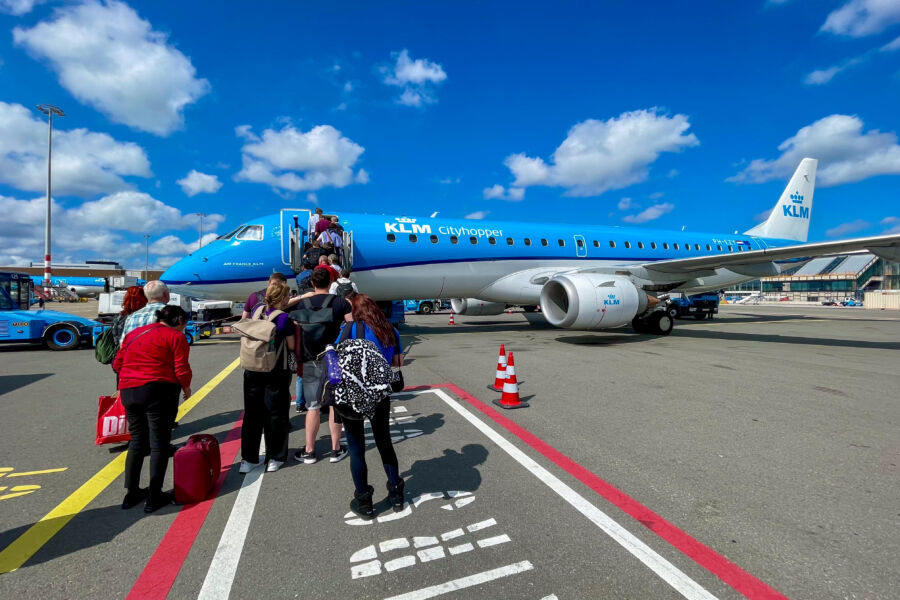
Recently, at the Amsterdam airport, my connecting flight to Norway was cancelled. While I was starting to panic, a European at the gate near me was calm and confident: “No worries. They’ll find us a new plane soon,” she said. “If they don’t, they have to pay each of us €250.” Sure enough, within minutes, they’d reassigned another plane — and we wound up arriving in Norway just 45 minutes late. Why? The European Union (EU) has generous consumer protections for air passengers. We’re entitled to compensation for flights that are delayed more than three hours, or cancelled outright. Knowing about this serves two purposes: First, the airline might not volunteer this information — so you may have to ask for it. And second, it provides strong incentive for airlines to find a quick solution… and reassures passengers that it’ll work out (and if it doesn’t, you’ll make a tidy profit).

Are you dreaming of a “trip of a lifetime”? Make it happen!

We all have those “dream trips” that we’ve always fantasized about. Often, it’s something very specific… even “weird” to anyone else. Rick recently published a book, On the Hippie Trail, about his early backpacking trip overland from the heart of Europe to India. Last fall, I finally put together a road trip I’d always dreamed of: traveling through the Balkans, from Slovenia to Greece, by way of eight different countries. And along the way, I ticked off another bucket list item when I got to step on board the famous “Blue Train” of the Yugoslav dictator Tito. Now, I’m not saying that you should go on the Hippie Trail, or travel through the Balkans, or become obsessed with Tito’s train. But I’m sure there’s something you’ve always dreamed of, just the same. You’ve been waiting all this time to make it happen. So… make it happen. There’s no time like the present. The only thing standing between you, and your dream destination, is making the decision to do it. So, here’s the hack: Do it!

These are just a dozen of my favorite “travel hacks.” What are yours?