Top 10 Icelandic Experiences: Volcanoes, Glaciers, Puffins, and More

Rick Steves Iceland is one of just two Rick Steves guidebooks (along with Istanbul) that has its own “Experiences” chapter. That’s because here in the land of fire and ice (and puffins), visitors enjoy experiences they can’t have anywhere else. This post — the grand finale of my Iceland blog series — is a roundup of 10 Icelandic experiences you should not miss. As always, thanks to our co-author, Ian Watson, who taught Rick and me everything we know about Iceland. And thanks for following along with my series. Goða ferð!

Experience a volcanic landscape.

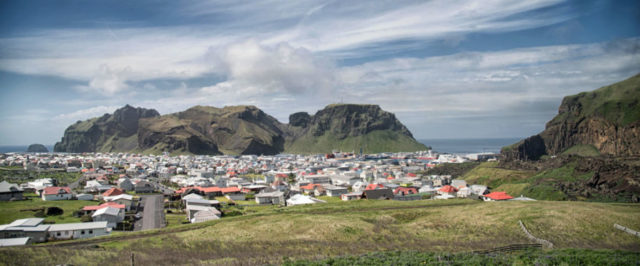
Westman Islands, Iceland

Iceland sits smack in the middle of the Mid-Atlantic Range, where the North American and Eurasian tectonic plates are constantly pulling apart. This line — carving a lopsided “X” through the middle of Iceland — is where you’ll find Iceland’s many volcanic and geothermal sights, from the famous Blue Lagoon spa to the simmering plain of Geysir, and from to the geothermal sights around Lake Mývatn to Eyjafjallajökull (the volcano that halted European air travel in 2010). The odds of seeing an active volcano during your visit to Iceland are slim (but not nonexistent). However, signs of past volcanic activity — and ongoing geothermal mischief — are everywhere. Iceland’s best museum about volcanoes is in the Westman Islands: Eldheimar Museum, built around a family home that was swamped by liquid rock during a 1973 eruption, and left just as it was when they fled. Outside, you can hike along a jagged ridge, noticing street signs marking where (50 feet below your feet) residential streets once ran. And you can even summit the still-warm volcano itself, which slumbers over the town it nearly wiped out.

Cruise a glacier lagoon and stroll “Diamond Beach.”

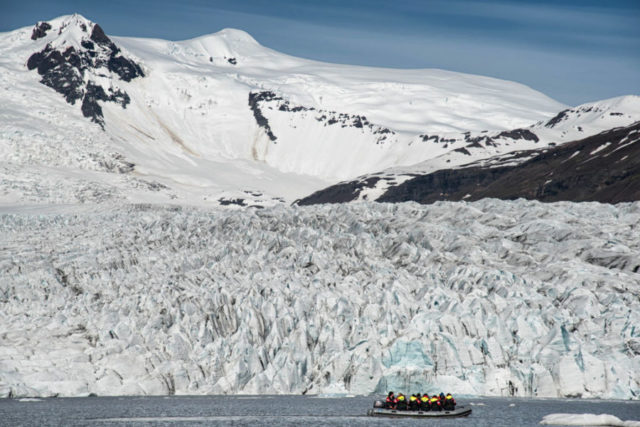
Southeast Iceland’s gobsmacking glacier lagoons (Jökulsárlón and Fjallsárlón) are some of the most stunning sights in all of Iceland. You can ogle the bobbing icebergs from shore, or go for a trip on a RIB (rigid inflatable boat). You’ll bundle up and cruise across the frigid water, ogling the deep-blue hue of newly calved glaciers. Then your captain leans over and hauls in a giant chunk of 500-year-old-ice for everyone to touch.

And just across the road from Jökulsárlón is another great sight that might even rival the lagoon itself: the so-called “Diamond Beach,” where those bobbing icebergs wash up on black sands on their last stop before being swallowed up by the open Atlantic. Diamond Beach looks like thousands of gigantic precious stones, tumbled by the turgid river, sprinkled across an endless expanse of black velvet.

Get to know a puffin.

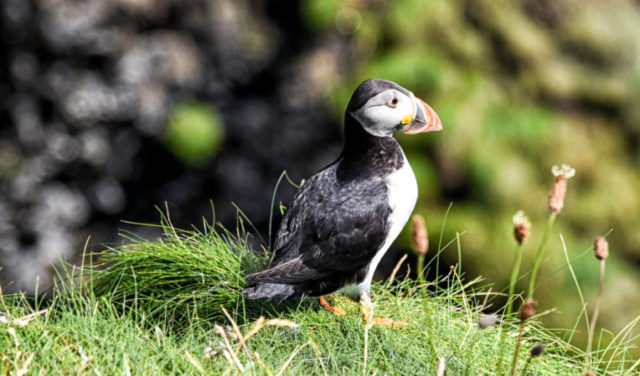
In downtown Reykjavík, you can’t escape the puffins…in stuffed-animal form. As the unofficial mascot of Iceland, puffins are everywhere. Puffins live most of their lives adrift in the Atlantic, coming ashore only during the summer breeding season (usually from late May or early June until late August). if you’re in Iceland during those summer months, there are ample opportunities to see puffins in nature. Reykjavík has several companies offering birdwatching cruises to the so-called “Puffin Island” (Akurey), where the adorable birds roost. But the Westman Islands, with the largest puffin population in the world, is Iceland’s best puffin destination. And even outside of summer, you can be all of guaranteed of meeting a real-live puffin at the Westman Islands’ aquarium. This is the home of Tóti, a puffling who couldn’t take flight, and has since been rehabilitated and adopted by the museum. Tóti waddles around the exhibits, thrilling visitors with a close puffin encounter.

UPDATE: I have received the sad news that sweet Tóti has passed on, and the aquarium has closed. However, there is still a Puffin Rescue Center, usually with some resident puffins, at the new Beluga Whale Sanctuary.

Hang out in a fjordside village.

Iceland has no real cities outside of Reykjavík (the “second city,” Akureyri — with just 18,000 people — feels like a small town). And yet, Iceland is surprisingly cosmopolitan; even ridiculously remote “backwaters” can be unexpectedly on-trend. One of my favorite examples is a little village of 670 people on the far-eastern fjords of Iceland, about as far as you can get from Reykjavík — Seyðisfjörður. Buried at the deepest point in a claustrophobic fjord, Seyðisfjörður is the only place in Iceland tethered to the outside world (by a ferry line to Denmark). A top-quality sushi restaurant sits across the rainbow-painted main street from an enticing microbrew pub. And just up the fjord is a funky bar/pizzeria downstairs from an art gallery. The bartender explained that, in the 1950s, a German artist moved to Seyðisfjörður and opened an art academy. And today, students come here from all over the country— and around the world — to study art and be inspired by Iceland’s majesty. Exploring places like Seyðisfjörður gives me a new appreciation for the can-do pioneer spirit that has kept Icelanders thriving since the first settlers sailed here in the Viking Age. Other delightful fjordside villages worth lingering in are Borgarnes, Húsavík, and Siglufjörður.

Splurge on a quality Icelandic meal.

Iceland’s high prices force many visitors into subsiding on hot dogs and groceries (and occasionally, on a dare, suffering through a bite of the notorious “rotted shark”). But if you cheap out on all of your meals, you’ll miss the fact that Iceland has an excellent food scene…no, really! Set aside enough of your food budget to splurge at least once at a quality restaurant where you can experience what top Icelandic chefs are doing today. As a compromise, consider doing your splurge at lunchtime, when even the most expensive restaurants have relatively affordable lunch specials in the $25-35 range. I had a memorable blowout dinner at Grillmarkaðurinn, in Reykjavík, but for other ideas — and an overview of what makes Icelandic food so enticing — see my post about Icelandic food.

Relax in hot water.

Myvatn, Iceland

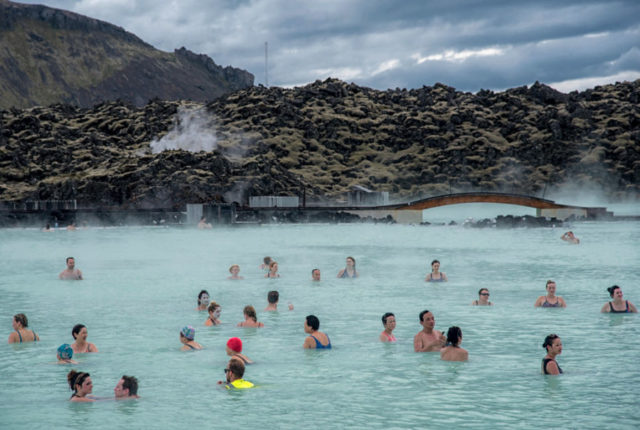
Many Iceland-bound travelers are familiar with the famous Blue Lagoon lava-rock spa. But that’s just the beginning of Iceland’s thermal bathing culture. Imagine ending each long day of sightseeing, hiking, and driving with a long soak in hundred-degree water. Aaaaahhh! Your choices range from “premium” thermal baths (my favorite is Mývatn Nature Baths, in the North), to hot springs that require a hardy one-hour hike, to municipal swimming pools where Icelanders gather with family and friends, and tourists find they’re outnumbered. If you need to escape from Iceland’s chill, or just recover from a busy day of Icelandic experiences, you’re never more than a short drive from a thermal bath. For all the details, check out my “Blue Lagoon and Beyond” post.

Geek out at an obscure museum.

Iceland does museums exceptionally well — even in the farthest reaches of the country. For example, one of my favorite sightseeing experiences in all of Iceland is the Herring Era Museum in little Siglufjörður, two hours away from just about anything, clinging to an almost-Arctic pinnacle of the North Coast. I never thought I could be fascinated by the herring industry. But this wonderful museum achieved that feat. In a trio of rustic buildings, thoughtfully designed exhibits explain how shoals of herring in the late 19th and early 20th centuries created a huge industrial boom in this little town — singlehandedly generating half of Iceland’s GDP and arguably helping bring about Icelandic independence, by making the country economically viable. In the attic of the salting station, you can walk through the dorms of the “herring girls” who came to Siglufjörður to work round-the-clock during the brief summer herring season. Walking between the bunkbeds and still-set tables, you feel like the workers have just stepped away for their shift. The Herring Era Museum is just one of dozens of unaccountably riveting sights scattered around Iceland; other favorites include the open-air folk museum of turf houses at Glaumbær, the Whale Museum in Húsavík, the state-of-the-art Lava Centre in Hvolsvöllur on the South Coast, the Settlement Centre in Borgarnes, and the Icelandic Emigration Centre in Hofsós.

Appreciate the midnight sun…or the northern lights.

For hyperactive sightseers, it’s a thrill visiting Iceland in the summer, when it never really gets dark. You could spend the morning splashing around the Blue Lagoon, then have lunch and putter around Reykjavík, before heading out in the mid-afternoon for a long day trip into the countryside (such as the Golden Circle). The sun technically sets, but dawn commences before twilight is complete. (In fact, summertime road-trippers are in danger of falling asleep at the wheel, because it’s so easy to lose track of how late it’s getting.) But the one disadvantage of visiting when it never gets dark is that you certainly won’t see the northern lights. For that, you’d have to come in winter — when (if you’re lucky, and it’s not too cloudy) you may get a glimpse of those mysterious dancing lights in the sky. Coming twice — once in summer, once in winter — is not a bad option. (For the pros and cons of off-season travel, see my post on itinerary tips.)

Appreciate Reykjavík’s street art.

Reykjavík has a salty harbor and some fine museums. But my favorite activity in the Icelandic capital is simply strolling and appreciating its endearing ambience. Reykjavík’s funky artistic spirit comes with some of the most eye-pleasing street art anywhere — the work of well-respected local artists, who are invited to paint blank walls before they can be tagged with ugly graffiti. Another fun Reykjavík pastime is to go on a scavenger hunt for little plastic action figures, which a local prankster nicknamed “the Toyspreader” has glued to signs all over the city center. For more on the Icelandic capital and its street art, check out my Reykjavík post.

Ford rivers in a monster-truck bus and hike high above the Valley of Thor.

Our Rick Steves Iceland guidebook focuses on destinations that can be easily reached with a two-wheel drive car. But we also include coverage of one of Iceland’s more difficult-to-reach hiking destinations, Þórsmörk — the “Valley of Thor.” While it’s only about 15 miles as the crow flies from the dramatic Seljalandsfoss waterfall on the South Coast, getting there is part of the adventure — you’ll need to ford several gritty rivers filled with milky glacial melt. If you don’t have a four-wheel-drive car, no problem: Various companies offer day excursions into Þórsmörk, on tour buses with gigantic monster-truck tires. After a long, slow, bumpy ride — thundering through of streams and rivers, windshield wipers flipping furiously to and fro — the bus deposits you at the base of some of the most rewarding hiking trails in Iceland. Summiting the little peak called Valahnúkur (a moderately strenuous, 3-hour-round-trip hike), you look out over a starburst pattern of valleys separating glacier-topped dormant volcanoes.

These 10 experiences are just for starters. Head over to Iceland and make your own list. You won’t regret it.

Happy travels!


Thanks for joining me for my Iceland blog series. Of course, you’ll find details on all of the experiences mentioned in this post in our Rick Steves Iceland guidebook, co-authored by Ian Watson.

In case you missed some of my other Iceland posts, here are all the links:

Top 10 Budget Tips for Iceland

Welcome to Iceland: A Stroll Through Reykjavík

The Westman Islands: Volcanoes and Puffins in Iceland’s Undiscovered Gem

How to Enjoy Iceland’s Thermal Baths: The Blue Lagoon and Beyond

Lake Mývatn: North Iceland’s Geothermal Wonderland

How to Drive Iceland’s Ring Road: The Ultimate 800-Mile Road Trip

What to Eat in Iceland

Iceland’s 4 Best Day Trips from Reykjavík

How to Plan an Iceland Itinerary — From a 24-Hour Layover to a 2-Week Road Trip

Family Travel: Visiting Iceland with Children


Video: Iceland Travel Tips

Working on our Rick Steves Iceland guidebook (with co-author Ian Watson), I learned a lot of practical tips for how to make the most of a trip to the land of fire and ice. When I got home, I distilled all of my best advice into this 75-minute talk (part of our Rick Steves’ Europe Travel Talks series). If you took me out to coffee to pick my brain about your upcoming Iceland trip…this is exactly what I’d tell you. Below the video, you can find links to the shorter “chapters” of this talk (excerpted from the full-length version), and my complete class handout for people attending the talk in person.

You can also view individual chapters excerpted from this talk:

Iceland Travel Skills

Reykjavik

Day Trips from Reykjavik

The Ring Road

Class Handout

Iceland 101

Why Visit Iceland? Astonishing, unique natural wonders; cinematic landscapes; easy stopover on the way to/from Europe; surprisingly rich culture/cuisine; wonderful people.

Don’t Visit Iceland…to save money; for great art/architecture; for hot, sunny weather.

Area & Population: 39,682 square miles (a little bigger than Maine) with 340,000 people (like Corpus Christi, Anaheim, or Honolulu) — 2/3 in Reykjavík area.

History: First settled by Scandinavians during Viking Age (9th century); was a collection of remote farms for nearly its entire history. Wrote down history and folk tales (the sagas). Starting A.D. 930, chieftains met annually at the Althing at Þingvellir. Christianized and came under control of Norway, then Denmark. Slow process of independence, made official in 1944. “Occupied” by Allies in WWII (built Keflavík airport); economic crisis in 2008/2009; tourism boom today.

Names: Last name is patronymic (-son and -dóttir); everyone’s on a first-name basis.

Icelandic: Old Scandinavian roots, tricky to pronounce. Key letters: Ð/ð = voiced “th” (breathe); Þ/þ = unvoiced “th” (breath); j = “y”; ll = “tl”

Money: Roughly 100 Icelandic krónur = $1. All transactions are credit card; don’t get much cash.

Budget: Expect very high prices. Seek out budget strategies. Fortunately, natural wonders are free.

Sleeping: Basic accommodations cost $150/double with shared bath; nice hotel is more like $300. Demand outstrips supply, so prices are high. Guesthouses with shared bath are common and cheaper. Airbnb is a budget-friendly option; consider staying in the suburbs for a local experience.

Eating: Icelandic food is good and worth splurging on. A basic meal costs $20-30, but for $10-20 more you can go high-end. “Hardship foods” (rotted shark, fish jerky, lamb’s head). But also delicacies: fresh fish, flavorful lamb, soup & bread buffet, skyr. Even top restaurants have great lunch deals for $25; splurge at lunch and skimp at dinner (picnic, fast food). Nice microbrew culture; happy hours help cut costs.

Itinerary Considerations

Summer vs. Winter: To really explore Iceland, I prefer summer (better weather, endless daylight) vs. winter (very short daylight, icy roads keep you close to Reykjavík). Northern Lights are winter-only, always chancy — don’t plan a trip around it (but thrilling if you see it). Prepare for cold/windy weather anytime!

Quick Layover (1-3 days): A quick taste of Iceland on the way to/from Europe. Home-base in Reykjavík but spend your daylight hours in the countryside: Blue Lagoon (near airport), Golden Circle, South Coast.

Longer Visit (4-8 days): This allows more day trips (Westman Islands, overnighting on South Coast, glacier activities), and more time for Reykjavík.

All Iceland (9-14 days): Driving the Ring Road is well worth the investment of time, and lets you see essentially the entire country.

Transportation: Car rental is best for most trips — most highlights are not accessible by cheap public transit. Bus excursions are convenient, but costs add up quickly. In summer, don’t splurge on 4X4.

Reykjavík

Iceland’s capital (pop. 125,000, or 220,000 metro, like Topeka or Charleston) and tourism hub lacks major sights but has quality accommodations, restaurants, and nightlife. On a short visit, home-base here but don’t over-invest your time; countryside is more rewarding.

Exploring Downtown: Low-key “Parliament Square” (Austurvöllur) with Alþingi (since A.D. 930) and statue of independence advocate Jón Sigurðsson. Better for hanging out: main shopping/nightlife drag Laugavegur. Icelandic sweaters are good but very expensive (consider thrift shops). Licorice candy is cheap and local.

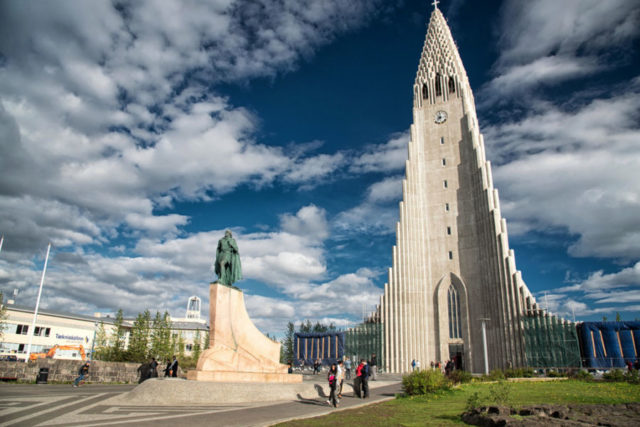
Hallgrímskirkja: Lutheran church (1930s, state architect Guðjón Samúelsson), Reykjavík’s main landmark, views from tower. Statue of Leifur Eiríksson, likely first European to visit the Americas.

History Museums: Settlement Exhibition preserves foundation of 10th-century longhouse; National Museum of Iceland has well-described artifacts.

Harborfront: Cutting-edge Harpa concert hall, opened 2011. Nearby Sun Voyager sculpture already city icon. Whale/Puffin Watching boat trips…but no guarantees. Nearby Whales of Iceland, pricey but good exhibit with life-size models.

Day Trips from Reykjavík

The Blue Lagoon: Top-end thermal bathing complex in volcanic landscape, 45 min south of Reykjavík (near Keflavík Airport); pricey (starts at $80) and requires reservations (bluelagoon.com). There are also municipal swimming pools all over Iceland, including more than a dozen in Reykjavík. Filled with natural thermal water. Very relaxing local custom to adopt. Carefully follow procedure (shower first!) and go with the flow.

The Golden Circle: Iceland’s quintessential day trip: 150-mile loop with grand scenery, Þingvellir (site of Iceland’s Althing gatherings, along a jagged tectonic fissure), Geysir (steamy field with the original geyser); Gullfoss (thundering waterfall), other stops (including Kerið crater, hike 1 hr to Reykjadalur thermal river)

The South Coast: Rivals Golden Circle as Reykjavík’s top day trip: spectacular waterfalls (Seljalandsfoss is best, walk behind it), glacier tongue (Sólheimajökull), black-sand beaches (Reynisfjara), Eyjafjallajökull (famous 2010 volcano); Lava Centre in Hvolsvöllur.

Westman Islands (Vestmannaeyjar): Archipelago just off the South Coast, accessible by boat or plane (but weather-dependent). Famous Jan. 1973 eruption; today part of town still buried under lava rock. Excellent volcano museum; the world’s largest puffin colony; aquarium with a resident puffin (Tóti).

The Ring Road (All Around Iceland)

Logistics: Highway 1 encircles Iceland 800 miles on twisty roads, lots of worthwhile sightseeing stops and detours. Allow 5 days minimum (better with 6-7 days). Some overlap with South Coast; can also tie in Golden Circle and/or Westman Islands. I’ve described it clockwise, but it can be done either way. Can be done with small 2WD car. Best to book accommodations in advance. Some enjoy camping.

West Iceland: Borgarnes (Settlement Center); Víðgelmir lava tube (another volcano cave experience is “Into the Volcano”); Grábrók climbable crater.

Skagafjörður: Northern valley with excellent Glaumbær folk museum; scenic Tröllaskagi (“Troll Peninsula”) drive to charming port town of Siglufjörður, with excellent Herring Era Museum.

Akureyri: Iceland’s “second city” (pop. 18,000), feels like a mini-Reykjavík with landmark church.

Mývatn: “Midge Lake,” named for the mini-mosquitoes here. Area of remarkable natural beauty, lava formations, thermal areas. Highlights include Skútustaðir pseudocraters, Dimmuborgir lava formations, and Mývatn Nature Baths (simpler version of Blue Lagoon for half the price). Just over the ridge is the striking Námafjall geothermal area and Krafla Valley, with geothermal plant, Víti crater, hikes.

Húsavík: Charming port town near Mývatn, with whale watching and whale museum. Just east is stunning Dettifoss waterfall.

Eastfjords: Jagged, sparsely populated, lots of long driving. Best town by far is fjordside village of Seyðisfjörður, beautiful setting, lots of art students, surprisingly cosmopolitan, ferry from Denmark.

The Southeast: Few towns, but Glacier Country (in the shadow of Vatnajökull (Europe’s biggest glacier). Stunningly beautiful glacier lagoons: Famous Jökulsárlón; less touristy and also spectacular Fjallsárlón; both have RIB rides. Nearby “Diamond Beach” where icebergs wash up. Also possible to hike or snowmobile across a glacier, or visit an ice cave (arrange in advance, consider sleeping in this area).  Skaftafell National Park with hike to Svartifoss falls.

The South Coast: The Ring Road route ends with a drive past the South Coast, described earlier, and back to Reykjavík.

Resources

Rick Steves Iceland guidebook

Reykjavík Highlights travel talk by Kevin Williams


Helpful Websites:

Grapevine.is — Reykjavík’s great English newspaper

IHeartReykjavik.net — Insightful local blog

GuideToIceland.is — Consortium of tour companies

Iceland.is — Official tourism website

Family Travel: Visiting Iceland with Children
With its imagination-stoking natural wonders — volcanoes, glaciers, and puffins — Iceland is practically made for kids. And yet, when we set out to work on our Rick Steves Iceland book, we realized few guidebooks do justice to family travel. So with the help of our co-author, Ian Watson (who raised his kids in Iceland), we wrote an “Iceland for Children” chapter, loaded with 11 pages of advice on where to stay, what to pack, where to eat, and the top sights and activities for kids around the country. Here are a few highlights from that chapter.

Child pointing at map

Iceland is packed with unique geological features, which are fun both to explore, and to learn about. If your child takes an interest in volcanoes or glaciers, deputize them to become an expert and play “tour guide” when you reach key sights. Help them figure out what their name would be in Icelandic (I’m “Cameron Kemptonson.” Rick would be “Rick Dicksson.”) And challenge them to master the pronunciation of the famous volcano, Eyjafjallajökull.

In the Mývatn volcanic area, your family will discover unique land formations, steaming geothermal landscapes, and easy nature walks. (But be careful! Iceland’s many geothermal areas are full of boiling water and hissing steam. Be sure your children understand how important it is to stay on marked trails at all times, and keep younger kids close at hand.)

Westman Islands puffin

In the Westman Islands, you can walk up onto a lava flow that partly covered the town in 1973, visit the excellent Volcano Museum, hike up to the still-warm summit of Eldfell, and meet a puffin at the local aquarium.

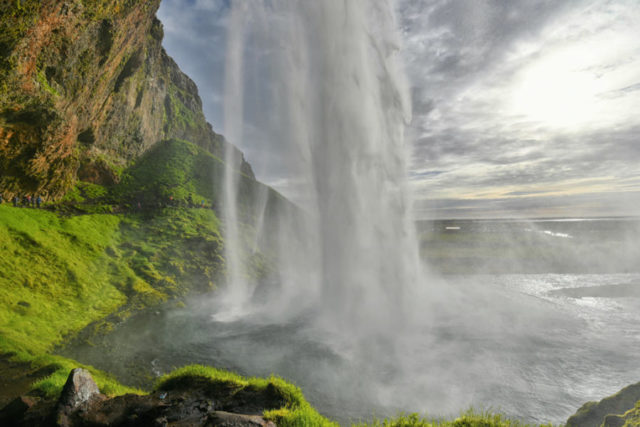
Seljalandsfoss waterfall, Iceland

Iceland also offers many opportunities to get up close to waterfalls. Surefooted kids particularly enjoy Seljalandsfoss, on the South Coast, where they can walk behind the falls. (Just be sure to bundle up, with waterproof shoes and jackets.)

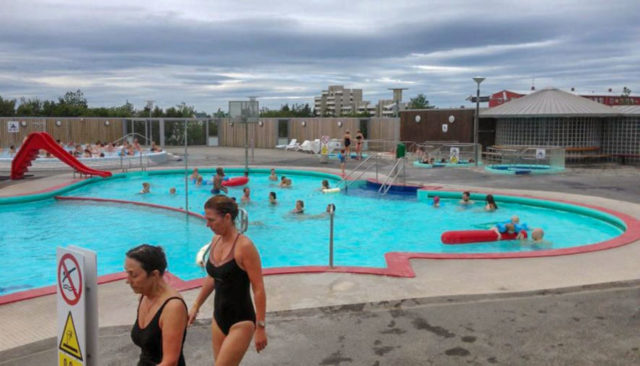
Reykjavik Swimming Pool

The mellow, spa-like atmosphere at Iceland’s premium baths — such as the famous Blue Lagoon — feel very grown-up and may not be the best choice for kids. However, the thermal bathing scene at Iceland’s many municipal pools is perfectly kid-friendly. Many of the larger pools have colorful waterslides and other activities that are designed just for children, and there’s usually a shallow wading section for tiny tots.

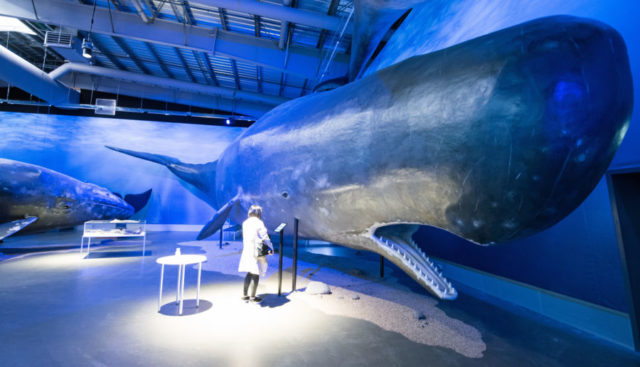
Whales of Iceland

Kids also love wandering among the life-size models at Whales of Iceland, a pricey but riveting attraction tucked in a big-box store zone near Reykjavík’s harbor. The “whales” are impressively detailed and bathed in a shimmering, blue light, and you’re invited to wander under and among them (with the help of the engaging, free-to-download audioguide). You’ll find yourself face-to-face with majestic giants: pilot whale, humpback whale, sei whale, bowhead whale, minke whale, Moby Dick-style sperm whale, and the largest specimen, the blue whale — which can grow up to 110 feet long. The exhibit may sound gimmicky…but it’s genuinely cool. (And many families prefer this to actual whale-watching cruises, which can come with rough waves, unpredictable weather, and a less-than-guaranteed chance of seeing more than a fleeting glimpse of whales.)

Haafell farm, Iceland

In West Iceland, the Háafell Goat Farm is a fun, hands-on activity for kids. On a remote, unpaved road about an hour east of Borgarnes, this farm represents a one-family project by Jóhanna Þorvaldsdóttir and her clan. A few years ago, they set out on an idealistic quest to breed Iceland’s nearly extinct goat stock — descended from animals brought by the first settlers. Now the family invites travelers to visit their farm, meet (and, if you like, cuddle) some adorable baby goats, learn about their work, watch the goats butt heads playfully, and peruse the wide variety of products they make from their goats: feta cheese, ice cream, soap and lotions (from tallow), and goat-hide carpets and insoles.

Lastly, if none of these suggestions seem quite right for your jaded, older kids, you may be able to get their attention by mentioning that Reykjavík has a penis museum. Excuse me: Phallological Museum. Tucked at the far end of the city’s main walking street, Laugavegur, you’ll find a one-room collection of preserved animal penises and various depictions of phalluses in folk art. Surprisingly, it’s more educational than crass. And yet, it’s impossible to visit this place without making juvenile jokes. In some ways, 12-year-old boys are the most fitting audience possible for this collection. A 12-year-old-boy-at-heart, I spent quite some time wandering around here, cracking myself up as I scrawled notes in my little notebook. Here’s my writeup for the Rick Steves Iceland guidebook:

You’ll see more wieners than you can shake a stick at — preserved, pickled peckers floating in jars of yellow liquid. You’ll see a seal’s schlong, a wolf’s wang, a zebra’s zipper trout, a fox’s frankfurter, a giraffe’s gherkin, a dog’s dong, a badger’s baloney pony, a squirrel’s schwanz, a coyote’s crankshaft, a horse’s hardware, a reindeer’s rod, an elephant’s equipment, and lots of whale willies. If you can’t get through this description without giggling, maybe you should visit. If you’re about to set down this book and write me an angry letter…don’t.

And with that…happy travels to you and your whole clan!

How to Plan an Iceland Itinerary — From a 24-Hour Layover to a 2-Week Road Trip

One challenge in producing our new Rick Steves Iceland guidebook (with co-author Ian Watson) was the need to be realistic about the way travelers are visiting Iceland. Detailed, day-by-day recommended itineraries are a major feature of other Rick Steves guidebooks. But most of those are for trips of two weeks. And let me guess — you’re going for two days, right?

And so, in recommending the best plans for touring Iceland, we had to cast a wide net — recommending specific itineraries for anywhere from 24 hours to two weeks. The considerations below helped us shape our plans — and can help you plan your own trip to Iceland, too.

Reykjavík is a great home base. While small and low-impact by European capital standards, Reykjavík is an insistently likeable place to call home for a few nights. It’s compact, walkable, and loaded with a surprising variety of dining, browsing, and nightlife options. While demand is high, more and more hotels and guest houses are opening up downtown, and Airbnb and other apartment rentals round out your options. And, naturally, Reykjavík is strategically located for venturing out into the countryside, making it easy to get an enticing taste of Iceland even on a short visit.

…but, if time is tight, don’t overdedicate time to the capital. If you have only one or two full days in Iceland, sleep in Reykjavík…but during the day, get out of town. You’re here for the majesty of Icelandic nature, not to putter around the capital. I mean Reykjavík no disrespect — the city is endearing, and on a longer visit, it deserves a day or two all its own. But urban sightseeing and window-shopping for stuffed puffins is not what you came to Iceland for. You’re here to peer deep into the maw of a thundering waterfall, touch a glacier, stroll a black sand beach, and simmer in volcanically heated water. Particularly if you’re here in the summer — when daylight is almost limitless — you’ll get a plenty good look at Reykjavík at the end of each day: dinner, nightlife, and late-evening strolls under the midnight sun. In ranking Icelandic destinations for our new book, we made the bold choice to give our highest rating — the coveted “three pyramids” — only to the Blue Lagoon, the Golden Circle, and the South Coast, while Reykjavík got only two pyramids. Our readers trust us for our hard opinions, not our diplomacy. Sorry, not sorry.

For a more authentic Icelandic experience, consider sleeping in the ‘burbs. With the recent spike in tourism, downtown Reykjavík is starting to feel like an Icelandic theme park. The co-author of our Rick Steves Iceland book, Ian Watson — who lived in suburban Reykjavík for years — endorses the alternative of sleeping outside of the city center, where prices are lower and your neighbors are more likely to be Icelanders. Reykjavík is small and car-friendly, so it’s an easy drive into downtown. And if you’ll be side-tripping into the countryside, it’s efficient to stay in a suburb (like Hafnarfjörður) that’s closer to the Golden Circle and South Coast routes. For the cost of a double room with a bathroom down the hall in a downtown guesthouse, you can rent an entire suburban house with easy parking.

Airbnb lists plenty of solid suburban options, scattered over the entire capital region. Some of these come up if you search for “Reykjavík Area,” but it’s also worth checking under the specific suburb name: Seltjarnarnes is a swanky neighborhood at the tip of the Reykjavík peninsula, close to downtown (but less handy for hopping on the highway). Hafnarfjörður, a separate town about 30 minutes south of downtown Reykjavík, feels like its own community and offers easy access both to Reykjavík and to out-of-town sights. Kópavogur and Garðabær are modern suburbs between Reykjavík and Hafnarfjörður. And Mosfellsbær is a small, newer community north of Reykjavík.

Combine the Blue Lagoon with your airport transfer. The international Keflavík Airport is about a 45-minute drive from Reykjavík. And the famous Blue Lagoon lava-rock spa is about a 10-minute drive from the airport — also a 45-minute drive from Reykjavík. For maximum efficiency — especially on a tight “layover” timeframe — it just makes sense to combine your Blue Lagoon visit with your trip to or from the airport. If you arrive on a morning flight, recharge with a soak before heading into town. If you’re flying out later in the day, how better to prepare for a transcontinental flight than with a languid simmer in hundred-degree water? Airport-transfer services make it easy to add on a stop at the Blue Lagoon. One important caveat is that the Blue Lagoon requires reservations — so you’ll want to plan this out in advance.

Prioritize your day trips. If you combine the Blue Lagoon with your arrival or departure, you’ll free up even more time for other day trips from Reykjavík. There are several good options, but the two best — different but equally good — are the Golden Circle and the South Coast. Another excellent, if lesser-known, option is the Westman Islands, just off the South Coast. Each one of these can be easily done in a day from Reykjavík…but you’ll need to prioritize. For starters, check out my post on the 4 Best Day Trips from Reykjavík.

Home-basing for a couple of nights on the South Coast opens up lots of options. If you’re in Iceland for just one, two, or three nights, stay in Reykjavík. But if you’re here for four or more nights, consider splitting your home base between Reykjavík and the South Coast. With five nights in Iceland, I’d spend three in Reykjavík (or its suburbs), and the other two in a rural farmhouse B&B on the South Coast — offering a nice variety of Icelandic accommodations. The South Coast has at least a day’s worth of sightseeing, and it’s also a good home base for visiting the delightful Westman Islands. Since the ferry to the islands can be cancelled in bad weather, this plan works well: Plan two nights on the South Coast. Then, as the date approaches, choose the better-weather of the two days for the Westman Islands, and use the other day for the South Coast sights. (For more details, see my Westman Islands post.) The South Coast also works as a home base for visiting the dramatic hiking area called the “Valley of Thor” (Þórsmörk), or for doing the Golden Circle loop (or you can do the Golden Circle route on your way from the South Coast back to Reykjavík).

If you’re thinking of doing “part of” the Ring Road…just get real, and commit to doing all of it. Highway 1 — the Ring Road — makes an 800-mile loop around the perimeter of Iceland, connecting virtually everything a visitor might want to see on a visit of up to two weeks. However, there are no shortcuts across the middle of Iceland — which is covered by rugged Highlands, impassable glaciers, and gravelly roads requiring four-wheel drive and serious intestinal fortitude. Therefore, if you’re flirting with doing “part” of the Ring Road, you might as well commit to doing all of it.  Once you get about a third of the way around (i.e., Mývatn), continuing the rest of the way is only a little more time-consuming than backtracking the way you came to Reykjavík — and rewards you with entirely different scenery. The Ring Road can be done in as little as five or six days; a week is ideal. If you have less than that, skip it. For all the details, see my Ring Road post.

To efficiently max out on different Icelandic experiences, consider domestic flights. There’s one caveat to the Ring Road Rule, above. If you’d like a peek at the breathtaking Mývatn area, but don’t have time for the seven-hour drive each way, consider booking a same-day or next-day round-trip flight between Reykjavík and Akureyri (a 90-minute drive from Mývatn) on Air Iceland Connect. Another wonderful corner of Iceland, the Westman Islands, can be done most days as an easy side-trip from Reykjavík on Eagle Air. The planes are tiny (there’s no security check, baggage allowances are limited, and strong winds can interrupt flights). But, on the upside, most of these flights use Reykjavík’s tiny domestic airport, which is a long walk or very short drive from downtown.

The Northern Lights are amazing…but the midnight sun is even better. Some travelers go to Iceland in the winter specifically to see the Northern Lights. And that’s understandable: If you get lucky, that’s a lightshow worth traveling long distances for. But on the whole, winter comes with more downsides than upsides. Daylight is incredibly brief (in December, the sun rises a little before 11:30 and sets just after 3:00), and icy roads can make out-of-city sightseeing treacherous. And, if it’s cloudy or conditions are imperfect, there’s no guarantee you’ll even see those elusive dancing lights. Meanwhile, summertime is mightily appealing — particularly for those trying to pack the maximum Icelandic experience into a short visit. The sun technically sets for a few hours, but it never really gets dark — allowing intrepid, energetic visitors to maximize their time in Iceland to a remarkable degree. (The photo above was taken at 11:30 p.m. in early June.) If you have just 24 hours in Iceland — and can get by with very little sleep — you could arrive in the morning, soak at the Blue Lagoon, have lunch and browse Reykjavík in the early afternoon, then hop in a car and drive the 150-mile Golden Circle loop in the evening, all in broad daylight…before collapsing back at your Reykjavík hotel around midnight, catching a few hours of sleep, and flying out. That isn’t remotely possible in winter.

Armed with these tips, even a first-time visitor can plan an Iceland trip with the savvy of a pro. But don’t forget maybe the most important tip of all: If you like what you see, you can always go back to Iceland again later.

Iceland’s 4 Best Day Trips from Reykjavík

For our new Rick Steves Iceland guidebook, Rick and I worked with co-author Ian Watson to figure out the best day-trip options from Reykjavík. Our “top 4” includes the Golden Circle, the South Coast, the Blue Lagoon, and the Westman Islands. This post (part of my Iceland blog series) is a quick-reference guide for how to prioritize your limited time.

Reykjavík is a fun city, and the perfect place to spend the night on a visit to Iceland. But in-town sightseeing options are modest, and you’ll get a plenty good look in the morning and evening. Especially on a speedy “layover” visit, getting out into the epic Icelandic countryside should be your top priority. The key is being selective,  and these four day trips from Reykjavík clearly rise to the top. The complete details for each one — including self-guided driving and walking tours, and lots of restaurant and sightseeing recommendations — are covered in our Rick Steves Iceland guidebook.

1. (tie) Golden Circle

The quintessential Icelandic day trip is a 150-mile loop east of the capital — figure about four hours of driving, plus at least another four or five for sightseeing stops. The Golden Circle route curls through a representative sample of Iceland’s lunar landscape as you link up three main destinations.

The gorge at Thingvellir (or “Þingvellir” in Icelandic) is worth a visit for reasons both geological (as a place where you can see the European and North American tectonic plates pulling apart) and historical (as the site of the annual Great Gathering of the Icelandic chieftains — or Alþingi — dating back to the 10th century).

Geysir is a steaming, simmering field with a variety of active geysers — including the one that introduced that Icelandic word (meaning “the gusher”) to the world’s lexicon. Join the patient circle of tourists standing in a field, staring at a bubbling hole in the ground, and have your camera cocked and ready as you wait…wait…wait… (It usually shoots off about every 10 minutes, but Old Faithful it ain’t — don’t set your watch by it. And don’t blink!)

Gullfoss is one of Iceland’s most dramatic waterfalls — and that’s really saying something. This thundering cascade throws itself over a cliff into a steep, rocky gorge, ejecting a gentle bridal veil of mist into the surrounding countryside. (Wear your raincoat.)

The Golden Circle loop also passes some minor sights (including the historic church at Skálholt and a climbable crater, Kerið), some good restaurants, and four different thermal bathing opportunities. All in all, it’s a handy “Iceland in miniature” look at this unique land.

1. (tie) South Coast

The most accessible slice of spectacular Icelandic coastline is about two hours’ drive south of Reykjavík — on a 40-mile stretch of seafront bookended by the stunning Seljalandsfoss waterfall and the evocative Reynisfjara black sand beach. While it’s a bit farther from the capital (figure about five hours of driving round-trip, plus at least another four or five for sightseeing), it offers an even more epic look at Iceland’s scenery.

The South Coast is an achingly beautiful terrain of bald, craggy mountains blanketed in green, giving it an almost Celtic feel. Looming above it all are mighty, currently dormant, glacier-covered volcanoes, including the famous Eyjafjallajökull, which grounded European air travel in 2010.

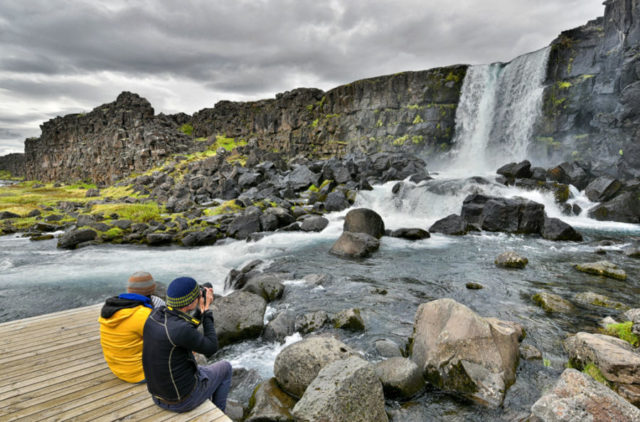
Along the South Coast, you can visit two different thundering waterfalls — including the spectacular Seljalandsfoss, where soggy tourists can hike around behind the falls.

At another handy pullout, a 20-minute hike gives you the opportunity to get up close to a gritty glacier (Sólheimajökull) — the closest glacier opportunity to Reykjavík.

The settlement of Skógar boasts another waterfall, and a fine little folk museum.

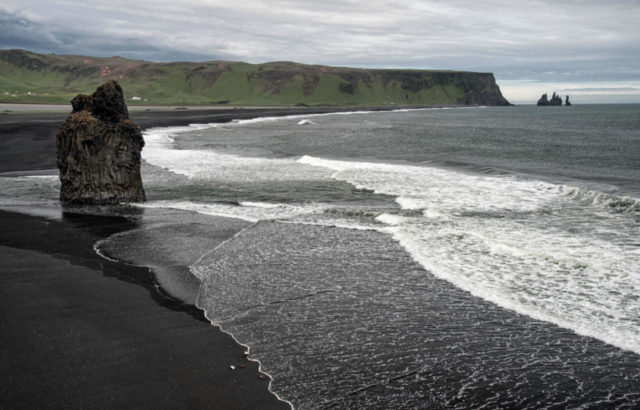
And Reynisfjara is a dramatic black-sand beach, whittled with basalt formations and jagged sea stacks.

The South Coast also has a variety of restaurants and other attractions — including the cutting-edge Lava Centre (in Hvolsvöllur), which explains volcanic activity in this part of Iceland.

Breaking the Tie

If you have just one day and are torn between these choices, consider this: The Golden Circle offers a tidy variety of experiences on a handy and very well-trod loop with almost no repetition. The South Coast is more outdoorsy, with stirring coastal scenery and a few more substantial opportunities for easy to moderate hikes. It’s a bit farther from Reykjavík, and requires backtracking the same way you came. The choice between these is so difficult that, if I had two days in Iceland, I’d skip Reykjavík entirely to make time for both.

3. Blue Lagoon

Why so low? Because a three-way tie for first seems unhelpful. And the fact is, not every traveler loves the Blue Lagoon. It’s quite expensive ($100 per person at prime times) and requires reservations. It feels touristy and glitzy, with nary an Icelander in sight. And yet, those who love it really love it. If you can afford it and would enjoy a memorable thermal bathing experience, it’s a worthwhile investment. As a bonus, it’s easy to combine the Blue Lagoon with your trip to or from the international airport, so you don’t need to devote an entire day to it. For details (and alternatives), check out my post about the Blue Lagoon and Iceland’s thermal bathing culture.

4. Westman Islands

This little volcanic archipelago, just off the South Coast (and an easy day trip by plane from Reykjavík), is an ideal alternative for intrepid travelers interested in going beyond the well-trod, whistle-stop sights listed above. Visitors are rewarded with stunning sea-cliff scenery, dramatic tales (and lava formations) from a 1973 volcanic eruption, the biggest summertime puffin population in the world, and a real-life (and adorable) mascot puffin named Tóti. Intrigued? Check out my Westman Islands post for more details.

Honorable Mention: Fly to Akureyri for a look at Mývatn

One of my favorite corners of Iceland is the Lake Mývatn area, in the North. But that’s a seven-hour, non-stop drive each way from Reykjavík, and best done as a part of a multi-day Ring Road loop. However, if you’ve got limited time, you could take a quick flight from Reykjavík up to Akureyri (on Air Iceland Connect) and rent a car to get a glimpse at this fascinating volcanic landscape. For the details, see my Mývatn post.

Other Options? Endless.

Various Icelandic companies offer excursions to suit every taste. Interested in glaciers? You can hike across a glacier, snowmobile across a glacier, ride a boat across a glacier lagoon, or spelunk into a cave carved into a glacier. Are volcanoes your thing? Iceland has three different volcanic caves that you can tour. Have you dreamed of seeing a puffin or a whale? Riding an Icelandic horse? Scuba diving or snorkeling in a flooded chasm between continents? Visiting filming locations for Game of Thrones and other blockbusters? Seeing the Northern Lights (winter only)? If so, there’s an excursion for you.

While the four day trips outlined above are of the most general interest, it’s possible to do pretty much anything in Iceland as a day-trip from the capital. Guide To Iceland, a consortium of several tour operators, is a good place to start surveying your options. Or check out the Icelandic Experiences chapter of our Rick Steves Iceland guidebook.