Grappling with Thorny Politics, in Budapest

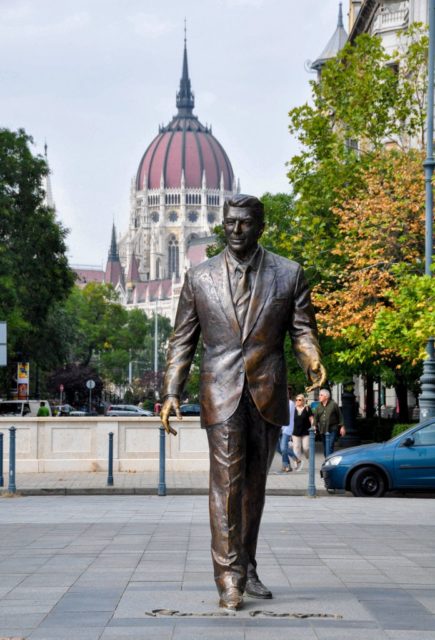
You’re walking through Budapest, ogling the grand architecture of Liberty Square, when you bump into someone familiar. That confident stride, that easy smile, that well-coiffed hair: It’s Ronald Reagan. But why on earth is the Gipper hanging out in this prime piece of Hungarian real estate?
cameron-hungary-budapest-politics-reagan-1

The answer is…complicated. But it begins with understanding Hungary’s current ruling party, Fidesz, and its prime minister, Viktor Orbán. Part of travel is learning about the current events of other countries. And over the last few years, Hungary has had one of Europe’s most fascinating political climates.

After Hungary’s previous leadership — the hard-left Social Democrats — immersed the country in debt and humiliating scandals, the political pendulum took a hard swing to the right. In 2010, Viktor Orbán’s party, Fidesz, took power in Hungary. A kindred spirit of Vladimir Putin and Donald Trump, Orbán first came on the scene back in 1989, when — as a long-haired, anti-communist radical — he delivered a rollicking speech in the waning days of communism. As his political career evolved, he moved gradually toward the nationalistic, authoritarian end of the spectrum. During his first term as prime minister, Orbán wore a child’s backpack decorated with soccer players, to drive home his unpretentious, populist affinities. And throughout his career, he has gained rabid supporters in the Hungarian heartland even as he’s horrified big-city progressives and international observers.

Soon after taking power, Fidesz adopted a new constitution that stripped away many checks and balances, and entrenched party leaders in institutions that had previously been considered apolitical. They also nationalized the school system, implementing a Fidesz-friendly curriculum. (Hungarian parents critical of Fidesz equate this to if the US government unilaterally removed all mention of the slave trade, the Trail of Tears, evolution, and climate change from textbooks.) International observers took note when Fidesz created a new FCC-like media authority with sweeping powers — leaving the Hungarian press less free than it once was. Orbán also attempted to levy a per-use tax on all Internet traffic, until tens of thousands of protesters clogged city streets… making it clear Fidesz had gone too far.

If you’ve heard of Viktor Orbán, it was probably in the fall of 2015, when Hungary took a particularly hard line in preventing the flow of Syrian war refugees from entering their country en route to a better life in Western Europe. Orbán erected barbed wire and dispatched an intimidating border defense squad to make it clear that refugees weren’t welcome. While humanitarians condemned Orbán’s actions — which violated the European Union’s open-borders agreements, and left many desperate people with nowhere to go — his supporters tout his success in preventing unwanted refugees from flooding the country.

cameron-hungary-budapest-politics-signs

Fidesz has left their mark all over the Hungarian capital. They went on a renaming binge in Budapest, rechristening streets, squares, and parks to honor patriotic or obscure (but Fidesz-friendly) historical figures. (They even renamed the country: No longer the “Republic of Hungary,” the nation is now formally called, simply, “Hungary.”)
cameron-hungary-budapest-politics-WWII-memorial

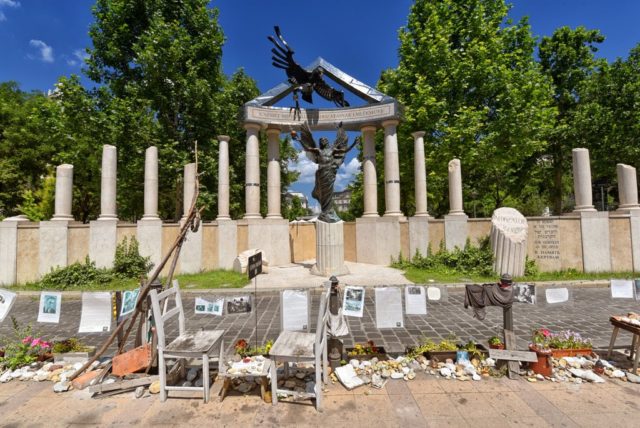
Fidesz also erected a dynamic new monument on Liberty Square, honoring the “Hungarian Victims of Fascism.” While it’s true that many Hungarians died at the hands of the Nazi regime, the monument overlooks the critical fact that Hungary chose to ally with the Nazis early in the war, and that Nazi-empowered Hungarians were some of the worst perpetrators of the Holocaust. As soon as the official monument went up, locals improvised their own memorial directly in front of it — ensuring that the complete history is represented.

cameron-hungary-budapest-politics-transylvanian-flag

In another bold move, for the last couple of years the Parliament has flown two flags: Hungary…and Transylvania. That region (now firmly in Romania) was part of the Hungarian realm for a thousand years. But it was stripped away from Hungary in the Treaty of Trianon that ended World War I. While nationalistic politicians have long used Transylvania (which still has a large Hungarian-speaking minority) as a rallying cry, Fidesz has taken it a step farther: The Transylvanian flag currently occupies the pole that was once reserved for the European Union…making Hungary the only EU member that refuses to fly the EU flag on their capitol.

cameron-hungary-budapest-politics-castle-hill

Up on Castle Hill, overlooking the entire city of Budapest, Orbán has evicted the National Academy of Dance, and is currently renovating their former home to be his personal palace. Critics point out that the Parliament was intentionally built along the riverfront in the city center, to show that the government is one with the people. By moving to the castle — literally looking down on all of Budapest — Orbán is signaling a startlingly different philosophy. (Speculation is that the Royal Palace itself — currently occupied by a pair of museums and some offices — may be next.)

cameron-hungary-budapest-politics-parliament

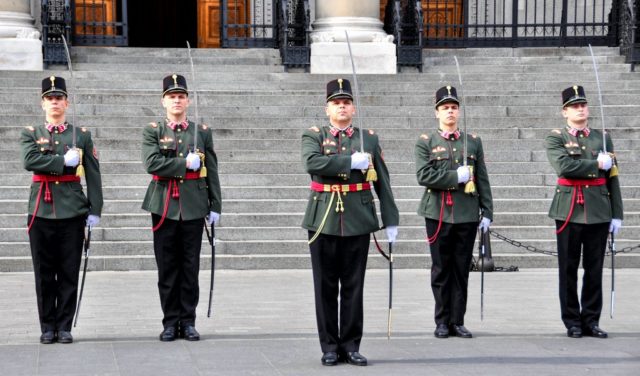
It’s easy to criticize Orbán. But as a traveler who drops in every year or two, I must admit that, from an infrastructure and urban-beautification perspective, Budapest has made great strides in recent years. Under Fidesz, vast swaths of the city have been scrubbed clean, pedestrianized, and landscaped. The formerly ragtag square behind the Parliament has been totally renovated — leaving it sleek, monumental, and (for some) a little too Fascist-feeling. (The brand-new “Changing of the Guard” ceremony — another Fidesz invention — doesn’t do much to reassure them.) The long-delayed green Metró line is finally finished…and it’s slick. And I sense a general pride that I wasn’t aware of 10 years ago. Obviously, the foundations for many of these projects were laid by the previous, left-wing government. And much of the money comes from the EU, which — ironically — Orbán opposes. But the fact remains: A leader with an authoritarian streak gets things done. (I was similarly impressed after a recent visit to Moscow. Say what you will about Putin — and believe me, I know there’s plenty to say — but Moscow is becoming a truly gorgeous city.)
cameron-hungary-budapest-politics-changing-guard

When viewed from a distance, Hungary’s political scene is intriguing…almost entertaining. But for people living there, it’s anything but. On this visit, one of my Hungarian friends — who has two school-age kids —asked me about employment opportunities in Seattle. She feels so depressed at the prospect of raising well-adjusted kids under a regime whose values she can’t stand that she’s considering moving the entire clan abroad until Fidesz is out of power. It reminds me of the pledge that I’ve heard recently from the anti-Trump crowd back home: “If he gets elected, I’m moving to Canada.” (It also made me wonder: There are plenty of tempting “socialist paradise” options for idealistic American lefties to relocate to…Canada, the UK, most of Europe, and so on. But — considering how fundamentally conservative the USA is compared to the rest of the developed world — where do right-wingers move if “things get bad enough”? Well, these days…maybe to Hungary.)

cameron-hungary-budapest-politics-reagan-2

And what about Ronald Reagan? In the early days of Fidesz rule, as Orbán was beginning to take some serious international heat for his questionable policies, he thought it smart to suck up to the powerful USA by erecting a statue of a beloved president in a prime position. And then, perhaps not quite grasping the subtleties of American politics, Orbán invited then-Secretary of State Hillary Clinton to the unveiling.
cameron-hungary-budapest-politics-nagy

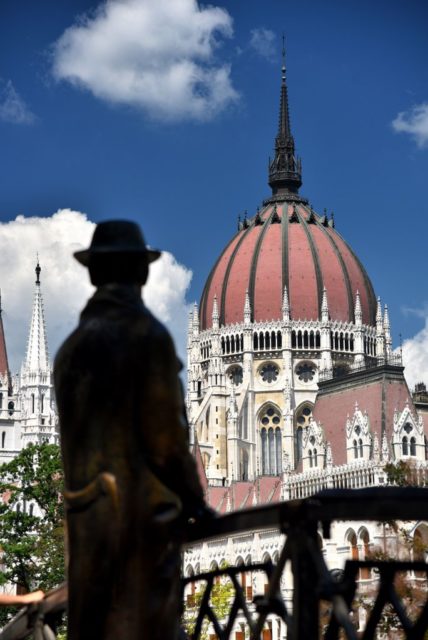
While Reagan played a role in ending the Cold War, many Hungarian patriots are offended that this monument overshadows the contributions and sacrifices of so many other important, homegrown figures — including Imre Nagy, who was executed for taking a leading role in Hungary’s 1956 Uprising. Just a few steps away from Reagan, a pensive statue of Nagy looks toward the parliament dome. For years, Nagy’s confident gaze struck me as an optimistic sign: Hungary, so long oppressed by communism, was determined to keep an eye on its government to ensure it was moving the country in the right direction. But these days, Nagy looks worried. And, my progressive local friends swear, every time Fidesz passes a bold new reform…Nagy winces.

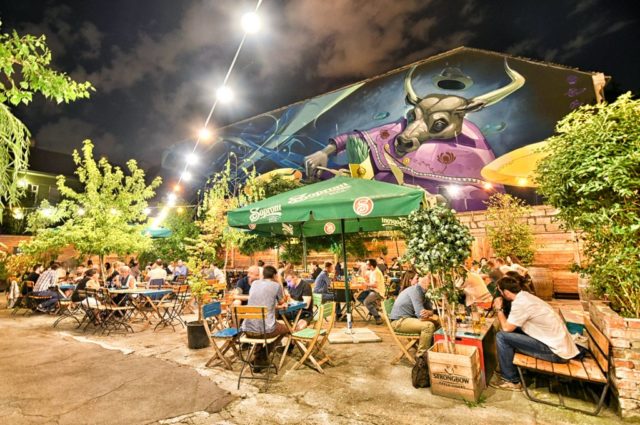
Budapest Nightlife: Ruin Pubs and Beyond

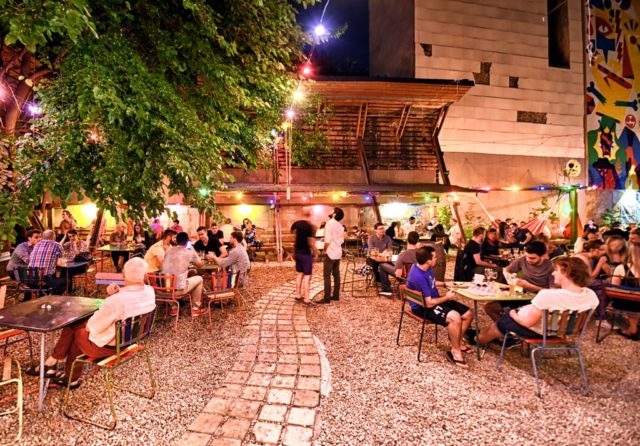
It’s the mid-2000s, and you’re opening a bar in Budapest. You’re scouting potential locations in the 7th District — the former Jewish Quarter, which, since communist times, has been derelict and largely abandoned. It’s a tough sell. Sure, rents are cheap. Very cheap. And the location is fantastic — a short walk from the main boulevard and the town center. But the properties are, simply put, total dumps. Stepping into a dilapidated courtyard — with crumbling plaster peeled back to reveal raw brick, rusty rebar sticking out at odd angles, and not a right angle in sight — you imagine the months of backbreaking work to turn this into a nice bar. But then you realize: Who says bars have to be nice? Some people like dives. And if they like dives, what’s to say they won’t love a ruin? Hey, that has a nice ring to it…
cameron-hungary-budapest-nightlife-ruin-pub-10

About a decade ago, Budapest invented a unique type of nightspot called a “ruin pub.” The original ruin pub — Szimpla — fills a deteriorating building and its courtyard with mismatched chandeliers, parachute-quilt awnings, lush houseplants, twinkle lights, artful graffiti, ramshackle secondhand furniture, old electronics lashed to the walls…and hundreds of drinkers having the time of their lives. It’s a chance to pretend you’re a squatter for a few hours, before returning to the comfort of your hotel. And, for locals, it’s nostalgic — along with beer, well drinks, and a list of creative cocktails, Szimpla serves the syrupy communist soda pops that Hungarian thirtysomethings were reared on: grape-flavored Traubisoda and sour cherry Meggymárka.
Szimpla remains the best of the ruin pubs. A fixture of the community, they post “don’t bother the neighbors” signs out front and even host a farmers market on Sunday mornings. But in the last several years, dozens of imitators have popped up all over the 7th District…and beyond. And these days, more and more people are flocking to Budapest not to tour the castle or the parliament, but to go on a ruin pub crawl. This scene may sound intimidating, but it’s very accessible. Each ruin pub has its own vibe, from younger party bars to mellow hangouts where hip oldsters are plenty comfortable. (Rick Steves wrote about his visit to Szimpla and some other ruin pubs a few years back.) To make things easier, here are a few tips or visiting ruin pubs — and a few alternatives:

cameron-hungary-budapest-nightlife-ruin-pub-5

Know the terminology. A romkocsma is a “ruin pub.” But other Hungarian terms can clue you in to the character of a specific ruin pub. Some ruin pubs bill themselves as a mulató (club, usually higher-energy) or a kávézó (coffeehouse, usually mellower). In good weather, the best part of a ruin pub is outdoors. Many have a kert (“garden”), with strings of lights lights, hammocks, and a bohemian-junkyard vibe. Others have a tető (“rooftop”), where you can get some fresh air and — often — views over the floodlit city. (More on that later.) In winter or bad weather, find one with a cozy interior.

cameron-hungary-budapest-nightlife-ruin-pub-6

Survey your options. The streets of the 7th District teem with ruin pubs. Before settling in, walk around and find one that suits your tastes. The highest concentration is in the streets between Király utca and Dohány utca, just behind the Great Synagogue. Stroll along Kazinczy utca, and don’t miss the long, crowded, narrow alley that heads south from there — it’s near two of the top ruin pubs, the straightforward Mika Kert and Ellátó Kert (colorful and rickety, with a Latin flair and a taco counter). Just to the north (on Dob utca), Rácskert has colorful plastic light tubes dangling overhead. And a few blocks west, just off the main boulevard (Andrássy út), Anker’t feels sleek, upscale, and minimalist — with unfinished timber tables and tasteful white hanging luminarias. (For a detailed “ruin pub crawl,” check out the Entertainment chapter of my Rick Steves Budapest guidebook.)

cameron-hungary-budapest-nightlife-ruin-pub-zone-3

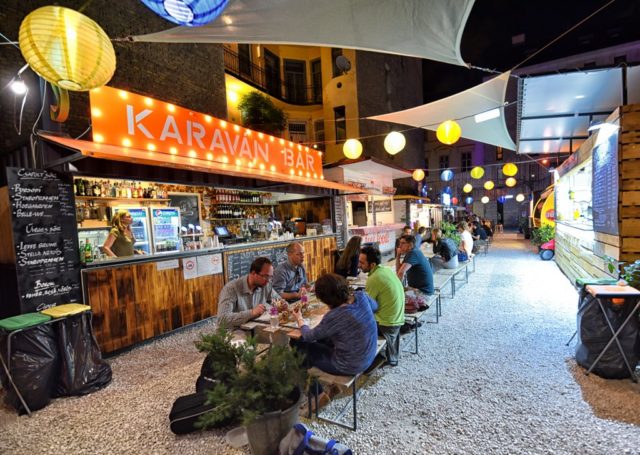
Grab a bite. A few high-quality, sit-down eateries have opened up in the 7th District (I recommended several — including Macesz BistroMazel Tov, and KönyvBár & Restaurant) — in my previous post about foodie Budapest). But there are also simpler joints catering to drinkers who just want a late-night bite. You’ll see taco stands, burger windows, ramen shops, and — just a couple of doors down from Szimpla — the Street Food Karaván, a pod of creative food trucks with picnic tables.

cameron-hungary-budapest-nightlife-godszu-udvar

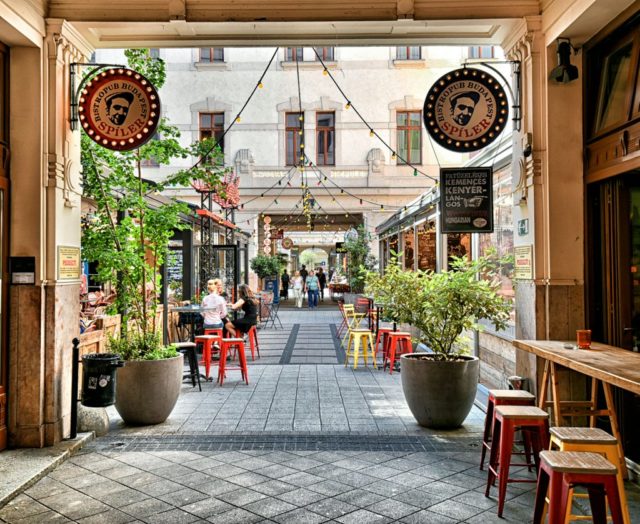
Stroll through Gozsdu Udvar. Years ago, a professorial Budapest tour guide walked me through what was then an empty passageway that ran through the middle of a city block, tunneling elegantly beneath classic apartment buildings. “Passages like this — lined with local shops and cafés — used to be common in Budapest,” he told me. “But most are now in disrepair and have been sealed off. They’ve done a marvelous job fixing this one up. Pity it’s so sleepy, but maybe someday a few shops will move in.” Today, that passage — called Gozsdu Udvar — is sleepy no more. In fact, it has become the epicenter for the ruin pub scene, and it’s jammed with bars, cafés, restaurants (including a branch of DiVino Wine Bar), nightclubs, a video arcade, and more. Busy as it is, it can be easy to miss — find the entrances at Dob utca 16 or Király utca 13…or, if you come down the row of ruin pubs from Kazinczy utca, you’ll run right into it.

cameron-hungary-budapest-nightlife-roof-2

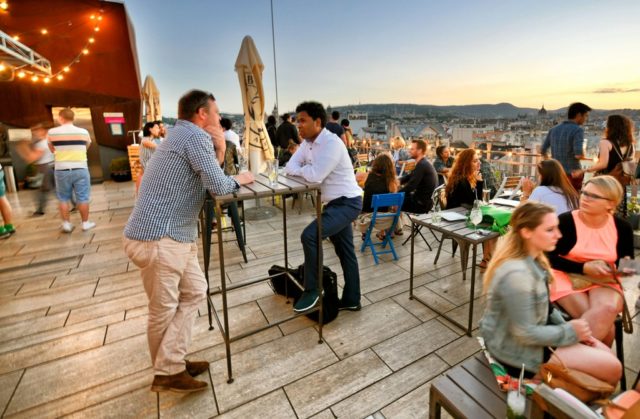
Gain some altitude. Of course, nightlife in Budapest goes well beyond the ruin pub scene. The rooftop bar trend has reached the Hungarian capital in a big way. Easily the best choice, 360 Bar has a classy vibe and perhaps the best views — sweeping panoramas over the domes of the Parliament and St. István’s Basilica. Other good choices are perched high above fancy hotels, but are open even to non-guests: High Note Sky Bar (atop the Aria Hotel) has vivid yellow sofas and point-blank views of St. István’s, while Top Rum Sky & Bar (above the Rum Hotel in Pest’s Town Center, overlooking University Square) has taken over an old favorite location, and is scheduled to re-open any day now (call first). For an edgier vibe, check out the ruin-pubby Gozsdu Sky Terrace (above the Gozsdu Udvar, tricky to find — ride the elevator up from the video arcade and walk through the parking garage) or the techno-nightclub Corvintető (topping an old department store near the Blaha Lujza tér Metró stop).

cameron-hungary-budapest-nightlife-opera

Take in an opera. OK, maybe I buried the lead: Budapest is also one of Europe’s great classical music cities, with one of Europe’s finest opera houses. But this is affordable opulence. At the Hungarian State Opera House, tickets are reasonably priced, ranging from $5 for the cheap seats to $65 for VIPs. But if you’re on a razor-thin budget, you can get standing-room tickets for just over $2; you can either stand with a limited view of the stage, or sit with no view at all. (Since the opera singers are on summer vacation, the Opera House is currently hosting a production of Billy Elliot — in the Hungarian language, as it was meant to be performed.)

cameron-hungary-budapest-nightlife-liszt-hall

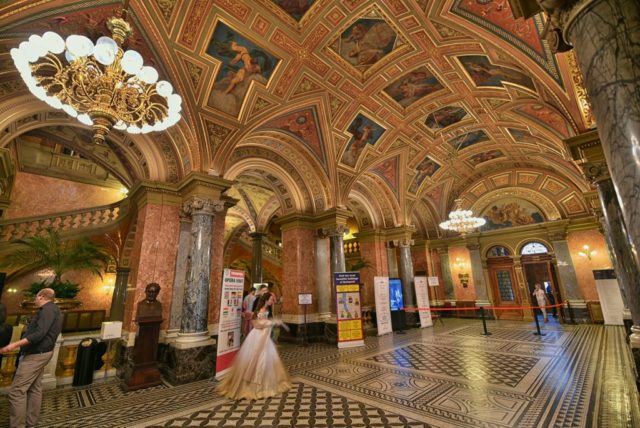
“Slum” with the students. Tempting as Opera House is, there’s a new rival in town. The Franz Liszt Academy of Music recently reopened after a head-to-toe renovation of its stunning Art Nouveau concert hall (pictured above). The Liszt Academy’s Grand Hall rivals the Opera House in both opulence and price (good seats run $10-20). And music lovers on a budget can get even cheaper — or free — tickets for smaller venues and student recitals.

cameron-hungary-baths-budapest-szechenyi-7

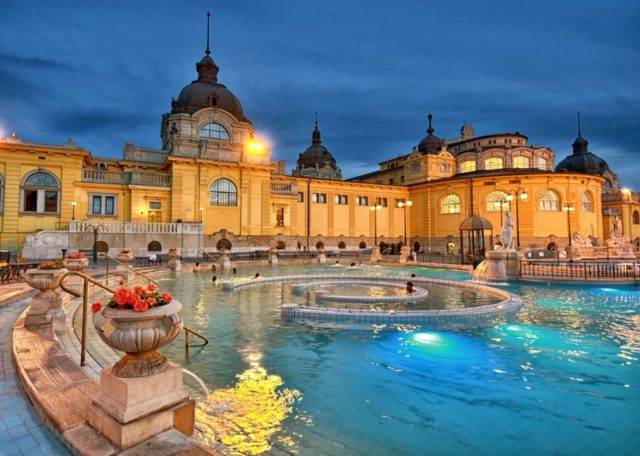
Go for a soak. At the risk of sounding like a broken record, I’ll remind you that Budapest has some amazing thermal spas — and some of them are open late into the evening. Széchenyi Baths (Budapest’s best thermal spa) is open until 10 p.m., and the later it gets, the calmer it gets (see photo above). But then, on weekends, it re-opens after closing time, and becomes a very wet, very hot dance “sparty,” with DJ music, boozy drinks, flashing lights, and hundreds of young Hungarians (and visitors) enjoying the good life.

Clearly, there’s no shortage of fun to be had after dark in Budapest. Whether you’re eating a street burger at 2 a.m. between ruin pubs, listening to top-quality opera, or dancing to throbbing techno music in chest-deep hot water, the city has something for everyone.

Foodie Budapest

Tucked away on a back street deep in the guts of a seedy Budapest neighborhood, the building’s facade is old and weathered. Battered by history. Practically bomb-damaged. Is this really the place? Confirming the address, I step across cracked cobbles through the grimy passage and pop out into a lively courtyard.

cameron-hungary-budapest-foodie-mazel-tov

The distressed brick walls have been expertly spiffed up, with garlands and twinkle lights hung just so. Behind a long counter, chefs scramble to keep up with the orders that just keep pouring in. The tables are packed with eaters. And here at the entrance, packs of hungry foodies wait patiently for their turn.

cameron-hungary-budapest-foodie-mazel-tov-int

This is Mazel Tov, one of Budapest’s trendiest new restaurants. It’s all the rage today — hard to get a table. But soon the novelty will fade, and Mazel Tov will quietly join the ranks of reliable standbys…a list that gets longer and longer every year. That’s the life cycle of a restaurant in a foodie city.

And make no mistake: Budapest is definitely a foodie city. In my last post, I raved about traditional Hungarian food…but I also warned that it’s hard to come by in the capital. “Hungarian restaurants” in Budapest are, almost without exception, looking to exploit a touristy clientele. They line up along the main shopping street, Váci utca, where hawkers out front try to lure in suckers willing to pay too much for a miserable meal and worse service.

OLYMPUS DIGITAL CAMERA

That’s why I don’t even bother looking for traditional Hungarian food in Budapest. Why would I? If you really care about good food, you don’t go to New York City for barbecue on Times Square…you go for trendy foodie haunts in Tribeca or Williamsburg. And in Budapest, the cutting-edge, experimental culinary scene is far from the obvious tourist zones.

A decade and a half ago, when I was just getting to know Budapest and writing the first edition of our Rick Steves Eastern Europe guidebook, I had to scrape the bottom of the barrel to recommend any restaurants. But then something happened. Leafy, mellow Franz Liszt Square became trendy. And wedged between the tourist-oriented theme joints and the drinks-only cocktail bars, a fresh new restaurant opened its doors. Menza (the word for a dreary communist canteen) boldly ventured into Modern Hungarian cooking: traditional ingredients and recipes, but with a fresh spin to please the modern palate. I can still remember my first dinner at Menza: They took the greasy, heavy lángos fry bread (one bite sits in your stomach for a week), lightened it up, and wrapped it around a delicious paprika-dusted entrée. This definitely wasn’t your Grandpa’s goulash. And the decor was a tongue-in-cheek update of commie cafeteria orange. It felt fresh. Bold. Postmodern.

cameron-hungary-budapest-foodie-menza

Menza — still respected, but considered an almost quaint throwback — became a blueprint for the 21st-century Budapest restaurant. Imitators sprung up all over town. And some of those imitators went a step or two beyond — putting their own twists and turns on Hungarian cooking. These days, I can barely keep up. In the year or two between my visits, whole new restaurant districts flourish and whither. It’s all I can do to keep track of the latest buzz. And I spend much of my Budapest research time simply scouting everything that’s new…and re-evaluating the old standbys. Here’s the latest scoop:

cameron-hungary-budapest-nightlife-ruin-pub-zone-1

The Seventh District is red-hot. It’s home to most of the city’s top “ruin pubs” (which I’ll explain in my next post). And now it’s emerging as a culinary destination, as well. In a nod to the district’s heritage as the former Jewish Quarter, Jewish-themed restaurants are popular here. Macesz Bistro is a Grandma’s-dining-room-cozy corner restaurant serving traditional Jewish recipes. And the new Mazel Tov — which I described at the start of the article — takes a different tack, serving Modern Israeli small plates like kebabs, shwarma, falafel, tabouleh, and shakshuka. While the atmosphere is wonderful, the food’s a bit hit-or-miss…not quite living up to the outsize buzz it’s currently enjoying. (But, then, how could it? Once the trendy accolades fade, Mazel Tov will be just fine.) Just around the corner is the inviting little KönyvBár & Restaurant (könyv means “book”), with a literary-themed menu and a dining room that feels like a sleek, minimalist library.

cameron-hungary-budapest-foodie-istvan-ter

St. István Square — in front of the towering facade of St. István’s Basilica, in the once-sleepy government and banking district — has really taken off as a food and wine lovers’ mecca. The cross-street called Sas utca has been a culinary hotbed in recent years. While flashy, style-over-substance places have come and gone along Sas, the reliable standby — with an engaging menu, reasonable prices, and a cozy dining room — remains Café Kör. Closer to St. István Square itself, a pair of wine-focused eateries have earned adoring fans. The classy Borkonyha (“Winekitchen”), which earned its first Michelin star in 2014, takes pride in pairing top-quality Hungarian wines with a nose-to-tail aesthetic and creative reinterpretations of classic cooking. (“Hungarian dishes,” the owner explained to me, “but less paprika, less fat.”) This place is popular and understandably jammed (I recently saw a selfie of Tom Hanks mugging with the staff)…so reserve ahead. For something more casual, try the nearby DiVino wine bar, which lists 130 bottles of Hungarian wines on its chalkboard (most glasses for under $5…did I mention Budapest is remarkably affordable?). They pair the wine with small plates, and have wonderful seating out on the square.

cameron-hungary-budapest-foodie-liszt-ter

I have plenty of other reliable favorites, scattered around the city. If you care about food and want a solid meal in Budapest, check out these options: Mák Bistro — pricey but unpretentious, hidden down a forgotten side-street — feels like a well-kept secret, with a lively brasserie ambience and a short, carefully selected seasonal menu. Bock Bisztró, run by a revered Hungarian vintner from Villány, offers 60 wines by the glass and traditional Hungarian staples presented with modern flourish (just shy of “deconstructed”). And Borssó Bistro, with a cozy two-story dining room near University Square, offers small portions of delicately assembled modern French cuisine with a bit of Hungarian flair.

Another big Budapest food trend is the renaissance of mangalica. That’s a uniquely Hungarian breed of wooly pig — basically a domesticated boar. The mangalica was out of fashion for years. But in this age of foodies who revere the almighty pig, the mangalica‘s high levels of unsaturated fat, distinctive flavor, and catchy backstory have made it newly trendy. These days, you’ll see it on every menu… and, in the case of the mangalica-themed Pesti Disznó restaurant, it’s literally in every item on the menu.

cameron-hungary-budapest-foodie-alexandra-cafe

Budapest has long had an elegant café culture (like its neighbor up the Danube, Vienna). While many cafés serve food, their forté is combining opulent surroundings with a take-your-time approach to coffee. The budget option hides upstairs in the Alexandra bookstore, along the main boulevard, Andrássy út. When the bookstore chain renovated this fine old turn-of-the-century department store, they spared no expense in restoring the sumptuous Lotz Hall. Now they fill this genteel space with a grand café and occasional live piano music. And, remarkably, they’ve kept the prices within reach: You can get a latte and slice of cake here for about the same price as at your hometown Starbucks.

cameron-hungary-budapest-foodie-new-york-cafe

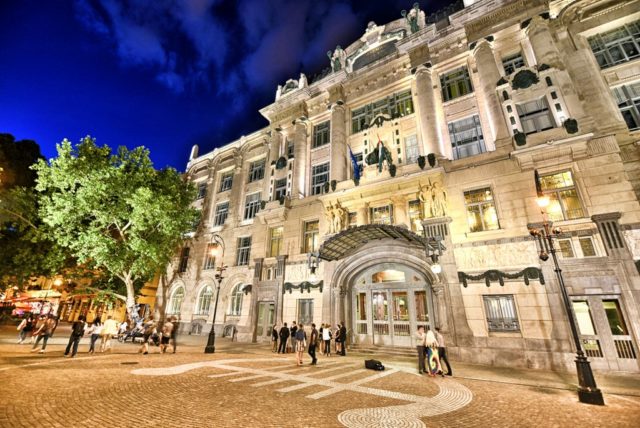
That’s not the case at Budapest’s showiest coffee house, the New York Café. Originally built in 1894 as part of the “New York Palace” — and it really is palatial — this fanciful, over-the-top explosion of Neo-Baroque and Neo-Renaissance epitomizes the “mix and match, but plenty of everything” Historicist style of the day. In the early 20th century, artists, writers, and musicians came here to escape their dreary apartments and be inspired by its opulence. Now restored, the café sells the most expensive cup of coffee in Hungary, along with mediocre food. But you know what? It really may be worth the $7 investment in a caffe latte, just to sit here for an hour.

All of this is just scratching the surface. (If your interest is piqued, pick up my Rick Steves Budapest guidebook.) Foodies are in heaven in Budapest. It’s worth adding an extra night or two to your itinerary, just to eat well. And even those who don’t know sous-vide from deep-fried find plenty to enjoy in the Hungarian capital.

Plenty of Paprika: Why I Love Hungarian Cuisine

Hungary is one of my favorite places to eat in Europe — ranking just a notch below Italy or France. When planning an itinerary here, I have to carve out a little extra time just to dine well.

This may come as a surprise, if you subscribe to the conventional wisdom about “Eastern European” cuisine: a dreary, stick-to-your-ribs diet of pork, kraut, and potatoes. And to be fair, in most of Eastern Europe, there’s a kernel of truth to that stereotype. Most national cuisines withered on the vine under communism, when quality ingredients (and sometimes any ingredients) grew scarce. And today, even as a foodie wave sweeps Europe, the eastern part of the continent sometimes feels stuck in a rut. While Slavic cooking is — no doubt — satisfying comfort food, it’s not exactly high cuisine.

But right here in the middle of Eastern Europe, Hungary bucks that trend. The Hungarian culinary tradition is a fine balancing act between nourishing peasant food and delicate haute cuisine. (Hungary is one of Europe’s largest producers of both lard and foie gras.) And chefs here simply know what they’re doing. They are technically skilled, have a respect for ingredients, and are unafraid of flavor — no matter what they’re cooking. Some of my all-time favorite Indian, French, and Italian meals have been prepared by Hungarian chefs.

cameron-hungary-cuisine-peppers

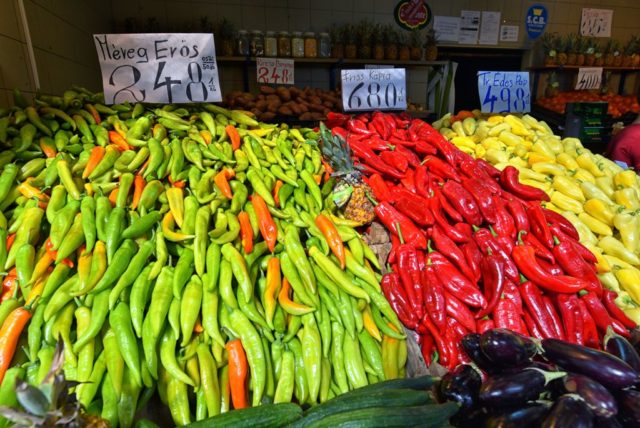
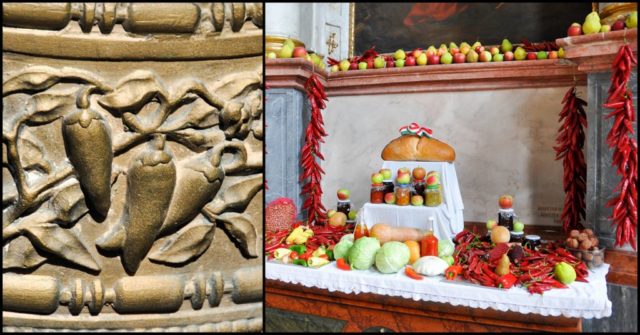
The defining Hungarian ingredient is paprika, which infuses every dish with a rich and smoky tingle. Hungarians recognize two broad categories of paprika: sweet (used liberally in the kitchen) and hot (applied to each diner’s taste at the table). Most Europeans have a timid palate. They seem terrified of spice. But I’m a five-stars guy — the kind of person who eats ghost pepper hot sauce on a dare. By the time I reach Hungary, I’m craving some heat. And Hungary is all too happy to provide it.

cameron-hungary-cuisine-paprika-church

Once, in the steamy southern plain of the country — where paprika grows like weeds — I visited a little church that reveres the red pepper. Carved columns were embossed with ripe peppers hanging on the vine. And piles of peppers were laid at the altar, as if a sacrifice to Saints Scoville and Capsicum.

cameron-hungary-cuisine-dishes

The quintessential Hungarian dish is csirkepaprikás: chicken (or veal, borjúpaprikás) slow-simmered in a rich paprika stew, served over egg-drop noodles. (After years of experimenting, I’ve mastered the art of cooking chicken paprikash in my own kitchen. It’s a quarterly ritual that tides me over until my next visit to Hungary.) Hortobágyi palacsinta — named for the wild steppes of southern Hungary — are savory crêpes wrapped around a meaty filling, smothered in a creamy paprika sauce. Pörkölt is a hearty stew of braised meat and vegetables, flavored with — who knew? — paprika. And the peppers themselves can be stuffed with various fillings to create töltött paprika.

If your meal isn’t spicy enough for you, ask your server to bring you a jar of Erős Pista — a vivid-red paste of mashed peppers. A spoonful of Erős Pista (which means, loosely, “Spicy Steve”) introduces a rich, salty paprika flavor and a wallop of heat. If you appreciate the flavor more than the heat, opt for Édes Anna (“Sweet Anna”) — as hardy yet demure as the babushka-draped peasant girl on the label.

cameron-hungary-cuisine-goulash

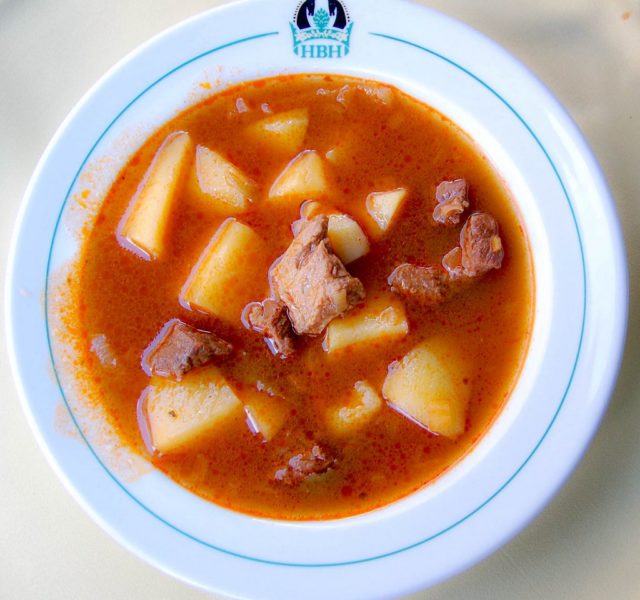
And then, of course, there’s the ultimate Hungarian dish: goulash. Except that what you’re picturing as “goulash” isn’t Hungarian. It’s the German, or Czech, or American interpretation of a classic Hungarian peasant soup: a thick, meaty stew, stacked with vegetables and timidly flavored with a pinch of paprika. But in Hungary, it’s gulyás leves — a “shepherds’ soup” that was born on the Great Hungarian Plain, where shepherds simmered simple ingredients in a rustic kettle. True Hungarian goulash is a broth deeply reddened with robust paprika, its flavor rounded out by onions, garlic, and crushed caraway seeds. Big chunks of meat and potatoes — and maybe a few carrots — make it hearty. When it’s simmered long enough, it reduces to a thick (but not thickened) consistency. It’s not brown — it’s bright-red. And each spoonful is supremely flavorful. (If you prefer fish, try halászlé — goulash that swaps out the meat for carp.)

cameron-hungary-cuisine-cold-fruit-soup

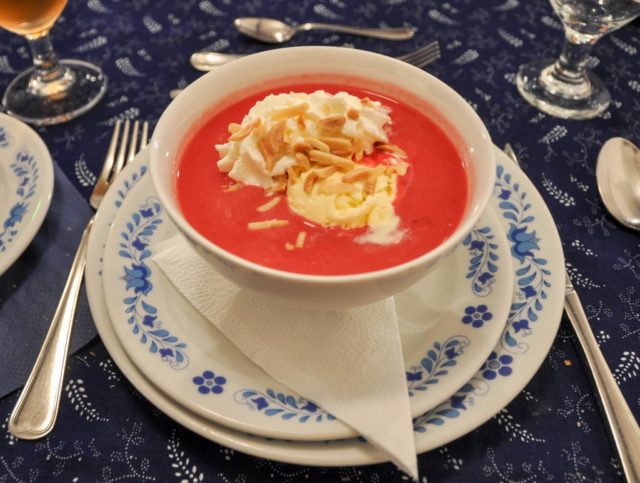
One Hungarian dish that doesn’t involve paprika is hideg gyümölcs leves — cold fruit soup. It’s a creamy, fruity, sweet dish eaten as an appetizer. When done right, cold fruit soup feels like cheating…a bowl of melted ice cream before the meal. Just watch out for pits in the sour cherries.

cameron-hungary-cuisine-kurtoskalacs

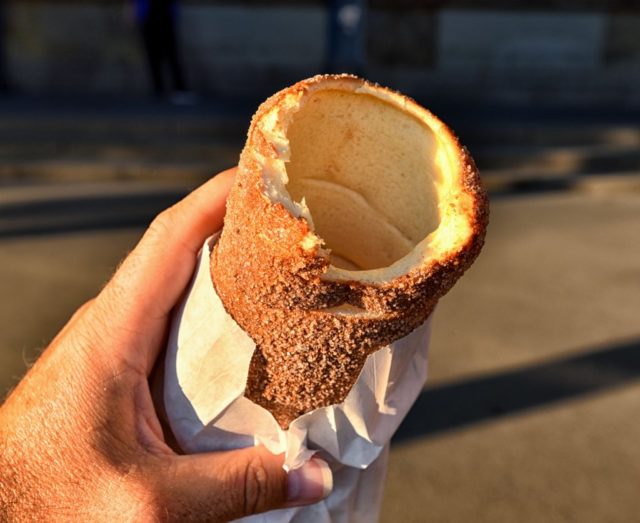
For a real dessert — or just a sweet snack — keep an eye out for my favorite Hungarian street food, kürtőskalács. To make this “chimney cake,” dough is wrapped around a wooden spindle and sprinkled with sugar, then slowly spins on a rotisserie over coals. When the sugar begins to crystallize into a golden brown crust, the kürtőskalács is taken off the fire, rolled in flavorings (cinnamon sugar, coconut, or nuts), then slid off its spindle and into a paper sleeve…hot, fresh, and ready to eat. You’ll see kürtőskalács stands on busy street corners, parks, and anywhere people are out having fun. If they hand you a cold one, insist on waiting for a hot one…it makes a difference.

Most of my favorite traditional Hungarian meals have been outside of the capital. If you’re doing a tour around Hungary, stop in at HBH Restaurant in Eger, Jégverem Fogadó n Sopron, Kecskeméti Csárda in Kecskemét, or the blowout buffet restaurant at the Saliris Resort at the Egerszalók spa — a Hungarian smorgasbord.

In Budapest, on the other hand, it’s always been a challenge to find authentic, traditional Hungarian food to recommend in my Rick Steves Budapest guidebook. As in any cosmopolitan capital, most restaurants here cater to forward-looking young urbanites who want upscale international cuisine with flashes of Hungarian influence. This target audience would never go out for old-school Hungarian food. That’s what Grandma cooks them on Sundays.

A few overpriced, overblown specialty restaurants in Budapest work too hard to dress up Hungarian classics, throw in some “Gypsy” music and stuffy service, and charge top dollar. But I’ve always sought a moderately priced hole-in-the-wall that was all about the food. And on this trip, I finally found it. Hungarikum Bisztró, tucked down a nondescript side-street surrounded by governmental ministries, has a deep respect for tradition, but with a modern sensibility. The simple, no-frills interior — with red-and-white-checkered tablecloths and discreet woodwork — is filled with the aroma of braising meat.

“Budapest is a foodie city,” István — one of the co-owners — explained. “And the chefs are so creative and so modern, they can’t help themselves but to play with traditional recipes to update them somehow. It’s tasty, but it’s not real Hungarian food. Here, we strictly follow our grandmas’ recipes, down to the last detail…even if it has ingredients or techniques that aren’t commonly used in modern cooking. That way, we know that you are tasting the same food we tasted growing up.”

cameron-hungary-cuisine-hungarikum

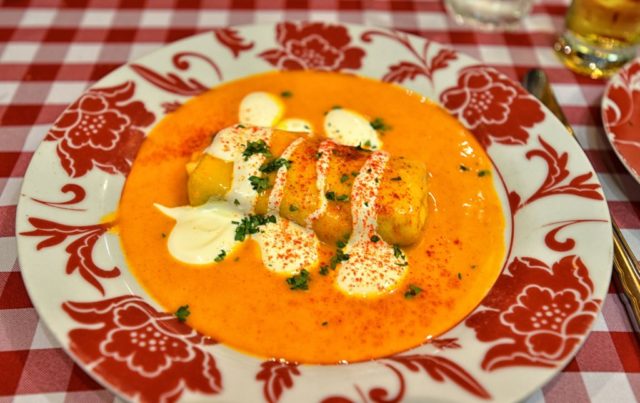
Enough talk. Starving, I ordered two of my favorite dishes: gulyás leves (that’s real Hungarian goulash) and Hortobágyi palacsinta (paprika-smothered filled crêpe). And when the food came, it delivered on István’s promise. The goulash was slow-simmered, producing a rich broth and tender meat and potatoes. And the Hortobágy pancake was perfect: a firm crêpe containing a delicious filling, swimming in a luxurious pool of creamy paprika sauce. What’s not to like?

But the ingredient that really caught my attention was the paprika that was dusted over the dish. Paprika loses its flavor quickly…so quickly, most people probably don’t know what paprika actually tastes like. That little paprika jar that came with your spice rack? That’s not paprika. It’s a soulless red powder that only hints at paprika flavor. Even those little cloth bags of paprika you buy at Budapest’s Great Market Hall are, all too often, past their prime. István’s paprika, however, was explosively flavorful. You could taste the sun-drenched pepper growing on the vine, and you could taste the heavy wood smoke used to dry it.

I quizzed István, who grinned proudly. “Yes, we get all of our paprika fresh and direct from Kalocsa,” he said, naming the city deep in the hot south of Hungary, famous for its top-quality peppers. Paprika from Kalocsa is like key limes from Florida or maple syrup from Vermont. Like any good restaurant, István recognizes that his food will only be as good as his ingredients. And his ingredients are very, very good.

Hungary’s Top Five Thermal Baths

In my last post, I wrote about my favorite Budapest thermal bath, Széchenyi. But that’s just a drop in the bucket. Budapest has two dozen spas, and Hungary has over a hundred. And, while they all enjoy hundred-degree water, jets, massages, and fanciful architectural flourishes, each one is unique. Hungary’s addictive thermal spas are a slippery slope: If you spend enough time here, you’ll wind up a connoisseur. And after scouring plenty of options — both in the capital and in the countryside — here’s a rundown of my personal favorites. (All of these, and ample tips for how to enjoy any Hungarian thermal bath, are covered in more detail in my Rick Steves Budapest guidebook.)

1. Széchenyi Baths (Budapest)

cameron-hungary-baths-budapest-szechenyi-15

This elegant bathhouse in the center of Budapest’s City Park is the undisputed champ. This spa has it all: Grand architecture; indoor and outdoor sections; pools with healthy (read: stinky) minerals, and pools that are all about fun. If you go to just one thermal bath in Hungary, start with Széchenyi. For details, check out my full rundown on the place.

2. Hagymatikum Baths (Makó)

cameron-hungary-baths-mako-3

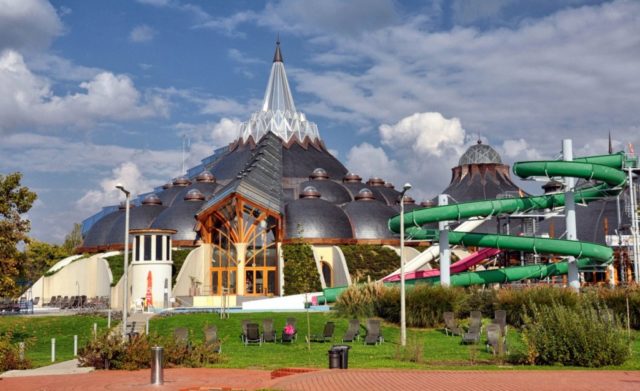
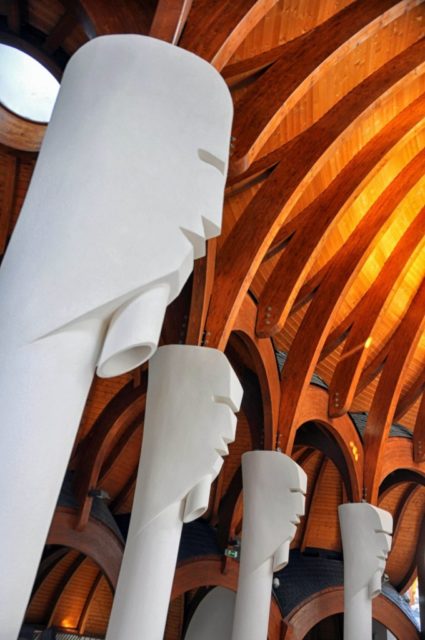
Tucked in the southern fringe of the country, the town of Makó was the birthplace of Imre Makovecz — the inventor of Hungary’s defining postcommunist architectural style. Before his death in 2011, Makovecz sprinkled his hometown with priceless examples of his distinctive “Organic” style, including the Hagymatikum Baths. This bulging mushroom-shaped hall hides a mind-bending wonderland of hot-water fun.

cameron-hungary-baths-mako-4

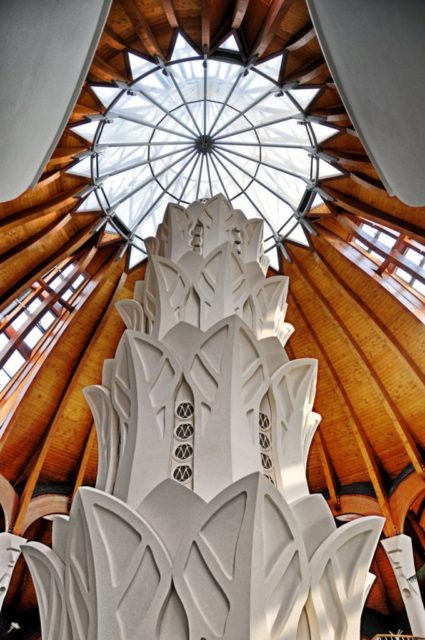
In the center of the grand hall, a towering tree trunk stretches up to a starburst skylight in the wood-beam roof.

cameron-hungary-baths-mako-1

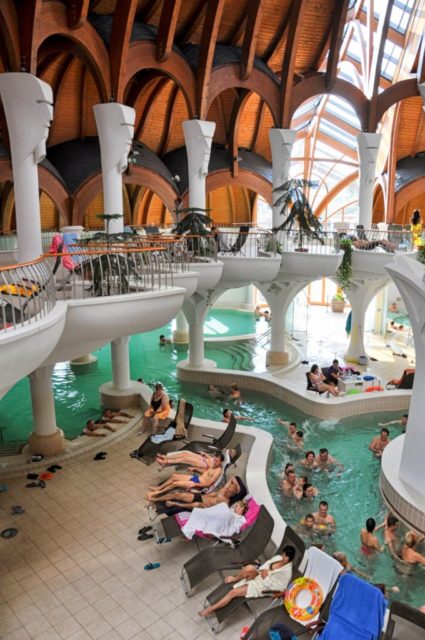
A canopy provides cover for the interconnected lower pools — which flow into each other like a lazy river — and also creates a restful upper deck (with napping loungers) where giant Easter Island heads survey the scene.

cameron-hungary-baths-mako-5

Combining unique architecture with modern thermal-bath amenities, Hagymatikum is practically a pilgrimage for both architecture fans and spa lovers.

3. Rudas Baths (Budapest)

cameron-hungary-baths-budapest-rudas-1

Thanks to a recent rejuvenation, Rudas offers an ideal combination of old and new. At its heart is a mysterious-feeling, 400-year-old Turkish bath — an evocative relic of the bygone Ottoman occupation. Float on your back under the stony dome — light faintly twinkling through the glass-mosaic skylight — and be one with the past. A half-dozen pools let you gingerly step your body temperature up and down — or, if you get overheated, just pull the rope to be doused by a bucketful of frigid water.

cameron-hungary-baths-budapest-rudas-2

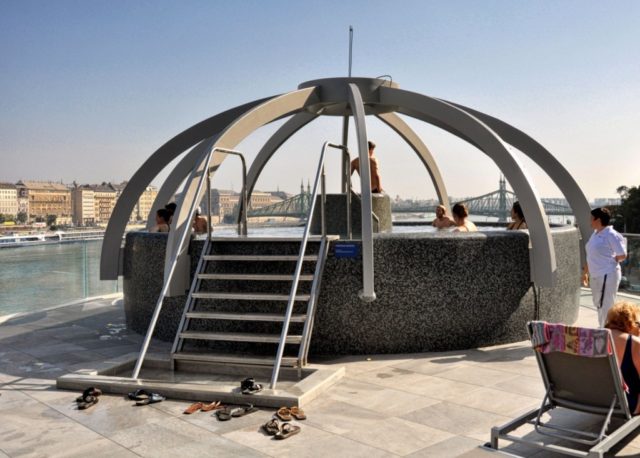
Meanwhile, upstairs in the same building, Rudas’ new “wellness” section is all modern efficiency, with sleekly tiled hot and cold pools, a Danube-view restaurant, and — best of all — an easy-to-miss sundeck where you can soak in a 97-degree hot tub with a panoramic downtown Budapest view. Feeling the bubbles tickle your feet, look out over Budapest’s bridges, where footsore commuters trudge along smoggy highways…and be happy you’re on vacation.

4. Gellért Baths (Budapest)

cameron-hungary-baths-budapest-gellert-5

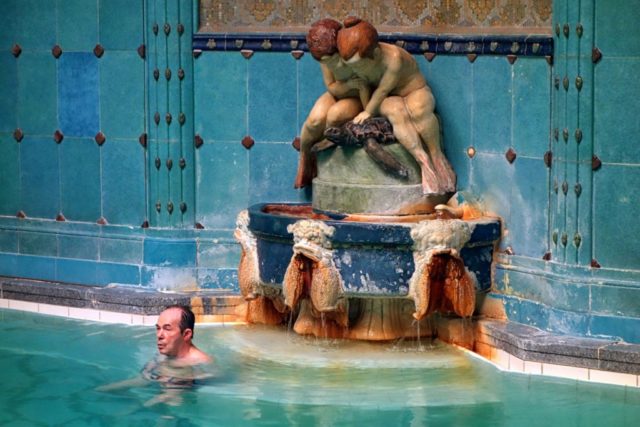
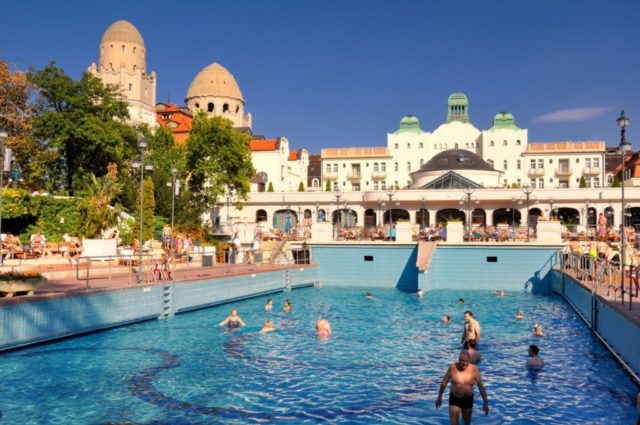
Budapest’s swankiest, most famous, and most touristy thermal spa fills one wing of a once-grand hotel. Gellért is a classic. And the baths— decorated with an Art Nouveau flourish — are sparkling after a recent renovation. Once carefully segregated between men and women, Gellért recently opened up its parallel facilities to all. (Enjoying this unprecedented access, bathers quickly discovered that the men’s section is far more beautifully decorated — and hotter — than the women’s section. Hmmm…)

cameron-hungary-baths-budapest-gellert-4

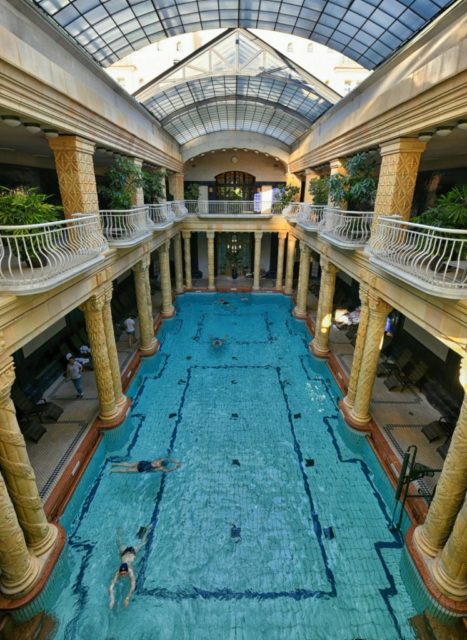
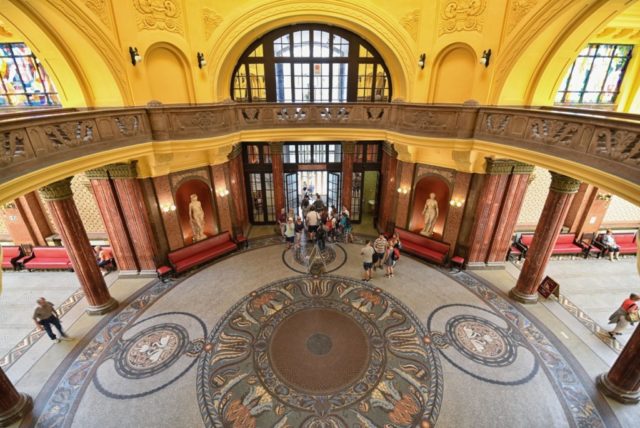
Gellért feels fancy. Its lobby has the genteel aura of an old museum. Its lap pool fills a colonnaded hall with a skylight. And its two large thermal spa zones are encrusted with colorful mosaics.

cameron-hungary-baths-budapest-gellert-6

At the spouts where a century’s worth of mineral-rich hot water has trickled into the pools, bulbous lobes hang like prehistoric stalactites.

cameron-hungary-baths-budapest-gellert-2

While most of the complex feels staid and a little sleepy, Gellért hides its fun outside: A wave pool that thrashes bathers around like driftwood. On a hot day, Gellért’s wave pool is refreshing entertainment.

5. Hévíz Thermal Lake (Hévíz)

cameron-hungary-baths-heviz-4

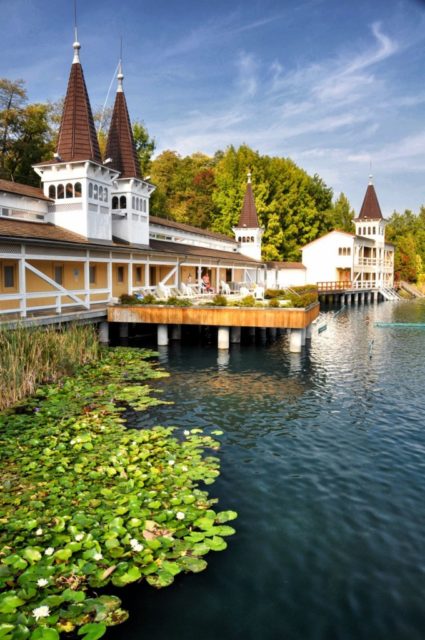
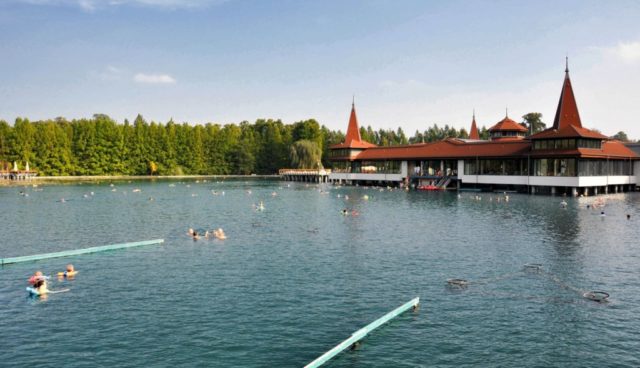
Filling a volcanic crater near the town of Keszthely (two hours southwest of Budapest) is the world’s second-largest thermal lake. Hévíz is continually fed by thermal waters that bubble up from springs a hundred feet below. All of this constant, natural flushing ensures that the lake’s waters refresh completely every two days, and the temperature never drops below about 70°F (and stays closer to 95°F in summer).

cameron-hungary-baths-heviz-3

Extremely popular with aging Russians and Germans, the lake’s unique mineral composition is supposedly excellent for easing arthritis, joint pain, and other ailments. When I told a local friend I’d visited Hévíz, he said, “You know the water’s radioactive, right? You’re not supposed to stay in for more than 30 minutes at a time.” Apparently, there can be too much of a good thing.

cameron-hungary-baths-heviz-6

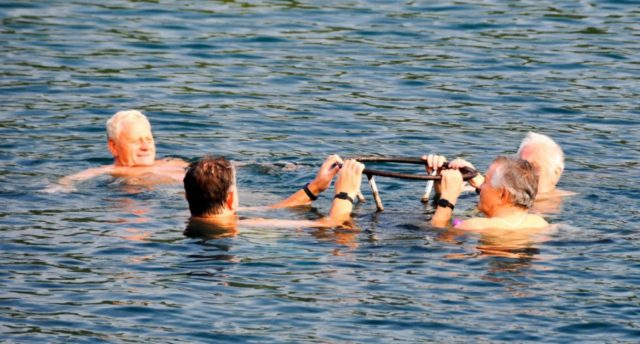
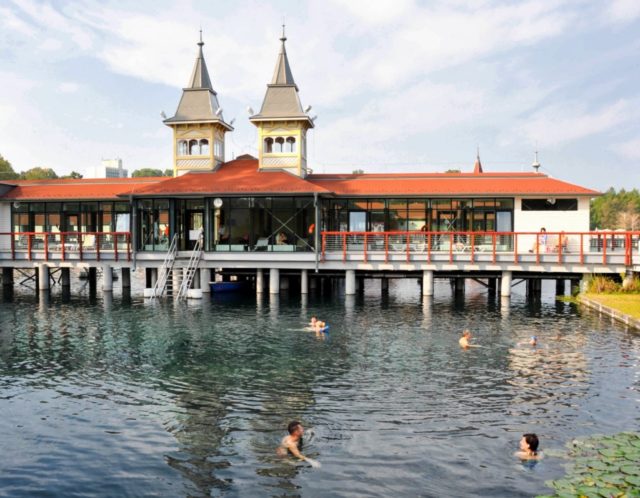
From the locker rooms, you’ll tiptoe along wooden walkways to the pavilion in the middle of the lake. There you’ll ease into the waters, then swim out into the lake itself. Rent a pool noodle and slowly paddle your way around the lake.

cameron-hungary-baths-heviz-2

Weave between the lily pad lotuses as you glide in slow motion across the tranquil surface. All around you, portly, aching, aging bodies bob in the steamy surf. For those who enjoy being close to nature, Hévíz is the best place in Hungary to simply float like a cork.

Honorable Mention: Salt Hill Thermal Spa (Egerszálok)

cameron-hungary-baths-egerszalok-3

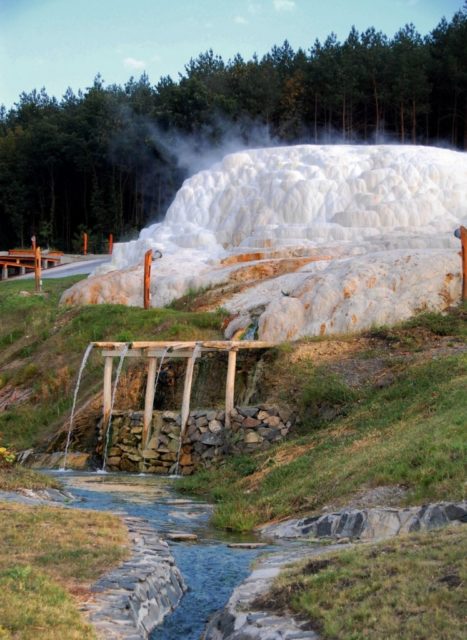
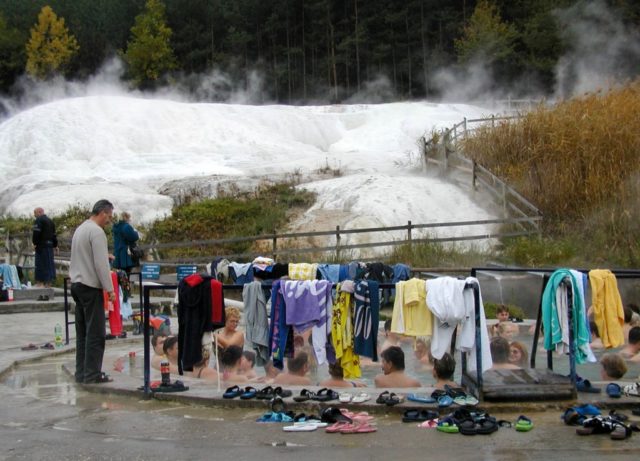
My favorite small town in Hungary, Eger, anchors an arid wine region in the north of the country. About a half-hour outside of Eger, on the outskirts of the winemaking village of Egerszálok, is a series of Pamukkale-like natural travertine pools — nicknamed “Salt Hill.”

OLYMPUS DIGITAL CAMERA

Back in my early days guiding the Rick Steves’ Best of Eastern Europe tour, I enjoyed bringing my groups to an extremely humble little spa here, in the middle of nowhere. It was basically one small round pool, filled with hot water and jammed with locals, with a few wooden cabanas to change in. Far from the gentility of Gellért, it was a perfectly earthy — and memorable — Hungarian spa experience.

cameron-hungary-baths-egerszalok-7

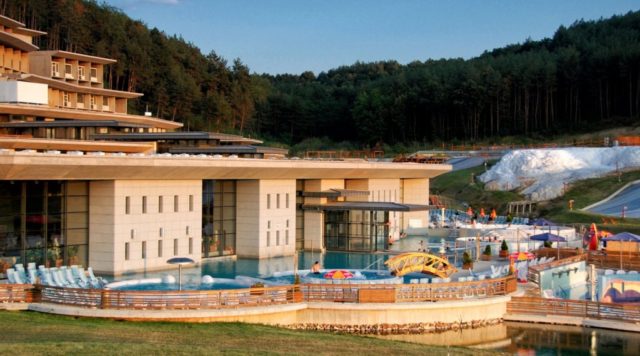
But these days, Salt Hill has gone big time. In 2007, developers took notice of the unique deposits and bucolic setting, and built a sprawling, state-of-the-art spa hotel — being careful not to disturb the natural fortifications that made this place special to begin with.

cameron-hungary-baths-egerszalok-2

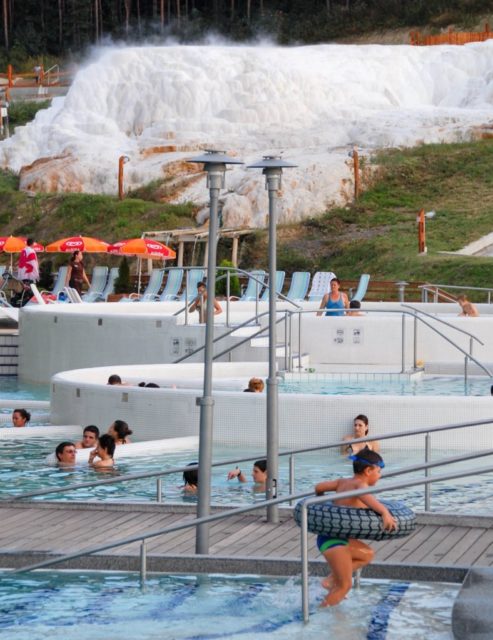
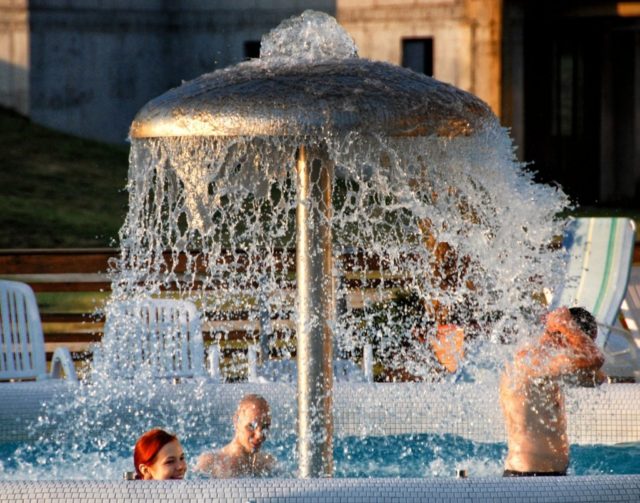
Today bathers can enjoy views of the Salt Hill as they frolic in a world of futuristic pools, cascades, and jets.

cameron-hungary-baths-egerszalok-6

With so many ways to have hot-water fun, Hungary is a must for anyone who enjoys slowing down and relaxing while on vacation. Come on in…the water’s perfect!


For details on all of these thermal baths, check out our Rick Steves Budapest guidebook.


This post was published in 2016.