This Pride Month, Take Pride in Broadening Your Perspective

It’s Pride 2025, and I’m reflecting on last September, when I slipped along the matrix of communist-era buildings in Sofia at midnight to visit one of only five gay bars in all of Bulgaria. The blue-lit basement bar was unremarkable, really: just a cluster of cozy couches populated by a light crowd of locals ringing a small, empty dance floor.

Unsure if I’d find someone friendly and fluent in English to talk with, I entered with a book tucked under my arm. Fortunately, I didn’t need it long. Soon, Ivan waltzed over with a wide smile, excellent English, and an invitation to join his friends.

The three Bulgarians and I talked about my upcoming travels and their life as gay people in Bulgaria. They enjoyed cosmopolitan Sofia — but wouldn’t dream of coming out to their banking industry colleagues. I pondered how my company’s CEO had marched in the Seattle Pride parade and eagerly asked if he’d see me there. But there wasn’t much time to reflect, because soon the dance floor was no longer empty as we laughed and danced to Bulgarian pop music late into the night. Already, the country was feeling less foreign.
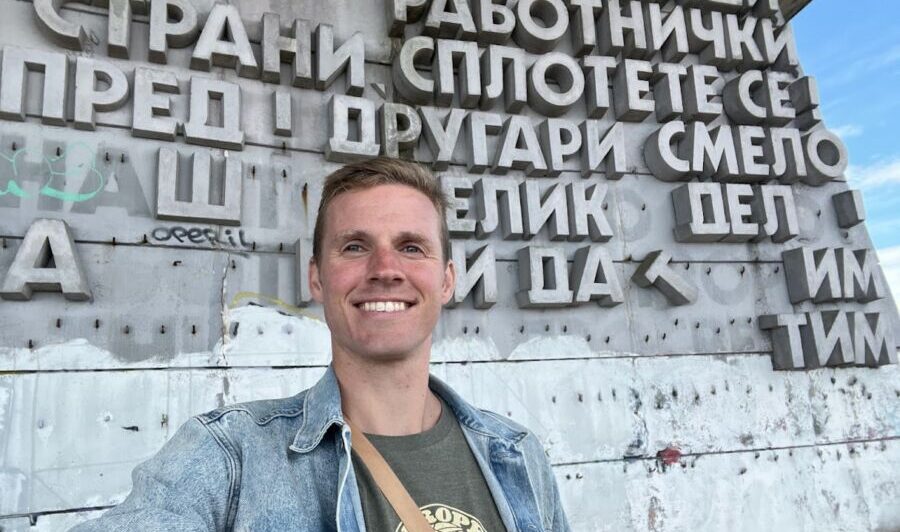
A smiling person standing before a wall in Bulgaria
Gabe Gunnink in Bulgaria, fall 2024

I endeavored to visit gay bars in Bulgaria and Turkey last year not because I’m a party animal, but because I’m a cultural chameleon. Turkey scores a 36/100 on the global LGBTQ+ equality index — and it actually outperforms Bulgaria in public opinion polls. I was fascinated to experience what life is like for queer people in these places.

As I danced with Ivan and his crew in Sofia — and later talked with a man who’d recently fled Russia on a rooftop gay bar in Istanbul — I swelled with gratitude for the queer community that transcends nationality. I also brimmed with hope that my new friends’ cultures would follow the same steady march toward LGBTQ+ rights I’d seen in my own American society until they too could hold hands in public and bring their partners to office parties.

Steady forward progress. That’s the way human rights work, right?

Then I returned home to anti-trans election ads, companies shuttering diversity programs, and friends having passports changed against their will. Overwhelmed by these setbacks, I was reminded of Amsterdam’s Homomonument.

The Homomonument is a vast triangle — each side longer than a tennis court — stretching out along the Keizersgracht canal. It was built in 1987 to honor the LGBTQ+ victims of World War II, after police arrested Dutch activists trying to place a lavender wreath at Amsterdam’s National War Memorial. The eastern point of the monument is a staircase leading down to the water, the steps of which are often lined with wreaths. Each corner features a smaller pink triangle — the symbol stitched to sexual minorities in concentration camps.
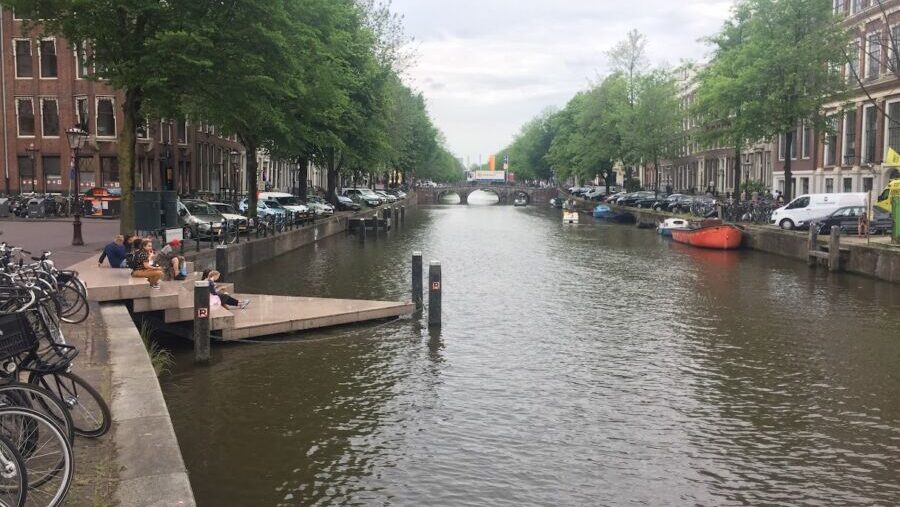
A triangular chunk of concrete juts into a canal in Amsterdam
Part of Amsterdam’s Homomonument juts into the Keizersgracht canal

But life was not always tragedy for the queer victims of Nazi Germany. For the first third of the 20th century, Germany was home to the world’s first gay movement. Magnus Hirschfield pioneered the scientific study of gender and sexuality. Gay bars, gay movies, and gay pop songs fueled a thriving subculture. Queer people may have existed at society’s margins, but society made those margins plenty wide…

…until the margins were burned.

As it turns out, the march of human rights is not steady forward progress. My new friends in Bulgaria are not promised a future in which they can marry. My friends in Ohio and Oklahoma aren’t guaranteed protection from employment and housing discrimination. And rights given can be taken away.

Just this year, Stonewall National Monument, the first US monument to LGBTQ+ people, had its history twisted. Famous for the 1969 Stonewall riots that catalyzed the LGBTQ+ rights movement, the Stonewall Inn was surprised to find the National Park Service had removed all mentions of transgender people from its website. The acronym LGBTQ+ was axed to LGB — a galling erasure, given that trans activists Marsha P. Johnson and Silvia Rivera emerged as the leading figures from the riots.

In response, this Pride season, I invite you to explore queer history and culture with the spirit of a thoughtful traveler: exercising curiosity, embracing culture shock, and pursuing understanding over judgment. So, as you would if you were visiting Sweden, Spain, or Sicily, consider seeking out books, films, and conversations that connect you to people unlike yourself. (I’ve provided a few recommendations below!) Because whether you’re part of the LGBTQ+ community, a proud ally, or unsure what to think about queer culture, we all have plenty to learn. And a broader perspective is something we can all take pride in.


Gabe Gunnink is a Monday Night Travel host for Rick Steves’ Europe. His recommended queer books and movies include:

  • The Death and Life of Marsha P. Johnson (2017). This film investigates the murder of the famous trans activist while also exploring her vibrant life and work.
  • Rustin (2023). A biopic uncovering the legacy of Bayard Rustin, the organizer of the 1963 March on Washington and a gay rights activist.
  • Less (Andrew Sean Greer, 2017). In this Pulitzer Prize-winning novel, middling author Arthur Less travels the world as an excuse to skip his ex-lover’s wedding.
  • Last Night at the Telegraph Club (Malinda Lo, 2021). This novel follows a young Chinese American woman as she finds love and community in San Francisco’s lesbian bars during the Red Scare.
  • A Queer History of the United States (Michael Bronski, 2011). A dense but enlightening exploration of the long, overlooked queer history in our country.


We’d like to hear from you! As a member of our merry band of travelers, please weigh in on this article by using the comments below. Meanwhile, many of these topics will also be covered on Rick Steves’ Europe’s various social media platforms — FacebookInstagramX, and TikTok — and we hope you’ll join the conversation there as well.
What to Know About Spain’s Anti-Overtourism Protests

Recently, you may have seen news about “anti-tourism” protests in Europe, especially in Barcelona and beach towns across Spain. Is it still safe to travel to these places? In short: Yes, absolutely. But it’s smart to understand what’s behind Europe’s frustration about overtourism, so you can avoid inconveniences — and do your part to be a good traveler.

Spain has seen a steady, pronounced rise in international tourism over the past few years. Last year, the country broke records with 94 million international arrivals — a 10 percent increase over 2023, pushing Spain ahead of Italy as the world’s second-most visited country (after France). Understandably, locals in many heavily touristed communities are alarmed and frustrated by the ever-increasing number of visitors clogging their communities — and, especially, by the reluctance of local authorities to thoughtfully curtail these problems.

We “Rick Steves” travelers from North America — who tend to go on brief, targeted trips to cultural destinations — represent only a small fraction of these numbers. The biggest piece of Spain’s problematic pie is beach tourism: holidaymakers from Britain and Northern Europe who flock to the Costa del Sol, Canary Islands, and other Mediterranean destinations for long vacations. Many of the recent protests have focused on these beach towns, though one major cultural destination — Barcelona — has seen its share as well.

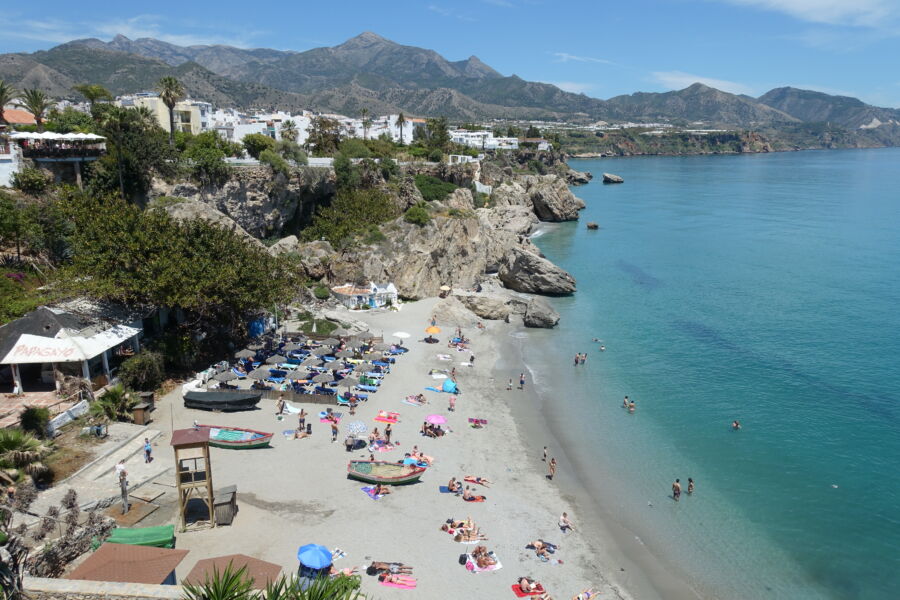
A beach in Nerja, Spain
Heavy beach tourism to places like the Costa del Sol are key targets of Spain’s protests.

Last July, you may have heard about “anti-tourism” protests in Barcelona, when a few thousand locals marched down the Ramblas chanting “Barcelona is not for sale” and slapping red tape across some businesses. To emphasize their point, a few protesters (harmlessly) sprayed water guns at tourists — a detail that succeeded in its primary goal: grabbing international headlines. This sentiment has continued into 2025, with several Spanish cities seeing a wave of protests in April. Organizers have also discussed plans for additional protests on June 15.

If you’re planning a trip to Spain, this might sound alarming at first. But it’s important to understand that, while typically characterized as “anti-tourism” protests, more precisely these are “anti-overtourism” protests. In most of these places, tourism represents a significant part of the local economy. (That wave of tourism in 2024 poured more than €125 billion into Spain.) Because of this, most locals are happy to host a certain critical mass of visitors. But when that number is exceeded, it begins to negatively impact quality of life, cost of living, and other markers of a livable community. So, naturally, locals push back.

One critical distinction is that these protests are typically not targeted at you, the tourist (even if a few of us might catch a little flak in the process). Rather, they’re designed to pressure local authorities to legislate more proactively to encourage sustainable tourism. One popular target is short-term apartment rental services like Airbnb, which locals (rightly) observe as increasing housing prices for residents and changing the character of neighborhoods that used to feel more local. A stated aim of these protests is demanding further restrictions on this form of accommodations.

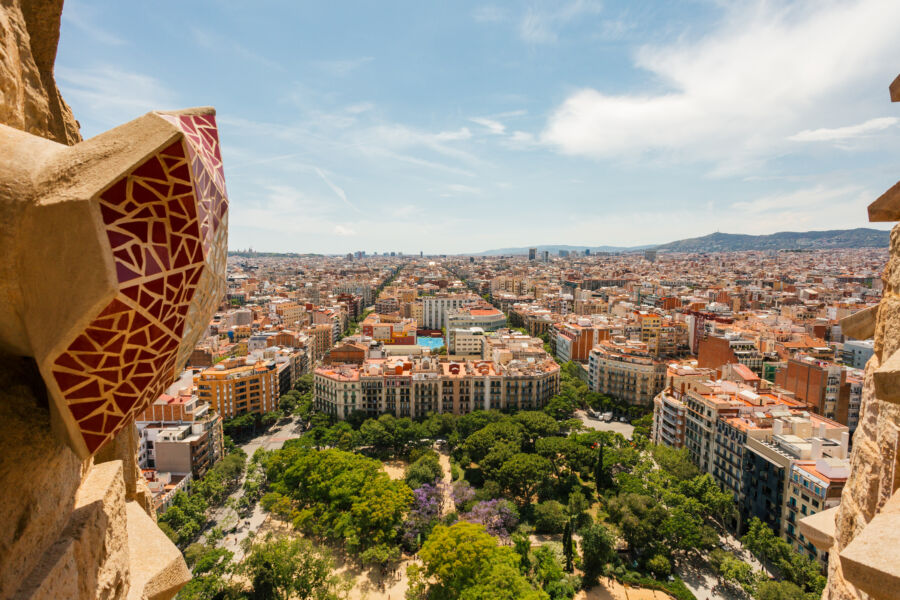
Barcelona's skyline
The impact of short-term rentals are a growing concern in cities like Barcelona.

It’s also worth keeping in mind that demonstrations of all kinds are common in Europe, which loves to exercise its rights to assembly and free speech. Strikes, for example, occur frequently across the continent, advocating for (or against) all sorts of issues. And, as with Spain’s anti-overtourism protests, it’s in your trip’s best interest to try and skirt them. A march in Barcelona and a train strike in Italy can cause bumps in your itinerary.

Luckily, they’re often avoidable. High-profile protests like these are designed to make a point by seizing people’s attention, and are therefore advertised well in advance. That’s just one more reason to tune into local news, wherever you’re traveling: to increase your chances of finding out about planned protests before you stumble upon them. If you know when and where they’re taking place, you can make a point to steer clear.

If you do accidentally come across a protest like this, it’s wise to quickly and discreetly remove yourself from the situation. (Of course, this is simply good advice for traveling anywhere: If you see a demonstration brewing, before wandering into the middle of it, be very clear on what it’s about and whether it’s a smart place for you to be.)

And what if, despite all efforts, you do wind up crossing paths with protesters? You’re probably going to be just fine. There have been no reports of injury or other lasting difficulties for travelers. Much more likely, you may simply be jeered for a few minutes; popular tourist sights and thoroughfares could be temporarily closed off; and, yes, there’s an astronomically small chance that you might get spritzed with a water gun. (That said, of the estimated 15 million tourists who went to Barcelona last year, maybe a dozen or two got a little wet…leaving them momentarily soggy, but unharmed. If you’re seeking reassurance, just do the math.)

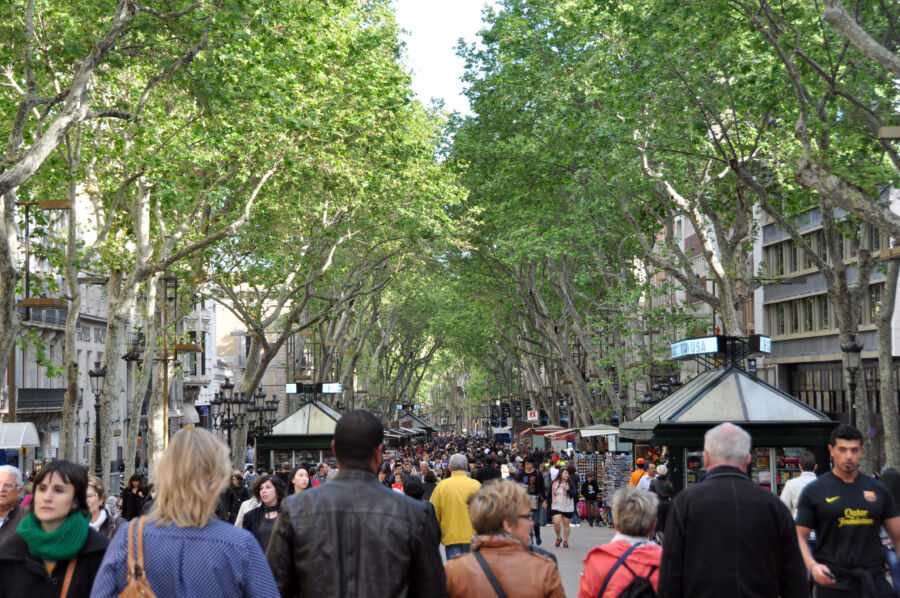
The crowded Ramblas street in Barcelona
The Ramblas is one of Barcelona’s most touristed locations.

All of this speaks to the practical side of traveling to places where these protests might be happening. But for the thoughtful traveler, the protests are also a reminder to check yourself. Protests, strikes, and demonstrations can, and should, give you pause. It’s important to understand that many communities, overwhelmed by their own popularity, would actually prefer if at least some of us tourists would steer clear. Rather than feeling defensive, take this trend as an opportunity to be more mindful about how travel, and your presence, might negatively impact the places you’re visiting.

The same principles of good travel — whether to a place that’s oppressively “overtouristed,” or one that’s pin-drop quiet — remain the same: Visit with a spirit of curiosity and empathy, treating everyone you meet with respect and consideration; be conscientious, seeking to minimize your footprint by thoughtfully consuming resources; avoid contributing to congestion by considering visits to lesser-known alternatives (or going at a less busy time); and try to understand the local point of view about what constitutes a “good traveler” versus a “bad traveler,” to make sure you’re striving to be the former.

Europe is grappling with how to handle overtourism. Venice, for example, reinstated its “Access Fee” this year (primarily targeting day-trippers), and protests like those in Spain might become more frequent. So far, these trends have not affected Rick Steves’ Europe tours or our travel advice in general. But we’ll continue to keep an eye on them, and in the unlikely event that things escalate beyond causing discomfort or inconvenience to travelers, of course, we’ll update this post.

However, our sense is that these protests are fundamentally peaceful, entirely reasonable, and important in prodding people on both sides of the “tourism equation” to challenge assumptions and strive to interact more constructively and sustainably with one another.


We’d like to hear from you! As a member of our merry band of travelers, please weigh in on this article by using the comments below. Meanwhile, many of these topics will also be covered on Rick Steves’ Europe’s various social media platforms — FacebookInstagramX, and TikTok — and we hope you’ll join the conversation there as well.