I love reading a movie critic teeing off about a film that just drives him nuts. And, in that vein, I think there’s something very satisfying in a travel writer bashing an overrated destination. So in the spirit of Roger Ebert, allow me to turn my negativity up a notch.
The medieval fortified town of Carcassonne is a challenge for guidebook writers. We understand that no amount of convincing will persuade you to skip it. So we do our best to offer strategies for enduring it. The Rick Steves’ France guidebook suggests arriving in the evening, spending the night, then getting outta there as fast as possible the next morning. Could it possibly be damned with fainter praise? And based on my second visit — this time for two whole nights — I agree that this is the only way to go.
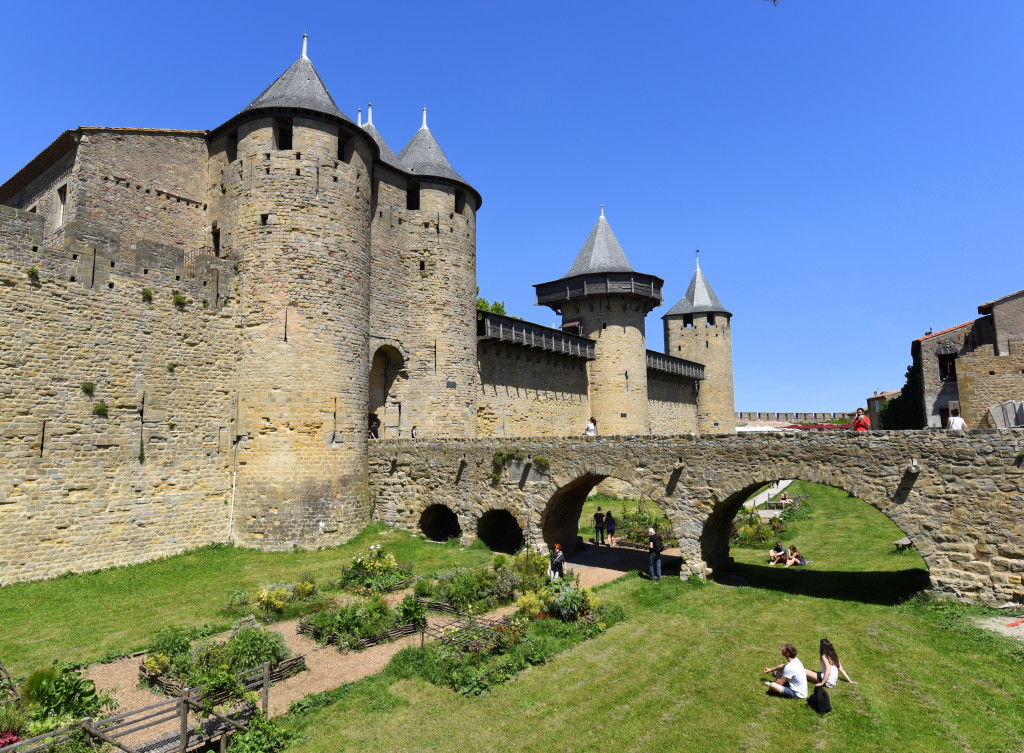
First of all, I’ll concede that the city walls and towers are, without a doubt, magnificent. Carcassonne is well worth a one-hour stroll to appreciate some of the most remarkably intact old fortifications you’ll ever see. Unfortunately, Carcassonne is a few hours away from anything else that’s really worthwhile, so most visitors get stranded here with more time than they need.
When it comes to touristic metabolism, Carcassonne has two speeds: overwhelmed by tourist hordes, and tumbleweed town. By day, you’re fighting your way through a mosh pit of elbows, dodging tacky candy and souvenir boutiques. By night, you’re the lonely, last Cathar defending a lost-cause fortress. Some people enjoy the tranquility of after-hours Carcassonne; to me, it just feels empty and melancholic — a reminder that virtually nobody still lives within the walls of this once-thriving community. (And to be fair, I may be slightly jaded because of my regular visits to Dubrovnik, Croatia, the only walled town in Europe that trumps Carcassonne.)
Normally French chefs can do no wrong, but even the food in Carcassonne manages to be underwhelming. The most famous local dish is a bland casserole of beans and old meat called cassoulet, which I believe is French for “bowl of farts.” If it’s not a lutefisk-style “hardship food,” eaten only in desperation, then it should be. Despite my reverence for French chefs, I desperately want a dash of Sriracha (or even ketchup) to jazz up my cassoulet.
All of that said, I found a few things to enjoy during my stay in Carcassonne. The town has almost no sights worth entering, but the one exception is the castle-within-the-castle Château Comtal, with a well-presented, one-way walking route through the keep and up onto the ramparts. Exploring here with a good imagination, you can envision a far more appealing age when the city would have been inhabited by smelly, raunchy, aggressive soldiers. The moat surrounding that château is filled with a very scenic garden, where pooped sightseers enjoy a restful break. And after dark, the city — while deserted — does have a certain floodlit magic.
What it comes down to is this: In my travels, I’m most drawn to places that feel vital and authentic. And Carcassonne may have the widest gulf between glitz and substance of any place I’ve been. It feels like a stage set: Perfect for a postcard or a coffee-table book, but torturously dull to explore. It is, simply, soulless.
In the interest of saving you time, here are a few pretty pictures of the city from my last visit. (Well, I hope it’s my last…) Staring at these for a few minutes releases you from the obligation of visiting Carcassonne, freeing you up for so many other, underrated things France has to offer.
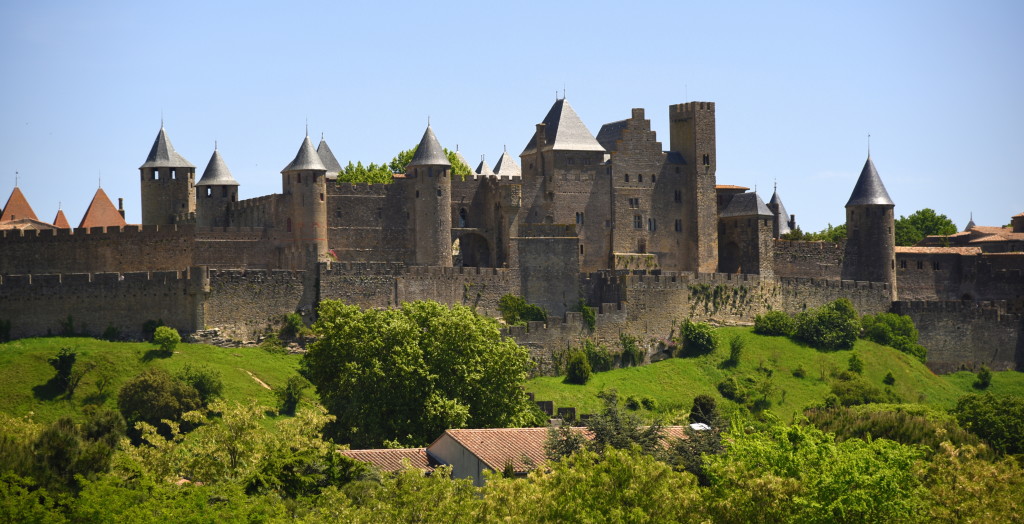
It’s striking, sure. But for my money, playing the game Carcassonne is more enjoyable than visiting the town Carcassonne.

Tourists wander the old moat of Carcassonne…seeking an escape, I imagine.
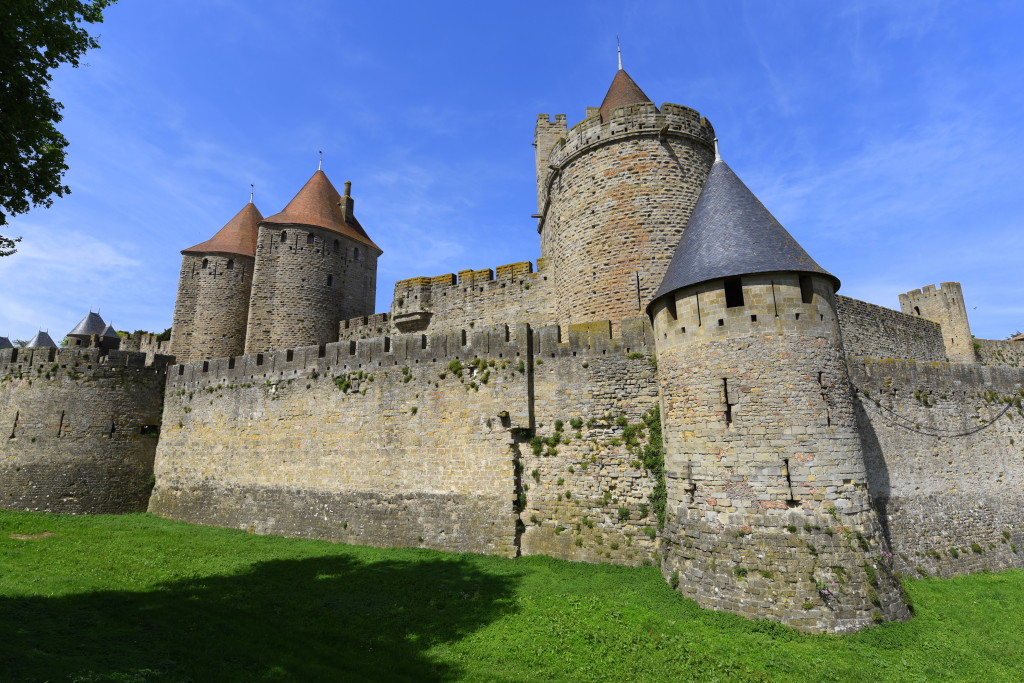
I must admit, the Château Comtal’s garden is one of the most enticing picnic spots I’ve seen in France.

After hours, as the blue hour of twilight dawns, a good tripod makes Carcassonne worth the trip for photographers.

If you think I’m being too hard on Carcassonne, you’re probably right. Have at it in the comments. And here’s one positive tip to balance out all of my curmudgeonry: If you’d like to stay someplace with far more substance on your swing through Languedoc-Roussillon, take a good, hard look at Albi. This captivating city — about an hour and a half north from Carcassonne (on the way to the Dordogne) — is the focus of my next entry.





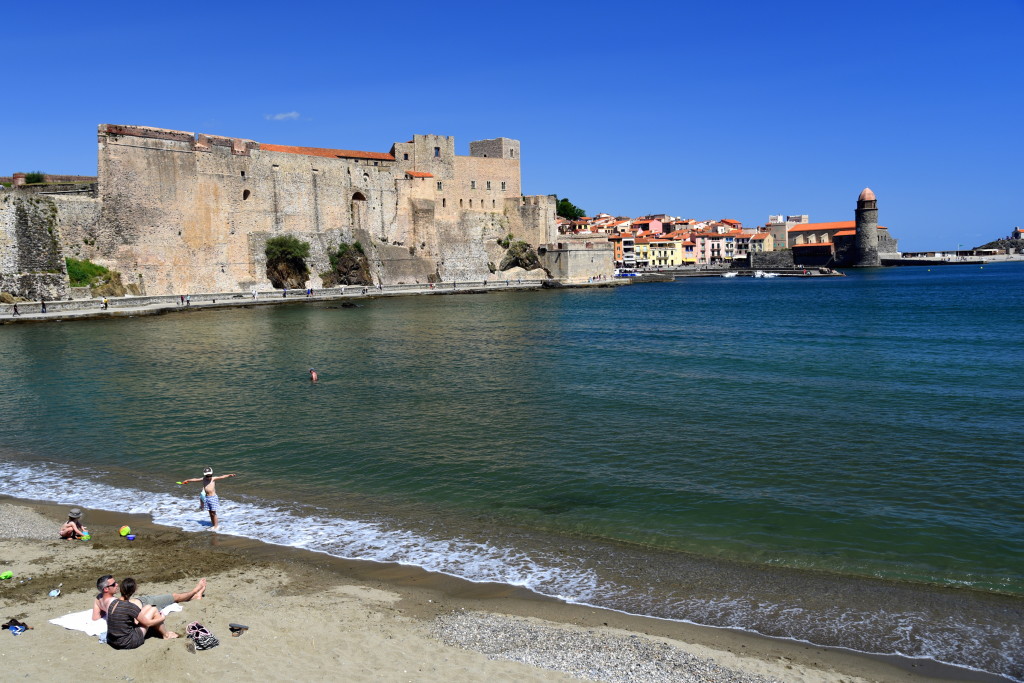
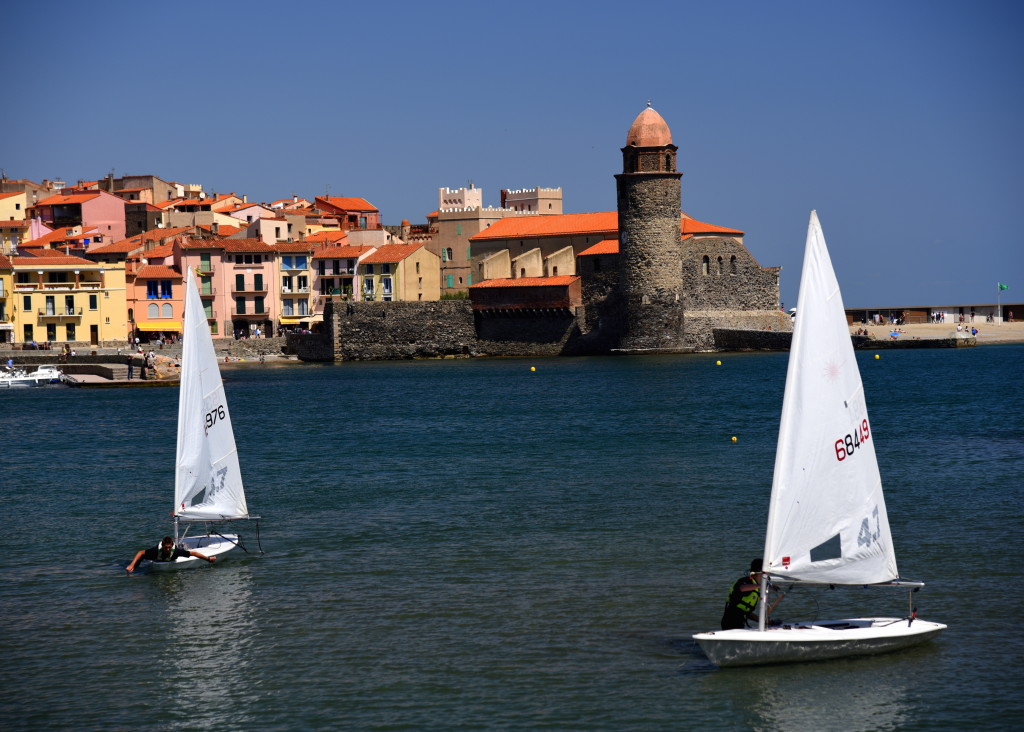 At the biggest beach — whose curve is defined by the stout fortress — chest-deep novices struggle to board their mini-sailboats. Nearby, a topless sunbather catches some rays, while a nubile teenage couple makes out, just steps from where kids build sandcastles. Vive la France!