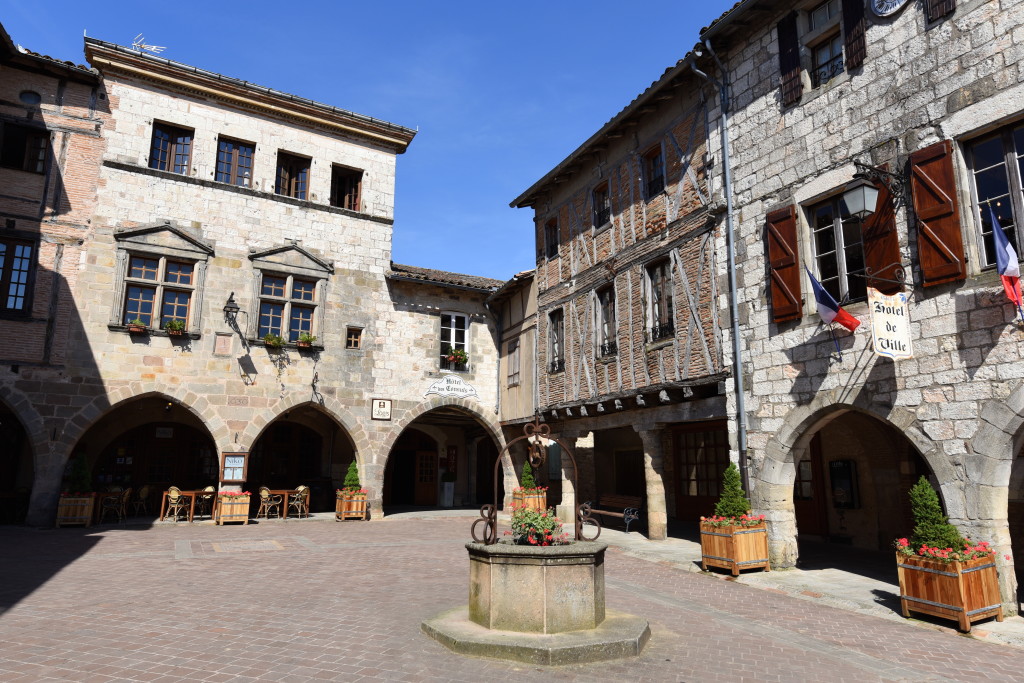
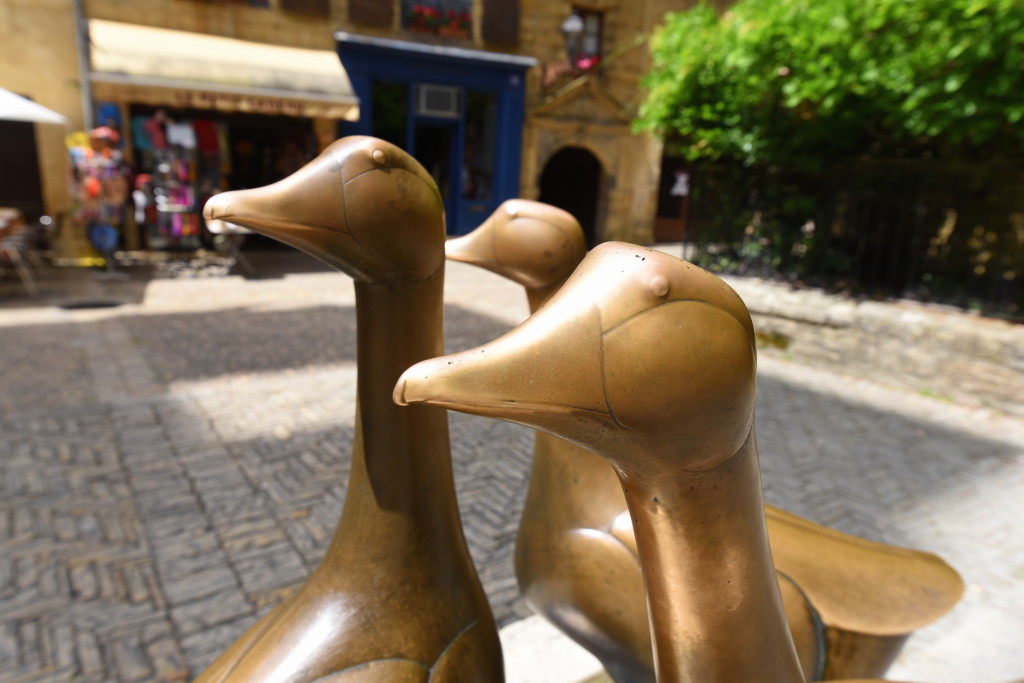
Here in France’s Dordogne River Valley, every menu begins and ends with waterfowl: duck, duck, goose.
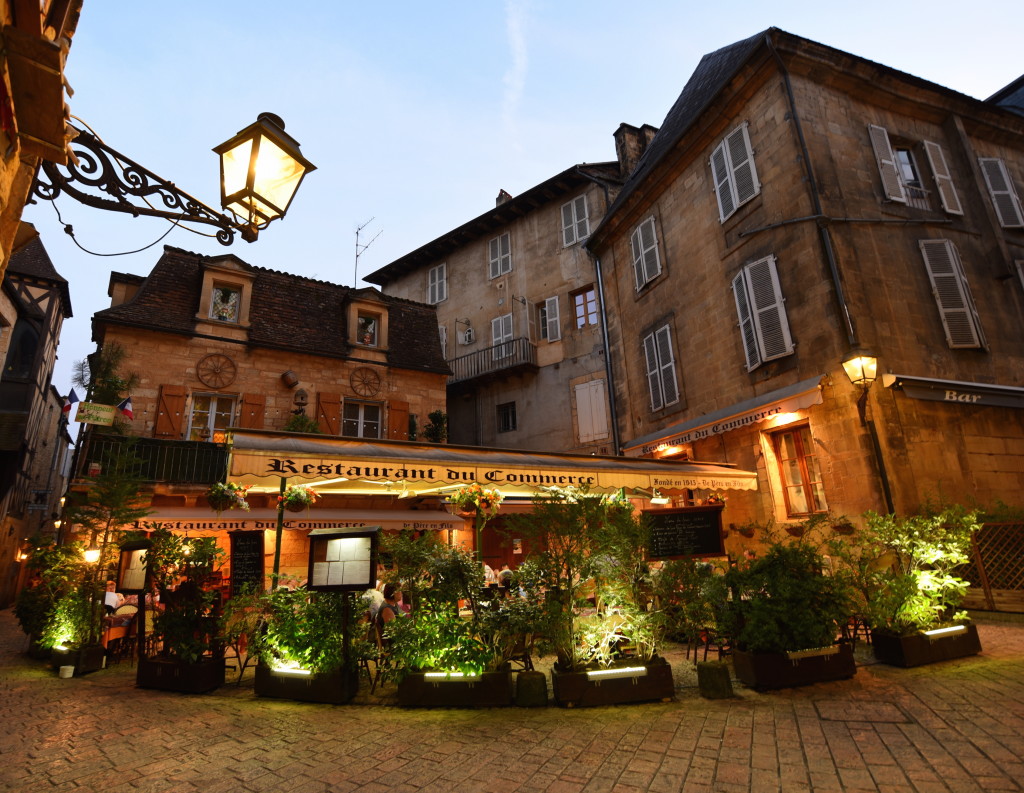 The most prized poultry product are the livers of force-fed geese who fill the farms around the Dordogne — better known as foie gras. Duck meat is very popular, too. Ordering the basic €20 three-course menu at restaurants in Dordogne, the first course is invariably a choice between foie gras or duck gizzard salad.
I’m not a huge fan of foie gras — more on that later — so on my first night in Sarlat, I went with the latter. Now, my Grandma, raised in the Great Depression, always eagerly snatched up the gizzards that came with our Thanksgiving turkey. I’ve never had the nerve to eat a gizzard. But tonight, I figured, what the hey? If I like gizzards anywhere, it’ll be in Sarlat.
The salad came: a nice bed of lettuce, lightly dressed, with slices of flavorful smoked duck breast and some still-sizzling gizzards. My first bite of gizzard came with that metallic pang of organ meat. Not my favorite (I’m not that hardcore of a foodie). But not entirely objectionable, either. Mixing the different parts of the salad — greens, smoked duck breast, and gizzards — gave each forkful a more palatable balance, and by the time I was a third of the way through my salad, I had forgotten that this was a new culinary frontier. Will I order the gizzard salad the next time I go to a French bistro in Seattle? Eh, no. But I’m glad I tried it.
Then came the main course: sautéed duck breast, very flavorful, served on a bed of stewed “coriander” (cilantro) with a side of wok vegetables, giving it an Asian spin. Delicieux!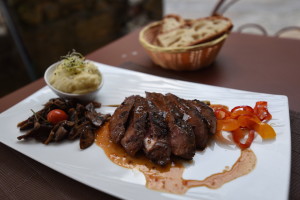
But perhaps the best part of the meal was the side of pommes de terre sarladaises — “Sarlat-style potatoes.” Thin slices of potatoes are fried up in duck fat, and loaded up with an abundance of garlic and salt. Now that’s something I could eat every day.
As for that foie gras: Here in the Dordogne, it’s only a matter of time before you have some. I’ve tried it several times, prepared many different ways. And even though I realize this will cost me my foodie cred, I have to be honest: I’m just not that into it. No matter how good it is, it always has that distinctive liver taste that hits my palate wrong.
I have a theory that, just like people either love or hate the taste of cilantro, there’s a “liver gene” that some of us have, and others don’t. Guiding our Rick Steves tours in Eastern Europe, I especially enjoy taking our groups to a family-style dinner on our first night in Hungary (Europe’s most underrated culinary destination…but that’s a topic for another time). Our tour members dig into a huge spread of Hungarian specialties, and without exception, they declare it the best meal of the trip.

But something interesting always happens: As the plate of goose liver circles the table, people either cringe and pass it on, or dig in for seconds and thirds. It’s clear to me that liver is a rare food that is not an acquirable taste: Either you love it or you hate it. And since I hate it, that means it’s wasted on me…so I’m happy to let someone else have my portion, while I stick to the duck.
The one silver lining in my distaste for foie gras is that I get to sidestep the brouhaha. Foodies get self-righteous about eating foie gras, animal-rights activists get self-righteous about condemning it, and everyone comes away with hurt feelings. Rick’s take on this resonates with me: If you hate factory farming and are opposed to the way animals are mistreated to provide human beings with food, you’re perfectly justified to rail against foie gras. But if you’re fine eating scrambled eggs or drinking milk, protesting foie gras is a wee bit hypocritical. People eat animals. If you’re OK with that, you’re OK with foie gras; if not, foie gras falls somewhere on the list of abuses of humans against animals.





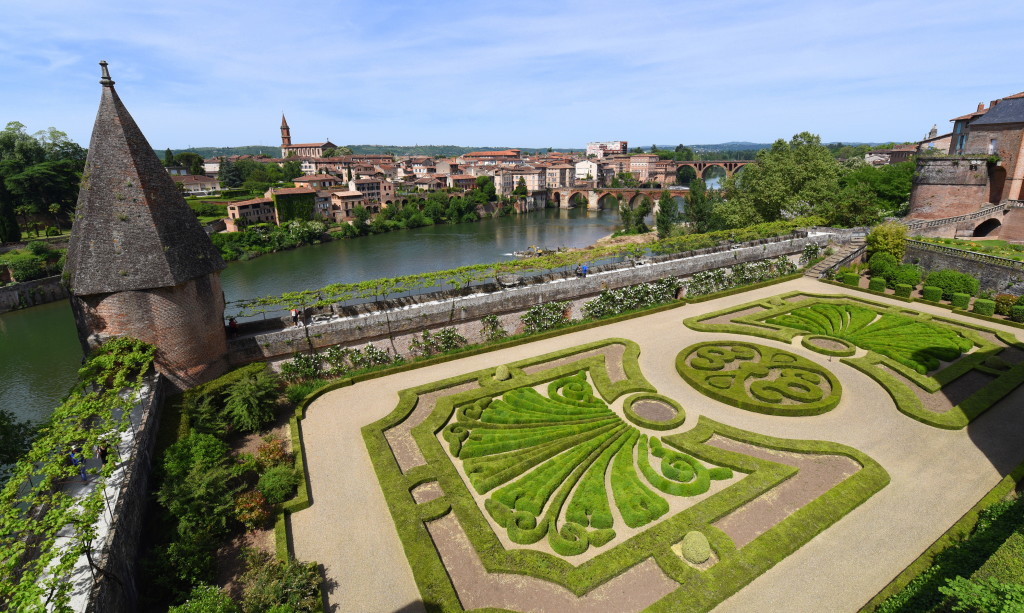
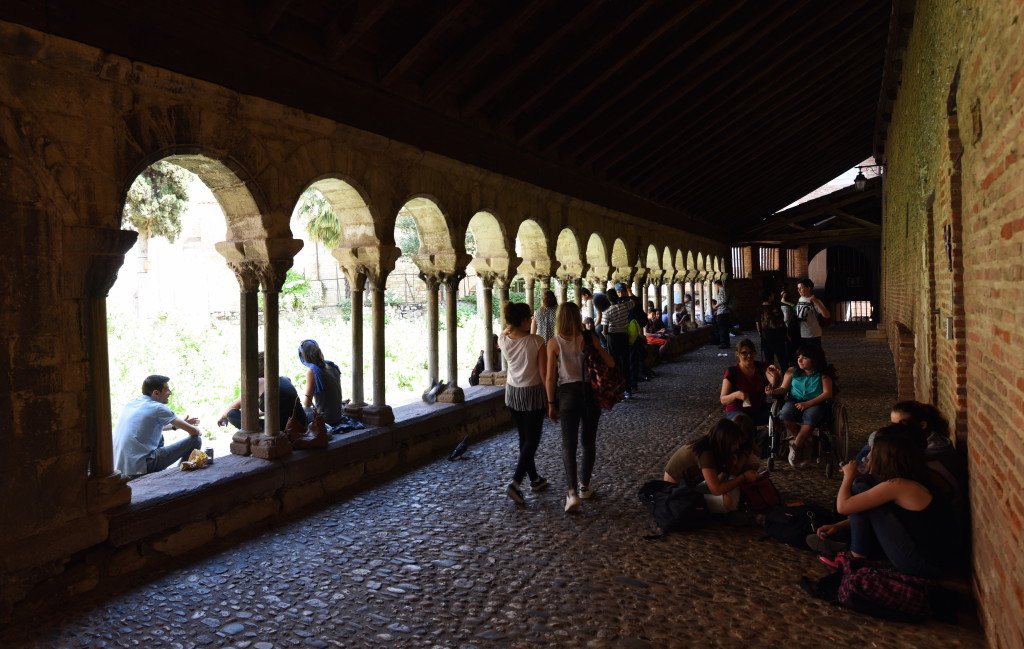 From the cathedral, inviting streets fan out through town. And, like any great city, Albi hides plenty of surprises behind its eye-pleasing veneer. This medieval cloister — packed with a picnicking field-trip group during my visit — is a tranquil eddy that sits, almost unmarked, off the main drag.