My co-author and frequent collaborator, Cameron Hewitt, is well-traveled, smart, and insightful. And, while he and I are in perfect sync in our travel styles and priorities, he gives voice to the next generation of "Rick Steves travelers." Join me in enjoying his reports right here. —Rick

Zagreb: Croatia’s Continental Palate-Cleanser

I love Zagreb. Most people couldn’t imagine loving Croatia’s landlocked capital…or even going there. But trust me: It’s a great city.

On my first trip to Zagreb, I wasn’t sure what to expect…but it certainly wasn’t much. Let’s face it: Even just the name of the city sounds like a wet Slavic belch. But when I first got to know Zagreb, my low expectations were wildly exceeded. “Hey,” I thought. “This is a really cool place!”

Then I brought Rick Steves here. It took some convincing. But as he strolled through the town, gradually succumbing to its charms, he said to me, “Hey, this is a really cool place!”

A couple of years later, Rick and I came back with a film crew to shoot a travel show on Zagreb. Simon, our producer, and Karel, our cameraman, warmed up to the city immediately. They both turned to me and said, “Hey, this is a really cool place!”

Then, just a couple of years ago, I brought my wife here. And you’ll never guess what she said to me…

You get the idea. Zagreb is a delight. One out of every six Croatians lives in this hive of commerce, which is closer to Slovenia and Hungary than it is to any beach. As a onetime leading city of the Habsburg Empire, it has a “little Vienna” vibe to it — with Old World elegance, classy Baroque flourishes, and a certain tidiness. Some of its historic streets, like the tongue-twisting café drag Tkalčićeva, have an almost Prague-like charm.
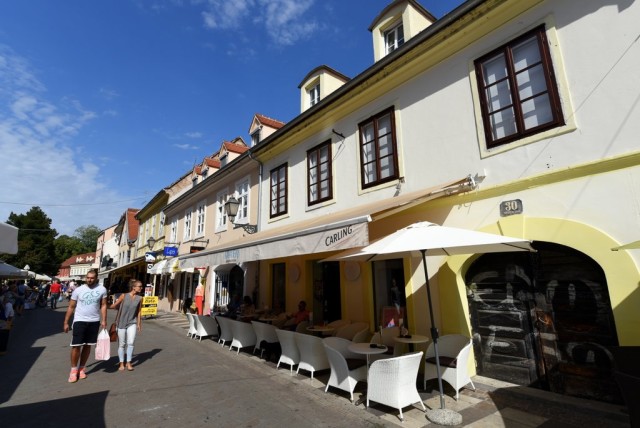
Cameron-Croatia-Zagreb-Tkalci

From a traveler’s perspective, Zagreb also benefits from a contrast effect. Most people visiting Croatia focus on the coast — which, don’t get me wrong, is glorious. But after several days of island-hopping, choosing from the same seafood-and-pizza menu every day, and stubbing your toes on underwater rocks and sea urchins, urbane Zagreb is just the place to recover from your sunburn. In this country so focused on its coastal destinations, Zagreb is a continental palate-cleanser.

Zagreb has always had nice bones. But it’s been a thrill to observe the city fleshing out those bones over the last several years. Today’s Zagreb is flourishing, with an exciting new bustle and vitality: Great restaurants, from artisanal bakeries to foodie splurges. Slick design stores and fashion boutiques that meld Croatian tradition with contemporary style. More great museums than the rest of Croatia combined. And non-stop festivals that enliven the summer.

Cameron-Croatia-Zagreb-Park

Zagreb is a city of magnificent parks. The old town is ringed by forested hills and ravines. And zigzagging through the urban core is a “Green Horseshoe” of thoughtfully manicured parklands, punctuated by genteel historic buildings. During my visit on a sunny September weekend, these parks, and the city’s squares, were packed with revelers…three separate outdoor festivals were going on at the same time.
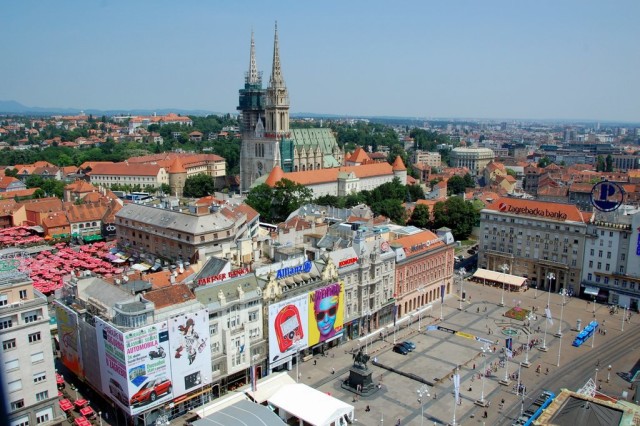
CH09Spring_635.JPG

Jelačić Square — Zagreb’s main urban crossroads — is big, angular, and a little imposing. Giant billboards advertise Croatian brands you’ve never heard of, and trams zip through constantly.
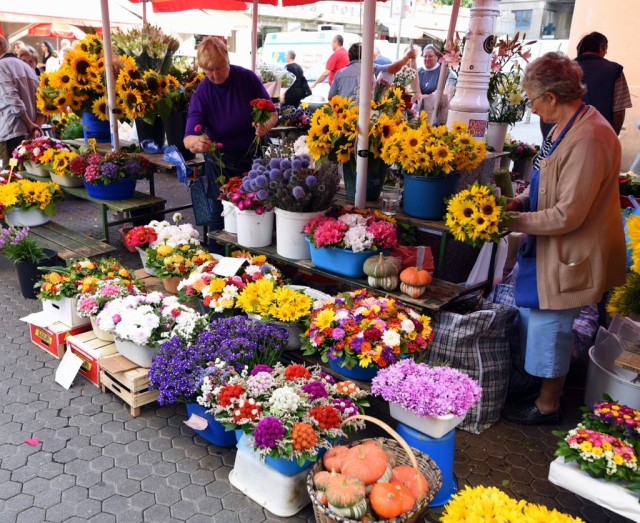
Cameron-Croatia-Zagreb-Flowers

But even here, the hard edges are softened by local life. On weekends, one corner of Jelačić Square is filled with the stalls of a colorful flower market.
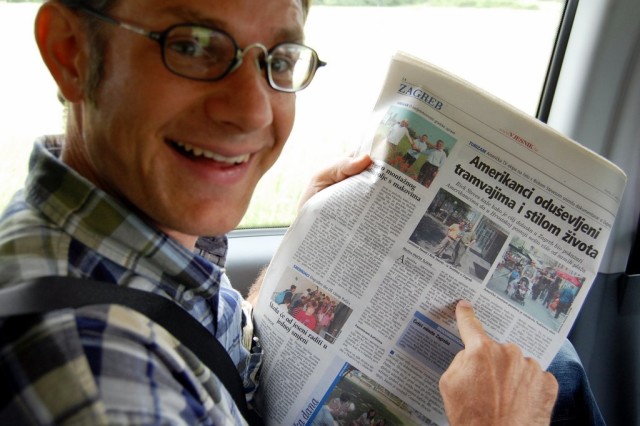
RS09Spring_533.JPG

Being back on Jelačić Square, I remember when I was here with Rick in 2009, filming our TV show about Croatia. The tourist board asked us to take an interview with a local newspaper. Trying to convey his excitement about the general bustle and commercial metabolism of the city, Rick mentioned how he enjoyed seeing the trams come and go, with commuters piling on and off. When the paper came out, we bought a copy and got a kick out of seeing — but not reading — the article, which was in Croatian. Later, I showed it to a Croatian friend and asked for a summary. Skimming it, he said, “Hmmm…they say that Rick is really, really excited about the public transportation.”
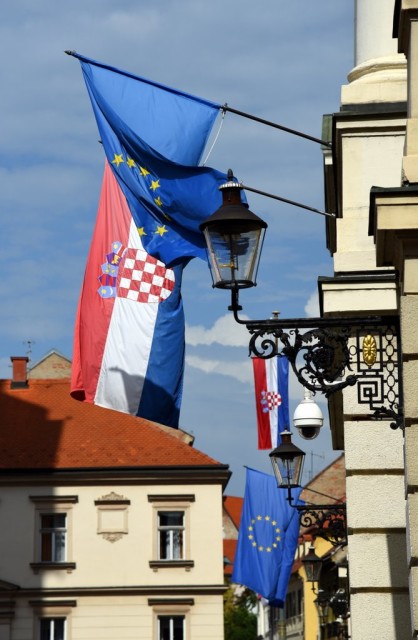
Cameron-Croatia-Zagreb-Flags

Croatia officially joined the European Union in 2013, and today, civic buildings fly both the red, white, and blue Croatian flag and the yellow stars on a blue field of the EU. Like any country that joins the EU, Croatians expressed a lot of angst leading up to membership. But it seems like most Croatians are already satisfied that, overall, it was the right choice. On the other hand, Croatia — and Zagreb in particular — is facing a trial by fire, as it’s become a highway for refugees from Syria (and other places) making the long journey to a better life in Austria or Germany. I actually met some of those refugees in the Zagreb train station, and later saw their abandoned tents at the border — a very powerful reminder of the human face behind the “refugee crisis.”

I’ll be sharing more photos and insights about Zagreb over the next few days. Stay tuned!
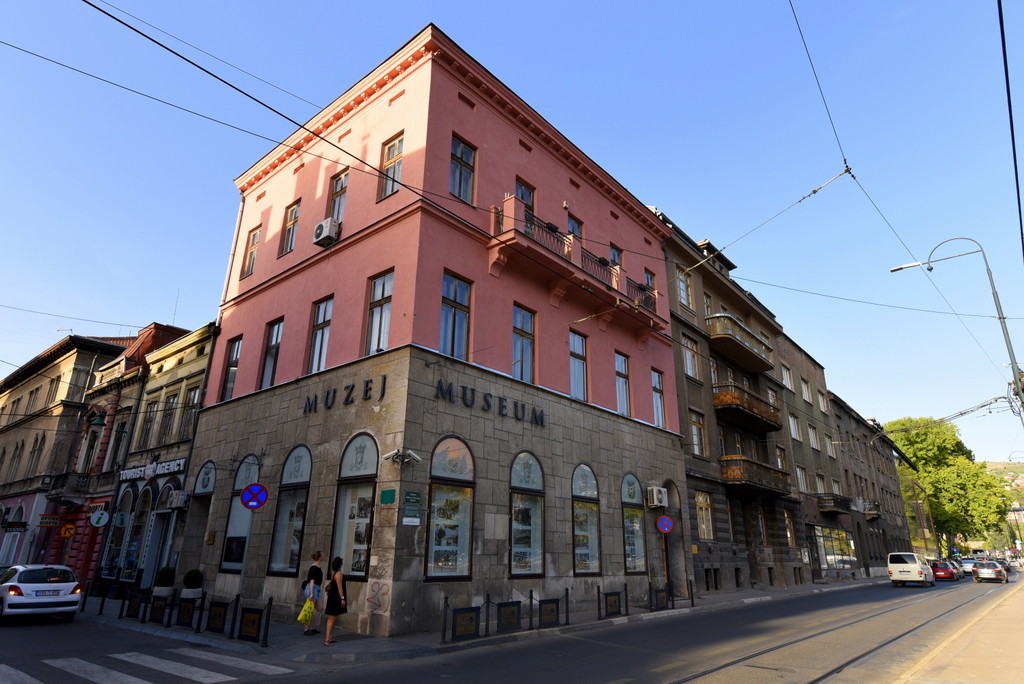
The Shot Heard ‘Round the World

Confusingly, this famous expression is used to describe any number of events. But three are the most important: One has to do with baseball. Another has to do with the American Revolution. And the third “Shot Heard ‘Round the World” took place right here in Sarajevo…on this very corner:

Cameron-Bosnia-Sarajevo-Ferdinand Corner

Armchair historians geek out in Sarajevo. They know it as the place where, on June 28, 1914, the Archduke Franz Ferdinand (the heir to the Habsburg Empire) was gunned down by the teenaged Serb separatist Gavrilo Princip. That assassination set off a chain of events that plunged the planet into a Great War.

Standing on this spot, you can imagine Gavrilo Princip raising his gun and firing the fatal shot into the archduke’s open-top car. But famous as it is, the improbable chain of events that led to the “Shot Heard ‘Round the World” is nothing short of ridiculous: Princip was simply hanging out at this corner after an assassination attempt earlier in the day had failed. Suddenly, Franz Ferdinand — whose driver had gotten lost and pulled off on this side-street to check the map — happened to pull up in front of him. Bang!

Today there’s not much to see at this nondescript Sarajevo corner — just a plaque and a modest museum of the Habsburg era. But just standing here is enough to send shivers down the spine of any fan of 20th-century history.

Cameron-Bosnia-Sarajevo-City Hall

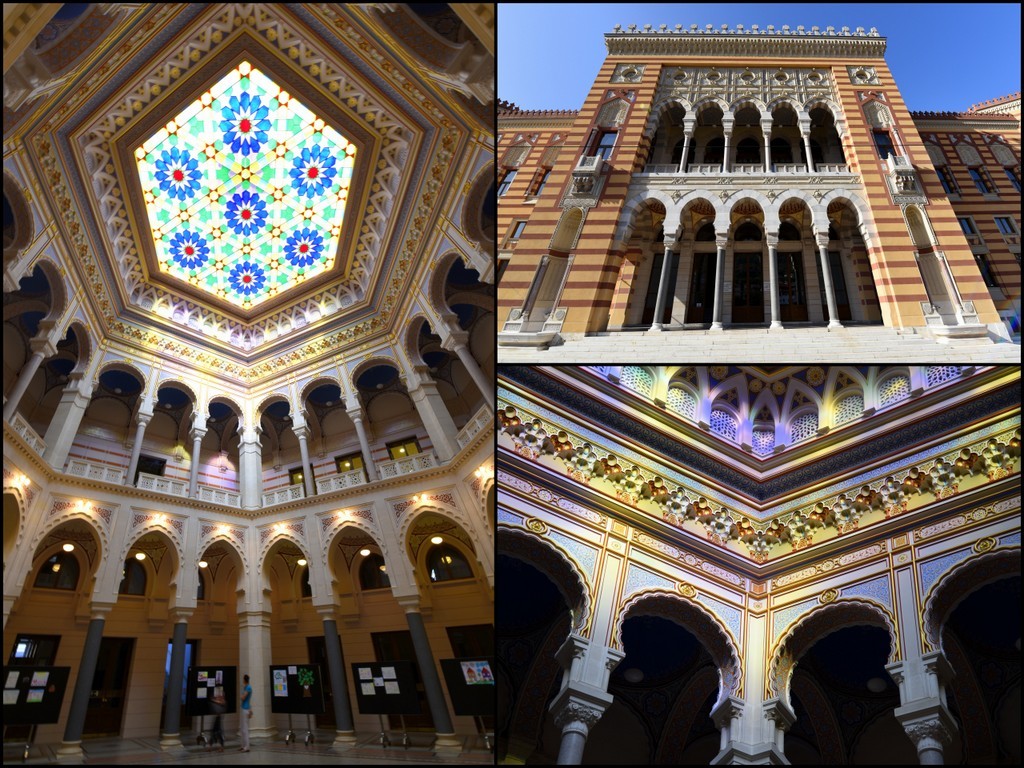
Meanwhile, just up the street stands another important landmark of the Habsburg era. The Viennese-flavored, Neo-Moorish-style City Hall is where Franz Ferdinand had visited just moments before his death. Later it became the university library. And  during the siege of the 1990s, it burned to the ground. The “Cellist of Sarajevo” (Vedran Smailović) famously played his instrument in the smoldering rubble here, ignoring the snipers’ bullets that whizzed overhead — embodying the proud perseverance of the besieged Sarajevans. While recovery has been slow, Sarajevo commemorated the 100th anniversary of the Ferdinand assassination last year by unveiling this fully remodeled building. It’s been painstakingly restored to its original glory, right down to the many lavishly hand-crafted details.

Twilit Slices of Sarajevan Life

It’s just after sunset in Sarajevo. And I’ve just wrapped up my guidebook research chores for the day. I have a few minutes of freedom to slow down, relax, and enjoy this intoxicating city on my stroll back to the hotel. Fortunately, it’s a long and fascinating walk between here and there.

Cameron-Bosnia-Sarajevo-Ferhadija1

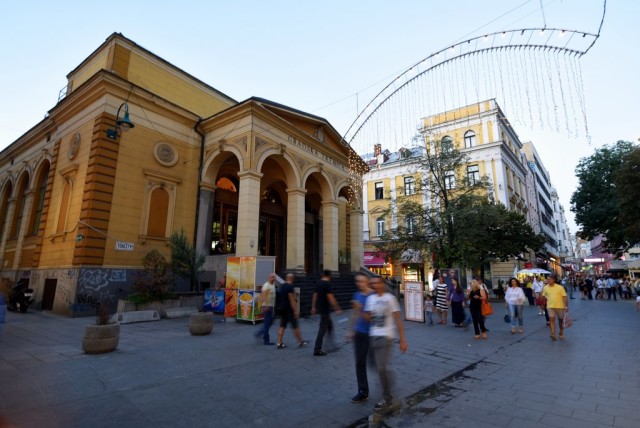
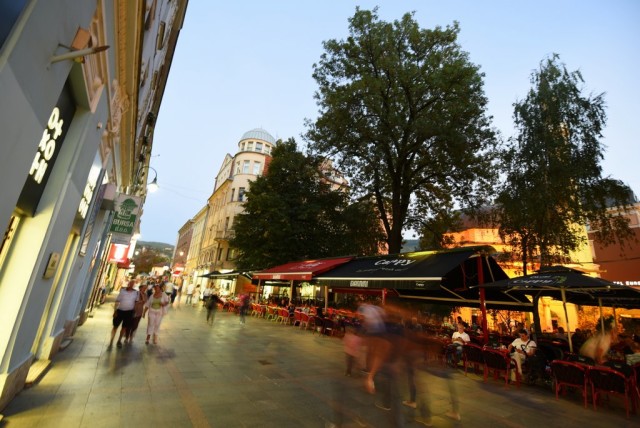
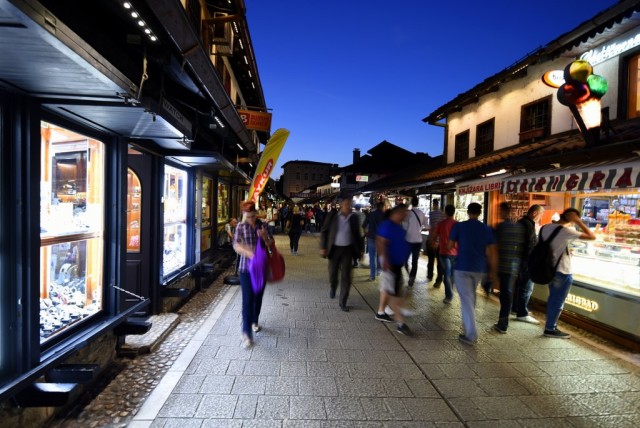
Around me bustles the modern city, built by the Habsburgs who took over Sarajevo from the Ottomans in 1878. While the Bosnian soul feels much closer to Turkey than to Vienna, the 40-year Habsburg period was good to Sarajevo — prodding it to develop from a backwater trading town into a modern city.  Much of the infrastructure and architecture of today’s Sarajevo dates from this age.  And the Austrian-feeling street called Ferhadija is where Sarajevans come in the cool of the evening to promenade.

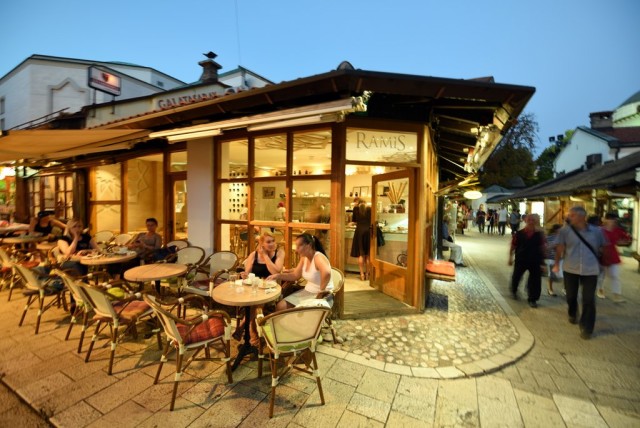
Cameron-Bosnia-Sarajevo-Ferhadija2

Saddled with an anemic economy and a hopelessly ineffective government that seems designed to slow progress, Sarajevans find cheap ways to enjoy life. People have dinner at home, then head out to nurse a budget drink at an al fresco café. Under genteel 19th-century facades, they watch a pink sky fade to a deep blue. In the park, old-timers play life-size chess — cheering and jeering each move. Excited little kids line up at ice-cream windows.

Cameron-Bosnia-Sarajevo-Rose

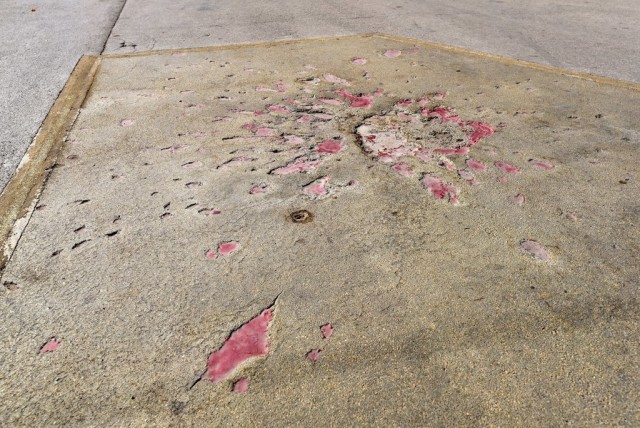
As they stroll arm-in-arm and wave to friends and neighbors along the pedestrianized street, everyone casually steps over the “Sarajevo roses” (wartime blast craters filled with red resin as a memorial). The suffering of Sarajevo during the siege of the 1990s is a painful memory. But thankfully, it’s fading…along with the once-garish dye in these shocking starburst patterns.

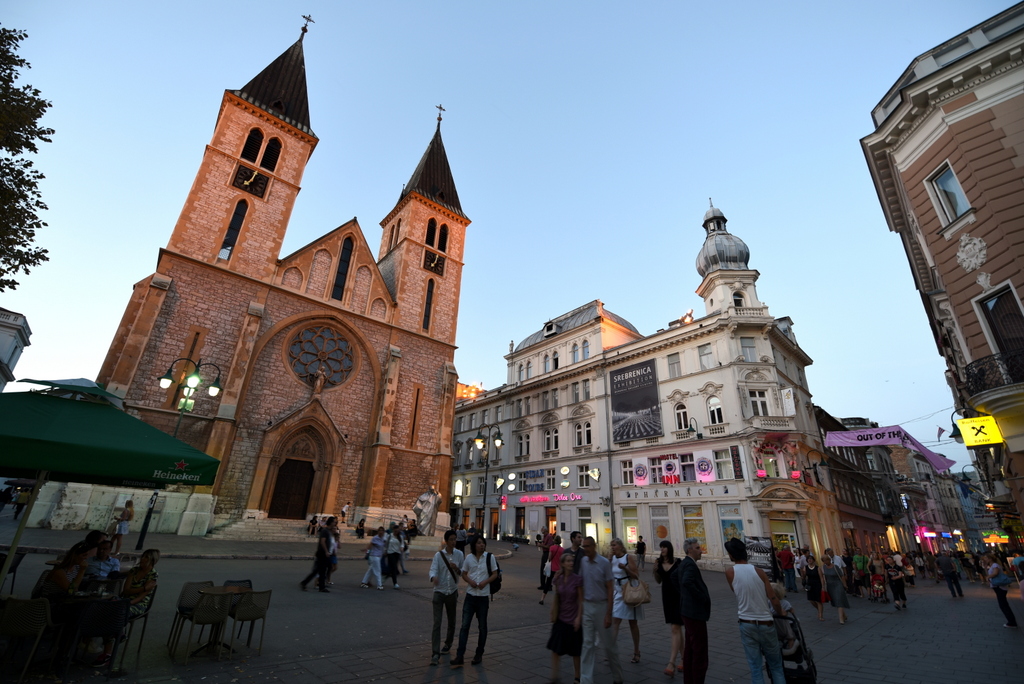
Cameron-Bosnia-Sarajevo-JPII

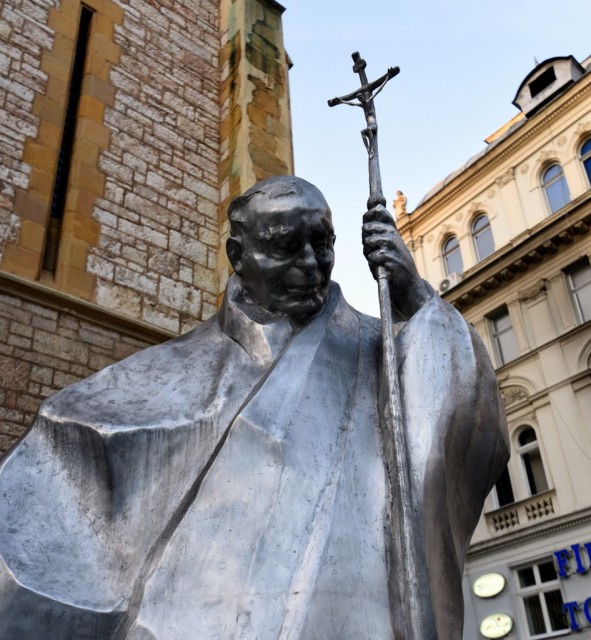
I pass the stout Catholic cathedral, where a larger-than-life silver statue of John Paul II celebrates that faith’s newest saint. In 1997, he became the first pope ever to visit Bosnia (where a third of the population is Catholic). That seems fitting — John Paul II’s revolutionary ecumenism fits this city. In this same neighborhood are Sarajevo’s primary Eastern Orthodox, Jewish, and Muslim houses of worship — all of which have coexisted within a few steps of each other for centuries. (The city’s “live and let live” attitude makes the brutality of the wartime siege — when nationalistic politicians with selfish agendas drove brutal wedges deep into the heart of the community — even more grotesque.)

Cameron-Bosnia-Sarajevo-Saraci

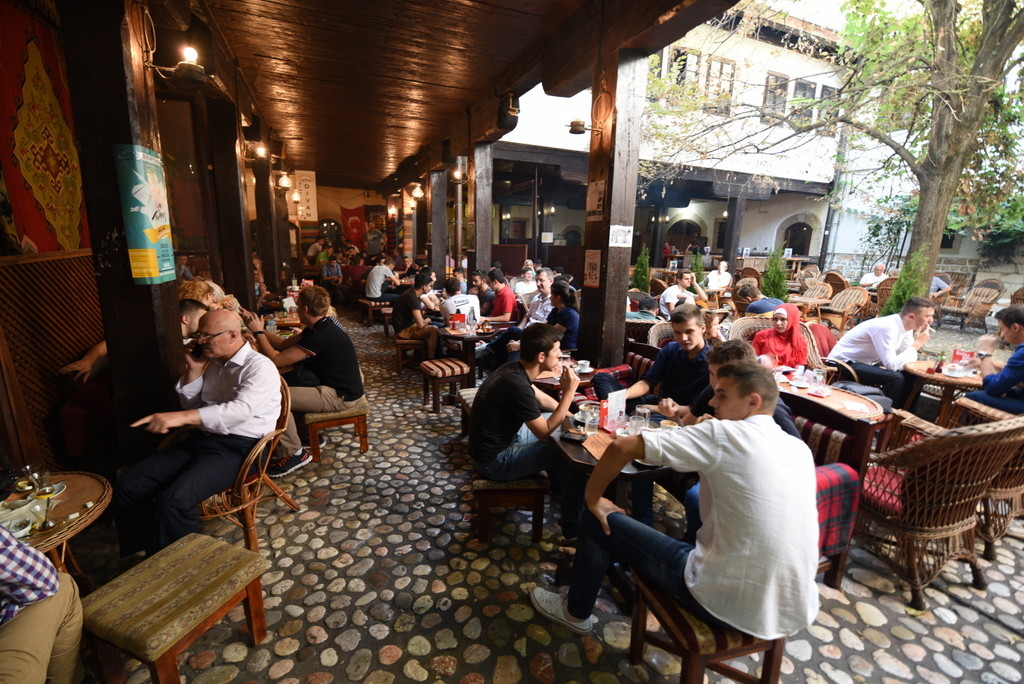
Just a few steps farther down the street, without the slightest transition, I’m in the thick of the Turkish-style old town — called Baščaršija. With its flagstone promenade, handsome wooden merchants’ shops, and minarets towering overhead, it feels like a little Istanbul.

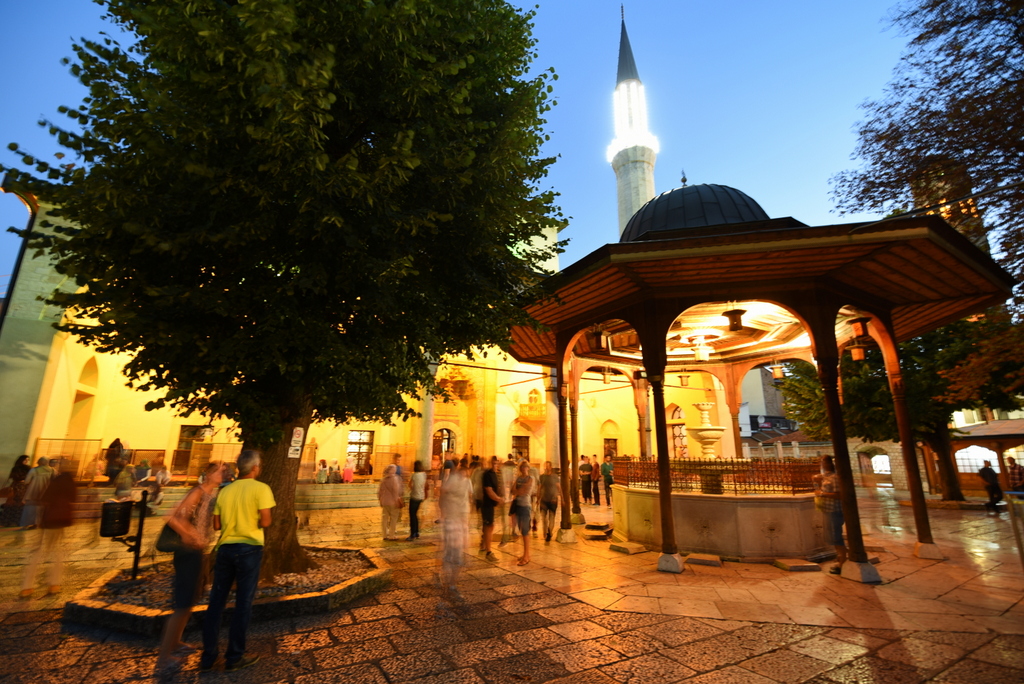
Cameron-Bosnia-Sarajevo-Mosque

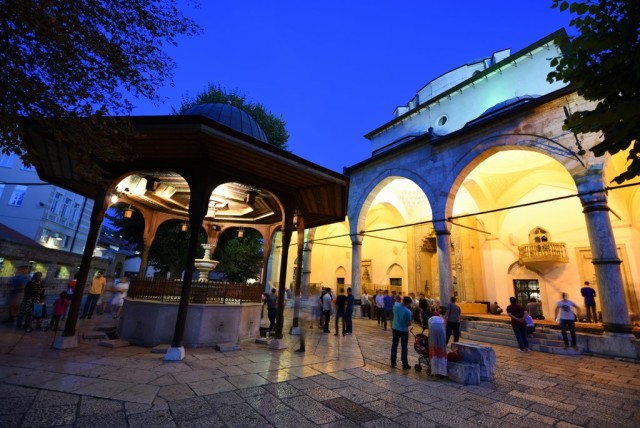
Wandering past the gated courtyard of the city’s main mosque, I hear the call to prayer warble across the rooftops. People begin to filter into the courtyard and wash at the fountain in preparation for their evening prayer. Then they file into the mosque, or stand out on its porch, and begin their rhythmic ritual: Standing. Kneeling. Forehead to carpet. Standing. Kneeling. Forehead to carpet.

Cameron-Bosnia-Sarajevo-Hookah Courtyard

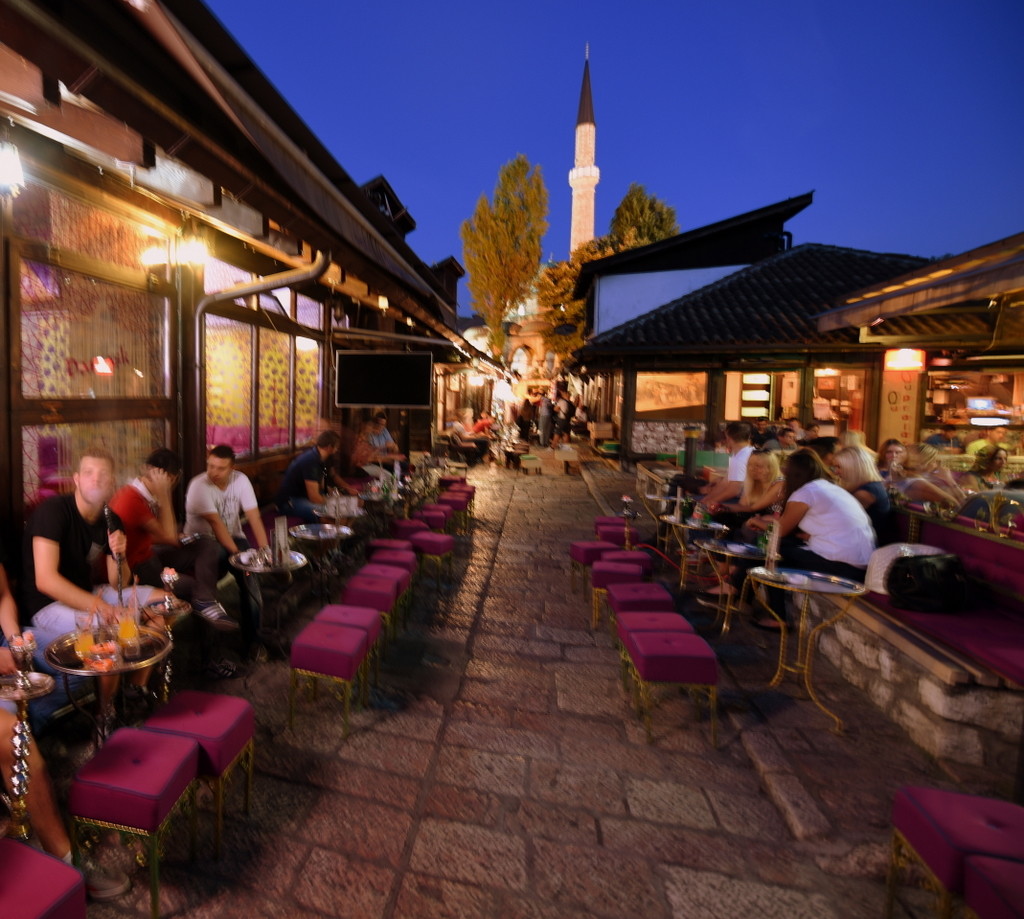
Leaving the mosque’s courtyard, I continue along the Old Town’s main pedestrian drag.  A puff of apple-tinged smoke lures me down a tight side alley. I pop out into a courtyard jammed elbow-to-elbow with bars offering water pipes — also called šiša, nargila, hookah, or hubbly bubbly. As twilight twinkles, local twentysomethings lounge here on divans, chilling like sultans (or, at least, pashas) as they deeply inhale pungent, fruity smoke. In the corners and tucked down little alleys, miniature potbellied stoves churn day and night, providing glowing coals to power the pipes. Even without taking a direct drag, it’s like cotton candy for my lungs. While there’s no marijuana in these particular hookahs, the mellow hubbub, air rich with sicky-sweet smoke, and floodlit minarets rocketing overhead are plenty mind-bending.

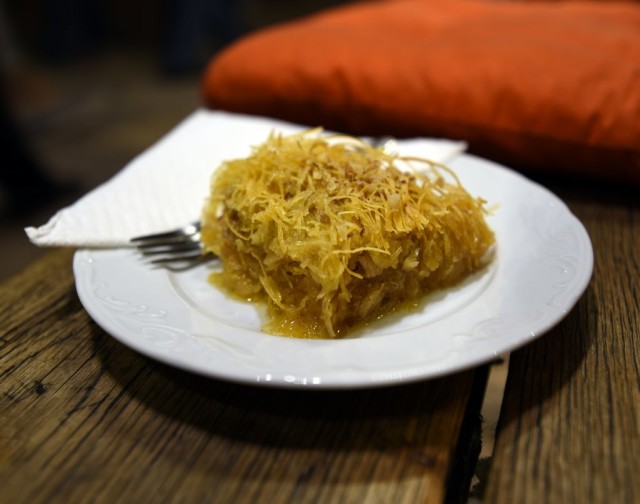
Cameron-Bosnia-Sarajevo-Kadaif

One last stop before returning to my hotel: dessert. I find an inviting shop selling local sweets. But it’s not cakes and strudels — here in the exotic East, you get honey, nuts, and phyllo dough. My favorite Bosnian treat is kadaif — a tidy pile of delicate shredded wheat drenched in honey. I perch myself on a little bench in front of the shop and dig in, watching both locals and tourists dong their promenade laps.

Cameron-Bosnia-Sarajevo-Dessert ShopRight in front of me, two families bump into each other and spend several minutes catching up. Their awkward pre-teen, with his akimbo haircut and high-waisted mom jeans, yawns and fidgets. At the next table, tourists from Saudi Arabia — probably feeling more at home here than anywhere else in Europe — laugh the unbridled, relaxed laughter that only a vacation can bring. And all around, people are simply enjoying one of Europe’s most underrated cities. They’re in on the secret. And I’m so glad to be, too.

Why Sarajevo Is One of My Favorite Cities

Some cities wow you at first, but underwhelm when you return. Others are hard to love on a quick visit, but get under your skin over time. Sarajevo is that rare city that does both: Whether your first visit or your tenth, it’s equally satisfying…and each time it’s a totally different experience. Over the last few years, Sarajevo has stealthily become one of my favorite cities. Here are a few reasons why.

Cameron-Bosnia-Sarajevo-OV

Cameron-Bosnia-Sarajevo-River Scene

My vote for Europe’s most stunningly set capital, Sarajevo fills a narrow, forested valley. Its endearing little Monopoly houses blanket its hillsides. And the banks of its gurgling river are lined with minarets, grassy bluffs, and Eastern-looking bridges.


Cameron-Bosnia-Sarajevo-Mosque

Cameron-Bosnia-Sarajevo-Habsburg Quarter

“The place where East meets West” is a cliché that’s overused by travel writers (including me, I’ll admit). But Sarajevo really is that place. It’s predominantly Muslim, yet fully European. And its cityscape was shaped by two successive, different-as-day-and-night dynasties: the Ottomans (from today’s Turkey) and the Habsburgs (from today’s Austria). From the extremely Turkish-feeling old town (with the tongue-twisting name Baščaršija), you can take just a few steps to find yourself in the almost Viennese-feeling modern city. Would you rather go to Turkey or to Austria? In Sarajevo, it’s your choice.


Cameron-Bosnia-Sarajevo-Avaz Twist

As Sarajevo continues to rebuild from its brutal wartime experience, progress occurs in fits and starts. While entire city blocks still feel bombed-out, glitzy and glassy new skyscrapers are popping up like dandelions. This one, the Avaz Twist Tower, seems out of place as it rockets up from an otherwise humdrum residential neighborhood of single-family homes. You can ride an elevator to the 35th floor. At the turnstile, drop in one Bosnian Convertible Mark (that’s about 50 cents) to enjoy stunning views over the city.


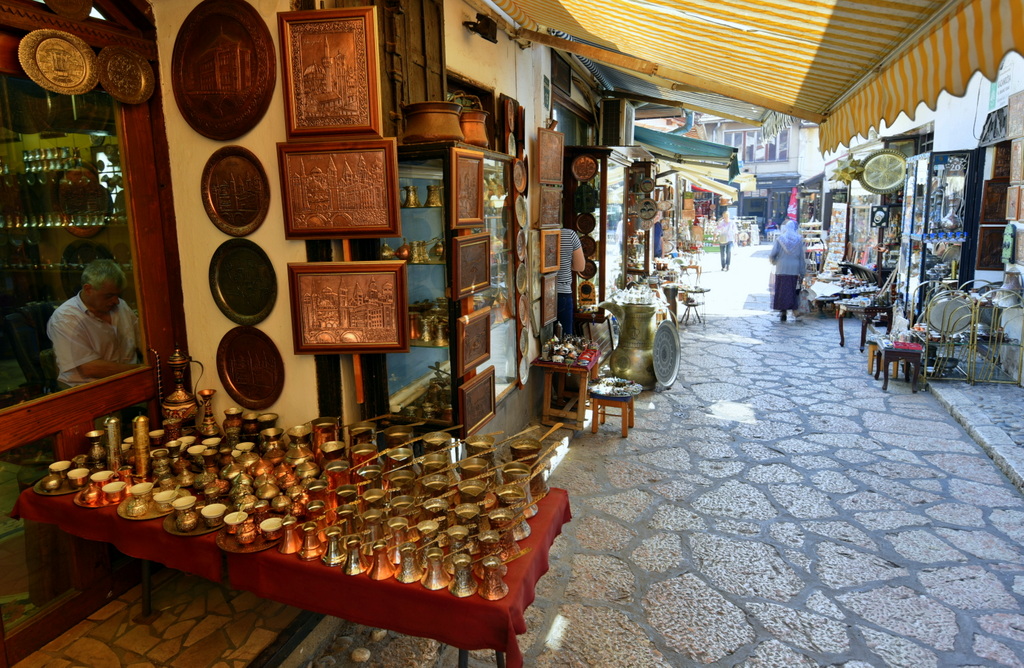
Cameron-Bosnia-Sarajevo-Coppersmiths

Despite its modern flair, Sarajevo retains its traditional soul. On Coppersmiths’ Street, you’ll hear the tap-tap-tap-tap of tiny hammers against sheets of copper. While today’s customers are tourists rather than Turkish traders, it feels like a time warp.

Bosnian Coffee: Achieving Mudlessness

Bosnian coffee (bosanska kafa) is not just a drink. It’s a complex social ritual that captures this culture’s deliberate, stop-and-smell-the-tulips approach to life. Unfiltered, potent Bosnian coffee (which you probably think of as “Turkish coffee”) comes with a very specific procedure.

In Mostar, my friend Alma (who’s a local guide for our Rick Steves Best of the Adriatic tours) takes me for Bosnian coffee…at her son’s brand-new coffee shop. Jaz (pronounced “yahz”) proudly shows me around his inviting, tastefully decorated space.

Cameron-Bosnia-Mostar-Jaz Shop

The centerpiece is a yellow behemoth of a coffee roaster. Alma explains that she and her husband, Ermin, bought this machine in 1991. They were fed up with the rat race and planned to open their own café to share their passion for coffee with their neighbors. They took delivery on the coffee roaster just days before fighting broke out. It arrived on what turned out to be the last delivery train that ran through a united Socialist Federal Republic of Yugoslavia. And just a few months later, war ripped through Mostar. Alma and Ermin — now focused on survival rather than coffee — tucked the roaster away in their basement and forgot about it.

Just a few months ago, their son Jaz graduated from university with a degree in public relations. But in the anemic Bosnian economy, jobs in his field are rare. So, like his parents before him, he decided to open his own coffee house. Jaz dusted off and tuned up the old coffee roaster, which still works fine despite its shrapnel scars. Jaz perfected his own formula for roasting beans, and even designed his own label for the coffee bags. And, in a move that will warm the heart of any mother, he decided to call the place Café de Alma.

Jaz and Alma are dedicated to not just serving Bosnian coffee, but teaching the Bosnian worldview. And in a way, the two are one and the same.

Cameron-Bosnia-Mostar-Jaz Grinder

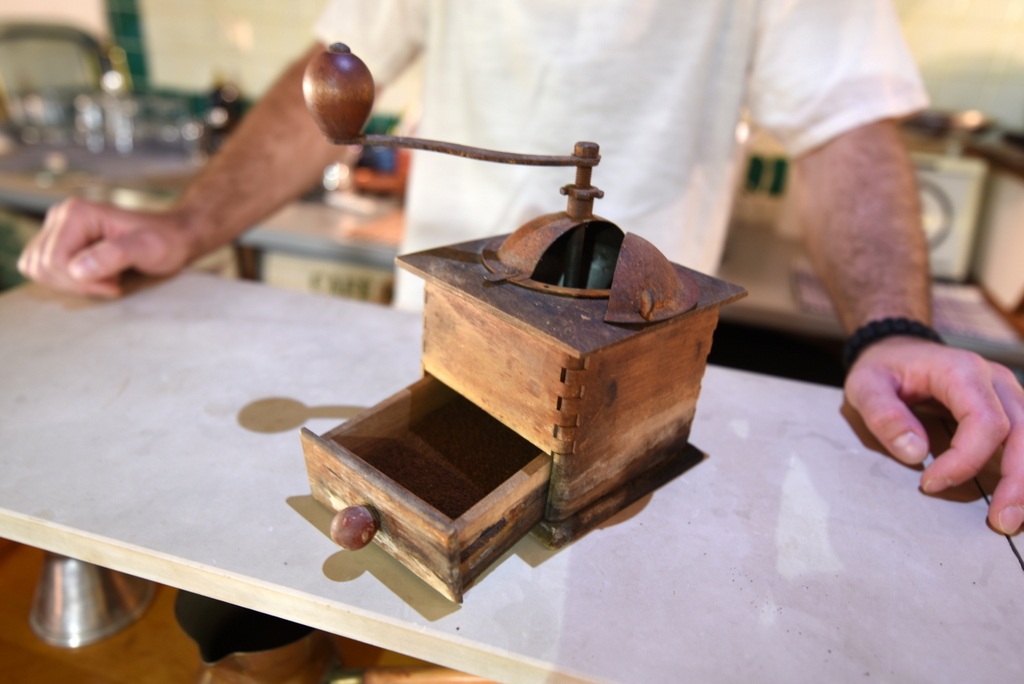
Jaz pours his beans into a grinder and runs them through to the ideal coarseness. He shows me a couple of older-style grinders: A small wooden box with a handle on top, and the classic Bosnian grinder: a copper cylinder that contains a detachable handle. He shows me how you hold the grinder against your belly or your hip while you turn the handle.

Next, Jaz brings water to a boil on the stove and measures the coffee grounds into the džezva, a small copper-plated kettle with a long, straight handle. When the water comes to a boil, he pours it into the container. An air bubble pushes a plug of coffee grounds to the brim. He puts the copper kettle onto the fire to get it boiling, then spoons a few fat drops of water onto the top to gently tamp down the grounds. As he methodically folds the grounds back into the surface of the bubbling water, they begin to resemble a cream-like foam.

“There are as many different ways to drink Bosnian coffee as there are people,” Jaz explains. “It’s up to the tastes of the individual drinker. But for a starting point, here’s the way that I like to do it.” First, he spoons some of the foam into a miniature ceramic cup. Then he pours the coffee from the copper kettle into the cup. He explains that Bosnians who take sugar don’t just dump it in. They nestle a sugar cube into the foam, then pour the coffee over it. And if you like your coffee really sweet, you can dip the sugar cube into the coffee to saturate it, then stick it in your mouth and drink the coffee through it.

Cameron-Bosnia-Mostar-Coffee

Again Jaz emphasizes that there’s no correct or incorrect way to drink coffee. People spend lifetimes perfecting their own particular routine. It’s a prefect example of what Bosnians call ćejf — a ritual that’s as satisfying to the person who does it, as it is irritating to everyone else. It’s not about getting from point A (needing caffeine) to point B (getting caffeine)…it’s about the journey.

I’m ready to slam down my coffee. But in a soothing voice, Alma reminds me to slow down. Bosnian coffee punishes those who hurry with a mouthful of gritty grounds. Here, coffee isn’t about the drinking. It’s about the relaxing. It’s about being with people you enjoy. Talk to your friend. Listen to what they have to say. Learn about their lives. Take a sip. If your coffee isn’t strong enough, gently swirl your cup to agitate the grounds. If it’s too strong, just wait. Let it settle. It gives you more time to talk anyway. While you’re waiting, nibble the Turkish delight candy (rahatlokum) that comes with your coffee.

When it’s time to top up, pour more coffee — slowly — from the copper kettle into your cup. But watch carefully: The flowing liquid should be the color of copper. When it turns brown, stop! You’ve hit the grounds. At the end of my cup of coffee, I remark that there are no grounds at all in the bottom. “If it’s done properly,” Jaz says, “you’ll never taste the grounds. When you see that thick layer of mud in the bottom of your cup, it means that someone — either you or the person who made the coffee — was in too much of a hurry.” (So I guess there is a wrong way to drink Bosnian coffee.)

Bosnian coffee is the opposite of the coffee culture in the US, where we scan work emails on our phones while waiting impatiently to see our hastily Sharpied names on takeaway cups. And it’s different from the coffee culture in most of Europe, where people stand at a counter for 30 seconds to slam down high-octane espresso. It’s about waiting. Being together. Being grounded (if you’ll pardon the pun). And simply…being still.

Cameron-Bosnia-Sarajevo-Coffee