It’s just after sunset in Sarajevo. And I’ve just wrapped up my guidebook research chores for the day. I have a few minutes of freedom to slow down, relax, and enjoy this intoxicating city on my stroll back to the hotel. Fortunately, it’s a long and fascinating walk between here and there.
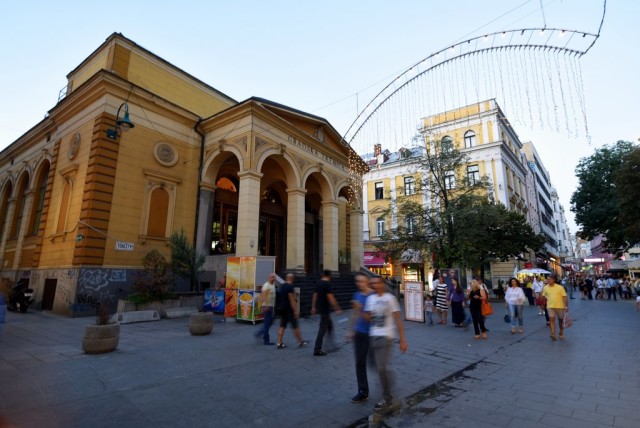
Around me bustles the modern city, built by the Habsburgs who took over Sarajevo from the Ottomans in 1878. While the Bosnian soul feels much closer to Turkey than to Vienna, the 40-year Habsburg period was good to Sarajevo — prodding it to develop from a backwater trading town into a modern city. Much of the infrastructure and architecture of today’s Sarajevo dates from this age. And the Austrian-feeling street called Ferhadija is where Sarajevans come in the cool of the evening to promenade.
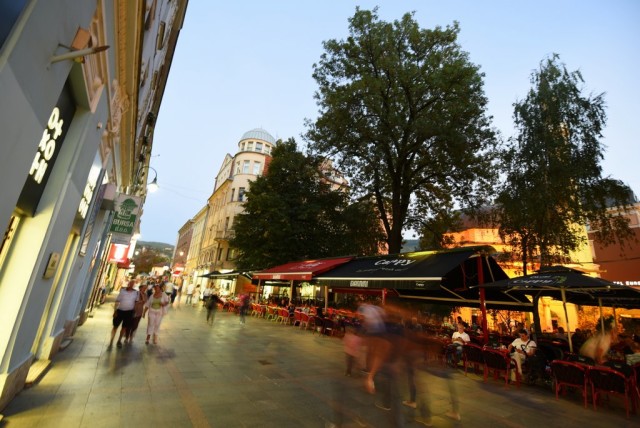
Saddled with an anemic economy and a hopelessly ineffective government that seems designed to slow progress, Sarajevans find cheap ways to enjoy life. People have dinner at home, then head out to nurse a budget drink at an al fresco café. Under genteel 19th-century facades, they watch a pink sky fade to a deep blue. In the park, old-timers play life-size chess — cheering and jeering each move. Excited little kids line up at ice-cream windows.
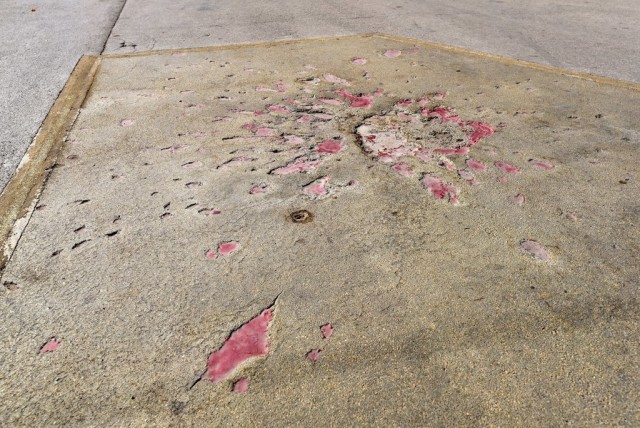
As they stroll arm-in-arm and wave to friends and neighbors along the pedestrianized street, everyone casually steps over the “Sarajevo roses” (wartime blast craters filled with red resin as a memorial). The suffering of Sarajevo during the siege of the 1990s is a painful memory. But thankfully, it’s fading…along with the once-garish dye in these shocking starburst patterns.
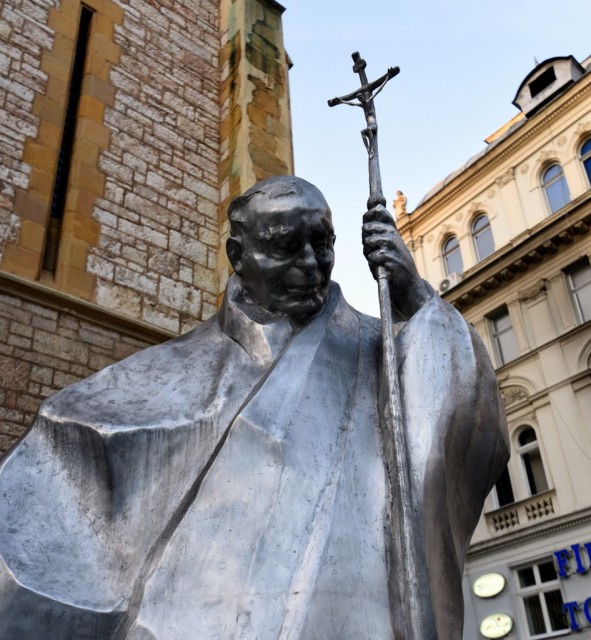
I pass the stout Catholic cathedral, where a larger-than-life silver statue of John Paul II celebrates that faith’s newest saint. In 1997, he became the first pope ever to visit Bosnia (where a third of the population is Catholic). That seems fitting — John Paul II’s revolutionary ecumenism fits this city. In this same neighborhood are Sarajevo’s primary Eastern Orthodox, Jewish, and Muslim houses of worship — all of which have coexisted within a few steps of each other for centuries. (The city’s “live and let live” attitude makes the brutality of the wartime siege — when nationalistic politicians with selfish agendas drove brutal wedges deep into the heart of the community — even more grotesque.)
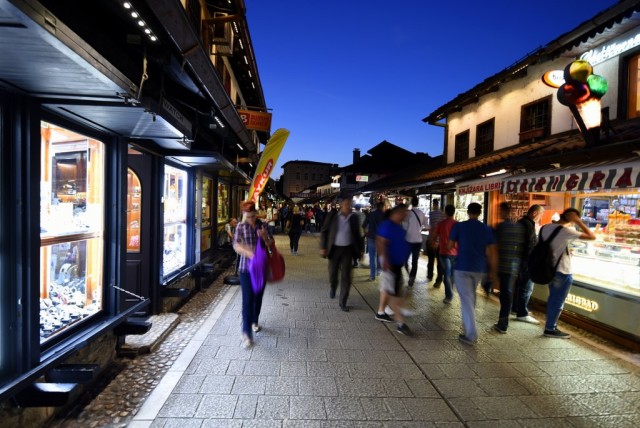
Just a few steps farther down the street, without the slightest transition, I’m in the thick of the Turkish-style old town — called Baščaršija. With its flagstone promenade, handsome wooden merchants’ shops, and minarets towering overhead, it feels like a little Istanbul.
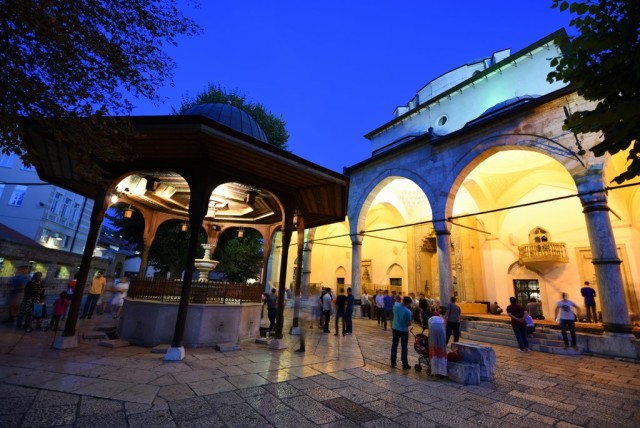
Wandering past the gated courtyard of the city’s main mosque, I hear the call to prayer warble across the rooftops. People begin to filter into the courtyard and wash at the fountain in preparation for their evening prayer. Then they file into the mosque, or stand out on its porch, and begin their rhythmic ritual: Standing. Kneeling. Forehead to carpet. Standing. Kneeling. Forehead to carpet.
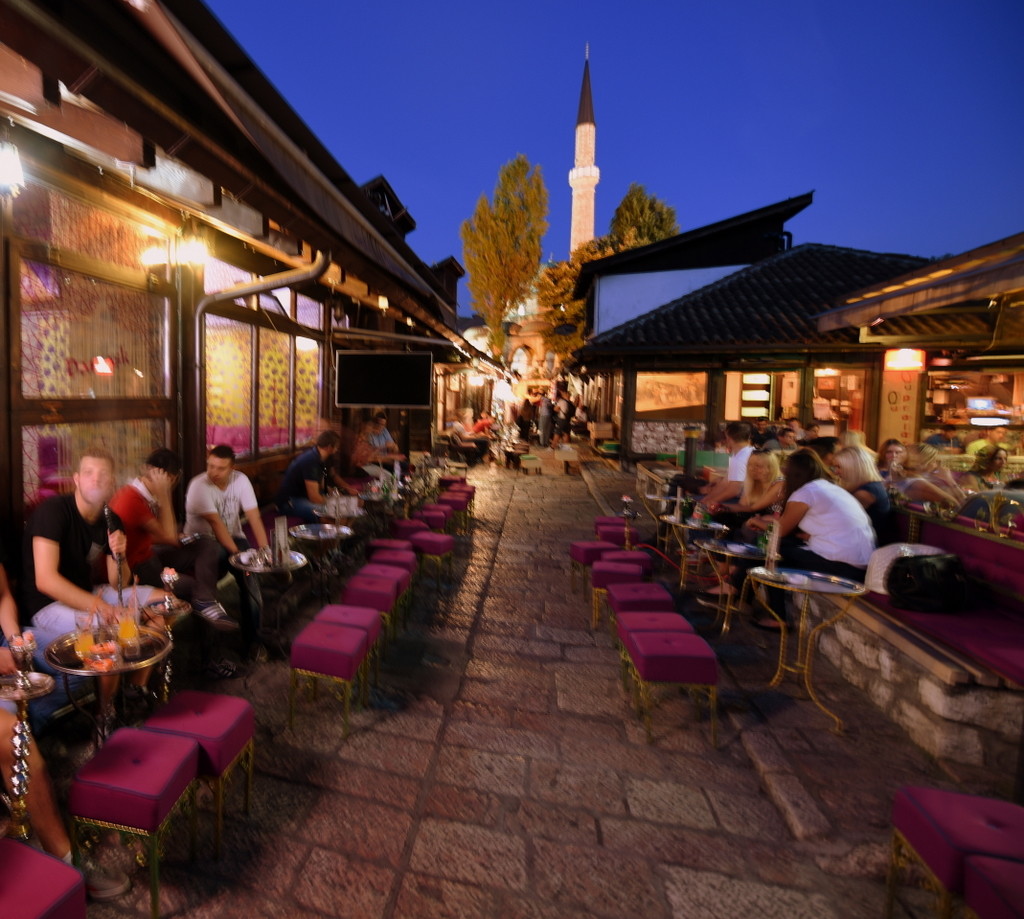
Leaving the mosque’s courtyard, I continue along the Old Town’s main pedestrian drag. A puff of apple-tinged smoke lures me down a tight side alley. I pop out into a courtyard jammed elbow-to-elbow with bars offering water pipes — also called šiša, nargila, hookah, or hubbly bubbly. As twilight twinkles, local twentysomethings lounge here on divans, chilling like sultans (or, at least, pashas) as they deeply inhale pungent, fruity smoke. In the corners and tucked down little alleys, miniature potbellied stoves churn day and night, providing glowing coals to power the pipes. Even without taking a direct drag, it’s like cotton candy for my lungs. While there’s no marijuana in these particular hookahs, the mellow hubbub, air rich with sicky-sweet smoke, and floodlit minarets rocketing overhead are plenty mind-bending.
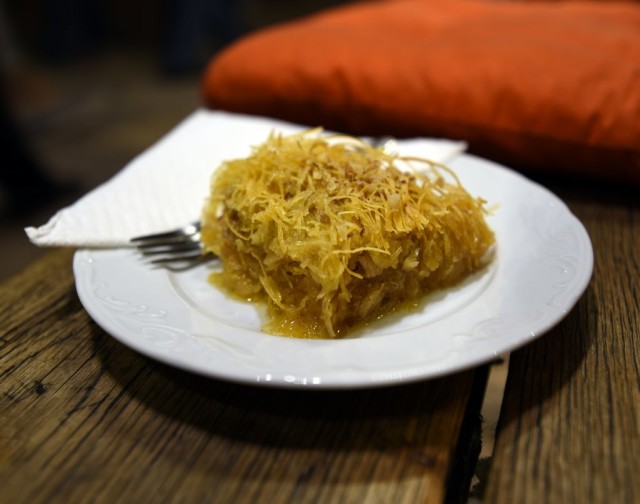
One last stop before returning to my hotel: dessert. I find an inviting shop selling local sweets. But it’s not cakes and strudels — here in the exotic East, you get honey, nuts, and phyllo dough. My favorite Bosnian treat is kadaif — a tidy pile of delicate shredded wheat drenched in honey. I perch myself on a little bench in front of the shop and dig in, watching both locals and tourists dong their promenade laps.
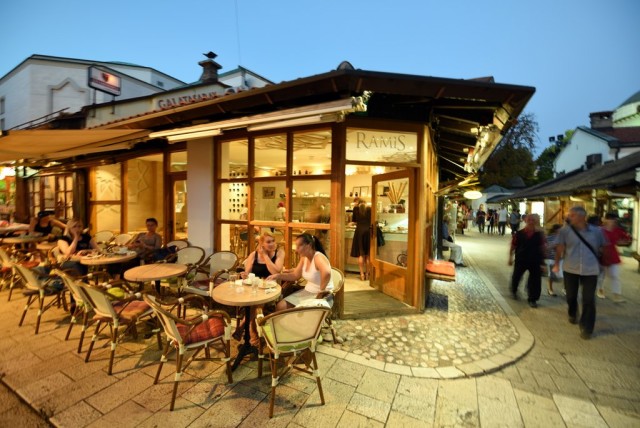 Right in front of me, two families bump into each other and spend several minutes catching up. Their awkward pre-teen, with his akimbo haircut and high-waisted mom jeans, yawns and fidgets. At the next table, tourists from Saudi Arabia — probably feeling more at home here than anywhere else in Europe — laugh the unbridled, relaxed laughter that only a vacation can bring. And all around, people are simply enjoying one of Europe’s most underrated cities. They’re in on the secret. And I’m so glad to be, too.
Great writing…and your post captures wonderful and diverse moments in a city evening in Sarajevo. It appears that the climate there is still very pleasant in late October. Good to know when thinking about a mid-autumn tour.
What a roller-coaster ride of emotions this city has endured over the last recent decades, and how visual your writing! This piques the senses – I can taste the honey in your dessert and my heart thuds at the thought of the red resin rubbed into bomb blasted sidewalks. Yep. Sarajevo is on my list now. Thank you so much, Cameron. Wow.
I am seriously considering adding Sarejvo to my itinerary for 2016