My co-author and frequent collaborator, Cameron Hewitt, is well-traveled, smart, and insightful. And, while he and I are in perfect sync in our travel styles and priorities, he gives voice to the next generation of "Rick Steves travelers." Join me in enjoying his reports right here. —Rick

Thanksgiving in Tuscany: Why You Should Travel for the Holidays

Trick-or-treating is over for another year, cotton cobwebs and jack-o-lanterns are out by the curb, the last few colorful leaves are tumbling out of the trees, and the clouds and rain have shrouded Seattle in gloom. At times like this, I’m glad to have some happy memories of past travels.

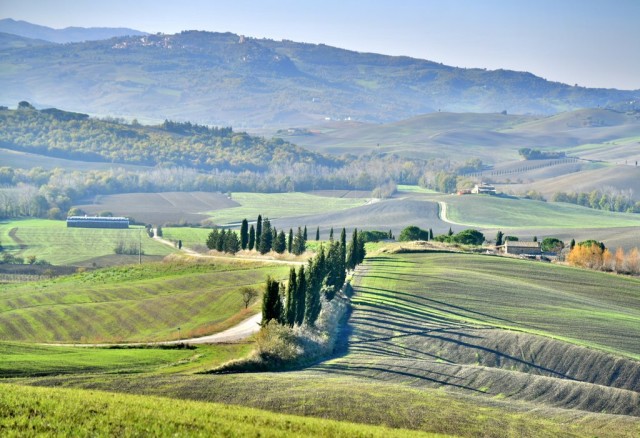
A few years ago at this time, I was getting ready to head to Tuscany for Thanksgiving with my wife’s family. (I wrote a series of blog posts about the agriturismo we stayed at just outside of Pienza, and the many culturally enriching activities they arranged for us.) It was, without a doubt, the most memorable Thanksgiving of my life — and a reminder of why, much as we love our traditions, it’s important to break free from them every so often and spend the holidays in a new place.
cameron-italy-tuscany-Scenery-024

When I tell people I was in Tuscany for Thanksgiving, their first question is — with a note of concern — “Did you have turkey?”

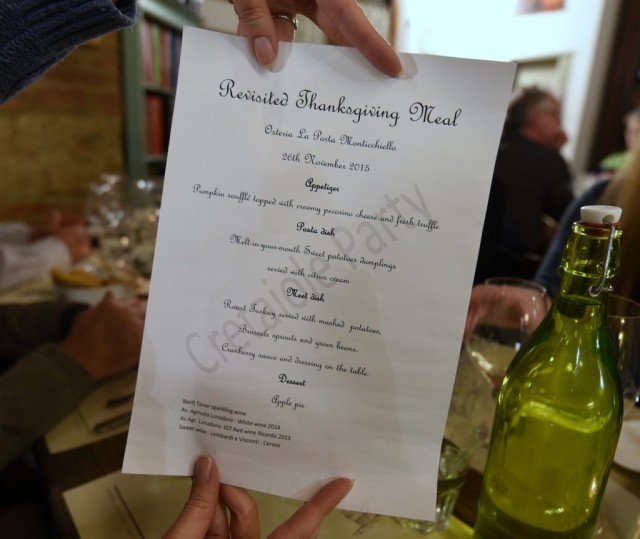
Americans love their Thanksgiving dinner. And many of us simply can’t fathom counting our blessings without an oversized portion of turkey, stuffing, mashed potatoes, and gravy. Our agriturismo host, Isabella, understands this, so very early in the planning stages she reassured her nervous American guests: “And of course we will celebrate Thanksgiving with a special Thanksgiving meal — one with a Tuscan twist.” Well, phew!
cameron-italy-tuscany-Thanksgvng-001

In typically thoughtful fashion, Isabella had arranged a fantastic feast, which happened to be at one of my favorite restaurants in the region (Ristorante Daria, in the tiny hill town of Monticchiello). Months before, Isabella had conspired with the owner/chef, Daria, over a list of traditional Thanksgiving dishes. And the gang at the restaurant had come up with a delicious mashup of American and Tuscan.
cameron-italy-tuscany-Thanksgvng-003

cameron-italy-tuscany-Thanksgvng-004

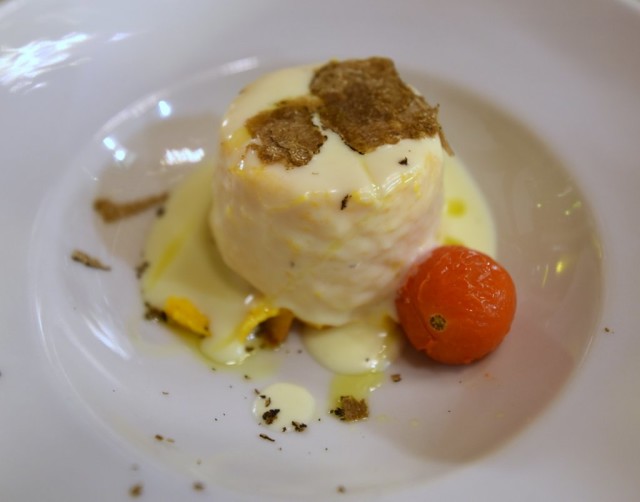
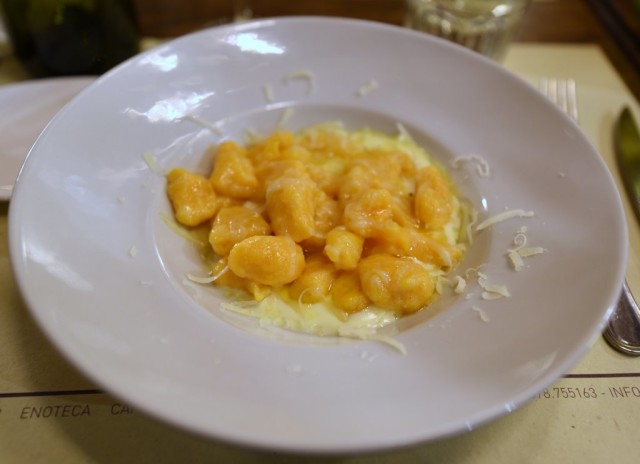
The first two courses were the most Tuscan, but cleverly informed by “our” Thanksgiving ingredients: a delicate pumpkin soufflé, topped with creamy pecorino cheese sauce and fresh-grated truffle. And a dish of pillowy sweet potato gnocchi, gently nestled in a subtle citrus cream. Both dishes were, at once, explosively flavorful and intensely comforting. I would not mind seeing either of these on my Thanksgiving table for many years to come.
cameron-italy-tuscany-Thanksgvng-006

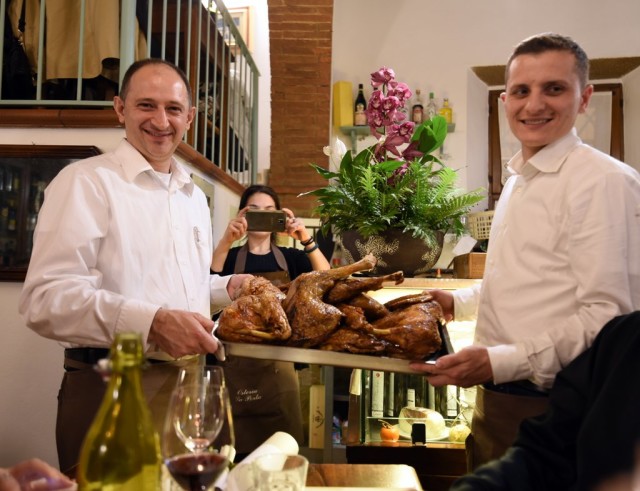
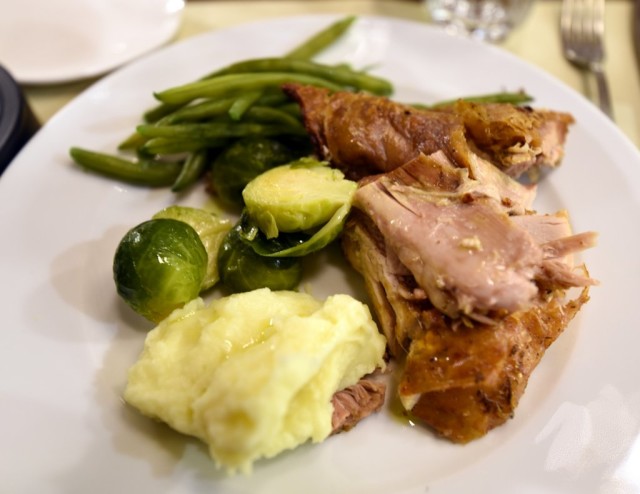
Then it was time for the main event. The waitstaff loaded all of the turkey onto a tray and ceremonially paraded it through the restaurant, like proud hunters with their kill. Then they took it back into the kitchen and re-emerged with beautiful — and very traditional — plates of turkey, green beans, Brussels sprouts, and mashed potatoes…with, in a delicious Italian twist, a trickle of fresh-pressed olive oil.
cameron-italy-tuscany-Thanksgvng-007

They also brought out some fantastic gravy and surprisingly traditional cranberry sauce. Daria explained that she’d asked some American friends to ship her some cranberries, which are completely unknown in Italy. (Pretend for a moment you’re an acclaimed Italian chef. And imagine your shock — and maybe disgust — upon taking your first-ever bite into a raw cranberry: an explosion of sour and astringent, wrapped in a tough little shell and infused with a blood-red dye. How on earth do Americans eat this stuff? The answer: Lots and lots and lots of sugar. Even on her first try, Daria nailed it.)

Sitting around the dinner table, watching Isabella’s family, and my family, enjoying an American-Italian hybrid dinner, was poignant. But it made me sad to think that people might pass up an idyllic week in off-season Tuscany with their families, just because of a fear that they may not get their turkey fix. Even if we’d missed out on the turkey, this week would have been totally worth it.

Holiday traditions are powerful. But keep open the option of busting out of your rut every so often. Risk not having turkey at Thanksgiving. Spend Christmas at a radish festival in Oaxaca instead of singing carols around a fir tree. Skip trick-or-treating in order to be in Slovenia the day after Halloween, when everybody in the country goes to the cemetery to decorate their family graves — in a touching celebration of generations past and present. Instead of dozing off watching another Detroit Lions blowout, drive around the French Quarter of New Orleans, handing out Thanksgiving leftovers to homeless people.

I’ve been fortunate enough to experience all of those magical holidays, and never regretted what I was “missing out on.” If holidays are fundamentally about surrounding yourself with the people you care about, you can do that anywhere. Your traditions will always be there, back home, waiting for you…next year.

If you’d like some inspiration for experiencing Europe for the holidays — or anytime off-season — here’s a recap of some of the other wonderful experiences we enjoyed during Thanksgiving week in Tuscany:
cameron-italy-tuscany-cretaiole-021

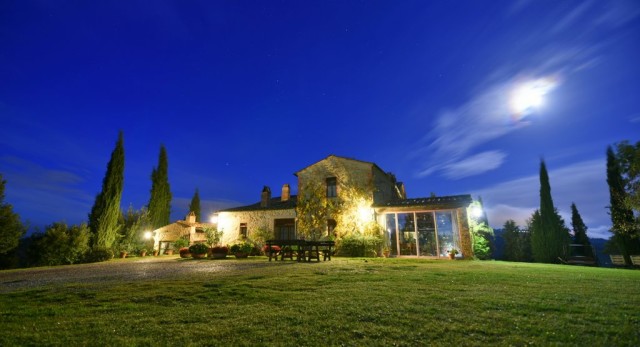
We stayed a full week at Agriturismo Cretaiole, perched on a ridge just outside of Pienza and wonderfully run by Isabella and Carlo. Carlo’s dad, Luciano, kept us well-lubricated with nightly doses of grappa and Vin Santo.

We experienced three entirely different — and equally enjoyable — cooking classes: preparing a blowout feast in an Italian mama’s house; shadowing a Michelin chef in his restaurant’s kitchen; and rolling our own pasta back home at our agriturismo.

We explored Montepulciano — my favorite Tuscan hill town — with its colorful cast of craftsmen.

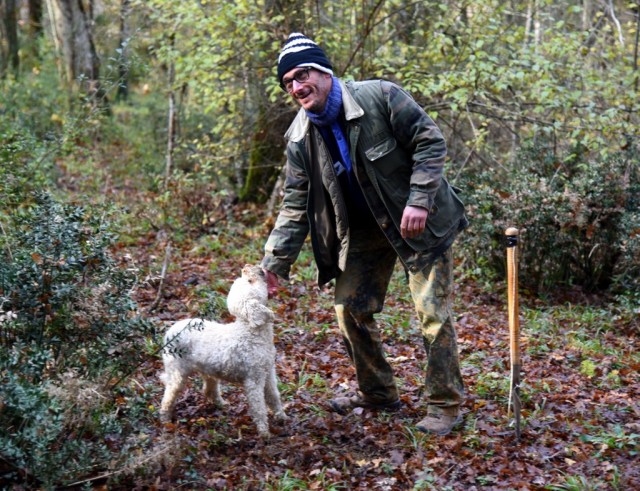
We followed a talented dog as she sniffed out truffles in a primeval forest.
And, in general, we fully enjoyed being in the foodie paradise of Tuscany.

Finally, at the end of the week, we did a little “Black Friday” shopping in Tuscan hill towns, and enjoyed the first of Italy’s holiday lights.

All in all, we found that off-season is a wonderful time to travel in Italy. It’s mild but not cold, it’s less crowded than peak season, and it’s a great time to sample seasonal specialties most tourists never taste.

While you’re digesting your turkey this year, why not do a little daydreaming for next year? A cross-cultural holiday is something worth trying for anybody. Sure, you could miss the turkey, or the Santa suits…but you might just discover something even better.

Or maybe you already have. If you’ve enjoyed holiday experiences on the road, share your favorite memories in the Comments.
Milk Bar Heaven in Kraków

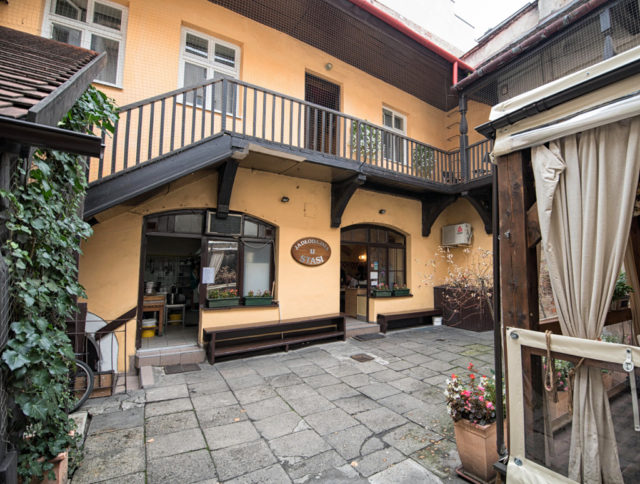
I can’t believe I never noticed this place before. I mean, it literally shares a courtyard with my favorite Kraków pizzeria. And yet, there it sits: Two open doors — one the humble kitchen, the other the tiny dining room. This is Jadłodajnia U Stasi. One of the best meals I’ve had in over 20 visits to Poland — and, by far, one of the cheapest.

CH16SepKrakow_230

I’m always pumping my local guides for privileged information — the latest restaurant leads for my Rick Steves Eastern Europe guidebook. Earlier today, over a coffee, I practically challenged Tomasz to impress me. He rattled off all of the touristy standbys. Yawn. C’mon — it’s time to really show me something.

“Well,” he said, glancing around conspiratorially, then breaking out into the uncontainable grin of someone who’s about to give up the goods. “There is this one place…”

Jadłodajnia U Stasi is a milk bar — that uniquely Polish phenomenon of a government-subsidized canteen, originally dating from the communist period to allow the workers to enjoy a meal out. Communism is a distant memory, but the milk bar concept has stuck around. Throughout Poland, you can get a filling meal of authentic traditional specialties for suspiciously low prices. It’s an option designed for locals, but open to visitors as well.

I’m something of a milk bar connoisseur. But I’d never heard of Jadłodajnia U Stasi. “It’s a place where all of the locals go for lunch,” Tomasz explained. “Homeless people, artists, businesspeople, politicians — everyone sits together at shared tables and eats well.” Even the name — jadłodajnia basically means “place for eating” — is old-fashioned. Straightforward. Unpretentious. A weekday-lunch-only place with a loyal local following. It’s clear: I have to try it.

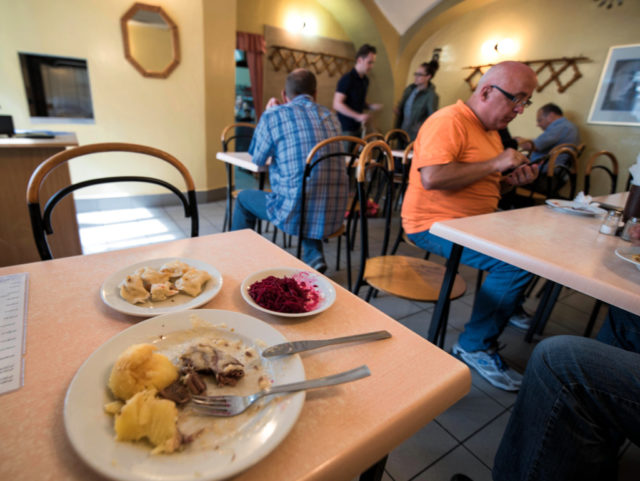
Reaching the dead end of the courtyard — a block from Kraków’s glorious (and supremely touristy) Main Market Square — I step across the threshold into the humble space. With basic tile walls, basic coat racks, basic tables, and no “decor” to speak of, it feels entirely practical…almost clinical. The cashier — a tired-looking salt-and-pepper-haired man in a striped polo shirt and jean shorts — looks mildly surprised to see me. But then, as Tomasz has instructed, I tell him, “Angielski, po proszę.” He ruffles through the stack of photocopied menus, pulling the English one from the bottom of the pile and handing it to me. He makes a sweeping gesture across the tiny room. Sit anywhere.

I find a seat in the corner and get situated. Reaching for the ersatz tissue-paper napkins, I take a small stack of about six of seven — approximating one real napkin. Within moments, a kindly aproned woman suddenly appears tableside, cocking her head at me with a wordless smile: Ready to order? I beg for a few more minutes to consider my options.

The menu — a short but tempting list of Polish classics — is in three languages: German, French, and English. The dishes sound much better in French. Who can resist the viande de pot-au-feu? So that’s what I order: boiled beef, plus a plate of “Russian-style” pierogi. The server disappears behind a tattered red-and-white-checkered curtain into the kitchen. Well-worn pots simmer on a workhorse of a stove, tended by matronly, blue-smocked chefs.

CH16SepKrakow_220

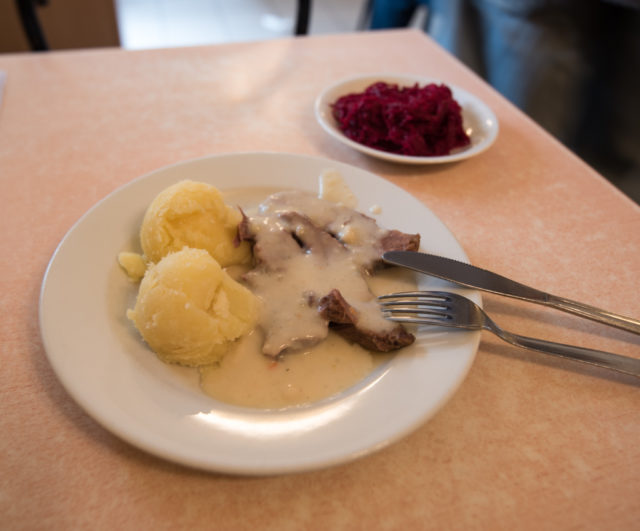
Literally seconds later, the plate hits my table. I take a bite. And the rich flavors flood my taste buds. It’s “boiled beef,” yes, but that undersells it. (So does viande de pot-au-feu, for that matter.) It’s slow-roasted to fork-tender perfection, smothered in a perfectly balanced horseradish cream sauce, with a side of potatoes halfway between roasted and mashed. There’s also a plate of beetroot salad: grated strips of perfectly tender, vivid-purple beets, mixed in with explosive shards of horseradish. Fantastic.

CH16SepKrakow_225

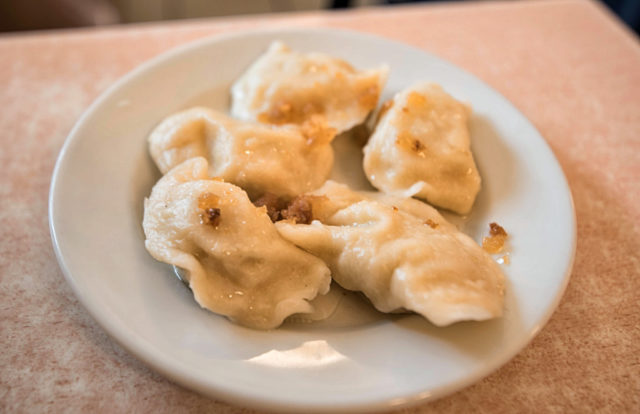
A minute later, my plate of pierogi appears. The boiled-dough casing is ideally al dente. The filling — potato, cheese, and caramelized onion — is generously peppered. Flecks of pork cracklings add a punch of meaty flavor and fatty texture (and make the traces of water draining to the bottom of the plate glisten like gossamer). I’ve had a lot of pierogi around Poland, and most have been pretty flavorless. But these pierogi?  These pierogi are perfect.

Savoring my meal, glancing around the room, I notice the steady flow of customers in and out. One thing’s for sure: I’m the only tourist taking photos of my food. Mindful of the fact that this is the kind of place that locals hesitate to tell tourists about — for exactly this reason — I stow my camera and munch discreetly. Everyone shares tables: Young people. Old people. Rich people. Poor people. And everyone focuses on the food in front of them — classic Polish dishes, executed just right.

Not many people get excited about Polish food. And that’s a shame, because it’s delicious. Polish cuisine is hearty comfort food, done exceptionally well — high cuisine for hardworking peasants. In this agriculturally oriented country — where virtually every square mile is rippled with undulating farms — you can taste the land in the food. Poles have mastered umami — that mysterious “fifth taste,” sometimes described as earthy or savory. Beetroot. Potatoes. Braised beef and pork. Cabbage. Smoke. Mushrooms. Dense rye bread. Rich, fatty proteins. Fermented vegetables. Field greens. Slow-simmering broths. All of these are Polish staples, and all are quintessentially umami. (After a few days here, I crave a meal of sharp, spicy food…just to give my palate some umami detox.) At the same time, Polish chefs are also playful with punchy herbs and spices: Cutting through that smothering blanket of earthiness are bright bursts of dill and peppercorn and marjoram and caraway.  And, of course, plenty of garlic.

CH16SepKrakow_228

A well-dressed, bespectacled, professorial gentleman asks to share my table. We sit together in silence — sharing only the common language of satisfied “mmmms” — as I savor my last few bites. I notice a few splashes of purple beet juice on my shirt, which I decide to think of as prized, indelible souvenirs of a meal richly enjoyed.

Wishing my companion a hearty “Smacznego!” (“Enjoy your meal”), I bus my dishes to the little stainless-steel window where, periodically, a hand reaches out to collect them. On my way out the door, I pay my bill: 20 Polish zloty, or about $5.

Five bucks. For a meal so filling, I won’t need dinner. Two nights ago, I treated myself to a fancy Polish feast at a prime restaurant on the Main Market Square. Ordering high on the menu, I burned through $50 for a (frankly) mediocre dinner. At Jadłodajnia U Stasi, for literally cents on the dollar, I had a dramatically more satisfying meal — and a much more authentic Polish experience, to boot. If you’re headed to Kraków and want to do the same, just duck down the courtyard at Mikołajska 16. Don’t bother telling them that Cameron sent you…they don’t care. They’re too busy cranking out amazing food at ridiculous prices.

Kraków’s Magnetic Main Square

I’m back in Europe. First up on my autumn research swing: Poland, where I’m updating my Rick Steves Eastern Europe guidebook.

That first day in Europe is always a weary slog. After checking into my hotel and showering, I fight the urge to sleep for the first time in 20 hours. Instead, I go wandering around Kraków. I’m seeking that elusive “Hey, I’m in Europe!” epiphany…that moment that makes the long journey worthwhile.

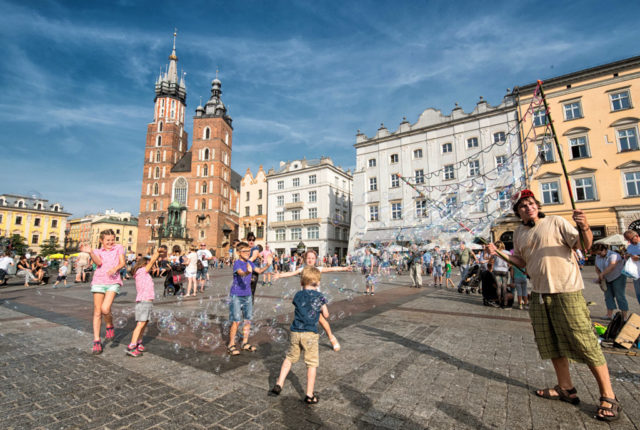
I quickly discover that, today, the entire city is one big “Hey, I’m in Europe!” On this hot, sunny, early-September weekend, everybody is out enjoying the last hurrah of summer.

CH16SepKrakow_050

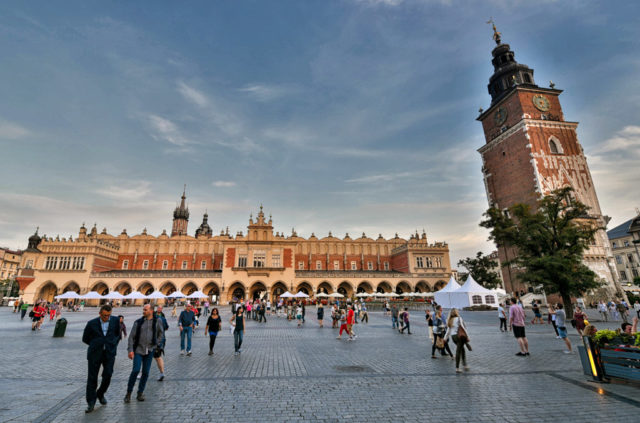
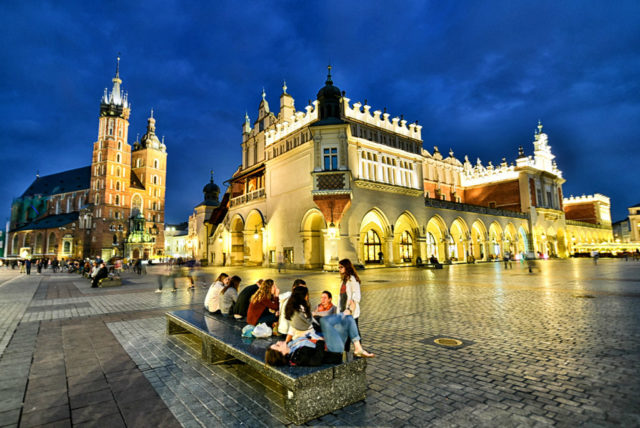
Bleary-eyed, I stumble a few blocks over to the Main Market Square — my vote for the best square in Europe. It’s always full of life, but today the bustle is cranked up to 11.

CH16SepKrakow_088

The twin towers of St. Mary’s Church seem to be smiling in the sunshine. One of the windows at the top of the crowned, taller tower opens, and the sun glints off the shiny brass bell of a bugle. The trumpeter begins to play a tune called the hejnał that, if you’ve been to Kraków, you’re probably humming right now.

This song is played at the top of each hour to commemorate the town watchman who, back in the 13th century, sounded the alarm when he spotted Tatar invaders approaching town. (According to legend, before he could finish, an arrow pierced his throat — which is why, even today, the hejnał stops subito partway through.) Like the iconic clanging of London’s Big Ben, this tune is synonymous with its city — and makes it unmistakably clear where I’ve arrived.

The hejnał stops with a jolt, and life on the square goes on. The flower vendors are particularly busy, with couples and kids buying bouquets for their loved ones. The outdoor café tables are jammed. And little kids are having the time of their lives chasing gigantic gossamer soap bubbles.

CH16SepKrakow_007

The Main Market Square is a magnet. I just can’t resist its pull. I keep trying to veer off — heading up this or that side street to check details for my book. But the siren call of the square (and the hejnał) keeps luring me back.

CH16SepKrakow_346

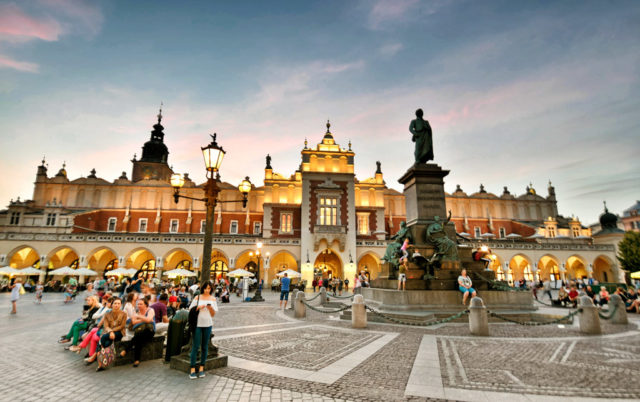
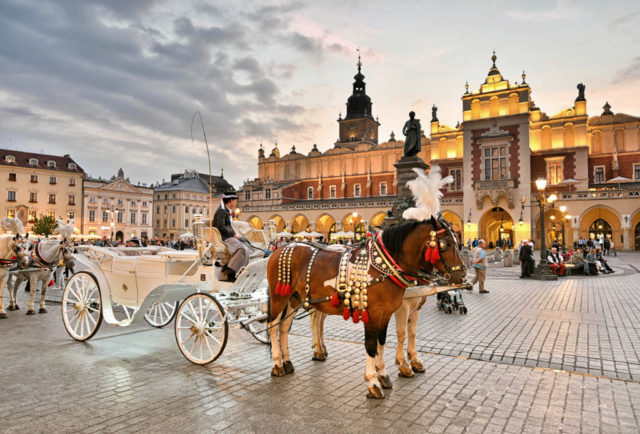
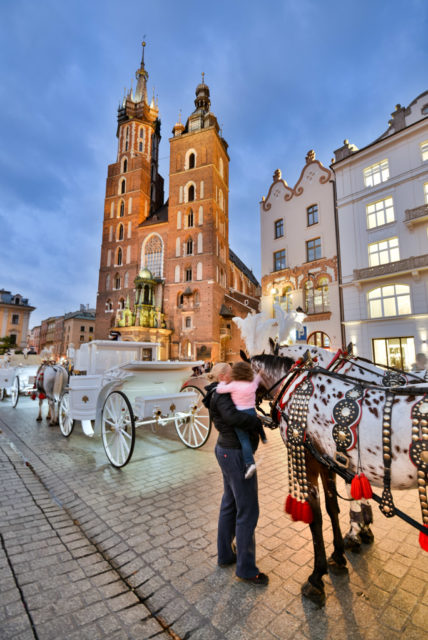
I return in the cool of the evening, under a hazy pink-and-purple sky. It’s romantic twilight, and pristine white Cinderella horse carriages line up in front of St. Mary’s Church. Bright lights under their running boards flicker on — attracting customers like a bug zapper. A young mom brings her curious toddler over to pet the horse.

CH16SepKrakow_370

Doing a few more laps around the square, I spot all of my favorite landmarks. The old, green hand pumps, still used by the flower vendors under their yellow tents. The big donation box. The little old ladies who sit behind their blue, aquarium-like stands, filled with fresh-baked dough rings called obwarzanki. And of course, travelers having the time of their lives — treating Europe’s grandest square as their own, very spacious living room.

CH16SepKrakow_394

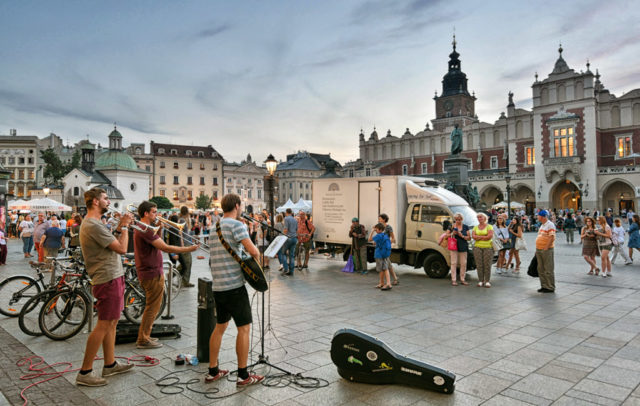
As usual, there’s plenty of live music. A ragtag and unlikely trio — guitar, trumpet, trombone — entertains passersby.

CH16SepKrakow_078

But one thing’s missing. One time on an early visit to this square, back in the early 2000s, I heard clapping to the beat of a tinny boombox. Following the sound, I spotted a half-dozen pre-teens breakdancing on a big piece of cardboard. I mean, full-on, 1984, Electric Boogaloo breakdancing. They could barely hold a handstand for more than a second…but they were determined. There was something so hopelessly unhip, so disarmingly corny about it all. They charmed me so much that I even mentioned them in my guidebook.

With each visit, at some point I’d pass those breakdancers, busking for tips. They became a Kraków fixture, right up there with St. Mary’s and the hejnał. But on this trip, making my final pass through the square, I’m feeling nostalgic and thinking that surely those guys have moved on by now. They must have real jobs, families, obligations…and happy memories of breakdancing on the Main Market Square.

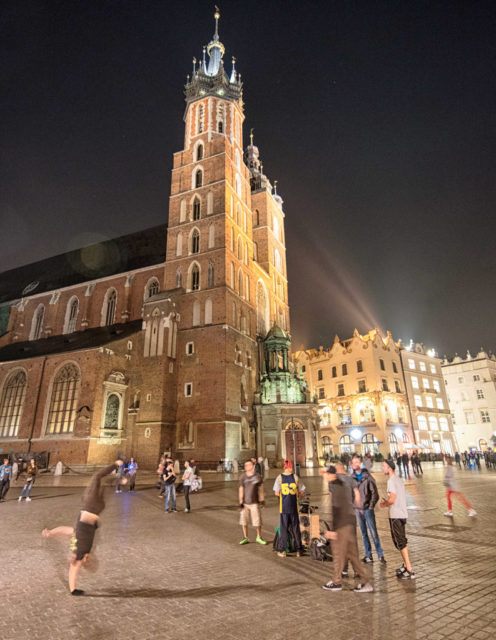
But then, from across the square, I hear Gloria Estefan’s “Conga” start to play. A crowd is gathering. Could it be? Making my way over, double time, I see — sure enough — those same kids, all growed up, executing flawless windmills and hand glides and headspins under St. Mary’s towers. Their sound system is better. They don’t need the cardboard. They’re now ripped, bearded, and balding. But it’s definitely them. They’ve persevered after all…in spite of the odds, they created their own niche, and filled it. (Millennials…)

CH16SepKrakow_426

Tossing a few coins into the hat, I smile and head back to my hotel. It’s been a long day — or two, actually — since I got on that plane in Seattle. But I’ve made it back to Europe. And here in historic Kraków, some things never change.

Five Electronics Essentials for Traveling in Europe

Electronics play a big role in my travels: smartphone, laptop, serious camera. This post isn’t about those big items, but the smaller “support” items that help me get the most out of my gear. In the spirit of my 10 practical little items I won’t go to Europe without, here are five more electronics-related items that you’ll find in my bag anytime I hit the road.

1. Extra-Long Phone/Tablet Charging Cable

cameron-packing-05

Europe’s characteristic old hotels were designed decades — or centuries — before everyone needed to plug in a phone at bedtime. I use my phone as an alarm clock, so I want it on my nightstand — not charging on the desk, halfway across the room. An extra-long, 6- or even 10-foot cable doubles your flexibility and takes up only a little more space and weight than a standard 3-foot cable. (Bonus tip: If the outlet is juuuust out of reach of my nightstand, I plug in my laptop, then plug my phone into the laptop — using my MacBook to daisy-chain my way to a few extra feet.)

2. Slide-on Euro Adapter Plug

cameron-packing-06

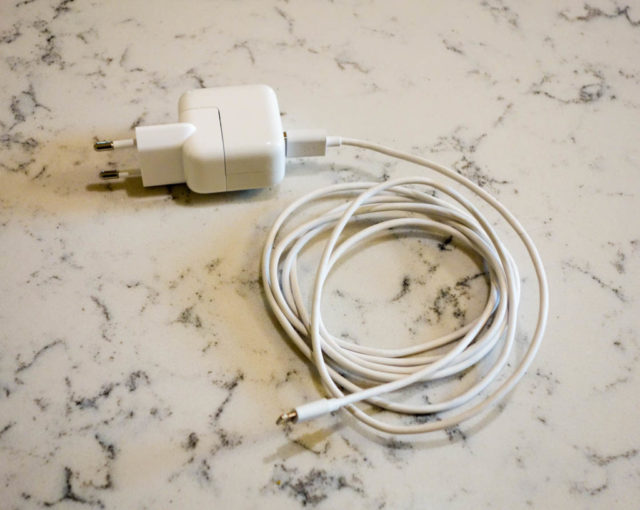
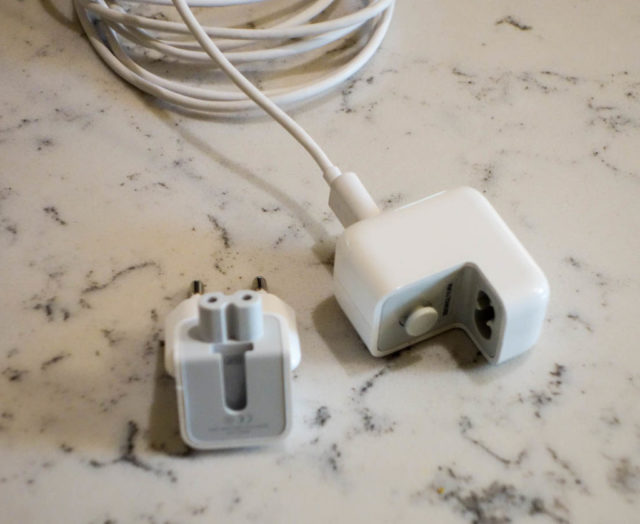
If you have an Apple device or laptop, notice that you can slide off the American-style two-flat-prong plug, and slide on a plug for Europe (or wherever). This reduces the odds of leaving your plug adapter behind in the socket when you’re packing in a hurry.

3. Phone Car Charger and Windshield Holder

cameron-packing-11

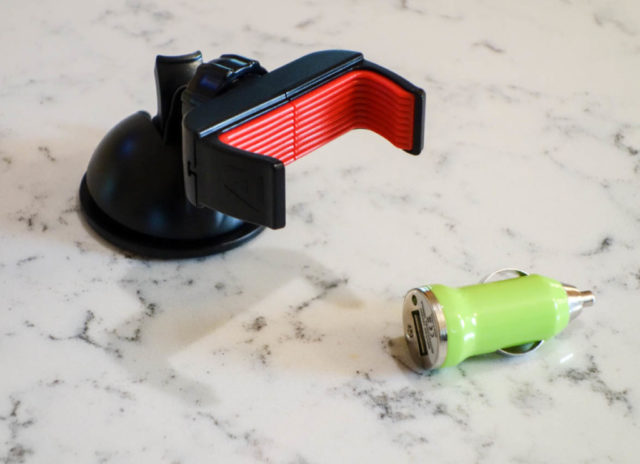
The first one’s a no-brainer — you never know when your phone’s battery will flatline at the worst possible time. Packing along a little charger helps tide you over on long journeys. The second item — a suction-cup windshield holder for my phone — may be bulky, but it’s worth it. Now that I’ve used one, I can’t imagine how I got by without it. (Quite dangerously, in all likelihood.) My travels in Europe often include long road trips where I’m the driver, navigator, and sole passenger. And I navigate almost entirely with Google Maps on my phone. With this combo, I can plug in my phone to charge, then affix it to the windshield — letting me navigate my way safely anywhere in Europe, all day long. (By the way, more and more European rental cars now have USB outlets, which let you not only charge your phone while you drive, but listen to your own music or podcasts on the car’s sound system.)

UPDATE (August 2018): Since I first wrote this list, I discovered the perfect solution for safely using GPS while driving: The Kenu Portable Vent Mount. It grips your phone tightly, and you insert its prongs into the car’s vents. And, since it doesn’t rely on bulky suction cups, it’s impressively compact — about the size of a cigarette lighter. The vent mount takes up a fraction of the bag space of a suction-cup model, and works even better…easily my favorite travel gizmo find of the last few years.

4. Headphone Splitter

cameron-packing-26

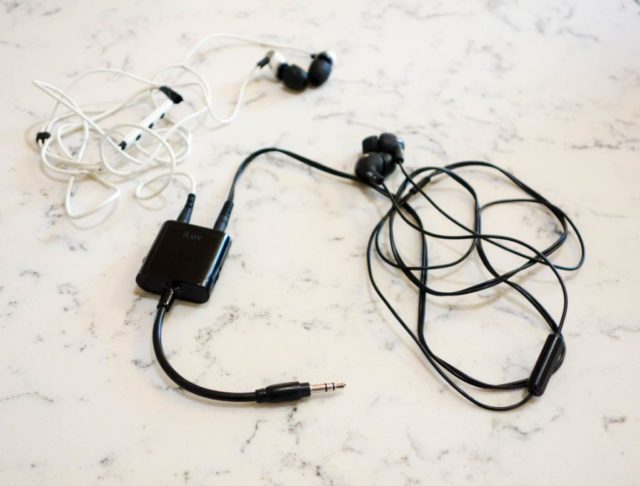
My wife often joins me on my trips. And she always packs along this handy little device, which lets us share iPad videos without bothering fellow passengers on a plane or train.

UPDATE, December 2022: OK, I know: Times have changed, and these days it’s probably easier just to pair two sets of AirPods (or other wireless headphones) to the same device. But this splitter can still come in handy while sightseeing: It lets two people share an audioguide while touring a museum for the price of one. (Even when I’m alone at a museum, I look for a headphone jack on the audioguide handset. This frees up my hands to take notes, snap photos, or stroke my chin appreciatively.)

5. Camera Gear

cameron-packing-30

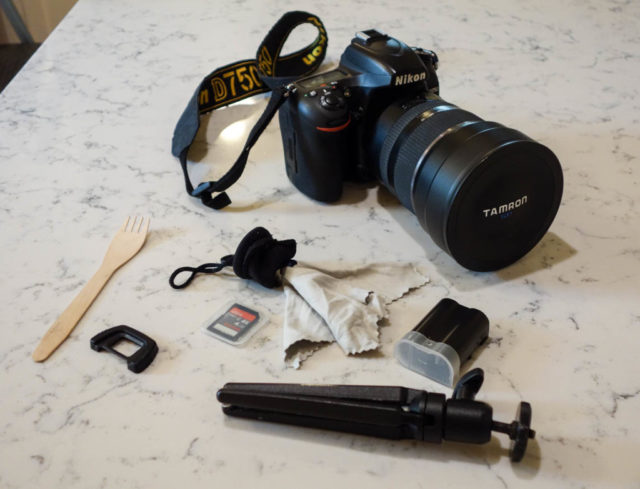
I carry a bigger camera than most people do (Nikon D750), but that doesn’t mean I want to lug around a lot of dead weight. In my camera bag, you’ll find just the basics: an extra memory card and battery (I learned my lesson last summer, when my battery died just after I’d hiked up to a hilltop viewpoint over Rocamadour at “magic hour”); a spare viewfinder eye cup (mine tends to pop off easily when I slide my camera in and out of my bag, so I stocked up on a few cheap replacements); and a microfiber dust cloth (this one tucks up inside a little pouch). I don’t haul a full-size tripod, but every so often you want to be able to shoot in low light. After going through several, the best mini-tripod I’ve found is by Manfrotto — it’s sturdily built and can support a heavy camera, but still lightweight. And what about that little wooden fork? I don’t carry a day bag — just my camera bag. And I often eat a quick lunch on the run…like a salad from a mini-market that doesn’t stock plastic cutlery. This wooden fork has allowed me to eat several healthy salads…without using my hands.

One “caveat emptor” note: Online — even at some of the big vendors — you can find suspiciously inexpensive versions of some of these items. But I’d stick with a mainstream brand. I’ve bought a few extremely cheap camera batteries that turned out to be exactly that (they died after just a few uses), and some off-brand Euro adapters that broke the first time I used them. When surveying your options, read the reviews carefully.

What am I missing? Do you have any favorite electronics or related accessories?


This list is focused on electronics. But don’t miss my companion list of 10 Little Things I Won’t Go to Europe Without. Or, for a wealth of packing advice and information, check out the Packing Light section of our website.

10 Little Things I Won’t Go to Europe Without

While packing for a trip to Europe, I took a break for a little photo session of my favorite take-alongs. I’m not talking about the obvious stuff — backpack, day bag, toiletries kit, and packing cubes. No, these are the little odds and ends that 20 years of European travel have taught me to always bring along.

Every seasoned traveler has a little bag of doodads stuffed deep in their suitcase, “just in case.” But I’m evangelical about packing light. So I’ve narrowed my MacGyver bag of tricks down to items that are practical, useful, and light enough that even if I don’t wind up needing them, they’re still worth packing along. Here, in no particular order, are the 10 little items that I may never need in Europe…until I definitely do. (You can download or print the list here.) While this list was originally posted in 2016, I update it routinely and occasionally add some new items — most recently in December of 2022.

1. Two types of tape

In a previous post, I mentioned how I use a little roll of black electrical tape to cover up annoying little lights in a hotel room. I’ve used it for dozens of other things, too: band-aiding a fraying headphone cable, de-linting a sweater, fastening a plug to its adapter so I don’t leave it behind in the socket, and on and on. I also bring another type of tape: a very small roll of white duct tape. I often ship a box of accumulated dead weight home midway through a trip, and this tape is essential for sealing the box and reinforcing its seams. Duct tape has so many other uses, too. For example, I’ve used it to help keep stubborn drapes closed to avoid an early-morning sunbeam wake-up call.

UPDATE (December 2022): A roll of tape, even a small one, is admittedly bulky to pack. Imagine how glad I was to learn, from one of my Facebook followers, about RediTape, a flat-pack duct tape. This has replaced that bulky roll in my rucksack. )

2. Vapur Water Bottle

Of course, you could just buy a bottle of water, then re-use the bottle throughout your trip. But an empty plastic bottle takes up more than its share of space in a tightly packed day bag. Instead, I carry a collapsible Vapur water bottle, which you can roll up and tuck (unobtrusively) into any pocket until it’s needed. The plastic carabiner-type hook on the cap is handy for attaching it hands-free to my camera bag or a belt loop. And they’re durable — mine has survived several multi-week trips.

3. Trader Joe’s “Just Mango Slices”

On an hours-long plane or train ride, junk food is tempting. But instead, I carry a couple of bags of Trader Joe’s dehydrated, unsweetened “Just Mango Slices.” They’re explosively flavorful and hearty enough to cut through any jet lag-induced hunger — and they’re more nutritious than a candy bar.

4. Resealable Plastic Baggies (Various Sizes)

It can be hard to find these in Europe. And even if you do, why buy a dozen when you really just need one or two? To save time, I pack away a little bundle of zippered baggies — a mix of gallon, quart, sandwich, and “snack” sizes. I never know just how I’ll use them…until I do (sticky snacks, wet swimsuit, edible souvenirs with a potential for leakage, somewhere to safely stow my phone when I hit the beach or pool, and so on).

5. Sea Bands

I’m fortunate not to have too many problems with motion sickness. But you never know when you’ll wind up on a plane through heavy turbulence, or a bus ride on a serpentine mountain road, or a boat on rough seas. These elastic bands slip onto your wrists, with little beads aimed at pressure points related to combating nausea. This non-medicinal cure has earned many loyal fans among cruise enthusiasts, morning-sickness sufferers, chemo patients, and the perennially carsick.

6. Go Toobs and FlatPak Soap Case

I’ve tried all different types of little bottles for my shampoo, laundry soap, and other liquids. Most have failed — often messily. But a few years back I discovered Go Toobs, and now that’s all I use. The silicone bottle is sturdy yet flexible, and the cap is firmly built and stays on well. By the way, I always seal little bottles like this in “snack-size” plastic baggies before plane trips — just in case the pressure changes trigger any problems.

Rick Steves Store: Matador® FlatPak™ Soap Bar Case - Closed

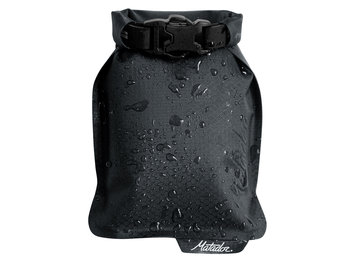
UPDATE (December 2019): Russ Whealy, who manages merchandise here at Rick Steves’ Europe, recently added to our product lineup one of my favorite new discoveries: the Matador FlatPak soap bar case. It’s a little collapsible baggie where you can keep your bar of soap. Somehow, it keeps your moist soap from becoming a soggy mess while also preventing leakage. This seemed too good to be true. But I took one on my latest research trip…and it worked like a charm. I used to carry around a heavy plastic soap dish that took up more than its share of space in my toiletries kit. Never again.

(You can also thank Russ for our “spinner” carry-on wheeled bag — my wife’s new favorite bag.)

7. Starbucks Via Instant (or Instant Cappuccino)

If your accommodations don’t provide breakfast, it can be a pain to go prowling the cobbles, bleary-eyed at dawn, just to caffeinate. A few packets of Starbucks Via Instant can save the day. (I also carry single-serving packets of sweetener and powdered creamer. ) This is especially handy if you’re renting an Airbnb-type apartment that comes with a way to heat water, but nothing to put in it. A cup of Via (and maybe a couple of mango slices) tides me over just long enough to get ready for the day and go find a real breakfast.

UPDATE (December 2022): The only catch with Via is that I take milk with my coffee. For a few years, I brought along some individual packets of powdered Coffe Mate…a workable hack, but a little cumbersome. Finally I realized that Europe already has the perfect solution: Over there, it’s easy to get instant cappuccino (Nescafé is one ubiquitous brand), either in individual packets or a little plastic can. Just add water, and you have a coffee drink that’s nicely frothy (how do they do that?) and just the right amount of sweet. While instant cappuccino is tricky to find Stateside (especially in individual packets), it’s readily available at grocery stores all over Europe. I still bring a couple of Via packets for emergencies, then hit a grocery store early in my trip for some instant cappuccino.

8. Airplane Barf Bags

I’ve never used one of these for its intended purpose. But I never leave one behind when I get off the airplane. I have quite a collection of these practical little enclosures, which are just the thing for organizing receipts, postcards, or other random bits of paper…or for just about anything else.

9. Earplugs

As an absurdly light sleeper, I’ve tried every possible kind of earplug (believe me), and I’ve settled on this as my favorite brand: Mack’s, which are soft (comfortable) yet substantial (soundproof). Even if you are a heavy sleeper, you never know when you’ll check into your hotel and discover that the new nightclub next door happens to be holding its grand opening rave…tonight. (This actually happened to me once.) Pack along a few sets of earplugs, and you’ll increase your odds of sleeping soundly.

(If you’re a terrible sleeper like I am, check out my tips for getting a good night’s sleep on the road.)

UPDATE, December 2022: OK, this is hardly a “little thing.” But more recently, to get a good night’s sleep in noisy surroundings, I go to bed wearing my Bose noise-cancelling headphones. (I travel with them anyway, for a little peace and quiet on long flights and train trips…so why not use them overnight?) I never tried this until recently because I simply thought there was no way I’d be comfortable sleeping with them on. But now that I’m used to them, I barely notice them. It’s nice having a second option in my arsenal for noisy nights: Depending on the kind of clamor I’m dealing with, sometimes earplugs do the job, other times the headphones work better, and on occasion, having both is not a terrible thing.

10. Plastic Sheet Protectors

Magazines and assorted papers tend to get beat up when you jam them into a bag, or when you’re fishing around in that bag to find something. For years, I’d eventually succeed in ripping off the cover of any magazine I brought along. But now, to keep papers and magazines organized and tidy, I slide them into plastic sheet protectors. I can see just what’s inside each one: This one has my trip schedule; some extra screen protectors for my phone (which tend to wear out on a long, intense trip); a few of those handy barf bags; and postcard reminding me of my travel motto. Also, did you ever think about how much gross grime and germs live in those seat-back pockets where you stuff your iPad? If you slip it into one of these first…then you never have to.

11. (New Bonus Item) Smartphone Vent Mount

Since I first wrote this list, I discovered the perfect solution for safely using GPS while driving: The Kenu Portable Vent Mount. It grips your phone tightly, and you insert its prongs into the car’s vents. And, since it doesn’t rely on bulky suction cups, it’s impressively compact — about the size of a cigarette lighter. This is also included on my list of Five Electronics Essentials for Traveling in Europe.

UPDATE, December 2022: Things just keep on changing! Since I added the vent mount to this list, I’ve noticed that more and more of the cars I rent have built-in screens that let me plug in my phone and use Google Maps right on the dashboard…making this item unnecessary. However, this vent mount is so tiny that I still tuck it into my bag, just in case I wind up with an older car (which still happens on occasion).

Minimalist packers would say this is all just clutter: “You might not ever need that stuff! And if you do, why not just shop for it in Europe?” But when I’m traveling, every moment is precious. And anytime I have to go on a wild goose chase around a supermarket or department store to find some obscure little item, that’s a museum I didn’t tour, or a gelato I didn’t lick, or a park bench I didn’t get to people-watch from. Each of these items has saved me time, money, stress, or all three. And even if you add them all up, the combined weight and space they take up in my bag is negligible.

What are your favorite clever packing extras?


Affiliate disclosure: I receive not one dime if you purchase any of the items mentioned in this post. Like all of our travel advice at Rick Steves’ Europe, this is based purely on my judgement of what’s best for the traveler.

Be sure to check out a related post: my list of affordable, lightweight, and handy electronics-related items I’d never go to Europe without.

For more practical travel tips — hard-earned from 20 years of being a professional traveler — check out my 10 Europe Travel Hacks and 10 MORE Europe Travel Hacks.

Better yet, review the Travel Tips section on our website, a comprehensive, in-depth collection of tips and advice covering every angle of European travel.

And, if you enjoy my take on travel, be sure to get a copy of my travel memoir, The Temporary European: Lessons and Confessions of a Professional Traveler. It’s a collection of my favorite travel tales from 20-plus years of working with Rick Steves; an inside look at what it’s like to write guidebooks, lead tours, and make travel TV as a living; and, because I’m a travel teacher at heart, plenty of practical advice (like this list) for how to experience Europe like a pro.