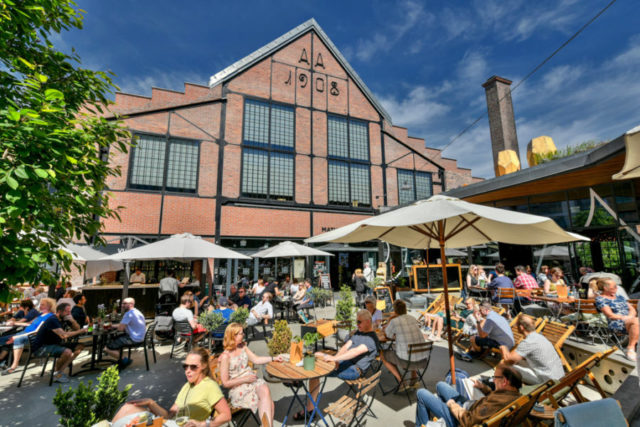
My co-author and frequent collaborator, Cameron Hewitt, is well-traveled, smart, and insightful. And, while he and I are in perfect sync in our travel styles and priorities, he gives voice to the next generation of "Rick Steves travelers." Join me in enjoying his reports right here. —Rick

The Westman Islands: Volcanoes and Puffins in Iceland’s Undiscovered Gem

My favorite underappreciated corner of Iceland is the Westman Islands — the no-longer-secret discovery of our Rick Steves Iceland guidebook co-author, Ian Watson. This installment of my Iceland blog series explains why, if you want to escape some of the tourists — and can flex with unpredictable weather — the Westman Islands are worth fitting into your Iceland itinerary.

In Iceland, it seems every traveler is in the same two- to three-day rut. (It’s a glorious rut…but it’s a rut.) That’s why I was thrilled that our co-author, Ian Watson, insisted on including the Westman Islands in our new Rick Steves Iceland book. Because the Westman Islands — which sit just eight miles off the South Coast — are Iceland’s undiscovered gem.

The Westman Islands (“Vestmannaeyjar” in Icelandic) are worth considering for an overnight, but they’re made to order for a day trip from either Reykjavík (by plane) or Iceland’s South Coast (by boat). However, the main reason the islands are less visited is that the transportation connections linking them to the mainland can be unpredictable in questionable weather. (For details, see the end of this post.)

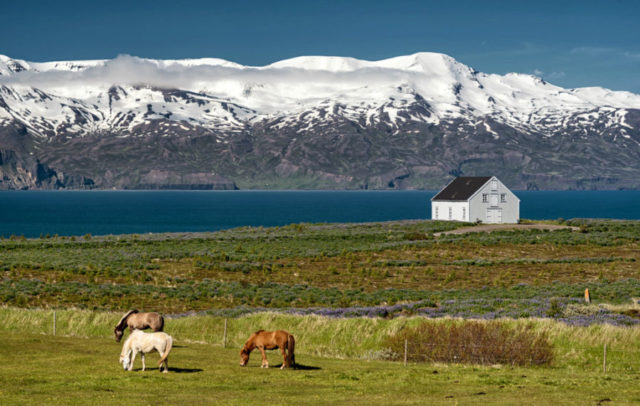
Weather caveats inside, once you arrive on the Westman Islands, you’ll be glad you came. There are eight islands, but only one — called Heimaey — is inhabited. The town itself, while quite functional, has a pleasantly workaday charm. But you’re not here for the town — you’re here for the glorious setting, the recent volcanic history, and the evocative sights.

Blessed with a fantastic natural harbor — hemmed in by steep sea cliffs — Heimaey is kept afloat by its thriving fishing industry. Other Icelanders call people from Heimaey “islanders.” Islanders are known for their skill at free-climbing vertical sea cliffs to harvest sea bird eggs. One islander I met demonstrated a training wall above a grassy lawn, where young kids learn how to scramble up sheer cliffs, and use thick ropes to swing back and forth across the cliff face like Nordic Tarzans. “If they fall off the training wall, they just break some bones,” he explained, matter-of-factly, as he swung to and fro. “But if they fell off a real sea cliff, they’d land on sharp rocks and probably die.”

If you’ve heard of the Westman Islands, it’s probably because of the 1973 eruption of the Eldfell volcano. In the middle of one dark, frigid January night, the islanders awoke to the thunderous sound of a volcano erupting overhead, shooting geysers of lava 500 feet into the air. Heimaey was evacuated, and for the next several months, the world watched as a slow-creeping wall of lava gobbled up part of the town, enlarged the island’s size by one-fifth, and threatened to seal off the harbor.

Eventually Eldfell — meaning “Hill of Fire” — fell dormant, and the islanders moved back to dig out of the ash and tephra.  Today, as you walk on the craggy bluff over town, it suddenly dawns on you that you’re standing 50 feet above what was, not that long ago, a busy residential street.

The best volcano-themed museum in Iceland is called Eldheimar, which is built around an actual family home that became stuck in lava in 1973. You can peer into the house and see the family’s possessions right where they left them as they fled. All around, high-tech exhibits track the progress of the eruption.

You can even climb all the way up to the summit of Eldfell, which is still warm to the touch. It’s about a 30-minute hike up from the museum. On the way up, you enjoy higher and higher views over the dramatic islandscape, and pass technicolor chunks of volcanic rock.

You can see most of Heimaey’s main sights on foot. And if you bring your rental car onto the ferry, exploring the rest of the tiny island is a snap — you can drive from one end to the other in about 15 minutes. But for a more complete and informative look at the island, I enjoyed a two-hour minibus tour with Ebbi from Eyja Tours. Ebbi offers a local perspective, while making sure you get to see the big natural-rock amphitheater that hosts a popular summer music festival, good views of the smaller islands offshore, and rolling hills dotted with lambs.

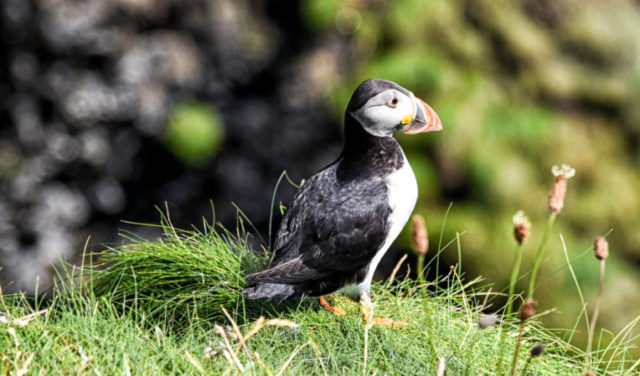
Best of all, in summer (usually early June-late Aug), you’ll likely see puffins. While puffins are the unofficial mascot of all of Iceland, the Westman Islands have the biggest puffin population in the world. A baby puffin is called — wait for it — a puffling. And at the end of each breeding season, the freshly hatched pufflings take off for the first time. Some of them get confused by town lights and wind up crash-landing in the streets. Local kids take them in and nurse them back to health. But occasionally, a puffling can’t quite be rehabilitated — so they’re taken in by the Westman Islands aquarium, called Sæheimar.

One of these puffins, named Tóti, is the museum’s mascot and star attraction. Visitors can’t pet Tóti (because of the delicate oils in his plumage), but it’s a goofy thrill to watch him waddle around the exhibits, followed by earnest staffers who scoop up his runny droppings.

Intrigued? Here are the logistics for reaching the Westman Islands: You can fly on Eagle Air from Reykjavík’s handy domestic airport (near downtown), making it easy to do a one-day round-trip. Or you can take the ferry from Landeyjahöfn on the South Coast, which takes about 40 minutes each way, and carries both walk-ons and cars. But here’s the catch: in bad weather, either the plane or the boat — or both — can be cancelled. If planning a trip to the Westman Islands, have a Plan B in mind.

If you’re based in Reykjavík and the flight is grounded, simply choose another side-trip. But the best plan may be to schedule two overnights (and the better part of two days) for the South Coast. As the date approaches, keep an eye on the weather forecast, and devote the better-weather of your two days to the Westman Islands, saving the drearier day for the South Coast (which is plenty spectacular in any weather).

While planning a visit to the Westman Islands comes with an element of unpredictability, flexible travelers who make the trip are rewarded by one of Iceland’s most delightful, undiscovered corners.

Just tell Tóti I said hi.

Welcome to Iceland: A Stroll Through Reykjavík

For most visitors, Reykjavík is their first look at Iceland. And for our brand-new Rick Steves Iceland guidebook, I enjoyed getting acquainted with this pint-sized capital. This post kicks off my Iceland blog series — stay tuned for lots more. Special thanks to our co-author, Ian Watson, who taught Rick and me everything we know about Iceland.

Boarding my Icelandair flight in Oslo, I realize I’m about to fly east to west over the North Atlantic — a thousand miles across a frigid sea — to touch down in Iceland…just like those first Viking Age settlers, 11 centuries ago. My guidebook work with Rick Steves’ Europe has taken me to more than 40 countries — but Iceland is a first. And I’m stoked.

On the plane, I enjoy reviewing the excellent work of our co-author, Ian Watson. A longtime Reykjavík resident, Ian’s savvy insights embolden me to feel like an old pro before the plane comes to a full and complete stop. For the next three weeks, as I follow Ian’s work around Iceland, I’ll be hearing his voice in my head (soon to be followed by an army of Rick Steves guidebook readers).

Touching down on the petrified lava field at Keflavík Airport, I make my way to the baggage claim and find an ATM, pulling out about $300 worth of the colorful local krónur. As a rank novice in Iceland, I don’t yet believe everything I’ve heard about how every transaction here — no matter how small — uses plastic. Flash forward a few weeks, and I’ll be trying to unload these same krónur at every transaction. (On the bright side, blowing through $300 is a snap in Iceland.)

On the 45-minute drive into Reykjavík, our minibus driver regales his passengers with a steady monologue of Icelandic clichés. The gang’s all here: “While you’re in Iceland, you have to try the fermented shark!” “Icelanders believe in ‘hidden people.’ They even get clairvoyants to negotiate with the elves when building a new road!” “If you buy one thing in Iceland, make it a stuffed puffin. If you buy two things, you have to get an Icelandic sweater. It’s expensive — but warm!”

With each cliché, I imagine our co-author Ian— who relishes debunking questionable “tour-guide history” and tourist-bait gimmicks — rolling his eyes vigorously. But our driver’s enthusiasm is infectious. And I must admit, as a first-timer looking out the window at a lunar landscape of chunky lava rock blanketed with a gentle yellow-green moss…I’m more than willing to roll with it.

Soon we’re driving through the mid-rise suburban sprawl of Reykjavík, then along the shore of the little lake called The Pond, and finally we pull up at the address of my Airbnb. I let myself in with the key code I was sent, and find the apartment just as I expected: spartan but comfortable, with a large living room and fully equipped kitchen. My Reykjavík pad costs about as much as a single room with shared bath in a guesthouse — a bargain in this notoriously expensive land.

I unpack hurriedly and splash some water on my face. But when I turn on the hot water, it comes out scalding and stinky. The faint sulfur odor reminds me that in Reykjavík, hot water is piped in directly from boreholes deep in the volcanic countryside. Like other tourists, burning myself is a rite of passage that I’ll only do once. But, also like other tourists, I’ll never quite get used to the smell. After a shower, the bathroom smells like the aftermath of a chili cook-off.

I dig around in my bag and pull on every layer I can find. It’s early summer, and Oslo — where I woke up this morning — just endured its hottest May temperatures on record. Iceland is not so fortunate. Looking out my window, I see people wearing fashionable parkas with their fur-lined hoods pulled up tight.

Heading out to join them, I confirm my hopes that my apartment’s location is ideal: Just two blocks from the historic center of Reykjavík, but buffeted by enough big buildings to keep the nightlife hubbub at bay.

And then, it happens — that moment I look forward to anytime I visit a new place. Looking around at the colorful houses, feeling the frigid breeze blowing off the nearby harbor, hearing the cry of seagulls, and surrounded by fellow travelers with fur-fringed faces, it hits me: Hey! I’m in Iceland!

I walk past a row of eye-pleasing old houses. Looking closer, I notice they’re clad in corrugated metal painted in bright, cheery colors. Throughout Iceland, this siding is a popular choice: Durable enough to stand up to the howling wind and sideways rain, and convenient for a country with few trees or other natural building materials. Each windowpane comes with a smaller, inset sub-window, which is  almost always propped open. Reykjavík homes are heated with that same natural thermal water that just deep-fried my hands. It’s cold out here, but toasty warm in there. And heating costs are low enough that, when it gets stuffy, the easiest solution is simply to crack a window.

I turn up Aðalstræti — Reykjavík’s first street — for a peek at Iceland’s parliament, the Alþingi (pronounced “all-thingy”). Icelanders are justifiably proud to have what’s sometimes billed “the oldest parliament in the world” — which has survived, off and on, since the great clan gatherings of the Settlement Age (A.D. 930). Facing the Alþingi stands a statue of Jón Sigurðsson, who — a thousand years after those first settlers — advocated for full Icelandic independence from Denmark. (They finally got it, in 1943.)

Suddenly I recognize this square as the setting of news reports during the global economic crisis of 2008. When Iceland’s bubble of false affluence burst and their economy collapsed, Icelanders turned out on this square to protest. Ultimately the government appointed special prosecutor Ólafur Þór Hauksson, a small-town cop-turned-international folk hero. His team convicted and imprisoned some two dozen bankers, who were held accountable for their greedy actions. (Imagine that.)

That 2008 crisis marked the first of several recent attention-grabbing events in Iceland. In 2010, the volcano called Eyjafjallajökull erupted, sending a great plume of ash over Europe that briefly halted air travel. Some Icelanders believe that the “E15” eruption reminded travelers about the existence of this fascinating, volcanic island nation in the North Atlantic. And that — combined with the popular “stopover” deals on Icelandair — boosted Iceland’s brand as a tourist destination. Thanks to enthusiastic word of mouth and the power of Instagram, visits have grown exponentially over the last few years. And in 2016, for the first time, more Americans visited Iceland than the number of people who live in Iceland.

Circling back down to the main drag, Austurstræti, I notice a mass of construction cranes between here and the harbor. Reykjavík is taking advantage of its rebounding economy and tourist boom to undertake a “big dig” along its waterfront. Venturing toward the mess to explore, I stumble upon a parking lot with a hot dog stand, surrounded on three sides by ripped-up sidewalk and scaffolding.

Aha! It’s Reykjavík’s famous hot dog stand. When former president (and notorious junk-food connoisseur) Bill Clinton visited in 2004, he wound up having a hot dog right here, at Bæjarins Beztu Pylsur. Ever since, standing in line for a dog has become a must for many Reykjavík visitors. Not quite ready to spend 20 minutes waiting for a hot dog, I make a mental note to circle back later. (When I do, I discover that in Reykjavík, $6 buys you a pretty good, but in no way memorable, hot dog.)

Back on the main drag, I make my way across a busy street, then angle uphill. I soon find myself on Reykjavík’s main walking, shopping, dining, and nightlife street: Laugavegur.

Low-key and slathered with street art, Laugavegur is an inviting place to simply wander and browse. I do just that, making a slow lap past tacky “puffin shops,” microbrew pubs, inviting cafés, indie bookstores, heavenly bakeries, boutiques selling top-end Icelandic sweaters, thrift and vintage shops selling those same sweaters — gently used — for half-price, and lots of enticing restaurants.

As I walk, I appreciate the whimsical street art. Icelanders have learned that if you leave a wall blank, it’ll be tagged with ugly graffiti. So instead, they commission murals by talented street artists. These help beautify the cityscape and deter taggers. Peeking down side-streets and noticing lots of vivid murals, I already know that exploring the back streets will be a highlight of my visit.

Reaching the end of Laugavegur, I pull a U-turn and head back the way I came. A colorful little blob on the top of a parking sign grabs my eye. Upon closer inspection, I see it’s an action figure. Some mystery street artist — nicknamed “the Toyspreader” — sneaks around town gluing tiny toys to signs. Local authorities, correctly seeing this as a harmless citywide scavenger hunt, have decided to look the other way.

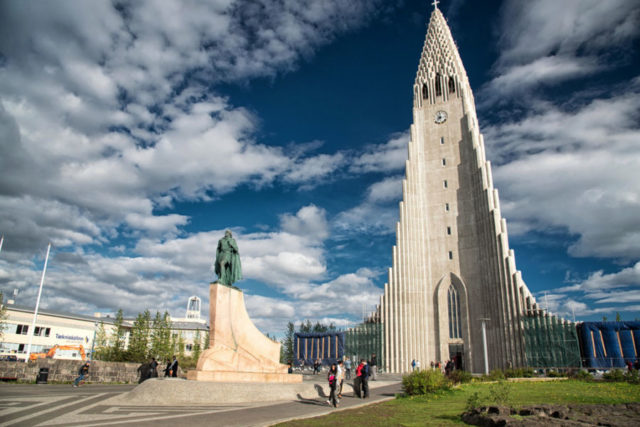
At the intersection with the steep, picturesque street called Skólavörðustígur, I look up to see Reykjavík’s hill-capping landmark church, Hallgrímskirkja. I feel drawn there now, but I’m sure I’ll have a chance to circle back later. Hallgrímskirkja’s spire is the needle around which the record of Reykjavík spins.

I’m famished. I could grab a quick, “cheap” $15 bite at a fast-food stand. But this is my first night in Iceland — why not splurge? It’s prime dining time, but I figure I’ll take my chances at a high-end restaurant called Grillmarkaðurinn (“Grill Market”).

Stepping inside, the whole place smells like charcoal and mesquite. It feels trendy, yet accessible. Periodically, a smoke-filled cloche is lifted theatrically off a dish, releasing another tantalizing puff of sweet smoke into the air.

I put on my best puppy-dog eyes and ask the host if they have any tables for one. “Do you have a reservation?” he asks in that stern way that usually means, “Ha!” But then, scanning the restaurant, he spots a lone place setting at the counter facing the kitchen. Just my luck. Sometimes being a solo traveler is a plus.

He seats me at a counter made from a split tree trunk, next to a Japanese hipster with a man bun poking out from under his furry hat. We exchange the courteous nod of two singletons who suddenly find themselves dining together, and I turn my attention to the menu.

Icelandic cuisine has a reputation for its oddball “hardship” foods — such as the notorious fermented shark, or the head of a lamb on a plate. But every single item on this menu sounds delicious. It’s the perfect melding of international know-how and distinctly Icelandic ingredients — lamb, puffin, minke whale, humar (langoustine), rhubarb, skyr, licorice.

I place my order and enjoy watching the chefs scurry around the kitchen. I pull out my camera to photograph the sous chef blowtorch-searing a hunk of minke whale on its own little hibachi. My neighbor is also snapping a photo. To break the ice, we compare cameras. And soon, we’re debriefing each other on our Iceland trips. Both of us are celebrating special occasions: I’m on my first night in Iceland, and he’s on his last, after three weeks of camping and skiing his way around the country. He came from Tokyo, by way of Helsinki…and he has a long way to travel home tomorrow.

My order — a rack of Iceland’s famously delicious lamb — arrives. it’s incredibly tender and flavorful, with dipping sauces made of yogurt and rhubarb jam.

As the lamb melts in my mouth, I ask my fellow traveler what his favorite place in Iceland was. “I don’t remember what it’s called, but it’s a very long name” he begins, quoting every traveler who’s ever been to Iceland. He draws his hands apart as he says it, to emphasize just how staggeringly long the name is. “But it was a wonderful little town on a fjord on the north coast. You drive north from a large town along a fjord. You go through a very long tunnel. Then more fjord. And then you drive through a shorter tunnel. And that’s where this town is.” He pulls out his laptop to show me photos. He’s skiing down a steep mountain with a little village in the distance, and the sun on the horizon…at 11:00 p.m. (Later I’ll figure out which town he was talking about — Siglufjörður. And it’s one of my favorites, too.)

We watch in silence as the chefs plate little creatures on chunks of rock and glassy lava. Soon my dessert comes: lemon meringue with salted licorice. I’ve learned that some people love licorice, and some people hate it. And those who love licorice, really love salted licorice. I adore it. I’m going to feel right at home in Iceland.

Bidding bon voyage to my dinner companion, I head back out into the chill of the evening. It’s 10 p.m., but it’s lighter outside than it was when I came into the restaurant. It dawns on me that I won’t see real darkness until I fly home in three weeks.
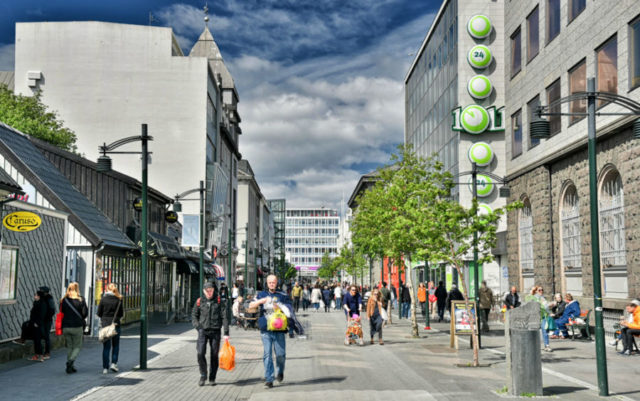
I waddle my way back up the main drag to my Airbnb. It’s been a marvelous first evening in Iceland, but I need to get some rest. I have a very busy few weeks ahead of me. All tucked in, catching the faint whiff of sulfur on my just-washed face, it’s hard to fall asleep. I love the adventure of being at the start of a journey in a new place. And for this traveler, Iceland is as new as they come.


This blog post is partly inspired by the “Welcome to Reykjavík” self-guided walk on page 68 of our Rick Steves Iceland guidebook (thanks again to co-author Ian Watson). Our book includes plenty of restaurant recommendations, including options more affordable than Grillmarkaðurinn (though if you’re splurging, I stand by that choice).

Stay tuned for the next installment of my Iceland blog series, including a trip to the famous Blue Lagoon, as well as several simpler, less expensive thermal bathing opportunities around the country.

It’s Here! The Rick Steves Iceland Guidebook Is Now Available

Rick and I are very excited. Our brand-new Rick Steves Iceland guidebook — co-authored with longtime Iceland resident Ian Watson — just went on sale. (In fact, you can buy it right here.)

I am evangelical about Iceland. It’s no secret that the country is hugely popular these days. But who knew that it would actually live up to the fuss? And believe me — it does.

Anytime something gets so popular, so quickly, it’s only natural to be skeptical. But Iceland is no empty bubble, ready to burst. It’s simply an amazing, long-underrated destination that’s finally getting its due. With its spectacular scenery, unique culture, and endearing people, Iceland has a way of getting under your skin. Flipping through the pages of our new book, I find myself fabricating excuses to get back there.

Of course, there are plenty of resources out there for Iceland-bound travelers. But we felt we could offer the destination our special “Rick Steves philosophy.” And we worked hard to design the book with our travelers in mind.

Because we realize that many travelers are visiting Iceland for very short stopovers, we’ve tailored our recommended itineraries to anywhere from 24 hours to two weeks — with detailed plans for everything in between. And we recognize that the biggest hurdle for many Iceland-bound travelers are the high prices. That’s why we gave budgetary concerns a special focus in this book (including our top 10 budget tips for Iceland).

Like our other guidebooks, Rick Steves Iceland is selective and opinionated: If on a short visit, overnight in Reykjavík, but dedicate your daytime hours to the epic countryside (even if it means missing a little in-town sightseeing). Consider skipping the very pricey Blue Lagoon ($100, vs. $10 for a neighborhood thermal swimming pool)…but if you do go, combine the Blue Lagoon with your transfer to the nearby airport to avoid pointless backtracking.

And, while Snæfellsnes Peninsula and the Westfjords have their fans, they didn’t make the cut for our table of contents. They’re a little too far out of the way to be practical for most visitors, and you can see similar (or better) sights elsewhere in the country. (If this sounds shocking, keep in mind that we don’t include Geneva in our Switzerland book, Bologna in our Italy book, or Thessaloniki in our Greece book. We recognize that our readers have limited time for their travels, so we make some of the tough decisions for them.)

Instead, we focused our coverage on the day trips most visitors are likely to undertake in Iceland — and we did those with gusto. The book features mile-by-mile, self-guided driving tours of the Golden Circle, the South Coast, and the West Iceland region near Borgarnes. And, for those who have a little more time, we also included a detailed chapter narrating the entire 800-mile trip around Iceland’s Ring Road, encircling the entire island — including some worthwhile detours you wouldn’t want to miss. We also included our favorite “Back Door” destination in Iceland: the lovely and fascinating Westman Islands.

We tailored our coverage to what we know Rick Steves readers expect: introducing towns with self-guided walking tours to help you get your bearings, scouring the countryside in search of friendly and characteristic accommodations, and providing cultural, historical, and — in the unique case of Iceland — geological context to help you fully appreciate the sights.

Recognizing that Iceland is a popular family destination, we also included an “Iceland with Children” chapter loaded with practical tips. And Iceland is one of only two Rick Steves guidebooks (along with Istanbul) that has a special “Experiences” chapter, outlining the many unique things you can do here — from whale-watching and puffin-spotting, to hiking across a glacier, to spelunking in a volcanic cave, to snorkeling in a fissure between continents, to tracking down the elusive Northern Lights, to simmering in a naturally heated thermal river.

Producing a new guidebook from scratch is no small feat. Once we decided to pursue an Iceland book, we committed ourselves to doing a first-rate job. But we also recognized that what we didn’t know about Iceland could fill several books. We needed to collaborate with the right partner. And the first person we thought of was Ian Watson. Ian has decades of guidebook-authoring experience. (He co-authored the long-out-of-print Rick Steves Russia and the Baltics guidebook, back in the late 1990s, and has heavily contributed to dozens of our other books since.) And he lived in Iceland for many years, where he learned the language, earned his Icelandic citizenship, and raised his kids. In short, it’s hard to imagine anyone better qualified to write about Iceland.

And so, Ian spent last spring writing the core of the book, informed by the savvy of a local. Only someone who lived in Reykjavík could knowledgeably explain the pros and cons of the dozen or so municipal thermal baths in the capital region. (For the record, Vesturbæjarlaug is just far enough out of town to feel more local than touristy, Laugardalslaug is open late, and Ásvallalaug is farther out but the best overall choice for families.) Ian knows which roads freeze over first in the winter, which “tour guide stories” are rooted more in legend than in fact, and which Reykjavík restaurants have the best-value lunch specials.

Last June, I landed in Reykjavík with Ian’s work in hand. Taking full advantage of the midnight sun, I spent nearly three weeks circling the island (putting about 1,800 miles on my trusty rental car — equivalent to driving the Ring Road, twice). I wrapped up a few of Ian’s loose ends and did some scouting on my own. Then I brought everything back to the home office in Edmonds, where I spent the rest of the summer finalizing the project, in consultation with Ian, our editors, and traveler extraordinaire (and fellow Iceland-phile), Dave Hoerlein.

In late August, I left our new Iceland book in the talented hands of our Book Department. It wasn’t an easy project: Our ace editors and mapmakers had to shepherd brand-new material covering a destination with unique challenges (one sidebar is entitled “The Many Ways Iceland Can Kill You”) and dauntingly long place names (my personal favorite: Kirkjubæjarklaustur). But the team handled it masterfully — including primary editor and project manager Suzanne Kotz, master mapmaker Dave Hoerlein, graphics coordinator Sandra Hundacker, and managing editor Jennifer Davis. (Meanwhile, I was on the road updating our guidebooks in Croatia, Bosnia, and Slovenia. Every morning I received a pile of questions from our editors and mapmakers. Whether in Korčula, Sarajevo, or Kobarid, it became my breakfast routine to mentally retrace my Icelandic travels so I could answer promptly.)

If you’re headed to Iceland, pick up a copy of our book. If you’re not convinced yet, stay tuned. Starting next week, I’ll be posting a blog series on traveling in Iceland, including lots of practical tips, photos of glorious landscapes, a few quirky anecdotes from my Icelandic travels, and some of my favorite discoveries from the new Rick Steves Iceland guidebook. (And if you have Iceland fatigue…check back in a month or so. Coming up this spring: Spain and Sicily.)

Happy travels…and Góða ferð!

How to Find Italy’s Best Gelato: Tips from an Expert

Like just about anyone who’s ever visited Italy, I fancy myself a gelato aficionado. But I never really understood gelato until my Italian friend gave me a lesson I’ll never forget — including tips for how to find the best gelato anywhere you go.

On a visit to Florence, I was working on updating our Rick Steves Italy book with Chiara — a fellow guidebook researcher and tour guide for Rick Steves’ Europe Tours. One evening, I mentioned that I always wanted to learn more about gelato. “Of course!” Chiara said. “Let’s go.”

As we tiptoed between Renaissance balustrades and double-parked motor scooters, Chiara explained that she once dated someone while he was opening his own gelateria — so she understood the business side of gelato, along with the culinary side. If I really wanted to understand gelato, it seemed, I’d found the perfect teacher.

I asked Chiara something that I had never really understood: How, exactly, does gelato differ from American ice cream? “American ice cream has a higher butterfat content,” Chiara explained. “That makes the texture very rich and sultry. However, the butterfat coats your tongue, dulling your taste buds. Some people say that gelato has stronger flavors. That’s not necessarily true — rather, your taste buds are better able to fully appreciate those flavors. Gelato is also churned differently from ice cream, incorporating less air. That makes it harder in texture, and a little more concentrated.”

Strolling through the atmospheric urban core of Florence on Via dei Calzaiuoli toward the main square, we passed a row of seemingly interchangeable gelaterie. So, how do you know which one is best? “The vast majority of gelato places use the exact same powdered or paste-like mixes,” Chiara said. “That’s why you should look for words like artigianale — artisanal; or fatto in casa — homemade. You want a place that makes all of their gelato fresh, on the premises, ideally that same day. But be careful, eh? Some places advertise these words even though they use the same mixes as everyone else. Let me show you a few things to look for.”

Pausing at a display case with vividly striped mountains of gelato, Chiara whispered, “See there? That is not good gelato. The big piles and the bright colors are designed to attract children. At the best gelaterie, you don’t actually see the gelato — rather, you read the flavors. The gelato is kept in stainless-steel covered tubs, until someone orders it. It’s fresh, and they want to keep it that way.”

“Another sign of good gelato is muted colors. Natural colors. If you see a color that does not occur in nature, it’s artificial. Think about it: What color is the part of the banana that you eat? Not neon-yellow. It’s sort of off-white, with a hint of yellow. So, logically, a good, artisanal banana gelato will be closer to white than to yellow.”

We stepped into Florence’s majestic Piazza della Signoria. At this moment, late in the day, it felt like the city’s living room. We lingered in a quiet corner of the square, peering over at a gaudy gelateria.

“The other thing to be careful about with these tourist-trap gelaterie,” Chiara continued, “is to be very specific when ordering, to avoid getting ripped off. At irreputable places, if you ask for a cone of gelato, they might pick the most expensive, chocolate-and-candy-dipped waffle cone, pile it with five or six scoops, and charge you fifteen euros. Be specific. When I order, I say something like, ‘a three-euro cone with two flavors.’ Of course, you don’t need to be so paranoid at friendly neighborhood places — just the tourist traps.”

As if to punctuate this tip, just then a pack of ragazzi kicked their soccer ball against the peeling plaster wall next to us. They were gearing up for a game…and we were in the way. We decided to surrender the pitch and carry on across the Ponte Vecchio. The languid evening light draped the famous bridge in a gauzy glow.

As we left the bridge behind and made our way up a sleepy Oltrarno back street, Chiara explained the business end of making gelato. “A gelateria has many flavors, but only a few machines. So obviously they make all of their gelato on the same machines. Every gelato begins with the same, neutral, sweet-cream base: fior di latte. As they work through their batches, they make progressively more complex flavors, with darker dyes. The last batch of the day is the dark chocolate flavor. That’s why, if someone has a nut allergy, they should be careful. Some shops carefully clean their machines between batches, but not all do. If you order a darker-colored gelato, several other flavors have been processed before that one — including one that may contain nuts.”

Finally we came upon a gelateria that passed Chiara’s protocol: promising gelato artigianale, from covered metal bins, with muted colors. “But even then,” she said, “the only way to know for sure is to taste.”

Surveying our options, Chiara reminded me, “It’s perfectly fine to ask for un assaggio — a taste. And, while Americans are accustomed to combining whichever random flavors strike their fancy, Italians believe that some flavors go together better than others. It’s like pairing wine and food: Ideally, you want to find a combination that’s mutually enhancing. In fact, if a gelateria takes it craft very seriously, they might politely refuse to pair two flavors that don’t go well together. For example, if you ask for chocolate and lemon, you might get a funny ‘are you sure about that?’ look. Or even a curt shake of the head and a click of the tongue. For Italians, mixing lemon and chocolate gelato is like putting cheese on seafood, or drinking milk after lunchtime.”

“If you are adventurous,” Chiara continued, “you can put yourself in the expert’s hands and ask them what marries well — which flavors go well together. Sometimes they can suggest some surprising and delicious pairings.” Trying this approach, I asked the clerk what he recommended with one of my favorites, cannella (cinnamon), and he topped it with pera (pear). Delizioso. Chiara ordered pistacchio.

As we licked our cones, Chiara said, “My choice of flavor was strategic. If you really want to gauge the quality of a gelateria, you try the pistacchio. Here’s why: Did you ever notice that every gelato flavor costs the same to buy? But, of course, they cost different amounts to produce. There’s a huge profit margin for fior di latte, crema, vaniglia, and other basic flavors. Meanwhile, the most expensive flavor to produce — if it’s done correctly, with real nuts — is pistacchio. Only the rare gelateria uses real pistachios in its pistacchio. Places that are cutting corners will just make almond gelato, and throw in some artificial pistachio flavoring and green food coloring. You can sometimes tell this because the green is just too bright. But if the pistacchio is real pistacchio, it’s a very good sign that the gelateria owner is committed to making quality gelato, even at the expense of potential profits.” Taking a satisfied bite, Chiara concluded, “Mmmm. This one is real pistacchio. You can taste the difference.”

After that walk through Florence with Chiara, every time I step into an Italian gelateria, I can survey my options with confidence — knowing that I can tell the difference between run-of-the-mill gelato and top-shelf gelato. And, as a budding gelato snob, I now make a point of asking for a sample of pistacchio as my first barometer of quality.

So, after all that…what’s my favorite gelato? When working on our Rick Steves guidebooks in Italy, I take very seriously the sober responsibility of recommending at least one top-quality gelateria in each town. Unfortunately, after much (delicious) trial and error, I’ve learned that some cities — even biggies like Venice and Florence — have plenty of perfectly good gelaterie, but no head-and-shoulders “best” choice. (And believe me, the competition can be fierce…especially in small towns. But that’s another blog post.)

That said, I do have several personal favorites that I would consider traveling halfway across the country for. My all-around favorite gelato in Italy is at a small chain called De’ Coltelli, with branches in Lucca and Pisa. On one trip, I made a point to take an extra day off in Lucca…I must admit, at least partly to fit in another couple of gelato cones at De’Coltelli. Another Tuscan favorite, in the tiny town of Pienza, is Buon Gusto. Slaves to tradition, Nicola and Giuseppe make just a few batches each morning, scheduled to be ready just after lunch. But don’t wait too long. Once they’re gone…they’re gone. Rome has a variety of creative gelaterie serving unusual flavors (which I have an affinity for); I’ve had memorable gelato at Fatamorgana, with locations in the Monti and Trastevere neighborhoods, and elsewhere.

And finally, I must admit, even as it has expanded to the point of self-parody (including branches Stateside), the Grom chain still churns out reliably good gelato. Yes, Grom is the Starbucks of gelato. But if I’m in a smaller town or a neighborhood where my only choices are a Grom and a suspiciously touristy-seeming gelateria…I’ll stick with Grom. And I’m rarely disappointed.

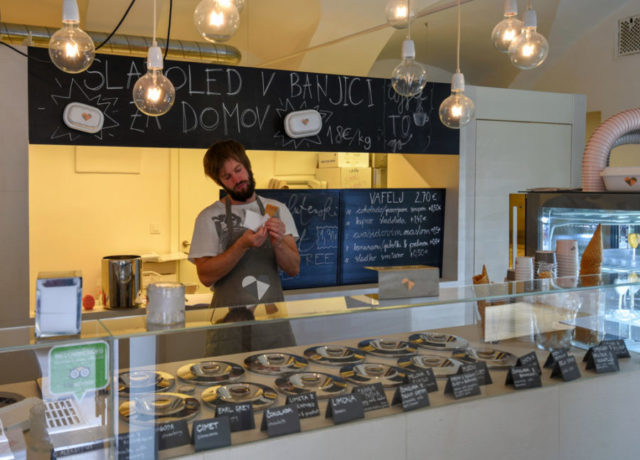
Finally — while this may be appalling to purists — some of my favorite gelato isn’t even in Italy. Ljubljana, the delightful Slovenian capital (and just an hour’s drive from Italy), has a burgeoning artisanal gelato scene. My favorite spot is Romantica, with delicious, creative flavors that highlight Slovenian ingredients and Italian know-how. Other great choices in Ljubljana include Rustika (a small chain that also produces excellent chocolate truffles), Fétiche Patisserie (along the river, with Asian-inflected flavors), and Zvezda Kavarna (a local institution with rich, decadent flavors).

Where’s your favorite gelato in Europe?

Buon gelato!


My favorite gelato-related travel anecdote was the time I became embroiled in a fierce war between rival Cinque Terre gelaterie. Some people take gelato very seriously.

My favorite Ljubljana gelateria, Romantica, was included in my blog post about how to eat well on a budget in the Slovenian capital.

Over on Rick’s blog, he interviewed one of my favorites, Buon Gusto in Pienza.

And, of course, all of our favorite gelaterie are listed in our Rick Steves guidebooks. Or you can join Chiara (or one of our other top-notch tour guides) in person on a Rick Steves’ Europe Tour.

In Oslo, the Future is Now: A Walk Through Norway’s Livable, Innovative Capital

I have seen the future. And it’s in Oslo.

Imagine a perfectly fine (but fairly bland) 20th-century European city. The kind of place with visually unexciting midcentury high-rise sprawl, and maybe a few more parks than the norm. The kind of place with little “Old World charm,” and whose most important landmark is a city hall that (let’s be honest) looks like a matching pair of brick bookends.

Now give that place loads of money. Like, more money than they know what to do with. Like, we-can’t-dig-a-hole-in-the-ground-without-hitting-oil kind of money. Then bless that city with a progressive electorate that’s unafraid to tax and spend heavily to create a hometown that will be better in 10 or 20 years than it is today…rather than just limping reluctantly into the future. Give them a visionary city council and developers and architects who are encouraged to view urban blight as a blank slate. Empower them to transform a dreary harborfront into the metropolis of their wildest dreams. And if you do all that, gradually, over time, you’ll create one of the most livable and forward-looking cities on the planet.

I’ve been to Oslo a few times over the last 15 years. And while the downtown core has barely changed, the harborfront feels like a different city. It always feels like Oslo is in a big hurry to prepare for an Olympic-sized event. But there’s no hard deadline…they just want to make their city better, without wasting time.

When I arrived in Oslo on my latest visit, I couldn’t wait to see what was new. I dropped my bag at the hotel, headed down to the harbor, stood in front of the City Hall,  turned right, and started walking.

I walked past a former train station, now a museum about the Nobel Prize. In front were parked a pair of hipster food trucks, facing the newly remodeled fish market building.

I walked past the construction zone for the super-modern new National Museum, which will soon house masterpieces by Krohg and Munch.

I walked the length of the Aker Brygge development — where once-dilapidated brick warehouses now intermingle with sleek, glassy condos and offices to create a lively people zone.

And then — when I reached a point that had been a mess of construction cranes on my previous visit — I kept on walking. Arcing bridges carried me to the Tjuvholmen development: Human-built islands, interlaced with canals, connected by footbridges, all under the glassy canopy of eight- to ten-story condo complexes. Although each building has its own strong architectural personality, the entire ensemble enjoys a beautiful harmony. A row of little private moorings along a brand-new dock looks like a designer boat show. Bronze statues frolic in the spray of a soothing waterfall.

Even though this area feels positively posh, it’s open to everyone. Buried deep in the complex is an affordable-for-Oslo supermarket, supplying urbanites for a scenic fjordside picnic. (In this outrageously expensive city, rather than eat out, people invest in a disposable “one-time grill.” They set them up in a park, cook their own dinner, then dispose of them in designated grill recycling cans. On a hot summer day, packed parks smell like smoldering briquettes.)

Long wooden decks seem designed to catch sun at various times of the day and the year — inviting anyone who cares to, rich or poor, to find a sunbeam, bask, and enjoy. At the tip of the complex is a cutting-edge contemporary art museum, and a grassy little knob of land with a lively statue park.

Standing on one of these footbridges, surrounded by wood and glass and sleek curving lines and designer motorboats, I realize this is the closest thing to a Jetsons city I’ve seen in real life. A designer friend of mine who spent time in Hong Kong has raved about how well-designed that city is for a modern lifestyle. I called him from that bridge and told him to get to Oslo.

Tjuvholmen is just the beginning — it’s just one link in what developers boast will become the “longest promenade in Northern Europe.” Oslo’s Harbor Promenade — already largely complete — will connect the city with its fjord coastline, allowing pedestrians to stroll, unimpeded, in futuristic bliss, five miles from one end of town to the other.

On the next inlet over — near the train station — Oslo’s innovative Opera House is nearing a decade old. It was an instant sensation when opened. With its white, sloping roof angling from the seafront several stories high, the Opera House invites anyone and everyone to literally hang out on its rooftop…even if a performance is going on. It’s already a beloved civic symbol.

From up there, you can scan a horizon of busy cranes, assembling Oslo’s newest district: the Barcode Project, so named for its tall and skinny skyscrapers…again, each one different, but collectively harmonious. It’s already home to offices and condos, and will soon be joined by the new, purpose-built location of the museum devoted to Norway’s most famous painter, Edvard Munch — who, if he could see today’s Oslo, would not recognize the dreary fjord that spurred his existential scream.

In Oslo, even what’s old is new. And just inland from the harbor is one of my favorite hangouts in town: Mathallen, the “food hall” that fills a formerly dilapidated, 19th-century, red-brick factory along the scenic Aker River (closed Mondays).

The space is filled with a trendy food court, showcasing Oslo’s top chefs. (Yes, Oslo — best known for its bland, meatballs-with-lingonberries cuisine — has developed a thriving foodie scene.) You can enjoy a high-end Norwegian cheese counter with generous samples of pungent geitost, classic Scandinavian open-face sandwiches done in high style, gourmet gelato, a  French wine bar, Spanish tapas, and a taco stand.

The dining fun continues outside, where overlapping al fresco tables completely surround the classic structure, serving up “global tapas,” fried chicken and ribs, and — my favorite — Vulkanfisk, with fresh and affordable-for-Oslo seafood plates. Enjoying a sizzling platter of garlic shrimp with this view is one of my favorite Oslo dining memories.

After gorging yourself at Mathallen, you can walk it off with a stroll up the Aker River Valley — once cloaked in smog from its many busy red-brick factories, and today completely repurposed, gentrified, and livable. An idyllic riverside park is laced with walking trails, characteristic footbridges, and Oslo urbanites tending their one-time grills.

A short detour from the river leads to the thriving Olaf Ryes Plass, with its own passel of tempting eateries ringing a grassy urban square. My favorite spot here for a coffee break is the eponymous Tim Wendelboe, whose celebrity-barista owner pulls delicate third-wave espresso drinks that rival anything back home in Seattle.

To top it all off, thanks to Norway’s heavy subsidization of electric cars, fleets of Teslas glide silently around the city. A new car in Norway is taxed to nearly double the sales priced. When that tax is waived for an electric car, a Tesla is suddenly very competitively priced. Electric car drivers also enjoy free parking, no tolls, and other environmentally friendly incentives.

I imagine it’ll be just a few years before Oslo gets flying cars, real hoverboards, and clothes that adjust their fit automatically with the press of a button. These days, a stroll through this city is like a steroid shot right in the imagination.

Am I naive to think other places could aspire to what Oslo has accomplished? Of course — few cities are blessed with such enviable affluence. And I’m well aware of Oslo’s many shortcomings and social challenges, which shouldn’t be overlooked. Still, in my supposedly progressive home city of Seattle — where the patchy light rail is still far from complete, and we can’t seem to dig a tunnel without the drill breaking down for two years — I wish voters could see what a city with its act together can do when it puts its mind and its money behind a bold vision. A visit to Oslo could be a preview of our future…but only if we have the stomach to make it happen.


I was in Oslo updating our Rick Steves Scandinavia guidebook; our forthcoming 15th edition (available June 2018) includes my favorite discoveries from this trip.

Like Rick, I have Norwegian ancestry. And like Rick, I love traveling in Norway…and blogging about it. Here’s a roundup of Rick’s many Norwegian blog posts over the years.