My co-author and frequent collaborator, Cameron Hewitt, is well-traveled, smart, and insightful. And, while he and I are in perfect sync in our travel styles and priorities, he gives voice to the next generation of "Rick Steves travelers." Join me in enjoying his reports right here. —Rick

Jams Are Fun: A Rough Day on the North Sea

My wife’s Great-Great-Aunt Mildred traveled far and wide, long before such a thing was fashionable. Late in life, Aunt Mildred set about to writing a memoir. The title: Jams Are Fun. It turns out that, after seeing so much of the world, Aunt Mildred realized that it’s not always the big museums, the fancy dinners, the castles, or the cathedrals that stick with you most. It’s those serendipitous moments when things go awry. And so, in the spirit of Aunt Mildred, this post is part of my “Jams Are Fun” series about when good trips turn bad, and the journey is better for it…if only in retrospect. I wrote this a few years back, while working on our Northern European Cruise Ports guidebook, somewhere in the churning North Sea.

As I write this, my cruise ship is rocking violently to and fro. My mascot baboon — which my cabin steward cleverly made by folding a towel in a special way they must teach at cruise-ship steward school — is clinging to the ceiling in the corner of my room…going for the ride of its short life. In addition to the slight but persistent listing to port, with the occasional, violent bob to starboard, every ten minutes or so the ship shudders and shakes as if the captain just accelerated over a speed bump.

But I’m getting ahead of myself. I went to bed last night as we cruised out of the Sognefjord. Next stop: Norway’s other top fjord, Geiranger. But I awoke to news that, due to extremely high winds, they were cancelling the stop. And so, the captain turned this bucket around and headed back out of the Geirangerfjord.

The screaming winds managed to momentarily clear out some of the thick cloud cover we’ve been huddled under since entering Norwegian waters, shining a spotlight on wicked whitecaps all around us. The brief sun break also teased us with an enticing view of an idyllic Norwegian countryside of green forest, red cottages, and chalky gray cliffs. It was a Norway we would not actually visit, nor one we would see again for the rest of the day. This would be, in the parlance of the cruise industry, an unplanned and very turbulent “day at sea.”

As we navigated out of the fjord and into the North Sea, the seas grew dramatically rougher. All over the ship, subtle indicators popped up to hint that we were in for an even bumpier ride: Little plastic bags discreetly appeared in the hallways. All of the water was drained first from one swimming pool, then from the other, to keep it from sloshing out onto the deck. Precautions were being taken.

This was the first time I’d been on truly rough seas…and I was pleased to discover I was handling it relatively well. (My family lore includes the unfortunate tale of a friend who didn’t realize she was prone to violent seasickness until she boarded her honeymoon cruise to Bermuda — and spent the week hugging porcelain.) Maybe my 25 percent Norwegian DNA came with an iron stomach…and those sea bands don’t hurt, either.

In a bit of delicious serendipity, the afternoon’s scheduled entertainment was — I am not making this up — a troupe of Chinese acrobats. Now, I would pay any amount of money to see acrobats perform in these conditions. But this show? This show was free. As the time of the show drew near, morbid curiosity drew me down to the theater. But a polite notice explained that the show was postponed. Wise move, Chinese acrobats. So instead I strolled around the ship to survey the damage.

At this point, we’d left “rough” and entered “rodeo.” People were either green in the face or, like me, immune and chuckling at the absurdity of it all. Everyone — even seasoned crew — walked with the same unusual gait: first leaning a bit and plodding slowly to the right, then rushing with sudden urgency to the left, then slowly again to the right, and so on. I sat looking out a window for a while, watching through the fire-hose spray the mesmerizing rhythm of the railing as it teeter-tottered dramatically waaaay above, then waaaay below the horizon.

Curious, I made my way up to the top deck, and was surprised to find the door unlocked. I stepped outside and wandered around for a while — one hand in a death grip on the railing, the other in a death grip on my camera — feeling like the only person on the entire ship. Somewhere in the control room, I imagined someone watching surveillance feed of this idiot wandering around outside in the worst storm the ship had ever weathered…taking bets on when he’d be blown overboard.

As dinnertime approached, I wondered whether, like the Chinese acrobats, the main dining room staff would have come to their senses and just called the whole thing off. But dinner, much to my surprise and my delight, was on. I knew I was in for an entertaining night when I walked past a Dutch teenager who suddenly — and, apparently, with as much surprise to herself as to me — vomited a little bit into her hands.

Stumbling and careening to my table, I noticed that at least a third of my fellow diners had decided to skip it tonight. My waiter hustled awkwardly toward me — propelled by an unwanted inertia and briefly overshooting his target — to drop off the menu.

Now, I’m sure there was a good reason for the ship designers to locate the main dining room at the bottom-rear of the ship, directly above the engines — but on a rough night like this, it seemed like a cruel prank. Things were far worse down here than in my stateroom up on the eighth deck. The entire dining room tilted violently this way, then that. Every few minutes, the curtains slid themselves open and closed, as if possessed. At one point, a precarious angle sent plates and glasses cascading off tables. And periodically there was a deep, loud humming noise — as if the engines had been lifted out of contact with the sea, immediately followed by a sickening thud that shuddered the whole ship and rattled the wineglasses.

And then there were the diners. Those of us who had showed up for dinner tonight were, no mistaking it, here on purpose. We were not about to let this thing get the best of us. And yet, some of us must fall. The woman who sits at the table in front of me — who has this funny habit of staring off into space, which happens to be directly at me — began fanning herself with her menu. The sweet French lady at the next table got up after the first course and never came back.

Having grown up watching the movie Stand By Me, I kept envisioning a Lardass-at-the-pie-eating-contest chain reaction. So I made a game of it. Looking around, I tried to guess: Who would be the first to pull the trigger? Would it be the balding, bespectacled fellow who lifted his napkin to his lips for a suspiciously lingering moment after each bite? The young lady who kept coughing loudly, then swallowing and rolling her eyes? The little girl resting her head on the table? Or maybe…the American smart aleck at table 103, smugly pondering the suffering of others?

I think I psyched myself out, because suddenly I found it next to impossible to swallow. I wasn’t sick — just tired of proving I wasn’t. I decided that a violently swaying room full of gastrointestinal time bombs was not a smart place to be, and — like so many before me — politely excused myself.

Still hungry, I wandered up to forage at the 24-hour shipboard pizzeria. But, inexplicably, their lone variety tonight was topped with a less-than-appetizing combination of tuna fish, capers, and onions.

Oh, well — it’s bedtime anyway. If I don’t get physically tossed out of my bed, manhandled by Mother Nature while I sleep, I’ll wake up tomorrow in Bergen…and, hopefully, better weather. And if I’m lucky, maybe they’ll reschedule those Chinese acrobats.

(P.S. They did. And they were spectacular.)

Jams are Fun: Speed Traps and Bribes in Republika Srpska

My wife’s Great-Great-Aunt Mildred traveled far and wide, long before such a thing was fashionable. Late in life, Aunt Mildred set about to writing a memoir of her experiences. The title: Jams Are Fun. It turns out, after seeing so much of the world, Aunt Mildred realized that it’s not always the big museums, the fancy dinners, or the castles and cathedrals that stick with you most. It’s those serendipitous moments when things go awry. And so, in the spirit of Aunt Mildred, this post is the first in what I hope to be a recurring feature about when good trips turn bad, and the journey is better for it. This travel jam takes place on the dusty back roads of rural Bosnia-Herzegovina.

I remember a time, not long ago, when crossing any border in Eastern Europe came with the possibility —  or probability — of being shaken down for a bribe. If you slip the guy 20 Deutschmarks, you enter Hungary now. If not…you wait two hours.

I’m happy to report that, in most places, those days are in the distant past. The allure of EU membership was enough for most countries to crack down on corruption. Still, in a few out-of-the-way enclaves, bribery is still a way of life. And one of those places just cost me €50.

After two fascinating days road-tripping through Bosnia with my buddy Ben, we were on our way out of Republika Srpska, within sight of the Croatian border. Leaving the little town of Vrbaška, the country road entered a sparsely populated area, and the car ahead of me slowed way down. Now, in Bosnia, this is far from unusual. Most Bosnians drive either recklessly fast or tortoise-slow — anything but the speed limit. So I zipped around him, just in time to see a roadside policeman flick his handheld “stop” sign at me.

Pulling over and rolling down my window, I trotted out my best “clueless tourist” routine (which, in this case, was not an act): “I’m sorry, was I speeding? I didn’t see any signs!”

The scruffy policeman, with a ragtag uniform cobbled together at an army surplus store, was polite but matter-of-fact. “You go too fast,” he said. He motioned me out of the car and over to his English-speaking partner back at the police cruiser.

Standing proudly by their radar gun, they showed me a stack of documentation in Cyrillic lettering. “Limit here is 50 kmh,” he said, gesturing at the fine print. “You go 66 kmh. Fine is 100 Bosnian marks, or 50 euro.”

They explained that I’d need to take the paperwork back to the town I’d just left, and pay my fine at the police station or post office. The problem was, it was Sunday morning, when every office in town is shut up tight. Meanwhile, back in the car sat Ben, who had a flight to catch in Zagreb, just over the border. Time was not on our side.

“Is there any way I can pay you the fine?” I suggested helpfully. The cops exchanged knowing glances, scratched their heads theatrically for a moment, and held a quick conference in Serbian. Finally came the answer: “We can pay fine for you later today. You pay us 50 euro, we take it to police station.”

Very pleased with themselves for brainstorming this solution, they filled out the byzantine paperwork in triplicate. Meanwhile, a strange sensation began to crawl its way up the back of my neck — a creeping certainty that my money would never make it back to that police station. Oh, they were doing someone a favor…it just wasn’t me.

The paperwork complete, I decided to experiment a little bit. “Can I have that carbon-copy of the ticket?” I asked them. They shot each other an alarmed glance, and shook their heads vigorously. “No, no, no, not possible, not possible,” they insisted. “This paper, you get only when you pay in office,” he explained.

Well, since we’re all being completely aboveboard here, certainly they couldn’t object to my taking a photograph of the speeding ticket…right? I pulled out my phone and held it up to frame a snapshot of the paperwork. They both jumped out of their uniforms and practically reached for their guns. “No! No! No! No! No!”

Really amping up the “stupid tourist” routine, I said, “Oh, I’m sorry! I need a photo for my company.” But they were on to me being on to them. They shot me a “nice try, bub,” look, and, using only gestures and a few gruff words, made my choice clear: You give us 50 euros and drive away with no more questions, and this is over. Otherwise, you’re about to spend a frustrating Sunday morning in bureaucratic hell, wandering around a two-bit town, begging somebody — anybody — to take your money.

I hate to contribute to corruption. But I had places to go. Would I make a principled stand against greedy small-town cops who clearly savored shaking down passing tourists? Or would I toss a bone to a couple of likely underpaid, hardworking guys in a hardscrabble corner of Europe, salvage the rest of my day, and get Ben to his flight on time?

The policeman took my 50-euro note with a tip of the hat, and we were on our way. Crossing the Croatian border minutes later, I was filled with a mix of regret and relief. While much of my beloved Eastern Europe has made great strides in joining the rest of the civilized world, it seems that Republika Srpska is trapped in their old ways. No doubt, those cops enjoyed a few laughs (and a few beers) at my expense. But little did they realize that today’s target was a travel writer who’s devoted much of his career to celebrating their overlooked little corner of Europe. And who would later be blogging to the whole world about just how corrupt the police force is in Vrbaška, Republika Srpska, Bosnia-Herzegovina, postal code 78400. Ask for Srđan and Saša.

When it comes to getting out of a jam, 50 euros is a hefty price to pay. On the other hand, I came away with a vivid memory. And in the grand scheme of things, I suppose I’ve paid a lot more for a lot less.

Bosnia Road Trip: Off the Beaten Path in the Beautiful Balkans

Followers of my blog know I’m a little cuckoo for Bosnia-Herzegovina. I love its thriving cities, its beautiful landscape, its vivid culture, and its kind people. Over the course of about a dozen trips, I’ve mostly visited Mostar, Sarajevo, and the countryside sights scattered near them. And one thing remains constant: The more I see of Bosnia, the more I fall in love with it.

So, on my latest guidebook research trip, I scheduled a couple of extra days to delve deeper — into parts of Bosnia that few Americans visit, or have even heard of. I immediately thought of my travel buddy, Ben, the only American I know who geeks out about arcane Yugoslav history as much as I do. I shot him an email saying, “Could I interest you in a road trip through Travnik, Jajce, and Banja Luka?” I knew I’d found my Yugo-soulmate when he responded: “Ooooh! Jajce!”

And so Ben and I met up one Friday afternoon in Sarajevo, and caught up as we fortified ourselves with grilled meats and uštipci (chunks of fried dough). The next morning, we hopped into our car, curled up mountain roads out of town (past the 1984 Winter Olympics stadium), and drove the entire length of the Bosnian freeway system in a matter of 45 minutes. The new road was slick and efficient, hinting at a promising future for this little country — which strives both to upgrade its infrastructure, and to be better connected to the rest of Europe.

Clearing the Sarajevo suburbs, we kept our eyes peeled through the town of Viskovo, watching for the symmetrically shaped hill called Visočica — the site of what some believe (with little evidence other than a neat shape) to be a pyramid built tens of thousands of years ago. There was no time to stop and investigate, but with a quick glance from the highway, Ben and I were satisfied that science would be able debunk the “Bosnian pyramids” without our firsthand accounts.

Approaching our first stop, Travnik, we pulled off the main road to spiral up an impossibly twisty, impossibly steep lane striped with teeth-jarring cobbles, to reach the hilltop fortress overlooking town. Overshooting the gate but finding no parking higher up, I found myself doing a white-knuckle, nine-point turn to make my way back down to a wide spot in the “road,” wedged between someone’s front stoop and their mailbox.

Hiking up to Travnik’s fortress, we were rewarded with sweeping views over the pastoral Bosnian countryside. The steep hills, fuzzy and green, were punctuated by a smattering of minarets. For all the things Bosnia is known for — and unfortunately, to most Americans, the list consists almost solely of its horrific 1990s warfare — it seldom gets full credit for being simply beautiful. Overlooking the scenic valley that hems in little Travnik, wishing I had more time to do a little hiking, it occurred to me that rugged little Bosnia is like Switzerland, but without money. If only it had better infrastructure and a higher standard of living, Travnik would be a posh ski resort. But it doesn’t…so it isn’t.

Throughout our road trip, I was on a crusade to try ćevapčići in its many forms. For aficionados of Balkan cuisine, Bosnia is the homeland of ćevap — perfectly seasoned minced meat formed into little links, then grilled on an open fire — much as France specializes in cheese, or Spain corners the market on bizarre seafood. I was excited to start my culinary adventure in Travnik, based on the recommendation of our Bosnian friend (and fellow Rick Steves tour guide), Sanel: “While in Travnik, for the love of God, do not miss ćevapčići in Restaurant Hari.”

Tragically, Restaurant Hari was closed for renovation. For the love of God, indeed! But our search for it led us to Travnik’s architectural gem: the hauntingly beautiful, wood-carved Sulejmanija Mosque. The interior was closed, but we discovered a modern mini-market tucked in its basement. Ben explained that this custom dates back to the earliest days of Islam in Bosnia, when it made sense to invite merchants to open up shop in this central and well-protected space. Just up the street is a museum filling the former home of Nobel Prize-winning novelist Ivo Andrić. There’s a lot going on in little Travnik.

Undeterred, we continued on our ćevap quest, which took us across the main highway to another Bosnian friend’s recommendation: Lutvina Kahva, a grill café with an inviting riverside terrace perched just so, at the end of a long, gushing series of gentle waterfalls.

In the Muslim parts of Bosnia, as throughout the Islamic world, running water is a cultural fixture. While Catholics bless still water and call it holy, Muslims believe that the power of nature is in its movement; they prefer water to be continually flowing, cleansing, replenishing, circulating. Just as a dervish whirls to connect with the spirituality of the earth and the heavens, so, too, should water be in motion.

Listening to the mesmerizing gurgle, I dug into a big plate of perfectly grilled ćevap on flatbread (somun), slathered with the decadent, perfectly tart cream cheese called kajmak, sprinkled with chopped fresh onions, and liberally doused with the explosively flavorful eggplant-and-red-pepper paste called ajvar. To finish the meal, I ordered a cup of bosanska kafa (unfiltered Bosnian coffee) — which, just as our friend had told us, came on its own little copper tray with a Turkish delight (rahatlokum)…and a single cigarette (Yugoslav-era Sava brand, of course). Caffeine, sugar, and nicotine: The holy triumvirate of Bosnian stimulants.

Climbing back into our car, we languidly curled through more idyllic Bosnian countryside — and over a desolate mountain pass — about an hour to our next stop: the town of Jajce (pronounced “YAI-tseh”). A provincial center of about 30,000 people, Jajce owns just about the most stunning setting of any town I’ve seen: Preening on a hilltop over thundering waterfalls that tumble into a tight riverbend.

But for Partisans and Tito sympathizers, that is all merely preamble to Jajce’s true claim to fame as the birthplace of Yugoslavia. It was here, in November of 1943, that the Anti-Fascist Council for the National Liberation of Yugoslavia (AVNOJ) held its second convention. While that sounds pretty obscure to outsiders, it’s a big deal: It was at this meeting that representatives of various groups decided that, should they prevail in World War II, they would create a bold new incarnation of Yugoslavia.

Ben and I drove into town, our Yugoslav-history-wonk pulses quickening. (As an indication of how off-the-deep-end I am for the marginalia of Yugoslav history, I have a vintage, circa-1970 tourist map of Yugoslavia hanging over my desk, next to photos of my wife, parents, and dearest friends.)

Parking the car, I paused to purchase a laughably flimsy Yugoslav flag from a street vendor before stepping into the convention hall. The big, mostly empty space — decorated as it was the day of that fateful convention — resembled a midcentury Holiday Inn ballroom. There stood Tito — in bronze statue form — at the stage. And, because the Yugoslavs were hoping to curry favor with the Allies, on the walls hung a motley crew of portraits: Tito, Stalin, Marx, Churchill, and FDR.

I must admit, the place gave me goosebumps. This is the “Independence Hall” of Yugoslavia, where — all joking aside — a ragtag band of homegrown freedom fighters had the audacity to form a country that did not even exist yet. Perusing the exhibits — one apiece furnished by each of Yugoslavia’s six constituent republics — I was swept up in this vision of a united Yugoslavia, which would flourish for nearly five decades before it was snuffed out by land-hungry politicians.

My nostalgia for Yugoslavia is, of course, tempered by an awareness of its many flaws. And, I think, it’s stoked by my knowledge of what happened at the end of the story: Yugoslavia was ripped apart by those who placed their own interests above the collective whole…and Bosnia paid the worst price of all.

Buying matching Tito lapel pins from the gift shop, we set out to explore the rest of Jajce — hiking down to the base of its thundering waterfall, then up through its antique streets to the mighty fortress capping the town. Jajce is a charming burg. With a little investment, it could be every bit as vital and alluring as trendy places like Český Krumlov, Romania’s Sighișoara, or Germany’s Rothenburg. Instead, it’s a sleepy town with little touristic metabolism. Perched on the ramparts of Jajce’s fortress, surveying the verdant hillsides, I was struck again by how magnificent this mountainous country is — and how, with some smart investment, it could become a travelers’ mecca. Switzerland without money, indeed.

Back in our car, we made a quick pit stop at yet another water feature — a higgledy-piggledy little stand of antique mills balanced just so on rocks in the middle of a waterfall.

Leaving Jajce, we set out for our next destination, in the other half of Bosnia. The Dayton Peace Accords that ended the wars in Bosnia in 1995 gerrymandered the country to create two major sub-states. One was the Bosniak and Croat part of Bosnia, which we’d been traveling through so far. The other was the Republika Srpska, a Serb-dominated territory that we were heading for now. Our next stop: Banja Luka (pop. 200,000), the capital of Republika Srpska.

We crossed the internal border with little fanfare, but soon we began to notice more Cyrillic on the signs, instead of the  more familiar Roman alphabet we’d been seeing so far. Approaching Banja Luka, we drove through the stunning canyon of the Vrbas River, a major rafting destination. The sight of a few rafters completing their late-day journey stoked our interest, but the next morning, our many phone calls to various rafting operators went unanswered. Apparently in Repubika Srpska, Sunday morning is sacrosanct — even if a pair of foreigners is dying to give you their money.

We checked into our Airbnb: a sprawling, well-equipped apartment a 10-minute walk from the center of town, all for about $40 a night. The front door — with a locking mechanism that slid a dozen no-nonsense bolts decisively into place, essentially turning the entire apartment into a fortified panic room — reminded us that, with the recent legacy of gruesome war, Bosnians don’t take home security lightly.

It was time for dinner, so we walked along Banja Luka’s broad boulevards to the river. We weren’t sure what to expect from this would-be capital of a would-be breakaway republic with a minuscule GDP. But we were pleasantly surprised by how modern and tidy Banja Luka felt — with the pride, economic metabolism, and vitality of any mid-sized Central European city.

I had only one agenda in Banja Luka, and that was to try the local ćevap. Grilled meat gourmands know that they do it differently here: Instead of little link-shaped sausages, Banja Luka-style (banjalučki) ćevapi is one long, continuous ćevap with hot peppers on the side. Yes, I’d already had ćevap once today. But when was I gonna make it back to Banja Luka?

We went to the historic fortress and nabbed the last available table at the fancy restaurant inside, Tvrđava Kastel. It was a rollicking scene, with a Balkan brass band blaring jaunty tunes in the corner. At the next table, a comically musclebound meathead grew increasingly animated in conversation with his tablemate. As he slowly amassed an impressive collection of empty beer glasses, it became difficult to tell whether this was a happy conversation or an angry conversation. As a pair of bespectacled, brainy Americans, we kept a very low profile.

I ordered my ćevap, but was crestfallen when it showed up not as my fantasized-for banjalučki ćevapi, but the same old version I’ve had all over Bosnia. Meanwhile, Ben chatted up our middle-aged, matronly server in Serbian. Charmed, she told Ben about her dear daughter, who lived part-time in Florida and worked the rest of the time on a cruise ship, hoping to permanently relocate stateside. Ben and I were imagining a demure, wholesome young woman pulling herself up by the bootstraps. But when she showed us a picture, we instantly grasped two things: First, the daughter — a masterpiece of plastic surgery, makeup, and spandex — was no shrinking violet. (The prevailing beauty aesthetic in these parts can most diplomatically be described as “porn glam.”) And second, our server had matchmaking designs on Ben. (“He can get you that visa you’ve been wanting. And he speaks Serbian, too!”) Escaping just before the formal proposal, we made our way back to our high-rise fortress.

The next morning, we poked around Banja Luka a bit more before heading out. The Museum of Republika Srpska fills a run-down, concrete-and-glass building that feels deserted. But, digging into the exhibits, we were impressed by how thoughtfully and even-handedly this almost-country presented itself. It accomplished what the national museum for any underdog nation should, which is to endear and intrigue us to a place we’d never really known much about.

The most compelling exhibit detailed the World War II years, when Bosnia was ruled by a Nazi puppet government called the Ustaše. The Croat-controlled Ustaše pursued the same genocidal regime as the Nazis, but with a regionally inflected spin — targeting their historic enemies, the Serbs. And the museum’s exhibits are as harrowing as any we had ever seen (mind you, Ben and I have both guided tours to Auschwitz-Birkenau). Ustaše camps lacked gas chambers, so most deaths were from blunt-force trauma. One grisly photo showed a very young Ustaše soldier grinning widely — as if in a prom portrait — as he posed with the disembodied head of an executed Serb warrior. And an entire wall was filled with gruesome photographs of babies who died at Ustaše concentration camps.

The most notorious of those camps — Jasenovac — sits just across the modern border, in Croatia. So Ben and I decided to stop off there on our way to catch his flight in Zagreb. The Jasenovac memorial site includes a small, modern museum documenting the history of the camp. The names of victims are etched in glass panels in the walls and hanging from the ceiling. And the thoughtful exhibits toe a very careful line, with soberly written displays and recorded testimonials from former prisoners — but without a trace of the graphic photos we’d just seen across the border. Many observers feel that, unlike Germany, Croatia has not entirely owned up to its culpability in World War II atrocities — partly because its 1940s activities later became entangled with its 1990s independence. And, while this museum is an important step forward, I couldn’t shake the feeling that they could have told the story with a little more…enthusiasm.

The emotional centerpiece of Jasenovac is a long, pensive hike from the museum: an evocative, flower-shaped sculpture by Serb artist Bogdan Bogdanović. Standing here, listening to the distant rumble of the sleek Croatian expressway, and looking just across the river to the hills of Bosnia’s Republika Srpska, Ben and I reflected on the contrasts that a whirlwind road trip through Bosnia offers.

Our journey is over. But one thing’s for sure: We’ll both be back. Bosnia has a strange magnetism on travelers…and not just those of us who have a Yugoslav map on our wall.

It’s Truffle Day in Istria

Waking up in my cozy, cavelike apartment, buried deep in the winding streets of Rovinj, I have a special spring in my step. Today I’ll be touring the hill towns of Istria. And you know what that means: Today is Truffle Day.

The Istrian Peninsula — a wedge-shaped appendage dangling from the northwest corner of Croatia — has some of the world’s richest truffle deposits. Truffles love the damp floor of the oak forests that fill much of the Istrian interior. In 1999, a local entrepreneur unearthed a nearly three-pound white truffle. And ever since, Istria — and Croatia — have exploited their connection to these pungent, earthy, delicious little nuggets of flavor.

Truffles are tough tubers that grow entirely underground, virtually undetectable — except for their distinctive scent, which can be picked up only by the trained snout of a dog or a pig. Strolling through an Istrian hill town, you pass paddocks of noisy dogs…not pets, but working dogs, who help provide this region its livelihood. Truffles have been harvested in Istria since antiquity, and in more recent times of hardship, they’d be eaten as a stomach-filling substitute for meat. But these days, they represent a significant chunk of the local economy — and of the emerging Croatian culinary identity.

On my first visit to Istria, researching the first edition of my Rick Steves Croatia & Slovenia guidebook a decade and a half ago, I knew little about truffles…and, to be honest, wasn’t even sure if I’d ever tasted one. My local guide — who seemed to take it as a personal challenge to pry open my culinary blinders — brought me to a high-end restaurant (owned by that lucky giant-truffle discoverer) where every dish on the menu involved truffles. It was an education.

We dug into a tasting menu that included truffle-embedded hard cheeses and salami, truffle-infused pâté and tapenade, truffle frittata, handmade pasta grated with fresh truffles, vegetables sautéed in truffle oil, and truffle ice cream.

To this day, every time I start sketching out an itinerary to Croatia, when I get to Istria…my tongue tingles with the phantom flavor of truffle. And this morning, as I set out to explore the countryside, I already know that today will be my best “food day” of the trip.

Driving inland from Rovinj, I exit the Y-shaped “upsilon” highway and quickly lose myself in back roads, lacing together fine vistas and sleepy hill towns, stopping off at rustic rural hotels and restaurants, and driving past hardworking vintners — just preparing for the harvest — and the characteristic stone farmer huts called kažun. Istrians brag that their fertile soil comes in three colors — white, black, and red — which dictate the nuanced characteristics of local wines and produce. And on this September day, the hillsides are striped with colors.

Finally, it’s time for lunch. From Livade — the hub of the local truffle industry — I follow winding country lanes about 10 minutes to reach a middle-of-nowhere konoba I have been wanting to try. Pulling up the gravel driveway into Konoba Dolina (“Valley Inn”), I’m greeted perfunctorily and seated at a table with a polyester pink tablecloth, still stained by whoever just ate here. This place is nondescript and purely functional — not even charming enough to qualify as “rustic.” You’d never know this humble place was any good, if it weren’t for the happy hum of diners who fill the terrace.

Virtually every menu item highlights truffles. Knowing I’ll have pasta later, I choose the “pork loin with truffles.” It’s a simple but perfectly grilled slab of pork served on a bed of roasted and lightly smashed potatoes, delicately dusted with a generous layer of fresh-shaved black truffle. The dish is perfectly seasoned and outrageously good — and just 100 kunas (about $15).

As I eat, I notice that the jovial, fiftysomething Germans at the next table keep glancing over at me with a knowing smile — clearly enjoying how much I’m enjoying my food. When I get up to leave, one of them lifts his glass in a silent toast, one truffle aficionado to another.

Totally stuffed — and feeling the most blissful (and most sluggish) post-meal high of my trip — I waddle back to my car and drive across the valley, then twist up, up, up like a corkscrew along the slopes of Motovun — the ultimate Istrian hill town.

I park near the base of the cobbled main street and trudge 15 steep minutes up to the main square. I take my time, enjoying the tranquility, the refreshing breeze, and the peekaboo views of the gentle Istrian countryside: vineyard-draped hills over oak tree-dappled valleys.

Nearing the summit, I pass the restaurant I’ve already preselected for tonight’s dinner: Mondo Konoba. The problem is, it’s only been about an hour since my filling lunch. Normally I hope to get through my work as quickly as possible. But deep down, I’m secretly hoping that Motovun slows me down a little today…juuust enough to recover my appetite.

For the next few hours, I attend to my guidebook-research rounds in Motovun. Much hasn’t changed, but some things have. For example, the only hotel in town has opened an endearing town history museum, which I enjoy touring. I always knew that racecar driver Mario Andretti grew up in this traffic-free little burg. But it was fun to see an interview of him getting a little emotional talking about his hometown. (We love wee Motovun so much that our Rick Steves’ Best of the Adriatic Tour spends two nights here…and you can be sure that our tour members taste some local truffles.)

Sure enough, my to-do list is completed just in time for the opening of Mondo Konoba…and my next truffle feast. Mondo Konoba is run by a Sicilian-Istrian family who injects a little southern Italian pizzazz into their dishes. I sit on the little patio and peruse the menu.

I think I’ve made my selection — homemade ravioli with black truffles — when my server turns the page. “But did you see the white truffle menu? We have some of the first white truffles of the season.” Ah, the elusive “Queen of the Truffles,” freshly unearthed by some clever Istrian mutts. The menu is basically identical to the black truffle menu, but each price is around $8 to $10 higher. That’s a lot to spend on fragrant fungus. But how can I resist? After all, it’s Truffle Day. Homemade ravioli with white truffles it is.

As the sky fades from pink to deep blue, the plate of pasta arrives, and a precious lobe of white truffle is grated on top, before my eyes. The ravioli is stuffed with a mix of spinach, celery, and cauliflower, and if anything, it’s a little underseasoned. But this may be intentional: The preparation allows the truffles to really take center stage. These white truffles are noticeably different from the black truffles at lunch: Extraordinarily earthy, almost nutty. Subtler, yet somehow also more pungent. Like a fine Belgian praline instead of a Hershey bar.

After the meal, I roll down the hill to my car and drive through the inky Istrian night back to Rovinj. It’s been a very, very good Truffle Day indeed. But, if I’m being honest, when I head to Slovenia tomorrow…I may be ready for a little truffle detox.

━━
This post was published in 2018.

Europe for Foodies: The Handout

Here at the Rick Steves’ Europe home office in Edmonds, Washington, I regularly present slideshow lectures on various travel topics. And recently, we filmed one of my favorites: “Europe for Foodies”–which is  now available to watch on  Ricksteves.com, or on YouTube. Below is my class handout, for those following along at home. Enjoy!

Europe for Foodies

By Cameron Hewitt

“Foodie-ism” 101

  • The Foodie Revolution & Celebrity Chefs. From Britain to USA, Ramsay, Oliver, Lagasse, Bourdain have given rise to “foodie culture.”
  • European Food Pioneers. Ferran Adrià (elBulli, deconstructivist / molecular), René Redzepi (Noma, New Nordic; influenced Blaine Wetzel).
  • Terroir. Ingredients are shaped by the very specific conditions in which they grow. “Locally sourced” is nothing new in Europe (“zero-kilometer meal”).
  • Eat with the Seasons. Don’t look for French onion soup or white truffles in the summer. Europeans insist on eating seasonally. In Italy, frozen ingredients must be noted on the menu.
  • Cuisine and Culture Are Interchangeable. Each one speaks volumes about the other. Examples: Swiss “cow culture,” Bulgarian wedding feast, Spanish taps culture (paseo).
  • Local Specialties. Get beyond (or learn more about) the clichés. Appreciate the subtle varieties of Spanish jamón, French cheeses, Italian pastas.
  • Be willing to try anything… once. Nose-to-tail classics (haggis in Scotland, tripe sandwiches in Florence) are newly trendy.
  • Understand the Reason for the Cuisine. Italian (simple, ingredient-driven) vs. French (artistry; complex sauces and technique to make the most of limited/low-quality ingredients: coq au vin, escargots, duck confit).
  • Budget Foodie Options. “Foodie” doesn’t have to mean “expensive.” Fried goodies on the street in Naples, street food in Ljubljana.

Choosing a Restaurant

  • Challenge Yourself to Find Something Better. Don’t just settle for the glitziest place with a neon sign that says “We speak English and Accept Credit Cards.” Best choices are often mom-and-pop traditional places, or creative young foodie joints.
  • Get off the main drag. Often, just a block or two away, prices drop and food/service improves.
  • Look for a short, handwritten menu in one language. It’s short because the owner wants to do fewer things and do them well. It’s handwritten because it’s based on what’s fresh today. And it’s in one language because it’s catering to locals—not one-time tourist traffic.
  • Find a nice setting. Sometimes the view trumps food/tourists/price concerns. Better yet, just get a scenic before- or after-dinner drink.
  • Do your homework. Makes the difference between a functional meal and a memorable one.
  • Guidebooks can be helpful. But be sure the author’s philosophy aligns with yours.
  • Crowdsourcing Sites Have Pros and Cons. Wide range of opinions is helpful—but consider the source. TripAdvisor skews to touristy restaurants (e.g., Seattle rankings). Yelp is more local, but unfortunately less active in Europe.
  • Newspapers/Websites. New York Times “36 Hours in…” series is top-notch, well-researched, engaging videos. The Guardian (London) also has excellent food writing (Britain and beyond).
  • Local Food Blogs. Search for “foodie blog” plus your destination; often excellent food writing and photography with a local scoop. Example: Katie Parla in Rome (great apps). Also check out my blog: blog.ricksteves.com/cameron

Practicalities

  • Menu la Carte. Throughout Europe, a menu is a fixed-price meal; to dine à la carte, ask for the “card” (carte/carta/Karte).
  • Menus (Fixed-Price Meals). Can be a good chance to sample local specialties—or a tourist trap. “Tourist menus” are handy but not high cuisine; pay a few euros more for better choices.
  • Courses. In Italy, a full-blown meal has four courses: antipasti (appetizers); primi (“first” course, pasta or soup); secondi (“second” course, meat or fish); and dolci (dessert).
  • Sharing. This is generally OK, but don’t cheap out on the overall bill. In Italy, 2 people can split any 4 courses (e.g., one antipasto, one pasta, one main dish, and one dessert). In general, sharing is an excellent way to sample more dishes, especially in cultures where it’s common (Spanish tapas, Greek mezes). Tip: In Italy, some restaurants will do bis (two half-portions of pasta)
  • Language Barrier. Use a phrase book (with menu decoder) or an online translator (Google Translate uses your camera). But don’t get too hung up on every word—take a leap of faith.
  • Service and Tipping. European service is unhurried (“slow” to Americans). They won’t bring your bill until you ask. Europeans typically tip far less than Americans (many don’t tip at all; others up to 10-12%). In most countries, just round up to the nearest round number, typically 5-10%. Insisting on tipping “American-style” is culturally insensitive, even if well-intentioned.
  • Vegetarianism. Most of Europe tries to be accommodating. Be explicit—in some places, “vegetarian” means “no red meat” or “not much meat.”
  • Gluten-Free. Not as common in Europe. Consider: 1% of the population has Celiac Disease, but 20% eat gluten-free. Hmm…
  • Cheating? If you are inclined to “cheat” on your vegetarian/gluten-free diet, do it in Europe.
  • Food Allergies. Get the list translated so you can show it to servers—especially if dangerous.

Cheap Eats

  • Street Food. Each country has its own; can be some of the best (and cheapest) food in town. In cities look for creative food markets (e.g., London Ropewalk).
  • “Ethnic” Food. It’s OK to take a break from the culinary rut (pork/kraut in Germany, pub grub in Britain, pasta in Italy, etc.). Kebabs (or döner kebabs) are everywhere. And each country has their own “secondary cuisine”: Indian in Britain, Georgian in Russia, etc.
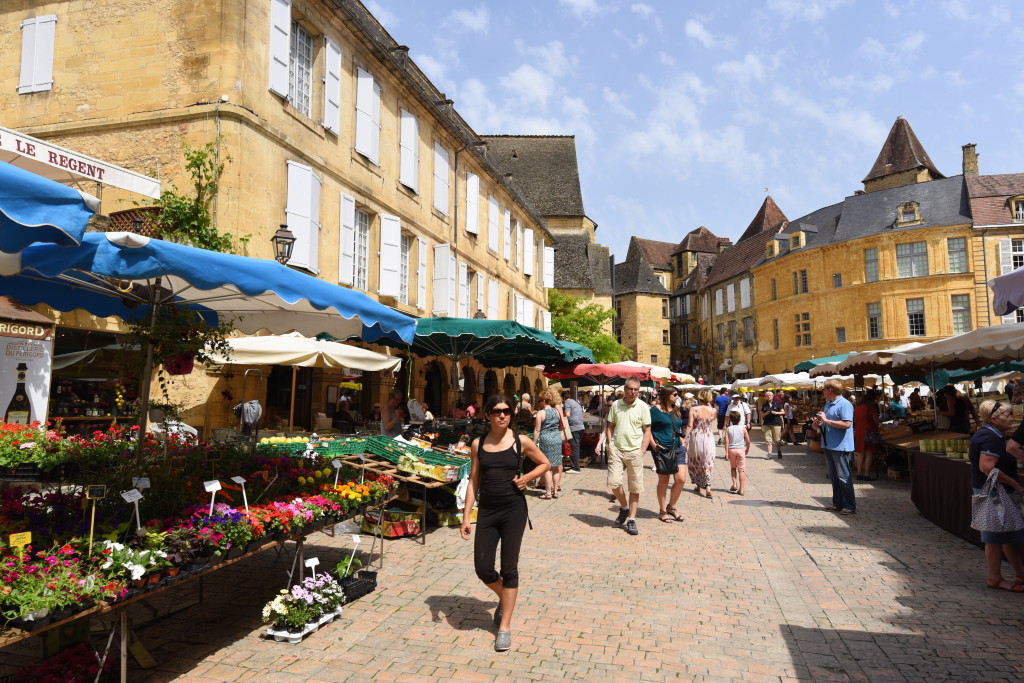
  • Markets. A delight to browse (Budapest’s Great Market Hall, London’s Borough Market). Look for pop-up street markets and outdoor produce markets. Small towns in France designate a weekly “market day”—plan for it (e.g., Sarlat).
  • Other Cheap Eats. Market cafés, worker/student cafeterias (“mensa”), gathering a meal at variety of artisanal shops (bakery, cheese, meats).
  • Picnic. Simply means “non-restaurant meal.” All of the above are ways to assemble a memorable picnic—find a scenic spot for yours.

Drinking

  • Wine. Know what qualities you like—the vintner wants to help you narrow down your options. Wine bars/enoteche pair with good food, wine shops offer variety, and winery visits are more in-depth. Italy, France, and Spain have top wines, but don’t overlook lesser-known wine countries (Hungary, Croatia, Slovenia).
  • Beer. German Biergarten culture, self-service, big liter steins called Mass (deposit). Czech Republic has best (and cheapest) pilsners (named for Plzeň). Belgian beers are refined, higher alcohol, each one served in a very specific glass to highlight the taste. Britain prefers its ales room-temperature, pulled up from cellar using “pulls,” after-work hangout in front of pubs. Craft beers trendy everywhere (especially Italy).
  • Spirits. Splurge on a scenic cocktail. Europeans love both aperitif (before dinner) and digestif (after dinner, aids digestion). National specialties: whisky in Scotland/Ireland (distillery tours), vodka in Poland, limoncello in southern Italy, ouzo in Greece/Turkey, Unicum in Hungary, Becherovka in Czech Rep. Hospitality = homemade firewater.
  • Soft Drinks. Discover the “local Coke”: Rivella in Switzerland (made with milk serum, tastes like vitamins), Irn-Bru in Scotland (bright orange), Cockta in Slovenia.
  • Café Culture. Espresso with different amounts of milk (Italians don’t drink milk after lunch, for digestive reasons). You may pay more to sit than to stand—check price list. Genteel Coffee houses in Budapest, Vienna. Afternoon tea in Britain. Turkish coffee in Turkey/Bosnia/ Balkans comes with culture of slowing down.

Sweets

  • Chocolates. Best in Belgium, Britain, Switzerland. Also consider other candies (British sweets, Scandinavian salted licorice).
  • Pastries. In addition to predictable choices, try alternatives: kürtőskalács in Hungary/Eastern Europe; churros in Spain. Cultural divide: SE Europe sweetens with honey rather than sugar.
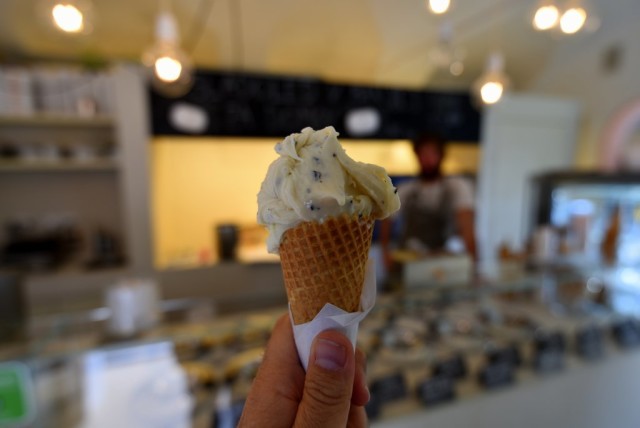
  • Ice Cream/Gelato. Look for “artisanal”/artigianale or “homemade.” Pistachio is best barometer of quality. Flavors that pair/marry well. Avoid big piles of bright colors (for attracting children).

Foodie Experiences

  • Cooking Classes. Have fun, learn a skill (and understand the culture behind it), and bring home recipes. Trendy; look online or ask your hotel.
  • Food Tours. Get to know a (typically less-touristy) neighborhood, learn about local food culture, and identify great restaurants (e.g., Eat Polska food tours in Warsaw and Krakow).
  • Learn Where Your Food Comes From. Agriturismi/ tourist farm (Italy), cheesemakers, beehive (Slovenia), truffle hunt, making kanafeh (Bulgaria).

Happy Travels…and Happy Eating!


You can watch the full-length, 1.25-hour “Europe for Foodies” talk at Ricksteves.com, or on YouTube.

If you don’t have time for the full class, you can check out some of these shorter excerpts:

Europe for Foodies 101 (23 min)

Restaurant-Finding Tips (14 min)

Eating Tips and Tricks (9 min)

Cheap Eats (9 min)

Drinks and Sweets (16 min)

Foodie Experiences (7 min)


And if you enjoy this talk, check out some of the others I’ve done:

European Travel Skills

Iceland

Czech Republic/Poland/Hungary

Slovenia/Croatia

European Cruising 101

Mediterranean Cruise Ports

Northern European Cruise Ports