Last year, I brainstormed a list of my 10 favorite travel hacks, tips, and expert insights gleaned from two decades traveling for Rick Steves’ Europe. It was one of my most-viewed posts ever…and ever since, I’ve been collecting a new batch. Here are 10 more practical strategies and how-tos to make your next European trip smoother than ever.

Visit major sights late in the day.
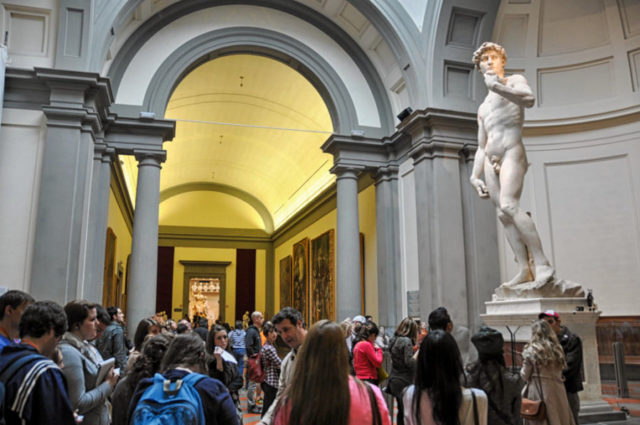
In this age of “overtourism,” Europe’s top sights are jam-packed. To avoid the crowds, your best bet is to make a reservation. But if you’re winging it, count on long lines.

One way to mitigate your wait is to show up as close to closing time as you think is reasonable. Figure out (conservatively) about how much time you need to see the sight, then subtract that from the closing time, and figure an extra 15-30 minutes of buffer in case there’s a short line.
In addition to saving time in line, arriving late in the day creates a mellower sightseeing experience: If a museum is ever going to be “quiet,” it’s during those serene moments just before the attendants start scurrying from room to room, shooing everyone out.

This “show up late” strategy worked like a charm for me this summer in London (St. Paul’s Cathedral, Houses of Parliament, Westminster Abbey, Hampton Court Palace); Paris (the Orsay, Rodin Museum, Sainte-Chapelle, Versailles); and Rome (Colosseum, Forum, Pantheon, St. Peter’s Basilica). While I still had to wait in lines at some of those places, they were much shorter than they would’ve been a few hours earlier.
Bonus hack: Find out if the sight ever has extended hours. In Paris, my hotel was near the Orsay, and every time I walked past, I saw long lines snaking out the front door. So I waited until Thursday evening, when I knew it was open late (until 9:45 p.m.). I showed up around 6:30, waltzed right in, and had the world’s best collection of Impressionist paintings virtually to myself.

One caveat: A few super-popular sights effectively require reservations. For example, there’s never not a long line at the Eiffel Tower. A good guidebook will help you figure out which sights these are. (I happen to know one.)
Always ask for a quiet room.

At any hotel, someone has to take the noisy ground-floor room facing the busy street. And invariably, that “someone” will be the guest who doesn’t specify otherwise. Obviously, requesting a quiet room is essential for light sleepers like me. (Check out my tips for traveling insomniacs.) But it’s sound advice for anyone who doesn’t want to hear each and every bus rumble past, day and night.
There is one key exception: If you’re a rock-solid sleeper who enjoys having a view, you may want to skip this tip. In some hotels, the quietest rooms face away from the best views. The choice is yours. But one thing’s for sure: If you don’t make the choice for yourself, someone else will.
Save on bank fees.
It’s been many years since I exchanged money before arriving in a country. User-friendly ATMs are everywhere (I’ve never seen an airport without one, ever, anywhere) — and they offer generally better rates and fewer fees. But savvy travelers can choose their specific ATM carefully to minimize fees.
I always look for an ATM that’s affiliated with a major bank (like Deutsche Bank, HSBC, Barclays, or the local equivalent). I try to avoid ones that are owned and operated by a currency-exchange company. (These include Euronet, Travelex, Moneybox, Cardpoint, and Cashzone.)

Why? A major bank sticks to the standard, equitable bank-to-bank rate, whereas an exchange company will always use a rate that’s favorable to them. Unfortunately, in some cases — such as at certain airports, where an exchange company has a monopoly — you may not have a choice of ATMs. In that case, I might get a small amount on arrival, then top up later with a larger withdrawal at a bank-owned ATM.
Another hack: Whether using an ATM or making a purchase with your credit card, you’ll likely be asked whether you want to pay in dollars or in the local currency. Always choose the local currency. If you select dollars, you’re giving the vendor (or its bank) permission to dictate the exchange rate, which will always be unfavorable to you. When they ask, “Do you want to pay in dollars?”, they might as well be asking, “Do you want us to cheat you out of some money?”
For more details, check out our cash and currency tips for Europe.
When crossing a busy street, draft behind a sweet old lady.
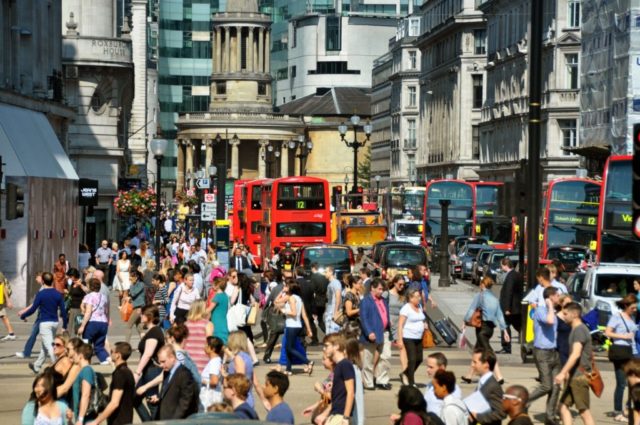
In many parts of Europe — especially big cities — drivers enjoy playing chicken with pedestrians. Even when using a crosswalk, I take comfort when I’m able to cross in the shadow of a local. And the best possible blocker for navigating a busy intersection is Nonna Luisa. Not only does she know when it’s safe — but when cars see her crossing, they slam on the breaks. (When they see me crossing alone, they speed up.) A group of adorable preschoolers or a no-nonsense, power-dressing local businessperson works like a charm, too.
Pack smart for picnics on road trips.

One of my favorite parts of a road trip is enjoying a picnic of local foods in a stunning natural setting. When packing for a road trip, I bring along key picnic gear: a very lightweight, collapsible cooler; some picnic ware (reusable cutlery and light plastic plates save money and reduce waste); an ample supply of resealable plastic baggies; and — if I plan to check my bag — a Swiss army knife.
Armed with a cooler, I can stock on up perishable items (yogurt for breakfast, cream for my coffee) and memorable local treats (salami and other charcuterie, interesting local spreads, a world of funky French cheeses from the fromagerie).

On days when I’m in transit, I fill up a plastic water bottle not quite to the top and stick it in the freezer the night before (rather than bringing or buying ice packs). In the morning, the frozen bottle goes into the cooler with my perishables — and keeps things just cold enough until I arrive at that night’s stop.
Note: This assumes your accommodations have a fridge and freezer (such as an Airbnb or other rental apartment). If staying at hotels, you could keep your perishables in the minibar and fill up a resealable plastic baggie from the ice machine before you take off in the morning. At a B&B, try politely asking your host whether they’d mind storing a few items in the fridge for you overnight.
Dry out your swimsuit in seconds with a centrifuge.

There’s nothing quite as unappealing as wringing out a dripping swimsuit, wrapping it up in a plastic sack, and jamming it into your suitcase…only to pull out a moldy mess a few days later. Fortunately, many aquatic attractions — such as the world-class thermal baths in Hungary, and Iceland’s Blue Lagoon and thermal swimming pools — provide the perfect solution: a small centrifuge. Just stick in your suit, press down on the lid, feel it go for a super-spin-cycle lasting a few seconds, and pull out a suit that’s barely damp. Typically hidden away in some dark corner of in the locker room, these are very easy to miss, especially if you’re not looking for one. So…look for one.
Park carefully.
In densely populated, efficiency-minded Europe, everything is smaller: Pint-sized hotel rooms…tiny towels…miniscule parking spaces. When renting a car, I always request the smallest possible model — both for fuel efficiency, and because I know I’ll be wedging it into itsy-bitsy parking spaces. On the rare occasions when I’ve dinged a bumper, it was because the rental agent had upgraded me to a midsize. Like that time in Wales when parking my car in my B&B’s tiny, stone-walled lot felt like a real-life game of Tetris. (Whoops!)
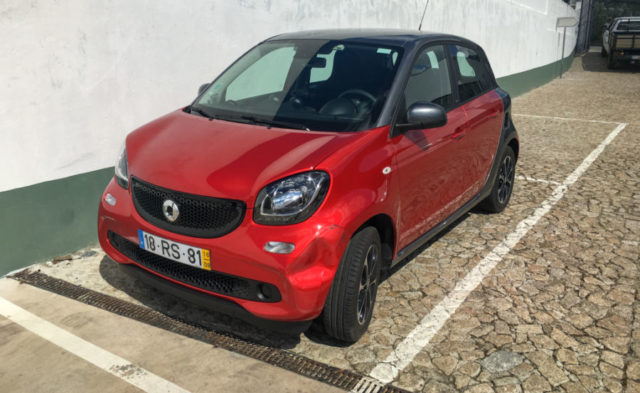
Take your time when nudging your car through these tight squeezes, and don’t hesitate to have your navigator hop out so they can start screaming just before you scuff the Lambroghini in the next space. When parking in a soon-to-be-packed garage, I’ll back into my space (or, better yet, pull through to an outward-facing space) to avoid having to back out later.
Bonus hacks: When paying at a parking meter, you’ll often need to punch your rental car’s license plate number into the machine. It’s almost always printed on the keychain; otherwise, snap a photo of it on your phone (to avoid a long hike back through the parking lot to jot it down). If parking in a giant, multistory garage, I also snap a photo of my space number so I can find it later.
Get on the first or last car of the Metro.
Earlier this summer, I spent several weeks in London, Paris, and Rome — often traversing the congested city center at rush hour. And in all that time spent waiting on subway platforms, I noticed a stable pattern: On any given train, the middle cars were crammed like sardine cans, while the cars at the start and end had more room. I made it a habit to walk to either end of the platform, and it reliably earned me a less crowded, more enjoyable commute. Sometimes, I even got a seat.

This also works for intercity trains: When you reach the head of platform, rather than hopping on the first (cramped) car, walk a few cars down the line…and you’ll have your pick of seats.
Suffer through the tedious commute on your day of arrival…when you’re miserable anyway.
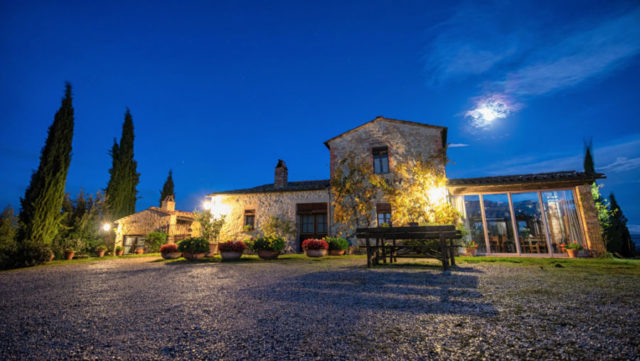
If you’re visiting both the capital city and an outlying smaller town — for example, London and Bath, or Madrid and Toledo, or Rome and Orvieto — consider this strategy: Fly into the big city, then travel onward to the secondary destination that same afternoon. There you can settle into a mellower environment, have some time to recover from your long flight, and adjust to jet lag. By the time you move on to the energy-draining big city, you’re already rested up and acclimated. I’ve done this again and again when planning itineraries, and I’m always glad that I did. I’d so much rather spend my first night in a floodlit small town than in an intense metropolis.

Sure, it adds a bit of stress to that day of arrival. But I assume that I’ll be a jet-lagged zombie anyway…so I might as well doze off on the train. Also, for me, the hardest part about jet lag is staying awake that first night until a reasonable bedtime. If I’m already checked into my hotel by lunchtime, I spend the rest of the day fighting the temptation to take a nap. Using that time for travel — and reaching my final destination closer to bedtime — is an ideal solution.
Check out more advice for crafting a European itinerary.
Take advantage of home remedies and travel gizmos to solve real problems.
You never really master the art of travel — you’re always on the learning curve. And the more I travel, the more I enjoy the challenge of finding the perfect solution to a long-vexing problem. Whether it’s an elegantly simple home remedy or a perfectly designed gizmo, there is a fix for your travel headache.
Recently I got a new pair of shoes that squeaked loudly once I inserted an insole. A quick online search revealed the elegantly simple solution: Just sprinkle in a little talcum powder. Problem solved.
For years, I’d simply throw my razor into the little mesh side-pouch of my toiletries kit. But over time, it ripped a hole in the pouch, and the exposed blade would occasional nick my finger. Finally, I searched for advice on this problem and discovered multiple solutions: You can clip one of those giant paper clips over the razor…or buy a “razor saver,” designed just for this purpose. (I just invested in one and plan to test-drive it on my upcoming trip.) Either of these solutions protects your bag (and your fingers) while also extending the life of your blade.

Here’s another example: While driving in Europe, I used to struggle to keep one eye on the road and the other on my smartphone’s GPS driving directions. Finally, I bought a suction-cup attachment for the windshield. It worked great, but it was bulky in my luggage, and some rental agencies forbid them (because they can leave a permanent ring on the glass). Looking around online for a better option, I finally discovered the perfect solution: A vent mount has rubbery prongs that you insert into your dashboard air vents. And, unlike those giant windshield suckers, it’s tiny and super-packable — about the size and weight of a pack of gum. Again — problem solved.

What problem have you come up with a creative solution for? Share your ideas — and your own favorite travel hacks — in the Comments.
Affiliate Disclosure: I receive not one dime from any product or service mentioned in this post. Like all of our travel advice at Rick Steves’ Europe, these hacks are based entirely on my own judgment, formed by years of European travel. If I help someone sell a few more razor protectors or vent mounts with this post, that’s just fine with me — but only if it helps you have a better trip.
Don’t miss my earlier list of 10 Europe Travel Hacks. And for packing-specific tips, check out my 10 Little Things I Won’t Go to Europe Without, and my Five Electronics Essentials for Traveling in Europe.
For a big ol’ book of travel hacks, tips, and advice, pick up a copy of our flagship travel-skills handbook: Rick Steves Europe Through the Back Door.
Happy travels!