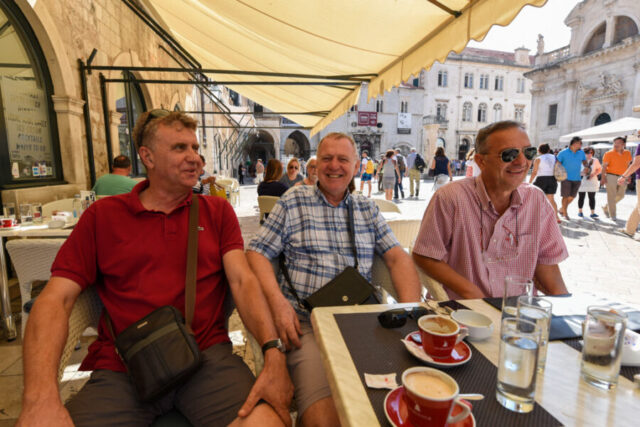
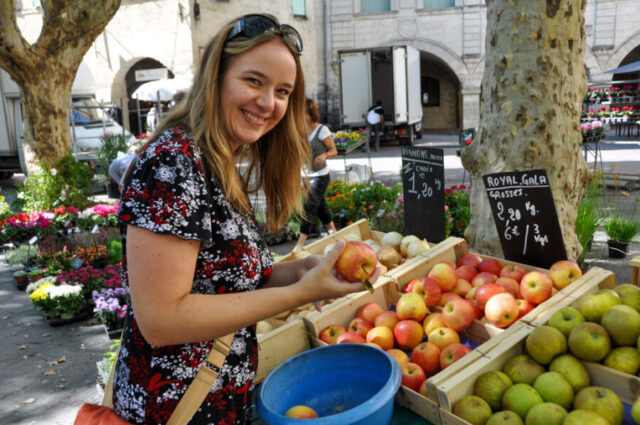
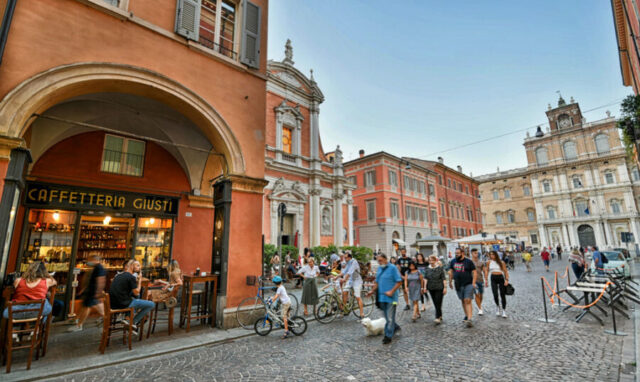
I recently returned from a five-week guidebook research trip in England and Italy. And now that I’m home, everyone’s asking the same question: What’s it like traveling right now, as Europe emerges from the pandemic? By sheer coincidence, I wound up visiting perhaps the least restrictive part of Europe (England), then the most restrictive (Italy) — offering a taste of the full spectrum you might encounter, if you’re hitting the road anytime soon. This trip really was a tale of two COVIDs.
When it comes to traveling during COVID, the only thing that’s constant is change. So I’ll stress that this information is accurate as of my recent visit, from late February through late March. (In fact, Italy partially relaxed its restrictions just a few days ago, even since I got home.) If you’re hitting the road anytime in 2022, check local restrictions closer to your departure date.
London Is Over COVID (Even if COVID Isn’t Over)
Around the time I took off for London, the Queen contracted COVID. Also around that same time, Prime Minster Boris Johnson declared that all remaining pandemic restrictions would be lifted. On February 24 — a few days after my arrival — England celebrated what some cheekily called “Freedom Day”…even as their sovereign still had the sniffles. (Tellingly, this was already the second “Freedom Day” in as many years.)
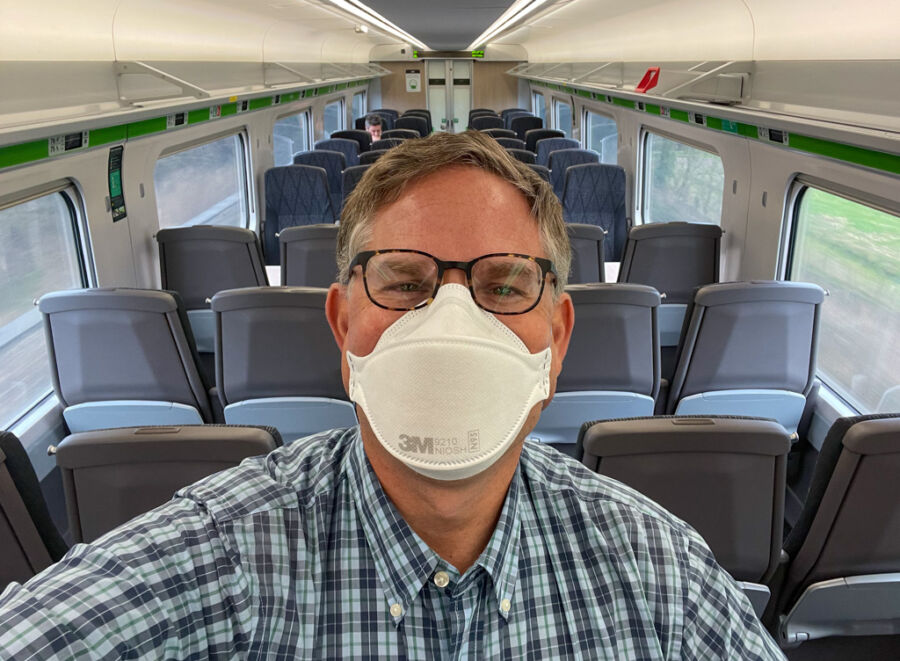
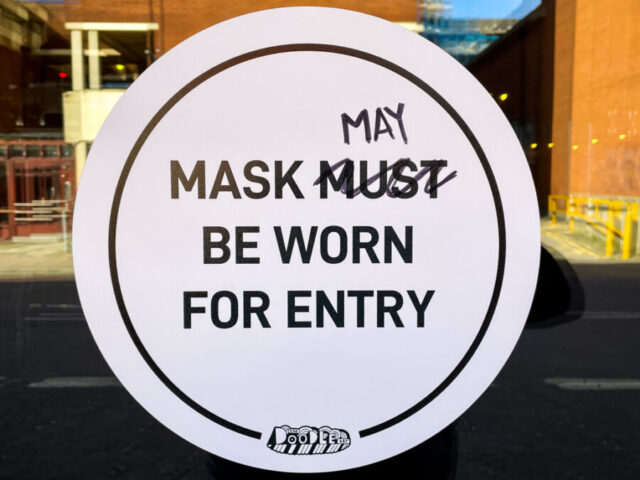
Coming from cautious Seattle, where indoor masking was still required, I was shocked by how few masks I saw on arrival in London. “Masks are mandatory” signs, still posted everywhere, were flagrantly disregarded by Londoners who knew that the rules had changed. In many indoor situations — for example, waiting in line at a café to order a takeaway latte — I was the only person who wore a mask.
On the Tube and on public buses, I’d estimate that one-quarter to one-third of passengers wore masks. This figure seemed to go up and down depending on which part of town I was in (perhaps the highest ratio was on a day trip to Cambridge). One Londoner I talked to, who lives in an outlying bedroom community, told me the majority of people on his Tube ride into central London were masked, but once downtown, that number would plummet. (I was too busy updating guidebooks to conduct a reliable sociological survey…but the results would have been fascinating.)
It was an exciting, slightly scary time to be in London. On the one hand, I enjoyed feeling the momentum of a society that is finally restarting. Museums and restaurants were open (though in a few cases, hours were still somewhat reduced). People were out and about, walking the streets, riding the Tube, and mixing and mingling just like old times. It felt good to feel so normal.
On the other hand, I was just starting out on a five-week trip — 5,000 miles from home, and with piles of work to do. I did not want to contract COVID, if only because the editorial team back at the home office was patiently waiting for my guidebook files to kick-start our 2022 season. So while the people around me were celebrating “Freedom,” I was still dutifully wearing my mask and rubbing sanitizer on my hands.
During this strange transition period, I’ve been trying to be what I think of as a “non-judgmental masker.” I choose to wear a mask in most indoor situations, simply because my understanding of the science leads me to believe that wearing a mask is safer both for me and for those I come into contact with. (And I will say, trying to be careful for my own sake brought me a lot of empathy for immunocompromised people — who must feel terribly alienated from society right now.)
That said, I’ve overcome my instinct to criticize or shame someone near me who chooses not to wear a mask, if it’s in accordance with local regulations. That’s your choice; this is mine. One caveat: If you’re actively sneezing, coughing, and wheezing, well then…yes, I am going to get up and move elsewhere. And I will try not to shoot you a dirty look. (But I’m only human.)
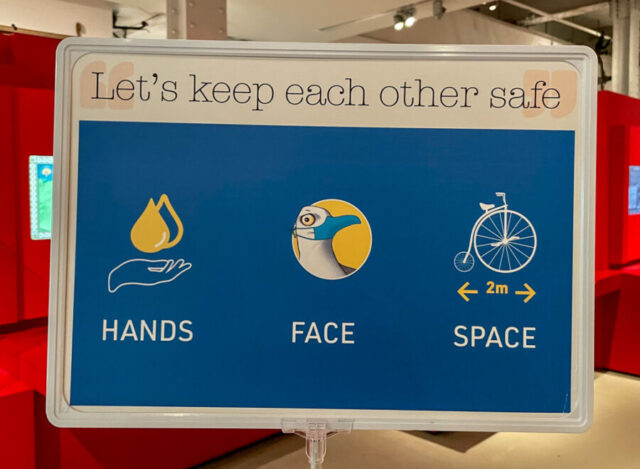
Being cautious was not easy, I’ll admit. It was chilly in London, so every time I strapped on a mask to step into a hotel lobby and quiz the receptionist on their latest details for our book, my glasses became opaque with dense fog. (Stupidly, it took me well over a week to buy some spray-on defogger, which worked wonders.)
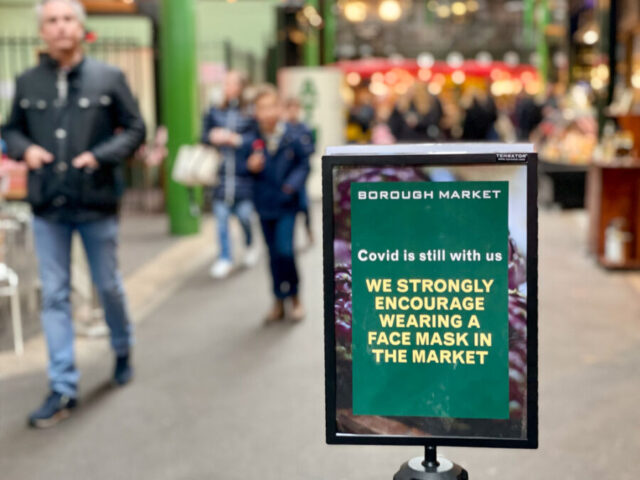
I also skipped one of my absolute favorite London activities: eating in its many amazing restaurants. I just love the food scene here, and normally I spend each evening in a trendy new hotspot in Soho or Shoreditch, to “try it out for the book.” But given my current risk-aversion, I mostly skipped indoor dining (especially when a place was crowded — which the best places always are). London’s many outdoor (or semi-outdoor) street markets, such as the wonderful Borough Market, offered high cuisine in a safer environment.
Even though I was being cautious, having a good N95 mask bought me peace of mind. For instance, I did not want to miss another one of my favorite London experiences, watching a play at Shakespeare’s Globe (specifically, their wonderful indoor venue, the Sam Wanamaker Playhouse). Wearing a medical-grade mask gave me peace of mind, even if about half of my fellow theater-goers were unmasked.
I believe my caution paid off. Other than indoor dining, I still did everything I would have done in pre-pandemic times, but with a good mask on. I still toured every museum, inspected every hotel, reconnected with old friends, and interacted with dozens of people each day. And after five very busy weeks of traveling in Europe, I never had any symptoms, and I never tested positive for COVID.
In Italy, COVID Remains a Part of Life: Vaccines, Boosters, and Masking
Imagine the culture shock of flying from England to Italy, which occupies the opposite end of the COVID precautions spectrum. Italians remain as vigilant and strict as London is loose. This began the moment I arrived in Naples, when I had to go through a time-consuming airport screening to ensure that my paperwork (vaccine card and passenger locator form) was fully up to snuff.

In two weeks in London, not a soul asked to see my proof of vaccination (except when I checked in for my flight in Seattle). But on my first day in Italy, I was repeatedly asked to show it — to enter restaurants, museums, and so on. It’s worth talking about the specifics here, because this will come up if you’re traveling in a country that still requires proof of vaccination.
In Europe, fully vaccinated means boosted as well. Italians (adorably) refer to this as “super-vaccinated.” Italians prove their vaccination status with a “super green pass,” a QR code on their phone that gets scanned when they enter a building.
For American visitors, you only need to show them your printed vaccination card from the CDC (or a photocopy — I kept my original safe in my money belt). However — crucially — your vaccination card needs to list all three shots, including the booster. (I was surprised how many times they actually counted — Uno, due, tre! Ees O.K.!) In my case, for reasons I will never understand, each of my three shots was issued on a separate card. Fortunately, I had contacted my HMO a few weeks before my trip, and they sent me a new card that listed all three. That turned out to save me a lot of hassle — I hate to imagine trying to explain the three-card system, in Italian, several times each day.
(One important side note: On April 1 — just a few days after I flew home — Italy relaxed some of its regulations for showing proof of vaccination. You no longer need to show your CDC card to enter a museum or public transit, but you still do in order to dine indoors…at least, through the end of April. Again, wherever you are traveling to, do some homework so you know what to expect as of the time of your visit.)
Italy also had remarkably high, virtually 100 percent masking compliance. I almost never found myself in an indoor space — museum, church, restaurant, bus, train — where I saw a single unmasked person. Even outdoors — where masks are not required — I’d estimate about 20 to 30 percent of pedestrians were masked anyway (a higher ratio than what I typically saw indoors in London).
When dining indoors, Italians diligently masked up any time they weren’t sitting and actively eating. Even in huge, cavernous churches, this is taken seriously. Inside Pisa’s Duomo, which was nearly empty of visitors, I spotted two elderly tourists who apparently forgot to don their masks. No sooner had I noticed this than an attendant went rushing over to remind them. I got so used to this, I didn’t even notice that I was wearing my mask. And St. Peter’s is just as spectacular when you’re masked.

Keep in mind that in Italy, a mask must be medical grade. They call this “FFP2,” but it’s equivalent to N95, KN95, and KF94 masks widely available in the US. It must be worn over the nose and mouth, and cloth masks are not acceptable substitutes.
By the way, Italians don’t wear masks because they enjoy it. I promise you — as much as you hate wearing masks, Italians hate it more. Italians are deeply social creatures, keenly tapped into nonverbal cues. For them, removing half of the face is a massive hardship; you might as well cut off their tongue or poke out their ears. But they do it anyway, with pride, for the greater good.
This was the case even in my first stop in Italy, Naples. Naples! A city synonymous with chaos and disorder. This is a place where flagrant disregard for rules is a hobby passionately pursued, and where any authority is viewed with deep suspicion. And yet, there I was, walking down the Spaccanapoli, surrounded by carefully masked Neapolitans.
Wearing my anthropologist’s hat, I asked around as to why Italians were taking this stuff so seriously. One hotelier — who is clearly a bit fed up with all of this — described the Brits as coraggiosi (courageous) for simply moving on with life. Others reminded me that northern Italy was devastated by the very first wave of COVID, back in February of 2020. Night after night, Italians watched news of the rising death count. They still feel the personal pain from that loss — and all of the losses since — and are not yet willing to give up on making small, reasonable changes to their behavior if it means saving a few more lives.
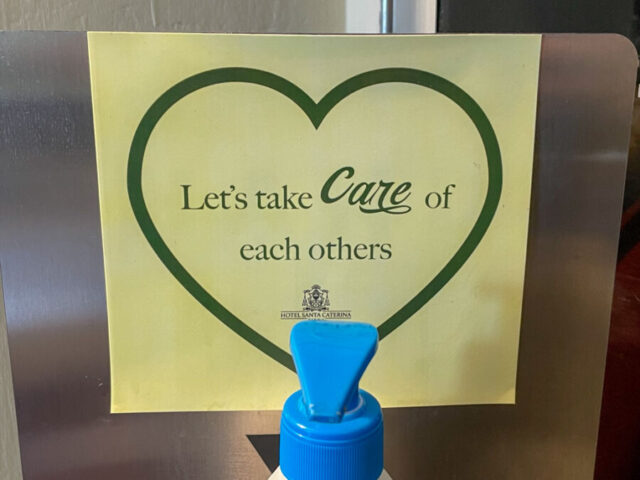
Anecdotally, I was told that masking compliance and vaccination rates were both higher in the South, and diminished as you moved toward the North. Based purely on my Naples-to-Florence itinerary, there may be a speck of truth to this; or it may simply be another salvo in the age-old North-South rivalry.
Testing
As yet another indication of how fast things are changing, a couple of weeks before my flight to London, I believed I would be required to show a negative test before getting on the plane. But the UK waived this requirement just days before my departure. And then, for my trip from London to Naples, Italy also changed the rule just days before I flew. In the end, I wasn’t required to get a single COVID test until the day before I flew home.
Speaking of which: Right now, you are still required to get a negative COVID test the day before you re-enter the United States. This sounds troublesome and time-consuming. But fortunately, they accept a rapid antigen test (which only takes about 15 minutes), as long as it’s administered by an official provider. And testing is affordable and widely available in most of Europe, making it less of a hassle than you might think.

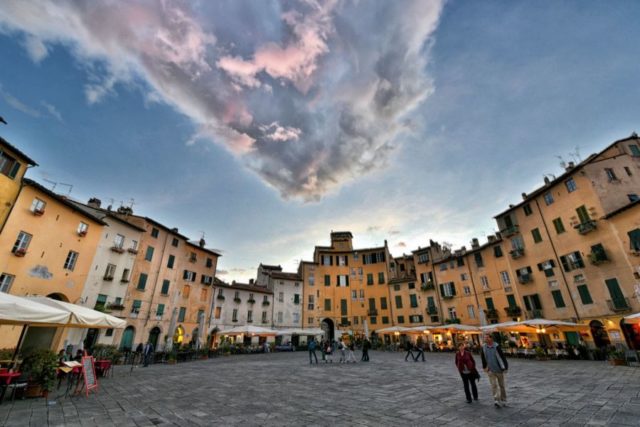
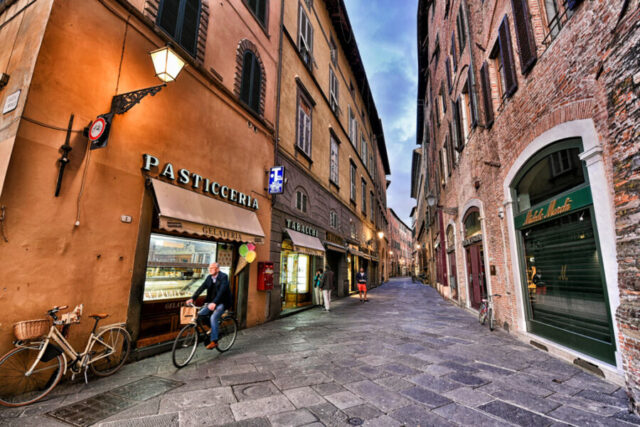
In my case, I was flying home very early from Florence. The day before that, I rode the train from Lucca to Florence. And the evening before that, I was hanging out in Lucca, wondering where I should get my COVID test. I did a quick search on my phone and found a pharmacy right on the main square that administered the test. I dropped by, and they penciled me in for an appointment the next morning.
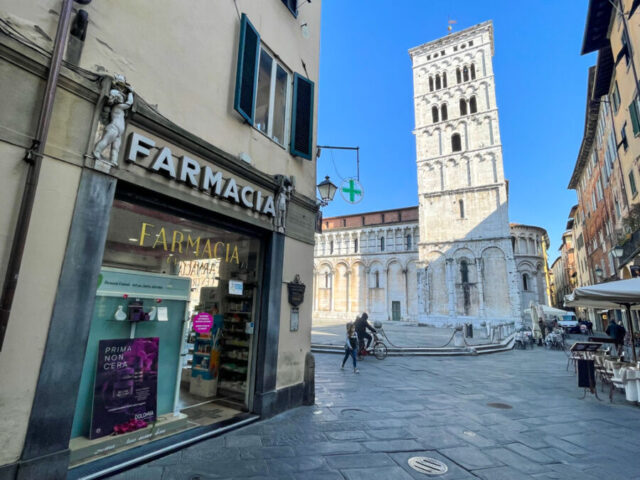
When I woke up, I packed my bag, checked out of my B&B, and headed through lovely Lucca to the train station — making a slight detour to the main square for my appointment. They instructed me to drop my bags in the corner, swabbed my nose, and asked me to wait outside for 15 minutes. It was actually an enjoyable experience to stand in front of that pharmacy, listening to the church bells clang, watching small-town Tuscany wake up. After what felt like just a few moments, they called me in, handed me an official-looking paper with my test results, charged me €15, and sent me on my way. I made it to the train station with 20 minutes to spare. I can only hope red tape is always so delightful.

What Else Is New?
In the coming weeks, I’ll be sharing lots more observations about my return to Europe. (If you haven’t yet, be sure to follow my Facebook page to get all the latest updates.) But here’s a quick rundown of what else is new in Europe for 2022:
I was struck by how rapidly new technology has been adopted through COVID. For instance, London has gone practically cashless. Every purchase now uses “contactless” technology: a credit card, smartphone, or watch that you tap against a pay pad. (You probably already have a “contactless” credit card, even if you don’t realize it — check your card for four curved lines — or you can easily set this up on your phone.) The same technology is now common throughout Europe, though in Italy, I found cash was still more widely used.
Another change: Most museums have “temporarily” done away with audioguides, for obvious reasons. (Who wants to spend two hours pressing your face against a device that was just pressing against someone else’s face?) But now that they’re gone, I have a suspicion audioguides may not be back. Instead, museums encourage visitors to download apps so they can follow the tour on their own device. (Better yet, download the Rick Steves Audio Europe app, with heaps of entirely free, self-guided museum tours and city walks.)
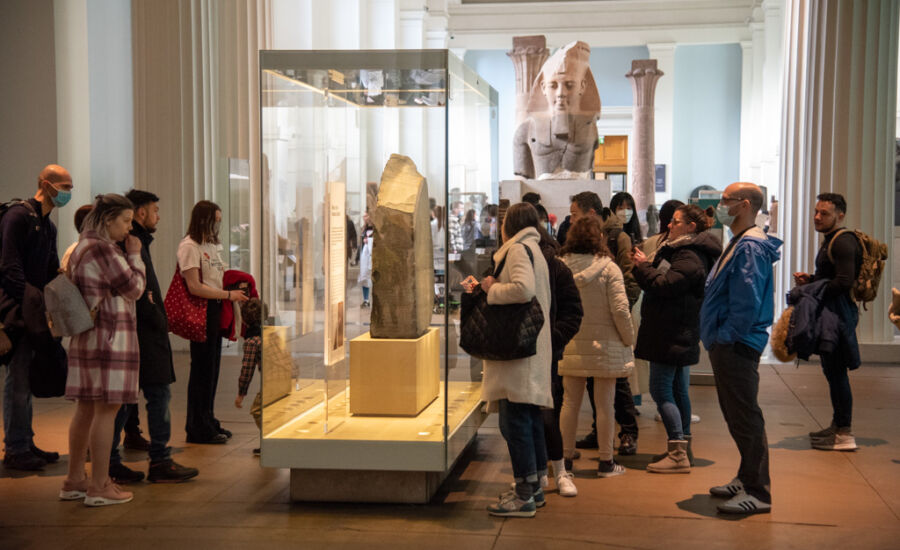
For the major sights, it’s more important than ever to do your homework and reserve ahead. Many museums — even minor ones — have introduced online reservation systems. Initially this was a crowd-control measure due to COVID restrictions. But now that they’re in place, these reservations systems will probably stick around.
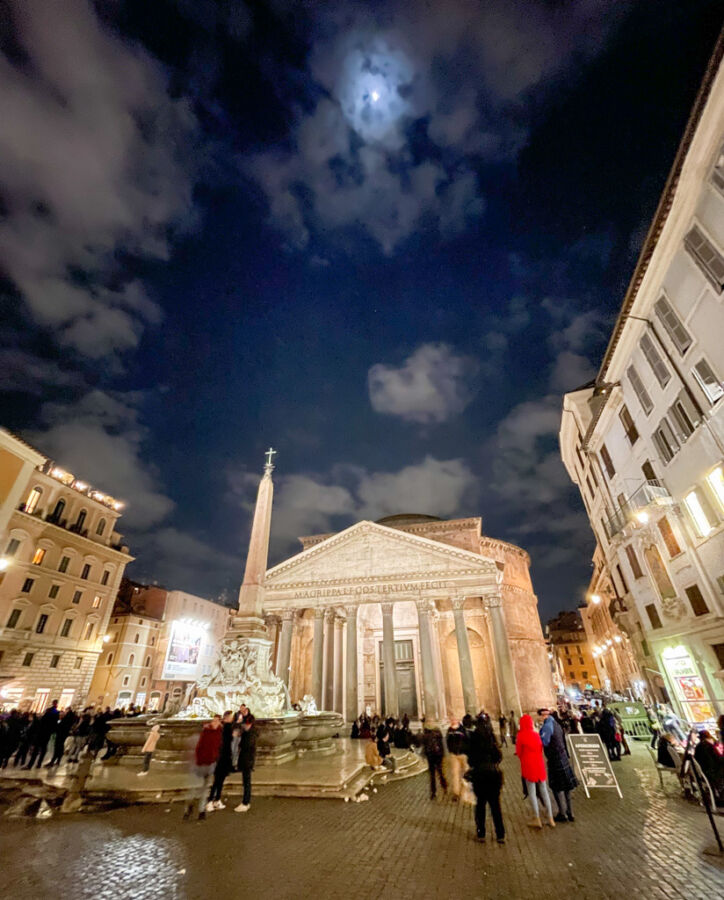
And some major sights (including Rome’s Colosseum) now require reservations, instead of just recommending them (as previously). If you want to visit the Colosseum, you must prebook a time slot online. This is serious. On my visit, they didn’t even have any in-person ticket windows open at all; if you just show up, you’ll wind up standing around outside the turnstiles, booking a ticket on your smartphone. Also in Rome, the Pantheon had a long line out front of people waiting to get in. On weekends, they now require reservations to enter; on weekdays, you don’t need a reservation; and either way, you’ll stand in the same line. If you’re going to any major sight, spend a few minutes reviewing their website a few weeks before your trip to figure out the latest.
The other major issue on this visit, of course, was Russia’s invasion of Ukraine. Chatting with Londoners and Italians, it was clear that this was weighing very heavily on many hearts. Personally, I don’t consider the war a “safety issue” for travel (including in Poland, where I’ll be in just a few weeks). However, it has certainly dampened spirits at a time when many were just getting excited for the “return to normal.” When I’d ask people, “How have you been?”, Ukraine was often the very first thing they wanted to talk about.
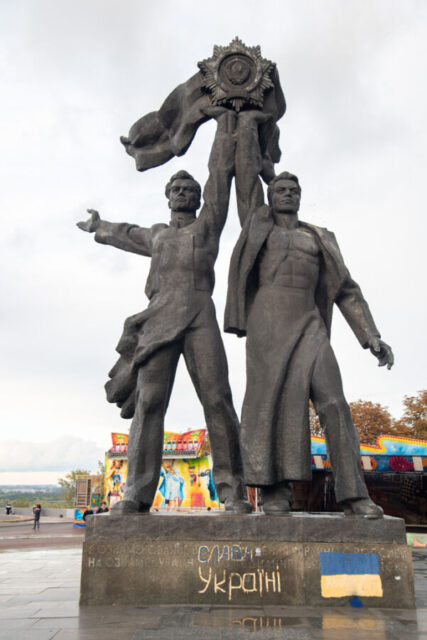
It’s simply unnerving and tragic for Europeans — many of whom are quite pacifistic — knowing that a terrible war is raging, and so many people are suffering, on their own continent. Everywhere I went, I saw vigils, flags, and signs demonstrating in solidarity with Ukraine.

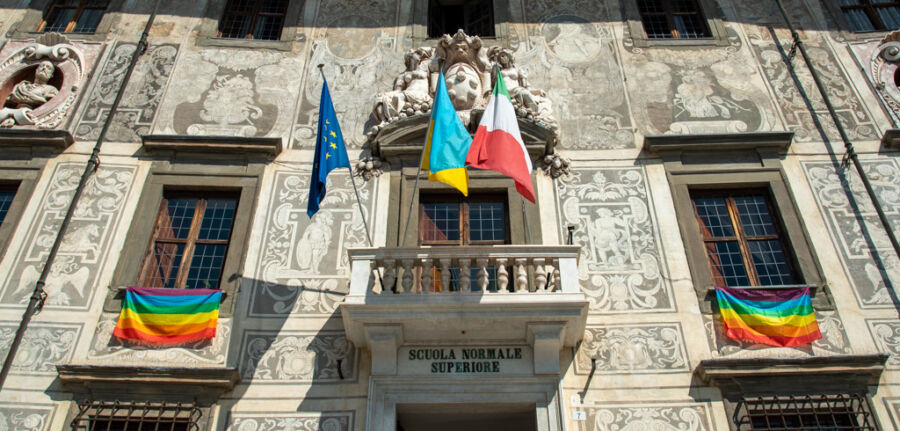
In Pisa, one of the main civic buildings flew three flags: the European Union, Italy, and — not Pisa — but Ukraine. Nearby flew two rainbow flags, an Italian symbol for PACE (“peace”).
Anecdotally, I learned that the one-two punch of Omicron and the Ukraine invasion has led many travelers to book trips more last-minute than before. A hotelier in Rome explained, “Usually we see people booking many months ahead. This year, it feels like people are taking a more ‘wait-and-see’ approach, and are booking only a few weeks ahead.” If you wait too long to book, you may find that you’re trying to jump into a pool jammed with others doing the same…and miss out.
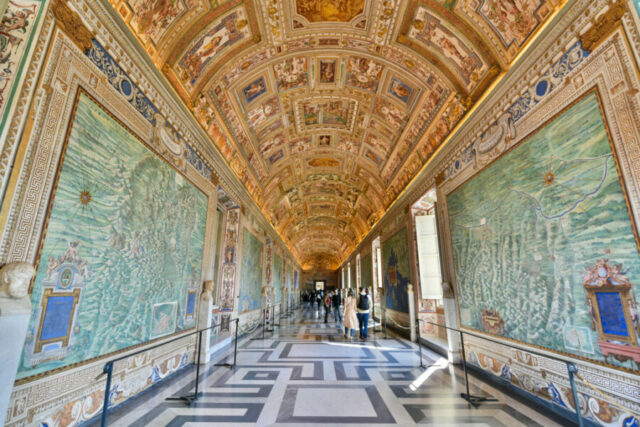
What about crowds? It’s very early in the season, but even so, in London and Rome, things were not nearly up to their overwhelming 2019 numbers. Things are definitely returning to normal; lines were forming in front of major sights like the British Museum, National Gallery, Pantheon, and St. Peter’s. And yet, in the Vatican Museums, the Map Gallery was as empty as I’ve ever seen it.
I found smaller cities much quieter. Cambridge, Pisa, Siena, Lucca — these places felt borderline-deserted. I’ve never seen Pisa’s Field of Miracles so empty, and my Lucca B&B told me that I was the only person staying there for those three nights. (On the other hand, on Friday and Saturday night, all of the best Siena restaurants were fully booked.) Of course, smaller towns and cities like these will ramp up and become busy again — but it may take longer than in the big cities.
As for those guidebooks: I’ve already turned in my updated files and maps for the Rick Steves London and Rome books, and other researchers (including Rick) are currently updating every corner of Europe. Our guidebook department is working at a heroically accelerated pace this year to churn out new, post-COVID editions as quickly as possible. The first new books (including London and Rome) will hit bookshelves as early as August, so if you’re heading to Europe this fall, keep an eye out for the latest.
In the meantime, while much has changed, I found our guidebooks fundamentally sound. The best sightseeing advice, the self-guided museum tours and walks, the lists of our favorite restaurants and hotels…while each of these has been slightly adjusted, the current edition is still as up-to-date as anything you’ll find in print for assembling a dream return trip to Europe.
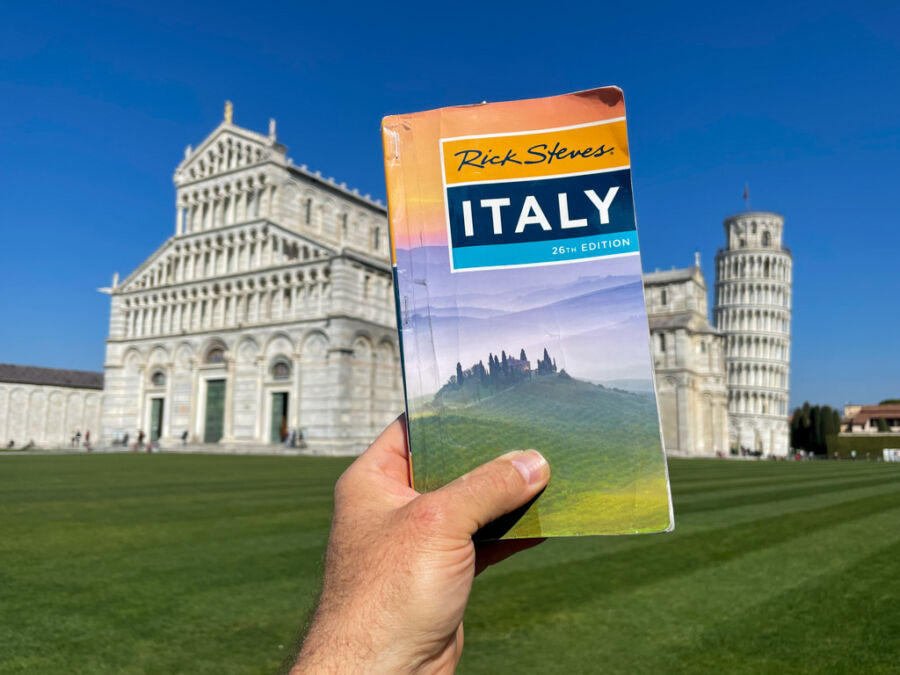
The Final (?) Word
I’ll stress again that this is a very small sample size: one traveler, two countries, five weeks. And it represents just a snapshot in time; this blog post will go stale remarkably fast. But I hope it offers some insight and encouragement about wading back into international travel at this moment.
What’s the situation in France, or Germany, or Spain, or Prague, or Greece? Honestly…I have no idea. But I imagine it’s somewhere between the two extremes of London and Italy. And if anyone out there wants to give us their own trip report here in the Comments, we’d all appreciate it.
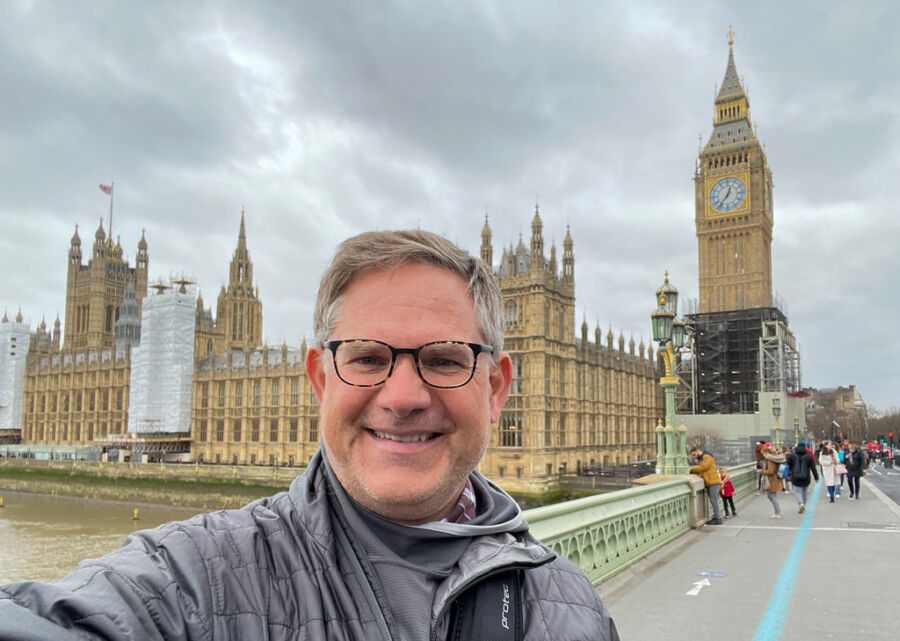
In the end, this was one of my favorite, most successful trips in years. It felt wonderful simply being back; the weather was unseasonably pleasant; and I must admit, I didn’t miss the crowds. Most of all, I came away with a confidence that you can have a safe and enjoyable trip in 2022, even as COVID sputters on. Just be prepared: Before you hit the road, think carefully about how much risk you’re willing to take on, then adapt as needed — even if that means skipping indoor dining or wearing an N95 mask for that performance you’ve been dreaming of. Be aware that each place you visit may have their own restrictions, and be conscientious about following them. Check back frequently to understand any red tape you might need to sort through. But most of all, simply enjoy being back in Europe.
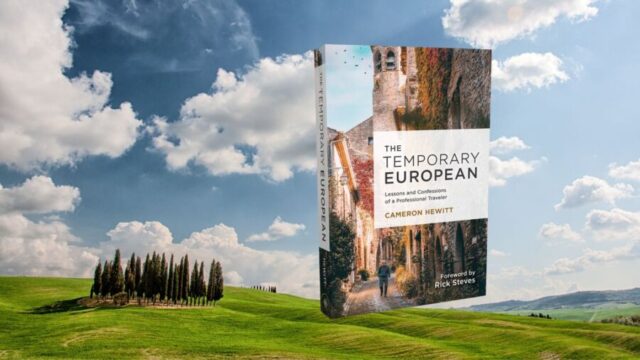
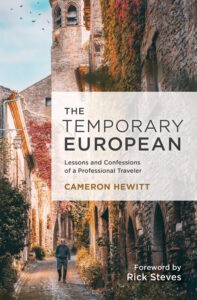 During the pandemic, I took some time off to write a travel memoir, The Temporary European: Lessons and Confessions of a Professional Traveler. It’s a collection of my favorite travel tales from my 20-plus years working with Rick Steves, plus inside looks at what it’s like to write guidebooks, make travel TV, and guide tours. You can order it from your favorite local bookseller; get it at the Rick Steves’ Europe Travel Store; or buy a copy at Amazon.com (paperback or Kindle edition).