The Outlander Effect: Should You Travel Through Scotland with Claire and Jamie?

Traveling in Scotland in 2022, you just can’t avoid Outlander. The series of novels by Diana Gabaldon, now also a hit television show on Starz, is having a major impact in shaping people’s travels. And if I’m being honest…I don’t think that’s a bad thing.

In my travels, it’s interesting to observe how a movie or TV show can transform the tourism industry of a place. Sometimes called “set jetting” (or “location vacation”), the phenomenon of visiting a place just because you’ve seen it onscreen is an ever-bigger factor in itinerary planning. And in Scotland, Outlander is driving tourist traffic to a huge degree. But how should a thoughtful traveler approach this trend? Here are a few thoughts.

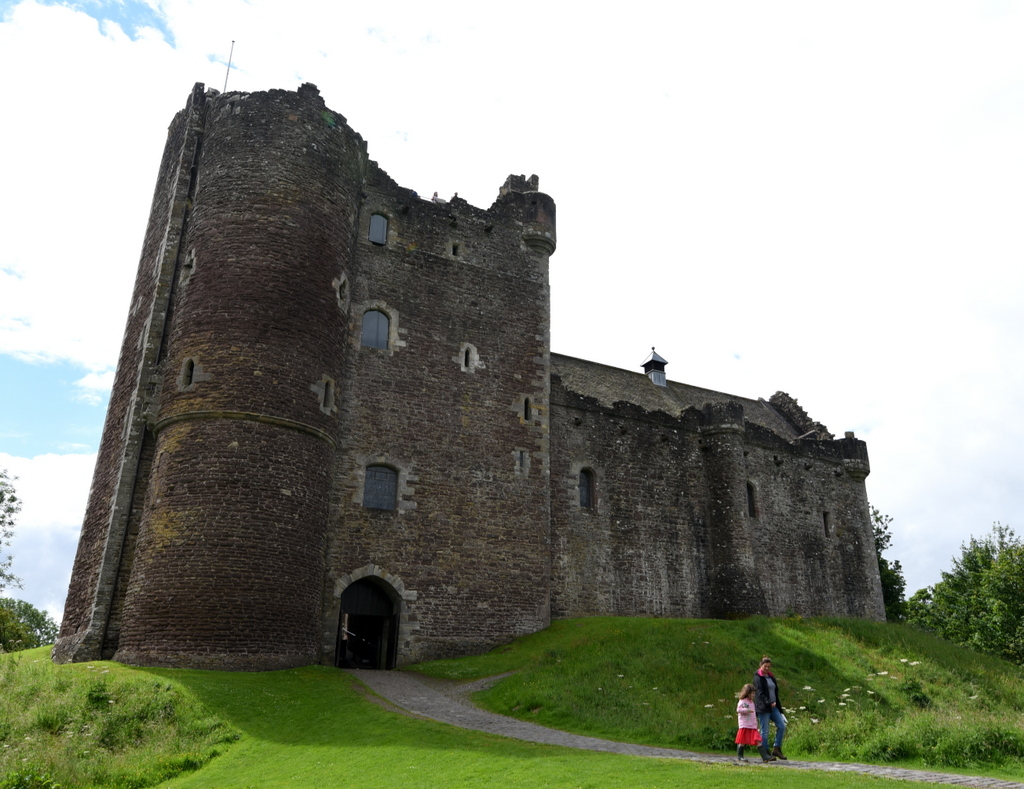
On a previous trip to Scotland, back in 2015, the TV series had only just begun, and Outlander tourism was in its infancy. As a fan of the first season myself, I sought out a few locations to include in our Scotland guidebook — including Doune Castle, which stood in for “Castle Leoch”; the charming village of Culross, featured as “Cranesmuir”; and the Highland Folk Museum, where scenes of traditional life were filmed. But my travel writer’s sixth sense told me that Outlander was on the verge of something big.
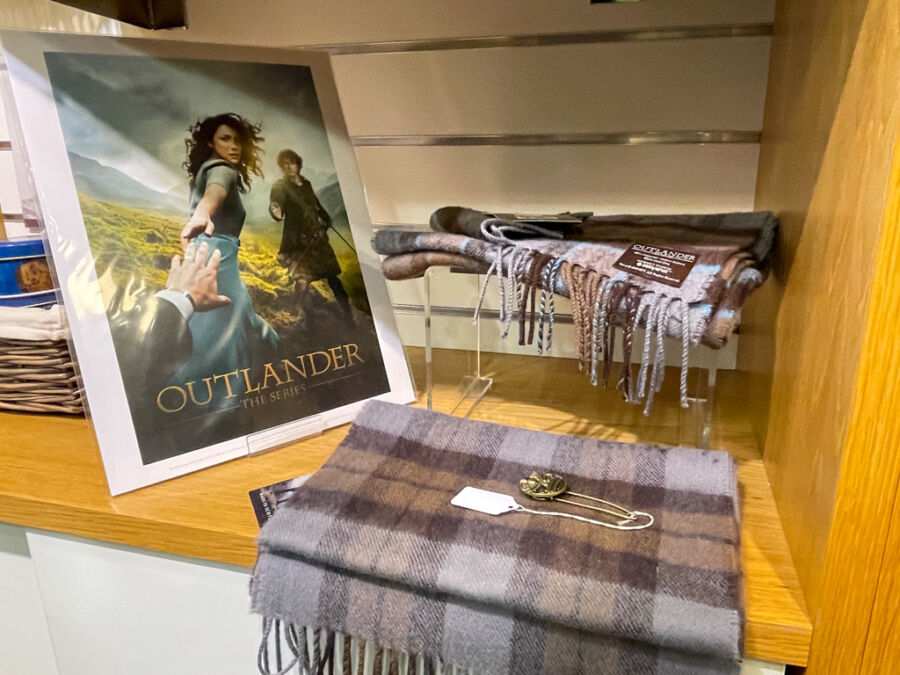
Returning again this summer, I was stunned by the difference seven years had made. Several more seasons of the TV show have only increased its fandom, and added to the already-long list of Outlander “must-sees.” The national tourist office has even produced a high-quality, fold-out map — and maintain a comprehensive website — locating Outlander-related sites throughout Scotland. In gift shops, life-size cardboard Jamie Frasers are elbowing aside Loch Ness Monsters. I even saw an official Outlander Tartan Pocket Square™.

Outlander tourism has even trickled down to small sights: In the wonderful, endearing, volunteer-run Glencoe Folk Museum — on the main drag of a tiny, one-street Highlands village — they’ve taped up a photo of Sam Heughan (who stars as Jamie) perusing the display cases.

I’ve seen this happen before. I’ve seen in at Harry Potter-related sights around the UK (including ones in Scotland). I’ve seen it in Dubrovnik and Croatia’s Dalmatian Coast, which came on many travelers’ radar thanks to Game of Thrones. Even Albuquerque, New Mexico, is newly trendy for a weekend getaway, thanks to those eager to walk in the footsteps of Walter White from Breaking Bad or Kim Wexler from Better Call Saul.

Most recently, I’ve seen this phenomenon in the town of Richmond, just outside London, which has started to attract quite a few Ted Lasso pilgrims…including me.

Sometimes this impact is short-lived. For a brief period in the mid-Aughts, we added mentions to our Paris and London guidebooks about various landmarks pivotal to the plot of The Da Vinci Code; a few years later, after that fad had passed, we took most of them out again. Others are evergreen: In Salzburg, Sound of Music tours are as big an industry now as they ever have been, even as the film approaches its 60th birthday. (And sometimes it’s hard to judge: Doing our Scotland updates this summer, we’ve debated whether it’s time to finally retire our “Debunking Braveheart” sidebar about the 1995 movie.)

As a travel writer who tries to approach Europe thoughtfully, I have complicated feelings about “set jetting.” (Full disclosure: In addition to being a professional traveler, am also a massive TV and film buff; in a previous life, I even wrote movie reviews for my hometown newspaper.)

On the one hand, I’ve observed how becoming famous in a movie or TV show can bring well-deserved attention to a worthy place that might otherwise get overlooked. Once there, those visitors come to love that place on its own merits. That’s a good thing.

On the other hand, I don’t have much patience for people who go to a place only because of the screen connections, with no appetite for going beyond that basic photo op. A friend of mine, who works as a tour guide in Dubrovnik, once told me that she occasionally gets requests from people asking her to do a tour exclusively of Game of Thrones filming locations…“without that boring history or culture stuff.” She turns down those requests, and frankly, I wish those people would stay home.

One distinction to consider is whether the place you see on screen is actually “playing itself.” In Scotland, Harry Potter pilgrims book months ahead for a chance to ride on what they call “Hogwarts Express,” perhaps not even realizing that the historic steam locomotive has a real name: the Jacobite Steam Train.

Or take Dubrovnik — which, in Game of Thrones, represents fictional locations that exist only in the fantasy world of Westeros. There’s nothing “Croatia” about what you see on the screen. This can lead to some unfortunate missteps. Late in the run of the series (spoiler warning), the city of Kings Landing is blown to bits by Daenerys Targaryen and her dragon. Many of these scenes featured recognizable streets and landmarks of Dubrovnik — a city which was, during the breakup of Yugoslavia in 1991 and 1992, the tragic subject of a real-life, medieval-style military siege. Back then, the actual buildings of Dubrovnik were bombarded from above; townspeople took cover, rooftops burned, streets smoldered. Having seen photos and news footage from the Siege of Dubrovnik — and having heard the real-life stories of its victims — it struck me as particularly insensitive for the show’s producers to so gruesomely destroy its fantasy doppelgänger onscreen.

In Outlander, on the other hand, Scotland represents Scotland — better yet, historical Scotland. I’ve been won over by the way that Outlander is rooted in real Highlands history. It gets people in the proverbial door, and then — crucially — focuses them on the “right things.”

The best example: Culloden. The Battle of Culloden, which was fought on April 16, 1746, on a moor just outside of Inverness, was the pivot point for all of Scottish history. As the Jacobite troops of Bonnie Prince Charlie were defeated by the Hanoverian army of King George II, the traditional clan system of the Highlands was shattered; life for the Scots changed forever.

Likewise, Culloden presents a turning point in the Outlander saga. (Light spoilers ahead.) Not only does Jamie Fraser fight on Culloden Moor; earlier, Bonnie Prince Charlie himself appears as a major character, as the Frasers move to France and hobnob with the Stuart royal family in exile.

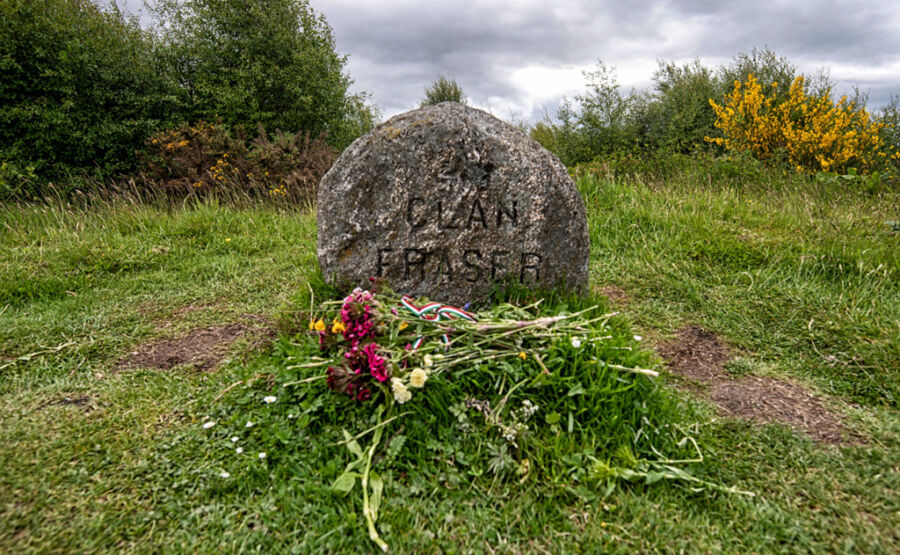
I’ve toured the Culloden Battlefield on multiple occasions over the years. Each time, I’ve been impressed by the site’s haunting ambience, and by the outstanding visitors center that tells its story. But I’ve noticed some key differences between pre-Outlander visits and post-Outlander visits. First, post-Outlander, there were a lot more people out on the moor with me…and many were laying fresh flowers at the Fraser clan marker. Also, I must admit, having seen the dramatization of the battle on the show — and feeling a more personal connection to some of the battle’s (fictional) participants — my appreciation of the site was even greater.

If the impact of Outlander is that more people are going to a genuinely great and important site, and learning about real history while there…then I’m all for it.
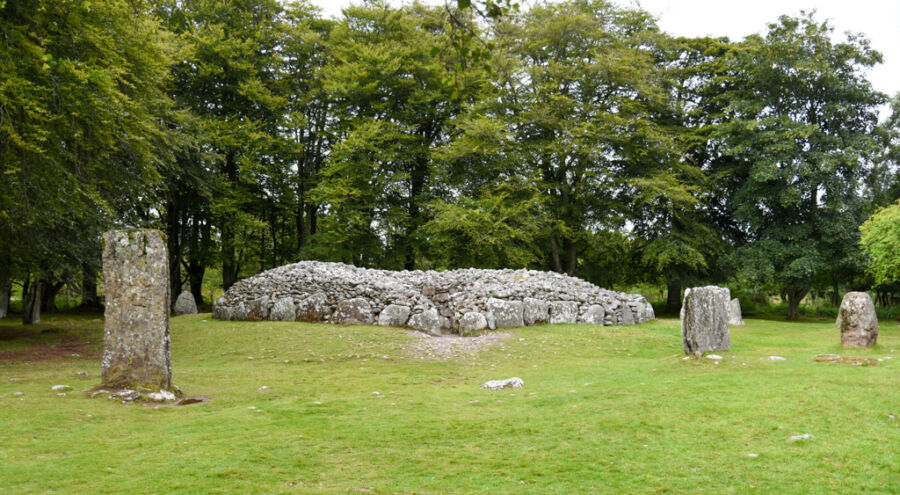
Of course, there are many Outlander sights in Scotland that have less to do with real history. A very short drive from Culloden are the prehistoric Clava Cairns, including the stony remains of a burial chamber dating back millennia. We’ve described these in our guidebook for years as a good place to get a glimpse at Scotland’s (relatively sparse) prehistoric artifacts. Now we’ve also had to add a mention of the split standing stone, which vaguely resembles the one Claire Fraser uses to travel through time. Are the many new visitors flocking here for a photo op also taking a moment to learn about this site’s real origins? Possibly…but somehow, I doubt it.
Understandably, some locals have misgivings about all of this. At the tourist office in one small town, I picked up a brochure for a local folk museum that touted its ties to Outlander. Later, when I got to the museum, I asked the attendant whether they actually had an Outlander exhibit. She grew instantly perturbed. “Oh, come on! That’s fantasy. This is a real museum about real history. Where do people get the idea that everything is about Outlander?” “Um,” I responded, and showed her the brochure — produced by her own museum — trumpeting the Outlander connection. (What can I say? The Scots know what sells. And I will resist the urge here to draw comparisons with a certain mythical sea monster…)

That said, many Scots I’ve talked to — including the sticklers — acknowledge (sometimes begrudgingly) that Outlander does a pretty impressive job of conveying real Highlands history amidst all of the time-travel fantasy and bodice-ripping. Many Scots still feel burned by Braveheart — the last time a movie thrust Scotland onto the international stage — in which Mel Gibson completely distorted actual history in service of a rollicking action picture. Even if they don’t love Outlander, most Scots recognize that it’s far better than Braveheart.

So maybe it’s about more than just whether it’s a “real place” — but about the realness of that place. When Stephenie Meyer wrote her original Twilight novel, she set it in Forks, Washington. How did she choose? She simply looked up which American town got the most rainfall (reasoning that vampires would appreciate a gloomy climate)…and Forks was it.

Forks is not far from where I live in Seattle, and on a few occasions, I’ve visited the area (for its stunning Olympic Peninsula scenery, not the Twilight connection). And I was struck by how, based on this offhand decision made two decades ago, Forks has completely rebranded itself as “Twilight town.” When you go to little Forks, you see a Twilight café, Twilight gift shop, Twilight cabins, Twilight tour company, Bella’s truck from Twilight…one time, I even drove by a soggy stack of Twilight firewood (no joke).

I don’t mean to besmirch Stephenie Meyer or Twilight (or Forks, for that matter). The fact is, a first-time author doesn’t always have the resources to travel far and wide, scouting locations for a novel that may never see publication…much less become an international phenomenon.  But when it comes to what guides your travel planning, “I basically picked it out of a hat” doesn’t strike me as a good enough reason to visit a place.

Meanwhile, it’s clear that Diana Gabaldon eclipsed Meyer (pun intended) in her meticulous research for Outlander. Before writing her novel, Gabaldon had earned a Ph.D. and was, effectively, a professional researcher. And it shows. Then, the producers of the TV series doubled down by committing both to honor Gabaldon’s original vision, and to respect real Highlands history. And the result is a show that gets a lot of people — including many who previously never cared one lick about Scotland — very excited to visit the site of a 275-year-old battle. That’s an impressive feat. Yes, even if the side effect is a few Outlander-themed souvenirs.
In the end, I believe the best kind of “set jetting” is when a piece of pop culture both attracts people to a new place, and whets their appetite to learn more. And on that count, Outlander sets a high bar. If you’re heading to Scotland because you fell in love with the place by reading or watching Outlander…good for you. Have a great time tracking down all of those sights. But once you get there, make sure you go beyond the Claire and Jamie photo ops, and really get to know Scotland, too.


I was in Scotland updating our Rick Steves Scotland guidebook. Our brand-new, fully up-to-date Fourth Edition arrives in December — just in time for the holidays. If you’re going sooner than that, the current (Third) edition is still fundamentally sound and packed with great tips…just expect some changes, and confirm hours ahead of time.

My travel memoir, The Temporary European: Lessons and Confessions of a Professional Traveler, includes a chapter about “set jetting,” and specifically about the time I had to take two Sound of Music tours back-to-back, on assignment. For a more cynical and humorous take on when “set jetting” lacks the cultural insight of Outlander, check it out.

2019 Discovery: Isle of Skye, Scotland

Crowds got you down? This post is part of a series of 10 European Discoveries for 2019 — off-the-beaten-path gems where you can escape the tourist rut and find a corner of Europe all your own.

Most visitors to the Scottish Highlands do a predictable two- or three-day loop, hitting Inverness, Loch Ness, Glencoe, Oban, and maybe a few Outlander sights. But adding another couple of days buys you time for dramatically scenic, fun-to-explore Skye. While not quite “undiscovered,” the Isle of Skye demands — and rewards — a little extra effort to reach.

Settle into the village of Portree, with its rainbow-painted harbor, and use it as a home base for road-tripping across the isle. The Trotternish Peninsula, with dragon’s-tooth mossy mountains that have inspired sci-fi movies, is speckled with sleepy crofting communities whose humble stone cottages face million-dollar sea views. Talisker Distillery offers tours and dispenses peaty drams of whisky. Dunvegan Castle provides an intimate peek inside the lived-in home of an aristocratic clan that’s seen better days. Peat bogs, iconic views of bald Scottish mountains, and hiking areas with names like “The Fairy Glen” and “The Fairy Pools” round out Skye’s appeal.

If I had to choose just one place to get an idyllic taste of the Scottish Highlands and Islands, Skye would win by a mile.


Planning a trip to Scotland? Here’s how to get ready:

1) Check out my top 10 tips for traveling in Scotland
2) Pick up a copy of our Rick Steves Scotland guidebook.
3) Watch Rick’s three brand-new TV episodes on Scotland: Glasgow and Scottish Passions, Scotland’s Highlands, and Scotland’s Islands.

And for nine more suggestions on where to get away from the crowds, check out my 10 European Discoveries for 2019.

Out of Gas on Scotland’s North Coast

My wife’s Great-Great-Aunt Mildred traveled far and wide, long before such a thing was fashionable. Late in life, Aunt Mildred wrote a memoir about her experiences. The title: Jams Are Fun. It turns out that, after seeing so much of the world, Aunt Mildred realized that it’s not always the big museums, the fancy dinners, or the castles and cathedrals that stick with you most. It’s those serendipitous moments when things go awry. And so, in the spirit of Aunt Mildred, this part of my “Jams Are Fun” series about when good trips turn bad, and the journey is better for it, takes place along Scotland’s desolate north coast.

Driving along Scotland’s north coast is treacherous. I’m not talking about the twists and turns, or the distracting scenery, or the endless miles that lull you into a trance. No, I’m taking about running low on gas. On a Sunday afternoon.

Driving up through Wester Ross and finally reaching the open Atlantic at the idyllic, beach-cradled town of Durness (where John Lennon vacationed as a boy), I spotted a sketchy-looking “24-hour fuel” place. But I still had a few liters in the tank. Assured by the tourist office that there’d be gas in the village of Tongue, farther east, I continued on my way. I had a long day of driving ahead of me: 90 miles to John O’Groats, Great Britain’s famous northeasternmost point, and the ferry to Orkney.

Cameron Scotland Out of Gas

About 10 miles out of Durness, the “low gas” light flickered on. No problem, I thought. Tongue must be right around the bend. Then I rounded that bend, and a 10-mile-long inlet spread out before me. I’d have to go all the way around it, and then some, to reach Tongue.

Twenty miles later, with the sea loch in my rearview mirror, the gas light started to flash and beep. Now, I’ve always maintained that carmakers have an incentive to dramatically exaggerate your risk of running out of gas. I’m famously stubborn about driving to work and back — twice — with the “low gas” light on. But on this day, I hadn’t seen any signs of civilization for many, many miles. And now I was starting to get nervous.

Finally, I crossed the long, scenic bridge over the Kyle of Tongue, and started to head up the hill into town. Reaching this tiny community’s lone general store/gas depot, my heart sank when I saw the handwritten sign: “No more petrol til 2 p.m. Monday.”

Two local women were chatting in front of the store. “Are they closed?” I asked. “Yes, just closed at 2 o’clock.” My heart sank. It was about 2:15. “Um, well, where’s the next petrol station?” “You heading east or west?” “East.” Oh, that’s in Bettyhill, I suppose, eight miles away.” Phew. “But,” she continued helpfully, “they close at 2 on Sundays, as well. The next one after that would be Thurso. They’ll be open. That’s 45 miles east. Or you could head back to Durness, 35 miles west.”

My dreams of John O’Groats and Orkney by sundown were at risk. But there had to be a solution. “Do you know of anyplace here where I can get petrol?” They exchanged worried glances. “Well, the shop’s owner lives just up the road.” They gestured to where the gravel road ended, at a walled garden surrounding a grand mansion. Apparently running a general store in a small North Coast town pays very well. “Perhaps if he’s home, he’d be willing to sell you some gas.” She looked at me again, with a flicker of concern in her eye. “Perhaps.”

Perhaps would have to do. I thanked them, hopped in the car, and drove the short distance up the manicured driveway to the mansion. I rang the doorbell and waited. No answer. Just as I was about to ring it again, I heard a car’s tires grinding on the gravel behind me. A curmudgeonly, late-middle-aged Scotsman with bushy sideburns stepped out of the car and eyed me suspiciously.

I amped up the politeness and explained my plight: The Durness TI’s promise of gas here. Needing to catch my ferry this afternoon. Having just enough gas to get to Bettyhill, but knowing they’d also be closed, and certainly not having enough for Thurso. Basically: I am aware I screwed up. I am a moron. And now I throw myself upon your mercy.

At first, he was unmoved…and pretty cranky. “I didn’t realize you’d be closed on a Sunday afternoon,” I said, apologetically. “Sunday is supposed to be a day of rest!” he shot back…I’m pretty sure implying that I was sinning against God by running low on gas in north Scotland on the wrong day of the week.

Finally he relented, and agreed to meet me up at the shop. As I slathered on the gratitude, he began to warm up. “Things are a bit different up north,” he explained, with a gently helpful tone. “People take their time and don’t get out as much. Sundays are very quiet.”

He switched on the pumps, and even pumped the gas for me — and refused to take any extra money as thanks.

He headed back into his shop to close up again, and I hopped into my car. Just as I was pulling out, a German motorcyclist pulled off his helmet and started scratching his head at the same “Closed” sign that had stymied me  not long before. I pulled up to him and rolled down my window. “Excuse me,” he said. “Do you know where the nearest gas is?” Now an expert on the topic, I ran through his options. Recognizing the panic on his face, I added, “Well, this guy just closed…but maybe you can talk him into selling you some gas.”

And with that, I took off.

By the way, a couple of hours later, I did make it to John O’Groats:

Cameron Scotland Out of Gas John O'Groats

Go North: Scotland’s Remote Wester Ross

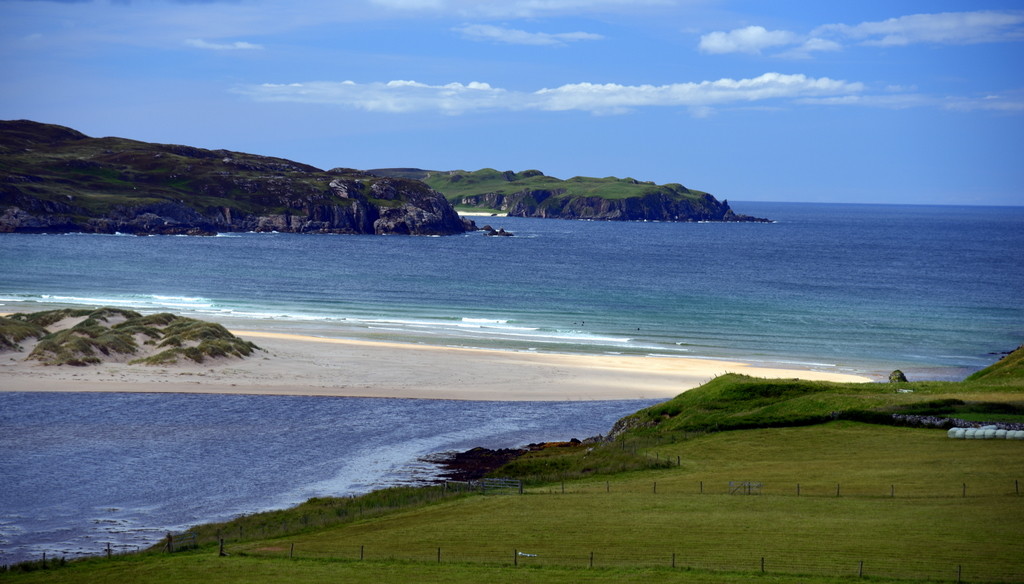
One of the big additions to our new Rick Steves Scotland guidebook is the far north of Scotland. Travelers on a tight timeframe rarely make it north of Inverness or the Isle of Skye…but I just had to check it out for myself (and for the book). From Skye, I took the scenic coastal route through the region called Wester Ross, with a landscape so epic that it inspired George R.R. Martin to steal the name for Game of Thrones’ Westeros.

Cameron-Scotland-North2

Cameron-Scotland-North


Cameron Scotland Wester Ross North

This —and a lot more like it —is what you’ll see up north: Endless miles of jagged lochs, towering bald peaks, moody glens, and secluded silver-sand beaches. The north has some of Scotland’s most dramatic scenery. But, to me, it’s not that much more glorious than Glencoe or the Isle of Skye. What Wester Ross does have a lock on is remoteness. It’s as sparsely inhabited as Siberia. Even on a mostly sunny weekend in the middle of the summer, I didn’t see another car for 20 minutes at a time. And most of the roads are “single track” (one-lane). You can make great time on single-track roads, zipping along at 50 mph — until you reach a blind curve, a flock of wayward lambs, or another motorist. Then you just have to slow down, or pull over, until the obstruction has passed. After two days of this, my shifting leg started cramping up.


Cameron Scotland North Applecross Games

I’d done my homework, and thought that I knew the location of each and every Highland Games for the duration of my trip. But wee Applecross — an end-of-the-road hamlet in one of Scotland’s most famously remote corners — happened to have their (unadvertised) games on the day I drove through. The timing was perfect for a pit stop: I was happy to stretch my legs, eat an overcooked church-fundraiser hamburger, armchair-judge the dog show, and watch the pipe band (who knew John Oliver played bagpipes?)…before hopping in my car and continuing north.


Cameron Scotland North Ullapool

At the end of a very long day following the jagged coastline, I was ready for some rest. I pulled into Ullapool, a humble fishing village dominated by a huge ferry dock…a metropolis by Wester Ross standards.

Cameron Scotland North Ullapool Dinner

Seeking dinner at an Ullapool pub, I couldn’t figure out why, on a fine summer evening, the interior was chockablock while the beachfront tables were deserted. Moments after ordering and sitting down, I got my answer. Anyone who’s been to Scotland in the summer is familiar with midges — those bloodthirsty mini-mosquitoes (like no-see-ums) that terrorize the Highlands. This year’s crop of midges wasn’t bad  farther south, thanks to a cold summer. But they were swarming in Ullapool. It was a scenic, slappy dinner: I’d slap myself, pause just long enough to deliver the fork to my mouth…then slap! again.


Cameron Scotland North Monument Valley

This panorama — just north of Ullapool — reminded me of a mossy Monument Valley.

Is northern Scotland worth the trip? There are no real “sights,” and only a few workaday towns. But if you have a few days to spare, love the feeling of being far from civilization, and believe that a journey is its own reward…then, by all means, go north.

Stunning Skye

One proud local told me that the Isle of Skye is Scotland’s second-most popular destination, after Edinburgh. While that seems like a stretch, Skye was certainly packed when I was there at the peak of summer. And for good reason: The biggest of the Hebrides Islands offers some of the best scenery in all of Scotland.


Cameron Scotland Skye Portree

Skye’s “capital” is Portree. Apart from its stunning pastel harbor, I love all of the endearingly quirky stories that bubble through little island towns like this one. Portree first hit it big thanks to its rich deposits of kelp…yes, seaweed (they’d burn it to create an ash that was rich in soda — apparently a big industry in the 18th century). The island has just one high school (some kids get bussed in from an hour away) and two hospitals — but no obstetricians. Mothers-to-be are sent three hours away to Inverness a week before their due date. Babies are born on the Isle of Skye only by accident.


Cameron Scotland Skye Quiraing

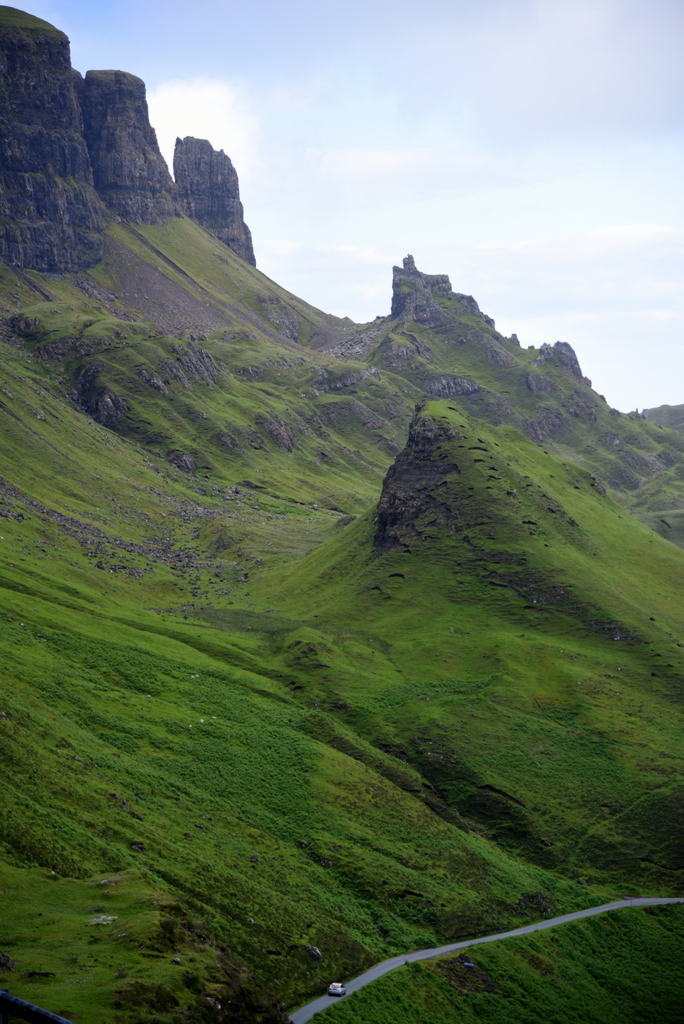
The Trotternish Peninsula, north of Portree, has some of my favorite views in all of Scotland (right up there with Glencoe). These jagged formations — called the Quiraing — show up frequently in movies that call for an otherworldly location, from Flash Gordon to Prometheus.


Cameron Scotland Skye Sheep

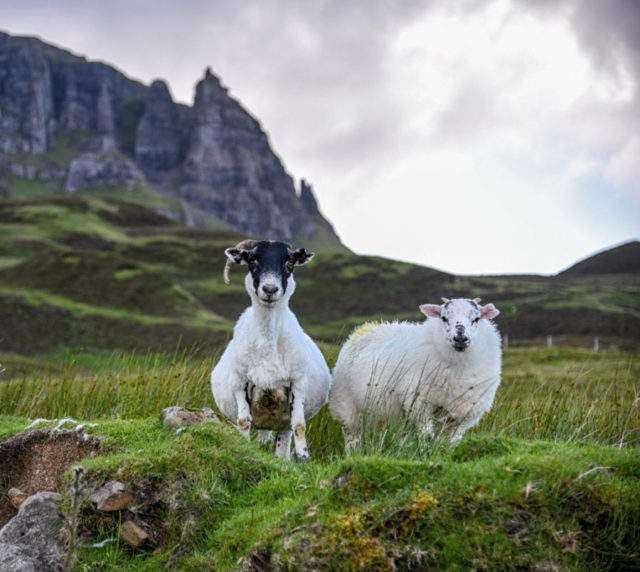
Driving up into the Quiraing on a single-track road, I slammed on the brakes when I found myself immersed in a traffic jam of sheep. Just ahead of me, the truck of a farmer was just pulling away after moving the flock to a new grazing patch. While I waited for the sheep to clear out, I looked up on the ridge to see this hoofed couple, who seemed to be posing just for me.


Cameron Scotland Skye Trotternish

In summer, Scotland enjoys long hours of daylight. I have a lot of guidebook-research chores to squeeze into every day. So on Skye, I did the two-hour Trotternish Peninsula driving loop after dinner. After a socked-in day, the sky opened up as I headed north out of Portree…and I had the roads all to myself. As I crested the tip of Trotternish, the setting sun lit up the cliffs like a spotlight.


Cameron Scotland Skye Fairy Pools

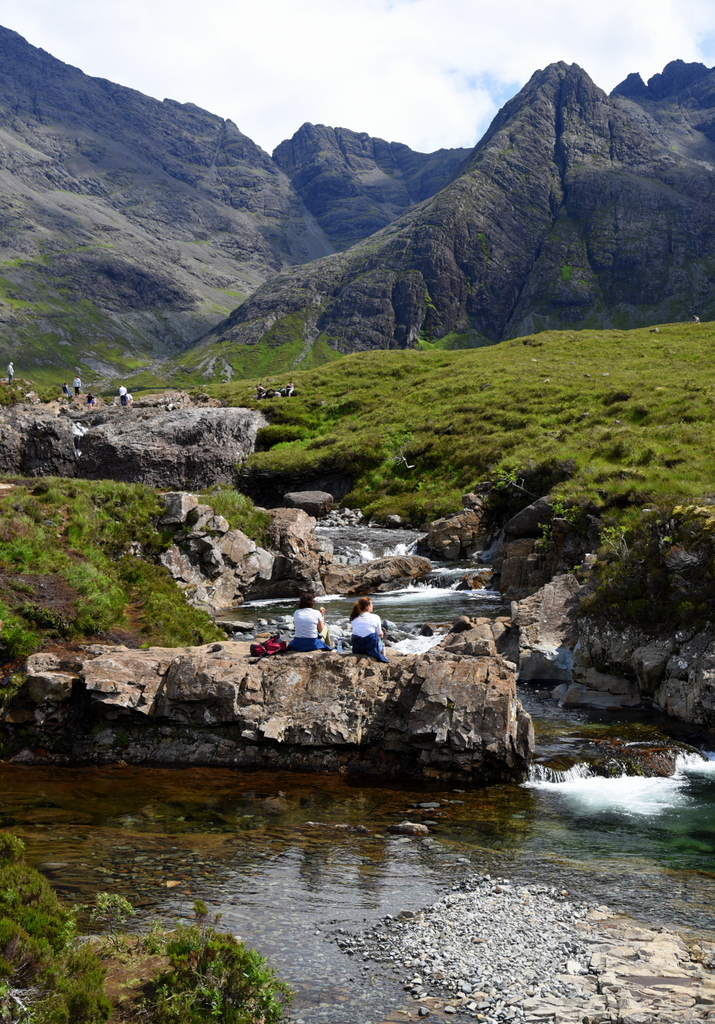
For our new Rick Steves Scotland guidebook, I’m adding some new hiking tips. And in the dramatic Cuillin Hills — in a different part of the Isle of Skye — I tried out the glorious hike to the “Fairy Pools.” As a stream of mountain runoff trickles out of the Cuillin, it carves a canyon deep into the bald turf. The water tumbles down several cascades, creating stunning pools where you really could imagine supernatural sprites hanging out. Even on a chilly day, people were taking a dip. I overheard a tourist say, with her delightful Scottish lilt, “Despite the fact that it’s so cold, it’s so invitin’!”