In the spring of 2018, I spent three busy weeks in Sicily, circling the island to put the finishing touches on our brand-new Rick Steves Sicily guidebook — which is available now. Throughout that trip, I collected 10 favorite practical tips for traveling in Sicily. Special thanks to the book’s co-author, Sarah Murdoch, and contributing author Alfio di Mauro for their hard work and abundant insights. Amuni!
Visit a mix of big cities, smaller towns, and countryside sights.

For a good sampling of Sicily, plan to visit a mix of big cities (Palermo, Siracusa); smaller towns (Ragusa, Trapani, Taormina, Cefalù); and striking sights in the countryside (Mount Etna, ancient temples and theaters, the glittering mosaics at Monreale Cathedral). On a quick visit of just a few days, home-base in Taormina or Catania and make strategic side-trips to Siracusa and Mount Etna, then spend a day or two in Palermo. With more time, consider adding your choice of other towns: Agrigento (with its remarkable ancient temples), additional time in Siracusa (for its ancient sites and delightful urban bustle), Ragusa (for its low-key hill town ambience), Trapani (a pleasant west coast town with an array of tempting side-trips, from salt flats to hill towns to offshore islets), and the beach town of Cefalù. For most travelers, the best plan is to rent a car — but be prepared for the often challenging Sicilian roads, especially in cities. (And spring for the full insurance.)
Pig out on street food.

The island’s cuisine — which is distinctly different from mainland Italy’s — is, like Sicily, a unique mix of cultural influences. Choosing between eggplant pasta and fish couscous on the same menu, it’s clear that you’re at a crossroads of Europe and Africa. And some of the best food is also the cheapest. Sicily is renowned for its street food. Try an arancina (deep-fried saffron rice ball), panelle (chickpea fritters), sfincione (rustic, Sicilian-style “pizza”), polpo bollito (a boiled mini-octopus), and — if you dare — pani ca’ meusa…the famed spleen sandwich. To sample several items in one go, just wander through one of the characteristic street markets in Palermo or Catania…or join a street food tour.
Party with the Sicilians.

On this island of very tight-knit communities and fierce local pride, there’s always some big festival going on. Most towns celebrate their patron saint’s day by processing through the streets with an elaborate float (or several). Other celebrations fill a more specific niche. I happened to be in the pristine town of Noto during their biggest party of the year, the Infiorata di Noto. An entire street — several blocks long — was filled with gigantic murals, delicately constructed of flower petals. And when I was in nearby Ragusa, the townspeople were celebrating the native Ragusano cheese. The town square hosted cooking demonstrations, and every restaurant in town was highlighting a special cheese-forward dish. While I enjoy the serendipity of just stumbling onto Sicilian celebrations, it’s smart to do some homework, find out what local festivities might be going on nearby, and make a point to drop by.
Bone up on ancient history.

In antiquity, Sicily was called Magna Graecia — “Greater Greece” — for the many Hellenic city-states that colonized the island. Ancient Syracuse (today’s Siracusa) was one of the most powerful city-states on the Mediterranean. Sicily was also an outpost of the mysterious Carthaginians, who were almost entirely wiped out by the Romans. And all of these civilizations left behind world-class artifacts. Scattered across Sicily are some of the best ancient Greek temples and theaters anywhere outside of Greece: the Valley of the Temples at Agrigento; Europe’s largest archaeological area at Selinunte; and the theaters in Taormina, Siracusa, and Segesta. The cathedral in Ortigia (Siracusa’s old town) is actually built upon the still-visible columns of a fifth-century B.C. temple. And deep in the remote interior of Sicily is the Villa Romana del Casale, with some of the world’s best-preserved floor mosaics. If you love ancient sites, Sicily will blow your mind. If you don’t…there’s no better place to start.
Visit Mount Etna for its amazing volcanic sights — and its wine.

Mount Etna, which (literally) gave rise to Sicily, is one of Europe’s most accessible active volcanoes. A cable car whisks you halfway up the mountain, and from there, you can hop on a monster-truck bus nearly all the way to the smoldering summit. (It tends to be clear first thing in the morning, then clouds over just as it gets crowded a few hours later — it’s smart to be on the first cable car, at 9:00.) But Mount Etna is also home to one of Italy’s most pleasant wine-growing regions. My favorite stretch — picturesque and still relatively off the beaten path — is on the north side of Etna, between the towns of Linguaglossa and Randazzo. The Etna wine scene has exploded in recent years, garnering more and more international attention. And even if you’re not into wines, the scenery is magnificent: vineyards stretching up sun-baked slopes toward the steaming, snow-capped cone of Etna. Several picturesque wineries offer tours and tastings; it’s customary to call a day or so ahead to let them know you’re coming. (Some favorite finds for the upcoming guidebook include the swanky Tenuta di Fessina, the cheerful Fattoria Romeo del Castello, and the family-run, nicely low-key Filippo Grasso.) If you’re serious about wine, Etna Wine School — operated by an American vintner expat who literally wrote the book on Etna wines — offers private tours.
Be prepared for heat and hills.

At the same latitude as Spain’s Adalucía and Greece’s Cycladic Islands, Sicily can be very hot for much of the year. (Most of Sicily sits on the African tectonic plate — and the geology and climate really do feel closer to Africa than to Europe.) Many of Sicily’s best sights are dusty ancient landmarks, requiring a hike to reach, with little shade. And virtually nothing in Sicily sits on flat ground — you’ll encounter hills, hills, and more hills. Come prepared with broken-in shoes, sunscreen, and a hat for shade — and take plenty of breaks. Or consider coming off-season, when it’s cooler and less exhausting. Sicily is one of Europe’s most appealing winter destinations. It may not be balmy enough to swim in the ocean, but even in winter, you can often enjoy warm, sunny days and cool, refreshing nights….and zero crowds.
Unwind in the hill towns of the southeast.

Sicily can be intense. But one of my favorite little corners of the island is in the southeast, around the dramatic hill town of Ragusa. With green, rolling hills and neatly stacked stone fences, this area feels almost Celtic. And it’s one part of Sicily where most tourists aren’t Americans, or even northern Europeans — but Italians. In a short drive from Ragusa, you can link up some lovely towns: Modica, famous for its chocolate industry and its dual cathedrals (one on a hilltop, the other in a valley); Scicli, where troglodyte caves carved into the cliffs overlook a fun-to-explore town filling a valley; and beautifully Baroque Noto, rebuilt in a short period after a 1693 earthquake, giving it an unusual architectural harmony (not to mention its world-famous gelato shop, Caffé Sicilia). About halfway through my three-week journey around Sicily, I found Ragusa and the surrounding countryside to be the perfect place to settle in and just relax.
Peel back the layers of history.

Strategically located in the middle of the Mediterranean — practically forming a bridge from Italy to North Africa — Sicily’s culture has been shaped by a staggering variety of overlords and occupiers. There’s so much history on this little island that it’s tempting to just let it wash over you. But this is a place where it’s really worth studying up and grappling with the epic story. From the ancient foundations of the Greeks, Carthaginians, and Romans, to the Arabs who controlled Sicily for more than two centuries (and, during that time, richly developed the island), to the Normans from France who “reclaimed” Sicily for the Christian world and slathered its churches with Byzantine-style mosaics, to the Spanish Bourbon kings who draped the island in a stately Baroque elegance, and even to the mafia who dominated much of Sicily’s 20th century (and whose influence is finally on the wane)…Sicily is a pastiche of history. Get to know and recognize the hallmarks of each period, and before you know it, you’ll be able to step into a church and say, “Wow, those Normans really did a number on this one.”
Go before it’s too late.

In just a few short years, Sicily has quickly become “ready for prime time.” Cities (like Siracusa or Palermo) that were rough, rugged, and a little dangerous have been prettied up and pedestrianized. I noticed lots of European travelers…but relatively few American ones. I was also struck by the relative lack of crowds — even in late May, when the weather’s perfect and mainland Italian cities like Venice and Florence are overrun. All of that is bound to change in the next few years, as more people find out what a great spot Sicily is. Go now, before the cat’s out of the bag.
Accept Sicily on Sicily’s terms.
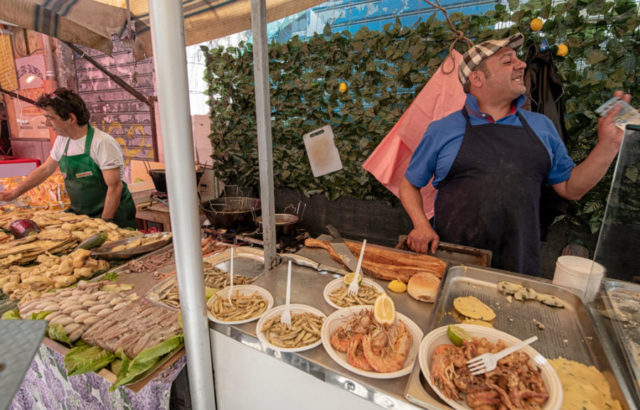
Sicily is an ideal “deep cut” for Italy connoisseurs who’ve already seen Venice, Florence, and Rome, and want to experience a facet of Italy that’s more intense and challenging. But first-timers might find it a bit wild: buzzing motor scooters, potholed infrastructure, arm-waving people, and, yes, more graffiti and roadside garbage than you’re probably used to seeing. Sicily feels more like Mexico than like Milan. But that’s what I like about it. It’s rustic, rugged, close to the ground, and off the radar of most mainstream tourists. It takes a few days to adjust to the island’s unique rhythms, but once you do, it’s easy to get swept away by Sicily. Best of all, in all of Europe, Sicilians are some of the most enjoyable people to simply interact with. Walk through a bustling street market, strike up some conversations, and let a vendor talk you into buying a three-foot-long zucchini you don’t really need.

Our new Sicily guidebook — with all of the details about everything mentioned here — is available now.
In other blog posts, I wrote about Palermo’s amazing street food scene, the challenge of driving in Sicily, and a stop-by-stop rundown of the ultimate Sicilian road trip.
We also have a wealth of free Sicily content on our website, including a recommended itinerary, links to two new episodes of Rick’s public television series about Sicily, several interviews from Rick’s public radio show about Sicily, more gorgeous photographs, recommended books and movies about Sicily, and much more.
And if you’d like to visit Sicily — but would love it if someone else did all the driving, took care of the hotels and half of the meals, and explained it all to you — well, then, we have a great 11-day tour for you.






 Driving around the perimeter of Iceland on the 800-mile Ring Road this summer (working on our
 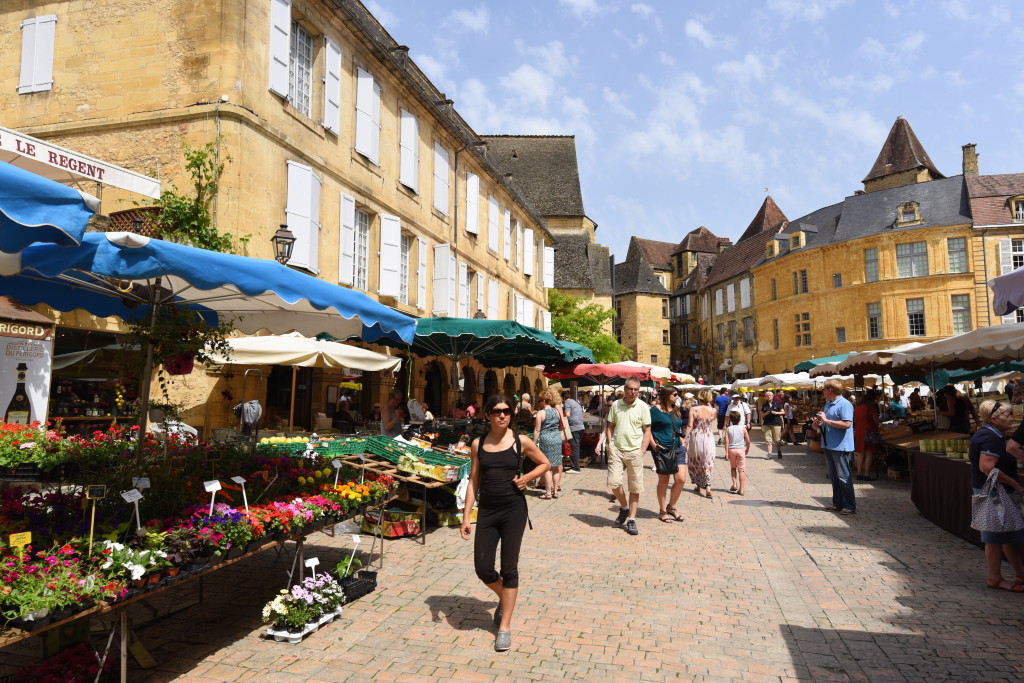 Of all the delightful activities I’ve enjoyed in France, my favorite remains the lazy Saturday morning I spent
 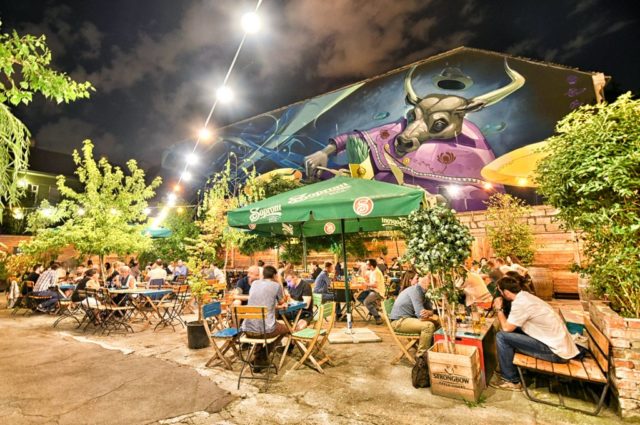 I must admit, I’m not really a “nightlife guy.” But when I’m in Budapest, I budget extra time to simply
  This gorgeous corner of my favorite country has always been high on my personal “must list.” It’s a little slice of heaven: Cut-glass alpine peaks tower over fine little Baroque-steepled towns, all laced together by an eerily turquoise river. While this place should be overrun with crowds, on my latest visit — in late September — I had the place nearly to myself. A few A+ travelers have begun to find their way to the “sunny side of the Alps”: Rafters, kayakers, and adventure sports fanatics are drawn to the sparkling waters of the Soča River. Historians peruse the well-curated array of outdoor museums and cemeteries from World War I’s Isonzo Front, where Ernest Hemingway famously drove an ambulance. Skiers gape up at the 660-foot-tall jump at Planica, home to the world championships of ski flying (for daredevils who consider ski jumping for wimps). And foodies make a pilgrimage to
  My favorite piece of art in Europe isn’t a painting, and it isn’t in a museum. It’s a park — a grassy canvas where a single artist, the early-20th-century sculptor Gustav Vigeland, was given carte blanche to design and decorate as he saw fit. The city of Oslo gave Vigeland a big studio, and turned him loose in the adjoining park for 20 years. He filled that space with a sprawling yet harmonious ensemble of 600 bronze and granite figures, representing every emotion and rite of passage in the human experience, all frozen in silent conversation with each other — and with the steady stream of Oslo urbanites and tourists who flow through Vigeland’s masterpiece. The naked figures (which might provoke giggles among prudish Americans) reinforce the sense of timelessness and universality: They belong not to any one time or place, but to every time and every place — from Adam and Eve to contemporary Norway. Over the last decade and a half, I’ve been to Vigeland Park three times. Each time, I was in a totally different state of mind. And each time, the statues spoke to me like old friends — sometimes with the same old message, and sometimes with new insights. With all due respect to da Vinci, Van Gogh, and Picasso, no single artistic experience in Europe is more meaningful or impactful to me than Vigeland Park.
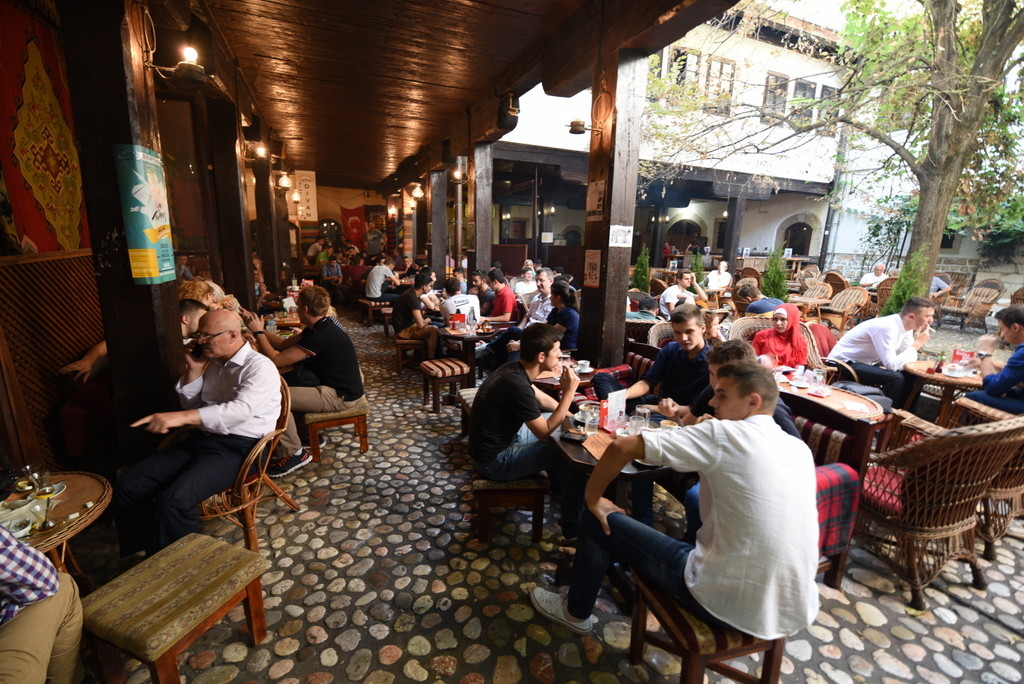 Sarači #16 is the most interesting address in downtown Sarajevo. Facing east — toward the Ottoman-era old town, Baščaršija — you’re transported to medieval Turkey: a bustling bazaar with slate-roofed houses, chunky river-stone cobbles, the tap-tap-tap of coppersmiths’ hammers, and a pungent haze of hookah smoke and grilled meats. Then, turning to the west, you’re peering down Ferhadija, the main thoroughfare of Habsburg Sarajevo. This could be a Vienna suburb, where stern, genteel Baroque facades look down over cafés teeming with urbanites. Within a few short blocks of this spot stand the city’s historic synagogue, its oldest Serbian Orthodox church, its Catholic cathedral, and its showcase mosque. Few places on earth are so layered with history. And then there’s the latest chapter: the poignant story of the Siege of Sarajevo in the mid-1990s, when the town was surrounded by snipers for more than 1,400 days — connected to the outside world only by a muck-filled tunnel and a steep mountain ascent. Proud Sarajevans you’ll meet are often willing, or even eager, to share their stories of living a horrific reality that we experienced only through the Nightly News. And if you’re lucky, they’ll invite you for
  Of all of Tuscany’s appealing corners, the Val d’Orcia (“val dor-chah”) is — for me — the most enchanting. While just a short drive from the tourist throngs in Florence, San Gimignano, Siena, or the Chianti region, the Val d’Orcia — bookended by the charming towns of Montepulciano and Montalcino (both synonymous with fine Tuscan wine) — feels like a peaceful, overlooked eddy of rural life. This strip of land is where most of the iconic “Tuscany scenery” photographs are taken: Winding, cypress-lined driveways; vibrant-green, rolling farm fields that look like a circa-2000 screensaver; and lonely chapels perched on verdant ridges. And it’s the backdrop for famous scenes in everything from The English Patient to Gladiator to Master of None. And yet, the area has no “major sights” — no sculptures by Michelangelo, no paintings by da Vinci, no leaning towers — which, mercifully, keeps it just beyond the itineraries of whistle-stop, bucket-list tourists. I have savored several visits — including
  A few years removed from the depths of its economic crisis, Athens has re-emerged as a red-hot destination. Revisiting the city a few months ago, I was struck by how many tourists I saw — and by how many of them refused to venture beyond the cutesy, crowded Plaka zone that rings the base of the Acropolis. And that’s a shame, because literally across the street from the Plaka’s central square, Monastiraki, is one of Athens’ most colorful and fun-to-explore neighborhoods: Psyrri (“psee-ree”). Not long ago, this was a deserted and dangerous slum. But recently, Psyrri has emerged as a trendy dining and nightlife zone. Its graffiti-slathered apartment blocks now blossom with freshly remodeled Airbnb rentals. This still-gritty area may feel a little foreboding at first, but if you can get past the street art, grime, and motorbikes parked on potholed sidewalks, it’s easy to enjoy the hipster soul of the neighborhood that’s leading many to dub Athens “The New Berlin.” For the upcoming fifth edition of our
  On my last visit to Moscow, in the summer of 2014, Russia was in the news: military action in Crimea and eastern Ukraine, Putin’s brutal crackdown on homosexuality and punk-rock protesters Pussy Riot, and the recently completed Sochi Olympics. Of course, since then, the headlines have changed, but Russia is in the news more than ever. That’s why I consider Moscow to be Europe’s most fascinating — and challenging — destination. People back home shake their heads and wonder: How can these people support Putin, who (to us) is so clearly a demagogue? I take that not as a rhetorical question, but as a genuine one that deserves a real answer. And a thoughtful visit to Moscow — even “just” as a casual tourist — can offer some insights. Designed-to-intimidate Red Square and the Kremlin fill onlookers with awe and respect. The still-standing headstone of Josef Stalin — tucked along the Kremlin Wall, just behind Lenin’s Tomb and its waxy occupant — seems to suggest that the Russian appetite for absolute rulers is nothing new. But mostly, I’m struck by the improvements I see in Moscow with each return visit. On my first trip, in the early 2000s, the famous Gorky Park was a ramshackle, potholed mess, and the Cathedral of Christ the Savior — which had been demolished by communist authorities — was still being rebuilt. But today, Gorky Park is a lush, pristine, manicured people zone, and the sunshine glitters off the cathedral’s rebuilt golden dome. Just up the river, a Shanghai-style forest of futuristic skyscrapers rises up from a onetime industrial wasteland. In short, the Russian capital — which has always been interesting — is now actually a pleasant place to travel. Finding myself really enjoying Moscow, for the first time, makes it easier to imagine how many Russians might be convinced that Putin is Making Russia Great Again.
 I
I