Followers of my blog know I’m a little cuckoo for Bosnia-Herzegovina. I love its thriving cities, its beautiful landscape, its vivid culture, and its kind people. Over the course of about a dozen trips, I’ve mostly visited Mostar, Sarajevo, and the countryside sights scattered near them. And one thing remains constant: The more I see of Bosnia, the more I fall in love with it.
So, on my latest guidebook research trip, I scheduled a couple of extra days to delve deeper — into parts of Bosnia that few Americans visit, or have even heard of. I immediately thought of my travel buddy, Ben, the only American I know who geeks out about arcane Yugoslav history as much as I do. I shot him an email saying, “Could I interest you in a road trip through Travnik, Jajce, and Banja Luka?” I knew I’d found my Yugo-soulmate when he responded: “Ooooh! Jajce!”

And so Ben and I met up one Friday afternoon in Sarajevo, and caught up as we fortified ourselves with grilled meats and uštipci (chunks of fried dough). The next morning, we hopped into our car, curled up mountain roads out of town (past the 1984 Winter Olympics stadium), and drove the entire length of the Bosnian freeway system in a matter of 45 minutes. The new road was slick and efficient, hinting at a promising future for this little country — which strives both to upgrade its infrastructure, and to be better connected to the rest of Europe.
Clearing the Sarajevo suburbs, we kept our eyes peeled through the town of Viskovo, watching for the symmetrically shaped hill called Visočica — the site of what some believe (with little evidence other than a neat shape) to be a pyramid built tens of thousands of years ago. There was no time to stop and investigate, but with a quick glance from the highway, Ben and I were satisfied that science would be able debunk the “Bosnian pyramids” without our firsthand accounts.
Approaching our first stop, Travnik, we pulled off the main road to spiral up an impossibly twisty, impossibly steep lane striped with teeth-jarring cobbles, to reach the hilltop fortress overlooking town. Overshooting the gate but finding no parking higher up, I found myself doing a white-knuckle, nine-point turn to make my way back down to a wide spot in the “road,” wedged between someone’s front stoop and their mailbox.

Hiking up to Travnik’s fortress, we were rewarded with sweeping views over the pastoral Bosnian countryside. The steep hills, fuzzy and green, were punctuated by a smattering of minarets. For all the things Bosnia is known for — and unfortunately, to most Americans, the list consists almost solely of its horrific 1990s warfare — it seldom gets full credit for being simply beautiful. Overlooking the scenic valley that hems in little Travnik, wishing I had more time to do a little hiking, it occurred to me that rugged little Bosnia is like Switzerland, but without money. If only it had better infrastructure and a higher standard of living, Travnik would be a posh ski resort. But it doesn’t…so it isn’t.
Throughout our road trip, I was on a crusade to try ćevapčići in its many forms. For aficionados of Balkan cuisine, Bosnia is the homeland of ćevap — perfectly seasoned minced meat formed into little links, then grilled on an open fire — much as France specializes in cheese, or Spain corners the market on bizarre seafood. I was excited to start my culinary adventure in Travnik, based on the recommendation of our Bosnian friend (and fellow Rick Steves tour guide), Sanel: “While in Travnik, for the love of God, do not miss ćevapčići in Restaurant Hari.”

Tragically, Restaurant Hari was closed for renovation. For the love of God, indeed! But our search for it led us to Travnik’s architectural gem: the hauntingly beautiful, wood-carved Sulejmanija Mosque. The interior was closed, but we discovered a modern mini-market tucked in its basement. Ben explained that this custom dates back to the earliest days of Islam in Bosnia, when it made sense to invite merchants to open up shop in this central and well-protected space. Just up the street is a museum filling the former home of Nobel Prize-winning novelist Ivo Andrić. There’s a lot going on in little Travnik.

Undeterred, we continued on our ćevap quest, which took us across the main highway to another Bosnian friend’s recommendation: Lutvina Kahva, a grill café with an inviting riverside terrace perched just so, at the end of a long, gushing series of gentle waterfalls.
In the Muslim parts of Bosnia, as throughout the Islamic world, running water is a cultural fixture. While Catholics bless still water and call it holy, Muslims believe that the power of nature is in its movement; they prefer water to be continually flowing, cleansing, replenishing, circulating. Just as a dervish whirls to connect with the spirituality of the earth and the heavens, so, too, should water be in motion.

Listening to the mesmerizing gurgle, I dug into a big plate of perfectly grilled ćevap on flatbread (somun), slathered with the decadent, perfectly tart cream cheese called kajmak, sprinkled with chopped fresh onions, and liberally doused with the explosively flavorful eggplant-and-red-pepper paste called ajvar. To finish the meal, I ordered a cup of bosanska kafa (unfiltered Bosnian coffee) — which, just as our friend had told us, came on its own little copper tray with a Turkish delight (rahatlokum)…and a single cigarette (Yugoslav-era Sava brand, of course). Caffeine, sugar, and nicotine: The holy triumvirate of Bosnian stimulants.

Climbing back into our car, we languidly curled through more idyllic Bosnian countryside — and over a desolate mountain pass — about an hour to our next stop: the town of Jajce (pronounced “YAI-tseh”). A provincial center of about 30,000 people, Jajce owns just about the most stunning setting of any town I’ve seen: Preening on a hilltop over thundering waterfalls that tumble into a tight riverbend.

But for Partisans and Tito sympathizers, that is all merely preamble to Jajce’s true claim to fame as the birthplace of Yugoslavia. It was here, in November of 1943, that the Anti-Fascist Council for the National Liberation of Yugoslavia (AVNOJ) held its second convention. While that sounds pretty obscure to outsiders, it’s a big deal: It was at this meeting that representatives of various groups decided that, should they prevail in World War II, they would create a bold new incarnation of Yugoslavia.
Ben and I drove into town, our Yugoslav-history-wonk pulses quickening. (As an indication of how off-the-deep-end I am for the marginalia of Yugoslav history, I have a vintage, circa-1970 tourist map of Yugoslavia hanging over my desk, next to photos of my wife, parents, and dearest friends.)
Parking the car, I paused to purchase a laughably flimsy Yugoslav flag from a street vendor before stepping into the convention hall. The big, mostly empty space — decorated as it was the day of that fateful convention — resembled a midcentury Holiday Inn ballroom. There stood Tito — in bronze statue form — at the stage. And, because the Yugoslavs were hoping to curry favor with the Allies, on the walls hung a motley crew of portraits: Tito, Stalin, Marx, Churchill, and FDR.

I must admit, the place gave me goosebumps. This is the “Independence Hall” of Yugoslavia, where — all joking aside — a ragtag band of homegrown freedom fighters had the audacity to form a country that did not even exist yet. Perusing the exhibits — one apiece furnished by each of Yugoslavia’s six constituent republics — I was swept up in this vision of a united Yugoslavia, which would flourish for nearly five decades before it was snuffed out by land-hungry politicians.
My nostalgia for Yugoslavia is, of course, tempered by an awareness of its many flaws. And, I think, it’s stoked by my knowledge of what happened at the end of the story: Yugoslavia was ripped apart by those who placed their own interests above the collective whole…and Bosnia paid the worst price of all.

Buying matching Tito lapel pins from the gift shop, we set out to explore the rest of Jajce — hiking down to the base of its thundering waterfall, then up through its antique streets to the mighty fortress capping the town. Jajce is a charming burg. With a little investment, it could be every bit as vital and alluring as trendy places like Český Krumlov, Romania’s Sighișoara, or Germany’s Rothenburg. Instead, it’s a sleepy town with little touristic metabolism. Perched on the ramparts of Jajce’s fortress, surveying the verdant hillsides, I was struck again by how magnificent this mountainous country is — and how, with some smart investment, it could become a travelers’ mecca. Switzerland without money, indeed.
Back in our car, we made a quick pit stop at yet another water feature — a higgledy-piggledy little stand of antique mills balanced just so on rocks in the middle of a waterfall.

Leaving Jajce, we set out for our next destination, in the other half of Bosnia. The Dayton Peace Accords that ended the wars in Bosnia in 1995 gerrymandered the country to create two major sub-states. One was the Bosniak and Croat part of Bosnia, which we’d been traveling through so far. The other was the Republika Srpska, a Serb-dominated territory that we were heading for now. Our next stop: Banja Luka (pop. 200,000), the capital of Republika Srpska.
We crossed the internal border with little fanfare, but soon we began to notice more Cyrillic on the signs, instead of the more familiar Roman alphabet we’d been seeing so far. Approaching Banja Luka, we drove through the stunning canyon of the Vrbas River, a major rafting destination. The sight of a few rafters completing their late-day journey stoked our interest, but the next morning, our many phone calls to various rafting operators went unanswered. Apparently in Repubika Srpska, Sunday morning is sacrosanct — even if a pair of foreigners is dying to give you their money.
We checked into our Airbnb: a sprawling, well-equipped apartment a 10-minute walk from the center of town, all for about $40 a night. The front door — with a locking mechanism that slid a dozen no-nonsense bolts decisively into place, essentially turning the entire apartment into a fortified panic room — reminded us that, with the recent legacy of gruesome war, Bosnians don’t take home security lightly.
It was time for dinner, so we walked along Banja Luka’s broad boulevards to the river. We weren’t sure what to expect from this would-be capital of a would-be breakaway republic with a minuscule GDP. But we were pleasantly surprised by how modern and tidy Banja Luka felt — with the pride, economic metabolism, and vitality of any mid-sized Central European city.

I had only one agenda in Banja Luka, and that was to try the local ćevap. Grilled meat gourmands know that they do it differently here: Instead of little link-shaped sausages, Banja Luka-style (banjalučki) ćevapi is one long, continuous ćevap with hot peppers on the side. Yes, I’d already had ćevap once today. But when was I gonna make it back to Banja Luka?
We went to the historic fortress and nabbed the last available table at the fancy restaurant inside, Tvrđava Kastel. It was a rollicking scene, with a Balkan brass band blaring jaunty tunes in the corner. At the next table, a comically musclebound meathead grew increasingly animated in conversation with his tablemate. As he slowly amassed an impressive collection of empty beer glasses, it became difficult to tell whether this was a happy conversation or an angry conversation. As a pair of bespectacled, brainy Americans, we kept a very low profile.
I ordered my ćevap, but was crestfallen when it showed up not as my fantasized-for banjalučki ćevapi, but the same old version I’ve had all over Bosnia. Meanwhile, Ben chatted up our middle-aged, matronly server in Serbian. Charmed, she told Ben about her dear daughter, who lived part-time in Florida and worked the rest of the time on a cruise ship, hoping to permanently relocate stateside. Ben and I were imagining a demure, wholesome young woman pulling herself up by the bootstraps. But when she showed us a picture, we instantly grasped two things: First, the daughter — a masterpiece of plastic surgery, makeup, and spandex — was no shrinking violet. (The prevailing beauty aesthetic in these parts can most diplomatically be described as “porn glam.”) And second, our server had matchmaking designs on Ben. (“He can get you that visa you’ve been wanting. And he speaks Serbian, too!”) Escaping just before the formal proposal, we made our way back to our high-rise fortress.
The next morning, we poked around Banja Luka a bit more before heading out. The Museum of Republika Srpska fills a run-down, concrete-and-glass building that feels deserted. But, digging into the exhibits, we were impressed by how thoughtfully and even-handedly this almost-country presented itself. It accomplished what the national museum for any underdog nation should, which is to endear and intrigue us to a place we’d never really known much about.

The most compelling exhibit detailed the World War II years, when Bosnia was ruled by a Nazi puppet government called the Ustaše. The Croat-controlled Ustaše pursued the same genocidal regime as the Nazis, but with a regionally inflected spin — targeting their historic enemies, the Serbs. And the museum’s exhibits are as harrowing as any we had ever seen (mind you, Ben and I have both guided tours to Auschwitz-Birkenau). Ustaše camps lacked gas chambers, so most deaths were from blunt-force trauma. One grisly photo showed a very young Ustaše soldier grinning widely — as if in a prom portrait — as he posed with the disembodied head of an executed Serb warrior. And an entire wall was filled with gruesome photographs of babies who died at Ustaše concentration camps.
The most notorious of those camps — Jasenovac — sits just across the modern border, in Croatia. So Ben and I decided to stop off there on our way to catch his flight in Zagreb. The Jasenovac memorial site includes a small, modern museum documenting the history of the camp. The names of victims are etched in glass panels in the walls and hanging from the ceiling. And the thoughtful exhibits toe a very careful line, with soberly written displays and recorded testimonials from former prisoners — but without a trace of the graphic photos we’d just seen across the border. Many observers feel that, unlike Germany, Croatia has not entirely owned up to its culpability in World War II atrocities — partly because its 1940s activities later became entangled with its 1990s independence. And, while this museum is an important step forward, I couldn’t shake the feeling that they could have told the story with a little more…enthusiasm.

The emotional centerpiece of Jasenovac is a long, pensive hike from the museum: an evocative, flower-shaped sculpture by Serb artist Bogdan Bogdanović. Standing here, listening to the distant rumble of the sleek Croatian expressway, and looking just across the river to the hills of Bosnia’s Republika Srpska, Ben and I reflected on the contrasts that a whirlwind road trip through Bosnia offers.
Our journey is over. But one thing’s for sure: We’ll both be back. Bosnia has a strange magnetism on travelers…and not just those of us who have a Yugoslav map on our wall.


 Driving around the perimeter of Iceland on the 800-mile Ring Road this summer (working on our
 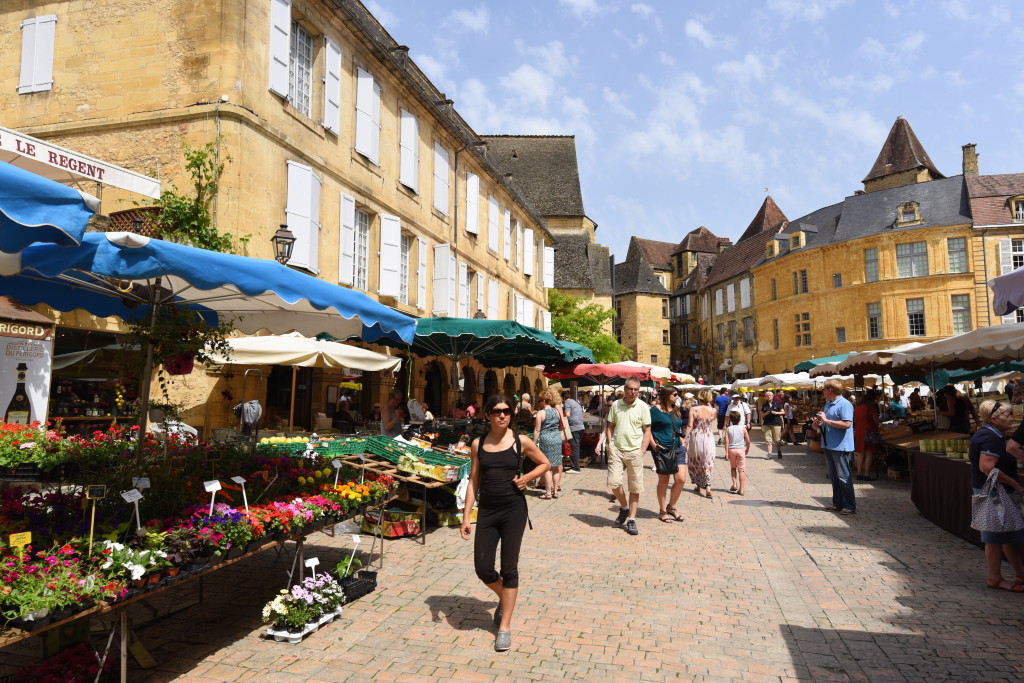 Of all the delightful activities I’ve enjoyed in France, my favorite remains the lazy Saturday morning I spent
 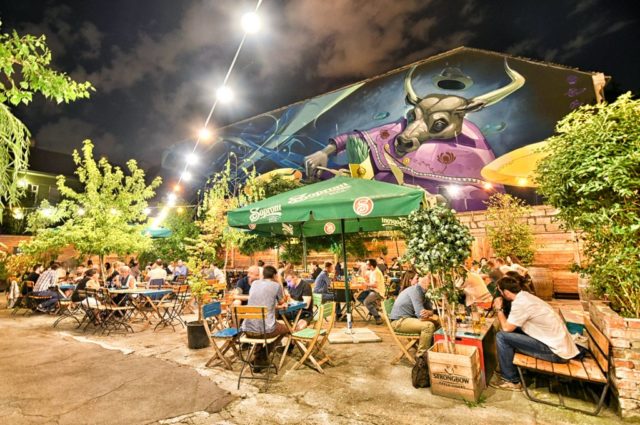 I must admit, I’m not really a “nightlife guy.” But when I’m in Budapest, I budget extra time to simply
  This gorgeous corner of my favorite country has always been high on my personal “must list.” It’s a little slice of heaven: Cut-glass alpine peaks tower over fine little Baroque-steepled towns, all laced together by an eerily turquoise river. While this place should be overrun with crowds, on my latest visit — in late September — I had the place nearly to myself. A few A+ travelers have begun to find their way to the “sunny side of the Alps”: Rafters, kayakers, and adventure sports fanatics are drawn to the sparkling waters of the Soča River. Historians peruse the well-curated array of outdoor museums and cemeteries from World War I’s Isonzo Front, where Ernest Hemingway famously drove an ambulance. Skiers gape up at the 660-foot-tall jump at Planica, home to the world championships of ski flying (for daredevils who consider ski jumping for wimps). And foodies make a pilgrimage to
  My favorite piece of art in Europe isn’t a painting, and it isn’t in a museum. It’s a park — a grassy canvas where a single artist, the early-20th-century sculptor Gustav Vigeland, was given carte blanche to design and decorate as he saw fit. The city of Oslo gave Vigeland a big studio, and turned him loose in the adjoining park for 20 years. He filled that space with a sprawling yet harmonious ensemble of 600 bronze and granite figures, representing every emotion and rite of passage in the human experience, all frozen in silent conversation with each other — and with the steady stream of Oslo urbanites and tourists who flow through Vigeland’s masterpiece. The naked figures (which might provoke giggles among prudish Americans) reinforce the sense of timelessness and universality: They belong not to any one time or place, but to every time and every place — from Adam and Eve to contemporary Norway. Over the last decade and a half, I’ve been to Vigeland Park three times. Each time, I was in a totally different state of mind. And each time, the statues spoke to me like old friends — sometimes with the same old message, and sometimes with new insights. With all due respect to da Vinci, Van Gogh, and Picasso, no single artistic experience in Europe is more meaningful or impactful to me than Vigeland Park.
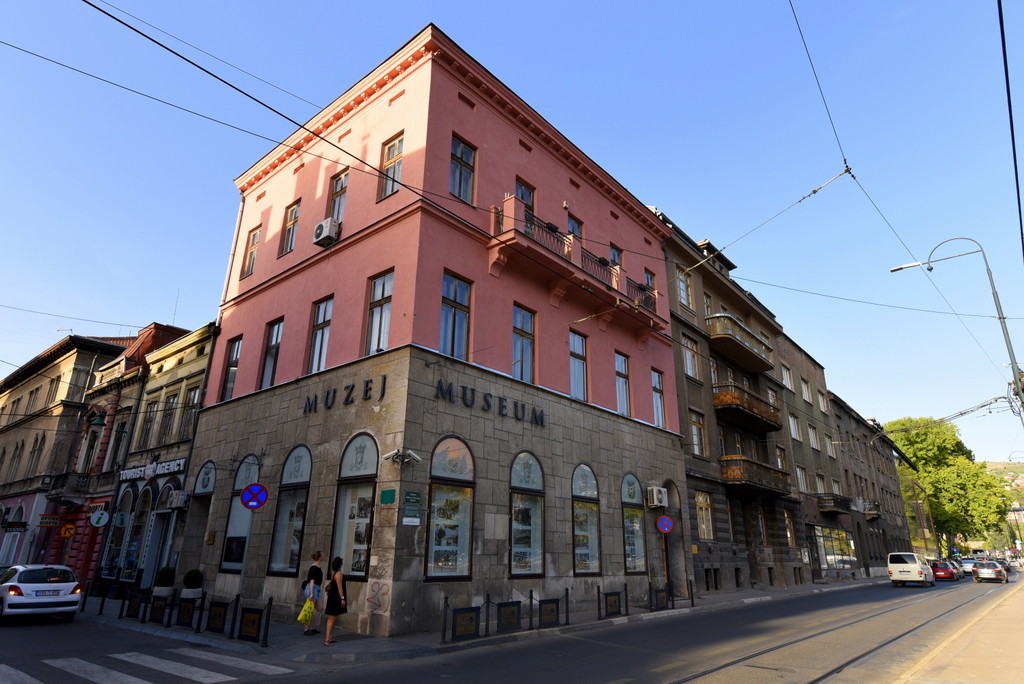
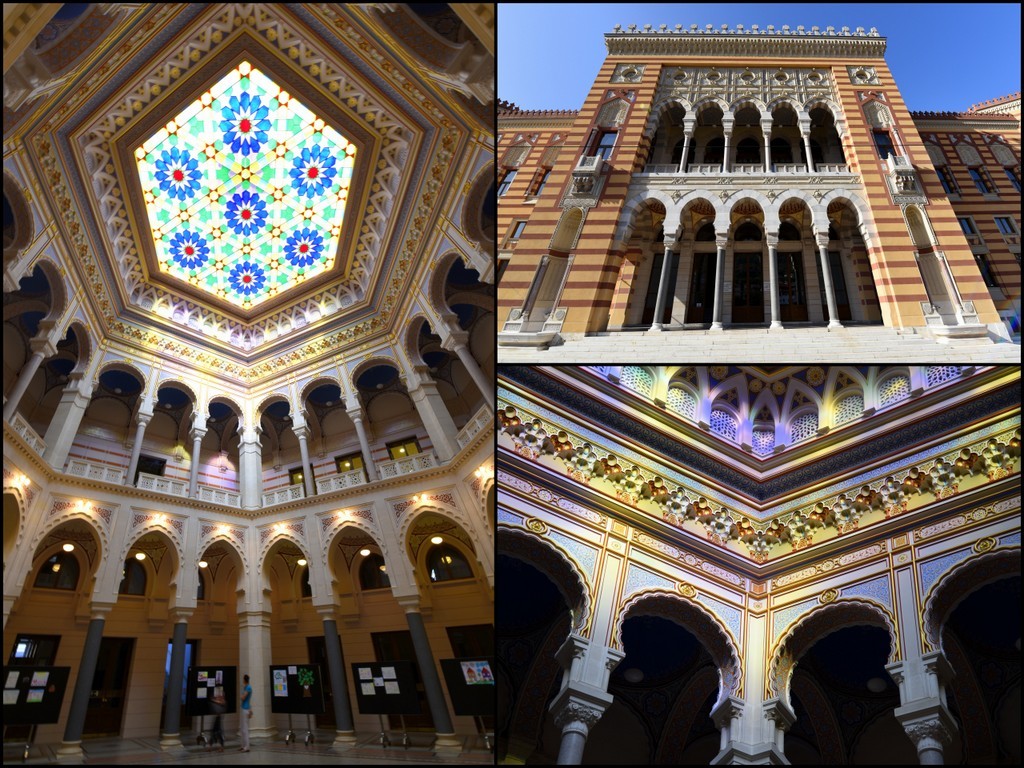
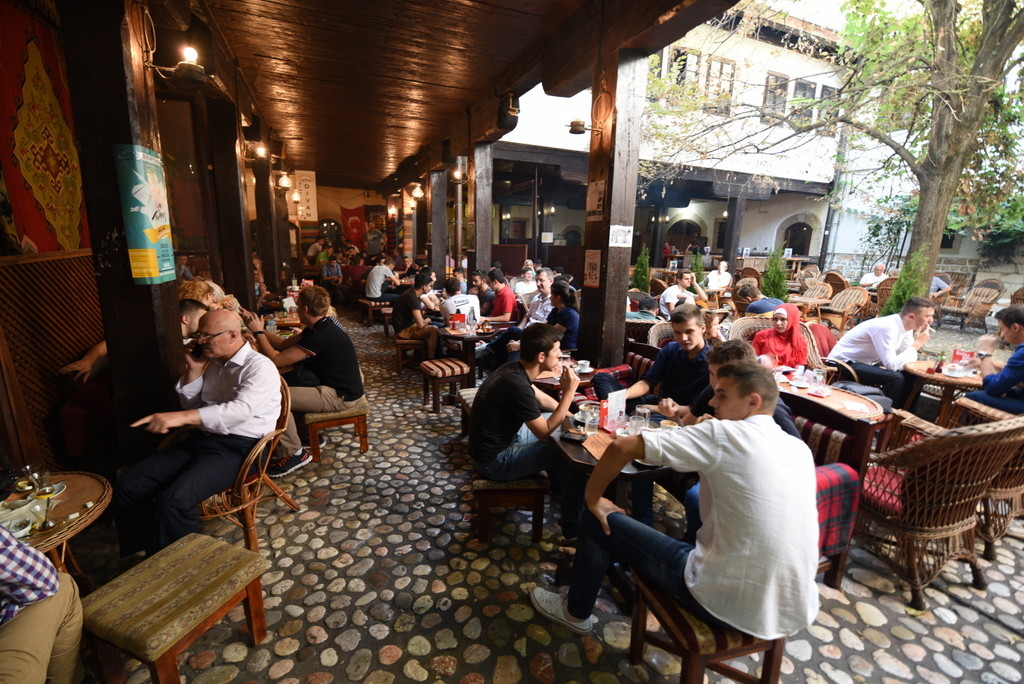 Sarači #16 is the most interesting address in downtown Sarajevo. Facing east — toward the Ottoman-era old town, Baščaršija — you’re transported to medieval Turkey: a bustling bazaar with slate-roofed houses, chunky river-stone cobbles, the tap-tap-tap of coppersmiths’ hammers, and a pungent haze of hookah smoke and grilled meats. Then, turning to the west, you’re peering down Ferhadija, the main thoroughfare of Habsburg Sarajevo. This could be a Vienna suburb, where stern, genteel Baroque facades look down over cafés teeming with urbanites. Within a few short blocks of this spot stand the city’s historic synagogue, its oldest Serbian Orthodox church, its Catholic cathedral, and its showcase mosque. Few places on earth are so layered with history. And then there’s the latest chapter: the poignant story of the Siege of Sarajevo in the mid-1990s, when the town was surrounded by snipers for more than 1,400 days — connected to the outside world only by a muck-filled tunnel and a steep mountain ascent. Proud Sarajevans you’ll meet are often willing, or even eager, to share their stories of living a horrific reality that we experienced only through the Nightly News. And if you’re lucky, they’ll invite you for
  Of all of Tuscany’s appealing corners, the Val d’Orcia (“val dor-chah”) is — for me — the most enchanting. While just a short drive from the tourist throngs in Florence, San Gimignano, Siena, or the Chianti region, the Val d’Orcia — bookended by the charming towns of Montepulciano and Montalcino (both synonymous with fine Tuscan wine) — feels like a peaceful, overlooked eddy of rural life. This strip of land is where most of the iconic “Tuscany scenery” photographs are taken: Winding, cypress-lined driveways; vibrant-green, rolling farm fields that look like a circa-2000 screensaver; and lonely chapels perched on verdant ridges. And it’s the backdrop for famous scenes in everything from The English Patient to Gladiator to Master of None. And yet, the area has no “major sights” — no sculptures by Michelangelo, no paintings by da Vinci, no leaning towers — which, mercifully, keeps it just beyond the itineraries of whistle-stop, bucket-list tourists. I have savored several visits — including
  A few years removed from the depths of its economic crisis, Athens has re-emerged as a red-hot destination. Revisiting the city a few months ago, I was struck by how many tourists I saw — and by how many of them refused to venture beyond the cutesy, crowded Plaka zone that rings the base of the Acropolis. And that’s a shame, because literally across the street from the Plaka’s central square, Monastiraki, is one of Athens’ most colorful and fun-to-explore neighborhoods: Psyrri (“psee-ree”). Not long ago, this was a deserted and dangerous slum. But recently, Psyrri has emerged as a trendy dining and nightlife zone. Its graffiti-slathered apartment blocks now blossom with freshly remodeled Airbnb rentals. This still-gritty area may feel a little foreboding at first, but if you can get past the street art, grime, and motorbikes parked on potholed sidewalks, it’s easy to enjoy the hipster soul of the neighborhood that’s leading many to dub Athens “The New Berlin.” For the upcoming fifth edition of our
  On my last visit to Moscow, in the summer of 2014, Russia was in the news: military action in Crimea and eastern Ukraine, Putin’s brutal crackdown on homosexuality and punk-rock protesters Pussy Riot, and the recently completed Sochi Olympics. Of course, since then, the headlines have changed, but Russia is in the news more than ever. That’s why I consider Moscow to be Europe’s most fascinating — and challenging — destination. People back home shake their heads and wonder: How can these people support Putin, who (to us) is so clearly a demagogue? I take that not as a rhetorical question, but as a genuine one that deserves a real answer. And a thoughtful visit to Moscow — even “just” as a casual tourist — can offer some insights. Designed-to-intimidate Red Square and the Kremlin fill onlookers with awe and respect. The still-standing headstone of Josef Stalin — tucked along the Kremlin Wall, just behind Lenin’s Tomb and its waxy occupant — seems to suggest that the Russian appetite for absolute rulers is nothing new. But mostly, I’m struck by the improvements I see in Moscow with each return visit. On my first trip, in the early 2000s, the famous Gorky Park was a ramshackle, potholed mess, and the Cathedral of Christ the Savior — which had been demolished by communist authorities — was still being rebuilt. But today, Gorky Park is a lush, pristine, manicured people zone, and the sunshine glitters off the cathedral’s rebuilt golden dome. Just up the river, a Shanghai-style forest of futuristic skyscrapers rises up from a onetime industrial wasteland. In short, the Russian capital — which has always been interesting — is now actually a pleasant place to travel. Finding myself really enjoying Moscow, for the first time, makes it easier to imagine how many Russians might be convinced that Putin is Making Russia Great Again.
 I
I