When I returned from my recent guidebook research trip to Greece, my friends and colleagues wanted to hear all about it. My standard response: “Greece is an amazing place to be on vacation. But it’s a very challenging place to write a guidebook.”
I adore Greece. And yet, the same features that make it lovable also make it a nightmare for pinning down essential details. After two intense weeks of traveling through Greece, researching and writing up some new destinations for the next edition of our Rick Steves Greece guidebook, I came away with a new appreciation for the Greek approach to life… even if it resists being captured on the page. Hard as you may struggle and grouse, ultimately you have to take Greece on Greece’s terms.
For example, on the tiny Cycladic island of Folegandros (population: just over 700), Spiros the cabbie drove me high up to the islet’s mountainous spine, to a remote settlement that’s strung out along a couple of miles of dusty road; little more than an isolated farm every 100 to 200 yards, it barely seems to qualify as a “village.” From up here, you can see virtually the entire island: its jagged folds, tidy terraces, cozy coves, and parched, windblown hillocks.

I came all that way to visit the only museum on the entire island. But Spiros — who, it quickly became apparent, had never actually been there — had trouble finding the place. He drove up an extremely remote road, with more rocks than gravel, until it dead-ended, then sent me hiking on foot, beyond where any car could go, toward a remote farmstead…which, I imagine, Spiros thought must have been the museum. Instead, I was met by a bald, musclebound, understandably grumpy young man who clearly had come to this out-of-the-way location quite intentionally, to escape the modern world. Guessing from his muscle shirt that he probably was not a museum attendant, nevertheless, I smiled stupidly and asked, “Museum?”
He took pity on me, and far more politely than he needed to, he gestured me back in the other direction. I walked past Spiros, who was smoking a cigarette next to his taxi, and carried on toward a very humble pile of rocks on the horizon which, I now realized, had a handpainted sign out front reading MUSEUM. (Spiros ran after me like a confused puppy dog.)
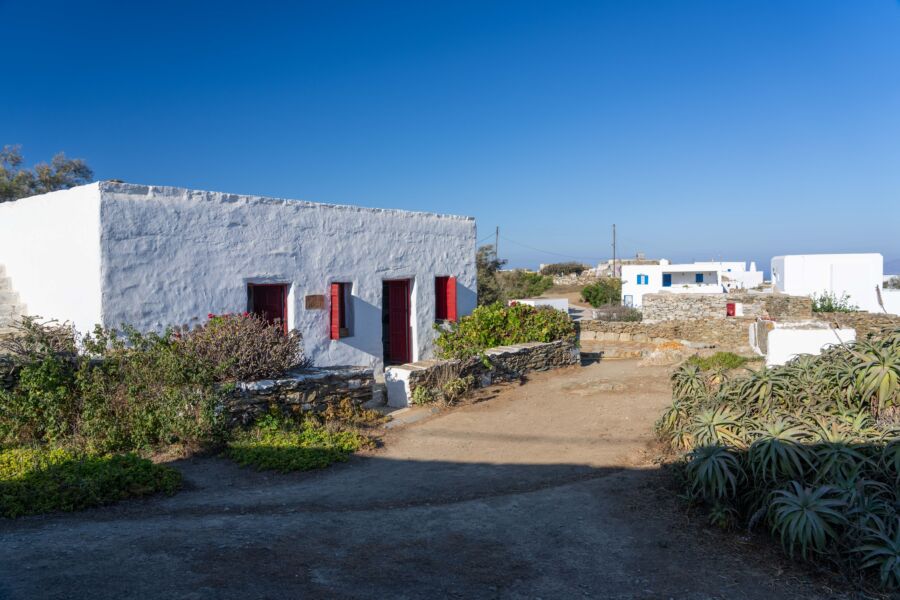
Finally reaching the Folklore Museum of Folegandros, I was cheerfully greeted by Irene. Speaking flawless English, she explained the layout of the humble yet fascinating complex: two historic farmhouses (one from the 18th century, the other from the turn of the 20th), plus a scattering of stone outbuildings and facilities (threshing floor, laundry tub, rainwater cisterns), all lassoed within a rugged stone wall.
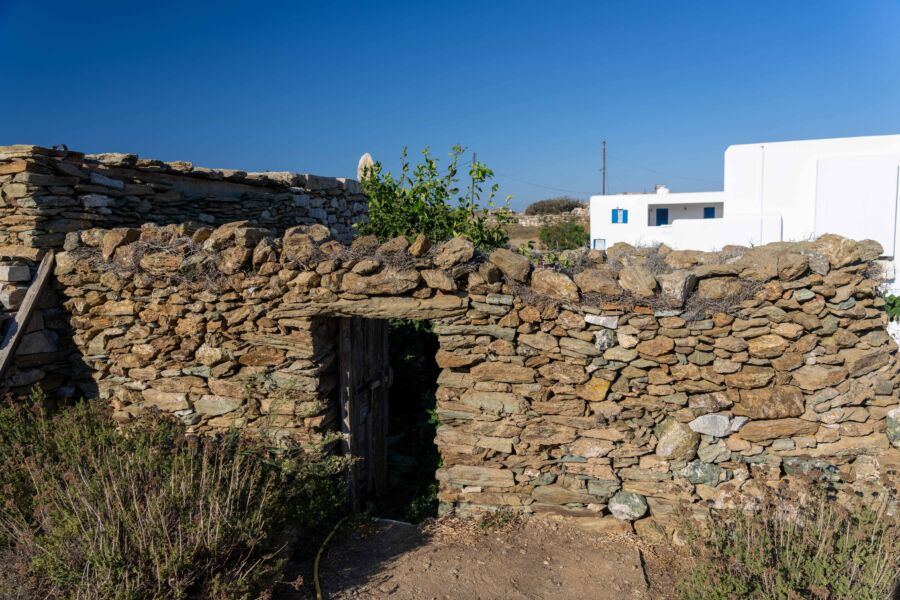
She pointed out a lone, scrubby lemon tree, around which had been constructed its very own chest-high wall. Lemons were essential here; when sailors returned from long voyages, they’d drink lemonade to help stave off scurvy. Seeming to speak as much about the people of Folegandros as about their citrus trees, she said, “Life is very precious on this island. So we build walls to protect it from the elements.”
Turns out, this is a real humdinger of a museum, thanks largely to Irene’s commentary — hard to believe, it was actually worth the short, if complicated, trip to the summit of the island. And so, to write it up properly for our book, I needed to confirm the details.
I asked Irene about the “opening hours” I had found online: Open each evening, from 5 p.m. until 7:30 p.m. Irene paused. “Yes, more or less.”
“More or less?” I prodded.
“Well,” she explained. “I come on the bus. So it depends on the bus schedule. In the summer, it’s like you said. In September — starting just two weeks ago — they change the schedule a little, so it’s more like 4:30 until 7. And then, of course, two weeks from now we’ll close until the end of April, because I’m going to Athens for the winter.”
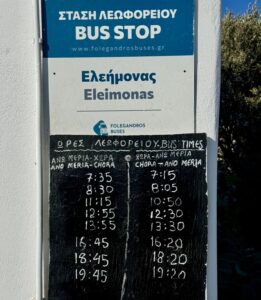
This endearing timetable perfectly suits such an endearing museum. And it makes so much sense: The hours are not arbitrarily set by some faraway office. Rather, they are dictated by Irene’s commute, because Irene — and only Irene — keeps the place open. And if Irene is sick, or wants a break, or has to make a special trip to Athens during the summer…well, then, the museum closes.
This nuance is difficult to capture in a guidebook listing, of course. I feel a weight of responsibility to not let my readers down; I shudder to think of someone making the same journey I did, only to show up and find this museum closed because Irene’s bus was on the shoulder-season timetable. These are the details that it’s my unenviable duty to sweat, on your behalf, in my travels. And perhaps the most psychologically taxing aspect of my job is figuring out how to make the “real world” of Greece jibe with the needs and expectations of our American readers…including our stubborn tendency to assume that schedules are sacrosanct, rather than provisional.
I came across a similarly endearing refusal to be pinned down to a specific timetable in other places, too — even ones that are far less off-the-grid than a remote farming village.
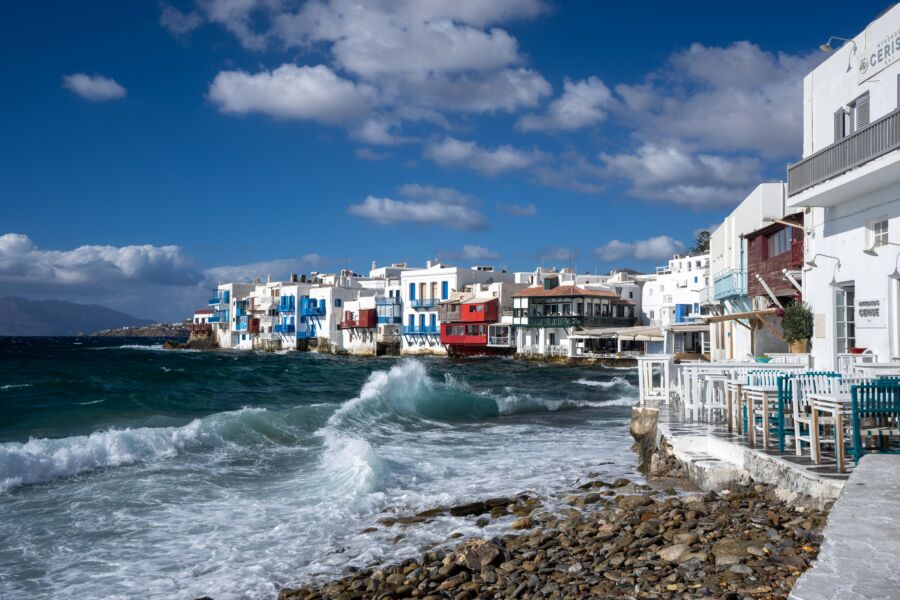
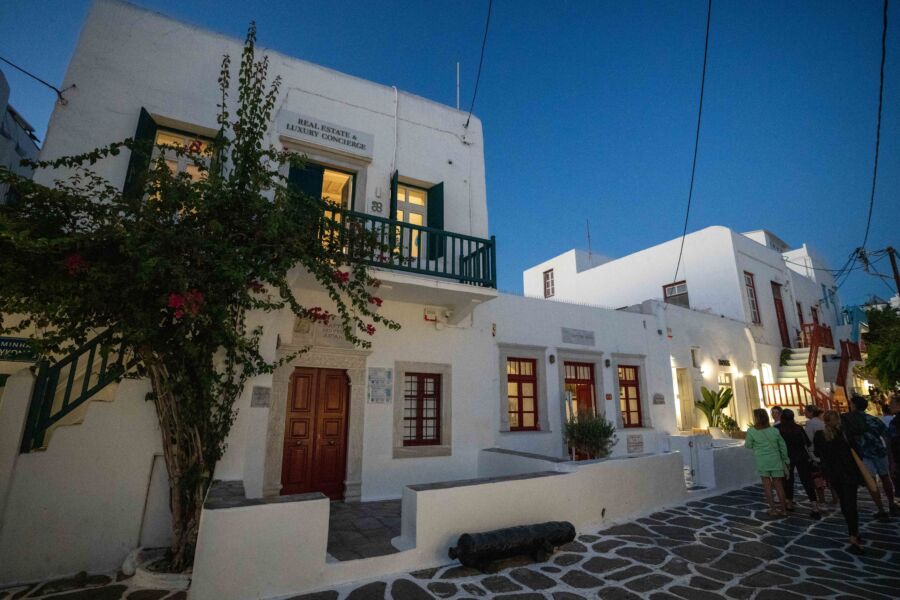
For example, Mykonos is one of the most popular, most crowded, most expensive of the Cycladic Islands. It gets millions of visitors each year. And it has only a scant handful of museums. At one of these, I confirmed the hours printed in our book against the posted hours outside: Spot on! Then I double-checked them with the clerk inside. She waved dismissively at the posted hours and explained: “Ah, right. Those were the hours when the other lady was here, last year. But now I’m here, so the schedule is different.”
And what about next year?
“Well, that depends on whether I’ll be back.”
So, then… do you expect to be back?
“I think so, but you never know. Could be someone else, with their own schedule.”
Again, even as it stymies my data-gathering mission, I find this terrifically endearing. Each of these little museums is a one-person show. And so, naturally, what time they are open depends on that person. If she has to pick up a child at 5…then the museum closes at 4:30 this year. This strikes me as unassailably organic… and so sweetly Greek.
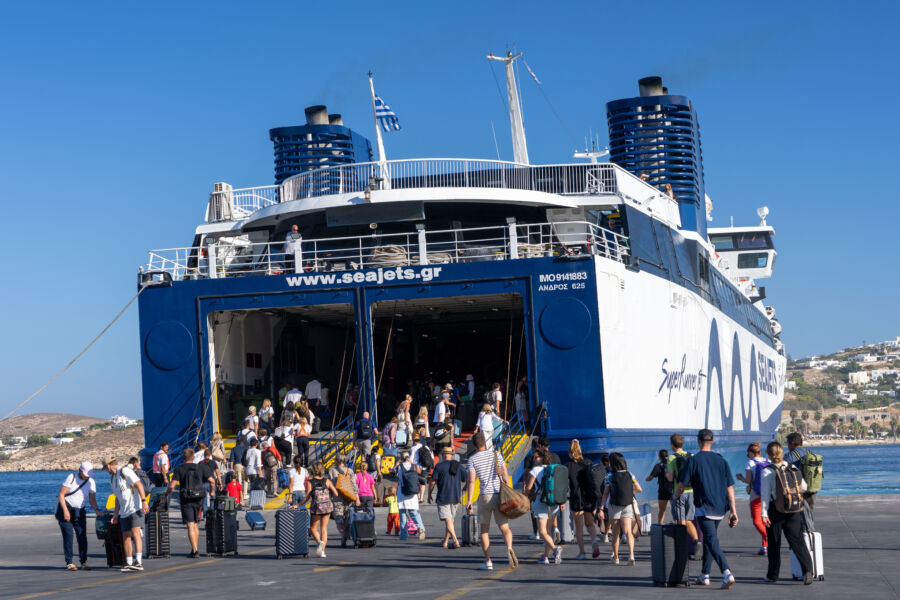
The same goes for ferry schedules. Planning a complicated connection between islands, with a change of boats at an intermediate island, I got some advice from the ticket clerk: “That first boat is always 30 to 40 minutes late,” she said. “But you’ll be fine, because you have two hours to catch your next boat. That boat is always on time.”
Sure enough, that first boat was precisely 35 minutes late… and the second, right on time. Which made me wonder: If everyone who actually works with these boats knows that the schedule is wrong, then why not change the schedule? Ah, but that’s a very American mindset…not a Greek one.
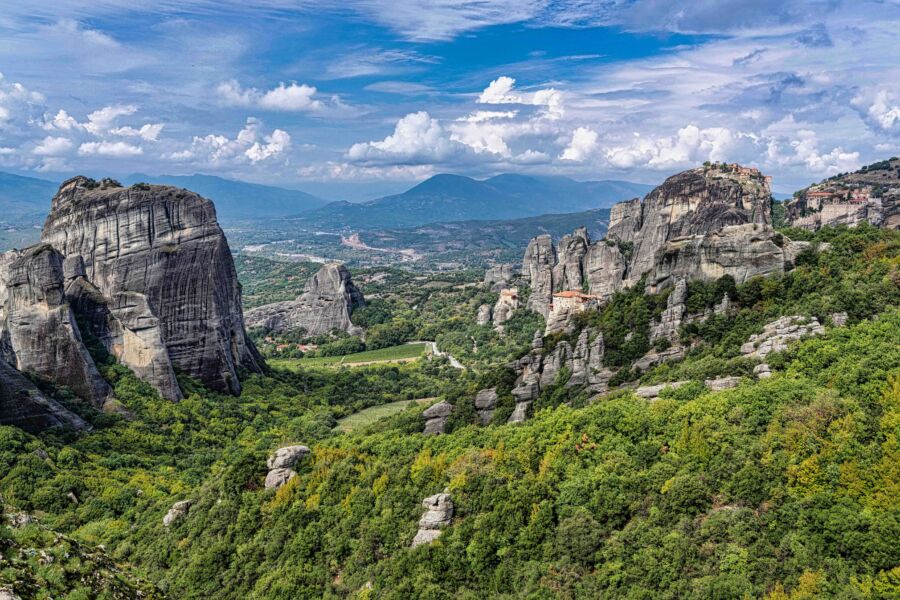
Greece doesn’t always give you the answers where you expect them. But generally, if you’re persistent, you will find them. At the opposite end of Greece, near the mind-bending monastic landscape of Meteora, I dropped by the Kalabaka tourist information office — in a huge, prominent building right on the main roundabout.
I bombarded the smiling TI clerk with my list of questions about how someone without their own car might successfully navigate the six monasteries. She was cheerful and eager to help; unfortunately, it quickly became clear she did not speak one word of English. Her primary function, it seemed, was to hand out a town map and gesture to a wall of brochures.
Unfortunately, I spoke about as much Greek as she spoke English. She grasped that I was working on a guidebook (probably because I kept waving the book around, pointing at it, pantomime-scribbling in its pages). So she pointed out the door behind me and said, “Kah-tel.” With each new attempt I made to clarify bus schedules and taxi fares, she grew more insistent: “Kah-tel! Kah-tel! Kah-tel!”
Finally I realized she was directing me to KTEL, the Greek bus company. Stopping by the town bus station was on my list regardless, so I thanked her, gathered up the piles of maps and brochures I’d harvested, and headed a couple of blocks down the street to the bus station.
Stepping inside the small office, I was greeted by a pleasant clerk who, it turns out, not only spoke perfect English, but instantly understood what I was doing and spent the next 20 minutes talking through all of the complicated details I was trying to unravel.
Part of me — the grouchy part — wonders why they don’t just close down the TI entirely, post a sign on the door saying (in English) to direct all questions to the KTEL office down the street, and give that clerk a big raise. The rest of me has learned, over many such frustrations over many years of visits, to simply shrug it off…and be glad that, when I really needed it, Greece came through. On its own terms, of course.
Returning home from Greece, I spent a few more weeks pawing though my big bag of collected brochures and business cards, and thumbing through — page by page by page — the towering stack of little black notebooks where I scrawled details like the peculiarities of Irene’s personal bus schedule, the variable likelihood of tardiness among certain boats, and the pointer to skip Kalabaka’s TI and head for the KTEL office instead.
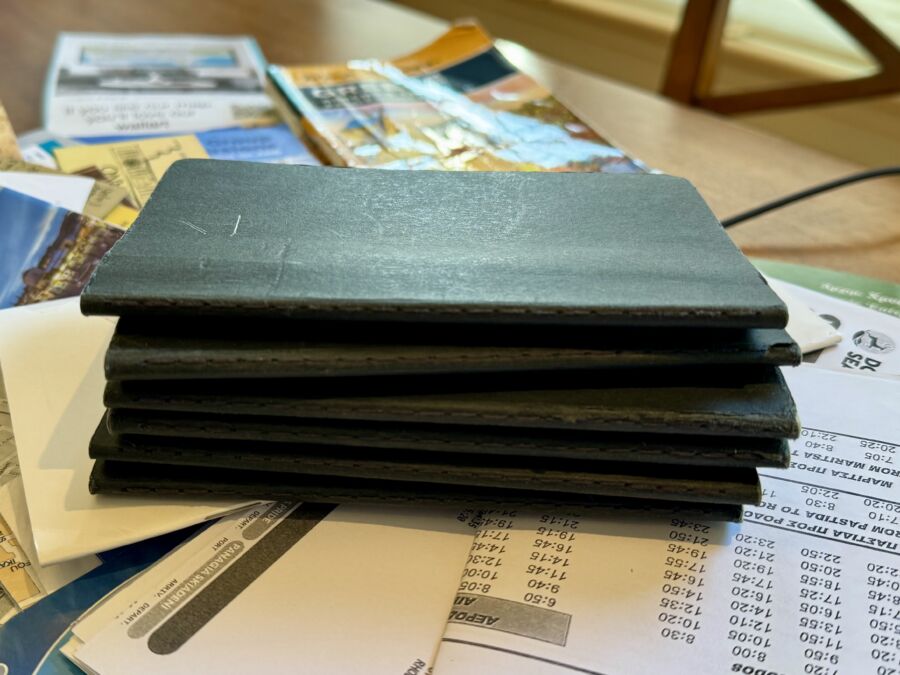
My challenge: to inject those organic, gangly, uncontainable Greek tidbits into the rigid, unforgiving mold of a guidebook listing template, in unmistakable black-and-white text, so that next year’s readers know what to expect.
Gathering these details in Greece is as squirrelly as anywhere I’ve been. Writing them up clearly and accurately is a whole separate hurdle. So I did my best. Usually this involves evasive language like, “these are the likely hours — call first.” Or even, in some cases, explaining in the book exactly why all those hours are so cagey. But this takes time.
Finally, this week, I wrapped everything up and passed the Greek baton to our hardworking editorial department. Inevitably, sometime in the next couple of weeks, I’ll get a follow-up email from an earnest editor: “I found these other, apparently official hours on the museum’s website. Can we just put those in the book instead?”
The answer: Not a chance. Greece simply doesn’t believe in online hours, or really, in the concept of “hours” at all. It remains a persistently, admirably analog culture — where the only way to know for sure when something’s open is to have your hotelier call up their friend who works there and ask them, today, what the situation is. (This is exactly what I did before I even considered heading up to the Folk Museum of Folegandros.) And if the bus is running late… well, then, so is the museum.
Frustrating as it can be, that feels just right for this quirky, wonderful land.
For more behind-the-scenes tales about researching and writing guidebooks, and much more, check out my travel memoir, The Temporary European. (Here’s an excerpt about the day-to-day grind of guidebook research.)
And keep an eye out in 2025 for the next edition of our Rick Steves Greece guidebook.
Loved Greece with its fabulous scenery and incredibly friendly people. I loved every island and I loved the mainland of Greece. The only thing that surprised me was the kind of shabby nature of Athens when one is outside the tourist areas.It didn’t bother me particularly but I was sad to see so many boarded up businesses and, read about the high unemployment rate.
3 weeks ago, I was on a cruise which went to mykonos, ephesus, crete, and Santorini. There were several cruise ships at each port and Santorini in particular was So Crowded, unbelievable! Isn’t the end of October the “off-season” ?! Our Greek tour guide was shocked that the crowds were as big as they were. Santorini’s port is absolutely not prepared for 5-6 cruise ships at one time, esp. the mega ships that we saw. It’s really sad, for us tourists and the locals.
We went (by cruise ship) to Santorini. We paid a little extra to go by boat to a small wharf where a bus took us up the back way to the town, rather than line up for the tramway or donkey ride. My wife was leery of donkeys because a few days earlier one had stood on her toes for 20 seconds or so, and they are heavy beasts to move! But she got her foot run over by a Fiat anyway as soon as we got off the bus and that sort of wrecked our day, what with having to seek medical treatment, etc. We lined up for the tramway on the way back, 45 minutes, and got her foot X-rayed on the ship. You are right, the place is totally spoiled by such crowds and there were not even any mega-ships in port. This was also at the end of October. European ports and cities are now taking action to limit visitors after pressure from residents.
I was also very surprised at the crowds we encountered in Central Europe in mid-to-late October. I attribute this to (in my experience) the enormously popular river cruises continuing well into what used to be ‘shoulder season’. I encourage Rick Steves and our other travel gurus to re-evaluate their recommendation to travel at this time of year for fewer crowds. I think the idea of a ‘shoulder season’ for European travel is obsolete now.
When do you anticipate the new Greek book will be out?
Some terrific stories come from your hard work researching the guide books. Thanks for both!
Thank you for this hilarious description of trying to navigate Greece. You should come to Kenya – you’d be right at home!
We are a Greek-Canadian family, and stay in Greece for several months each year. Our reaction to these (very typical) type of situations, is to shrug it off and say “This is Greece!”.
We find many areas of Italy, where we now live, to be similar. But what’s so endearing is the friendliness, hospitality, and social nature of the people. (Not the bureaucracy!) Our neighbors share some of the produce from their fields. The merchants smile and talk. It’s not about time nor money; life is for living, to experience the joys that it brings. And you don’t find joy on a schedule.
On our October 2024 trip to Athens we walked in the late afternoon to the National Architectural Museum using Google Maps. As we got close Google informed us that the museum was closing soon. We almost turned back but noticed that quite a few people were still entering the museum. When we asked we found out that the museum was still open for several hours. When I explained why I was asking they knowingly asked ‘Google Maps?’. Apparently we weren’t the first to have this issue.
Heading to Cyprus for a month in March. I bet this is truly the low season for tourism and it will be good to be on Greek time and attitude.
We had a marvelous time exploring northern Greece for 2 1/2 weeks last month after our Rick Steves tour of Bulgaria. There is so much history overlap between the two areas that were part of the same territory many times in history. We rented a car and had lots of back door experiences traveling through areas that didn’t have a lot of tourists. I’m hoping that the revised Rick Steves Greece guidebook will have more coverage of the northern region.
We recently returned from a trip to Athens and the Greek Islands on a small ship. We spent 2 wonderful days on our own in Athens following Rick’s suggestions and enjoyed every minute of it. Thank You Rick for your excellent guidance.