I’ve been thinking about how — even if all you care about is your own success — it’s much better to build bridges than to build walls.

As we live through yet another abrupt swing of the USA’s political pendulum, two starkly opposed worldviews are coming into focus.
One philosophy embraces walls: physical ones, between nations; trade barriers; cages for locking up enemies. These people see the world as a mountain with America at the top, surrounded by a thick wall, and everyone else desperate to get here. Anyone beyond our borders is our competition — at best, an economic rival; at worst, a bloodthirsty enemy who wills us harm; but either way, in need of being vanquished. In this worldview, our planet is a zero-sum game… and we must prevail. These folks might be inclined to a snappy slogan, maybe something like: “Build! The! Wall!” Or perhaps something less tangible, more esoteric — along the lines of: “America first!”
On the other side — and (spoiler alert!) I freely admit, this is the side I’m on — we view the world differently. Having had the good fortune to travel and experience so much of our planet firsthand, I see our world as a vast, intricate, interwoven network of distinct societies, each one a proud product of its own complicated story. We face many of the same problems, but we approach them differently — and learning from one another is not only in our best interests, but critical to our collective success.
As Rick Steves has often said, the great challenges of our time will be not local or national, but global — in fact, they already are, from global pandemics to a worldwide rolling crisis of unprecedented extreme weather caused by climate change. The solutions must be global, as well. And that means building bridges, not walls.
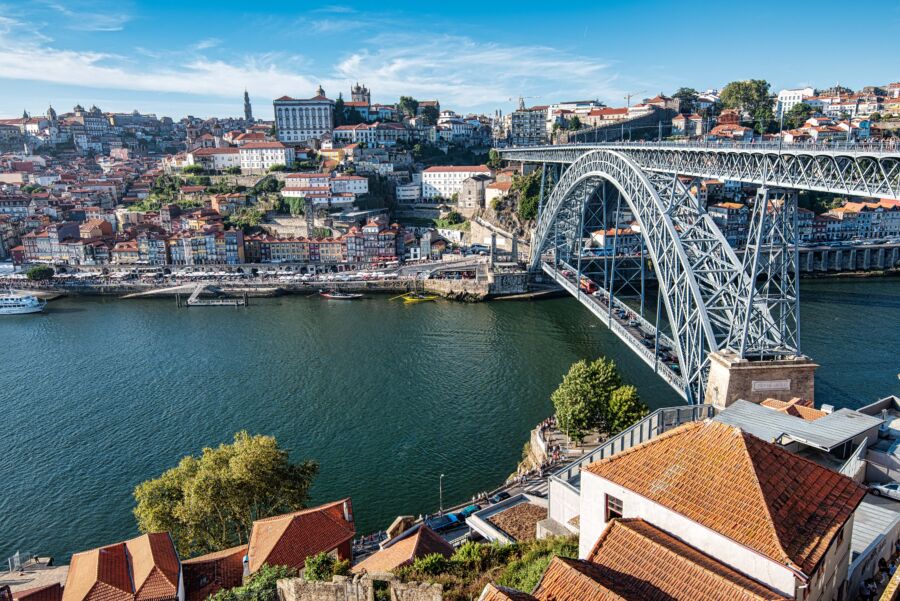
When you travel — the more you see of the world — the dichotomy between walls and bridges becomes ever clearer:
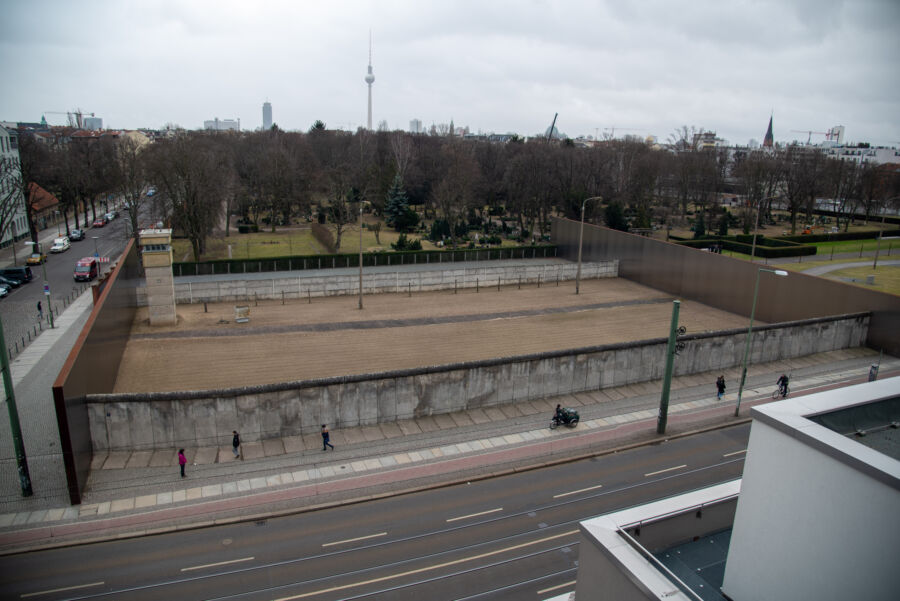
Walls are usually ugly. Think about it: Berlin. Belfast. Israel and Palestine. In these conflicts, walls are a blunt instrument — an act of desperation. They embody misunderstanding, anger, hate. They are barriers to empathy and compassion, making it much easier to demonize those who live on “the other side.”

A wall is a diplomatic failure: By the time you begin stacking bricks, you’ve given up, resigned to a desperate and simplistic “solution” that solves nothing; it just keeps the problem at arm’s length, festering, bloating from inattention until it explodes into a much bigger problem.
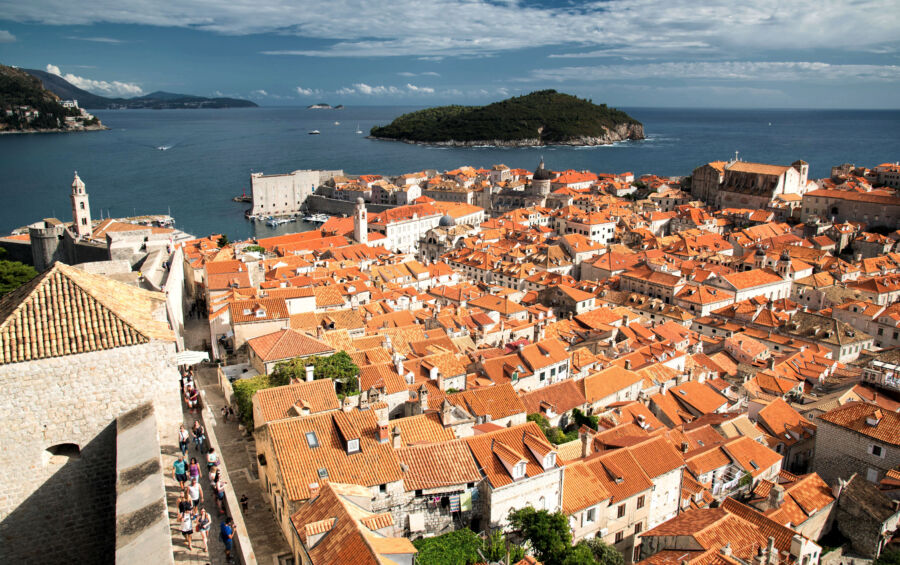
Of course, Europe also has some “beautiful” walls: Dubrovnik. Carcassonne. Rhodes. Lucca. These evoke a time when the world was a dangerous place — when conflict never ceased, and when lives were “nasty, brutish, and short” (as Hobbes put it).
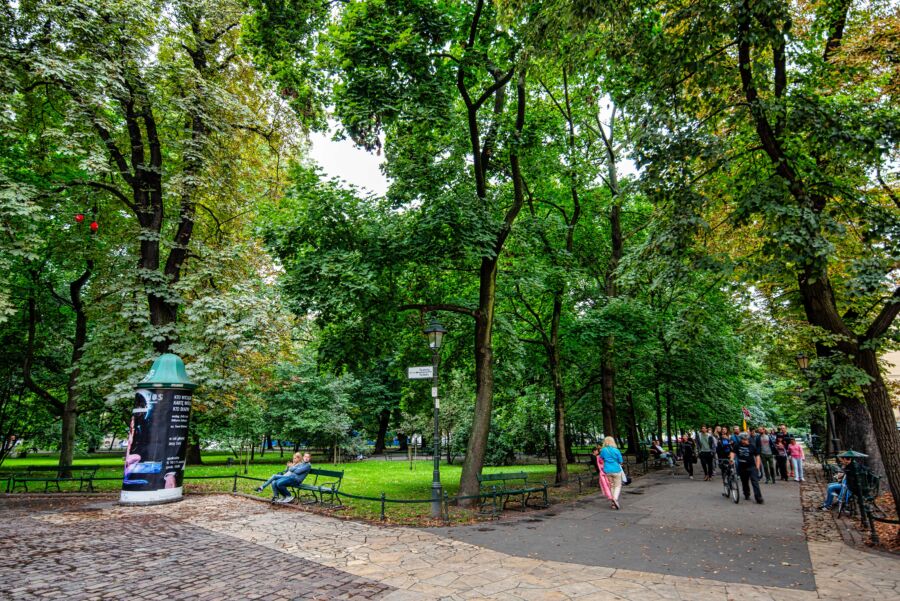
But perhaps more notable are the walls you don’t see anymore. Many of Europe’s most advanced, prosperous, and beautiful cities are surrounded by a green belt or boulevard that forms a suspiciously symmetrical circle: Vienna. Copenhagen. Kraków. Clearly, after building a wall, the next natural stage of societal evolution is tearing it down: forging mutual respect with neighbors to the point that the wall becomes a headache rather than a necessity. And so, eventually, the community dismantles their wall — allowing itself to grow, to advance, to expand, to flourish. Because walls don’t only keep people out. They keep people in.
Now think back on those “beautiful” old walls: What’s truly beautiful about each one is that anyone can now walk freely on top of them — precisely the opposite of their intended purpose. Like jubilant East Berliners dancing atop a hated wall that once contained them, today’s tourists are never so happy as when we’re trampling upon a once-formidable wall. Each picturesque loop is a victory lap, celebrating how far we’ve progressed as a species.
So, then: What about bridges?
Well, bridges are simply everything.
A bridge connects people and places. It allows the flow of both goods and ideas. It strengthens a city, a country, an empire.
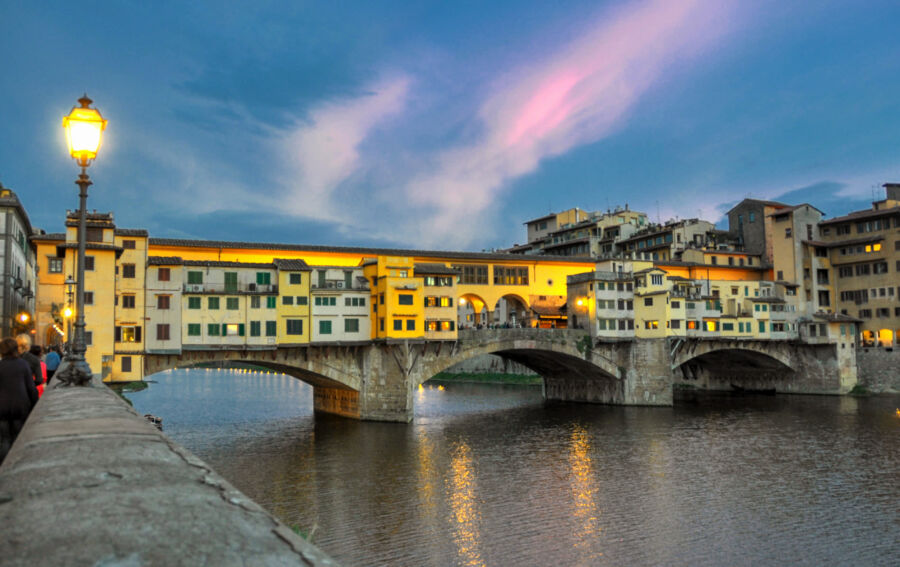
Think of the many iconic bridges that symbolize a great city: In Italy, the Rialto Bridge (Venice), the Ponte Vecchio (Florence), and the Ponte Sant’Angelo (Rome) are clogged with visitors.
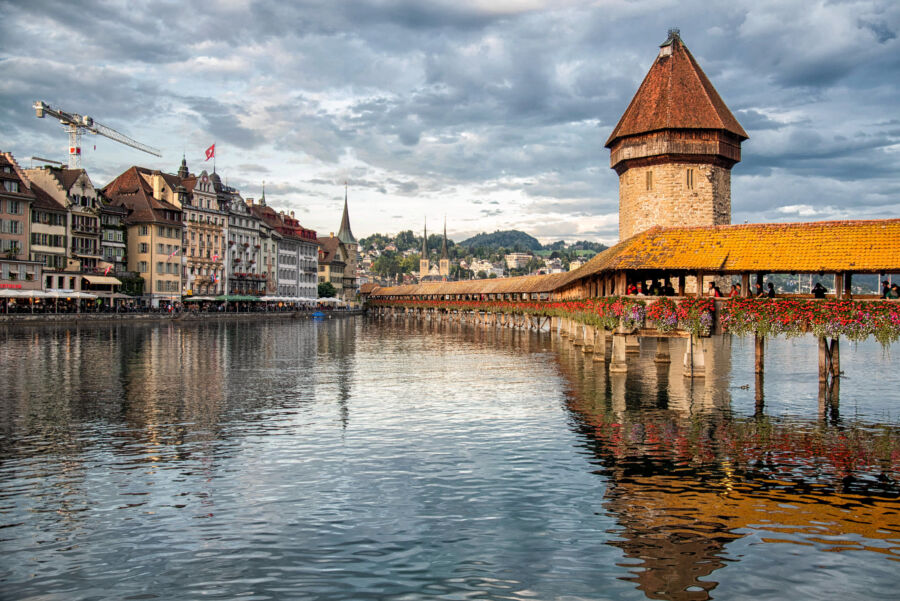
Budapest’s Chain Bridge; London’s Tower Bridge; Prague’s Charles Bridge; Porto’s Dom Luís I Bridge; Luzern’s Chapel Bridge — all of these are as beautiful as they are practical, and each one is synonymous with a world-class city.
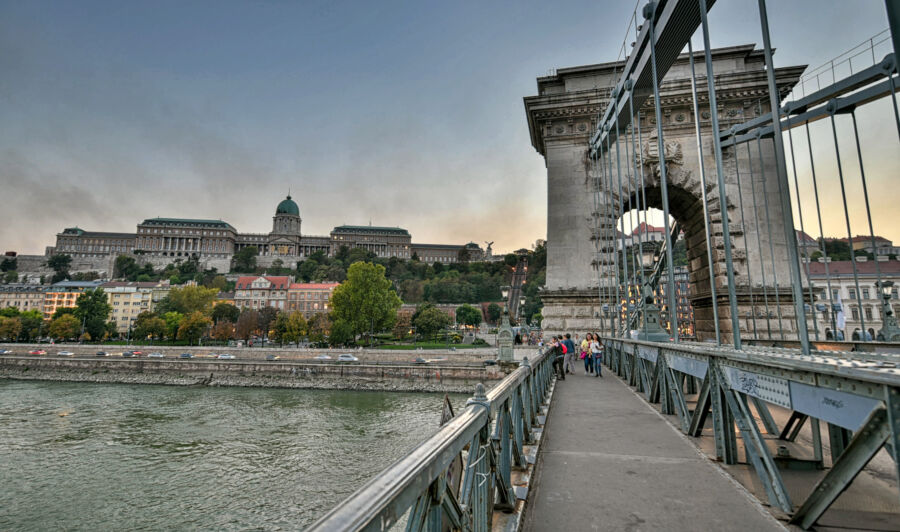
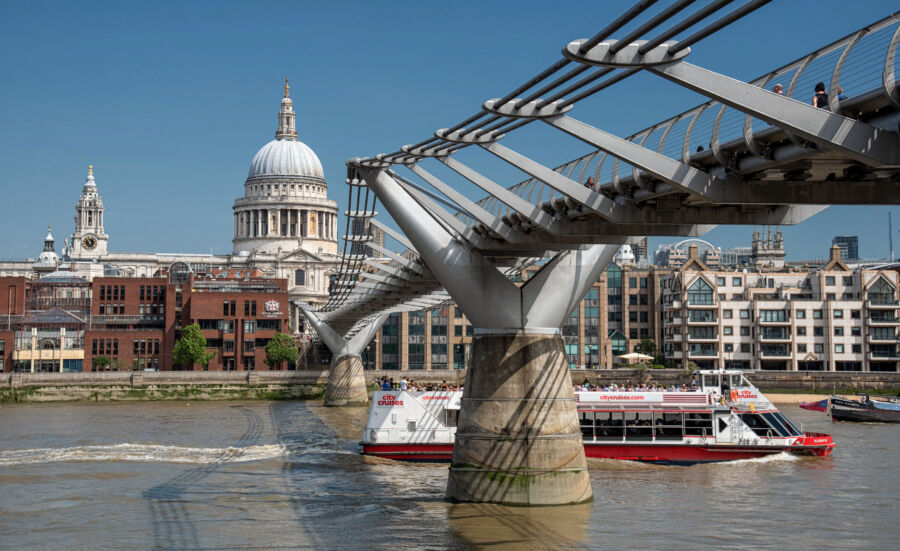
A bridge can revitalize a neighborhood, such as when London’s Millennium Bridge reintegrated its South Bank more fully into the city. It can allow two thriving cities to become a single megalopolis, such as when Buda and Pest, separated by the Danube, became Budapest. It connects continents, such as the mighty suspension bridges arcing over the Bosporus in Istanbul. It tethers nations to one another, such as the Øresund Bridge that spans the strait between Denmark and Sweden, integrating Copenhagen and Malmö into one gigantic, transnational economic powerhouse.
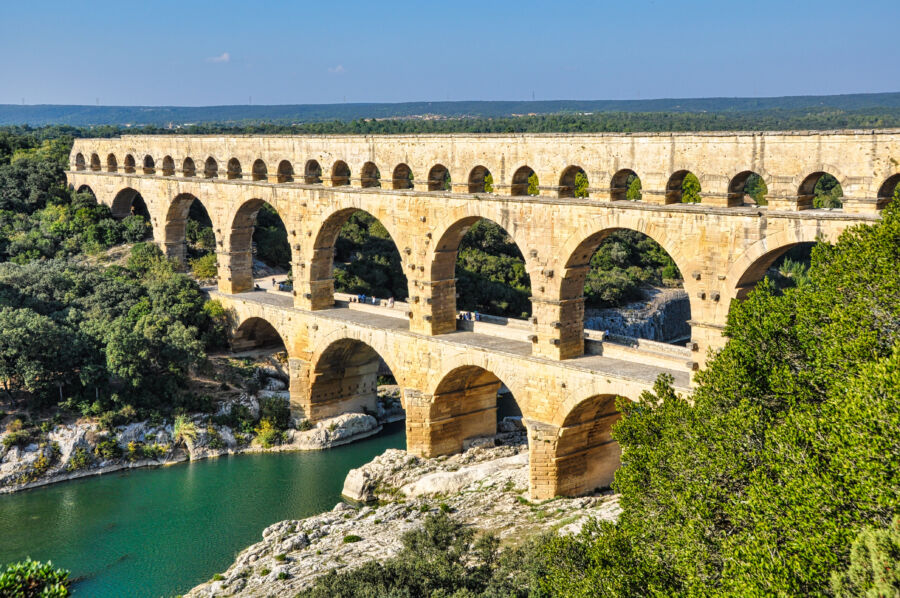
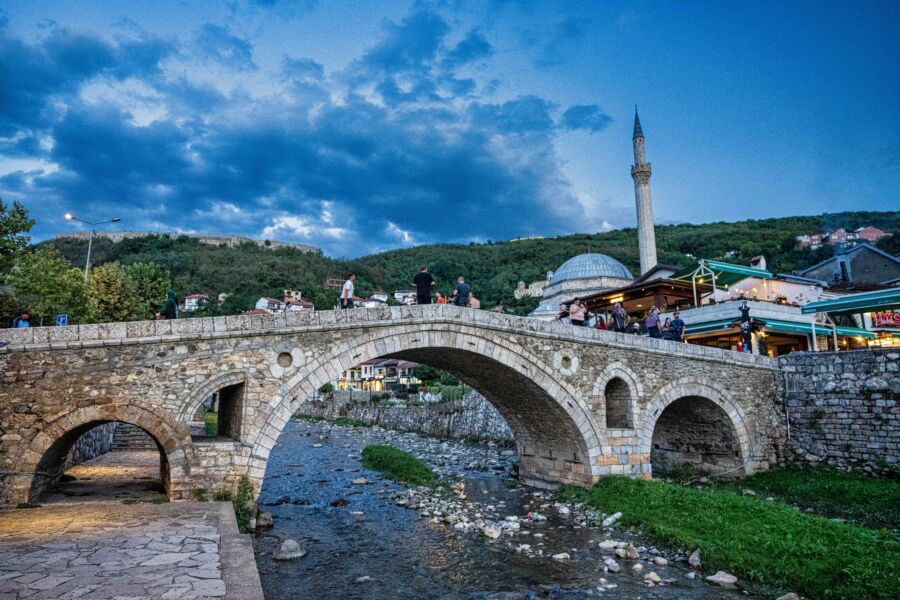
Historically, as kingdoms and empires expanded, they built bridges. Anywhere you go in Europe, you stumble upon old Roman, Celtic, or Ottoman bridges that still stand proud, even as other vestiges of those once-great civilizations have long since been pulverized by the passage of time. In so many cases, the most important surviving symbol of a past civilization is a bridge.
While societies outgrow their walls constantly — and while the dismantling of a wall is, without exception, a marker of progress and a cause for celebration — I can’t think of a single place that has ever outgrown a bridge. Consider this: What bridge has ever been taken down, and not replaced, because it’s a bother? Even when destroyed, by war or by natural disaster, bridges are among the first feature to be rebuilt, so essential are bridges to the proper functioning of a society.
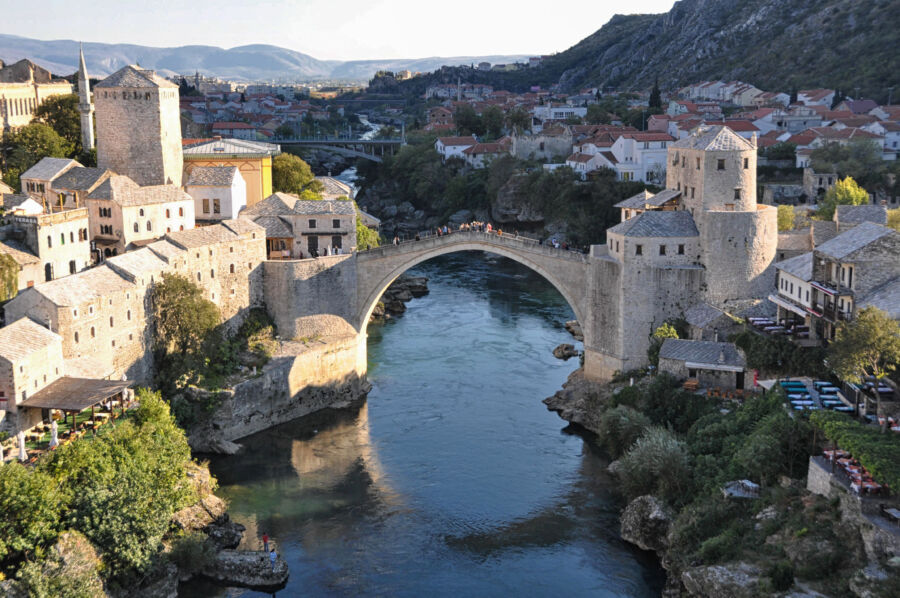
The city of Mostar, in Bosnia-Herzegovina, was long symbolized by its Old Bridge, originally commissioned by the Sultan Süleyman the Magnificent in 1557. It stood strong, connecting opposite riverbanks of the Neretva for centuries, becoming a symbol for this multiethnic community of Bosniaks, Croats, and Serbs. But during the Yugoslav Wars of the 1990s, the bridge was pummeled by artillery until it tumbled into the river below — transformed into a symbol of that conflict’s loss of life, unity, and cultural heritage. And then, after the war, the reconstruction of the Old Bridge infused it with a new symbolism: reconciliation. Such is the versatility of the bridge as a symbol.
In fact, the European Union embraces the bridge — not the church, not the town hall, not the castle or fortress, not the guildhouse or marketplace, and certainly not the wall — as its most prized symbol. The next time you’re in possession of some euro banknotes, take a close look at their design: A defining feature of each one is an illustration of a bridge, from round Roman arches to pointy Gothic ones to sleek modern cables. Bridges fill the wallets and purses of 350 million Europeans.

And what’s the other feature you’ll find on each euro banknote? A doorway. That’s right: a passage that leads through a wall.
Of course, you may see things differently. And that’s as it should be. Even in our polarized times, I believe that smart, caring people can agree to disagree — provided those conversations remain mutually respectful and rooted in objective reality and verifiable fact. No two people will ever see perfectly eye to eye on every single issue or policy.
But if you’re a traveler, as I am, I hope you’ll agree that — surveying the grand swoop of history — a world with more bridges, and fewer walls, is a much better place.
As we carry on into a world where walls, barriers, suspicion, and division are in vogue, I’ll be keeping in mind these vivid memories from my travels. Bridges are a reminder of the transcendent power of connection and cooperation. The act of travel can be a bridge over the troubled waters of our time. And we travelers can strive to be bridges, ourselves, as we connect our increasingly isolated and hostile homeland to the world beyond our borders.
Cameron
I read you for travel information. NOT political commentary. Very disappointed and surprised that Rick Steves allows this – although I know he is liberal. If I wanted your political opinion, I would have asked politely for it. Please remove my email from your mailing list. Very poor business move.
“Travel is fatal to prejudice, bigotry, and narrow-mindedness.” said Mark Twain. I think it’s best for all if you stay home anyway.
And there you go, building a wall, not a bridge.
How about we build a bridge to your neighborhood for your new neighbors, Tren de Aragua and MS-13 ?
Wow, a right wing snowflake looking to be offended. I thought it was just the lefties that had that market.
This travel business has always been open about it’s world view leanings. One thing I value about it. Hope you find other travel resources more to your liking
You must be new here.
Rick has always said that he will express opinions and viewpoints. And he’s always stated, quite clearly, that if that bothers you, his website not be the best place for you.
Cameron wrote a superb piece. If you had read through, you’d see that while he is indeed stating his opinion, he has an open mind and is willing to disagree, to dialogue. And that’s what it’s all about. Building bridges, not walls.
Disagree. Please keep your political opinions away from my travel. Thankful to you for that.
It’s sad that you read this article and derived no more wisdom than your personal demons allowed you. Because your odd interpretation has allowed you to build a wall instead of a bridge, which has obviously obstructed your clear view of what traveling the world affords you, if you take the time to see in the distance.
So, I should build a bridge – so that the cartels, Tren de Aragua, MS-13, and anyone else from any country can freely enter the U.S. without being vetted. Then be rewarded with free education, free healthcare, free debit card, free residence, etc. Is this your vision for America and the world ??
I appreciated the common sense of Cameron’s piece. Bridges are the metaphor for cooperation and conciliation; walls are the metaphor for isolation and exclusion. While maybe not overtly, Rick Steves has always impressed upon his readers, watchers and travelers that the “politics” of nations to which one travels are an important aspect of the the learning opportunity travel offers. Historical political extremes that have led to the horrors we are all familiar with, cannot and should not be ignored. Travel is just one more opportunity to remind ourselves of important lessons to be gleaned from the past.
Mr. Fratzke,
I’m curious…why do you think you’re better than anyone else?!?!?
Goodbye Ron. I think I have seen you over there and back here a few times. Thank you Cameron. I don’t travel with Rick directly, but I always use his teams’ advice in a number of areas since my first solo trip. Truth is a funny thing. Everyone I’ve met in Europe respect his team.
Thank you Cameron for your beautiful views on bridge building rather than wall building. Our world needs to open up, and see things from other’s perspectives. Keep sharing your views.
The fact is…you would NOT have asked for his political opinion because you are so obviously trapped in your own. I’m actually surprised you have email, I would have thought you would have done your correspondence on a beaver pelt.
Last line says America is “hostile”. Tendentious.
Wow! Outstanding writing! Your teachers at Ohio Wesleyan would be bursting with pride!
So well articulated Cameron. I appreciate the long term perspective, humanity will bend toward bridges over time. Thank you so much for sharing your thoughts.
Nice article but it seems to suggest all or nothing. I assume I have a different view of walls. Some walls are needed for protection like the walls of your own house, to keep out the unwanted so you can live in peace. A bridge needs two ends that have the same goal of support, when goals are different that’s okay too, but when goals become hostile, that’s when a wall is needed.
Thanks for your article. It’s a positive reflection on bridges but I do think some walls are necessary.
Enjoy your travels.
To RD Fratzke – if you were a long time reader of Rick Steves’ travel books and forum, you would know he has always extolled the ideas that traveling is a political act and that learning about other cultures and places helps remove fascist and tribal attitudes.
We need more articles like this. Yay Cameron
Thank you so much, Cameron, for this beautiful perspective. I will be on Rick’s Scandinavia tour in May and I’m so excited to travel the Oresund Bridge. Like so many other Americans, I’m devastated by the directions I see our country going. I even considered canceling my trip, embarrassed to be representing our broken country. But you have re-inspired me to go and present a different, humane and global, view to our European neighbors. Thank you!
When traveling during times of discord and fracture and the U.S. has a less than stellar reputation in the world I’ve found saying when asked, “I’m from Canada” is useful. This works particularly well in France where my accent sounds like a French Canadians. Happy Travels
Cameron,
What a wonderful piece of writing and so very true!
I always find your articles to be informative, entertaining and a joy to read. Looking forward to reading more.
Thank you, Cameron.
Thank you Cameron for the beautiful, well thought out piece.
I’ve been traveling internationally for 65 years and firmly believe Rick’s motto that we are citizens of the world. I am a better person for all I’ve seen and experienced as I’ve crossed many bridges.
We need people like you Cameron. Thank you.
Thank you Cameron! Well said…
Thank you, Cameron! No, this isn’t really a “political” stance. It’s common sense and humanitarian. If more people/leaders signed on to these ideals, just think how much more peaceful and egalitarian our planet would be. And simply cutting off those with opposing views is, in its way, building yet another wall.
Thank you, Cameron, for this beautifully balanced commentary. I always enjoy reading your thoughts on travel. In April we will be on the Greece tour. It will be our 9th tour with Rick Steves. We keep hoping that somewhere along the way we will bump into you or Rick. Keep up the good and important work!
I bet the families of the girls and women who were viciously raped and murdered by illegal immigrants due to Biden’s open border would have appreciated a wall to prevent that, or at least a secure border. Using a snappy slogan like “Build bridges, not walls” might sound like a great philosophy, but it’s not reasonable for a country whose borders have been disrespected. A country isn’t a country without borders. If borders aren’t respected then walls, unfortunately, might be needed. Protecting citizens should be the #1 priority of the government. President Trump and the majority of Americans understand that. That’s why he was elected. This isn’t La La Land. You cannot travel to Europe without the proper identification and you cannot live there illegally (if you’re American anyway) so why should that be acceptable here? If you feel fortunate to have traveled and for the success of Rick Steves travel business that is due to the success of America and the American people. Let’s all be proud of America and wish for our success.
Well said. Slogans are cute, but borders are part of every country.
To Lynn –
“Protecting citizens should be the #1 priority of the government”. Heart disease and cancer are the #1 and #2 causes of death in the United States. The Orangutan just cut funding for Medical Research. Gun deaths are up 43% since 2019 -2021. Again the Orange one wants the Attorney General to attack gun laws. I guess the new government isn’t too interested in protecting citizens.
Help! Please identify the locations on the photos! I’m reading travel newsletter but how can I travel to these spots if I don’t know where most of them are?
I was saddened by this article – biases were on full display.
Cameron, thank you for this blog and for all the comments posted with different stances. I am on the “bridges “ side of this conversation after having lived out of the country and traveled much in my almost-82 years. Walls, in and of themselves, are not necessarily good or bad. As you point out, it depends on who constructed the wall and for what purpose. Who benefits and who is harmed by a wall is what I hope we will all consider.
Thx, Cameron. Agree 100% that bridges, not walls are what we should strive to build. Saddened by those with the negativity and anti-democratic attitude our ancestors would be shocked to see in those attempting to destroy the world now.
Another great and beautiful Wall, Hadrian’s Wall in northern England, illustrates the difference between a wall built to limit lives, and a wall with a larger function. The Romans built this Wall partly to signal their presence and power, but partly also to let their own military know where to stop (i.e., “Don’t bother trying for Scotland!”), and further, to attract and monitor the civilian traffic passing through it in both directions. They inspected and taxed that traffic, but encouraged it by the roads they built through their gates. They invited trade, and around their forts indigenous towns grew, supplying and profiting from the Roman market (shoes, ale, food, charcoal, pottery, mending, harness-ware). Unlike many great powers, they wanted the societies they conquered to keep on contributing the particular goods and talents that had attracted them to those distant lands in the first place. Inter-marriage, local exchange, and cultural flexibility were key to the longevity of the Roman rule. Not to over-simplify too much for this format, but if you walk along Hadrian’s Wall, you sense and see how it creates a new zone of exchange more than a strict line of demarcation.
Ellen, this is an excellent point. There are exceptions to every “rule of thumb” and of course easy symbolism deserves thoughtful unpacking. Indeed, Hadrian’s Wall (where I’ll be headed again this summer!) is an example of a successful one.
Cameron,
Enjoyed the article. I’m looking forward to standing on the Buda-Pest bridge with my 16-yo son in June when we travel with the Best of Prague and Budapest tour.
This travel business has always been open about it’s world view leanings. One thing I value about it. Hope you find other travel resources more to your liking
The writer’s comments show that he supports the notion of a one world government. We see that idea is impossible by the example of the “United Nations” fiasco. They exhaust large amounts of energy and money and accomplish almost nothing.
I have spent 40 years traveling the world over. The one common feature of each country was that there was a “custom’s wall” that I had to cross each and every time. They all wanted to know my details on entry and to make sure that I left their country with in a certain timeline. I would not call that a bridge but definitely a wall that required a passport.
It is a fantasy to think that we can do away with borders and walls now that we have an overpopulated world with people who are unable to provide for themselves producing even more humans that cannot be supported. Instead of “bread for the world” we need “birth control for the world”. Though out history groups of people have continually attacked their neighbors for food, land, riches and control. Open bridges are not the answer; they are only a pipe dream. Only the US has abandoned it borders so completely and now we must build air bridges to return millions to their proper home.
This is a beautiful and enlightening piece. It is much needed during these troubling times.
Well said. Slogans are cute, but borders are part of every country.
I travel not just to see the world, but to meet the people. Your bridge commentary connects with that and I really enjoyed your article. I hope some of these commenters actually read it and reflect on it…
The “need a wall” comments on this article all make the same wrong assumption: that “building bridges” equals “open borders”. That’s not true at all; that’s what hard-line right-wingers/Trumpers want you to believe. No one is arguing for open borders. Biden didn’t have an open borders policy. If you actually read and try to understand the article, you’ll find that “building bridges” means to understand what people in other parts of the world are going through. Try to see things from their perspective and don’t take the “we’re better than you” mindset. It doesn’t mean that you don’t respect borders and vet people coming into your country – of course you do – but assuming that all people from outside your country are bad is not demonstrating any compassion or understanding.
Thank you for beating me to this comment!
Loved your article Cameron. Traveling, living abroad and studying world history has given me such an important insight into humanity and the freedoms we enjoy. The white, right and uptight do not speak for us all. I suspect some are missing the point of enjoying other cultures and learning from the past.
Cameron, Loved the article. Why do people denigrate a hopeful view of the future? I know that you recognize the harsh realities that the world now exhibits. Trying to take your words -as a literal and complete definition of your beliefs – is divisive (by its nature) and foolish. No fan of Star Trek ever thought that the future would pan out exactly as Gene Rodenberry described – his vision, like yours, was a call to a BETTER world with BETTER people. Acknowledging the ugliness in the world does not offer hope nor inspiration. But, if we can hope and dream in a world without walls, what’s wrong with that? To your critics, did you explain to your young children how EVERY fairy tale was false and wrong? Let us dream of a better world until we can bring it to reality.
Cameron, loved the article! Why do people denigrate a hopeful view of the future? I know that you recognize the harsh realities that the world now exhibits. Trying to take you words as a literal and complete description of your beliefs is divisive (by it’s nature) and foolish. No fan of Star Trek ever thought that the future would pan out exactly as Gene Rodenberry described; his vision, like yours, was a call to a BETTER world with BETTER people. Acknowledging the ugliness in the world does not offer hope nor inspiration. But, if we can hope and dream in a world without walls, what’s wrong with that? To your critics, did you explain to your young children how every fairy tale was false and wrong? Let us dram of a better world until we can bring it to reality.
Thank you, Cameron, for this article…engaging and thought provoking. Is it political? Yes, absolutely. But I think that it also relates to a much deeper and more complex aspect of human experience. We all build bridges. And we all build walls. Our fears, and how we respond to them, directly affects how we experience life, and, while I agree with you that responding to life with openness and curiosity will bring a fuller and deeper experience of life, simplifying our complex society into two separate world views is, in effect, building a wall. We all live in contradiction…perhaps THAT is our common ground.
Thank you Cameron! I know I much prefer bridges over walls. May we continue to support and build them! The fact is, we are interconnected, and denying that fact does not make it untrue.
Nice distillation by Mark and Jake. Thanks for provoking our thoughts, Cameron.
In response to Lynn:
Is the number one priority of a government to protect its citizens?
Or is it to uphold the ideals on which it is founded?
Our forefathers sacrificed greatly for those ideals, and deemed the sacrifice worthwhile.
If we betray those ideals for the sake of security, do we betray their sacrifice?
Well said my friend. Building bridges applies to families, friends, and strangers that become friends.
katana
1
Cameron, I loved your book and enjoy your writing, but this piece was disappointing. While the world desperately needs to build bridges, it’s not going to happen when you divide the world into two camps and paint one as enlightened and the other as ignorant. While there may be people who fit your description of the right, this is a pretty simplistic stereotype that does not fit all or even most of the people in that camp. I don’t think it’s even a good idea to divide people into two camps. It came across as a little bit arrogant, although I don’t normally perceive you to be arrogant. I know you are open to talking to the other side; I respectfully suggest you need to do more of it to better understand the people that you perceive just want to build walls. And recognize that many people, including me, don’t fit into either camp.
I enjoyed your article. Build a longer table not a higher wall is nearly always the better option.
Thanks for sharing your thoughts.
Chris
Cameron,
I used to subscribe to everything you’re saying..until COVID. In the span of two weeks, the entire world order as we knew it came to a halt.
I thought I was a liberal New Yorker, and I quickly fell into an idealogical nightmare of who am I? Does anyone else realize what is happening is absolutely crazy and unimaginably far-reaching? But it turns out so many people felt like I did, and just couldn’t say it.
I believe COVID was real, a threat to the elderly and very sick – and I got three vaccines (including one right after I had had COVID as I had to travel for work and couldn’t leave the country without it). Then I still couldn’t leave or have my life back–or anyone else’s lives who depend on open borders, like you are espousing above and what I believe to be right.
But it feels so hypocritical. Borders shut for YEARS longer than necessary. Invisible walls. This is why so many people have “swung right.” I am not a Trump fan. Climate change, gun control, and women’s rights on everything mean a lot to me. But I am not a fan of what’s on the other side either, which feels like a slow march to everyone thinking the same and not allowed to say anything else.