Rick Steves’ Europe Behind the Scenes: Simon and Karel, the Crew of Two

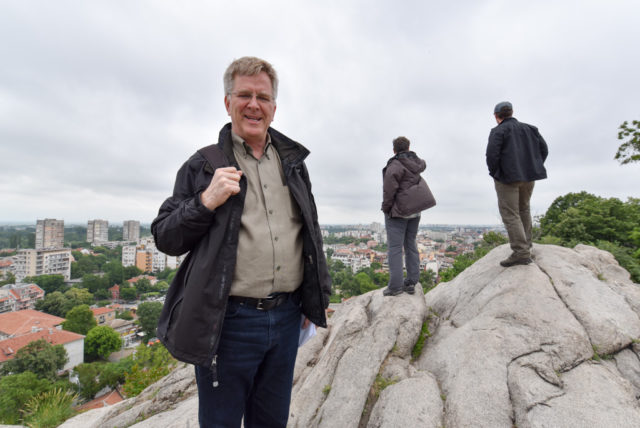
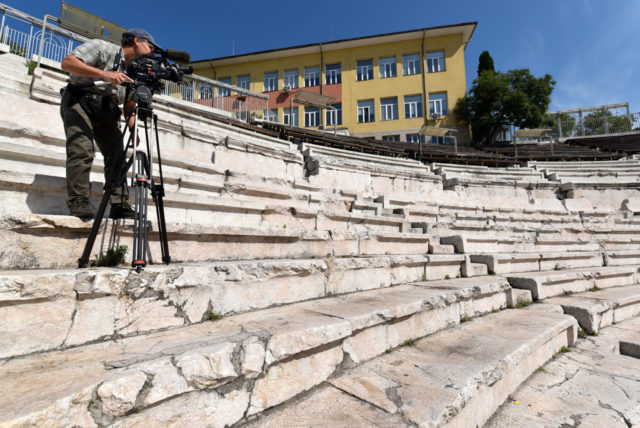
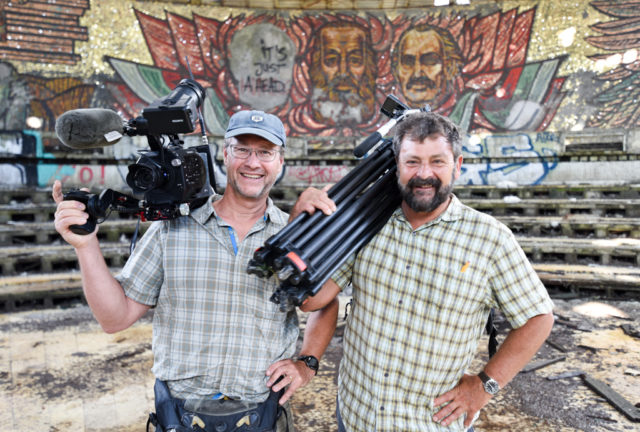
Rick may be the writer, producer, and star of Rick Steves’ Europe. But behind the scenes, he works with a two-man crew that contributes just as mightily to the final result: producer Simon Griffith and cameraman Karel Bauer.
CH16MayBuzludzha_067

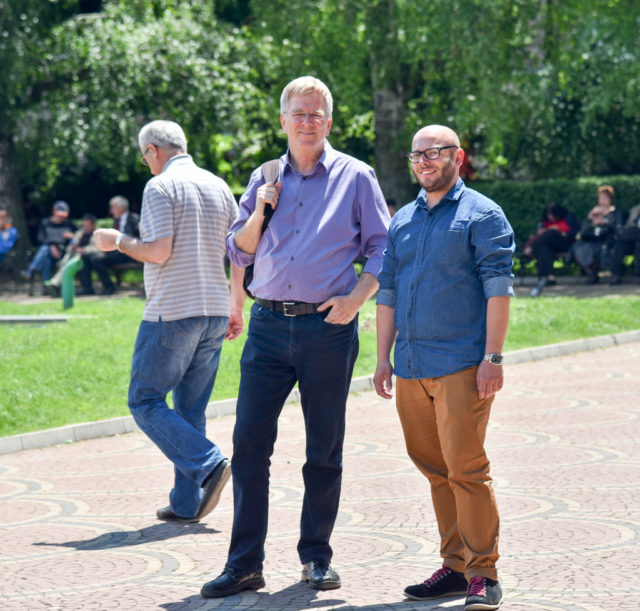
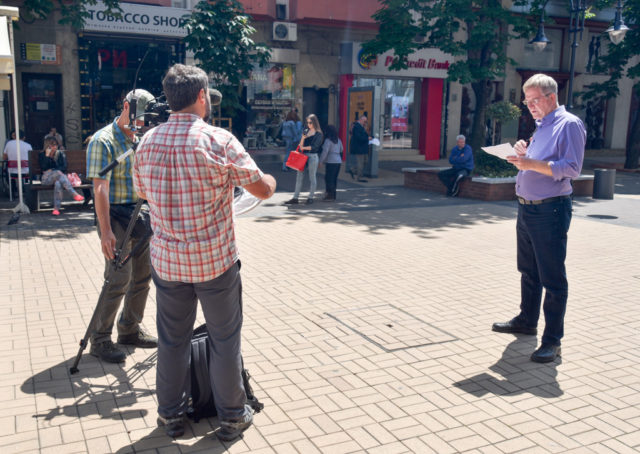
You probably recognize Simon as the silent, bearded fellow who often joins Rick for dinner on the show. What you don’t realize is that he’s both the brains and the brawn behind more than a hundred episodes of Rick Steves’ Europe. Simon is an artist, who instantly grasps what does and doesn’t work on TV. He’s also built like a tank: To help keep the crew small and efficient, Simon volunteers to lug heavy gear all over Europe (a task usually relegated to an entry-level “grip”).
CH16MayBucharest_002

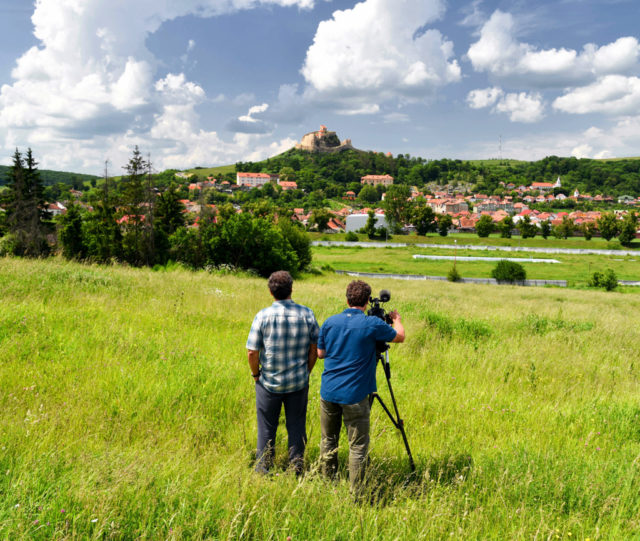
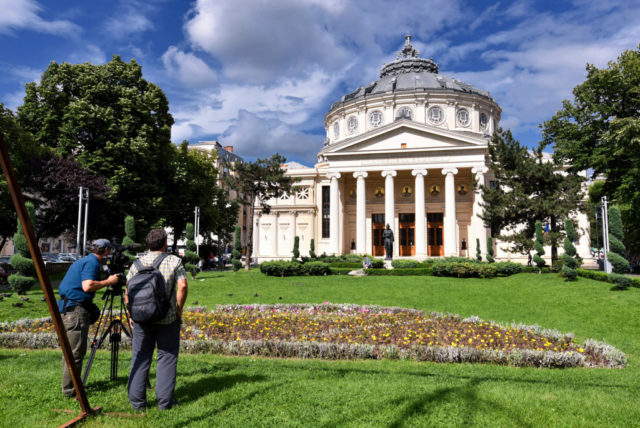
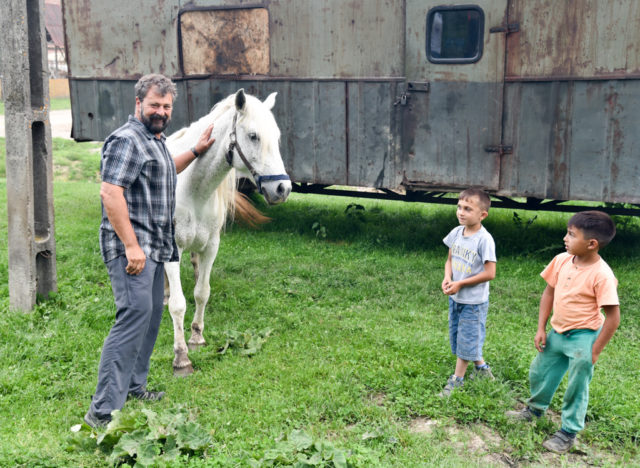
It’s an impressive thing to watch: Simon stands — like an artist at his easel — next to Karel, offering gentle direction. Then, when the shots he needs are in the can, Simon quickly collapses the 50-pound tripod, perches it effortlessly on his shoulder, puts on a backpack filled with another 50 pounds of sound and lighting equipment, and walks it to the next shot — all while talking through the script with Rick. (By the way, some of my favorite turns of phrase in the Bulgaria and Romania scripts came not from me or from Rick…but from Simon: “Strips and strands of metal,” “a funnel of trade since ancient times,” and so on. For someone who doesn’t fancy himself a writer, Simon is one hell of a writer.)
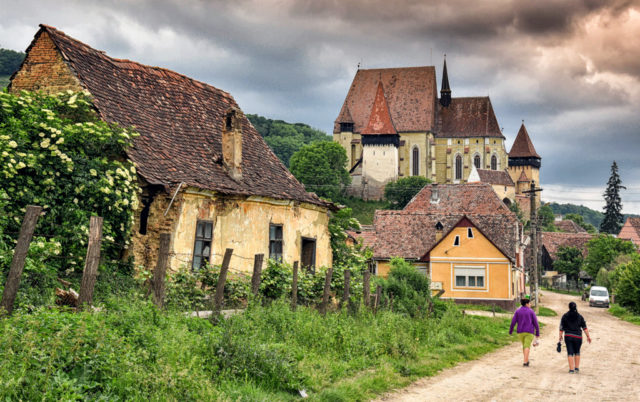
CH16MayBiertan_007

Simon is a gregarious Kiwi who’s generous with a laugh, a great conversationalist, a fantastic traveler, and an easygoing perfectionist (a paradox, I know, but somehow Simon pulls it off).  If Rick’s scriptwriting, on-screen performance, travel savvy, and enthusiasm are a frothy, churning sea of creativity, Simon is the steady rudder that keeps each episode pointed firmly at the horizon.

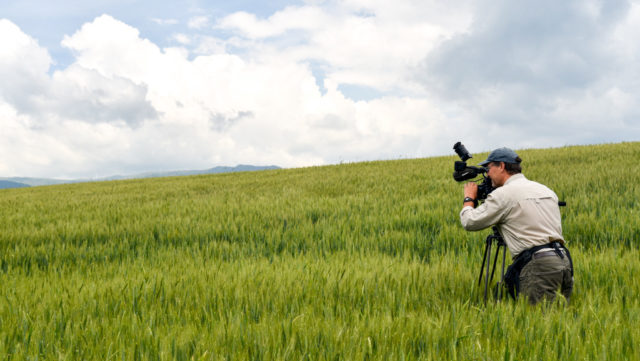
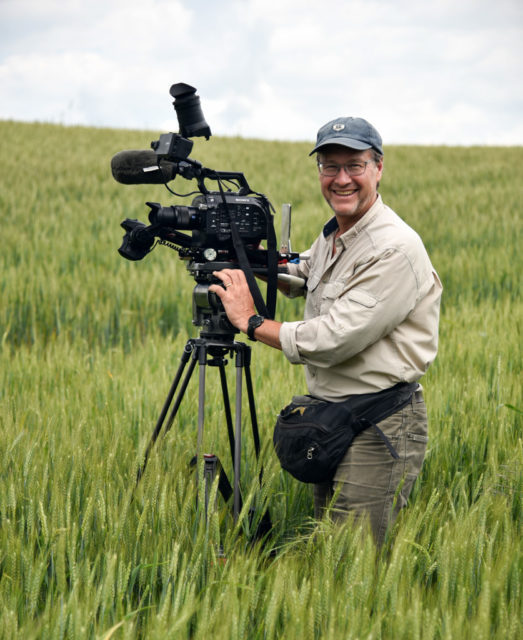
Rick and Simon work with a variety of talented camera operators (or “shooters”). It happens that I’ve worked only with the cameraman who’s filmed more shows than any other: Karel Bauer, who — like Simon — is equal parts artist and technician.
CH16MayThrace_006

Watching the show on TV, you’d assume that Rick is the most important person on the shoot. You’d be mistaken. The most important person is the one you never see: Karel…and, more to the point, Karel’s camera. If only one person is allowed inside a location — say, because of a red-tape snafu at the Romanian Parliament — guess who we’re sending? (Hint: It’s not Rick, who’ll be out sitting on the curb with the rest of us.)

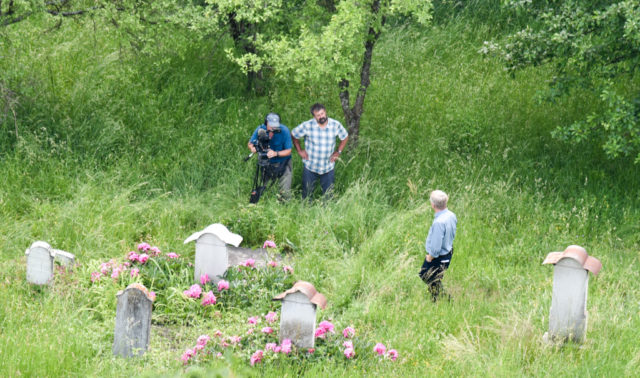
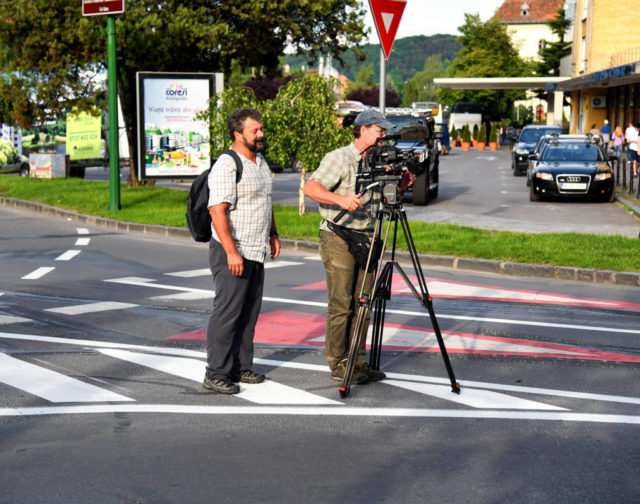
Karel has a singleminded passion for getting the perfect shot. It helps to have a cameraman who thinks like a film editor — he knows just what editor Steve Cammarano will need, several weeks from now back in the home office, to cut together a smooth sequence. And then he squeezes off a few extra beauty shots, just to be safe. Like Simon, Karel is as physically gifted as a pro athlete — pirouetting through crowds and literally scaling walls to aim his weighty camera rig just right. For one particularly challenging-to-film sequence — which opened the whole Romania show — Karel literally hung out the side window of our van to film a smooth shot of Rick riding a horse cart…all while Simon held onto Karel’s belt with one arm, and steered the van with the other. These two will literally stand in traffic to get just the right shot.
CH16MayBrasov_013

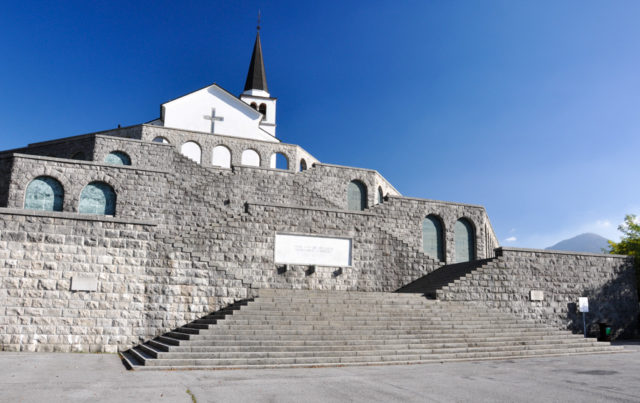
An avid still photographer, I’d assumed that a good shot on my camera would translate to a good shot for TV. But I forgot about the fourth dimension of video: motion. On a previous shoot with this crew (in 2009), I was excited to take them to a huge World War I mausoleum overlooking Slovenia’s scenic Soča Valley. When we arrived, I sensed letdown. What’s the problem? Finally, Karel explained: “It’s a cool building. It’s just…static.” Clean white lines against forested hills may be a striking photograph, but it’s simply boring on TV. They made it work by having Rick and his guide walk around the structure while the camera slowly panned up.
CH13OctSocaVal_021

That’s why, if you pay attention, you’ll notice that most shots include either motion (people, cars, boats, trees blowing in the wind), or, if it’s a truly static scene, camera moves — either pans or zooms. Motion helps keep the viewer engaged. When shooting a scenic landscape shot with a meandering rural road, we sit and wait…and wait…and wait…for a car to drive up that road. Only then is the shot complete. (If no car comes, Simon’s been known to hop in the car and drive into Karel’s shot himself. These types of scenes — often used to transition between destinations — are called “drive-bys.”)

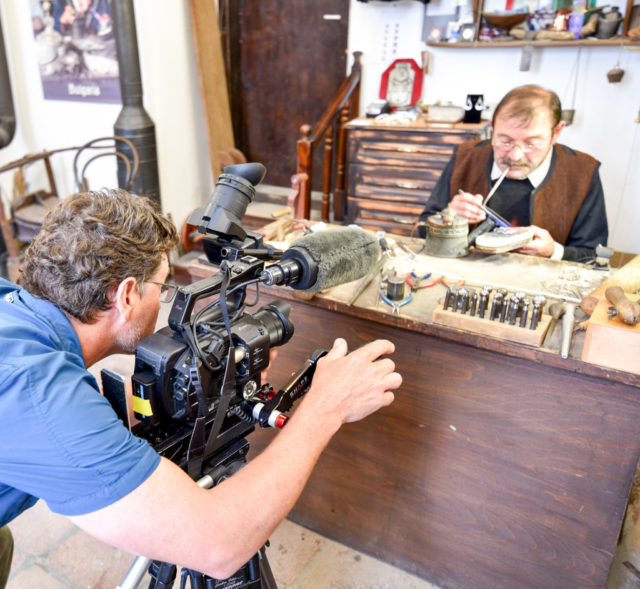
In addition to operating the camera, Karel does double-duty as the sound engineer (just as Simon doubles as the grip). This lets a two-man crew do the work of (at least) four. This mighty duo is a finely oiled perpetual-motion TV-making machine. Even when they have an extra pair of hands (mine), there’s very little I can do to make things go faster or easier…just get out of the way, and try to keep up.
CH16MayVlkoTrnvo_006

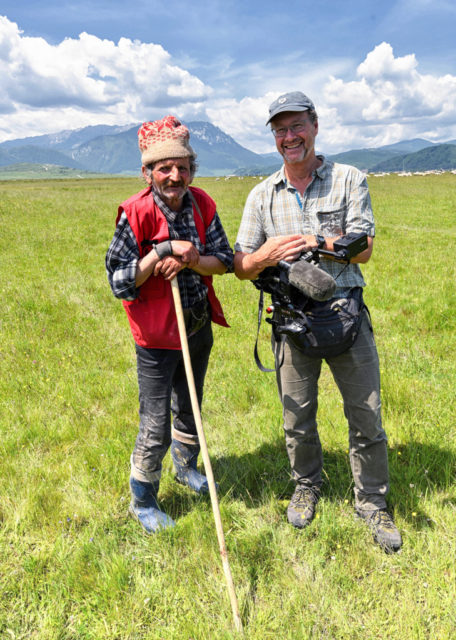
The other impressive thing about Simon and Karel: they’re two of the smiley-est people I know. I’m not talking fakey grins — I mean, big, toothy, genuine smiles. They love what they do, and it shows. And it helps, too — if we’re trying to make something happen (for example, get permission to film a museum on the fly), Simon and Karel’s big smiles instantly defuse any tension. This was particularly handy for our Romania show, where we wanted to cut together a montage of Romanians from all walks of life. To build up enough material, we set aside a few minutes each day to film as many people as possible. Karel would set up his camera, and Simon would go looking for random people willing to stare into our camera for a few seconds. That seems like it’d be a hard sell. But thanks to Simon and Karel’s lovable, upbeat nature, most people were instantly at ease and agreeable to be filmed.
CH16MayShepherd_007

And finally, I’m impressed by what great travelers Simon and Karel both are. They don’t just work hard — they are fully present and completely engaged in the experience of traveling. After shooting footage for the show, they pause for a moment or two just take in the beauty around them (and, often, pull out their iPhones to snap a photo for their own personal reel). And when Rick finishes interviewing a local guide for the camera, ever-inquisitive Simon and Karel quiz the guide with follow-up questions. If anyone has earned the right to be jaded travelers, it’s these two. But amazingly, they still bring an almost childlike enthusiasm for travel to every shot of every show. In my mind, that’s the secret ingredient of what makes Rick Steves’ Europe so special.


This is part four of my “Behind the Scenes” blog series about Rick Steves’ Europe Season 9 — now airing nationwide (check your local listings). You can also watch the Bulgaria and Romania episodes for free. And in case you’re in a gift-giving mode, the brand-new, 10-episode Season 9 DVD is currently on sale in our Travel Store.
Rick Steves’ Europe Behind the Scenes: On Location

Script completed and permissions obtained, it’s time to film our new TV shows on Bulgaria and Romania. Rick, producer Simon, cameraman Karel, and I touch down in Sofia, zip to our hotel, unpack the gear, and — all too aware that our sunny afternoon could easily turn into a rainy evening — immediately head out to “cover the script”…jet lag be damned.

CH16MaySofia_111

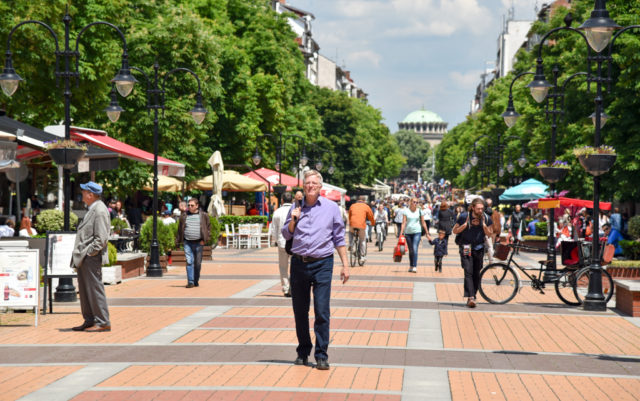
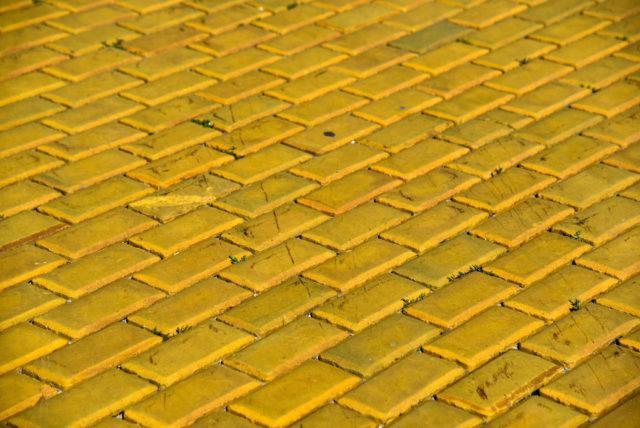
Filming a TV show is all about “covering the script” — making sure that every landmark, every idea, every word that’s mentioned is supported by visuals. One big concern is whether a shot “reads”: Does it effectively illustrate what’s being described? For example, we wanted to shoot Sofia’s yellow brick road. But we needed to find a shot with just the right angle, light, and glare to ensure it would “read” as yellow bricks…not just faded concrete.

cameron-bulgaria-tv-sofia-yellow-bricks

Sometimes, whether or not a shot “reads” determines whether it makes the final cut. Scouting the script in Bucharest, I was struck by how many passersby, when walking in front of a Romanian Orthodox Church, would pause to make the sign of the cross. But trying to film that little slice of life just didn’t work. Shooting on a busy street corner in front of a church, we found the gesture too subtle for our camera. (“Did you get that one, Karelster?” Simon would ask. “Nah,” Karel would say, squinting into his viewfinder. “Doesn’t read.”)

CH15SepBucharest_104

And so we bailed on that part of the script. We call that “killing your babies” — being willing to give up on your pet ideas when it turns out they aren’t right for the show. It’s a gruesome metaphor, but apt. If we’re sweeping through the script to tighten things up, we start calling each other “King Herod.”

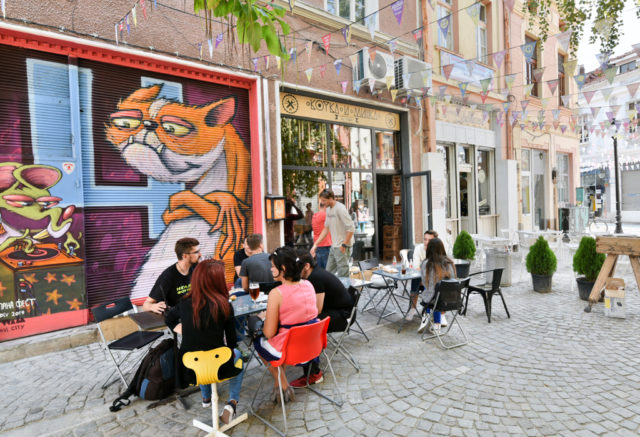
The other end of the spectrum is positive serendipity: Capturing a magic moment that’s far more compelling than you expected. Keeping the script flexible keeps us wide-open, allowing the best show to present itself to our camera. For example, our Bulgaria script included a throwaway line about artful graffiti in Plovdiv’s trendy “Mousetrap” neighborhood. Scouting the scene, we were totally tickled by the playful visuals. So we wrote and shot, on the fly, an insightful segment explaining how local authorities — who realize that buildings are going to be tagged anyway — actually pay the best street artists to create art rather than eyesores.

CH15OctPlovdiv_107

Visually, the foundation of a TV show consists of “b-roll”: establishing shots, general scenery, slice-of-life scenes, and so on. While Rick attends to other matters (working on the script, dealing with business concerns from the home office, and so on), Simon and Karel run around filming b-roll.

CH16MayTrnsMisc_027

Of course, you also have to establish the host on location: Rick walking down the street, exploring a museum, interacting with locals, and so on. In addition to the camera-mounted mic, Rick always wears a hidden microphone (taped under his shirt). If the scene involves dialogue with someone else — like our Bulgarian local guide, Stefan, or a market vendor Rick is buying something from — we have to take a few minutes to mic up that person, as well.

CH16MaySofia_113

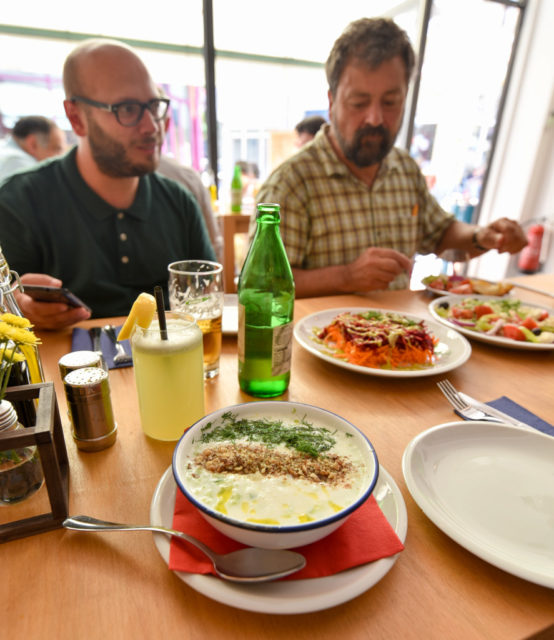
A meal sequence only adds to the complexity. To show off the local cuisine, we scout a restaurant with atmosphere and food that are equally telegenic. For our viewers back home, it’s more important for the food to look good than to taste good. (A few years back, we filmed a gorgeous dinner of Bosnian cuisine in Mostar  — at a restaurant known for having terrible food, but the best views in town.) Because it’s a little sad to show Rick at an empty table, he’s usually joined by Simon and/or a local guide — and sometimes, the more the merrier. In our Romanian dining sequence, we realized only halfway through the meal that we accidentally wound up with a table full of dudes: Rick, Simon, me, local guide Teo, and fixer Iulian. Unfortunately, our location — a remote farmhouse we had all to ourselves — made it impossible to scare up some women to give the scene a little balance.

CH16MayPlovdiv_069

Speaking of that empty farmhouse, it was an unusual case: It’s much better to film at a restaurant that’s full of other diners, who help provide atmosphere. But restaurants — anxious to ensure everything’s perfect — often want to close down the whole place for our convenience. It can take some convincing to pretend it’s just a normal night. (Simon and Karel always make the rounds before we shoot, making sure the other diners are OK appearing on TV.)

If you look closely at a meal sequence, you may notice an extra chair at the table. While Rick and his dining companions theatrically linger over the meal, Karel scurries around with his camera. He shoots the kitchen, the food coming out, Rick or the guide explaining each dish, close-ups of each item being piled on a plate, gregarious conversation, and, of course, eating. Karel takes very occasional, very brief breaks to pull up a chair and choke down our leftovers.

CH16MaySofia_107

Another type of Rick segment is the “on-camera” (or OC for short). That’s where Rick talks directly into the camera — sitting at a scenic café, or walking down a busy street, or in front of a great piece of art. On-cameras are typically used to address a topic that’s hard to convey visually, such as dense historical exposition. While most on-cameras are in the shooting script, they’re rewritten and carefully wordsmithed on the fly (since, once filmed, they can’t be changed — unlike the voice-over, or VO, which can be endlessly revised until it’s recorded later). Rick is a master at putting each on-camera into exactly the words he wants, and then memorizing those words on the spot. He’ll sit cross-legged in a quiet corner, muttering the lines to himself, while Simon and Karel set up the shot. By the time they’re ready, usually he is, too. (They do carry a teleprompter, just in case, but almost never use it.)

CH16MayViscri_027

When filming an on-camera, they do as many takes as necessary — making sure that Rick’s performance, the audio, the background, the light, and everything else is just perfect. If there are shadows on Rick’s face, Simon pulls out a lightweight LED lighting unit, or a giant, collapsible reflector disc, and aims it just so — often standing on tiptoes, holding his arms in the air (“like a mighty tree trunk,” he jokes) — as long as it takes to get it right.

CH16MayThrace_017

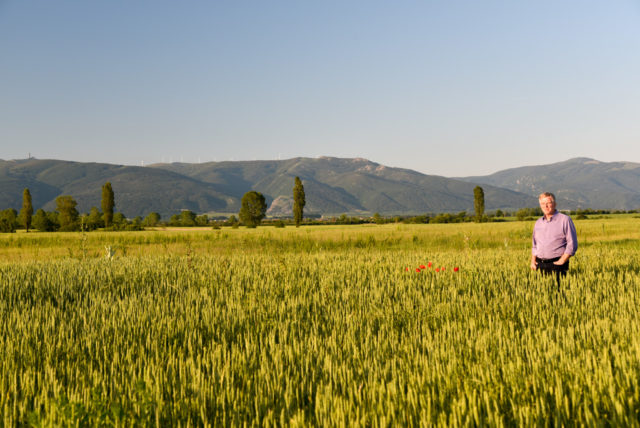
Background noise is a big concern. One evening, with the sun low in the sky, we found the perfect Bulgarian wheat field where Rick could stand to describe the ancient Thracians. The catch: It was next to a road where big trucks intermittently rumbled past. The challenge: Could Rick deliver his lines in the gap between trucks? (Yes, he did…eventually.) On another occasion, I had to go ask a jackhammer crew to take their break a bit early.

The outtakes at the end of each episode are rife with examples of flubbed lines, badly timed background noise, or passersby looking awkwardly at the camera. With so many potential screw-ups, these on-cameras are the most time-consuming bits to film. One 15-second on-camera can take just a few minutes to shoot, if all goes well…or closer to an hour, if it doesn’t.

CH16MayVlkoTrnvo_064

When filming, your two biggest concerns are time and weather. You’re always racing to maximize the best light and minimize disruption caused by rain. Two expressions are used liberally by the crew to describe this dynamic: If a spell of sunny weather helps you get ahead of the game, you are “in a commanding position.” Killing time waiting for the rain to clear up is, in the parlance of a frustrated film crew, “getting boned by the weather.” These two sentiments often flow into each other: “Looks like a beautiful day. If we hustle and work ahead in covering the script, we’ll be in a commanding position. That way, if we get boned by the weather tomorrow…it’s no big deal.”

It takes six days to film a 30-minute TV show. That may sound like a lot…but, considering how many different variables have to fall into place to make it all works, it feels rushed.

Up next, I’ll introduce you to Rick’s highly talented “crew of two”: producer Simon and cameraman Karel.


This is part three of my “Behind the Scenes” blog series about Rick Steves’ Europe Season 9 — now airing nationwide (check your local listings). You can also watch the Bulgaria and Romania episodes for free. And in case you’re in a gift-giving mode, the brand-new, 10-episode Season 9 DVD is currently on sale in our Travel Store.
Rick Steves’ Europe Behind the Scenes: Scouting, Scriptwriting, and Pre-Production

When you’re making travel TV, months of work have to be done before you can shoot a single frame of film. Here’s an (unapologetically wonky) inside look at how an episode of Rick Steves’ Europe is conceived, researched, and pre-produced.

CH16MayPlovdiv_001

Most episodes of Rick Steves’ Europe are loosely based on our guidebooks. Rick is constantly traveling to update and improve the books. When he gets home from each trip, he weaves his favorite experiences into TV scripts. But every so often, we want to expand our horizons by filming destinations that aren’t covered in our guidebooks — such as Bulgaria and Romania. And since I’m “the Eastern Europe Guy” around our office, Rick sent me to do some TV scouting and scriptwriting in these new destinations.

Researching Europe — whether for guidebooks or for TV — sounds like fun. And it can be. But between those fun moments is a tedious slog. You work long hours, chase down iffy leads, and wind up kissing a lot of frogs in the hopes of revealing a prince or two.

CH16MayBiertan_001

The biggest challenge is being selective. A 30-minute episode of Rick Steves’ Europe starts with a 3,200-word script. And from our past travels in Bulgaria and Romania, Rick and I already knew about 90 percent of what was going to make the cut for each show. My job was, first and foremost, to gather the information we needed to film that 90 percent, and only secondarily to scout possibilities for the remaining 10 percent.

Everywhere I went, I worked with great local guides, who were extremely helpful…usually. But sometimes their unbridled enthusiasm made things challenging — flipping that 90/10 ratio upside-down. A passionate Bulgaria booster or an avid Romaniac can’t fathom that every single sight in their homeland isn’t perfect for American airwaves. And my guides found it even harder than I did to keep within our 30-minute, 3,200-word budget. They always wanted to show me just ooooone more thing. I spent countless hours visiting minor sights that were just fine…but not right for TV. Some simply weren’t visually engaging. Others required too much weighty context to make meaningful. And a few felt redundant with material in other shows.

CH15SepSuceavita_046-Edit

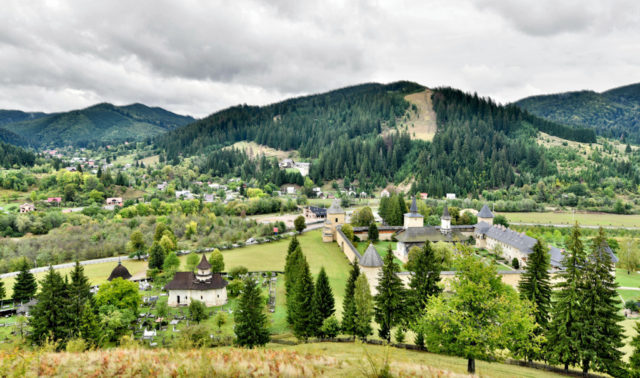
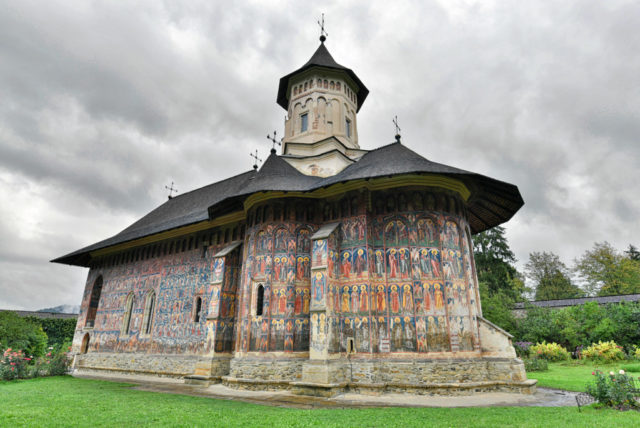
Sometimes those cuts are especially tough. For example, I spent two days scouting Bucovina, the northeast region of Romania famous for its rugged hills and breathtaking painted monasteries. Rick — still nostalgic from a trip there many decades ago — has a strong personal affection for Bucovina. And while there scouting, I met an excellent local guide, Chip Siemco of Hello Bucovina, whose insights brought those vivid frescoes to dramatic life. This was shaping up to be a great segment.

CH15SepMoldovita_006-Edit

After two and a half weeks of 14-hour days (and much frog-kissing), I returned home from my scouting trip. Weighing options carefully with Rick, I put everything I’d learned into a centrifuge and distilled it down to the best 3,200 words on each country. Bulgaria fell into place easily. But Romania was a challenge — our script was already overweight at more than 4,000 words…before I’d even started writing about those painted monasteries in Bucovina. We briefly considered two episodes on Romania instead of one. But deep down, our viewers want us to be selective — and we want to respect their time by not testing their attention span. We agreed: One tight, “best of” show was the smart strategy. That meant we had to cut some strong material. Bucovina would take a lot of time to shoot, for a relatively short segment in the show. And its painted monasteries felt similar to Rila Monastery, which we knew we’d cover with gusto in the Bulgaria show. So, much as it pained us, we swallowed hard and cut Bucovina. (Sorry, Chip!)

The “shooting script” is a helpful blueprint, but only a rough one. Until the final voice track is recorded — weeks or even months after the episode is shot — the script is a living, evolving organism. As we film, we continually reconsider, refine, and rewrite virtually every word. But at least the first draft of the script lets us begin scheduling the shoot.

We spent the spring arranging details from the office in Edmonds. We got in touch with our favorite local guides and booked our preferred hotels — that part was easy. But the real challenge was the red tape. You can’t just show up with a giant camera and start filming. You need written permission, arranged months in advance.

CH16MayPlovdiv_015

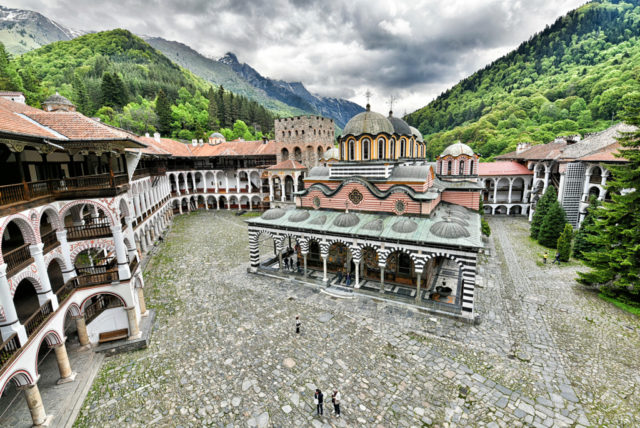
Usually museums and other sights understand what we’re doing, and work hard to accommodate us. Sometimes they ask us to pay for the privilege of filming (which is a little frustrating — after all, we are essentially producing a nationally aired infomercial for their attraction, at no cost to them). And, on rare occasion, they simply aren’t interested. The abbot at Bulgaria’s Rila Monastery generously invited us to film the stunning courtyard. But, understandably, he wasn’t comfortable letting our camera disrupt the sanctity of the church interior. When we suggested that a generous donation might grease the skids, our guide patiently reminded us that, for monks who’ve taken a vow of poverty, money doesn’t talk.

CH16MayRila_019

Both Bulgaria and Romania — former communist countries that are still behind the European curve in terms of both bureaucracy and corruption — made permissions tricky. It took a lot of persistence to get the paperwork we needed (often leaving us greatly indebted to our hardworking local friends). But at the end of the day, we were legal, scripted, and ready to fly. Next up: The shoot.

CH16MayThrace_008


This is part two of my “Behind the Scenes” blog series about Rick Steves’ Europe Season 9 — now airing nationwide (check your local listings). You can also watch the Bulgaria and Romania episodes for free. And in case you’re in a gift-giving mode, the brand-new, 10-episode Season 9 DVD is currently on sale in our Travel Store.