A DC Massing of Citizen Diplomats

Yesterday I flew from Seattle to Washington DC, was picked up at the airport, and got to my hotel with 15 minutes to spare. I was there to accept the Citizen Diplomat Award from a huge gathering of the National Council for International Visitors (NCIV) and to help kick off their annual convention with a talk about how I see the value of travel.

Plopping my bag in the hotel room and brushing my teeth, I marveled at how someone can fly clear across the country and get there with 15 minutes to spare…exactly as planned. While many enjoy complaining, I am forever impressed by and thankful for the airline industry here in the USA.

NCIV promotes citizen diplomacy with nearly 100 community organizations throughout the United States. Working with the US Department of State, their mission is to welcome and enrich the experience of people (mostly education, business, and political leaders) who visit our country. With 80,000 volunteers spread over every state, it is an inspirational group. And to be in a big hotel ballroom with hundreds of their leaders as part of their annual powwow was an inspiration for me. There’s always something uplifting about getting committed, caring people with the same passion together in the same room.

I enjoyed giving my “Travel as a Political Act” talk, and they seemed to gobble up the ideas. Even though I may have been preaching to the choir, there is a powerful, intangible value in such a pep rally (for me, as well as for my audience).

The Citizen Diplomat Award has been given six times. Senator William Fulbright received it first in 1987 for his work in establishing the Fulbright scholarship program, which pursues the same goals as the NCIV. I enjoyed time with Harriet Fulbright, who explained to me how she was keeping her husband’s heritage alive.

In 1946 Euro-visionaries, sitting on the rubble of their bombed-out continent, were realizing that something radical — like the creation of the European Union — needed to be done to prevent another such major war. That same year, broad-minded American visionaries, like Senator Fulbright, were also thinking outside the box to help our country learn from history and help build a more peaceful world. Throughout his long career, Fulbright provided global-minded leadership here in the USA.

In preparing for my award, I read the NCIV material (see www.nciv.org) and enjoyed seeing how a group with the same mission as my own company builds understanding between cultures that have a mirror-opposite agenda. At ETBD, we work to inspire Americans to travel with a mindset that helps make them more broad-minded and come home as better citizens of the planet. Meanwhile, NCIV works to help foreigners visit the USA and return to their homelands with a better understanding of our culture. While we’ve come up with our “become a temporary local” phraseology, NCIV has their “shape foreign relations one handshake at a time” and “you welcomed a stranger and sent home a friend” slogans.

After my talk at the main event, the NCIV president, Sherry Mueller, hosted a wonderful dinner party in her home — perfectly in keeping with the style of her organization, which does most of its best work in that grassroots kind of people-to-people venue. It was a joy for me to have our daughter Jackie (who’s a student at Georgetown — just a few blocks away — and is interested in citizen diplomacy) join me to meet the NCIV gang.

In working on my Travel as a Political Act book, I’ve been thinking about the value of people-to-people diplomacy. For instance, it’s great for parents to scrimp and scrape to give their student a foreign study experience. And it’s exactly as productive for people without their own students (or lacking the income to send a young person abroad) to host a visiting student here in the USA. It accomplishes the same noble goal.

The NCIV is frank about the lowly status of our nation’s battered image abroad and the importance of fixing it. I’ve realized lately how propaganda and sensational media distorts perceptions in both directions: causing foreigners to think less of us Americans, and causing us to misunderstand (and needlessly fear) people from distant lands.

NCIV knows that improving America’s image abroad is not a sales pitch spearheaded by a government-funded PR person. (We tried that and failed miserably.) It is actually the job of our citizenry in general. I remember when France had the very bad image from its proud and chauvinistic de Gaulle era. Then the French government actually inspired its people to be less judgmental and more welcoming — and today, that off-putting French snobbery is mostly a thing of the past.

The mission of NCIV is more than philanthropy. There’s an economic rationale, as the tarnished “Brand of America” is a business concern. People who don’t like us don’t want to buy our stuff. Many NCIV-types are excited about the Obama Administration. Obama is not a quick fix, but the arrival of a new administration gives us a fresh start and a chance for the world to give us another look. As a nation and as individuals, we can share, listen, respect, bend, and work together with the rest of the world.
Euro Experiences from NW to SE — Part I

Enlarge photo

Let me stoke your travel dreams for 2009 by sharing some of my favorite European experiences, roughly from northwest to southeast. Maximizing the experience is a dimension of smart budget travel that’s just as important in challenging times as saving money. Imagine these…

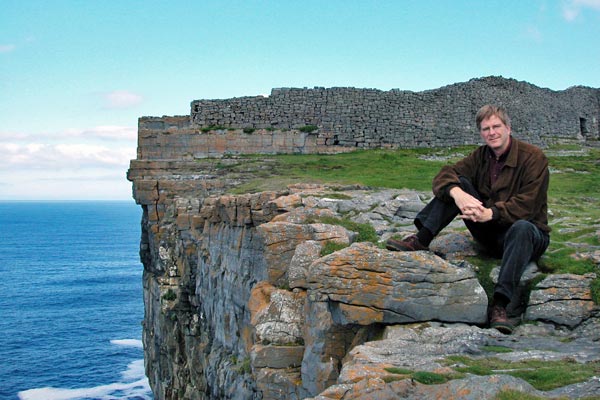
On Ireland’s Aran Island, feel like the westernmost person in Europe as you lie on a rock with your head hanging over the cliff-edge, high above the crashing Atlantic at the Iron Age fortress of Dún Aenghus.

In Dublin, be the only tourist among 50,000 cheering fans in a stadium for a hurling match—that uniquely Irish game that’s as rough and tumble as airborne hockey, with no injury timeouts.

Belly up to the bar in a neighborhood pub in Edinburgh and drink not beer, but whisky. Ask a local what they like best and why—you’ll find that whisky is as refined as wine, and suddenly you feel like an expert taster.

Hike the best-surviving stretch of Hadrians’ Wall, and picture being posted there back in ancient Roman times to keep out the scary Scots.

Sit in the choir for an evensong service in the York Minster—surrounded by men and boys singing their hearts out for the glory of God today, in a church built for the glory of God hundreds of years ago.

Immersed in the wild and pristine vastness of England’s Dartmoor, trek from the hamlet of Gidleigh through a foggy world of scrub brush and scraggy-haired goats to find your own private Stonehenge. Arriving at a humble stone circle, sit and observe blackbirds and wild horses, and feel the echoes of druids worshipping and then partying right there thousands of years ago.

Shhhh, Three New TV Shows in the Oven

We are ready to kick off work on our next TV series, and will film three new shows this May in Croatia, Slovenia, Bosnia, and Montenegro. We did one show on both Slovenia and Croatia a decade ago. Now we know the area much better and can dedicate three episodes to the same region and do it right. The scriptwriting process is the first step. Then we set an itinerary, line up local friends, and get permissions. For these three scripts, I’m helped by Cameron Hewitt (co-author of my Croatia & Slovenia guidebook). Below you can see how I proposed the basic show structure and welcomed Cameron to volley back my rough outline with more flesh on it. Here are the just-fertilized eggs of three TV shows:

Show #1: Best of Slovenia (culture, food, local guide/friends Marijan and Tina?):
Ljubljana (market, Plecnik, Art Deco, prison hostel)
Bled, Lake Bled (Tito’s villa, castle, boat, island, traditions wedding, crème cake)
Julian Alps, Soca Pass loop (war sites, Kobarid museum, Italian memorial, the actual drive)
Skocjan Caves (better than Postojna)
Predjama Castle (so visual, not much beyond that)
Piran (finish with Venetian charm and Slavs in Speedos)

Cameron’s Notes:
Ljubljana: architecture, especially Joze Plecnik — NUK, Cobbler Bridge, his house
I know some good viewpoints for skyline shots of Ljubljana
Bled: skip the weddings since you covered it well last time?
Julian Alps: suspension bridges, watersports in Soca (look for kayakers), Hemingway connections
Predjama: Do a picnic there? Otherwise needs just a few seconds–not much there
Traditional Slovenian culture: beehives, hayracks, tourist farms (like agriturismos)
flight over Julian Alps? Local polka music–i.e., Avsenik?
In Karst (caves) section, visit a prsut-production facility? (prosciutto, very typical in Slovenia)
Consider Logarska Dolina? Very remote mountain region, more rustic than Bled
Consider Ptuj? Only interesting for Kurentovanje, but could get guys to dress up in the costumes
Skip Piran? It’s so similar to Croatia, nothing unique about it–rather have more time for others
Smart to skip Lipica

Show #2: Best of Croatia
Dubrovnik (must include in this episode while actually covered in next, acknowledge too short a visit in this episode)
Korcula and boat to Split (town, Moreska Dance set up, sobe, actual ferry ride with island scenery)
Split (Diocletian, Paseo chic harbor front)
Plitvice (a good lamb on a spit bit)
Zagreb (naïve art, cathedral, square, the pilgrim spot in action, modern prosperity, freedom
Motovun/Istria, truffles, rustic meal)
Rovinj (climb tower, bike, commie monument, market action, old town, hotel/B&B, St Euphemia, ship builders’ museum, wine bar funky, wine bar chic, best meal)

Cameron’s Notes:
Klapa Music in Split Vestibule is a must–maybe in lieu of Moreska?
Korcula: Did very well in last show, consider doing quickly–maybe in combination with Hvar to show two islands. Moreska Dance is OK but clichéd and well-covered before…skip it? Also since you already did the sobe routine on Korcula I’d do it elsewhere for this show (ideal in Dubrovnik).
Islands: Let’s aim to make this quick & dirty, acknowledge the islands but move on right away. 30 sec each in Korcula and Hvar would do it.
Fishing Boat: One cool (and unique) way to do the islands might be to contact our friends in Split who have refurbished a traditional Croatian fishing boat and take tourists out for day-trips. I think they often work with an actual salty Croatian fisherman/captain. Might be more trouble than it’s worth, but at least it’d be more interesting than sitting around a snack bar on a Jadrolinija ferry. Instead of spending a day in Korcula, could spend a day on the seas with this boat, go to Hvar, etc.
Split: Talk about local sculptor Ivan Mestrovic (works in town, gallery on outskirts)
Zagreb: Don’t get hung up on “modern prosperity” and “freedom”–it’s ancient news and was never really relevant in Yugoslavia anyway. Instead focus on the thriving urban side of Croatia (contrast to the idyllic coastline)
Motovun/Istria: Go to Konoba Astarea for traditional feast, esp. peka (lamb in copper pot at giant fireplace); could do a truffle hunt in Istria, but I think you already did this in Italy
Rovinj: I wouldn’t linger on the wine and food stuff here–it’s far better elsewhere in Istria (and Croatia). Focus instead on how picturesque/atmospheric the place is. Emphasize usefulness as a home base.
Hvar: Instead of/in addition to Korcula to give some balance (and not overemphasize this one island in two different shows). The Benedictine monastery where nuns make lace out of cactus fibers is fascinating, great views from fortress
Pula: very quick visit to show the amphitheater and ruins in Old Town (in context of Rovinj daytrip)
Opatija: for a taste of Habsburg opulence (ties in neatly with Istria) War Damage: Visit Otocac to show damaged buildings, cross made of shells, contrast Catholic vs. Orthodox church, roadside memorial just outside of town. Don’t overplay the war, but acknowledge/explain well.

Show #3: Dubrovnik and Balkan Adventures
Dubrovnik (jazz, bar on wall, predictable sites, wall, war, story of Yugoslavia, Pero’s B&B)
Bay of Kotor (Kotor, Perast, boat to island, Lady of the Rock tour, Kotor town, switchbacks)
Sveti Stefan and Budva Riviera?
Cetinje, monastery in action?
Serb Republic, Trebinje, Nevesinje
Sarajevo (1914 stuff)
Mostar (bridge, jumping, commerce, church, reconciliation, war, cemetery, youth scene, modern life, hope)

Cameron’s Notes:
Dubrovnik: Skip the jazz–not a big deal here. Hole in the wall bar is a must. Could combine Pero with visits to other great sobe (e.g., Jadranka) to emphasize value over hotels. Also consider monastery museums, Serbian Orthodox Church (maybe irrelevant because of trip to Serb areas), ice cream, beaches (some with great views of the Old Town), etc.
Old Fortress: The ruins of the old fortress are right above Dubrovnik. Great views, and also we know a driver who’s a neat guy and was an actual veteran of the war, could take us up and give us his firsthand account. Could be a fresh look at the war, rather than just a rehash.
Bay of Kotor: I’d add the fortifications climbing the hill above Kotor, maybe even hike up there. Also add the super-scenic restaurant at the spring?
Republika Srpska: Good choices: rich town (Trebinje) vs. poor town (Nevesinje). In Trebinje, aim for market day? Not much else to see in town, but there’s a huge church on the hillside above with glorious icons and historic ties to Kosovo–could provide good big-picture connection to “Serbia.” If we show bombed-out mosque in Nevesinje, I feel it’s only fair to also show bombed-out Serbian church in Mostar–powerful symbols of how the war was bad for all.
Near Nevesinje: I took a tour group to an ancient Orthodox church with a very charismatic local guide. It’d be fun to re-create. Mostar: Obviously this should be a major focus of the show. It’s a fine balancing act: It’s important to tell the story of the war and show the inspiring images of the survivors. It would be huge to get actual footage of the bridge being destroyed (like the movie in the museum) to splice into the show–really brings the story home. However, it’s also essential not to ignore the more typical “tourist” sights of Mostar: mosque visit, Turkish houses (these are fascinating with a good guide), shops and galleries on Coppersmiths Street. It’s a fine destination even without the war, so we don’t want to let a fixation on the war overwhelm the show.
Other Mostar experiences: Balkan food (grilled meats, ajvar, burek); smoke a hookah at the cool Open Sesame bar; Alma can explain the social ritual of Turkish coffee
Sarajevo: Frankly, we might have a show even without Sarajevo. Could save that for next time.
Skip: I would skip Cetinje (redundant with Serbian church stuff in Bosnia; also, I find it boring in person, probably even more so on TV) and Sveti Stefan (I think it’s still closed for renovation, and besides, it’s nothing more than a silly footnote. Might only be worth mentioning since it’s famous.)

From here, we decide which stops make the cut, establish a show structure, and actually write up rough eight-page scripts, which we’ll spend six days each on in May producing our new shows. We do that for ten more shows, and in October of 2010, we launch our next public television series.

Steve Ricks Rocks

I just found a travel expert who may just inspire the masses more than me. (Or at least inspire me to stop holding my daybag over my shoulder on one strap.) You might find this YouTube bit worth two minutes.

Happy travels… huh, huh, huh

Inauguration Gives Millions Chills

Countless celebrants went to sleep last night in Washington DC not clear on just how challenging it would be to get a firsthand look at the Obama inauguration — or how early to start their trek. By 6 a.m., the subway was already so full the doors weren’t even opening after the suburban stops. Major streets were closed off and turned into charter bus lots. We left the hotel at 7:30 and hiked for 75 minutes, crossing under the Mall through the Third Avenue tunnel. Generally thundering with cars, the freeway was a river of dark-clad people all marching in the same direction.

We had “blue tickets” and followed the sign, shuffling for two and a half hours in a solid mass of people to the “blue gate.” Given the occasion, everyone was extremely polite. It seemed potentially dangerous…but people — cozy and even finding warmth with complete strangers — sang “Lean on Me” and shuffled slow and steady under the gaze of sharpshooters on federal building rooftops. Two hours into the line, I looked behind and saw no end to the crowd. We began to wonder if we’d even make it for the swearing-in. Some of those around us arrived two hours before we did. No one knew how to best play this thing.

Finally through security — and just in time — we joined the crowds on the Capitol building’s front yard. But, it seemed, everyone stopped first at the long battery of blue port-a-potties (urine on ice in a plastic box…without paper). Hearing Yo-Yo Ma stringing his cello while in line waiting my turn was exasperating.

The Capitol building was decorated with dignitaries and festooned in red, white, and blue as the chilly masses, warmed by their enthusiasm for the new President, stretched as far as the eye could see. Helpful strangers boosted me, Anne, and our daughter Jackie over a stone fence as if into a life raft, and we spilled into a fine space directly in front of the proceedings. Early birds had shoveled together little mounds of wood chips to create their own mini-viewing stands. With the announced arrival of each VIP, my world was filled with the muted sound of mittens clapping. Fwap fwap fwap. Then, with the arrival of the President-elect, the grounds erupted. Yes we can!

It was good to hear perfect silence among the million-plus gathered as Rick Warren (the controversial-to-liberals conservative evangelist) kicked things off with a beautiful prayer. I feared a couple of angry people (disappointed by Obama’s efforts to reach out to the right) could mar his prayer with catcalls. But, marking (I hope) this new political era, Warren’s words were inclusive, reminding all that God loves everybody — implying gays and straights — the same. It seemed nearly everyone said, “Amen,” and together he and Obama moved us not left or right but one step forward.

Obama’s speech was, as expected, a hit. In fact, it was such a hit that everything after that was anti-climactic. It seemed no one around me even listened to the poetry reading or the benediction.

The crowd, which had entered as if a precious drink funneled drop by drop into a big decanter, dispersed like a liquid spilled — coursing into the empty streets of a cold and happy city. Pausing at the JumboTron on our way out (with Seattle P-I political cartoonist David Horsey and his family, whom we just bumped into out of the huge crowd), we watched former President Bush and his wife escorted down the Capitol steps and into their helicopter. Then, instinctively, we all set our eyes away from the huge TV screen and onto our nation’s Capitol building. It stood gloriously in the sun, capped by a saint-like statue of Lady Liberty — smiling at another peaceful transfer of power (and also, I imagine, ready for change).

Then the chopper rose over Washington to the happy if impolite cheer of the shivering masses. As if swept away by an electoral broom, it careened with a former President into the distance. Then, startling many, the chopper came back for one last swing around the Capitol, engulfed in the crowd of people. While I wondered what former President Bush was thinking as he looked down on us…I knew what the crowd was thinking: This country is moving ahead.