South Italy adores its nativity scenes, called presepi. You see simple ones carved into the walls of urban streets and rustic villages. You see a huge one in the back corner of every church. And you see them for sale in shop windows all over Naples.
I happen to have a very close relative who collects nativity scenes. (And that person is also particularly difficult to shop for at the holidays.) With each trip to Naples, I have to fight the urge to buy her a big, fancy one, because how on earth would I pack it home?
But this trip, I was determined. So I asked my local friend Virgilio for help. Here are some photos from my very early Christmas shopping.

In Naples, Via San Gregorio Armeno — a street that leads away from the historic Spaccanapoli pedestrian drag — is jammed with cheap presepi shops. While these are fine for a basic souvenir, the made-in-China quality wasn’t the special gift I was looking for. So Virgilio took me to one of the most venerable presepi shops in Naples, owned by Signore d’Auria. They let us peek into their workshop, too.
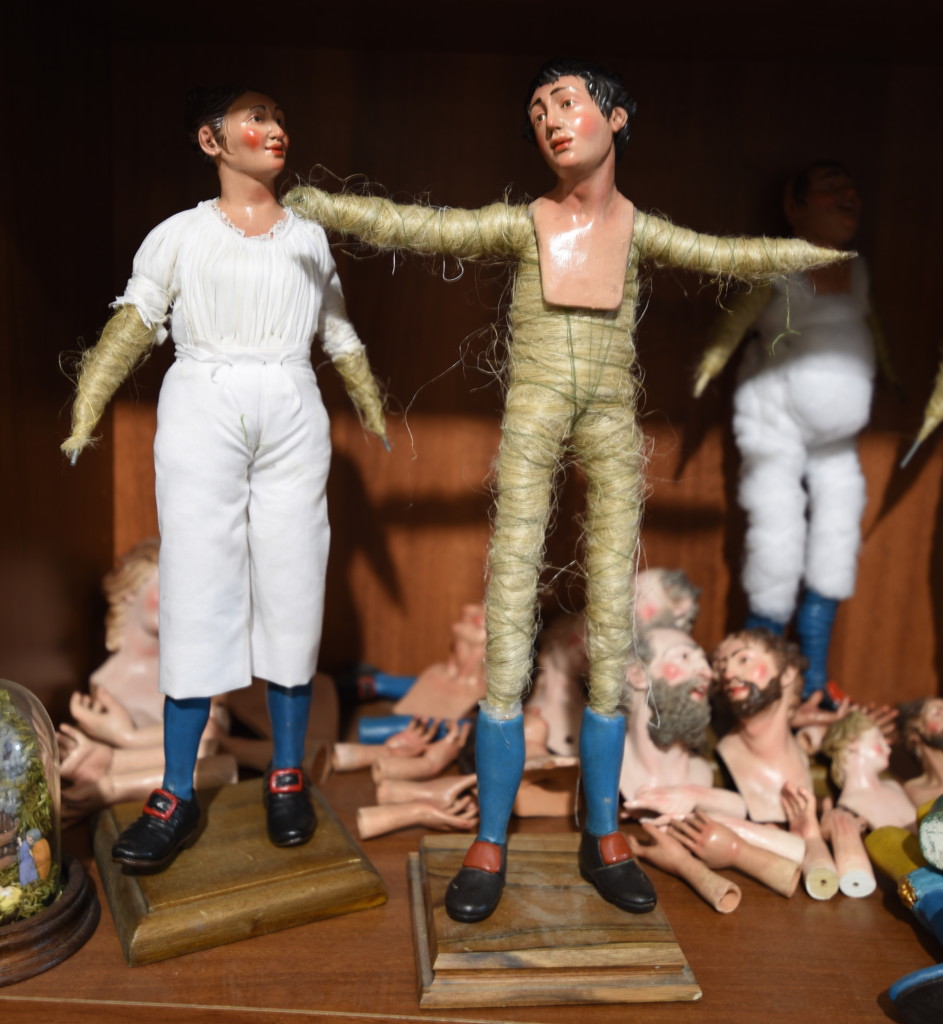 In the workshop, building these Barbie doll-sized presepi figures is a painstaking process: They begin with an articulated metal skeleton, which is wrapped in string and padded with cotton to give volume to the body, and finally dressed with clothes as finely tailored as the real thing.
 Neapolitans’ affection for their presepi may stem from their deep family ties. “Each figure in a presepe becomes a new member of the family,” Virgilio explained.

These travel-size presepi are more like it. And you get several small figures for the price of one big one. The level of detail is mesmerizing.

Signore d’Auria proudly poses with one of his fine presepi. The fanciest presepi, like the fanciest dinners, come under glass — a fragile dome called a campana (“bell”).
Virgilio offered to ship my presepe for me. He assured me it would be no problem. He was wrong. A few days later he called me with a regretful tone in his voice. “It may take longer than I expected,” he said. “Because presepi are an important part of our cultural heritage, the local cultural authorities must inspect the piece to ensure it is not artifact quality. It cannot be more than 50 years old.” He told me he had scheduled an appointment at the customs office to bring the presepe for authorization.
Apparently, my presepe got its emigration paperwork: Virgilio just emailed me to say that it’s in the mail. I’m in no hurry — as long as it arrives in Seattle in the next seven months, I’ll be fine.
 xpansion of the city’s Metro system. Several new “art stations” on the subway have been designed by prominent architects — a point of pride for Neapolitans who are weary of the conventional wisdom that they live in a backwards, broken-down city.
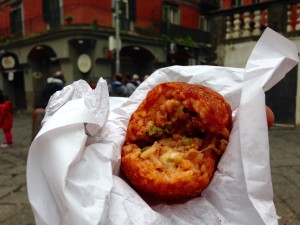 Retreating to a park bench on a seedy square, I peeked into the bag at the two items I’d randomly requested. One was an arancino, a deep-fried ball of rice that really did resemble the “little orange” it’s named for. I’d eaten arancini before, and they were dry, crumbly, and forgettable. But this one was heavenly. When I bit in, the filling — rice mixed with tomatoes, ragú (meat sauce), and a few peas — melted into my mouth as soon as my teeth broke through the fried skin. It was moist, piping hot, and delicious…instantly setting an impossibly high bar for all of the arancini I’ll ever eat.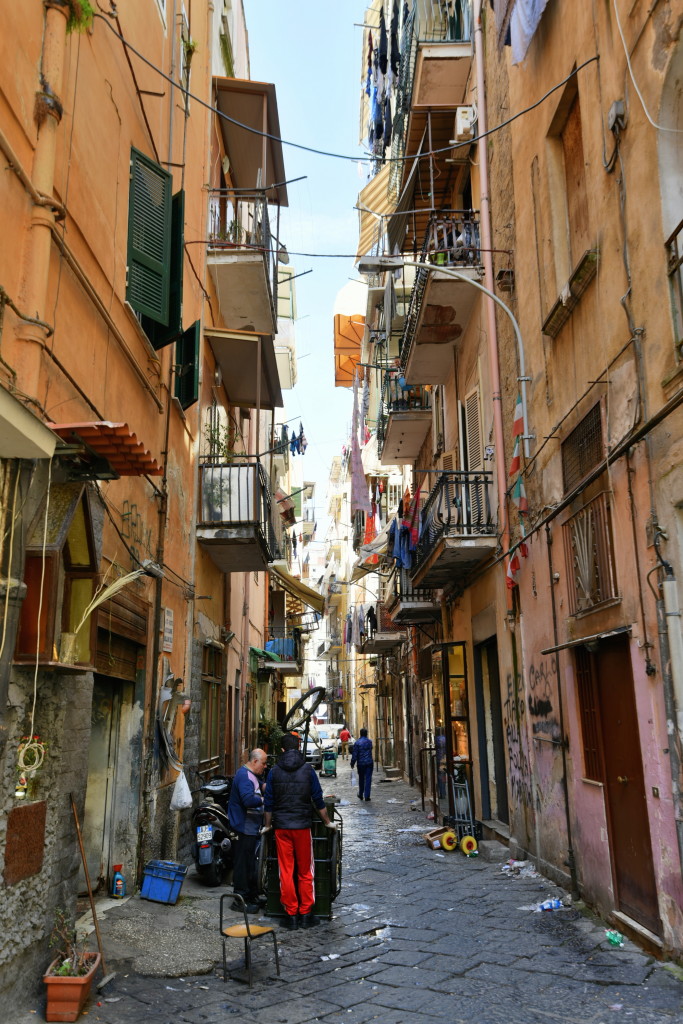



 Expressive stone lions welcome visitors to Naples’ Piazza Plebescito. This one has a goofy, welcoming grin.


