My co-author and frequent collaborator, Cameron Hewitt, is well-traveled, smart, and insightful. And, while he and I are in perfect sync in our travel styles and priorities, he gives voice to the next generation of "Rick Steves travelers." Join me in enjoying his reports right here. —Rick

Amazing Albi

Specializing in Eastern Europe, I spend a lot of time in Europe’s little countries, where there’s a finite number of cities worth exploring. Traveling through France, though, I’m struck by how deep this country’s bench is. You could spend weeks in France, never set foot in the heavy hitters, and still have a great trip. One of my favorite examples of this is the utterly underrated city of Albi.

Like its most famous former resident, Henri de Toulouse-Lautrec, Albi is a lovable underdog. Sitting an hour off the freeway between Carcassonne and the Dordogne, Albi gets missed by most tourists. Maybe that’s why it’s such a delight. It’s a red-brick, sun-parched town with a  strollable old center, a magnificent fortress-church, and a half-day’s worth of engaging sightseeing.

Albi Church Ext

Albi was the home city of the Cathars, those “heretical” Christian rebels who stood up to the Pope in the Middle Ages. (They’re also called the Albigensians, after their home city.) After they were defeated, the Vatican built this huge, humorless cathedral — more fortress than church — as a stake in the heart of Albi, and the Albigensians.

Albi Church Int

Inside, the cathedral’s opulent artwork drives home this same fire-and-brimstone message. The Last Judgment altarpiece makes the consequences of disobeying the Church gruesomely clear.
Albi Garden

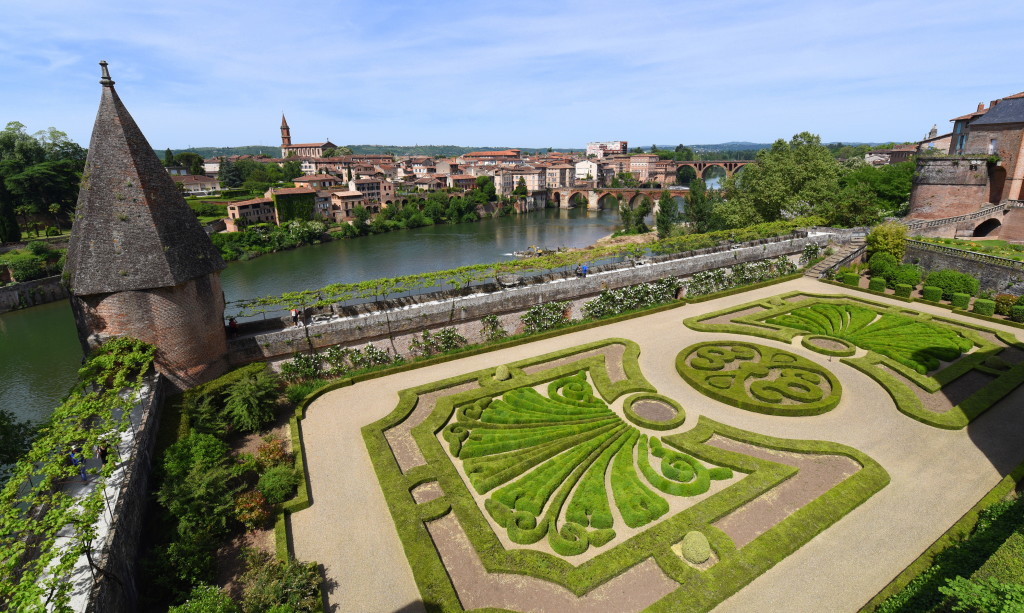
Next to the cathedral sits the Toulouse-Lautrec Museum, with the finest collection of the talented artist’s work outside of Paris. And just beyond is this stunning garden overlooking the Tarn River. Some cities are characterized by a color, and when I think of Albi, I think of the gentle maroon of sunbaked bricks.
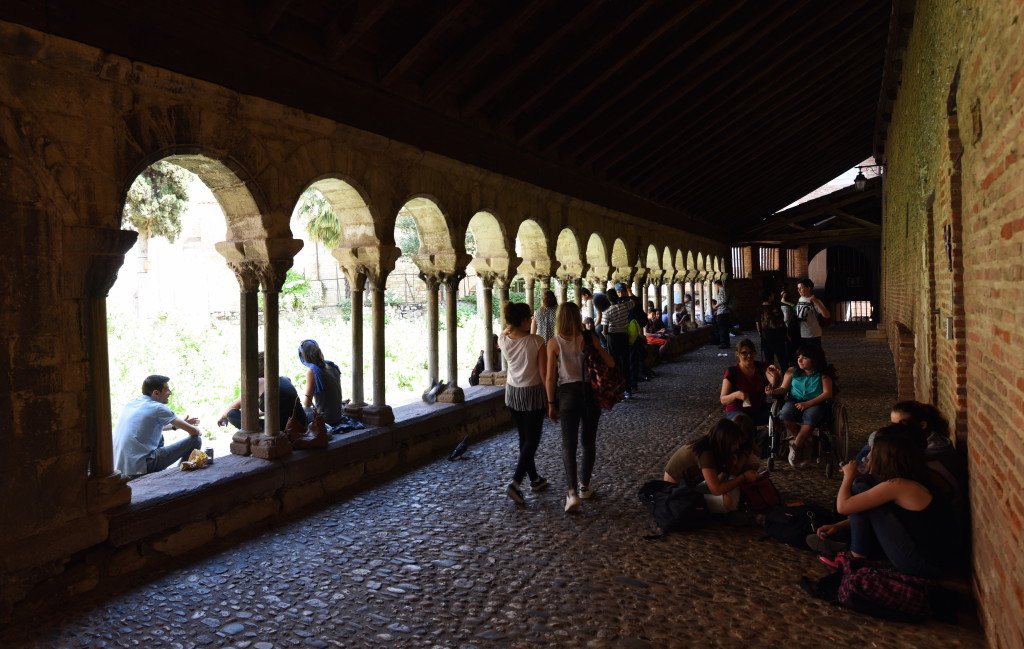
Albi CloisterFrom the cathedral, inviting streets fan out through town. And, like any great city, Albi hides plenty of surprises behind its eye-pleasing veneer. This medieval cloister — packed with a picnicking field-trip group during my visit — is a tranquil eddy that sits, almost unmarked, off the main drag.
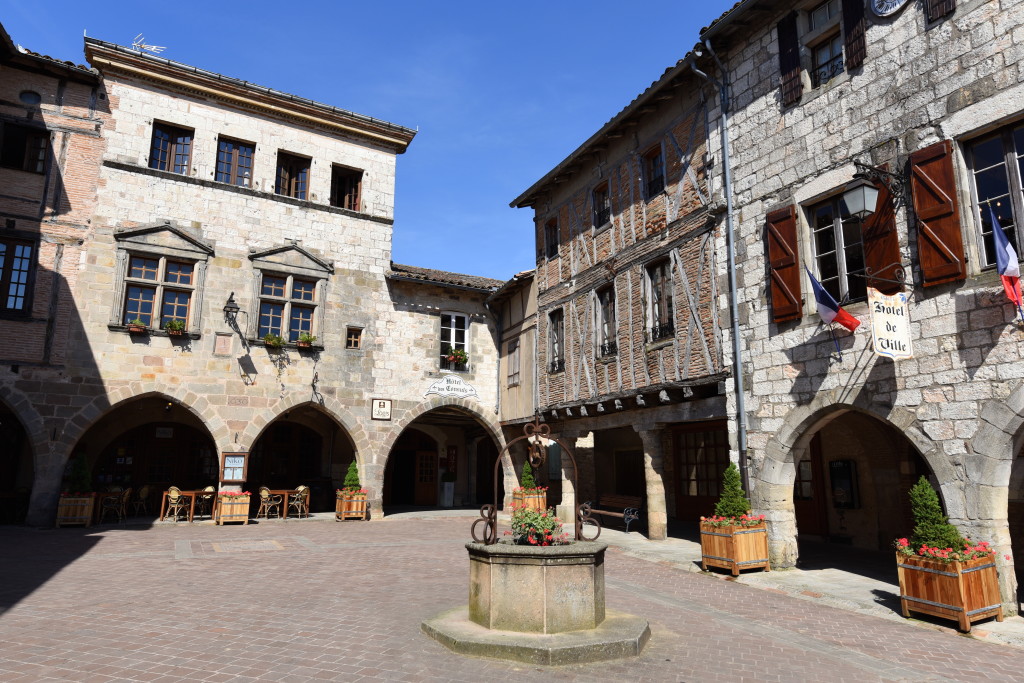
Castlenau Square

The fortified medieval villages (or bastides) in the countryside near Albi are equally enchanting. I dropped in on a few recommended in our Rick Steves’ France guidebook, but my favorite was Castelnau-de-Montmiral — with what may just be the cuddliest main square I’ve ever seen. If I hadn’t had a long drive ahead of me, I could have happily settled in here for a drink…or a week.

Most travelers give Albi a miss. But that’s a mistake. Stop here for a lunch break — or even spend the night — and you’ll have this fine city all to yourself.

Next stop: the Dordogne River Valley.
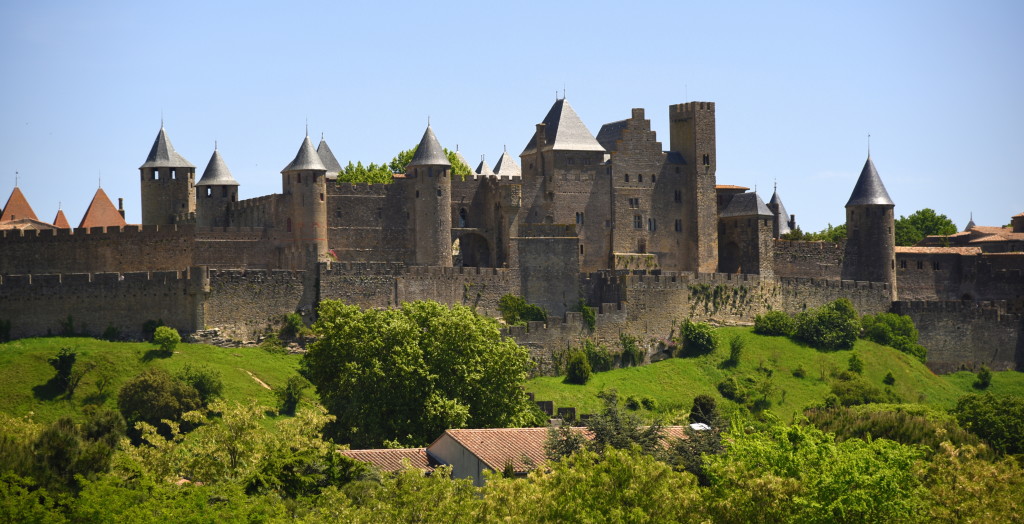
Carcassonne? Meh.

I love reading a movie critic teeing off about a film that just drives him nuts. And, in that vein, I think there’s something very satisfying in a travel writer bashing an overrated destination. So in the spirit of Roger Ebert, allow me to turn my negativity up a notch.

The medieval fortified town of Carcassonne is a challenge for guidebook writers. We understand that no amount of convincing will persuade you to skip it. So we do our best to offer strategies for enduring it. The Rick Steves’ France guidebook suggests arriving in the evening, spending the night, then getting outta there as fast as possible the next morning. Could it possibly be damned with fainter praise? And based on my second visit — this time for two whole nights — I agree that this is the only way to go.

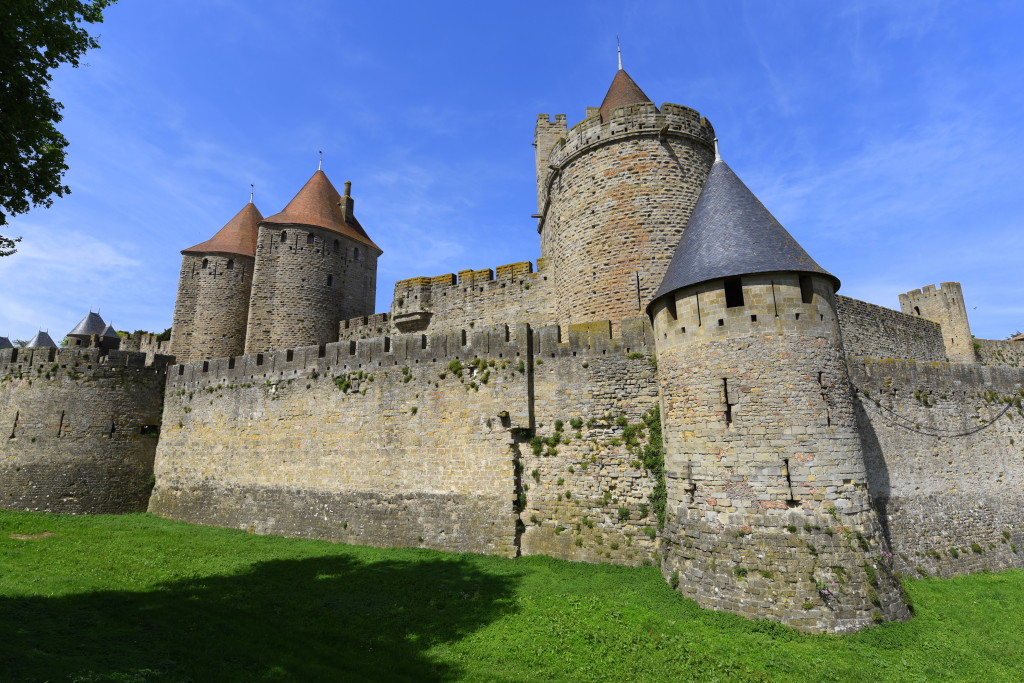
First of all, I’ll concede that the city walls and towers are, without a doubt, magnificent. Carcassonne is well worth a one-hour stroll to appreciate some of the most remarkably intact old fortifications you’ll ever see. Unfortunately, Carcassonne is a few hours away from anything else that’s really worthwhile, so most visitors get stranded here with more time than they need.

When it comes to touristic metabolism, Carcassonne has two speeds: overwhelmed by tourist hordes, and tumbleweed town. By day, you’re fighting your way through a mosh pit of elbows, dodging tacky candy and souvenir boutiques. By night, you’re the lonely, last Cathar defending a lost-cause fortress. Some people enjoy the tranquility of after-hours Carcassonne; to me, it just feels empty and melancholic — a reminder that virtually nobody still lives within the walls of this once-thriving community. (And to be fair, I may be slightly jaded because of my regular visits to Dubrovnik, Croatia, the only walled town in Europe that trumps Carcassonne.)

Normally French chefs can do no wrong, but even the food in Carcassonne manages to be underwhelming. The most famous local dish is a bland casserole of beans and old meat called cassoulet, which I believe is French for “bowl of farts.” If it’s not a lutefisk-style “hardship food,” eaten only in desperation, then it should be. Despite my reverence for French chefs, I desperately want a dash of Sriracha (or even ketchup) to jazz up my cassoulet.

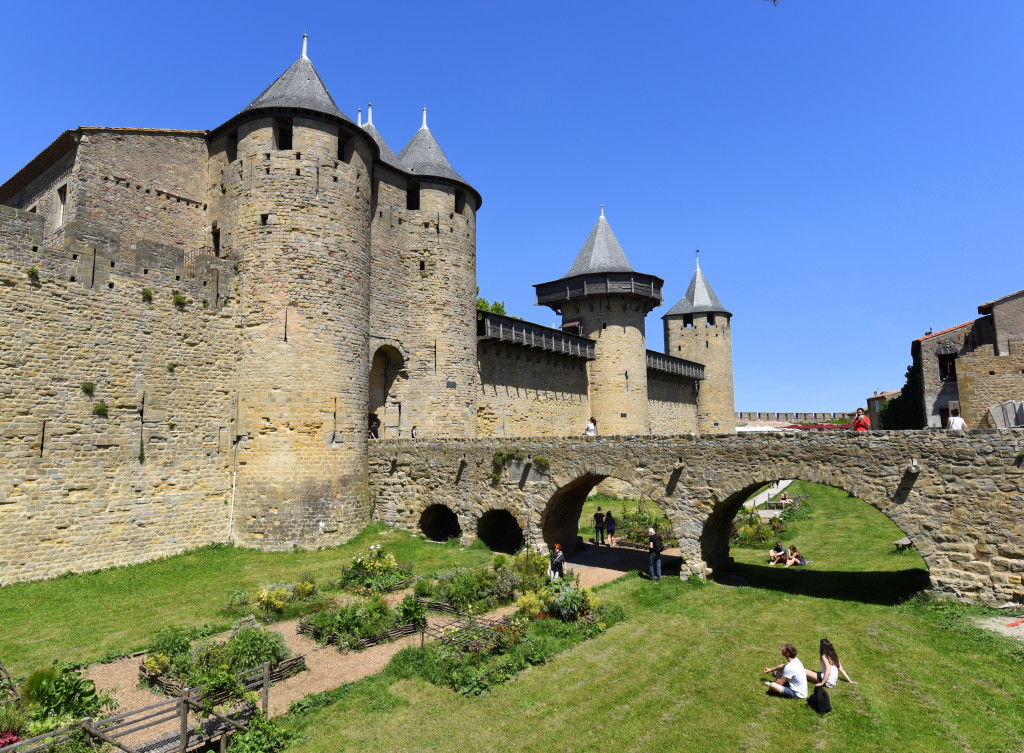
All of that said, I found a few things to enjoy during my stay in Carcassonne. The town has almost no sights worth entering, but the one exception is the castle-within-the-castle Château Comtal, with a well-presented, one-way walking route through the keep and up onto the ramparts. Exploring here with a good imagination, you can envision a far more appealing age when the city would have been inhabited by smelly, raunchy, aggressive soldiers. The moat surrounding that château is filled with a very scenic garden, where pooped sightseers enjoy a restful break. And after dark, the city — while deserted — does have a certain floodlit magic.

What it comes down to is this: In my travels, I’m most drawn to places that feel vital and authentic. And Carcassonne may have the widest gulf between glitz and substance of any place I’ve been. It feels like a stage set: Perfect for a postcard or a coffee-table book, but torturously dull to explore. It is, simply, soulless.

In the interest of saving you time, here are a few pretty pictures of the city from my last visit. (Well, I hope it’s my last…) Staring at these for a few minutes releases you from the obligation of visiting Carcassonne, freeing you up for so many other, underrated things France has to offer.

Carcassonne skyline

It’s striking, sure. But for my money, playing the game Carcassonne is more enjoyable than visiting the town Carcassonne.

Carcassonne Wall

Tourists wander the old moat of Carcassonne…seeking an escape, I imagine.

Carcassonne Chateau

I must admit, the Château Comtal’s garden is one of the most enticing picnic spots I’ve seen in France.
Carcassonne Floodlights

After hours, as the blue hour of twilight dawns, a good tripod makes Carcassonne worth the trip for photographers.
Carcassonne at Night

If you think I’m being too hard on Carcassonne, you’re probably right. Have at it in the comments. And here’s one positive tip to balance out all of my curmudgeonry: If you’d like to stay someplace with far more substance on your swing through Languedoc-Roussillon, take a good, hard look at Albi. This captivating city — about an hour and a half north from Carcassonne (on the way to the Dordogne) — is the focus of my next entry.

Rocky Forts Scrape the Skies High Above France

Driving from the Mediterranean up toward the Dordogne River Valley, I pass through some arid terrain that — as evidenced by the imposing castles and fortified cities at every turn — has survived a hard-fought history. I’m following the cultural fault line between France and Spain, and while this area is now firmly part of France, for centuries that was far from a foregone conclusion.

This was the land of the Cathars, a medieval movement of Christians who pursued their own anti-materialistic understanding of spirituality that flagrantly ignored the Vatican. Condemned as “heretics,” these pre-Reformation reformers had to dig in and fight for their right to worship — until they were wiped out in the brutal Albigensian Crusades of the early 13th century.

Queribus Panorama

An hour and a half north of Collioure, driving on a highway flanked by steep ranges of limestone mountains, I notice a bulbous little knob clinging to the crest of a stone curtain. I decide to pull over and explore Peyrepertuse and Quéribus — onetime strongholds of the Cathars. Today, tourists park at the base of a mountain, then huff their way up into the stratosphere to scamper over evocative ruins.

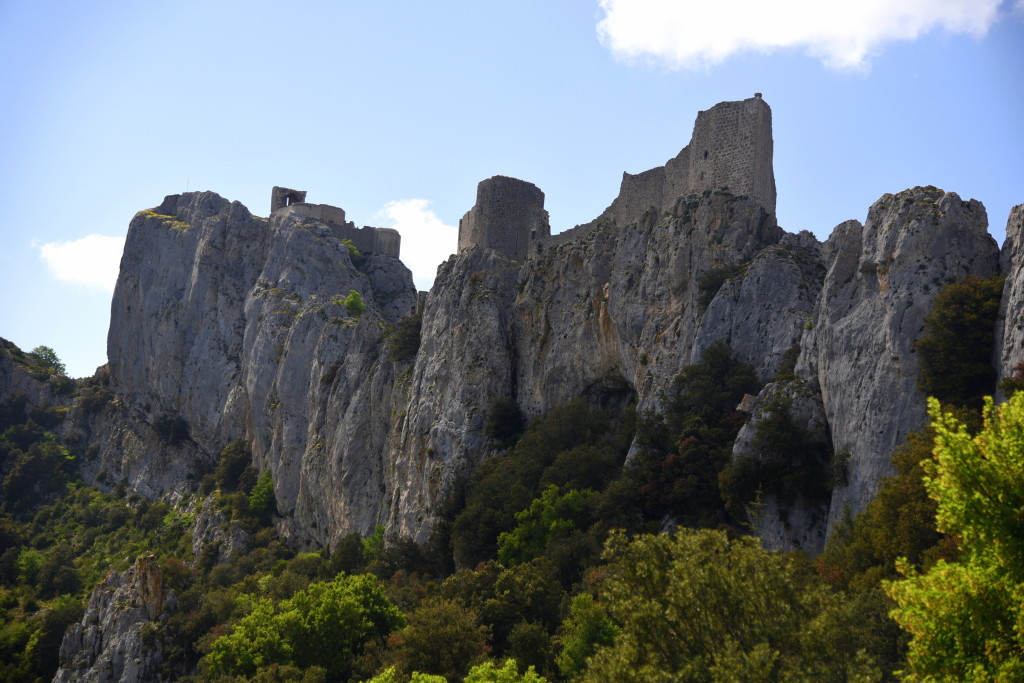
Peyrep Profile

From afar, the most striking castle is Peyrepertuse. Aptly nicknamed “the Carcassonne of the Heavens,” its towers scrape the brilliant blue sky, disrupting the gently passing clouds.

Peyrep Interior

Don’t hike up here expecting to explore an intact structure. Peyrepertuse is a ruined field of rubble. But the views are smashing.

Peyrep View

For the best panoramas, hike up even farther to the topmost tower of St-Louis, where all of southern France spreads out at your feet.

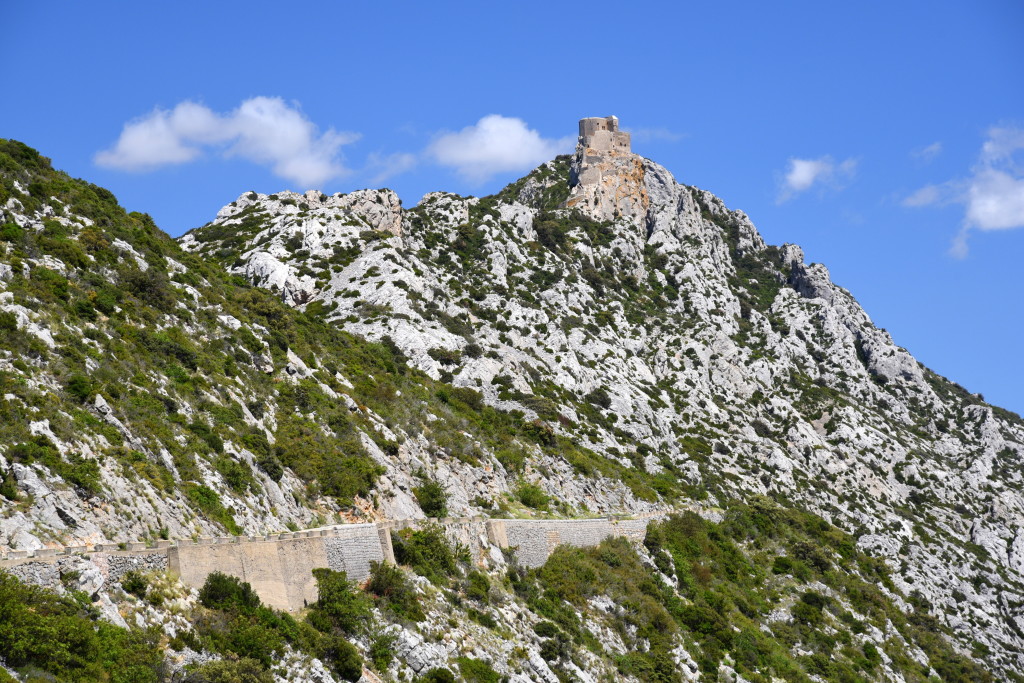
Queribus Road

From Peyrepertuse, you can peer several miles away — across the valley, to an adjacent line of peaks — to see Quéribus, an even higher vantage point.

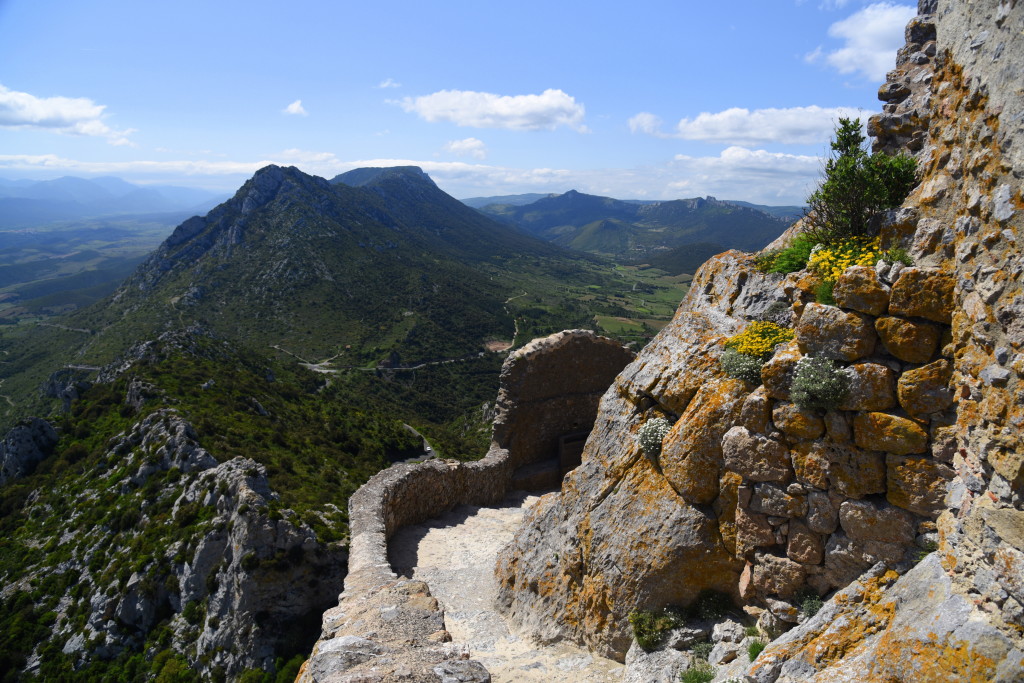
Queribus View

Vertical and vertiginous, the rocky trail up to Quéribus rewards hardy hikers with a top-of-the-world feeling that rivals even Peyrepertuse.

Of course, the biggest, most intact, and most famous of these castles is Carcassonne. And that’s where I’ll be spending the next two nights. Stay tuned.

Cool, Cool, Collioure: Vive La France!

I specialize in Eastern Europe, but for a change of pace this year, I’m swapping research chores with the co-author of our Rick Steves’ France guidebook, Steve Smith. (Rick was recently singing Steve’s praises on his blog…and deservedly so. Steve’s France book is the best in print, hands down.) Steve is picking up a couple of weeks updating Croatia for me, and I’m covering some of his territory in France: Languedoc-Roussillon, the Dordogne, and Normandy. It’s a fun switcheroo.

To begin my France swing, I had to get from Milan to Collioure, on France’s Mediterranean coast. Planning my itinerary a few months back, I came up with what now seems like a foolishly Rube Goldberg route between two points: Wake up early in Milan. Subway to the train station. Train to the airport. Fly to Barcelona. Commuter train to the main train station. High-speed TGV to the first French town over the border, Perpignan. Taxi to yet another airport to pick up my rental car. And finally, drive that last 40 minutes to my hotel. Amazingly, everything came off just right. Phew!

At the end of that long day, my reward is the postcard-perfect town of Collioure. After so many years of traveling around Europe, I start to think that I’ve seen it all. But then I pop into a place like Collioure and realize that there’s much more of Europe that I haven’t seen than what I have.

Collioure is a largely undiscovered gem of a resort town just a 45-minute drive from the Spanish border. (From there, it’s just another couple of hours — past trippy Salvador Dalí sights and world-famous Costa Brava restaurants — to Barcelona.) Collioure is the perfect size for being on holiday. It has five beaches, each with its own distinct personality (from party/pebbly to sandy/serene). And its town center, with atmospheric restaurant-lined pedestrian lanes,  is an utter delight. It’s settled: I need to come back here on vacation.

It’s overcast today — the Friday afternoon of a long holiday weekend — so the cafés are full and the beaches are empty. But people are in high spirits, enjoying being on a mini-vacation, perfectly content to lick ice-cream cones and socialize rather than sunbathe and swim. They’ve read tomorrow’s perfect weather forecast…and they’re willing to be patient.

Collioure is one of those South of France towns that’s famous for its light, which draws great artists like moths. Shutterbugs love it, too. I pull out my camera and enjoy a photo safari.

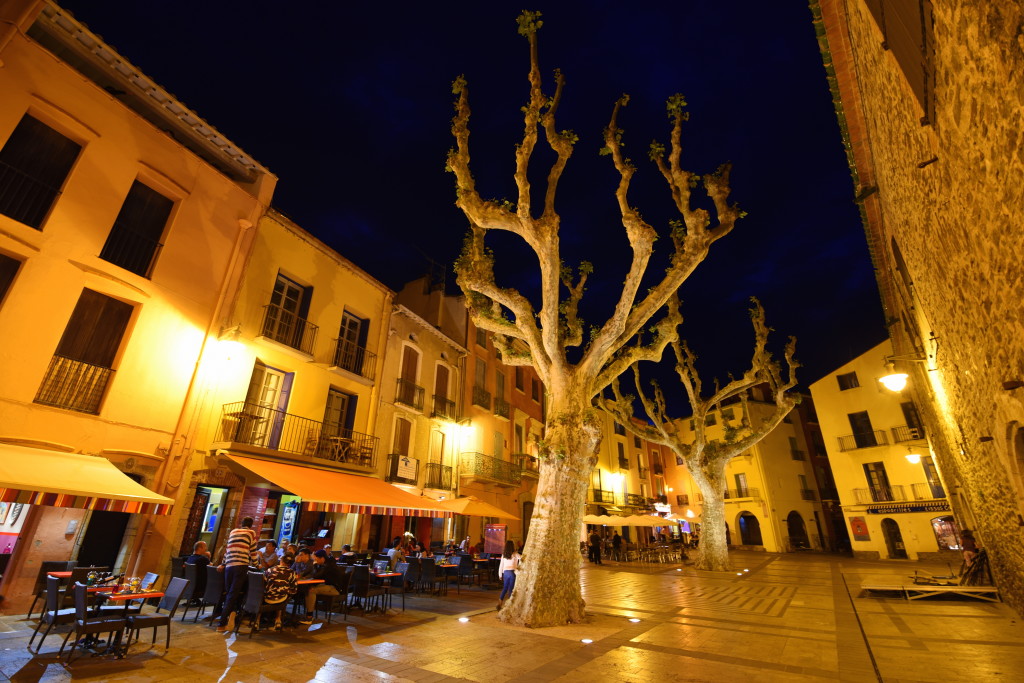
Collioure CrayolaTurning a corner, suddenly I’m in an almost fantastical square. Two scrawny but determined plane trees — their leaves still just coming in — yawn and stretch their knobby limbs over inviting café tables. Behind them is a Crayola box of houses, each more vivid than the last. In that instant, I know that, for the rest of my time here, I’ll fabricate excuses to circle back through this square as often as possible.

Collioure Church

Continuing past Collioure’s perfect place, I approach its formidable church. The bell tower isn’t a bell tower: It’s a fortified lighthouse, providing direction to passing vessels even as it reminds would-be invaders that this town is no pushover. (The town’s stern and sprawling château — just across the beach — completes this thought.)

Finally I reach the pebbly beach, protected by a long, beefy jetty. I pause at the beach bar, whose owner is very proud of his homemade sangria. I’m intrigued by the daily special — fresh-caught turbot — and wind up returning later for dinner. As I eat my first-ever turbot (a flat, muddy-colored bottom feeder with a crumbly, almost rubbery flesh made flavorful with abundant herbs), the setting sun finally breaks through the clouds and washes the far side of the harbor in a rich, golden light — promising a sunnier day ahead. Strolling back to my hotel, I linger at the illuminated church and at my favorite square.

Collioure Sunset

Collioure Night

Sure enough, the next day I awake to brilliant sunshine and bright blue skies. My research chores take me all the way around the harbor, and I’m glad they do, because it forces me to walk past two more fine beaches.

Collioure Beach

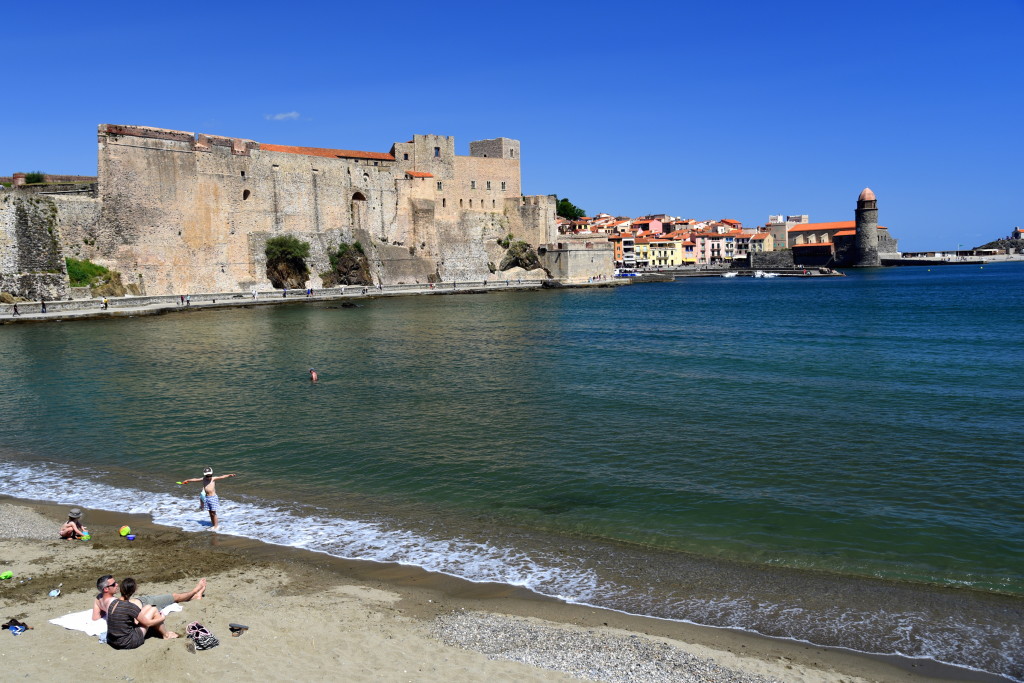
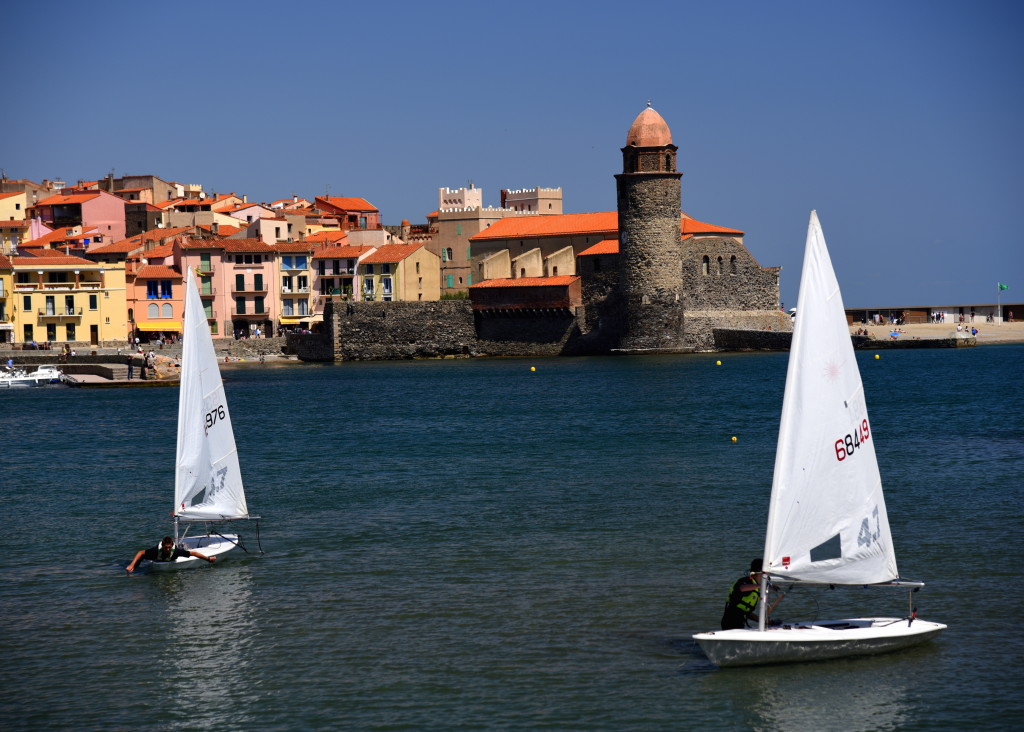
Collioure SailboatsAt the biggest beach — whose curve is defined by the stout fortress — chest-deep novices struggle to board their mini-sailboats. Nearby, a topless sunbather catches some rays, while a nubile teenage couple makes out, just steps from where kids build sandcastles. Vive la France!

Stick with me for the next couple of weeks, as I explore France’s Languedoc-Roussillon, Dordogne, and Normandy regions. There’s a lot to see, a lot to experience…and a lot to eat. Allons-y!

Lake Maggiore, Il Minore

My final stop in Italy was Lake Maggiore. Just an hour from Milan, it’s a handy side-trip for those wanting a taste of Italy’s famed Lake District. I liked Lake Maggiore. But I didn’t like it nearly as much as Lake Como, which is just as easy to visit and, for my money, even more rewarding.

In our guidebooks, we have to make some tough decisions. Our publisher has gently informed us that our biggest books (including Italy) are “pushing the boundaries of current book-binding technology.” Soon, we may have to selectively slim down our coverage. And after updating almost every chapter in Italy, Lake Maggiore is at the top of my hit list. There’s nothing wrong with Lake Maggiore, except that it’s basically redundant with a destination that’s even better (Lake Como). Realistically, most of our readers won’t have time to visit two lakes — so why not give them only the best?

Don’t worry — we’re good for now, so this will not be the year of Lake Maggiore’s “big arrivederci.” Let’s savor the stay of execution with a few photos of this (admittedly beautiful) place.


Lake Maggiore

While it enjoys the same gorgeous mountain backdrop as the other Italian lakes, Maggiore’s unique draw card is the Borromean Islands, where Milan’s most powerful aristocratic clan built their retirement villas. In the foreground, you can see the pyramid-shaped Isola Bella, the aptly named “Beautiful Island,” whose terraced gardens trumpet the status of the Borromeos.


Maggiore Peacocks

Isola Bella is home to a flock of crowd-pleasing peacocks. Watching herds of camera-snapping tourists chase peacocks around the garden, I was glad I had a good zoom lens — letting me just sit tight and wait for the perfect photo op.


Stresa Square

Lake Maggiore’s main town, Stresa, is a fairly soulless resort town. But its cozy square is welcoming for a lunch break.


Trilingual Sign

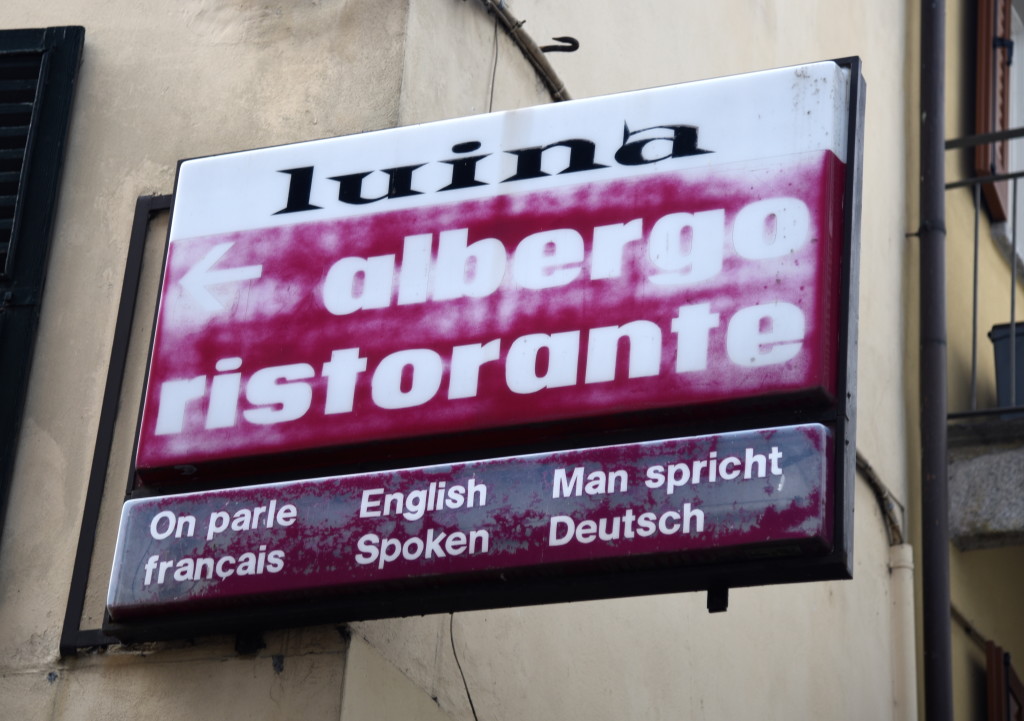
Faded, trilingual signs bragging “We speak your language” are nostalgic remnants of an age when that was really something to brag about. These days, I’m continually impressed by how confidently so many Europeans speak English — compared to even just a few years ago. In nearly three weeks of updating our Italy guidebook, talking to probably hundreds of Italians in the tourist trade, I can barely think of one who didn’t speak at least a leetle English.


Hemingway Hotel

Grand hotels line Stresa’s waterfront.  The English names (“Regina Palace” rather than “Palazzo Reale”) are a reminder that this destination boomed during the Grand Tour golden age of European travel, when Downton Abbey-type aristocrats made an obligatory circuit to all of Europe’s most romantic depots.


Boat Traffic

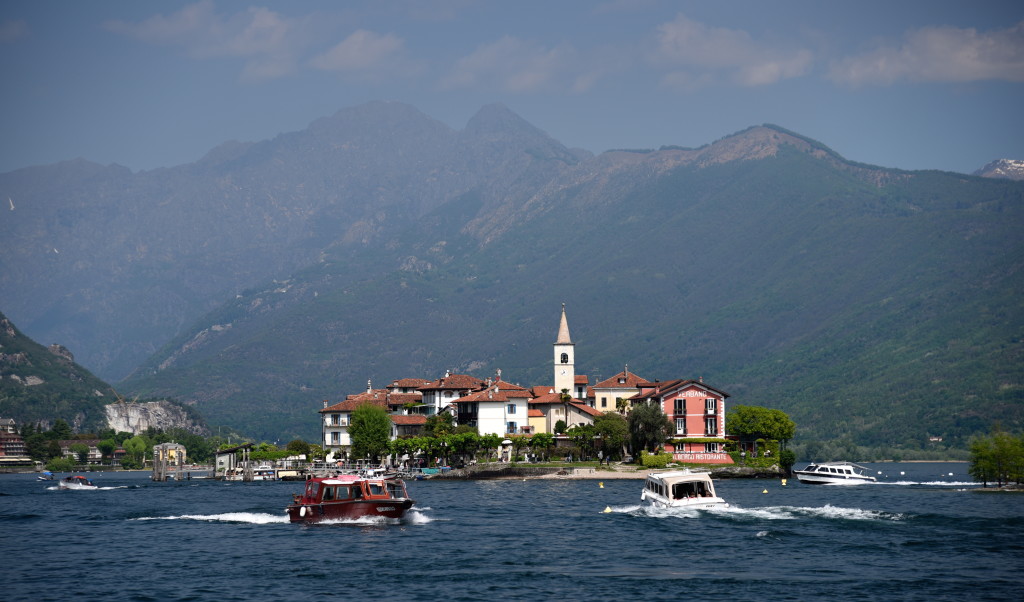
Getting around Lake Maggiore is easy. Just hop on the next ferry. On a sunny day, you’ll weave through a picturesque traffic jam of churning motor boats.

Arrivederci, Italia! My next stop is France. I’ll see you there…