My co-author and frequent collaborator, Cameron Hewitt, is well-traveled, smart, and insightful. And, while he and I are in perfect sync in our travel styles and priorities, he gives voice to the next generation of "Rick Steves travelers." Join me in enjoying his reports right here. —Rick

What’s Your Ćejf?

I love it when a language has a term that can’t be translated — it has to be explained. Usually, these are the words that provide the most vivid insights into a culture. The easiest example may be the Spanish paseo or the Italian passeggiata: It’s not just walking around aimlessly, though it is that. It also has to do with living in a hot climate where you must wait until the cool of the evening to escape into the open air. It’s about spending time with family, socializing with friends and neighbors, getting some exercise, and enjoying a beautiful cityscape…all implied by that one word.

Out of everywhere I’ve traveled, the Bosnian language has more of these unique words than anyone. Maybe it’s because Bosnia is a bridge between western/Christian and eastern/Muslim culture — mystifying people on both sides. And so, like a secret club coming up with a password, they craft their own language.

Hanging out with my Sarajevan fried Amir, I started quizzing him about some of these words. He explained the concept of raja — meaning an unpretentious humility that stems from being one with a community. Raja is frowning upon anyone who thinks they’re a big shot. It’s about keeping people modest, for their own good…and everyone else’s. Raja is what prevents you from being the jerk who shows up in a convertible and a tux to your high school reunion.

Merak is enjoyment, particularly a relaxed atmosphere that percolates when you’re among friends. It’s when you’re nursing a cup of coffee with nowhere in particular to go — enjoying the simple act of passing the time of day. Amir explains that the whole concept of take-away coffee is anathema to Bosnians. The purpose of coffee is not just to caffeinate — it’s to have an excuse to socialize. And if you’re going out for a snack to enjoy with your merak, that’s called mezetluk (related to the Greek mezedes, or tapas-like small plates).

Cameron-Bosnia-Sarajevo-Coffe 1

But my favorite Bosnian word of all — the one that has the potential to really shake up your worldview — is ćejf (pronounced “chayf”).

Ćejf is that annoying habit or ritual you have. It’s the unique little quirk that drives your loved ones nuts. And yet, you get a lot of pleasure out of it. No, not just pleasure: deep satisfaction. In traditional Bosnian culture, ćejf describes the specific way someone spins his worry beads, the way he smokes his pipe, or the very particular procedure she has for preparing and drinking a cup of Bosnian coffee.

In our culture, we have these, too. We just don’t notice them as readily, because we don’t have a word for it. For example, maybe you have a complex way of ordering your perfect Starbucks. Or every Saturday, you wash and detail your car just so. Or maybe it’s the way you like to keep your desk organized, according to a special logic that only you fully understand. If I’m being honest, my own ćejf is probably the way I tinker with my fantasy football lineup. (Should I start Danny Woodhead or Joseph Randle this week?) Or the way I chew gum when I’m stressed out: Exrta Polar Ice flavor, always two sticks…never just one.

In our culture, people call this behavior “fussy,” or “OCD”…or, simply, “annoying.” Whether we’re going to the office, spending time with the in-laws, or just irritating our spouses around the house, we are expected to check our ćejf at the door.

But in Bosnia, they just shake their head and say, that’s his ćejf. In Bosnian culture, you don’t have to like someone’s ćejf. But — as long as it’s not hurting anyone — you do have to accept it. Because everyone has one (or more). Bosnians recognize that each human being is a complete individual, with their own strengths and quirks.

When you think about it, accepting a person without accepting their ćejf isn’t really accepting the person at all. So the next time someone gets up in your grill about your annoying little routine, just say, “Step off! That’s my ćejf.”

So…what’s your ćejf?

Cameron-Bosnia-Sarajevo-Coffe 2

Mostar: Bosnia with Training Wheels

Bosnia-Herzegovina is a fantastic country, and easily one of Europe’s most underrated destinations. Stunning natural wonders, incredibly warm and engaging people, riveting history (both old and recent), delicious cuisine — check, check, check, and check.

Because of its recent heritage of war, its rough-around-the-edges infrastructure, and its vivid Muslim culture, Bosnia can be jarring to some visitors. For that reason, I view the city of Mostar — within a short drive of Dubrovnik and the Dalmatian Coast — as a wading pool for Bosnia. Dip your toe in. If you like it, there’s so much more to see.


Cameron-Bosnia-Mostar-Market

It seems unlikely that Epcot will ever open a “Bosnia” pavilion. But if they did, it would look a lot like the old center of Mostar. It is, in a word, cute. The ankle-wrecking, smoothly rounded cobbles twist through a vibrant bazaar atmosphere. Visitors often remark, “It’s like being back in Turkey!” And sure enough, Mostar was an Ottoman market town for most of its history. But it’s not Turkish…it’s Bosnian.


Cameron-Bosnia-Mostar-Bridge View 1

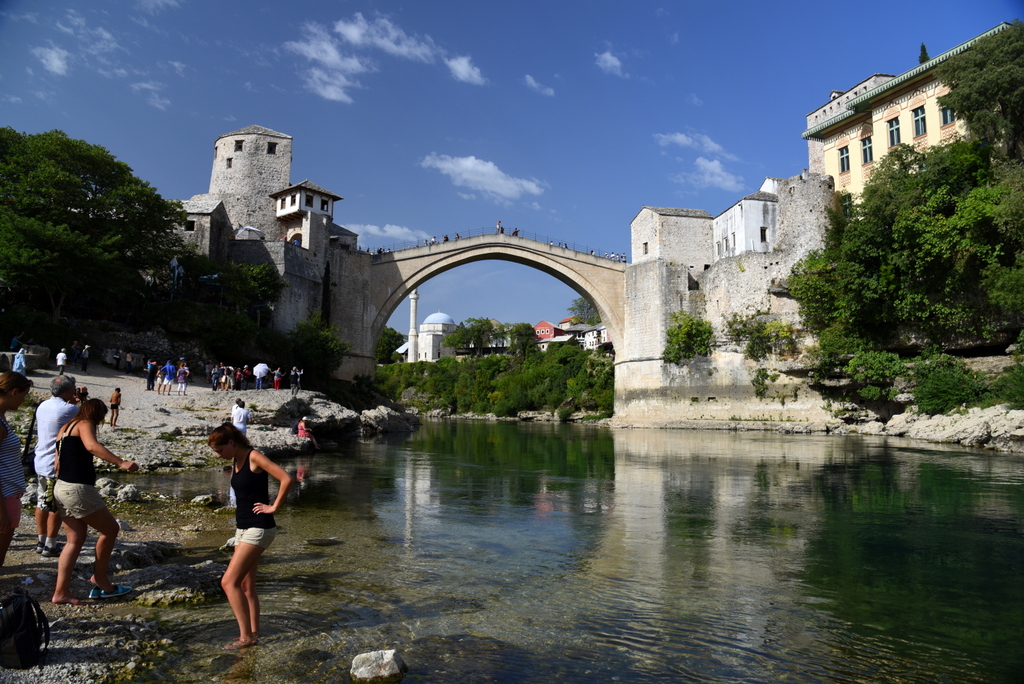
In the Old Town, all roads lead to the iconic Old Bridge — the icon of the city, built by Süleyman the Magnificent, destroyed in the wars of the 1990s, and since rebuilt. Down at the riverbank below, you enjoy the best views in town…and, if it’s hot (like it was today), you can cool off your toes in the frigid Neretva River.


Cameron-Bosnia-Mostar-Divers

Crossing the Old Bridge, you’ll trip over chunky marble “steps” that are spaced just far apart enough to guarantee stumbling. Even an agile cat would stagger like a drunk along here. The two guys in the foreground are Mostar’s divers. They’re taking a break, but in a moment they’ll hop up on the railing and carry on until they drum up enough tips to make it worth their effort to do a swan dive seven stories down into the water below. As my local friend and I were walking across this bridge, intently watching our feet to avoid tripping, suddenly we heard a loud splash…and realized we’d just missed the show.


Cameron-Bosnia-Mostar-Muslim Family

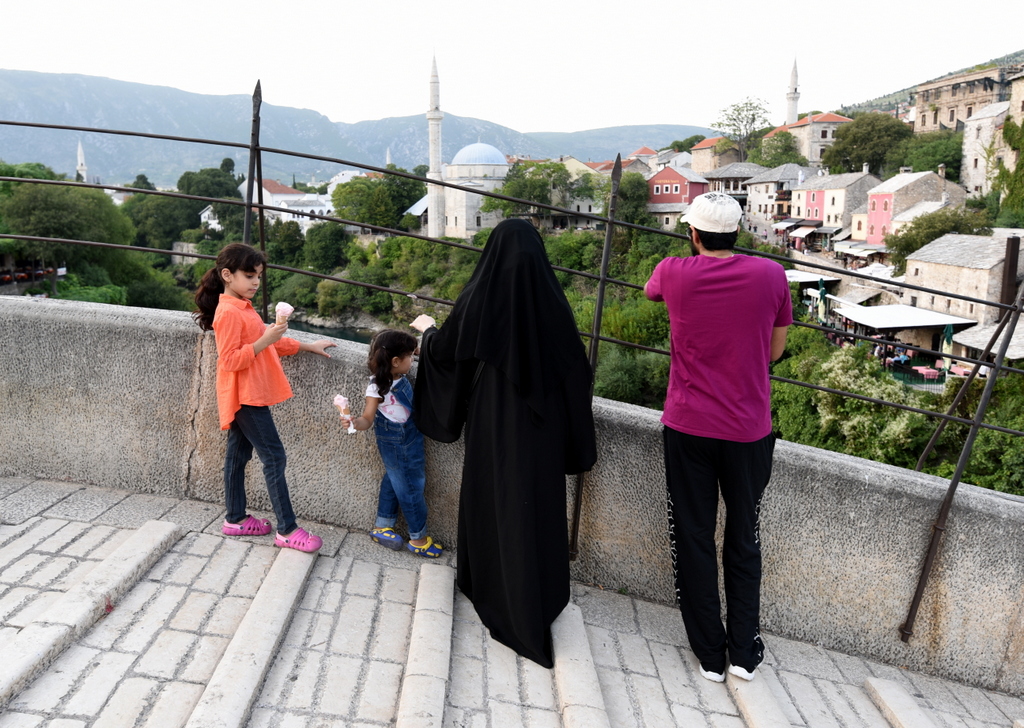
Both in Mostar and in Sarajevo, I noticed lots and lots of tourists from the Middle East. This carries on Bosnia’s rich heritage as a meeting place between East and West. Just as Americans go to Mostar because it offers an enticing peek at Islam in a familiar European package, people from the Middle East enjoy it as a comfortably Muslim destination that’s also exotically European.


Cameron-Bosnia-Mostar-Islamski Centar

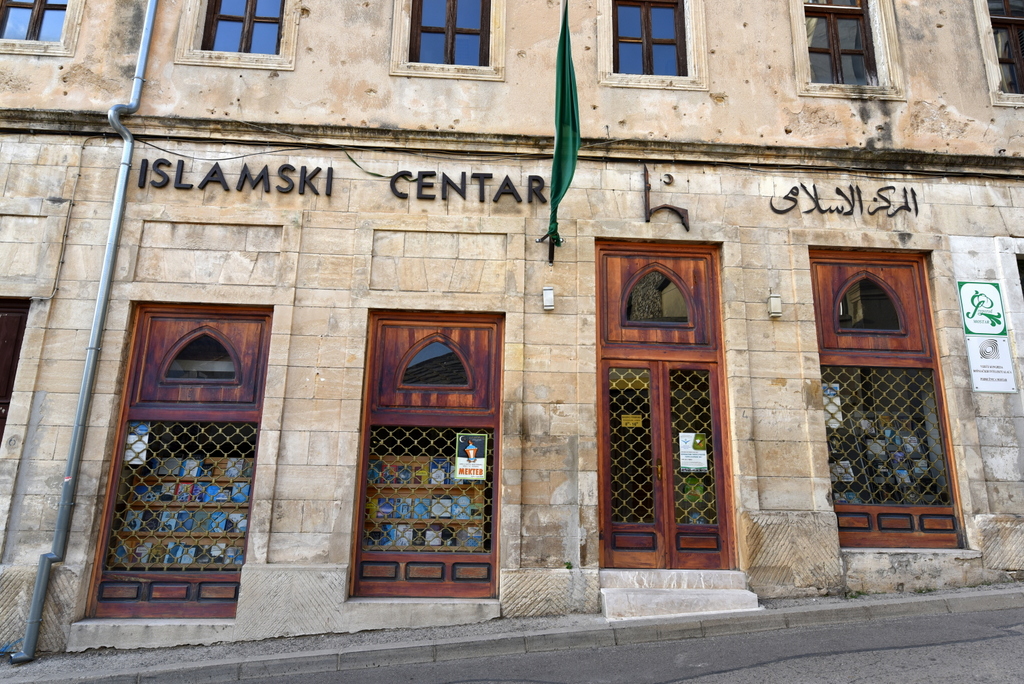
During communist Yugoslavia, religion was discouraged, and most people did not openly practice their faith (whether Islam, Catholicism, or Orthodox Christianity). But since the fall of the Iron Curtain, it’s been interesting to see the rebound of various faiths across Central and Eastern Europe. In Russia, the Church is so influential that the former KGB chief Vladimir Putin claims he was, secretly, deeply religious all along. In Romania, a newfound faithfulness fills atmospheric, centuries-old Orthodox churches that were, for decades, considered tourist sites rather than holy ones. And across Bosnia, you find many new mosques, libraries, madrassas, and cultural centers, many of them funded by donors from wealthy Middle Eastern countries.


Cameron-Bosia-Mostar-Main Drag

At the edge of Mostar’s fantastyland of an Old Town, the cobbles abruptly end. Most tourists U-turn, head back to their day-tour bus, and hit the souvenir stands that caught their eye during their short visit here. But that’s a shame — if you keep going, you enter Mostar’s ragtag pedestrian shopping street, where locals (and mopeds) outnumber tourists. This is where the real people of Mostar gather to drink coffee and listen to a mix of loud music: American pop and souped-up “turbo folk” music (imagine a Balkan-flavored techno mariachi music).


Cameron-Bosnia-Mostar-SIM

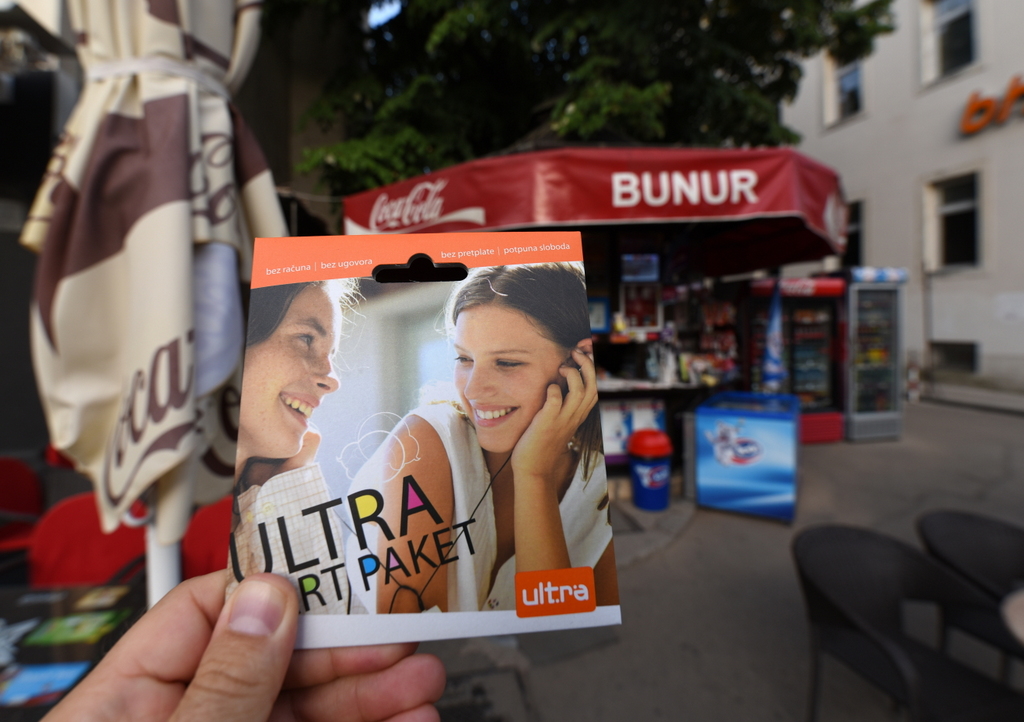
Mostar provides a case study in how easy (and cheap) it is to stay in touch if you’re comfortable with basic cell phone technology. I carry an unlocked phone with me. (You probably already own several, in a junk drawer somewhere in your house.) Even though I’m only in Bosnia for four days on this trip, I bought a SIM card that I can stick in a slot in my phone to have access to very cheap domestic calls (20 cents per minute) rather than my cell phone provider’s exorbitant roaming charges ($1.79 per minute). The SIM card cost $3, included that much credit, and took literally seconds to purchase and insert into my phone. I only made two calls the whole time I was in Bosnia (to confirm my Sarajevo hotel and to make a dinner reservation). And yet, given the pricey per-minute roaming costs, buying my own SIM card still saved me money. For the full scoop on SIM cards, check out our Travel Skills article on that topic.

Rick Steves Guidebooks — Making the World Better, One Trip at a Time

You’ve already met just a few of my favorite people from Dubrovnik — from the Peros to Jadranka, Sasha, and Pepo. But that’s just a small sampling of the hundreds of amazing people I feel lucky to recommend in our Rick Steves Croatia & Slovenia guidebook. As a guidebook writer, I see it as my role to be an intermediary: put good travelers in the hands of great local contacts…then get out of the way. And Roberto de Lorenzo and his mother Marija embody that ideal like nobody else.

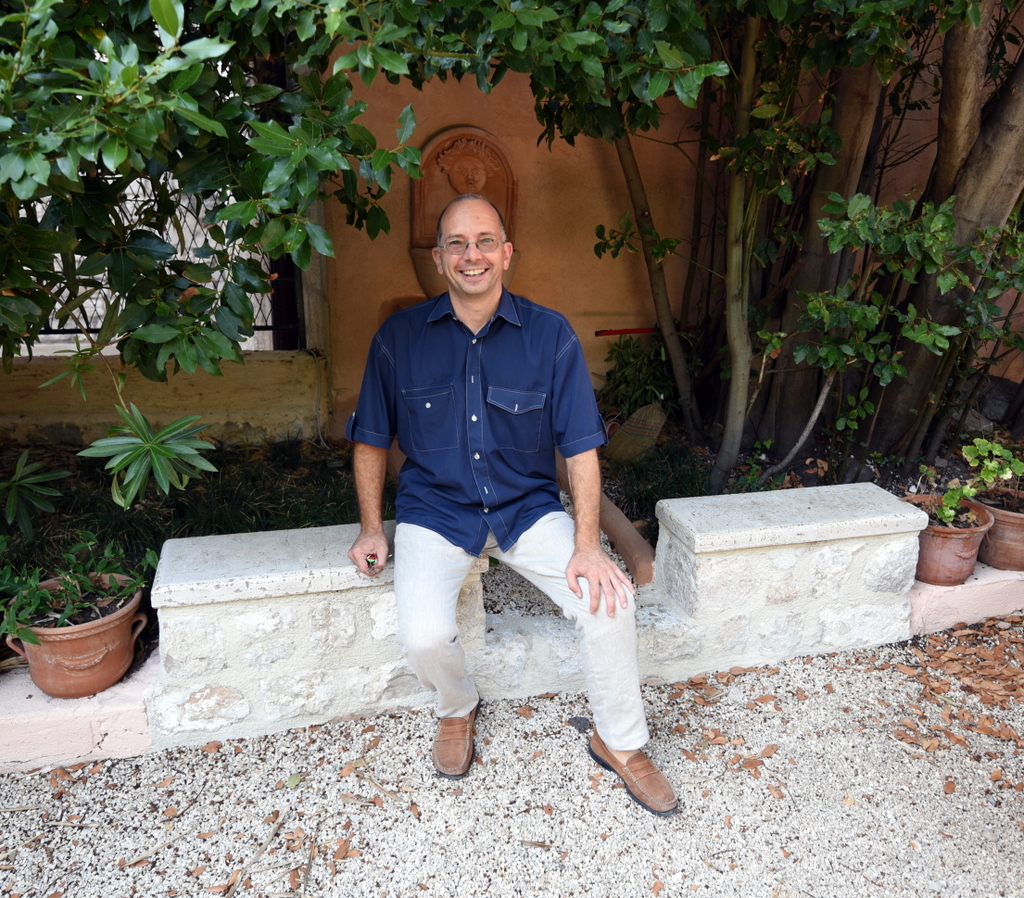
Roberto and Marija live in an old palazzo high in Dubrovnik’s Old Town. They’ve converted some of the building into apartments for travelers, including two units that each has access to an entirely private garden. If you’ve been to Dubrovnik, you’ll appreciate how impossibly rare it is to have a garden of any kind — much less a private one — within the City Walls. You can even have the restaurant next door send a waiter over to take your order. Private dining in your own private garden, in the heart of Croatia’s finest town…all this can be yours for around $100 a night.

Cameron-Croatia-Dubrovnik-Roberto

I have every confidence that Roberto and Marija’s place is great, and I know our readers will love it. But it works both ways. When I visited Roberto today, he was bursting with enthusiasm, telling me, “You have no idea how many people’s lives your books improve. Thanks to the Rick Steves book, I took my mother to the United States. And now I have become an ambassador for the USA to all of my friends.”

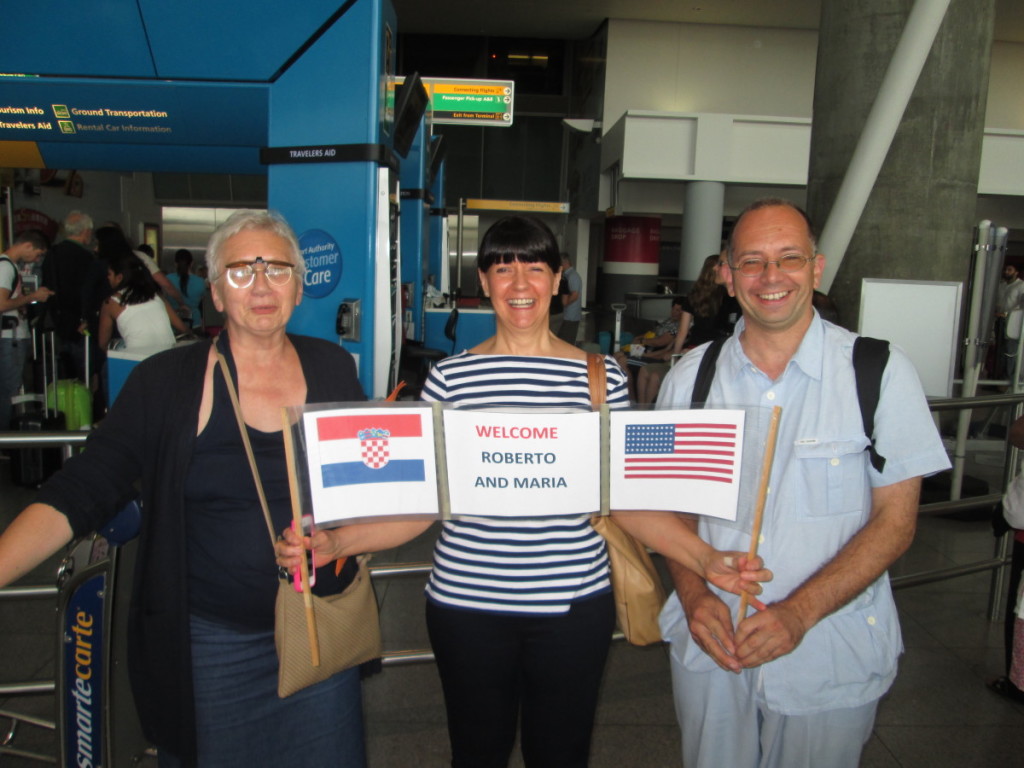
Roberto explained. Like all good B&B owners, he’s really hit it off with many of his guests. One couple invited Roberto and his mom to visit them in Pennington, New Jersey. For months, he declined what he assumed was a polite, but possibly insincere, invitation. But they were persistent. And finally Roberto — realizing that this may be his mom’s only chance to go stateside — decided to take them up on it.

Roberto Marija USA

On their two-week trip this summer, Roberto and Marija also visited New York City, Washington DC, and Pennsylvania Amish country. And they had a blast. It was a revelation. “Coming from a Mediterranean city, I expected New York to feel busy and impersonal and cold,” Roberto told me. “But quite the contrary: People are so friendly, and there is a real sense of community. It could be a Mediterranean city itself.”

For her part, Marija was especially reluctant to make her first trip to the USA. But it was a life-changing experience for her. Marija told me, “I’m in my 70s, so it’s not easy at this age. But I fell in love…with the States.”

When they first arrived in New York, they stepped out of what Roberto calls “Pennsylvania Station” and saw a pair of real-life NYPD cops. In Croatia, police are often seen as intimidating authority figures. But Roberto was so excited to be there that he couldn’t resist — so he asked one of them if he could take a picture with them. She broke into a big smile and said, “That would make my day.” Roberto showed me the picture on his phone:

Roberto in NYC

Since he’s been back home, Roberto tells me, he’s been showing that picture to anyone and everyone. To him, it sums up the power of travel: You can meet — and snap selfies with — people you’d never dream of. He says that one picture has challenged some of his friends’ assumptions about New York, and the USA in general. And now they’re considering trips of their own.

“What I want you to understand,” he said, slowing down for emphasis, “is that all of this is because of your book. Yes, you put travelers in touch with hotels. But it can be even more than that. If it weren’t for the Rick Steves book, I would never have met those guests. They would never have invited me to the United States. And I would not be telling everyone I know what a wonderful place your country is.”

While this all may seem immodest, it’s a gratifying reminder that the Rick Steves travel philosophy is just that: not just guidebooks, tours, rucksacks, and practical advice — but a worldview that, in ways small and big, can broaden and improve people’s lives. It certainly brightened the day of one New York cop who didn’t quite know what to make of those two effusive Croatians…but loved every minute of it.

Why Dubrovnik Makes Me Happy

Yesterday I got cranky. But today, I want to share some of my favorite aspects of Dubrovnik, in the form of some particularly pretty pictures.

Cameron-Croatia-Dubrovnik-Happy Laundry

Cameron-Croatia-Dubrovnik-Happy Laundry 2

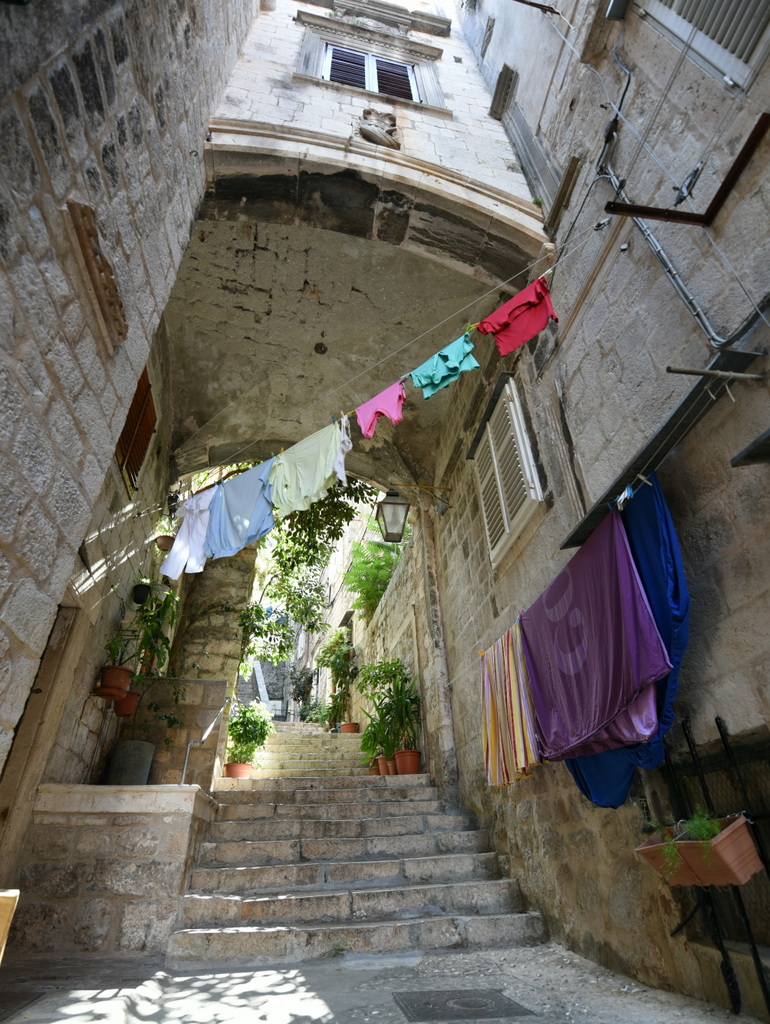
I see laundry drying in the streets as the fluttering flag of the local community — as if to say, “We still live here!”


Cameron-Croatia-Dubrovnik-Happy Lane1

CH15SepDubrovnik_142

In my guidebook’s introduction to the town, I called it a “fun jumble of quiet, cobbled back lanes.” A friend of mine visited and said that Dubrovnik seemed more crowded than that. So on this trip, I made a point to check out whether you really could escape the crowds. Sure enough, yep — quiet back lanes still there. So for the new edition, I’m adding this line: “If you haven’t discovered your own secluded, laundry-draped back lanes all to yourself…then you haven’t looked hard enough.”


Cameron-Croatia-Dubrovnik-Happy Restaurant

Dubrovnik is simply a joy to explore. Around each corner, little surprise lanes hide inviting restaurant tables.

Why Dubrovnik Makes Me Cranky

In my last few posts, I’ve been laying it on a little thick singing the glories of Dubrovnik. Yes, it’s a wonderful place. But even wonderful places have their dark side. And I’ve been doing this work long enough that I get cranky sometimes. Here are a few things on this visit that stuck in my craw.


Cameron-Croatia-Dubrovnik-Cranky Recommendation

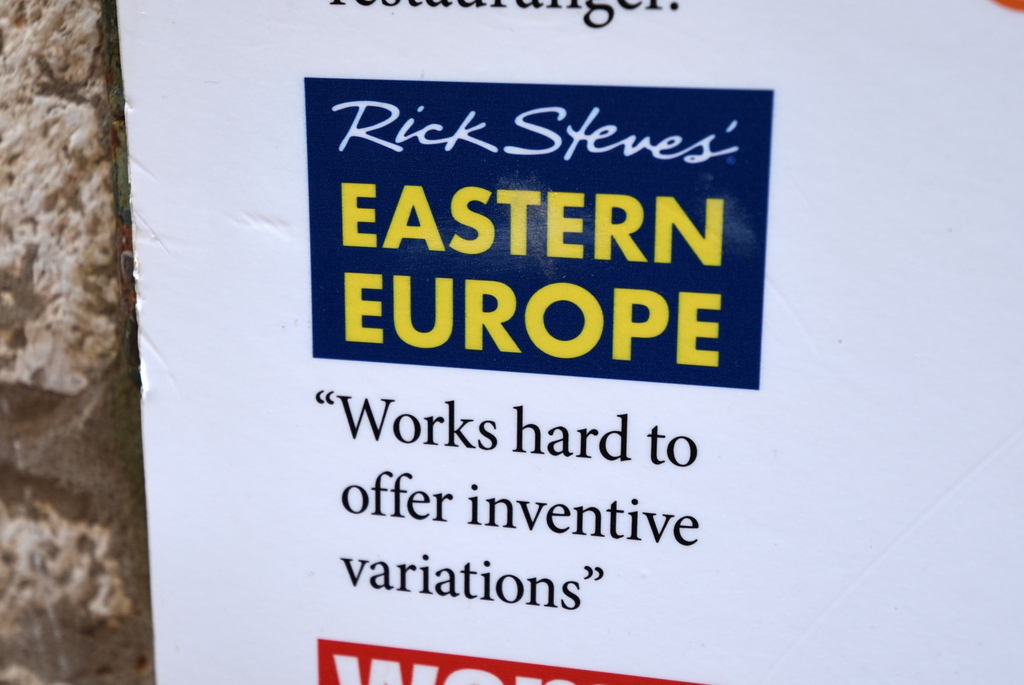
Many years ago, there was a hot new restaurant in Dubrovnik. Everyone loved it — including me. So I recommended it in our Rick Steves Eastern Europe guidebook. Less than one year later, I heard that it had gone steeply downhill, a victim of its own success (a sadly common tale in Dubrovnik). And, after having a bad meal there myself, I took it right back out of the book for the next edition. Today, more than seven years since it appeared in the book, the restauranteur still has the gall to post this blurb from my original write-up on their poster. I have fantasies of scrawling “NO LONGER RECOMMENDED!” across the Rick Steves logo. Do you think I’d be within my rights to attack it with a Sharpie?


Cameron-Croatia-Dubrovnik-Cranky Foundry

Poor Đivo. He’s an ambitious young archaeology scholar who got a plum job: showing visitors around a slick new museum about the old medieval foundry tucked at the foot of Dubrovnik’s walls. But…nobody comes. It’s tucked way up at the top of town, impossible to find, literally underneath Dubrovnik’s basketball court. And the city doesn’t promote it at all. In fact, due to a mistranslation, the only English leaflet about the site identifies it not as a “Foundry” but as a “Forgery.” (I wish I were kidding.) Đivo — who sits on the corner out front hoping to snag passersby to tour the museum — has been keeping track of visitors. And, with about 1.5 million people coming to Dubrovnik this year, so far he’s sold a grand total of…812 tickets. (He’s hoping to hit a thousand.) For every person who shows up wanting to tour the museum, there are ten who stumble in here looking for bathrooms or the access to the walls. If you’re in town and want to make Đivo’s life a little bit better — and learn some genuinely interesting facts about medieval metallurgy — just hike up to the very top corner of town, directly below the tallest Minčeta Tower. Then walk across the sports court to the poorly marked door. When you get there, tell him Cameron sent you.


Cameron-Croatia-Dubrovnik-Cranky Selfie

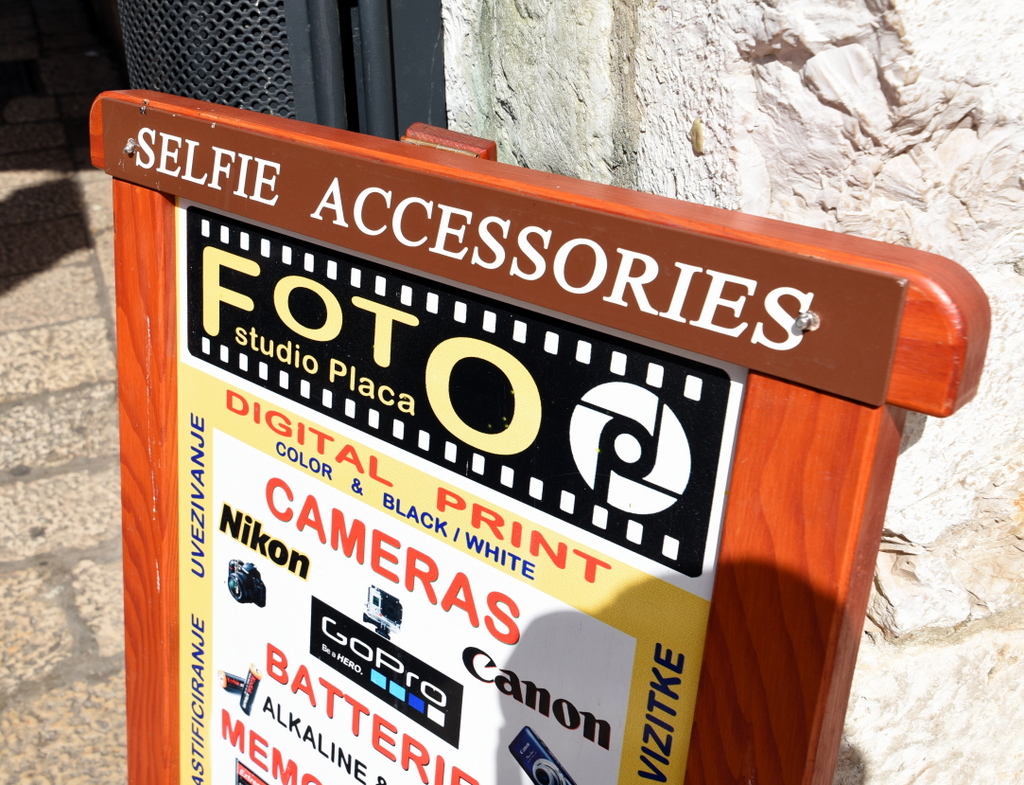
This photography shop — I imagine no longer making much money selling disposable cameras — has come up with a clever new spin on their business, which plays perfectly into our increasingly narcissistic age. While I hear a lot of grumbling about the “selfie stick” fad from other travelers, I haven’t had any negative run-ins with them myself…yet.


Cameron-Croatia-Dubrovnik-Cranky Cart

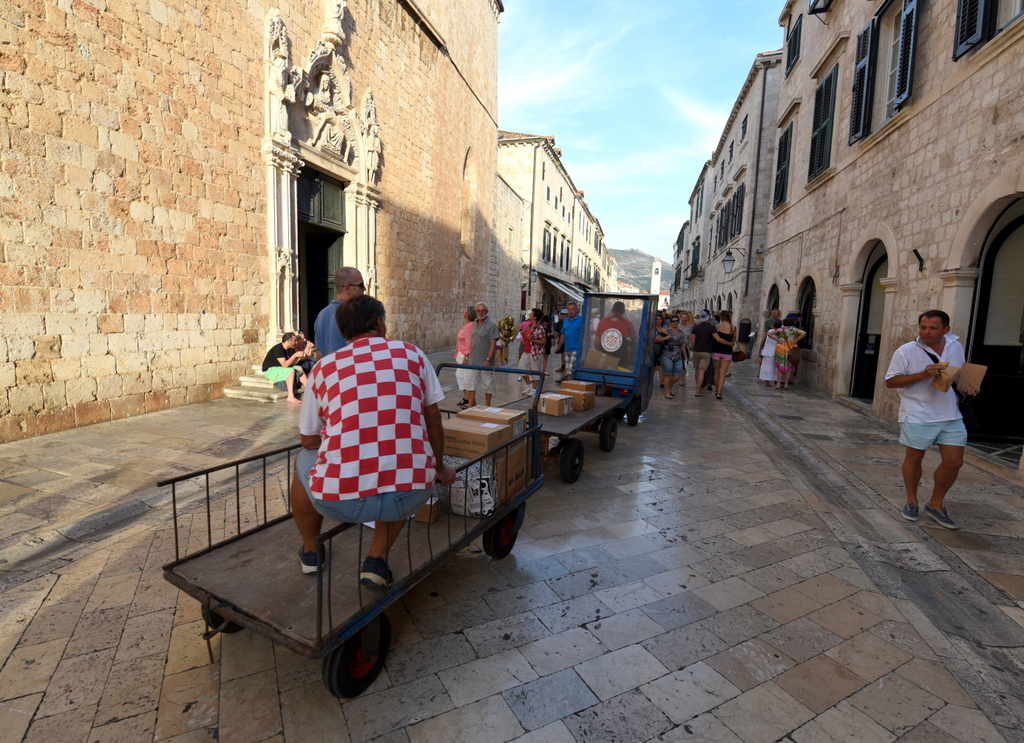
The reality of living in a traffic-free city is that routine deliveries are a pain. Every so often, you see little carts like this one parting the sea of tourists as it makes its way slowly up the main drag. Sturdy young men load up hand trucks with deliveries and huff them up several flights of steep stairs. Apparently this was particularly challenging for the Game of Thrones crew, who had to physically carry up each and every lighting rig, piece of camera equipment, costume, prop, and bowl of green M&Ms for Peter Dinklage. (OK, that last one was a joke.)


Cameron-Croatia-Dubrovnik-Cranky Candy

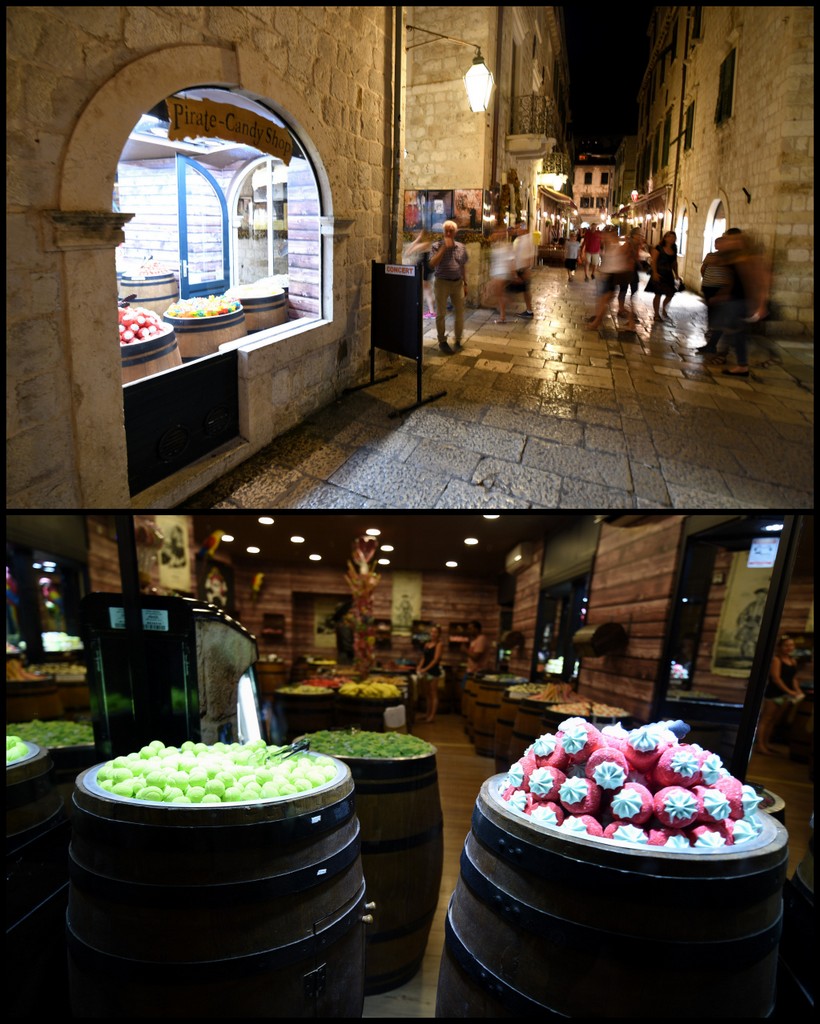
Dubrovnik is selling out. There are now five — count ’em five! — “Pirate Candy” shops in the historic Old Town. Big barrels overflowing with overpriced bulk candy are strategically located through town — like Hansel and Gretel breadcrumbs — designed to wear down the parents of sugar-starved children. The scuttlebutt is that it’s a chain based in Prague (of course it is) that has now spread like a virus to another one of Europe’s most beautiful (and most overrun) cities. Many locals mentioned this specific development as a bridge too far in the commercialization of their hometown. Boycott Pirate Candy!

Am I being overly negative? You bet. But don’t worry. Tomorrow I’ll look on the sunny side of Dubrovnik.