High in the Slovenian Alps, through a driving rain, Gorazd grips the steering wheel. He follows an unpaved road up, up, up above the tree line. We disappear into clouds. Gorazd’s tires grind against the gravel. But I’m not worried. I know I’m in good hands. After all — this is Tina’s dad we’re talking about.
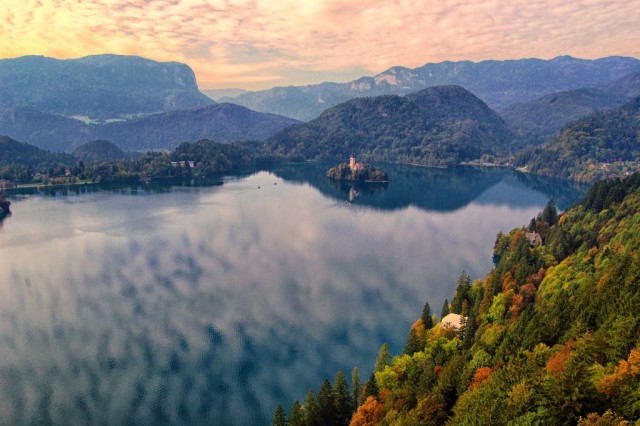
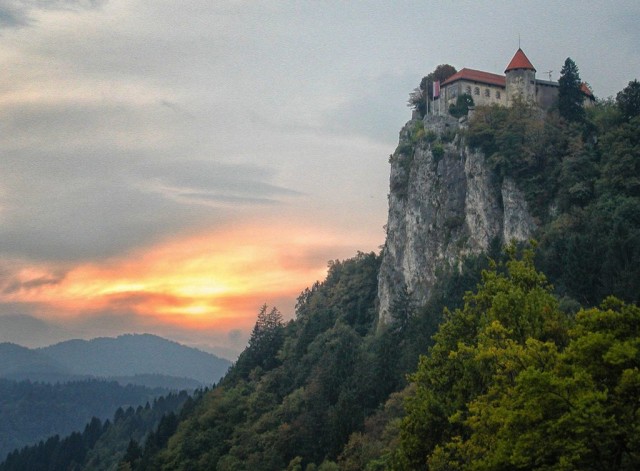
Tina Hiti, who lives near Slovenia’s Lake Bled, became a Rick Steves tour guide about the same time I did. We sort of “grew up” together as guides, and quickly discovered that we have compatible travel philosophies. Tina loves our tour members, and they love her. With an easy and generous warmth, she’s the kind of person who makes you instantly feel like you’re part of the family.
Ten years ago, I was in Slovenia researching and writing the first edition of our Rick Steves Croatia & Slovenia guidebook. Tina was planning to take me to a remote mountain valley called Logarska Dolina. But she came down with a terrible cold. So the night before our trip, Tina called me apologetically and told me she was out. “But you will go with my Dad. It will be great. He speaks English, more than he lets on, and he knows the mountains better than I ever will.”
Admittedly disappointed, the next morning I met Gorazd — a stocky but fit, soft-spoken gentleman in a track suit. His warm smile reassured me that we’d have a fun and productive day. And we did.
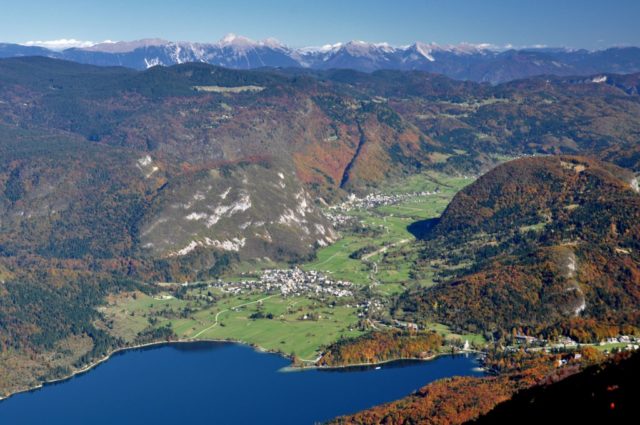
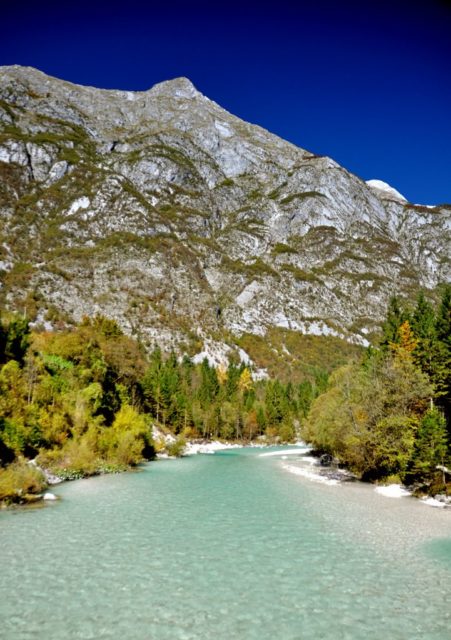
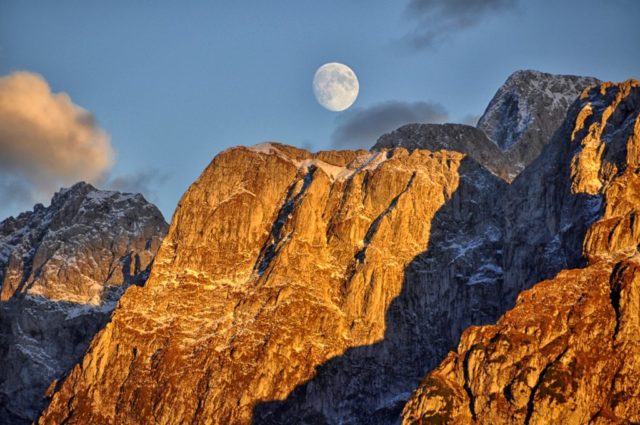
We drove through Slovenia’s stunning mountainscape from Lake Bled to Logarska Dolina. In his halting English, Gorazd explained that he wanted to experiment by taking me on a near-vertical detour through Austria, using an impossibly remote border crossing that might be closed. (This was back when there were actually borders.) We were relieved to pull up to the humble checkpoint and see a couple of bored guards…pleasantly surprised that we were giving them something to do today.
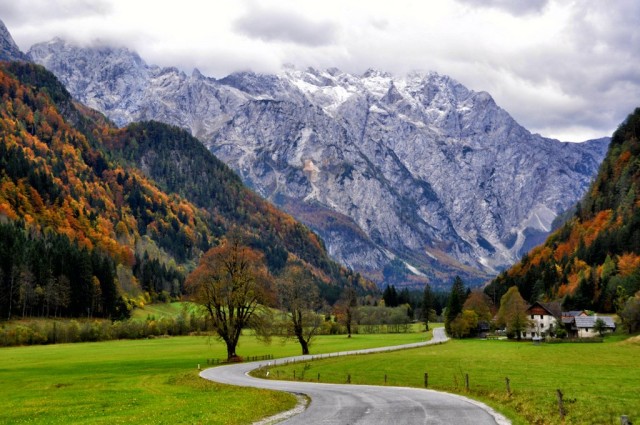
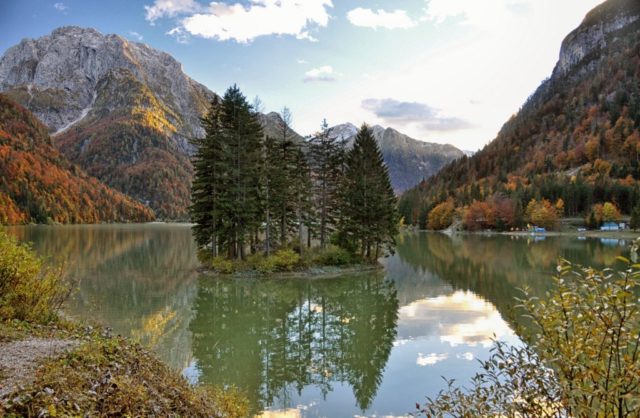
Two hours of cut-glass peaks later, we arrived at Logarska Dolina — roughly meaning “Woodsmen’s Valley.” Gorazd took me around to the scenic viewpoints, rural rest stops, and picturesque tourist farms that I needed to check out for my book. And, as Tina had said, Gorazd knew the area like nobody else. Observing the steeply angled green pastures that huddle around the peaks, he joked, “They say cows here have shorter front legs than back legs. That way, they can stay upright while they graze.” Another local joke: “Dogs have to hold onto the grass with their teeth and bark through their rear ends.”

Corkscrewing up yet another gravel road — aptly nicknamed “The Panoramic Road” — Gorazd brought me to a tourist farm perched on a rocky shelf with stunning views over the entire region. He grew visibly excited when he saw a sign that said kislo mleko. “Ah, yes, this is the specialty here,” he said. “It’s like yogurt. You must try it.” He ordered two rustic crocks filled with the stuff — “like yogurt,” yes, but with a yellowish-brown film on top. My spoon broke through the firm outer layer and carried a cross-section of the contents to my mouth. Two flavors dominated: sour and what I can only describe as “barnyard.”
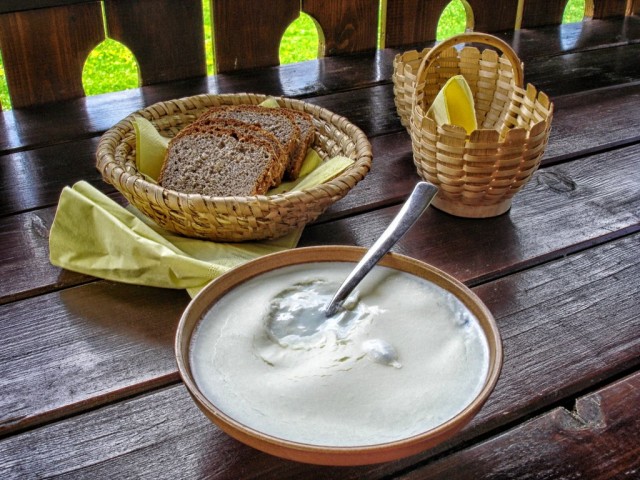
Choking down the pungent mouthful with a swig of water, I pressed Gorazd for more information. “Kislo mleko means ‘soured milk,'” he explained. “They make a light, unpasteurized yogurt. Then they put it in the barn for a few days to naturally sour.” Scraping the final globs out of his crock, Gorazd declared, “Delicious!” I went back for more, hoping to acquire a taste for this mountain specialty — in keeping with my philosophy that every dish is worth trying…once. (Tina tells me that finishing my bowl earned me Gorazd’s undying respect. Apparently he still talks about it.)
Tina had modestly told me her dad was a good hockey player, so, on the way back to Lake Bled, I asked him about it. It turns out Gorazd and his brother were both Olympians in the 1980s, when the core of the Yugoslav national hockey team came from a tiny mountain hamlet called “Chicken Village” (Gorazd’s hometown). While his playing days are behind him, Gorazd has coached for decades — in Slovenia, in Italy, and around the world. His brother owns a popular local bar inside Lake Bled’s hockey arena, where a giant photograph hangs of the two brothers in their prime.

Over the years since Tina’s dad drove me to Logarska Dolina, with each visit, I’ve enjoyed getting to know the rest of her family: Her partner Sašo, who assisted me on the first-ever Rick Steves Best of the Adriatic Tour, and quickly became an ace lead guide in his own right. Her sister, who makes handmade jewelry. And her sons, who — at an age where many kids are still mastering walking — were already zipping around the hockey rink like future all-pros.
On one misty fall day, I had dinner plans with Tina’s family. But then she called me in a panic: Her Dad was out foraging for mushrooms when he slipped on wet leaves and tumbled into a ravine. Worst of all, Slovenian mushroom hunters have an ethic of never, under any circumstances, revealing to anyone their favorite places to forage. So Gorazd knew that nobody had a clue where he was. He was all on his own to crawl out of the ravine, regain his footing, and make his way back to civilization. Fortunately, he made it — only a little the worse for wear.
I’ve enjoyed visiting Tina and her partner Sašo in their home, which fills the attic above her parents’ house. Europeans lack the social stigma around several generations living under one roof. And because of the difficulties in getting a mortgage in Slovenia, people make full use of any family property. And so, Tina and Sašo converted her parents’ attic into a fun and functional multi-room apartment. At well over six feet tall, Sašo has to crouch under low beams. But it’s a perfectly cozy family home.
Visiting Tina and Sašo’s home is one of those travel experiences that rattled my worldview: Why is it that in the US, kids can’t wait to move out? Why do my wife and I, and each of our parents, all have houses with multiple spare rooms? Isn’t the European approach both more cost-effective, and better for “family values”? Tina and Sašo have their privacy and their own space — but Grandma and Grandpa are just steps away, ready to babysit.
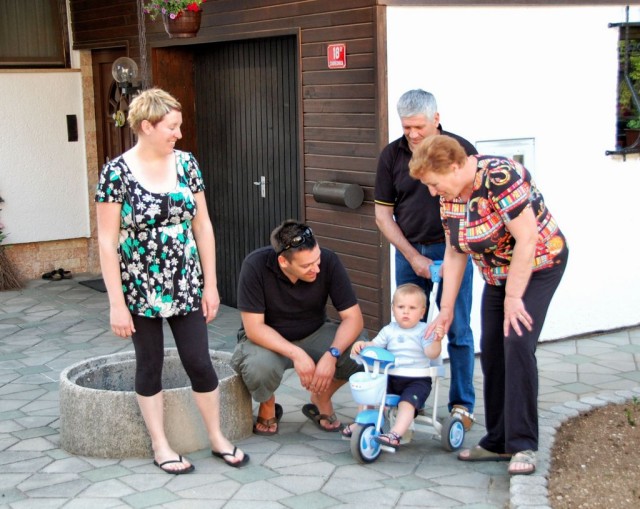
When it came time to film our TV show on Slovenia, Rick agreed that it would be interesting to our American viewers to see this multigenerational household. So we filmed at Tina and Sašo’s house, and had dinner with the whole clan. Rick even got to ask Gorazd his thoughts on Tito. (You can watch the segment here.)
It’s always nice to see someone embark on an unexpected “second act” late in life. And in the 10 years since I met him, as Gorazd has cut back on his hockey coaching, he’s blossomed into a wonderful mountain tour guide. With my encouragement, Tina added Gorazd to her local guiding business. So now, people from across North America hire Gorazd for a drive into the mountains — and everyone loves it.

For years, Tina’s been telling me, “One of these visits, you have to make some extra time so my dad can take you up to Velika Planina, a pasture high in the mountains. It’s amazing. He knows you would really love it.” And on this visit, I finally made that time.
When Gorazd picks me up, we both have a pang of deja vu. Setting off in the driving rain, we lament that our excursion has rotten timing. Just a few days ago, it was sunny and clear. But it’s late September, and the weather just turned cold and wet…summer to winter, virtually overnight.
As we drive, Gorazd explains why he so desperately wants to show me Velika Planina. “It’s a super-traditional part of the country — probably the most traditional. It is a farming settlement at the very top of the mountain, above the tree line.” To get there, you can ride up a cable car, then hike. Or — if you have a local friend like Gorazd — you can turn off a mountain highway, then twist along a confusing maze of gravel service roads until you can’t drive anymore. Then you get out and walk.
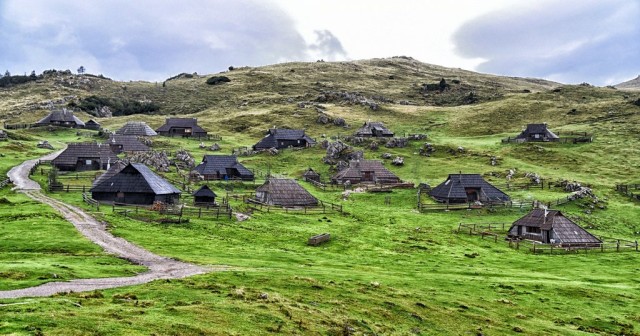
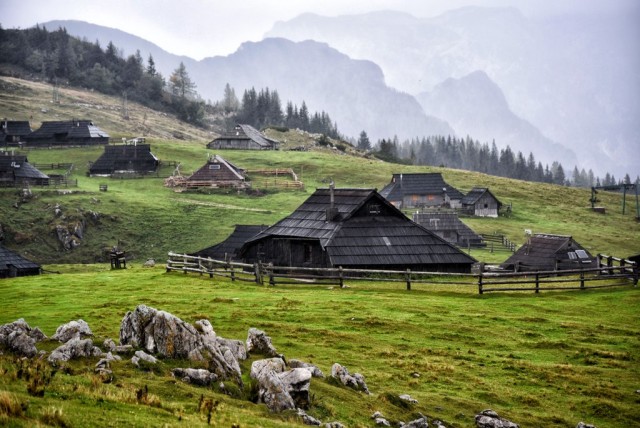
Summiting into a mile-high plain, the dense fog clears and I begin to see little hobbit huts scattered around the scrubby pasture. We park and hike, shielded by umbrellas, as Gorazd shows me the unique cottages they build up here: Low, heavy-shingled roofs are perennially hunkered down against the elements. People live in a claustrophobic little space at the very center of the house, ringed on all sides by stables. That way, the farmers can keep an eye on their cows, and the cows can help heat the house.
Today, there are no cows at Velika Planina. They just went back down the mountain two days ago. “These cottages belong to people who live all over the valleys below — those villages and settlements we passed on the way up,” Gorazd explains. “They bring their cows up here in the summer, to graze and to make cheese. But it’s a hard life. You have to stay up here all the time, to milk the cows. The only electricity is from solar panels. The old generation is worried that many young people don’t want this life. They’d rather live in Ljubljana.” He gestures through the mist, suggesting that on a clear day, you can actually see Slovenia’s thriving capital from here.
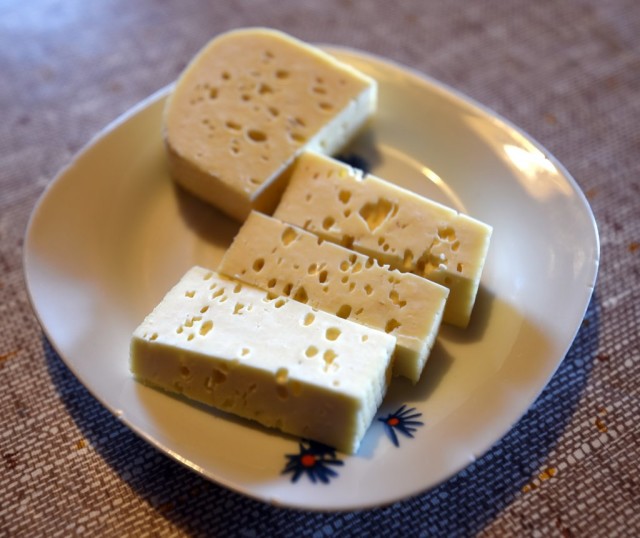
Walking from hut to hut, we find one that’s still occupied. Gorazd asks the woman if she still has any cheese. She invites us in to her humble dining room table and cuts us off a slice of the lone product up here: a pear-shaped cheese called trnič. It reminds me of a very young, mild-semi-crumbly Swiss cheese. Gorazd asks a hopeful question, but our host shakes her head no. “Hm,” he says with a wink. “I ask if they have kislo mleko. No luck. Too bad.”
Not quite ready to leave the mountains and return to civilization, Gorazd and I huff up through the driving rain to the rustic, wooden Chapel of St. Mary of Snows. But, like everything else in the village, it’s already locked up tight for the winter. Gorazd explains that a priest still comes up each Sunday throughout the summer to say Mass for this tiny community. Just then, a soggy gale turns his umbrella inside out. Stuffing it into a garbage can, Gorazd says, with his dry wit, “I think maybe now is the time to head home.” And off we go, back down the mountain.
Exploring Slovenia’s mountains, sampling strange dairy products, and learning about this gentle but impressive people is always a memorable experience…but especially when Tina’s dad is behind the wheel.