My co-author and frequent collaborator, Cameron Hewitt, is well-traveled, smart, and insightful. And, while he and I are in perfect sync in our travel styles and priorities, he gives voice to the next generation of "Rick Steves travelers." Join me in enjoying his reports right here. —Rick

Foodie Budapest

Tucked away on a back street deep in the guts of a seedy Budapest neighborhood, the building’s facade is old and weathered. Battered by history. Practically bomb-damaged. Is this really the place? Confirming the address, I step across cracked cobbles through the grimy passage and pop out into a lively courtyard.

cameron-hungary-budapest-foodie-mazel-tov

The distressed brick walls have been expertly spiffed up, with garlands and twinkle lights hung just so. Behind a long counter, chefs scramble to keep up with the orders that just keep pouring in. The tables are packed with eaters. And here at the entrance, packs of hungry foodies wait patiently for their turn.

cameron-hungary-budapest-foodie-mazel-tov-int

This is Mazel Tov, one of Budapest’s trendiest new restaurants. It’s all the rage today — hard to get a table. But soon the novelty will fade, and Mazel Tov will quietly join the ranks of reliable standbys…a list that gets longer and longer every year. That’s the life cycle of a restaurant in a foodie city.

And make no mistake: Budapest is definitely a foodie city. In my last post, I raved about traditional Hungarian food…but I also warned that it’s hard to come by in the capital. “Hungarian restaurants” in Budapest are, almost without exception, looking to exploit a touristy clientele. They line up along the main shopping street, Váci utca, where hawkers out front try to lure in suckers willing to pay too much for a miserable meal and worse service.

OLYMPUS DIGITAL CAMERA

That’s why I don’t even bother looking for traditional Hungarian food in Budapest. Why would I? If you really care about good food, you don’t go to New York City for barbecue on Times Square…you go for trendy foodie haunts in Tribeca or Williamsburg. And in Budapest, the cutting-edge, experimental culinary scene is far from the obvious tourist zones.

A decade and a half ago, when I was just getting to know Budapest and writing the first edition of our Rick Steves Eastern Europe guidebook, I had to scrape the bottom of the barrel to recommend any restaurants. But then something happened. Leafy, mellow Franz Liszt Square became trendy. And wedged between the tourist-oriented theme joints and the drinks-only cocktail bars, a fresh new restaurant opened its doors. Menza (the word for a dreary communist canteen) boldly ventured into Modern Hungarian cooking: traditional ingredients and recipes, but with a fresh spin to please the modern palate. I can still remember my first dinner at Menza: They took the greasy, heavy lángos fry bread (one bite sits in your stomach for a week), lightened it up, and wrapped it around a delicious paprika-dusted entrée. This definitely wasn’t your Grandpa’s goulash. And the decor was a tongue-in-cheek update of commie cafeteria orange. It felt fresh. Bold. Postmodern.

cameron-hungary-budapest-foodie-menza

Menza — still respected, but considered an almost quaint throwback — became a blueprint for the 21st-century Budapest restaurant. Imitators sprung up all over town. And some of those imitators went a step or two beyond — putting their own twists and turns on Hungarian cooking. These days, I can barely keep up. In the year or two between my visits, whole new restaurant districts flourish and whither. It’s all I can do to keep track of the latest buzz. And I spend much of my Budapest research time simply scouting everything that’s new…and re-evaluating the old standbys. Here’s the latest scoop:

cameron-hungary-budapest-nightlife-ruin-pub-zone-1

The Seventh District is red-hot. It’s home to most of the city’s top “ruin pubs” (which I’ll explain in my next post). And now it’s emerging as a culinary destination, as well. In a nod to the district’s heritage as the former Jewish Quarter, Jewish-themed restaurants are popular here. Macesz Bistro is a Grandma’s-dining-room-cozy corner restaurant serving traditional Jewish recipes. And the new Mazel Tov — which I described at the start of the article — takes a different tack, serving Modern Israeli small plates like kebabs, shwarma, falafel, tabouleh, and shakshuka. While the atmosphere is wonderful, the food’s a bit hit-or-miss…not quite living up to the outsize buzz it’s currently enjoying. (But, then, how could it? Once the trendy accolades fade, Mazel Tov will be just fine.) Just around the corner is the inviting little KönyvBár & Restaurant (könyv means “book”), with a literary-themed menu and a dining room that feels like a sleek, minimalist library.

cameron-hungary-budapest-foodie-istvan-ter

St. István Square — in front of the towering facade of St. István’s Basilica, in the once-sleepy government and banking district — has really taken off as a food and wine lovers’ mecca. The cross-street called Sas utca has been a culinary hotbed in recent years. While flashy, style-over-substance places have come and gone along Sas, the reliable standby — with an engaging menu, reasonable prices, and a cozy dining room — remains Café Kör. Closer to St. István Square itself, a pair of wine-focused eateries have earned adoring fans. The classy Borkonyha (“Winekitchen”), which earned its first Michelin star in 2014, takes pride in pairing top-quality Hungarian wines with a nose-to-tail aesthetic and creative reinterpretations of classic cooking. (“Hungarian dishes,” the owner explained to me, “but less paprika, less fat.”) This place is popular and understandably jammed (I recently saw a selfie of Tom Hanks mugging with the staff)…so reserve ahead. For something more casual, try the nearby DiVino wine bar, which lists 130 bottles of Hungarian wines on its chalkboard (most glasses for under $5…did I mention Budapest is remarkably affordable?). They pair the wine with small plates, and have wonderful seating out on the square.

cameron-hungary-budapest-foodie-liszt-ter

I have plenty of other reliable favorites, scattered around the city. If you care about food and want a solid meal in Budapest, check out these options: Mák Bistro — pricey but unpretentious, hidden down a forgotten side-street — feels like a well-kept secret, with a lively brasserie ambience and a short, carefully selected seasonal menu. Bock Bisztró, run by a revered Hungarian vintner from Villány, offers 60 wines by the glass and traditional Hungarian staples presented with modern flourish (just shy of “deconstructed”). And Borssó Bistro, with a cozy two-story dining room near University Square, offers small portions of delicately assembled modern French cuisine with a bit of Hungarian flair.

Another big Budapest food trend is the renaissance of mangalica. That’s a uniquely Hungarian breed of wooly pig — basically a domesticated boar. The mangalica was out of fashion for years. But in this age of foodies who revere the almighty pig, the mangalica‘s high levels of unsaturated fat, distinctive flavor, and catchy backstory have made it newly trendy. These days, you’ll see it on every menu… and, in the case of the mangalica-themed Pesti Disznó restaurant, it’s literally in every item on the menu.

cameron-hungary-budapest-foodie-alexandra-cafe

Budapest has long had an elegant café culture (like its neighbor up the Danube, Vienna). While many cafés serve food, their forté is combining opulent surroundings with a take-your-time approach to coffee. The budget option hides upstairs in the Alexandra bookstore, along the main boulevard, Andrássy út. When the bookstore chain renovated this fine old turn-of-the-century department store, they spared no expense in restoring the sumptuous Lotz Hall. Now they fill this genteel space with a grand café and occasional live piano music. And, remarkably, they’ve kept the prices within reach: You can get a latte and slice of cake here for about the same price as at your hometown Starbucks.

cameron-hungary-budapest-foodie-new-york-cafe

That’s not the case at Budapest’s showiest coffee house, the New York Café. Originally built in 1894 as part of the “New York Palace” — and it really is palatial — this fanciful, over-the-top explosion of Neo-Baroque and Neo-Renaissance epitomizes the “mix and match, but plenty of everything” Historicist style of the day. In the early 20th century, artists, writers, and musicians came here to escape their dreary apartments and be inspired by its opulence. Now restored, the café sells the most expensive cup of coffee in Hungary, along with mediocre food. But you know what? It really may be worth the $7 investment in a caffe latte, just to sit here for an hour.

All of this is just scratching the surface. (If your interest is piqued, pick up my Rick Steves Budapest guidebook.) Foodies are in heaven in Budapest. It’s worth adding an extra night or two to your itinerary, just to eat well. And even those who don’t know sous-vide from deep-fried find plenty to enjoy in the Hungarian capital.
Plenty of Paprika: Why I Love Hungarian Cuisine

Hungary is one of my favorite places to eat in Europe — ranking just a notch below Italy or France. When planning an itinerary here, I have to carve out a little extra time just to dine well.

This may come as a surprise, if you subscribe to the conventional wisdom about “Eastern European” cuisine: a dreary, stick-to-your-ribs diet of pork, kraut, and potatoes. And to be fair, in most of Eastern Europe, there’s a kernel of truth to that stereotype. Most national cuisines withered on the vine under communism, when quality ingredients (and sometimes any ingredients) grew scarce. And today, even as a foodie wave sweeps Europe, the eastern part of the continent sometimes feels stuck in a rut. While Slavic cooking is — no doubt — satisfying comfort food, it’s not exactly high cuisine.

But right here in the middle of Eastern Europe, Hungary bucks that trend. The Hungarian culinary tradition is a fine balancing act between nourishing peasant food and delicate haute cuisine. (Hungary is one of Europe’s largest producers of both lard and foie gras.) And chefs here simply know what they’re doing. They are technically skilled, have a respect for ingredients, and are unafraid of flavor — no matter what they’re cooking. Some of my all-time favorite Indian, French, and Italian meals have been prepared by Hungarian chefs.

cameron-hungary-cuisine-peppers

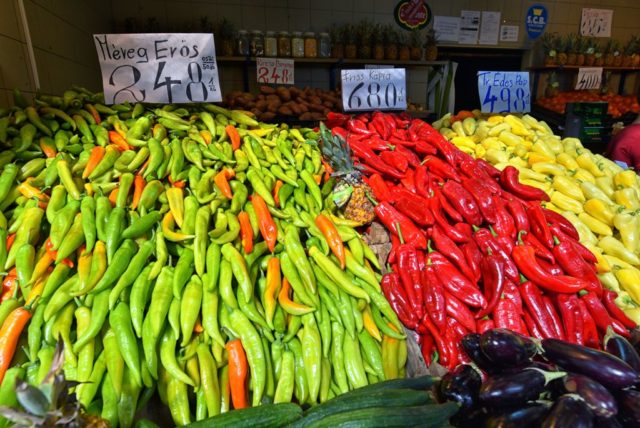
The defining Hungarian ingredient is paprika, which infuses every dish with a rich and smoky tingle. Hungarians recognize two broad categories of paprika: sweet (used liberally in the kitchen) and hot (applied to each diner’s taste at the table). Most Europeans have a timid palate. They seem terrified of spice. But I’m a five-stars guy — the kind of person who eats ghost pepper hot sauce on a dare. By the time I reach Hungary, I’m craving some heat. And Hungary is all too happy to provide it.

cameron-hungary-cuisine-paprika-church

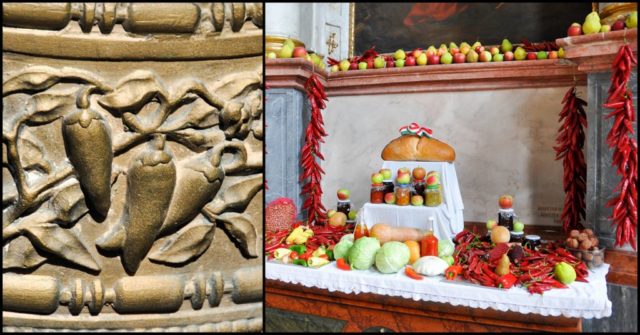
Once, in the steamy southern plain of the country — where paprika grows like weeds — I visited a little church that reveres the red pepper. Carved columns were embossed with ripe peppers hanging on the vine. And piles of peppers were laid at the altar, as if a sacrifice to Saints Scoville and Capsicum.

cameron-hungary-cuisine-dishes

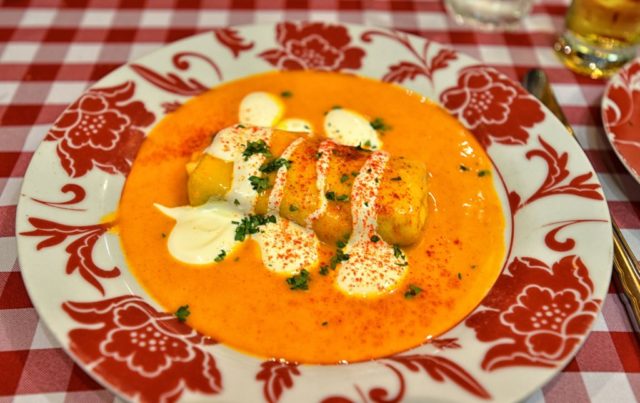
The quintessential Hungarian dish is csirkepaprikás: chicken (or veal, borjúpaprikás) slow-simmered in a rich paprika stew, served over egg-drop noodles. (After years of experimenting, I’ve mastered the art of cooking chicken paprikash in my own kitchen. It’s a quarterly ritual that tides me over until my next visit to Hungary.) Hortobágyi palacsinta — named for the wild steppes of southern Hungary — are savory crêpes wrapped around a meaty filling, smothered in a creamy paprika sauce. Pörkölt is a hearty stew of braised meat and vegetables, flavored with — who knew? — paprika. And the peppers themselves can be stuffed with various fillings to create töltött paprika.

If your meal isn’t spicy enough for you, ask your server to bring you a jar of Erős Pista — a vivid-red paste of mashed peppers. A spoonful of Erős Pista (which means, loosely, “Spicy Steve”) introduces a rich, salty paprika flavor and a wallop of heat. If you appreciate the flavor more than the heat, opt for Édes Anna (“Sweet Anna”) — as hardy yet demure as the babushka-draped peasant girl on the label.

cameron-hungary-cuisine-goulash

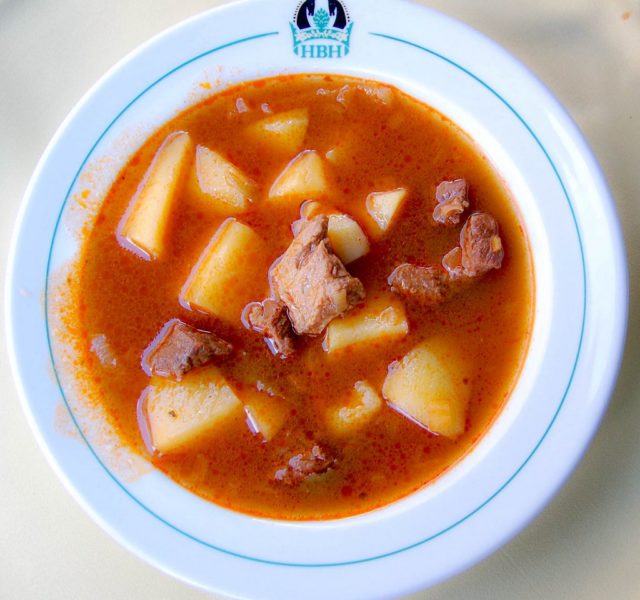
And then, of course, there’s the ultimate Hungarian dish: goulash. Except that what you’re picturing as “goulash” isn’t Hungarian. It’s the German, or Czech, or American interpretation of a classic Hungarian peasant soup: a thick, meaty stew, stacked with vegetables and timidly flavored with a pinch of paprika. But in Hungary, it’s gulyás leves — a “shepherds’ soup” that was born on the Great Hungarian Plain, where shepherds simmered simple ingredients in a rustic kettle. True Hungarian goulash is a broth deeply reddened with robust paprika, its flavor rounded out by onions, garlic, and crushed caraway seeds. Big chunks of meat and potatoes — and maybe a few carrots — make it hearty. When it’s simmered long enough, it reduces to a thick (but not thickened) consistency. It’s not brown — it’s bright-red. And each spoonful is supremely flavorful. (If you prefer fish, try halászlé — goulash that swaps out the meat for carp.)

cameron-hungary-cuisine-cold-fruit-soup

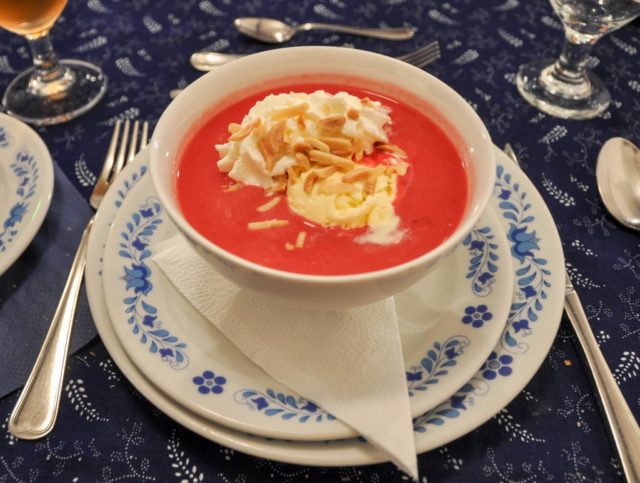
One Hungarian dish that doesn’t involve paprika is hideg gyümölcs leves — cold fruit soup. It’s a creamy, fruity, sweet dish eaten as an appetizer. When done right, cold fruit soup feels like cheating…a bowl of melted ice cream before the meal. Just watch out for pits in the sour cherries.

cameron-hungary-cuisine-kurtoskalacs

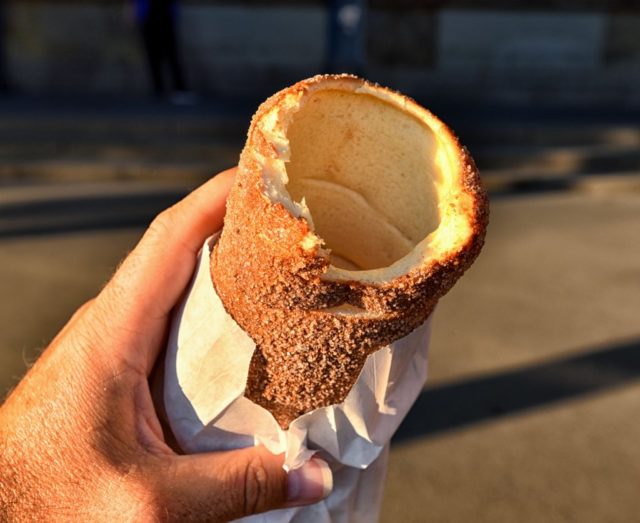
For a real dessert — or just a sweet snack — keep an eye out for my favorite Hungarian street food, kürtőskalács. To make this “chimney cake,” dough is wrapped around a wooden spindle and sprinkled with sugar, then slowly spins on a rotisserie over coals. When the sugar begins to crystallize into a golden brown crust, the kürtőskalács is taken off the fire, rolled in flavorings (cinnamon sugar, coconut, or nuts), then slid off its spindle and into a paper sleeve…hot, fresh, and ready to eat. You’ll see kürtőskalács stands on busy street corners, parks, and anywhere people are out having fun. If they hand you a cold one, insist on waiting for a hot one…it makes a difference.

Most of my favorite traditional Hungarian meals have been outside of the capital. If you’re doing a tour around Hungary, stop in at HBH Restaurant in Eger, Jégverem Fogadó n Sopron, Kecskeméti Csárda in Kecskemét, or the blowout buffet restaurant at the Saliris Resort at the Egerszalók spa — a Hungarian smorgasbord.

In Budapest, on the other hand, it’s always been a challenge to find authentic, traditional Hungarian food to recommend in my Rick Steves Budapest guidebook. As in any cosmopolitan capital, most restaurants here cater to forward-looking young urbanites who want upscale international cuisine with flashes of Hungarian influence. This target audience would never go out for old-school Hungarian food. That’s what Grandma cooks them on Sundays.

A few overpriced, overblown specialty restaurants in Budapest work too hard to dress up Hungarian classics, throw in some “Gypsy” music and stuffy service, and charge top dollar. But I’ve always sought a moderately priced hole-in-the-wall that was all about the food. And on this trip, I finally found it. Hungarikum Bisztró, tucked down a nondescript side-street surrounded by governmental ministries, has a deep respect for tradition, but with a modern sensibility. The simple, no-frills interior — with red-and-white-checkered tablecloths and discreet woodwork — is filled with the aroma of braising meat.

“Budapest is a foodie city,” István — one of the co-owners — explained. “And the chefs are so creative and so modern, they can’t help themselves but to play with traditional recipes to update them somehow. It’s tasty, but it’s not real Hungarian food. Here, we strictly follow our grandmas’ recipes, down to the last detail…even if it has ingredients or techniques that aren’t commonly used in modern cooking. That way, we know that you are tasting the same food we tasted growing up.”

cameron-hungary-cuisine-hungarikum

Enough talk. Starving, I ordered two of my favorite dishes: gulyás leves (that’s real Hungarian goulash) and Hortobágyi palacsinta (paprika-smothered filled crêpe). And when the food came, it delivered on István’s promise. The goulash was slow-simmered, producing a rich broth and tender meat and potatoes. And the Hortobágy pancake was perfect: a firm crêpe containing a delicious filling, swimming in a luxurious pool of creamy paprika sauce. What’s not to like?

But the ingredient that really caught my attention was the paprika that was dusted over the dish. Paprika loses its flavor quickly…so quickly, most people probably don’t know what paprika actually tastes like. That little paprika jar that came with your spice rack? That’s not paprika. It’s a soulless red powder that only hints at paprika flavor. Even those little cloth bags of paprika you buy at Budapest’s Great Market Hall are, all too often, past their prime. István’s paprika, however, was explosively flavorful. You could taste the sun-drenched pepper growing on the vine, and you could taste the heavy wood smoke used to dry it.

I quizzed István, who grinned proudly. “Yes, we get all of our paprika fresh and direct from Kalocsa,” he said, naming the city deep in the hot south of Hungary, famous for its top-quality peppers. Paprika from Kalocsa is like key limes from Florida or maple syrup from Vermont. Like any good restaurant, István recognizes that his food will only be as good as his ingredients. And his ingredients are very, very good.

Hungary’s Top Five Thermal Baths

In my last post, I wrote about my favorite Budapest thermal bath, Széchenyi. But that’s just a drop in the bucket. Budapest has two dozen spas, and Hungary has over a hundred. And, while they all enjoy hundred-degree water, jets, massages, and fanciful architectural flourishes, each one is unique. Hungary’s addictive thermal spas are a slippery slope: If you spend enough time here, you’ll wind up a connoisseur. And after scouring plenty of options — both in the capital and in the countryside — here’s a rundown of my personal favorites. (All of these, and ample tips for how to enjoy any Hungarian thermal bath, are covered in more detail in my Rick Steves Budapest guidebook.)

1. Széchenyi Baths (Budapest)

cameron-hungary-baths-budapest-szechenyi-15

This elegant bathhouse in the center of Budapest’s City Park is the undisputed champ. This spa has it all: Grand architecture; indoor and outdoor sections; pools with healthy (read: stinky) minerals, and pools that are all about fun. If you go to just one thermal bath in Hungary, start with Széchenyi. For details, check out my full rundown on the place.

2. Hagymatikum Baths (Makó)

cameron-hungary-baths-mako-3

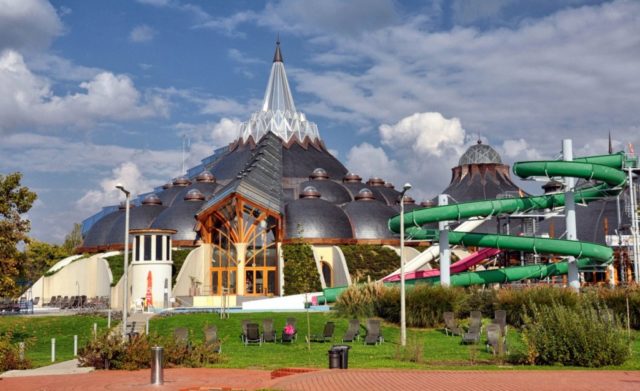
Tucked in the southern fringe of the country, the town of Makó was the birthplace of Imre Makovecz — the inventor of Hungary’s defining postcommunist architectural style. Before his death in 2011, Makovecz sprinkled his hometown with priceless examples of his distinctive “Organic” style, including the Hagymatikum Baths. This bulging mushroom-shaped hall hides a mind-bending wonderland of hot-water fun.

cameron-hungary-baths-mako-4

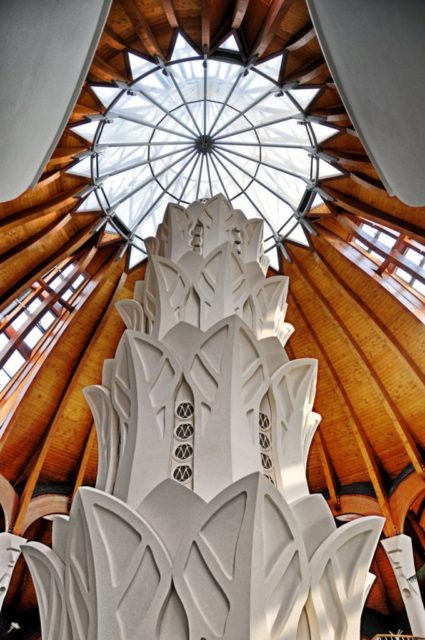
In the center of the grand hall, a towering tree trunk stretches up to a starburst skylight in the wood-beam roof.

cameron-hungary-baths-mako-1

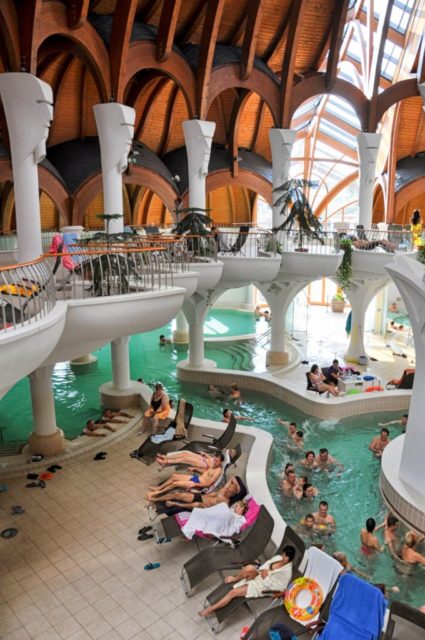
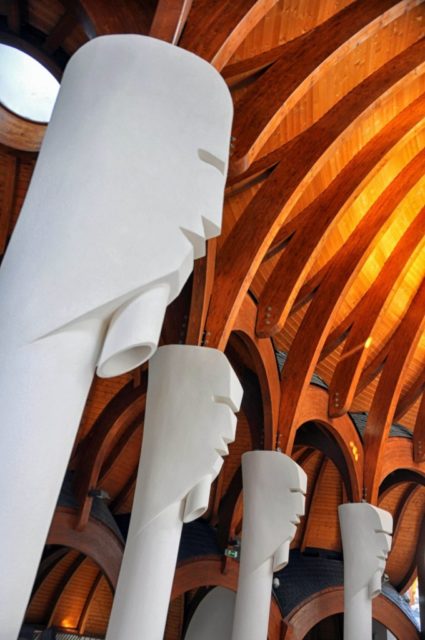
A canopy provides cover for the interconnected lower pools — which flow into each other like a lazy river — and also creates a restful upper deck (with napping loungers) where giant Easter Island heads survey the scene.

cameron-hungary-baths-mako-5

Combining unique architecture with modern thermal-bath amenities, Hagymatikum is practically a pilgrimage for both architecture fans and spa lovers.

3. Rudas Baths (Budapest)

cameron-hungary-baths-budapest-rudas-1

Thanks to a recent rejuvenation, Rudas offers an ideal combination of old and new. At its heart is a mysterious-feeling, 400-year-old Turkish bath — an evocative relic of the bygone Ottoman occupation. Float on your back under the stony dome — light faintly twinkling through the glass-mosaic skylight — and be one with the past. A half-dozen pools let you gingerly step your body temperature up and down — or, if you get overheated, just pull the rope to be doused by a bucketful of frigid water.

cameron-hungary-baths-budapest-rudas-2

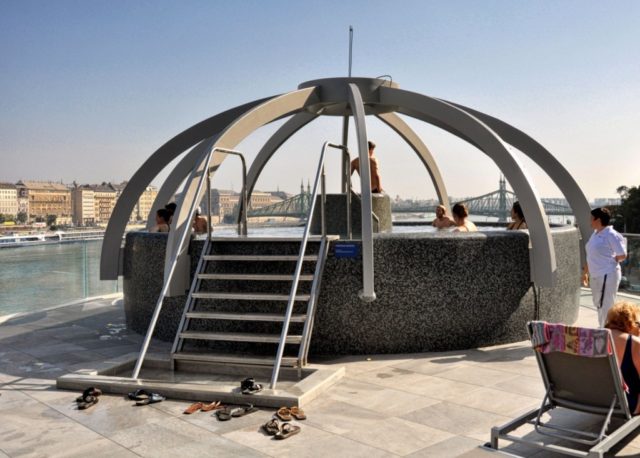
Meanwhile, upstairs in the same building, Rudas’ new “wellness” section is all modern efficiency, with sleekly tiled hot and cold pools, a Danube-view restaurant, and — best of all — an easy-to-miss sundeck where you can soak in a 97-degree hot tub with a panoramic downtown Budapest view. Feeling the bubbles tickle your feet, look out over Budapest’s bridges, where footsore commuters trudge along smoggy highways…and be happy you’re on vacation.

4. Gellért Baths (Budapest)

cameron-hungary-baths-budapest-gellert-5

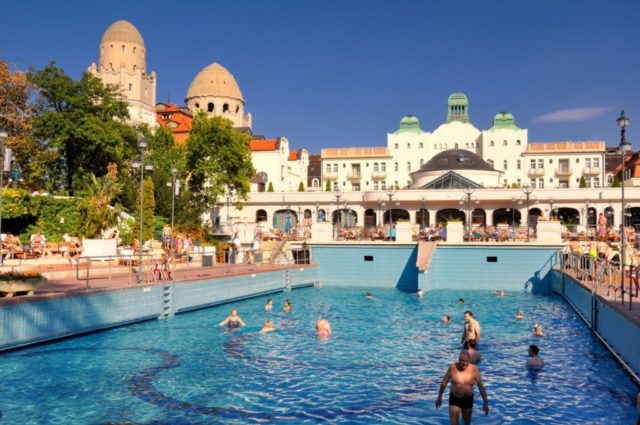
Budapest’s swankiest, most famous, and most touristy thermal spa fills one wing of a once-grand hotel. Gellért is a classic. And the baths— decorated with an Art Nouveau flourish — are sparkling after a recent renovation. Once carefully segregated between men and women, Gellért recently opened up its parallel facilities to all. (Enjoying this unprecedented access, bathers quickly discovered that the men’s section is far more beautifully decorated — and hotter — than the women’s section. Hmmm…)

cameron-hungary-baths-budapest-gellert-4

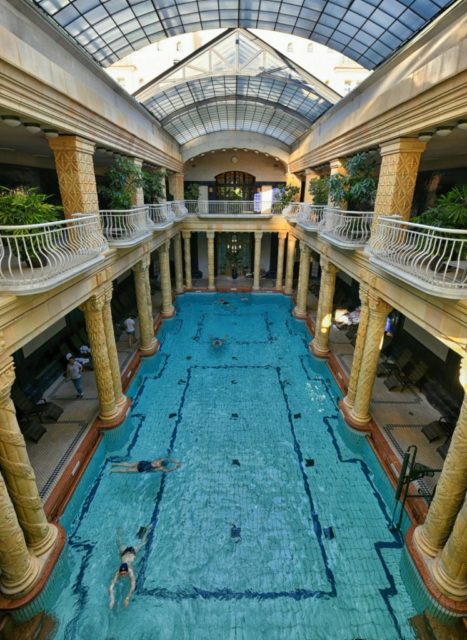
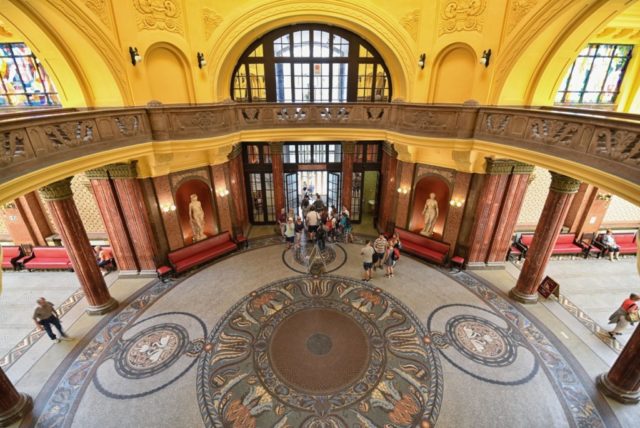
Gellért feels fancy. Its lobby has the genteel aura of an old museum. Its lap pool fills a colonnaded hall with a skylight. And its two large thermal spa zones are encrusted with colorful mosaics.

cameron-hungary-baths-budapest-gellert-6

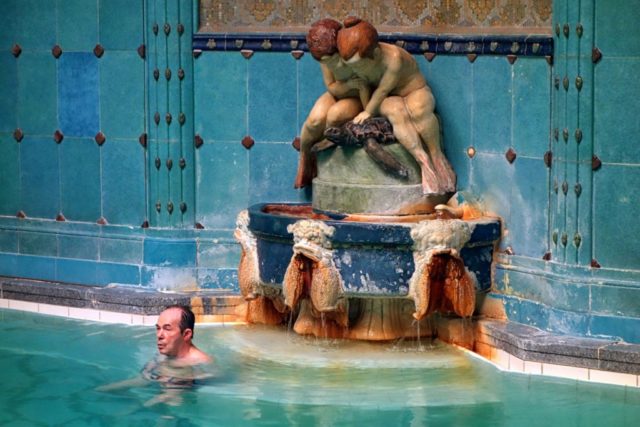
At the spouts where a century’s worth of mineral-rich hot water has trickled into the pools, bulbous lobes hang like prehistoric stalactites.

cameron-hungary-baths-budapest-gellert-2

While most of the complex feels staid and a little sleepy, Gellért hides its fun outside: A wave pool that thrashes bathers around like driftwood. On a hot day, Gellért’s wave pool is refreshing entertainment.

5. Hévíz Thermal Lake (Hévíz)

cameron-hungary-baths-heviz-4

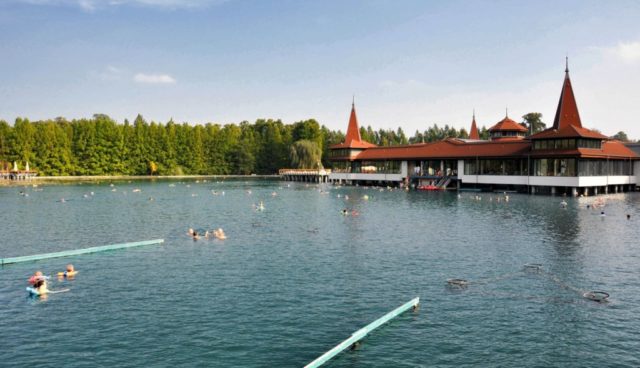
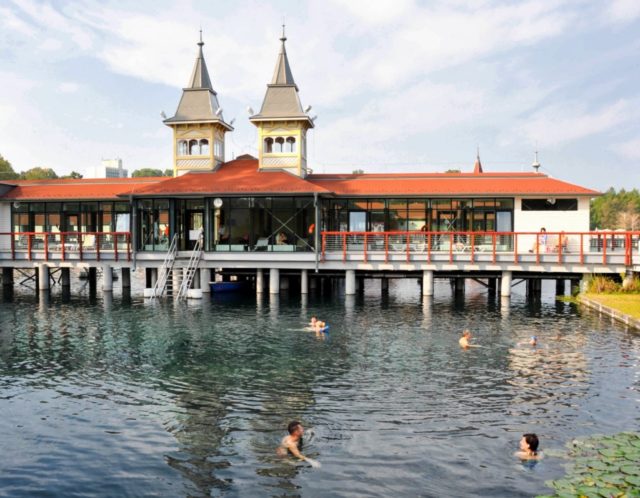
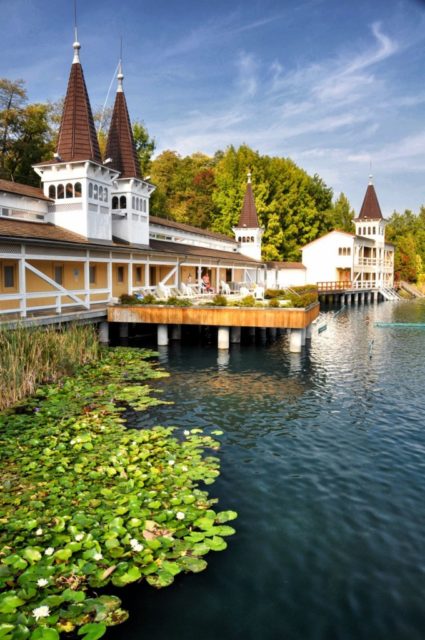
Filling a volcanic crater near the town of Keszthely (two hours southwest of Budapest) is the world’s second-largest thermal lake. Hévíz is continually fed by thermal waters that bubble up from springs a hundred feet below. All of this constant, natural flushing ensures that the lake’s waters refresh completely every two days, and the temperature never drops below about 70°F (and stays closer to 95°F in summer).

cameron-hungary-baths-heviz-3

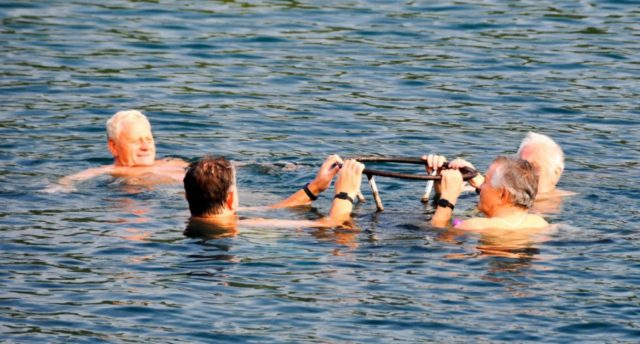
Extremely popular with aging Russians and Germans, the lake’s unique mineral composition is supposedly excellent for easing arthritis, joint pain, and other ailments. When I told a local friend I’d visited Hévíz, he said, “You know the water’s radioactive, right? You’re not supposed to stay in for more than 30 minutes at a time.” Apparently, there can be too much of a good thing.

cameron-hungary-baths-heviz-6

From the locker rooms, you’ll tiptoe along wooden walkways to the pavilion in the middle of the lake. There you’ll ease into the waters, then swim out into the lake itself. Rent a pool noodle and slowly paddle your way around the lake.

cameron-hungary-baths-heviz-2

Weave between the lily pad lotuses as you glide in slow motion across the tranquil surface. All around you, portly, aching, aging bodies bob in the steamy surf. For those who enjoy being close to nature, Hévíz is the best place in Hungary to simply float like a cork.

Honorable Mention: Salt Hill Thermal Spa (Egerszálok)

cameron-hungary-baths-egerszalok-3

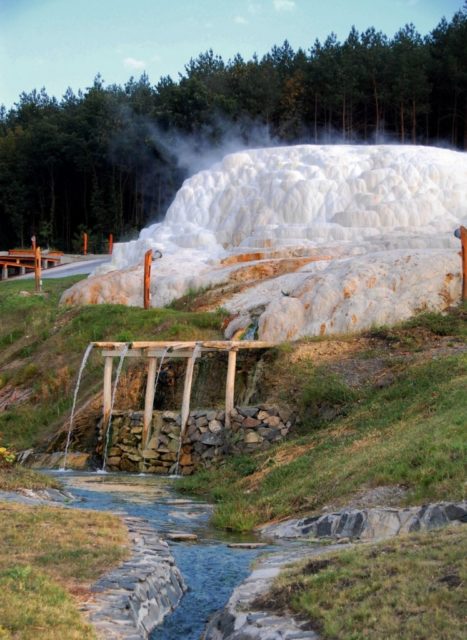
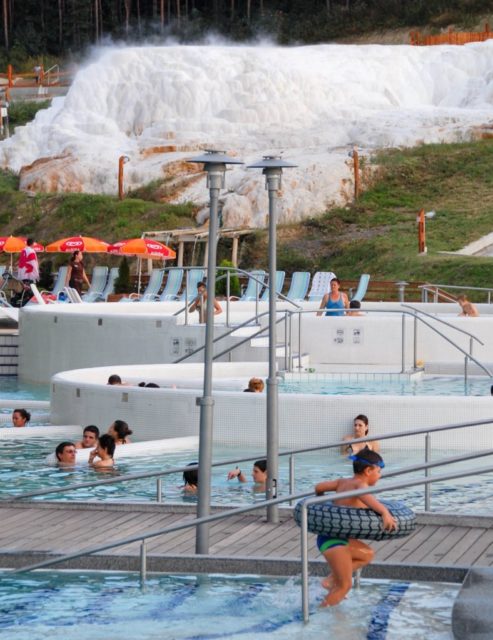
My favorite small town in Hungary, Eger, anchors an arid wine region in the north of the country. About a half-hour outside of Eger, on the outskirts of the winemaking village of Egerszálok, is a series of Pamukkale-like natural travertine pools — nicknamed “Salt Hill.”

OLYMPUS DIGITAL CAMERA

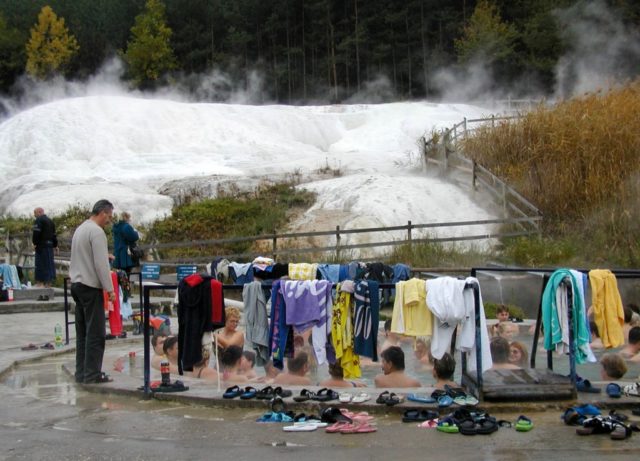
Back in my early days guiding the Rick Steves’ Best of Eastern Europe tour, I enjoyed bringing my groups to an extremely humble little spa here, in the middle of nowhere. It was basically one small round pool, filled with hot water and jammed with locals, with a few wooden cabanas to change in. Far from the gentility of Gellért, it was a perfectly earthy — and memorable — Hungarian spa experience.

cameron-hungary-baths-egerszalok-7

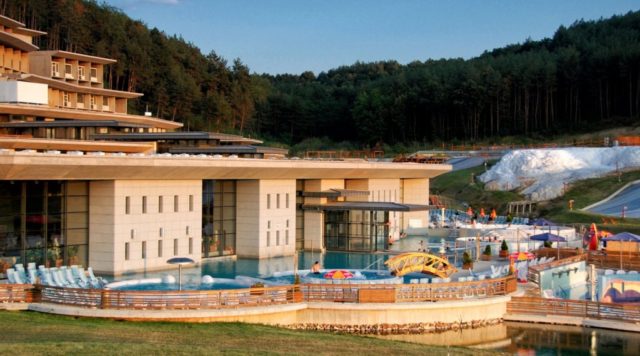
But these days, Salt Hill has gone big time. In 2007, developers took notice of the unique deposits and bucolic setting, and built a sprawling, state-of-the-art spa hotel — being careful not to disturb the natural fortifications that made this place special to begin with.

cameron-hungary-baths-egerszalok-2

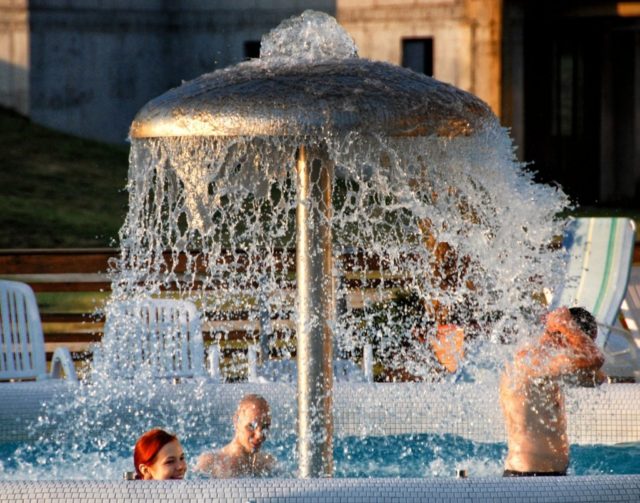
Today bathers can enjoy views of the Salt Hill as they frolic in a world of futuristic pools, cascades, and jets.

cameron-hungary-baths-egerszalok-6

With so many ways to have hot-water fun, Hungary is a must for anyone who enjoys slowing down and relaxing while on vacation. Come on in…the water’s perfect!


For details on all of these thermal baths, check out our Rick Steves Budapest guidebook.


This post was published in 2016.

Up to My Earlobes in Hot Water, in Budapest’s Best Bath

Updating my Budapest guidebook is hard work. But the day is nearing an end. And the sun hanging heavy in the sky, the soreness in my feet, and the trickle of sweat down my back all conspire to inform me it’s Széchenyi time.

cameron-hungary-baths-budapest-szechenyi-outside

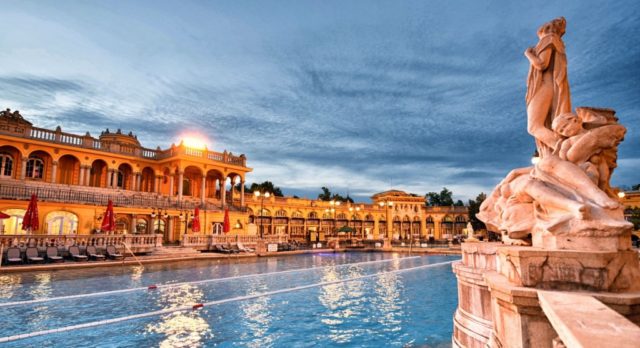
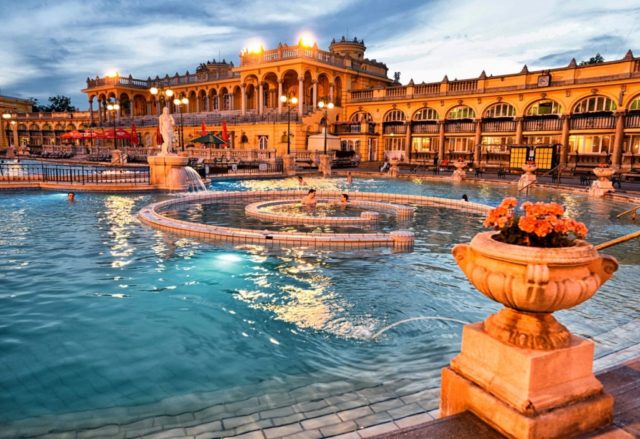
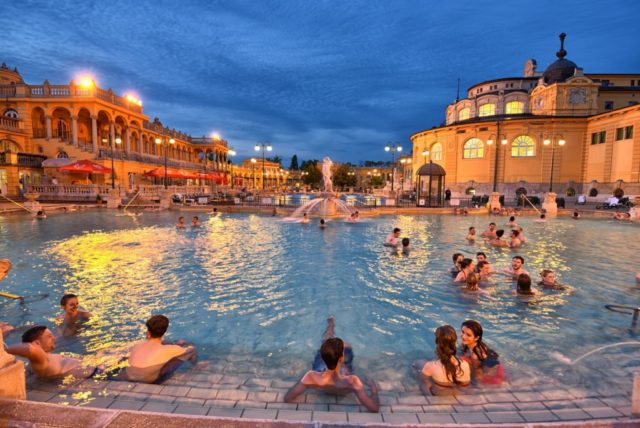
The Széchenyi Baths are Budapest’s ultimate thermal spa experience. Architecturally, the bath complex is grand: A century-old, yellow-and-stone masterpiece, with imperial colonnades and bronze horsemen and copper domes. But it’s also the most purely enjoyable of the city’s two dozen spas.

cameron-hungary-baths-budapest-szechenyi-30

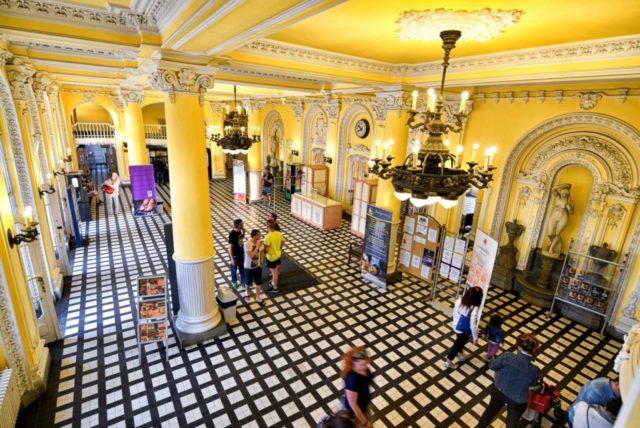
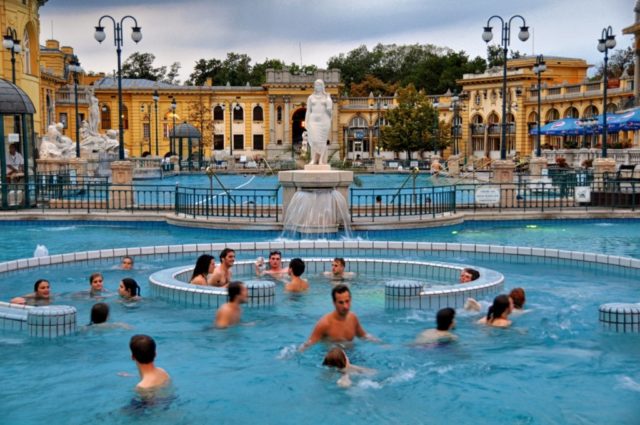
Inside the swanky lobby, a comically complicated menu of services rattles off three feet of options: Cheaper before noon or after 7, more on weekends, cabin vs. locker, a dizzying array of massages and pedicures and other treatments, and on and on. Many tourists — their spirits broken by too many choices — slump their shoulders, turn tail, and head home. But stand tough. Marching right up to the cashier, I tell them I want a swimming pool ticket with a cabin. And before I know it, I’m in my swim trunks and up to my earlobes in hundred-degree water — milky with minerals and steamy with geothermal heat.

cameron-hungary-baths-budapest-szechenyi-35

Even just a few years ago, Széchenyi felt largely undiscovered by tourists. I must admit, these days it has become decidedly touristy. But the people-watching remains unsurpassed. I glance around the pool, squinting through the haze. Nearby, a trio of swarthy Frenchmen — reeking of cheap liquor — dare each other to hit on bathing beauties. A visiting American choir group bobs in a circle and sings pitchy harmonies. And over in the corner, a vigorously affectionate middle-aged couple appear to have completed foreplay.

cameron-hungary-baths-budapest-szechenyi-13

Discreetly paddling to the far end of the pool, I find a pocket of locals ignoring the United Nations of outsiders who swirl around them. Speedo-clad little old men boast bulbous potbellies that hang precipitously over spindly legs, as if determined to defy the laws of physics. In a timeless scene, four graying elder statesmen huddle around a waterproof chessboard, offering suggestions, cheering, and jeering as they launch their attacks. Descending the stairs behind them is a young local couple — weary from a busy day’s work — who slip into the water’s luxurious embrace.

cameron-hungary-baths-budapest-szechenyi-4

To delicate American sensibilities, this all may sound a little seedy…earthy…lurid, even. And maybe it is. But it’s also so very human. People have bodies. Some are pretty, and some are ugly. But one thing is universal: Hot water feels good. The Széchenyi Baths are a place where people of all shapes and sizes come to disrobe, check their inhibitions at the door, immerse themselves in thermal water, and simply have fun. The baths let you be a kid at the neighborhood swimming pool all over again…but with a dash of soothing hot-tub hedonism and a pinch of Old World class.

cameron-hungary-baths-budapest-szechenyi-32

Beginning to sweat in the hot water, I ease myself out of the pool, and — instantly chilled by the twilight air — I scurry, soggy and barefoot, to the opposite end of the courtyard. I shiver as I pass the long lap pool, where swimmers ply Széchenyi’s coolest waters. Along the pool’s edge, stoic statues mark the swimmers’ progress, while overhead looms an empty grandstand.

cameron-hungary-baths-budapest-szechenyi-31

The pool at the far end of the complex is like Goldilocks’ third little bear: not too hot, not too cold, juuust right. This is also the liveliest pool, with more jets, cascades, and a zone where miniature bubbles sputter up from big grates underfoot — like a seltzer foot massage that tickles its way up your legs.

cameron-hungary-baths-budapest-szechenyi-1

In the center of this pool, a tiled whirlpool spins and spins. Once sucked into its steady flow, it’s hard to escape. Some people try to paddle against the current, but I enjoy just going limp and bumping my way around, like a ping pong ball in a turgid eddy. Drifting close to the outside wall comes with a boost of extra propulsion from the jets that keep the whole thing spinning. And then, suddenly, the whirlpool goes still. Across the rippling water, I hear jets and cascades elsewhere in the pool spurt to life. (In a very diplomatic spa tradition, the various whirlpools, waterfalls, and other features take turns.)

cameron-hungary-baths-budapest-szechenyi-33

I’m finished with the whirlpool anyway. Braving the cool air once more, my waterlogged legs wobble me back to the warmest pool. I find a small — but thundering — waterfall, and park myself directly beneath it. Feeling the steaming cascade pound and pound and pound against my shoulders, I slip into a meditative trance, losing all track of time and place. It’s the opposite of water torture…it’s water bliss. It’s been a very long day, and a very long trip. And an evening spent in this water is just what the doctor ordered to recharge my batteries for my journey’s next leg.

Finally I glance up at the clock. The baths are closing in a half-hour. The sky has turned from hazy pink to deep purple to inky black. And I’m determined to stop by my favorite Budapest restaurant for a late dinner on the way home. Changed back into my street clothes, pulling grubby socks onto moist feet, I prepare myself for a jarring re-entry to the real world. But it’s comforting to know that the Széchenyi Baths will always be here. And anytime I’m in Budapest…you know where to find me.

cameron-hungary-baths-budapest-szechenyi-36

Summer Fun in Budapest, Part 2: After Dark

In my last post, I suggested some activities for enjoying summer in Budapest. But after hours, things get even better. Here are some more tips.

cameron-hungary-budapest-roof-terrace

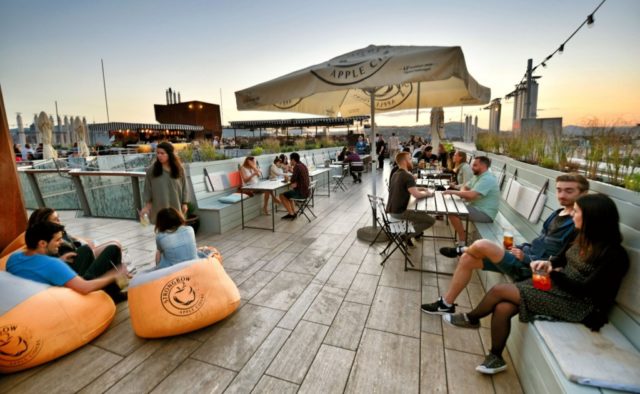
As the sun hangs low in the sky, locals retreat to a series of rooftop bars with sweeping views over the skyline. 360 Bar is my favorite, with a handy location right along Andrássy út and a fun menu of refreshing, summery craft cocktails. An elevator zips you up to the eighth floor and a world of chill Hungarian hipsters enjoying a unique view on their capital. Order at the bar and find the table, bench, or beanbag chair of your choice.

cameron-hungary-budapest-outdoor-dinner

Budapest is one of my favorite food cities in Europe, and its outdoor restaurant scene is a delight. I’ll be covering more on the local food scene in an upcoming blog. But rest assured that finding a breezy and relaxing outdoor spot for dinner is no problem.

cameron-hungary-budapest-ruin-pub-1

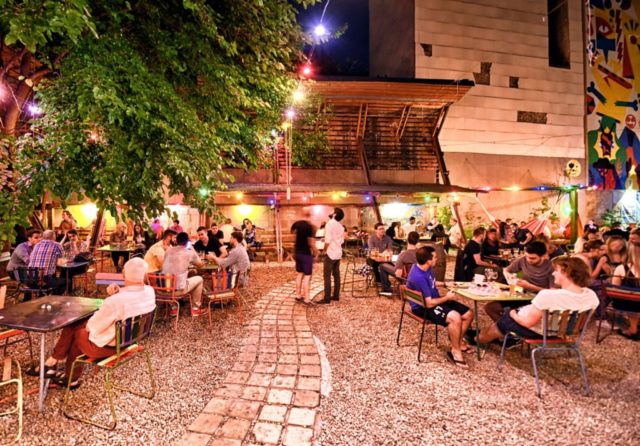
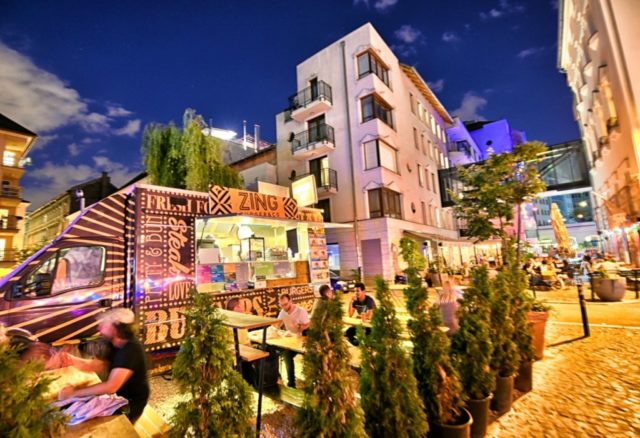
Another Budapest forté is nightlife. Again, I’ll be covering the city’s fascinating and fun “ruin pub” scene in an upcoming blog. In addition to ramshackle bars like the one pictured above, food trucks are tucked between nightspots and apartment blocks.

cameron-hungary-budapest-food-trucks

My favorite Budapest “nightlife”? At the end of a long, hot, busy day of sightseeing, I head for the Széchenyi Baths in City Park. The indoor section closes at 7 p.m., but the even more appealing outdoor pools stay open until 10. What better way to recover from a busy travel day than a pre- or post-dinner dip?

cameron-hungary-budapest-szechenyi-2