My co-author and frequent collaborator, Cameron Hewitt, is well-traveled, smart, and insightful. And, while he and I are in perfect sync in our travel styles and priorities, he gives voice to the next generation of "Rick Steves travelers." Join me in enjoying his reports right here. —Rick

Rick Steves’ Europe Behind the Scenes: Scouting, Scriptwriting, and Pre-Production

When you’re making travel TV, months of work have to be done before you can shoot a single frame of film. Here’s an (unapologetically wonky) inside look at how an episode of Rick Steves’ Europe is conceived, researched, and pre-produced.
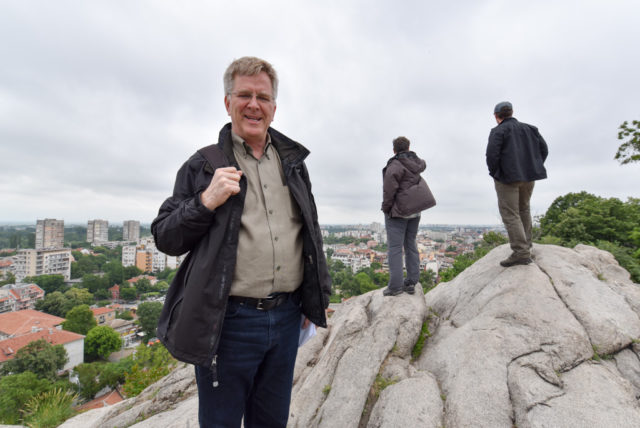
CH16MayPlovdiv_001

Most episodes of Rick Steves’ Europe are loosely based on our guidebooks. Rick is constantly traveling to update and improve the books. When he gets home from each trip, he weaves his favorite experiences into TV scripts. But every so often, we want to expand our horizons by filming destinations that aren’t covered in our guidebooks — such as Bulgaria and Romania. And since I’m “the Eastern Europe Guy” around our office, Rick sent me to do some TV scouting and scriptwriting in these new destinations.

Researching Europe — whether for guidebooks or for TV — sounds like fun. And it can be. But between those fun moments is a tedious slog. You work long hours, chase down iffy leads, and wind up kissing a lot of frogs in the hopes of revealing a prince or two.
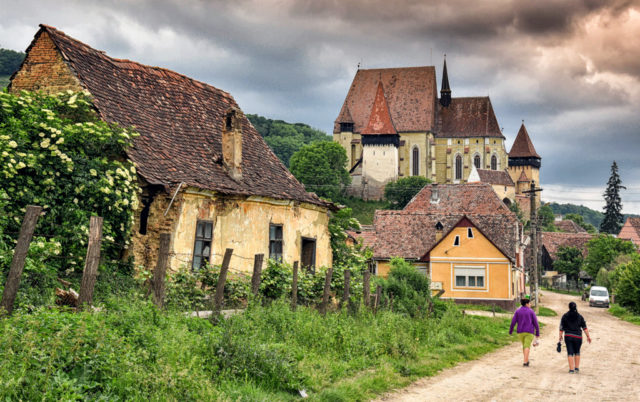
CH16MayBiertan_001

The biggest challenge is being selective. A 30-minute episode of Rick Steves’ Europe starts with a 3,200-word script. And from our past travels in Bulgaria and Romania, Rick and I already knew about 90 percent of what was going to make the cut for each show. My job was, first and foremost, to gather the information we needed to film that 90 percent, and only secondarily to scout possibilities for the remaining 10 percent.

Everywhere I went, I worked with great local guides, who were extremely helpful…usually. But sometimes their unbridled enthusiasm made things challenging — flipping that 90/10 ratio upside-down. A passionate Bulgaria booster or an avid Romaniac can’t fathom that every single sight in their homeland isn’t perfect for American airwaves. And my guides found it even harder than I did to keep within our 30-minute, 3,200-word budget. They always wanted to show me just ooooone more thing. I spent countless hours visiting minor sights that were just fine…but not right for TV. Some simply weren’t visually engaging. Others required too much weighty context to make meaningful. And a few felt redundant with material in other shows.
CH15SepSuceavita_046-Edit

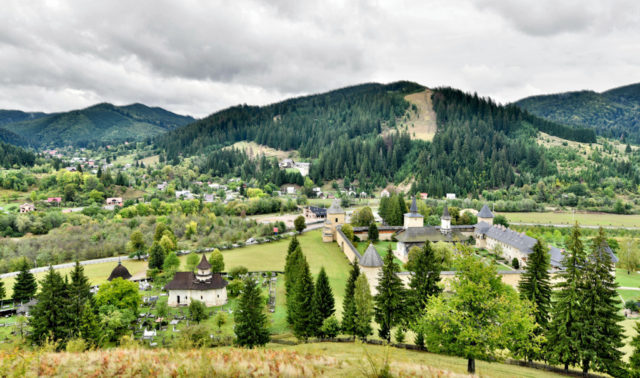
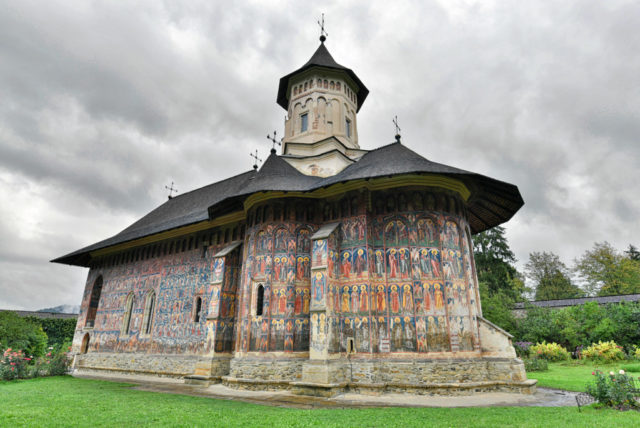
Sometimes those cuts are especially tough. For example, I spent two days scouting Bucovina, the northeast region of Romania famous for its rugged hills and breathtaking painted monasteries. Rick — still nostalgic from a trip there many decades ago — has a strong personal affection for Bucovina. And while there scouting, I met an excellent local guide, Chip Siemco of Hello Bucovina, whose insights brought those vivid frescoes to dramatic life. This was shaping up to be a great segment.
CH15SepMoldovita_006-Edit

After two and a half weeks of 14-hour days (and much frog-kissing), I returned home from my scouting trip. Weighing options carefully with Rick, I put everything I’d learned into a centrifuge and distilled it down to the best 3,200 words on each country. Bulgaria fell into place easily. But Romania was a challenge — our script was already overweight at more than 4,000 words…before I’d even started writing about those painted monasteries in Bucovina. We briefly considered two episodes on Romania instead of one. But deep down, our viewers want us to be selective — and we want to respect their time by not testing their attention span. We agreed: One tight, “best of” show was the smart strategy. That meant we had to cut some strong material. Bucovina would take a lot of time to shoot, for a relatively short segment in the show. And its painted monasteries felt similar to Rila Monastery, which we knew we’d cover with gusto in the Bulgaria show. So, much as it pained us, we swallowed hard and cut Bucovina. (Sorry, Chip!)

The “shooting script” is a helpful blueprint, but only a rough one. Until the final voice track is recorded — weeks or even months after the episode is shot — the script is a living, evolving organism. As we film, we continually reconsider, refine, and rewrite virtually every word. But at least the first draft of the script lets us begin scheduling the shoot.

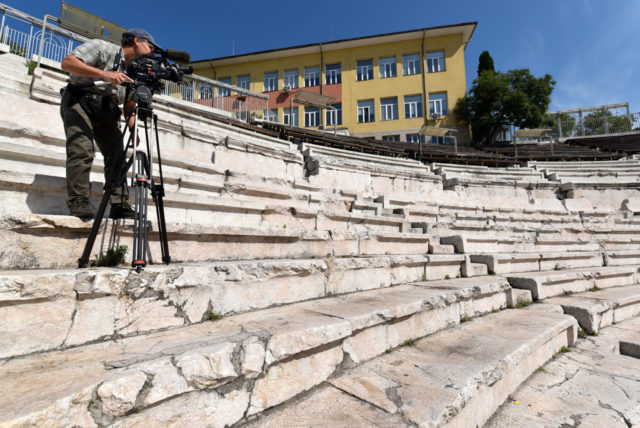
We spent the spring arranging details from the office in Edmonds. We got in touch with our favorite local guides and booked our preferred hotels — that part was easy. But the real challenge was the red tape. You can’t just show up with a giant camera and start filming. You need written permission, arranged months in advance.
CH16MayPlovdiv_015

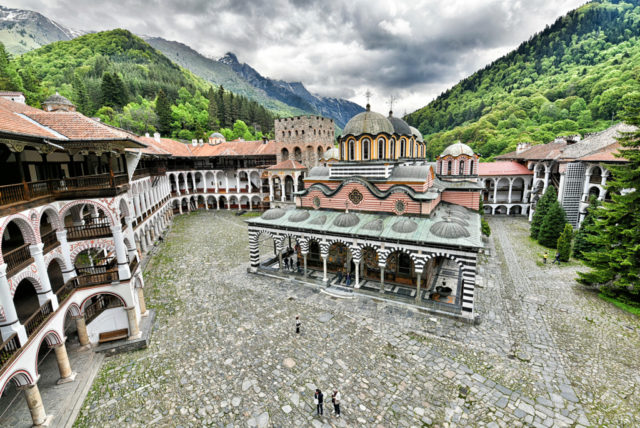
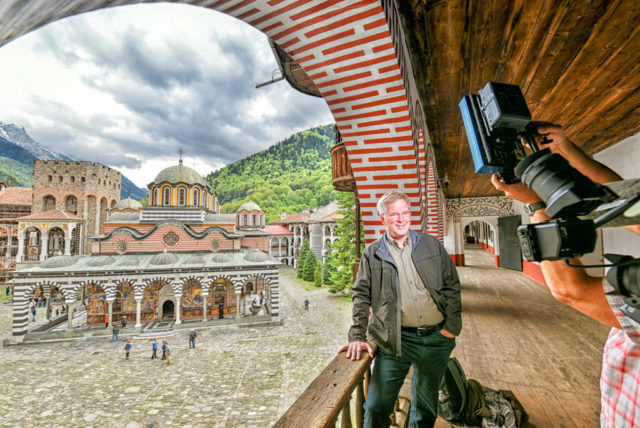
Usually museums and other sights understand what we’re doing, and work hard to accommodate us. Sometimes they ask us to pay for the privilege of filming (which is a little frustrating — after all, we are essentially producing a nationally aired infomercial for their attraction, at no cost to them). And, on rare occasion, they simply aren’t interested. The abbot at Bulgaria’s Rila Monastery generously invited us to film the stunning courtyard. But, understandably, he wasn’t comfortable letting our camera disrupt the sanctity of the church interior. When we suggested that a generous donation might grease the skids, our guide patiently reminded us that, for monks who’ve taken a vow of poverty, money doesn’t talk.
CH16MayRila_019

Both Bulgaria and Romania — former communist countries that are still behind the European curve in terms of both bureaucracy and corruption — made permissions tricky. It took a lot of persistence to get the paperwork we needed (often leaving us greatly indebted to our hardworking local friends). But at the end of the day, we were legal, scripted, and ready to fly. Next up: The shoot.
CH16MayThrace_008


This is part two of my “Behind the Scenes” blog series about Rick Steves’ Europe Season 9 — now airing nationwide (check your local listings). You can also watch the Bulgaria and Romania episodes for free. And in case you’re in a gift-giving mode, the brand-new, 10-episode Season 9 DVD is currently on sale in our Travel Store.
Behind the Scenes: Rick Steves’ Europe Season 9

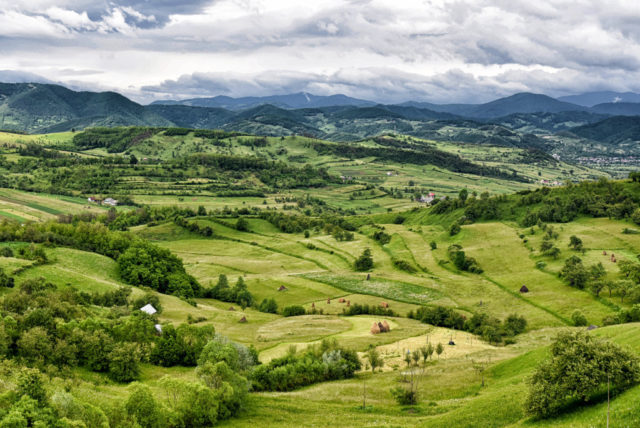
We’re in the middle of nowhere. Or, more specifically, in Maramureș — Romania’s impossibly remote northwest corner, where horse carts outnumber cars and Ukraine sits just across the river. We’ve come all this way to film a TV show, but it’s been pouring rain for two days straight. So, even though we fly home to Seattle in 24 hours, we’re just killing time. First we shot everything we could indoors. Then we shot everything we could under umbrellas, tiptoeing through six inches of mud and goat dung. And now we’re “scrubbing the script” while we pray for sun.

CH16MayMaramures_063

In a simple hotel room, Rick Steves sprawls on the bed, propped up against the headboard, laptop on his belly. Simon, Karel, and I sit in a semicircle around the bed, squirming in our wooden chairs, as Rick rolls words around in his mouth. Were the Hungarians “rulers” or “overlords” of Transylvania? Was Vlad Țepeș a prince or a duke? And, to describe Nicolae Ceaușescu, what’s another word for “megalomaniac”? We’ve used that one twice already…

The clacking of the keys ceases for a moment. And suddenly, in the silence, the same awareness dawns on all four of us at once: No more raindrops. We look to the window, where a sunbeam tries to punch through a layer of clouds as dense and as dark as a Maramureș peasant’s felt vest.  Buoyed by adrenaline (and an immovable deadline), we scramble to load up our gear and chase down some sunshine. We’ve got a TV show to finish.

CH16MayRila_033

I’ve been a fan of Rick’s TV shows since I was a teenager. But this summer, I got to tag along with Rick and his film crew through Europe. Rick Steves’ Europe Season 9 is premiering on public television stations across the USA as we speak. And for this season, I helped Rick with scouting, writing, and field-producing two episodes: Bulgaria and Romania. Now I’m kicking off a series of “behind the scenes” blog posts. If you’re a fan of the show, hop in my rucksack and come along to see how it’s made.

CH16MayMaramures_167

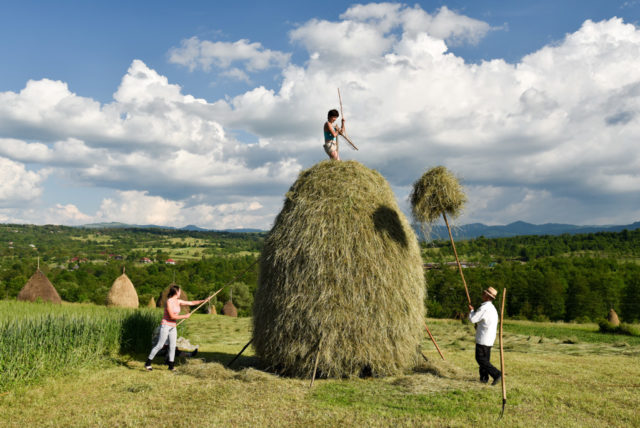
By the way, that rain did eventually clear, allowing us to spend a very busy afternoon scrambling around Maramureș to get glorious footage of Europe’s “Amish Country” in all its splendor. The final shot we filmed was one of the first you’ll see in the show: A new generation of hardworking farmers as they lovingly shape a stout haystack, as their ancestors have since biblical times. Capturing precious, ephemeral moments like this — and sharing them with our TV audience — make the grind of TV production extremely rewarding.


This is the first part of my “Behind the Scenes” blog series about Rick Steves’ Europe Season 9 — now airing nationwide (check your local listings). You can also watch the Bulgaria and Romania episodes for free. And in case you’re in a gift-giving mode, the brand-new, 10-episode Season 9 DVD is currently on sale in our Travel Store.
Thanksgiving in Tuscany: Why You Should Travel for the Holidays

Trick-or-treating is over for another year, cotton cobwebs and jack-o-lanterns are out by the curb, the last few colorful leaves are tumbling out of the trees, and the clouds and rain have shrouded Seattle in gloom. At times like this, I’m glad to have some happy memories of past travels.

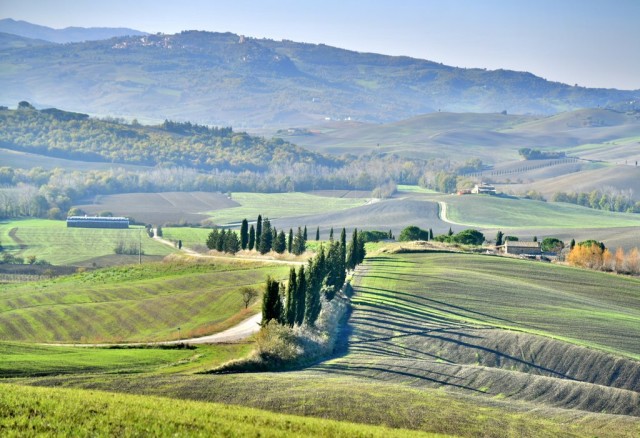
A few years ago at this time, I was getting ready to head to Tuscany for Thanksgiving with my wife’s family. (I wrote a series of blog posts about the agriturismo we stayed at just outside of Pienza, and the many culturally enriching activities they arranged for us.) It was, without a doubt, the most memorable Thanksgiving of my life — and a reminder of why, much as we love our traditions, it’s important to break free from them every so often and spend the holidays in a new place.

cameron-italy-tuscany-Scenery-024

When I tell people I was in Tuscany for Thanksgiving, their first question is — with a note of concern — “Did you have turkey?”

Americans love their Thanksgiving dinner. And many of us simply can’t fathom counting our blessings without an oversized portion of turkey, stuffing, mashed potatoes, and gravy. Our agriturismo host, Isabella, understands this, so very early in the planning stages she reassured her nervous American guests: “And of course we will celebrate Thanksgiving with a special Thanksgiving meal — one with a Tuscan twist.” Well, phew!

cameron-italy-tuscany-Thanksgvng-001

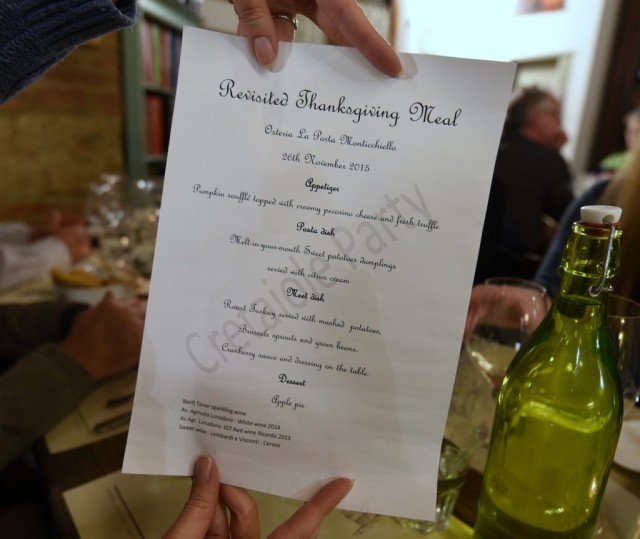
In typically thoughtful fashion, Isabella had arranged a fantastic feast, which happened to be at one of my favorite restaurants in the region (Ristorante Daria, in the tiny hill town of Monticchiello). Months before, Isabella had conspired with the owner/chef, Daria, over a list of traditional Thanksgiving dishes. And the gang at the restaurant had come up with a delicious mashup of American and Tuscan.

cameron-italy-tuscany-Thanksgvng-003

cameron-italy-tuscany-Thanksgvng-004

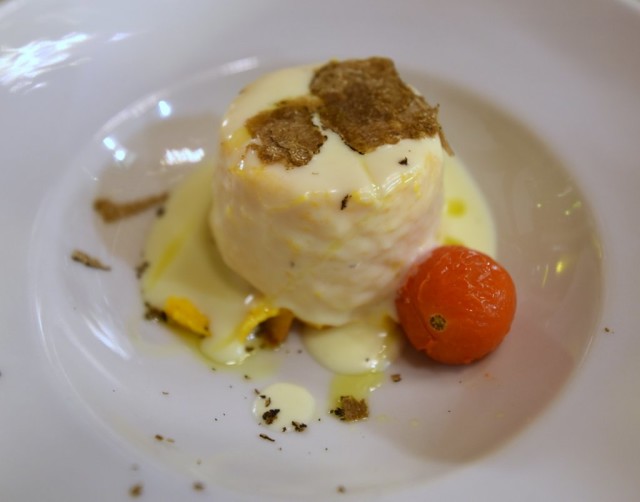
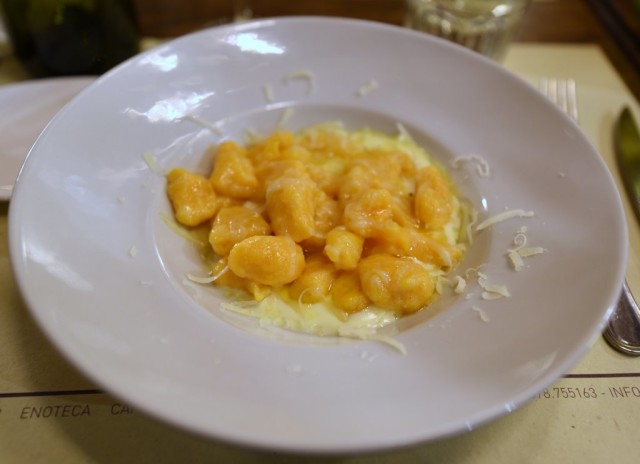
The first two courses were the most Tuscan, but cleverly informed by “our” Thanksgiving ingredients: a delicate pumpkin soufflé, topped with creamy pecorino cheese sauce and fresh-grated truffle. And a dish of pillowy sweet potato gnocchi, gently nestled in a subtle citrus cream. Both dishes were, at once, explosively flavorful and intensely comforting. I would not mind seeing either of these on my Thanksgiving table for many years to come.

cameron-italy-tuscany-Thanksgvng-006

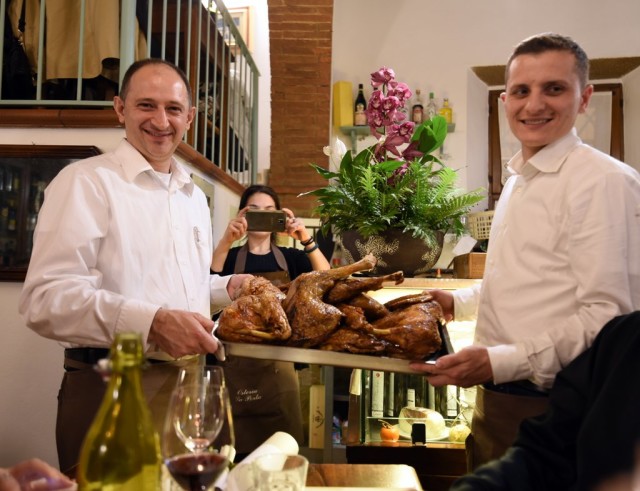
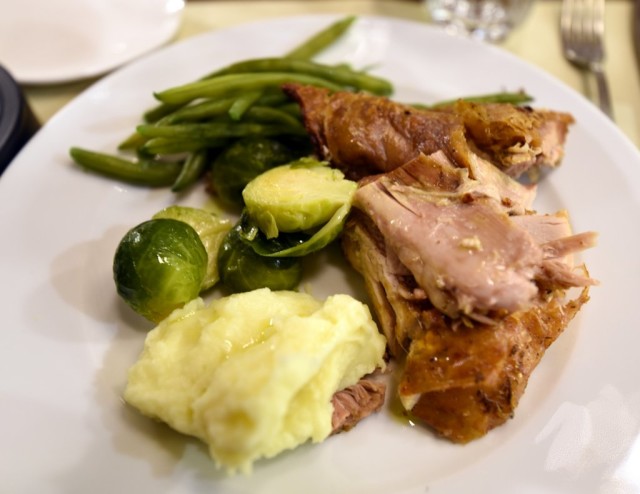
Then it was time for the main event. The waitstaff loaded all of the turkey onto a tray and ceremonially paraded it through the restaurant, like proud hunters with their kill. Then they took it back into the kitchen and re-emerged with beautiful — and very traditional — plates of turkey, green beans, Brussels sprouts, and mashed potatoes…with, in a delicious Italian twist, a trickle of fresh-pressed olive oil.

cameron-italy-tuscany-Thanksgvng-007

They also brought out some fantastic gravy and surprisingly traditional cranberry sauce. Daria explained that she’d asked some American friends to ship her some cranberries, which are completely unknown in Italy. (Pretend for a moment you’re an acclaimed Italian chef. And imagine your shock — and maybe disgust — upon taking your first-ever bite into a raw cranberry: an explosion of sour and astringent, wrapped in a tough little shell and infused with a blood-red dye. How on earth do Americans eat this stuff? The answer: Lots and lots and lots of sugar. Even on her first try, Daria nailed it.)

Sitting around the dinner table, watching Isabella’s family, and my family, enjoying an American-Italian hybrid dinner, was poignant. But it made me sad to think that people might pass up an idyllic week in off-season Tuscany with their families, just because of a fear that they may not get their turkey fix. Even if we’d missed out on the turkey, this week would have been totally worth it.

Holiday traditions are powerful. But keep open the option of busting out of your rut every so often. Risk not having turkey at Thanksgiving. Spend Christmas at a radish festival in Oaxaca instead of singing carols around a fir tree. Skip trick-or-treating in order to be in Slovenia the day after Halloween, when everybody in the country goes to the cemetery to decorate their family graves — in a touching celebration of generations past and present. Instead of dozing off watching another Detroit Lions blowout, drive around the French Quarter of New Orleans, handing out Thanksgiving leftovers to homeless people.

I’ve been fortunate enough to experience all of those magical holidays, and never regretted what I was “missing out on.” If holidays are fundamentally about surrounding yourself with the people you care about, you can do that anywhere. Your traditions will always be there, back home, waiting for you…next year.

If you’d like some inspiration for experiencing Europe for the holidays — or anytime off-season — here’s a recap of some of the other wonderful experiences we enjoyed during Thanksgiving week in Tuscany:

cameron-italy-tuscany-cretaiole-021

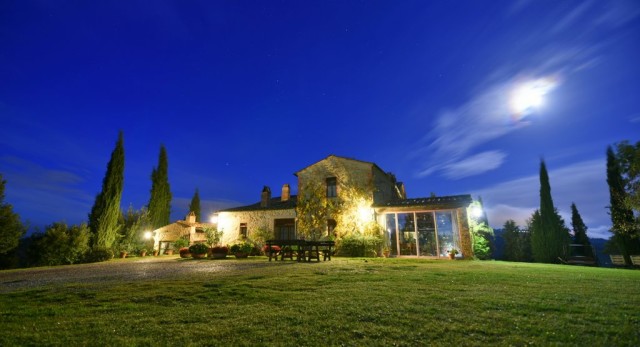
We stayed a full week at Agriturismo Cretaiole, perched on a ridge just outside of Pienza and wonderfully run by Isabella and Carlo. Carlo’s dad, Luciano, kept us well-lubricated with nightly doses of grappa and Vin Santo.

We experienced three entirely different — and equally enjoyable — cooking classes: preparing a blowout feast in an Italian mama’s house; shadowing a Michelin chef in his restaurant’s kitchen; and rolling our own pasta back home at our agriturismo.

We explored Montepulciano — my favorite Tuscan hill town — with its colorful cast of craftsmen.

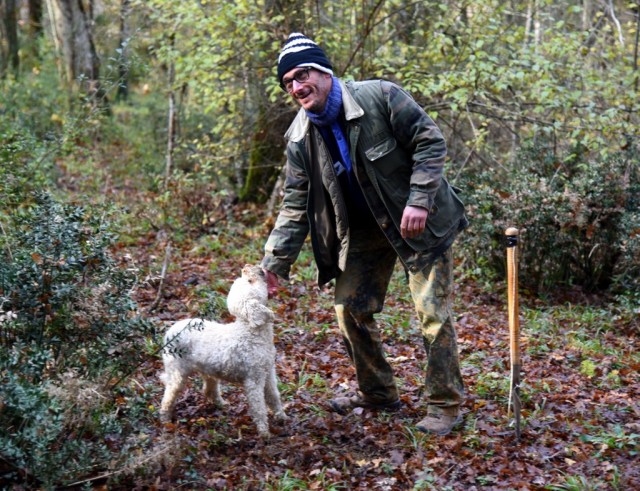
We followed a talented dog as she sniffed out truffles in a primeval forest.

And, in general, we fully enjoyed being in the foodie paradise of Tuscany.

Finally, at the end of the week, we did a little “Black Friday” shopping in Tuscan hill towns, and enjoyed the first of Italy’s holiday lights.

All in all, we found that off-season is a wonderful time to travel in Italy. It’s mild but not cold, it’s less crowded than peak season, and it’s a great time to sample seasonal specialties most tourists never taste.

While you’re digesting your turkey this year, why not do a little daydreaming for next year? A cross-cultural holiday is something worth trying for anybody. Sure, you could miss the turkey, or the Santa suits…but you might just discover something even better.

Or maybe you already have. If you’ve enjoyed holiday experiences on the road, share your favorite memories in the Comments.

Milk Bar Heaven in Kraków

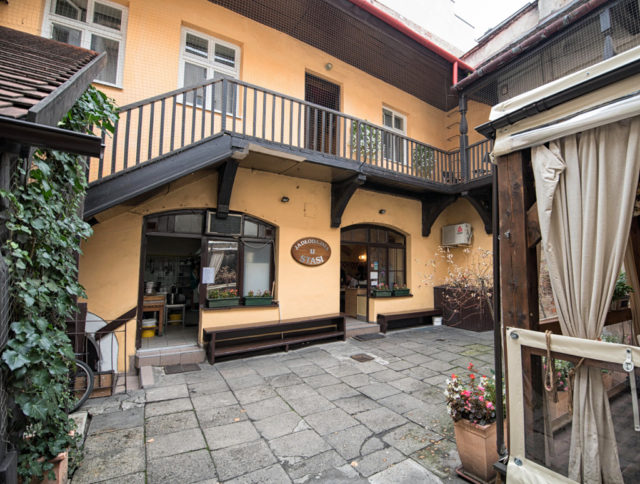
I can’t believe I never noticed this place before. I mean, it literally shares a courtyard with my favorite Kraków pizzeria. And yet, there it sits: Two open doors — one the humble kitchen, the other the tiny dining room. This is Jadłodajnia U Stasi. One of the best meals I’ve had in over 20 visits to Poland — and, by far, one of the cheapest.

CH16SepKrakow_230

I’m always pumping my local guides for privileged information — the latest restaurant leads for my Rick Steves Eastern Europe guidebook. Earlier today, over a coffee, I practically challenged Tomasz to impress me. He rattled off all of the touristy standbys. Yawn. C’mon — it’s time to really show me something.

“Well,” he said, glancing around conspiratorially, then breaking out into the uncontainable grin of someone who’s about to give up the goods. “There is this one place…”

Jadłodajnia U Stasi is a milk bar — that uniquely Polish phenomenon of a government-subsidized canteen, originally dating from the communist period to allow the workers to enjoy a meal out. Communism is a distant memory, but the milk bar concept has stuck around. Throughout Poland, you can get a filling meal of authentic traditional specialties for suspiciously low prices. It’s an option designed for locals, but open to visitors as well.

I’m something of a milk bar connoisseur. But I’d never heard of Jadłodajnia U Stasi. “It’s a place where all of the locals go for lunch,” Tomasz explained. “Homeless people, artists, businesspeople, politicians — everyone sits together at shared tables and eats well.” Even the name — jadłodajnia basically means “place for eating” — is old-fashioned. Straightforward. Unpretentious. A weekday-lunch-only place with a loyal local following. It’s clear: I have to try it.

Reaching the dead end of the courtyard — a block from Kraków’s glorious (and supremely touristy) Main Market Square — I step across the threshold into the humble space. With basic tile walls, basic coat racks, basic tables, and no “decor” to speak of, it feels entirely practical…almost clinical. The cashier — a tired-looking salt-and-pepper-haired man in a striped polo shirt and jean shorts — looks mildly surprised to see me. But then, as Tomasz has instructed, I tell him, “Angielski, po proszę.” He ruffles through the stack of photocopied menus, pulling the English one from the bottom of the pile and handing it to me. He makes a sweeping gesture across the tiny room. Sit anywhere.

I find a seat in the corner and get situated. Reaching for the ersatz tissue-paper napkins, I take a small stack of about six of seven — approximating one real napkin. Within moments, a kindly aproned woman suddenly appears tableside, cocking her head at me with a wordless smile: Ready to order? I beg for a few more minutes to consider my options.

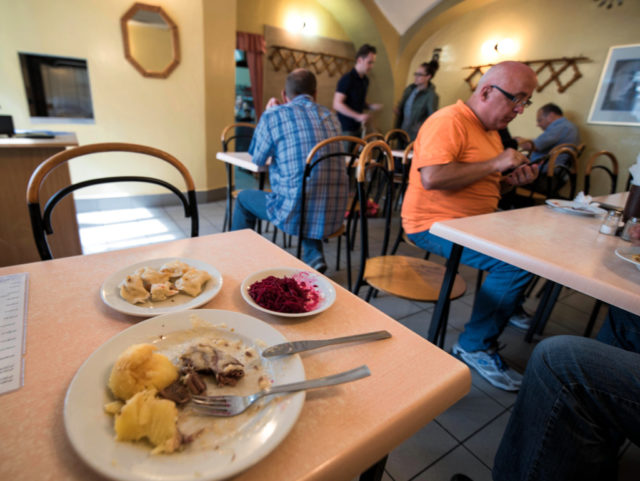
The menu — a short but tempting list of Polish classics — is in three languages: German, French, and English. The dishes sound much better in French. Who can resist the viande de pot-au-feu? So that’s what I order: boiled beef, plus a plate of “Russian-style” pierogi. The server disappears behind a tattered red-and-white-checkered curtain into the kitchen. Well-worn pots simmer on a workhorse of a stove, tended by matronly, blue-smocked chefs.

CH16SepKrakow_220

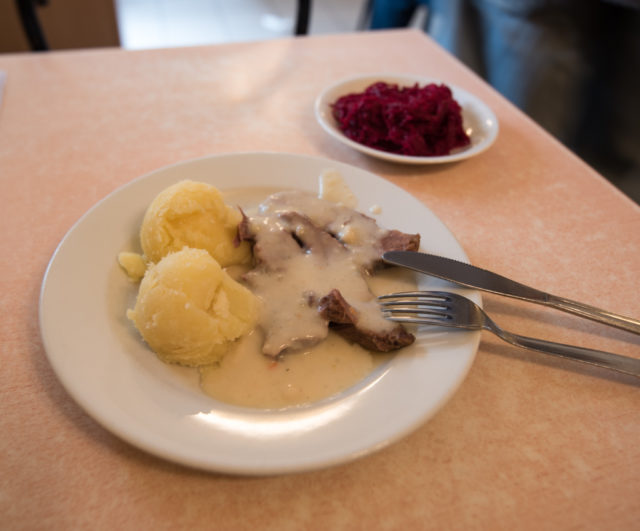
Literally seconds later, the plate hits my table. I take a bite. And the rich flavors flood my taste buds. It’s “boiled beef,” yes, but that undersells it. (So does viande de pot-au-feu, for that matter.) It’s slow-roasted to fork-tender perfection, smothered in a perfectly balanced horseradish cream sauce, with a side of potatoes halfway between roasted and mashed. There’s also a plate of beetroot salad: grated strips of perfectly tender, vivid-purple beets, mixed in with explosive shards of horseradish. Fantastic.

CH16SepKrakow_225

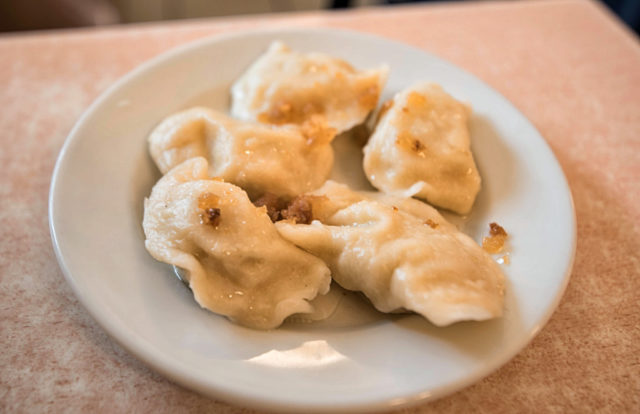
A minute later, my plate of pierogi appears. The boiled-dough casing is ideally al dente. The filling — potato, cheese, and caramelized onion — is generously peppered. Flecks of pork cracklings add a punch of meaty flavor and fatty texture (and make the traces of water draining to the bottom of the plate glisten like gossamer). I’ve had a lot of pierogi around Poland, and most have been pretty flavorless. But these pierogi?  These pierogi are perfect.

Savoring my meal, glancing around the room, I notice the steady flow of customers in and out. One thing’s for sure: I’m the only tourist taking photos of my food. Mindful of the fact that this is the kind of place that locals hesitate to tell tourists about — for exactly this reason — I stow my camera and munch discreetly. Everyone shares tables: Young people. Old people. Rich people. Poor people. And everyone focuses on the food in front of them — classic Polish dishes, executed just right.

Not many people get excited about Polish food. And that’s a shame, because it’s delicious. Polish cuisine is hearty comfort food, done exceptionally well — high cuisine for hardworking peasants. In this agriculturally oriented country — where virtually every square mile is rippled with undulating farms — you can taste the land in the food. Poles have mastered umami — that mysterious “fifth taste,” sometimes described as earthy or savory. Beetroot. Potatoes. Braised beef and pork. Cabbage. Smoke. Mushrooms. Dense rye bread. Rich, fatty proteins. Fermented vegetables. Field greens. Slow-simmering broths. All of these are Polish staples, and all are quintessentially umami. (After a few days here, I crave a meal of sharp, spicy food…just to give my palate some umami detox.) At the same time, Polish chefs are also playful with punchy herbs and spices: Cutting through that smothering blanket of earthiness are bright bursts of dill and peppercorn and marjoram and caraway.  And, of course, plenty of garlic.

CH16SepKrakow_228

A well-dressed, bespectacled, professorial gentleman asks to share my table. We sit together in silence — sharing only the common language of satisfied “mmmms” — as I savor my last few bites. I notice a few splashes of purple beet juice on my shirt, which I decide to think of as prized, indelible souvenirs of a meal richly enjoyed.

Wishing my companion a hearty “Smacznego!” (“Enjoy your meal”), I bus my dishes to the little stainless-steel window where, periodically, a hand reaches out to collect them. On my way out the door, I pay my bill: 20 Polish zloty, or about $5.

Five bucks. For a meal so filling, I won’t need dinner. Two nights ago, I treated myself to a fancy Polish feast at a prime restaurant on the Main Market Square. Ordering high on the menu, I burned through $50 for a (frankly) mediocre dinner. At Jadłodajnia U Stasi, for literally cents on the dollar, I had a dramatically more satisfying meal — and a much more authentic Polish experience, to boot. If you’re headed to Kraków and want to do the same, just duck down the courtyard at Mikołajska 16. Don’t bother telling them that Cameron sent you…they don’t care. They’re too busy cranking out amazing food at ridiculous prices.

Kraków’s Magnetic Main Square

I’m back in Europe. First up on my autumn research swing: Poland, where I’m updating my Rick Steves Eastern Europe guidebook.

That first day in Europe is always a weary slog. After checking into my hotel and showering, I fight the urge to sleep for the first time in 20 hours. Instead, I go wandering around Kraków. I’m seeking that elusive “Hey, I’m in Europe!” epiphany…that moment that makes the long journey worthwhile.

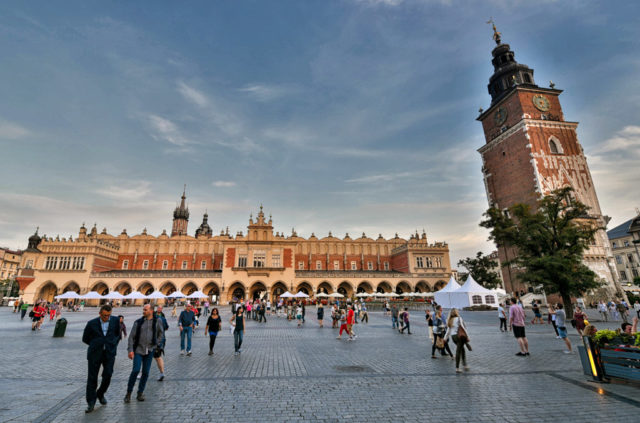
I quickly discover that, today, the entire city is one big “Hey, I’m in Europe!” On this hot, sunny, early-September weekend, everybody is out enjoying the last hurrah of summer.

CH16SepKrakow_050

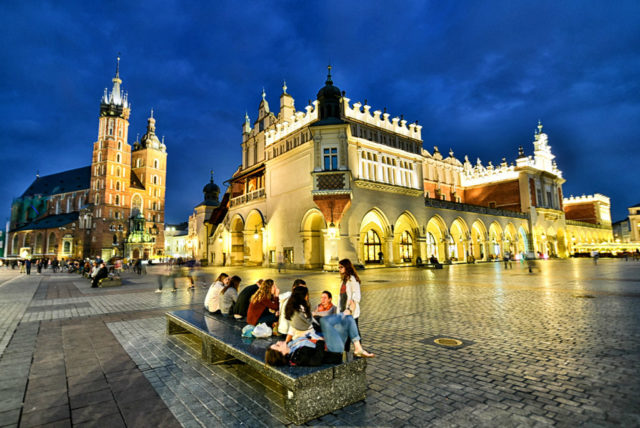
Bleary-eyed, I stumble a few blocks over to the Main Market Square — my vote for the best square in Europe. It’s always full of life, but today the bustle is cranked up to 11.

CH16SepKrakow_088

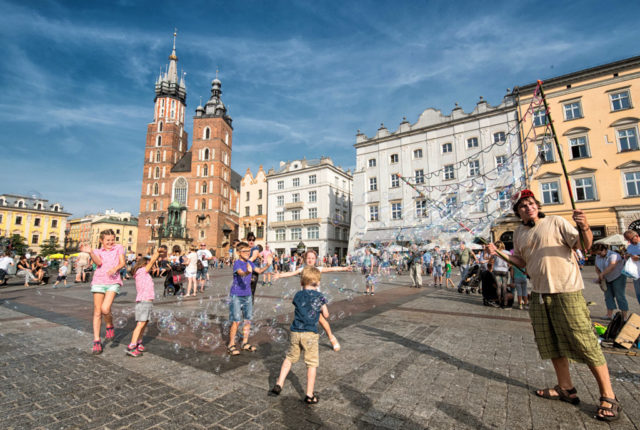
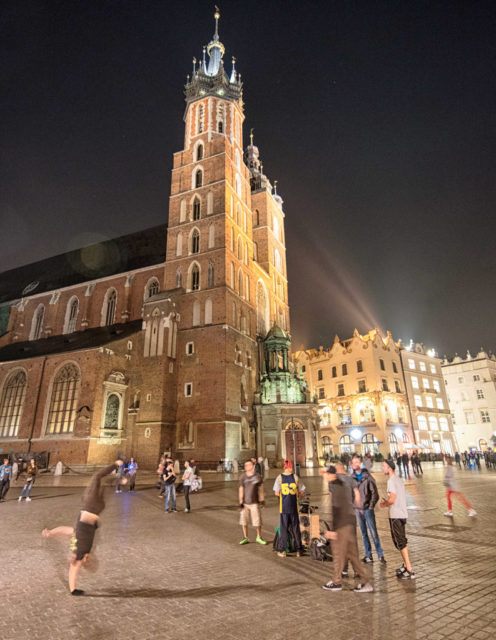
The twin towers of St. Mary’s Church seem to be smiling in the sunshine. One of the windows at the top of the crowned, taller tower opens, and the sun glints off the shiny brass bell of a bugle. The trumpeter begins to play a tune called the hejnał that, if you’ve been to Kraków, you’re probably humming right now.

This song is played at the top of each hour to commemorate the town watchman who, back in the 13th century, sounded the alarm when he spotted Tatar invaders approaching town. (According to legend, before he could finish, an arrow pierced his throat — which is why, even today, the hejnał stops subito partway through.) Like the iconic clanging of London’s Big Ben, this tune is synonymous with its city — and makes it unmistakably clear where I’ve arrived.

The hejnał stops with a jolt, and life on the square goes on. The flower vendors are particularly busy, with couples and kids buying bouquets for their loved ones. The outdoor café tables are jammed. And little kids are having the time of their lives chasing gigantic gossamer soap bubbles.

CH16SepKrakow_007

The Main Market Square is a magnet. I just can’t resist its pull. I keep trying to veer off — heading up this or that side street to check details for my book. But the siren call of the square (and the hejnał) keeps luring me back.

CH16SepKrakow_346

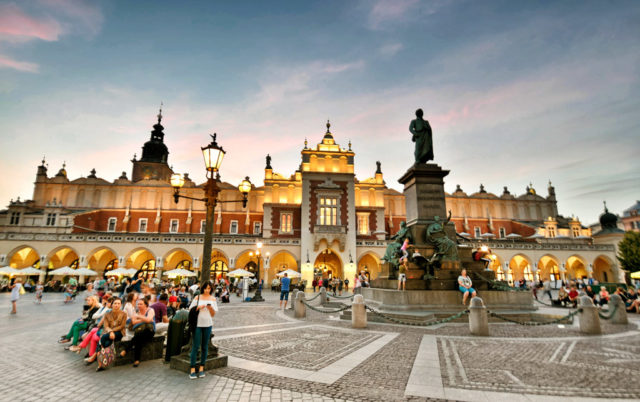
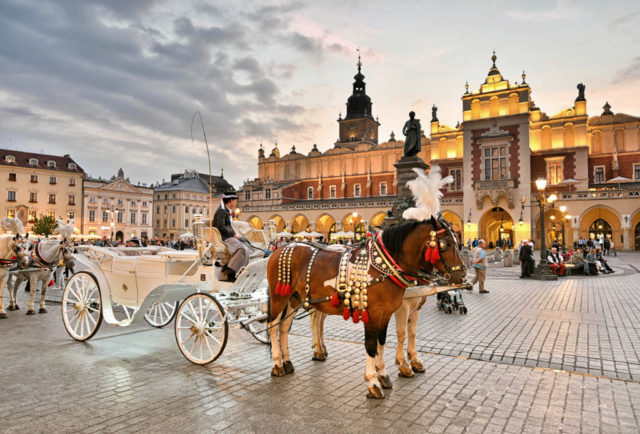
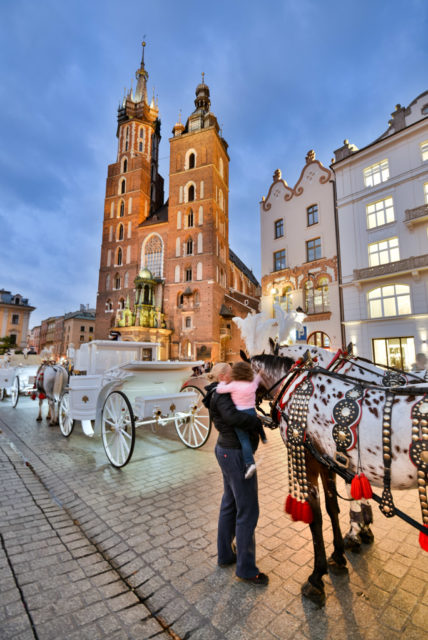
I return in the cool of the evening, under a hazy pink-and-purple sky. It’s romantic twilight, and pristine white Cinderella horse carriages line up in front of St. Mary’s Church. Bright lights under their running boards flicker on — attracting customers like a bug zapper. A young mom brings her curious toddler over to pet the horse.

CH16SepKrakow_370

Doing a few more laps around the square, I spot all of my favorite landmarks. The old, green hand pumps, still used by the flower vendors under their yellow tents. The big donation box. The little old ladies who sit behind their blue, aquarium-like stands, filled with fresh-baked dough rings called obwarzanki. And of course, travelers having the time of their lives — treating Europe’s grandest square as their own, very spacious living room.

CH16SepKrakow_394

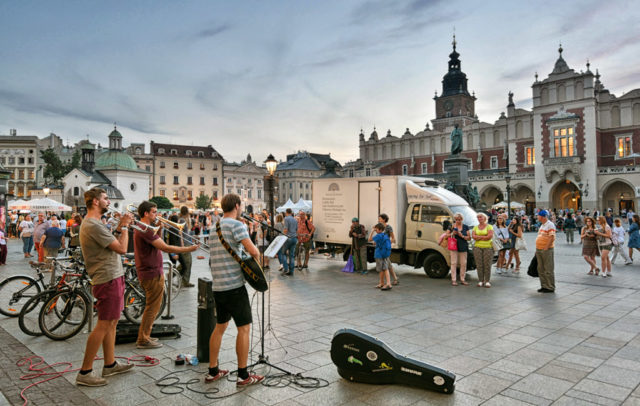
As usual, there’s plenty of live music. A ragtag and unlikely trio — guitar, trumpet, trombone — entertains passersby.

CH16SepKrakow_078

But one thing’s missing. One time on an early visit to this square, back in the early 2000s, I heard clapping to the beat of a tinny boombox. Following the sound, I spotted a half-dozen pre-teens breakdancing on a big piece of cardboard. I mean, full-on, 1984, Electric Boogaloo breakdancing. They could barely hold a handstand for more than a second…but they were determined. There was something so hopelessly unhip, so disarmingly corny about it all. They charmed me so much that I even mentioned them in my guidebook.

With each visit, at some point I’d pass those breakdancers, busking for tips. They became a Kraków fixture, right up there with St. Mary’s and the hejnał. But on this trip, making my final pass through the square, I’m feeling nostalgic and thinking that surely those guys have moved on by now. They must have real jobs, families, obligations…and happy memories of breakdancing on the Main Market Square.

But then, from across the square, I hear Gloria Estefan’s “Conga” start to play. A crowd is gathering. Could it be? Making my way over, double time, I see — sure enough — those same kids, all growed up, executing flawless windmills and hand glides and headspins under St. Mary’s towers. Their sound system is better. They don’t need the cardboard. They’re now ripped, bearded, and balding. But it’s definitely them. They’ve persevered after all…in spite of the odds, they created their own niche, and filled it. (Millennials…)

CH16SepKrakow_426

Tossing a few coins into the hat, I smile and head back to my hotel. It’s been a long day — or two, actually — since I got on that plane in Seattle. But I’ve made it back to Europe. And here in historic Kraków, some things never change.