These days, more and more travelers are investing serious time and money in top-end fine-dining experiences across Europe. And on a few special occasions, I’ve jumped on this bandwagon — spending more on a meal than my hotel room cost.
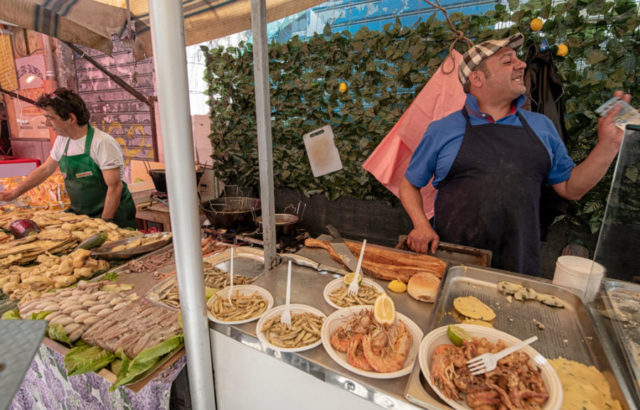
I proudly consider myself a foodie. But I define “foodie” broadly: I’m simply someone who considers food an integral part of any culture — and any travel experience. On the other hand, I’m also thrifty, so splurging on a fancy meal doesn’t come naturally to me. I strongly believe that “foodie” doesn’t have to mean “expensive.” Some of my favorite culinary experiences in Europe have come with the lowest price tags, from grazing on street food in Palermo to my €25 day in Ljubljana.
And yet, a fine-dining extravaganza certainly deserves a place on the spectrum of foodie experiences. Here’s one traveler’s take on what it’s actually like to dine at a world-rated restaurant — designed to help you decide whether that experience deserves your time and money.

Finding, Booking, and Dining at High-End Splurges
Part of the fun of fine dining is doing your homework — figuring out which place deserves your splurge budget. I’m a devotee of Netflix’s exquisite food documentary series Chef’s Table — and after every episode, I’m ready to book a plane ticket. (Documentary Now! — also streaming on Netflix — did a genius parody of this type of foodie tourism.) And the Restaurant Magazine 50 Best Restaurants list has — among a younger generation of foodies — eclipsed Michelin stars as an indicator of the world’s best (or, at least, buzziest) eateries. Learning about a restaurant through these sources can make booking and anticipating a reservation a highlight of your trip preparation.
But that’s the first trick: Getting a table. Restaurants that are really hot book up many months in advance. If you have a place in mind, as soon as your dates firm up, check their website for the reservation policy. Many release blocks of reservations two to three months in advance — and once they’re gone, they’re gone. It’s not unusual for foodies to set an alarm for midnight Copenhagen time, three months to the day before their visit, to try to book that elusive table.
So, your table is booked, and you’re ready to drop $200 per person on (what had better be) a life-altering culinary experience. If you’re like me, you may need to spend a little time rationalizing that high price tag. I’m not going to pretend I’m some sort of a bumpkin, but I must admit, until a few years ago, I was skeptical about fine dining. For a long time, I believed that once you reach a certain cost threshold for an upper-midrange restaurant (say, $40 or $50 a person), how could it really get that much better? At a certain point, you’re just throwing good money after bad. But a few recent dining experiences have changed my thinking.

On a trip to the Basque Country in northern Spain, my wife and I booked a table at what was, at the time, the “16th top-rated restaurant in the world,” Azurmendi. Driving through the verdant Basque hills to our midday reservation, we were debating whether lunch for two could really be worth a total tab of over $300 and several hours of our precious Spanish vacation.
But when we walked in the door, we began to understand that when you go to a world-rated restaurant, it’s not just a meal — it’s an experience. If you conceptualize this meal as part of your “food budget,” it’s outlandish. But if you think of it as an “experience”…well, that may be justifiable. We’ve spent $300 on other experiences in our travels, and felt it was a good value: prime tickets for a hit musical on Broadway or the West End, or a home playoff game for my beloved Denver Broncos, or a live concert of a huge-name musical act, or a sightseeing flight through Slovenia’s Julian Alps. And in an age where chefs are attaining celebrity at a level on par with rock stars and athletes…well, that’s what splurging is for.
As we arrived for our reservation at Azurmendi, we were invited into the leafy conservatory and given a little picnic basket filled with creative amuses-bouche.

Then, in the greenhouse, they showed us where some of the herbs and produce were grown; more amuses-bouche were creatively tucked among the plantings.

Then they took us into the busy kitchen, where an army of chefs and cooks — outnumbering the diners — were scurrying around with great precision, directed by the confident chef, Eneko Atxa. Observing this controlled hubbub, we were offered yet another amuse-bouche.

About 30 minutes and a light meal after we’d arrived, we were finally shown to our table. The rest of the meal was a fine experience, and taken together, that’s just what it was: an experience. I’ll admit it’s not The Best Meal I’ve Ever Eaten, but it was certainly one of the most interesting and entertaining.

Chef Atxa elevates Basque cuisine to an astonishing degree. Each dish was an adventure…an experiment in intensely focused flavor. Cauliflower, fried eggs, and truffle, composed like a surrealist painting. Natural spider crab, emulsion, and infusion — a super-concentrated taste of the sea that left my mouth tingling for several courses. Slightly spicy fried suckling pig and three Basque cheeses in three textures, which was…exactly as described.
Leaving the restaurant, we agreed that — assuming travel is worthy of the occasional splurge — it was $150 per person well-spent. And we certainly remember it more vividly than any other meal on that trip.

My favorite fine-dining experience took place in the remote Slovenian countryside, at Hiša Franko, owned by 2017’s highest-rated female chef in the world, Ana Roš. Ana was profiled on Chef’s Table, which we watched not once but twice before eating there. Imagine our delight when we walked in the door for our reservation, and there stood Ana herself at the maître d’ station. She took our coats, showed us to our table, and brought us bread, while we stuttered our greetings, star-struck and tongue-tied.
But that was just the beginning of a marvelous dining experience. Ana Roš lacks the theatricality of Azurmendi…but she doesn’t need it. It sounds like a cliché from a cooking-competition TV show, but over the course of her degustation menu, she achieved what every great chef aspires to: Through her food, she told a story about herself, and about the place she comes from. The progression of dishes felt like journeying through the pastures, rivers, and mountains of the Slovenian countryside all around us. Her food tasted like Slovenia. Her food could only be rooted in that place, and could only have been made by her. It was a culinary revelation the likes of which I have never had before, or since. And that’s why — for me, at least — it’s worth it.

Fine Dining for Dummies
I’m still new enough to this fine-dining scene to find its customs quirky and fascinating. If you haven’t experienced a fine-dining restaurant, let me walk through what to expect — tongue planted firmly in cheek.
On arrival, you’ll be greeted warmly and seated. Your purse even gets its own little stool. Everything operates with exacting precision, yet the pacing and atmosphere are insistently relaxed.
You’ll be handed a menu, but normally that’s something of a ruse. The choice is simple: Do you want the smaller tasting menu, the bigger tasting menu, or — at the finest places — the gargantuan tasting menu? I’ve never ordered anything but the smallest option, and I’ve never waddled out of a fine-dining restaurant anything short of full-to-bursting. I imagine the full-blown option would require serious consideration of the “boot and rally” strategy.

In addition to your food, you can choose whether to add the wine pairings. And if you’re going to commit to a top-end meal, just go ahead and do the wine pairings. A good, mid- to upper-mid-range restaurant stocks a nice variety of local wines, and the server can help you narrow down a glass or bottle to your taste. Well all know the rules of thumb: red wine for beef, white wine for fish. But a fine-dining restaurant takes things to an entirely different level. Your sommelier is a master at meticulously pairing wines to the nuances of each course, in a way that’s mutually beneficial to both wine and food. When properly paired, it’s nothing short of astonishing to take a sip of wine, then take a bite of food, then take another sip of wine — and see how much both flavors have changed.
The meal begins with a tiny appetizer called an amuse-bouche, which loosely translates as “palate stimulator.” (The plural is — and yes, I looked this up — amuses-bouche, which may be the most perfectly pretentious word I have ever come across.) The amuse-bouche is a sort of culinary overture — the chef is firing a warning shot across your taste buds about what’s to come. It’s a clever way for a talented chef to show off, while sneakily doubling the number of courses. While low-end high-end restaurants greet you with one amuse-bouche, the fanciest ones trot out a progression of a half-dozen or more.
By the time you make it through all of the amuses-bouche, you’re pretty much full. And then it’s time for the first course. Don’t worry — these meals usually span over three hours, sometimes four, so by the time the main courses arrive you’ll already have digested most of your amuses-bouche. Still…pace yourself, come hungry, and wear your roomy “Thanksgiving pants.”
Speaking of pacing yourself, let’s talk about the bread: Don’t fill up by gobbling the bread the moment it hits the table. This seems painfully obvious. However, it’s far more difficult than it sounds, because at a great restaurant, the bread is fiendishly delicious — spongy and warm inside, crusty and slightly charred outside. It is not an exaggeration to say that at more than one of the high-end meals I’ve had, the bread was one of the best dishes to hit the table. So we’re in agreement: Go ahead and eat some of the bread. Just…pace yourself, OK?
There will be a progression of courses. Sometimes you’ll have a list to follow along; other times, you’ll just take it as it comes. With each course, your server has prepared a brief lecture, explaining the ingredients, provenance, and technique represented. Cloches will be lifted with great ceremony, billowing rich-smelling smoke, and little teapots of broth will be poured over the dish at the last moment. Wait patiently until you’re sure it’s done. Then, only after she walks away, it’s safe to dig in.

A word about your server: You’re spending a lot of time together. And, without realizing it, you’ll slowly grow to be very fond of your server. He’s not just bringing you food, and scraping your crumbs off the table, and changing out your silverware from a little tray before each course, and deftly picking up your napkin with two forks held like chopsticks. He is your partner, your guide, your sherpa in this culinary adventure. He is your wingman.
You will like some of the courses. You will not love some of the courses. That’s OK. These chefs are in the business of pleasing, surprising, and sometimes challenging their diners. Barring real allergies or vegetarianism, I have an ethic of going along with whatever’s on the menu. In the hands of Ana Roš, even a raviolo filled with goat brain puree is unexpectedly delicious. Personally, I am not a fan of foie gras or sea urchin. (Yes, I realize this admission is severely damaging to my foodie street cred. What can I say? The taste buds want what the taste buds want.) But if a great chef wants to prepare it for me, I will try it. And I will usually love it…usually.
As an aside, a phrase that I don’t hear nearly enough in everyday life is: “And now, we have an intermezzo before the final main course.”
Again, pace yourself. Thanksgiving pants. And, by the way, where does one buy one of those little crumb combs for the tablecloth?
At some point, probably late in the meal, the chef will appear from the kitchen and begin circulating among tables of star-struck foodies. This is like getting a backstage pass for a Springsteen concert. If you are familiar with the chef, be prepared to get flustered and say something stupid…or to stammer dumbly, saying nothing at all. If you have been dragged to this meal by a foodie spouse or relative, you will have no idea why this is such a big deal.

No matter how good the meal is, there is a moment of relief and accomplishment when you realize that you have finished the final main course. You made it! It’s all downhill from here. You always have room for dessert. (I have a relative who insists that, no matter how full she is from dinner, she has a separate “dessert stomach” that is always empty. You will need it.)
Another phrase I don’t hear nearly enough in everyday life is: “And this is a little pre-dessert…”
There is probably not one dessert, by the way. There are probably two, or three, or four.
And then, when you think you’re really finished, here comes yet more desserts: a tray of little sweets, sometimes accompanying coffee. They call these “petits-fours,” which is misleading, because there are usually more like six or seven.
So, if you’re keeping track — and if you count all of the little amuses-bouche and petits-fours and intermezzi, and, of course, that heavenly bread — a “five- or six-course meal” can be more like 20 or 25 different dishes. That’s worth some consideration in the big-picture analysis of whether it’s a good value.
When it’s all over, you’ll manage to disguise your shock when you glance at the bill, then pay it happily. That server that you have forged a bond with over the last three hours? She’ll be getting an American-sized tip, if not a weepy goodbye hug. Then you’ll head out the door, somewhere between a waddle and a teeter (depending on whether you did the wine pairings).
So… Is It Worth It?
At the end of the day, that’s the real question, isn’t it? Can any meal really be worth such a huge investment?
My short answer: Yes. The longer answer: It depends…on the restaurant, and on the diner.
If you are a person who prioritizes food, in your life and especially in your travels…it’s probably worth it. If you can name more than five celebrity chefs (Guy Fieri doesn’t count)…it’s probably worth it. If you can conceptualize your meal as a “travel experience” rather than “food” (in the same wedge of the imaginary budget pie as scenic picnics and ice-cream cones)…well, then, it’s probably worth it.
If none of these applies to you, then maybe you should skip it. But don’t rule it out. Remember that ultimate foodie meal I enjoyed at Ana Roš’ Hiša Franko in Slovenia? My wife and I dragged my in-laws to that one. They were skeptical, but game to give it a try. And by the end of the meal, they were raving about the experience even more than we were. They even liked the goat brain puree.
If, on the other hand, you simply can’t afford it, that’s OK. Remember that there are reasonably priced alternatives. Again, “foodie” does not have to mean “expensive.”
…Or….you could just stay in hostels, and let your taste buds travel first class.