My co-author and frequent collaborator, Cameron Hewitt, is well-traveled, smart, and insightful. And, while he and I are in perfect sync in our travel styles and priorities, he gives voice to the next generation of "Rick Steves travelers." Join me in enjoying his reports right here. —Rick

R.I.P. Imre Nagy: The Death of Rational Governance in Hungary

UPDATE (April 3, 2022): I originally wrote this blog post in January of 2019, when news broke that a beloved statue of anti-communist reformer Imre Nagy had been removed, under cover of darkness, from its prominent position in Budapest. This post offers a sort of “shapshot” of the situation at that time. Flash forward over three years, and  now Hungary faces a choice: In today’s elections, they have an opportunity to remove from office the man who removed that statue from their capital. If you’re seeing news of high-stakes Hungarian elections and wondering what all the fuss is about, I hope this offers some context, from the perspective of an American traveler (heavily influenced by his Hungarian friends).


Well, they’ve gone and done it. They’ve taken down my favorite statue in Budapest. Godspeed, Imre Nagy.
It’s a crazy time in Hungary. Let’s face it: It’s a crazy time just about everywhere — with Trump, Putin, and Brexit rewriting the rules of what’s “normal.” But it’s particularly crazy in Viktor Orbán’s Hungary, where even the great anti-communist crusaders of the Cold War are finding themselves, suddenly and inexplicably, on the wrong side of history.

Just a few weeks ago, I turned in my updated files for the upcoming sixth edition of our Rick Steves Budapest guidebook. This morning, I had to rewrite large sections of the book because of all the changes taking place in Hungary.

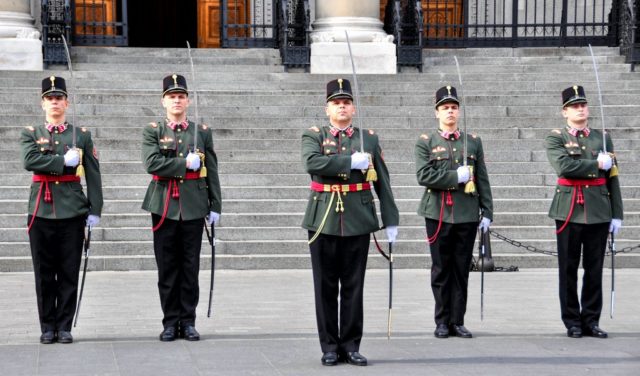
If you’ve been paying attention to the news, you know that Hungary’s prime minister, Viktor Orbán, and his far-right, nativist political party, Fidesz, are continuing their campaign to remake Hungary in their own image. On a previous visit to Budapest, in 2016, I posted about some of those changes — from a statue of Ronald Reagan that had been erected right next to a Soviet Army memorial; to a new monument honoring “victims of fascism” that conspicuously ignored the crimes of the Nazi-allied Hungarian government; to the patriotic new “Changing of the Guard” ceremony on Orbán’s glitzy, fascist-style square behind the Parliament; to the Transylvanian flag that flies on the Parliament building in place of the EU flag.
On that 2016 visit, a local friend asked about the job market in Seattle. She’s seriously considering moving her family stateside to escape what she perceives as her society crumbling around her. Her teenagers now learn history from textbooks written by politicians — the same Fidesz-penned books that are required to be spoon-fed to every student in Hungary. Fidesz enjoys revising Hungarian history as much as they enjoy keeping refugees and immigrants out of their country.

The intervening two and a half years have felt like an eternity. And even in just the last couple of months, the list of Orbán’s offenses has grown. Here are just a few of the changes in Hungary in the several weeks since I was there updating my book:

George Soros — yes, that George Soros, favorite punching bag of the American right — founded a university in his hometown of Budapest in 1991. As Hungary and its neighboring countries were just emerging from Soviet rule, Central European University offered students a place to study at a US-accredited institution, allowing them a foothold in the greater academic world of the West. CEU grew to become highly respected. But Soros — who is as loathed by Fidesz as he is by Fox News — is on the outs in today’s Hungary. And in December, CEU announced they will relocate to Vienna, after failing to meet Fidesz’s draconian new requirements to operate legally in Hungary.

Also in December, Fidesz announced a new law to roll back overtime protections for workers. (Because of Fidesz’s restrictive immigration stance, and because bright young Hungarian workers have left the country in droves, Hungary suffers from a labor shortage. Who could have predicted it?) This new policy — nicknamed the “Slave Law” — has spurred widespread protests. Even many Fidesz supporters are criticizing a government ostensibly dedicated to “family values” effectively requiring citizens to work longer hours.

Meanwhile, Viktor Orbán has finally moved into his over-the-top new palace, up on Castle Hill. Orbán grew tired of living among the commoners, so he evicted the National Dance Theater from their home near the old royal palace and renovated their building into a plush new residence for himself. My Budapest friends have been grumbling about this since it was first announced a few years back — “He thinks he’s better than us! He wants to be up on the mountaintop, looking down upon all his subjects.”

Worst of all, just a few days ago, I received an email from my Budapest friend, confirming that the rumors she’d told me in September have now come true: A beloved statue of the great communist reformer, Imre Nagy, which stood for more than 20 years facing the Parliament building, has been removed by Fidesz authorities. She wrote, “It is a sad day for many of us here!” (It’s worth noting that Budapesters are connoisseurs of monuments. The city is graced with more than its share of memorable statues, from whimsical to poignant. )

Imre Nagy (pronounced “IHM-reh nodge,” 1896-1958), now thought of as an anti-communist hero, was actually a lifelong communist. In the late 1940s, he quickly moved up the hierarchy of Hungary’s communist government, becoming prime minister during a period of reform in 1953. But when his proposed changes alarmed Moscow, Nagy was quickly demoted.

When Hungary’s 1956 Uprising broke out on October 23, Imre Nagy was drafted (reluctantly, some say) to become the head of the movement to soften the severity of the communist regime. Because he was an insider, it briefly seemed that Nagy might hold the key to finding a middle path between the suffocating totalitarian model of Moscow and the freedom of the West.

Some suspect that Nagy himself didn’t fully grasp the sea change represented by the uprising. When he appeared at the Parliament building on the night of October 23 to speak to the reform-craving crowds for the first time, he began by addressing his compatriots — as communist politicians always did — with, “Dear comrades…” When the audience booed, he amended it: “Dear friends…” The crowd went wild.

But the optimism was short-lived. The Soviets violently put down the uprising, arrested and sham-tried Nagy, executed him, and buried him disgracefully, face-down in an unmarked grave. The regime forced Hungary to forget about Nagy.

In 1989, when communism was in its death throes, the Hungarian people rediscovered Nagy as a hero. His body was located, exhumed, and given a ceremonial funeral at Heroes’ Square. (It was also something of a coming-out party for Viktor Orbán — yes, the current prime minister — who, as a twentysomething rebel, delivered an impassioned speech at the ceremony.) Nagy’s symbolic re-burial is considered a pivotal event in that year of tremendous change.
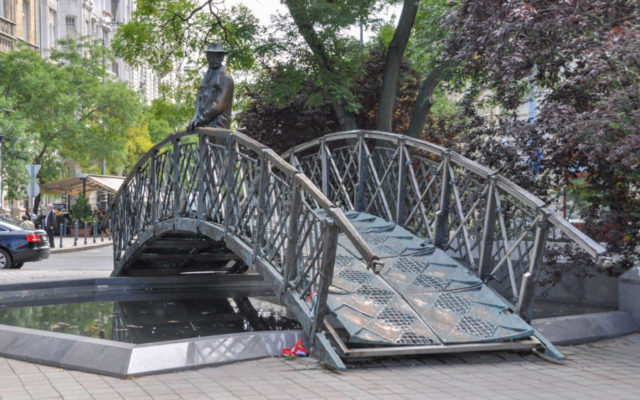
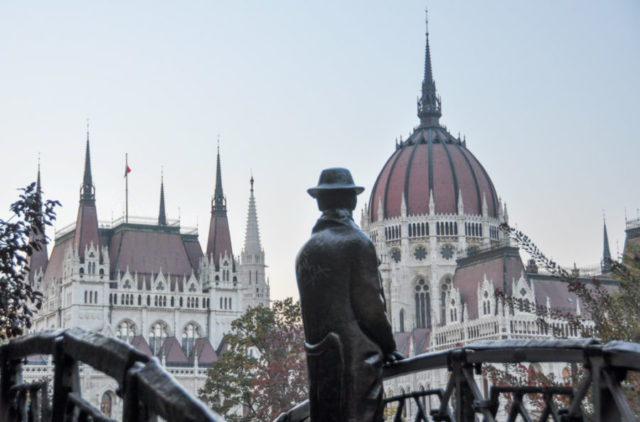
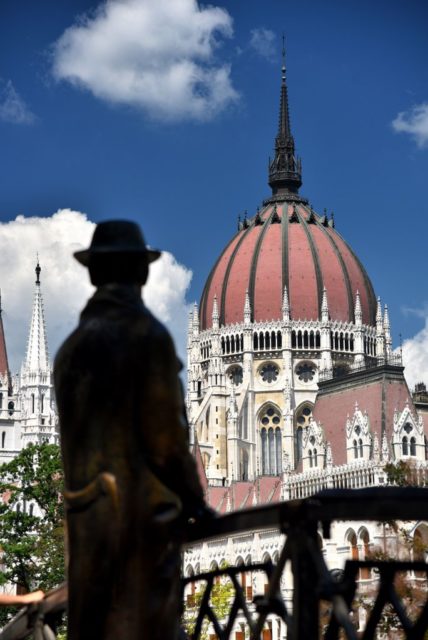
The Nagy monument near the Parliament, erected in 1996, has long been one of my favorites in all of Europe. Its design was poignant: Nagy stood upon a bridge, representing his own political philosophy, which sought common ground between the stifling communism of the USSR and the capitalist free-for-all of the West. The bridge itself was made of treads from Soviet tanks — like the ones used to put down the 1956 Uprising.

Nagy’s face wore an expression not of defiance or dominance, but of inquisitive compassion. He looked across the square at the towering red dome of the Hungarian Parliament, symbolically keeping an eye on the government.
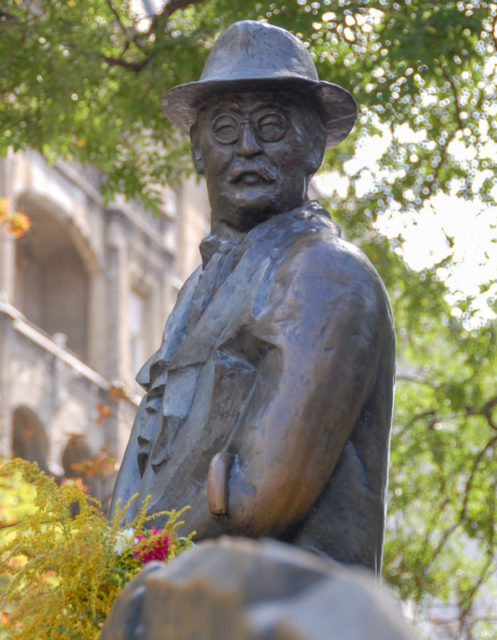
But now that statue is gone — removed with little warning and zero fanfare, in the middle of the night, just two days after Christmas. Viktor Orbán — who, let’s not forget, made his name lauding Nagy — has apparently decided to unilaterally reverse the rehabilitation of Nagy’s image. Fidesz claims that they are moving the statue to a different (and decidedly less prominent) location, on Jászai Mari tér, near Margaret Bridge. But no preparations on that site have taken place, leaving open the possibility that Nagy will again be brushed into the dustbin of history.

As someone who passionately loves Budapest, this worries and saddens me. It should worry and sadden you, too. Removing the statue of a gentle, heroic man who sacrificed his life to improve the lot of the Hungarians is a clear sign that Orbán believes history is open to his individual interpretation.

Let’s be clear: We’re not talking about removing Confederate flags or statues of Robert E. Lee, which are broadly offensive symbols of racism and slavery. There’s nothing offensive about Nagy to the vast, vast majority of Hungarians, who view him as a beloved figure. He symbolizes sacrifice in the face of oppression, and the courage to rise up for what’s right. Removing the Nagy statue would be more like taking down a statue to Martin Luther King, Jr., because of some obscure political beef.

The only Hungarians offended by the image of Nagy are communist sympathizers longing for a return to the darkest days of Stalinism. And, it seems, Viktor Orbán. It’s rarely constructive to psychoanalyze a despot, but it’s difficult to imagine why Orbán has it in for Nagy. He claims his goal is to return the appearance of the square to its pre-communist, pre-WWII glory days. Why, then, is Orbán erecting brand-new statues even as he’s taking this one away? Surely the truth is more deeply rooted. For one thing, because Nagy’s historical ties to communism place him on the left, Fidesz simplistically views him as an ideological enemy. And perhaps, as he continues Hungary’s slide toward totalitarianism, Orbán is uncomfortable with celebrating an upriser on Hungary’s grand Parliament square.

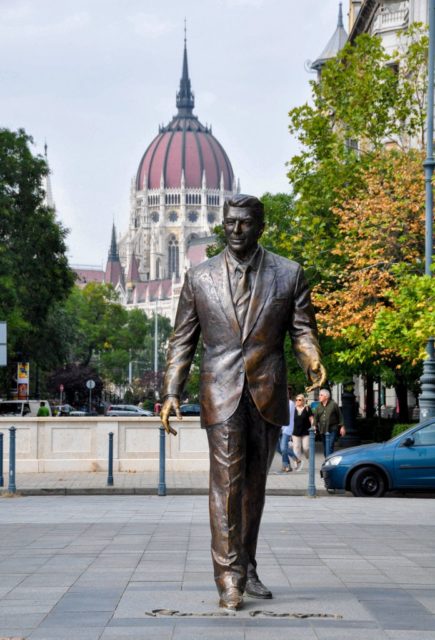
Standing just a few steps away from the (now-removed) Nagy statue is Orbán’s statue of Ronald Reagan. Reagan and Nagy, fellow Cold Warriors, would have found much common ground. But in Orbán’s topsy-turvy, upside-down world, only one deserves to stand near the Parliament.
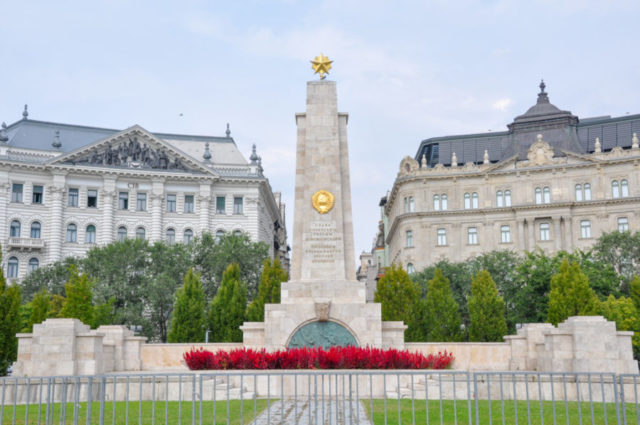
Adding insult to injury, that old memorial to Soviet soldiers still stands next to Ronald Reagan. To be entirely clear here: Fidesz has removed a statue of a freedom fighter, but has chosen to leave in place a monument to an army that “liberated” Hungary in order to occupy it for four and a half decades.
Someone once said, “May you live in interesting times.” But this is simply exhausting. Just a few years ago, someone who was executed by the communist authorities for his brave protest would be considered an unqualified hero. But in Viktor Orbán’s Hungary, nothing makes sense anymore. The next time I visit Budapest and walk past the Parliament, I’ll miss seeing Nagy’s comforting form, keeping a watchful eye on things. Rest in peace, Imre Nagy. And rest in peace, rational governance in Hungary.
10 European Discoveries for 2019

Looking back on my recent travels in Europe, two big themes stand out: Popular places just keep getting more popular (and more crowded) — and some of the most rewarding places to travel are neither popular nor crowded.

As your travel dreams take shape for 2019, consider mixing things up with a few underappreciated gems. For starters, consider this list of alternatives to the super-famous, super-crowded tourist biggies. My New Year’s resolution in 2019 is to remember that just a little more effort to get off the beaten path can reap huge rewards.


Gdańsk, Poland

For years, Gdańsk has had my vote for Europe’s best-kept secret. But its time has arrived — and I’m determined to let the cat out of the bag. Gdańsk has always been a historic diamond-in-the-rough. But now it’s also stunning and fun. Glittering gables have been scrubbed clean, the exuberantly colorful streets bustle with hip microbreweries and third-wave coffee shops, and Oslo-style high-rises and sleek embankments are sprouting all along the long-deserted, WWII-scarred Granary Island — creating a brand-new waterfront people zone in the heart of the city. Today’s Gdańsk is hitting that perfect sweet spot: fascinating and entertaining, but without all of the crowds of more famous places like Kraków and Prague. In short, Gdańsk embodies everything I love about travel. Find out more about Gdańsk here.


Palermo Street Markets, Sicily

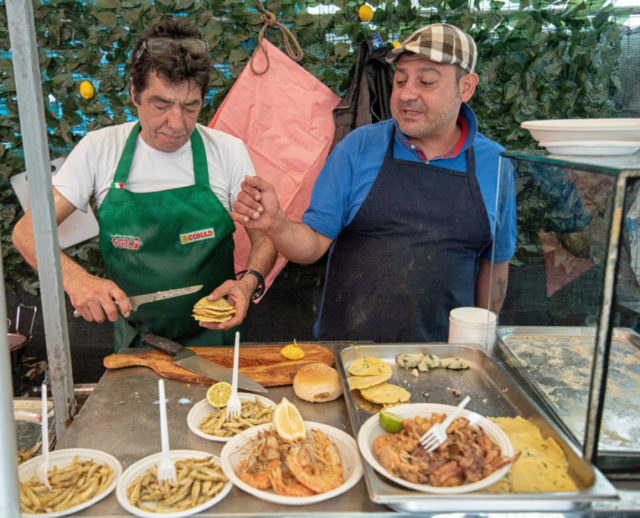
Among Italians (and other foodies), Palermo is synonymous with street food. And its three sprawling street markets — Ballarò, Capo, and Vucciria — let you delve into gritty Sicilian culture in a way that engages all the senses. Taste something adventurous — like pani ca’ meusa, a pillowy bun stuffed with spleen, lung, and other organ meat — or stick to an arancina, a deep-fried ball of saffron rice and meat sauce. Best of all, the whole time you’re browsing these gut-bombs, you’re fully immersed in the energetic hubbub of Sicilian urban life — watching the Palermitani greet old friends, listening to the urgent musicality of the vendors’ sales pitches, and smelling all that sizzling and frying goodness (plus a full spectrum of other odors). Find out more about Palermo street markets here.


Collioure, France

My favorite place to hit the beach in Europe is this little French Mediterranean town hemmed in by green hillsides and rocky cliffs, just a stone’s throw from the Spanish border. In Collioure, beefy bastions protect five separate beaches, each with its own personality — swimming, sunbathing, windsurfing, kiddie beach, and so on. The historic town center is a Crayola stage set of pastel houses, gnarled plane trees, climbing vines bursting with flowers, and just enough quality restaurants to keep you well-fed on vacation. This is the kind of place where in-the-know French sophisticates on a budget — seeking relaxation rather than glitz — head for an unpretentious break. Find out more about Collioure here.


Glacier Lagoons and Diamond Beach, Iceland

Beyond the touristy sights of Iceland’s well-trod South Coast, about four hours from Reykjavík, sit two dramatic glacier lagoons: Jökulsárlón and Fjallsárlón. Formed where tongues of great glaciers lap at serene pools, the lagoons bob with giant chunks of centuries-old ice. And just downriver from Jökulsárlón is “Diamond Beach,” where those icebergs wash up on a black-sand beach in the last stage of their slow-motion journey to the open Atlantic. While there are plenty of reasons to invest an entire week in doing the full “Ring Road” drive around the perimeter of Iceland, these glacier lagoons may just be reason enough to extend your Icelandic layover. Find out more about Iceland’s glacier lagoons and Diamond Beach here.


Lisbon’s Chiado District, Portugal

Exploring Lisbon recently to beef up the coverage in our Rick Steves Portugal guidebook, my favorite area was the steep, upscale residential zone called the Chiado, which swirls like a peaceful eddy, surrounded on all sides by the churn of tourism. The Chiado has diamond-in-the-rough Art Nouveau storefronts; breezy, tree-shaded squares with inviting al fresco kiosk cafés (a Lisbon specialty); some of Lisbon’s most enticing foodie finds; and Lisbon’s most appealing shopping zone, around the Príncipe Real Garden. The next time I go to Lisbon, there’s no doubt I’ll hang my hat in the Chiado. Find out more about the Chiado District here.


Ukraine

I visited Ukraine this year for the first time…and it was a revelation. Lovely Lviv — with its cobbled old town, Baroque churches, thriving coffee culture, kitschy theme restaurants, and cozy main square — is a time capsule from a simpler age of tourism. The capital, Kyiv, feels like a more manageable, more colorful Moscow on a human scale — a mix of stately Soviet Gothic architecture, vibrant Art Nouveau townhouses, lush parks with stirring views, and gold-domed Orthodox churches on every corner. From Kyiv, it’s an easy day trip to one of the most powerful and thought-provoking sites anywhere in Europe: Chernobyl. And prices are shockingly low: A high-end dinner for two for $25, an Uber ride across town for $4. How can such a huge country (Europe’s second-biggest) be so overlooked by travelers? Beats me. But for now, I am more than happy to be in on this particular secret. Find out more about Ukraine here.


The “Dutch Corridor”: Leiden, Delft, and Rotterdam, Netherlands

I love Amsterdam. But in recent years, it has become the poster child for “overtourism.” Sure, visit Amsterdam — but then hop on the train to a trio of towns that line up just to the south. In about half an hour, you can hop off in Leiden — a charming, sleepy, historic university town that feels like Amsterdam without the tourist-baiting sleaze. Back on the train, and just 20 minutes later, you’re pulling into Delft — the hometown of Vermeer, exquisite blue pottery, and one of the biggest, stateliest squares in the Netherlands, crowned by the burial church of the Orange dynasty. And finally, just 10 minutes farther is Rotterdam — the urban, modernist counterpoint to time-passed Leiden and Delft. For a day — or several days — of Dutch contrasts, invest just one hour in riding this train from downtown Amsterdam. Find out more about the “Dutch Corridor” here.


Isle of Skye, Scotland

If you’re visiting the Scottish Highlands, break out of the Inverness-Loch Ness-Oban rut and add a couple of days for the dramatically scenic, fun-to-explore Isle of Skye. Settle into the village of Portree, with its rainbow-painted harbor, and road-trip across the isle: the Trotternish Peninsula, with dragon’s-tooth mossy mountains; Talisker Distillery, dispensing peaty drams of whisky; Dunvegan Castle, providing an intimate peek inside the lived-in home of an aristocratic clan that’s seen better days; hiking areas with names like “The Fairy Glen” and “The Fairy Pools”; and much more. If I had to choose just one place to get an idyllic taste of the Scottish Highlands and Islands, Skye would win by a mile. Find out more about the Isle of Skye here.


Berlin’s Kreuzberg, Germany

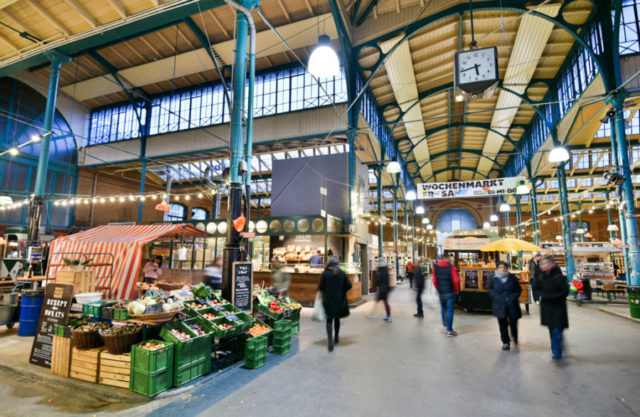
Kreuzberg has long been known as Berlin’s “Turkish immigrant neighborhood.” But it’s also so much more. Once surrounded on three sides by the Berlin Wall — ground zero for squatters, draft dodgers, punks, and protesters — Kreuzberg is now at the vanguard of Berlin gentrification. Chasing down leads for our Rick Steves Berlin guidebook, I discovered that Kreuzberg is made up of many micro-neighborhoods called Kieze, each with its own distinct personality: Kottbusser Tor, with its vibrant Turkish Market; the Graefekiez, at the intersection of foodie, yuppie, and affordable; Markthalle Neun, Berlin’s super-trendy food hall; and the Bergmannkiez, with a swanky shopping zone, a lively market hall, and famous food stands with lines around the block. You could have a fun and varied visit to Berlin without ever leaving Kreuzberg. Find out more about Kreuzberg here.


Salamanca, Spain

OK, call this one a sentimental favorite. I spent a semester abroad in this Spanish university city, twenty-some years ago. Returning for the first time in 2018, I finally figured out why Salmantinos are considered a bit snobby: because they live in one of Spain’s nicest towns. Salamanca’s Plaza Mayor is the undisputed best square in Spain — slathered with reliefs of kings, queens, professors, and poets, ringed by cafés, and infused with an ambience that delicately mingles both European elegance and local character. From the square, Salamanca’s pedestrian zone cuts through the heart of town to the university district, where lemony sandstone buildings are carved with imagination-stoking details. Perhaps best of all, Salamanca sits just beyond easy day-tripping reach of Madrid. That means that, unlike slammed Segovia and touristy Toledo, Salamanca feels like you’re in on a Spanish secret. Find out more about Salamanca here.


What are your favorite European discoveries?

2019 Discovery: Berlin’s Kreuzberg, Germany

Crowds got you down? This post is part of a series of 10 European Discoveries for 2019 — off-the-beaten-path gems where you can escape the tourist rut and find a corner of Europe all your own.

Kreuzberg has long been known as Berlin’s “Turkish immigrant neighborhood.” But it’s also so much more. Once surrounded on three sides by the Berlin Wall — ground zero for squatters, draft dodgers, punks, and protesters — Kreuzberg is now at the vanguard of Berlin gentrification. Wall? What wall?

Chasing down leads for our Rick Steves Berlin guidebook, I discovered that Kreuzberg is made up of many micro-neighborhoods called Kieze, each with its own distinct personality. Ride the U-Bahn to Kottbusser Tor (“Kotti” to Berliners) on a Tuesday or Friday and stroll to the riverside Turkish Market, a commotion of sights, sounds, and smells reminiscent of an Istanbul bazaar: vibrant rugs, piles of olives, aromatic teas, and sizzling food carts, along with everyday items like clothes and kitchenware. From there, simply explore.

Just across the canal, the Graefekiez lives at the perfect intersection of foodie, yuppie, and affordable; the nearby Paul-Lincke-Ufer embankment is home to some of Berlin’s most cutting-edge restaurants. A few blocks away, Markthalle Neun is Berlin’s super-trendy food hall, with stalls selling gourmet tapas, tofu sandwiches, and Berlin-style meatballs (Buletten). The Bergmannkiez features a swanky shopping zone, a lively market hall, and famous Gemüse Kebab and Currywurst stands with lines around the block. And the Wrangelkiez is jammed with creative bars and restaurants, from microbrews to traditional Georgian food.

You could have a fun and varied visit to Berlin without ever leaving Kreuzberg.


The second edition of our Rick Steves Berlin guidebook — hot off the press —includes a brand-new self-guided walking tour of Kreuzberg.

For nine more suggestions on where to get away from the crowds, check out my 10 European Discoveries for 2019.

2019 Discovery: Isle of Skye, Scotland

Crowds got you down? This post is part of a series of 10 European Discoveries for 2019 — off-the-beaten-path gems where you can escape the tourist rut and find a corner of Europe all your own.

Most visitors to the Scottish Highlands do a predictable two- or three-day loop, hitting Inverness, Loch Ness, Glencoe, Oban, and maybe a few Outlander sights. But adding another couple of days buys you time for dramatically scenic, fun-to-explore Skye. While not quite “undiscovered,” the Isle of Skye demands — and rewards — a little extra effort to reach.

Settle into the village of Portree, with its rainbow-painted harbor, and use it as a home base for road-tripping across the isle. The Trotternish Peninsula, with dragon’s-tooth mossy mountains that have inspired sci-fi movies, is speckled with sleepy crofting communities whose humble stone cottages face million-dollar sea views. Talisker Distillery offers tours and dispenses peaty drams of whisky. Dunvegan Castle provides an intimate peek inside the lived-in home of an aristocratic clan that’s seen better days. Peat bogs, iconic views of bald Scottish mountains, and hiking areas with names like “The Fairy Glen” and “The Fairy Pools” round out Skye’s appeal.

If I had to choose just one place to get an idyllic taste of the Scottish Highlands and Islands, Skye would win by a mile.


Planning a trip to Scotland? Here’s how to get ready:

1) Check out my top 10 tips for traveling in Scotland
2) Pick up a copy of our Rick Steves Scotland guidebook.
3) Watch Rick’s three brand-new TV episodes on Scotland: Glasgow and Scottish Passions, Scotland’s Highlands, and Scotland’s Islands.

And for nine more suggestions on where to get away from the crowds, check out my 10 European Discoveries for 2019.

2019 Discovery: The “Dutch Corridor”: Leiden, Delft, and Rotterdam, Netherlands

Crowds got you down? This post is part of a series of 10 European Discoveries for 2019 — off-the-beaten-path gems where you can escape the tourist rut and find a corner of Europe all your own.

I love Amsterdam. But it’s a shame that so many travelers to the Netherlands visit only its most famous and hedonistic city. (Plus, Amsterdam has gotten so crowded that it’s becoming the poster child for “overtourism.”) Some of my favorite Dutch trips have used Amsterdam as a launch pad for touring a string of towns that line up just to the south.

Hop on the train at Amsterdam Centraal Station, and in about half an hour, you can hop off in Leiden — a charming, sleepy, historic university town that feels like Amsterdam without the tourist-baiting sleaze. Strolling Leiden’s dreamy canals, it’s easy to understand how this little burg could be called home by both Rembrandt and the Pilgrims (just before they shipped out to the New World).

Back on the train, and just 20 minutes later, you’re pulling into Delft — the hometown of Vermeer, exquisite blue pottery, and one of the biggest, stateliest squares in the Netherlands, crowned by the burial church of the Orange dynasty. Delft’s canals — wider and more workaday — are another fine place for a quintessential Dutch stroll.

And finally, just 10 minutes farther is Rotterdam — the urban, modernist counterpoint to time-passed Leiden and Delft. Rotterdam, constructed almost entirely after WWII, is the Dutch answer to Manhattan. Join an architectural bike tour to make sure you see all of Rotterdam’s wildly creative experimental architecture, from its unique “Cube Houses” development to the buildings nicknamed “The Pencil” and “The Manhole Cover”.

For a day — or several days — of Dutch contrasts, invest just one hour in riding this train from downtown Amsterdam.


Want to expand your horizons beyond Amsterdam? Be sure to check out this episode of Rick Steves’ Europe, and pick up a copy of the Rick Steves Amsterdam and Netherlands guidebook. (Or leave the planning to us, and explore the Low Countries on a Rick Steves tour.)