My co-author and frequent collaborator, Cameron Hewitt, is well-traveled, smart, and insightful. And, while he and I are in perfect sync in our travel styles and priorities, he gives voice to the next generation of "Rick Steves travelers." Join me in enjoying his reports right here. —Rick

Europe’s 10 Best Markets

What traveler doesn’t love a great European market? There are few better windows into local life than rubbing shoulders with shoppers, browsing stands piled high with colorful produce, nibbling on street munchies, and being fully immersed in the sights, sounds, and smells of the local community.

Over half a lifetime of traveling around Europe, I’ve been collecting my favorite market experiences for travelers — where you can glean some insights into local culture and cuisine, and browse for a good, local, quality meal. This is a mix of old-school covered markets, trendier food halls, and sprawling, open-air markets that take over an entire neighborhood or town. I’ve heavily skewed my suggestions to foodie options, where you’ll find dishes that are creative and interesting (rather than just fill-the-tank), while still being affordable. Happy browsing!

10. Mercado de San Miguel, Madrid, Spain

Madrid's Mercado de San Miguel

Just steps from the grand Plaza Mayor, in the heart of Spain’s capital, sits this 1915 erector-set market hall. Fully remodeled in 2009, today it’s a bustling showcase of edible Spain. Squeezing between the crowds, you’ll find only the best jamón ibérico (air-cured ham), Manchego and other artisanal Spanish cheeses, powerfully piquant skewered pickles and olives (banderillas), delectable pastries, little skillets of paella, tinned fish and seafood, brochetas (meat or seafood skewers) grilled to order, smoked salmon, sweet vermouths from around Spain, croquetas with various fillings, Mexican dishes from a Michelin-star chef, and robust Rioja wines. It’s a culinary tour of Spain, under one roof.

9. Östermalms Saluhall, Stockholm, Sweden
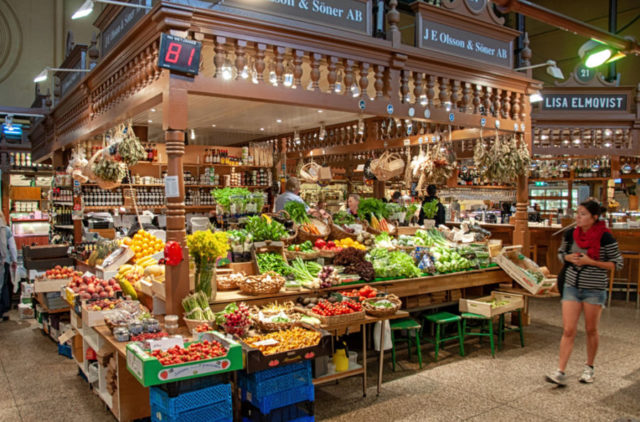
A classic. Anchoring Stockholm’s posh Östermalm neighborhood, this market hall is simply elegant. Handsome, hand-carved wooden stalls display just-so piles of produce, stacked as if posing for a still-life. The wares here feel…curated. Composed. With Scandinavian precision. There aren’t many bargains in this pricey city, but the Östermalms Saluhall is fun to browse for a high-end picnic, or to settle into a market eatery for a quality deli plate, a delicately composed salad, a sticky Scandinavian sweet roll, a splurgy seafood dish, a gourmet smørrebrød (open-face sandwich), a delectable handmade praline, or a selection of Lebanese small plates. Note: The food hall is undergoing a makeover through 2020; in the meantime, the vendors have set up temporary digs nearby.

8. Markthalle Neun, Berlin, Germany
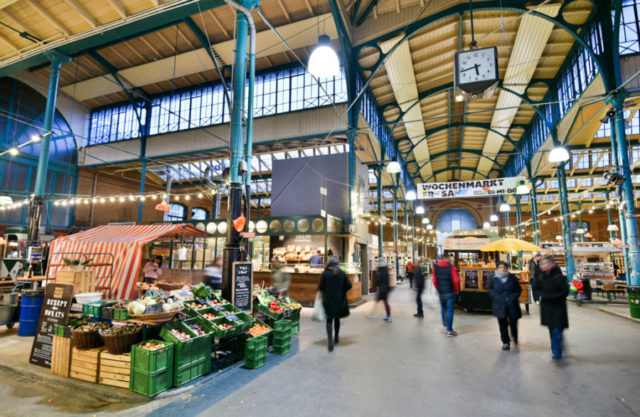
Berlin’s Kreuzberg district is home to its most cutting-edge, engaging culinary scene — and Markhalle Neun is its flagship. Tucked in a workaday neighborhood away from the tourist sights, it fills a beautifully restored 19th-century hall with greengrocers, cheesemongers, butchers, fishmongers, florists, and bakers, all with an appropriately Berlin-hipster vibe. Meanwhile, food stands sell Berlin classics like Buletten (meatballs), Stolle (open-faced sandwiches), Brezel (big doughy pretzels), and Currywurst — but also Italian pastas, French crêpes, Turkish deli meats, Spanish tapas, and even BBQ from the USA. Markhalle Neun scores bonus points for its many special events (listed at www.markthalleneun.de), including its Saturday farmers market and its “Street Food Thursday” — a beloved institution for Berliners seeking a trendy yet affordable dinner.

7. Mercato Centrale, Florence, Italy
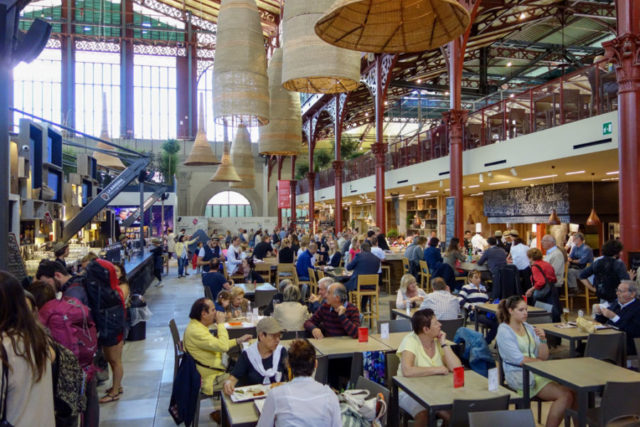
For years, I’d peek tentatively inside this cavernous market hall in the center of Florence, which felt dark and foreboding. With tattered stalls and piles of garbage out front, it felt like it hadn’t changed since the days of Vittorio Emanuele II. Then, in 2014, they converted the top floor into a high-end food circus. Just walk past the still-grubby produce stalls on the main floor, and hike up the stairs to a world of Italian taste treats: hand-rolled pastas, prizewinning prosciutto, massive steaks cooked so rare they still moo, melt-in-your-mouth panini, gourmet burgers made from Tuscany’s prized Chianina beef, rotisserie chicken, big juicy wads of mozzarella di bufala, handheld flatbread sandwiches called trapizzini, big slabs of rustic pizza, tender stewed beef cheeks, truffle-infused oils and pâtés, the rustic Tuscan bread soup called ribollita, deep-fried tasties,  cannoli and other Sicilian sugar bombs, and high-end tripe sandwiches (a Florentine classic!). Travelers smart enough to escape the tourist-gouging restaurants on the main drag retreat to this upper level — like pigeons in the rafters — to take a break from intense Renaissance sightseeing with pretty much any Italian taste treat they can imagine. Tuscany is home to many foodie finds — but this is one of the best.

6. Belvarosi Piac, Budapest, Hungary
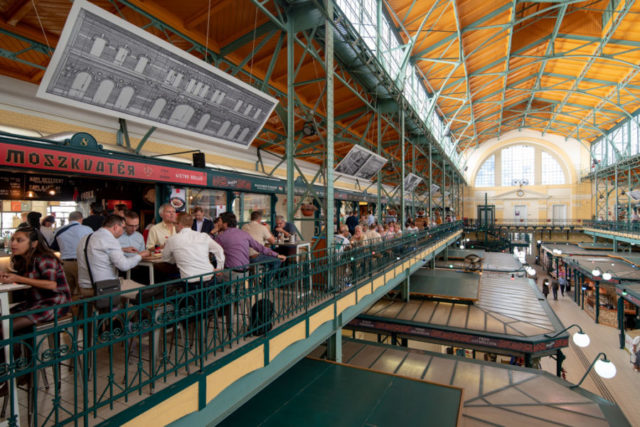
In Budapest, tourists flock to the Great Market Hall, an elegant palace of produce built around the turn of the 20th century. And you really do have to see the Great Market Hall. But don’t eat there — the “local”-seeming food counters upstairs specialize in ripping off naive tourists. Instead, head to a different, smaller, and far more authentic neighborhood market hall, also right in the city center (a couple of minutes’ walk from the Parliament): the Belvarosi Piac on Hold Street. In an atmospheric Industrial Age space that feels like the Great Market Hall’s little sibling, producers occupy the ground floor, while the upstairs is ringed by tempting high end-yet-affordable food stands: massive schnitzels at Buja Diszno(k), gourmet sausage at Lakatos Műhely, Russian grub at Moszkvatér (named for the since-rechristened “Moscow Square”), gourmet burgers at Kandalló, Thai-style khao man gai (poached chicken in garlicky sauce), and updated Hungarian classics at A Séf Utcaja. Anchoring the space, down on the main floor, is Stand 25 Bisztró. Here, celebrity chefs Szabina Szulló and Tamás Széll artfully fuse Hungarian classics with international influences (or is it the other way around?). While not cheap by market hall standards, Stand 25 a bargain for a Michelin-caliber lunch in a memorable setting (lunch only, plus dinner Friday and Saturday, book ahead).

5. Ballarò Market, Palermo
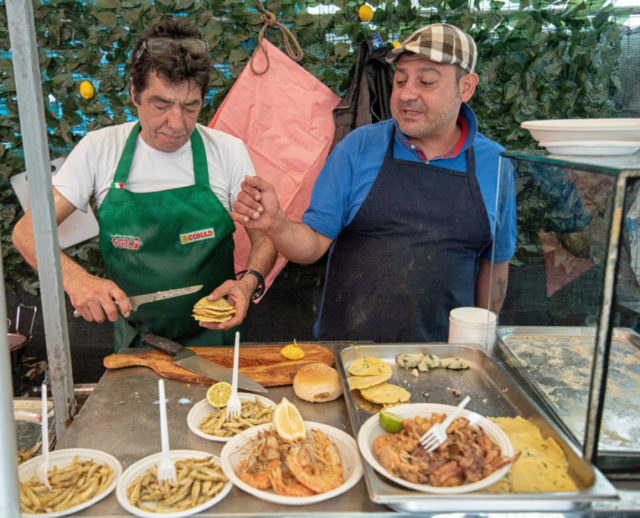
The Sicilian capital has some of the best, most vivid street markets in all of Europe. And the granddaddy of them all is Ballarò — seedy, chaotic, bewildering, and invigorating. Come here to jostle with Sicilians who verbally arm-wrestle for the best deals on the best ingredients. The vendors — continuing a tradition that supposedly dates back to Arab rule — warble their sales pitches with an otherworldly cadence, demanding the attention of passersby. Giant slabs of pink tuna perch on marble counters, like cadavers ready to be dissected. Produce stands overflow with vivid-purple eggplants, long, skinny Sicilian zucchini, and tomatoes that actually taste like tomatoes. Best of all, scattered throughout this multi-block span of barely controlled chaos are a wide variety of tempting street food stands, selling greasy napkins topped with dirt-cheap taste treats for every level of adventurous eaters — from arancine (deep-fried rice balls) and sfincioni (“Sicilian pizza”) to pani ca’ meusa (spleen sandwich) and polpo bollito (tiny boiled octopus, eaten whole). (For a complete rundown, check out my post on Palermo’s street food.) Go ahead, dive in — this is what real travelers live for.

4. Mathallen, Oslo, Norway
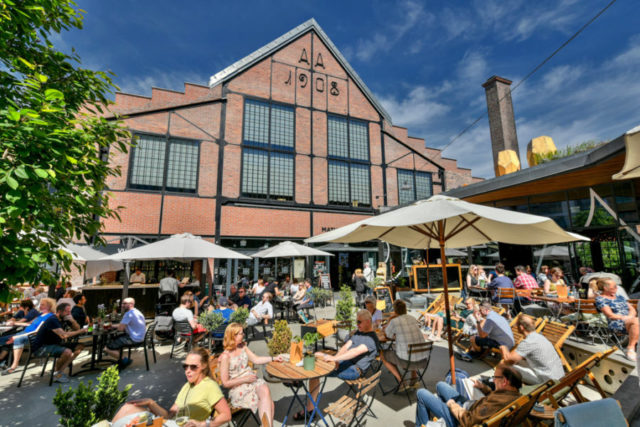
I love Oslo. But I’ve rarely found a memorable meal tucked among the dreary, blocky downtown core along Karl Johans Gate. However, just north of downtown runs the Akers River Valley, where the city has redeveloped a former wasteland of red-brick factories and warehouses into a lively people zone. Its centerpiece is Mathallen (“Food Hall”), filling the scavenged brick skeleton of a 19th-century factory. Norwegians recognize the limitations of their cuisine. And so, in addition to stands selling fresh, whole-grain bread (at Smelt Ostesmørbrød) sweet and savory pies (at Mildrids Kjøkken), and farm-fresh geitost cheese (at Ost & Sånt), you can nibble tapas, pastas, sushi, tacos and tequila, pizza, Asian street food,  gourmet ice cream, and much more. Ringing the outside of the market are a variety of industrial-mod, higher-end eateries. I skipped the fried chicken and “global tapas,” and went a bit more traditional at Vulkanfisk, serving up affordable-for-Oslo, elegantly presented, fresh seafood (the garlic-sautéed scampi were a flavor bomb). Anytime I’m in Oslo at mealtime, I come up with an excuse to head up the Akers River to Mathallen.

3. Maltby Street Market Rope Walk, London
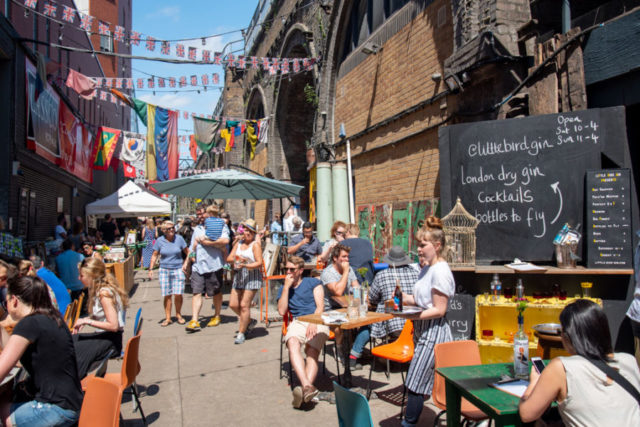
One summer, my wife and I rented an apartment in London for a week and checked out a different market each day. And at the end of the trip, the Maltby Street Rope Walk emerged as our favorite (every Saturday and Sunday). Tucked along a vintage brick railroad trestle, far from any tourist attractions (roughly across the Thames from the Tower of London), it’s an explosion of foodie energy. Beyond the hole-in-the-wall eateries, wine bars, taprooms, and Mozambique-style burger bars squeezed into the arches under the train tracks, the weekend market adds a world of pop-up food stands: grilled sandwiches oozing with tangy English cheese; little slices of rye bread mounted with melt-in-your-mouth Scottish salmon; slabs of grass-fed, dry-aged, rare-grilled hanger steaks; wild variations on Scotch eggs; Middle Eastern flatbreads with savory toppings; German-style sausages; gyoza steamed in wicker baskets; and a mouthwatering array of gooey brownies. For a more traditional “market hall,” it’s hard to beat London’s famous Borough Market. The funky Camden Market sprawls through a yellow-brick wonderland of old industrial buildings. The Portobello Road Market charms Notting Hill fans. And the Broadway Market feels like ground zero for East London’s hipster baby boom. But if I had to pick just one market that incapsulates cutting-edge London…it’s Rope Walk.

2. Mercado da Ribeira/Time Out Market, Lisbon, Portugal
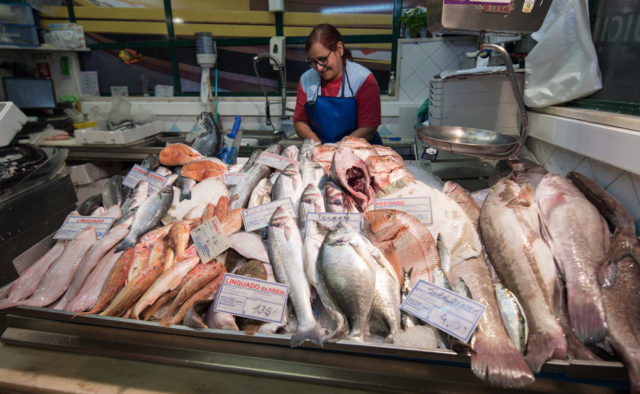
My favorite European market hall has a split personality. One-half of the market is as classic as they come: traditional, rough-and-tumble vendors selling fragrant herbs, plump produce, and an aquarium’s worth of fish. It’s ragtag, ramshackle, and trapped in the 1950s, with rickety wooden stalls, puddles pooling on cracked tile floors, petticoat-clad grannies selling rough bunches of herbs, and Old World scales with dials that spin imprecisely as if digital were never invented. On its own, this market hall is endearing enough to earn an “honorable mention” on this list. But from there, you can step through a door into La Ribera’s other half: a sleek, futuristic, top-of-the-line, Time Out-themed culinary wonderland (opened in 2014). The two dozen eateries here include stands operated by five marquee, Michelin-rated Portuguese celebrity chefs selling affordably price tastes of their favorite dishes. You’ll also find smaller stands bursting with a variety of local and international meals: the beloved Portuguese steak sandwich called prego, croquetes with fillings both traditional and creative, bacalhau (rehydrated salt-dried cod), fresh-baked pasteis de nata and other pastries, Japanese-fusion dishes highlighting the long-forgotten influence of early Portuguese traders, traditional cheeses and charcuterie, catch-of-the-day, quality steaks, gourmet burgers, artful sushi, and crispy pizzas. Rounding out the scene are a well-stocked wine shop, a place to stock up on conserves (tinned fish with colorful wrappers), and a branch of A Vida Portugesa (a classy vendor of Portuguese-themed products, gifts, and keepsakes that tempt even non-shoppers).  Whether for a meal or a one-stop-shop to stock up on all things Portuguese, Mercado da Ribeira is a winner.

1.  Market Day, Sarlat, France
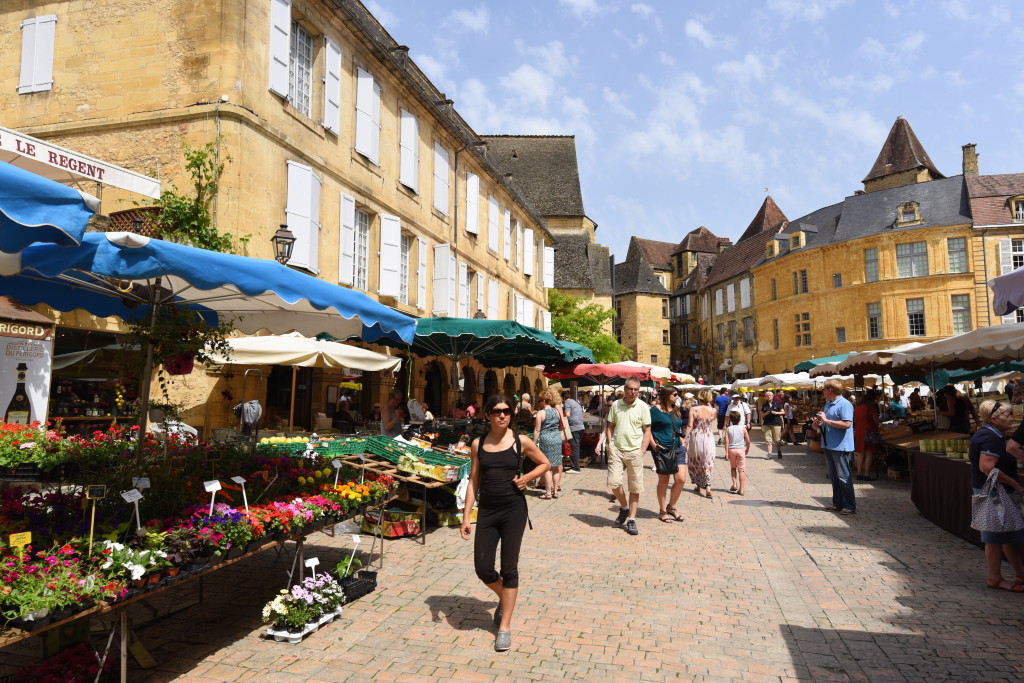
Sarlat’s street market is hard to top. It’s the refined yin to Palermo’s gritty yang. Twice weekly — on Wednesday mornings, and all day Saturdays — the pristine, lemony-sandstone streets of one of France’s finest towns become a big outdoor shopping mall. Locals pour in from the countryside to browse the stalls, reconnect with their favorite vendors, and bump into old friends. You’ll find baked goods, fresh meat, duck-in-a-can (confit de canard), giant wheels of rustic mountain cheese, tiny pyramids of fine gourmet cheese, nuts and dried fruits, explosively flavorful olives, mammoth chunks of nougat, snail shells prefilled for escargot, fruitcake sold by weight, a rainbow of preserves, salamis and sausages of every shape and size, and whatever produce is in season. When the noon bell tolls, the vendors begin packing up, and the shoppers scramble for café tables that catch just the right mélange of sun and shade. This is where the second phase of the Market Day ritual kicks in: taking some time to nurse a cup of coffee with someone you haven’t seen in a while. It’s all so simple…so sophisticated…so smart. If you won’t be in Sarlat, you can enjoy similar market days all over France; every community has its own, but popular ones include Uzès (in Provence), Beaune (in Burgundy), and several in Parisian neighborhoods. But Sarlat is the one that has left me with the warmest memories of an ideal market experience.

What’s your favorite market in Europe?
R.I.P. Imre Nagy: The Death of Rational Governance in Hungary

UPDATE (April 3, 2022): I originally wrote this blog post in January of 2019, when news broke that a beloved statue of anti-communist reformer Imre Nagy had been removed, under cover of darkness, from its prominent position in Budapest. This post offers a sort of “shapshot” of the situation at that time. Flash forward over three years, and  now Hungary faces a choice: In today’s elections, they have an opportunity to remove from office the man who removed that statue from their capital. If you’re seeing news of high-stakes Hungarian elections and wondering what all the fuss is about, I hope this offers some context, from the perspective of an American traveler (heavily influenced by his Hungarian friends).


Well, they’ve gone and done it. They’ve taken down my favorite statue in Budapest. Godspeed, Imre Nagy.

It’s a crazy time in Hungary. Let’s face it: It’s a crazy time just about everywhere — with Trump, Putin, and Brexit rewriting the rules of what’s “normal.” But it’s particularly crazy in Viktor Orbán’s Hungary, where even the great anti-communist crusaders of the Cold War are finding themselves, suddenly and inexplicably, on the wrong side of history.

Just a few weeks ago, I turned in my updated files for the upcoming sixth edition of our Rick Steves Budapest guidebook. This morning, I had to rewrite large sections of the book because of all the changes taking place in Hungary.

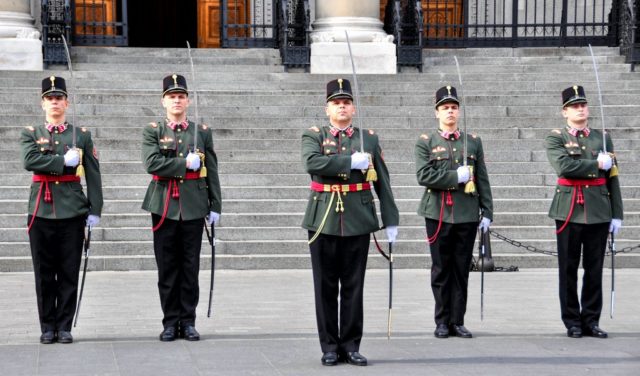
If you’ve been paying attention to the news, you know that Hungary’s prime minister, Viktor Orbán, and his far-right, nativist political party, Fidesz, are continuing their campaign to remake Hungary in their own image. On a previous visit to Budapest, in 2016, I posted about some of those changes — from a statue of Ronald Reagan that had been erected right next to a Soviet Army memorial; to a new monument honoring “victims of fascism” that conspicuously ignored the crimes of the Nazi-allied Hungarian government; to the patriotic new “Changing of the Guard” ceremony on Orbán’s glitzy, fascist-style square behind the Parliament; to the Transylvanian flag that flies on the Parliament building in place of the EU flag.

On that 2016 visit, a local friend asked about the job market in Seattle. She’s seriously considering moving her family stateside to escape what she perceives as her society crumbling around her. Her teenagers now learn history from textbooks written by politicians — the same Fidesz-penned books that are required to be spoon-fed to every student in Hungary. Fidesz enjoys revising Hungarian history as much as they enjoy keeping refugees and immigrants out of their country.

The intervening two and a half years have felt like an eternity. And even in just the last couple of months, the list of Orbán’s offenses has grown. Here are just a few of the changes in Hungary in the several weeks since I was there updating my book:

George Soros — yes, that George Soros, favorite punching bag of the American right — founded a university in his hometown of Budapest in 1991. As Hungary and its neighboring countries were just emerging from Soviet rule, Central European University offered students a place to study at a US-accredited institution, allowing them a foothold in the greater academic world of the West. CEU grew to become highly respected. But Soros — who is as loathed by Fidesz as he is by Fox News — is on the outs in today’s Hungary. And in December, CEU announced they will relocate to Vienna, after failing to meet Fidesz’s draconian new requirements to operate legally in Hungary.

Also in December, Fidesz announced a new law to roll back overtime protections for workers. (Because of Fidesz’s restrictive immigration stance, and because bright young Hungarian workers have left the country in droves, Hungary suffers from a labor shortage. Who could have predicted it?) This new policy — nicknamed the “Slave Law” — has spurred widespread protests. Even many Fidesz supporters are criticizing a government ostensibly dedicated to “family values” effectively requiring citizens to work longer hours.

Meanwhile, Viktor Orbán has finally moved into his over-the-top new palace, up on Castle Hill. Orbán grew tired of living among the commoners, so he evicted the National Dance Theater from their home near the old royal palace and renovated their building into a plush new residence for himself. My Budapest friends have been grumbling about this since it was first announced a few years back — “He thinks he’s better than us! He wants to be up on the mountaintop, looking down upon all his subjects.”

Worst of all, just a few days ago, I received an email from my Budapest friend, confirming that the rumors she’d told me in September have now come true: A beloved statue of the great communist reformer, Imre Nagy, which stood for more than 20 years facing the Parliament building, has been removed by Fidesz authorities. She wrote, “It is a sad day for many of us here!” (It’s worth noting that Budapesters are connoisseurs of monuments. The city is graced with more than its share of memorable statues, from whimsical to poignant. )

Imre Nagy (pronounced “IHM-reh nodge,” 1896-1958), now thought of as an anti-communist hero, was actually a lifelong communist. In the late 1940s, he quickly moved up the hierarchy of Hungary’s communist government, becoming prime minister during a period of reform in 1953. But when his proposed changes alarmed Moscow, Nagy was quickly demoted.

When Hungary’s 1956 Uprising broke out on October 23, Imre Nagy was drafted (reluctantly, some say) to become the head of the movement to soften the severity of the communist regime. Because he was an insider, it briefly seemed that Nagy might hold the key to finding a middle path between the suffocating totalitarian model of Moscow and the freedom of the West.

Some suspect that Nagy himself didn’t fully grasp the sea change represented by the uprising. When he appeared at the Parliament building on the night of October 23 to speak to the reform-craving crowds for the first time, he began by addressing his compatriots — as communist politicians always did — with, “Dear comrades…” When the audience booed, he amended it: “Dear friends…” The crowd went wild.

But the optimism was short-lived. The Soviets violently put down the uprising, arrested and sham-tried Nagy, executed him, and buried him disgracefully, face-down in an unmarked grave. The regime forced Hungary to forget about Nagy.

In 1989, when communism was in its death throes, the Hungarian people rediscovered Nagy as a hero. His body was located, exhumed, and given a ceremonial funeral at Heroes’ Square. (It was also something of a coming-out party for Viktor Orbán — yes, the current prime minister — who, as a twentysomething rebel, delivered an impassioned speech at the ceremony.) Nagy’s symbolic re-burial is considered a pivotal event in that year of tremendous change.

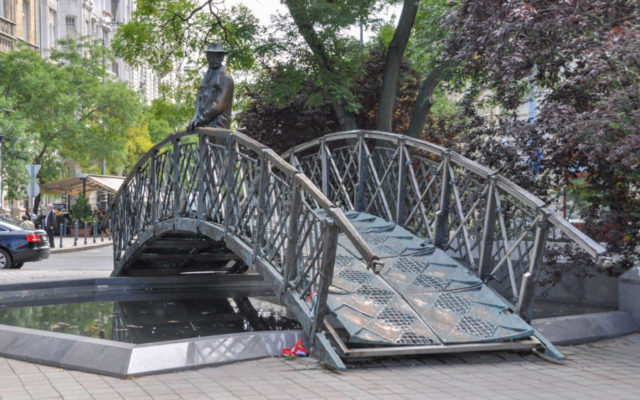
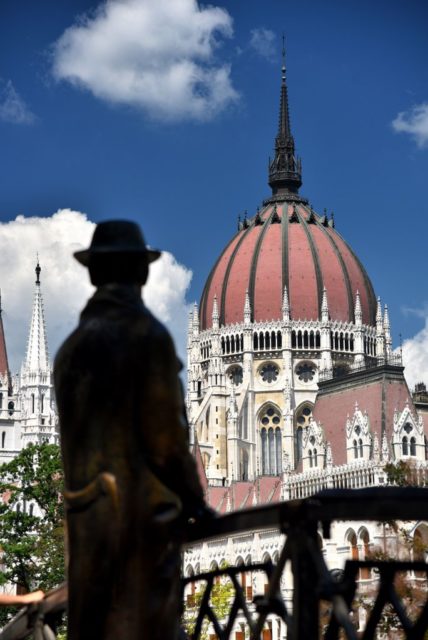
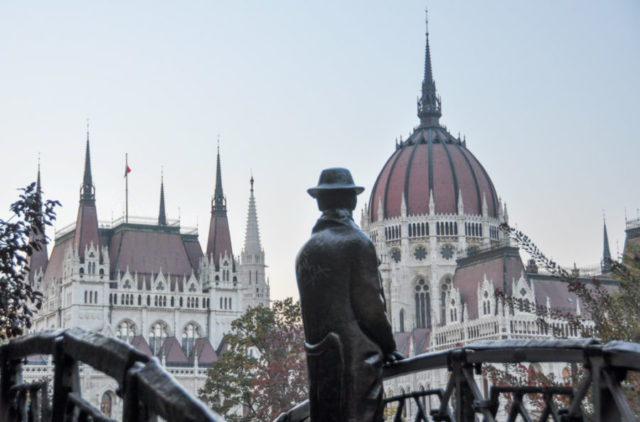
The Nagy monument near the Parliament, erected in 1996, has long been one of my favorites in all of Europe. Its design was poignant: Nagy stood upon a bridge, representing his own political philosophy, which sought common ground between the stifling communism of the USSR and the capitalist free-for-all of the West. The bridge itself was made of treads from Soviet tanks — like the ones used to put down the 1956 Uprising.

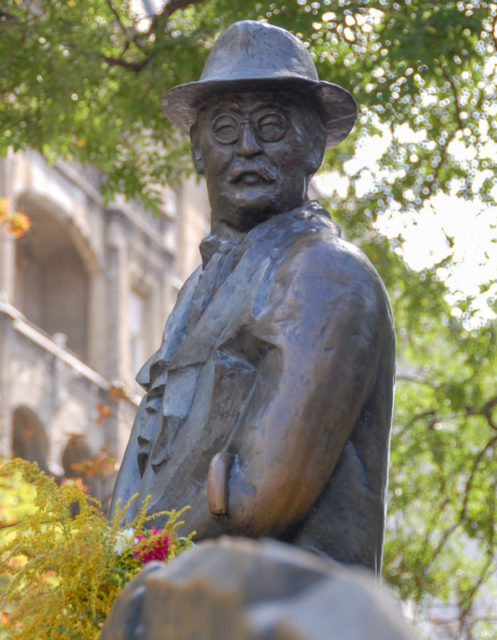
Nagy’s face wore an expression not of defiance or dominance, but of inquisitive compassion. He looked across the square at the towering red dome of the Hungarian Parliament, symbolically keeping an eye on the government.

But now that statue is gone — removed with little warning and zero fanfare, in the middle of the night, just two days after Christmas. Viktor Orbán — who, let’s not forget, made his name lauding Nagy — has apparently decided to unilaterally reverse the rehabilitation of Nagy’s image. Fidesz claims that they are moving the statue to a different (and decidedly less prominent) location, on Jászai Mari tér, near Margaret Bridge. But no preparations on that site have taken place, leaving open the possibility that Nagy will again be brushed into the dustbin of history.

As someone who passionately loves Budapest, this worries and saddens me. It should worry and sadden you, too. Removing the statue of a gentle, heroic man who sacrificed his life to improve the lot of the Hungarians is a clear sign that Orbán believes history is open to his individual interpretation.

Let’s be clear: We’re not talking about removing Confederate flags or statues of Robert E. Lee, which are broadly offensive symbols of racism and slavery. There’s nothing offensive about Nagy to the vast, vast majority of Hungarians, who view him as a beloved figure. He symbolizes sacrifice in the face of oppression, and the courage to rise up for what’s right. Removing the Nagy statue would be more like taking down a statue to Martin Luther King, Jr., because of some obscure political beef.

The only Hungarians offended by the image of Nagy are communist sympathizers longing for a return to the darkest days of Stalinism. And, it seems, Viktor Orbán. It’s rarely constructive to psychoanalyze a despot, but it’s difficult to imagine why Orbán has it in for Nagy. He claims his goal is to return the appearance of the square to its pre-communist, pre-WWII glory days. Why, then, is Orbán erecting brand-new statues even as he’s taking this one away? Surely the truth is more deeply rooted. For one thing, because Nagy’s historical ties to communism place him on the left, Fidesz simplistically views him as an ideological enemy. And perhaps, as he continues Hungary’s slide toward totalitarianism, Orbán is uncomfortable with celebrating an upriser on Hungary’s grand Parliament square.

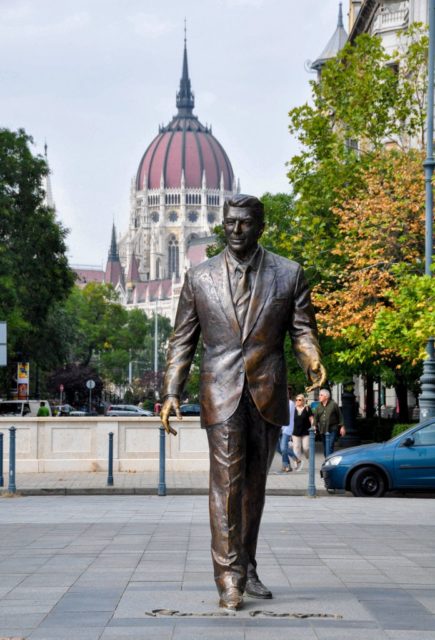
Standing just a few steps away from the (now-removed) Nagy statue is Orbán’s statue of Ronald Reagan. Reagan and Nagy, fellow Cold Warriors, would have found much common ground. But in Orbán’s topsy-turvy, upside-down world, only one deserves to stand near the Parliament.

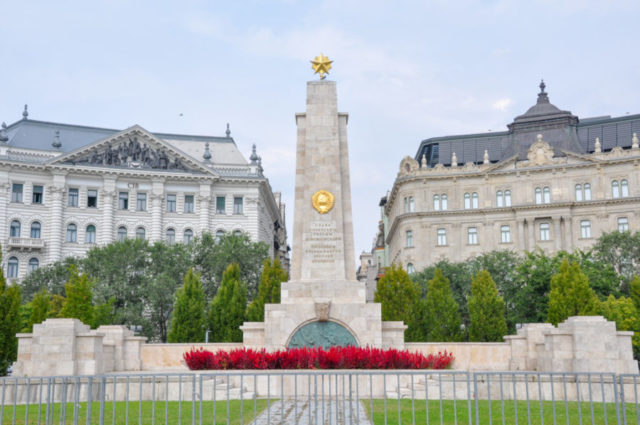
Adding insult to injury, that old memorial to Soviet soldiers still stands next to Ronald Reagan. To be entirely clear here: Fidesz has removed a statue of a freedom fighter, but has chosen to leave in place a monument to an army that “liberated” Hungary in order to occupy it for four and a half decades.

Someone once said, “May you live in interesting times.” But this is simply exhausting. Just a few years ago, someone who was executed by the communist authorities for his brave protest would be considered an unqualified hero. But in Viktor Orbán’s Hungary, nothing makes sense anymore. The next time I visit Budapest and walk past the Parliament, I’ll miss seeing Nagy’s comforting form, keeping a watchful eye on things. Rest in peace, Imre Nagy. And rest in peace, rational governance in Hungary.

2019 Discovery: Berlin’s Kreuzberg, Germany

Crowds got you down? This post is part of a series of 10 European Discoveries for 2019 — off-the-beaten-path gems where you can escape the tourist rut and find a corner of Europe all your own.

Kreuzberg has long been known as Berlin’s “Turkish immigrant neighborhood.” But it’s also so much more. Once surrounded on three sides by the Berlin Wall — ground zero for squatters, draft dodgers, punks, and protesters — Kreuzberg is now at the vanguard of Berlin gentrification. Wall? What wall?

Chasing down leads for our Rick Steves Berlin guidebook, I discovered that Kreuzberg is made up of many micro-neighborhoods called Kieze, each with its own distinct personality. Ride the U-Bahn to Kottbusser Tor (“Kotti” to Berliners) on a Tuesday or Friday and stroll to the riverside Turkish Market, a commotion of sights, sounds, and smells reminiscent of an Istanbul bazaar: vibrant rugs, piles of olives, aromatic teas, and sizzling food carts, along with everyday items like clothes and kitchenware. From there, simply explore.

Just across the canal, the Graefekiez lives at the perfect intersection of foodie, yuppie, and affordable; the nearby Paul-Lincke-Ufer embankment is home to some of Berlin’s most cutting-edge restaurants. A few blocks away, Markthalle Neun is Berlin’s super-trendy food hall, with stalls selling gourmet tapas, tofu sandwiches, and Berlin-style meatballs (Buletten). The Bergmannkiez features a swanky shopping zone, a lively market hall, and famous Gemüse Kebab and Currywurst stands with lines around the block. And the Wrangelkiez is jammed with creative bars and restaurants, from microbrews to traditional Georgian food.

You could have a fun and varied visit to Berlin without ever leaving Kreuzberg.


The second edition of our Rick Steves Berlin guidebook — hot off the press —includes a brand-new self-guided walking tour of Kreuzberg.

For nine more suggestions on where to get away from the crowds, check out my 10 European Discoveries for 2019.

2019 Discovery: Isle of Skye, Scotland

Crowds got you down? This post is part of a series of 10 European Discoveries for 2019 — off-the-beaten-path gems where you can escape the tourist rut and find a corner of Europe all your own.

Most visitors to the Scottish Highlands do a predictable two- or three-day loop, hitting Inverness, Loch Ness, Glencoe, Oban, and maybe a few Outlander sights. But adding another couple of days buys you time for dramatically scenic, fun-to-explore Skye. While not quite “undiscovered,” the Isle of Skye demands — and rewards — a little extra effort to reach.

Settle into the village of Portree, with its rainbow-painted harbor, and use it as a home base for road-tripping across the isle. The Trotternish Peninsula, with dragon’s-tooth mossy mountains that have inspired sci-fi movies, is speckled with sleepy crofting communities whose humble stone cottages face million-dollar sea views. Talisker Distillery offers tours and dispenses peaty drams of whisky. Dunvegan Castle provides an intimate peek inside the lived-in home of an aristocratic clan that’s seen better days. Peat bogs, iconic views of bald Scottish mountains, and hiking areas with names like “The Fairy Glen” and “The Fairy Pools” round out Skye’s appeal.

If I had to choose just one place to get an idyllic taste of the Scottish Highlands and Islands, Skye would win by a mile.


Planning a trip to Scotland? Here’s how to get ready:

1) Check out my top 10 tips for traveling in Scotland
2) Pick up a copy of our Rick Steves Scotland guidebook.
3) Watch Rick’s three brand-new TV episodes on Scotland: Glasgow and Scottish Passions, Scotland’s Highlands, and Scotland’s Islands.

And for nine more suggestions on where to get away from the crowds, check out my 10 European Discoveries for 2019.

2019 Discovery: The “Dutch Corridor”: Leiden, Delft, and Rotterdam, Netherlands

Crowds got you down? This post is part of a series of 10 European Discoveries for 2019 — off-the-beaten-path gems where you can escape the tourist rut and find a corner of Europe all your own.

I love Amsterdam. But it’s a shame that so many travelers to the Netherlands visit only its most famous and hedonistic city. (Plus, Amsterdam has gotten so crowded that it’s becoming the poster child for “overtourism.”) Some of my favorite Dutch trips have used Amsterdam as a launch pad for touring a string of towns that line up just to the south.

Hop on the train at Amsterdam Centraal Station, and in about half an hour, you can hop off in Leiden — a charming, sleepy, historic university town that feels like Amsterdam without the tourist-baiting sleaze. Strolling Leiden’s dreamy canals, it’s easy to understand how this little burg could be called home by both Rembrandt and the Pilgrims (just before they shipped out to the New World).

Back on the train, and just 20 minutes later, you’re pulling into Delft — the hometown of Vermeer, exquisite blue pottery, and one of the biggest, stateliest squares in the Netherlands, crowned by the burial church of the Orange dynasty. Delft’s canals — wider and more workaday — are another fine place for a quintessential Dutch stroll.

And finally, just 10 minutes farther is Rotterdam — the urban, modernist counterpoint to time-passed Leiden and Delft. Rotterdam, constructed almost entirely after WWII, is the Dutch answer to Manhattan. Join an architectural bike tour to make sure you see all of Rotterdam’s wildly creative experimental architecture, from its unique “Cube Houses” development to the buildings nicknamed “The Pencil” and “The Manhole Cover”.

For a day — or several days — of Dutch contrasts, invest just one hour in riding this train from downtown Amsterdam.


Want to expand your horizons beyond Amsterdam? Be sure to check out this episode of Rick Steves’ Europe, and pick up a copy of the Rick Steves Amsterdam and Netherlands guidebook. (Or leave the planning to us, and explore the Low Countries on a Rick Steves tour.)