At the end of this summer, I’m hoping to head back to Europe for the first time in nearly two years. My wife and I are excited to spend a mellow vacation in two of our favorite countries: Slovenia and Italy. But now that travel dreaming is turning to trip planning, we’re realizing that being in this “early wave” of Americans heading to Europe won’t be simple.
You may think it’s too early to head back to Europe, and I won’t disagree. We’re well aware that we are early birds, and as such, this trip will require thoughtful planning, patience, flexibility, and a willingness to grapple with uncertainty. The point of this post is not to convince you to go to Europe as soon as possible; rather, it’s a reality check on the speed bumps and hiccups we’re encountering as we begin to make plans. This may embolden you to plan your own trip; more likely, it’ll validate your decision to wait until 2022.
The Plan
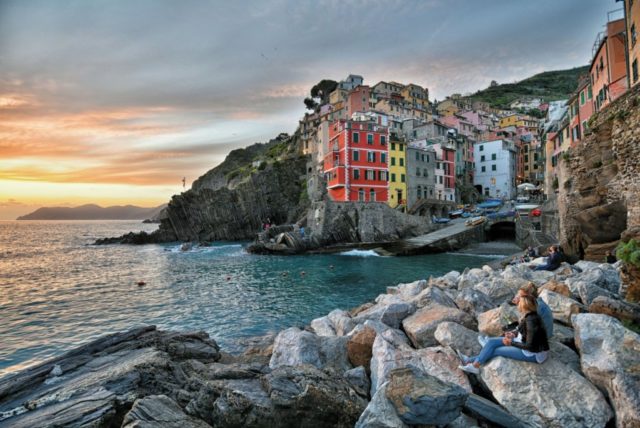
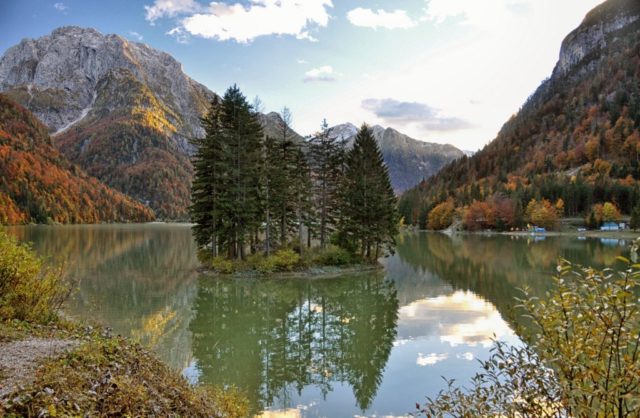
We are hoping to spend a couple of weeks in Europe at the end of the summer, about two months from now. Our itinerary: A week in Slovenia (Ljubljana and the Julian Alps), followed by a week in Italy (Tuscany and the Cinque Terre). Why Slovenia and Italy? First, they’re places we’ve been dreaming of since lockdown began, and where we have friends we’re excited to reconnect with. Second, they’re neighboring EU/Schengen countries, hopefully making it relatively straightforward to cross between them. And we’re choosing to travel mainly in rural places — where our only agenda is scenic joyrides, low-impact nature walks, and simply being in Europe — as opposed to big cities, where we’d be tempted by a long wish list of museums and restaurants that may be closed or too crowded for comfort.
Normally I am an itinerary-planning wonk; I totally geek out on this stuff. Obviously, that skill atrophied over the last year and a half. (Though I must admit, during the darkest days of the pandemic, my wife and I sketched out a detailed two-week trip to New Zealand — knowing full well it almost certainly wouldn’t happen. Alas…someday.) Planning this trip feels like exercising a muscle I haven’t used in a very long time. But slowly, I’m getting back into shape.
The Logistics
In the coming weeks, Europe will reopen to vaccinated American visitors. But much is yet to be determined. Going to Europe in the second half of 2021 means keeping up-to-the-minute on the evolving situation. For the latest, I’ve been checking a variety of news sites (which are handy summaries, but often gloss over details); official European government and embassy sites (which are more definitive, but can be clogged with bureaucratic gobbledygook); and, most important, European friends, who are sharing their sixth sense about how things might evolve.
Here’s the tricky part: While Europe is making plans to reopen, those plans are not quite in place yet. So, effectively, we’re planning a trip to a future reality that doesn’t yet exist. Travel is always a leap of faith, but this feels even more so. (For this reason, I won’t bother getting into too many details in this post; suffice it to say, if you’re not up for continually researching the latest on your own…you should hold off on going to Europe.)
As of July 1, vaccinated or recovered Americans are eligible to apply for a “Digital COVID Certificate” from the European Union (also called a “Green Pass”) — a smartphone QR code designed to ease transit. Even before this rolled out, there were already concerns about the rollout. I’m hoping things become clearer over the coming weeks; we have our vaccine cards at the ready, and expect that, when the time comes, we’ll somehow use them to get official permission to enter the EU.
What about testing and quarantining? In theory, the Digital COVID Certificate will allow us to avoid any quarantine requirements on arrival in Europe, and when traveling between EU/Schengen countries. But each country sets its own policies. Currently there are still some testing requirements when entering or moving within Europe; these may be relaxed — or heightened — as the summer goes on. Even though we are fully vaccinated, we’re expecting that we may need to test at some point, or many, in our travels. (And as of now, we’ll definitely need to test before returning to the US — though this, like many other aspects of international travel, may well change.)

While we wait for the red tape to become clear, our biggest hurdle is booking flights. Normally we look for the most affordable option, without much concern about refundability. But in this case, it’s more likely that we’ll need to change or cancel our plans. As I’ve looked around at likely flight options, it appears that airlines are offering more changeable, or even refundable, tickets for $200 to $400 more than basic economy fares. Normally this would sound steep. But in 2021, it’s a worthwhile investment in our peace of mind. (The good news is that base fares for our trip are about on par with 2019, and in some cases even lower.)
I also have this concern in mind when booking accommodations. So far, most of the places we’re considering have very liberal refund policies, allowing us to cancel even a few days before arrival. We’d be reluctant to book a hotel with strict cancellation policies — but, of course, that limits our choices.
Is Europe ready for us? Increasingly, the answer appears to be yes. After some stumbles out of the gate, European vaccination rates are rapidly moving the right direction. In fact, some countries are already pulling ahead of the USA, and the EU is shooting for the ambitious goal of immunizing 70 percent of its adult population by the end of July. Just over the last few weeks, Spain, France, and Italy have all suspended their masking requirements. European hotels and restaurants are desperate for our business, and it seems we’re reaching a tipping point where it’s safe and responsible for us to head over and help them out.
Still, I sense a healthy skepticism, bordering on unease, among my European friends. The rise of the Delta variant is putting certain countries (including the UK) on the “undesirable” list; this could lead to new travel restrictions in some places. However, vaccines appear to be successful in preventing Delta infections, and so far, these added restrictions apply only to non-vaccinated travelers. If a variant emerges that causes more “breakthrough” infections in vaccinated people, I’d take that as a reason to cancel our trip. (Meanwhile, the still-evolving variant situation is even more reason to focus our trip on remote, rural areas that are well suited to distancing.)
In general, when I ask my European friends what they think about this trip, the response is unanimously positive. Maybe they’re just lonely and eager to see me after two long years. But I also think they have a sense that the pandemic is winding down, and late summer will be a great time to venture back and celebrate together. Some have mentioned a fear (based partly on bad memories from last year) that there could be a new surge over the winter. Hopefully the success of the vaccines prevents that. But either way, my European friends seem to believe that late summer or early fall is as good a time as any for a visit.

The Attitude Adjustment
All of the above are logistical questions. But there are larger philosophical questions, too. And whether you’re heading to Europe soon, or holding off until 2022 (or beyond), it’s clear that we travelers will need to adjust our expectations.
One thing I keep reminding myself is that, following an event as major as the pandemic, there’s no returning to exactly the way things were. We talk a lot about “back to normal,” but the fact is that our post-COVID reality will be a “new normal.”
After 9/11, there were many temporary changes to our daily lives — and also a few that are still with us, such as perpetually heightened security checks at the airport. Likewise, I imagine we’ll see some long-term changes in European travel. For example, I assume more people will wear masks on airplanes and in crowded spaces, as a matter of course. Some changes will be for the better: Some of my favorite restaurants have streamlined their takeout business and their in-person menus and ordering. But other changes might be a headache, or even feel like a loss.
The fact is, even as we’re being told to celebrate our soaring vaccination rates and plummeting cases, many of us are unhappy. We’re seeing an epidemic of mass shootings and gun violence; employees are quitting their jobs at an unprecedented rate (the so-called “Great Resignation”); and, anecdotally, shoppers, airline passengers, and motorists are melting down in numbers we’ve never seen before. Many of us are probably dealing with some unresolved trauma from weathering a once-a-century global crisis. And everyone is still adapting to all those little changes and readjustments in everyday life.
As travelers, if not simply as human beings, the first step is to accept that things are different, and to cut each other some slack. When you go back to Europe — whether it’s this summer or next — if you expect things to be exactly as you remember them, you’ll be disappointed. That’s why flexibility will be key. And the sooner you go, the more flexible you’ll need to be.
That also includes adhering to the local guidelines, wherever you go. If you bristle at the idea of having to mask or distance in a way that you don’t personally feel is necessary — or that runs counter to your own government’s advice — I suggest that you exercise your right to postpone your trip to Europe until such time as it’s more in line with your expectations. If the Romans are masking and distancing…do as the Romans do.
All of this is to say that my wife and I are totally realistic that our dreamed-of return to Europe will hit several more bumps in the road over the coming weeks, and may not happen at all. But for the first time in a very long time, we’re optimistic. And no matter how it turns out, I’ll be reporting on what I learn.
What about you? Any thoughts of heading to Europe later this year? If you’re planning a trip, what challenges are you encountering? And if you’re the rare American who’s already made it to Europe, how did it go?