“Cameron! You must tell Americans what it’s truly like to travel here right now.”
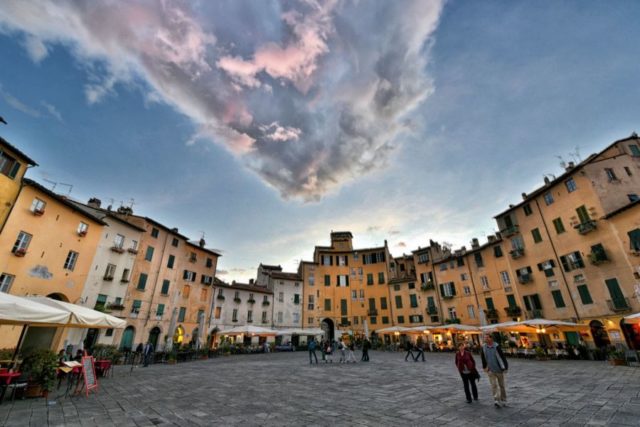
This was the plea from Isabella, who runs a stunning countryside hotel in most beautiful corner of Tuscany. Isabella is frustrated because she designed her business for American guests. And even though she’s been able to pivot to a mostly European clientele, she’s eager for her American friends to return. Unfortunately, the mixed messages about traveling in Europe have given many of her guests pause. And now quite a few, who booked weeks or months ago, are getting cold feet and cancelling.
Some of those people have good reason to postpone; perhaps they’re immunocompromised, or they know themselves enough to recognize that they lack the flexibility to travel during uncertain times. But others are overreacting to attention-grabbing, misleading news reports of “travel bans,” worst-case nightmare scenarios, and headachy red tape.
Fear looms large in the American imagination, so it’s not surprising that many American travelers are skittish. I understand. The week before I left, in late August, the news was full of vague yet alarming rumors that the European Union was about to “ban” non-essential American travelers. Spoiler alert: That did not happen. And, speaking only for myself, I can report that I’ve been struck by how normal it feels to be traveling in Europe again.
OK, not “normal” — but new normal. Social-distancing, temperature-checks, masking-indoors, showing-your-vaccine-card-to-enter-a-restaurant kind of normal. Being fully vaccinated and taking all of the reasonable precautions, I feel safe, or at least as “safe” as anyone can these days. I feel at least as safe as I do at home, which is safe enough to not have nightmares anymore. In the abstract, traveling in Europe sounds frightening and stressful; in practice, it’s just fine. Not just fine. Wonderful.

Previously, I posted about how I rationalized traveling to Europe during a pandemic; and about the many steps I took to plan and prepare for travel during these strange times. This post is a bit more freewheeling: It’s simply a report on what it’s like to be an American traveling in Europe during (we hope) the late stages of the COVID-19 pandemic.
Landing in Europe once again, all those mundane little European quirks came rushing back: the bizarre plumbing — complicated shower knobs and enigmatic washer/dryers that should come with an instruction manual; the secondhand smoke at outdoor cafés; the frustration of paying for a meal with your credit card, then trying to scare up a few coins for the tip; the little basket of warm, hard-boiled eggs at the breakfast buffet, instead of scrambled or fried. Some of these are good things. Others not so much. But at least they are all Europe. And in a weird way, I missed all of them, even the parts I don’t particularly like.
Especially while traveling, every cough and sneeze I hear in public sounds amplified. Late summer is turning to fall, and reliably balmy weather is transitioning to warm days and chilly nights. As cold-and-flu season approaches, everyone’s got a tickle in their throat. And I am more aware than ever of how Europeans aren’t as careful about covering coughs and sneezes as we Americans are. I’ve always noticed this — there’s a kind of European pragmatism that figures you’re going to get sick at some point, so why fight it? But it’s jarring in the age of COVID.
As my wife and I enjoyed an outdoor lunch on our first day in Europe, the adorable towheaded twins from Germany at the next table took turns coughing violently into the air, as Mom and Dad looked on proudly. We nudged our table a few inches farther away and dubbed the duo “KOVID Karl and KOVID Kristoff.” A couple of weeks later, walking to my train in Prague’s station, I saw a guy pull down his mask just in time to expel a juicy sneeze into the air.
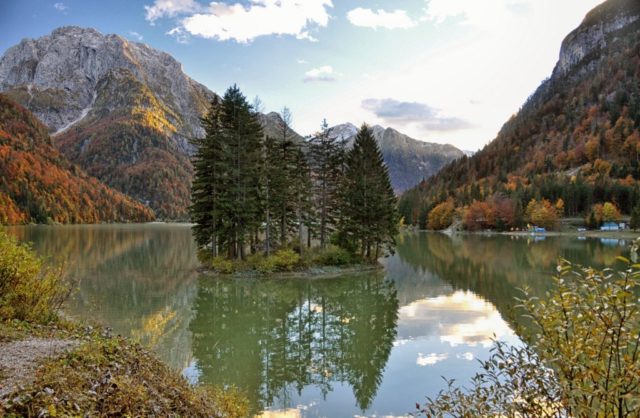
There are far fewer American travelers in Europe right now, and — for various reasons — there are virtually no travelers at all from China, India, Great Britain, Australia, New Zealand, and many other places. And yet, being here has been a severe hit to my American traveler’s narcissism, because I’m seeing how easily we’ve been replaced. European tourists, who might normally prefer to travel to North America or Asia, instead are vacationing closer to home. On the trails of the Julian Alps, the trattoria terraces of Tuscany, the beaches of the Cinque Terre, and the cobbles of Prague, I find myself surrounded by Germans, Swiss, Dutch, French, and so on.
Some places are downright crowded. I had trouble finding parking during a midday visit to the Tuscan hill town of Montepulciano, and I had to reserve dinner ahead each night I was in the Cinque Terre. In fact, the crowds have been one of the biggest surprises of my trip. While nowhere near as busy as the peak year of 2019, Europe is far from empty. If you’re thinking, “Now is a great time to go to Europe to avoid the crowds”… you’re already too late. It’s less crowded, sure, but it’s not uncrowded.
That said, it is enjoyable being in places that feel more local than they have in many years. One chilly, early-autumn Sunday afternoon in Prague, strolling along the Charles Bridge, I realized with a start that the majority of my fellow promenaders were speaking Czech. On past visits, I’ve walked the entire length of that bridge, utterly clogged with humanity, without hearing a single syllable of the local language.

From there I headed up to Prague Castle, which is typically overstuffed with obnoxious tour groups, and found I had the place largely to myself. It was eerie…almost lonesome.

This shift in the demographics of travelers has also brought about a big change in traffic patterns. Those intra-European tourists are not flying or taking trains or buses; most are driving — just as road trips became the go-to American vacation in 2020. This has led to some serious traffic jams on major freeways and in parking lots (like what I found in Montepulciano). Instead of one big bus carrying 50 people, you have 20 or 25 individual cars. One friend in Slovenia — which is right on the way between Austria and Czechia in the north, and Croatia and Italy in the south — termed 2021 the “Summer of Carmageddon.”
Through the pandemic, I’ve been mightily worried about my favorite small businesses in Europe. Now here, I’m seeing that most have survived, sometimes in a slightly different form. A few restaurants have retooled; as in the US, there’s more and better outdoor seating than before. Some savvy businesses took advantage of the closure to finally do some long-overdue renovation work. Hotels and restaurants that were once filled with Americans (like Isabella’s place) are now a microcosm of the EU. In some cases, this has required the business owner to make some changes to become more Euro-friendly. I’m wondering whether they might decide that they prefer to diversify, with both European and American clientele, and never go back to exactly how they did things before.
I am meeting a smattering of Americans over here, and I have to say, they’ve mostly been great travelers. These are clearly people who love travel so much, that, like me, they weren’t willing to wait six more months to get back. I’m not bumping into many novices on the road. It must be a miserable time to be a European pickpocket: All of the easy marks are scared at home.
Meanwhile, everyone’s already thinking ahead to 2022: Assuming all goes well, Europeans will presumably go back to overseas vacations, clearing the way for Americans to return. But what if the Europeans decide to stay closer to home, too? Will we be stacking two huge demographics of travelers on top of each other? And one big question I’ve heard again and again is this: When will the Chinese tour groups return? (Many Europeans see these groups as having been a breaking point in terms of excessive crowds, and wouldn’t mind if they held off a bit longer — let’s say 2023, or why not 2024? — to allow capacity to ramp up again.)
In general, I can’t shake the sense that traveling right now is a test run for 2022. Europe is ironing out the wrinkles in anticipation of what many expect will be a huge rebound year. While there are no guarantees, it certainly feels like traveling in Europe next year — in some form — will be a go. In fact, several of my European friends (especially ones in not-long-ago-overwhelmed places like the Cinque Terre and Prague) expressed concern that next year could bring bigger crowds than ever.
Of course, what I’m experiencing is a moment in time; things are constantly changing. For example, just two days after I landed in Italy, the country implemented a testing requirement for arriving visitors. In most places, these changes are speed bumps, not insurmountable hurdles. “Test in, show your vaccine card, test out. Simple!” Isabella explained, with an elegant simplicity. And, ultimately, it really is simple. I don’t know about you, but spending an hour getting a COVID test strikes me as a remarkably minor hassle for the privilege of basking in Tuscan splendor or hiking the Cinque Terre for a few days.

And what about COVID?
When it comes to pandemic measures, I see how Europeans are handling things in ways that are subtly different from the American approach, but those “little” differences add up to a huge impact.
First and foremost is simply a matter of worldview. My impression, at least among my friends and acquaintances, is that we Americans are either completely terrified of COVID, or willfully oblivious to it (even venturing so far as to call it a “hoax”). The Europeans I’m interacting with have found a middle path: pragmatism. They are soberly aware of the risks and, consequently, willing to put up with commonsense, public-health regulations…and then getting on with life. They are realistic but not frightened; cautious but not cowed. Frankly, being among Europeans through this crisis is refreshing, and inspiring.
In general, on the ground here in Europe, I feel far more comfortable than I do back home. Vaccination rates are high (and increasing); cases are low (if rising); hospitals are not overwhelmed, as they are in many parts of the USA. Overall, masking compliance is extremely high. On the few occasions when I dined indoors in Italy, I felt a wave of relief upon being asked to show my vaccination card to enter. While not a guarantee of safety, it brings peace of mind knowing that every single person in the room with me is also vaccinated.
Of course, Europe is far from monolithic. And, while each country has its own vaccination rates, caseloads, and quirky regulations, it’s been interesting to see how things vary from place to place. My sample size is small — just four countries — but broad enough to notice nuances. While the general rules are the same, they are implemented differently: In Slovenia, I noticed people sanitizing their hands like crazy when entering shops, while in Italy it’s all about the masks.
And Germany is extremely specific that people must wear FFP2 masks (the European equivalent of an N95 or KN95). Here’s a typical sign, from a restaurant in Berlin:

It says: “Inside with test; outside without. From this point, only with an FFP2 mask or a surgical mask, over mouth and nose.”
Meanwhile, the Czech Republic (where reported cases are low… suspiciously low?) feels a bit like the USA before the Delta surge: masking “requirements” are loose, and I found I was often the only person in line at the coffee shop who bothered to put on a mask. On my train from Prague to Berlin, the guy across the aisle (who was Czech) pulled his mask under his chin soon after boarding, and punctuated the four-hour trip with coughs.
As we sat together inside a crowded Prague café, in which nobody was masked, a Czech friend told me that technically, you do need to have proof of vaccination, a negative test, or proof of recovery from COVID in the last six months to dine inside. However, through some strange bureaucratic loophole, people who work at restaurants are not allowed to check your vaccination status; this is left to government officials who, in theory, can show up at any time for a surprise inspection. She heavily insinuated that these inspections are vanishingly rare. (To be honest, I’m a bit worried about a winter surge in Prague compared to places like Italy or Germany, where restrictions are being taken with grave seriousness.)
And yet, the Czechs are applying their sharp, sarcastic sense of humor even to this crisis. Here are a few new cakes I noticed at a dessert shop:

A few things are universal, though: Old social distancing stickers on the floor are completely ignored by everyone. And every European seems to have picked up the same style: When not in use, a mask is worn around the elbow or bicep. (I just stick mine in my back pocket, but maybe the European way is more sanitary — for airing out the mask — in addition to being quite fashionable.)

Another European trend that impresses me: the widespread availability of testing, both more substantial PCR lab tests and rapid antigen tests. Popup testing centers are set up everywhere. I have some Czech friends with kids too young to get vaccinated. If the kids want to go to the movies or the swimming pool, they simply stop off for a rapid antigen test on the way there. I was told that in Czechia, each citizen is entitled to two free PCR tests and two free antigen tests per month; Germany has similar subsidies. Imagine being able to run out for a fast, free test on the way to Grandma’s house. Many experts believe this is an important tool that the USA simply isn’t using.

In general, Europe is focused on what, in some countries, are called the “Three G’s”: vaccination, recovery, or testing. (In German, it’s geimpft, genesen, getestet.) In other words, if you’re not vaccinated; if you haven’t recovered from COVID within the last six months; or if you haven’t recently tested negative…then you’re not welcome to fully participate in society. As Isabella might say, “Simple!”
Being in Europe, it’s even more apparent to me than ever how the American response to COVID has fallen apart on virtually every dimension. Many in our society resist masking, and refuse to take vaccines that have been proven safe and effective. We have no uniform way to verify someone’s vaccination status, and even if we did, there are few broad-based policies to ensure that only vaccinated people can share an indoor space (this is mostly left to private business owners). And testing — which could at least provide some safeguard to compensate for those other lapses — is hard to access, time-consuming, and expensive.
Being here, I can’t shake the sense that Europe is figuring this out better than we are. And the numbers bear that out: So far, 680,000 Americans have died of COVID, in a country of 330 million people; that’s one in every 485 Americans. Meanwhile, the European Union, with 445 million people, has lost 765,000 people, a ratio of one per 580. We and Europe are fighting the same battle, with the same weapons. But the implementation is different, and so is the result.
I’ve been asked (mainly by fellow Americans staying at home) whether Europeans really want me here. Based on my highly personal and anecdotal experience, I can say I’ve been universally welcomed with open arms. In the end, most European countries do want (vaccinated, considerate) American travelers. They rely on us for their income. And they simply miss us.
Throughout this trip, I’ve been seeing lots of dear friends around Europe whose way of life revolves around travel. They’ve been patient long enough, and they are thrilled beyond measure to see American travelers again.
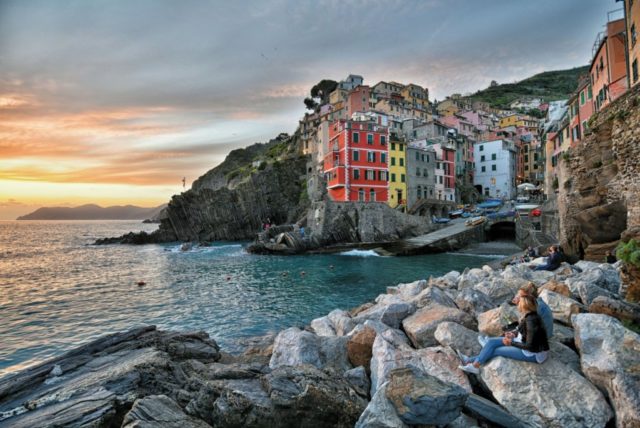
In Italy’s Cinque Terre, I had dinner at a restaurant with a famously entertaining waiter — a huge personality who cracks jokes constantly, wears funny hats that he changes between courses, and makes friends with each night’s diners. He thanked me graciously for coming back to Italy, and he spoke from the heart about how much he’s missed us Americans. “This is my stage,” he explained, sweeping his hand across the cozy terrace of tables overlooking the Ligurian Sea. But he hasn’t just missed his audience; he’s missed those precious connections he gets to make, night after night, with people from all over the globe…those moments where our huge, scary, cruel world feels just a bit smaller, softer, and friendlier.
Traveling right now is not for everybody: the skittish, the vulnerable, and the inflexible may do well to wait a bit longer. But for hardy independent travelers who are willing to assume the risk that comes with doing anything these days, Europe is as richly rewarding as ever.
That said, many of my European friends predict that they’re not quite out of the woods. The looming possibility that Americans could (temporarily) be asked to stay home again for a while — or even that certain countries may have a winter lockdown — is on everyone’s mind. Several have told me that I chose the perfect time to visit (September): While weather is still good enough for outdoor dining, but crowds are less than July and August, when Europeans on holiday flooded popular places. They expect that when people move inside for the winter, just as last year, cases will rise. And they’ve watched with concern the huge spike in the US and elsewhere resulting from the Delta variant — which, so far, appears not to have fully reached many parts of Europe. The big question is whether their high vaccination rates, masking compliance, and testing availability will be enough to forestall a big winter surge. I imagine the answer will be mixed, on a country-by-country basis. Stay tuned.
Even if things do get worse again, I’m hopeful that they will rebound by spring. Europe is getting the hiccups out of the system for “traveling and enjoying life during COVID.” And even if you are choosing to wait until 2022 (or 2023), eventually you’ll reap the benefits of what’s going on here now.
In the end, nobody (including me) wants to go out on a limb and say, “It’s safe to go to Europe — go ahead!” That is still an individual decision, which comes with risk. But in my case, I’m glad I made the choice I did. And, once again, I just have to say it: It feels very, very good to be back in Europe.
UPDATE, October 5: I’ve now been home from Europe for over a week. And I am happier than ever that I made the decision to go. In the end, it was less “unpredictable” than I expected: I assumed that I’d need to make several adjustments to my plans along the way, as conditions evolved. As it turns out, my itinerary came off exactly as I’d planned it, to the minute. Who knew?
I did have to take a COVID test before re-entering the United States, as required by US law. So, two days before my flight, I stopped by one of the many popup testing centers in my Berlin neighborhood — less than a 10-minute walk from my rental apartment. There was no wait, and I was in and out in a matter of minutes. (The only hitch came when I filled out the online form on my phone and paid the €40 testing fee with a credit card. “Oh no! You didn’t need to do that,” the clerk told me. “The government recently changed the policy. Now the test is free, even for foreigners. I’ll refund your money.”) Ten minutes later, I got an email with my official test result — negative — which I showed when I checked in for my flight. Test in, test out, simple!
Again, there are ample good reasons not to travel to Europe right now. But fear is not one of them. Nothing in life comes without risk. As we move into the late/post-COVID era, I suspect we’ll all need to get a little more comfortable with accurately assessing risk, and then making an informed decision about what we do and don’t do. It’s easy to say in hindsight, but in my particular case, this trip was absolutely worth the risk.