A Tuscan Thanksgiving Dinner (Don’t Worry — There Was Turkey)

When I tell people I was in Tuscany for Thanksgiving, their first question is — with a note of concern — “Did you have turkey?”

Americans love Thanksgiving dinner. And many of us simply can’t fathom counting our blessings without an oversized portion of turkey, stuffing, mashed potatoes, and gravy. Our agriturismo host, Isabella, understands this, so very early in the planning stages she reassured her nervous American guests: “And of course we will celebrate Thanksgiving with a special Thanksgiving meal — one with a Tuscan twist.” Well, phew!
cameron-italy-tuscany-Thanksgvng-001

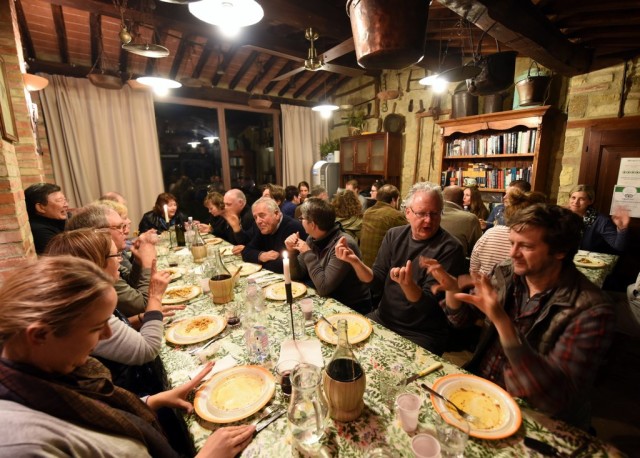
In typically thoughtful fashion, Isabella had arranged a fantastic feast, which happened to be at one of my favorite restaurants in the region (Ristorante Daria, in the tiny hill town of Monticchiello). Months before, Isabella had conspired with the owner/chef, Daria, over a list of traditional Thanksgiving dishes. And the gang at the restaurant had come up with a delicious mashup of American and Tuscan.
cameron-italy-tuscany-Thanksgvng-003

cameron-italy-tuscany-Thanksgvng-004

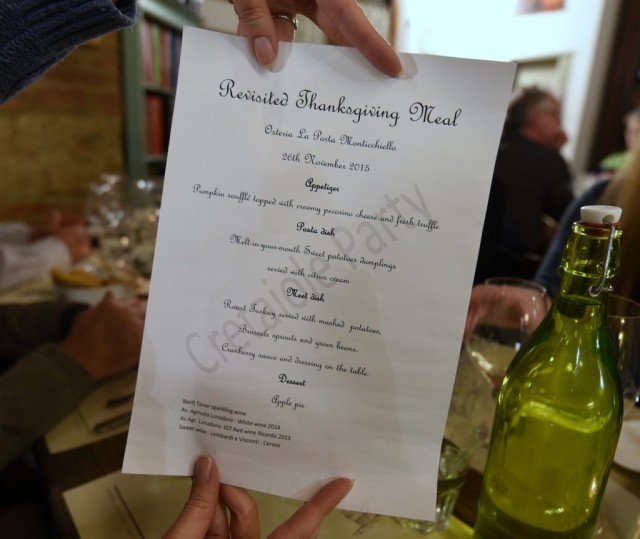
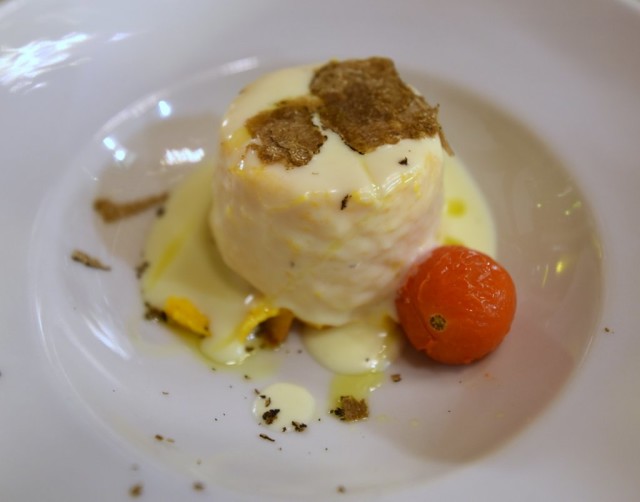
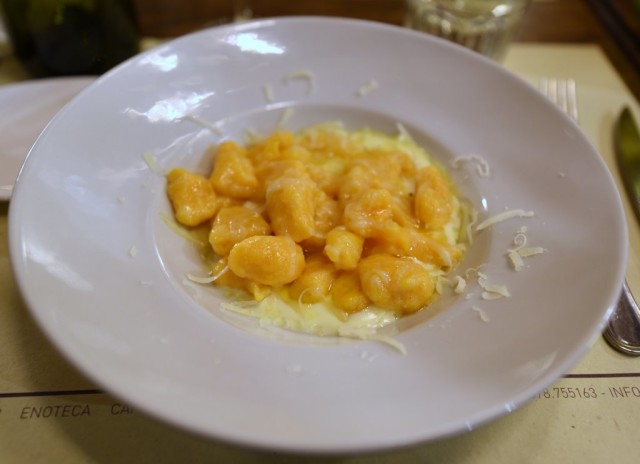
The first two courses were the most Tuscan, but cleverly informed by “our” Thanksgiving ingredients: a delicate pumpkin soufflé, topped with creamy pecorino cheese and fresh-grated truffle. And a dish of pillowy sweet potato gnocchi, gently nestled in a subtle citrus cream. I would not mind seeing either of these dishes on my Thanksgiving table for many years to come.
cameron-italy-tuscany-Thanksgvng-006

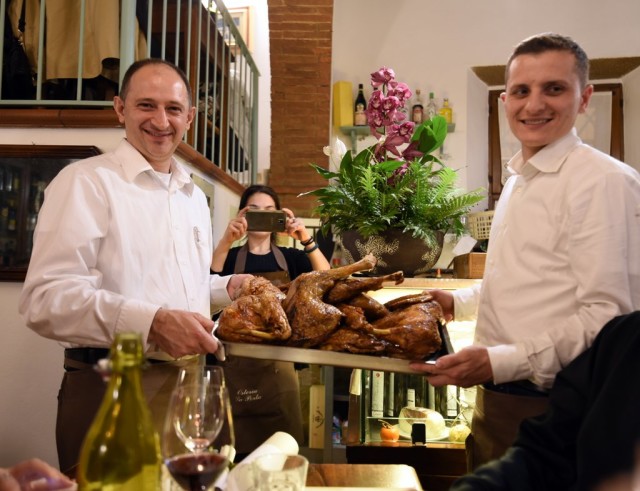
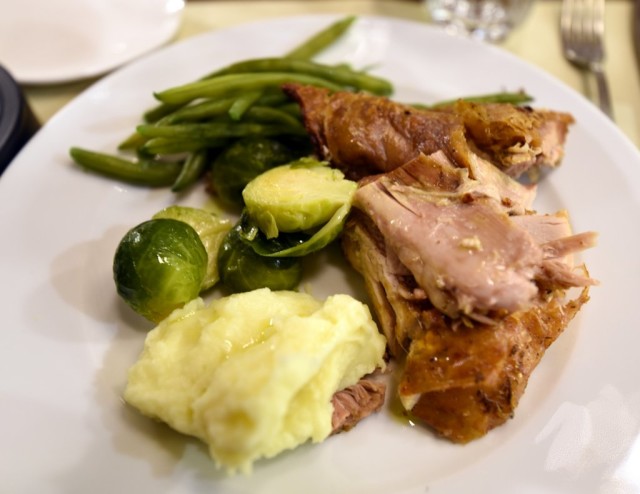
Then it was time for the main event. They loaded all of the turkey onto a tray and ceremonially paraded it through the restaurant. Then they took it back into the kitchen and re-emerged with beautiful — and very traditional — plates of turkey, green beans, Brussels sprouts, and mashed potatoes (with, in a delicious Italian twist, a trickle of fresh-pressed olive oil).
cameron-italy-tuscany-Thanksgvng-007

They also brought out some fantastic gravy and surprisingly traditional cranberry sauce. Daria explained that she’d asked some American friends to ship her some cranberries, which are completely unknown in Italy.

Sitting around the dinner table, watching Isabella’s family, and my family, enjoying an American-Italian hybrid dinner, was poignant. But it made me sad to think that people might pass up an idyllic week in off-season Tuscany with their families, just because of a fear that they may not get their turkey fix.

This is particularly unfortunate because Thanksgiving food isn’t all that exciting to begin with. I sparked something of a riot at our Tuscan Thanksgiving dinner table when I half-jokingly told Isabella, “I’ll let you in on a secret: Nobody really likes Thanksgiving food.”

Yes, we love Thanksgiving dinner. But is it really because of the food? Or is it more about tradition, gauzy memories, and the fun of assembling a blowout meal once a year? Think about it: When’s the last time you got home from work on a Friday night, turned to your spouse, and said, “Hey, you know what I have a taste for? Let’s go out for Thanksgiving food!”

Don’t worry. Plenty of my friends and coworkers have already passionately informed me of my wrongheadedness. But I’ve decided to stick by my highly controversial theory. And, while this rant is partly tongue-in-cheek — and I love a good turkey-and-stuffing dinner as much as the next guy (read: once a year) — it hides a kernel of real travel wisdom.

Holiday traditions are powerful. But keep open the option of busting out of your rut every so often. Risk not having turkey at Thanksgiving. Spend Christmas at a radish festival in Oaxaca instead of singing carols around a fir tree. Skip trick-or-treating in order to be in Slovenia the day after Halloween, when everybody in the country goes to the cemetery to lovingly decorate their family graves. I’ve been fortunate enough to experience all of those things, and never regretted what I was missing out on. And if holidays are primarily about surrounding yourself with the people you care about, you can do that anywhere. Your traditions will always be there, back home, waiting for you…next year.
Cooking in Mamma’s Kitchen: A Tuscan Autumn on a Plate

In today’s foodie age, cooking classes are trendy. And for good reason: They’re the perfect opportunity to learn a new skill, have a culturally broadening experience, and enjoy a great meal, all at the same time. And, while I’ve enjoyed great cooking lessons in polished classrooms, some of the best take place in more casual settings.

cameron-italy-tuscany-marta-cooking-class

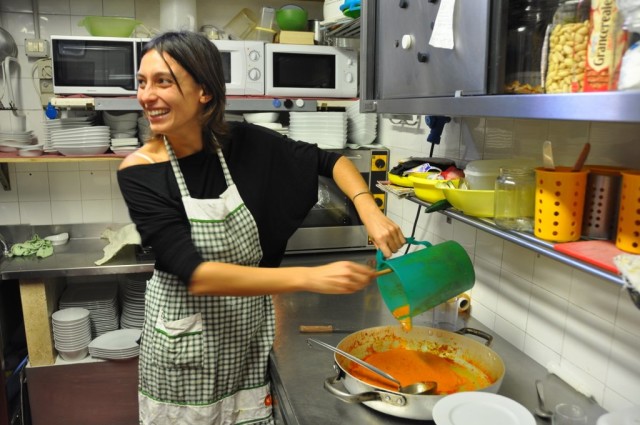
On a previous visit to Tuscany, my wife and I joined Marta in the kitchen of her restaurant. She taught us how to make a spectacular, yet simple, all-purpose tomato sauce: just olive oil, garlic, tomatoes, salt, and a few red-pepper flakes…simmered and blended to smooth perfection. We taught the recipe to our relatives, who — to this day — regularly cook up a batch of “Marta’s sauce.”

On this trip, we wanted to bring the whole family back to Marta’s kitchen. But she’s wintering in Australia, so instead, her mother Laura invited us into her home kitchen to cook — and eat — an extravagant Tuscan lunch.

Not quite the traditional stone farmhouse we’d imagined, Mamma Laura lives in a plush, modern home in a remote hamlet high in the mountains. Standing at her sink, she gazes out over forested slopes, past a beefy plume of smoke rising from a furniture factory just below. It’s a view that makes doing the dishes a reward rather than a chore.

cameron-italy-tuscany-cooking-class-laura-013

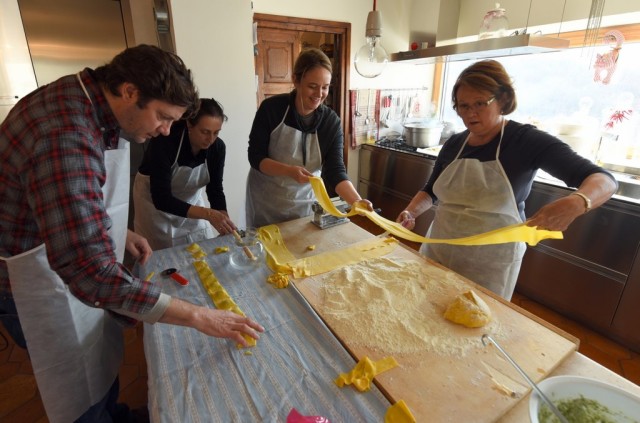
From the moment we arrived, Mamma Laura masterfully orchestrated the meal. She’d demonstrate the task at hand — chopping up chunks of squash, packing ingredients into little pouches of cabbage, rolling out long sheets of pasta dough — then turned us loose to try it out. Ingredients would disappear into an oven or pot or blender, then reappear when it was time for the next step. And, miraculously, everything was done at exactly the right time.

Every so often, Laura pulled out a moonshine-like jug of vibrant green olive oil — just pressed a few days ago — and poured it generously into the recipe. While our calorie-conscious American sensibilities screamed “too much!,”  the result was deliciously persuasive. (And let’s be honest: Are a few extra dollops of fresh-from-the-grove oil any worse for your health than a can of diet pop or a preservative-packed cookie? You could, quite reasonably, make a strong case for the opposite.) One thing I’ve learned from cooking in a Tuscan kitchen: Americans are afraid to use nearly as much salt and olive oil as Italians do. If you want authentic flavor, you have to go all-in.

cameron-italy-tuscany-cooking-class-laura-054

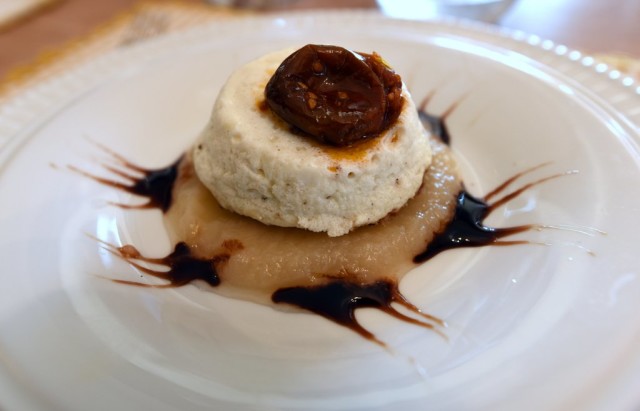
The first course was a crustless, savory cheese tortino (young pecorino and ricotta, made light and delicate by folding in whipped egg whites, then baked in the oven) perched on a pear puree and topped with a marinated, sun-dried tomato.

Next was a scrumptious autumn soup. We rough-chopped chunks of a giant, comically orange “pumpkin” (more like a winter squash), which were then mashed and simmered. Laura mixed in some peeled, boiled chestnuts and a handful of porcini mushrooms. The result wasn’t the sickly-sweet “pumpkin soup” I avoid on menus back home. It was rich, hearty, and satisfying — a Tuscan November in a bowl.

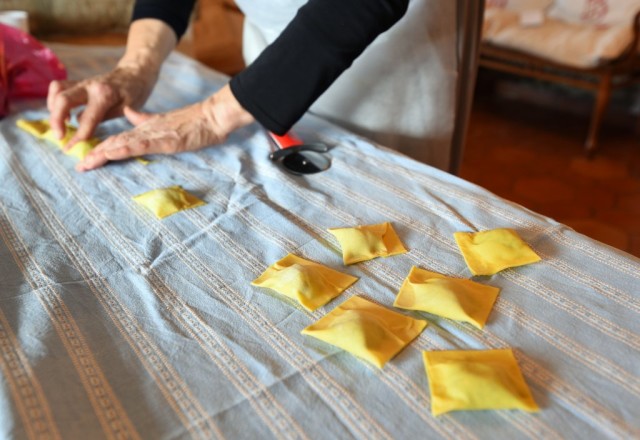
Then came the pasta course: handmade ravioli stuffed with nettle greens and ricotta cheese. This one required a particularly hands-on assembly.

cameron-italy-tuscany-cooking-class-laura-015

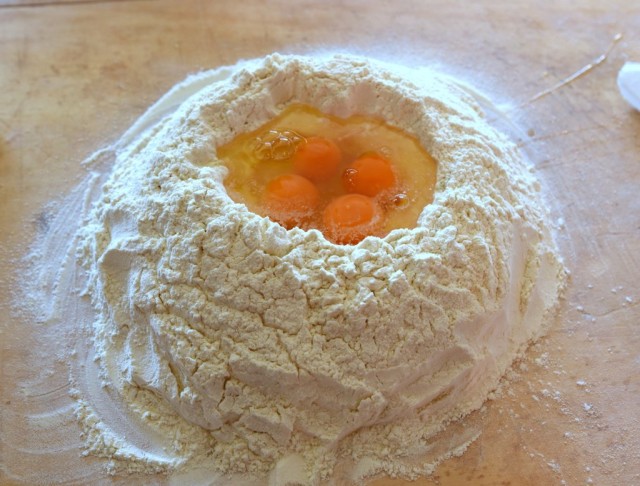
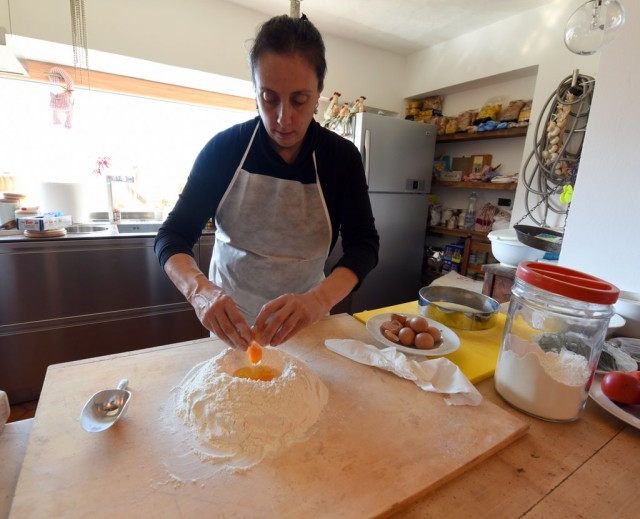
First, Laura created a little volcano of flour, and cracked some vibrant-orange eggs into the crater.

Then we took turns carefully hand-mixing with a fork, as Laura sprinkled in more flour.

cameron-italy-tuscany-laura-cooking-family

When the mushy mess transformed into a solid hunk of dough, we kneaded it, then cranked long, yolk-yellow strips through a pasta roller until they were thin as a ribbon.

cameron-italy-tuscany-cooking-class-laura-034

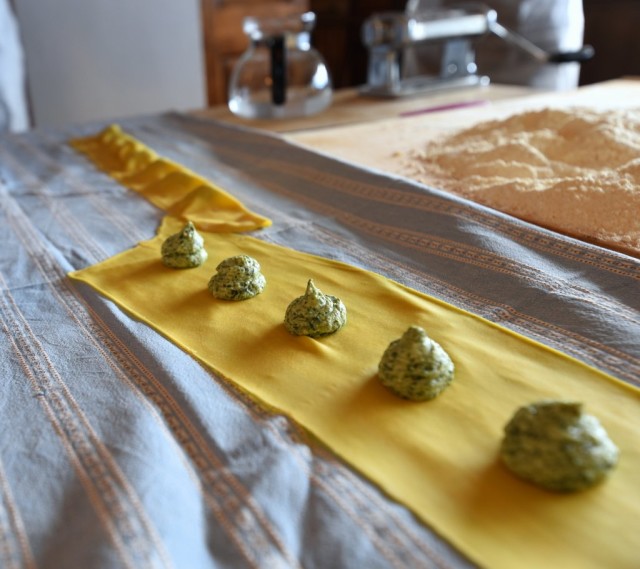
Laura carefully laid each pasta sheet onto the table, piped out the proper amount of filling, folded it over, cinched it shut with water, and sawed out flawless ravioli.

cameron-italy-tuscany-cooking-class-laura-036

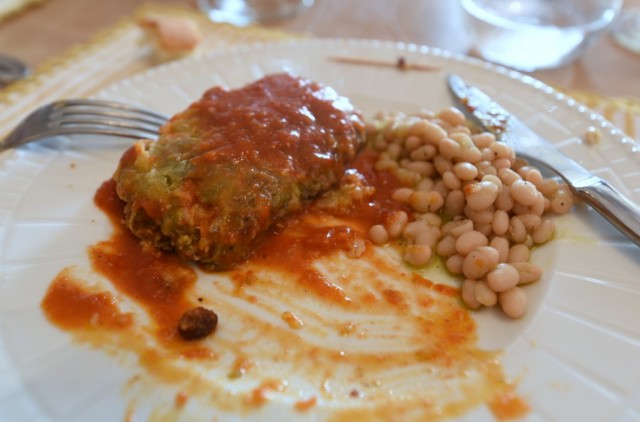
The main course was an outrageously delicious cabbage roll, with a filling of bread crumbs soaked in saffron-infused milk, subtly caramelized raisins, just-cracked walnuts, and decadently melted Gruyère cheese (one of the meal’s only non-local ingredients). Everyone rolled their own. And, of course, it was topped with “Marta’s sauce.”

cameron-italy-tuscany-cooking-class-laura-056

On the side were the best beans I’ve ever eaten. This dish began as a few handfuls of dried beans in the bottom of a pressure cooker. (Italians — with their regional pride and respect for culinary subtlety — are very specific about their ingredients. Laura assured us these were only the very best beans, grown on the shores of Lake Bolsena. Her American students glanced at each other, shrugged, and scribbled “white beans” in our notebooks.) Into the pot went water, abundant olive oil, a few cloves of garlic, pepper flakes, and a little sachet of fresh sage and rosemary. The pot hummed along on the stove all morning long, and by lunchtime, the beans were luxuriously tender and impossibly flavorful.

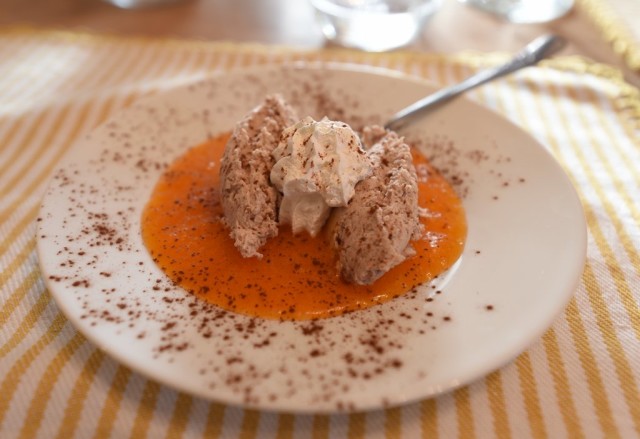
And for dessert: a mousse made with the same chestnuts that had gone into the soup, topped with whipped cream, all sitting on a thick puddle of liquefied flesh from a borderline-overripe persimmon.

cameron-italy-tuscany-cooking-class-laura-057

It wasn’t until we’d eaten to our hearts’ content that we realized the meal had been entirely meatless (to accommodate a vegetarian in the family). And do you know what? With cooking this good, nobody even missed the meat.

Anyone can have an experience like this. It’s a substantial investment of time, but from a financial perspective, it’s a tremendous value: Our all-morning cooking class, and the meal that resulted, cost us about the same, per person, as a nice dinner out.

Incorporating amazing food — and unforgettable experiences — into your travels doesn’t have to be expensive. You just have to set your priorities and plan ahead.

Foodie Tuscany

It should come as no surprise that our Thanksgiving week in Tuscany was all about the food. There were truffle hunts. There were wine tastings. There were three different cooking classes. And, of course, there was Thanksgiving dinner. I’ll cover each of those foodie experiences in a separate post. (Be warned: If you are likely to grow weary of hearing about Italian cuisine, then you may just want to excuse yourself now.)

As an antipasto, here’s a foretaste of the bountiful food experiences we enjoyed in Tuscany.

Italy is all about eating with the seasons. In late November, that means white truffles, chestnuts, and zucca. (Usually translated as “pumpkin,” this isn’t quite the jack-o-lantern that’s plastered on every product at Trader Joe’s. In Italy, it’s closer to what we’d call “winter squash.” Italians call a dim-witted person il zuccone — “ol’ squash-head.”)

`

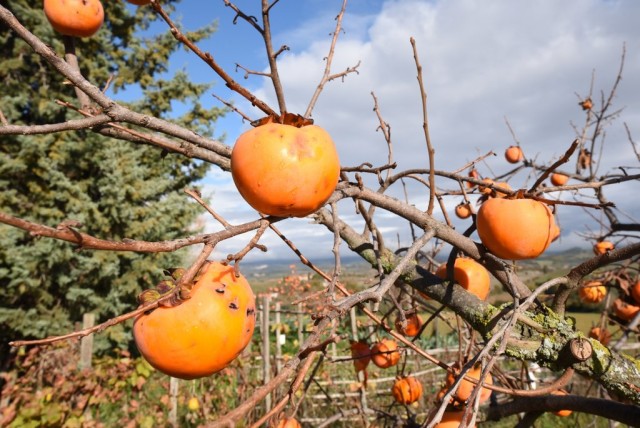
This time of year is also the season of the persimmon (cachi). These plump fruits — which look like bright-orange tomatoes but have a sweet, bright bouquet — dangle from spindly little branches all over Tuscany.

cameron-italy-tuscany-pasta

Much has been written about the Osteria Acquacheta steak house in Montepulciano — one of Rick Steves’ favorite restaurants. And, of course, I had to bring my steak-loving father-in-law here for dinner. We started things off with some delicious, handmade pastas. (Acquacheta — a place where everything is overshadowed by the steak — cranks out pastas that are far better than they have any right to be.)

cameron-italy-tuscany-montepulciano-steak

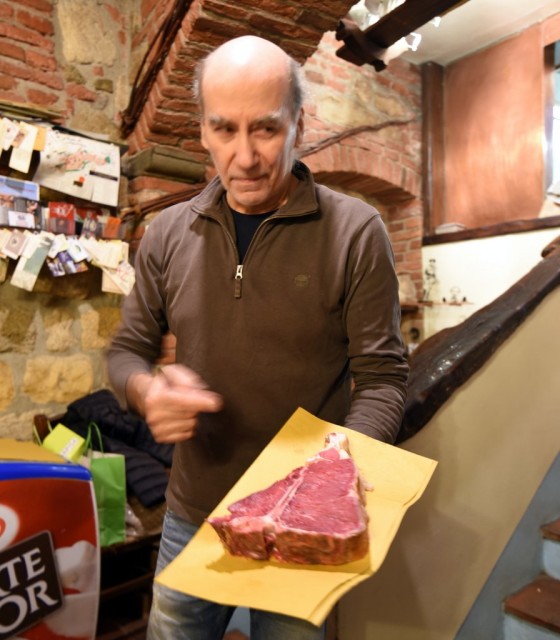
When the owner, Giulio, came by to present us with a 1.75-kilogram (four-pound) T-bone of prized Chianina beef, we could only say yes.
cameron-italy-tuscany-montepulciano-steak2

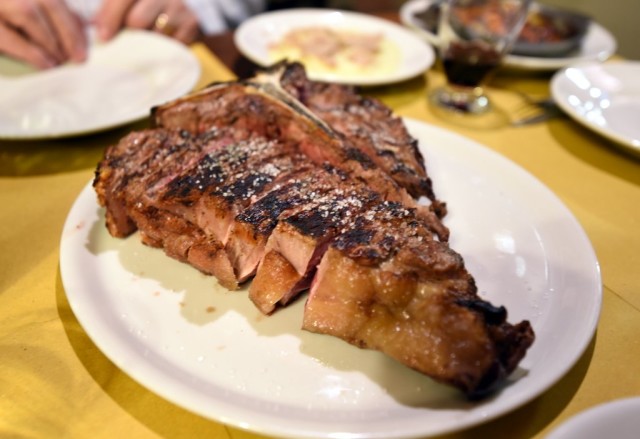
After a trip through the wood-fired oven, the steak — crusty with char and sea salt — hit our table. The meal was, in every sense, tremendous. (The vegetarian in our group decided to skip this restaurant…and was glad she stayed home.)

cameron-italy-tuscany-cretaiole-063

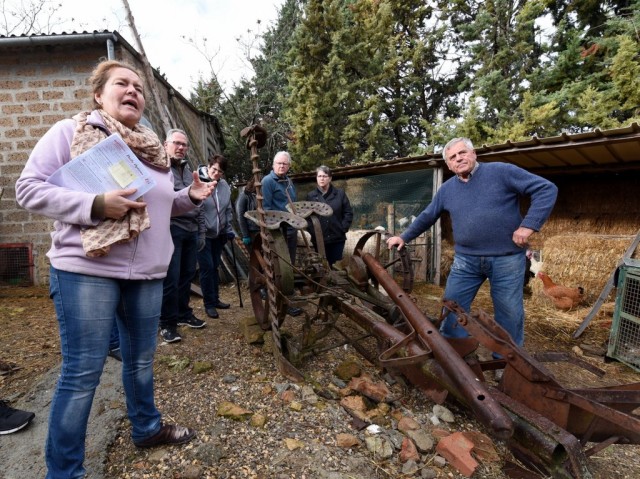
Another key point of Italian eating is appreciating where your food comes from. Our agriturismo offered a guided tour of their working farm, where we explored the barn, saw equipment old and new, and met the animals.

cameron-italy-tuscany-cretaiole-036

cameron-italy-tuscany-cretaiole-038

cameron-italy-tuscany-cretaiole-035

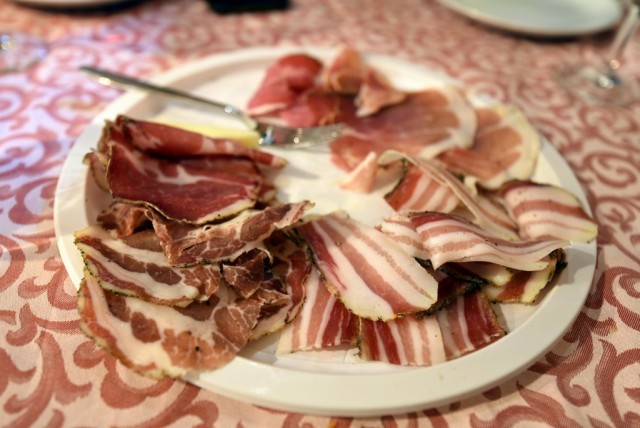
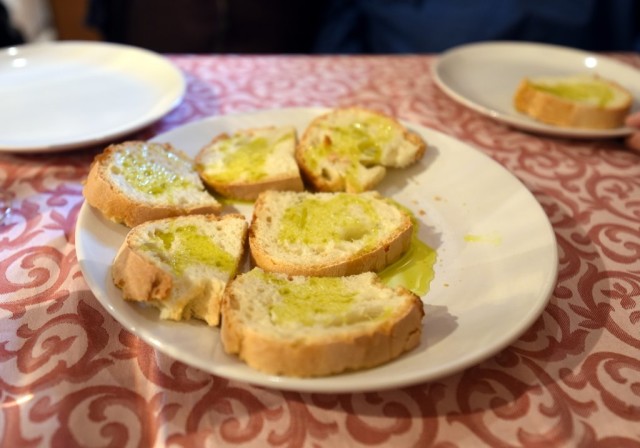
At the end of the tour, we dug into a generous lunch of what they grow: wine, cured meats, and bread drenched in vivid-green, new-harvest olive oil. It may not rank as high cuisine, but it was one of our favorite meals of the trip.

Settling in at the Agriturismo: Cretaiole’s Cast of Characters

In 15 years of researching guidebooks for Rick Steves, I’ve checked out hundreds — or probably thousands — of accommodations. But I’ve never seen one quite like Agriturismo Cretaiole. A place has to be pretty special for me to suggest bringing my in-laws there for Thanksgiving week. And Cretaiole exceeded even our lofty expectations.

cameron-italy-tuscany-cretaiole-054

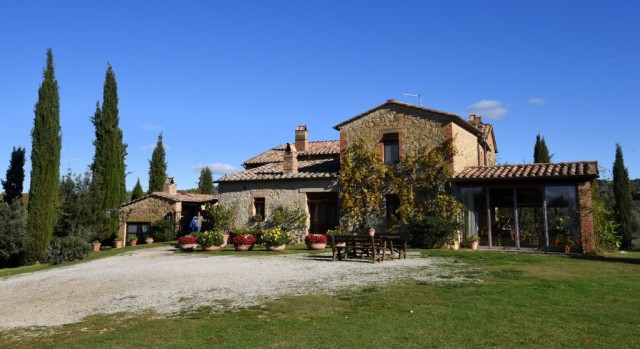
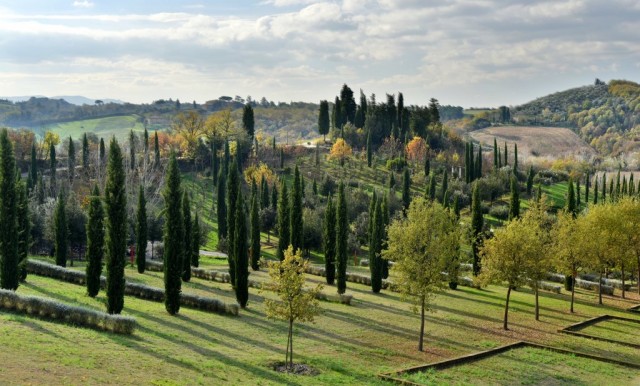
This stone farmhouse sits like a mirage, poking up from an olive grove at the top of a ridge that overlooks the gently rolling, cypress-fringed hills just outside of Pienza. Yes, the setting is idyllic. But what really sets Cretaiole apart are the remarkable people who run it.

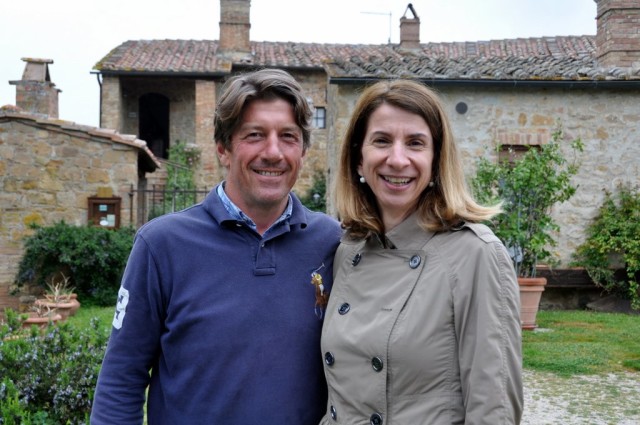
Two decades ago, Isabella was an upwardly mobile city slicker from Milan — just getting into her career, and already feeling burned out. During a break one winter, she escaped the rat race for a week, checking in to a rustic farmhouse B&B in the remote Tuscan hills. That’s where she met the farmer’s son, Carlo.

Isabella and Carlo fell in love. And, after a long-distance romance, they finally got hitched…and Isabella moved down to the farm. In a kind of contemporary Italian Green Acres, Isabella and the Moricciani clan clashed a bit as she found her niche in this traditional world. But it rapidly became clear: This city mouse/country mouse combination was perfect for the Italian concept of agriturismo.

cameron-italy-tuscany-cretaiole-008

In 1985, the Italian government began providing tax breaks for struggling family farms that opened their doors to travelers. To legally qualify as an agriturismo, a place must balance its tourist activities with actual farm production. (Many Americans love the idea of an agriturismo — but when they’re plunged into all of those authentic farm smells, they realize what they really wanted was a rustic country inn.)

An ideal agriturismo, Cretaiole represents the perfect marriage of a real, hardworking farm and an accessible, well-designed travel experience. Carlo and his dad, Luciano, produce olive oil, wine, cured meats, eggs, produce, and more. Meanwhile, Isabella handles the turismo end of things, applying business savvy, a remarkable attention to detail, and a rare intuition for what her guests want before they know they want it.

The rural setting and traditional-yet-cozy lodgings at Cretaiole are a find. But Isabella also orchestrates an array of special activities that provide precisely the experience her guests are seeking — always hitting the perfect balance of rustic authenticity and comfort. (Our truffle hunt was one great example.)

cameron-italy-tuscany-cretiaole-isabella-carlo

Isabella embodies a bridge between her guests and her in-laws’ farms. As a relative outsider herself, she observes the same little quirks that fascinate the rest of us — and demystifies them for her guests.

Carlo is a farm boy. But, as evidence by his marriage to a brilliant businesswoman, he’s also smart and cultured. He can get dirty mucking around with the pigs, but he’s also a licensed olive oil taster — with a palate so refined, he has the papers to prove it. Still, Carlo is more at home on a tractor or trekking through the fields than in front of a group of Americans. (During our first morning’s orientation meeting, Carlo fidgeted and glanced nervously at the encroaching clouds. Finally he asked Isabella if he could be excused to go on his morning constitutional.)

cameron-italy-tuscany-cretaiole-046

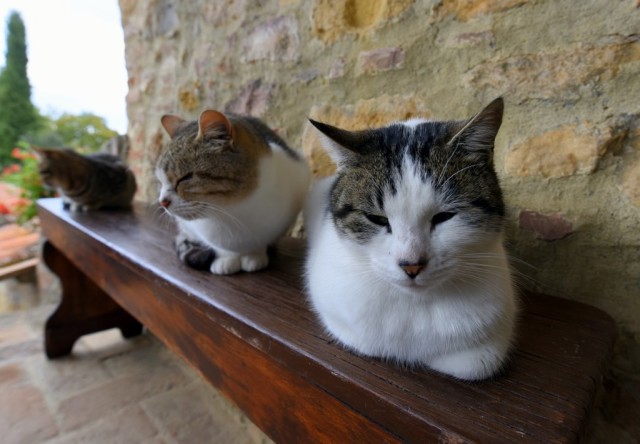
Tickled by the chorus line of cats that showed up at our doorstep each morning to beg for burned toast, I asked Carlo what their names were. “They don’t have names,” he said, slightly perplexed. “They’re farm animals.” Watching Carlo affectionately play with the feline companions he refuses to christen, I came a little closer to understanding what it really means to be a farmer.

cameron-italy-tuscany-cretaiole-065

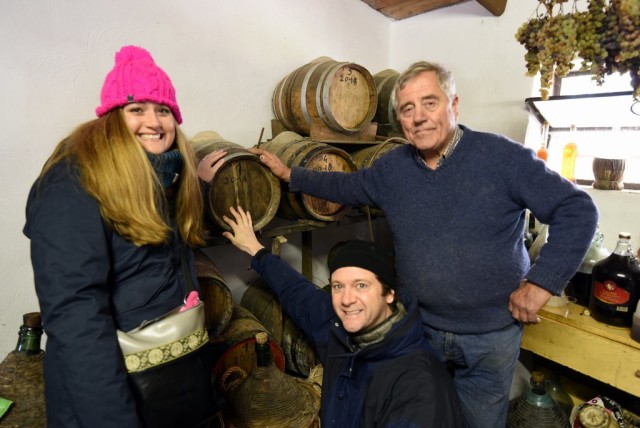
Luciano is the paterfamilias, who still thinks he runs the show even as he surrounds himself with strong women. He’s careful to project the image of a grizzled curmudgeon. But deep down, he’s touched by the fact that people come from all around the world to settle in for a week at the farmhouse where he grew up. When we toured his farm, he insisted on posing for pictures with his guests in front of the casks where he ages his prized Vin Santo.

Liliana, Luciano’s wife, is rarely seen and never heard. While the rest of the clan attends to business, she looks after the kids and keeps the home fires burning. As Isabella puts it, Liliana is the glue that holds the whole operation together.

cameron-italy-tuscany-cretaiole-034

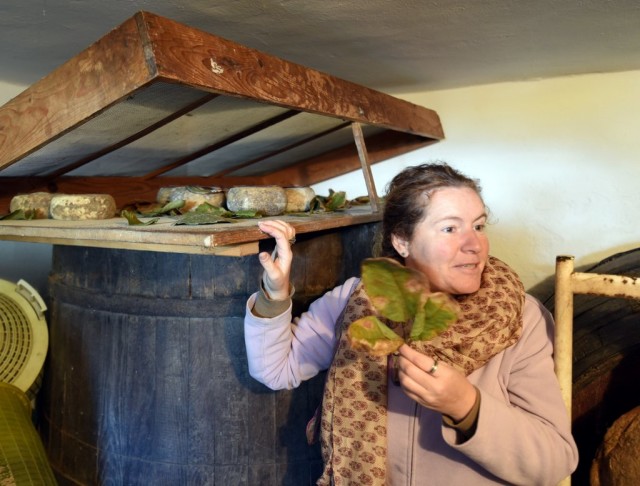
Carlotta, Isabella’s right hand, is the newest member of the bunch. But she instantly fit right in. She heroically translates for other family members, tirelessly answers questions, and decodes local customs for her curious guests. (Here, she explains that the local pecorino cheese is set on walnut leaves to age.)  Carlotta may not be related…but there’s no doubt she’s family.

And rounding out the cast of characters are the guests — many of whom are on their second, third, or sixth visit. Cretaiole, which usually requires a one-week minimum stay, attracts a rare breed of traveler who understands that slowing down can create the best kind of travel experience. In a week in Italy, you can get fleeting glimpses of Venice, Florence, and Rome. Or you can settle into an agriturismo for a week — waking up each day to a stunning view that changes with the weather, really getting to know a place and the people (and cats) who live there, and feeling so deeply rooted in the Tuscan soil that the 45-minute drive to Siena feels like a big adventure. There’s no doubt that our fellow guests made our Thanksgiving week experience even more memorable.

cameron-italy-tuscany-cooking-class-cretaiole-058

If people-to-people connections are the stuff of great travels, then Cretaiole is an embarrassment of riches.

Sniffing Out Truffles with Milli

On a crisp, late-November morning, we gather on a ridge-top gravel road deep in the heart of Tuscany. On one side stretches a postcard panorama of rolling hills, pointy cypresses, and distant ridges. On the other is a thick forest, labeled with Italian signs:  “Keep out! Private truffle-hunting property!”

cameron-italy-tuscany-Truffles-051

We meet our guide for the morning: Paolo the truffle hunter. Paolo explains how he bought this property for a song because he had a hunch it’d be great for truffles. Now his main occupation is tending the forest and seeking out those elusive deposits.

Paolo explains that you can’t plant a truffle, and you can’t predict exactly where they’ll grow. They tend to appear near the roots of trees, under a few inches of soil and a gentle layer of fallen leaves. He works hard clearing the forest, creating an ideal habitat. Then he grinds up the season’s unsold truffles and scatters their spores. And then he waits…and hopes. White truffle season — when the pungent odor of the most precious type of truffle is released — has just begun. It’s time to harvest.

Because truffles grow entirely underground, the only way to find them is by scent. And human noses just aren’t sophisticated enough for the job. So Paolo introduces us to “la protagonista”: Milli.

cameron-italy-tuscany-Truffles-012

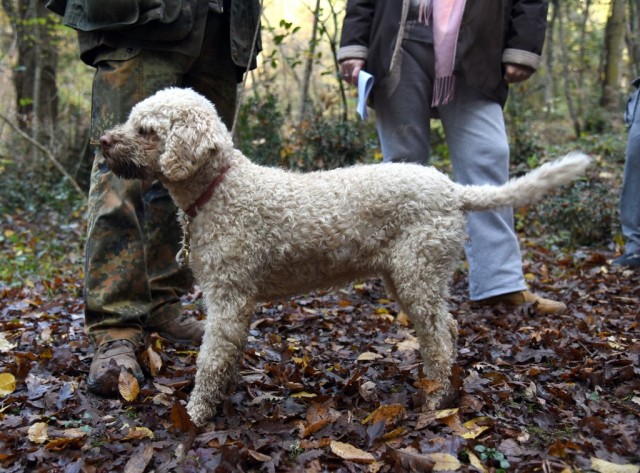
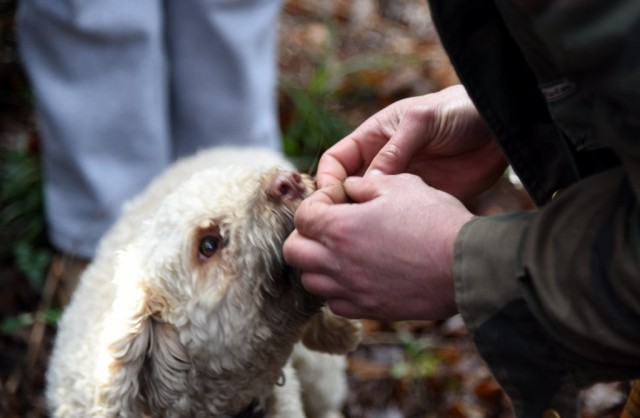
Milli is a lovable, exuberant pup with a short, thick, curly coat and laser-beam, beady eyes that are always trained on Paolo. He tells us she’s a breed called lagotto romagnolo…but she looks like a miniature golden doodle to me.

When Milli was just ten days old, they began training her to find truffles. The first part is easy: You give them a taste for truffles by feeding them little bits. Before long, they can sniff them out anywhere. The hard part, Paolo explains, is to train them to stop eating truffles.

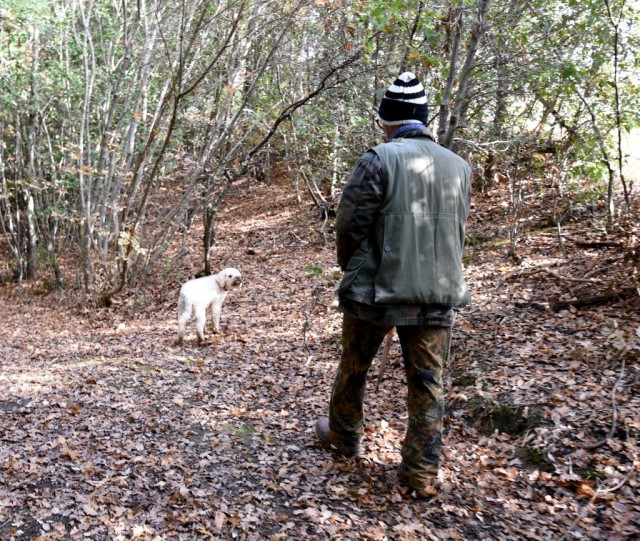
Andiamo! It’s time to hunt. Paolo and Milli lead us down a steep trail into a wooded ravine. Light twinkles through half-bare trees as we wade through a thick carpet of leaves. “What goes up, must come down,” everyone chuckles as we descend. At one point, Milli pauses and begins rummaging and scratching around in the middle of the path. Paolo diffuses everyone’s excitement by explaining that she’s found a “dog truffle” — with a similar pungent odor, but not palatable to humans. Milli enjoys this little truffle treat before continuing on her way.

Reaching the bottom of the ravine, Paolo says the magic word: “Dov’è?” (Where is it?)… and Milli is off like a shot. She scurries from tree to tree — sniffing, sniffing, sniffing — then off to the next tree. The suspense builds as twenty bundled-up Americans form a chain behind her haphazard search.

cameron-italy-tuscany-Truffles-019

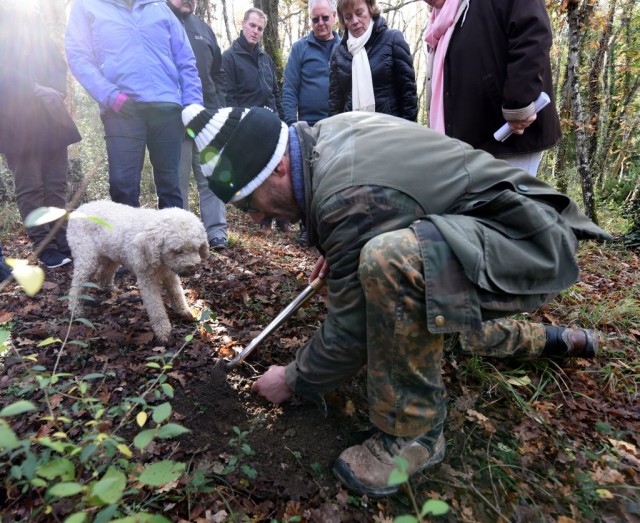
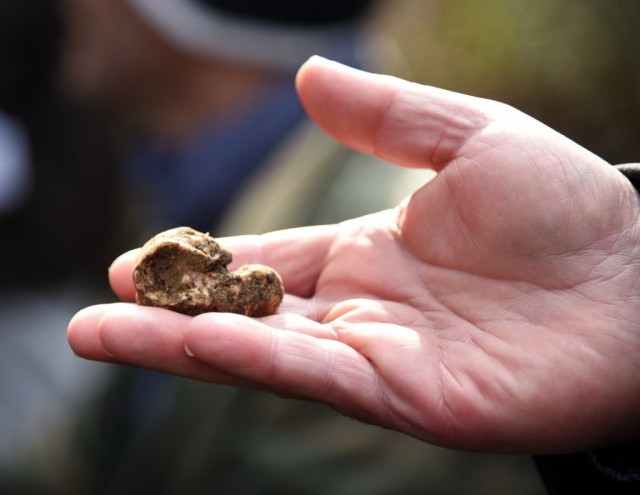
Milli bolts off, racing through the woods after unseen truffles. Paolo runs after her. We lose sight of both of them. And then: Success! We emerge into a little clearing where Paolo stands, holding Milli back. She’s clawed through the damp earth to reveal the corner of a little gray chunk.

cameron-italy-tuscany-Truffles-033

Keeping one hand on Milli, Paolo uses his special skinny shovel to unearth the truffle with a surgeon’s precision.

cameron-italy-tuscany-Truffles-030

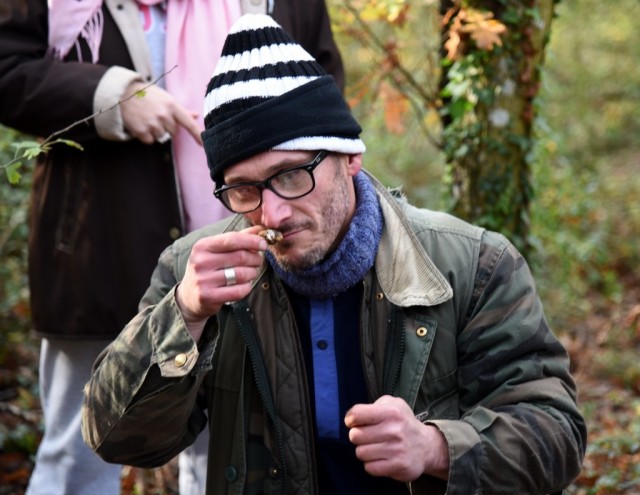
Holding it to his nose and inhaling deeply, he gives a “so-so” gesture. It’s not a top-quality truffle…but it’ll be profitable.

cameron-italy-tuscany-truffles-milli

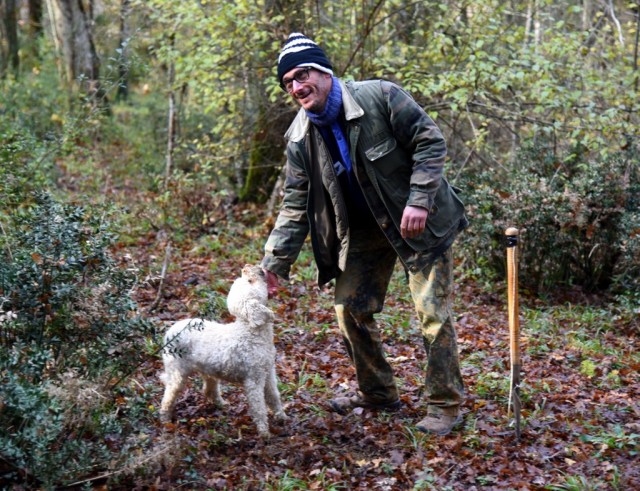
While his audience passes around the truffle for a sniff, Paolo rewards Milli with dog biscuit after dog biscuit. He keeps saying, “Solo un’altro” (just one more) — then gives her several more treats. Could you resist?

cameron-italy-tuscany-truffles-truffle

After just an hour or so, Milli has found two more truffles. Not a bad morning’s work.

Watching Paolo and Milli at work, it’s clear that if you enjoy wandering through the woods with your best friend at your side, there are few more rewarding careers than being a Tuscan truffle hunter.

cameron-italy-tuscany-Truffles-042