What traveler doesn’t love a great European market? There are few better windows into local life than rubbing shoulders with shoppers, browsing stands piled high with colorful produce, nibbling on street munchies, and being fully immersed in the sights, sounds, and smells of the local community.
Over half a lifetime of traveling around Europe, I’ve been collecting my favorite market experiences for travelers — where you can glean some insights into local culture and cuisine, and browse for a good, local, quality meal. This is a mix of old-school covered markets, trendier food halls, and sprawling, open-air markets that take over an entire neighborhood or town. I’ve heavily skewed my suggestions to foodie options, where you’ll find dishes that are creative and interesting (rather than just fill-the-tank), while still being affordable. Happy browsing!
10. Mercado de San Miguel, Madrid, Spain

Just steps from the grand Plaza Mayor, in the heart of Spain’s capital, sits this 1915 erector-set market hall. Fully remodeled in 2009, today it’s a bustling showcase of edible Spain. Squeezing between the crowds, you’ll find only the best jamón ibérico (air-cured ham), Manchego and other artisanal Spanish cheeses, powerfully piquant skewered pickles and olives (banderillas), delectable pastries, little skillets of paella, tinned fish and seafood, brochetas (meat or seafood skewers) grilled to order, smoked salmon, sweet vermouths from around Spain, croquetas with various fillings, Mexican dishes from a Michelin-star chef, and robust Rioja wines. It’s a culinary tour of Spain, under one roof.
9. Östermalms Saluhall, Stockholm, Sweden
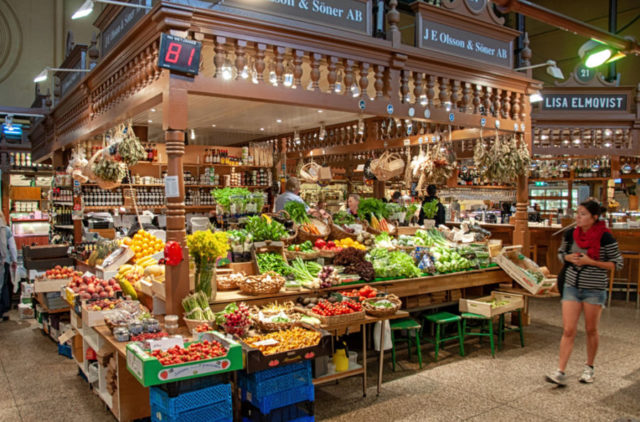

A classic. Anchoring Stockholm’s posh Östermalm neighborhood, this market hall is simply elegant. Handsome, hand-carved wooden stalls display just-so piles of produce, stacked as if posing for a still-life. The wares here feel…curated. Composed. With Scandinavian precision. There aren’t many bargains in this pricey city, but the Östermalms Saluhall is fun to browse for a high-end picnic, or to settle into a market eatery for a quality deli plate, a delicately composed salad, a sticky Scandinavian sweet roll, a splurgy seafood dish, a gourmet smørrebrød (open-face sandwich), a delectable handmade praline, or a selection of Lebanese small plates. Note: The food hall is undergoing a makeover through 2020; in the meantime, the vendors have set up temporary digs nearby.
8. Markthalle Neun, Berlin, Germany
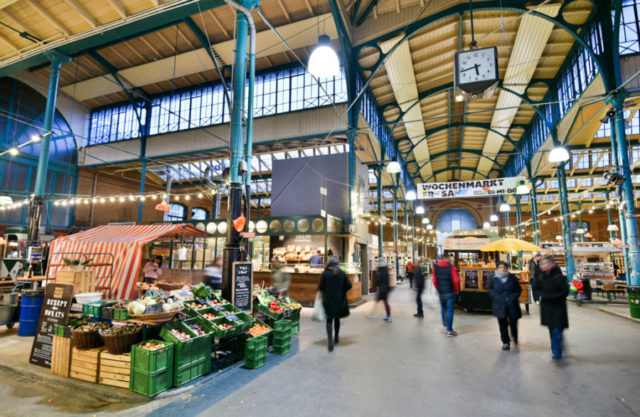
Berlin’s Kreuzberg district is home to its most cutting-edge, engaging culinary scene — and Markhalle Neun is its flagship. Tucked in a workaday neighborhood away from the tourist sights, it fills a beautifully restored 19th-century hall with greengrocers, cheesemongers, butchers, fishmongers, florists, and bakers, all with an appropriately Berlin-hipster vibe. Meanwhile, food stands sell Berlin classics like Buletten (meatballs), Stolle (open-faced sandwiches), Brezel (big doughy pretzels), and Currywurst — but also Italian pastas, French crêpes, Turkish deli meats, Spanish tapas, and even BBQ from the USA. Markhalle Neun scores bonus points for its many special events (listed at www.markthalleneun.de), including its Saturday farmers market and its “Street Food Thursday” — a beloved institution for Berliners seeking a trendy yet affordable dinner.
7. Mercato Centrale, Florence, Italy
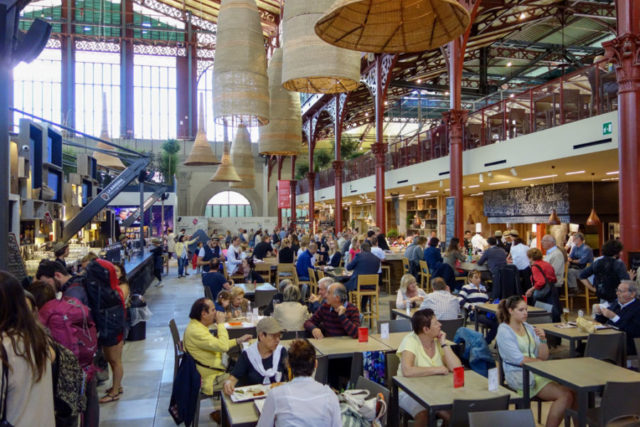
For years, I’d peek tentatively inside this cavernous market hall in the center of Florence, which felt dark and foreboding. With tattered stalls and piles of garbage out front, it felt like it hadn’t changed since the days of Vittorio Emanuele II. Then, in 2014, they converted the top floor into a high-end food circus. Just walk past the still-grubby produce stalls on the main floor, and hike up the stairs to a world of Italian taste treats: hand-rolled pastas, prizewinning prosciutto, massive steaks cooked so rare they still moo, melt-in-your-mouth panini, gourmet burgers made from Tuscany’s prized Chianina beef, rotisserie chicken, big juicy wads of mozzarella di bufala, handheld flatbread sandwiches called trapizzini, big slabs of rustic pizza, tender stewed beef cheeks, truffle-infused oils and pâtés, the rustic Tuscan bread soup called ribollita, deep-fried tasties, cannoli and other Sicilian sugar bombs, and high-end tripe sandwiches (a Florentine classic!). Travelers smart enough to escape the tourist-gouging restaurants on the main drag retreat to this upper level — like pigeons in the rafters — to take a break from intense Renaissance sightseeing with pretty much any Italian taste treat they can imagine. Tuscany is home to many foodie finds — but this is one of the best.
6. Belvarosi Piac, Budapest, Hungary
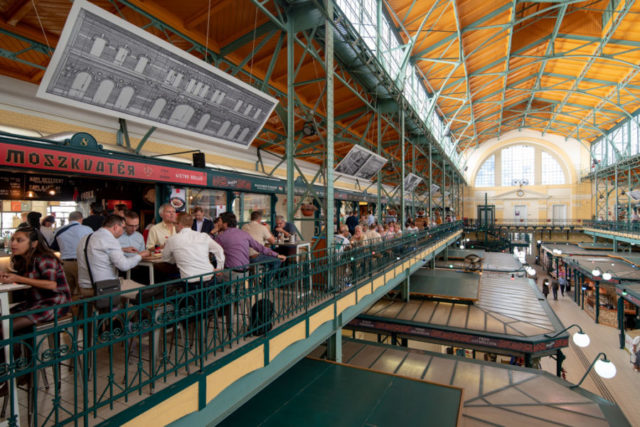
In Budapest, tourists flock to the Great Market Hall, an elegant palace of produce built around the turn of the 20th century. And you really do have to see the Great Market Hall. But don’t eat there — the “local”-seeming food counters upstairs specialize in ripping off naive tourists. Instead, head to a different, smaller, and far more authentic neighborhood market hall, also right in the city center (a couple of minutes’ walk from the Parliament): the Belvarosi Piac on Hold Street. In an atmospheric Industrial Age space that feels like the Great Market Hall’s little sibling, producers occupy the ground floor, while the upstairs is ringed by tempting high end-yet-affordable food stands: massive schnitzels at Buja Diszno(k), gourmet sausage at Lakatos Műhely, Russian grub at Moszkvatér (named for the since-rechristened “Moscow Square”), gourmet burgers at Kandalló, Thai-style khao man gai (poached chicken in garlicky sauce), and updated Hungarian classics at A Séf Utcaja. Anchoring the space, down on the main floor, is Stand 25 Bisztró. Here, celebrity chefs Szabina Szulló and Tamás Széll artfully fuse Hungarian classics with international influences (or is it the other way around?). While not cheap by market hall standards, Stand 25 a bargain for a Michelin-caliber lunch in a memorable setting (lunch only, plus dinner Friday and Saturday, book ahead).
5. Ballarò Market, Palermo
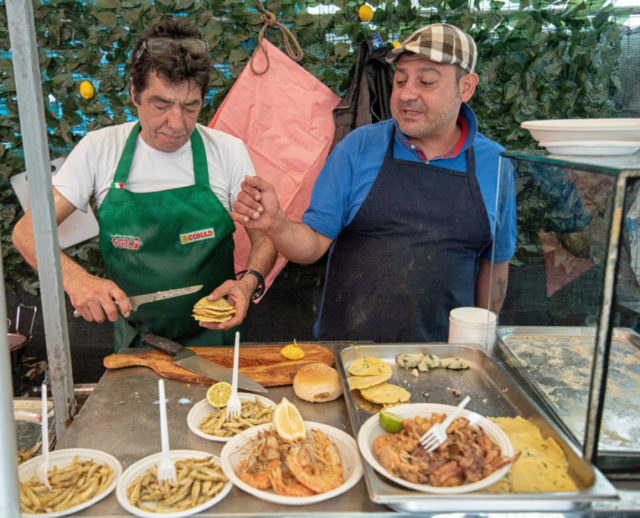

The Sicilian capital has some of the best, most vivid street markets in all of Europe. And the granddaddy of them all is Ballarò — seedy, chaotic, bewildering, and invigorating. Come here to jostle with Sicilians who verbally arm-wrestle for the best deals on the best ingredients. The vendors — continuing a tradition that supposedly dates back to Arab rule — warble their sales pitches with an otherworldly cadence, demanding the attention of passersby. Giant slabs of pink tuna perch on marble counters, like cadavers ready to be dissected. Produce stands overflow with vivid-purple eggplants, long, skinny Sicilian zucchini, and tomatoes that actually taste like tomatoes. Best of all, scattered throughout this multi-block span of barely controlled chaos are a wide variety of tempting street food stands, selling greasy napkins topped with dirt-cheap taste treats for every level of adventurous eaters — from arancine (deep-fried rice balls) and sfincioni (“Sicilian pizza”) to pani ca’ meusa (spleen sandwich) and polpo bollito (tiny boiled octopus, eaten whole). (For a complete rundown, check out my post on Palermo’s street food.) Go ahead, dive in — this is what real travelers live for.
4. Mathallen, Oslo, Norway
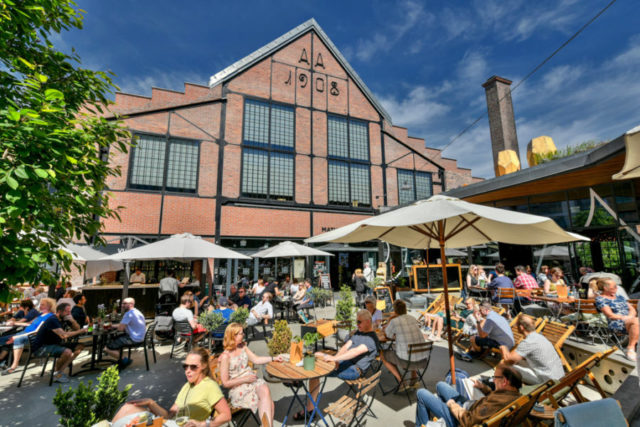
I love Oslo. But I’ve rarely found a memorable meal tucked among the dreary, blocky downtown core along Karl Johans Gate. However, just north of downtown runs the Akers River Valley, where the city has redeveloped a former wasteland of red-brick factories and warehouses into a lively people zone. Its centerpiece is Mathallen (“Food Hall”), filling the scavenged brick skeleton of a 19th-century factory. Norwegians recognize the limitations of their cuisine. And so, in addition to stands selling fresh, whole-grain bread (at Smelt Ostesmørbrød) sweet and savory pies (at Mildrids Kjøkken), and farm-fresh geitost cheese (at Ost & Sånt), you can nibble tapas, pastas, sushi, tacos and tequila, pizza, Asian street food, gourmet ice cream, and much more. Ringing the outside of the market are a variety of industrial-mod, higher-end eateries. I skipped the fried chicken and “global tapas,” and went a bit more traditional at Vulkanfisk, serving up affordable-for-Oslo, elegantly presented, fresh seafood (the garlic-sautéed scampi were a flavor bomb). Anytime I’m in Oslo at mealtime, I come up with an excuse to head up the Akers River to Mathallen.
3. Maltby Street Market Rope Walk, London
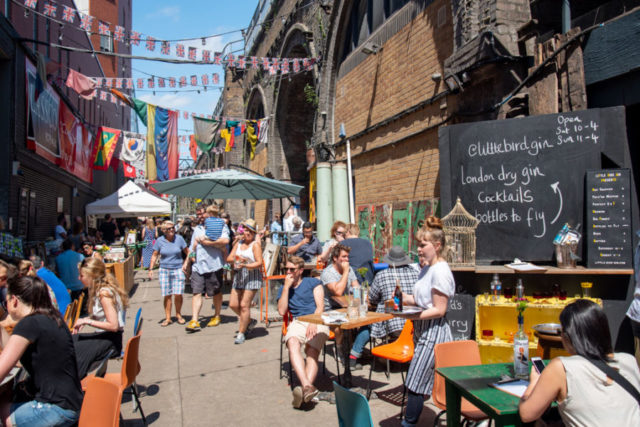

One summer, my wife and I rented an apartment in London for a week and checked out a different market each day. And at the end of the trip, the Maltby Street Rope Walk emerged as our favorite (every Saturday and Sunday). Tucked along a vintage brick railroad trestle, far from any tourist attractions (roughly across the Thames from the Tower of London), it’s an explosion of foodie energy. Beyond the hole-in-the-wall eateries, wine bars, taprooms, and Mozambique-style burger bars squeezed into the arches under the train tracks, the weekend market adds a world of pop-up food stands: grilled sandwiches oozing with tangy English cheese; little slices of rye bread mounted with melt-in-your-mouth Scottish salmon; slabs of grass-fed, dry-aged, rare-grilled hanger steaks; wild variations on Scotch eggs; Middle Eastern flatbreads with savory toppings; German-style sausages; gyoza steamed in wicker baskets; and a mouthwatering array of gooey brownies. For a more traditional “market hall,” it’s hard to beat London’s famous Borough Market. The funky Camden Market sprawls through a yellow-brick wonderland of old industrial buildings. The Portobello Road Market charms Notting Hill fans. And the Broadway Market feels like ground zero for East London’s hipster baby boom. But if I had to pick just one market that incapsulates cutting-edge London…it’s Rope Walk.
2. Mercado da Ribeira/Time Out Market, Lisbon, Portugal
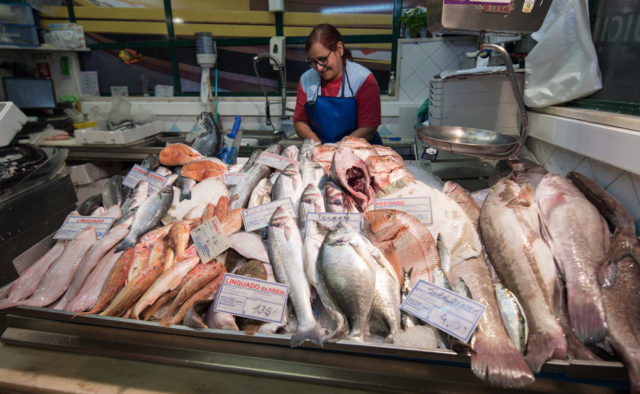

My favorite European market hall has a split personality. One-half of the market is as classic as they come: traditional, rough-and-tumble vendors selling fragrant herbs, plump produce, and an aquarium’s worth of fish. It’s ragtag, ramshackle, and trapped in the 1950s, with rickety wooden stalls, puddles pooling on cracked tile floors, petticoat-clad grannies selling rough bunches of herbs, and Old World scales with dials that spin imprecisely as if digital were never invented. On its own, this market hall is endearing enough to earn an “honorable mention” on this list. But from there, you can step through a door into La Ribera’s other half: a sleek, futuristic, top-of-the-line, Time Out-themed culinary wonderland (opened in 2014). The two dozen eateries here include stands operated by five marquee, Michelin-rated Portuguese celebrity chefs selling affordably price tastes of their favorite dishes. You’ll also find smaller stands bursting with a variety of local and international meals: the beloved Portuguese steak sandwich called prego, croquetes with fillings both traditional and creative, bacalhau (rehydrated salt-dried cod), fresh-baked pasteis de nata and other pastries, Japanese-fusion dishes highlighting the long-forgotten influence of early Portuguese traders, traditional cheeses and charcuterie, catch-of-the-day, quality steaks, gourmet burgers, artful sushi, and crispy pizzas. Rounding out the scene are a well-stocked wine shop, a place to stock up on conserves (tinned fish with colorful wrappers), and a branch of A Vida Portugesa (a classy vendor of Portuguese-themed products, gifts, and keepsakes that tempt even non-shoppers). Whether for a meal or a one-stop-shop to stock up on all things Portuguese, Mercado da Ribeira is a winner.
1. Market Day, Sarlat, France
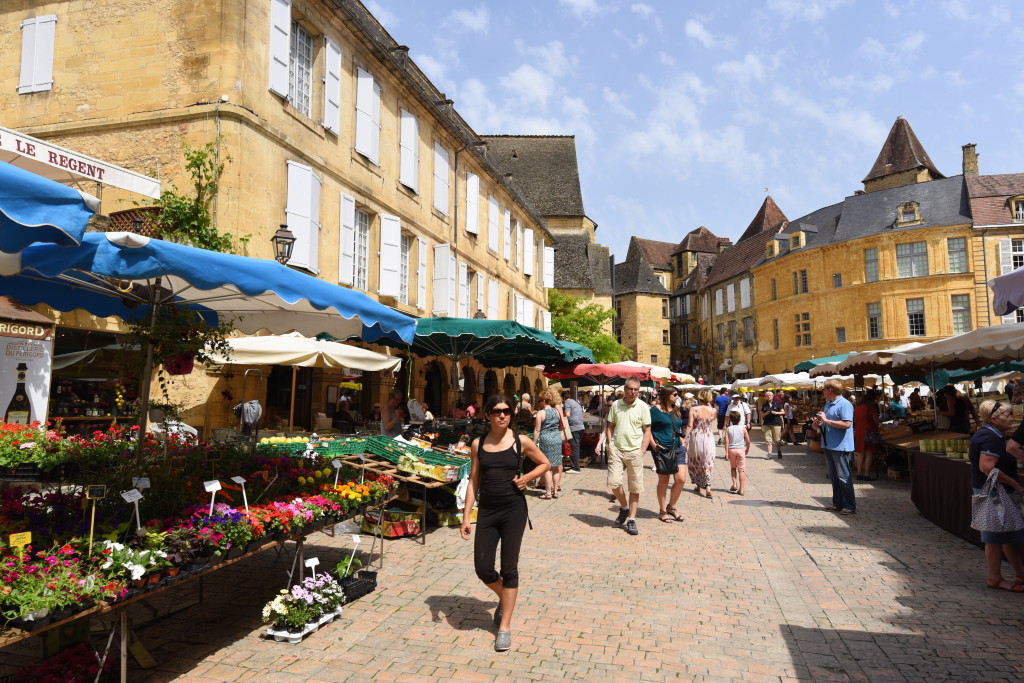

Sarlat’s street market is hard to top. It’s the refined yin to Palermo’s gritty yang. Twice weekly — on Wednesday mornings, and all day Saturdays — the pristine, lemony-sandstone streets of one of France’s finest towns become a big outdoor shopping mall. Locals pour in from the countryside to browse the stalls, reconnect with their favorite vendors, and bump into old friends. You’ll find baked goods, fresh meat, duck-in-a-can (confit de canard), giant wheels of rustic mountain cheese, tiny pyramids of fine gourmet cheese, nuts and dried fruits, explosively flavorful olives, mammoth chunks of nougat, snail shells prefilled for escargot, fruitcake sold by weight, a rainbow of preserves, salamis and sausages of every shape and size, and whatever produce is in season. When the noon bell tolls, the vendors begin packing up, and the shoppers scramble for café tables that catch just the right mélange of sun and shade. This is where the second phase of the Market Day ritual kicks in: taking some time to nurse a cup of coffee with someone you haven’t seen in a while. It’s all so simple…so sophisticated…so smart. If you won’t be in Sarlat, you can enjoy similar market days all over France; every community has its own, but popular ones include Uzès (in Provence), Beaune (in Burgundy), and several in Parisian neighborhoods. But Sarlat is the one that has left me with the warmest memories of an ideal market experience.
What’s your favorite market in Europe?










 Driving around the perimeter of Iceland on the 800-mile Ring Road this summer (working on our
  I must admit, I’m not really a “nightlife guy.” But when I’m in Budapest, I budget extra time to simply
  This gorgeous corner of my favorite country has always been high on my personal “must list.” It’s a little slice of heaven: Cut-glass alpine peaks tower over fine little Baroque-steepled towns, all laced together by an eerily turquoise river. While this place should be overrun with crowds, on my latest visit — in late September — I had the place nearly to myself. A few A+ travelers have begun to find their way to the “sunny side of the Alps”: Rafters, kayakers, and adventure sports fanatics are drawn to the sparkling waters of the Soča River. Historians peruse the well-curated array of outdoor museums and cemeteries from World War I’s Isonzo Front, where Ernest Hemingway famously drove an ambulance. Skiers gape up at the 660-foot-tall jump at Planica, home to the world championships of ski flying (for daredevils who consider ski jumping for wimps). And foodies make a pilgrimage to
  My favorite piece of art in Europe isn’t a painting, and it isn’t in a museum. It’s a park — a grassy canvas where a single artist, the early-20th-century sculptor Gustav Vigeland, was given carte blanche to design and decorate as he saw fit. The city of Oslo gave Vigeland a big studio, and turned him loose in the adjoining park for 20 years. He filled that space with a sprawling yet harmonious ensemble of 600 bronze and granite figures, representing every emotion and rite of passage in the human experience, all frozen in silent conversation with each other — and with the steady stream of Oslo urbanites and tourists who flow through Vigeland’s masterpiece. The naked figures (which might provoke giggles among prudish Americans) reinforce the sense of timelessness and universality: They belong not to any one time or place, but to every time and every place — from Adam and Eve to contemporary Norway. Over the last decade and a half, I’ve been to Vigeland Park three times. Each time, I was in a totally different state of mind. And each time, the statues spoke to me like old friends — sometimes with the same old message, and sometimes with new insights. With all due respect to da Vinci, Van Gogh, and Picasso, no single artistic experience in Europe is more meaningful or impactful to me than Vigeland Park.
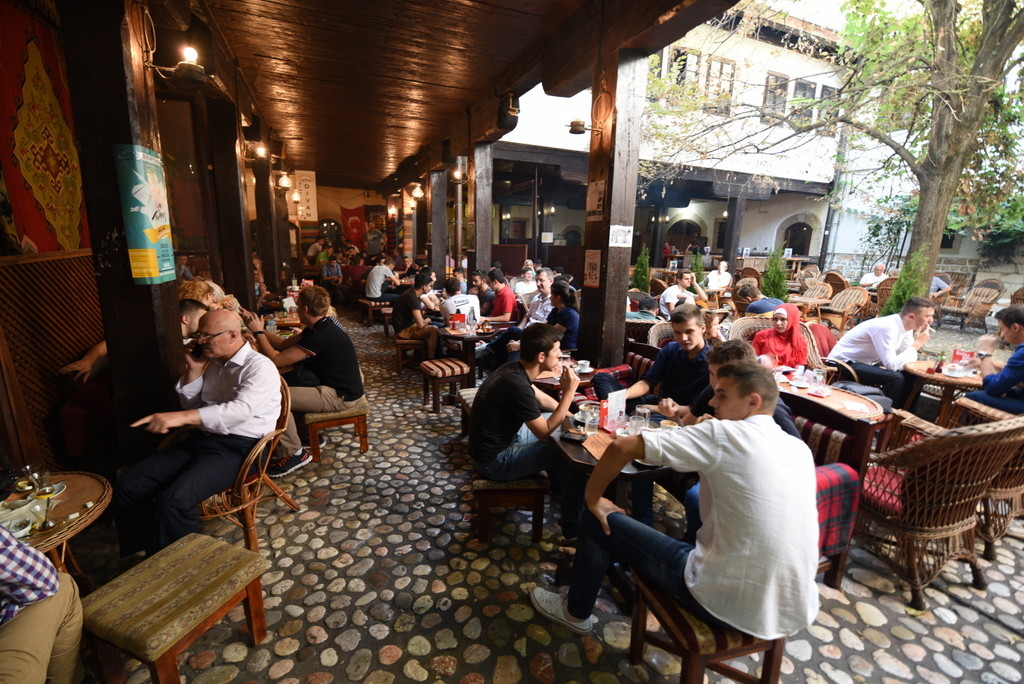 Sarači #16 is the most interesting address in downtown Sarajevo. Facing east — toward the Ottoman-era old town, Baščaršija — you’re transported to medieval Turkey: a bustling bazaar with slate-roofed houses, chunky river-stone cobbles, the tap-tap-tap of coppersmiths’ hammers, and a pungent haze of hookah smoke and grilled meats. Then, turning to the west, you’re peering down Ferhadija, the main thoroughfare of Habsburg Sarajevo. This could be a Vienna suburb, where stern, genteel Baroque facades look down over cafés teeming with urbanites. Within a few short blocks of this spot stand the city’s historic synagogue, its oldest Serbian Orthodox church, its Catholic cathedral, and its showcase mosque. Few places on earth are so layered with history. And then there’s the latest chapter: the poignant story of the Siege of Sarajevo in the mid-1990s, when the town was surrounded by snipers for more than 1,400 days — connected to the outside world only by a muck-filled tunnel and a steep mountain ascent. Proud Sarajevans you’ll meet are often willing, or even eager, to share their stories of living a horrific reality that we experienced only through the Nightly News. And if you’re lucky, they’ll invite you for
  Of all of Tuscany’s appealing corners, the Val d’Orcia (“val dor-chah”) is — for me — the most enchanting. While just a short drive from the tourist throngs in Florence, San Gimignano, Siena, or the Chianti region, the Val d’Orcia — bookended by the charming towns of Montepulciano and Montalcino (both synonymous with fine Tuscan wine) — feels like a peaceful, overlooked eddy of rural life. This strip of land is where most of the iconic “Tuscany scenery” photographs are taken: Winding, cypress-lined driveways; vibrant-green, rolling farm fields that look like a circa-2000 screensaver; and lonely chapels perched on verdant ridges. And it’s the backdrop for famous scenes in everything from The English Patient to Gladiator to Master of None. And yet, the area has no “major sights” — no sculptures by Michelangelo, no paintings by da Vinci, no leaning towers — which, mercifully, keeps it just beyond the itineraries of whistle-stop, bucket-list tourists. I have savored several visits — including
  A few years removed from the depths of its economic crisis, Athens has re-emerged as a red-hot destination. Revisiting the city a few months ago, I was struck by how many tourists I saw — and by how many of them refused to venture beyond the cutesy, crowded Plaka zone that rings the base of the Acropolis. And that’s a shame, because literally across the street from the Plaka’s central square, Monastiraki, is one of Athens’ most colorful and fun-to-explore neighborhoods: Psyrri (“psee-ree”). Not long ago, this was a deserted and dangerous slum. But recently, Psyrri has emerged as a trendy dining and nightlife zone. Its graffiti-slathered apartment blocks now blossom with freshly remodeled Airbnb rentals. This still-gritty area may feel a little foreboding at first, but if you can get past the street art, grime, and motorbikes parked on potholed sidewalks, it’s easy to enjoy the hipster soul of the neighborhood that’s leading many to dub Athens “The New Berlin.” For the upcoming fifth edition of our
  On my last visit to Moscow, in the summer of 2014, Russia was in the news: military action in Crimea and eastern Ukraine, Putin’s brutal crackdown on homosexuality and punk-rock protesters Pussy Riot, and the recently completed Sochi Olympics. Of course, since then, the headlines have changed, but Russia is in the news more than ever. That’s why I consider Moscow to be Europe’s most fascinating — and challenging — destination. People back home shake their heads and wonder: How can these people support Putin, who (to us) is so clearly a demagogue? I take that not as a rhetorical question, but as a genuine one that deserves a real answer. And a thoughtful visit to Moscow — even “just” as a casual tourist — can offer some insights. Designed-to-intimidate Red Square and the Kremlin fill onlookers with awe and respect. The still-standing headstone of Josef Stalin — tucked along the Kremlin Wall, just behind Lenin’s Tomb and its waxy occupant — seems to suggest that the Russian appetite for absolute rulers is nothing new. But mostly, I’m struck by the improvements I see in Moscow with each return visit. On my first trip, in the early 2000s, the famous Gorky Park was a ramshackle, potholed mess, and the Cathedral of Christ the Savior — which had been demolished by communist authorities — was still being rebuilt. But today, Gorky Park is a lush, pristine, manicured people zone, and the sunshine glitters off the cathedral’s rebuilt golden dome. Just up the river, a Shanghai-style forest of futuristic skyscrapers rises up from a onetime industrial wasteland. In short, the Russian capital — which has always been interesting — is now actually a pleasant place to travel. Finding myself really enjoying Moscow, for the first time, makes it easier to imagine how many Russians might be convinced that Putin is Making Russia Great Again.
 I
I