10 European Discoveries for 2021

On the horizon, there is light. The sun hasn’t risen yet, but it’s coming. Although it has never been more important (or harder) to continue staying home, limiting contact with others, wearing masks, and so on, it’s beginning to feel like 2021 may bring the “return to normal” — and the return to travel — that we all crave. It’s too early to begin planning trips, but it’s never too early to dream. So…where to?

The last several years, my New Year tradition has been to assemble a list of 10 European Discoveries. As we reach the end of a year of hardship, and face a new year of further uncertainty, I almost bailed on this idea. But we will return to Europe. It’s just a question of when. So I’ll keep with tradition — but with a new spin.

I believe that in the post-pandemic world, travelers will look for something different. Before COVID-19, we had gotten so busy, and so stressed by the crowds, that we forgot to slow down and hear the church bells — to savor those beautiful everyday moments of European life. (If I have a post-pandemic resolution, it’s to not make this mistake again.) Having renewed our appreciation for the incredible privilege of being able to go anywhere we want, we’ll seek opportunities to settle in, slow down, and be fully present in Europe. We’ll choose places just outside the mainstream, ones that reward patience and contemplation.

And that’s the theme of my 2021 European Discoveries: 10 places where you might want to settle in for a week, or a few, and really get to know a fascinating corner of our planet. I haven’t set foot in Europe in well over a year — with, I assume, several more months yet to go. It has afforded me ample opportunity to reflect on my 20-plus years of exploring Europe. And looking back on all of it, these are the places the burn brightest in my mind.

Where are you hoping to slow down and savor our world in 2021?


Soča Valley, Slovenia
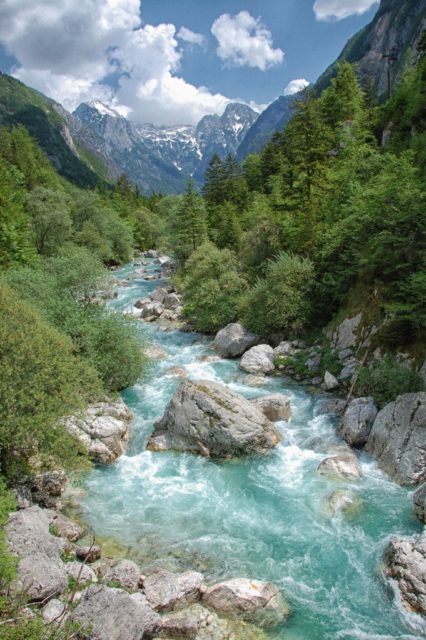
I can think of few places I’ve missed more in 2020 than Slovenia. And for me, the most beautiful place in this incredibly beautiful country is the Soča Valley, where a turquoise river cuts a gorge deep into soaring alpine cliffs, just a few miles from the borders with Austria and Italy. Historians know the Soča Valley for its fierce mountaintop battles during World War I (this is where Ernest Hemingway was wounded while driving an ambulance). And contemporary travelers know it as an adventure-sports capital (whitewater rafting, canyoning, paragliding) and home to the restaurant of Ana Roš, the world’s best female chef. You can get a taste of the Soča Valley on a very busy one-day side-trip from Lake Bled or Ljubljana. But why not settle in for several days? Sleep at a tourist farm on a high-mountain pasture, wake up each day to the sun peeking over snowcapped mountains, and spend your breakfast (of farm-fresh eggs) deciding which breathtaking hike or scenic drive to do today.


The Markets of Provence
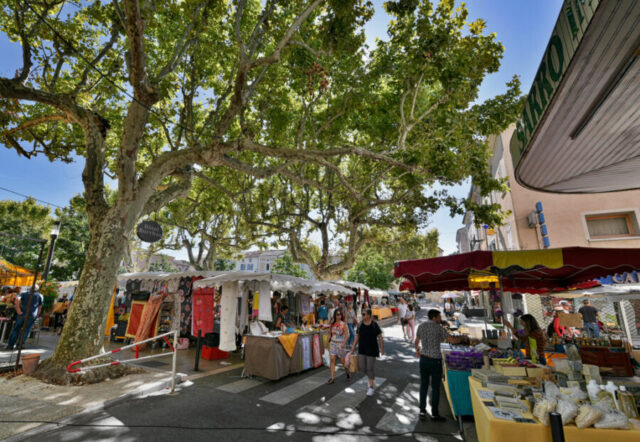
In September of 2019, my wife and I had a full week to unwind anywhere in Europe. Already exhausted from a packed and fast-paced year of travel, we opted for a quiet weeklong break in the South of France. Why? We wanted to savor the delightful market days (jours de marché) that hop from place to place around the bucolic Provençal countryside. In one week, we sampled seven different markets, each with its own personality. Yes, Provence is packed with other attractions: great sights and wine-tastings and gourmet meals and scenic hikes and hot-air balloon rides. But the markets are precisely the type of sensory super-experience we’re all desperate for after a 2020 spent very close to home. After living through a time when going to the corner grocery store feels like high adventure, imagine the thrill of strolling a lively town square, generously shaded by plane trees, as you choose a little wheel of cheese for your picnic from a mound of fragrant options, browse for just the right produce for a home-cooked Provençal feast, and bite into a strawberry that truly, intensely tastes like strawberry.


Budapest
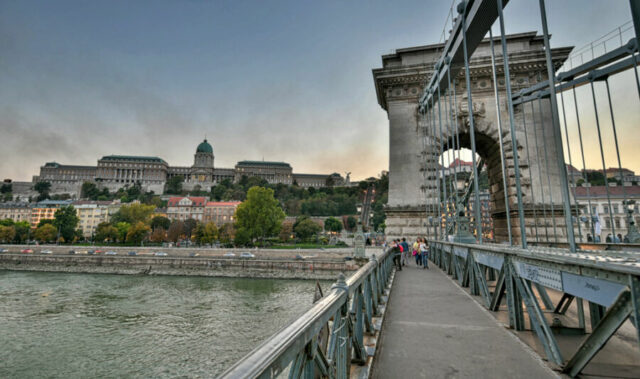
I wrote the book on Budapest…literally. And yet, even after 20-some visits, I still can’t get enough of this grand city on the Danube. With each weeklong visit to update my guidebook, the list of things I’d still like to see and do gets longer, not shorter. The melting pot and de facto capital of Central Europe, Budapest’s unique urban culture mixes a respect for tradition with a cosmopolitan openness to creativity and innovation. It wins my vote for the hands-down best restaurant and nightlife scene in Europe. And yet it also has a stately elegance, with ornate turn-of-the-century buildings, inviting tree-lined plazas, and wooded hills ideal for nature hikes. (And don’t get me started on the thermal baths.) Last March, I had already booked my tickets for yet another visit to Budapest, and I couldn’t wait. That trip, of course, never happened. And by the time I finally get back there, the anticipation will be unbearable. I never know precisely what I’ll see, do, and learn in Budapest. But I know it’ll create lasting memories.


Iceland’s Ring Road
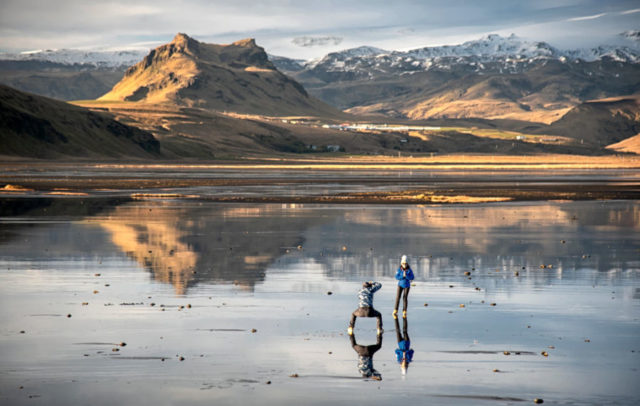
When we produced our Rick Steves Iceland guidebook, we included a “how to” chapter on Europe’s ultimate road trip: driving 800 miles on Highway 1 around the perimeter of Iceland, connecting astonishing scenery, geothermal hotspots, glaciers and icebergs, charming fjordside settlements, and warm and wonderful Icelanders. We covered the Ring Road generously in our book, even though we figured very few people would devote the full week required to do this trip justice. But maybe we were wrong. The pandemic has made National Lampoon’s Vacation-style road trips all the rage again. There’s never been a better time to rack up some serious miles through cinematic landscapes and have an honest-to-goodness adventure. And Iceland is made to order for “social distancing” as we tiptoe into the post-pandemic future. My Ring Road post covers the basics; if the photos and places intrigue you, forget about that “48-hour Icelandic layover” you’ve been contemplating…go all-in on the full Ring Road.


North Wales
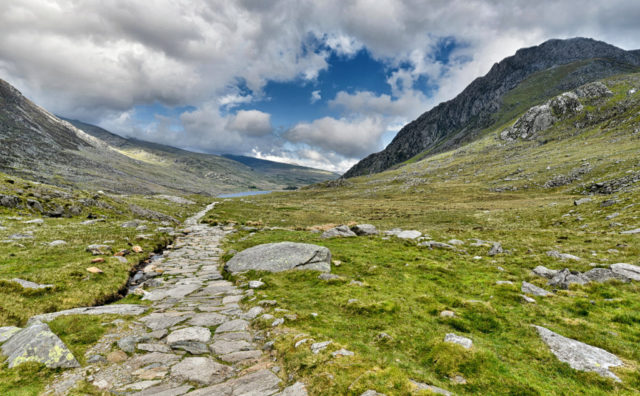
Recently I had the joyful experience of driving around North Wales (roughly the triangle formed by Conwy, Caernarfon, and Ruthin) for several days to update our Rick Steves Great Britain guidebook. I adore Europe’s plucky, off-the-beaten-path cultural eddies, and North Wales tops the list. Along with offering a fascinating crash course in Welsh culture and language, this region is studded with towering stone castles that make you feel like a kid again, a rugged landscape of craggy mountains and slate rooftops, and cheery red dragons laughing down from every flagpole. And it’s compact, making it easy to see a lot from any one of a number of charming home bases. While less known than the Scottish Highlands or Ireland’s Dingle Peninsula, North Wales is every bit as fun, scenic, and culturally rich.


Maramureș, Romania
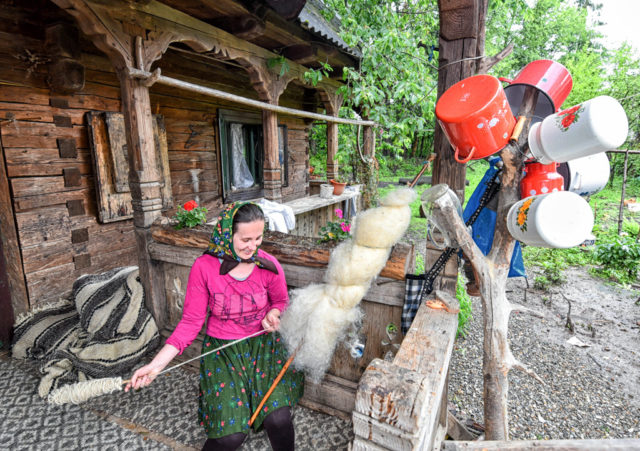
Years ago, my Dad and I went on a road trip through Romania, seeking traditional culture. When we came to Maramureș — ten long, potholed hours of driving north of Bucharest — we felt like anthropologists stumbling upon a place that time forgot. The rolling green hillsides are dotted with giant, tipsy haystacks. Rustic villages with mud roads — and more horse carts than cars — are lined with elaborate wooden churches and ceremonial gateways. Shepherds living in split-wood shacks make cheese like medieval peasants. And riverside settlements bustle with industry dating back to biblical times, from carpet-washers to fulling mills to to weaving looms to moonshine stills. This is not an “open-air folk museum” — it’s the real deal, Europe’s Amish Country. As our world changes at a dizzying pace — which only accelerated in 2020 — there’s no guarantee that Maramureș traditions will survive for much longer. (Teo Ivanciuc, an excellent local guide who helped us film our TV segment in Maramures, would love to show you around.)


Camino de Santiago, Spain
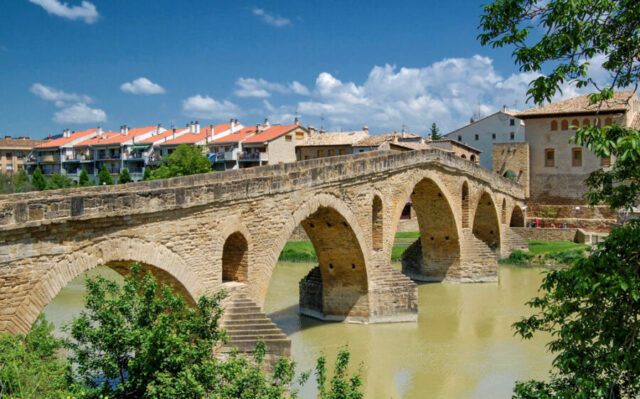
In the Middle Ages, pilgrims walked from all over Europe to venerate the bones of St. James in Santiago de Compostela, at the northwest corner of Iberia. This route — the Camino de Santiago — was largely forgotten over the centuries, only to be rediscovered in our own lifetime by travelers seeking an escape from modern life. After a year of deep soul-searching, there’s nothing like a four-week hike to clear the mind, synthesize all we’ve learned, and contemplate where to go from here. Begin in the green Pyrenees foothills of Basque Country, then walk across the arid plains of northern Spain, through villages and cities and across stone bridges from Roman times, before finally passing trough the wilds of lush, green, and rocky Galícia — all along the way, sleeping in rustic pilgrims’ hostels and following scallop shells through the wilderness. I’ve hiked bits of the Camino here and there (and I drove the entire route, end to end, to write a “how to” chapter in our Rick Steves Spain guidebook). But I’ve never been so tempted to do the full Camino the old-fashioned way.


Lofoten Islands, Norway
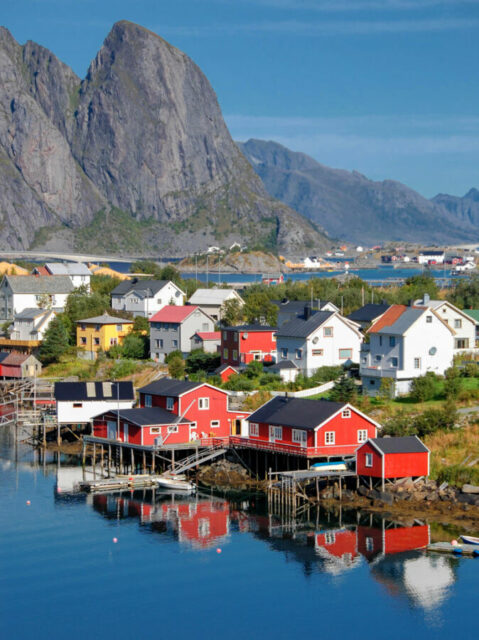
All my life, I’d seen this magical place in postcards and coffee-table books: soulful fjords with cut-glass mountains rising high above serene, deep waters, speckled with red cottages and almost no people. My wife and I decided we simply had to see this scene for ourselves. And when we finally made it to the Lofoten Islands — above the Arctic Circle and chilly even in August — we found it even more stunning than the photos. Getting to the Lofoten requires some effort (from Oslo, fly due north for an hour and a half), so you might as well settle in. The rugged Norwegians who’ve carved out a hardy life up here, hanging cod to dry on rickety wooden frames, are adept at introducing visitors to traditional lifestyles. Rent a rorbu (cheery cottage perched on stilts over the fjord) and spend a few days just tooling around, from the “capital city” village of Svolvær to the end-of-the-road cod-fishing settlement called Å. We home-based in Reine, perched on a flat rock in the middle of a fjord with the most stunning views in all of the Lofoten, and from there we ventured out to see everything the archipelago has to offer.


New Zealand
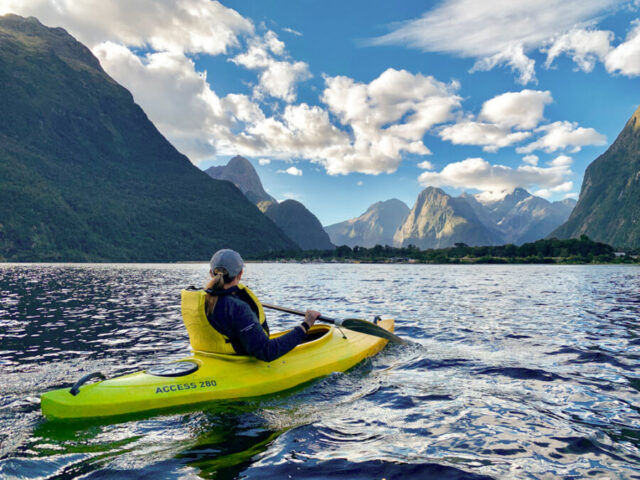
Sure, it’s not “European” in geographical terms. But for anyone who loves Europe, New Zealand feels strikingly familiar…yet excitingly different. (One afternoon, you’re punting the River Avon in Christchurch, as if you were in an English country garden; the next day, you’re swimming with dolphins at Kaikoura.) After years of hearing from our well-traveled friends about this seemingly too-good-to-be-true land, my wife and I finally spent a few weeks here in early 2019. And we fell instantly, hopelessly in love. Yes, the scenery is gobsmacking, and Lord of the Rings fans are in heaven. But New Zealand is so much more: a melding of Europe and Polynesia set amidst an entertaining landscape, where majestic glaciers rise high above steamy groves of ferns and palm trees. We loved sampling the local wine, craft beer, and third-wave coffee culture; learning about the indigenous Māori culture; and getting to know the wonderful Kiwis, who somehow manage to be well-organized and ceaselessly competent while remaining low-key and easygoing. Even before we came home, we’d already started Googling “How do I emigrate to New Zealand?” Now that the Kiwis (under the steady and compassionate leadership of Jacinda Ardern) have managed the pandemic better than anyone, this little island nation is sure to be flooded soon with more than its share of tourists…and transplants. Why not finally get down there soon,  ahead of the crowds? As soon as they open up to outsiders, New Zealand is at the top of our list of post-pandemic dreams.


Agriturismo Cretaiole, Tuscany
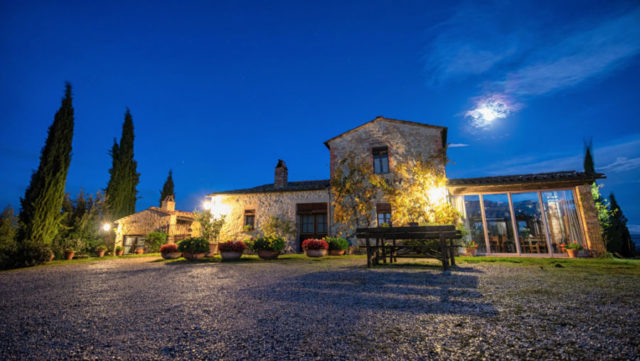
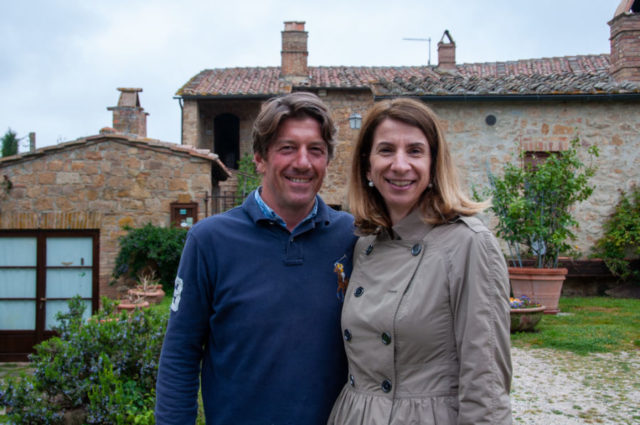
For years I’ve been singing the praises of a very special place to stay in the most beautiful corner of Tuscany. On a wooded ridge just outside Pienza, city mouse Isabella married country mouse Carlo and, together, they converted a traditional Tuscan farm into the best possible expression of an agriturismo — where visitors experience rural Italian culture and cuisine with modern comforts. With each visit, this place impresses me even more — and especially the vivid, perfectly orchestrated Tuscan experiences that Isabella creates for her guests: truffle hunts, pasta-rolling parties, olive oil appreciation classes, wine tastings, deeply meaningful nature hikes, and on and on. When I close my eyes and picture the one place I’d love to get back to as soon as I can, it’s spending a week — or more — at Cretaiole.

On my most recent visit to Tuscany, a few months before COVID-19 hit, Isabella showed me around her gorgeous new boutique hotel (La Moscadella), offering a similar Tuscan cultural experience with more luxury. But now that fine hotel, and the original farmhouse, sit mostly empty — one more tragedy in this year full of them. Whether it’s Cretaiole or some other perfect place you’ve discovered in your travels, small businesses are hurting right now. If you have the means to travel, as soon as it’s safe, consider booking a return visit. Helping to jump-start these businesses is the least we can do, considering all of the joy people like Isabella and Carlo have brought to our lives over the years.
I’m hoping that 2021 brings good fortune and a return to what we love, both for us travelers and for the people we meet on the road. Like all things, this too shall pass. And a year from now, if all goes well, we’ll be comparing notes about a whole new slew of discoveries for a new age of travel.

Europe’s 10 Best Markets

What traveler doesn’t love a great European market? There are few better windows into local life than rubbing shoulders with shoppers, browsing stands piled high with colorful produce, nibbling on street munchies, and being fully immersed in the sights, sounds, and smells of the local community.

Over half a lifetime of traveling around Europe, I’ve been collecting my favorite market experiences for travelers — where you can glean some insights into local culture and cuisine, and browse for a good, local, quality meal. This is a mix of old-school covered markets, trendier food halls, and sprawling, open-air markets that take over an entire neighborhood or town. I’ve heavily skewed my suggestions to foodie options, where you’ll find dishes that are creative and interesting (rather than just fill-the-tank), while still being affordable. Happy browsing!

10. Mercado de San Miguel, Madrid, Spain

Madrid's Mercado de San Miguel

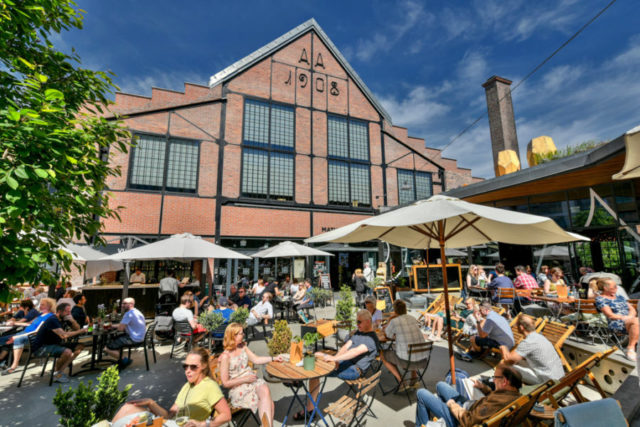
Just steps from the grand Plaza Mayor, in the heart of Spain’s capital, sits this 1915 erector-set market hall. Fully remodeled in 2009, today it’s a bustling showcase of edible Spain. Squeezing between the crowds, you’ll find only the best jamón ibérico (air-cured ham), Manchego and other artisanal Spanish cheeses, powerfully piquant skewered pickles and olives (banderillas), delectable pastries, little skillets of paella, tinned fish and seafood, brochetas (meat or seafood skewers) grilled to order, smoked salmon, sweet vermouths from around Spain, croquetas with various fillings, Mexican dishes from a Michelin-star chef, and robust Rioja wines. It’s a culinary tour of Spain, under one roof.

9. Östermalms Saluhall, Stockholm, Sweden

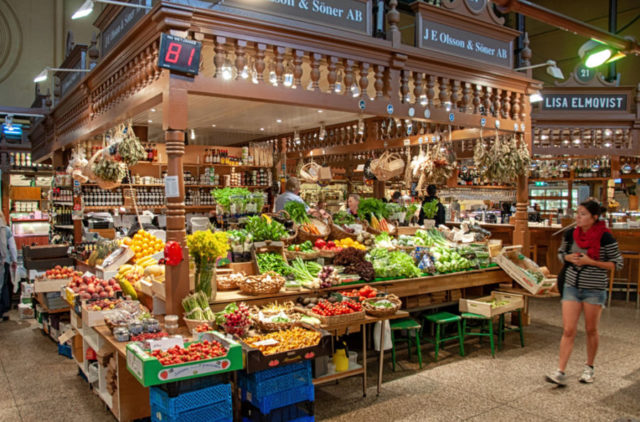
A classic. Anchoring Stockholm’s posh Östermalm neighborhood, this market hall is simply elegant. Handsome, hand-carved wooden stalls display just-so piles of produce, stacked as if posing for a still-life. The wares here feel…curated. Composed. With Scandinavian precision. There aren’t many bargains in this pricey city, but the Östermalms Saluhall is fun to browse for a high-end picnic, or to settle into a market eatery for a quality deli plate, a delicately composed salad, a sticky Scandinavian sweet roll, a splurgy seafood dish, a gourmet smørrebrød (open-face sandwich), a delectable handmade praline, or a selection of Lebanese small plates. Note: The food hall is undergoing a makeover through 2020; in the meantime, the vendors have set up temporary digs nearby.

8. Markthalle Neun, Berlin, Germany

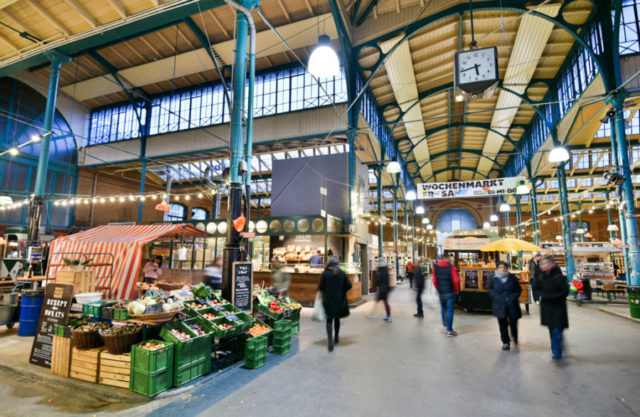
Berlin’s Kreuzberg district is home to its most cutting-edge, engaging culinary scene — and Markhalle Neun is its flagship. Tucked in a workaday neighborhood away from the tourist sights, it fills a beautifully restored 19th-century hall with greengrocers, cheesemongers, butchers, fishmongers, florists, and bakers, all with an appropriately Berlin-hipster vibe. Meanwhile, food stands sell Berlin classics like Buletten (meatballs), Stolle (open-faced sandwiches), Brezel (big doughy pretzels), and Currywurst — but also Italian pastas, French crêpes, Turkish deli meats, Spanish tapas, and even BBQ from the USA. Markhalle Neun scores bonus points for its many special events (listed at www.markthalleneun.de), including its Saturday farmers market and its “Street Food Thursday” — a beloved institution for Berliners seeking a trendy yet affordable dinner.

7. Mercato Centrale, Florence, Italy

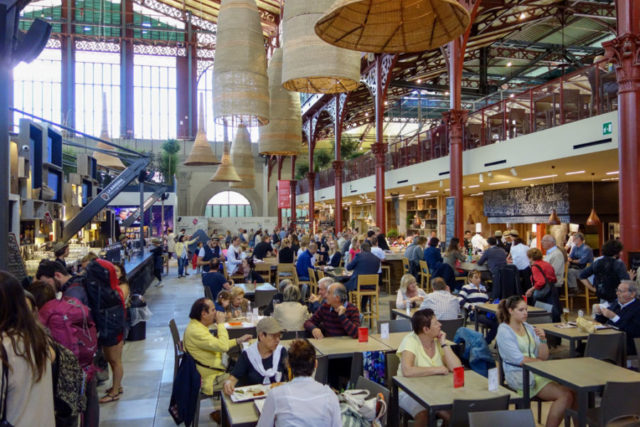
For years, I’d peek tentatively inside this cavernous market hall in the center of Florence, which felt dark and foreboding. With tattered stalls and piles of garbage out front, it felt like it hadn’t changed since the days of Vittorio Emanuele II. Then, in 2014, they converted the top floor into a high-end food circus. Just walk past the still-grubby produce stalls on the main floor, and hike up the stairs to a world of Italian taste treats: hand-rolled pastas, prizewinning prosciutto, massive steaks cooked so rare they still moo, melt-in-your-mouth panini, gourmet burgers made from Tuscany’s prized Chianina beef, rotisserie chicken, big juicy wads of mozzarella di bufala, handheld flatbread sandwiches called trapizzini, big slabs of rustic pizza, tender stewed beef cheeks, truffle-infused oils and pâtés, the rustic Tuscan bread soup called ribollita, deep-fried tasties,  cannoli and other Sicilian sugar bombs, and high-end tripe sandwiches (a Florentine classic!). Travelers smart enough to escape the tourist-gouging restaurants on the main drag retreat to this upper level — like pigeons in the rafters — to take a break from intense Renaissance sightseeing with pretty much any Italian taste treat they can imagine. Tuscany is home to many foodie finds — but this is one of the best.

6. Belvarosi Piac, Budapest, Hungary

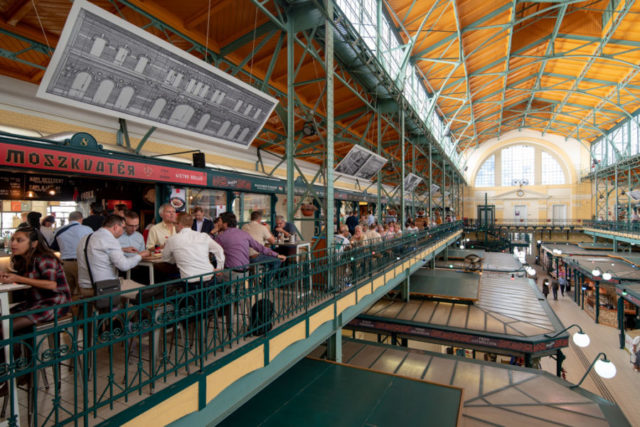
In Budapest, tourists flock to the Great Market Hall, an elegant palace of produce built around the turn of the 20th century. And you really do have to see the Great Market Hall. But don’t eat there — the “local”-seeming food counters upstairs specialize in ripping off naive tourists. Instead, head to a different, smaller, and far more authentic neighborhood market hall, also right in the city center (a couple of minutes’ walk from the Parliament): the Belvarosi Piac on Hold Street. In an atmospheric Industrial Age space that feels like the Great Market Hall’s little sibling, producers occupy the ground floor, while the upstairs is ringed by tempting high end-yet-affordable food stands: massive schnitzels at Buja Diszno(k), gourmet sausage at Lakatos Műhely, Russian grub at Moszkvatér (named for the since-rechristened “Moscow Square”), gourmet burgers at Kandalló, Thai-style khao man gai (poached chicken in garlicky sauce), and updated Hungarian classics at A Séf Utcaja. Anchoring the space, down on the main floor, is Stand 25 Bisztró. Here, celebrity chefs Szabina Szulló and Tamás Széll artfully fuse Hungarian classics with international influences (or is it the other way around?). While not cheap by market hall standards, Stand 25 a bargain for a Michelin-caliber lunch in a memorable setting (lunch only, plus dinner Friday and Saturday, book ahead).

5. Ballarò Market, Palermo

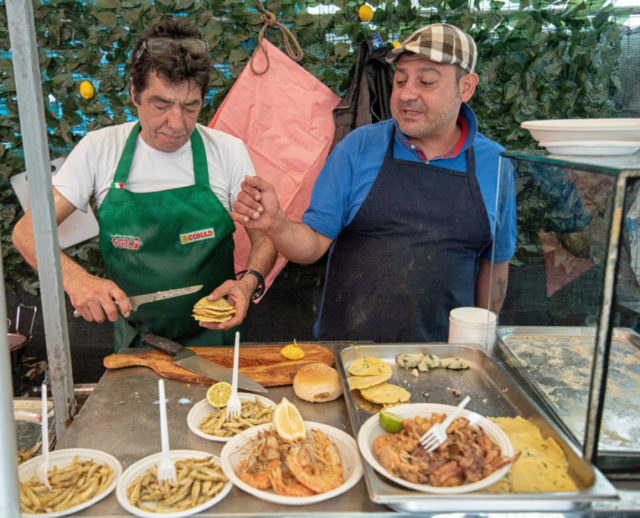
The Sicilian capital has some of the best, most vivid street markets in all of Europe. And the granddaddy of them all is Ballarò — seedy, chaotic, bewildering, and invigorating. Come here to jostle with Sicilians who verbally arm-wrestle for the best deals on the best ingredients. The vendors — continuing a tradition that supposedly dates back to Arab rule — warble their sales pitches with an otherworldly cadence, demanding the attention of passersby. Giant slabs of pink tuna perch on marble counters, like cadavers ready to be dissected. Produce stands overflow with vivid-purple eggplants, long, skinny Sicilian zucchini, and tomatoes that actually taste like tomatoes. Best of all, scattered throughout this multi-block span of barely controlled chaos are a wide variety of tempting street food stands, selling greasy napkins topped with dirt-cheap taste treats for every level of adventurous eaters — from arancine (deep-fried rice balls) and sfincioni (“Sicilian pizza”) to pani ca’ meusa (spleen sandwich) and polpo bollito (tiny boiled octopus, eaten whole). (For a complete rundown, check out my post on Palermo’s street food.) Go ahead, dive in — this is what real travelers live for.

4. Mathallen, Oslo, Norway

I love Oslo. But I’ve rarely found a memorable meal tucked among the dreary, blocky downtown core along Karl Johans Gate. However, just north of downtown runs the Akers River Valley, where the city has redeveloped a former wasteland of red-brick factories and warehouses into a lively people zone. Its centerpiece is Mathallen (“Food Hall”), filling the scavenged brick skeleton of a 19th-century factory. Norwegians recognize the limitations of their cuisine. And so, in addition to stands selling fresh, whole-grain bread (at Smelt Ostesmørbrød) sweet and savory pies (at Mildrids Kjøkken), and farm-fresh geitost cheese (at Ost & Sånt), you can nibble tapas, pastas, sushi, tacos and tequila, pizza, Asian street food,  gourmet ice cream, and much more. Ringing the outside of the market are a variety of industrial-mod, higher-end eateries. I skipped the fried chicken and “global tapas,” and went a bit more traditional at Vulkanfisk, serving up affordable-for-Oslo, elegantly presented, fresh seafood (the garlic-sautéed scampi were a flavor bomb). Anytime I’m in Oslo at mealtime, I come up with an excuse to head up the Akers River to Mathallen.

3. Maltby Street Market Rope Walk, London

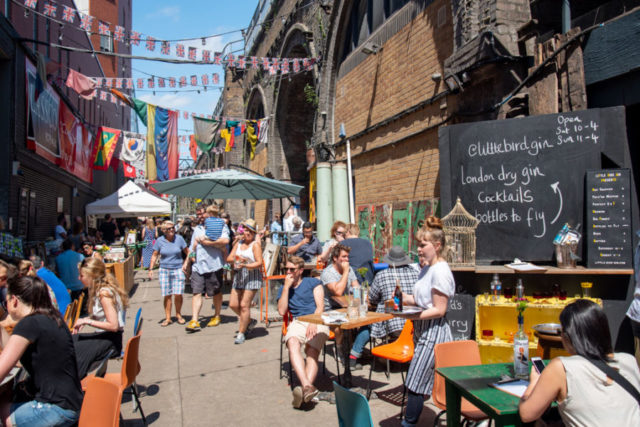
One summer, my wife and I rented an apartment in London for a week and checked out a different market each day. And at the end of the trip, the Maltby Street Rope Walk emerged as our favorite (every Saturday and Sunday). Tucked along a vintage brick railroad trestle, far from any tourist attractions (roughly across the Thames from the Tower of London), it’s an explosion of foodie energy. Beyond the hole-in-the-wall eateries, wine bars, taprooms, and Mozambique-style burger bars squeezed into the arches under the train tracks, the weekend market adds a world of pop-up food stands: grilled sandwiches oozing with tangy English cheese; little slices of rye bread mounted with melt-in-your-mouth Scottish salmon; slabs of grass-fed, dry-aged, rare-grilled hanger steaks; wild variations on Scotch eggs; Middle Eastern flatbreads with savory toppings; German-style sausages; gyoza steamed in wicker baskets; and a mouthwatering array of gooey brownies. For a more traditional “market hall,” it’s hard to beat London’s famous Borough Market. The funky Camden Market sprawls through a yellow-brick wonderland of old industrial buildings. The Portobello Road Market charms Notting Hill fans. And the Broadway Market feels like ground zero for East London’s hipster baby boom. But if I had to pick just one market that incapsulates cutting-edge London…it’s Rope Walk.

2. Mercado da Ribeira/Time Out Market, Lisbon, Portugal

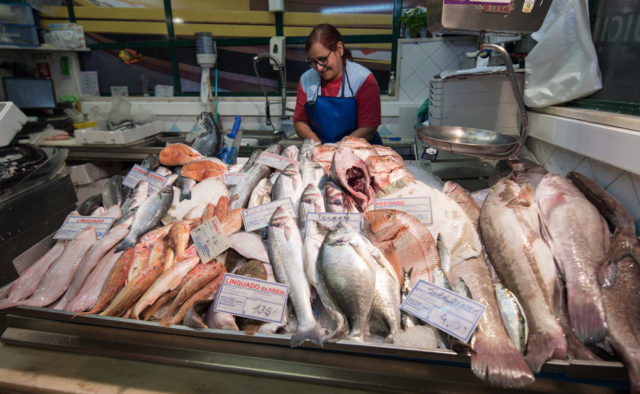
My favorite European market hall has a split personality. One-half of the market is as classic as they come: traditional, rough-and-tumble vendors selling fragrant herbs, plump produce, and an aquarium’s worth of fish. It’s ragtag, ramshackle, and trapped in the 1950s, with rickety wooden stalls, puddles pooling on cracked tile floors, petticoat-clad grannies selling rough bunches of herbs, and Old World scales with dials that spin imprecisely as if digital were never invented. On its own, this market hall is endearing enough to earn an “honorable mention” on this list. But from there, you can step through a door into La Ribera’s other half: a sleek, futuristic, top-of-the-line, Time Out-themed culinary wonderland (opened in 2014). The two dozen eateries here include stands operated by five marquee, Michelin-rated Portuguese celebrity chefs selling affordably price tastes of their favorite dishes. You’ll also find smaller stands bursting with a variety of local and international meals: the beloved Portuguese steak sandwich called prego, croquetes with fillings both traditional and creative, bacalhau (rehydrated salt-dried cod), fresh-baked pasteis de nata and other pastries, Japanese-fusion dishes highlighting the long-forgotten influence of early Portuguese traders, traditional cheeses and charcuterie, catch-of-the-day, quality steaks, gourmet burgers, artful sushi, and crispy pizzas. Rounding out the scene are a well-stocked wine shop, a place to stock up on conserves (tinned fish with colorful wrappers), and a branch of A Vida Portugesa (a classy vendor of Portuguese-themed products, gifts, and keepsakes that tempt even non-shoppers).  Whether for a meal or a one-stop-shop to stock up on all things Portuguese, Mercado da Ribeira is a winner.

1.  Market Day, Sarlat, France

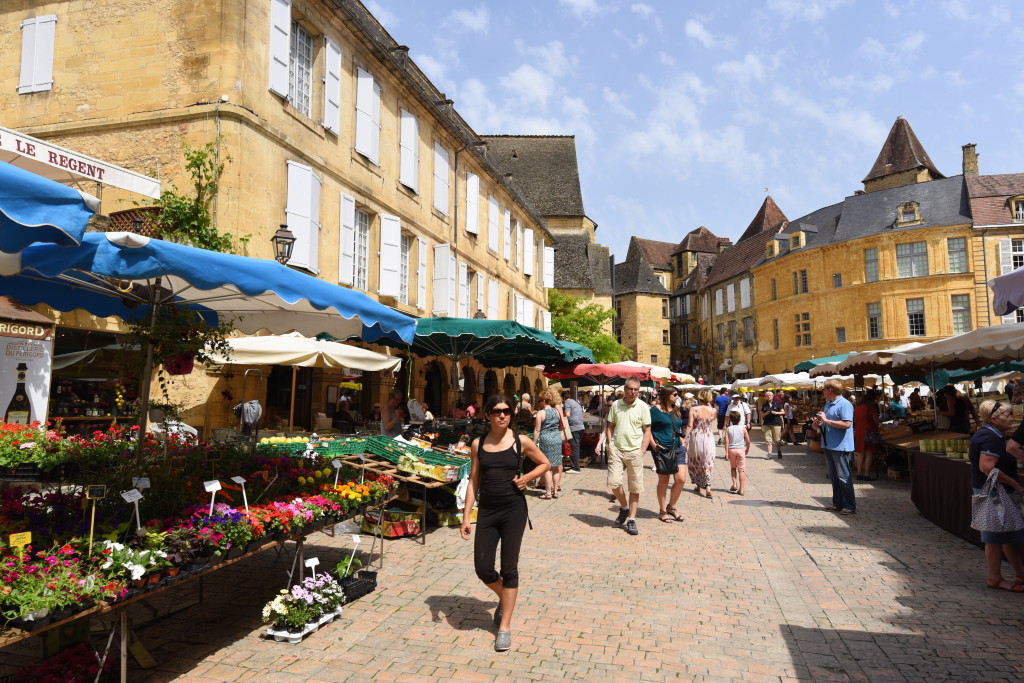
Sarlat’s street market is hard to top. It’s the refined yin to Palermo’s gritty yang. Twice weekly — on Wednesday mornings, and all day Saturdays — the pristine, lemony-sandstone streets of one of France’s finest towns become a big outdoor shopping mall. Locals pour in from the countryside to browse the stalls, reconnect with their favorite vendors, and bump into old friends. You’ll find baked goods, fresh meat, duck-in-a-can (confit de canard), giant wheels of rustic mountain cheese, tiny pyramids of fine gourmet cheese, nuts and dried fruits, explosively flavorful olives, mammoth chunks of nougat, snail shells prefilled for escargot, fruitcake sold by weight, a rainbow of preserves, salamis and sausages of every shape and size, and whatever produce is in season. When the noon bell tolls, the vendors begin packing up, and the shoppers scramble for café tables that catch just the right mélange of sun and shade. This is where the second phase of the Market Day ritual kicks in: taking some time to nurse a cup of coffee with someone you haven’t seen in a while. It’s all so simple…so sophisticated…so smart. If you won’t be in Sarlat, you can enjoy similar market days all over France; every community has its own, but popular ones include Uzès (in Provence), Beaune (in Burgundy), and several in Parisian neighborhoods. But Sarlat is the one that has left me with the warmest memories of an ideal market experience.

What’s your favorite market in Europe?

R.I.P. Imre Nagy: The Death of Rational Governance in Hungary

UPDATE (April 3, 2022): I originally wrote this blog post in January of 2019, when news broke that a beloved statue of anti-communist reformer Imre Nagy had been removed, under cover of darkness, from its prominent position in Budapest. This post offers a sort of “shapshot” of the situation at that time. Flash forward over three years, and  now Hungary faces a choice: In today’s elections, they have an opportunity to remove from office the man who removed that statue from their capital. If you’re seeing news of high-stakes Hungarian elections and wondering what all the fuss is about, I hope this offers some context, from the perspective of an American traveler (heavily influenced by his Hungarian friends).


Well, they’ve gone and done it. They’ve taken down my favorite statue in Budapest. Godspeed, Imre Nagy.

It’s a crazy time in Hungary. Let’s face it: It’s a crazy time just about everywhere — with Trump, Putin, and Brexit rewriting the rules of what’s “normal.” But it’s particularly crazy in Viktor Orbán’s Hungary, where even the great anti-communist crusaders of the Cold War are finding themselves, suddenly and inexplicably, on the wrong side of history.

Just a few weeks ago, I turned in my updated files for the upcoming sixth edition of our Rick Steves Budapest guidebook. This morning, I had to rewrite large sections of the book because of all the changes taking place in Hungary.

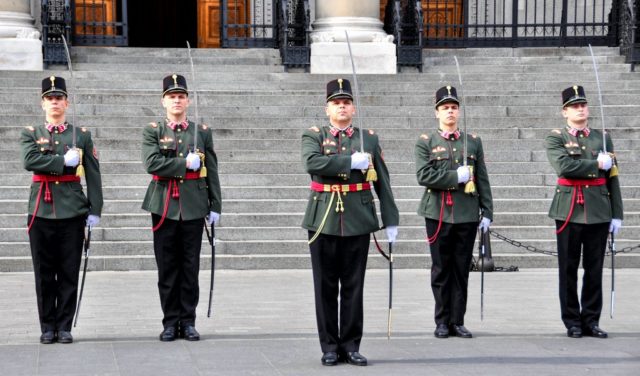
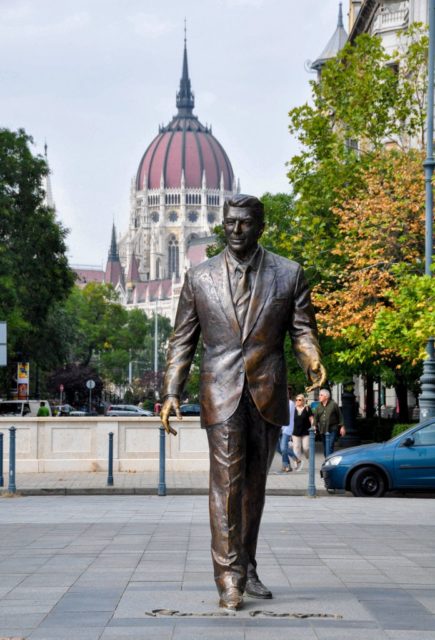
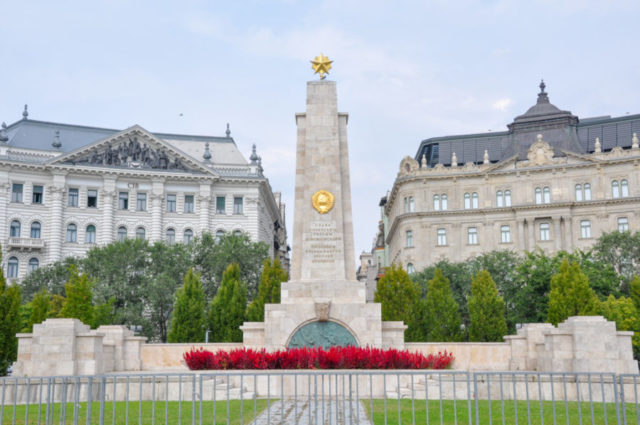
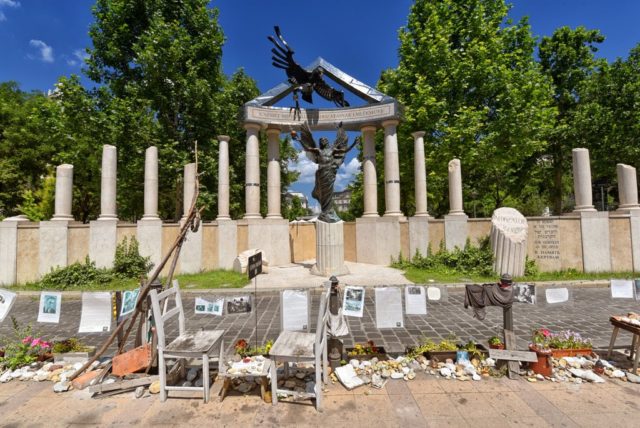
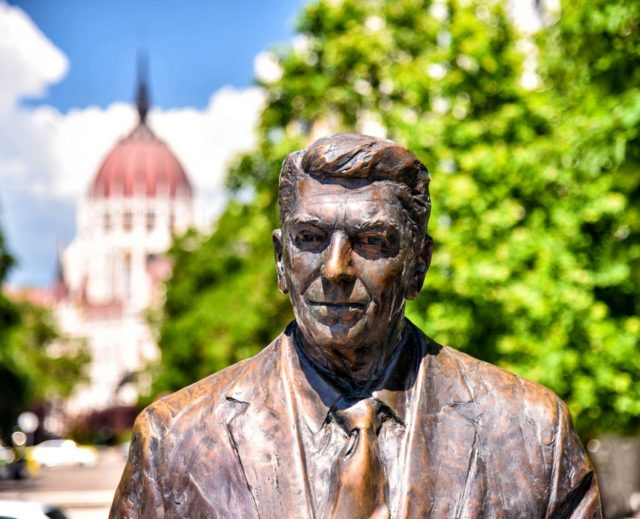
If you’ve been paying attention to the news, you know that Hungary’s prime minister, Viktor Orbán, and his far-right, nativist political party, Fidesz, are continuing their campaign to remake Hungary in their own image. On a previous visit to Budapest, in 2016, I posted about some of those changes — from a statue of Ronald Reagan that had been erected right next to a Soviet Army memorial; to a new monument honoring “victims of fascism” that conspicuously ignored the crimes of the Nazi-allied Hungarian government; to the patriotic new “Changing of the Guard” ceremony on Orbán’s glitzy, fascist-style square behind the Parliament; to the Transylvanian flag that flies on the Parliament building in place of the EU flag.

On that 2016 visit, a local friend asked about the job market in Seattle. She’s seriously considering moving her family stateside to escape what she perceives as her society crumbling around her. Her teenagers now learn history from textbooks written by politicians — the same Fidesz-penned books that are required to be spoon-fed to every student in Hungary. Fidesz enjoys revising Hungarian history as much as they enjoy keeping refugees and immigrants out of their country.

The intervening two and a half years have felt like an eternity. And even in just the last couple of months, the list of Orbán’s offenses has grown. Here are just a few of the changes in Hungary in the several weeks since I was there updating my book:

George Soros — yes, that George Soros, favorite punching bag of the American right — founded a university in his hometown of Budapest in 1991. As Hungary and its neighboring countries were just emerging from Soviet rule, Central European University offered students a place to study at a US-accredited institution, allowing them a foothold in the greater academic world of the West. CEU grew to become highly respected. But Soros — who is as loathed by Fidesz as he is by Fox News — is on the outs in today’s Hungary. And in December, CEU announced they will relocate to Vienna, after failing to meet Fidesz’s draconian new requirements to operate legally in Hungary.

Also in December, Fidesz announced a new law to roll back overtime protections for workers. (Because of Fidesz’s restrictive immigration stance, and because bright young Hungarian workers have left the country in droves, Hungary suffers from a labor shortage. Who could have predicted it?) This new policy — nicknamed the “Slave Law” — has spurred widespread protests. Even many Fidesz supporters are criticizing a government ostensibly dedicated to “family values” effectively requiring citizens to work longer hours.

Meanwhile, Viktor Orbán has finally moved into his over-the-top new palace, up on Castle Hill. Orbán grew tired of living among the commoners, so he evicted the National Dance Theater from their home near the old royal palace and renovated their building into a plush new residence for himself. My Budapest friends have been grumbling about this since it was first announced a few years back — “He thinks he’s better than us! He wants to be up on the mountaintop, looking down upon all his subjects.”

Worst of all, just a few days ago, I received an email from my Budapest friend, confirming that the rumors she’d told me in September have now come true: A beloved statue of the great communist reformer, Imre Nagy, which stood for more than 20 years facing the Parliament building, has been removed by Fidesz authorities. She wrote, “It is a sad day for many of us here!” (It’s worth noting that Budapesters are connoisseurs of monuments. The city is graced with more than its share of memorable statues, from whimsical to poignant. )

Imre Nagy (pronounced “IHM-reh nodge,” 1896-1958), now thought of as an anti-communist hero, was actually a lifelong communist. In the late 1940s, he quickly moved up the hierarchy of Hungary’s communist government, becoming prime minister during a period of reform in 1953. But when his proposed changes alarmed Moscow, Nagy was quickly demoted.

When Hungary’s 1956 Uprising broke out on October 23, Imre Nagy was drafted (reluctantly, some say) to become the head of the movement to soften the severity of the communist regime. Because he was an insider, it briefly seemed that Nagy might hold the key to finding a middle path between the suffocating totalitarian model of Moscow and the freedom of the West.

Some suspect that Nagy himself didn’t fully grasp the sea change represented by the uprising. When he appeared at the Parliament building on the night of October 23 to speak to the reform-craving crowds for the first time, he began by addressing his compatriots — as communist politicians always did — with, “Dear comrades…” When the audience booed, he amended it: “Dear friends…” The crowd went wild.

But the optimism was short-lived. The Soviets violently put down the uprising, arrested and sham-tried Nagy, executed him, and buried him disgracefully, face-down in an unmarked grave. The regime forced Hungary to forget about Nagy.

In 1989, when communism was in its death throes, the Hungarian people rediscovered Nagy as a hero. His body was located, exhumed, and given a ceremonial funeral at Heroes’ Square. (It was also something of a coming-out party for Viktor Orbán — yes, the current prime minister — who, as a twentysomething rebel, delivered an impassioned speech at the ceremony.) Nagy’s symbolic re-burial is considered a pivotal event in that year of tremendous change.

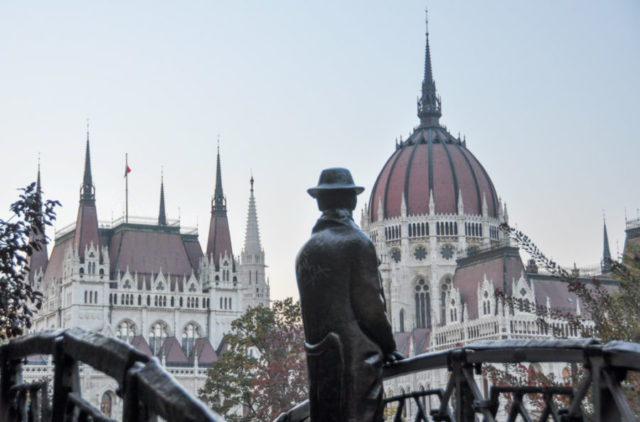
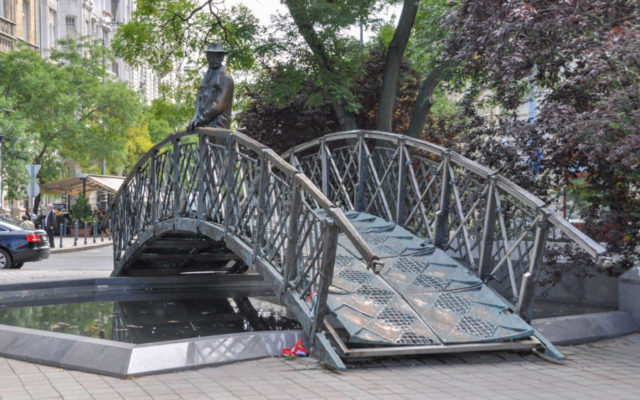
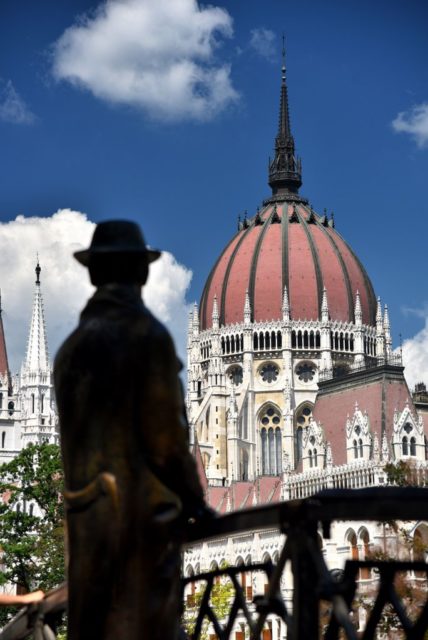
The Nagy monument near the Parliament, erected in 1996, has long been one of my favorites in all of Europe. Its design was poignant: Nagy stood upon a bridge, representing his own political philosophy, which sought common ground between the stifling communism of the USSR and the capitalist free-for-all of the West. The bridge itself was made of treads from Soviet tanks — like the ones used to put down the 1956 Uprising.

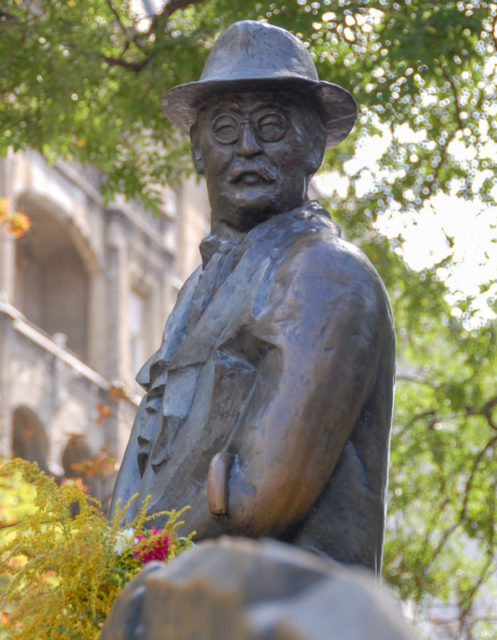
Nagy’s face wore an expression not of defiance or dominance, but of inquisitive compassion. He looked across the square at the towering red dome of the Hungarian Parliament, symbolically keeping an eye on the government.

But now that statue is gone — removed with little warning and zero fanfare, in the middle of the night, just two days after Christmas. Viktor Orbán — who, let’s not forget, made his name lauding Nagy — has apparently decided to unilaterally reverse the rehabilitation of Nagy’s image. Fidesz claims that they are moving the statue to a different (and decidedly less prominent) location, on Jászai Mari tér, near Margaret Bridge. But no preparations on that site have taken place, leaving open the possibility that Nagy will again be brushed into the dustbin of history.

As someone who passionately loves Budapest, this worries and saddens me. It should worry and sadden you, too. Removing the statue of a gentle, heroic man who sacrificed his life to improve the lot of the Hungarians is a clear sign that Orbán believes history is open to his individual interpretation.

Let’s be clear: We’re not talking about removing Confederate flags or statues of Robert E. Lee, which are broadly offensive symbols of racism and slavery. There’s nothing offensive about Nagy to the vast, vast majority of Hungarians, who view him as a beloved figure. He symbolizes sacrifice in the face of oppression, and the courage to rise up for what’s right. Removing the Nagy statue would be more like taking down a statue to Martin Luther King, Jr., because of some obscure political beef.

The only Hungarians offended by the image of Nagy are communist sympathizers longing for a return to the darkest days of Stalinism. And, it seems, Viktor Orbán. It’s rarely constructive to psychoanalyze a despot, but it’s difficult to imagine why Orbán has it in for Nagy. He claims his goal is to return the appearance of the square to its pre-communist, pre-WWII glory days. Why, then, is Orbán erecting brand-new statues even as he’s taking this one away? Surely the truth is more deeply rooted. For one thing, because Nagy’s historical ties to communism place him on the left, Fidesz simplistically views him as an ideological enemy. And perhaps, as he continues Hungary’s slide toward totalitarianism, Orbán is uncomfortable with celebrating an upriser on Hungary’s grand Parliament square.

Standing just a few steps away from the (now-removed) Nagy statue is Orbán’s statue of Ronald Reagan. Reagan and Nagy, fellow Cold Warriors, would have found much common ground. But in Orbán’s topsy-turvy, upside-down world, only one deserves to stand near the Parliament.

Adding insult to injury, that old memorial to Soviet soldiers still stands next to Ronald Reagan. To be entirely clear here: Fidesz has removed a statue of a freedom fighter, but has chosen to leave in place a monument to an army that “liberated” Hungary in order to occupy it for four and a half decades.

Someone once said, “May you live in interesting times.” But this is simply exhausting. Just a few years ago, someone who was executed by the communist authorities for his brave protest would be considered an unqualified hero. But in Viktor Orbán’s Hungary, nothing makes sense anymore. The next time I visit Budapest and walk past the Parliament, I’ll miss seeing Nagy’s comforting form, keeping a watchful eye on things. Rest in peace, Imre Nagy. And rest in peace, rational governance in Hungary.

10 European Discoveries for 2018

My Christmas tree is out at the curb, which means it’s time to start planning 2018 travels. This year, I hope to visit some big-name destinations — maybe Madrid, maybe Amsterdam, maybe Prague? But as I reflect on recent trips, I’m struck by how many favorite travel memories have taken place in Europe’s underappreciated corners. As your travel dreams take shape for 2018, consider peppering your itinerary with a few off-the-beaten-path discoveries — the sorts of places that Rick Steves, decades ago, dubbed “Back Doors.” Here are 10 of my current favorites.


Lake Mývatn Area, Iceland

Driving around the perimeter of Iceland on the 800-mile Ring Road this summer (working on our upcoming Rick Steves Iceland guidebook), I binged on an unceasing stream of cinematic landscapes. But what sticks with me most vividly is the region surrounding Lake Mývatn, a geological hotspot that straddles the European and North American tectonic plates. Birds love this dreamy lake, as do the swarms of microscopic midges (for whom the lake is named) that invade the nostrils and mouths of summertime visitors. But the bugs are easy enough to ignore as you explore the lakeshore’s volcanic terrain — from the “pseudocraters” (gigantic burst bubbles of molten rock) at Skútustaðir, to the forest of jagged lava pillars at Dimmuborgir, to the climbable volcanic cone at Hverfjall. And the thermal fun crescendos just to the east: the delightful Mývatn Thermal Baths (the lowbrow, half-price alternative to the famous Blue Lagoon), the volcanic valley at Kralfa (with a steaming geothermal power plant), and the bubbling, hissing field at Námafjall (pictured above). Stepping out of my car at Námafjall, I plugged my nose against the suffocating sulfur vapors and wandered, slack-jawed, across an otherworldly landscape of vivid-yellow sands, bubbling gray ponds, and piles of rocks steaming like furious teakettles. Many visitors drop into Iceland for just a few days, and stick close to Reykjavik — which is a good plan, if you’re in a rush. But the opportunity to linger in Mývatn (about a six-hour drive from Reykjavík) may be reason enough to extend your trip by a few days…and turn your stopover into a full-blown road trip.
 

Sarlat Market Day, Dordogne, France

Of all the delightful activities I’ve enjoyed in France, my favorite remains the lazy Saturday morning I spent wandering the market stalls in the town of Sarlat. Rickety tables groaned with oversized wheels of mountain cheese, tidy little stacks of salamis, cans of foie gras and duck confit, and a cornucopia of fresh produce. Market day in rural and small-town France isn’t just a chance to stock up — it’s a social institution, where neighbors mix and mingle, and where consumers forge lasting relationships with their favorite producers. And when the market wraps up, even before the sales kiosks are folded up and stowed, al fresco café tables overflow with weary shoppers catching up with their friends. While Sarlat is my favorite market (and my favorite little town in France), you can have a similar experience anywhere in the country; I’ve also enjoyed memorable market days in Uzès (Provence), Beaune (Burgundy), St-Jean-de-Luz (Basque Country), and even in Paris. Just research the local jour de marché schedule, wherever you’re going in France, and make time for one or two. And when you get there…. Actually. Slow. Down. Throw away your itinerary for a morning. Become a French villager with an affinity for quality ingredients. Browse the goods. Get picky. And assemble the French picnic of your dreams.


Ruin Pubs, Budapest, Hungary

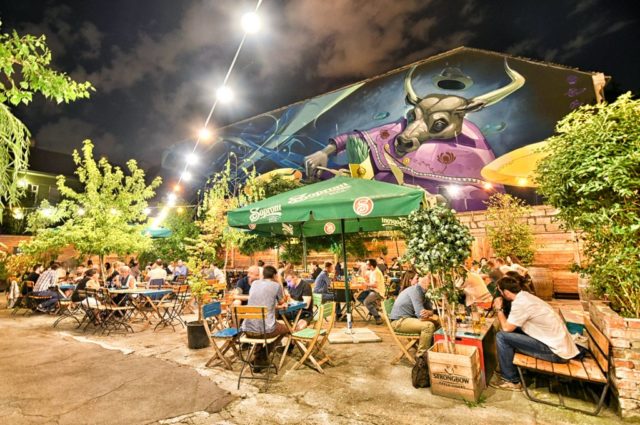
I must admit, I’m not really a “nightlife guy.” But when I’m in Budapest, I budget extra time to simply wander the lively streets of the Seventh District — just behind the Great Synagogue, in the heart of the city — and drop into a variety of “ruin pubs.” A ruin pub is a uniquely Budapest invention (though these days, it’s been copied by hipster entrepreneurs everywhere): Find a ramshackle, crumbling, borderline-condemned old building. Fill its courtyard with mismatched furniture and twinkle lights. And serve up a fun variety of drinks, from basic beers to twee cocktails to communist-kitsch sodas for nostalgic fortysomethings. The Seventh District — the former Jewish Quarter, and for decades a wasteland of dilapidated townhouses — gave root to ruin pubs several years back. And today, tucked between the synagogues and kosher shops are dozens of ruin pubs, each one with its own personality. While you could link up a variety of the big-name ruin pubs (and my self-guided “Ruin Pub Crawl” in the Rick Steves Budapest guidebook does exactly that), the best plan may simply be to explore Kazinczy street and find the place that suits your mood.


Julian Alps, Slovenia

This gorgeous corner of my favorite country has always been high on my personal “must list.” It’s a little slice of heaven: Cut-glass alpine peaks tower over fine little Baroque-steepled towns, all laced together by an eerily turquoise river. While this place should be overrun with crowds, on my latest visit — in late September — I had the place nearly to myself. A few A+ travelers have begun to find their way to the “sunny side of the Alps”: Rafters, kayakers, and adventure sports fanatics are drawn to the sparkling waters of the Soča River. Historians peruse the well-curated array of outdoor museums and cemeteries from World War I’s Isonzo Front, where Ernest Hemingway famously drove an ambulance. Skiers gape up at the 660-foot-tall jump at Planica, home to the world championships of ski flying (for daredevils who consider ski jumping for wimps). And foodies make a pilgrimage to Hiša Franko, the world-class restaurant of Ana Roš — a self-trained Slovenian chef who was profiled on Netflix’s Chef’s Table, and was named the World’s Best Female Chef 2017. (I recently enjoyed a fantastic dinner at Hiša Franko, and was tickled to be greeted by Ana herself, who took my coat and showed me to my table.) As a bonus, the Julian Alps pair perfectly with a visit to northern Italy: On my latest trip, I spent the morning hiking on alpine trails and exploring antique WWI trenches carved into the limestone cliffs, had lunch immersed in the pastoral beauty of Slovenia’s Goriška Brda wine region (also egregiously overlooked), then hopped on the freeway and was cruising the canals of Venice well before dinnertime.


Vigeland Park, Oslo, Norway

My favorite piece of art in Europe isn’t a painting, and it isn’t in a museum. It’s a park — a grassy canvas where a single artist, the early-20th-century sculptor Gustav Vigeland, was given carte blanche to design and decorate as he saw fit. The city of Oslo gave Vigeland a big studio, and turned him loose in the adjoining park for 20 years. He filled that space with a sprawling yet harmonious ensemble of 600 bronze and granite figures, representing every emotion and rite of passage in the human experience, all frozen in silent conversation with each other — and with the steady stream of Oslo urbanites and tourists who flow through Vigeland’s masterpiece. The naked figures (which might provoke giggles among prudish Americans) reinforce the sense of timelessness and universality: They belong not to any one time or place, but to every time and every place — from Adam and Eve to contemporary Norway. Over the last decade and a half, I’ve been to Vigeland Park three times. Each time, I was in a totally different state of mind. And each time, the statues spoke to me like old friends — sometimes with the same old message, and sometimes with new insights. With all due respect to da Vinci, Van Gogh, and Picasso, no single artistic experience in Europe is more meaningful or impactful to me than Vigeland Park.
 

Sarajevo, Bosnia-Herzegovina

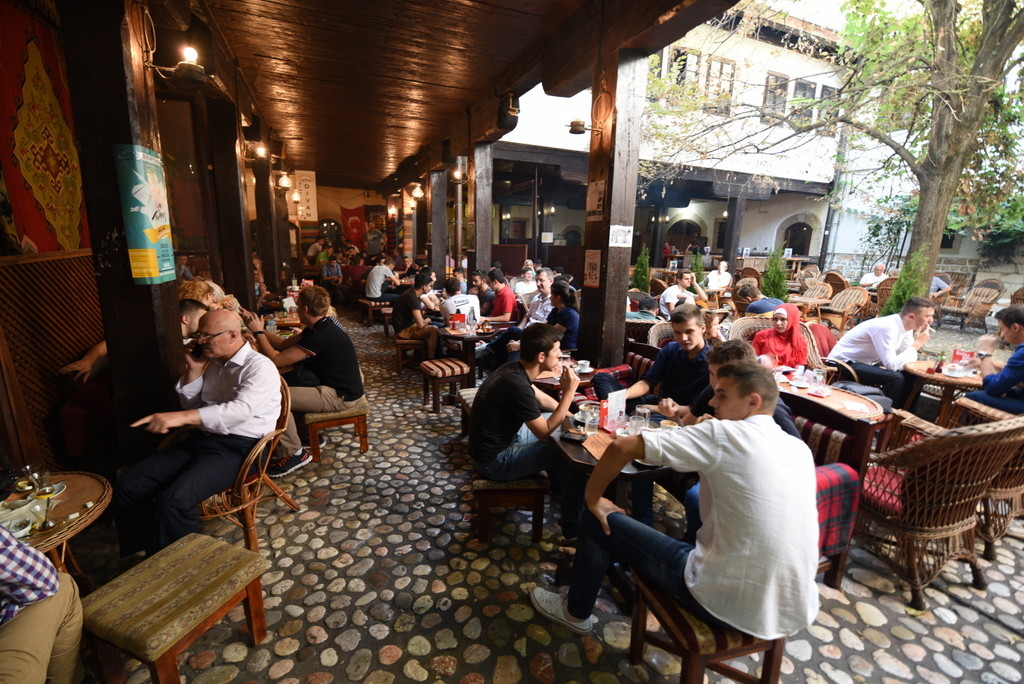
Sarači #16 is the most interesting address in downtown Sarajevo. Facing east — toward the Ottoman-era old town, Baščaršija — you’re transported to medieval Turkey: a bustling bazaar with slate-roofed houses, chunky river-stone cobbles, the tap-tap-tap of coppersmiths’ hammers, and a pungent haze of hookah smoke and grilled meats. Then, turning to the west, you’re peering down Ferhadija, the main thoroughfare of Habsburg Sarajevo. This could be a Vienna suburb, where stern, genteel Baroque facades look down over cafés teeming with urbanites. Within a few short blocks of this spot stand the city’s historic synagogue, its oldest Serbian Orthodox church, its Catholic cathedral, and its showcase mosque. Few places on earth are so layered with history. And then there’s the latest chapter: the poignant story of the Siege of Sarajevo in the mid-1990s, when the town was surrounded by snipers for more than 1,400 days — connected to the outside world only by a muck-filled tunnel and a steep mountain ascent. Proud Sarajevans you’ll meet are often willing, or even eager, to share their stories of living a horrific reality that we experienced only through the Nightly News. And if you’re lucky, they’ll invite you for a cup of Bosnian coffee — and explain why it’s integral to their worldview and their social life. Many travelers do a strategic side-trip from Croatia to the town of Mostar — a good first taste of Bosnia, but what I consider “Bosnia with training wheels.” But for the full Bosnian experience, I’d invest another day or two and delve a couple of hours deeper into the country…to Sarajevo.


Val d’Orcia, Tuscany, Italy

Of all of Tuscany’s appealing corners, the Val d’Orcia (“val dor-chah”) is — for me — the most enchanting. While just a short drive from the tourist throngs in Florence, San Gimignano, Siena, or the Chianti region, the Val d’Orcia — bookended by the charming towns of Montepulciano and Montalcino (both synonymous with fine Tuscan wine) — feels like a peaceful, overlooked eddy of rural life. This strip of land is where most of the iconic “Tuscany scenery” photographs are taken: Winding, cypress-lined driveways; vibrant-green, rolling farm fields that look like a circa-2000 screensaver; and lonely chapels perched on verdant ridges. And it’s the backdrop for famous scenes in everything from The English Patient to Gladiator to Master of None. And yet, the area has no “major sights” — no sculptures by Michelangelo, no paintings by da Vinci, no leaning towers — which, mercifully, keeps it just beyond the itineraries of whistle-stop, bucket-list tourists. I have savored several visits — including a particularly memorable Thanksgiving week with family — settling into my favorite agriturismo, Cretaiole, in the heart of the Val d’Orica. And every moment of every trip lives on as a mental postcard: Making fresh pasta. Sawing into a deliciously rare slab of Chianina beef T-bone. Following a truffle-hunting dog as it sniffs its way through an oak forest. And on and on. If you have a day to spare between Rome and Florence, don’t go to the Val d’Orcia. But if you have several days to really delve into the best of Tuscany…let’s talk.


Psyrri Neighborhood, Athens, Greece

A few years removed from the depths of its economic crisis, Athens has re-emerged as a red-hot destination. Revisiting the city a few months ago, I was struck by how many tourists I saw — and by how many of them refused to venture beyond the cutesy, crowded Plaka zone that rings the base of the Acropolis. And that’s a shame, because literally across the street  from the Plaka’s central square, Monastiraki, is one of Athens’ most colorful and fun-to-explore neighborhoods: Psyrri (“psee-ree”). Not long ago, this was a deserted and dangerous slum. But recently, Psyrri has emerged as a trendy dining and nightlife zone. Its graffiti-slathered apartment blocks now blossom with freshly remodeled Airbnb rentals. This still-gritty area may feel a little foreboding at first, but if you can get past the street art, grime, and motorbikes parked on potholed sidewalks, it’s easy to enjoy the hipster soul of the neighborhood that’s leading many to dub Athens “The New Berlin.” For the upcoming fifth edition of our Rick Steves Greece guidebook, Psyrri inspired me to write a brand-new, food-and-street-art-themed self-guided walk chapter. In just a few blocks, between the Plaka and the thriving Central Market, you can stop in for nibbles and sips of sesame-encrusted dough rings (koulouri), delicate phyllo-custard pastry (bougatsa), deep-fried donuts (loukoumades), anise-flavored ouzo liquor, and unfiltered “Greek coffee.” If you’re going to Athens, break free of the Plaka rut, walk five minutes away from the hovering Parthenon, and sample this accessible, authentic slice of urban Greek life.


Moscow, Russia

On my last visit to Moscow, in the summer of 2014, Russia was in the news: military action in Crimea and eastern Ukraine, Putin’s brutal crackdown on homosexuality and punk-rock protesters Pussy Riot, and the recently completed Sochi Olympics. Of course, since then, the headlines have changed, but Russia is in the news more than ever. That’s why I consider Moscow to be Europe’s most fascinating — and challenging — destination. People back home shake their heads and wonder: How can these people support Putin, who (to us) is so clearly a demagogue? I take that not as a rhetorical question, but as a genuine one that deserves a real answer. And a thoughtful visit to Moscow — even “just” as a casual tourist — can offer some insights. Designed-to-intimidate Red Square and the Kremlin fill onlookers with awe and respect. The still-standing headstone of Josef Stalin — tucked along the Kremlin Wall, just behind Lenin’s Tomb and its waxy occupant — seems to suggest that the Russian appetite for absolute rulers is nothing new. But mostly, I’m struck by the improvements I see in Moscow with each return visit. On my first trip, in the early 2000s, the famous Gorky Park was a ramshackle, potholed mess, and the Cathedral of Christ the Savior — which had been demolished by communist authorities — was still being rebuilt. But today, Gorky Park is a lush, pristine, manicured people zone, and the sunshine glitters off the cathedral’s rebuilt golden dome. Just up the river, a Shanghai-style forest of futuristic skyscrapers rises up from a onetime industrial wasteland. In short, the Russian capital — which has always been interesting — is now actually a pleasant place to travel. Finding myself really enjoying Moscow, for the first time, makes it easier to imagine how many Russians might be convinced that Putin is Making Russia Great Again.
 

Orkney Islands, Scotland

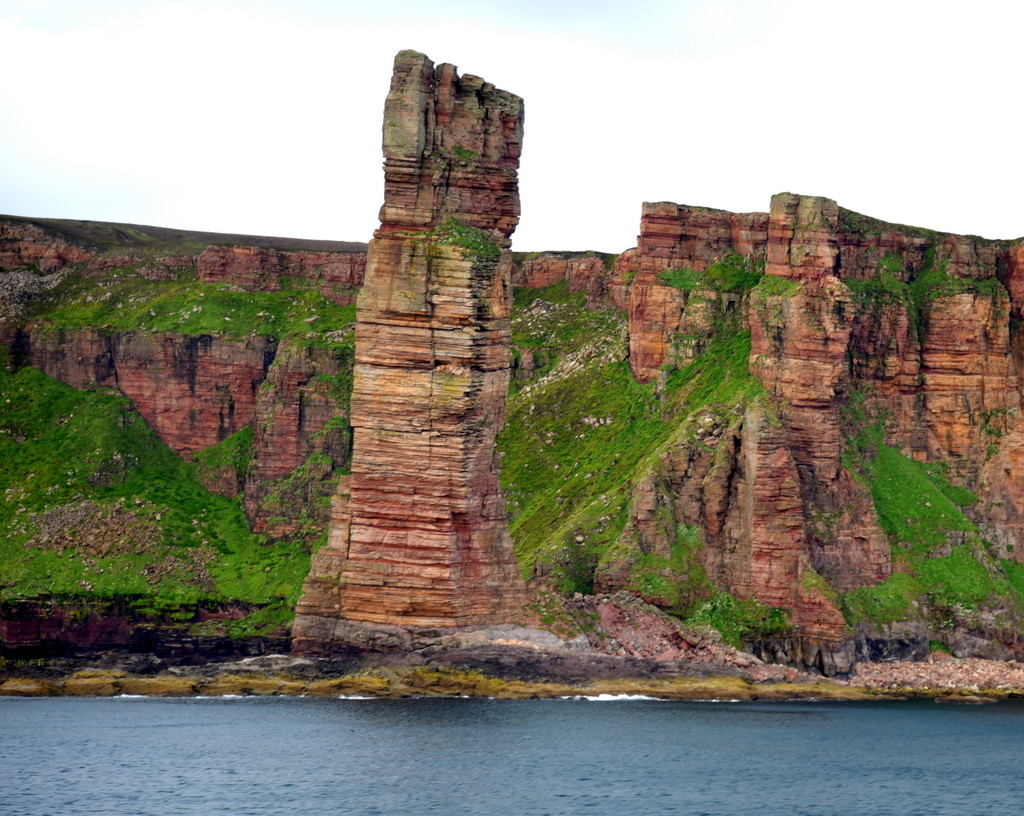
Cameron Scotland Orkney Old Man of HoyI traveled all over Scotland a couple of summers ago, working on the Rick Steves Scotland guidebook. And the most intriguing place I visited had nothing to do with kilts, bagpipes, or moody glens: the archipelago of Orkney, barely visible from Britain’s northernmost point at John o’ Groats. This flat, mossy island feels far from what I think of as “Scotland.” For most of its history, it was a Norse trading outpost, rather than a clan stronghold. And today it remains a world apart. Five-thousand-year-old stone circles and rows point the way to prehistoric subterranean settlements. The main town, Kirkwall, has a quirky tradition for a no-holds-barred, town-wide annual rugby match, and a fascinating-to-tour church. And you can still drive across the “Churchill Barriers,” installed by Sir Winston after a Nazi U-Boat snuck into the famous harbor called Scapa Flow and blew up a British warship. But my favorite sight is the Italian Chapel: a drab wartime hut transformed into a delicate, ethereal Catholic chapel by Italian POWs who were allowed to improvise the decor from whatever materials they could scavenge. While Orkney takes some effort to reach, it’s worthwhile for the unique and captivating sightseeing it affords. (To get the most out of your time on Orkney, book a tour with Kinlay at Orkney Uncovered.)

Where are you headed in 2018?

Grappling with Thorny Politics, in Budapest

You’re walking through Budapest, ogling the grand architecture of Liberty Square, when you bump into someone familiar. That confident stride, that easy smile, that well-coiffed hair: It’s Ronald Reagan. But why on earth is the Gipper hanging out in this prime piece of Hungarian real estate?

cameron-hungary-budapest-politics-reagan-1

The answer is…complicated. But it begins with understanding Hungary’s current ruling party, Fidesz, and its prime minister, Viktor Orbán. Part of travel is learning about the current events of other countries. And over the last few years, Hungary has had one of Europe’s most fascinating political climates.

After Hungary’s previous leadership — the hard-left Social Democrats — immersed the country in debt and humiliating scandals, the political pendulum took a hard swing to the right. In 2010, Viktor Orbán’s party, Fidesz, took power in Hungary. A kindred spirit of Vladimir Putin and Donald Trump, Orbán first came on the scene back in 1989, when — as a long-haired, anti-communist radical — he delivered a rollicking speech in the waning days of communism. As his political career evolved, he moved gradually toward the nationalistic, authoritarian end of the spectrum. During his first term as prime minister, Orbán wore a child’s backpack decorated with soccer players, to drive home his unpretentious, populist affinities. And throughout his career, he has gained rabid supporters in the Hungarian heartland even as he’s horrified big-city progressives and international observers.

Soon after taking power, Fidesz adopted a new constitution that stripped away many checks and balances, and entrenched party leaders in institutions that had previously been considered apolitical. They also nationalized the school system, implementing a Fidesz-friendly curriculum. (Hungarian parents critical of Fidesz equate this to if the US government unilaterally removed all mention of the slave trade, the Trail of Tears, evolution, and climate change from textbooks.) International observers took note when Fidesz created a new FCC-like media authority with sweeping powers — leaving the Hungarian press less free than it once was. Orbán also attempted to levy a per-use tax on all Internet traffic, until tens of thousands of protesters clogged city streets… making it clear Fidesz had gone too far.

If you’ve heard of Viktor Orbán, it was probably in the fall of 2015, when Hungary took a particularly hard line in preventing the flow of Syrian war refugees from entering their country en route to a better life in Western Europe. Orbán erected barbed wire and dispatched an intimidating border defense squad to make it clear that refugees weren’t welcome. While humanitarians condemned Orbán’s actions — which violated the European Union’s open-borders agreements, and left many desperate people with nowhere to go — his supporters tout his success in preventing unwanted refugees from flooding the country.

cameron-hungary-budapest-politics-signs

Fidesz has left their mark all over the Hungarian capital. They went on a renaming binge in Budapest, rechristening streets, squares, and parks to honor patriotic or obscure (but Fidesz-friendly) historical figures. (They even renamed the country: No longer the “Republic of Hungary,” the nation is now formally called, simply, “Hungary.”)

cameron-hungary-budapest-politics-WWII-memorial

Fidesz also erected a dynamic new monument on Liberty Square, honoring the “Hungarian Victims of Fascism.” While it’s true that many Hungarians died at the hands of the Nazi regime, the monument overlooks the critical fact that Hungary chose to ally with the Nazis early in the war, and that Nazi-empowered Hungarians were some of the worst perpetrators of the Holocaust. As soon as the official monument went up, locals improvised their own memorial directly in front of it — ensuring that the complete history is represented.

cameron-hungary-budapest-politics-transylvanian-flag

In another bold move, for the last couple of years the Parliament has flown two flags: Hungary…and Transylvania. That region (now firmly in Romania) was part of the Hungarian realm for a thousand years. But it was stripped away from Hungary in the Treaty of Trianon that ended World War I. While nationalistic politicians have long used Transylvania (which still has a large Hungarian-speaking minority) as a rallying cry, Fidesz has taken it a step farther: The Transylvanian flag currently occupies the pole that was once reserved for the European Union…making Hungary the only EU member that refuses to fly the EU flag on their capitol.

cameron-hungary-budapest-politics-castle-hill

Up on Castle Hill, overlooking the entire city of Budapest, Orbán has evicted the National Academy of Dance, and is currently renovating their former home to be his personal palace. Critics point out that the Parliament was intentionally built along the riverfront in the city center, to show that the government is one with the people. By moving to the castle — literally looking down on all of Budapest — Orbán is signaling a startlingly different philosophy. (Speculation is that the Royal Palace itself — currently occupied by a pair of museums and some offices — may be next.)

cameron-hungary-budapest-politics-parliament

It’s easy to criticize Orbán. But as a traveler who drops in every year or two, I must admit that, from an infrastructure and urban-beautification perspective, Budapest has made great strides in recent years. Under Fidesz, vast swaths of the city have been scrubbed clean, pedestrianized, and landscaped. The formerly ragtag square behind the Parliament has been totally renovated — leaving it sleek, monumental, and (for some) a little too Fascist-feeling. (The brand-new “Changing of the Guard” ceremony — another Fidesz invention — doesn’t do much to reassure them.) The long-delayed green Metró line is finally finished…and it’s slick. And I sense a general pride that I wasn’t aware of 10 years ago. Obviously, the foundations for many of these projects were laid by the previous, left-wing government. And much of the money comes from the EU, which — ironically — Orbán opposes. But the fact remains: A leader with an authoritarian streak gets things done. (I was similarly impressed after a recent visit to Moscow. Say what you will about Putin — and believe me, I know there’s plenty to say — but Moscow is becoming a truly gorgeous city.)

cameron-hungary-budapest-politics-changing-guard

When viewed from a distance, Hungary’s political scene is intriguing…almost entertaining. But for people living there, it’s anything but. On this visit, one of my Hungarian friends — who has two school-age kids —asked me about employment opportunities in Seattle. She feels so depressed at the prospect of raising well-adjusted kids under a regime whose values she can’t stand that she’s considering moving the entire clan abroad until Fidesz is out of power. It reminds me of the pledge that I’ve heard recently from the anti-Trump crowd back home: “If he gets elected, I’m moving to Canada.” (It also made me wonder: There are plenty of tempting “socialist paradise” options for idealistic American lefties to relocate to…Canada, the UK, most of Europe, and so on. But — considering how fundamentally conservative the USA is compared to the rest of the developed world — where do right-wingers move if “things get bad enough”? Well, these days…maybe to Hungary.)

cameron-hungary-budapest-politics-reagan-2

And what about Ronald Reagan? In the early days of Fidesz rule, as Orbán was beginning to take some serious international heat for his questionable policies, he thought it smart to suck up to the powerful USA by erecting a statue of a beloved president in a prime position. And then, perhaps not quite grasping the subtleties of American politics, Orbán invited then-Secretary of State Hillary Clinton to the unveiling.

cameron-hungary-budapest-politics-nagy

While Reagan played a role in ending the Cold War, many Hungarian patriots are offended that this monument overshadows the contributions and sacrifices of so many other important, homegrown figures — including Imre Nagy, who was executed for taking a leading role in Hungary’s 1956 Uprising. Just a few steps away from Reagan, a pensive statue of Nagy looks toward the parliament dome. For years, Nagy’s confident gaze struck me as an optimistic sign: Hungary, so long oppressed by communism, was determined to keep an eye on its government to ensure it was moving the country in the right direction. But these days, Nagy looks worried. And, my progressive local friends swear, every time Fidesz passes a bold new reform…Nagy winces.