Walking through my temporary Berlin neighborhood — Prenzlauer Berg — I pass organic food stores, graffiti-slathered storefronts, scruffy parks lively with frolicking kids, and people representing every race and nationality on earth. And I think to myself, “This is basically Sesame Street, in real life.” The only thing missing is a giant yellow bird.
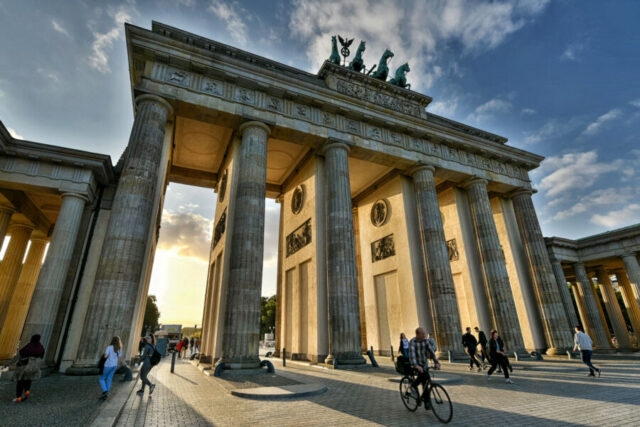
Tourists seeing Berlin in a hurry — doing a strategic strike on the Brandenburg Gate, Unter den Linden, Checkpoint Charlie, and Museum Island — see just the central slice of this sprawling city. While understandable, that’s a shame. Because the true joy of Berlin are its Kieze (“KEET-zeh”) — funky little urban neighborhoods, each with its own distinct personality.
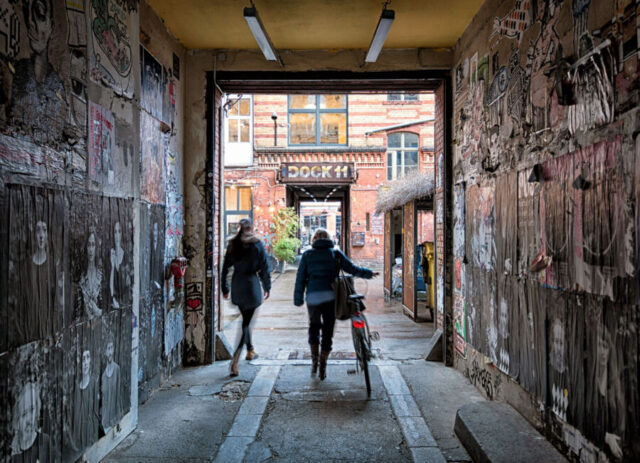
Berlin’s Kieze truly are Europe’s Sesame Street — Williamsburg or Berkeley with a German accent (and, often, not even that). And the joy of Berlin’s Kieze is why I simply love being in this city. I manufacture excuses to head to the Graefekiez, the Bergmannkiez, the Kollwitzkiez, or the Helmholzkiez.
On a recent visit, I rented an apartment in a classic Kiez apartment house, with little balconies facing into a shared courtyard jammed with bicycles, strollers, and toys. My neighbors were a mix of aging hipsters and young families, all living together in apparent harmony. The biggest complaints cited in the reviews were that some guests have gotten shushed for talking too loud out on the balcony after hours.
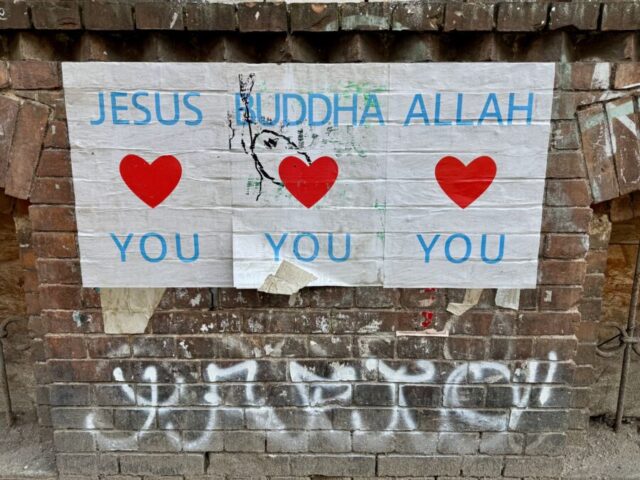
A key facet of the Sesame Street comparison is Berlin’s Multikulti outlook. Even way back when I was a kid, the denizens of Sesame Street were strikingly diverse. And among European cities, Berlin has embraced multiculturalism since not long after Hitler’s bunker became a smoldering ruin. The Turkish Gastarbeiter (“Guest Workers”) who moved here soon after World War II to rebuild West Berlin have woven themselves into the city’s fabric for decades. Since the end of communism, Berlin has attracted young expats from around the world. And in more recent years, it’s been a hub for immigrants and war refugees — including, most famously, the 2015 arrival of many from Syria and Afghanistan.
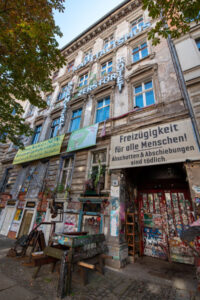
These days, one in every four Germans has at least one parent who was born outside Germany, and I imagine the ratio in Berlin must be even more striking. Berlin is a magnet for anyone seeking an eclectic cultural mix, progressive outlook, and embrace of creativity. A walk through the central square or park of any Kiez in Berlin is enough to instantly dispel the myth of European homogeneity (or that homogeneity is inherently a “good thing”).
People skeptical of multiculturalism — generally those whose “experience” of Europe is shaped more by fear-mongering social media posts than through actual travel — cluck their tongues and express concern about how Europe is at risk of “losing its culture.” But traveling in Germany (and especially in Berlin), two things become unmistakably apparent: “Traditional German culture” has nothing to fear; lederhosen, oompah bands, and one-liter mugs of beer remain widely available. And at the same time, increased diversity is a catalyst for a whole wonderful rainbow of new, hybrid subcultures.
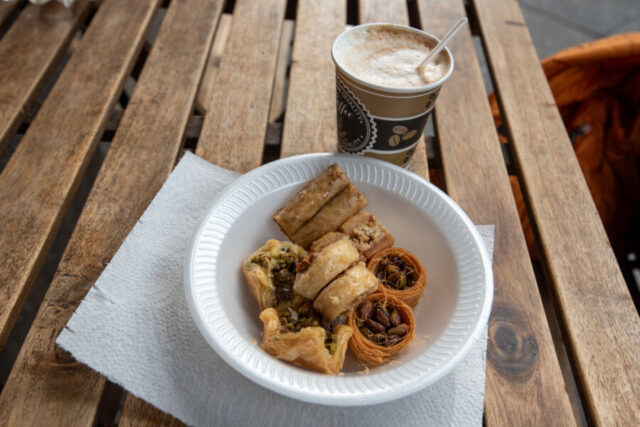
On a recent trip, I was excited to visit the Damaskus Kontditorei, a bakery in a nondescript, extremely untouristy Kiez of the Kreuzberg district. The bakery is run by Syrian migrants who were taken in by Angela Merkel during the refugee crisis of 2015.
After a complicated 45-minute transit connection to the middle of nowhere, I went into Damaskus and ordered a latte with a little assortment of delectable Middle Eastern treats: various baklavas, plus lots of other little phyllo-dough goodies soaked in honey and encrusted in nuts. I sat out at a sidewalk table and had the best breakfast of my trip. And I thought about how multiculturalism, and looking out for the world’s most vulnerable in a time of crisis, contributes to a very happy and successful society indeed. Could there be anything more Sesame Street than that?
Another thing I notice about Berlin’s Kieze is that, like Sesame Street, they’re quite rough around the edges. Walls are tagged with graffiti; parks are overgrown and weedy and far from manicured. It’s not that the people who live here don’t have the will or the resources to tidy things up; I think it’s that they enjoy living in a place that feels wild, sketchy, and rugged, even though it’s a few U-Bahn stops from the sleek, austere, and stern government ministries of Europe’s mightiest nation.
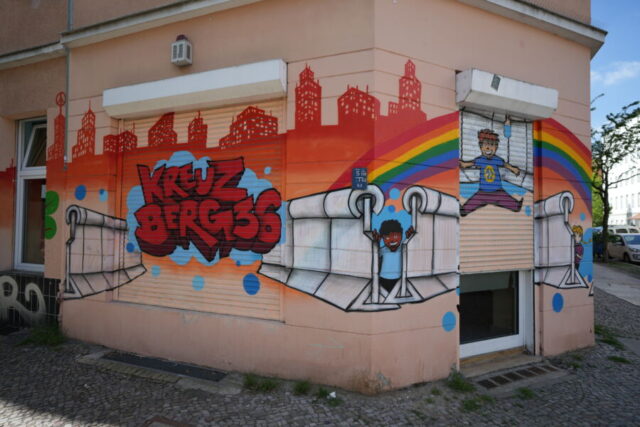
Another Sesame Street connection: Many of Berlin’s Kieze are crawling with kids. Many of those young idealists who relocated here after the fall of the Berlin Wall have stuck around, and the ensuing baby boom has never really abated. The trendy Kieze I’m talking began as hardscrabble, inner-city neighborhoods. Squatters took over, then artsy hipsters, and now those hipsters are affluent yuppies raising families. Rather than moving out to the suburbs, they’re staying put. Between those wealthy families, and visitors paying a pretty penny for apartment rentals, poorer Berliners are being priced out. I wonder sometimes if the street art, crumbling pavement, and overgrown parks are a badge of honor for Berliners who want to prove they can be rich but still live like they’re poor twentysomethings.
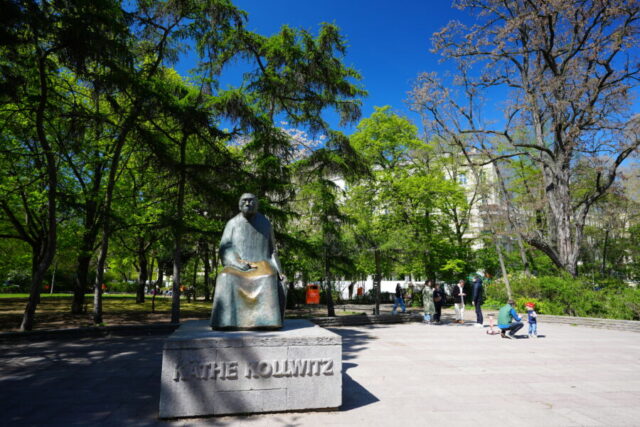
And so, if you sit in a park in Prenzlauer Berg — let’s say Käthe-Kollwitz-Platz or Helmholtzplatz — you’ll see loads of kids out playing in those grubby urban spaces: blowing giant bubbles, goofing around on elaborate playgrounds, tapping a fluttering badminton shuttlecock back and forth. Off in the corner, a bum dozes on a bench; occasionally a car drives by blasting too-loud, raunchy German hip-hop. It’s gritty. It feels real. You half-expect Oscar the Grouch to poke his head out of a trash can.
And there’s one more, very important way in which Berlin reminds me of Sesame Street: It simply can’t resist the urge to teach you a lesson. About anything and everything.
Berlin has more than its share of history. Most of that history is pretty dull — as the staid, workmanlike capital of Prussia, the deftly engineered city of Frederick the Great ran like a well-oiled machine. But in the 20th century, things got very complicated. First, the loss of a Great War brought humiliation and economic crisis. Then came Hitler; then a wall that completely encircled half of the city, sealing it off from the world. And finally, that giddy night in the fall of 1989 when we turned on our televisions to see people dancing on top of that wall.
In the three and a half decades since, rejuvenated Berlin has worked overtime to document and tell those stories. You can’t avoid them; often you literally stumble over them. Throughout the city, you’ll find brass Stolpersteine — “stumbling stones” — embedded in the cobbles, listing the names of people who lived at that address until they were killed in the Holocaust. Two different Berliners proudly told me that they’d personally researched and funded Stolpersteine to place in front of the homes where they now live, honoring past residents.
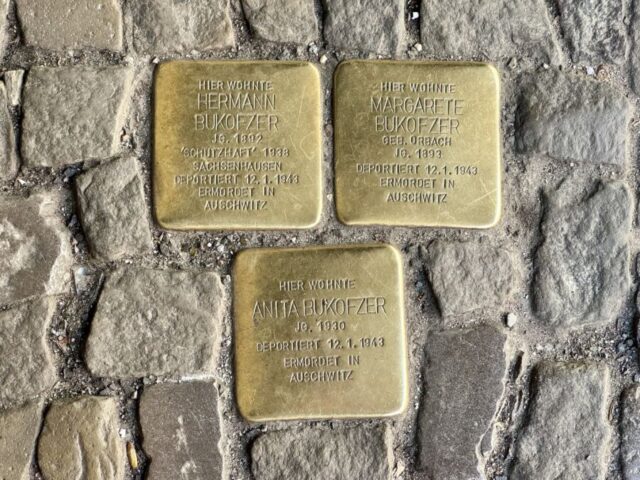
The idea is that pain and tragedy and victory and heroism are directly connected to locations all over Berlin… if only people knew what had happened there. Germans call this Vergegenwärtigung — meaning “to bring something into the present,” to shine our current spotlight of consciousness on it.
On my first evening in Berlin, I did a ritual walk from Prenzlauer Berg all the way down to Museum Island, then up Unter den Linden to Brandenburg Gate and the Reichstag, Germany’s parliament building.
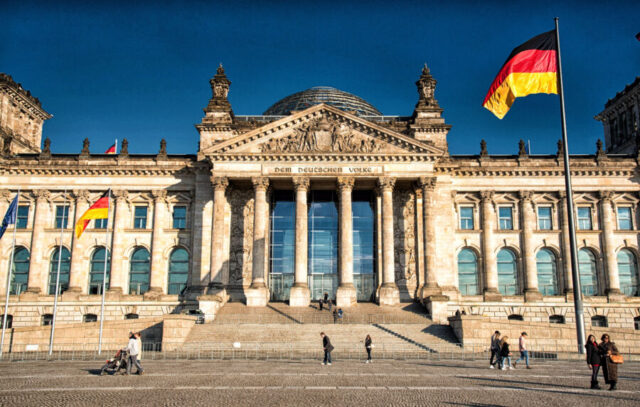
Ready to head home, I reached the stop for delayed bus #100, right across the street from the Reichstag. The electronic board told me it was coming in eight minutes. In Berlin, that’s enough time for at least three lessons.
Eight minutes left. First I walked a few steps toward the Brandenburg Gate. There, along the opposite side of the road, runs a row of bricks embedded in the pavement — marking the path of the Berlin Wall between 1961 and 1989. Visually tracing its path, I could see how the Wall completely enveloped both of Berlin’s main landmarks — the Brandenburg Gate and the then-destroyed Reichstag — making this very area a dangerous no-man’s land for decades.
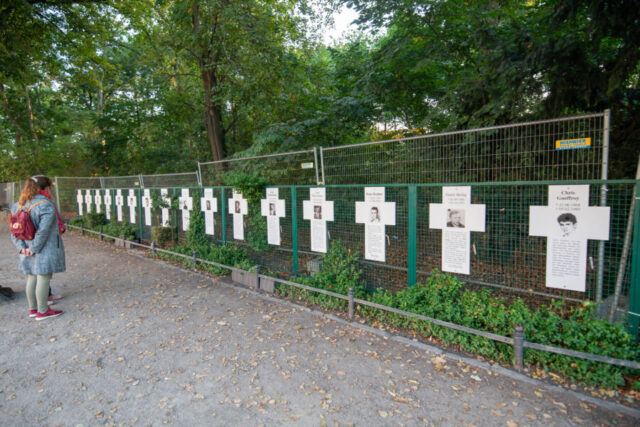
Six minutes left. At that same corner, I turned around and saw a row of 15 white crosses affixed to the fence, each with the face of someone who was killed while attempting to cross the Berlin Wall. The last one — Chris Geoffrey — died on February 5, 1989, just nine months before people climbed up to party on top of that wall.
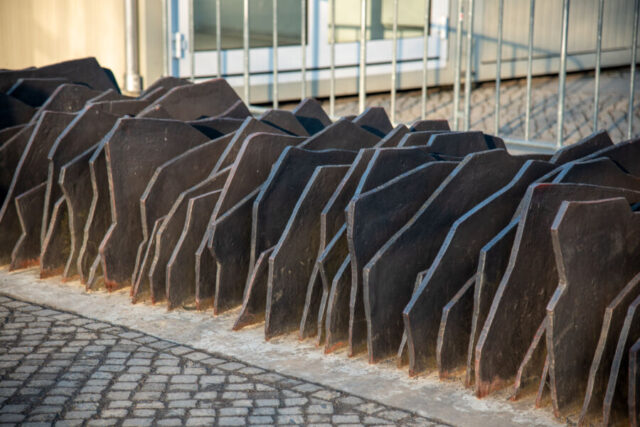
Four minutes left. Walking back toward the Reichstag, I spotted a row of mismatched slabs embedded vertically in the pavement. Each one listed the name of a politician (who worked in the halls of this very Reichstag) who found themselves imprisoned and eventually killed because they had the nerve to oppose Adolf Hitler. It’s poignant to think of lawmakers who sacrificed their lives simply trying to preserve democratic German government in the face of a rising tyrant.
I got back to the bus stop with one minute left, and before I knew it, I was zipping down Unter den Linden. With each block I passed, I knew I was also passing dozens of fascinating, agonizing, stirring stories of the people of Berlin.
Is it any wonder, with such a tumultuous history, that Berlin has settled into this Sesame Street existence? This is a country that has done and witnessed horrific things. It has seen the error of its ways, and it has repented. And now it’s determined to be a very good global neighbor indeed.
Sometimes I think that — like a person — the more hardship a country has endured (or caused), the more wisdom and maturity they amass. Especially when I’m traveling in Europe, I’m stuck by how American society is basically a rowdy teenager, who think we know everything even though we’re barely out of adolescence. Germany is the middle-aged, world-weary adult, who’s looking senior citizenship dead in the eyes, and is determined to make good for the mistakes of its past.
If only getting more societies to that point were as simple as A-B-C.