I am optimistic.
I know: I probably shouldn’t be. If it’s not Delta, it’s Omicron. If it’s not Omicron, it’s Epsilon, or Omega, or Triple-Theta, or whatever variant next rears its head.
And yet, I remain unaccountably, giddily positive when thinking of 2022 travels. Not just dreaming, but actually planning.
The fact is, the world is turning a corner on the pandemic. It’s not a happy corner. It’s the corner of realizing that we’re stuck with this thing, and we have to learn how to live with it. But that’s a certain form of progress, because it means that those of us who are willing to take an informed risk can get back to Europe.
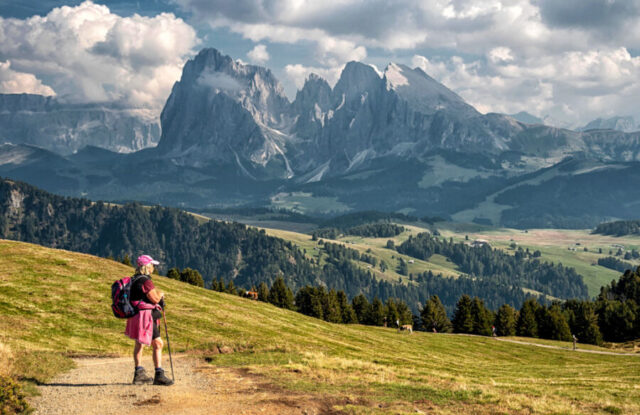
I speak from experience. In September of 2021, just as Delta was peaking in many parts of the USA, I finally returned to Europe. What I found was a continent of smart, pragmatic, compassionate people doing their best to mitigate personal and societal risk while stubbornly getting back to enjoying life. Winter surges have tapped the brakes on that progress, for now. But what I saw demonstrated that Europe is figuring this out. And I know they’ll pick up where they left off, just as soon as they can.
Each January, I come up with a list of 10 “Discoveries” for the new year — underrated destinations you might consider while planning your travels. (Here are the lists from 2021, 2020, 2019, and 2018 — all still good ideas.)
This year I’m taking a slightly different tack. Rather than “Discoveries,” 2022 has me thinking about Resolutions — the ways I’ll approach travel differently now that the world has changed. These are the “attitude adjustments” I’ll be trying to adopt as we attempt to turn the page from two painful and disappointing years, and begin looking to the future.
Reconnect with Europeans, face to face.
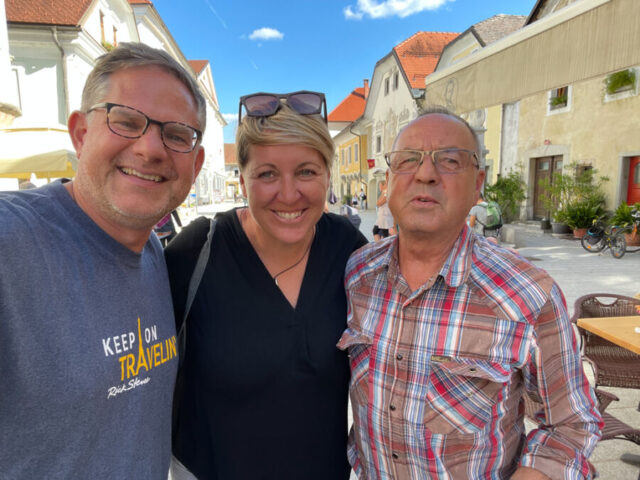
We’ve sure missed the Europeans these last couple of years. And I’m here to tell you: They’ve missed us, too.
When I went back to Europe, my wish list included some favorite destinations. (I’ll talk about those next.) But more than that, I wanted to reconnect with people: friends, tour guides, hoteliers, artisans, market vendors, restauranteurs, bus drivers…all of the wonderful Europeans who populate our travels with that intangible magic that keeps us coming back.
I’m sure there are many Europeans who have enjoyed getting a break from the throngs of tourists. I respect that. But there are also so many who love connecting with us. And they’ve missed the way we make each other feel like our big, ugly, indifferent world is just a little smaller and kinder.
After any crisis comes the catharsis of recovery. Reunions are a powerful antidote to the trauma we’ve all endured — they almost make it seem worth it. And I wish you could’ve tagged along with me as I returned to Europe this fall, reconnecting with people who’ve been missing us as desperately as we’ve been missing them. Tearful hugs that wouldn’t let go; long, breathless, rambling monologues trying to catch each other up on all that’s happened in our lives; that simple moment of being together again and feeling just a little less alone in the loneliest time most of us have ever known.
That’s what you’re going back to Europe for.
Revisit old favorites…and discover new favorites.

When planning our first big trip back to Europe, my wife and I had a wish list we’d been stewing on for a year and a half. The first place we wanted to return to was our favorite country, Slovenia. We added some “greatest hits” in Italy, too: the Val d’Orcia, a perfect little corner of Tuscany; and the Cinque Terre, the most idyllic stretch of the Italian Riviera. After she flew home, I extended my trip to do some hiking in the Dolomites, then hang out in Prague and Berlin — yet more favorites. None of those places let us down. In fact, even ones we’d visited many times before were sweeter than ever.
And yet, our fall trip was like the late-career “Greatest Hits” album of an aging rock band: In addition to the biggies, we also snuck in a few new tracks, just to keep things fresh and remind us of the joy of exploration.
In Italy, we spent a couple of nights in Modena, in Emilia-Romagna. While lured there by the city’s culinary reputation, we immediately fell in love with Modena on its own merits. It’s simply a livable, mid-sized Italian city with — refreshingly — scarcely a whisper of international tourism. Melting into Modena for a couple of days, we ate extremely well, never stepped through a museum turnstile or into a church, enjoyed browsing and strolling the passeggiata, and had as delightful a time as we’ve had anywhere in Italy.
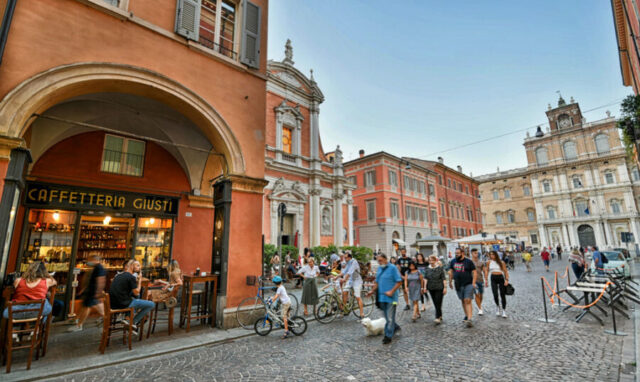
After my wife went home, the only convenient direct flight to my next destination was from Treviso, a lesser-known city that’s just a 30-minute train or car ride from Venice. I figured, why not? And I spent two nights there, thinking I might sneak down to Venice for the day if I got bored. There was no risk of that, as Treviso turned out to be an ideal place simply to wander aimlessly and feel that giddy joy of being back in Italy . Treviso isn’t known for much — it has a few pretty canals, and it’s the birthplace of tiramisu, radicchio, and Benneton — but that’s sort of the point.
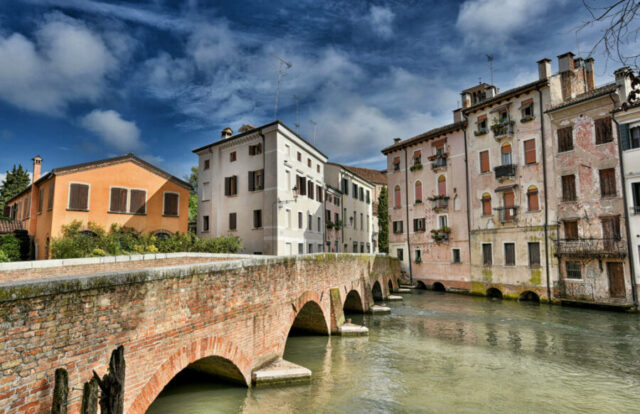
Should you go to Modena and Treviso on your next trip to Italy? Sure. Or not. There are literally dozens of small Italian cities that are every ounce as enjoyable as those two — places that rarely make the cut in “best-of” lists (or in Rick Steves guidebooks). One of my resolutions is to start finding them.
Travel as a temporary European.

As the pandemic began in early 2020, I realized I wasn’t going to Europe for a while. And with all that extra time, I found myself thinking about exactly why travel is such an important part of my life. Last winter, I took a few months’ sabbatical to assemble my favorite blog posts and new writings into a travel memoir. It was a fun creative challenge to sort through all of those random travel tales and insights to find common themes. And by the end of that process, I discovered that all of those stories — old and new — were united by a single thread, which became the title of my book: The Temporary European.
Being a temporary European means traveling with curiosity and empathy…two traits that are in sadly short supply these days. It means being fully open to those little eurekas that unlock cultural insights. It means training yourself to think like a local.
In Croatia, I used to laugh at how the weather report includes not just high and low temperatures, suns, and rainclouds, but also smiley and frowny faces — indicating how conditions might affect your mood. But the truth is, when I’m traveling along the Dalmatian Coast and the muggy Jugo wind begins to blow, I really can feel my mood sink. After many visits, I can now tell that it’s a Jugo day without even looking outside…I can just feel it. And, sure enough, it puts me in a funk all day long.
When you get back to traveling, consider jettisoning the bucket lists and the precisely constructed itineraries, and focus on being present to soak in all of the ways that Europeans simply are. If you travel with an openness to these little cultural insights, you’ll have a more complete experience of Europe on Europe’s terms.
Go anywhere that a European friend is excited to show you.

My favorite day on my fall trip was when our Slovenian friend, Tina Hiti, took my wife and me to one of her favorite places in her wonderful little country. It was in the Vipava Valley — the rugged corridor that links Slovenia’s alpine interior to the flat, muggy expanse of Italy’s Veneto. Tina took us to a little hill town, with a name you’d never remember even if I told you, that her family had discovered as the perfect spot for an overnight pandemic getaway. We ate fantastic pršut (prosciutto) and drank the famous amber wine, then headed high into the mountains for a brisk hike with grand views. We wound up at a rustic countryside winery where we had more great food and wine. Best of all, on our way back to the capital, a traffic jam sent us seeking a detour along scenic byways through parts of the country I’d never seen before…including a giant lake that disappears entirely each summer, then reappears in the winter.
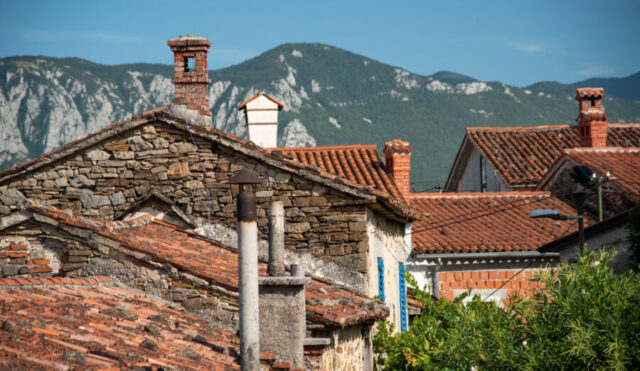
My point is not that you should go to the Vipava Valley, necessarily. It’s that Europeans have been stuck close to home these last couple of years, making their own discoveries. This day was special because Tina finally got to share those discoveries with someone else.
When you head back to Europe, consider hiring a tour guide to show you around. But don’t just demand to be shown all the famous sights. Ask them where they’d like to take you. We’ve set up the Rick Steves Guides Marketplace for just this purpose: Connecting travelers with excellent guides all across Europe who would love to introduce you their favorite things.
Finally go to that place you’ve always dreamed of (a.k.a. “Revenge Travel”).
If you could go anywhere in Europe — no matter how outlandish — where would it be?
There’s a place in the back of your mind. It’s the one that popped in there, for a fleeting second, before you said, “No, surely he doesn’t mean that.”
Yes, I really do mean that. The thing you’ve “never had time for.” The thing you’ve never felt brave enough for. The thing that just sounds too out-there, or simply too far away and foreign.
Enough excuses. Come on — do a little “revenge travel.” I love that term to describe the sensation of wanting to get vengeance on this stupid pandemic — all of the disappointment and pain and dashed hopes — by doing something just for yourself. Finally realizing a dream that has been, for too long, deferred.
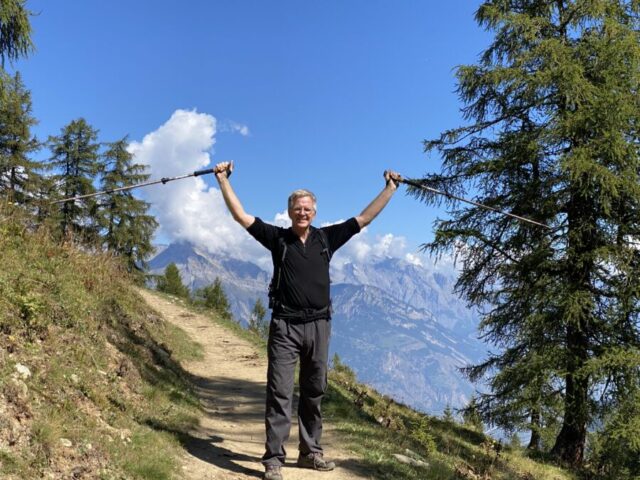
Rick’s very first trip back to Europe was hiking the Tour du Mont Blanc. Those of us who know Rick can scarcely imagine our workaholic boss taking an entire week off just to walk in the mountains. But he did, and he loved it. Revenge travel!
These can be small things, too. Recently — before Omicron began to surge — I went to considerable effort and expense to attend a live taping of a podcast that kept me going through the darkest days of the pandemic. Revenge travel!
For you, maybe “revenge travel” means devoting a month to walking the Camino de Santiago across northern Spain, or a week to driving Iceland’s spectacular Ring Road. Or renting an apartment in that lovely Provençal village for a long stay and really settling in like a local. Or doing a study trip to Chernobyl or Auschwitz or Srebrenica. Or sailing Norway’s achingly beautiful Lofoten Islands.
What are you waiting for?
Be a good guest.

I’ll never forget the time — maybe a dozen years ago — when I was chatting with a French store clerk in Paris. I was seeking some cultural insights to pass on to our readers, and she was the perfect teacher. One thing that trips up many Americans when visiting France is the importance of greeting the proprietor anytime you enter or leave a shop. It’s sacrosanct: A French person would never enter a store without offering the clerk a cheerful, “Bonjour, Madame!” or “Bonjour, Monsieur!”
I was probing to figure out exactly why this is so important. The shop clerk gave me two insights: First, in France, people take great pride in their work. But — crucially — they do not want to be defined by their job. Saying hello acknowledges the person’s humanity; they are not just an interchangeable provider of services, but a person.
Second, she explained that she has created her shop with tremendous care and thought — which was evident by her lovingly curated stacks of tapenade jars and sachets of herbes de Provence. To her, the shop was an extension of herself. “When someone comes into my shop without saying hello,” she explained, “it is as if they are stomping into my living room with a similar lack of regard.”
I’ve always thought of being a good traveler as equivalent to being a good guest. But her very literal metaphor has stuck with me, reminding me that this isn’t just abstract. Everywhere I go in Europe, I try to imagine that I’m in some stranger’s living room.
This becomes particularly relevant as we return to travel in the age of COVID. In the United States, we’ve made a national pastime out of inventing highly idiosyncratic approaches to dealing with the pandemic. While Europe is far from monolithic, this fall I observed greater societal consensus: If you’re inside, you mask up (specifically, using a medical-grade mask rather than a cloth mask). If you want to eat indoors, go to a museum, or do any number of other activities, you’ll get vaccinated and carry proof; otherwise, you are choosing not to fully participate in society. Testing is widely available, affordable, and broadly understood as a helpful tool for protecting everyone. It’s refreshingly simple.
My point is: If you’re going to Europe — especially these days — you have a responsibility to be a good guest. That means learning what’s expected of you, and following it to a T. Europe doesn’t care what the masking policies are in your home jurisdiction. When in Europe, mask as the Europeans do. Or…just stay home.
Be flexible. Uncertainty is serendipity in disguise.
Here’s the thing about a pandemic blowing up two years of your life: It teaches you how to be flexible. And if you are even thinking about going to Europe in 2022, you have to commit — right now — to being very, very flexible. Things will change, then change again, between now and your departure date. And once you’re on the road, they’ll just keep changing. However, this is not necessarily a bad thing, because it can lead to some wonderful serendipity.
When I went back to Europe this fall, I had a carefully planned four-week itinerary. But I fully expected that it would probably change at some point. The weird thing is, in my case, it didn’t: Everything came off without a hiccup.
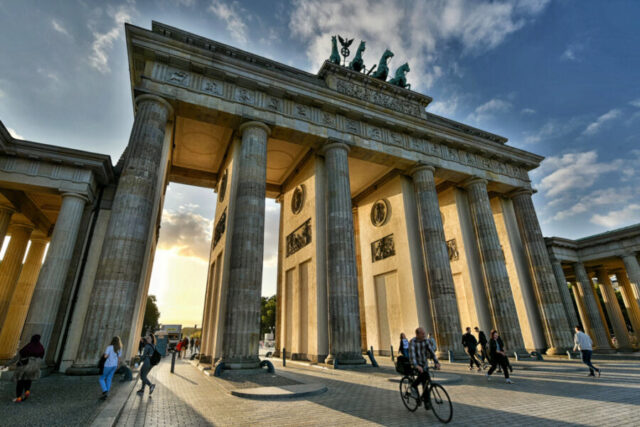
Well, that’s not entirely true: I did make a last-minute change. But it was a voluntary one. When I booked the trip, I made sure everything was fully refundable. And as my return to the USA neared, I found myself dreading having to be at the Berlin airport two and a half hours before my 6:00 a.m. departure. The day before I flew home, as I was about to check in for my flight, something possessed me to look for alternatives. And I found one: an affordable one-way ticket back to Seattle via Reykjavík, leaving in the early afternoon. Because I’d anticipated a need to be flexible, I was able to cancel my original connection, get a full refund, and book that afternoon departure instead. I slept in and enjoyed a lazy morning around Berlin…which happened to coincide with Germany’s Election Day, spurring me to reflect on Angela Merkel’s role in contemporary German life. It was one of the most enjoyable mornings of the trip.
If you’re heading to Europe this year, don’t just tolerate uncertainty — embrace it. Remember that uncertainty breeds serendipity. You may find that leaning into being flexible makes your travels, if less predictable, more spontaneous and rewarding.
Slow down.
Pre-pandemic, I had become obsessed with planning super-efficient itineraries. Any moment of downtime in Europe was a moment wasted. I wanted to squeeze in as much as possible. That approach has its merits. But it also causes you to miss an awful lot.
One of the themes of The Temporary European — one of those epiphanies earned by being stuck at home with nothing else to think about for months on end — is the importance of slowing down and being present. For some people, that means listening to the church bells chime; for others, it means people-watching at any random café; for others, it could mean literally stopping to smell the roses. Take time to hike up that hill and linger over a majestic view.
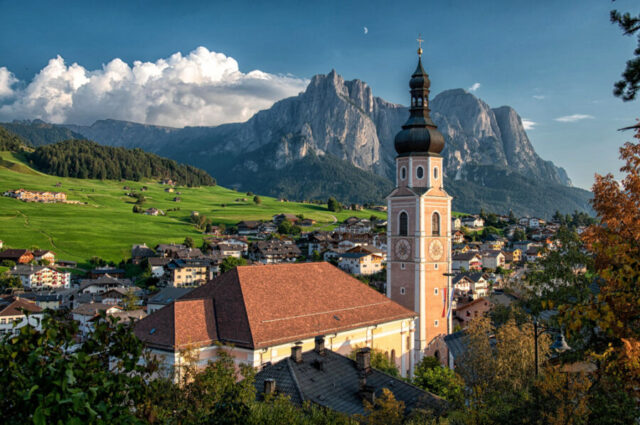
If you’re planning an itinerary for 2022, give it another careful look…then build in more slack. Add a day here and there, even if that means you have to punt something until next time. If I hadn’t done that on my fall trip, I’d never have been able to rationalize visiting Modena or Treviso — which turned out to be highlights. Very often, that second or third (or eighth) day in a place is the day that you really get to settle in and feel like a temporary European.
Be ready for crowds. (But try to avoid them.)
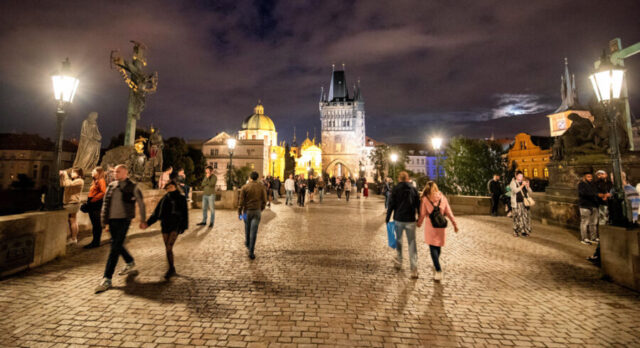
Wait, what? Crowds, during a pandemic?
At this moment, it may seem far-fetched to imagine European travel returning anywhere close to “crowded” in 2022. And yet, the European friends I talked with in fall 2021 (many of whom predicted our current winter surge) told me they’re expecting a huge rebound in tourism for 2022. In fact, they’re downright worried about it. After two years of atrophy, will the machinery of mass tourism even function?
By spring and summer of 2022, I’d wager that places like Prague, Venice, Barcelona, and Dubrovnik could be more inundated with making-up-for-lost-time tourists than ever before. So, on your first big trip back to Europe, consider skipping the biggies and melting into lesser-known places that still give you a taste of European culture without the crowds. (See “discover new favorites,” above.)
That said, if you happen to be traveling during a lull…enjoy it. Savor it. It won’t last long. Sooner or later, we’ll be looking back fondly on this rare moment of peace.
Don’t take it for granted. Cultivate a mindset of abundance.
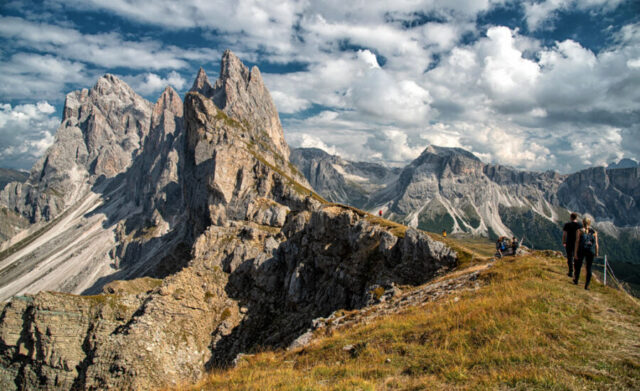
Since I started working for Rick Steves’ Europe in 2000, I’ve spent about 100 days in Europe each and every year…until 2020. On the one hand, over all those years, I really tried to appreciate how fortunate I was to be able to travel so much. On the other hand, I must admit, at a certain point I got jaded. I began to take it for granted. There were even days when travel felt like a tiresome chore.
We travelers have had a powerful reminder that each and every trip is a privilege. And yet, epiphanies have a way of fading; like any practice, you have to keep at it. As we return to travel, we owe it to ourselves (and to the places we go) to remain mindful and fully present when we’re on the road. Each trip comes with an impact — to the environment, to the fragile places we visit, to the people we interact with. I believe that, in spite of all that, travel still has tremendous value. It infuses our lives with perspective, meaning, and fun. But the tradeoff is that we need to do it thoughtfully.
That’s my main hope for travel in 2022: To travel with a mindset of abundance and gratitude. To make up for lost time by fully seizing every opportunity we have to connect with the world. And to use travel as a way to find a happy and sustainable “new normal” — so we can turn the page from a dark period and move into a brighter future.
What about you? What’s your travel resolution for 2022?
I wish you all a very happy 2022. If you enjoy reading my blog, stay tuned! I have a lot more planned, including (I hope) heading back to Europe in a couple of months. Also, please consider picking up a copy of my new travel memoir, The Temporary European: Lessons and Confessions of a Professional Traveler, published by Travelers’ Tales. Currently it’s available exclusively at Ricksteves.com. But the Kindle version will be available on January 11 (available now for preorder), and the book will be released nationwide on February 1. Ask your favorite bookseller to order you a copy. Happy travels!
Rick Steve’s–you are like an old friend to us travelers. We discovered you in the early 80’s or perhaps before when we transitioned from travel on 10 dollars per day — author’s name?? My husband and I are hoping for another excursion in the fall. We are in our early 80’s now and although good travelers, we have less zip and energy. Had hoped to visit Norway and Sweden and even have money banked in Norwegian Air when Covid hit and borders closed. Thank you for your help into unknown spots.
Hope your store reopens in Edmonds soon, since recently we moved from California to Olympia. See you someday perhaps! Jan and Dennis Furby
Janet, where are you from in California? My husband Joe and I moved to Olympia in September 2020 from Santa Cruz. Might be fun to compare notes. We did our honeymoon with Europe Through the Back Door in 1989.
I have wanted to go to Switzerland since I saw my first picture in third grade. Last week I celebrated my 83rd birthday without seeing Switzerland! Although I am in good overall health, caring for a wheelchair bound husband for nine years took some of my zip permanently and I know I cannot do much more than stroll around “town.” Trains remind me of Cinderella’s coach and I would gladly spend most of my time looking out those windows. I would love to be with a group but don’t want to be a burden to other travelers because I am slow.
Is it too late for me to go to Switzerland?
Ah, Miriam! I’m 75 and not as quick as I used to be, but I’ve discovered that the benefits can be huge. I now have time to chat with the locals, see the little details that I used to miss while trying to get from “required stop #1” to “required stop #2” and so on. It takes a little more planning, and a companion with similar interest in the minutia of everyday life in Europe, but go for it!
Miriam, it’s never too late to travel. Rick has some tours to Europe that spend a few days in Switzerland. Even though all his 2022 Switzerland trips are full, you should phone their office and ask to be put on the waitlist for several of them. Then, when one opens up that you can do, you can cancel the other waitlists for free.
Also, there are other companies that do whole trips there. I also see on Rick’s Guides’ Marketplace that he knows a good guide there you can hire for a private personal day (or half-day) seeing whatever you want. Check out
https://www.ricksteves.com/tours/guides-marketplace
Good grief Miriam, I think Switzerland is the most perfect choice for you. Buy a Swiss travel pass (flexible), expensive but worth every dollar, and spend your time on all the scenic trains that are available. The trains are lovely; they have large panoramic windows, are clean and modern and air conditioned. They are designed to easily accommodate senior travelers and their luggage. No need to hassle with buying tickets, just show up and show your travel pass when asked. However, Some scenic trains may require reservations which is an added cost so make sure you have done your homework on this detail. You will be rewarded with the most beautiful, peaceful scenery of your whole life. I, like you, had dreamed of seeing Switzerland ever since about the third grade and finally got to do it just before Covid. It sure was everything I dreamed it was. September is probably the best month to go, weather is beautiful and crowds are smaller. If you can, try to take in one of the many cow desents that happen in September as well. It’s a festival whereby the farmers bring their cows down from the alps for the winter. They adorn the cows with crowns of flowers, then there’s street markets as well as traditional costumes and lots of music with alphorns. It’s a totally, wonderful cultural experience not to be missed. Hope this helps. Good luck with your travels.
Miriam please look at what others write in replies below. I would add that the trains in Switzerland are set up for people to get around. They are even set up to get around beyond the train up and into the mountains. There are cable cars, cog rail trains, elevators, funiculars (Note the word fun it it), etc. to get you up into the mountains. And mostly remember you are on vacation, take in the sites, go slow, smell the roses (or other beautiful flowers they have out) stop when you want and even before that. Periodically turn around and see where you were or walked from. I have noticed some fantastic views by turning around. Slow down stop take in the view. Use their systems to go up the mountain and only walk DOWN the good spots you want to. Go with a friend or local (New Friend) to make it more enjoyable and they can aid in your photos. Do this with plenty of breaks because the air is thin and you will have a blast off the trains and in the mountains. The small towns are a blast to walk in and are about “levelish”. The cows and goats are very gentle (avoid the bulls they go the other way).
The great thing about Switzerland is that there are trains, funiculars, cable cars, etc. to take you up and down those beautiful mountains. So you don’t have to worry about it being too difficult. And don’t miss Lauterbrunnen Valley, my favorite place in Switzerland. We stayed once in Murren & another time in Wengen. Interlaken is another place to stay. Visit Switzerland, you’ll love it.
HI MIRIAM…. I LIKE YOU AM IN MY EIGHTIES (84 THIS YR,) AND RELATE TO YOUR QUESTIONS RE TRAVEL. LIKE YOU, I AM INTERESTED IN THE AREAS OF SWITZERLAND. I SAY….IF YOU THINK YOU CAN DO IT ….THEN GO FOR IT!!! HAPPY TRAVELS!
Wonderful advice Cameron, thank you! My wife and I are booked on the “Paris and the Heart of France” tour in May and have all our fingers crossed. I promise we’ll follow your wise counsel. No matter what, we’ll keep on traveling.
I love these news letters. I went to Croatia last summer in July & August. It was lovely. I skipped plans of Split due to crowds and just enjoyed my town and sea. This summer will be doing the same. I’m 72 years old and travel alone. It’s possible with planning! Enjoy our time here! I wish your tours were more suited to us older people but we can still travel! Love Monday Night travel.
I love these news letters. I went to Croatia last summer in July & August. It was lovely. I skipped plans of Split due to crowds and just enjoyed my town and sea. This summer will be doing the same. I’m 72 years old and travel alone. It’s possible with planning! Enjoy our time here! I wish your tours were more suited to us older people but we can still travel! Love Monday Night travel.
With R Steves guides in hand and Steves luggage in tow, I traveled first w/son Ian on an “I’m only old once” marvelous 2 week trip to Portugal Sept ‘21. Then, similarly equipped, but w/o son, I enjoyed a terrific early Dec ‘21 week in Belgium. Vaccinated/boosted and properly masked, we were welcomed in Europe & delighted in museums, cafes, even a Champions League soccer match with 1000’s in Lisbon! Son Ian & I are dusting off our 2020 stored Croatia R Steves guidebooks for’22. (& my sister flew from CA to Paris yesterday ). Europe is open to those of us, like Cameron writes, who treat ourselves and others with respect and safety.
Thank you Cameron for a wonderful essay. We are planning a two-month trip to Europe starting in Paris in August and moving to Spain for a month after. The encouragement is very helpful!
Cam–you said that you “made sure that everything was fully refundable” when you booked your trip–This seems hard to do just now—how does one do this without special knowledge? Thanks
I was in Hungary for 2 months from Mid September. My wife is Hungarian and we own an apartment on the outskirts of Budapest (UjPest). The weather was PERFECT for hiking the hills above the city, in the northeast beside Ukraine and in the south beside Pécs. After 18 years of regular trips to this country and because the pandemic more or less limited our previous options it was a major discovery for us. The hills are alive with beautiful vistas and you’re never far from a delightfully inexpensive (for us) meal, coffee and five star cakes. Public transportation to start (from Budapest to the outlying hills) and at the finish is cheap, accessible and frequent. Only locals seem to enjoy this healthy and wholesome option.
Cameron,I look forward to reading your thought with my R Steves newsletter. I always learn something new. Congratulations on the release of your book! I am a quilter so I enjoy visiting fabric shops and quilt shows. Delays just send me looking for people of like interests— language has not been a problem when you are surrounded by lovely fabrics.
Thank you for this wonderful, encouraging essay. We do hope to get to Europe in 2022, and will follow some of your excellent advice there, but beyond that, it seems to me these are good tips for everyday living at home too. Slow down, be flexible, be open to what others want to show you, etc. It’s been a hard few years for all of us, and it’s helpful to remember that grace is to be found today, right here, as well as in all the places we hope to visit. Happy travels to you!
Cameron-I am finding myself smiling while writing this after reading your inspiring words and enjoying the lovely images that accompanied them.
Just ordered your book as a little ‘travel treat’. Thank you so much for what you do and happy trails!
Cameron, thanks so much. That “living room” comment in particular will stay with me.
Cam … thank you for your insights. Yes, hubby and I are booked for 2 wks in Greece, June 2022. Half on a land and the other half on a cruise. This time around, getting travel/ medical insurance.
I was in the Philippines in July 2021 to visit ailing (cancer) mother. Entry required PCR upon arrival then mandated 10Day hotel quarantine then another PCR on day 8. That stretch was the hardest part of trip. Now looking forward to Europe.
Cameron, thank you for this article! I have been on the fence about our planned trip to Europe in April, but now I feel inspired! I love your insights. I also reqlly appreciate the part about greeting shopkeepers. I would hate if my self-consciousness over poor pronunciation made me seem rude!
I set today aside to decide if I will cancel my Rick Steves’ tour scheduled in 2022. My first task was to read Cameron and Rick’s recent blogs. Seems I will be going on a Rick Steves’ tour in 2022 after all. Thanks Cameron!
I too was on the fence haven’t traveled for years and nervous about it but I have decided to take a November trip to London (a place I always wanted to go) and Paris and with the help of Rick Steves’ books (which I will studying until my trip) to help guide me.
Reading Cameron’s comments about slowing down and being flexible reminds us of a few happy misadventures many years ago in the heart of Angledom – and a travel “epiphany”. The first trip, we were travelling in England with our young-adult daughters with a rental car. We were staying in cottage rental northwest of London and doing day trips from there.
One particular day we scheduled a busy driving day to visit Canterbury, Leeds Castle, and Arundel Castle – all in Kent. A good time was had by all, but by 5 pm we realized we were still happily at our first stop of Canterbury. Leeds Castle would have to wait for a future trip, but we realized that ticking all of the stops on our schedule was not the important thing – the experience at any particular stop was more rewarding. (We did visit Leeds Castle 14 years later, and Arundel is still on the bucket list).
Two weeks later, we were driving from Cirencester to Salisbury to drop off our daughters for the rail portion of their trip. Some quality time to be spent at Stonehenge and Salisbury. Our countryside route passed through the village of Avesbury, with a lesser-known stone circle – good for a 5-minute stop. But the sun was shining. And sheep grazing amongst the stones. And a couple of Mom & Pop museums in the village. And someone thatching a roof. Two hours later …. We obviously spent less time than planned at Stonehenge and Salisbury, but the unscheduled time at Avesbury rests most vividly in our minds.
Fast-forward to 2002. More Driving Tales of Terror (driving the unfamiliar side of the road, from the unfamiliar side of the car again). This time, we were on the last full day of an Ireland driving holiday, on our way to Belfast. A tiny dot on the map pointed to the hamlet of Ballymckilroy. Kerry is of Irish heritage. Her maiden last name could be a derivative of that. Could Ballymckilroy be her ancestors’ village? Alas, we may never know. Seems we took a wrong turn and ended up at a dead-end in a parking lot to a trail leading up to an ancient stone dolmen and overlook. The sun had started to shine and there were shamrocks along the trail. We took the trail. Never made it to Ballymckilroy.
Yes, we have managed to see a great many to the must-see sights in our travels. But we are equally grateful for the incidental places we have stumbled upon.
This article and everyone’s travel stories are just adding to my yen to return to Italy, and we only returned home two weeks ago!
In late October we gambled on a Dec 2021 trip and it was a Rick Steves-fueled seat-of-the-pants success. CHEAP airline tickets to Rome booked 6 weeks before departure, then hotels, then an affordable opera in Venice(!) and express trains before we left. Bought museum/etc. tickets each night before in case we wanted to change tack, and pruned a few to enjoy the moment elsewhere. A couple of laws/Covid requirements changed as we traveled, but we were mostly prepared. Probably the only challenge was getting tested within 24 hours of flying home – book that in advance and ask your hotel contacts for advice – ours made our appointment for us. We saw plenty of folks in long lines at Farmacias getting tested for travel or family gatherings.
We felt insanely fortunate; in the two weeks leading up to Christmas Italy was quiet, lovely, and comfortable. We felt safer Covid-wise there than we do at home (southeast). We backpacked light, walked everywhere once off the train, and fell in love with every place we went. I chatted safely with every person I could, and drank my weight in cioccolata calda. We’re seriously planning a trip back in two months, because any longer away would be unbearable.
Cameron, loved your article! I will be heading to France in late August and these insights are just what I need to prepare for my first time ever in France. I was a little nervous before I read your “discoveries” regarding traveling during COVID. I really liked your comment on knowing what is expected of you by the country you are visiting and if you don’t wear a mask, get vaccinated and carry proof “you are not choosing to fully participate in society”, well said ! Thanks so much!
I feel like these resolutions are also applicable for first time travelers to Europe like us. Thank you for enumerating them! We are planning to go in May with our 5 year old twins. They’ve been wanting to see all those landmarks they see on their books. I am equally excited to finally go to that destination I’ve always dreamed of (like you said). We are taking it day by day as there’s a lot of changes everytime regarding the mutation of the virus by nonetheless we are optimistic to get this revenge travel!!! We’ve been stuck here in our place in Northern California for 2 years and badly want to go somewhere else new.
Any Covid-19 advice for or from Canadians? I’m booked for a June tour in France, but Canada’s Covid-19 testing requirements are expensive and, at the moment, not available within the 72 hour time limit either the airlines or Canada Border Services requires. I would have to comply with layers of regulations: federal, two provinces (Ontario and BC) plus airlines. Please note, I’m not mentioning France’s regulations: they seem pretty straightforward by comparison.
In addition, there is now the question of whether or not travel health insurance would be honored if Canada issues a “no non-essential travel” directive.
Airlines are consolidating flights at very short notice to overcome staff shortages. So even getting to Europe is fraught with problems. And some travelers are having trouble getting test results in time for their return trip.
Final worry: what if one gets Covid-19 while over there? 10 days in quarantine in Paris, even if I don’t feel very sick, is not my idea of a holiday.
Any thoughts? Reassurances?
Embrace it I did!! After selling my house in Florida and all belongings, I moved to Portugal Jan 6, 2022 bringing everything I own in two small suitcases and my camera equipment in the overhead. That’s everything. I am at a fabulous B&B in Lisbon for ten days and next will go to The Algarve to explore further and look for a permanent home. I will rent so I may explore Europe on my schedule. The people here are very welcoming as long as we abide by the rules. Airport arrival was easy and seamless.
I love reading all the comments. Switzerland was the last item on a bucket list I compiled when I was very young and it did not disappoint. I turned 60 in 2020, and had a wonderful trip planned well….we know that did not happen. I am thinking my next big trip might be to Paris. Giverny would be my top priority while in the area. On the majority of trips I see, most tours only give you half a day there. Is that sufficient? Somehow I think I might need all day as I love that type of adventure. When I went to Keukenhof Gardens, I was the last one back on the bus from the group. Thank you. And happy travels to us all.
Cassie, I traveled solo from Paris to Giverny in 2019. I suggest that you have a whole day which will allow you to see the gardens and the village without needing to hurry. I took the noon train, visited the garden that afternoon, stayed in a lovely little Air B and B, visited the garden again the next morning (lovely morning light) and had plenty of time to enjoy the village before my afternoon departure. If you love gardens, don’t miss it!