Top Ten Polish Experiences

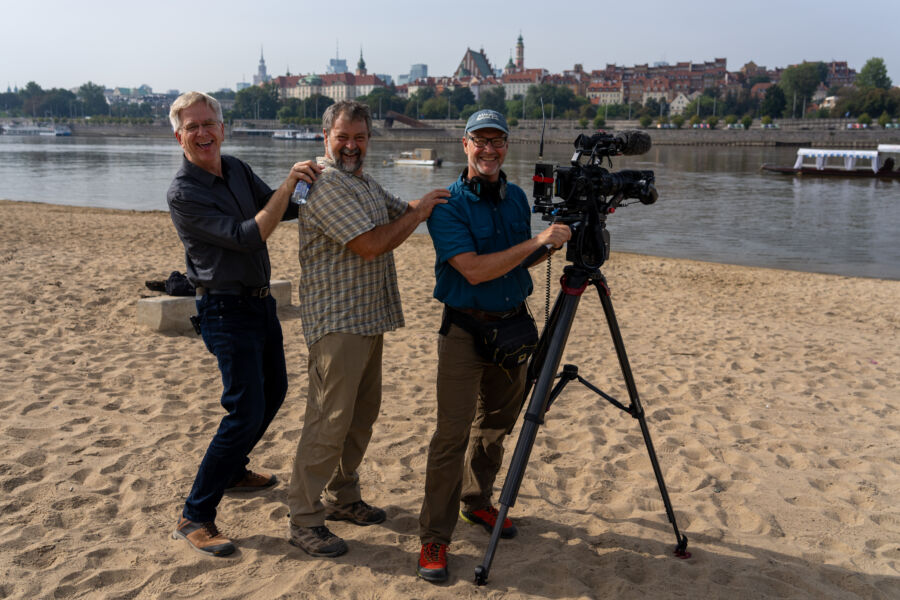
My vote for Europe’s most underrated country, Poland is packed with vivid experiences, a rich and proud culture forged by a hard history, and wonderful people. As our brand-new Rick Steves Poland one-hour special premieres on public television, I’ve been thinking about why Poland gets under my skin. I’ve brainstormed this list of 10 definitive Polish experiences, which you can enjoy vicariously on our new TV show… or by going there in person. And, since I had the privilege of working with Rick, producer Simon Griffith, camera operator Karel Bauer, and editor Steve Cammarano to make our new special, I’ve also included a few behind-the-scenes insights.
Listen for the Kraków Bugler

In Kraków — Poland’s finest (and most popular) town — everything converges on the vast and atmospheric Main Market Square, which bustles day and night with locals, tourists, vendors, and the rustle of pigeons. Rising up from one corner of the square are the two steeples of St. Mary’s Church, the taller of which is officially the town’s watchtower. And since anyone can remember, at the top of each hour, a bugler comes to the window and plays a soulful tune called the hejnał… which stops short midway through (recalling the legend of a watchman whose throat was pierced by an arrow while sounding the alarm).
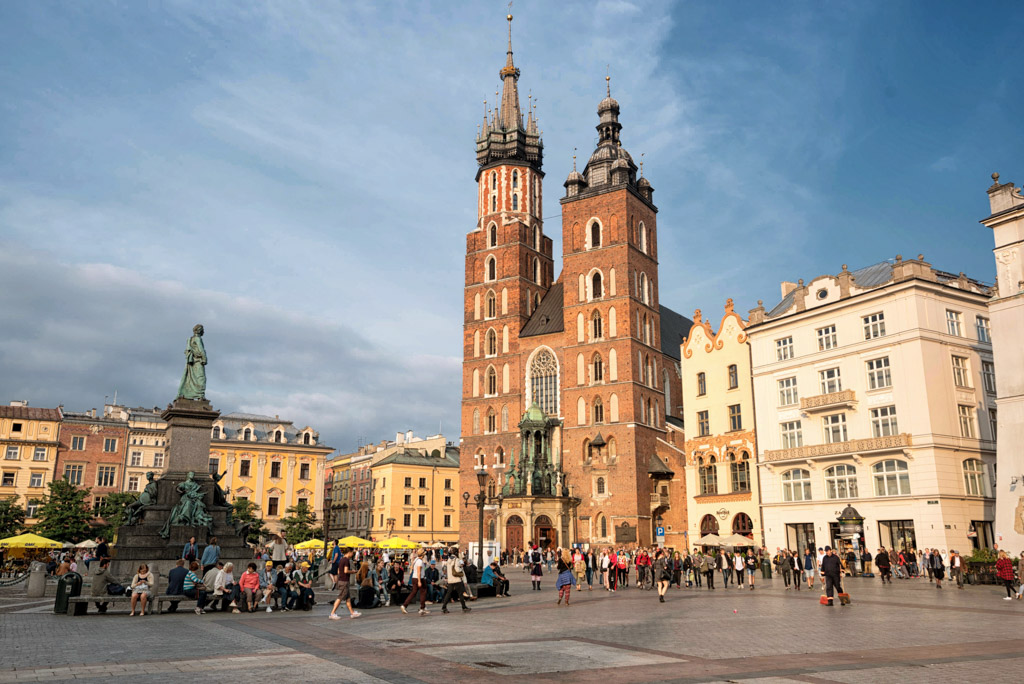
This brief medieval moment fades into the background hubbub… but if you listen for it, you’ll know you’re in Kraków. The national radio station even broadcasts it each day at noon — the Polish answer to the BBC’s “pips.” For our TV show, in addition to filming the hejnał from the square below, we huffed up the spiral stone steps to the top of the tower for the watchman’s-eye-view of the ritual.

Nibble Gingerbread in Toruń

If you tell a Pole that you’ve been to the town of Toruń, they might ask you: “Well, then. Did you bring me some gingerbread?” Toruń is synonymous with gingerbread, and its red-brick streets are lined with shops selling every variation imaginable — from basic bulk cookies to high-end pralines. We filmed one of the many medieval bakeries where costumed guides teach local kids all about the history and traditional preparation of this spicy sweet (which bakes for, as they say, “10 Hail Marys”).
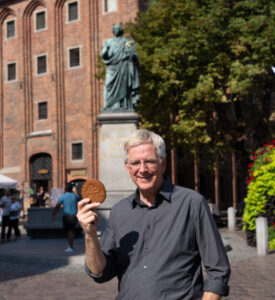
While this seems like a gimmick, it’s rooted in real history: In the Middle Ages, Toruń’s Hanseatic League trading connections gave bakers access to exotic spices — such as ginger, cinnamon, clove, and peppercorn — to aid digestion. And the honey in gingerbread dough was a natural preservative, allowing it to be traded far and wide. All of that said, come for the gingerbread…and stay for an all-around great town, as Toruń (the birthplace of Copernicus) is also simply a delightful place to hang out.

Grapple with a Hard History

Poland is big and broad and flat — the “path of least resistance” between the Germanic lands to the West and the Russian realm of the East. And for that reason, Poland has been invaded, leveled, rebuilt, and leveled again, and again, and again. A powerful dimension of traveling here is coming to better understand Poland’s hard-fought history, from its disappearance from the European map for 123 years following three Partitions; to World War II and the Holocaust (which was carried out by the occupying Nazis largely on Polish land); to our present day, when Ukrainian refugees fleeing Putin’s invasion of their country have boosted and transformed the local population. There are few places with a history as epic, as tragic, and as beautiful as Poland — and the Poles love to tell that story, in stirring monuments, top-of-the-line museums, and everyday conversations that make you realize that in this country, everyone’s a historian.

Enjoy a Chopin Concert — Grand or Intimate
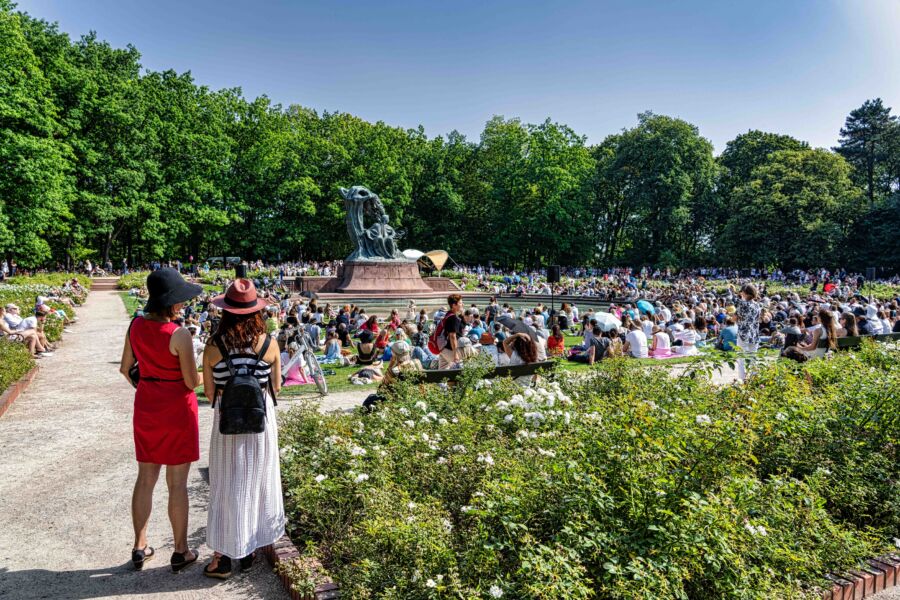
The Poles revere — roughly in this order — Jesus Christ, the Virgin of Częstochowa, St. John Paul II… and Frederick Chopin. In Chopin’s hometown of Warsaw, there are plenty of ways to enjoy a concert of the great composer’s music. Each Sunday through the summer, it feels like the entire city turns out in Łazienki Park for an outdoor performance in front of the giant Chopin statue. Alternatively, head to the Chopin Boutique Hotel, where owner Jarek Chołodecki opens up his drawing room each evening for an old-fashioned salon concert. There’s something deeply moving about attending a concert in a room (or a park) among Polish people who wipe away their tears at the beautiful music.

Pig Out on Pierogi, Pączki, and More
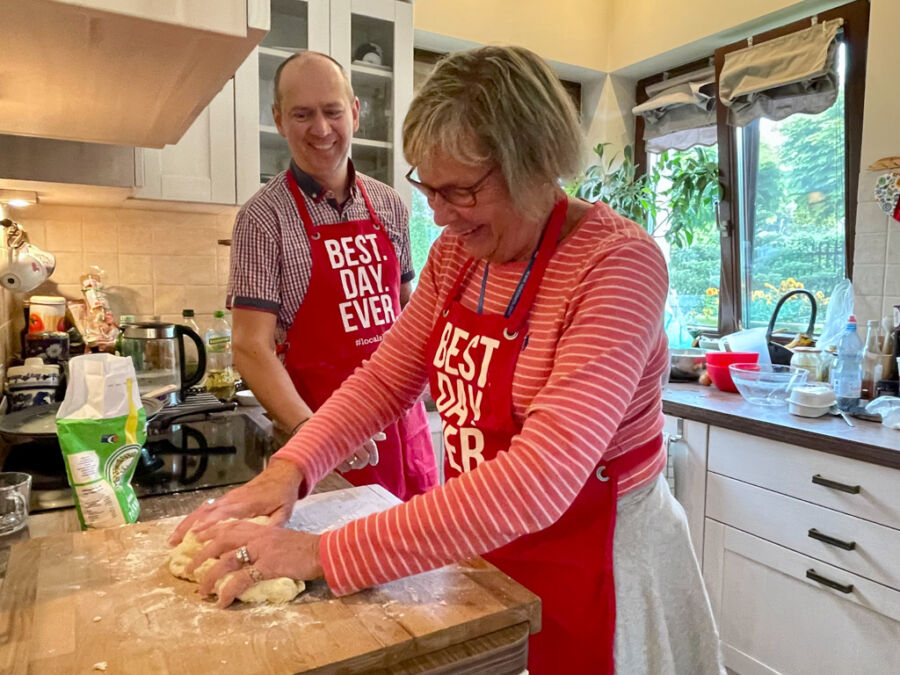
When it comes to satisfying, nourishing comfort food, few cultures can rival Poland. Whether you have a Polish babcia (as I did), or it’s your first time experiencing this cuisine, Poland’s specialties are delicious and craveable. While the classic pierogi (stuffed dumplings) and pączki (jelly donuts) are cornerstones, there’s also a wide variety of soups (savory, beety borscht and rye-flavored żurek), hearty dishes like gołabki (cabbage rolls) and bigos (flavorful stew), and, of course, vodka.

For our TV show, Rick and our local guide, Tomasz Klimek, dug into a spread of all the Polish classics, offering a delicious primer for anyone Poland-bound. Tomasz also taught Rick how to do a proper Polish vodka toast (na zdrowie!) and gave him a lesson in making pierogi by hand. (Our Best of Poland tour also features that same pierogi-making lesson, in a local home; or you can book the experience as an independent traveler through Kraków Urban Tours.)

Acquire a Taste for Polish Artists
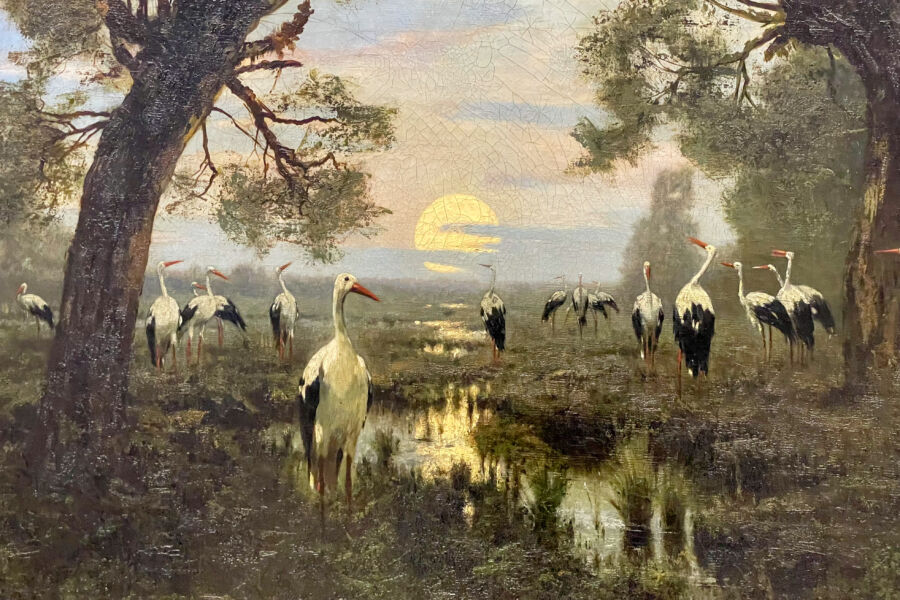
Beyond Poland’s borders, its artists aren’t particularly well-known. But one of the joys of delving into a culture is getting to know talented painters who, through no lack of talent or fault of their own, have been overlooked by the Western European-oriented “art history” canon. I find it hard to pull myself away from the great art museums in places like Kraków and Warsaw, where Jan Matejko’s movie-screen-sized canvases capture epic moments from that rousing Polish story; and serene, gripping, powerful canvases of the Młoda Polska (“Young Poland”) school illustrate how Art Nouveau was a pan-European movement. Go ahead: Stand in front of a work of art with a signature you can’t pronounce — Stanisław Wyspiański, Jacek Malczewski, Olga Boznańska — and let yourself be moved.
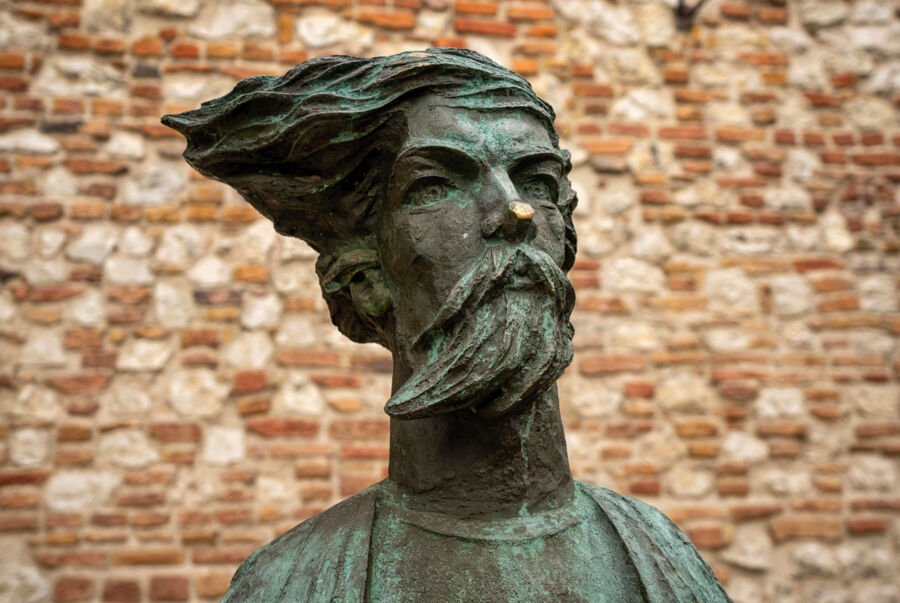
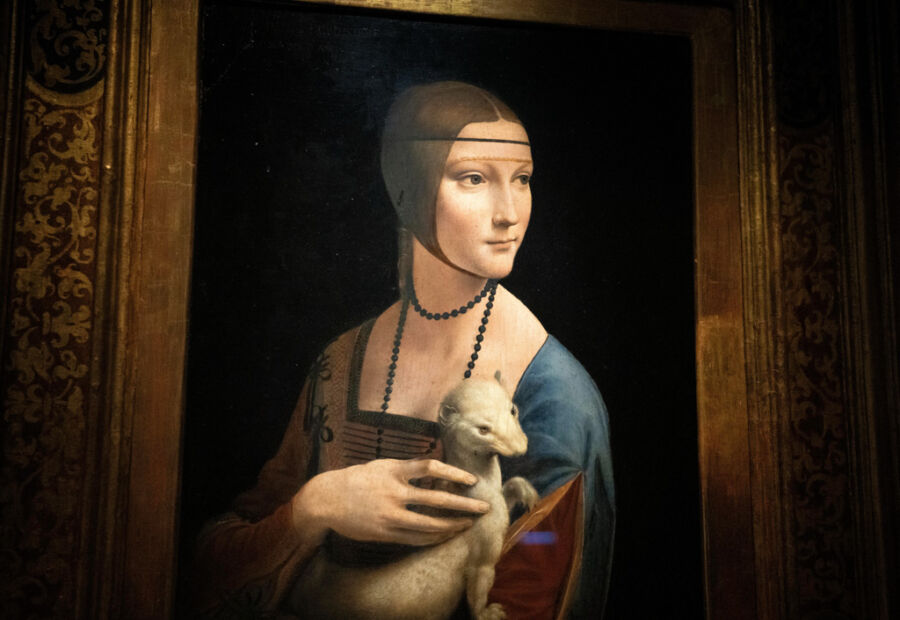
On our show, we visited the new Stanisław Wyspiański museum in Kraków, and also featured a non-Polish painting: the stunning Lady with an Ermine by Leonardo da Vinci, on display at Kraków’s Czartoryski Museum. But that’s a whole other story…
Get Caught Up in the Story of Solidarity, in Gdańsk

While today it’s a gorgeous Hanseatic town of skinny gabled town houses, towering red-brick churches, and a thriving food and nightlife scene, not that long ago Gdańsk was famous for something very different: its gritty, rusted shipyards. In the 1980s, these Soviet-built factories became the crucible for the Solidarity movement that marked the beginning of the end of communism in Poland, and ultimately, throughout Central and Eastern Europe.
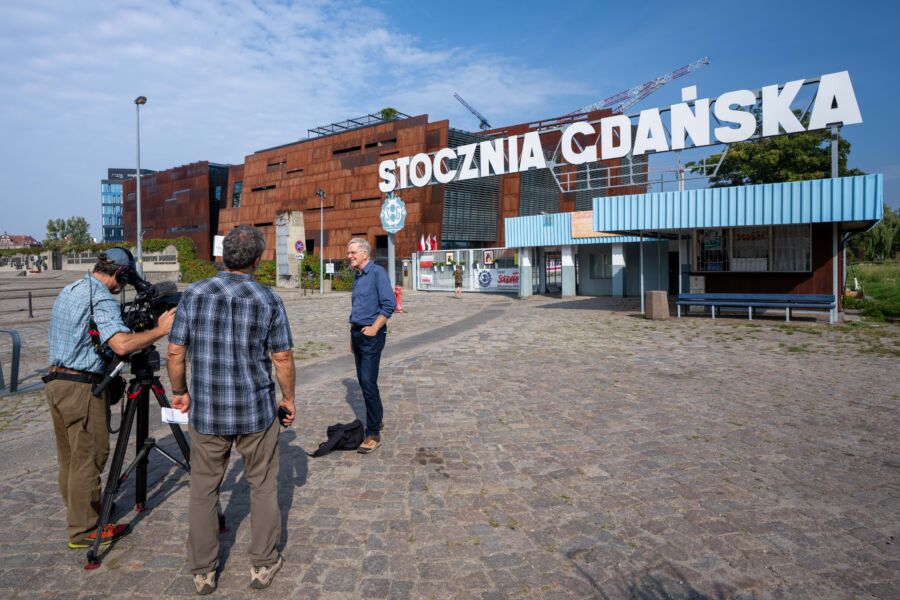
Lech Wałęsa still lives here, and in the place where he led those pivotal trade union strikes, the state-of-the-art European Solidarity Center does a wipe-a-tear-beautiful job of telling the story of the brave shipyard metalworkers, crane operators, and electricians who stood up to a powerful empire… and prevailed. Few sights in Europe leave me with more goosebumps. (We aaalmost got the chance to meet Lech Wałęsa while filming in Gdańsk, but he happened to be out of town while we were there. Next time!)

Get Trendy and Urbane

Plac Zbawiciela

If you think of Poland as being dated and old-fashioned — toothless grannies wrapped in tattered shawls, sleepy and gray town squares, dreary food — you are outrageously out of date. Especially in its urban centers, Poland feels as fresh, vibrant, experimental, creative, and youthful as anywhere in Europe. For our TV show, we made a point to show off the “post-industrial” trend that’s sweeping Polish cities, where gloomy old red-brick factories are being transformed into glittering old-meets-new megamalls. And we filmed some great foodie experiences, from my favorite trendy Warsaw Polish-fusion restaurant (Bibenda) to the lively food-truck scene in Kraków’s thriving Kazimierz district.

Learn about Jewish Heritage

Speaking of Kazimierz, that’s a neighborhood with two very different personalities: By night, it’s a trendy nightspot, heaving with students out dining well and partying. By day, it’s one of Poland’s most important locations for Jewish heritage, with synagogues, cemeteries, museums, and poignant memorials on seemingly every corner. Thanks to a relatively progressive medieval king (named, you guessed it, Kazimierz) — who invited Jews to settle in his realm, as they were being ejected from so many others — Poland had, for centuries, Europe’s largest and most thriving Jewish population. While that population was decimated by the Holocaust, recently Poland has returned to its Jewish roots and is becoming a major destination for people seeking to better understand their family’s connection to this land (as beautifully depicted in the recent, Oscar-winning film A Real Pain).
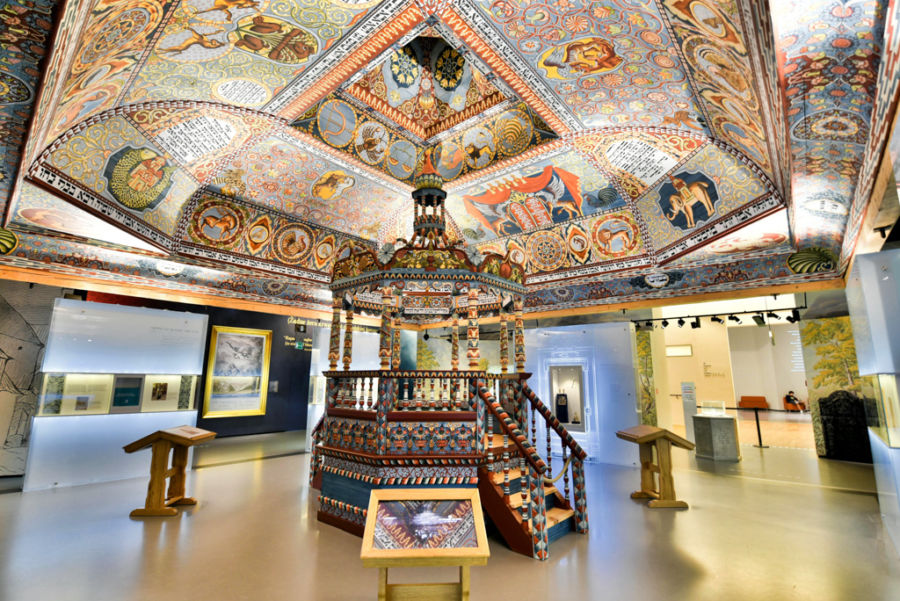
Poland has an abundance of memorials, like the Auschwitz-Birkenau Memorial and Museum, that are difficult but important to experience. But it also has, increasingly, beautiful celebrations of the Jewish culture that thrived here for centuries — from jovial klezmer music concerts in dusty old libraries to the fantastic Museum of the History of Polish Jews in Warsaw. We made a point to feature all of these in our new show.

Connect with the Polish People
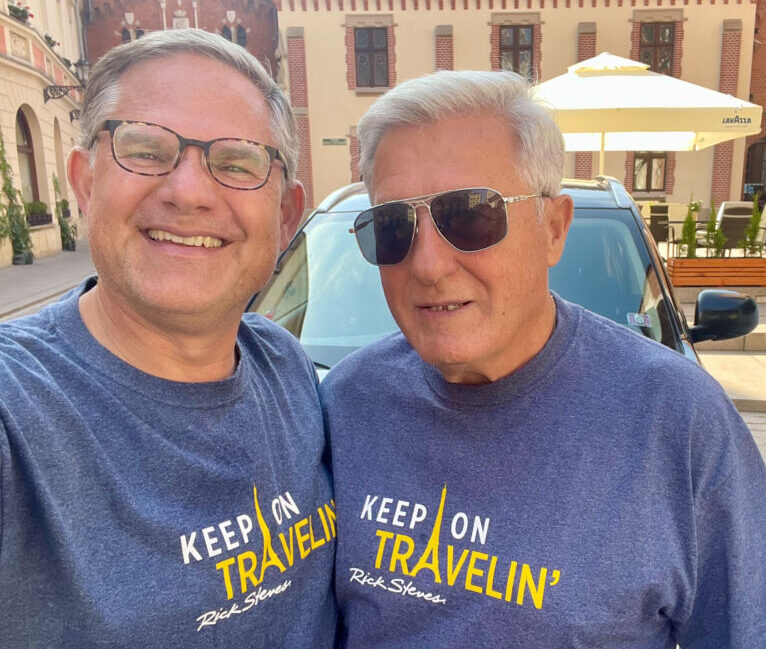
I’ve been traveling to Poland for more than 25 years. And over thirty-something visits, what sticks with me most of all isn’t any of the above. It’s those beautiful interactions I’ve enjoyed with the Polish people I’ve met along the way: Learning from a dynamic, delightful Polish guide, who has a strong sense of mission about helping outsiders understand her passion for her homeland. Sharing a bag of pretzels with my compartment-mates on a long train ride, transforming gruff frowns into warm smiles. Sensing a tender pride and gentle kindness emanating from people on the street, who remind me of my own Polish ancestors.
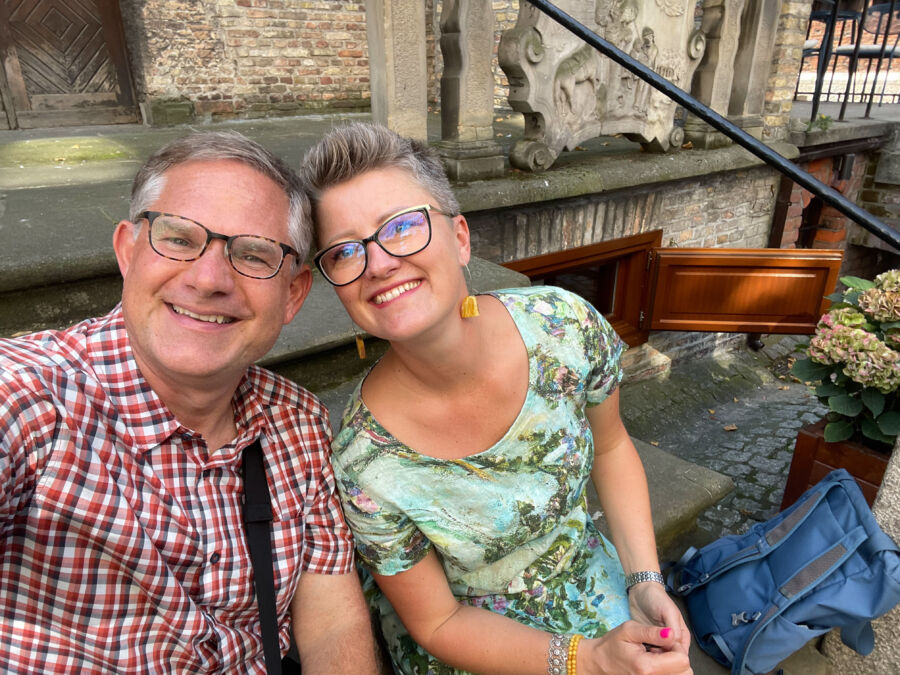
When I first started traveling here — in the late 1990s — English was less commonly spoken, and many locals had a hard patina of gruffness, left over from the trauma and paranoia of communism. But today, that baggage is being left in the past. English is widely spoken, the country feels rejuvenated and forward-looking,  the Poles have emerged from their shells…. and they’re excited to meet people who’ve come from so far away, and flattered by your interest in their treasured homeland.

I hope you’ll get a chance to watch our new Rick Steves Poland special. More than that, if Poland hasn’t yet made it to your “wish list” of future travels, I hope this post — and the show — inspire you to give it another look. Poland is a place that really gets under your skin… if only you give it a chance.


If you’d like to enjoy these experiences from the comfort of your living room, be sure to tune into our brand-new, one-hour Rick Steves Poland special. It’s airing this month at public television stations nationwide (check your local listings) and streaming on PBS Passport.

But why stop there? To visit Poland in person, pick up a copy of our Rick Steves Kraków, Warsaw, and Gdańskguidebook — which covers everything described here, and much more. (Poland is also fully covered in our Rick Steves Central Europe guidebook.)

Or sign up for our Rick Steves Best of Poland in 10 Days tour. A few years ago, I had the pleasure of creating this tour alongside my RSE home office colleague, Robyn Stencil, and our wonderful team of Polish tour guides — some of whom are also featured on our new TV show. I can’t imagine a better way to experience Poland, including every single one of the experiences on this list. While this popular tour is sold out for 2025, seats for 2026 will be released soon… stay tuned!
In the Age of Trump, Are Americans Still Welcome in Europe?

If you’re an American traveling to Europe soon, you may be wondering: As Donald Trump reshapes the USA’s role in the world, are we still welcome abroad?

I’ve been asked this question many times in recent weeks. My short answer: Yes, I really think so. But be prepared for some interesting conversations.

If ever a topic deserved more than a “short answer,” this is the one. So let’s unpack it:

No matter who you voted for, there’s no question that the second Trump Administration is already having a huge impact abroad. And Europeans are, quite reasonably, concerned about how the global geopolitical landscape is shifting. In just the past couple of weeks, the American president had a very public argument with the leader of a country that was, until that moment, considered a close American ally; questioned the USA’s role in NATO; threatened to impose 25% tariffs on European countries, as he already has for Canada and Mexico; and stated that the European Union “was formed in order to screw the United States.” (It wasn’t. The EU was born as a peacekeeping project, in the ashes of World War II.)

All of this is leading many Europeans to wonder — for the first time in generations — whether the United States is a trustworthy partner. While some Europeans might admire Trump, many are frustrated… even angry.

So, then, what does this mean for American travelers in Europe?

Nobody has a crystal ball as we navigate the coming months. Europeans, like Americans, are not monolithic. And I may be telling a different story when I get home from this year’s travels. (I head to Europe in about a month.)

However, based on past travels and recent conversations with European friends, I’m optimistic that I’ll feel as welcome overseas as before — even if the people I meet have a few more follow-up questions.

My confidence is rooted partly in a series of conversations I recently enjoyed. On Inauguration Day, I hosted a special installment of our 2025 Travel Festival about this very topic. Along with my co-host, Ben Curtis — a political scientist and American expat living in Prague — we discussed our new political reality and spoke to our colleagues in France, Hungary, England, and Italy.

The conversation produced a wide range of perspectives and opinions. But one consistent idea resounded clearly. When I asked each of our guests whether Americans would still be welcome in their country, they all said the same thing: Yes, of course! Why on earth wouldn’t Americans be welcome here? Some of them seemed perplexed, even offended, by the premise of the question.

I think that’s because, broadly speaking, Europeans have the wisdom to treat each individual traveler as just that — an individual — rather than an accomplice to their leader’s actions.

While the Trump phenomenon feels unprecedented to many Americans, much of the world has seen figures like him before. Many Europeans have had firsthand experience — whether recent or generational — of chafing under a leader whose politics they find outrageous. In recent years alone, we’ve seen the rise of right-wing politicians across Europe who can broadly be described as “Trump-like,” from Hungary’s Viktor Orbán to Italy’s Silvio Berlusconi and Giorgia Meloni, and from France’s Marine Le Pen to the Netherlands’ Geert Wilders. Trump is merely our local manifestation of a global trend.

While Americans tend to be idealistic, many Europeans are steely-eyed realists. A hard history has taught them that you can’t always judge a person by their current leader. And they recognize that more Americans voted against Trump than voted for him; even if they’re alarmed at the actions of America, they don’t paint all Americans with the same, broad brush.

Of course, Americans fretting about “how we’ll be treated abroad” is nothing new. To be honest, this persistent worry is a pet peeve of mine, mostly because it stands in such stark contrast to the reality I’ve always experienced in Europe. So what’s behind it? For some of us, maybe it’s that we’re terribly conscientious to avoid being “Ugly Americans” — which puts us on a hair-trigger for disapproval. Others may travel with a chip on their shoulder, having been assured our whole lives that we hail from the greatest country on earth — so naturally, people abroad must be jealous or resentful.

I recall this being a concern even on my earliest travels to Europe, back in the late 1990s, when I was a grubby backpacker bunking in hostels. In those budget dorms and shared kitchens, rumors and urban legends flew fast and furious: Don’t go to Poland on a night train, or you’ll get “gassed” and robbed! You can use an erasable pen to fill out your rail pass, and extend it as long as you want! And, of course: If an American wants to be treated better in Europe, we should sew a Canadian flag on our luggage!

All those nuggets of “travel wisdom,” of course, were specious and probably apocryphal. While everyone claimed to “know someone” who’d cosplayed as a Canadian, I never met anyone who actually did it. But it does reveal the deep insecurity we Yankees have always felt abroad. (And it begs the question: If we want to be treated like Canadians by the rest of the world… well, then, perhaps we should behave more like Canada?)

Since those earliest travels, I’ve spent more than a hundred days every year in Europe, through both highs and lows: the aftermath of 9/11; American wars in Afghanistan and Iraq; the economic crisis of 2008/2009; the giddy hope of the Obama years; Trump’s surprising, sobering first term; and the final stages of the COVID-19 pandemic. And looking back now, I can’t recall ever noticing that I was treated differently in Europe because of current events. In fact, quite the opposite: My experience as an American abroad has remained strikingly consistent.

Over that span, the time that felt most like our current situation came in 2002 and early 2003, when President George W. Bush began to pressure European allies to join the I-can’t-believe-we-actually-called-it-that “Coalition of the Willing” to invade Iraq, based on what turned out to be false claims. When France was reluctant to join our fight, the response of the American public was as immediate and intense as it was nonsensical. Many Americans, who insulted the French as “surrender monkeys,” pledged to rebrand French fries as “Freedom fries” and boycott French’s mustard… which is based in Rochester, New York. Sales of our tours and guidebooks in France took a significant hit.

At the time, I was appalled by how quickly Americans could turn on an entire country, just because of the policy of their elected leader — ironically, exactly the thing we’re so terrified they’ll do to us. And yet, traveling in France during that time, I never felt that I was treated badly because I was an American. The French refused to reciprocate our one-sided, snarky, reductive view; rather, they continued to welcome me as a visitor who happened to be from the USA, rather than sneer at me as a symptom of the USA’s disorder.

Soon after, in 2003, I was in Europe just as the horrifying news broke of torture at Iraq’s Abu Ghraib prison by American forces. I remember coming home from a busy day hiking in the Swiss Alps, turning on my hotel TV, seeing images of prisoners humiliated under my flag, and feeling mortified to be an American. But even at that low point — when, if I’m being honest, I would have felt that a less-than-warm welcome would be completely justifiable — I never sensed that I was mistreated because I’m an American.

“Because I’m an American” is a very important caveat. All around the world, most people are kind and generous… but some people are gruff, rude, or dismissive. I’ve noticed a tendency in my fellow American travelers to attribute any impoliteness to “because I’m an American.” But then, moments later, I might observe the same European interacting rudely with someone from another country, or even from their own country. There’s a certain narcissism in expecting to be received warmly by everyone, everywhere you go… isn’t there? Accept it: Sometimes, people are just jerks.

So, if you’re an American heading to Europe in 2025, what can you expect? Here are a few pointers.

First, it’s important to be mindful of how our homeland is perceived abroad. Keep up with the news — especially the European perspective. Get beyond your media bubble; try consuming European news coverage to get in the right mindset.

Then, be prepared to have some serious conversations about what’s going on back home. This varies by culture and by individual. But many Europeans tend to be more straightforward in talking politics, which can be jarring for an American traveler who might prefer to leave all of that at home. (On our Inauguration Special, Virginie Moré explained that French students are encouraged to ask probing, challenging questions. This is not rude; in fact, it’s expected.)

And so, when people realize you’re an American, they may have some thoughts to share. Perhaps you’ll get some raised eyebrows and a semi-good-natured “Trump, eh!” with some colorful gestures. You may even be on the receiving end of pointed questions about who, exactly, are the 49% of Americans who voted for Trump — even if you, personally, did not.

These conversations don’t have to be judgmental or antagonistic. But be patient; they are important. They are important because when we travel — in good times or bad, no matter who’s the president — we travel as ambassadors for our homeland.

Let me be clear: An “ambassador” does not have to be an apologist, who must defend or rationalize things we don’t agree with. Rather, we can be ambassadors for our own American values — even (and, arguably, especially) if our values are in opposition to our president’s.

Why is being a good ambassador for the USA so important? Because, in the end, it’s those people-to-people connections that shape the world’s understanding of us.

Imagine that there are two layers to a person’s impressions of a foreign land: The outer, more superficial layer is based on the public view of that country — its status in the world, its popular culture, its symbols and slogans, and, yes, its head of state. But the inner, more impactful layer is a constellation of people-to-people interactions: The people you’ve met from that country, and how they carried themselves, and how they talked about the world, and how they made you feel. Those individual interactions really matter, much more than fleeting, superficial impressions.

I see each interaction I have in Europe as an opportunity to show that person what an American can be. Even if I’m jet-lagged, cranky, or overworked, this thought inspires me to put my best foot forward. I am representing the USA, and now more than ever, the USA needs representatives who bring out our nation’s best qualities.

You may be a fundamentally “apolitical” person — eager to just go on vacation and leave this baggage home. But international travelers have a responsibility to have these honest conversations. It’s just good global citizenship — an acknowledgment that, like it or not, in good times and in bad, we are members of the family of nations.

And what if you’re a Trump supporter? I believe that, yes, even Trump voters can have a good experience in Europe — provided that they travel with a spirit of empathy, curiosity, and open-mindedness. Your conversations may be a bit more, shall we say, spirited. You may, in a way, provide a real service to curious Europeans who are genuinely trying to understand Trump’s electoral appeal. And if you keep an open mind, you might benefit from hearing some different perspectives. (Some of my all-time-favorite conversations with Europeans — the ones that have taught me the most — challenged my most deeply held assumptions. After all, that’s why I travel.)

If, on the other hand, you travel to Europe with a chip on your shoulder — expecting to convince everyone of your righteousness as you do a victory lap around a humbled continent — then, frankly, you’re gonna have a bad time. Maybe leave the red MAGA cap at home; wearing one around the streets of Europe would be like strutting into a spit-and-sawdust sports pub wearing a rival soccer jersey. You’ll forfeit your credibility to come home and say, “Wow, Europeans are so rude! They just hate Americans.”

Based on a lifetime of travel, I can promise you: Europeans don’t hate Americans. In fact, they are very much inclined to like us. They find us a bit odd (as we do them), and are a little intimidated by the far-reaching influence of our country. At times, they may be perplexed and concerned by our leaders’ actions. But fundamentally, they want to connect with us as individuals, and to understand us better.

Of course, these are good guidelines for international in travel, regardless of the current politics. But it bears repeating, now more than ever: Travel with empathy, curiosity, and open-mindedness. Be an ambassador of your American values. Focus on those priceless person-to-person interactions. Be prepared for tricky questions and challenging conversations, which can be constructive and mutually enlightening. Realize that some people are simply jerks, to everyone (not just Americans). Don’t be defensive. Keep an open mind — try to see things from the perspectives of the people you meet. If you feel your assumptions being challenged, lean into it and learn from it. And prepare to return home with what Rick has always called “the best souvenir”: a broader perspective.

One thing’s for sure: As an American, traveling in Europe just got a whole lot more interesting.


Let’s continue this conversation in the Comments.

Have any of you traveled to Europe since our new president took office? Share your experiences.

And if you’re a European, do you think I’ve fairly characterized what an American visitor might find upon visiting your country? Any other advice or insights to share? Anything I got wrong?