What’s New in Paris: Tips for Summer 2019

I recently returned from a visit to “The Big Three” of European travel: Paris, London, and Rome. This trio of great European capitals is better (and more crowded) than ever. It had been 10 years since my last visit to Paris, and I was struck by how it feels timeless — yet subtly better in so many respects. Here are some of my fresh-from-the-rucksack observations from the City of Light.

Reports of Notre-Dame’s demise have been greatly exaggerated. The fire that engulfed the cathedral’s roof back in April was a grotesque and shocking thing to watch on TV, and priceless works of art have been lost forever. But — visiting soon after the fire — I was heartened to lay eyes on France’s most important church and see that its graceful stone structure is still intact. In fact, from most angles, little fire damage is evident. I don’t mean to diminish the tragedy; France faces a long, expensive, and exhausting rebuilding process to resurrect its Gothic masterpiece. But seeing Notre-Dame’s gargoyles still peering out from its prickly roofline made my heart glad.

That said, the harrowing sight of Notre-Dame in flames reminded me of the fragility of Europe’s cultural treasures. On this visit, I found myself making a point to slow down and savor Paris’ great sights. Just a short walk from Notre-Dame is Paris’ other great church, Sainte-Chapelle, with the most spectacular stained glass anywhere. I visited in a pensive mood — putting myself in the shoes of a medieval pilgrim, wowed by the swirling play of colored light in this majestic space. If you were saddened by the Notre-Dame fire, take it as a challenge to “be present” in the presence of Europe’s great art and architecture. Ignore the crowds and just take it all in. Because you never know when you’ll be back…or if, when you are, that wonderful sight might not be there anymore.
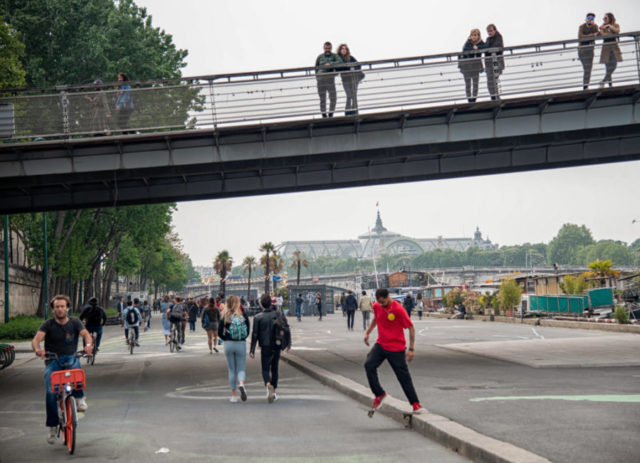
Once a thoroughfare for busy traffic, the Seine riverbanks have been reclaimed by Parisians. The city is converting more and more of its embankments to people-friendly promenades. In this otherwise congested city, I found walking along the Seine a relaxing way to connect my sightseeing. On a nice day, the riverbanks are filled with rollerbladers, skateboarders, cyclists, and people out strolling. A few pop-up bars and cafés have opened along the river, though to be honest, I was hoping for even more — this zone would be made-to-order for a food truck circus. (A Parisian explained to me that the city is heavily regulated and slow to adopt new ideas. I think maybe I’ve been spoiled by London’s food-truck explosion.) A local tipped me off that the stretch between the Eiffel Tower and Notre-Dame is, not surprisingly, quite touristy — but if you carry on farther east, the embankments become almost entirely local (check out the area around the Bibliothèque François Mitterrand).

Bonus tip: If you enjoy traffic-free Paris, be in town for the first Sunday of any month — when the “Paris Breathes” initiative forbids car traffic entirely in huge swathes of the city center, and along the Champs-Elysées.

Part of my assignment for this trip was road-testing the Rick Steves’ Europe Audio Tours for Paris. I used these tours to visit the Orsay, the Rue Cler shopping street, the Château of Versailles, and more — and they significantly enriched my visit. Download the (free) Rick Steves Audio Europe app, then download the (free) audio tours for the destinations you’re visiting. When you arrive, stick your buds in your ears and simply enjoy a thoughtfully curated, fully guided tour of Europe’s top sights. (This may sound like a gratuitous plug, but since we make absolutely no money doing these audio tours, I consider it more of a public service. Seriously…I just love these things.)

Paris is c-r-o-w-d-e-d. Smart line-beating strategies can make things easier. But even so, the major sights can be time-consuming and borderline-unpleasant to visit. So consider going light on the sightseeing, and instead, focus on enjoying Paris as a temporary Parisian. Sit on a bench in a park away from the crowds. For example, tucked just across the street from the Louvre (and a short stroll from the mega-touristy Tuileries Garden) are the free-to-enter courtyards of the Palais Royal. This pristine, manicured park — with gurgling fountains, geometric hedgerows, and stately sculptures — is where Parisian parents bring their kids to escape the urban intensity of the city, and where office workers come to unwind at the end of a busy day. And there’s barely a tourist in sight.

Paris is the birthplace of department stores. And these days, some of its stately old shopping halls are becoming virtual theme parks. At the Galeries Lafayette Paris Haussmann — perhaps Paris’ grandest grand magasin — they’ve built a “Glasswalk” observation platform that extends out into the sumptuous atrium, under the glittering Art Deco dome. At busy times, people wait in line just to step out and snap a photo (free; you’ll find it on the third floor, near the Starbucks). And down below, they recently suspended a bouncy trampoline floor for kids — hanging in the middle of the atrium, high above the perfume counters (this is now closed, but they’re likely to feature similar attractions in the future). Purist Parisian shoppers are put off by the very touristy turn their venerable old stores are taking…but visitors enjoy seeing the department store reach its ultimate expression.

Paris has an excellent public transit network — but it’s important to confirm your transit plans before heading out for the day. I noticed more interruptions on this visit than I ever had before. For example, the Gilets Jaunes (“Yellow Vests”) economic justice movement has been very active this summer — especially on Saturdays. Their M.O. is to disrupt local transit, occasionally closing down key Métro lines and bus routes. (When I was in Paris on May 1 — the “Labor Day” holiday — virtually all city transit came to a standstill.) While a few of these protests have turned violent, they are easy enough to avoid. (They are targeting institutions, not tourists.) But they can create headaches if you’re trying to move around the city. 

Beyond the protests are routine transit interruptions, closures, and changes. For example, Paris recently renumbered several of its bus lines, so a year-old map is no longer accurate. And, as with any big-city transit system, key stops can be closed for construction — for example, the Pont de l’Alma RER stop, handy to the popular Rue Cler neighborhood (and my hotel), was closed when I was in town. Public transport is still the cheapest and most efficient way to get around Paris, but keep an eye on the city transit site for changes and updates: www.ratp.fr/en. And, as always, hoteliers are a great source of up-to-the-minute information about transit closures, whether planned or otherwise. (Bonus tip: When in Paris — or any other city — I use the Google Maps app extensively for both realtime transit routes and walking directions. It rarely steers me wrong.)
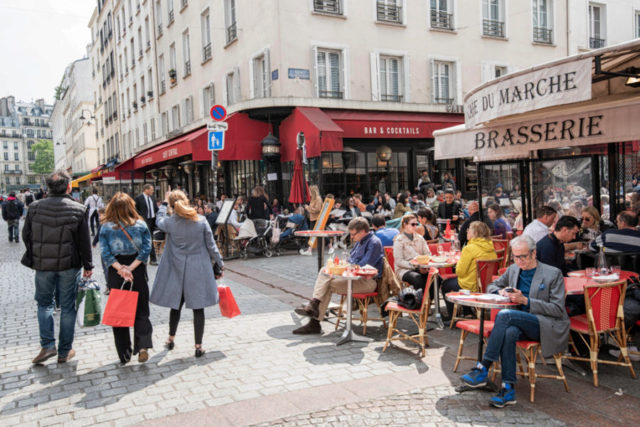
I had many memorable meals in Paris, but some of my favorites were simply at neighborhood cafés, with classic menus of steak-frites and croque-monsieur. While I’m a bit of a snob about seeking out top-quality meals, here in Paris, even a fill-the-tank meal at a local dive would qualify as “high cuisine” in most countries. And the people-watching from al fresco tables is fantastique. I found myself choosing the sidewalk perch I liked best, without regard for the menu. And I always ate well enough.

Even as things change, Paris remains one of Europe’s top destinations. Doing a little homework to know what’s new can help you have a more savvy, more effortlessly enjoyable trip. Bon voyage!


I’ve also blogged recently about how you can beat the crowds at the major sights in Paris (and other European biggies). And last week, I described my favorite Paris hotel.

When I’m in Paris, in addition to those audio tours, my indispensable tool is the Rick Steves Paris guidebook. Rick, along with co-authors Steve Smith and Gene Openshaw, have done a formidable job of making one of Europe’s best and biggest cities engaging, fun, and easy to navigate.

Let’s Talk About Our Favorite Hotels

As someone who travels in Europe for three months a year, I have, by default, become a connoisseur of hotels. Not only do I sleep in hotels — I spend hours each day visiting and evaluating accommodations for our guidebooks. I’ve experienced the full spectrum, from “good enough” hotels that I forget the moment I check out, to unforgettably terrible hotels so bad they’re almost sublime, to transcendently great hotels. And, like any aficionado, I keep a mental list of my all-time favorites. (Full disclosure: While many travel bloggers do “sponsored posts,” we at Rick Steves’ Europe are never paid for our endorsements. The hotel raves below are all 100% unsolicited…I just geek out on awesome accommodations.)

On my recent trip to Paris, I added another hotel to my list of all-stars. Before my visit, I had asked the co-author of our Rick Steves Paris guidebook, Steve Smith, if he had any suggestions. With a glimmer in his eye, he said, “I know just the place.”

The moment I stepped into the Hôtel de Londres Eiffel, I knew I was in for a great stay. I was warmly greeted by Arnaud, who recognized me before I could say a word. (With just 30 rooms, the receptionists are able to know each guest personally.) Arnaud gave me a Paris map — custom-produced by the hotel for its guests, illustrating the staff’s top picks for where to eat and what to do — and sent me up to my room.

Knowing I’m a light sleeper, I’d requested a quiet room. And I got just about the quietest room I have ever had in a big city — tucked in their little courtyard annex building.

The decor was impeccable. I’m a cynic when it comes to hotels that try to gild the lily with dusty bouquets of fake flowers, generic artwork from IKEA, and pointless doilies. But the design of this room hit exactly the right balance of charming, tasteful, and practical. It had little personalized touches that so many hotels get wrong: Artful sconces providing a warm, even light throughout the space. A very comfortable bed with plush pillows. Playful French countryside scenes on the wall, with matching drapes.

The room wasn’t huge, but the space was designed so smartly that once I unpacked, I never felt crowded. The wardrobe door, when opened, automatically clicked on a light inside. An empty refrigerator was tucked under the desk, leaving just enough room to squeeze a chair alongside it. And individual USB charging ports were stationed right next to each nightstand. (How many times have you found the only available plug all the way across the room from the bed?)

Everyone who works at the Londres Eiffel is top-notch. Ninette and Jacqueline bring in fresh croissants and baguettes for breakfast. At the front desk, Arnaud and Cédric — who take turns on the day shift — are, as Steve Smith had told me (using an endearing French-ism) “hyper-competent”. They could handle any situation with aplomb.

Another key to a great hotel is great management. The Londres Eiffel is run by the Prigent family (who also own the Hôtel Signature Saint Germain des Près a mile away). Chatting with Delphine Prigent, I was reminded that conscientious, hands-on managers elevate a nice hotel to the top tier. She explained how they emphasize long-term relationships with both their staff and their guests. That’s why their team enjoys such longevity — Arnaud told me he’s gotten to know successive generations of loyal return guests.

I’m also big on location. And the Londres Eiffel has a handy one: a short walk from the Eiffel Tower in one direction and from the thriving Rue Cler market street in the other direction. Characteristic Parisian sidewalk cafés are just steps away.

Favorite Accommodations Around Europe

Staying at the Hôtel de Londres Eiffel got me thinking about my other favorite accommodations around Europe: The ones that stick out like a shining beacon when I glance over my itinerary. The ones that offer a port in the storm of travel — where I can recharge from a busy itinerary and recover from other hotels that have not quite been up to snuff. The ones that make me say, “Oh, yeah! I can’t wait to get to that one!”

In Tuscany, just outside of Pienza, Isabella and Carlo Moricciani run the best agriturismo I’ve experiencedCretaiole. And now Isabella has built her dream hotel, a country-classy splurge resort called La Moscadella. This May, I was one of the hotel’s first-ever guests…and I promise you, I’ll be back. The Moriccianis have a gift for combining comfortable lodgings with vivid, culturally rich Tuscan experiences.

In Brussels, I’ve always been charmed by the Hôtel Welcome. It’s not just because I enjoy thinking of the owner, Michel Smeesters, as “Meester Smeesters.” It’s also because Meester Smeesters is a great traveler whose tastes and life experience are apparent in every room of his hotel. Many years ago, he told me that he spends at least one night in each room in his hotel, every single year. That way, he personally experiences all 17 of his rooms — to understand the pros and cons of each one, and to fix what needs fixing. Recently on a return visit, I asked whether that has continued. Without skipping a beat, he said, “Absolutely — still do!” And it shows.

In Kraków, Poland, I’ve enjoyed the Donimirski Boutique Hotels since the days when the very first Rick Steves Eastern Europe tours stayed at one of their branches. The Donimirski hotels are elegant but not pretentious, historic but with modern amenities, and are run by a staff characterized by longevity. Several upper-level management positions are now occupied by receptionists I knew back when I was a budding guidebook researcher and they worked the night shift at the front desk, 15 years ago.

At Dubrovnik Gardens, Roberto di Lorenzo rents a couple of tidy apartments in a secluded garden, on a pebbly square in front of an ornate church facade at the top of a famous grand staircase. Staying here, you feel completely enveloped by the bustle of one of Europe’s great walled cities, yet a world apart. (And Roberto is a great guy, too.)

In Stockholm, I haven’t found a better place to stay than Hotel Wellington, in the heart of the upscale Östermalm neighborhood. While it’s big (with 60 rooms), the front desk staff is helpful and welcoming. And in this expensive city, guests appreciate the generous breakfast and dinner buffets — both included in the price. The wonderful Östermalms Saluhall market hall — one of my 10 favorite markets in Europe — is just up the street.

In Budapest, I’ve always been impressed by Hotel Victoria — where kind, thoughtful manager Zoltán is at the helm. This place is such a class act, it almost seems too good to be true. With each inspection for my Rick Steves Budapest guidebook, I find myself determined to find any imperfection. And I still haven’t found one. The front desk staff is warm and capable, and each of the 27 rooms looks out over the endlessly entertaining Danube. Zoltán even restored a 19th-century ballroom, which was tucked away unnoticed behind the reception desk for years. Now it hosts occasional chamber music concerts and gives guests an outrageously classy place to relax.

At Slovenia’s Lake Bled, I have several favorites. For rustic elegance, a quartet of woody chalets with modern comforts cluster on a bluff at the top of town, over the lake: Penzion Berc, Hotel Berc, Penzion Mayer, and Penzion Kaps. But for full-on, big-hotel, modern comfort, I also appreciate the Hotel Lovec. While it’s a big Best Western, it still has a personal touch. Be careful, or front-desk receptionist Tomaž might lure you into watching a video he’s made celebrating the wonders of Slovenia’s Julian Alps.

In Palermo, AdHoc Rooms is a peaceful, tidy oasis in the very heart of an intense, gritty city. On my first visit to Sicily, my flight was cancelled, forcing me to rebook to one that arrived around 1:00 in the morning. I apologetically called Natalia, who kindly assured me that it’d all work out. In the wee hours, her husband Luca met me — both of us bleary-eyed — and drove me to the B&B. As is the case with many small B&Bs in big buildings, I had to climb up several stories through a dingy, echoey stairwell. But when I stepped through the door, that very long day’s journey was worth it. The rooms are clean, bright, white, and smartly decorated with a sense of both style and whimsy.

I had a similar experience at Guest House Douro, in the Portuguese city of Porto. Arriving late, I found my way to the charming eight-room B&B, tucked right in the heart of the most bustling stretch of the Ribeira waterfront. Carmen offered me a warm welcome and an efficient orientation before showing me to a tight but cheery and well-appointed room with breathtaking views over the busy Douro River. I was a little concerned about the noise, but Carmen bragged that they’d gone all out for the most soundproof windows available. And she was right: I’ve never had a quieter room in such a busy location. The next morning, João served up a lovingly crafted breakfast with tropical fruit from Portugal’s remote islands.

In Warsaw, Chopin Boutique B&B is conscientiously run by Jarek Chołodecki. Like Jarek, the rooms are quirky but sophisticated. Feeling sympathetic that his guests couldn’t always find a decent concert here in the birthplace of Chopin, Jarek converted his drawing room into a small concert hall, hosting performances every night at 7:30. The B&B’s Chopin concerts have become one of my favorite activities while visiting Warsaw.

While some of these accommodations are on the pricey side, others are well within the budget of any traveler. You don’t have to spend a lot of money to find a great hotel — it all comes down to whether it’s well-run and smartly designed for travelers.

What’s missing from my list? What are your favorite hotels in Europe, and why?


It goes without saying that all of these handpicked gems are enthusiastically recommended in our various Rick Steves guidebooks — and our tours stay at many of them, too…including the Hotel de Londres Eiffel, which hosts some of our one-week Paris city tours. (Lucky people!)

Postcards from Normandy — Remembering D-Day on French Beaches

The 75th anniversary of D-Day has me in a patriotic mood — and nostalgic for a time when America was doing good in the world, rather than alienating allies and burning bridges. This occasion has got me thinking about the place where the USA lived arguably its most stirring moment: in the northern French region of Normandy.

Here are a few “Postcards” from my recent visit to Normandy — starting with the beautiful, low-impact pastoral sights, and building up to the powerful places where the echoes of D-Day still reverberate.

Welcome to Normandy 

While best known as the site of the D-Day landings that turned the tide of World War II, Normandy is a sprawling, multifaceted region that’s a delight to explore. Even an impatient sightseer could spend a week here without getting bored. In addition to thought-provoking cemeteries and beaches still strewn with artifacts from that pivotal invasion, Normandy serves up a pastoral countryside of green rolling hills misted by English Channel storms, charming half-timbered towns, towering churches, landscapes and cityscapes made famous by the Impressionists, and a delicious, apple-flavored cuisine.

Honfleur

Honfleur wins the title for Normandy’s most charming town, with its historic harbor, half-timbered old town (pictured earlier), and a characteristic wooden church that feels like an overturned boat. With its unique “luminosity,” it’s no wonder the Impressionists found inspiration here. Honfleur is also a delightful spot to browse for typically Norman foods, many of which feature apples from the region’s orchards. You can graze on delicious edible souvenirs such as apple-wine vinegar, apple candies and cookies, hard cidre, and Calvados, the powerful local apple brandy.

Mont St-Michel

Normandy’s flagship destination is one of those great European sights that truly lives up to its billing. An island abbey that’s sometimes surrounded on all sides by water, and at other times high and dry in the middle of an expansive mud flat, Mont St-Michel strikes a dramatic pose. A new causeway provides handy shuttle-bus service (in high tide or low) from a park-and-ride on the mainland. Once at the island, you can wander the mud flat (inspecting temporarily beached sailboats), climb up the twisty lanes through town, and tour the historic abbey.

Rouen Cathedral

The city of Rouen, where Joan of Arc was burned at the stake, clusters around the dramatic facade of its exuberantly Gothic Notre-Dame Cathedral. The great Impressionist Claude Monet painted 30 different versions of this facade — depicting the same subject at different times of day, in different weather and different light. As a photographer, I enjoyed circling back past the cathedral facade every few hours to carry out a study of my own.

Omaha Beach

The main thing that attracts most visitors to Normandy — especially Brits, Canadians, and Americans — are the desolate beaches where the Allied forces staged Operation Overlord in the early hours of June 6, 1944. The D-Day invasion provided the Allies with a foothold in Western Europe, while Hitler was distracted fighting Russians on the Eastern Front. Eleven months later, Hitler was dead.

Stepping onto Omaha Beach (the most famous landing site, thanks partly to Saving Private Ryan), you’ll trip over jagged Nazi fortifications that still survive 75 years later. Put yourself in the combat boots of the young grunts tasked with taking the beach, and notice how impossibly far away that scrubby, sandy bluff is. Now add relentless machine-gun fire. Standing here, I dare you not to get goosebumps.

Arromanches

Of course, D-Day was more than just Omaha Beach, and the brave souls fighting on those beaches were not just Americans. Canadians have their own museum and monuments at Juno Beach. And in the town of Arromanches — in the British landing sector — the beach is still littered with gigantic prefab harbor sections. In an astonishing feat of engineering, the Allies prepared for phase two of the invasion by building an entire temporary harbor in England, breaking it into 115 modular pieces (each the size of a football field), and then shipping each one across the English Channel to reassemble here as soon as the beaches were secured. This four-mile breakwater, called “Port Winston,” allowed the Allies to swiftly begin their land invasion before the Nazis could regroup. Arromanches is still stuck with its giant chunks of Port Winston — how could you possibly remove them? — and history buffs love wandering out and getting up close to history.

This is just a reminder that D-Day is a whole series of sights, scattered across a 54-mile stretch of coastline, each one illustrating a different chapter of the invasion: Juno Beach, Utah Beach, Pointe du Hoc, the church at Ste-Mère Eglise, the gun battery at Longues-sur-Mer, cemeteries honoring each nationality who suffered losses here, and on and on. (Our Rick Steves France guidebook outlines a driving route to connect all the major sights, and a long list of local guides you can hire to show you around.) Give the D-Day sights a full day. Better yet, two. Better yet, three.

American Cemetery

For Americans, the ultimate D-Day experience is visiting the American Cemetery overlooking Omaha Beach — vast green fields speckled with 9,387 neatly arranged gravestones honoring troops who lost their lives in Normandy. (This is just one of many such cemeteries throughout Normandy. D-Day alone brought 4,413 Allied deaths — including 2,499 Americans.) Each cross and star of David is etched with the name, place of birth, date of death, and dogtag number of a young American whose sacrifice helped turn the tide of the war.

Walking through these fields, my heart swelled with thoughts of relatives who were ripped from the dairy farms and cornfields of rural Ohio and — at an age when most of us have the privilege of taking a “gap year” or going to frat parties — traveled half a world away to fight someone else’s war and die on an anonymous beach. It’s hard to imagine anyone leaving this site with a dry eye.

Merci

Inside the Utah Beach Landing Museum, next to one of the landing craft that carried so many American troops to a premature death, someone had scratched a simple message into the sand: Merci. While I find French people, as a rule, extremely welcoming to Americans, I have rarely traveled somewhere where the locals were so genuinely appreciative of the part my homeland played in their history, and where I felt so proud to be an American. Throughout Normandy, French people of all ages tear up when talking about what we did for them.

At a moment in our history where America seems less sure about its role in the world than it has in generations, I’m filled with patriotic pride (and, I’ll admit, not a little sadness) as I reflect on a time — and a corner of France — where my country joined with its allies to do the right thing, at great personal sacrifice, and made a history-changing difference to people outside our borders who needed us. Now that’s global leadership. Merci. And God bless America.


I visited Normandy to help update our Rick Steves France guidebook. That book is, if I’m being honest, one of the very best guidebooks in our Rick Steves series  (thanks to a lifetime of expertise and hard work by co-author Steve Smith). There’s no better tool for visiting Normandy on your own; the book includes all the advice you need for visiting Normandy independently, as well as a list of recommended companies and local tour guides offering tours of the various D-Day sites. 

Or, to have someone else handle the details, consider our Paris and the Heart of France tour, which includes a guided visit to Normandy.