It has been a frantic week here at the Rick Steves’ Europe home office in Edmonds, Washington. We’ve been playing host to an invasion of more than a hundred tour guides from all over Europe and beyond, in town for our annual guide summit and reunion — 10 solid days of strategy sessions, business meetings, reconnecting with tour members, and, of course, parties. I love having all the guides around. It’s exhilarating…but exhausting.
Having all of my tour-guiding buddies in town has me nostalgic for my own days of guiding. For several years, I split my time in Europe between writing guidebooks and guiding our Best of Eastern Europe and Best of the Adriatic tours. About ten years ago, I realized I didn’t have time for both. I went all-in with the writing, and “retired” from guiding.
People sometimes ask me how to be a Rick Steves tour guide. The answer: Be a passionate traveler…then do it with 26 people in tow. Guiding is hard work. It’s fun and rewarding. But most of the time, it hardly qualifies as “glamorous.” Every tour guide collects funny anecdotes about those little serendipities — good and bad — that befall them and their tour members. Here’s my own collection of warts-and-all stories that, if nothing else, might give you a little empathy for your guide.
The Camaraderie of Tour Guides
First off — and I say this from the heart, not out of any professional obligation — the tour guides I have the pleasure of working with at Rick Steves’ Europe are astonishingly cool people. My wife and I have a tradition of inviting our Eastern European guides to our home for dinner, offering them a homey and casual break from a week of conference rooms, happy hours, and catered meals. We did it again last Saturday. And our hundred-year-old craftsman house in Seattle was filled with what has to be the most riotous laughter it’s ever witnessed.

Despite our attempts to herd our friends to our dining room table, they all insisted on squeezing into the tiny nook in the corner of our kitchen — a dozen Czechs, Hungarians, Poles, Slovenes, and Bulgarians sitting cross-legged and cracking each other up. It turns out every single nationality has their own set of jokes to tease Hungarians about their uniquely tongue-twisting language. I learned a lot that evening, including how Czech parents enjoy sending their kids to Native American-themed summer camps to live in tepees; what my nickname would be in Czech (Kamerka); and how Bulgarians have a bizarre tradition of letting their kids “ride” the freshly slaughtered Christmas pig for good luck. (Hearing this last story, several of the guides glanced over at me and said, “You writing this down, Cameron?” They know me so well.)

We’ve been doing this for years, and it’s fun to look back on the history we share as members of the same guiding family.

Wherever they go in Europe, tour guides exert a powerful magnetism on each other. In very popular cities — like Venice — there can be several Rick Steves Tours in town on the same day. We try to avoid having groups run into each other. But after hours — once our tour members are properly oriented and our accounting spreadsheets are filed — guides can’t resist slipping out to hoist a glass together. I once hopped on a milk-run train to have a beer with a couple of guides three towns away. Sometimes it feels like there’s an unspoken contest to get as many guides as possible together in one place. I think this camaraderie — our spirit of “we’re all in this together” — is a hallmark of the specialness of Rick Steves Tours. (What other company would fly a hundred guides to the USA for a week of meetings?)
Bus Drivers: The True VIPs
Anyone who’s been on a tour knows that the bus driver is another essential part of the experience. And in the European tourism world, bus drivers occupy their own subculture. In big cities, there are entire bars patronized entirely by a Babel of drivers from across the Continent. And in places with a mass tourism tradition, it’s the bus drivers — who have the power to whisper to an overwhelmed guide, “I know just the place for this busload of tourists to stop and buy lunch” — who are treated like kings.
In one of these areas, there was an only-game-in-town roadside restaurant where we took our groups. Tucked in a corner of the sprawling dining hall was a special little drivers’ dining area, elevated and roped off like a VIP lounge. One time, curious about the experience, I took our driver up on his invitation to join him there. We were given menus without prices and were waited on attentively, practically being hand-fed peeled grapes. From our privileged dais, we looked out over the congested dining hall, trying to avoid eye contact with our tour members as they shuffled through a self-service cafeteria line.
Of course, Rick Steves Tours are distinguished by our insistence that the driver is part of our group. At most meals, we require that the driver sit with our tour members for lively conversation. (The restaurant I just described was a special exemption to this policy. In fact, my driver was afraid not to dine in the VIP section, for fear of upsetting the delicate social order.)
My all-time favorite driver trained with me on his first-ever Rick Steves Tour. When I told him that we actually wanted him to interact socially with our tour members — which was unheard-of at his very traditional company — he was at first aghast, and then excited. It turns out he’d been stifling his gregarious instincts for many years…and on this trip, he made up for lost time, becoming dear friends with virtually everyone on the bus. He even joined us on some of our town walking tours, and participated in my bus lectures when we arrived in his home country. He went on to work exclusively for us for many years…until retiring, a very happy man.
One year, two of my other favorite bus drivers came to Edmonds for our weeklong tour reunion festivities. They were hardworking, blue-collar guys from Slovenia who had never been to the United States. I took them to Fred Meyer, where they filled their oversized suitcases with electronics, jeans, and toys that would’ve cost double back home.

During that week, while the guides were tied up with meetings and the drivers had free time, they got into a nice little routine of having meals at the local main-street diner. On their last night in town, they insisted on taking me and another tour guide out to dinner. But when the bill came, they paid with exact change…and nothing more. In explaining our customs to them, it dawned on us that they had not been tipping all week long. The next day, after taking our driver friends to the airport, we stopped by the diner with a few 20-dollar bills: “You remember those two Eastern European guys who kept coming here last week and stiffing you on the tip? Well, here’s the thing…”
When Nerves Fray and Tempers Flare
As a tour guide, you’re equal parts historian and shepherd. Bus time is for teaching tour members the story of the place they’re visiting, and for getting them oriented to the nuts and bolts of what’s coming next (explaining what we’re doing today, taking orders for dinner tomorrow, and making sure everyone knows the exchange rate and the location of the nearest ATM).
Tour members have varying appetites for different types of information, and — understandably — they tend to zone out on the bus. So if something is important, I’ll repeat it. And if it’s really important, I may repeat it several times. One time, when I passed out little slips of paper for mid-tour evaluations, one of my tour members hand-delivered it back to me. “You know,” he said, “I was just about to write that you repeat yourself too much. But at that very moment, someone next to me asked about something I have heard you say at least five or six times already. So my feedback is: Keep up the good work.”

On another occasion, we were at the bitter end of a very long day on the bus. We’d had some weather-related delays, and now, at long last, we finally checked into our hotel. My tour members met in the lobby and dutifully trudged 10 minutes through the drizzle until we were all standing under a leaky awning on the town’s main square.
They were tired. I was tired. Tempers were flaring. But they needed to eat. As efficiently as I could, I did a little spin-tour of the square, pointing out the locations of three or four of my favorite restaurant options, ending with, “Any questions?” There was a tense moment as the soaked and famished group clenched every muscle, hoping the answer was no. But one woman pointedly raised her hand. “Yeah,” she said impatiently, “but when are you gonna tell us where we should go to eat?” The entire rest of the group groaned in unison. (She survived.)
One time I celebrated my birthday at a tired old communist-era hotel on a Croatian island. The hotel had a large population of stray cats, who swirled around tour members enjoying a drink on the terrace, and often wandered inside the lobby. (Almost everybody viewed this as a big plus. The biggest concern was resisting the urge to adopt a Croatian kitty, or five, to bring home as a souvenir.) My tour members had thoughtfully tracked down a birthday cake for me, and threw me a nice little surprise party in the lobby. I turned my back on the cake to chat, and when I looked back to cut some slices, a cat had climbed up on the table and was feasting away. Fortunately, we were able to cut around the kitten bite marks.s
An Extremely Hot Dinner
I led the first-ever departure of our Best of the Adriatic Tour, which I’d co-designed with a couple of other tour guides and our office staff, stitching together all of our favorite experiences and restaurants. I was particularly excited to take my group to a rustic little tavern in the hilly, vineyard-draped interior of Croatia’s Istrian Peninsula. I’d had an utterly delightful meal there the year before, sitting out on a breezy terrace, with distant views of the sun extinguishing itself in the shimmering Adriatic. It was a perfect memory. And as our bus pulled up to the restaurant at the end of a long day enjoying the blazing sun, I couldn’t wait to share that same experience with my sunburned tour members.
But my heart sank as the owner walked us through the already-full terrace to get to the interior. There she’d laid out a glorious table for us…directly in front of the huge hearth, where glowing coals did all of the cooking.

Already sweating from the heat outside, but with no other seating options available, we settled into the sweltering stone dining room. And then the owners — seriously overestimating the appetites of their honored guests — fed us at least two courses more than anyone could possibly eat. By the meal’s end, we were stuffed, and we could have wrung out our shirts. (Rest assured that’s a mistake we only made once — on every departure since, that restaurant serves us a more manageable-sized meal…and the terrace table is permanently reserved for Rick Steves groups.)
“This Ist Mein First Tour in English!”
These days, of course, we invest mightily in advance-scouting new itineraries. By the time the first tour bus sets out with paying tour members, our Tour Operations staff and guides have already driven the entire route by car, and know every stop down to the minute. But back in the day, we were far more by-the-seat-of-our-pants. I was the assistant guide on the first-ever departure of our Best of Eastern Europe tour, 17 years and several itinerary iterations ago. We felt like trailblazers, improvising much of the tour, but everything clicked…and our tour members were having a blast.

When we reached Budapest, our lead guide decided he’d be more comfortable hiring a professional local guide to add some color commentary to his city tour. Our hotel insisted they knew the perfect agency, which employed only the very best guides, so we let them arrange it. Our guide was energetic, personable, and knowledgeable… but the moment she opened her mouth, it was clear she spoke virtually no English.
We loaded our group onto the bus and set off on a driving tour around the city, our guide providing commentary in German with a smattering of English. She got the words “left” and “right” mixed up, which — one would think — should disqualify anyone seeking to become a tour guide. But she was undeterred. Soon after leaving the hotel, we passed one of Budapest’s most venerable thermal baths. “And on the left,” she said — meaning, of course, “right” — “you see example of our baaahs. We are sehr famous for our baaahs.” It just so happened, at that very moment a bus drove by on our left side. Stifling giggles, I watched as every tour member’s head swiveled left to see the bus, instead of right to see the bath.
After a few minutes, our lead guide wisely pulled the plug, and directed the driver to pull over at Heroes’ Square. The local guide announced, “Now we have fünf minute to see square, then back to bus.” Our lead guide politely but firmly whispered that she would, in fact, not be getting back on this bus with us. Seeming to understand, she dejectedly got on the mic one last time: “So, jetzt I must say goodbye. I am sorry you no understand. This ist mein first tour in English!”
When You Gotta Go…
Finally, a tour guide has to be prepared for anything…including impromptu bathroom breaks. On one tour, I was hiking my group through a lush national park of gushing waterfalls. We reached the boat dock at the midpoint of the hike, and one of my all-time favorite tour members came up to me and discreetly asked when the next bathroom break might be. I explained that there were no toilets at this dock, but there was one at the other end of the 20-minute boat trip we were about to take. In the meantime, he could use the bushes. Glancing around, he said, “No, I’m OK. I think I can wait.”

We boarded the boat. About five minutes later, my wide-eyed tour member approached me again, with a newfound urgency. “Nope, can’t wait. What are my options here?” We scanned the deck of the open boat, and came up empty. Sensing his desperation, I led him to the little steering cabin in the back of the boat, where the captain and first mate stood stoically. I stuck my head in the door and asked if there were any WC options. They shook their heads vigorously and pointed to the dock we were approaching…10 long, watery minutes away.
At this point, what was going to happen was going to happen now, so my tour member stepped into the little cabin and said, “Look, I’m gonna go. You just tell me where.” At first they tried to point him back out. But when he made a beeline for a little garbage can in the corner and unzipped his fly, they realized he was serious, and directed him to stand at the back of the boat.
And so we glided silently across the pristine lake, my tour member peeing off the back, and me standing discreetly in the cabin doorway to block the other passengers’ view. To this day, I don’t think any of his fellow tour members knew what happened on that boat. As for the people on the boat that passed us going in the other direction…well, that’s another story.
One of these days, I might just get back to guiding. I miss my tour guide and bus driver colleagues. I miss the wonderful tour members who join us on our buses. But most of all, I miss the crazy stories.
I’m lucky to know so many great guides. You can meet some of them through this guide interview series on our website.
Or, to travel along with them in person, check out our full lineup of tours.
For more stories of good trips gone bad, check out my “Jams Are Fun” series.


 Driving around the perimeter of Iceland on the 800-mile Ring Road this summer (working on our
 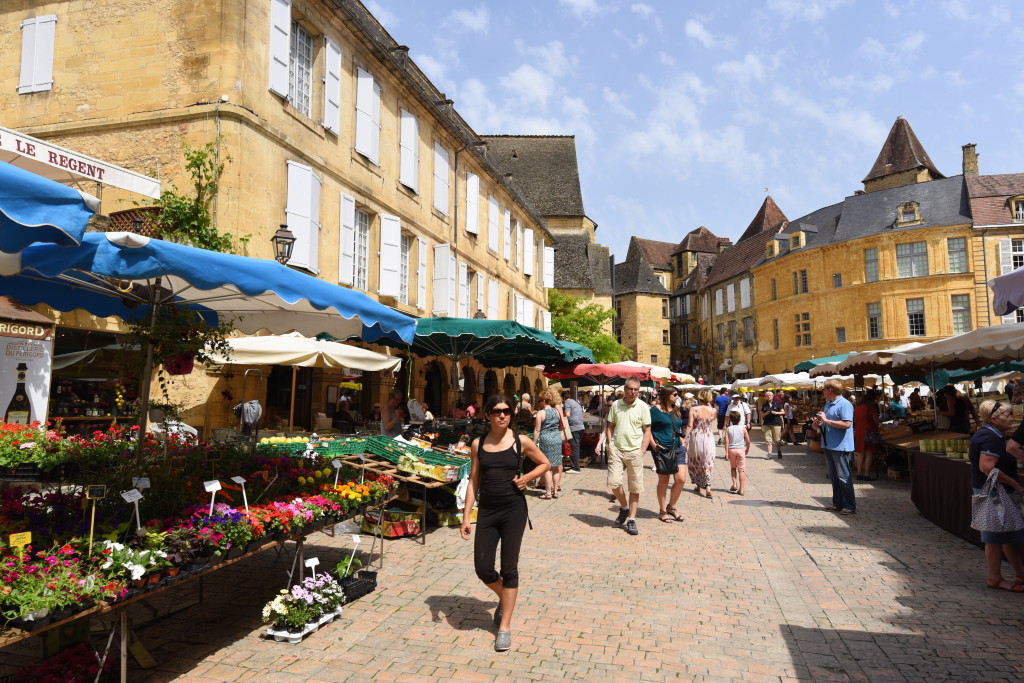 Of all the delightful activities I’ve enjoyed in France, my favorite remains the lazy Saturday morning I spent
 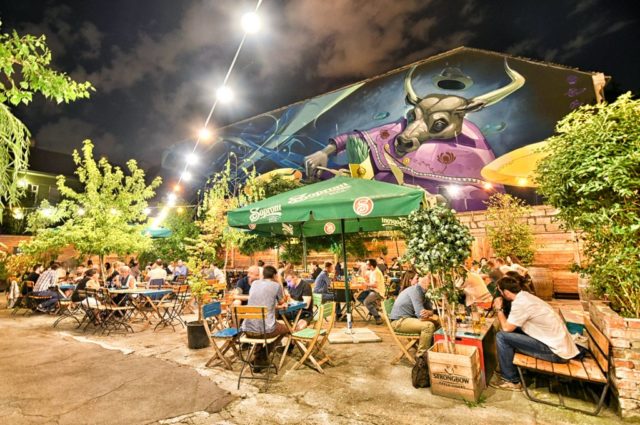 I must admit, I’m not really a “nightlife guy.” But when I’m in Budapest, I budget extra time to simply
  This gorgeous corner of my favorite country has always been high on my personal “must list.” It’s a little slice of heaven: Cut-glass alpine peaks tower over fine little Baroque-steepled towns, all laced together by an eerily turquoise river. While this place should be overrun with crowds, on my latest visit — in late September — I had the place nearly to myself. A few A+ travelers have begun to find their way to the “sunny side of the Alps”: Rafters, kayakers, and adventure sports fanatics are drawn to the sparkling waters of the Soča River. Historians peruse the well-curated array of outdoor museums and cemeteries from World War I’s Isonzo Front, where Ernest Hemingway famously drove an ambulance. Skiers gape up at the 660-foot-tall jump at Planica, home to the world championships of ski flying (for daredevils who consider ski jumping for wimps). And foodies make a pilgrimage to
  My favorite piece of art in Europe isn’t a painting, and it isn’t in a museum. It’s a park — a grassy canvas where a single artist, the early-20th-century sculptor Gustav Vigeland, was given carte blanche to design and decorate as he saw fit. The city of Oslo gave Vigeland a big studio, and turned him loose in the adjoining park for 20 years. He filled that space with a sprawling yet harmonious ensemble of 600 bronze and granite figures, representing every emotion and rite of passage in the human experience, all frozen in silent conversation with each other — and with the steady stream of Oslo urbanites and tourists who flow through Vigeland’s masterpiece. The naked figures (which might provoke giggles among prudish Americans) reinforce the sense of timelessness and universality: They belong not to any one time or place, but to every time and every place — from Adam and Eve to contemporary Norway. Over the last decade and a half, I’ve been to Vigeland Park three times. Each time, I was in a totally different state of mind. And each time, the statues spoke to me like old friends — sometimes with the same old message, and sometimes with new insights. With all due respect to da Vinci, Van Gogh, and Picasso, no single artistic experience in Europe is more meaningful or impactful to me than Vigeland Park.
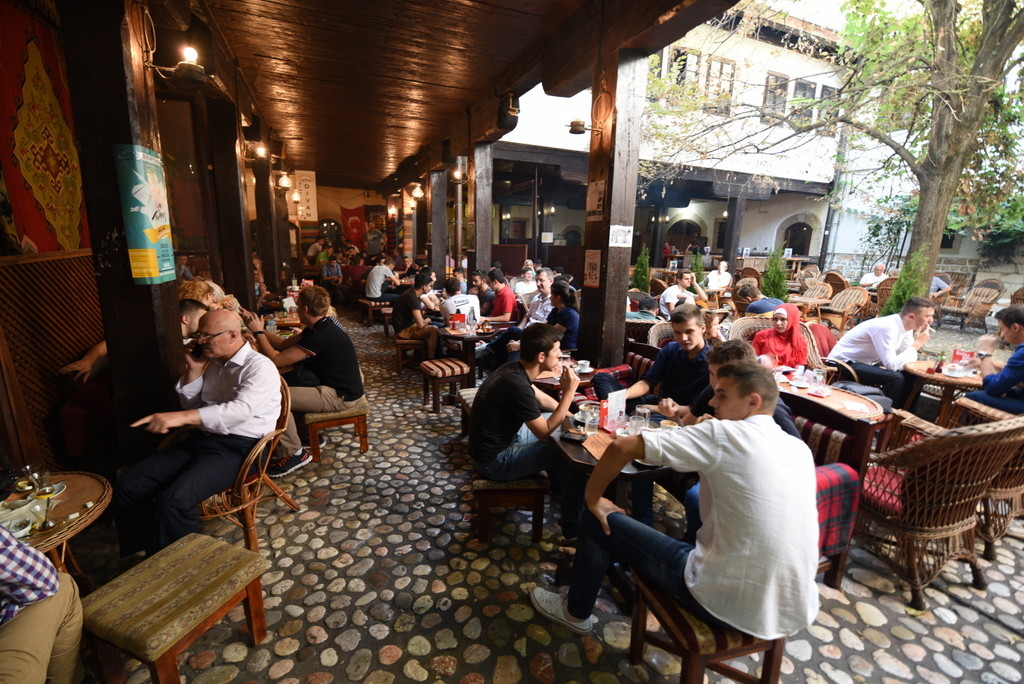 Sarači #16 is the most interesting address in downtown Sarajevo. Facing east — toward the Ottoman-era old town, Baščaršija — you’re transported to medieval Turkey: a bustling bazaar with slate-roofed houses, chunky river-stone cobbles, the tap-tap-tap of coppersmiths’ hammers, and a pungent haze of hookah smoke and grilled meats. Then, turning to the west, you’re peering down Ferhadija, the main thoroughfare of Habsburg Sarajevo. This could be a Vienna suburb, where stern, genteel Baroque facades look down over cafés teeming with urbanites. Within a few short blocks of this spot stand the city’s historic synagogue, its oldest Serbian Orthodox church, its Catholic cathedral, and its showcase mosque. Few places on earth are so layered with history. And then there’s the latest chapter: the poignant story of the Siege of Sarajevo in the mid-1990s, when the town was surrounded by snipers for more than 1,400 days — connected to the outside world only by a muck-filled tunnel and a steep mountain ascent. Proud Sarajevans you’ll meet are often willing, or even eager, to share their stories of living a horrific reality that we experienced only through the Nightly News. And if you’re lucky, they’ll invite you for
  Of all of Tuscany’s appealing corners, the Val d’Orcia (“val dor-chah”) is — for me — the most enchanting. While just a short drive from the tourist throngs in Florence, San Gimignano, Siena, or the Chianti region, the Val d’Orcia — bookended by the charming towns of Montepulciano and Montalcino (both synonymous with fine Tuscan wine) — feels like a peaceful, overlooked eddy of rural life. This strip of land is where most of the iconic “Tuscany scenery” photographs are taken: Winding, cypress-lined driveways; vibrant-green, rolling farm fields that look like a circa-2000 screensaver; and lonely chapels perched on verdant ridges. And it’s the backdrop for famous scenes in everything from The English Patient to Gladiator to Master of None. And yet, the area has no “major sights” — no sculptures by Michelangelo, no paintings by da Vinci, no leaning towers — which, mercifully, keeps it just beyond the itineraries of whistle-stop, bucket-list tourists. I have savored several visits — including
  A few years removed from the depths of its economic crisis, Athens has re-emerged as a red-hot destination. Revisiting the city a few months ago, I was struck by how many tourists I saw — and by how many of them refused to venture beyond the cutesy, crowded Plaka zone that rings the base of the Acropolis. And that’s a shame, because literally across the street from the Plaka’s central square, Monastiraki, is one of Athens’ most colorful and fun-to-explore neighborhoods: Psyrri (“psee-ree”). Not long ago, this was a deserted and dangerous slum. But recently, Psyrri has emerged as a trendy dining and nightlife zone. Its graffiti-slathered apartment blocks now blossom with freshly remodeled Airbnb rentals. This still-gritty area may feel a little foreboding at first, but if you can get past the street art, grime, and motorbikes parked on potholed sidewalks, it’s easy to enjoy the hipster soul of the neighborhood that’s leading many to dub Athens “The New Berlin.” For the upcoming fifth edition of our
  On my last visit to Moscow, in the summer of 2014, Russia was in the news: military action in Crimea and eastern Ukraine, Putin’s brutal crackdown on homosexuality and punk-rock protesters Pussy Riot, and the recently completed Sochi Olympics. Of course, since then, the headlines have changed, but Russia is in the news more than ever. That’s why I consider Moscow to be Europe’s most fascinating — and challenging — destination. People back home shake their heads and wonder: How can these people support Putin, who (to us) is so clearly a demagogue? I take that not as a rhetorical question, but as a genuine one that deserves a real answer. And a thoughtful visit to Moscow — even “just” as a casual tourist — can offer some insights. Designed-to-intimidate Red Square and the Kremlin fill onlookers with awe and respect. The still-standing headstone of Josef Stalin — tucked along the Kremlin Wall, just behind Lenin’s Tomb and its waxy occupant — seems to suggest that the Russian appetite for absolute rulers is nothing new. But mostly, I’m struck by the improvements I see in Moscow with each return visit. On my first trip, in the early 2000s, the famous Gorky Park was a ramshackle, potholed mess, and the Cathedral of Christ the Savior — which had been demolished by communist authorities — was still being rebuilt. But today, Gorky Park is a lush, pristine, manicured people zone, and the sunshine glitters off the cathedral’s rebuilt golden dome. Just up the river, a Shanghai-style forest of futuristic skyscrapers rises up from a onetime industrial wasteland. In short, the Russian capital — which has always been interesting — is now actually a pleasant place to travel. Finding myself really enjoying Moscow, for the first time, makes it easier to imagine how many Russians might be convinced that Putin is Making Russia Great Again.
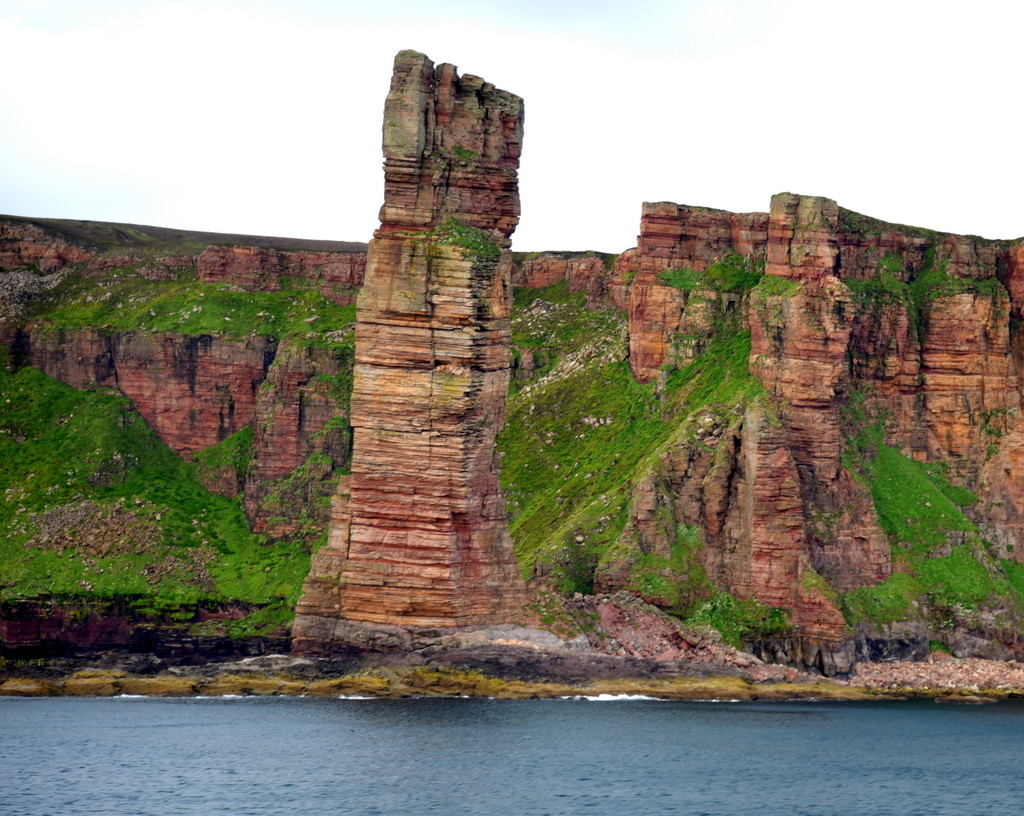 I
I